
AP English Language and Composition Flashcards
Terms : Hide Images [1]
| 6926056982 | Alliteration | Using words with the same first letter repeatedly close together in a phrase or sentence. | 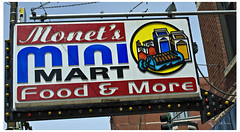 | 0 |
| 7175083665 | Allusion | Making a brief reference to the cultural canon—e.g. the Bible, Shakespeare, classical mythology, etc. |  | 1 |
| 7175080929 | Analogy | Explaining something complex by comparing it to something more simple. |  | 2 |
| 7175085406 | Anecdote | Offering a brief narrative episode. This device can serve many functions in a text—for example, introducing an issue, serving as evidence, to illustrate a point, and so on. |  | 3 |
| 6926075870 | Argument | The combination of reasons, evidence, etc that an author uses to convince an audience of their position. |  | 4 |
| 6934518740 | Aristotelian appeals | Three different methods of appealing to an audience to convince them—ethos, logos, and pathos. |  | 5 |
| 6934523785 | Attitude | The writer's personal views or feelings about the subject at hand. |  | 6 |
| 6934540991 | Audience | Who the author is directing his or her message towards. |  | 7 |
| 6934543943 | Compare and contrast | Discussing the similarities and differences between two things to some persuasive or illustrative purpose. |  | 8 |
| 7175088634 | Concession | Agreeing with the opposing viewpoint on a certain smaller point (but not in the larger argument). |  | 9 |
| 6934546496 | Connotation | The implied meaning of a word; words can broadly have positive, negative, or neutral connotations. |  | 10 |
| 6934552114 | Context | The extra-textual environment in which the text is being delivered. |  | 11 |
| 6934554297 | Counterargument | The argument(s) against the author's position. |  | 12 |
| 6934559405 | Deductive reasoning | A form of logical reasoning wherein a general principle is applied to a specific case. |  | 13 |
| 6934561595 | Denotation | The literal, dictionary-definition meaning of a word. |  | 14 |
| 6934564929 | Diction | The style of language used; generally tailored to be appropriate to the audience and situation. |  | 15 |
| 7175090240 | Didactic | A text with an instructive purpose, often moral. |  | 16 |
| 6934568059 | Ethos | Setting up a source as credible and trustworthy. |  | 17 |
| 7175092217 | Euphemism | Referring to something with a veiled phrase instead of saying it directly |  | 18 |
| 6934569580 | Evidence | Setting up a source as credible and trustworthy. |  | 19 |
| 7175095899 | Exemplification | Providing examples in service of a point. |  | 20 |
| 6934577240 | Figurative language | The use of language in a non-literal way; i.e. metaphor, simile, etc. |  | 21 |
| 6934579304 | Genre | The specific type of work being presented. |  | 22 |
| 7175097934 | Hyperbole | Overstating a situation for humorous or dramatic effect. |  | 23 |
| 7175107373 | Idiom | A commonly used phrase that signifies something very different than its literal meaning. |  | 24 |
| 6934582335 | Imagery | Any descriptive language used to evoke a vivid sense or image of something; includes figurative language. |  | 25 |
| 6934584839 | Implication | When something is suggested without being concretely stated. |  | 26 |
| 6934589650 | Inductive reasoning | Making a generalization based on specific evidence at hand. | | 27 |
| 6934590729 | Irony | At the most basic sense, saying the opposite of what you mean; also used to describe situations in which the results of an action are dramatically different than intended. |  | 28 |
| 6934593114 | Juxtaposition | Placing two very different things together for effect. |  | 29 |
| 6934594523 | Logos | Appealing to someone's sense of concrete facts and logic. |  | 30 |
| 6934596712 | Occasion | The reason or moment for writing or speaking. (e.g. a poet writing a poem about death after the death of a loved one) |  | 31 |
| 7175109069 | Onomatopoeia | Using "sound-effect" words (e.g. "clap," "buzz). |  | 32 |
| 6934603425 | Organization | How the different parts of an argument are arranged in a piece of writing or speech. |  | 33 |
| 7175110230 | Paradox | A phrase or assertion that appears to contradict itself (but the contradiction itself may have its own meaning). |  | 34 |
| 7175113992 | Parallelism | Repeated structural elements in a sentence. (e.g. "We went to sea; we went to war; we went to bed.") |  | 35 |
| 7175114848 | Parody | Using the form of something to mimic and make fun of it. |  | 36 |
| 6934605846 | Pathos | An Aristotelian appeal. Involves appealing to someone's emotions. |  | 37 |
| 7175116653 | Personification | Giving human characteristics to a nonhuman object or idea. |  | 38 |
| 6934608296 | Purpose | The authors persuasive intention. |  | 39 |
| 6934613670 | Repetition | Re-using a word or phrase repeatedly for effect or emphasis. |  | 40 |
| 7175038956 | Rhetoric | The use of spoken or written word (or a visual medium) to convey your ideas and convince an audience. |  | 41 |
| 7175040302 | Rhetorical Triangle | The relationship between the author, the audience, the text/message, and the context. |  | 42 |
| 7175117730 | Sarcasm | Mockingly stating the opposite of what you mean. Easier to convey in the spoken word than via writing. |  | 43 |
| 7175119500 | Satire | A genre of humorous and mocking criticism to expose the ignorance and/or ills of society. |  | 44 |
| 7175075392 | Speaker | The persona adopted by the author to deliver his or her message; may or may not actually be the same person as the author. |  | 45 |
| 7175076097 | Style | The author's own personal approach to rhetoric in the piece; similar to voice. |  | 46 |
| 7175076448 | Symbolism | Using a symbol to refer to an idea or concept. |  | 47 |
| 7175120089 | Synecdoche | Referring to one part of something as a way to refer to the whole. |  | 48 |
| 7175077435 | Syntax | The way sentences are grammatically constructed. |  | 49 |
| 7175078017 | Synthesis | Combining sources or ideas in a coherent way in the purpose of a larger point. |  | 50 |
| 7175078568 | Themes | Overarching ideas or driving premises of a work. |  | 51 |
| 7175079293 | Tone | The use of stylistic devices to reveal an author's attitude toward a subject. |  | 52 |
| 7175122196 | Understatement | Deliberately minimizing something, usually for humorous effect. |  | 53 |
| 7175079849 | Voice | An author's unique sound. Similar to style. |  | 54 |