
Ap English Language Vocab Flashcards
Terms : Hide Images [1]
| 7210048655 | Ambiguity | the quality of being open to more than one interpretation; inexactness. |  | 0 |
| 7210048656 | Analogy | A comparison between two things, typically for the purpose of explanation or clarification. |  | 1 |
| 7210048657 | Antecedent | A literary device in which a word or pronoun in a line or sentence refers to an earlier word. |  | 2 |
| 7210048658 | Aphorism | A statement of truth or opinion expressed in a concise and witty manner. |  | 3 |
| 7210048659 | Atmosphere | The feeling, emotion, or mood a writer conveys to a reader through the description of setting and objects. |  | 4 |
| 7210048660 | Antithesis | To put two contrasting ideas together to add interest to the writing. |  | 5 |
| 7210048661 | Anecdote | A short and interesting story or an amusing event often proposed to support or demonstrate some point or to make audience laugh. |  | 6 |
| 7210048662 | Argumentation | The action or process of reasoning systematically in support of an idea, action, or theory. |  | 7 |
| 7210048663 | Attitude | A perspective or tone that is built by the writer in a certain work. |  | 8 |
| 7210048664 | Audience | The person for whom a writer writes, or composer composes. |  | 9 |
| 7210048665 | Causal Analysis | The root cause; To find the causes that you can treat rather than treating the symptoms. |  | 10 |
| 7210048666 | Clause | A group of words that contain a subject and a predicate |  | 11 |
| 7210048667 | Cliché | An expression that has been overused to the extent that it loses its original meaning or novelty |  | 12 |
| 7210048668 | Colloquial | The use of informal words, phrases or even slang in a piece of writing. |  | 13 |
| 7210048669 | Connotation | A meaning that is implied by a word apart from the thing which it describes explicitly. |  | 14 |
| 7210048670 | Claim | A statement that asserts something to be true. |  | 15 |
| 7210048671 | Classification | A method of paragraph or essay development in which a writer arranges people, objects, or ideas with shared characteristics into classes or groups. |  | 16 |
| 7210048672 | Coherence | Something logical or consistent and something that makes sense as a whole |  | 17 |
| 7210048673 | Abstract | Existing in thought or as an idea but not having a physical or concrete existence. |  | 18 |
| 7210048674 | Concrete | Existing in a material or physical form; real or solid; not abstract. |  | 19 |
| 7210048675 | Denotation | The literal or dictionary meanings of a word. |  | 20 |
| 7210048676 | Diction | Style of speaking or writing determined by the choice of words by a speaker or a writer. |  | 21 |
| 7210048677 | Didactic | Type of work that often has morals to impart or are written to teach us something about religion, philosophy, history, or politics |  | 22 |
| 7210048678 | Details | Pieces of information that support or tell more about the main idea |  | 23 |
| 7210048679 | Dialect | The language used by the people of a specific area, class, district or any other group of people. |  | 24 |
| 7210048680 | Digression from topic | Temporary departure from topic |  | 25 |
| 7210048681 | Discourse | Speech or writing normally longer than sentences which deals with a certain subject. |  | 26 |
| 7210048682 | Dominant Impression | The principal effect the author wishes to create for the audience. | 27 | |
| 7210048683 | Editorializing | Injecting personal interpretations or opinions into an otherwise factual account. |  | 28 |
| 7210048684 | Emotive Imagery | Images that secure an emotional response from the reader. |  | 29 |
| 7210048685 | Evidence | Supporting materials used to prove or disprove something. |  | 30 |
| 7210048686 | Equivocation | When a key term or phrase in an argument is used with more than one meaning. |  | 31 |
| 7210048687 | Ethos | An appeal to ethics, and it means of convincing someone of character or credibility of the persuader. |  | 32 |
| 7210048688 | Ellipsis | A literary device that is used to omit some parts of a sentence or event, which gives the reader a chance to fill in the gaps themselves. |  | 33 |
| 7210048689 | Epigraph | A phrase, quotation, or poem that is at the beginning of a document or component. Works to serve as a preface, as a summary, as a counter-example, or to link the work to a wider literary canon. |  | 34 |
| 7210048690 | Generic conventions | Term that describes traditions for each genre; help to define each genre. |  | 35 |
| 7210048691 | Genre | A major category of literature which may be determined by technique, tone, content or even length. |  | 36 |
| 7210048692 | Homily | A sermon or speech that a religious person or priest delivers before a group of people to offer them moral correction. |  | 37 |
| 7210048693 | Hyperbole | A figure of speech which involves exaggeration of ideas for the sake of emphasis. |  | 38 |
| 7210048694 | Imagery | Yhe use of figures of speech to create vivid images that appeal to one of the five senses |  | 39 |
| 7210048695 | Inference | Logical deductions are made based on premises assumed to be true. |  | 40 |
| 7210048696 | Invective | Speech or writing that attacks, insults, or denounces a person, topic, or institution. | 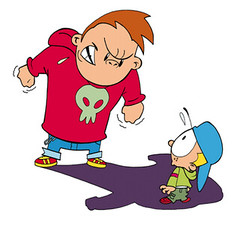 | 41 |
| 7210048697 | Irony | Words are used in such a way that their intended meaning is different from the actual meaning of the words. |  | 42 |
| 7210048698 | Jargon | Use of specific phrases and words by writers in a particular situation, profession or trade; in order to convey hidden meanings accepted and understood in that field. |  | 43 |
| 7210048699 | Juxtaposition | Technique in which two or more ideas, places, characters and their actions are placed side by side in a narrative or a poem for the purpose of developing comparisons and contrasts. |  | 44 |
| 7210048700 | Language devices | A technique a writer uses to produce a special effect in their writing. | 45 | |
| 7210048701 | Litotes | A form of understatement that involves making an affirmative point by denying its opposite. |  | 46 |
| 7210048702 | Loose Sentence | Begins with a main clause that is followed by phrases and/or clauses that modify the main clause. |  | 47 |
| 7210048703 | Logos | A statement, sentence or argument used to convince or persuade the targeted audience by employing reason or logic. |  | 48 |
| 7210048704 | Metonymy | A figure of speech that replaces the name of a thing with the name of something else with which it is closely associated. |  | 49 |