
Ap Lit Terms Literature Terms Flashcards
Terms : Hide Images [1]
| 9855096233 | antagonist | Character that is a source of conflict. (The opponent or enemy of the main character, or protagonist.) | 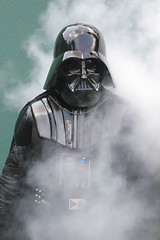 | 0 |
| 9855096234 | protagonist | the character that is trying to solve the problem of the story |  | 1 |
| 9855096235 | figurative language | language that represents one thing in terms of something dissimilar(not like itself): simile, metaphor, hyperbole, personification, and symbols are figurative language |  | 2 |
| 9855096236 | irony | the difference between reality and perception | 3 | |
| 9855096237 | dramatic irony | when the reader or audience knows something a character does not | 4 | |
| 9855096238 | situational irony | when there is a disparity between what is expected and what actually occurs (When something happens that is the reverse of what you expected.) | 5 | |
| 9855096239 | verbal irony | When a speaker says one thing but means the opposite. (When the name or description of something implies the opposite of the truth. For example: calling a very tall person "Tiny.") |  | 6 |
| 9855096240 | personification | figure of speech in which non-human things are given human characteristics. (ex: The flowers held their heads sadly toward the ground after the heavy rain.) | 7 | |
| 9855096241 | plot | The sequence of events in a literary work |  | 8 |
| 9855096242 | climax | The turning point in a literary work. (The point in a play, novel, short story, or narrative poem at which the conflict reaches its greatest intensity and is then resolved.) |  | 9 |
| 9855096243 | setting | the time and place of a literary work (story) |  | 10 |
| 9855096244 | theme | The underlying main idea of a literary work (A story's main message or moral.) |  | 11 |
| 9855096245 | alliteration | repetition of the initial consonant sound of words ex. "Peter Piper picked a peck of pickled peppers." | 12 | |
| 9855096246 | allusion | a reference to something well-known that exists outside the literary work | 13 | |
| 9855096247 | diction | word choice to create a specific effect | 14 | |
| 9855096248 | simile | the direct comparison of dissimilar objects, usually USING "like" or "as" ex. I wondered lonely as a cloud. |  | 15 |
| 9855096249 | metaphor | The comparison between two different things without using the words "like" or "as." ex: She is a brick house. |  | 16 |
| 9855096250 | implied metaphor | a comparison between dissimilar object WITHOUT directly stated the two things to be compared ex. She is solid and concrete. | 17 | |
| 9855096251 | extended metaphor | makes a comparison that lasts more than one line or sentence Ex. She is a brick house; she is mightly mightly, she is sold and concrete, someone to trust. | 18 | |
| 9855096252 | imagery | language that appeals to the five senses | 19 | |
| 9855096253 | onomatopoeia | use of a word whose sound imitates its meaning: hiss | 20 | |
| 9855096254 | repetition | repetition is often used by a writer to emphasize a point or to draw attention to a point of view | 21 |