
AP Terms Flashcards
Terms : Hide Images [1]
| 8043240366 | Allegory | Noun - A representation of an abstract or spiritual meaning through concrete or material forms; figurative treatment of one subject under the guise of another. (Example: Animal Farm) |  | 0 |
| 8043274303 | Allusion | Noun/Verb- A passing or casual reference; an incidental mention of something, either directly or by implication. (Example: This line is a(n) ____________ to William Shakespeare's Twelfth Night) |  | 1 |
| 8043310028 | Analogy | Noun/Adj- A similarity between like features of two things, on which a comparison may be based. (Example: Antigone is ________ to Oedipus just as Ismene is to Creon.) |  | 2 |
| 8043351082 | Conceit | A fanciful expression in writing or speech; an elaborate metaphor. |  | 3 |
| 8043374637 | Litotes | Understatement for rhetorical effect, esp when achieved by using negation with a term in place of using an antonym of that term. (Example: "She was not a little upset" for "She was extremely upset.") |  | 4 |
| 8043404098 | Metonymy | A figure of speech that consists of the use of the name of one object or concept for that of another to which it is related, or of which it is a part. (Example: "count heads (or noses)" for "count people.") | 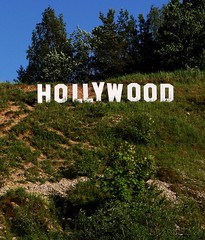 | 5 |
| 8043423954 | Paradox | A statement or proposition that seems self-contradictory or absurd but in reality expresses a possible truth. |  | 6 |
| 8043438250 | Synecdoche | A figure of speech in which a part is used for the whole or the whole for a part, the special for the general or the general for the special. (Example: "ten sail" for "ten ships") |  | 7 |
| 8375655562 | Connotation | Connotation refers to a meaning that is implied by a word apart from the thing which it describes explicitly. Emotional associations or meanings in addition to their literal meanings or denotations. |  | 8 |
| 8375691349 | Denotation | Denotation is generally defined as literal or dictionary meanings of a word |  | 9 |
| 8375698902 | Diction | Diction can be defined as style of speaking or writing determined by the choice of words by a speaker or a writer. |  | 10 |
| 8375748431 | Style | The technique that an individual author uses in his writing. |  | 11 |
| 8375763014 | Syntax | ______ is a set of rules in a language. It dictates how words from different parts of speech are put together in order to convey a complete thought. |  | 12 |
| 8375782285 | Tone | _____, in written composition, is an attitude of a writer toward a subject or an audience. |  | 13 |
| 8375791827 | Colloquialism | the use of informal words, phrases or even slang in a piece of writing. |  | 14 |
| 8375811435 | Ambiguity | is a word, phrase, or statement which contains more than one meaning. ________ words or statements lead to vagueness and confusion |  | 15 |