
AP Language Vocab Flashcards
Terms : Hide Images [1]
| 10249883830 | AUTHORITY | the right to control, command, or determine. |  | 0 |
| 10249883831 | AUDIENCE | group of spectators at a public event |  | 1 |
| 10249884876 | BACKING | support, strengthen, or protect |  | 2 |
| 10249886030 | ASSERTION | positive statement or declaration, often without support or reason |  | 3 |
| 10249887046 | MEANS VS. ENDS | carried out for the sole purpose of achieving something else |  | 4 |
| 10249887047 | DEDUCTIVE REASONING | reasoning from one or more statements to reach a logically certain conclusion |  | 5 |
| 10249890489 | INDUCTIVE REASONING | reasoning in which the premises are viewed as supplying some evidence for the truth of the conclusion |  | 6 |
| 10249890490 | ALLITERATION | occurrence of the same letter or sound at the beginning of adjacent or closely connected words |  | 7 |
| 10249891666 | TONE | general character or attitude of a place, piece of writing, situation, etc. |  | 8 |
| 10249891676 | DICTION | style of speaking or writing as dependent upon choice of words |  | 9 |
| 10249893169 | Denotation | explicit or direct meaning or set of meanings of a word or expression |  | 10 |
| 10249893170 | Connotation | secondary meaning of a word or expression in addition to its explicit or primary meaning |  | 11 |
| 10249894801 | Colloquial | characteristic of or appropriate to ordinary or familiar conversation rather than formal speech or writing; informal |  | 12 |
| 10249894802 | Formal | accordance with the usual requirements, customs, etc.; conventional |  | 13 |
| 10249894803 | Informal | without formality or ceremony; casual |  | 14 |
| 10249896653 | Concrete | constituting an actual thing or instance; real |  | 15 |
| 10249896654 | Abstract | thought of apart from concrete realities, specific objects, or actual instances |  | 16 |
| 10249896655 | Detail | attention to or treatment of a subject in individual or minute parts |  | 17 |
| 10249899207 | Mood | a state or quality of feeling at a particular time |  | 18 |
| 10249899208 | Imagery | formation of mental images, figures, or likenesses of things, or of such images collectively |  | 19 |
| 10249902792 | Setting | surroundings or environment of anything |  | 20 |
| 10249902793 | FIGURATIVE LANGUAGE | figures of speech to be more effective, persuasive, and impactful |  | 21 |
| 10249903997 | Allusion | making of a casual or indirect reference to something |  | 22 |
| 10249903998 | Simile | figure of speech in which two unlike things are explicitly compared |  | 23 |
| 10249903999 | Metaphor | figure of speech in which a term or phrase is applied to something to which it is not literally applicable in order to suggest a resemblance |  | 24 |
| 10249905271 | Personification | attribution of human nature or character to animals, inanimate objects, or abstract notions, especially as a rhetorical figure |  | 25 |
| 10249905272 | Hyperbole | obvious and intentional exaggeration. |  | 26 |
| 10249905273 | Understatement | act or an instance of understating, or representing in a weak or restrained way that is not borne out by the facts |  | 27 |
| 10249906607 | Paradox | statement or proposition that seems self-contradictory or absurd but in reality expresses a possible truth |  | 28 |
| 10249906608 | Verbal Irony | a person says or writes one thing and means another |  | 29 |
| 10249909559 | Analogy | similarity or comparability |  | 30 |
| 10249909560 | Anecdote | short account of a particular incident or event |  | 31 |
| 10249909561 | Metonymy | figure of speech that consists of the use of the name of one object or concept for that of another to which it is related, or of which it is a part | 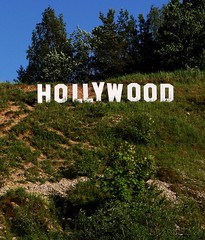 | 32 |
| 10249910801 | Synecdoche | figure of speech in which a part is used for the whole or the whole for a part, the special for the general or the general for the special |  | 33 |
| 10249911671 | RHETORICAL MODES/ MODES OF DISCOURSE | variety, conventions, and purposes of the major kinds of language-based communication, particularly writing and speaking | 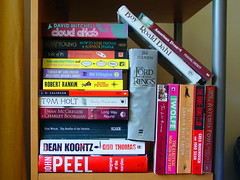 | 34 |
| 10249911672 | Exemplification | illustration or example |  | 35 |
| 10249913881 | Cause/Effect | actions or events such that one or more are the result of the other or others |  | 36 |
| 10249913882 | Description | statement, picture in words, or account that describes; descriptive representation |  | 37 |
| 10249913883 | Process Analysis | method of paragraph or essay development by which a writer explains step by step how something is done |  | 38 |
| 10249915096 | Narration | an account, story, or narrative. |  | 39 |
| 10249917112 | Comparison/Contrast | differences and similarities |  | 40 |
| 10249917113 | Exposition | act of expounding, setting forth, or explaining |  | 41 |
| 10249917114 | Argumentation | process of developing or presenting an argument; reasoning |  | 42 |
| 10249919031 | Repetition | repeated utterance; reiteration. |  | 43 |
| 10249919032 | POINT OF VIEW | specified or stated manner of consideration or appraisal; standpoint |  | 44 |
| 10249920278 | First Person | grammatical person used by a speaker in statements referring to himself or herself |  | 45 |
| 10249920279 | Second Person | grammatical person used by the speaker of an utterance in referring to the one |  | 46 |
| 10249921624 | Third Person | grammatical person used by the speaker of an utterance in referring to anyone or anything other than the speaker or the one |  | 47 |
| 10249921625 | Subjective | pertaining to or characteristic of an individual; personal; individual |  | 48 |
| 10249921634 | Objective | something that one's efforts or actions are intended to attain or accomplish |  | 49 |
| 10249925159 | SYNTAX | the rules or patterns so studied |  | 50 |
| 10249925160 | Anaphora | repetition of a word or words at the beginning of two or more successive verses, clauses, or sentences |  | 51 |
| 10249925161 | Antithesis | opposition; contrast |  | 52 |
| 10249926787 | Asyndeton | omission of conjunctions |  | 53 |
| 10249926788 | Polysyndeton | use of a number of conjunctions in close succession |  | 54 |
| 10249926971 | Parallel sentence | repetition of the same pattern of words or phrases within a sentence or passage to show that two or more ideas have the same level of importance | | 55 |
| 10249927957 | Periodic sentence | main clause or predicate at the end |  | 56 |
| 10249927958 | Rhetorical question | question asked in order to create a dramatic effect or to make a point rather than to get an answer |  | 57 |
| 10249927959 | Inverted syntax | Subject Verb Object |  | 58 |