

Flashcards
AP World History Period 1 Flashcards
From Hunting and Gathering to Civilizations, 2.5 million-1000 B.C.E.: Origins
Original from MrsBHatchTEACHER
Terms : Hide Images
| 10740302153 | hunting and gathering | Means of obtaining subsistence by humans before the mastery of sedentary agriculture; normally typical of tribal social organization |  | 0 |
| 10740302154 | civilization | Societies with reliance on sedentary agriculture, ability to produce food surpluses, and existence of nonfarming elites, along with merchant and manufacturing groups | 1 | |
| 10740302155 | neolithic | The New Stone Age between 8000 and 5000 B.C.E.; period in which adaptation of sedentary agriculture occurred; domestication of plants and animals accomplished |  | 2 |
| 10740302156 | nomadic societies | livestock hearding societies that do not have a permanent settlement. normally found on the fringes of civilized (urban) societies; commonly referred to as "barbarian" by civilized societies |  | 3 |
| 10740302157 | culture | Combination of ideas, objects, and patterns of behavior that result from human social interaction |  | 4 |
| 10740302158 | agrarian revolution | Occurred between 8000 and 5000 B.C.E.; transition from hunting and gathering to sedentary agriculture |  | 5 |
| 10740302159 | pastoralism | A nomadic agricultural lifestyle based on herding domesticated animals; tended to produce independent people capable of challenging sedentary agricultural societies |  | 6 |
| 10740302160 | Catal Huyuk | Early urban culture/civiization based on sedentary agriculture; located in modern southern Turkey; larger in population than Jericho, had greater degree of social stratification |  | 7 |
| 10740302161 | Bronze Age | From 4000 to 3000 B.C.E.; increased use of plow, metalworking; development of wheeled vehicles, writing |  | 8 |
| 10740302162 | Mesopotamia | Literally "between the rivers"; the civilization that arose in the alluvial plain of the Tigris-Euphrates river valleys |  | 9 |
| 10740302163 | potter's wheel | A technological advance in pottery making; invented circa 6000 B.C.E.; encouraged faster and higher-quality ceramic pottery products |  | 10 |
| 10740302164 | Sumerians | People who migrated into Mesopotamia circa 4000 B.C.E.; created the first civilization within the region; organized area into city-states |  | 11 |
| 10740302165 | cuneiform | A form of writing developed by the Sumerians using a wedge-shaped stylus and clay tablets | 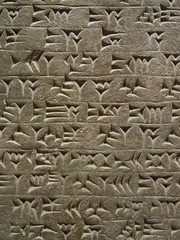 | 12 |
| 10740302166 | city-state | A form of political organization typical of Mesopotamian civilization; consisted of agricultural hinterlands ruled by an urban-based king |  | 13 |
| 10740302167 | ziggurat | a massive tower building usually associated with Mesopotamian temple connections |  | 14 |
| 10740302168 | Babylonian Empire | Unified all of Mesopotamia circa 1800 B.C.E.; collapsed due to foreign invasion circa 1600 B.C.E. |  | 15 |
| 10740302169 | Hammurabi | The most important Babylonian ruler; responsible for codification of the law |  | 16 |
| 10740302170 | Pharaoh | The term used to denote the kings of ancient Egypt; the term, "great house" refers to the palace of the pharaohs |  | 17 |
| 10740302171 | pyramids | Monumental architecture typical of Old Kingdom Egypt; used as burial sites for pharaohs |  | 18 |
| 10740302172 | hieroglyphs | Form of writing developed in ancient Egypt; more pictorial than Mesopotamian cuneiform |  | 19 |
| 10740302173 | Kush | African state that developed along the upper reaches of the Nile circa 1000 B.C.E.; conquered Egypt and ruled it for several centuries | 20 | |
| 10740302174 | monotheism | The exclusive worship of one god; introduced by Jews into Middle Eastern civilization |  | 21 |
| 10740302175 | Phoenicians | Seafaring civilization located on the shores of the eastern Mediterranean; established colonies throughout the Mediterranean |  | 22 |
| 10740302176 | Harappa and Mohenjo Daro | Major urban complexes of Harappan civilization; laid out on planned grid pattern |  | 23 |
| 10740302177 | Aryans | Indo-European nomadic, warlike, pastorialists who replaced Harappan civilization |  | 24 |
| 10740302178 | Huanghe (Yellow) River Basin | Site of the development of sedentary agriculture in China |  | 25 |
| 10740302179 | Shang | 1st Chinese dynasty (after the legendary Xia) |  | 26 |
| 10740302180 | Oracles | Shamans or priests in Chinese society who foretold the future through interpreting animal bones cracked by heat; inscriptions on bones led to Chinese writing |  | 27 |
| 10740302181 | ideographic writing | Pictograph characters grouped together to create new concepts; typical of Chinese writing | 28 | |
| 10740302182 | Big Geography | A term that draws attention to the global nature of world history. |  | 29 |
| 10740302183 | Paleolithic | The period that ended about 3,000 years after the end of the last Ice Age, it lasted until about 10,000 years ago. (Old Stone Age) The period of the Stone Age associated with the evolution of humans. It predates the Neolithic period. |  | 30 |
| 10740302184 | Human migration during Paleolithic era | movement of humans from Africa to Eurasia, Australia, and the Americas | 31 | |
| 10740302185 | eglitarian | equality among people (no social levels) | 32 | |
| 10740302186 | tools | Humans developed a wider range of ____ specially adapted to different environments from tropics to tundra | 33 | |
| 10740302187 | Neolithic Revolution | period of change from hunter-gatherer lifesyle to agricultural lifestyles associated with domestication, farming, and settlement |  | 34 |
| 10740302188 | patriarchy | father based/male dominated society |  | 35 |
| 10740302189 | climatic change | Permanent agricultural villages emerged first in the lands of the eastern Mediterranean, possibly as a response to what? | 36 | |
| 10740302190 | weapons | Pastoralists were often the developers and disseminators of of ____ and forms of transportation that transformed warfare in agrarian civilizations | 37 | |
| 10740302191 | horses | name one mode of new transportation by the pastoralists | 38 | |
| 10740302192 | art | Elites, both political and religious, promoted ____. | 39 | |
| 10740302193 | record-keeping systems | ___ arose independently in all early civilization sand subsequently were diffused | 40 | |
| 10740302194 | Nile River | This river flooded regularly. |  | 41 |
| 10740302195 | Tigris River | This river's floods were unpredictable. | 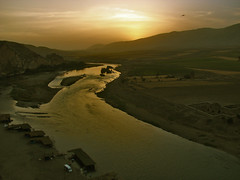 | 42 |
| 10740302196 | Mesopotamian | Unpredictable weather patterns affected the development of the _____ civilization. | 43 | |
| 10740302197 | Egyptian | _______art demonstrated little change for nearly 1000 years. | 44 | |
| 10740302198 | Nubia and Kush | Kingdoms upriver from Egypt. | 45 | |
| 10740302201 | Standard of Ur |  | 46 | |
| 10740302202 | Harappan King or Priest Figure |  | 47 | |
| 10740302199 | Jericho | One of the earliest cities: located in modern Israel. |  | 48 |
| 10740302200 | Catal-Hyouk | One of the earliest cities: located in modern Turkey. | 49 |
AP Language - Fallacies Flashcards
Terms : Hide Images
| 12319246403 | red herring | introducing an irrelevant issue to divert attention from the subject under discussion | 0 | |
| 12319253894 | ad hominem | attacking the person rather than dealing with the real issue in dispute | 1 | |
| 12319263137 | faulty analogy | an illogical, misleading comparison between two things | 2 | |
| 12319295270 | straw man | choosing a deliberately poor or oversimplified example in order to ridicule and refute an idea | 3 | |
| 12319309430 | false dilemma | oversimplification that offers a limited number of options (usually two) when in fact more options are available. | 4 | |
| 12319314353 | hasty generalization | assuming a conclusion from limited evidence | 5 | |
| 12319328260 | circular reasoning | repeating a claim as a way to provide evidence | 6 | |
| 12319336474 | post hoc ergo propter hoc | assuming that X is the cause of Y because X happened before Y | 7 | |
| 12319359334 | appeal to false authority | when someone who has no expertise to speak on an issue is cited as an authority | 8 | |
| 12319364542 | bandwagon appeal | a claim that a listener should accept an argument because of how many other people have already accepted it | 9 | |
| 12319372451 | tu quoque | avoiding the main argument by accusing the speaker of hypocrisy | 10 | |
| 12319391268 | missing the point | the premises of an argument do support a particular conclusion—but not the conclusion that the arguer actually draws | 11 | |
| 12319394857 | appeal to pity | when an arguer tries to get people to accept a conclusion by making them feel sorry for someone | 12 | |
| 12319433724 | appeal to ignorance | arguing that a lack of evidence proves something | 13 | |
| 12319455903 | begging the question | when an arguer ignores an important (but questionable) assumption that the argument rests on | 14 | |
| 12319474789 | equivocation | sliding between two or more different meanings of a single word or phrase that is important to the argument | 15 | |
| 12320990966 | slippery slope | when an arguer claims that a chain reaction will take place, usually ending in some dire consequence, but there's not enough evidence for that assumption | 16 |
Flashcards
AP Language and Composition Flashcards
Terms : Hide Images
| 14184308615 | Analongy | a comparison between two things, typically for the purpose of explanation or clarification. "an analogy between the workings of nature and those of human societies" | 0 | |
| 14184308616 | Anaphora | the repetition of a word or phrase at the beginning of successive clauses | 1 | |
| 14184308617 | anecdote | A brief narrative that focuses on a particular incident or event. | 2 | |
| 14184308618 | annotation | (n.) a critical or explanatory note or comment, especially for a literary work | 3 | |
| 14184308619 | antimetabole | repetition of words, in successive clauses, in reverse grammatical order | 4 | |
| 14184308620 | anthithesis | the direct opposite, a sharp contrast | 5 | |
| 14184308621 | appeal to false authority | This fallacy occurs when someone who has no expertise to speak on an issue is cited as an authority. | 6 | |
| 14184308622 | archaic diction | old-fashioned or outdated choice of words | 7 | |
| 14184308623 | argument | a statement of the meaning or main point of a literary work | 8 | |
| 14184308624 | Aristotelian triangle | a diagram that represents a rhetorical situation as the relationship among the speaker, the subject, and the audience | 9 | |
| 14184308625 | assertion | a confident and forceful statement of fact or belief | 10 | |
| 14184308626 | assumption | A belief or statement taken for granted without proof. | 11 | |
| 14184308627 | asyndeton | omission of conjunctions between coordinate phrases, clauses, or words | 12 | |
| 14184308628 | audience | One's listener or readership; those to whom a speech or piece of writing is addressed. | 13 | |
| 14184308629 | background | information provided to a journalist that will not be attributed to a named source | 14 | |
| 14184308630 | backing | Support or evidence for a claim in an argument | 15 | |
| 14184308631 | begging the question | A fallacy in which a claim is based on evidence or support that is in doubt. | 16 | |
| 14184308632 | bias | A particular preference or point of view that is personal, rather than scientific. | 17 | |
| 14184308633 | circular reasoning | a fallacy in which the writer repeats the claim as a way to provide evidence | 18 | |
| 14184308634 | claim | the writer's position on an issue or problem | 19 | |
| 14184308635 | claim of fact | a claim that asserts something exists, has existed, or will exist, based on data that the audience will accept as objectively verifiable | 20 | |
| 14184308636 | claim of policy | proposes a change | 21 | |
| 14184308637 | claim of value | argues that something is good or bad, right or wrong | 22 | |
| 14184308638 | classical oration | five-part argument structure used by classical rhetoricians | 23 | |
| 14184308639 | introduction (exordium) | introduces the reader to the subject under discussion | 24 | |
| 14184308640 | narration (narration) | Provides factual information and background material on the subject at hand or establishes why the subject is a problem that needs addressing. | 25 | |
| 14184308641 | confirmation (confirmation) | major part of the text, includes development of proof needed to make the writer's point | 26 | |
| 14184308642 | refutation (refutatio) | Addresses the counterargument. It is a bridge between the writer's proof and conclusion. | 27 | |
| 14184308643 | closed thesis | a statement of the main idea of the argument that also previews the major points the writer intends to make | 28 | |
| 14184308644 | complex sentence | A sentence that includes one independent clause and at least one dependent clause. | 29 | |
| 14184308645 | composition | a work of music, literature, or art | 30 | |
| 14184308646 | compound sentence | a sentence with two or more coordinate independent clauses, often joined by one or more conjunctions | 31 | |
| 14184308647 | concession | acknowledgment and acceptance of an opposing or different view | 32 | |
| 14184308648 | confirmation | The main part of a text in which logical arguments in support of a position are elaborated. | 33 | |
| 14184308649 | connotation | All the meanings, associations, or emotions that a word suggests | 34 | |
| 14184308650 | context | the circumstances that form the setting for an event, statement, or idea, and in terms of which it can be fully understood and assessed. | 35 | |
| 14184308651 | counter argument | ideas that are presented to oppose another argument | 36 | |
| 14184308652 | Counter argument thesis | a summary of the counterargument, usually qualified by although or but, precedes the writer's opinion | 37 | |
| 14184308653 | cumulative sentence | a sentence in which the main independent clause is elaborated by the successive addition of modifying clauses or phrases | 38 | |
| 14184325186 | deduction | reasoning down from principles | 39 | |
| 14184425929 | diction | A writer's or speaker's choice of words | 40 | |
| 14184425930 | either/or (false dilemma) | A fallacy in which the speaker presents two extreme options as the only possible choices. | 41 | |
| 14184425931 | Enthymeme | Logical reasoning with one premise left unstated | 42 | |
| 14184425932 | Equivocation | the use of ambiguous language to conceal the truth or to avoid committing oneself; prevarication | 43 | |
| 14184425933 | ethos | credibility | 44 | |
| 14184425934 | exordium | introduction | 45 | |
| 14184425935 | fallacy/logical fallacy | Potential vulnerabilities or weaknesses in an argument. They often arise from a failure to make a logical connection between the claim and the evidence used to support it. | 46 | |
| 14184425936 | faulty analogy | an illogical, misleading comparison between two things | 47 | |
| 14184425937 | Juxtaposition | Placement of two things closely together to emphasize comparisons or contrasts | 48 | |
| 14184425938 | line | sentence | 49 | |
| 14184425939 | logos | logic | 50 | |
| 14184425940 | metaphors | describe one thing as if it were something else | 51 | |
| 14184425941 | metonymy | A figure of speech in which something is referred to by using the name of something that is associated with it | 52 | |
| 14299158725 | modifier | a word, phrase, or clause that qualifies or describes another word, phrase, or clause | 53 | |
| 14184425942 | Mood | How the reader feels about the text while reading. | 54 | |
| 14184425944 | Nominalization | the process of changing a verb into a noun | 55 | |
| 14184425945 | occasion | An aspect of context; the cause or reason for writing. | 56 | |
| 14184425946 | open thesis | one that does not list all the points the writer intends to cover in an essay | 57 | |
| 14184425947 | oxymoron | conjoining contradictory terms (as in 'deafening silence') | 58 | |
| 14184425948 | paradox | a contradiction or dilemma | 59 | |
| 14184425949 | Parallelism | similarity of structure in a pair or series of related words, phrases, or clauses | 60 | |
| 14184425950 | pathos | emotional appeal | 61 | |
| 14184425951 | periodic sentence | sentence whose main clause is withheld until the end | 62 | |
| 14184425952 | peroration | the concluding part of a speech | 63 | |
| 14184425953 | Persona | an individual's characteristic pattern of thinking, feeling, and acting | 64 | |
| 14184425954 | Personification | A figure of speech in which an object or animal is given human feelings, thoughts, or attitudes | 65 | |
| 14184425955 | polemic | an aggressive argument against a specific opinion | 66 | |
| 14184425956 | Polysndeton | the repetition of conjunctions in close succession for rhetorical effect | 67 | |
| 14184425957 | post hoc ergo propter hoc | after this, therefore because of this | 68 | |
| 14184425958 | Propaganda | Ideas spread to influence public opinion for or against a cause. | 69 | |
| 14184425959 | purpose | the goal the speaker wants to achieve | 70 | |
| 14184425960 | qualified argument | An argument that is not absolute. It acknowledges the merits of an opposing view, but develops a stronger case for its own position. | 71 | |
| 14184425961 | qualifier | a word or phrase that clarifies, modifies, or limits the meaning of another word or phrase | 72 | |
| 14184425962 | qualitative evidence | evidence supported by reason, tradition, or precedent | 73 | |
| 14184425963 | quantitative evidence | things that can be measured, cited, counted, or otherwise represented in numbers | 74 | |
| 14184425964 | rebuttal | a refutation or contradiction | 75 | |
| 14233737385 | ad hominem | a fallacy that attacks the person rather than dealing with the real issue in dispute | 76 | |
| 14233737386 | ad populum (bandwagon appeal) | This fallacy occurs when evidence boils down to "everybody's doing it, so it must be a good thing to do." | 77 | |
| 14233737387 | Alliteration | Repetition of initial consonant sounds | 78 | |
| 14233737388 | Allusion | A reference to another work of literature, person, or event | 79 | |
| 14321924953 | red herring | A fallacy that introduces an irrelevant issue to divert attention from the subject under discussion | 80 | |
| 14321924954 | reservation | explains the terms and conditions necessitated by the qualifier | 81 | |
| 14321924955 | Rhetoric | the art of using language effectively and persuasively | 82 | |
| 14321924956 | rhetorical appeals | the use of emotional, ethical, and logical arguments to persuade in writing or speaking | 83 | |
| 14321924957 | rhetorical question | figure of speech in the form of a question posed for rhetorical effect rather than for the purpose of getting an answer | 84 | |
| 14321924958 | Rogerian Argument | acknowledges the validity of the opposition's positions rather than attacking them | 85 | |
| 14321924959 | Satire | A literary work that criticizes human misconduct and ridicules vices, stupidities, and follies. | 86 | |
| 14321924960 | scheme | A pattern of words or sentence construction used for rhetorical effect. | 87 | |
| 14321924961 | second-hand evidence | evidence accessed through research, reading, and investigation | 88 | |
| 14321924962 | shape | the form or outline of an object | 89 | |
| 14321924963 | Simile | A comparison using "like" or "as" | 90 | |
| 14321951910 | SOAPS | Subject, Occasion, Audience, Purpose, Speaker | 91 | |
| 14321951911 | Speaker | the narrative voice in a poem | 92 | |
| 14321951912 | stance | position | 93 | |
| 14321951913 | straw man fallacy | a statement that refutes a claim that was never made | 94 | |
| 14321951914 | subject | The topic of a text. What the text is about. | 95 | |
| 14321951915 | syllogism | A form of deductive reasoning consisting of a major premise, a minor premise, and a conclusion. | 96 | |
| 14321951916 | Synecdoche | a figure of speech in which a part is made to represent the whole or vice versa | 97 | |
| 14321951917 | syntax | The arrangement of words and phrases to create well-formed sentences in a language. | 98 | |
| 14321951918 | synthesize | Combining or bringing together two or more elements to produce something more complex. | 99 | |
| 14365877551 | imperative sentence | sentence used to command or enjoin | 100 | |
| 14365877552 | Induction | factual reasoning | 101 | |
| 14365877553 | Inversion | inverted order of words in a sentence (variation of the subject-verb-object order) | 102 | |
| 14365877554 | Irony | A contrast between expectation and reality | 103 | |
| 14365877555 | figurative language | Language that cannot be taken literally since it was written to create a special effect or feeling. | 104 | |
| 14365877556 | first-hand evidence | evidence based on something the writer knows | 105 | |
| 14365877557 | focus | The center of interest or attention. | 106 | |
| 14365877558 | foreground | the part of a work depicted as nearest to the viewer | 107 | |
| 14365877559 | Framing | the way an issue is posed; how an issue is framed can significantly affect decisions and judgments. | 108 | |
| 14365877560 | Hasty Generalization | A fallacy in which a faulty conclusion is reached because of inadequate evidence. | 109 | |
| 14365877561 | hortative sentence | sentence that exhorts, advises, calls to action | 110 | |
| 14365877562 | Hyperbole | exaggerated statements or claims not meant to be taken literally. | 111 | |
| 14365877563 | Imagery | Description that appeals to the senses (sight, sound, smell, touch, taste) | 112 | |
| 14365877564 | text | written words | 113 | |
| 14365877565 | thesis statement | a statement or sentence that states the purpose of a paper or essay | 114 | |
| 14365877566 | Tone | A writer's attitude toward his or her subject matter revealed through diction, figurative language, and organization on the sentence and global levels. | 115 | |
| 14365877567 | Toulmin Model | an approach to analyzing and constructing arguments | 116 | |
| 14365877568 | Trope | The generic name for a figure of speech such as image, symbol, simile, and metaphor. | 117 | |
| 14365877569 | undertstatement | presentation of something being smaller, or worse | 118 | |
| 14365877570 | wit | intellectually amusing language that surprises and delights | 119 | |
| 14365877571 | Zeugma | use of two different words in a grammatically similar way that produces different, often incongruous, meanings | 120 | |
| 14365877572 | warrant | to justify or deserve | 121 |
Flashcards
AP World History - Unit 3 Flashcards
Terms : Hide Images
| 13531060437 | Equal field system | Chinese system during the Tang dynasty in which the goal was to ensure an equitable distribution of land | 0 | |
| 13531060438 | Grand canal | Located in China, it was one of the world's largest waterworks projects before modern times |  | 1 |
| 13531060439 | Neo-Confucianism | Philosophy that attempted to merge certain basic elements of Confucian and Buddhist thought |  | 2 |
| 13531060440 | Porcelain | Lighter, thinner and adaptable ceramic |  | 3 |
| 13531060441 | Song dynasty | Reigned during the late 10th-13th centuries and had a far-reaching impact on Chinese economy, culture, and society. It was marked by an increasingly urbanized and cosmopolitan society |  | 4 |
| 13531060442 | Tang dynasty | An imperial dynasty of China preceded by the Sui dynasty. Considered to be the Golden Age of China because of its advancements in technology, medicine, and trade. The foundation of their greatness was from the emphasis put into study which led to stronger leadership and ideas. |  | 5 |
| 13531060443 | Abbasid dynasty | Cosmopolitan Arabic dynasty that replaced the Umayyads; founded by Abu al-Abbas and reached its peak under Harun al-Rashid |  | 6 |
| 13531060444 | Allah | God of the monotheistic religion of Islam | 7 | |
| 13531060445 | Caliph | "Deputy," Islamic leader after the death of Muhammad | 8 | |
| 13531060446 | dar al-Islam | The "house of Islam", a term for the Islamic world. It refers to lands under the Islamic rule as a whole; it continued to grow during the Abbasid era. |  | 9 |
| 13531060447 | Five Pillars of Islam | The foundations of Islam: 1. Profession of faith 2. prayer 3. fasting during Ramadan 4. almsgiving 5. pilgrimage or hajj | 10 | |
| 13531060448 | hajj | Pilgrimage to Mecca | 11 | |
| 13531060449 | Islam | Monotheistic religion announced by the prophet Muhammad; influenced by Judaism and Christianity, Muhammad was considered the final prophet because the earlier religions had not seen the entire picture | 12 | |
| 13531060450 | jizya | Tax in Islamic empires that was imposed on non-Muslims |  | 13 |
| 13531060451 | Ka'aba | main shrine in Mecca, goal of Muslims embarking on the hajj | 14 | |
| 13531060452 | Muhammad | Prophet of Islam | 15 | |
| 13531060453 | Quran | Islamic holy book that is believed to contain the divine revelations of Allah as presented to Muhammad | 16 | |
| 13531060454 | Sunni | "Traditionalists," the most popular branch of Islam; Sunnis believe in the legitimacy of the early caliphs, compared with the Shiite belief that only a descendant of Ali can lead | 17 | |
| 13531060455 | umma | Islamic term for the "community of the faithful" | 18 | |
| 13531060456 | Ummayad dynasty | Arabic dynasty, with its capital at Damascus, that was marked by a tremendous period of expansion to Spain in the west and India in the east |  | 19 |
| 13531060457 | Melaka (Malacca) | Southeast Asian kingdom that was predominantly Islamic |  | 20 |
| 13531060458 | Axum | African kingdom centered in Ethiopia that became an early and lasting center of Coptic Christianity |  | 21 |
| 13531060459 | caste system | class structure that is determined by birth. | 22 | |
| 13531060460 | Byzantine Empire | Long-lasting empire centered at Constantinople; it grew out of the end of the Roman empire, carried the legacy of Roman greatness, and was the only classical society to survive into the early modern age; it reached its early peak during the reign of Justinian | 23 | |
| 13531060461 | caesaropapism | Concept relating to the mixing of political and religious authority, as with the Roman emperors, that was central to the church-versus-state controversy in medieval Europe | 24 | |
| 13531060462 | Vikings | A group that raided the British Isles from their home at Vik in southern Norway |  | 25 |
| 13531060463 | shamans | Religious specialists who possessed supernatural powers and who communicated with the gods and the spirits of nature | 26 | |
| 13531060464 | Yuan dynasty | Chinese dynasty that was founded by Genghis Khan's grandson | 27 | |
| 13531060465 | Bantu | Collective name of a large group of sub-Saharan African languages and of the peoples speaking these languages. |  | 28 |
| 13531060466 | Great Zimbabwe | Large sub-Saharan African kingdom in the 15th century | 29 | |
| 13531060467 | Mali empire | West African kingdom founded in the 13th century by Sundiata; it reached its peak during the reign of Mansa Masu |  | 30 |
| 13531060468 | Sundiata | Founder of the Mali empire, also the inspiration for the Sundiata, an African literary and mythological work | 31 | |
| 13531060469 | Swahili | East African city-state society that dominated the coast from Mogadishu to Kilwa and was active in trade. Also a Bantu language of East Africa, or a member of a group who speaks this language | 32 | |
| 13531060470 | Marco Polo | Italian merchant whose account of his travels to China and other lands became legendary | 33 | |
| 13531060471 | reconquista | Crusade, ending in 1492, to drive the Islamic forces out of Spain | 34 | |
| 13531060472 | three estates | The three classes of European society, composed of the clergy #1, the aristocrats #2 and the common people #3 | 35 | |
| 13531060473 | Hangzhou | Capital of later Song dynasty; located near East China Sea; permitted overseas trading; population exceeded 1 million |  | 36 |
| 13531060474 | Mecca | Original city of Islam, birthplace of Muhammad, location of the hajj |  | 37 |
| 13531060475 | Mongols | Nomadic horse-people from the eastern steppe of Asia that created the largest empire in the history of the world. | 38 | |
| 13531060476 | Pax Mongolica (13th-14th centuries) | Mongols guaranteed safe passage for traders, missionaries, and travelers such as Marco Polo, trade flourished, silk, Asian artistic designs moved westward, Mongols gain incredible wealth taxing the trade, peaceful travel across Asia, cultural exchanges, exchange of ideas, medical, mathematics, finance, engineering knowledge flows between China and Middle East, printing, gunpowder transmitted from China to Europe, spread of bubonic plague. | 39 | |
| 13531060477 | Spice Roads | The trade of spices from Asia and India to Italian and Muslim merchants who would then trade it to Europeans. |  | 40 |
| 13531060478 | Baghdad | Located on the Silk Roads, it was the capital city of the Abbasid Caliphate. |  | 41 |
| 13531060479 | Horse collar | Harnessing method that increased the efficiency of horses by shifting the point of traction from the animal's neck to the shoulders; its adoption favors the spread of horse-drawn plows and vehicles |  | 42 |
| 13531060480 | Mansa Musa | Greatest Mali king; brought Mali to its peak of power and wealth from 1312 the 1337; expanded borders, maintained peace and order, religious freedom and tolerance; hajj to Mecca; built Timbuktu |  | 43 |
| 13531060481 | Timbuktu | Port city of Mali; located just off the flood plain on the great bend in the Niger River; population of 50,000; contained a library and university. |  | 44 |
| 13531060482 | Ibn Battuta | Moroccan Muslim scholar, the most widely traveled individual of his time. He wrote a detailed account of his visits to Islamic lands from China to Spain and the western Sudan |  | 45 |
| 13531060483 | Caravanserai | a roadside inn where travelers (caravaners) could rest and recover from the day's journey; supported the flow of commerce, information and people across the network of trade routes covering Asia, North Africa and Southeast Europe, especially along the Silk Road. |  | 46 |
| 13531060484 | Astrolabe | astronomical tool for solving problems relating to time and the position of the Sun and stars in the sky, in relation to the equator | 47 | |
| 13531060485 | Hanseatic League | a commercial and defensive confederation of merchant guilds and their market towns in Europe before 1450s | 48 | |
| 13531060486 | Bananas | Arrived to Africa via Southeast Asia, cultivation increased the supply of food, enriched diets, and allowed the population to expand more rapidly than before. | 49 | |
| 13531060487 | bubonic plague | pathogen spread via the increased interactions amongst peoples on/around trade routes in Eurasia | 50 | |
| 13531060488 | Peasant Labor | System in Europe that kept individuals tied to land and land-owning elites | 51 | |
| 13531060489 | Foot Binding | Practice in Song Dynasty, increased patriarchal attitudes of society | 52 |
Flashcards
Flashcards
Pages

Need Help?
We hope your visit has been a productive one. If you're having any problems, or would like to give some feedback, we'd love to hear from you.
For general help, questions, and suggestions, try our dedicated support forums.
If you need to contact the Course-Notes.Org web experience team, please use our contact form.
Need Notes?
While we strive to provide the most comprehensive notes for as many high school textbooks as possible, there are certainly going to be some that we miss. Drop us a note and let us know which textbooks you need. Be sure to include which edition of the textbook you are using! If we see enough demand, we'll do whatever we can to get those notes up on the site for you!
