

Flashcards
AP US History Period 2 (1607-1754) Flashcards
Important vocabulary of the colonization of North America in the 17th century.
Terms : Hide Images
| 11389381620 | Jamestown | 1st permanent English settlement in North America in 1607. |  | 0 |
| 11389381621 | John Smith | A captain famous for world travel. As a young man, he took control in Jamestown. He organized the colony and saved many people from death the next winter and coined the phrase "he who shall not work, shall not eat". He also initiated attacks on Natives. |  | 1 |
| 11389381622 | John Rolfe | He was one of the English settlers at Jamestown (and he married Pocahontas). He discovered how to successfully grow tobacco in Virginia and cure it for export, which made Virginia an economically successful colony. Eventually, he was killed in a Pequot attack. |  | 2 |
| 11389381623 | Pocohontas | An American Indian princess who saved the life of John Smith and helped form more peaceful relations with the Powhatan when she married John Rolfe but died of smallpox in England on a visit to Rolfe's family. Her remains are still there as the English government refuses to send her remains back to North America. |  | 3 |
| 11389381624 | Mayflower Compact | 1620 - The first agreement for self-government in America. It was signed by the 41 men on the Mayflower and set up a government for the Plymouth colony |  | 4 |
| 11389381625 | John Winthrop | As governor of Massachusetts Bay Colony, Winthrop (1588-1649) was instrumental in forming the colony's government and shaping its legislative policy. He envisioned the colony, centered in present-day Boston, as a "city upon a hill" from which Puritans would spread religious righteousness throughout the world. |  | 5 |
| 11389381626 | Puritans | A religious group who wanted to purify the Church of England. They came to America for religious freedom and settled Massachusetts Bay. |  | 6 |
| 11389381627 | Pilgrims | English Puritans who founded Plymouth colony in 1620 |  | 7 |
| 11389381628 | Massachusetts Charter | Allowed Puritans to take a charter with them and establish their own government in the New World. |  | 8 |
| 11389381629 | Loss of Massachusetts Charter | Revoking of Mass. Charter by King George II due to the colonists refusal to obey by the Navigation Acts leading to anti-British feeling in the New England region. | 9 | |
| 11389381630 | New Amsterdam | A settlement established by the Dutch near the mouth of Hudson River and the southern end of Manhattan Island as a trade port for the Dutch trade empire. |  | 10 |
| 11389381631 | New York | It was founded by the Dutch for trade and furs and became an English Colony in 1664, when the English were determined to end Dutch trade dominance, and took over the colony by invading New Amsterdam without having to fire a shot. |  | 11 |
| 11389381632 | Peter Stuyvesant | The governor of the Dutch colony of New Amsterdam, hated by the colonists. They surrendered the colony to the English on Sept. 8, 1664. |  | 12 |
| 11389381633 | House of Burgesses | 1619 - The Virginia House of Burgesses formed, the first legislative body in colonial America. It was made up of two representatives from teach town voted on by men who owned property. Later other colonies would adopt the Houses of Burgesses concept creating self-governing bodies in the colonies. |  | 13 |
| 11389381634 | Headright system | Headrights were parcels of land consisting of about 50 acres which were given to colonists who brought indentured servants into America. They were used by the Virginia Company to attract more colonists. |  | 14 |
| 11389381635 | Indentured servants | Colonists who received free passage to North America in exchange for working without pay for a certain number of years |  | 15 |
| 11389381636 | Bacon's Rebellion | 1676 - Nathaniel Bacon and other western Virginia settlers were angry at Virginia Governor Berkley for trying to appease the Doeg Indians after the Doegs attacked the western settlements. The frontiersmen formed an army, with Bacon as its leader, which defeated the Indians and then marched on Jamestown and burned the city. The rebellion ended suddenly when Bacon died of an illness. |  | 16 |
| 11389381637 | King Phillip's War | Under the leadership of Metacom, or King Phillip, the Wampanoag destroyed colonial towns, the colonists destroyed native farms, leading to the most deadly of Indian Wars. The war was disastrous for the natives leading to few surviving the war, and those that did left New England. |  | 17 |
| 11389381638 | royal colony | A colony ruled by governors appointed by a king |  | 18 |
| 11389381639 | proprietary colony | English colony in which the king gave land to proprietors in exchange for a yearly payment |  | 19 |
| 11389381640 | town meetings | A purely democratic form of government common in the colonies, and the most prevalent form of local government in New England. In general, the town's voting population would meet once a year to elect officers, levy taxes, and pass laws. |  | 20 |
| 11389381641 | Salem Witch Trials | 1629 outbreak of witchcraft accusations in a Puritan village marked by an atmosphere of fear, hysteria, and unfounded accusations in courts with Puritan ministers who served as judges. 19 women were executed. |  | 21 |
| 11389381642 | Roger Williams | A dissenter who clashed with the Massachusetts Puritans over separation of church and state and was banished in 1636, after which he founded the colony of Rhode Island to the south. |  | 22 |
| 11389381643 | Intolerant | Not willing to accept ways of thinking different from one's own. The expansion of colonies in New England was a direct result of Puritan intolerance as dissenters were exiled and created new settlements. | 23 | |
| 11389381644 | Anne Hutcheson | One of the dissenters in Puritan Massachusetts held bible studies at her house and believed in a personal relationship with god. She moved to New Hampshire where she died along with her children from an Indian attack. |  | 24 |
| 11389381645 | Sir William Berkeley | The royal governor of Virginia. Adopted policies that favored large planters and neglected the needs of recent settlers in the "backcountry." One reason was that he had fur trade deals with the natives in the region. His shortcomings led to Bacon's Rebellion |  | 25 |
| 11389381646 | William Penn | Established the colony of Pennsylvania as a "holy experiment". Freemen had the right to vote, provided leadership for self- government based on personal virtues and Quaker religious beliefs. His colony was religiously tolerant leading to diversity in the region. |  | 26 |
| 11389381647 | James Oglethorpe | Founded colony of Georgia as a chance for poor immigrants who were in debt to have a second chance at a comfortable life |  | 27 |
| 11389381648 | Lord Baltimore | 1694- He was the founder of Maryland, a colony which offered religious freedom, and a refuge for the persecuted Roman Catholics. |  | 28 |
| 11389381649 | Halfway Covenant | A Puritan church document; In 1662, the Halfway Covenant allowed partial membership rights to persons not yet converted into the Puritan church; It lessened the difference between the "elect" members of the church from the regular members; Women soon made up a larger portion of Puritan congregations. |  | 29 |
| 11389381650 | Dominion of New England | 1686 - The British government combined the colonies of Massachusetts, Rhode Island, New Hampshire, and Connecticut into a single province headed by a royal governor (Edmund Andros). The Dominion ended in 1692, when the colonists revolted and drove out Governor Andros. |  | 30 |
| 11389381651 | Acts of Trade and Navigation | Three acts that regulated colonial trade: 1st act: closed the colonies to all trade except that from English ships, and required the colonists to export certain goods, such as tobacco, to only English territories, 2nd act: (1663) demanded that everything being shipped from Europe to the colonies had to pass through England so they could tax the goods. 3rd act: 1673, was a reaction to the general disregard of the first two laws; it forced duties on the coastal trade among the colonies and supplied customs officials to enforce the Navigation Acts. |  | 31 |
| 11389381652 | Mercantilism | An economic policy under which nations sought to increase their wealth and power by obtaining large amounts of gold and silver and by selling more goods than they bought. |  | 32 |
| 11389381653 | Triangular Slave Trade | A practice, primarily during the eighteenth century, in which European ships transported slaves from Africa to Caribbean islands, molasses from the Caribbean to Europe, and trade goods from Europe to Africa. |  | 33 |
| 11389381654 | Middle Passage | A voyage that brought enslaved Africans across the Atlantic Ocean to North America and the West Indies. The conditions on the ships from Africa to the west led to the loss of hundreds of thousands of lives. |  | 34 |
| 11389381655 | Social mobility | Movement of individuals or groups from one position in a society's stratification system to another | 35 | |
| 11389381656 | Ben Franklin | A colonial businessman and scientist who was an example of American social mobility and individualism. He was a delegate from Pennsylvania in colonial meetings, and proposed the "Albany Plan of the Union" as a way to strengthen the colonies in the French and Indian War. He was a leading figure in the movement toward revolution, and as a diplomat to France to get help during the American Revolution |  | 36 |
| 11389381657 | Great Awakening | (1730s and 1740s) Religious movement characterized by emotional preaching (Jonathan Edwards & George Whitefield). It established American religious precedents such as camp meetings, revivals, and a "born again" philosophy. The first cultural movement to unite the thirteen colonies. It was associated with the democratization of religion, and a challenge to existing authorities and was an influence leading to the American Revolution. |  | 37 |
| 11389381658 | Jonathan Edwards | A leading minister during the Great Awakening, he delivered the famous sermon "Sinners in the Hands of an Angry God" promising that evildoers would pay a price on judgement day. |  | 38 |
| 11389381659 | African American Culture | Slave communities were rich with music, dance, basket-weaving, and pottery-making. Enslaved Africans brought them the arts and crafts skills of their various tribes. |  | 39 |
| 11389381660 | George Whitfield | English preacher who led the Great Awakening by traveling through the colonies |  | 40 |
| 11389381661 | Samuel de Champlain | "The Father of New France", was a French navigator who founded New France and Quebec City on July 3, 1608. He is important to Canadian history because he made the first accurate map of the coast and he helped establish the settlements. | 41 | |
| 11389381662 | Maryland Act of Toleration | The Maryland Toleration Act was passed on April 21, 1649, by the assembly of the Maryland colony, It was the second law requiring religious tolerance in the British North American colonies and created one of the pioneer statutes passed by the legislative body of an organized colonial government to guarantee any degree of religious liberty. | 42 |
AP Language, Rhetorical Analysis Flashcards
Terms : Hide Images
| 13985075669 | Allegory | The device of using character and/or story elements symbolically to represent an abstraction in addition to the literal meaning. |  | 0 |
| 13985075670 | Alliteration | The repetition of sounds, especially initial consonants in tow or more neighboring words (as in "she sells sea shells). |  | 1 |
| 13985075671 | Allusion | A direct or indirect reference to something which is presumably commonly known, such as an event, book, myth, place, or work of art. |  | 2 |
| 13985075672 | Ambiguity (am-bi-gyoo-i-tee) | The multiple meanings, either intentional or unintentional, of a word, phrase, sentence, or passage. |  | 3 |
| 13985075673 | Analogy | A similarity or comparison between two different things or the relationship between them- can also make writing more vivid, imaginative, or intellectually engaging. |  | 4 |
| 13985075674 | Anaphora (uh-naf-er-uh) | One of the devices of repetition, in which the same expression (word or words) is repeated at the beginning of two or more lines, clauses, or sentences. |  | 5 |
| 13985075675 | Anecdote | A short narrative detailing particulars of an interesting episode or event. The term most frequently refers to an incident in the life of a person |  | 6 |
| 13985075676 | Antithesis (an-tih-theh-sis) | Figure of balance in which two contrasting ideas are intentionally juxtaposed, usually through parallel structure; a contrasting of opposing ideas in adjacent phrases, clauses, or sentences. |  | 7 |
| 13985075677 | Aphorism | phrase that shares a general truth or a moral principle. Ex: Early to bed, early to rise, makes a man healthy, wealthy, and wise. |  | 8 |
| 13985075678 | Apostrophe | A figure of speech that directly addresses an absent or imaginary person or a personified abstraction, such as liberty or love, an address to someone or something that cannot answer. |  | 9 |
| 13985075679 | Atmosphere | The emotional mood created by the entirety of a literary work, established partly by the setting and partly by the author's choice of objects that are described. Even such elements as description of the weather can contribute to the atmosphere. Frequently atmosphere forshadows events. Perhaps it can create a mood. |  | 10 |
| 13985075680 | Chiasmus (kahy-az-muhs) | a figure of speech in which two successive phrases or clauses are parallel in syntax, but reverse the order of the analogous words. |  | 11 |
| 13985075681 | Clause | a grammatical unit that contains both a subject and a verb. An independent, or main, clause expresses a complete thought and can sand alone as a sentence. A dependent, or subordinate clause cannot stand alone as a sentence and must be accompanied by an independent clause. |  | 12 |
| 13985075682 | Colloquial/colloquialism (kuj-loh-kwee-uhl) | The use of slang or informalities in speech or writing, gives a work a conversational, familiar tone. |  | 13 |
| 13985075683 | Coherence | A principle demanding that the parts of any composition be arranged so that the meaning of the whole may be immediately clear and intelligible. |  | 14 |
| 13985075684 | Conceit | A fanciful expression, usually in the form of an extended metaphor or surprising analogy between seemingly dissimilar objects. |  | 15 |
| 13985075685 | Connotation | - The nonliteral, associative meaning of a word; the implied, suggested meaning. |  | 16 |
| 13985075686 | Denotation | The strict, literal, dictionary definition of a word, devoid of any emotion attitude, or color. |  | 17 |
| 13985075687 | Diacope | repetition of a word or phrase after an intervening word or phrase: word/phrase X, . . ., word/phrase X. |  | 18 |
| 13985075688 | Diction | refers to the writer's word choices, especially with regard to their correctness, clearness, or effectiveness. (for example, formal or informal, ornate or plain) |  | 19 |
| 13985075689 | Didactic (dahy-dak-tik) | From the Greek, didactic literally means "teaching." the primary aim of teaching or instructing, especially the teaching of moral or ethical principles. |  | 20 |
| 13985075690 | Enumeratio | Figure of amplification in which a subject is divided into constituent parts or details, and may include a listing of causes, effects, problems, solutions, conditions, and consequences; the listing or detailing of the parts of something. |  | 21 |
| 13985075691 | Expletive (ek-spli-tiv) | Figure of emphasis in which a single word or short phrase, usually interrupting normal speech, is used to lend emphasis to the words on either side of the expletive. |  | 22 |
| 13985075692 | Euphemism (yoo-fuh-miz-uhm) | a more agreeable or less offensive substitute for a generally unpleasant word or concept. |  | 23 |
| 13985075693 | Exposition | The purpose is to explain or introduce something in an essay or work. |  | 24 |
| 13985075694 | Extended metaphor | A metaphor developed at great length, occurring frequently in or throughout the work. |  | 25 |
| 13985075695 | Figurative language | - Writing or speech that is not intended to carry literal meaning and is usually meant to be imaginative and vivid. |  | 26 |
| 13985075696 | Figure of speech | A device used to produce figurate language. Many compare dissimilar things. May include apostrophe, hyperbole, irony, metaphor, metonymy, oxymoron, paradox, personification, simile, synecdoche, and understatement. |  | 27 |
| 13985075697 | Genre | The major category into which a literary work fits. The basic divisions of literature are prose, poetry, and drama. |  | 28 |
| 13985075698 | Homily (hom-uh-lee) | This term literally means "sermon," but more informally, it can include any serious talk, speech, or lecture involving moral or spiritual advice. |  | 29 |
| 13985075699 | Hyperbole (hahy-pur-buh-lee) | A figure of speech using deliberate exaggeration or overstatement. |  | 30 |
| 13985075700 | Hypophora | Figure of reasoning in which one or more questions is/are asked and then answered, often at length, by one and the same speaker; raising and responding to one's own question(s). |  | 31 |
| 13985075701 | Imagery | The sensory details or figurative language used to describe, arouse emotion, or represent abstractions. |  | 32 |
| 13985075702 | Inference/infer | To draw a reasonable conclusion from the information presented. |  | 33 |
| 13985075703 | Invective | an emotionally violent, verbal denunciation or attach using strong, abusive language. | 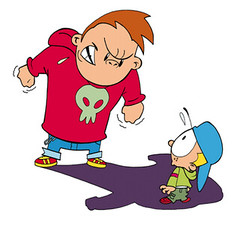 | 34 |
| 13985075704 | Irony/ironic | The contrast between what is stated explicitly and what is really meant. The difference between what appears to be and what actually is true, is used for many reasons, but frequently, it's used to create poignancy or humor. |  | 35 |
| 13985075705 | Juxtaposition (juhk-stuh-puh-zish-uhn) | When two words, phrases, images, ideas are placed close together or side by side for comparison or contrast. |  | 36 |
| 13985075706 | Litotes (lahy-toh-teez) | From the Greek word "simple" or "plain." Litotes is a figure of thought in which a point is affirmed by negating its opposite. It is a special form of understatement |  | 37 |
| 13985075707 | Metaphor | A figure of speech using implied comparison of seemingly unlike things or the substitution of one for the other, suggesting some similarity. |  | 38 |
| 13985075708 | Metonymy (mi-ton-uh-mee) | a figure of speech in which the name of one object is substituted for that of another closely associated with it. Example: A news release that claims "the White House declared" rather that "the President declared" |  | 39 |
| 13985075709 | Mood | meaning the prevailing atmosphere or emotional aura of a work. Setting, tone, and events can affect the mood. In this usage, mood is similar to tone and atmosphere. |  | 40 |
| 13985075710 | Narrative | The telling of a story or an account of an event or series of events. |  | 41 |
| 13985075711 | Onomatopoeia (on-uh-mat-uh-pee-uh) | A figure of speech in which natural sounds are imitated in the sounds of words. Simple examples include such words as buzz, hiss, hum, crack, whinny, and murmur. |  | 42 |
| 13985075712 | Oxymoron | the author groups apparently contradictory terms to suggest a paradox. Simple examples include "jumbo shrimp" and "cruel kindness." |  | 43 |
| 13985075713 | Paradox | A statement that appears to be self-contradictory or opposed to common sense but upon closer inspection contains some degree of truth or validity. |  | 44 |
| 13985075714 | Parallelism | refers to the grammatical or rhetorical framing of words, phrases, sentences, or paragraphs to give structural similarity. act as an organizing force to attract the reader's attention, add emphasis and organization, or simply provide a musical rhythm. |  | 45 |
| 13985075715 | Parody | A work that closely imitates the style or content of another with the specific aim of comic effect and/or ridicule. |  | 46 |
| 13985075716 | Pedantic (puh-dan-tik) | An adjective that describes words, phrases, or general tone that is overly scholarly, academic, or bookish. |  | 47 |
| 13985075717 | Personification | A figure of speech in which the author presents or describes concepts, animals, or inanimate objects by endowing them with human attributes or emotions. |  | 48 |
| 13985075718 | Polysyndeton (paulee-sin-dih-tawn) | Figure of addition and emphasis which intentionally employs a series of conjunctions (FANBOYS: for, and, nor, but, or, yet, so) not normally found in successive words, phrases or clauses |  | 49 |
| 13985075719 | Prose | refers to fiction and non-fiction, including all its forms. |  | 50 |
| 13985075720 | Repetition | The duplication, either exact or approximate, of any element of language, such as a sound, word, phrase, clause, sentence, or grammatical pattern. |  | 51 |
| 13985075721 | Rhetoric | From the Greek for "orator," this term describes the principles governing the art of writing effectively, eloquently, and persuasively. | 52 | |
| 13985075722 | Rhetorical modes | (1) to explain and analyze information by presenting an idea, relevant evidence, and appropriate discussion. (2) The purpose of argumentation is to prove the validity of an idea, or point of view, by presenting sound reasoning, discussion, and argument that thoroughly convince the reader. (3) The purpose of description is to re-create, invent, or visually present a person, place, event or action so that the reader can picture that being described.(4) The purpose of narration is to tell a story or narrate an event or series of events. |  | 53 |
| 13985075723 | Rhetorical Question | not answered by the writer because its answer is obvious or obviously desired, and usually just a yes or no answer would suffice. It is used for effect, emphasis, or provocation, or for drawing a conclusionary statement from the fact at hand. |  | 54 |
| 13985075724 | Sarcasm | language that is meant to hurt or ridicule someone or something. |  | 55 |
| 13985075725 | Satire | A work that targets human vices and follies or social institutions and conventions for reform or ridicule. |  | 56 |
| 13985075726 | Semantics | The branch of linguistics that studies the meaning of words, their historical and psychological development, their connotations, and their relation to one another |  | 57 |
| 13985075727 | Style | (1) An evaluation of the sum of the choices an author makes in blending diction, syntax, figurative language, and other literary devices. (2) Classification of authors to a group and comparison of an author to similar authors. | | 58 |
| 13985075728 | Subordinate clause | Like all clauses, this word group contains both a subject and a verb, but unlike the independent clause, cannot stand alone; it does not express a complete thought. |  | 59 |
| 13985075729 | Syllogism (sil- uh-jiz-uhm) | a deductive system of formal logic that presents two premises (the firs one called "major" and the second, "minor") that inevitably lead to a sound conclusion. |  | 60 |
| 13985075730 | Symbol/symbolism | Generally, anything that represents itself and stands for something else. Usually something concrete - such as object, action, character, or scene - that represents something more abstract. |  | 61 |
| 13985075731 | Synecdoche (si-nek-duh-kee) | is a type of metaphor in which the part stands for the whole or the whole for a part |  | 62 |
| 13985075732 | Syntax | The way an author chooses to join words into phrases, clauses, and sentences, similar to diction |  | 63 |
| 13985075733 | Theme | The central idea or message of a work, the insight it offers into life. |  | 64 |
| 13985075734 | Thesis | the sentence or a group of sentences that directly expresses the author's opinion, purpose, meaning, or position. |  | 65 |
| 13985075735 | Tone | Similar to mood, describes the author's attitude toward his material, the audience, or both. |  | 66 |
| 13985075736 | Transition | A word or phrase that links different ideas. effectively signals a shift from one idea to another. |  | 67 |
| 13985075737 | Understatement | The ironic minimizing of fact presents something as less significant than it is. | 68 | |
| 13985075738 | Undertone | An attitude that may lie under the tone of the piece. |  | 69 |
| 13985075739 | Wit | In modern usage, intellectually amazing language that surprises and delights. A |  | 70 |
| 13985075740 | Rhetoric | The art or study of using language effectively and persuasively |  | 71 |
| 13985075741 | Rhetorical Appeals | Logos, Ethos Pathos |  | 72 |
| 13985075742 | Logos | Appealing to reason; presented calmly, logically, step-by-step. They can include references to historical events, experts, and statistics. Tone will often be measured, neutral, logical (but not always). |  | 73 |
| 13985075743 | Ethos | An appeal to show that the speaker or writer is credible, a person whom we can trust, a good person who knows what he is talking about or who cares about us and knows us. |  | 74 |
| 13985075744 | Pathos | Appeal that tugs at people's feelings; may include emotional diction, imagery, repetition, and figurative language. Might make you laugh or cry. Could also be intended to make you afraid or feel outraged. |  | 75 |
| 13985075745 | Syntax | the arrangement of words and the order of grammatical elements in a sentence or paragraph. Sentence types, sentences lengths -- how the sentence is structured. |  | 76 |
| 13985075746 | Parallelism | Similarity of structure in a pair or series of related words, phrases, or clauses. It creates balance in a sentence. Ex) Like father, like son. |  | 77 |
| 13985075747 | Connotation | Meanings or associations with words beyond what you find in the dictionary. Usually positive or negative. Ex) Would you rather be called fat or plump? Skinny or slender? |  | 78 |
| 13985075748 | Paradox | Occurs when the elements of a statement contradict each other. Although the statement may appear illogical or absurd, it turns out to have a coherent meaning that reveals a hidden truth. Ex) It was the best of times, it was the worst of times. Not a logical fallacy. |  | 79 |
| 13985075749 | Anaphora | The repetition of the same word or groups of words at the beginning of successive clauses. I have a dream that ....I have a dream that ....(Martin Luther King). |  | 80 |
| 13985075750 | Tone | Writer's or speaker's attitude toward a subject, character, or audience. Is it amused? Hostile? Angry? Sad? Reflective? |  | 81 |
| 13985075751 | Diction | The writer's or speaker's word choice intended to create a particular impact on the audience. |  | 82 |
| 13985075752 | Allusion | A reference to a mythological, literary, or historical person, place, or thing. If a writer makes reference to the bible, for example, this is _______________. |  | 83 |
| 13985075753 | Alliteration | The practice of beginning several consecutive or neighboring words with the same sound. ex) She sells sea shells ... | | 84 |
| 13985075754 | Imagery | The words or phrases appealing to the senses and creates a picture in your mind. The smell of fresh cut grass, the twittering of the birds .... | | 85 |
| 13985075755 | Figurative Language | Words or expressions with a meaning that is different from the literal interpretation. Metaphors, simile, personification. |  | 86 |
| 13985075756 | SOAPSTone | A strategy for basic rhetorical analysis. Think of this for your introduction (plus the thesis statement). | 87 | |
| 13985075757 | The first S in SOAPSTone | The speaker or source of the text. What do you know about the speaker? (Relates to ethos) | 88 | |
| 13985075758 | The O in SOAPSTone | The occasion or circumstance of the text. What has happened or is happening? Why has the writer written this NOW? This is the context of the piece. | 89 | |
| 13985075759 | The A in SOAPSTone | The intended audience or recipient of the text. Many texts will have multiple audiences. | 90 | |
| 13985075760 | The P in SOAPSTone | the speaker's purpose for the text; the desired outcome. Ex) Lou Gehrig wants to thank his fans and show them that is remains positive. | 91 | |
| 13985075761 | The second S in SOAPSTone | the subject of the text | 92 | |
| 13985075762 | Counterargument | Opposing argument to the one the writer is putting forward. Rather than ignoring the counterargument, the writer will acknowledge it and then crush it with the mighty weight of their pen (and brain). |  | 93 |
| 13985075763 | Colloquial Language | An informal type of diction that reflects casual, conversational language and often times slang. Examples: "What's up dude" and "y'all" opposed to "How's it going" and "you all" | | 94 |
| 13985075764 | Rhetorical Question | A question asked for rhetorical effect to emphasize a point; no answer is expected. Example: "How many roads must a man walk down before you call him a man?" or "Are you kidding me?" |  | 95 |
| 13985075765 | Verbal Irony | Someone's spoken meaning is different from the words being used. Closely associated with sarcasm. |  | 96 |
| 13985075766 | Understatement | Opposite of hyperbole. Makes a situation seem less than it is. You just found out spring break is going to be a month long -- are you happy? You say, "Yeah, sure." Actually, you are delighted! This can produce an ironic effect. |  | 97 |
| 13985075767 | Logical Fallacy -- Generalization | An argument based on unsound logic. Ex) Generalization: Stating that all members of a group are a particular way. This is what the Muslim travel ban is saying about people from these Muslim majority countries. If a generalization is to have validity, it must be supported with facts. How can you prove anything about 1.6 billion Muslims? |  | 98 |
| 13985075768 | Logical Fallacy -- Bandwagon | Everyone is doing it -- so you should do it too! Another argument based on unsound logic. Used in advertising a lot. |  | 99 |
| 13985075769 | Logical Fallacy -- Ad Hominem | Attack on character. Someone who cannot attack someone's ideas, so goes after them personally. Ex) Donald Trump (when he was a candidate) attacked female candidate's appearance stating, "Look at that face." He did not attack her policies. |  | 100 |
| 13985075770 | Inclusive and Exclusive Language | Using language to include or exclude people. "We're in this together" makes people feel like they are a team. "Those people are a threat" can exclude people and creates divisions beween people. | 101 | |
| 13985075771 | Anecdotal Evidence | Evidence that is a personal story. | 102 | |
| 13985075772 | Expert Testimony | An expert in a field who can support the argument with facts and data. | 103 | |
| 13985075773 | Research findings | Evidence derived from a study. | 104 | |
| 13985075774 | Emotive language | Language that is sensational -- designed to get an emotional response from the reader. | 105 |
AP Human Geography: Language Flashcards
Language
Terms : Hide Images
| 16449408809 | Dialect | A regional variation of a language distinguished by vocabulary, spelling, and pronunciation, particular to a specific region or social group. | 0 | |
| 16449408810 | Extinct Language | A language that no longer has any speakers, or that is no longer in current use. | 1 | |
| 16449408812 | Isogloss | A geographic boundary line delimiting the area in which a given linguistic feature occurs. | 2 | |
| 16449408813 | Isolated Language | A natural language with no demonstrable genealogical (or "genetic") relationship with other languages or language families; that is, one that has not been demonstrated to descend from an ancestor common with any other language. i.e A language family with only one language. (Basque) | 3 | |
| 16449408814 | Language Branch | A Subsection of a Language Family. Differences are not as extensive or old as with language families. i.e The Romance "-------" of the Indo-European language family. | 4 | |
| 16449408815 | Language | The method of human communication, either spoken or written, consisting of the use of words in a structured and conventional way. | 5 | |
| 16449408816 | Language Group | A Collection of languages within a branch that share a common origin in the relatively recent past and display relatively few differences in grammar and vocabulary. An individual language, including all dialects (I.e. Italian, German, English) | 6 | |
| 16449408817 | Language Family | A collection of languages related to each other through a common ancestor long before recorded history. The trunk of the language tree, from which language branches come from. | 7 | |
| 16449408820 | Lingua Franca | A Language mutually understood and commonly used in trade by people who have different native languages (currently English worldwide). | 8 | |
| 16449408825 | Official Language | The language adopted for use by the government for the conduct of business and publication of documents, a language that is given special legal status. | 9 | |
| 16449408828 | Standard Language | The specific form of a language used for official government business, education, and mass communications. | 10 | |
| 16449408829 | Toponym | The name of a place, often reflecting that place's history and culture. | 11 | |
| 16449408830 | Vernacular | Using a language or dialect native to a region or country rather than a literary, cultured, or foreign language. It is usually the language of the common people. | 12 | |
| 16449408831 | Creole | A language that results from the mixing of a colonizer's language with the indigenous language of the people being dominated. Developed out of an earlier pidgin stage. | 13 | |
| 16449408832 | Denglish | The term is used in all German-speaking countries to refer to the increasingly strong influx of English or pseudo-English vocabulary into German. | 14 | |
| 16449408833 | Franglais | A form of French using many words and idioms borrowed from English. | 15 | |
| 16449408834 | Ebonics | A dialect of English spoken by some African Americans. | 16 | |
| 16449408835 | Spanglish | A hybrid language combining words and idioms from both Spanish and English, especially Spanish speech that uses many English words and expressions. | 17 | |
| 16449408851 | British Received Pronunciation (BRP) | The dialect of English associated with upper class Britons living in the London area now considered the standard form of British speech. | 18 | |
| 16449408864 | Irish Gaelic | This is one of the two official languages of Ireland, along with English. This language was forbidden under English rule. When Ireland got their independence form England in 1922, this language became an important part of their cultural identity and sense of nationalism and became a compulsory course in all public schools and required for public service jobs. | 19 | |
| 16449408865 | Basque | Also known as Euskera, this isolated language predates the Indo-European language and is not related to any other language family in Europe. Spoken in the Pyrenees Mountains (between Spain and France), the mountainous homeland created isolation, making the preservation of the language possible. | 20 | |
| 16449408866 | Welsh | This is one of the two official languages of Wales, along with English. This language was forbidden under English rule, but has been revived in recent years. This language is a compulsory subject in all schools in Wales and knowledge of the language is now required for many jobs in Wales. Bilingual signs and television and radio programs have also been added to help preserve this language. | 21 |
Flashcards
Flashcards
Flashcards
Flashcards
Flashcards
Pages

Need Help?
We hope your visit has been a productive one. If you're having any problems, or would like to give some feedback, we'd love to hear from you.
For general help, questions, and suggestions, try our dedicated support forums.
If you need to contact the Course-Notes.Org web experience team, please use our contact form.
Need Notes?
While we strive to provide the most comprehensive notes for as many high school textbooks as possible, there are certainly going to be some that we miss. Drop us a note and let us know which textbooks you need. Be sure to include which edition of the textbook you are using! If we see enough demand, we'll do whatever we can to get those notes up on the site for you!
