

AMSCO United States History 2015 Edition, Chapter 23 The Modern Era of the 1920s
Terms : Hide Images
| 7563308202 | Warren Harding | In November 1920, he was elected the 29th president of the United States. He was a Republican whose slogan was: "Return to Normalcy". His term was marked by scandals and corruption, although he was never implicated in any of the scandals. In August 1923, he died while traveling in the West. (p. 475-476) |  | 0 |
| 7563308203 | Charles Evans Hughes | A former presidential candidate and Supreme Court justice who was appointed secretary of state by President Warren G. Harding. (p. 476) |  | 1 |
| 7563308204 | Andrew Mellon | A Pittsburgh industrialist and millionaire who was appointed secretary of the treasury by President Harding in 1921 and served under Coolidge and Hoover. (p. 476) |  | 2 |
| 7563308205 | Harry Daugherty | Attorney General under President Harding who accepted bribes for agreeing not to prosecute certain criminal suspects. (p. 476) |  | 3 |
| 7563308206 | Albert Fall | Secretary of the Interior during Harding's administration. He was convicted of accepting bribes for granting oil leases near Teapot Dome, Wyoming. (p. 476) |  | 4 |
| 7563308207 | Teapot Dome | A government scandal involving a former United States Navy oil reserve in Wyoming that was secretly leased to a private oil company in 1921. (p. 476) |  | 5 |
| 7563308208 | Fordney-McCumber Tariff Act | This tariff passed in 1922, raised tariffs on foreign manufactured goods by 25 percent. It helped domestic manufacturers, but limited foreign trade, and was one cause of the Great Depression of 1929. (p. 476, 488) |  | 6 |
| 7563308209 | Bureau of the Budget | Formed in 1921, this bureau created procedures for all government expenditures to be placed in a single budget for Congress to annually review and vote on. (p. 476) |  | 7 |
| 7563308210 | Calvin Coolidge | As vice president, he became president when Warren Harding died in August 1923. He won the presidential election of 1924, but declined to run in 1928. He was a Republican who believed in limited government. He summarized his presidency and his era with the phrase: "The business of America is business". (p. 477) |  | 8 |
| 7563308211 | Herbert Hoover | When Calvin Coolidge decide not to run for president in 1928, he was the Republican presidential nominee. He promised to extend "Coolidge Prosperity", and won the election. (p. 477) |  | 9 |
| 7563308212 | Alfred E. Smith | He was the Democratic presidential candidate in the 1928 presidential election. He was the former governor of New York and his opponent in the presidential race was Republican Herbert Hoover. As a Roman Catholic and opponent of Prohibition, he appealed to immigrant urban voters. (p. 477) |  | 10 |
| 7563308213 | business prosperity | From 1919 to 1929, manufacturing output rose a spectacular 64 percent due to increased productivity, energy technologies, and governmental policy which favored the growth of big business. (p. 478) |  | 11 |
| 7563308214 | standard of living | During the 1920s, the standard of living (physical things that make life more enjoyable) improved significantly for most Americans. Indoor plumbing and central heating became commonplace. By 1930, two-thirds of all homes had electricity. (p. 477) |  | 12 |
| 7563308215 | scientific management | A system of industrial management created and promoted in the early twentieth century by Frederick W. Taylor. It emphasized time-and-motion studies to improve factory performance. (p. 478) |  | 13 |
| 7563308216 | Henry Ford | By 1914, he had perfected a system for manufacturing automobiles using an assembly line. (p. 478) |  | 14 |
| 7563308217 | assembly line | In a factory, an arrangement where a product is moved from worker to worker, with each person performing a single task in the making of the product. (p. 478) |  | 15 |
| 7563308218 | open shop | A company with a labor agreement under which union membership cannot be required as a condition of employment. (p. 479) |  | 16 |
| 7563308219 | welfare capitalism | An approach to labor relations in which companies voluntarily offer their employees improved benefits and higher wages in order to reduce their interest in joining unions. (p. 479) |  | 17 |
| 7563308220 | consumerism | In the 1920s, consumerism was fueled by: homes with electricity, electrical appliances, affordable automobiles, increased advertising, and purchasing on credit. (p. 478) |  | 18 |
| 7563308221 | electric appliances | In the 1920s, refrigerators, stoves, vacuum cleaners, and washing machines became very popular as prices dropped due to reduced production costs and as electrical power to run them became more available. (p. 478) |  | 19 |
| 7563308222 | impact of the automobile | In the 1920s, this product had the largest impact on society. It caused a growth of cities and suburbs, and workers no longer needed to live near their factories. It provided job opportunities and was a much more efficient way of transportation. (p. 479) |  | 20 |
| 7563308223 | jazz age | Name for the 1920s, because of the popularity of jazz, a new type of American music that combined African rhythms, blues, and ragtime. (p. 480) |  | 21 |
| 7563308224 | radio, phonographs | Allowed mostly young people to listen to recorded music. The first radio station went on the air in 1920. Previously, newspapers had been the only form of mass communications. (p. 480) |  | 22 |
| 7563308225 | national networks | Nationwide radio networks enabled people all over the country to listen to the same news, sports, soap operas, quiz shows and comedies. (p. 480) |  | 23 |
| 7563308226 | Hollywood | The movie industry was centered here. The industry grew rapidly in the 1920s. Sound was introduced to movies in 1927. By 1929 over 80 million movie tickets were sold each week. (p. 480) |  | 24 |
| 7563308227 | movie stars | In the 1920s, sexy and glamorous movie stars such as Greta Garbo and Rudolf Valentino we idolized by millions. (p. 480) |  | 25 |
| 7563308228 | popular heroes | Americans shifted role models from politicians to sports heroes and movie stars. Sports heros included Jack Dempsey, Jim Thorpe, Babe Ruth, and Bobby Jones. However, the most celebrated was Charles Lindbergh who flew from Long Island to Paris in 1927. (p. 480) |  | 26 |
| 7563308229 | movie palaces | Ornate, lavish single-screen movie theaters that emerged in the 1910s in the United States. (p. 480) |  | 27 |
| 7563308230 | role of women | In the 1920s, the traditional separation of labor between men and women continued. Most middle-class women expected to spend their lives as homemakers and mothers. (p. 480) |  | 28 |
| 7563308231 | Sigmund Freud | Austrian psychiatrist who originated psychoanalysis. (p. 481) | 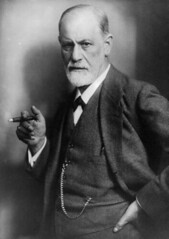 | 29 |
| 7563308232 | morals and fashions | In the 1920s, movies, novels, automobiles, and new dances encouraged greater promiscuity. Young women shocked their elders by wearing dresses hemmed at the knee (flapper look), cutting their hair short, smoking cigarettes, and driving cars. (p. 481) |  | 30 |
| 7563308233 | Margaret Sanger | She founded American Birth Control League; which became Planned Parenthood in the 1940s. She advocated birth control awareness. (p. 481) |  | 31 |
| 7563308234 | high school education | In the 1920s, universal high school education became a new American goal. By 1930, the number of high school graduates had doubled to over 25 percent of school-age adults. (p. 481) |  | 32 |
| 7563308235 | consumer culture | In the 1920s, many writers were disillusioned with the materialism of the business oriented culture. (p. 481) |  | 33 |
| 7563308236 | Frederick Lewis Allen | In 1931, he wrote "Only Yesterday", a popular history book that portrayed the 1920s as a period of narrow-minded materialism. (p. 489) |  | 34 |
| 7563308237 | Only Yesterday | A 1931 history book that portrayed the 1920s as a period of narrow-minded materialism in which the middle class abandoned Progressive reforms, embraced conservative Republican policies, and either supported or condoned nativism, racism, and fundamentalism. (p. 489) |  | 35 |
| 7563308238 | Gertrude Stein | American writer of experimental novels, poetry, essays, operas, and plays. She called the disillusioned writers of the 1920s, a "lost generation". (p. 481) |  | 36 |
| 7563308239 | Lost Generation | Group of writers in 1920s, who shared the belief that they were lost in a greedy and materialistic world that lacked moral values. Many of them moved to Europe. (p. 481) | 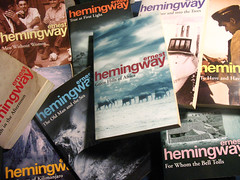 | 37 |
| 7563308240 | F. Scott Fitzgerald | A novelist and chronicler of the jazz age. His wife, Zelda and he were the "couple" of the decade. His novel, "The Great Gatsby" is considered a masterpiece about a gangster's pursuit of an unattainable rich girl. (p. 481) |  | 38 |
| 7563308241 | Ernest Hemingway | One of the most popular writers of the 1920s, he wrote "A Farewell to Arms". (p. 481) |  | 39 |
| 7563308242 | Sinclair Lewis | American writer of the 1920s. He became the first American to receive a Nobel Prize in Literature. (p. 481) |  | 40 |
| 7563308243 | Ezra Pound | Expatriate American poet and critic of the 1920s. (p. 481) |  | 41 |
| 7563308244 | T. S. Eliot | Thomas Stearns Eliot was an essayist, publisher, playwright, literary and social critic, and one of the twentieth century's major poets. (p. 481) |  | 42 |
| 7563308245 | Eugene O'Neill | An American playwright of the 1920s. (p. 481) |  | 43 |
| 7563308246 | industrial design | The fusion of art and technology during the 1920s and 1930s created the new profession of industrial design. (p. 482) |  | 44 |
| 7563308247 | Art Deco | The 1920's modernistic art style that captured modernistic simplification of forms, while using machine age materials. (p. 482) |  | 45 |
| 7563308248 | Edward Hopper | A twentieth-century American painter, whose stark realistic paintings often convey a mood of solitude and isolation in common urban settings. (p. 482) |  | 46 |
| 7563308249 | regional artists | Thomas Benton and Grant Wood celebrated the rural people and scenes of the American heartland. (p. 482) |  | 47 |
| 7563308250 | Grant Wood | An American Regional artist who focused on rural scenes in Iowa. He is best known for his painting "American Gothic". (p. 482) |  | 48 |
| 7563308251 | George Gershwin | He was the son of Russian-Jewish immigrants. He blended jazz and classical music to produce "Rhapsody in Blue" and folk opera "Porgy and Bess". (p. 482) |  | 49 |
| 7563308252 | northern migration | By 1930, almost 20 percent of African Americans out of the Southern United States to the North. (p. 482) |  | 50 |
| 7563308253 | Harlem Renaissance | The largest African American community of almost 200,000 developed in the Harlem section of New York City. It became famous in the 1920s for its talented actors, artists, musicians, and writers. This term describes this period. (p. 483) |  | 51 |
| 7563308254 | Countee Cullen | A leading 1920s African American poet from Harlem. (p. 483) |  | 52 |
| 7563308255 | Langston Hughes | A leading 1920s African American poet from Harlem. (p. 483) |  | 53 |
| 7563308256 | James Weldon Johnson | A leading 1920s African American author from Harlem. (p. 483) |  | 54 |
| 7563308257 | Claude McKay | A leading 1920s African American poet from Harlem. (p. 483) |  | 55 |
| 7563308258 | Duke Ellington | A leading 1920s African American jazz great from Harlem. (p. 483) |  | 56 |
| 7563308259 | Louis Armstrong | A leading 1920s African American jazz trumpeter from Harlem. (p. 483) |  | 57 |
| 7563308260 | Bessie Smith | A leading 1920s African American blues singer from Harlem. (p. 483) |  | 58 |
| 7563308261 | Paul Robeson | A leading 1920s African American singer from Harlem. (p. 483) |  | 59 |
| 7563308262 | Back to Africa movement | Encouraged those of African descent to return to Africa. (p. 483) |  | 60 |
| 7563308263 | Marcus Garvey | African American leader during the 1920s who founded the Universal Negro Improvement Association and advocated mass migration of African Americans back to Africa. He was deported to Jamaica and his movement collapsed. (p. 483) | 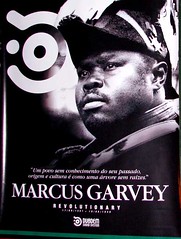 | 61 |
| 7563308264 | black pride | Many African American leaders agreed with Marcus Garvey's ideas on racial pride and self-respect. This influenced another generation in the 1960s. (p. 483) |  | 62 |
| 7563308265 | modernism | They took a historical and critical view of certain Bible passages and believed that they could accept Darwin's theory of evolution without abandoning their religion. (p. 483) |  | 63 |
| 7563308266 | fundamentalism | A Protestant Christian movement emphasizing the literal truth of the Bible and opposing religious modernism (p. 483) |  | 64 |
| 7563308267 | revivalists: Billy Sunday, Aimee Semple McPherson | Leading radio evangelists such as Billy Sunday and Aimee Semple McPherson preached a fundamentalist message. (p 484) |  | 65 |
| 7563308268 | Scopes trial | A 1925 Tennessee court case in which Clarence Darrow and William Jennings Bryan argued the issue of teaching evolution in public schools. (p. 484) |  | 66 |
| 7563308269 | Clarence Darrow | A famed criminal defense lawyer, he defended John Scopes, a teacher who taught evolution in his Tennessee classroom. (p. 484) |  | 67 |
| 7563308270 | Volstead Act | The federal law of 1919 that established criminal penalties for manufacturing, transporting, or possessing alcohol. (p. 484) |  | 68 |
| 7563308271 | rural vs. urban | In the 1920s, in the urban areas it was common to ignore the law and drink liquor in clubs or bars known as speakeasies. (p 484) |  | 69 |
| 7563308272 | organized crime | In the 1920s, organized crime became big business, as bootleggers transported and sold liquor to many customers. (p. 484) |  | 70 |
| 7563308273 | Al Capone | A famous Chicago gangster who fought for control of the lucrative bootlegging (liquor) trade. (p. 484) |  | 71 |
| 7563308274 | 21st Amendment | The amendment which ended the prohibition of alcohol in the United States, it repealed the 18th amendment. (p. 485) |  | 72 |
| 7563308275 | quota laws of 1921 and 1924 | Laws passed to limit immigration. (p. 485) |  | 73 |
| 7563308276 | Sacco and Vanzetti Case | A criminal case of two Italian men who were convicted of murder in 1921. They were prosecuted because they were Italians, atheists, and anarchists. After 6 years of appeals they were executed in 1927. (p. 485) |  | 74 |
| 7563308277 | Ku Klux Klan | A secret society created by white southerners in 1866. They used terror and violence to keep African Americans from exercising their civil rights. (p. 486) |  | 75 |
| 7563308278 | Birth of a Nation | A popular silent film, which portrayed the KKK during Reconstruction as heros. (p. 486) |  | 76 |
| 7563308279 | blacks, Catholics and Jews | The KKK directed hostility toward these groups in the North. (p. 486) |  | 77 |
| 7563308280 | foreigners and Communists | During the 1920s, widespread disillusionment with World War I, communism in the Soviet Union, and Europe's post war problems made Americans fearful of being pulled into another foreign war. (p. 486) |  | 78 |
| 7563308281 | disarmament | Republican presidents of the 1920s tried to promote peace and also to scale back defense expenditures by arranging disarmament treaties (reduction in military equipment). (p. 486) |  | 79 |
| 7563308282 | Washington Conference | A 1921 conference that placed limits on naval powers, respect of territory in the Pacific, and continued the Open Door policy in China. (p. 487) |  | 80 |
| 7563308283 | Five-Power Naval Treaty | A 1922 treaty resulting from the Washington Armaments Conference that limited to a specific ratio the carrier and battleship tonnage of each nation. The five countries involved were: United States, Great Britain, Japan, France, and Italy. (p. 487) |  | 81 |
| 7563308284 | Nine-Power China Treaty | A 1922 treaty affirming the sovereignty and territorial integrity of China as previously stated in the Open Door Policy. (p. 487) |  | 82 |
| 7563308285 | Kellogg-Briand Treaty | This treaty of 1928 renounced the use of force to achieve national ends. It was signed by Frank Kellogg of the United States and Aristide Briand of France, and most other nations. The international agreement proved ineffective. (p. 487) |  | 83 |
| 7563308286 | Latin America policy | In 1927, the United States signed an agreement with Mexico protecting U.S. interests in Mexico. (p. 487) |  | 84 |
| 7563308287 | war debts | During World War I the United States had loaned more than $10 billion to the Allies. After the war, the United States insisted that they pay back all the debt. Great Britain and France objected because they suffered much greater losses during the war than the United States. (p. 488) |  | 85 |
| 7563308288 | reparations | As part of the Treaty of Versailles, Germany was ordered to pay $30 billion in reparations to the Allies. (p. 488) |  | 86 |
| 7563308289 | Dawes Plan | A 1924 plan, created by Charles Dawes in which the United States banks would lend large sums to Germany. Germany would use the money to rebuild its economy and pay reparations to Great Britain and France. Then Great Britain and France would pay their war debts to the United States. After the 1929 stock market crash, the loans to Germany stopped. (p. 488) |  | 87 |
