

AP US History Period 6 Flashcards
Terms : Hide Images
| 13805988540 | People's (Populist) Party | An agrarian-populist political party in the United States. For a few years, 1892-96, it played a major role as a left-wing force in American politics. Drew support from angry farmers in the West and South and operated on the left-wing of American politics. Highly critical of capitalism, especially banks and railroads. Allied itself with the labor movement. |  | 0 |
| 13805988541 | assimilation | the process by which a person or a group's language and/or culture come to resemble those of another group |  | 1 |
| 13805988542 | The Gilded Age | The late 19th century, from the 1870s to about 1900. Term derived from writer Mark Twain's 1873 The Gilded Age: A Tale of Today, which satirized an era of serious social problems masked by a thin gold gilding of economic progress. | 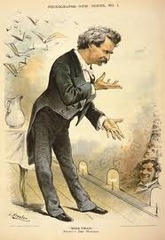 | 2 |
| 13805988543 | Social Darwinism | Term coined in the late 19th century to describe the idea that humans, like animals and plants, compete in a struggle for existence in which natural selection results in "survival of the fittest." Provided a justification for the enormous wealth and power wielded by industrialists in the latter half of the 19th century. |  | 3 |
| 13805988544 | Gospel of Wealth | An essay written by Andrew Carnegie in June of 1889 that describes the responsibility of philanthropy by the new upper class of self-made rich. |  | 4 |
| 13805988545 | Jane Addams | A pioneer American settlement activist/reformer, social worker, public philosopher, sociologist, author, and leader in women's suffrage and world peace. She created the first Hull House. Co-winner of 1931 Nobel Peace Prize. |  | 5 |
| 13805988546 | Plessy v. Ferguson | 1896 - Legalized segregation in publicly owned facilities on the basis of "separate but equal." |  | 6 |
| 13805988547 | racial segregation | the separation of humans into ethnic or racial groups in daily life. Generally applies to activities such as eating in a restaurant, drinking from a water fountain, using a public toilet, attending school, going to the movies, riding on a bus, or in the rental or purchase of a home. | 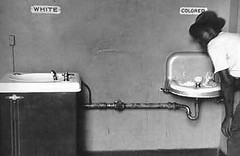 | 7 |
| 13805988548 | trust | A set of companies managed by a small group known as trustees, who can prevent companies in the trust from competing with each other. |  | 8 |
| 13805988549 | tenement | a multi-dwelling building, often poor or overcrowded |  | 9 |
| 13805988550 | prohibition | forbidding by law the manufacture, sale, or consumption of liquor |  | 10 |
| 13805988551 | Plessy v. Ferguson (1896) | Legalized racial segregation in publicly owned facilities on the basis of "separate but equal." |  | 11 |
| 13805988552 | Land Grants | land given by government to universities and railroad companies |  | 12 |
| 13805988553 | Dawes Act | land given to individual Indians to discourage tribal mindset; encouraged Indians to farm for a living instead of communally owning land |  | 13 |
| 13805988554 | Open Range | the idea that cattle can be grazed on large tracts of public and/or private property; invention of barbed wire ended this idea and drove many small cattle ranches out of business and off their small plots of land |  | 14 |
| 13805988555 | Vertical Integration | Strategy to maximize profits by attempting to own every step of the manufacturing process (ex. Carnegie Steel) |  | 15 |
| 13805988556 | Horizontal Integration | Strategy to maximize profits by attempting to purchase competing companies in the same industry; monopoly-building (ex. Rockefeller's Standard Oil) | | 16 |
| 13805988557 | Knights of Labor | American labor organization in the 1880s led by Terence V. Powderly. Organized a wide range of workers, including skilled and unskilled, and had broad reform goals. |  | 17 |
| 13805988558 | Haymarket Riot | Labor dispute in Chicago that ended with a bomb being thrown at police resulting in many deaths. Led to an unfavorable public opinion of organized labor. |  | 18 |
| 13805988559 | American Federation of Labor | An organization of various trade unions that fought for specific reforms (as opposed to broad changes supported by the Knights of Labor). |  | 19 |
| 13805988560 | Homestead and Pullman Strikes | Industrial lockouts and strikes that showed battle between corporations and labor unions. Ended with government intervention on the side of big business. |  | 20 |
| 13805988561 | Urbanization | movement of people from rural communities and settlements to big cities |  | 21 |
| 13805988562 | "New Immigrants" | immigrants from southern and eastern Europe such as Poland, Italy, etc. that arrived in the US in the latter half of the 19th century |  | 22 |
| 13805988563 | Chinese Exclusion Act | First law limiting immigration based on race; effectively stopped immigration from China through the end of WWII. |  | 23 |
| 13805988564 | Political Machine | Unofficial political organization that works to win elections in order to exercise power; sometimes referred to as a shadow government; rose to power in the late 1800s because of ill-equipped local governments that failed to meet the needs of growing urban populations |  | 24 |
| 13805988565 | Tammany Hall | Political machine of New York City that was well-known for its corruption; lead by William Boss Tweed |  | 25 |
| 13805988566 | Grange Movement and Farmers Alliance | Grassroots movements that attempted to address the plight of farmers in the late 1800s; attempted to regulate railroads and enlarge opportunity for credit; evolved into Populist movement. |  | 26 |
| 13805988567 | William Jennings Bryan | Democratic presidential hopeful that was a member of the Populist Party; free silver advocate; "Do not crucify mankind on a cross of gold". |  | 27 |
| 13805988568 | New South | After the Civil War, southerners promoted a new vision for a self-sufficient southern economy built on modern capitalist values, industrial growth, and improved transportation. In reality, this growth was fairly slow. |  | 28 |
| 13805988569 | Americanization | Process of assimilating immigrants into American culture by teaching English, American history, and citizenship. |  | 29 |
| 13805988570 | Andrew Carnegie | A Scottish-born American industrialist and philanthropist who founded the Carnegie Steel Company in 1892. By 1901, his company dominated the American steel industry. |  | 30 |
| 13805988571 | transcontinental railroads | a railroad that would cross the continent and connect the East to the West; opened new markets and helped spur the Industrial Revolution |  | 31 |
| 13805988572 | Social Gospel | Late 19th-century movement Protestant movement preaching that all true Christians should be concerned with the plight of immigrants and other poor residents of American cities and should financially support efforts to improve lives of these poor urban dwellers. Settlement houses were often financed by funds raised by ministers of this movement. |  | 32 |
| 13805988573 | Standard Oil | John D. Rockefeller's company that gained a monopoly over the world petroleum market with the practice of trusts and swift elimination of competition. |  | 33 |
| 13805988574 | Carnegie Steel | A steel producing company created by Andrew Carnegie to manage business at his steel mills in the Pittsburgh, Pennsylvania area in the late 19th century. Significance: had a monopoly in the steel industry. vertical integrations. |  | 34 |
| 13805988575 | John D. Rockefeller | Wealthy owner of Standard Oil Company. Considered to be a robber baron who used ruthless tactics to eliminate other businesses. Built trusts and used money to influence government. | | 35 |
| 13805988576 | Industrial Revolution | Period characterized by the rapid social and economic changes in manufacturing and agriculture that occurred in England during the late 18th century and rapidly diffused to other parts of the developed world. In the US, this occurred during the period roughly 1825-1925. |  | 36 |


