

Flashcards
Flashcards
AP US History UNIT 2 - American Revolution. Flashcards
Terms : Hide Images
| 14579396244 | republicanism | the idea of society in which the people subordinate their private, selfish interests to common good, and elect representative government. | 0 | |
| 14579396245 | Whigs | this radical English political party planted ideas in the colonists' head of the corruption of the British monarchs, dukes and princes. | 1 | |
| 14579396246 | mercantilism | the theory that a country gained economic, military and political power from the amount of gold and silver in its treasury | 2 | |
| 14579396247 | Navigation Laws | laws that restricted colonial trade; made it so Britain completely controlled trade | 3 | |
| 14579396248 | paper money | the strain put upon the colonies' economy by trade with Britain forced them to print _________ ____________ | 4 | |
| 14579396249 | good money for ship parts, Virginia monopolized the tobacco industry, colonies were protected by the world's greatest army and navy | benefits of mercantilism for the colonies | 5 | |
| 14579396250 | stifled American economy - manufacturing specifically, created a dependence upon Britain, was debasing to colonists | cons to mercantilism for the colonies | 6 | |
| 14579396251 | taxes | Britain began to place these upon the colonies after the French and Indian War | 7 | |
| 14579396252 | George Grenville | this British prime minister began to strictly enforce the Navigation Laws and implemented the Sugar Act, the Quartering Act, and the Stampt | 8 | |
| 14579396253 | Sugar Act | this 1764 ruling increased tax on sugar imported from the West Indies | 9 | |
| 14579396254 | Quartering Act | this 1765 ruling forced the colonists to house soldiers | 10 | |
| 14579396255 | Stamp Act | this 1765 ruling required the use of taxed stamps on everything from playing cards to legal documents | 11 | |
| 14579396256 | Stamp Act Congress | they met in 1765 and drew up a document detailing their grievances | 12 | |
| 14579396257 | non-importation agreements | these stopped much trade with Britain in protest of the taxes - eventually caused the repeal of the Stamp Act | 13 | |
| 14579396258 | Sons of Liberty | this group spoke out against taxation in more violent ways, including tarring and feathering | 14 | |
| 14579396259 | Boston Massacre | March 5, 1770, a crowd of colonists began tauting a small squad of redcoats, who opened fire on the crowd and killed/injured 11 people | 15 | |
| 14579396260 | Boston Port Act | the Intolerable Act that closed the Boston Harbor until the damaged cargo was paid for | 16 | |
| 14579396261 | town meetings | the Intolerable Acts restricted this important aspect of self-government in New England... | 17 | |
| 14579396262 | Quebec Act | a law passed at the same time as the intolerable acts that ensured the French their Catholic religion, allowed them to keep old customs, and granted them land in the Ohio River Valley | 18 | |
| 14579396263 | The Association | a complete boycott of British goods (no import, no export, no comsumptions) | 19 | |
| 14579396264 | Lexington and Concord | The British sent a detachment her to "bag" rebels like Sam Adams and seize stores of gunpowder. They killed Americans at first, but were hit hard at the second location | 20 | |
| 14579396265 | Hessians, Indians, American Loyalists | the British enlisted the help of... | 21 | |
| 14579396266 | Marquis de Lafayette | a Frenchman who assisted the American colonies | 22 | |
| 14579396267 | disorganization | a major weakness of the colonies during Revolutionary War | 23 | |
| 14579396268 | supplies (ammuntion, food) | these were scarce; soldiers often went without the basic necessities for weeks | 24 | |
| 14579396269 | Paul Revere | Famous ride from Boston to Lexington "the British are coming." Revere was not alone on his mission to warn John Hancock, Samuel Adams and other patriots that the British were approaching Lexington on the evening of April 18, 1775. Two other men, William Dawes and Samuel Prescott, rode alongside him, and by the end of the night as many as 40 men on horseback were spreading the word across Boston's Middlesex County. Revere also never reached Concord, as the poem inaccurately recounts. Overtaken by the British, the three riders split up and headed in different directions. Revere was temporarily detained by the British at Lexington and Dawes lost his way after falling off his horse, leaving Prescott—a young physician who is believed to have died in the war several years later—the task of alerting Concord's residents. | 25 | |
| 14579396270 | Lexington | First battle of the American Revolution | 26 | |
| 14579396271 | Battle of Concord | Battle colonists won. | 27 | |
| 14579396272 | Second Continental Congress | Created Continental Army to fight British | 28 | |
| 14579396273 | Continental Army | The colonial forces, made up of volunteers | 29 | |
| 14579396274 | George Washington | 1st president and commander in chief of Continental Amry | 30 | |
| 14579396275 | Olive Branch Petition | a letter of peace drafted by the Second Continental Congress to Great Britain, colonists loyal to king, not parliament. | 31 | |
| 14579396276 | King of England during the American Revolution | Rejects Olive Branch Petition and sends more troops to Boston | 32 | |
| 14579396277 | Charles Townshend | Financial leader and a royal official in Britain, wanted to strengthen power of British Parliament | 33 | |
| 14579396278 | British East India Company | In 1773, Britain gave this company full monopoly of the American tea market Parliament passed law allowing company to sell to colonists directly - tea cheaper than smuggled tea even with tax | 34 | |
| 14579396279 | Boston Tea Party | 50 colonists dressed as native americans, boarded british ship, dumped 342 chests of tea into sea | 35 | |
| 14579396280 | Patriot | Colonists who wanted independence from Britain | 36 | |
| 14579396281 | Loyalist | American colonists who remained loyal to Britain and opposed the war for independence. | 37 | |
| 14579396282 | Intolerable Acts/Coercive Acts 1774 | Boston Port closed till destroyed tea was paid for Limited activity in town meetings in Boston More housing options for British troops Enlarged boundaries of Canada | 38 | |
| 14579396283 | Response to Intolerable Acts | -The first continental congress -boycott british trade | 39 | |
| 14579396284 | Self government | government of a country by its own people, especially after having been a colony. | 40 | |
| 14579396285 | Outcome of Acts | Protests, boycotts and riots | 41 | |
| 14579396286 | Enlightenment Ideas | Life, liberty, property / John Locke | 42 | |
| 14579396287 | Patrick Henry | Virginia Resolves describing enlightenment ideas | 43 | |
| 14579396288 | Virginia Resolves | Colonial assemblies had right to tax colonists | 44 | |
| 14579396289 | Virginia House of Burgesses | Accepted all but 2 of Virginia Resolves b/c too radical | 45 | |
| 14579396290 | Declaratory Act 1766 | stated that Parliament had the right to tax (control) the colonies in any way they wished | 46 | |
| 14579396291 | Ohio Valley | The French wanted this place so they could produce and trade fur | 47 | |
| 14579396292 | Fort Duquesne | Fort built by the French in modern day Pittsburg (which was considered colonists territory) in 1754. This is considered to be the first move in the French and Indian War. | 48 | |
| 14579396293 | George Washington | Man who led group to fort Duquesne, resulting in failure and many deaths | 49 | |
| 14579396294 | William Pitt | Replaces Washington as general and defeats French at Duquesne, which then is renamed after him | 50 | |
| 14579396295 | Join or die flag | This flag of a snake cut into pieces symbolized that if the colonists could not align and join the union, they would die | 51 | |
| 14579396296 | England's plan to pay off war debt | To pay off debt from the French and Indian war, England imposes taxes on colonists | 52 | |
| 14579396297 | Pontiac's rebellion | This rebellion was led by Pontiac (a Native American tribe leader) who was from the Great Lakes region and saw the British as a threat. Pontiac and the Ottowa tribe sought to drive the British out of their land by attacking and capturing their forts in the region which made the British fearful of native Americans. | 53 | |
| 14579396298 | Jeffrey Amherst | British general who intentionally gave small pox infected blankets to native Americans (this is considered the introduction to chemical warfare) which results in England winning the French and Indian war and claiming the ceded land | 54 | |
| 14579396299 | King George III | King who colonists rebel against - put many taxes and laws in place considered almost too strict towards colonists after years salutary neglect | 55 | |
| 14579396300 | Proclamation of 1763 | This states that colonists could not move west of the Appalachian mountains after the French and Indian war. This was mostly set because the British felt threatened by Native Americans and viewed them as dangerous. | 56 | |
| 14579396301 | Salutary neglect | When England did not enforce strict parliamentary rules upon colonists, because they believed that the colonies would stay loyal and obedient. However, the colonists developed a sense of independence and wanted freedom from the British | 57 | |
| 14579396302 | Taxation without representation is tyranny | This phrase was first said by James Otis. It means that since the colonists aren't represented in government, but have to abide by British law, the British unjustly have power over them | 58 | |
| 14579396303 | Tar and feather | Common punishment in the 18th century where a person would be covered all over their body with hot tar and then covered in feathers | 59 | |
| 14579396304 | Sons of liberty | A group led by Paul Revere, Samuel Adams and John Hancock that protested against acts set by parliament. First public rebellion was against Stamp Act (1765) and most famous rebellion was the Boston Tea party. They would tar and feather people such as tax collectors. | 60 | |
| 14579396305 | Samuel Adams | One of the leaders of Sons of Liberty, opposed to taxes and acts by parliament, founding father and politician in colonial Massachusetts | 61 | |
| 14579396306 | Townshend Acts | (1770) stated that an import tax would be placed on items such as glass, lead, paint, paper and tea. Sons of Liberty protested against it and attacked customs officials which resulted in British troops being sent to Boston. Parliament later repealed all except tea tax | 62 | |
| 14579396307 | Crispus Attucks | African American killed in Boston massacre, first casualty of the American revolution | 63 | |
| 14579396308 | John Adams | Cousin to Samuel Adams, defended red coat soldiers in court because it was just, helped them to be acquitted | 64 | |
| 14579396309 | Treaty of Paris | British get Canada, Great Lakes, Ohio Valley, and Florida. The French are driven out of North America, the Mississippi River is the new boundary. The British have no checks now in the new world. | 65 | |
| 14579396310 | Albany Plan of Union | Ben Franklin's 1754 proposal to form one government for a group of Britain's colonies in North America | 66 | |
| 14579396311 | First Continental Congress | The Bostonians' actions outraged Parliament and the Crown. To punish Boston, Parliament passed the Coercive Acts. These laws closed the port of Boston to trade until inhabitants paid for the destroyed tea, including the tax on te tea. They also increased the power of the governor at the expense of the elected assembly and town meetings. To enforce these measures, the British sent warships and troops to Boston. in 1774 in response to the Intolerable Acts, figures like John Adams, George Washington, and Patrick Henry were chosen as delegate from colonies to meet in Philadelphia and discuss Britain's unfair taxes and rules | 67 | |
| 14579396312 | Divine Right of Kings | a political and religious doctrine of royal and political legitimacy. It asserts that a monarch is subject to no earthly authority, deriving the right to rule directly from the will of God. | 68 | |
| 14579396313 | Social Contract | In both moral and political philosophy, the social contract is a theory that originated during the Age of Enlightenment and concerns the legitimacy of the authority of the state over the individual. Social contract states that individuals have consented, either explicitly or tacitly, to surrender some of their freedoms and submit to the authority of the ruler (or to the decision of a majority) in exchange for protection of their remaining rights. Therefore, the relation between natural and legal rights is often a topic of social contract theory. The term takes its name from The Social Contract (French: Du contrat social ou Principes du droit politique), a 1762 book by Jean-Jacques Rousseau that discussed this concept. | 69 | |
| 14579396314 | French & Indian War | a conflict in North America, lasting from 1754 to 1763 that was a part of a worldwide struggle between France and Britain and ended with the defeat of the French and the transfer of French Canada to Britain. | 70 | |
| 14579396315 | Colonial smuggling | colonial merchants traded illegally in goods enumerated in the Navigation Acts and in the Corn and Manufacturing laws passed in the 1660s. The smuggling started when the British passed strict laws on trade. | 71 | |
| 14579396316 | Declaration of Independence | the document written by Thomas Jefferson in 1776 in which the delegates of the Continental Congress declared independence from the British | 72 | |
| 14579396317 | Magna Carta | would inspire American colonists a few hundred years later to declare independence from the British themselves. Around one-third of the provisions in the United States' Bill of Rights draw from the Magna Carta, particularly from its 39th clause: "No freeman shall be taken, imprisoned, disseised, outlawed, banished, or in any way destroyed, nor will we proceed against or prosecute him, except by the lawful judgment of his peers and by the law of the land." | 73 | |
| 14579396318 | What were arguments FOR the colonies declaring independence from England? | They believed the British were treating the colonists unfairly. The British passed many tax laws that impacted the colonists. The colonists had no representatives in Parliament to vote on or discuss these laws. In English government, the people had to have representatives who could vote on taxes that would affect them. The colonists had no such voice in British government. Thus, they believed these taxes were unfair and illegal. The colonists also felt the British were limiting what the colonists could do. By passing the Proclamation of 1763, the colonists were not allowed to move west of the Appalachian Mountains. The colonists wanted to go here so they could get land cheaply. | 74 | |
| 14579396319 | What were arguments AGAINST the colonies declaring independence from England? | Most colonists continued to quietly accept British rule until Parliament's enactment of the Tea Act in 1773, a bill designed to save the faltering British East India Company by greatly lowering its tea tax and granting it a monopoly on the American tea trade. The low tax allowed the company to undercut even tea smuggled into America by Dutch traders, and many colonists viewed the act as another example of taxation tyranny. In response, militant colonists in Massachusetts organized the "Boston Tea Party," which saw British tea valued at some £18,000 dumped into Boston Harbor. Parliament, outraged by the Boston Tea Party and other blatant acts of destruction of British property, enacted the Coercive Acts, called the Intolerable Acts by the colonists, in 1774. The Coercive Acts closed Boston to merchant shipping, established formal British military rule in Massachusetts, made British officials immune to criminal prosecution in America and required colonists to quarter British troops. In response, the colonists called the first Continental Congress to consider united American resistance to the British. With the other colonies watching intently, Massachusetts led the resistance to the British, forming a shadow revolutionary government and establishing militias to resist the increasing British military presence across the colony. | 75 | |
| 14579396320 | What was the social position of the framers of the Constitution and how did that effect the government created by the Constitution? | they were the wealthy calss and they wanted to protect themselves | 76 | |
| 14579396321 | John Locke | - Thomas Jefferson ranked him, along with his compatriot Algernon Sidney, as the most important thinkers on liberty. he helped inspire Thomas Paine's radical ideas about revolution. Locke fired up George Mason. From him, James Madison drew his most fundamental principles of liberty and government. - "life, liberty, and property" | 77 |
Flashcards
Flashcards
US AP History Period 1 Flashcards
Terms : Hide Images
| 14769863402 | How did early Americans reach North and South America? | They crossed a land bridge from Asia | 0 | |
| 14769863403 | When was the land bridge formed? What was it made of? | During the ice age, ice/land | 1 | |
| 14769863405 | What were the most complex Indian communities? | Mayan, Inca and Aztecs | 2 | |
| 14769863406 | What did the cultivation of maize do? | Transform nomadic hunter-gather societies into settled farming communities | 3 | |
| 14769863407 | What kinds of items did Europeans desire from Persia and China? | Silk, Spices, Oils/Perfumes | 4 | |
| 14769863411 | Where did Columbus land? | Carribean | 5 | |
| 14769863412 | Columbus died thinking what? | That he had found a trade route to Asia and that he had landed on the outskirts of India | 6 | |
| 14769863413 | When Spain and Portugal went to the pope to see how to divide the world, the pope made what? | The Treaty of Tordesillas | 7 | |
| 14769863414 | What did the Treaty of Tordesillas say? | Divided the New World between Spain and Portugal, Portugal got Brazil and Spain got the rest | 8 | |
| 14769863415 | What were the Spanish people who discovered America called? | Spanish conquistadors | 9 | |
| 14769863417 | What are the 2 things the Spanish give the Indians in exchange for their work (in the Encomienda System) | 1. Provide food, shelter, and good treatment to the Indians 2. Convert them to Christians | 10 | |
| 14769863418 | What was the Encomienda System basically? | Slavery | 11 | |
| 14769863419 | Who worked for Indian's rights? | Bartolome de las Casas | 12 | |
| 14769863420 | What happened when the Spanish ran out of Indians to do work? | They went and got Africans | 13 | |
| 14769863421 | Who was the explorer sent by England to the New World? Where did he explore? | John Cabot- coastline of North America | 14 | |
| 14769863422 | Who was an explorer sent by Spain to the New World? (not Columbus) Where did he explore? | Vasco Nunez de Balboa- Pacific Ocean | 15 | |
| 14769863423 | What is Ferdinand Magellan credited with? | The 1st circumnavigation of the earth | 16 | |
| 14769863424 | When the Spanish moved north, what did they establish? Where? | A fort (outpost) in St. Augustine, Fl | 17 | |
| 14769863425 | What is the Biological (Columbian) Exchange? | Exchange of plants, animals, and diseases between Old World and New World after the time of Columbus. | 18 | |
| 14769863426 | What 3 crops from the Americas ended up being staple crops in Europe? | 1. Corn 2. Beans 3. Potatoes | 19 | |
| 14769863427 | What was the "big" animal brought to the Americas that changed Indian life? | Horses | 20 | |
| 14769863428 | What diseases were from the Old World and went to the New World? | Smallpox, malaria, yellow fever, influenza | 21 | |
| 14769863429 | What disease did the Indians give Europeans? | Syphillis | 22 | |
| 14769863430 | Columbian Exchange | An exchange of goods, ideas and skills from the Old World (Europe, Asia and Africa) to the New World (North and South America) and vice versa. |  | 23 |
| 14769863431 | Encomienda | A grant of land made by Spain to a settler in the Americas, including the right to use Native Americans as laborers on it |  | 24 |
| 14769863433 | Bartolome de las Casas | Fought for natives rights |  | 25 |
| 14769863434 | Maize | An early form of corn grown by Native Americans | 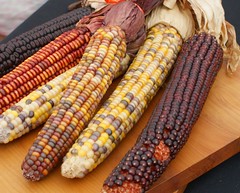 | 26 |
| 14769863445 | Nomad | Early, simplistic man that migrated across the land bridge. | 27 | |
| 14769863446 | Causes for European interest in exploration? | Gold, Glory, and God | 28 | |
| 14771981038 | What were to consequences of conquest on the New World? | Disease, | 29 | |
| 14771989567 | Who was the first to pursue colonization? | Spain | 30 | |
| 14772009081 | Mercantilism | Economic theory in which the colonies provide raw materials to the mother country in return for manufactured goods. This made it so the mother country was importing less than they export, giving them a ton of money and forcing the colony to be dependent on the mother country | 31 | |
| 14772049861 | Spanish Explorers | Columbus-Discovered West Indies Magellan-1st Circumnavigation of the world | 32 | |
| 14772056873 | You only need to know one or two explorers, so... | don't memorize them | 33 |
Flashcards
Flashcards
AP US History Period 8 Review Flashcards
Terms : Hide Images
| 13747676572 | Context: Iron Curtain speech by Winston Churchill |  | 0 | |
| 13747676650 | Berlin Airlift | -Soviets blockaded Berlin -Closed off American sections so they could not receive supplies -tried to starve them out -Americans flew supplies into Berlin -Plane took off every 3 minutes -General Turner organized -Eventually Soviets ended the blockade (not quite a year) | 1 | |
| 13747676651 | NATO | North Atlantic Treaty Organization US and Western Europe and Canada Designed to contain Soviet Aggression | 2 | |
| 13747676652 | Warsaw Pact | Soviet Alliance in response to NATO USSR and 7 Eastern European nations | 3 | |
| 13747676653 | Truman Doctrine | -Truman agreed to help Europe rebuild -gave 400 million to Greece and Turkey -Part of his containment philosophy | 4 | |
| 13747676654 | Marshall Plan | -Sec of State's plan -aid any European nation in rebuilding post WWII -Soviet bloc nations did not accept $ -Containment | 5 | |
| 13747676655 | George Kennan | American diplomat that created the idea of containment | 6 | |
| 13747676656 | Mao Zedong | Leader of the Chinese Communists | 7 | |
| 13747676657 | Churchill | Man who gave the Iron Curtain speech | 8 | |
| 13747676658 | MacArthur | Led the American troops in Korea | 9 | |
| 13747676659 | George Marshall | Secretary of State that decided to send food and aid to Europe | 10 | |
| 13747676660 | Stalin | He was the totalitarian dictator of the Soviet Union from 1928 through 1953. | 11 | |
| 13747676661 | Eisenhower | American elected President at the end 1950 | 12 | |
| 13747676662 | Chiang Kai Shek | Leader of the Nationalists Chinese | 13 | |
| 13747676663 | Kim Il Sung | Leader of Communist North Korea | 14 | |
| 13747676664 | Truman | American President at the start of the Cold War | 15 | |
| 13747676665 | Remind Americans what to do in an air raid drill | What is the purpose of this cartoon? |  | 16 |
| 13747676666 | Describe the truths about the Korean War | -First U.S. military involvement without declaration of war. -Extensions of the Truman Doctrine. -First war sanctioned by the UN. -Example of limited war. -First example of a U.S. military leader not following orders | 17 | |
| 13747676667 | US Government | -capitalist -private property | 18 | |
| 13747676668 | USSR Government | -Communist -Government ownership of property -Dictatorship | 19 | |
| 13747676669 | Sphere of Influence | A region that is a puppet to it's super power | 20 | |
| 13747676670 | North Korea | -Communist -capital Pyongyang -influenced by Soviet Union | 21 | |
| 13747676671 | South Korea | -Capitalist and democracy -capital at Seoul -influenced by USA | 22 | |
| 13747676672 | What started the Korean War? | North Korea crossed the 38 parallel into South Korea | 23 | |
| 13747676673 | Within the first month of the Korean War, who was nearly defeated? | South Korea | 24 | |
| 13747676674 | Why was MacArthur removed from his leadership role? | -pushed too far north -ignored President Truman | 25 | |
| 13747676675 | Who won the Korean Conflict? | No land changed hands | 26 | |
| 13747676676 | Pusan | Where were the South Korean's cornered? |  | 27 |
| 13747676677 | Who had veto power on the UN Security Council? | WWII winners aka the Allies | 28 | |
| 13747676678 | When did China become involved in the Korean Conflict? | U.N. Troops crossed the Yalu River | 29 | |
| 13747676679 | Because of Chinese help, North Korea had more... | Soldiers | 30 | |
| 13747676681 | descriptors of the Cold War | -limited warfare -without direct fighting between the US and the USSR -a war of words and ideologies -a struggle between communism and democracies/capitalists -over 40 years long | 31 | |
| 13747676682 | Following WWII, Germany was divided into how many pieces? | 4 | 32 | |
| 13747676683 | South Korea was assisted by... | the United Nations and 16 countries | 33 | |
| 13747676684 | Red | Nickname for communists | 34 | |
| 13747676685 | Alger Hiss | Who was accused of spying by Whiittaker Chambers, but was only found guilty of perjury? | 35 | |
| 13747676687 | H-Bomb | -67 times more powerful than the A-Bomb -Exploded a year prior to the Soviets H-Bomb -"Hydrogen" -Used to threaten the USSR | 36 | |
| 13747676688 | Refused to testify | Hollywood Ten imprisoned because... | 37 | |
| 13747676689 | Middle East | In the Eisenhower Doctrine, the US promised to defend what region? | 38 | |
| 13747676690 | Spy plane | In the Cold War, a U-2 is a ? . | 39 | |
| 13747676691 | blacklist | A list of people not to be hired | 40 | |
| 13747676692 | Brinkmanship | The idea that the United States was willing to go to the edge of all-out war is called what? | 41 | |
| 13747676693 | State Department | McCarthy's claims in the 1950s included a list of spies in the ? . | 42 | |
| 13747676694 | Gary Powers | Who was shot down over the USSR while spying? | 43 | |
| 13747676695 | Sputnik | -Soviet Union launched Sputnik -First satellite in space -US sent up its first successful satellite nearly a year later | 44 | |
| 13747676696 | Army | McCarthy's downfall came when he accused who of housing Communists? | 45 | |
| 13747676697 | Rosenbergs | The first Americans civilians to be executed for treason were who? | 46 | |
| 13747676698 | Army McCarthy Hearings | This is the name given to the Senate hearings that investigated Senator Joseph McCarthy's conflicting accusations about a communist present in part of the U.S. military. | 47 | |
| 13747676699 | Checkpoint Charlie | This was the name given by the Western Allies to the best-known Berlin Wall crossing point between East Germany and West Germany during the Cold War. | 48 | |
| 13747676700 | Cohn | He was an American attorney who was Chief Counsel to Wisconsin Senator Joseph McCarthy during the early-1950s. | 49 | |
| 13747676702 | Communist Bloc | This is the name given to European countries during the Cold War who were allied with the Soviet Union and its mutual defense organization, The Warsaw Pact. | 50 | |
| 13747676703 | Cuban Missile Crisis | This was a confrontation between the Soviet Union and the United States over nuclear missiles the Soviets had allegedly deployed to Cuba. | 51 | |
| 13747676704 | Domino Theory | This was the belief that if one land in a region came under the influence of communists, then more would follow. | 52 | |
| 13747676705 | Gorbachev | He was the last leader of the Soviet Union whose programs of perestroika (economic "restructuring") and glasnost (political "openness") loosened the restrictions on Soviet and Eastern European peoples. The result was the eventual collapse of the communist governments in the region. | 53 | |
| 13747676706 | HUAC (House Un-American Activities Committee) | This is the name of the group in the House of Representatives that, in 1947, began hearings to expose communist infiltration in American life. Unfortunately, a good deal of the evidence they used was based on hearsay and conjecture, meaning innocent people were harmed by their findings. | 54 | |
| 13747676707 | Iron Curtain | This is a western name for the boundary which symbolically and physically divided Europe from the end of WWII until the end of the Cold War. | 55 | |
| 13747676708 | Khrushchev | He was the leader of the Soviet Union during the Bay of Pigs invasion, the construction of the Berlin Wall, and the Cuban Missile Crisis. | 56 | |
| 13747676709 | Bay of Pigs | The US trained and used Cuban exiles to defeat Fidel Castro | 57 | |
| 13747676788 | Ho Chi Minh | Communist leader of the Vietnam who formed the Vietminh and led the rebellion against the French. (1890-1969) Vietnamese leader who is responsible for ousting first the French, then the United States from his country. | 58 | |
| 13747676789 | Vietminh | Vietnamese communist supporters of Ho Chi Minh who fight the French and then the South Vietnamese & U.S. for control of all Vietnam. | 59 | |
| 13747676790 | Dien Bien Phu | The major deciding battle for control of Vietnam between the Vietminh and the French- with the French defeat Vietnam is declared independent by the Geneva Accords | 60 | |
| 13747676791 | 1954 Geneva Accords | Meeting to decide what will happen to Vietnam - result of French defeat at Dien Bien Phu. Vietnam is temporarily divided at the 17th parallel - North Vietnam controlled by Ho Chi Minh and the Vietminh with the support of Communist Soviet Union and China-- The South controlled by Pro-American President Ngo Dihn Diem. | 61 | |
| 13747676792 | 17th Parallel | The line decided on in the Geneva Conference between North Vietnam and South Vietnam. | 62 | |
| 13747676794 | Prime Minister Diem | Prime Minister of South Vietnam supported by the U.S.. Blocked National elections in Vietnam because he thought Ho Chi Minh would win and the South would become communist. | 63 | |
| 13747676795 | Advisors | U.S. ent people who helped train South Vietnamese soldiers and make plans or stratgies on how to fight the Vietminh and the Vietcong. | 64 | |
| 13747676796 | Vietcong | A communist political organization of guerrilla fighters in South Vietnam who are pro-communist and worked with the Vietminh to remove Diem, the U.S. and make South Vietnam communist like the North. | 65 | |
| 13747676797 | Agent Orange | A chemical that removes the leaves off of trees to expose the roads and troops to intelligence missions, rather than being under the cover of the jungle. | 66 | |
| 13747676798 | Maddox and Turner Joy | US ships that North Vietnamese supposedly torpedoed in the Gulf of Tonkin. | 67 | |
| 13747676799 | Gulf of Tonkin | The location of the supposed attack on the Maddox and Turner Joy. There was no apparent damage to either ships, and the destroyers were helping South Koreans attack North Korean targets. | 68 | |
| 13747676800 | Gulf of Tonkin Resoultion | Allowed the President to take all necessary measures to repel armed attacks on US forces. Gave al war powers to the president. | 69 | |
| 13747676801 | Gulf of Tonkin Resolution | The ability to do anything in defense of US troops. Granted to the President with the Gulf of Tonkin resolution. The president could send troops without officially declaring war. | 70 | |
| 13747676802 | Operation Rolling Thunder | A massive bombing of North Vietnam and the Ho Chi Minh Trail. Supposed to only last 8 weeks. It goes for 3 years. | 71 | |
| 13747676803 | Ho Chi Minh Trail | A network of jungle paths winding from North Vietnam through Laos and Cambodia into South Vietnam, used as a military route by North Vietnam to supply the Vietcong during the Vietnam War. | 72 | |
| 13747676804 | Pacification program | U.S. program that uprooted entire villages in South Vietnam and forced people to move to cities/refugee camps in order to deprive the Vietcong of their peasant support; this failed | 73 | |
| 13747676805 | Napalm | Jellied gasoline that explodes and causes them to ignite and burn. | 74 | |
| 13747676807 | Democratic Presidential Convention in Chicago | At the Convention in Chicago to announce the candidates running for president a major protest of the war took place. Some Americans want the candidates to promise an end to the war. Inside the convention Democrats picking a candidate, outside police are beating up protesters, | 75 | |
| 13747676808 | Vietnamization | Nixon has promised to end the war and remove American troops from South Vietnam and replace them with trained South Vietnamese troops- this was called | 76 | |
| 13747676809 | Peace With honor | Withdraw of US troops from Vietnam but with honor was a phrase Nixon used during him campaign. Nixon's intention was to maintain U.S dignity in the face of its withdrawal from war. A further goal as to preserve U.S control at the negotiation table. Nixon secretly ordered a massive bombing campaign against supply routes and bases North of Vietnam. | 77 | |
| 13747676810 | My Lai Incident | American troops are on patrol & were searching for Vietcong. They enter this village where they think the people have been hiding and supporting the Vietcong. The US soldiers kill between 400 and 500 people mainly women and children. The American public is shocked and demand an end to the war. | 78 | |
| 13747676710 | Soviet Union and China | What 2 countries supported Ho Chi Minh and the Vietminh | 79 | |
| 13747676711 | What was the plan for Vietnam according to the Geneva Accords | The Accords called for elections within 2 years to unify the nation. Diem refused to hold elections for fear Vietnam would become communist if Ho Chi Minh won the elections. The U.S. support Diem | 80 | |
| 13747676712 | Cold War | A state of political and military tension after World War II between powers in the Western Bloc and powers in the Eastern Bloc. Historians do not fully agree on the dates, but 1947-91 is common. |  | 81 |
| 13747676713 | authoritarian | A form of government characterized by strong central power and limited political freedoms. |  | 82 |
| 13747676714 | communist | A political system focused on creating a socioeconomic order structured upon the common ownership of the means of production and the absence of social classes, money, and the state. Purists of the communist movement also advocated for a violent overthrow of the upper class by the lower classes in order to create such a society. |  | 83 |
| 13747676715 | free-market economy | A system in which the prices for goods and services are set freely by consent between vendors and consumers, in which the laws and forces of supply and demand are free from any intervention by a government, price-setting monopoly, or other authority. |  | 84 |
| 13747676716 | collective security | A type of coalition building strategy in which a group of nations agrees not to attack each other and to defend each other against an attack from one of the others, if such an attack is made. |  | 85 |
| 13747676717 | Détente | A French term often used in reference to the general easing of the geo-political tensions between the Soviet Union and the United States which began in 1969, as a foreign policy of U.S. presidents Richard Nixon and Gerald Ford called détente; a "thawing out" or "un-freezing" at a period roughly in the middle of the Cold War. |  | 86 |
| 13747676718 | ICBM | Inter-continental Ballistic Missile - a ballistic missile with a minimum range of more than 5,500 kilometers (3,400 mi) primarily designed for nuclear weapons delivery (delivering one or more nuclear warheads). |  | 87 |
| 13747676719 | SALT Talks | Two rounds of bilateral conferences and corresponding international treaties involving the United States and the Soviet Union—the Cold War superpowers—on the issue of armament control. The two rounds of talks and agreements were SALT I and SALT II. |  | 88 |
| 13747676720 | Tet Offensive | One of the largest military campaigns of the Vietnam War, launched on January 30, 1968, by forces of the Viet Cong and North Vietnamese People's Army of Vietnam against the forces of the South Vietnamese Army of the Republic of Vietnam, the United States, and their allies. A campaign of surprise attacks against military and civilian commands and control centers throughout South Vietnam |  | 89 |
| 13747676721 | Students for a Democratic Society (SDS) | A student activist movement in the United States that was one of the main representations of the New Left. The organization developed and expanded rapidly in the mid-1960s before dissolving at its last convention in 1969. |  | 90 |
| 13747676722 | Martin Luther King, Jr. | An American Baptist minister, activist, humanitarian, and leader in the African-American Civil Rights Movement. |  | 91 |
| 13747676723 | nonviolent resistance | The practice of achieving goals such as social change through symbolic protests, civil disobedience, economic or political noncooperation, satyagraha, or other methods, without using violence. Common examples: Boycotts, Sit-ins |  | 92 |
| 13747676724 | boycott | To withdraw from commercial or social relations with (a country, organization, or person) as a punishment or protest. |  | 93 |
| 13747676725 | sit-In | A form of direct action that involves one or more people occupying an area for a protest, often to promote political, social, or economic change. |  | 94 |
| 13747676726 | Executive Order 9981 | Issued by President Harry S. Truman on July 26, 1948. It abolished racial discrimination in the United States Armed Forces and eventually led to the end of segregation in the services. |  | 95 |
| 13747676727 | Brown v. Board of Education of Topeka, Kansas (1954, Warren) | Unanimous decision declaring the "separate but equal" clause of the Plessy v. Ferguson ruling unconstitutional. |  | 96 |
| 13747676728 | Civil Rights Act of 1964 | A landmark piece of civil rights legislation in the United States[5] that outlawed discrimination based on race, color, religion, sex, or national origin. |  | 97 |
| 13747676729 | The Great Society | A set of domestic programs in the United States launched by Democratic President Lyndon B. Johnson in 1964-65. The main goal was the elimination of poverty and racial injustice. |  | 98 |
| 13747676730 | The Baby Boom | (1946-1964) The period of time when the number of annual births exceeded 2 per 100 women (or approximately 1% of the total population size) in the United States. |  | 99 |
| 13747676731 | social mobility | The movement of individuals, families, households, or other categories of people within or between layers or tiers in an open system of social stratification. |  | 100 |
| 13747676732 | suburb | A residential area or a mixed use area, either existing as part of a city or urban area or as a separate residential community within commuting distance of a city. |  | 101 |
| 13747676733 | Sun Belt | A region of the United States generally considered to stretch across the Southeast and Southwest (the geographic southern United States). Another rough boundary of the region is the area south of the 36th parallel, north latitude. |  | 102 |
| 13747676734 | Counterculture | A subculture whose values and norms of behavior differ substantially from those of mainstream society, often in opposition to mainstream cultural mores. Such opinions became more visible and popular, especially in the 1960s and early 1970s in response to the Vietnam War. |  | 103 |
| 13747676735 | Gideon v. Wainwright (1963) | Extends to the defendant the right of counsel in all state and federal criminal trials regardless of their ability to pay. |  | 104 |
| 13747676736 | Escobedo v. Illinois (1964) | Ruled that a defendant must be allowed access to a lawyer before questioning by police. |  | 105 |
| 13747676737 | Miranda v. Arizona (1966) | The court ruled that those subjected to in-custody interrogation be advised of their constitutional right to an attorney and their right to remain silent. |  | 106 |
| 13747676738 | Roe v. Wade (1973) | The court legalized abortion by ruling that state laws could not restrict it during the first three months of pregnancy. Based on 4th Amendment rights of a person to be secure in their persons. |  | 107 |
| 13747676739 | Dwight D. Eisenhower | A World War II hero and former supreme commander of NATO who became U.S. president in 1953 after easily defeating Democratic opponent Adlai E. Stevenson. |  | 108 |
| 13747676740 | Dixiecrats | Conservative southern Democrats who objected to President Truman's strong push for civil-rights legislation. Southern Democrats who broke from the party in 1948 over the issue of civil rights and ran a presidential ticket as the States' Rights Democrats with J. Strom Thurmond of South Carolina as a canidate. |  | 109 |
| 13747676743 | Joseph McCarthy | The senator of Wisconsin; he charged 205 State Department employees, and accused them of being communist party members, but they were never proven. Eventually he came across as a bully, and his popularity plunged. |  | 110 |
| 13747676744 | Soviet Union | A Communist nation, consisting of Russia and 14 other states, that existed from 1922 to 1991. |  | 111 |
| 13747676745 | Containment | A U.S. foreign policy adopted by President Harry Truman in the late 1940s, in which the United States tried to stop the spread of communism by creating alliances and helping weak countries to resist Soviet advances. |  | 112 |
| 13747676746 | NSC-68 | A National Security Council document, approved by President Truman in 1950, developed in response to the Soviet Union's growing influence and nuclear capability; it called for an increase in the US conventional and nuclear forces to carry out the policy of containment. |  | 113 |
| 13747676747 | Domino Theory | A theory that if one nation comes under Communist control, then neighboring nations will also come under Communist control. |  | 114 |
| 13747676748 | Martin Luther King, Jr. | U.S. Baptist minister and civil rights leader. A noted orator, he opposed discrimination against blacks by organizing nonviolent resistance and peaceful mass demonstrations. He was assassinated in Memphis, Tennessee. Nobel Peace Prize (1964) |  | 115 |
| 13747676749 | Malcolm X | Minister of the Nation of Islam, urged blacks to claim their rights by any means necessary, more radical than other civil rights leaders of the time. |  | 116 |
| 13747676750 | Little Rock Nine | In September 1957 the school board in Little rock, Arkansas, won a court order to admit nine African American students to Central High a school with 2,000 white students. The governor ordered troops from Arkansas National Guard to prevent the nine from entering the school. The next day as the National Guard troops surrounded the school, an angry white mob joined the troops to protest the integration plan and to intimidate the AA students trying to register. The mob violence pushed Eisenhower's patience to the breaking point. He immediately ordered the US Army to send troops to Little Rock to protect and escort them for the full school year. |  | 117 |
| 13747676751 | Voting Rights Act of 1965 | A law designed to help end formal and informal barriers to African American suffrage. Under the law, hundreds of thousands of African Americans were registered and the number of African American elected officials increased dramatically. |  | 118 |
| 13747676753 | John F. Kennedy | 35th President of the United States 35th President of the United States; only president to have won a Pulitzer Prize; events during his administration include the Bay of Pigs Invasion, the Cuban Missile Crisis, the building of the Berlin Wall, the Space Race, the African American Civil Rights Movement and early events of the Vietnam War; assassinated in Dallas, TX in 1963 |  | 119 |
| 13747676754 | Election of 1960 | Brought about the era of political television. Between Kennedy and Nixon. Issues centered around the Cold War and economy. Kennedy argued that the nation faces serious threats from the soviets. Nixon countered that the US was on the right track under the current administration. Kennedy won by a narrow margin. |  | 120 |
| 13747676755 | Kent State Shootings | Incident in which National Guard troops fired at a group of students during an antiwar protest at Kent State University in Ohio, killing four people. |  | 121 |
| 13747676756 | Golf of Tonkin Resolution | Bill passed in 1964 that gave President Johnson authority to take "all necessary measures to repel any armed attack against forces of the U.S." after an alleged attack on a naval vessel off the coast of Vietnam. It gave Johnson the ability to send over a large amount of combat troops to Vietnam. |  | 122 |
| 13747676757 | War Powers Act | 1973. A resolution of Congress that stated the President can only send troops into action abroad by authorization of Congress or if America is already under attack or serious threat. |  | 123 |
| 13747676758 | Richard Nixon | Elected President in 1968 and 1972 representing the Republican party. He was responsible for getting the United States out of the Vietnam War by using "Vietnamization", which was the withdrawal of 540,000 troops from South Vietnam for an extended period. He was responsible for the Nixon Doctrine. Was the first President to ever resign, due to the Watergate scandal. | 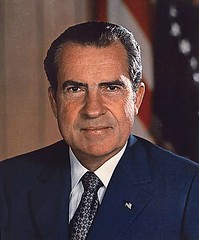 | 124 |
| 13747676759 | New Conservatism | This mostly republican political movement started as a reaction to the New Deal policies of the 1930's. Its goal was to reduce the role of government. |  | 125 |
| 13747676760 | Iron Curtain | A term popularized by British Prime Minister Winston Churchill to describe the Soviet Union's policy of isolation during the Cold War. The barrier isolated Eastern Europe from the rest of the world. |  | 126 |
| 13747676761 | Fair Deal | An economic extension of the New Deal proposed by Harry Truman that called for higher minimum wage, housing and full employment. It led only to the Housing Act of 1949 and the Social Security Act of 1950 due to opposition in congress. |  | 127 |
| 13747676762 | Rosenberg Trial | The controversial 1951 trial of two Americans, Ethel and Julius Rosenberg, charged with passing atomic secrets to the Soviet Union; the two were sentenced to death and executed in 1953, making them the only American civilians to be put to death for spying during the Cold War. |  | 128 |
| 13747676763 | Rollback | A strategy that called for liberating countries that were under Soviet dominion. | | 129 |
| 13747676764 | House Un-American Activities Committee | The House of Representatives established the Committee on Un-American Activities, popularly known as "HUAC," in order to investigate "subversion." Represented the political group associated with McCarthy's anti-communism. |  | 130 |
| 13747676765 | Interstate Act | The largest public works project in the US history in acted during the Eisenhower administration it was designed for military and economic purposes. |  | 131 |
| 13747676766 | Suez Crisis | Nasser took over the Suez Canal to show separation of Egypt from the West, but Israel, the British, Iraq, and France were all against Nasser's action. The U.S. stepped in before too much serious fighting began. |  | 132 |
| 13747676767 | Massive Retaliation | The "new look" defense policy of the Eisenhower administration of the 1950's was to threaten "massive retaliation" with nuclear weapons in response to any act of aggression by a potential enemy. |  | 133 |
| 13747676768 | U-2 Incident | The incident when an American U-2 spy plane was shot down over the Soviet Union. The U.S. denied the true purpose of the plane at first, but was forced to when the U.S.S.R. produced the living pilot and the largely intact plane to validate their claim of being spied on aerially. The incident worsened East-West relations during the Cold War and was a great embarrassment for the United States. |  | 134 |
| 13747676769 | Levvitown | Post-WWII Suburban areas that were practically factory made and then put together which each house look the same. |  | 135 |
| 13747676770 | Operation Wetback | Program which apprehended and returned some one million illegal immigrants to Mexico - end of the Braceros program started during WWII. |  | 136 |
| 13747676771 | Affluent Society | Term used by economist John Kenneth Galbraith to describe the American economy in the 1950s, during which time many Americans joined the middle class and became enraptured with appliances and homes in the suburbs. |  | 137 |
| 13747676772 | Beats | Young people, many of whom were writers and artists, who discussed their dissatisfaction with the American society of the 1950s. |  | 138 |
| 13747676773 | Hippies | Members of the youthful counterculture that dominated many college campuses in the 1960s; rather than promoting a political agenda, they challenged conventional sexual standards, rejected traditional economic values, and encouraged the use of drugs. | | 139 |
| 13747676774 | Betty Frieden | Author of The Feminine Mystique (1963) she spoke out against women seeking fulfillment solely as wives and mothers and wanted women to "establish goals that will permit them to find their own identity." |  | 140 |
| 13747676775 | Warren Court | The Supreme Court during the period when Earl Warren was chief justice, noted for its activism in the areas of civil rights and free speech. |  | 141 |
| 13747676776 | CORE | Congress of Racial Equality, and organization founded in 1942 that worked for black civil rights. |  | 142 |
| 13747676777 | NAACP | National Association for the Advancement of Colored People, founded in 1909 to abolish segregation and discrimination, to oppose racism and to gain civil rights for African Americans, got Supreme Court to declare grandfather clause unconstitutional. |  | 143 |
| 13747676778 | SCLC | The Southern Christian Leadership Conference is an African-American civil rights organization. SCLC, which is closely associated with its first president, Dr. Martin Luther King, Jr., had a large role in the American Civil Rights Movement. |  | 144 |
| 13747676779 | Freedom rides | 1961 event organized by CORE and SNCC in which an interracial group of civil rights activists tested southern states' compliance to the Supreme Court ban of segregation on interstate buses. |  | 145 |
| 13747676780 | SNCC | (Student Non-Violent Coordinating Committee) a group established in 1960 to promote and use non-violent means to protest racial discrimination; they were the ones primarily responsible for creating the sit-in movement. | | 146 |
| 13747676781 | March on Washington | In August 1963, civil rights leaders organized a massive rally in Washington to urge passage of President Kennedy's civil rights bill. The high point came when MLK Jr., gave his "I Have a Dream" speech to more than 200,000 marchers in front of the Lincoln Memorial. |  | 147 |
| 13747676782 | Black Power | A slogan used to reflect solidarity and racial consciousness, used by Malcolm X. It meant that equality could not be given, but had to be seized by a powerful, organized Black community. |  | 148 |
| 13747676783 | Black Panthers | A black political organization that was against peaceful protest and for violence if needed. The organization marked a shift in policy of the black movement, favoring militant ideals rather than peaceful protest. |  | 149 |
| 13747676784 | Cesar Chavez | Non-violent leader of the United Farm Workers from 1963-1970. Organized laborers in California and in the Southwest to strike against fruit and vegetable growers. Unionized Mexican-American farm workers. |  | 150 |
| 13747676785 | Elvis Presley | 1950s; a symbol of the rock-and-roll movement of the 50s when teenagers began to form their own subculture, dismaying to conservative parents; created a youth culture that ridiculed phony and pretentious middle-class Americans, celebrated uninhibited sexuality and spontaneity; foreshadowed the coming counterculture of the 1960s. |  | 151 |
| 13747676786 | Equal Rights Amendment | A constitutional amendment originally introduced in Congress in 1923 and passed by Congress in 1972, stating that "equality of rights under the law shall not be denied or abridged by the United States or by any state on account of sex." Despite public support, the amendment failed to acquire the necessary support from three-fourths of the state legislatures. |  | 152 |
| 13747676787 | Silent Spring | A book written (Rachel Carson) to voice the concerns of environmentalists. Launched the environmentalist movement by pointing out the effects of civilization development. | 153 |
Pages

Need Help?
We hope your visit has been a productive one. If you're having any problems, or would like to give some feedback, we'd love to hear from you.
For general help, questions, and suggestions, try our dedicated support forums.
If you need to contact the Course-Notes.Org web experience team, please use our contact form.
Need Notes?
While we strive to provide the most comprehensive notes for as many high school textbooks as possible, there are certainly going to be some that we miss. Drop us a note and let us know which textbooks you need. Be sure to include which edition of the textbook you are using! If we see enough demand, we'll do whatever we can to get those notes up on the site for you!
