

Flashcards
Flashcards
AP US History Period 1 Flashcards
Terms : Hide Images
| 14858648935 | maize cultivation | The growing of Indian corn, a staple of many Indians diets, leading many nomadic tribes to settle and develop great civilizations such as the Aztecs incas and Mayans. | 0 | |
| 14858648936 | hunter-gatherer economy | A nomadic way of life with no agriculture focused on following food sources including animals and wild plants | 1 | |
| 14858648937 | western hemisphere | The Americas |  | 2 |
| 14858648938 | west africa | A area of Africa that was previously unreachable until the invention of the caravel by the Portuguese, leading to exploitation of the region for its gold and slaves |  | 3 |
| 14858648939 | plantation-based agriculture | Large scale agriculture worked by slaves | 4 | |
| 14858648940 | capitalism | Economic system based on private investment and possessions | 5 | |
| 14858648941 | Cultural autonomy | Freedom of a group to express ones own culture without outside control i.g. The Christianization of the natives took away there Cultural autonomy | 6 | |
| 14858648942 | great basin | Desert area with no drainage to the ocean |  | 7 |
| 14858648943 | agricultural economy | economy based on the production of crops | 8 | |
| 14858648944 | spanish exploration | Colonization of the Americas by the conquistadors in search for gold, glory and god | 9 | |
| 14858648945 | encomienda system | A government system where natives were given to colonists to work in return for converting them to Christianity. | 10 | |
| 14858648946 | empire building | The Spanish increasing their empire through grafting their culture onto the natives and taking over the land | 11 | |
| 14858648947 | white superiority | The European idea they were superior to other cultures/ races and needed to enforce European culture/religion on them | 12 | |
| 14858648948 | great plains | The open plains of the Midwest where the natives adapted to roming the prairies on horseback | 13 | |
| 14858648949 | permanent villages | The settlements of Indians tribes based on the spread of agriculture | 14 | |
| 14858648950 | Portuguese exploration | Due to advancements in sailing technology the Portuguese were able to sail down the coast of Africa and open trade of gold and slaves, settle and make plantations and eventually find the way around Africa to the indies | 15 | |
| 14858648951 | slave labor | Forced labor of people considered property by the people in charge | 16 | |
| 14858648952 | feudalism | A political, economic, and social system based on the relationship between lord and vassal in order to provide protection | 17 | |
| 14858648953 | political autonomy | the ability of a state to govern themselves without outside control | 18 | |
| 14858648954 | Colombian exchange | the exchange between the new world and the old world consisting of the old world bringing wheat, cows, horses, sheep, pigs, sugar, rice, coffee, smallpox, malaria and yellow fever. while the new world sent gold, silver, corn, potatoes, tobacco, and syphills |  | 19 |
Flashcards
Flashcards
AP US History Unit 1 Flashcards
Unit 1 Terms
Terms : Hide Images
| 14741659303 | Walter Raleigh | Founder of England's first American colony. (Roanoke, it failed) |  | 0 |
| 14741659304 | Elizabeth I | English Queen during golden age. Reestablished Protestantism as the state religion of England and she led the defeat of the Spanish Armada. |  | 1 |
| 14741659305 | Treaty of Tordesillas | a 1494 agreement between Portugal and Spain, declaring that newly discovered lands to the west of an imaginary line in the Atlantic Ocean would belong to Spain and newly discovered lands to the east of the line would belong to Portugal. |  | 2 |
| 14741659306 | Pocahontas | a Powhatan woman (the daughter of Powhatan) who befriended the English at Jamestown. Marriage to John Rolfe = first interracial union in america= Peace settlement ending the Anglo-Powhatan War |  | 3 |
| 14741659307 | John Rolfe | He was one of the English settlers at Jamestown (and he married Pocahontas). He discovered how to successfully grow tobacco in Virginia and cure it for export, which made Virginia an economically successful colony. |  | 4 |
| 14741659308 | Defeat of the Spanish Armada | 1588 by Elizabeth 1 of England, English naval supremacy. |  | 5 |
| 14741659309 | John smith | Helped found and govern Jamestown. His leadership and strict discipline helped the Virginia colony get through the difficult first winter. |  | 6 |
| 14741659310 | Jamestown | Founded in 1607 by the Virginia Company of London.elected Captain John Smith as their leader. |  | 7 |
| 14741659311 | Thomas Dale | Made governor of Jamestown after John Smith, stern, didn't believe in laziness, created daily schedule |  | 8 |
| 14741659312 | John Calvin | INSTITUTES OF THE CHRISTIAN RELIGION: emphasized predestination and he rejected the medieval Church. he believed that the church and state should be united under the Calvinist faith |  | 9 |
| 14741659313 | John Winthrop | Governor of Massachusetts Bay Colony, envisioned colony as a "city upon a hill" (covenant theology) |  | 10 |
| 14741659314 | Peter Stuyvesant | The governor of the Dutch colony of New Amsterdam (netherland?), hated by the colonists. They surrendered the colony to the English on Sept. 8, 1664. |  | 11 |
| 14741659315 | Anne Hutchinson | A religious dissenter whose ideas provoked an intense religious and political crisis in the Massachusetts Bay Colony between 1636 and 1638. She challenged the principles of Massachusetts's religious and political system. Her ideas became known as the heresy of Antinomianism, a belief that Christians are not bound by moral law. She was latter expelled, with her family and followers, and went and settled at Rode Island, killed by indians |  | 12 |
| 14741659316 | King Phillips War | Started over land ownership disagreements. The War Between the Puritans and the Pequot, Narragansett,Wampanog, and Nipmunk indians. armed indians in raiding NE towns, eng & allies won, survivors fled N, increase indian hate |  | 13 |
| 14741659317 | Roger Williams | He founded Rhode Island for separation of Church and State. He believed that the Puritans were too powerful and was ordered to leave the Massachusetts Bay Colony for his religious beliefs. |  | 14 |
| 14741659318 | Dominion of New england | 1686-The British government combined the colonies of Massachusetts, Rhode Island, New Hampshire, and Connecticut into a single province headed by a royal governor (Andros) Charters and self rule were revoked, and the king enforced mercantile laws. The new setup also made for more efficient administration of English Navigation Laws, as well as a better defense system. |  | 15 |
| 14741659319 | New England Confederation | New England colonists (Massachusetts, Connecticut, New Haven, and Plymouth) formed this in 1643 as a defense against local Native American tribes and encroaching Dutch. The colonists formed the alliance without the English crown's authorization. |  | 16 |
| 14741659320 | Patroonships | Vast estates along the Hudson River established by the Dutch. They had difficulty attracting peasant labor, and most were not successful. |  | 17 |
| 14741659321 | William Penn | Englishman and Quaker who founded the colony of Pennsylvania (1644-1718) |  | 18 |
| 14741659322 | Jeremiads | Puritan preachers Taking their cue from the doom-saying Old Testament prophet Jeremiah, earnest preachers scolded parishioners for their waning piety.Scared people off, decline of puritanism |  | 19 |
| 14741659323 | Glorious Revolution 1688 | Bloodless overthrow of King James II. established William and Mary as the new leaders. |  | 20 |
| 14741659324 | Great Puritan Migration | Many Puritans migrated from England to North America during the 1620s to the 1640s due to belief that the Church of England was beyond reform. Eg 1630 group of puritans led by john winthrop found MA Bay Colony |  | 21 |
| 14741659325 | Treaty of Utrecht | 1713, ended Queen Ann's War, transferred large areas of French territory in North America to English including Nova Scotia and Newfoundland |  | 22 |
| 14741659326 | Bacon's Rebellion | Indentured servants in Virginia revolt against gov and landowners (origionally over lack of protection from indians on frontier). burn Jamestown. look to african slaves as less troublesome source of labor |  | 23 |
| 14741659327 | Middle passage | the middle portion of the triangular trade that brought African slaves to the Americas |  | 24 |
| 14741659328 | Salem witch trials | Several accusations of witchcraft led to sensational trials in Salem, Massachusetts at which Cotton Mather presided as the chief judge. 18 people were hanged as witches. Terrible mistake, shows social tensions, decline of puritanism. |  | 25 |
| 14741659329 | half way covenant | response to decline of puritanism. The puritan practice where by parents who had been baptized but had not yet experienced conversion could bring their children before the church and have them baptized.weakend distinction between "elect" and others- dramatizied the difficulty of maintainignreligious devotion |  | 26 |
| 14741659330 | headright system | Parcels of land consisting of about 50 acres which were given to colonists who brought indentured servants into America. They were used by the Virginia Company to attract more colonists. |  | 27 |
| 14741659331 | Leisler's rebellion | uprising in late 17th century colonial New York, in which militia capitani seized control of lower New York from 1689 to 1691. The uprising, which occurred in the midst of Britain's "Glorious Revolution," reflected colonial resentment against the policies of King James II. Royal authority was restored in 1691 by British troops sent by James' successor, William III. |  | 28 |
| 14741659332 | Triangular Trade | Illegal trade created to generate money to buy english goods.The backbone of New England's economy during the colonial period. Ships from New England sailed first to Africa, exchanging New England rum for slaves. The slaves were shipped from Africa to the Caribbean (this was known as the Middle Passage, when many slaves died on the ships). In the Caribbean, the slaves were traded for sugar and molasses. Then the ships returned to New England, where the molasses were used to make rum. |  | 29 |
| 14741659333 | First Great Awakening | 1st grassroots american social movement.series of revivals making church more emotional. Old lights (against) new lights (for). results: democratic, new denominations (meth and bapt), more choice, colleges, old clergy looses prestige |  | 30 |
| 14741659334 | George Whitefield | Most influentian new light speaker during first great awakening |  | 31 |
| 14741659335 | Jonathon edwards | New light preatcher who started the first Great awakening |  | 32 |
| 14741659336 | John Peter Zenger | "Zenger case", Newspaperman thrown in jail for accusing his colony's governor of wrongdoing, Journalist who questioned the policies of the governor of New York in the 1700's. He was jailed; he sued, and this court case was the basis for our freedom of speech and press. He was found innocent |  | 33 |
| 14741659337 | Paxton Revolt | They were a group of Scots-Irish men living in the Appalachian hills that wanted protection from Indian attacks. They made an armed march on Philadelphia in 1764. They protested the lenient way that the Quakers treated the Indians. Their ideas started the Regulator Movement in North Carolina. |  | 34 |
| 14741659338 | Phyllis Wheatley | 1st important African american writer. Abolitionists later point to her as proof that they are intellectually equal |  | 35 |
| 14741659339 | William Pitt | The Prime Minister of England during the French and Indian War. He increased the British troops and military supplies in the colonies, and this is why England won the war. |  | 36 |
| 14741659340 | Treaty of Paris 1763 | Ended the French and Indian (7yrs) war. Britian dominated, French kicked out of N america |  | 37 |
| 14741659341 | Pontiac's Rebellion | After French and Indian War, Indian chief gathered tribes in Ohio river valley to attack british forts. Squashed. Led to brit issuing proclamation of 1763 |  | 38 |
| 14741659342 | Proclamation of 1763 | After 7yrs war and Pontiac's rebellion.A proclamation from the British government which forbade British colonists from settling west of the Appalacian Mountains, and which required any settlers already living west of the mountains to move back east. |  | 39 |
| 14741659343 | Samuel de Champlain | Cartographer, explorer, governor of New France, founder of Quebec. The major role Champlain played in the St Lawrence River area earned him the title of "father of New France." |  | 40 |
| 14741659344 | Albany Congress | 1754 congress between Iriquois and 7 colonies. Ensure continued Iriquoi loyalty to colonies (immediate) colonial unity (long termish) | 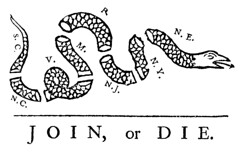 | 41 |
| 14741659345 | Battle of Quebec | (1759) British victory over French forces on the outskirts of Quebec. The surrender of Quebec marked the beginning of the end of French rule in North America. |  | 42 |
| 14741659346 | Mercantilism | economic theory, colonies exist for benefit of mother country, collect gold and silver, buy more goods that you sell |  | 43 |
| 14741659347 | George Grenville | Became prime minister of Britain in 1763 he persuaded the Parliament to pass a law allowing smugglers to be sent to vice-admiralty courts which were run by British officers and had no jury. He did this to end smuggling. also tried to tax them |  | 44 |
| 14741659348 | Sugar Act | 1764. England needed more money because it went into debt from the Fr&Ind. war. taxed colonists. Justification was that it was them paying for protection. replaced the molasses act which placed 3 pence tax on each gallon of molasses |  | 45 |
| 14741659349 | Quartering Act 1765 | Revenge on Mass. for Boston Tea Party. Required the colonials to provide food, lodging, and supplies for the British troops in the colonies. |  | 46 |
| 14741659350 | Stamp Act | an act passed by the British parliment in 1756 that raised revenue from the American colonies by a duty in the form of a stamp required on all newspapers and legal or commercial documents |  | 47 |
| 14741659351 | Declaratory Act | Act passed in 1766 just after the repeal of the Stamp Act. Stated that Parliament could legislate for the colonies in all cases. |  | 48 |
| 14741659352 | Townshend Acts | A tax that the British Parliament placed on leads, glass, paint and tea |  | 49 |
| 14741659353 | Boston Massacre | The first bloodshed of the Amercan Revolution, as British guards at the Boston Customs House opened fire on a crowd killing five americans |  | 50 |
| 14741659354 | Committees of Correspondence | Organization founded by Samuel Adams consisting of a system of communication between patriot leaders in New England and throughout the colonies |  | 51 |
| 14741659355 | Intolerable Acts | in response to Boston Tea Party, 4 acts passed in 1774, Port of Boston closed, reduced power of assemblies in colonies, permitted royal officers to be tried elsewhere, provided for quartering of troop's in barns and empty houses |  | 52 |
| 14741659356 | Quebec Act | 1774 Same time as intolerable acts., designed to facilitate the incorporation of French Canadians into British America; Colonists feared a precedent had been established in the nonrepresentative government in Quebec; they resented the expansion of Quebec's territory, which they had been denied access by the Proclamation of 1763; they were offended by the Crown's recognition of Catholicism, since most Americans were Protestants |  | 53 |
| 14741659357 | Samuel Adams | Founder of the Sons of Liberty and one of the most vocal patriots for independence; signed the Declaration of Independence |  | 54 |
| 14741659358 | The Association | A document produced by the 1st Continental Congress in 1775 that called for a complete boycott of British goods. This included non-importation, non-exportation and non-consumption. It was the closest approach to a written constitution yet from the colonies. It was hoped to bring back the days before Parliamentary taxation. Those who violated The Association in America were tarred and feathered |  | 55 |
| 14741659359 | Battles of Lexington and Concord | Initiated the Revolutionary War between the American colonists and the British. British governor Thomas Gage sent troops to Concord to stop the colonists who were loading arms. The next day, on April 19, 1775, the first shots were fired in Lexington, starting the war. The battles resulted in a British retreat to Boston |  | 56 |
| 14741659360 | Olive Branch Petition | 2nd contenential congress. Still pledge loyalty to King George III but are still asking Britain to respect the rights and liberties of the colonies, repeal oppressive legislation, and British troops out of the colonies; George 3 didn't want anything to do with them and declared all colonies in a state of rebellion |  | 57 |
| 14741659361 | Navigation Acts | Laws that governed trade between England and its colonies. Colonists were required to ship certain products exclusively to England. These acts made colonists very angry because they were forbidden from trading with other countries. |  | 58 |
| 14741659362 | John Hancock | Patriot leader and president of the Second Continental Congress; first person to sign the Declaration of Independence. |  | 59 |
| 14741659363 | Bunker Hill | strategic place overlooking Boston; on June 13, 1775 the Britians attacked, eventually winning with more supplies; Americans hold their ground and kill lots of british. After this Geroge III declares colonies in rebellion. |  | 60 |
| 14741659364 | Benedict Arnold | Successful American general during the Revolution who turned traitor in 1780 and joined the British cause. |  | 61 |
| 14741659365 | Thomas Paine | Revolutionary leader who wrote the pamphlet Common Sense (1776) arguing for American independence from Britain. "no smaller heavenly body controls a larger one" "our duty to set up republican democracy" etc. Later wrote "the crisis" |  | 62 |
| 14741659366 | George III | King of England during the American Revolution. Good man but bad king. wanted arbitrary power over colonies |  | 63 |
| 14741659367 | Battle of Saratoga | American victory over British troops in 1777 that was a turning point in the American Revolution. |  | 64 |
| 14741659368 | Chief Joseph Brant | Pro-British Mohawk leader that devastated New York and Pennsylvania frontiers in 1778. Led Inidian resistance against white settlement. Organized the northwestern Indians in an alliance. |  | 65 |
| 14741659369 | Battle of Trenton | On Christmas, Washingtons soilders cross the Deleware at night and surprise Hessians. Americans win |  | 66 |
| 14741659370 | Ben Franklin | A delegate from Pennsylvania and proposed the "Albany Plan of the Union" as a way to strengthen colonies.sent to france to get alliance (LOVED by people there), negotiated treaty of paris, part of constitutional convention etc. |  | 67 |
| 14741659371 | Battle of Yorktown | Sept 1781. British (general Cornwallis) surrendered, ending the war |  | 68 |
| 14741659372 | Treaty of Paris 1783 | 1783 Februrary 3; American delegates Franklin, Adams, John Jays; they were instructed to follow the lead of France; John Jay makes side treaty with England; Independence of the US End of Loyalist persecution; colonies still had to repay its debt to England. America very lucky |  | 69 |
AP US History Chapter 6 Flashcards
Terms : Hide Images
| 10444741154 | Huguenots | French Protestant dissenters, the Huguenots were granted limited toleration under the Edict of Nantes. After King Louis XIV outlawed Protestantism in 1685, many Huguenots fled elsewhere, including to British North America. | 0 | |
| 10444741155 | Edict of Nantes | (1598) Decree issued by the French crown granting limited toleration to French Protestants. Ended religious wars in France and inaugurated a period of French preeminence in Europe and across the Atlantic. Its repeal in 1685 prompted a fresh migration of Protestant Huguenots to North America. | 1 | |
| 10444741156 | coureurs de bois | Translated as "runners of the woods," they were French fur-trappers, also known as "voyageurs" (travelers), who established trading posts throughout North America. The fur trade wreaked havoc on the health and folkways of their Native American trading partners. | 2 | |
| 10444741157 | voyageurs | See coureurs de bois. | 3 | |
| 10444741158 | King William's War | (1689-1697) War fought largely between French trappers, British settlers, and their respective Indian allies from 1689-1697. The colonial theater of the larger War of the League of Augsburg in Europe. | 4 | |
| 10444741159 | Queen Anne's War | (1702-1713) Second in a series of conflicts between the European powers for control of North America, fought between the English and French colonists in the North, and the English and Spanish in Florida. Under the peace treaty, the French ceded Acadia (Nova Scotia), Newfoundland, and Hudson Bay to Britain. | 5 | |
| 10444741160 | War of Jenkins's Ear | (began in 1739) Small-scale clash between Britain and Spain in the Caribbean and in the buffer colony, Georgia. It merged with the much larger War of Austrian Succession in 1742. | 6 | |
| 10444741161 | King George's War | (1744-1748) North American theater of Europe's War of Austrian Succession that once again pitted British colonists against their French counterparts in the North. The peace settlement did not involve any territorial realignment, leading to conflict between New England settlers and the British government. | 7 | |
| 10444741162 | Acadians | French residents of Nova Scotia, many of whom were uprooted by the British in 1755 and scattered as far south as Louisiana, where their descendants became known as "Cajuns." | 8 | |
| 10444741163 | French and Indian War (Seven Years' War) | (Seven Years' War) (1754-1763) Nine-year war between the British and the French in North America. It resulted in the expulsion of the French from the North American mainland and helped spark the Seven Years' War in Europe. | 9 | |
| 10444741164 | Albany Congress | (1754) Intercolonial congress summoned by the British government to foster greater colonial unity and assure Iroquois support in the escalating war against the French. | 10 | |
| 10444741165 | regulars | Trained professional soldiers, as distinct from militia or conscripts. During the French and Indian War, British generals, used to commanding experienced regulars, often showed contempt for ill-trained colonial militiamen. | 11 | |
| 10444741166 | Battle of Québec | (1759) Historic British victory over French forces on the outskirts of Québec. The surrender of Québec marked the beginning of the end of French rule in North America. | 12 | |
| 10444741167 | Pontiac's uprising | (1763) Bloody campaign waged by Ottawa chief Pontiac to drive the British out of Ohio Country. It was brutally crushed by British troops, who resorted to distributing blankets infected with smallpox as a means to put down the rebellion. | 13 | |
| 10444741168 | Proclamation of 1763 | Decree issued by Parliament in the wake of Pontiac's uprising, prohibiting settlement beyond the Appalachians. Contributed to rising resentment of British rule in the American colonies. | 14 | |
| 10444741169 | Louis XIV | (1638-1715) Long reigning French monarch who took a keen interest in colonization, sending French explorers throughout North America, establishing outposts in present day Canada and Louisiana, and launching France to global preeminence. Louis XIV oversaw the construction of the magnificent palace at Versailles, from where he ruled until his death. | 15 | |
| 10444741170 | Samuel de Champlain | (c.1567-1635) French soldier and explorer, dubbed the "Father of New France" for establishing the city of Quebec and fighting alongside the Huron Indians to repel the Iroquois. | 16 | |
| 10444741171 | Edward Braddock | (1695-1755) Hardheaded and imperious British general, whose detachment of British and colonial soldiers was routed by French and Indian forces at Fort Duquesne. | 17 | |
| 10444741172 | William Pitt | (1708-1778) British parliamentarian who rose to prominence during the French and Indian War as the brilliant tactician behind Britain's victory over France. | 18 | |
| 10444741173 | James Wolfe | (1727-1759) Young British commander who skillfully outmaneuvered French forces in the Battle of Quebec during the French and Indian War. | 19 | |
| 10444741174 | Pontiac | (c.1720-1769) Ottawa chief who led an uprising against the British in the wake of the French and Indian war. Initially routing British forces at Detroit, Pontiac and his men succumbed after British troops distributed small-pox infected blankets among the Indians. | 20 |
AP US History: Period 2 Flashcards
AMSCO United States History 2015 Edition, Chapter 2 The Thirteen Colonies and the British Empire, 1607-1754
Terms : Hide Images
| 13889134564 | Cecil Calvert, Second Lord Baltimore | In 1634, Cecil Calvert (Second Lord Baltimore) was the son of George Calvert (First Lord Baltimore). Cecil Calvert set about making his father's dream of a Maryland colony that would be a haven for Catholics in America. (p. 27) |  | 0 |
| 13889134565 | Act of Toleration | The first colonial statue granting religious freedom to all Christians, but it called for death of all non-Christians. It was created to provide a safe haven for Catholics. (p.27) | 1 | |
| 13889134566 | Roger Williams | A respected Puritan minister who believed that the individual's conscience was beyond the control of any civil or church authority. He was banished from the Bay colony for his beliefs. In 1636, he founded the settlement of Providence. (p. 29) |  | 2 |
| 13889134608 | Providence | This settlement has founded in 1636 by Roger Williams. (p. 29) | | 3 |
| 13889134567 | Anne Hutchinson | This Puritan believed in antinomianism and was banished from the Bay colony because of her beliefs. In 1638, she founded the colony of Portsmouth. (p. 29) | | 4 |
| 13889134568 | antinomianism | The idea that faith alone, not deeds, is necessary for salvation. (p. 29) |  | 5 |
| 13889134569 | Rhode Island | In 1644, Parliament granted Roger Williams a charter, joining Providence and Portsmouth into a single colony, Rhode Island. (p. 30) |  | 6 |
| 13889134570 | Halfway covenant | In the 1660s, people could now take part in church services and activities without making a formal commitment to Christ. It was created because the next generation of colonists were less committed to religious faith, but churches still needed members. (p. 31) |  | 7 |
| 13889134571 | Quakers | Members of the Religious Society of Friends who believed in the equality of men and women, nonviolence, and resistance to military service. (p. 34) |  | 8 |
| 13889134572 | William Penn | In 1861, the royal family paid a large debt by granting his family a large parcel of American land. This Quaker, formed a colony that he named Pennsylvania. (p. 34) |  | 9 |
| 13889134573 | Holy Experiment | William Penn put his Quaker beliefs to the test in his colony, Pennsylvania. He wanted the colony to provide a religious refuge for Quakers and other persecuted people, enact liberal ideas in government, and generate income and profits for himself. (p. 34) |  | 10 |
| 13889134574 | Charter of Liberties | In 1701, the Pennsylvania colony created this written constitution which guaranteed freedom of worship for all and unrestricted immigration. (p. 34) |  | 11 |
| 13889134575 | rice plantations | These plantations required a loarge land area and many slaves. (p. 37) |  | 12 |
| 13889134576 | tobacco farms | As Tobacco prices fell, rice and indigo became the most profitable crops. (p. 37) |  | 13 |
| 13889134609 | John Cabot | First Englishman to explore lands in North America which England would later settle in the early 1600's. (p. 25) |  | 14 |
| 13889134610 | Jamestown | In 1607, the first permanent English colony in America was founded at this location. The Virginia Company, was a a joint-stock company chartered by England's King James I. (p. 25) |  | 15 |
| 13889134611 | Captain John Smith | Because of his forceful leadership, Jamestown barely survived its first five years. (p. 25) |  | 16 |
| 13889134612 | John Rolfe | He helped Jamestown develop a new variety of tobacco which became popular in Europe and became a profitable crop. (p. 25) |  | 17 |
| 13889134613 | Pocahontas | She was the American Indian wife of John Rolfe in early settlement days in Jamestown. (p. 25) |  | 18 |
| 13889134614 | Puritans | Group of dissenters that wanted to purify the Church of England. In 1630 they founded the Massachusetts Bay Colony at Boston. (p. 26) |  | 19 |
| 13889134615 | Separatists | Radical dissenters to the Church of England, they were known by this name because they wanted to organized a completely separate church that was independent of royal control. They became known as Pilgrims, because of the travels. (p. 26) |  | 20 |
| 13889134616 | Pilgrims | They were radical dissenters to the Church of England. They moved to Holland, then in 1620, they sailed to America on the Mayflower in search of religious freedom. They established a new colony at Plymouth on the Massachusetts coast. (p. 26) |  | 21 |
| 13889134617 | Mayflower | In 1620, the boat that the Pilgrims sailed to Plymouth. (p. 26) |  | 22 |
| 13889134618 | Plymouth Colony | This colony was started by the Pilgrims at Plymouth (Massechusetts). In the first winter nearly half of them perished. They were helped by friendly American Indians and celebrated the first Thanksgiving in 1621. (p. 26) |  | 23 |
| 13889134619 | John Winthrop | In 1630, he led about a thousand Puritans to America and and founded Boston and several other towns. (p. 26) |  | 24 |
| 13889134620 | Great Migration | This movement started because of a civil war in England. Nearly 15,000 settlers came to the Massachusetts Bay Colony. (p. 26) |  | 25 |
| 13889134621 | Virginia | Sir William Berkeley, the royal governor of Virginia use dictatorial powers to govern on behalf of the large planters. (p. 29) |  | 26 |
| 13889134577 | Thomas Hooker | In 1636, he led a large group of Boston Puritans dissatisfied with the Massachusetts Bay colony to found Hartford, which is now Connecticut. In 1639 they drew up the first written constitution in American history. (p. 30) |  | 27 |
| 13889134578 | John Davenport | In 1637, he founded a settlement south of Hartford, by the name of New Haven. (p. 30) |  | 28 |
| 13889134579 | Connecticut | In 1665, New Haven and Hartford joined to form the colony of Connecticut under a royal charter. (p. 30) |  | 29 |
| 13889134580 | New Hampshire | Hoping to increase royal control in the colonies, King Charles II separated New Hampshire from Massachusetts in 1679 and made it a royal colony. (p. 31) |  | 30 |
| 13889134581 | The Carolinas | In 1663, King Charles II granted eight nobles the Carolinas. In 1729, the Carolinas were split into two royal colonies. In South Carolina, the economy was based on the fur trade and growing food for the West Indies, which led to many plantations. In North Carolina, there were many small tobacco farms and fewer plantations. (p. 32) |  | 31 |
| 13889134582 | New York | In 1664, King Charles II granted his brother, the Duke of York (future King James II) the land now known as New York. James took control of the Dutch colony that was located there, but the Dutch were treated fairly. James was unpopular because of his taxes and refusal to institute a representative government. Finally in 1683, he agreed to grant broad civil and political rights to the colony. (p. 33) |  | 32 |
| 13889134583 | New Jersey | The territory of New York was split. In 1674, land was granted to Lord John Berkeley and Sir George Carteret. Eventually they sold to the Quakers. In 1702, the two Jerseys were combined into a single royal colony, New Jersey. (p. 33) |  | 33 |
| 13889134622 | Pennsylvania | In 1861, the royal family paid a large debt by granting William Penn's father a large parcel of American land. He then formed a colony from the land. (p. 34) |  | 34 |
| 13889134584 | Delaware | In 1702, William Penn granted the lower three colonies of Pennsylvania their own assembly. In effect, Delaware became a separate colony, even though its governor was the same as Pennsylvaniaá until the American revolution. (p. 34) |  | 35 |
| 13889134585 | Georgia | In 1732, Georgia was formed to provide a buffer between wealthy Georgia and Spanish controlled Florida, and to provide a place for the many debtors of England to begin again. (p. 34) |  | 36 |
| 13889134586 | James Oglethorpe | Founder of Georgia's first settlement, Savannah, in 1733. He acted as governor of Georgia and had strict laws which included a ban on rum and slavery. (p. 35) |  | 37 |
| 13889134587 | Wampanoags | An American Indian tribe led by Metacom. (p. 31) |  | 38 |
| 13889134588 | Metacom | This American Indian chief was known to the colonists as King Philip. He joined together the Native American tribes to fight the colonists in King Philip's War, a war that lasted from 1675 to 1676. (p. 31) |  | 39 |
| 13889134623 | King Philip's War | From 1675 to 1676, the American Indian chief Metacom (King Philip), waged a vicious war against the English settlers in southern New England. (p. 31) |  | 40 |
| 13889134624 | Mayflower Compact | In 1620, while they were sailing to America on the Mayflower, the Pilgrims created this document that pledged them to make decisions by the will of the majority. It was a rudimentary written constitution. (p. 27) |  | 41 |
| 13889134625 | Virginia House of Burgesses | In 1619, just 12 years after the founding of Jamestown, Virginia's colonists organized the first representative assembly in America, the Virginia House of Burgesses. (p. 27) |  | 42 |
| 13889134589 | Sir William Berkeley | Royal Governor of Virginia who favored large plantation owners and did not support or protect smaller farms from Indian raids. He put down Bacon's rebellion in 1676. (p. 29) |  | 43 |
| 13889134590 | Bacon's Rebellion | In 1676, Nathaniel Bacon led a group of army volunteers that raided Native American villages, fought the governor's forces, and set fire to Jamestown. The rebellion lost momentum when Bacon died of dysentery. The rebellion was caused by the Governor's unfair favoritism of large plantation owners and refusal to protect small farms from Native American raids. (p. 29) |  | 44 |
| 13889134591 | Fundamental Orders of Connecticut | In 1639, the Hartford settlers drew up the first written constitution in America. It established a representative government made up of a legislature elected by the people and a governor chosen by the legislature. (p. 30) |  | 45 |
| 13889134592 | New England Confederation | In 1643, Plymouth, Massachusetts Bay, Connecticut, and New Haven colonies formed a military alliance to deal with the threat from the Native Americans. It lasted until 1684. (p. 31) |  | 46 |
| 13889134593 | Frame of Government (1682) | In 1682-1683, William Penn provided the Pennsylvania colony with a Frame of Government which guaranteed a representative assembly elected by landowners and a written constitution. (p. 34) |  | 47 |
| 13889134594 | corporate colonies | Colonies operated by joint-stock companies during the early years of the colonies, such as Jamestown. (p. 24) |  | 48 |
| 13889134595 | royal colonies | Colonies under the direct authority and rule of the king's government, such as Virginia after 1624. (p. 24) |  | 49 |
| 13889134596 | proprietary colonies | Colonies under the authority of individuals granted charters of ownership by the king, such as Maryland and Massachusetts. (p. 24) |  | 50 |
| 13889134597 | Chesapeake Colonies | In 1632, the area once known as the Virginia colony, has divided into the Virginia and Maryland colony. Maryland became the first proprietary colony. (p. 27) |  | 51 |
| 13889134626 | joint-stock company | Corporate colonies, such as Jamestown, were operated by joint-stock companies, at least during the colony's early years. (p. 24) |  | 52 |
| 13889134627 | Virginia Company | England's King James I chartered the Virginia Company, a joint-stock company that founded the first permanent English colony in America at Jamestown in 1607. (p. 25) |  | 53 |
| 13889134598 | mercantilism | An economic policy in which the colonies were to provide raw materials to the parent country of growth and profit of the parent country. (p. 35) |  | 54 |
| 13889134599 | Navigation Acts | Between 1650 and 1673 England passed a series of acts which establish rules for colonial trade. * Trade to and from the colonies could be carried only by English or colonial-built ships, which could be operated only by English or colonial crews. * All goods imported in the colonies, except some perishables, had to pass through the ports in England. * Specified goods from the colonies could be exported only to England. (p. 35) |  | 55 |
| 13889134600 | Dominion of New England | James II wanted to increase royal control in the colonies, so he combined them into larger units and abolished their representative assemblies. The Dominion of New England was combined New York, New Jersey, and the other New England colonies into a single unit. (p. 36) |  | 56 |
| 13889134601 | Sir Edmund Andros | In 1686, King James II combined New York, New Jersey, and additional New England colonies into a single unit called the Dominion of New England. He was sent England to govern the dominion. he was very unpopular by levying new taxes, limiting town meetings, and revoking land titles. (p. 36) |  | 57 |
| 13889134602 | Glorious Revolution | In 1688, King James II was deposed and replaced with William and Mary. This brought the end to the Dominion of New England, and the colonies operated under their previous structure. (p. 37) |  | 58 |
| 13889134603 | indentured servants | Young people from England under contract with a master who paid for their passage. Worked for a specified period for room and board, then they were free. (p. 28) |  | 59 |
| 13889134604 | headright system | A method for attracting immigrants, Virginia offered 50 acres of land to each immigrant who paid for passage to America and to any plantation owner who paid for an immigrants passage. (p. 28) | | 60 |
| 13889134605 | slavery | The first slaves arrived in the colonies in 1619, they were not slaves for life, but worked for a period of time, like an indentured servant. Then discriminatory laws were passed, slaves and their offspring were kept in permanent bondage. (p. 28) | 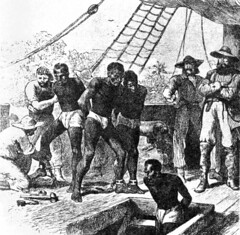 | 61 |
| 13889134606 | triangular trade | Merchants traded colonist rum for African slaves, African slaves for West Indies sugar cane, and sugar cane was brought back to the colonies to make rum. (p. 37) |  | 62 |
| 13889134607 | Middle Passage | Voyage from West Africa to the West Indies. It was miserable for the slaves transported and many died. (p. 38) |  | 63 |
Flashcards
Pages

Need Help?
We hope your visit has been a productive one. If you're having any problems, or would like to give some feedback, we'd love to hear from you.
For general help, questions, and suggestions, try our dedicated support forums.
If you need to contact the Course-Notes.Org web experience team, please use our contact form.
Need Notes?
While we strive to provide the most comprehensive notes for as many high school textbooks as possible, there are certainly going to be some that we miss. Drop us a note and let us know which textbooks you need. Be sure to include which edition of the textbook you are using! If we see enough demand, we'll do whatever we can to get those notes up on the site for you!
