AP Notes, Outlines, Study Guides, Vocabulary, Practice Exams and more!

Ap World History Geography Flashcards

Terms : Hide Images
14657462856Nile River0
14657462857Indus River1
14657462858Huang He2
14657462859Tigris River3
14657462860Euphrates River4
14657462861Amazon River5
14657462862Atlantic Ocean6
14657462863Pacific Ocean7
14657462864Indian Ocean8
14657462865Mediterranean Sea9
14657462866Black Sea10
14657462867Red Sea11
14657462868Caspian Sea12
14657462869Arabian Sea13
14657462870Himalayas14
14657462871Alps15
14657462872Caucasus Mountains16
14657462873Ural Mountains17
14657462874Andes18
14657462875Hindu-Kush19
14657462876Gobi Desert20
14657462877Sahara Desert21
14657462878Kalahari Desert22
14657462879Arabian Peninsula23
14657462880Korean Peninsula24
14657462881Caribbean25
14657462882Middle East26
14657462883South Asia27
14657462884Southeast Asia28
14657462885Indonesia29
14657462886Philippines30
14657462887Japan31
14657462888Canton32
14657462889Baghdad33
14657462890Batavia34
14657462891Mecca35
14657462892Malacca (Melaka)36
14657462893Constantinople/Istanbul37
14657462894Cordoba38
14657462895Jerusalem39
14657462896Tenochtitlan40
14657462897Timbuktu41
14657462898Beijing42
14657462899Kilwa43
14657462900Calcutta44
14657462901Jenne45
14657462902Moscow46
14657462903South China Sea47
14657462904Strait of Gibraltar48
14657462905Bering Sea49
14657462906Sea of Japan50
14657462907Bosporus51
14657462908Persian Gulf52
14657462909Niger River53
14657462910Tiber River54
14657462911Ganges River55
14657462912Yangtze River56
14657462913Pyrenees Mountains57
14657462914Indian Subcontinent58
14657462915Swahili Coast59
14657462921Sub-Saharan AfricaPortion of the African continent lying south of the Sahara.60
14657462916Iberian Peninsula61
14657462917Sumatra62
14657462918Malaysian Peninsula63
14657462919Crimean Peninsula64
14657462922AnatoliaA large peninsula at the western edge of Asia; also called Asia Minor65
14657462920Central Asia Steppes66
14657590455Sumatra67

Chapter 31 AP US history Flashcards

Terms : Hide Images
8851780558Red scareA social/political movement designed to prevent a socialist/communist/radical movement in this country by finding "radicals," incarcerating them, deporting them, and subverting their activities0
8851780559Immigration act of 1924This act abolished the National Origins system; increased annual admission to 170,000 and put a population cap of 20,000 on immigrants from any single nation.1
8851780560Rebirth of KKKthe terrorist organization that came back and targeted Catholics, Blacks, Jews, and Immigrants2
8851780561Emergency quota act1921 Act that stipulates only 3% of 1910 immigrants are allowed in3
8851780562Prohibition act18th amendment; Act that "ended" drinking in its entirety.4
8851780563Volstead actBill passed by Congress to enforce the language of the 18th Amendment. This bill made the manufacture and distribution of alcohol illegal within the borders of the United States.5
8851780564SpeakeasiesAn illegal bar where drinks were sold, during the time of prohibition. It was called a Speakeasy because people literally had to speak easy so they were not caught drinking alcohol by the police.6
8851780565FundamentalismLiteral interpretation and strict adherence to basic principles of a religion (or a religious branch, denomination, or sect).7
8851780566Sacco and vanzettiItalian radicals who became symbols of the Red Scare of the 1920s; arrested (1920), tried and executed (1927) for a robbery/murder, they were believed by many to have been innocent but convicted because of their immigrant status and radical political beliefs.8
8851780567Palmer raidsA 1920 operation coordinated by Attorney General Mitchel Palmer in which federal marshals raided the homes of suspected radicals and the headquarters of radical organization in 32 cities9
8851780568Gangsterismprohibition spawned these crimes; organized crime of bootlegging alcohol and bribing public officials to keep quiet; also got involved in prostitution and gambling10
8851780569ModernismA cultural movement embracing human empowerment and rejecting traditionalism as outdated. Rationality, industry, and technology were cornerstones of progress and human achievement.11
8851780570Did prohibition act succeed?Not really, if anything it only made people who drank moderately before, drink even more. Or people who drank irregularly, drink even MORE.12
8851780571John deweyFather of progressive education13
8851780572EvolutionThe theory charles darwin created was deeply controversial and heatedly argued almost everywhere. It was science vs religion14

AP US History Chapter 3 Flashcards

Terms : Hide Images
14886832944CalvinismDominant theological credo of the New England Puritans based on the teachings of John Calvin. Calvinists believed in predestination—that only "the elect" were destined for salvation.0
14886832945predestinationCalvinist doctrine that God has foreordained some people to be saved and some to be damned. Though their fate was irreversible, Calvinists, particularly those who believed they were destined for salvation, sought to lead sanctified lives in order to demonstrate to others that they were in fact members of the "elect."1
14886832946conversionIntense religious experience that confirmed an individual's place among the "elect," or the "visible saints." Calvinists who experienced conversion were then expected to lead sanctified lives to demonstrate their salvation.2
14886832947PuritansEnglish Protestant reformers who sought to purify the Church of England of Catholic rituals and creeds. Some of the most devout Puritans believed that only "visible saints" should be admitted to church membership.3
14886832948SeparatistsSmall group of Puritans who sought to break away entirely from the Church of England; after initially settling in Holland, a number of English Separatists made their way to Plymouth Bay, Massachusetts in 1620.4
14886832949Mayflower Compact (1620)Agreement to form a government by will of the majority in Plymouth, signed aboard the Mayflower. Created a foundation for self-government in the colony.5
14886832950Massachusetts Bay Colony(Founded in 1630) Established by non-separating Puritans, it soon grew to be the largest and most influential of the New England colonies.6
14886832951Great English Migration (1630-1642)Migration of seventy thousand refugees from England to the North American colonies, primarily New England and the Caribbean. The twenty thousand migrants who came to Massachusetts largely shared a common sense of purpose—to establish a model Christian settlement in the new world.7
14886832952antinomianismBelief that the elect need not obey the law of either God or man; most notably espoused in the colonies by Anne Hutchinson.8
14886832953Fundamental Orders (1639)Drafted by settlers in the Connecticut River Valley, document was the first "modern constitution" establishing a democratically controlled government. Key features of the document were borrowed for Connecticut's colonial charter and later, its state constitution.9
14886832954Pequot War (1636-1638)Series of clashes between English settlers and Pequot Indians in the Connecticut River valley. Ended in the slaughter of the Pequots by the Puritans and their Narragansett Indian allies.10
14886832955King Phillip's War (1675-1676)Series of assaults by Metacom, King Philip, on English settlements in New England. The attacks slowed the westward migration of New England settlers for several decades.11
14886832956New England Confederation (1643)Weak union of the colonies in Massachusetts and Connecticut led by Puritans for the purposes of defense and organization, an early attempt at self-government during the benign neglect of the English Civil War12
14886832957English Civil War (1642-1651)Armed conflict between royalists and parliamentarians, resulting in the victory of pro-Parliament forces and the execution of Charles I.13
14886832958Dominion of New England (1686-1689)Administrative union created by royal authority, incorporating all of New England, New York, and East and West Jersey. Placed under the rule of Sir Edmund Andros who curbed popular assemblies, taxed residents without their consent, and strictly enforced Navigation Laws. Its collapse after the Glorious Revolution in England demonstrated colonial opposition to strict royal control.14
14886832959Navigation LawsSeries of laws passed, beginning in 1651, to regulate colonial shipping; the acts provided that only English ships would be allowed to trade in English and colonial ports, and that all goods destined for the colonies would first pass through England.15
14886832960Glorious (or Bloodless) Revolution (1688-1689)Relatively peaceful overthrow of the unpopular Catholic monarch, James II, replacing him with Dutch-born William III and Mary, daughter of James II. William and Mary accepted increased Parliamentary oversight and new limits on monarchical authority.16
14886832961salutary neglect (1688-1763)Unofficial policy of relaxed royal control over colonial trade and only weak enforcement of Navigation Laws. Lasted from the Glorious Revolution to the end of the French and Indian War in 1763.17
14886832962patroonshipsVast tracts of land along the Hudson River in New Netherlands granted to wealthy promoters in exchange for bringing fifty settlers to the property.18
14886832963QuakersReligious group known for their tolerance, emphasis on peace, and idealistic Indian policy, who settled heavily in Pennsylvania in the seventeenth and eighteenth centuries.19
14886832964blue lawsAlso known as sumptuary laws, they are designed to restrict personal behavior in accord with a strict code of morality. Blue laws were passed across the colonies, particularly in Puritan New England and Quaker Pennsylvania.20
14886832965Martin LutherGerman friar who touched off the Protestant Reformation when he nailed a list of grievances against the Catholic Church to the door of Wittenberg's cathedral in 1517.21
14886832966John CalvinFrench Protestant reformer whose religious teachings formed the theological basis for New England Puritans, Scottish Presbyterians, French Huguenots and members of the Dutch Reformed Church. He argued that humans were inherently weak and wicked, and believed in an all-knowing, all-powerful God, who predestined select individuals for salvation.22
14886832967William BradfordErudite leader of the separatist Pilgrims who left England for Holland, and eventually sailed on the Mayflower to establish the first English colony in Massachusetts. His account of the colony's founding, Of Plymouth Plantation, remains a classic of American literature and in indispensable historical source.23
14886832968John WinthropFirst governor of Massachusetts Bay Colony. An able administrator and devout Puritan, he helped ensure the prosperity of the newly-established colony and enforce Puritan orthodoxy, taking a hard line against religious dissenters like Anne Hutchinson.24
14886832969Anne HutchinsonAntinomian religious dissenter brought to trial for heresy in Massachusetts Bay after arguing that she need not follow God's laws or man's, and claiming direct revelation from God. Banished from the Puritan colony, she moved to Rhode Island and later New York, where she and her family were killed by Indians.25
14886832970Roger WilliamsSalem minister who advocated a complete break from the Church of England and criticized the Massachusetts Bay colony for unlawfully taking land from the Indians. Banished for his heresies, he established a small community in present-day Rhode Island, later acquiring a charter for the colony from England.26
14886832971MassasoitWampanoag chieftain who signed a peace treaty with Plymouth Bay settlers in 1621 and helped them celebrate the first Thanksgiving.27
14886832972Metacom (King Phillip)Wampanoag chief who led a brutal campaign against Puritan settlements in New England between 1675 and 1676. Though he himself was eventually captured and killed, his wife and son sold into slavery, his assault halted New England's westward expansion for several decades.28
14886832973Charles IIAssumed the throne with the restoration of the monarchy in 1660. He sought to establish firm control over the colonies, ending the period of relative independence on the American mainland.29
14886832974Sir Edmond AndrosMuch loathed administrator of the Dominion of New England, which was created in 1686 to strengthen imperial control over the New England colonies. He established strict control, doing away with town meetings and popular assemblies and taxing colonists without their consent. When word of the Glorious Revolution in England reached the colonists, they promptly dispatched he back to England.30
14886832975William III and Mary IIDutch-born monarch and his English-born wife, daughter of King James II, installed to the British throne during the Glorious Revolution of 1689. They relaxed control over the American colonies, inaugurating a period of "salutary neglect" that lasted until the French and Indian War.31
14886832976Henry HudsonEnglish explorer who ventured into New York Bay and up the Hudson River for the Dutch in 1609 in search of a Northwest Passage across the continent.32
14886832977Peter StuyvesantDirector general of Dutch New Netherland from 1645 until the colony fell to the British in 1664.33
14886832978Duke of YorkCatholic English monarch who reigned as James II from 1685 until he was deposed during the Glorious Revolution in 1689. When the English seized New Amsterdam from the Dutch in 1664, they renamed it in the his honor to commemorate his support for the colonial venture.34
14886832979William PennProminent Quaker activist who founded Pennsylvania as a haven for fellow Quakers in 1681. He established friendly relations with neighboring Indian tribes and attracted a wide array of settlers to his colony with promises of economic opportunity, and ethnic and religious toleration.35

AP US History Period 8 Flashcards

Terms : Hide Images
13886020882Cold WarA state of political and military tension after World War II between powers in the Western Bloc and powers in the Eastern Bloc. Historians do not fully agree on the dates, but 1947-91 is common.0
13886020883authoritarianA form of government characterized by strong central power and limited political freedoms.1
13886020884communistA political system focused on creating a socioeconomic order structured upon the common ownership of the means of production and the absence of social classes, money, and the state. Purists of the communist movement also advocated for a violent overthrow of the upper class by the lower classes in order to create such a society.2
13886020885free-market economyA system in which the prices for goods and services are set freely by consent between vendors and consumers, in which the laws and forces of supply and demand are free from any intervention by a government, price-setting monopoly, or other authority.3
13886020886collective securityA type of coalition building strategy in which a group of nations agrees not to attack each other and to defend each other against an attack from one of the others, if such an attack is made.4
13886020887DétenteA French term often used in reference to the general easing of the geo-political tensions between the Soviet Union and the United States which began in 1969, as a foreign policy of U.S. presidents Richard Nixon and Gerald Ford called détente; a "thawing out" or "un-freezing" at a period roughly in the middle of the Cold War.5
13886020888ICBMInter-continental Ballistic Missile - a ballistic missile with a minimum range of more than 5,500 kilometers (3,400 mi) primarily designed for nuclear weapons delivery (delivering one or more nuclear warheads).6
13886020889SALT TalksTwo rounds of bilateral conferences and corresponding international treaties involving the United States and the Soviet Union—the Cold War superpowers—on the issue of armament control. The two rounds of talks and agreements were SALT I and SALT II.7
13886020890Tet OffensiveOne of the largest military campaigns of the Vietnam War, launched on January 30, 1968, by forces of the Viet Cong and North Vietnamese People's Army of Vietnam against the forces of the South Vietnamese Army of the Republic of Vietnam, the United States, and their allies. A campaign of surprise attacks against military and civilian commands and control centers throughout South Vietnam8
13886020891Students for a Democratic Society (SDS)A student activist movement in the United States that was one of the main representations of the New Left. The organization developed and expanded rapidly in the mid-1960s before dissolving at its last convention in 1969.9
13886020892Martin Luther King, Jr.An American Baptist minister, activist, humanitarian, and leader in the African-American Civil Rights Movement.10
13886020893nonviolent resistanceThe practice of achieving goals such as social change through symbolic protests, civil disobedience, economic or political noncooperation, satyagraha, or other methods, without using violence. Common examples: Boycotts, Sit-ins11
13886020894boycottTo withdraw from commercial or social relations with (a country, organization, or person) as a punishment or protest.12
13886020895sit-InA form of direct action that involves one or more people occupying an area for a protest, often to promote political, social, or economic change.13
13886020896Executive Order 9981Issued by President Harry S. Truman on July 26, 1948. It abolished racial discrimination in the United States Armed Forces and eventually led to the end of segregation in the services.14
13886020897Brown v. Board of Education of Topeka, Kansas (1954, Warren)Unanimous decision declaring the "separate but equal" clause of the Plessy v. Ferguson ruling unconstitutional.15
13886020898Civil Rights Act of 1964A landmark piece of civil rights legislation in the United States[5] that outlawed discrimination based on race, color, religion, sex, or national origin.16
13886020899The Great SocietyA set of domestic programs in the United States launched by Democratic President Lyndon B. Johnson in 1964-65. The main goal was the elimination of poverty and racial injustice.17
13886020900The Baby Boom(1946-1964) The period of time when the number of annual births exceeded 2 per 100 women (or approximately 1% of the total population size) in the United States.18
13886020901social mobilityThe movement of individuals, families, households, or other categories of people within or between layers or tiers in an open system of social stratification.19
13886020902suburbA residential area or a mixed use area, either existing as part of a city or urban area or as a separate residential community within commuting distance of a city.20
13886020903Sun BeltA region of the United States generally considered to stretch across the Southeast and Southwest (the geographic southern United States). Another rough boundary of the region is the area south of the 36th parallel, north latitude.21
13886020904CountercultureA subculture whose values and norms of behavior differ substantially from those of mainstream society, often in opposition to mainstream cultural mores. Such opinions became more visible and popular, especially in the 1960s and early 1970s in response to the Vietnam War.22
13886020905Gideon v. Wainwright (1963)Extends to the defendant the right of counsel in all state and federal criminal trials regardless of their ability to pay.23
13886020906Escobedo v. Illinois (1964)Ruled that a defendant must be allowed access to a lawyer before questioning by police.24
13886020907Miranda v. Arizona (1966)The court ruled that those subjected to in-custody interrogation be advised of their constitutional right to an attorney and their right to remain silent.25
13886020908Roe v. Wade (1973)The court legalized abortion by ruling that state laws could not restrict it during the first three months of pregnancy. Based on 4th Amendment rights of a person to be secure in their persons.26
13886020909Dwight D. EisenhowerA World War II hero and former supreme commander of NATO who became U.S. president in 1953 after easily defeating Democratic opponent Adlai E. Stevenson.27
13886020910DixiecratsConservative southern Democrats who objected to President Truman's strong push for civil-rights legislation. Southern Democrats who broke from the party in 1948 over the issue of civil rights and ran a presidential ticket as the States' Rights Democrats with J. Strom Thurmond of South Carolina as a canidate.28
13886020911Truman DoctrinePresident Truman's policy of providing economic and military aid to any country threatened by communism or totalitarian ideology; mainly helped Greece and Turkey.29
13886020912Marshall PlanA plan that the US came up with to revive war-torn economies of Europe and encourage loyalty and friendliness to the United States and democracy (instead of influence from the Soviet Union). This plan offered $13 billion in aid to western and Southern Europe.30
13886020913Joseph McCarthyThe senator of Wisconsin; he charged 205 State Department employees, and accused them of being communist party members, but they were never proven. Eventually he came across as a bully, and his popularity plunged.31
13886020914Soviet UnionA Communist nation, consisting of Russia and 14 other states, that existed from 1922 to 1991.32
13886020915ContainmentA U.S. foreign policy adopted by President Harry Truman in the late 1940s, in which the United States tried to stop the spread of communism by creating alliances and helping weak countries to resist Soviet advances.33
13886020916NSC-68A National Security Council document, approved by President Truman in 1950, developed in response to the Soviet Union's growing influence and nuclear capability; it called for an increase in the US conventional and nuclear forces to carry out the policy of containment.34
13886020917Domino TheoryA theory that if one nation comes under Communist control, then neighboring nations will also come under Communist control.35
13886020918Martin Luther King, Jr.U.S. Baptist minister and civil rights leader. A noted orator, he opposed discrimination against blacks by organizing nonviolent resistance and peaceful mass demonstrations. He was assassinated in Memphis, Tennessee. Nobel Peace Prize (1964)36
13886020919Malcolm XMinister of the Nation of Islam, urged blacks to claim their rights by any means necessary, more radical than other civil rights leaders of the time.37
13886020920Little Rock NineIn September 1957 the school board in Little rock, Arkansas, won a court order to admit nine African American students to Central High a school with 2,000 white students. The governor ordered troops from Arkansas National Guard to prevent the nine from entering the school. The next day as the National Guard troops surrounded the school, an angry white mob joined the troops to protest the integration plan and to intimidate the AA students trying to register. The mob violence pushed Eisenhower's patience to the breaking point. He immediately ordered the US Army to send troops to Little Rock to protect and escort them for the full school year.38
13886020921Voting Rights Act of 1965A law designed to help end formal and informal barriers to African American suffrage. Under the law, hundreds of thousands of African Americans were registered and the number of African American elected officials increased dramatically.39
13886020922SputnikFirst artificial Earth satellite, it was launched by Moscow in 1957 and sparked U.S. fears of Soviet dominance in technology and outer space. It led to the creation of NASA and the space race.40
13886020923John F. Kennedy35th President of the United States 35th President of the United States; only president to have won a Pulitzer Prize; events during his administration include the Bay of Pigs Invasion, the Cuban Missile Crisis, the building of the Berlin Wall, the Space Race, the African American Civil Rights Movement and early events of the Vietnam War; assassinated in Dallas, TX in 196341
13886020924Election of 1960Brought about the era of political television. Between Kennedy and Nixon. Issues centered around the Cold War and economy. Kennedy argued that the nation faces serious threats from the soviets. Nixon countered that the US was on the right track under the current administration. Kennedy won by a narrow margin.42
13886020925Kent State ShootingsIncident in which National Guard troops fired at a group of students during an antiwar protest at Kent State University in Ohio, killing four people.43
13886020926Golf of Tonkin ResolutionBill passed in 1964 that gave President Johnson authority to take "all necessary measures to repel any armed attack against forces of the U.S." after an alleged attack on a naval vessel off the coast of Vietnam. It gave Johnson the ability to send over a large amount of combat troops to Vietnam.44
13886020927War Powers Act1973. A resolution of Congress that stated the President can only send troops into action abroad by authorization of Congress or if America is already under attack or serious threat.45
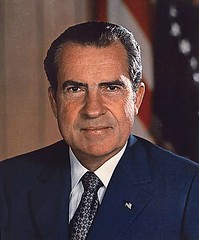
13886020928Richard NixonElected President in 1968 and 1972 representing the Republican party. He was responsible for getting the United States out of the Vietnam War by using "Vietnamization", which was the withdrawal of 540,000 troops from South Vietnam for an extended period. He was responsible for the Nixon Doctrine. Was the first President to ever resign, due to the Watergate scandal.46
13886020929New ConservatismThis mostly republican political movement started as a reaction to the New Deal policies of the 1930's. Its goal was to reduce the role of government.47
13886020930Iron CurtainA term popularized by British Prime Minister Winston Churchill to describe the Soviet Union's policy of isolation during the Cold War. The barrier isolated Eastern Europe from the rest of the world.48
13886020931Fair DealAn economic extension of the New Deal proposed by Harry Truman that called for higher minimum wage, housing and full employment. It led only to the Housing Act of 1949 and the Social Security Act of 1950 due to opposition in congress.49
13886020932Rosenberg TrialThe controversial 1951 trial of two Americans, Ethel and Julius Rosenberg, charged with passing atomic secrets to the Soviet Union; the two were sentenced to death and executed in 1953, making them the only American civilians to be put to death for spying during the Cold War.50
13886020933RollbackA strategy that called for liberating countries that were under Soviet dominion.51
13886020934House Un-American Activities CommitteeThe House of Representatives established the Committee on Un-American Activities, popularly known as "HUAC," in order to investigate "subversion." Represented the political group associated with McCarthy's anti-communism.52
13886020935Interstate ActThe largest public works project in the US history in acted during the Eisenhower administration it was designed for military and economic purposes.53
13886020936Suez CrisisNasser took over the Suez Canal to show separation of Egypt from the West, but Israel, the British, Iraq, and France were all against Nasser's action. The U.S. stepped in before too much serious fighting began.54
13886020937Massive RetaliationThe "new look" defense policy of the Eisenhower administration of the 1950's was to threaten "massive retaliation" with nuclear weapons in response to any act of aggression by a potential enemy.55
13886020938U-2 IncidentThe incident when an American U-2 spy plane was shot down over the Soviet Union. The U.S. denied the true purpose of the plane at first, but was forced to when the U.S.S.R. produced the living pilot and the largely intact plane to validate their claim of being spied on aerially. The incident worsened East-West relations during the Cold War and was a great embarrassment for the United States.56
13886020939LevvitownPost-WWII Suburban areas that were practically factory made and then put together which each house look the same.57
13886020940Operation WetbackProgram which apprehended and returned some one million illegal immigrants to Mexico - end of the Braceros program started during WWII.58
13886020941Affluent SocietyTerm used by economist John Kenneth Galbraith to describe the American economy in the 1950s, during which time many Americans joined the middle class and became enraptured with appliances and homes in the suburbs.59
13886020942BeatsYoung people, many of whom were writers and artists, who discussed their dissatisfaction with the American society of the 1950s.60
13886020943HippiesMembers of the youthful counterculture that dominated many college campuses in the 1960s; rather than promoting a political agenda, they challenged conventional sexual standards, rejected traditional economic values, and encouraged the use of drugs.61
13886020944Betty FriedenAuthor of The Feminine Mystique (1963) she spoke out against women seeking fulfillment solely as wives and mothers and wanted women to "establish goals that will permit them to find their own identity."62
13886020945Warren CourtThe Supreme Court during the period when Earl Warren was chief justice, noted for its activism in the areas of civil rights and free speech.63
13886020946CORECongress of Racial Equality, and organization founded in 1942 that worked for black civil rights.64
13886020947NAACPNational Association for the Advancement of Colored People, founded in 1909 to abolish segregation and discrimination, to oppose racism and to gain civil rights for African Americans, got Supreme Court to declare grandfather clause unconstitutional.65
13886020948SCLCThe Southern Christian Leadership Conference is an African-American civil rights organization. SCLC, which is closely associated with its first president, Dr. Martin Luther King, Jr., had a large role in the American Civil Rights Movement.66
13886020949Freedom rides1961 event organized by CORE and SNCC in which an interracial group of civil rights activists tested southern states' compliance to the Supreme Court ban of segregation on interstate buses.67
13886020950SNCC(Student Non-Violent Coordinating Committee) a group established in 1960 to promote and use non-violent means to protest racial discrimination; they were the ones primarily responsible for creating the sit-in movement.68
13886020951March on WashingtonIn August 1963, civil rights leaders organized a massive rally in Washington to urge passage of President Kennedy's civil rights bill. The high point came when MLK Jr., gave his "I Have a Dream" speech to more than 200,000 marchers in front of the Lincoln Memorial.69
13886020952Black PowerA slogan used to reflect solidarity and racial consciousness, used by Malcolm X. It meant that equality could not be given, but had to be seized by a powerful, organized Black community.70
13886020953Black PanthersA black political organization that was against peaceful protest and for violence if needed. The organization marked a shift in policy of the black movement, favoring militant ideals rather than peaceful protest.71
13886020954Cesar ChavezNon-violent leader of the United Farm Workers from 1963-1970. Organized laborers in California and in the Southwest to strike against fruit and vegetable growers. Unionized Mexican-American farm workers.72
13886020955Elvis Presley1950s; a symbol of the rock-and-roll movement of the 50s when teenagers began to form their own subculture, dismaying to conservative parents; created a youth culture that ridiculed phony and pretentious middle-class Americans, celebrated uninhibited sexuality and spontaneity; foreshadowed the coming counterculture of the 1960s.73
13886020956Equal Rights AmendmentA constitutional amendment originally introduced in Congress in 1923 and passed by Congress in 1972, stating that "equality of rights under the law shall not be denied or abridged by the United States or by any state on account of sex." Despite public support, the amendment failed to acquire the necessary support from three-fourths of the state legislatures.74
13886020957Silent SpringA book written (Rachel Carson) to voice the concerns of environmentalists. Launched the environmentalist movement by pointing out the effects of civilization development.75

AMSCO AP US History Chapter 3 Flashcards

AMSCO United States History 2015 Edition, Chapter 3 Colonial Society in the 18th Century

Terms : Hide Images
7479798303English cultural dominationIn the 18th century, cultural life in the colonies was dominated by English culture. Architecture, painting, and literature were strongly influenced by the English. (p. 50)0
7479798304Benjamin WestPainter who went to England to acquire the necessary training and financial support to establish himself as a prominent artist. (p. 51)1
7479798305John CopleyPainter who went to England to acquire the necessary training and financial support to establish himself as a prominent artist. (p. 51)2
7479798306Benjamin FranklinHe was the most popular and successful American writer of the 18th century. (p. 51)3
7479798307Poor Richard's AlmanackWritten by Benjamin Franklin, this book written in 1732 and annually revised, contained aphorisms and advice. (p. 51)4
7479798308Phillis WheatleyHer poetry is noteworthy for her triumph over slavery and the quality of her verse. (p. 51)5
7479798309John BartramSelf-taught botanist from Philadelphia. (p. 51)6
7479798310professions; religion, medicine, lawMinisters, physicians, and lawyers were all respected careers in the 18th century colonies. (p. 52)7
7479798311religious tolerationThe overwhelming majority of colonists were Protestants. Jews, Catholics, and Quakers suffered from the most serious discrimination and even persecution. (p. 49)8
7479798312established churchChurches that were financed by the government. (p. 49)9
7479798313Great AwakeningThis religious movement was at its peak in the 1730s and 1740s. It was characterized by fervent expressions of religious feeling among masses of people. (p. 49)10
7479798314Jonathan EdwardsThis reverend from Massachusetts argued that God was rightfully angry with human sinfulness. Those who repented could be saved by God's grace, but those who did not would suffer eternal damnation. (p. 49)11
7479798315George WhitefieldHe came to the colonies from England in 1739. He spread the Great Awakening throughout the colonies, sometime attracting crowds of 10,000 people. His sermons stressed that God was all powerful and would save only those who openly professed belief in Jesus Christ. He taught that ordinary people could understand scripture without depending on ministers to lead them. (p. 50)12
7479798316Cotton MatherThis minister from Massachusetts, was the author of several widely read religious tracts. (p. 51)13
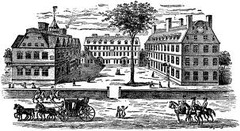
7479798317sectarianThe first colonial colleges were sectarian, meaning they promoted the doctrines of a particular religion. The Puritans founded Harvard in Cambridge, Massachusetts, in 1636. (p. 51)14
7479798318nonsectarianIn the mid 18th century, one nonsectarian colleges was founded. The College of Philadelphia (later University of Pennsylvania) was founded, with no religious sponsors. (p. 52)15
7479798319subsistence farmingIn the mid 18th century the colonies had little manufacturing and were devoted almost entirely to agriculture. In New England colonies, most farms were under 100 acres and farming was limited to subsistence levels that provided just enough for a farm family to survive. In the southern colonies, most people lived on small subsistence family farms with no slaves. (p. 48)16
7479798320J. Hector St. John CrevecoeurIn 1782, this Frenchman wrote , "America is a new man, who acts upon new principles; he must therefore entertain new ideas, and form new opinions. From involuntary idleness, servile dependence, and useless labor, he has passed to toils of a very different nature, rewarded by ample subsistence. This is an American." (p. 45)17
7479798321colonial familiesIn the mid 18th century, there was an abundance of fertile land and a dependable food supply in the colonies. This attracted thousands of European settlers each year and supported the raising of large families. (p. 45)18
7479798322GermansThis group of immigrants settled chiefly on the rich farmlands west of Philadelphia. By 1775, they comprised 6 percent of the colonial population. (p. 46)19
7479798323Scotch-IrishThese English-speaking people emigrated from northern Ireland. They were known as Scotch-Irish because their ancestors had moved to Ireland from Scotland. By 1775, they comprised 7 percent of the colonial population. (p.46)20
7479798324Huguenots; Dutch; SwedesThe Huguenots (French Protestants), the Dutch, and the Swedes came to the colonies. By 1775, these groups comprised 5 percent of the colonial population. (p. 46)21
7479798325AfricansThe largest single group of non-English immigrants did not come to America by choice. By 1775, the African American population (slave and free) comprised 20 percent of the colonial population. About 90 percent were in the southern colonies. (p. 46)22
7479798326immigrantsNewcomers to the colonies, were mostly Protestant, and came from England, Scotland, Wales, and Ireland, and Western and Central Europe. Some left Europe to escape religious persecution and wars. Others sought economic opportunities in farming, or setting up shop as an artisan or merchant. Africans were also brought in large numbers to the colonies, albeit unwillingly. (p. 45)23
7479798327social mobilityEveryone in colonial society, except African Americans, could improve their standard of living and social status with hard work. (p. 47)24
7479798328hereditary aristocracyThere was no hereditary aristocracy in the colonies. Their class system was based on economics with wealthy landowners at the top. Craft workers and small farmers made up the majority of the population. (p. 47)25
7479798329John Peter ZengerIn 1735, he published a true, but unflattering article about New York's royal governor. According to English common law at the time this was a criminal act, but he was acquitted by a jury. This encouraged newspapers in the colonies to take greater risks in criticising the government. (p. 52)26
7479798330Andrew HamiltonIn 1735, he was the lawyer for John Peter Zenger in the Zenger case. (p. 52)27
7479798331EnlightenmentIn the 18th century, some colonists were attracted to this European movement in literature and philosophy. They believed that human reason could be used to solve most of humanity's problems. They reasoned that while the state is supreme, it is bound to follow natural law based on the rights of individual. (p. 53)28
7479798332colonial governorsIn 1750, there were 13 colonies. In the eight royal colonies the governors were appointed by the King, in the three proprietary colonies the governors were appointed by the proprietors, and in Rhode Island and Connecticut the governors were elected by popular vote. (p. 54)29
7479798333colonial legislaturesIn every colony, the legislature consisted of two houses. In every colony, the members of the lower house were elected by eligible voters. In the royal and proprietary colonies, the members of the upper house were appointed by the king or the proprietor. Only in Rhode Island and Connecticut, the members of both houses were elected by eligible voters. (p. 54)30
7479798334town meetingsThe dominant form of local government in the New England colonies, in which the people of the town would regularly come together to vote directly on public issues. (p. 54)31
7479798335county governmentIn the southern colonies, the local government was carried on by a sheriff and other officials who served a large territory called a county. (p. 54)32
7479798336limited democracyIn the mid 18th century, colonial democracy was limited to mostly white men that owned land. Those barred from voting included white women, poor white men, all slaves, and most free blacks. (p. 54)33

AP US History Chapter 7 Flashcards

Mr. Guy

Terms : Hide Images
14851920838RepublicanismA just society in which all citizens willingly subordinated their private, selfish interests to the common good. Both the stability of society and the authority of government thus depended on the virtue of the citizenry-its capacity for selflessness, self-sufficiency, and courage.0
14851920839Radical WhigsA group of British political commentators, known as the "radical whigs" made attacks on the patronage and bribery used by the king's ministers. They warned citizens to be on guard for possible corruption. Whigs were strongly against authoritarian government, aristocracy, and monarchy.1
14851920840MercantillismThe ideology that the daughter country (America) only supports the mother country (Britain).2
14851920842George GrenvillePrime minister who, in 1763, ordered the British navy to begin strictly enforcing the Navigation laws to obtain funds for Britain after the Seven Year's War. He also secured from Parliament the Stamp Act. the Sugar Act of 1764, and the Quartering Act.3
14851920843Sugar Act of 1764FIRST EVER LAW passed by Parliament to raise TAX REVENUE in the colonies for England. Increased the duty on foreign sugar imported from the West Indies.4
14851920844Quartering Act of 1765Resentment from the Sugar Act was kept burning by the Quartering Act of 1765, which required certain colonies to provide food and quarters for British troops.5
14851920845Stamp Act of 1765Tax on the colonies that was intended to raise revenues to support a new military force. Mandated the use of stamped paper, certifying payment of tax. Required on bills of sale for ~50 trade items as well as on playing cards, pamphlets, newspapers, diplomas, and marriage licenses.6
14851920846Stamp Act Congress of 1765Brought together in New York City, 27 distinguished delegates from 9 colonies. The members drew up a statement of their rights and grievances and requested the king and Parliament to repeal the hated legislation. The meeting's ripples began to erode sectional suspicions, for it had brought together around the same table leaders from the different and rival colonies. Although it had little effect and Britain ignored it, the Congress was still one step towards intercolonial unity.7
14851920847Nonimportation agreementsAgreements made to not import British goods. United the American people for the first time in common action- gave ordinary American men & women opportunities to participate in protests; this public defiance spread revolutionary fervor throughout American colonial society8
14851920848The Sons of Liberty and Daughters of LibertyTook law into their own hands by enforcing the nonimportation agreements against violators (ransacked houses of unpopular officials).9
14851920849Declatory ActSince the machinery for the stamp tax had broken, Britain had to take action after repealing it. They didn't understand why they paid heavy taxes while in the colonies, they refused to pay 1/3 the amount. The Declaratory Act was passed by Parliament, reaffirming its right to bind the colonies in all cases whatsoever. The stage was set for confrontation.10
14851920850Townshend ActsPassed in 1767 by Parliament, by "Champagne Charley" it put a light import tax on glass, white lead, paper, paint, and tea. They took the new tax less seriously largely because it was light and indirect and found that they could secure smuggled tea at a cheap price.11
14851920851Boston MassacreMarch 5, 1770, a crowd of 60 townspeople attacked 10 redcoats. the redcoats opened fired on the civilians, killing/wounding 11 of them (one of the first to die was Crispus Attucks).12
14851920852Lord NorthPrime Minister of England from 1770 to 1782. Although he repealed the Townshend Acts, he generally went along with King George III's repressive policies towards the colonies even though he personally considered them wrong. He hoped for an early peace during the Revolutionary War and resigned after Cornwallis' surrender in 1781.13
14851920853Samuel AdamsMaster propagandist and engineer of rebellion; formed the first local committee of correspondence in Massachusetts in 1772 (Sons of Liberty)14
14851920870First Committee of CorrespondenceFlames of discontent in America continued due to efforts of the British officials to enforce the Navigations Laws. Sam Adams organized committee, and this soon spread. Chief function was to spread the spirit of resistance by interchanging letters and keep opposition to British policy; intercolonial committees of correspondence were the next logical step; Virginia led the way in 1773 with House of Burgesses, later evolved directly into the first American congresses15
14851920855Thomas HutchinsonThe governor of Massachusetts. when the ships arrived, he forced the citizens to allow the ships to unload their tea.16
14851920856Boston Tea PartyDate of the Boston Tea Party. Bostonians, disguised as Indians, boarded the ships and dumped the tea into the sea.17
14851920857Intolerable ActsPassed by Parliament in 1774. Punished the MA people for Boston Tea Party, which restricted their rights. the laws restricted town meetings and stated that enforcing officials who killed colonies in the line of duty would be sent to Britain for trial. Branded in America as the "massacre of American liberty."18
14851920859The Quebec ActPassed in 1774, but was not a part of the Intolerable Acts. It gave Catholic French Canadians religious freedom and restored the French form of civil law. This law nullified many of the western claims of the coast colonies by extending the boundaries of the province of Quebec to the Ohio river on the south and to the Mississippi river. The law was good in bad company, to the colonists, it was terrible (land, religion)19
14851920860The First Continental CongressIn 1774, met in Philidelphia in order to redress colonial grievances over the intolerable acts. September 5 to October 26, 1774; it was not a legislative but a consultative body—a convention rather than a congress (John Adams played a stellar role) After prolonged argument the Congress drew up several dignified papers; these included a ringing Declaration of Rights, as well as solemn appeals to other British American colonies, to the king, and to the British people20
14851920861The AssociationThe most important outcome of the congress. Complete boycott of British goods: nonimportation, nonexportation, and nonconsumption—the delegates sought merely to repeal the offensive legislation and return to the days before parliamentary taxation21
14851920871Lexington and ConcordIn April 1775, the British commander in Boston sent a detachment of troops to nearby Lexington and Concord; they were to seize store's of colonial gunpowder and also to bag the ringleaders. "Minute Men" refused to disperse rapidly enough and shots were fired that killed 8 Americans and wounded more; the affair was more "Lexington Massacre" than battle; redcoats pushed on to Concord whence they were forced to retreat by Americans. Britain finally had a war on its hands with the Americans22
14851920865Baron von SteubenGerman who helped to whip the Amerian fighters into shape for fighting the British.23
14851920866Lord DunmoreRoyal british governor of Virginia. In 1755 he issued a proclamation promising freedom for any enslaved black in Virginia who joined the British Army "Lord Dunmore's Ethiopian Regiment"24
14851931237Marquis de LafayetteHe was very rich and noble when he arrived in America at the age of 19 years old. He believed in the liberty that the Americans were fighting for and asked to help. He became a general on Washington's staff and fought hard. He was known as "the soldier's friend," and is buried in france but his grave is covered with earth from Bunker Hill.25
14851932835George IIIEnglish monarch at the time of the revolution. He was the main opposition for the colonies due to his stubborn attitude and unwillingness to hear out colonial requests/grievances.26
14851933401Crispus Attucks (1723-1770)Runaway slave and leader of the Boston protests that resulted in the "Boston Massacre," in which Attucks was first to die.27
14851933944Valley ForgePlace where Washington's army spent the winter of 1777-1778, a 4th of troops died here from disease and malnutriton, Steuben comes and trains troops28
14851934810camp followersWomen and children who followed the Continental Army during the American Revolution, providing vital services such as cooking and sewing in return for rations.29
14851936362Admiralty CourtsBritish courts originally established to try cases involving smuggling or violations of the Navigation Acts which the British government sometimes used to try American criminals in the colonies. Trials in Admiralty Courts were heard by judges without a jury.30
14851938255John HancockPatriot leader and president of the Second Continental Congress; first person to sign the Declaration of Independence.31

AMSCO AP US History:The populist era Flashcards

AMSCO United States History 2015 Edition, Chapter 16 The Rise of Industrial America, 1865-1900

Terms : Hide Images
14961458787nation's first big businessRailroads created a nationwide market for goods. This encouraged mass production, mass consumption, and economic specialization. (p. 320)0
14961458788Cornelius VanderbiltHe merged local railroads into the New York Central Railroad, which ran from New York City to Chicago. (p. 320)1
14961458789Eastern Trunk LinesIn the early days of the railroads, from the 1830s to the 1860s, railroad lines in the east were different incompatible sizes which created inefficiencies. (p. 320)2
14961458790transcontinental railroadsDuring the Civil War, Congress authorized land grants and loans for the building of the first transcontinenal railroad. Two new companies were formed to share the task of building the railroad. The Union Pacific started in Omaha, Nebraska, and the Central Pacific started in Sacramento, California. On May 10, 1869, at Promontory Point, Utah, a golden spike was driven into the rail ties to mark the completion of the railroad. (p. 321)3
14961458791Union Pacific and Central PacificTwo railroad companies, one starting in Sacramento, California and the other in Omaha, Nebraska were completed in Utah in 1869 to create the first first transcontinental railroad. (p. 321)4
14961458792American Railroad AssociationIn 1883, this organization divided the country into four different time zones, which would become the standard time for all Americans. (p. 320)5
14961458793railroads and time zonesThe United States was divided into four time zones by the railroad industry. (p. 320)6
14961458794speculation and overbuildingIn the 1870s and 1880s railroad owners overbuilt. This often happens during speculative bubbles, created by exciting new technology. (p. 321)7
14961458795Jay Gould, watering stockEntered railroad business for quick profits. He would sell off assets inflate the value of a corporation's assets and profits before selling its stock to the public. (p. 321)8
14961458796rebates and poolsIn a scramble to survive, railroads offered rebates (discounts) to favored shippers, while charging exorbitant freight rates to smaller customers. They also created secret agreements with competing railroads to fix rates and share traffic. (p. 321)9
14961458797bankruptcy of railroadsA financial panic in 1893 forced a quarter of all railroads into bankruptcy. J.P. Morgan and other bankers moved in to take control of bankrupt railroads and consolidate them. (p.321)10
14961458798Panic of 1893In 1893, this financial panic led to the consolidation of the railroad industry. (p. 321)11
14961458799causes of industrial growthAfter the Civil War, a "second Industrial Revolution" because of an increase in steel production, petroleum, electrical power, and industrial machinery. (p. 323)12
14961458800Andrew CarnegieA Scottish emigrant, in the 1870s he started manufacturing steel in Pittsburgh. His strategy was to control every stage of the manufacturing process from mining the raw materials to transporting the finished product. His company Carnegie Steel became the world's largest steel company. (p. 323)13
14961458801vertical integrationA business strategy by which a company would control all aspects of a product from raw material mining to transporting the finished product. Pioneered by Andrew Carnegie. (p. 323)14
14961458802U.S. SteelIn 1900, Andrew Carnegie sold Carnegie Steel to a group headed by J. P. Morgan. They formed this company, which was the largest enterprise in the world, employing 168,000 people, and controlling more than three-fifths of the nation's steel business. (p. 323)15
14961458803John D. RockefellerHe started Standard Oil in 1863. By 1881, Standard Oil Trust controlled 90 percent of the oil refinery business. His companies produced kerosene, which was used primarily for lighting at the time. The trust that he created consisted of various acquired companies, all managed by a board of trustees he controlled. (p. 323)16
14961458804horizontal integrationBuying companies out and combining the former competitors under one organization. This strategy was used by John D. Rockefeller to build Standard Oil Trust. (p. 323)17
14961458805Standard Oil TrustIn 1881, the name of John D. Rockefeller's company, which controlled 90 percent of the oil refinery business in the United States. (p. 323)18
14961458806interlocking directoratesThe term for the same directors running competing companies. (p. 322)19
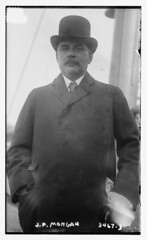
14961458807J. P. MorganA banker who took control and consolidated bankrupt railroads in the Panic of 1893. In 1900, he led a group in the purchase of Carnegie Steel, which became U.S. Steel. (p. 321, 323)20
14961458808leading industrial powerBy 1900, the United States was the leading industrial power in the world, manufacturing more than an of its rivals, Great Britain, France, or Germany. (p. 319)21
14961458809Second Industrial RevolutionThe term for the industrial revolution after the Civil War. In the early part of the 19th century producing textiles, clothing, and leather goods was the first part of this revolution. After the Civil War, this second revolution featured increased production of steel, petroleum, electric power, and industrial machinery. (p. 323)22
14961458810Bessemer processIn the 1850s, Henry Bessemer discovered this process. By blasting air through molten iron you could produce high-quality steel. (p. 323)23
14961458811transatlantic cableIn 1866, Cyrus W. Field's invention allowed messages to be sent across the oceans. (p. 325)24
14961458812Alexander Graham BellIn 1876, he invented the telephone. (p. 325)25
14961458813Thomas EdisonPossibly the greatest inventor of the 19th century. He established the first modern research labratory, which produced more than a thousand patented inventions. These include the phonograph, first practical electric light bulb, dynamo for electric power generation, mimeograph machine, and a motion picture camera. (p. 326)26
14961458814Menlo Park Research LabThe first modern research laboratory, created in 1876, by Thomas Edison in Menlo Park, New Jersey. (p. 326)27
14961458815electric power, lightingIn 1885, George Westinghouse produced a transformer for producing high-voltage alternating current, which made possible the lighting of cities, electric streetcars, subways, electrically powered machinery, and appliances. (p. 326)28
14961458816George WestinghouseHe held more than 400 patents. He invented the high-voltage alternating current transformer, which made possible the nationwide electrial power system. (p. 326)29
14961458817Eastman's Kodak cameraIn 1888, George Eastman invented the camera. (p. 325)30
14961458818large department storesR.H. Macy and Marshall Field made these stores the place to shop in urban centers. (p. 326)31
14961458819R.H. MacyHe created a New York department store. (p. 326)32
14961458820mail-order companiesTwo companies, Sears Roebuck, and Montgomery Ward, used the improved rail system to ship to rural customers to sell many different products. The products were ordered by mail from a thick paper catalog. (p. 326)33
14961458821Sears-RoebuckMail order company that used the improved rail system to ship to rural customers. (p. 326)34
14961458822packaged foodsBrand name foods created by Kellogg and Post became common items in American homes. (p. 326)35
14961458823refrigeration; canningThese developments in the food industry changed American eating habits. (p. 326)36
14961458824Gustavus SwiftHe changed American eating habits by making mass-produced meat and vegetable products. (p. 326)37
14961458825advertisingThis new technique was important to creating the new consumer economy. (p. 326)38
14961458826consumer economyAdvertizing and new marketing techniques created a new economy. (p. 326)39
14961458827federal land grants and loansThe federal government provided land and loans to the railroad companies in order to encourage expansion of the railroads. (p. 320)40
14961458828fraud and corruption, Credit MobilierInsiders used construction companies to bribe government officials and make huge profits. (p. 321)41
14961458829Interstate Commerce Act of 1886This act, created in 1886, did little to regulate the railroads. (p. 322)42
14961458830anti-trust movementMiddle class people feared a growth of new wealth due to the trusts. In the 1880s trust came under widespread scrutiny and attack. In 1890, the Sherman Antitrust Act was passed, but it was too vaguely worded to stop the development of trusts. Not until the Progressive era, would the trusts be controlled. (p. 324)43
14961458831Sherman Antitrust Act of 1890In 1890, Congress passed this act, which prohibited any "contract, combination, in the form of trust or otherwise, or conspiracy in restraint of trade or commerce." The U.S. Department of Justice secured few convictions until the law was strenghted during the Progressive era. (p. 324)44
14961458832federal courts, U.S. v. E.C. KnightIn 1895, the Supreme Court ruled that the Sherman Antitrust Act could be applied only to commerce, not manufacturing. (p. 324)45
14961458833causes of labor discontentWorker's discontent was caused by performing monotonous task required completion within a certain time, dangerous working conditions, and exposure to chemicals and pollutants. (p. 328)46
14961458834iron law of wagesDavid Ricardo developed this theory which stated that low wages were justified. He argued that raising wages would only increase the working population, the availability of more workers would cause wages to fall, thus creating a cycle of misery. (p. 327)47
14961458835anti-union tacticsEmployers used the following tactics to defeat unions: the lockouts (closing the factory), blacklists (lists circulated among employers), yellow dog contracts (contracts that forbade unions), private guards to quell strikes, and court injunctions against strikes. (p. 329)48
14961458836railroad strike of 1877In 1887, this strike spread across much of the nation and shut down two-thirds of the country's railroads. An additional 500,000 workers from other industries joined the strike. The president used federal troops to end the violence, but more than 100 people had died in the violence. (p. 329)49
14961458837Knights of LaborStarted in 1869 as a secret national labor union. It reached a peak of 730,000 members. (p. 330)50
14961458838Haymarket bombingOn May 4, 1886 workers held a protest in which seven police officers were killed by a protester's bomb. (p. 330)51
14961458839American Federation of LaborThe labor union focused on just higher wages and improved working conditions. By 1901 they had one million members. (p. 330)52
14961458840Samuel GompersHe led the American Federation of Labor until 1924. (p. 330)53
14961458841Pullman StikeIn 1894, workers at Pullman went on strike. The American Railroad Union supported them when they refused to transport Pullman rail cars. The federal government broke the strike. (p. 331)54
14961458842Eugene DebsThe American Railroad Union leader, who supported the Pullman workers. The government broke the strike and he was sent to jail for six months. (p. 331)55
14961458843railroad workers: Chinese, Irish, veteransIn the construction of the first transcontinental railroad, the Union Pacific, starting in Omaha, employed thousands of war veterans and Irish immigrants. The Central Pacific, starting from Sacramento, included 6,000 Chinese immigrants among their workers. (p. 321)56
14961458844old rich vs. new richThe trusts came under widespread scrutiny and attack in the 1880s, urban elites (old rich) resented the increasing influence of the new rich. (p. 324)57
14961458845white-collar workersThe growth of large corporation required thousands of white-collar workers (jobs not involving manual labor) to fill the highly organized administrative structures. (p. 327)58
14961458846expanding middle classIndustrialization helped expand the middle class by creating jobs for accountants, clerical workers, and salespeople. The increase in the number of good-paying jobs after the Civil War significantly increased the size of the middle class. (p. 327)59
14961458847factory wage earnersBy 1900, two-thirds of all working Americans worked for wages, usually at jobs that required them to work ten hours a day, six days a week.(p. 327)60
14961458848women and children factory workersBy 1900, 20 percent of adult woman working for wages in the labor force. Most were young and single women, only 5 percent of married women worked outside the home. (p. 327)61
14961458849women clerical workersAs the demand for clerical workers increased, women moved into formerly male occupations as secretaries, bookkeepers, typists, and telephone operators. (p. 328)62
14961458850Protestant work ethicThe believe that hard work and material success are signs of God's favor. (p. 325)63
14961458851Adam SmithIn 1776, this economist wrote "The Wealth of Nations" which argued that business should not be regulated by government, but by the "invisible hand" (impersonal econmic forces). (p. 324)64
14961458852laissez-faire CapitalismIn the late 19th century, american industrialists supported the theory of no government intervention in the economy, even as they accepted high tariffs and federal subsidies. (p. 324)65
14961458853concentration of wealthBy the 1890s, the richest 10 percent of the U.S. population controlled 90 percent of the nation's wealth. (p. 326)66
14961458854Social DarwinismThe belief that government's helping poor people weakened the evolution of the species by preserving the unfit. (p. 324)67
14961458855William Graham SumnerAn English social philosopher, he argued for Social Darwism, the belief that Darwin's ideas of natural slection and survival of the fittest should be applied to the marketpalce and society. (p. 324)68
14961458856survival of the fittestThe belief that Charles Darwin's ideas of natural selection in nature applied to the economic marketplace. (p. 324)69
14961458857Gospel of WealthSome Americans thought religion ideas justified the great wealth of successful industrialists. (p. 325)70
14961458858Horatio Alger Stories self-made manHis novels portrayed young men who became wealth through honesty, hard work and a little luck. In reality these rags to riches stories were somewhat rare. (p. 327)71

Pages

Subscribe to CourseNotes RSS

Need Help?

We hope your visit has been a productive one. If you're having any problems, or would like to give some feedback, we'd love to hear from you.

For general help, questions, and suggestions, try our dedicated support forums.

If you need to contact the Course-Notes.Org web experience team, please use our contact form.

Need Notes?

While we strive to provide the most comprehensive notes for as many high school textbooks as possible, there are certainly going to be some that we miss. Drop us a note and let us know which textbooks you need. Be sure to include which edition of the textbook you are using! If we see enough demand, we'll do whatever we can to get those notes up on the site for you!