| 13765882515 | Mesopotamia | Fertile floodplain between the Tigris and Euphrates Rivers in the Middle East. Home of the first civilization, Sumer. Modern day Iraq and Kuwait. |  | 0 |
| 13765882516 | Fertile Crescent | Fertile region encompassing Mesopotamia, the Egyptian Nile River delta, and modern day Israel, Lebanon and Syria. Site of the earliest evidence of agriculture. |  | 1 |
| 13765882517 | Sumer | The first urban civilization in Mesopotamia. Emerged circa (meaning around) 3000 BCE. |  | 2 |
| 13765882518 | City-States | Cities that have their own independent government. Usually control some surrounding territory as well. | | 3 |
| 13765882519 | Polytheistic | Believing in many deities. Religions in many early civilizations were originally this way. |  | 4 |
| 13765882520 | Ziggurat | Large pyramid structures that were common in Sumerian cities. Probably used for religious ritual purposes. | | 5 |
| 13765882521 | Cuneiform | The first known writing system in the world. Developed in Sumer by 3000 BCE, and became a standard writing system in Mesopotamia for centuries. | 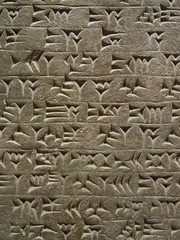 | 6 |
| 13765882522 | Ideographic Writing | Writing system, like cuneiform and early Chinese, in which symbols represent whole words or ideas rather than individual sounds. |  | 7 |
| 13765882523 | Scribes | A class of people skilled in writing and literacy. Usually were high status in early civilizations. |  | 8 |
| 13765882524 | Epic of Gilgamesh | The first epic story in human history, from the 3rd millennium BCE. Tells the story of a legendary Sumerian king from the city of Uruk. |  | 9 |
| 13765882525 | Babylonian Empire | Empire, based in the Mesopotamian city of Babylon, that conquered Mesopotamia in the 2nd millennium BCE. Famous for the Code of Hammurabi. |  | 10 |
| 13765882526 | Code of Hammurabi | The first known example of a codified system of law. From the Babylonian Empire, Ca. 1750 BCE. |  | 11 |
| 13765882527 | Codified Law | When a government establishes a single system of standard laws for the entire territory it controls. | | 12 |
| 13765882528 | Patriarchal | When men in a society enjoy higher status and greater power and privileges than women. |  | 13 |
| 13765882529 | Phoenicians | A group of people, based in present-day Lebanon, Israel, and Jordan, who created the first alphabet and colonized the coasts of the Mediterranean Sea. They were skilled sailors and traders. They invented one of the world's first alphabetic writing systems. |  | 14 |
| 13765882530 | Alphabet | A writing system in which symbols represent individual sounds that can be combined to create words. The first example of this was the Phoenician writing system. Our English writing system is also an example. |  | 15 |
| 13765882531 | Hebrews | Also known as Israelites and/or Jews. The first group in the Middle East to develop a monotheistic religious tradition. | | 16 |
| 13765882532 | Nile River | The river system that flowed through ancient Egyptian and Nubian civilizations, emptying into the Mediterranean Sea. |  | 17 |
| 13765882533 | Irrigation | Technologies that are used to control and direct the flow of freshwater for use in agriculture. |  | 18 |
| 13765882534 | Pharaoh | Kings of ancient Egyptian civilization; believed to be incarnation of god in their own lifetime who would become another god upon their death. The ultimate authority in Egypt |  | 19 |
| 13765882535 | Theocracy | Government ruled by religious leaders based on religious ideology. |  | 20 |
| 13765882536 | Hieroglyphics | Egyptian ideographic (meaning it used pictures) writing system. |  | 21 |
| 13765882537 | Nubia | Civilization just south of Egypt along the Nile River. Developed alongside Egypt, often sending or receiving technological and other cultural ideas. |  | 22 |
| 13765882538 | Indus River Valley | Home of the first civilization in South Asia, Ca. 2500 BCE |  | 23 |
| 13765882539 | Harappa and Mohenjo-Daro | Major cities built by the Indus Valley civilization before 2000 BCE. Known for complex urban planning, building technology, and water management and sewage systems. |  | 24 |
| 13765882540 | Dravidians | Indigenous peoples of the Indian subcontinent of South Asia. Builders of Indus Valley Civilization. |  | 25 |
| 13765882541 | Yellow and Yangtze Rivers | The major river systems of northern and southern China that were home to early Chinese civilizations. Also known as the Huang He and Chiang Jiang Rivers. |  | 26 |
| 13765882542 | Dynasty | A series of rulers, usually from the same family, who pass power down from generation to generation. | | 27 |
| 13765882543 | Xia Dynasty | Earliest known dynasty in Chinese history. | | 28 |
| 13765882544 | Shang Dynasty | Took power in the Yellow River valley Ca. 1750 BCE and ruled until Ca. 1050 BCE. |  | 29 |
| 13765882545 | Artisans | Someone who works as a skilled craftsmen producing goods. |  | 30 |
| 13765882546 | Oracle bones | Earliest examples of writing in the Shang Dynasty. Turtle shells or animal bones that were used for divination (understanding the will of the gods). |  | 31 |
| 13765882547 | Ancestor veneration | Reverence for and worship of one's ancestors (the generations of ones family that have died). Important in early Chinese religion. |  | 32 |
| 13765882548 | Zhou Dynasty | Rulers of China from Ca. 1050 BCE to Ca. 500 BCE. |  | 33 |
| 13765882549 | Mandate of Heaven | Chinese concept of the divine right to rule. According to this principle, a new dynasty received the mandate - or authority - from the gods to rule China justly and for the good of the people. If the dynasty becomes corrupt, incompetent, or unjust then the mandate will transfer to a new dynasty who will overthrow them and rule China. |  | 34 |
| 13765882550 | Centralized government | A political system in which a single center of power, such as a king or parliament, makes decisions for the whole state. Lower ranking government officials carry out the laws of the central authority but are not free to act independently. |  | 35 |
| 13765882551 | Decentralized government | A political system in which power is distributed among several centers of power. The USA is an example of this, in which the federal government in Washington DC has some powers, but state governments also have some unique powers. A feudal system is also an example of this. | | 36 |
| 13765882552 | Peasants | Small, poor farmers. Sometimes might own some land, but might also work as laborers on the land of a larger landowner. |  | 37 |
| 13765882553 | Urbanization | The process of change in which the proportion of people who live in cities or towns rather than small villages rises. Usually caused by an increasing demand for goods and trade. |  | 38 |
| 13765882554 | Rural | Areas in the countryside, where there is a large of amount of agricultural land and low population density. |  | 39 |
| 13765882555 | Maize | Corn. The crop that was most important in Mesoamerica and elsewhere in American civilizations. |  | 40 |
| 13765882556 | Chavin | The earliest civilization in Peru and the Andes Mountains of South America. Ca. 1000 to 200 BCE. |  | 41 |
| 13765882557 | Olmec | The earliest civilization in Mesoamerica, Ca. 1200 to 400 BCE. Built the giant stone heads. |  | 42 |
| 13765882558 | Monumental Building | Extremely large-scale buildings that are built for a primarily ritual or symbolic purpose. Examples include the Egyptian pyramids, the Sumerian ziggurats, the Olmec giant heads, and others. |  | 43 |
| 13765882559 | Public Works | Large-scale engineering and construction projects undertaken by a government that are intended to serve a useful purpose for society. Examples may include roads, canals, irrigation systems, bridges, defensive walls, farming terraces, sewage systems, and aqueducts. |  | 44 |
| 13765882560 | "Out of Africa" | Between 200,000 and 100,000 years ago, human beings began migrating out of Africa and eventually inhabited all continents except Antarctica. |  | 45 |
| 13765882561 | Homo Sapiens | Human beings. |  | 46 |
| 13765882562 | Paleolithic | Old Stone Age. Characterized by nomadic hunting-foraging. |  | 47 |
| 13765882563 | Neolithic | New Stone Age. Began about 10,000 years ago. Characterized by the development of agriculture and pastoralism. |  | 48 |
| 13765882564 | Hunting-Foraging | Obtaining food and materials by hunting wild animals and collecting wild plants. Usually nomadic. Characteristic of the Paleolithic Era. |  | 49 |
| 13765882565 | Nomadic | Moving periodically to follow the availability of food sources. |  | 50 |
| 13765882566 | Animism | The belief that objects in nature (rivers, mountains, animals, trees, etc.) are inhabited by divine spirits. |  | 51 |
| 13765882567 | Shaman | A person in animistic religious traditions who is thought to have special powers to heal, tell the future, or communicate with spirits. |  | 52 |
| 13765882568 | Deity | A god or divinity in a religious tradition. |  | 53 |
| 13765882569 | "Broad Spectrum Diet" | A diet characterized by a wide variety of plants and animals, by which humans obtain all necessary nutrients and do not become too dependent on a small number of foods. |  | 54 |
| 13765882570 | Egalitarian | In a group: when there is little or no difference in wealth, status, and power between members of the group. |  | 55 |
| 13765882571 | Sedentary (as in "sedentism") | Settled in one location. The opposite of nomadic. |  | 56 |
| 13765882572 | Agriculture | Obtaining food and materials by planting and raising domesticated crops. Farming. Agrarianism. | | 57 |
| 13765882573 | Cultivation | The process of planting and raising crops. |  | 58 |
| 13765882574 | Domestication | The process of taming a wild species of animal (or plant), breeding it for specific traits, and bringing it under human control. |  | 59 |
| 13765882575 | Pastoralism | Nomads who live primarily on the food and materials obtained from domesticated herds of animals. |  | 60 |
| 13765882576 | Cultural Diffusion | The spread of ideas, technology, art, religion and other aspects of culture from their place of origin into new places. This process can occur peacefully or violently. |  | 61 |
| 13765882577 | Job Specialization | When some people in a society are able to specialize in types of work besides food production.
Was enabled by a surplus of food, allowing people to do other work.
Became a characteristic of agricultural societies during the Neolithic era and beyond. |  | 62 |
| 13765882578 | Metallurgy | The purification and application of metal for useful purposes, such as tools, jewelry, or weapons. was invented during the Neolithic era. |  | 63 |
| 13765882579 | Textiles | Items made from cloth or woven fabric. These can be made from plants (cotton), animals (wool, silk), or synthetic materials (polyester, nylon). |  | 64 |
| 13765882580 | Irrigation | Man-made systems for moving fresh water and distributing it to farmland to help the growth of crops. | | 65 |
| 13765882581 | Kinship Group | A group of related families that served as the basic organizing unit of Paleolithic (and some pastoral and agricultural) societies. Decisions were usually made through discussion and consensus among family leaders. | | 66 |
| 13765882582 | Neolithic Revolution | the adoption of agriculture by humans, who had been hunter-gatherers. This is the split between the Paleolithic (Old Stone Age) and Neolithic (New Stone Age) | | 67 |
| 13765882583 | Tigris and Euphrates | the major rivers of Mesopotamia; they're reason Greeks named it "land between the rivers." Irregular flooding led Mesopotamians to believe the gods were fickle and unfriendly to humans | | 68 |
| 13765882584 | Nile | major river of Egypt; owing to its importance in providing rich soil and water for irrigation, Greek historian Herodotus called Egypt "the gift of the _________" Regular flooding and easy agriculture led Egyptians to have a more positive worldview than Mesopotamians | | 69 |
| 13765882585 | Patriarchy | male control of women, facilitated by male desire to know their children were actually theirs and by agriculture replacing female gathering of wild plant foods with male-centric heavy farmwork. | | 70 |
| 13765882586 | Sumerians | the founders of the oldest civilization in Mesopotamia | | 71 |
| 13765882587 | Harappa | namesake city of the river-valley civilization centered on the Indus River in India; one of two major cities | | 72 |
| 13765882588 | Monotheism | belief in one god | | 73 |
| 13765882589 | Pyramid | gigantic tombs of Egyptian pharaohs; construction took decades and required well-organized labor force | | 74 |
| 13765882590 | Llama | the only large domesticated animal of the Americas | | 75 |
| 13765882591 | Foragers | another term for hunter-gatherers; earliest human lifestyle, before agriculture | | 76 |
| 13765882592 | Mandate of Heaven | Chinese belief invented by the Zhou that taught a ruler had the blessing of God/the gods so long as they ruled justly; used to justify their overthrow of the Shang Dynasty | | 77 |
| 13765882593 | Mohenjo-Daro | one of the two major cities of the Harappan civilization; known for huge water-storage facility "The Great Bath" (NOT "The Pool That Ruled") | | 78 |
| 13765882594 | Family relationships | The basis for Confucius's ideas of social organization--the relationship between the father and son, for example, is the basis for the relationship between the Emperor and his people. | | 79 |
| 13765882595 | Pastoralism | alternative to agriculture; lifestyle of mobile herding of livestock. Nomadic peoples like the Mongols, Turks, etc. practice this lifestyle | | 80 |
| 13765882596 | Gilgamesh | legendary Mesopotamian ruler who built the wall of Uruk; fought and befriended the wild man Enkidu and sought immortality | | 81 |
| 13765882597 | Xia Dynasty | legendary first dynasty of China; might not have actually existed | | 82 |
| 13765882598 | Shang Dynasty | first historical dynasty of China; written records exist in form of "oracle bones" | | 83 |
| 13765882599 | Zhou Dynasty | Second historical dynasty of China; invented "Mandate of Heaven" to justify their takeover and had decentralized feudal government | | 84 |
| 13765882600 | Laws of Manu | early document describing the Hindu caste system, used to regulate Indian society | | 85 |
| 13765882601 | Chariot | horse-drawn wheeled war machine originating in Central Asia; used by Hyksos to conquer Egypt. Also used by Shang and Zhou warrior-aristocrats | | 86 |
| 13765882602 | writing | the use of signs or symbols to record communication; allows for retention of knowledge across generations, record-keeping, etc. | | 87 |
| 13765882603 | Hammurabi | Babylonian king known for his law code | | 88 |
| 13765882604 | Indus Valley | site of the Harappan civilization, which consisted of the cities of Mohenjo-Daro and Harappa | | 89 |
| 13765882605 | Huang He | Yellow River in China; site of the Xia (maybe), Shang, and Zhou | | 90 |
| 13765882606 | Stratification | organization of society into social classes or ranks--the Code of Hammurabi divides the Babylonians into three ranks, for example | | 91 |



