

Holt AP US History period 3 Flashcards
Terms : Hide Images
| 13618453221 | The French and Indian War | 1754-1763 War between French and British in American colonies part of 7 years |  | 0 |
| 13618453222 | The Proclamation of 1763 | Line drawn by British Parliament, colonists not allowed to settle past Appalachian mountains |  | 1 |
| 13618453223 | Stamp Act | 1765 direct tax on a stamp that must be put on paper, office documents, etc. |  | 2 |
| 13618453224 | The Coercive Acts | punitive acts applied to Massachusetts in retaliation for the Boston Tea Party; referred to by colonists as the Intolerable Acts |  | 3 |
| 13618453225 | Common Sense | 1776: a pamphlet written by Thomas Paine that claimed the colonies had a right to be an independent nation |  | 4 |
| 13618453226 | The Declaration Of Independence | 1776 statement, issued by the Second Continental Congress, explaining why the colonies wanted independence from Britain. |  | 5 |
| 13618453227 | Battle of Saratoga | American victory over British troops in 1777 that was a turning point in the American Revolution. |  | 6 |
| 13618453229 | Treaty of Paris | 1783 treaty ending the Revolutionary War |  | 7 |
| 13618453230 | Articles of confederation | first government of the United States; extremely weak government that gave most of the power to states |  | 8 |
| 13618453231 | The Northwest Ordinance of 1787 | a law that established a procedure for the admission of new states to the Union and set the boundary for slavery at the Ohio River |  | 9 |
| 13618453232 | Shay's Rebellion | A 1787 rebellion in which ex-Revolutionary War soldiers attempted to prevent foreclosures of farms as a result of high interest rates and taxes |  | 10 |
| 13618453233 | The Constitution | document which spells out the principles by which the US government runs and the fundamental laws that govern society |  | 11 |
| 13618453234 | The Great Compromise | a compromise between the New Jersey and Virginia plans that created the Senate and the House of Representatives; each state received equal number of senators, states received representatives based on population |  | 12 |
| 13618453235 | The Three-Fifths compromise | Agreement at the creation of the Constitution that each slave counted as three-fifths of a person in determining representation in the House for representation and taxation purposes |  | 13 |
| 13618453236 | The Federalists papers | This collection of essays by John Jay, Alexander Hamilton, and James Madison; explained the importance of a strong central government; published to convince New York to ratify the Constitution |  | 14 |
| 13618453237 | Federalists | Supported the ratification of the Constitution and a strong federal government |  | 15 |
| 13618453238 | Anti-federalists | early opponents of the Constitution during the period of ratification; opposed the Constitution's powerful centralized government, arguing that the Constitution gave too much political, economic, and military control |  | 16 |
| 13618453239 | The Bill of rights | First ten amendments to the Constitution, drafted by Madison, created limitations on government and protects natural rights. |  | 17 |
| 13618453240 | Alexander Hamilton | 1789-1795; First Secretary of the Treasury. He advocated creation of a national bank, assumption of state debts by the federal government, and a tariff system to pay off the national debt; strong federalist |  | 18 |
| 13618453241 | Washington's farewell address | He warned against the dangers of political parties and foreign alliances. |  | 19 |
| 13618453242 | XYZ Affair | A 1797 incident in which French officials demanded a bribe from U.S. diplomats | 20 | |
| 13618453243 | Alien and Sedition Acts | Series of four laws enacted in 1798 to reduce the political power of recent immigrants and limit political opposition to the federalists |  | 21 |
| 13618453244 | Kentucky and Virginia Resolutions | Republican documents that argued that the Alien and Sedition Acts were unconstitutional; claimed that states have the authority to nullify federal laws |  | 22 |
| 13618453246 | John Locke | English philosopher who advocated the idea of a "social contract" in which government powers are derived from the consent of the governed and in which the government serves the people; also said people have natural rights to life, liberty and property. |  | 23 |
| 13618453247 | George Whitefield | Christian preacher whose tour of the English colonies attracted big crowds; prominent preacher during the First Great Awakening |  | 24 |
| 13618453248 | First Great Awakening | Religious revival in the colonies in 1730s and 1740s; George Whitefield and Jonathan Edwards preached a message of atonement for sins by admitting them to God; the movement attempted to combat the growing secularism and rationalism of mid-eighteenth century America |  | 25 |
| 13618453250 | Ben Franklin | A delegate from Pennsylvania and proposed the "Albany Plan of the Union" as a way to strengthen colonies. | 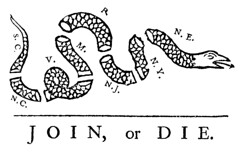 | 26 |
| 13618453251 | Abolition | The movement to make slavery and the slave trade illegal; begun by Quakers in England in the 1780s |  | 27 |
| 13618453253 | Sugar Act of 1764 | An act that raised tax revenue in the colonies for the crown. It also increased the duty on foreign sugar imported from the West Indies. |  | 28 |
| 13618453256 | Quartering Act of 1765 | Act forcing colonists to house and supply British forces in the colonies; created more resentment; seen as assault on liberties. |  | 29 |
| 13618453258 | Declaratory Act | Act passed in 1766 after the repeal of the Stamp Act; stated that Parliament had authority over the the colonies and the right to tax and pass legislation "in all cases whatsoever." |  | 30 |
| 13618453259 | Townshend Acts | A tax that the British Parliament passed in 1767 that was placed on lead, glass, paint, and tea |  | 31 |
| 13618453260 | Popular Sovereignty | A belief that ultimate power resides in the people. |  | 32 |
| 13618453261 | Thomas Jefferson | Wrote the Declaration of Independence; 3rd President of the United States |  | 33 |
| 13618453262 | Second Continental Congress (1775) | Managed the colonial war effort, and moved incrementally towards independence - finally adopting the Declaration of Independence in 1776. |  | 34 |
| 13618453263 | Sons of Liberty | A radical political organization for colonial independence which formed in 1765 after the passage of the Stamp Act. They incited riots and burned the customs houses where the stamped British paper was kept. After the repeal of the Stamp Act, many of the local chapters formed the Committees of Correspondence which continued to promote opposition to British policies towards the colonies. Leaders included Samuel Adams and Paul Revere. |  | 35 |
| 13618453264 | Patriots | (also known as Revolutionaries, Continentals, Rebels, or American Whigs) were those colonists of the Thirteen Colonies who rejected British rule during the American Revolution and declared the United States of America as an independent nation in July 1776. |  | 36 |
| 13618453265 | Tories/Loyalists | Colonists who favored remaining under British control |  | 37 |
| 13618453266 | Constitutional Convention | A meeting in Philadelphia in 1787 that produced a new constitution | 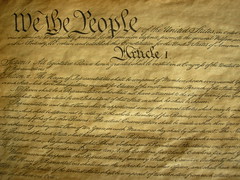 | 38 |
| 13618453267 | Republican Motherhood | The idea that American women had a special responsibility to cultivate "civic virtue" in their children | 39 | |
| 13618453268 | American System | Economic program advanced by Henry Clay that included support for a national bank, high tariffs, and internal improvements; emphasized strong role for federal government in the economy. | 40 | |
| 13618453269 | War of 1812 | A war (1812-1814) between the United States and England; reaction to British impressment of American sailors and interference with American trade | 41 | |
| 13618453270 | John Marshall | American jurist and politician who served as the chief justice of the U.S. Supreme Court (1801-1835) and helped establish the practice of judicial review. | 42 | |
| 13618453271 | Louisiana Purchase | territory in western United States purchased from France in 1803 for $15 million | 43 | |
| 13618453272 | Pinckney's Treaty (1795) | This treaty between the U.S. and Spain which gave the U.S. the right to transport goods on the Mississippi River and to store goods in the Spanish port of New Orleans | 44 | |
| 13618453273 | Quasi War (1798-1800) | undeclared war fought mostly at sea between the French Republic and the United States, caused by the signing of Jay's Treaty between the UK and the US | 45 | |
| 13618453274 | Jay's Treaty | Treaty signed in 1794 between the U.S. and Britain; intended to strengthen trade relations between the US and Britain; British agreed to abandon outposts in the Northwest Territory but would not guarantee the non-impressment of American sailors | 46 | |
| 13618453276 | Treaty of Ghent (1814) | Ended the War of 1812 with Britain confirming the sovereignty of the new nation | 47 | |
| 13618453277 | Embargo Act of 1807 | restrictions on trade with Britain and France intended to induce both nations to cease impressing American citizens; inflicted economic harm on the US | 48 | |
| 13618453280 | Revolution of 1800 | Electoral victory of Democratic Republicans over the Federalists, who lost their Congressional majority and the presidency. The peaceful transfer of power between rival parties solidified faith in America's political system. | 49 | |
| 13618453281 | Barbary Wars (1801-1805) | President Thomas Jefferson's refusal to pay tribute to protect American ships from the Barbary pirates off the Mediterranean coast of Africa sparked an undeclared naval war with North African nations that lasted from 1801 to 1805. | 50 | |
| 13618453282 | Missouri Compromise of 1820 | Allowed Missouri to enter the union as a slave state, Maine to enter the union as a free state, prohibited slavery north of latitude 36˚ 30' within the Louisiana Territory (1820) | 51 |
AP US History Chapter 31 Flashcards
Terms : Hide Images
| 13518092286 | Al Qaeda | a network of Islamic terrorist organizations, led by Osama bin Laden, that carried out the attacks on the US embassies in Tanzania and Kenya in 1998, the USS Cole in Yemen in 2000, and the World Trade Center and the Pentagon in 2001 | 0 | |
| 13518092287 | Globalization | Actions or processes that involve the entire world and result in making something worldwide in scope. | 1 | |
| 13518092288 | World Trade Organization (WTO) | Administers the rules governing trade between its 144 members. Helps producers, importers, and exporters conduct their business and ensure that trade flows smoothly. | 2 | |
| 13518092289 | Group of Eight(G8) | Forum of governmental leaders of eight large and industrialized nations Read more: http://www.businessdictionary.com/definition/group-of-eight-G-8.html#ixzz45i3kdBs1 | 3 | |
| 13518092290 | North American Free Trade Agreement (NAFTA) | An economic pact that combined the conomies of the United States, Canada, and Mexico into one of the world's largest trading blocs. | 4 | |
| 13518092291 | Multinational Corporations | An organization that manufactures and markets products in many different countries and has multinational stock ownership and multinational management | 5 | |
| 13518092292 | Advanced Research Projects Agency Network (ARPANET) | created in response to Sputnik I; agency to initiate new technology and protect the U.S. from missiles that could be launched from space | 6 | |
| 13518092293 | World Wide Web | A system for finding information on the Internet through the use of linked documents. | 7 | |
| 13518092294 | Culture War | A split in the United States reflecting differences in people's beliefs about private and public morality, and regarding what standards ought to govern individual behavior and social arrangements. | 8 | |
| 13518092295 | Immigration and Nationality Act | (also known as the Hart-Celler Act or the INS Act of 1965) abolished the national-origin quotas that had been in place in the United States since the Immigration Act of 1924. An annual limitation of 170,000 visas was established for immigrants from Eastern Hemisphere countries with no more than 20,000 per country. By 1968, the annual limitation from the Western Hemisphere was set at 120,000 immigrants, with visas available on a first-come, first-served basis. The democratic controlled Congress (House of Representatives voted 326 to 69) in favor while the Senate passed the bill by a vote of (76 to 18). President Lyndon Johnson signed the legislation into law. | 9 | |
| 13518092296 | Multiculturalism | A perspective recognizing the cultural diversity of the United States and promoting equal standing for all cultural traditions. | 10 | |
| 13518092297 | Proposition 209 | passed in CA, which banned state affirmative action programs based on race, ethnicity, gender in public hiring, contracting, and educational admissions | 11 | |
| 13518092298 | Operation Rescue | movement in which people prevented people from going into abortion clinic | 12 | |
| 13518092299 | Defense of Marriage Act | 1996, Declares that states are not obligated to recognize any same sex marriages that might not be legally sanctioned in other states, defined marriage and spouse in heterosexual terms for federal law | 13 | |
| 13518092300 | Webster v. Reproductive Health Services | 1989, Upheld a Missouri law that imposed restrictions on the use of state funds, facilities and employees in performing, assisting with, or counseling on abortions. | 14 | |
| 13518092301 | Planned Parenthood of Southeastern Pennsylvania v. Casey | again, it upheld Roe, but added new restriction (24 hour waiting period, mandatory counseling, and minors needed permission). It also created the undue burden standard - all new restrictions had to be judged by whether or not they create an undue burden for the mothers. | 15 | |
| 13518092302 | Lawrence v. Texas | Policemen, entering a private home to follow through with a weapon tip, discovered two men, Lawrence and Garner, engaging in consensual sex. According to the Homosexual Conduct law, the two men were placed under arrest for engaging in homosexual relations. Result: The Texas law violates both of the men's 14th A. rights to engage in private conduct without intervention from the government. - violates the 14th and 4th A. - no legit state interest. | 16 | |
| 13518092303 | Contract with America | In the 1994 congressional elections, Congressman Newt Gingrich had Republican candidates sign a document in which they pledged their support for such things as a balanced budget amendment, term limits for members of Congress, and a middle-class tax cut. | 17 | |
| 13518092304 | Personal Responsibility and Work Opportunity Reconciliation Act | The 1996 federal law that transferred responsibility for welfare programs from the federal level to the state level and placed a five-year lifetime limit on payment of afdc benefits to any given recipient. | 18 | |
| 13518092305 | Economic Growth and Tax Relief Act | (2001) slashed income tax rates, extended the earned income credit for the poor, and phased out the estate tax by 2010, it skewed the distribution of tax benefits upward and the massive tax cuts combined with lots of spending plunged the federal government into debt | 19 | |
| 13518092306 | Tea Party | A Conservative political movement in the US that opposes government spending and taxes | 20 | |
| 13518092307 | USA Patriot Act | law passed due to 9/11 attacks; sought to prevent further terrorist attacks by allowing greater government access to electronic communications and other information; criticized by some as violating civil liberties | 21 | |
| 13518092308 | Abu Gharib Prison | prison in which iraqi prisoners were tortured and humiliated by their american captors | 22 | |
| 13518092309 | American Recovery and Reinvestment Act | Obama legislation at $862 billion, largest stimulus in U.S. history, enacted in February 2009 that was all deficit spending | 23 | |
| 13518092310 | Patient Protection and Affordable Care Act | Policies post 2010 can not have lifetime caps | 24 | |
| 13518092311 | Osama Bin Laden | (1957-) Founder of al Qaeda, the terrorist network responsible for the attacks of September 11, 2001, and other attacks. | 25 | |
| 13518092312 | William (Bill) Clinton | he was the 42 president | 26 | |
| 13518092313 | Newt Gingrich | and served as the 50th Speaker of the U.S. House of Representatives f | 27 | |
| 13518092314 | Monica Lewinsky | is a former White House intern with whom President Bill Clinton admitted to having had what he called an "inappropriate relationship" while she worked at the White House in 1995 and 1996. T | 28 | |
| 13518092315 | George W. Bush | 43rd president of the US who began a campaign toward energy self-sufficiency and against terrorism in 2001 | 29 | |
| 13518092316 | Saddam Hussein | - Was a dictator in Iraq who tried to take over Iran and Kuwait violently in order to gain the land and the resources. He also refused to let the UN into Iraq in order to check if the country was secretly holding weapons of mass destruction. | 30 | |
| 13518092317 | Barack Obama | 2008; Democrat; first African American president of the US, health care bill; Gulf of Mexico oil spill disaster; economy: huge stimulus package to combat the great recession, is removing troops from Iraq, strengthened numbers in Afghanistan; repeal of Don't Ask Don't Tell; New Start treaty with Russia | 31 |
Flashcards
Ap Flashcards
Terms : Hide Images
| 14098636458 | misnomer | an unsuitable or misleading name | 0 | |
| 14098636459 | respite | a period of relief or rest | 1 | |
| 14098639775 | sinuous | winding, having many curves; lithe and flexible | 2 | |
| 14098643235 | wastrel | a wasteful person, spendthrift; a good-for-nothing | 3 | |
| 14098646720 | crestfallen | discouraged, dejected, downcast | 4 | |
| 14098649866 | sophomoric | immature and overconfident; conceited | 5 | |
| 14098654100 | limpid | clear, transparent; readily understood | 6 | |
| 14098654149 | assiduous | persistent, attentive, diligent | 7 | |
| 14098657971 | Defamation | slander or libel | 8 | |
| 14098661724 | fracas | a noisy quarrel or brawl | 9 |
AP Chemistry Chapter 2 Flashcards
Terms : Hide Images
| 10635835942 | John Dalton | Proposed that matter is composed of tiny particles called atoms. He postulated that all atoms of one element are the same but are different from atoms of another element. Atoms combine to form compounds. | 0 | |
| 10635835943 | Wilhelm Rontgen | physicist who discovered X-rays | 1 | |
| 10635835944 | JJ Thomson | Showed that cathode rays are streams of negative particles. He is credited with discovering the electron and measured its charge to mass ratio. He postulated that all atoms contain electrons. | 2 | |
| 10635835945 | Robert Millikan | Measured the charge of an electron and calculated its mass. | 3 | |
| 10635835946 | Henri Becquerel | french physicist who discovered radioactivity in uranium | 4 | |
| 10635835947 | Ernest Rutherford | He discovered the atomic nucleus and the proton and showed that atoms were mostly empty space - investigations in to the structure of the atomic nucleus - father of nucleur physics | 5 | |
| 10635835948 | Atoms | Consist of a tiny dense positively charged nucleus surrounded by a cloud of negative electrons. They are electrically neutral because each contains equal numbers of protons and electrons. | 6 | |
| 10635835949 | Nucleus | Contains positively charged protons and neutral neutrons. | 7 | |
| 10635835950 | Anions | When atoms gain electrons to form negatively charged ions | 8 | |
| 10635835951 | Cations | When atoms lose electrons to form positively charged ions | 9 | |
| 10635835952 | Atomic number | the number of protons in the nucleus | 10 | |
| 10635835953 | Element | a substance all of whose atoms contain the same number of protons. Each element is defined by its atomic number | 11 | |
| 10635835954 | Mass number | number of protons and neutrons in the nucleus | 12 | |
| 10635835955 | Isotopes | atoms of identical atomic numbers but different mass numbers | 13 | |
| 10635835956 | Atomic Mass Unit | amu. One amu equals 1.66054 * 10^24g. It is more useful to compare the masses of atoms to the masses of one carbon-12 isotope. One C12 atom has a defined mass of exactly 12 amu. | 14 | |
| 10635835957 | Atomic Mass | The weighted average mass of all the isotopes of an element based on the abundance of each isotope found on earth. Atomic masses are expressed in amu. All atomic masses reported on the periodic table are based on the carbon 12 standard. | 15 | |
| 10635835958 | Groups of families | vertical column on the periodic table | 16 | |
| 10635835959 | Periods | horizontal rows on the periodic table | 17 | |
| 10635835960 | Alkali Metals | Group 1 | 18 | |
| 10635835961 | Alkali Earth Metals | Group 2 | 19 | |
| 10635835962 | Halogens | Group 17 | 20 | |
| 10635835963 | Noble Gases | Group 18 | 21 | |
| 10635835964 | Diatomic Molecules | A molecule made up of two atoms. 7 elements occur this way: Hydrogen, Nitrogen, fluorine, chlorine, bromine and iodine. (H, O, N, F, Cl, Br, I) | 22 | |
| 10635835965 | Molecular Compound | composed of molecules and usually contain only nonmetals. A molecular formula indicates the actual number and type of atoms in the molecule and is the most often used formula for a molecular compound. | 23 | |
| 10635835966 | Monatomic Ions | single atoms | 24 | |
| 10635835967 | Polyatomic Ions | aggregates of atoms | 25 | |
| 10635835968 | Ionic Compounds | made up of ions containing both metals and nonmetals | 26 | |
| 10635835969 | Empirical Formula | Gives the relative number of atoms or each type in the compound. Mainly used for ionic compounds. | 27 | |
| 10635836009 | Potassium ion |  | 28 | |
| 10635836010 | Calcium ion |  | 29 | |
| 10635836011 | cobalt(II) ion |  | 30 | |
| 10635836012 | Cobalt(III) ion |  | 31 | |
| 10635835970 | Scandium ion | Sc3+ | 32 | |
| 10635836013 | Silver ion |  | 33 | |
| 10635836014 | zinc ion |  | 34 | |
| 10635836015 | Cadmium ion |  | 35 | |
| 10635836016 | Tin(II) ion |  | 36 | |
| 10635836017 | tin (IV) ion |  | 37 | |
| 10635836018 | lead (II) ion |  | 38 | |
| 10635836019 | lead (IV) ion |  | 39 | |
| 10635835971 | Names of monoatomic anions | When an atom gains electrons, the end of the element name is replaced with -ide. ex. H- is hydride, O^2- is oxide. | 40 | |
| 10635836020 | Hydroxide |  | 41 | |
| 10635836021 | Cyanide |  | 42 | |
| 10635836022 | Peroxide |  | 43 | |
| 10635835972 | Names of polyatomic cations | When polyatomic cations form from nonmetals lose electrons, their new names end in -ium. ex. NH4+ is ammonium. | 44 | |
| 10635835973 | Oxyanions | Polyatomic anions ending in -ate, which also contain oxygen. | 45 | |
| 10635836023 | Phosphate |  | 46 | |
| 10635836024 | Hydrogen Phosphate |  | 47 | |
| 10635836025 | Sulfate |  | 48 | |
| 10635836026 | Carbonate |  | 49 | |
| 10635836027 | Dihydrogen Phosphate |  | 50 | |
| 10635836028 | Hydrogen sulfate |  | 51 | |
| 10635836029 | Hydrogen carbonate |  | 52 | |
| 10635836030 | Nitrate |  | 53 | |
| 10635836031 | Acetate/ethanoate |  | 54 | |
| 10635835974 | Oxyanions ending in -ite | refers to oxyanions having the same charge but one fewer oxygen | 55 | |
| 10635835975 | Hypochlorite | hypo denotes one fewer oxygen |  | 56 |
| 10635836032 | Chlorite |  | 57 | |
| 10635836033 | Chlorate |  | 58 | |
| 10635835976 | perchlorate | per denotes one more oxygen |  | 59 |
| 10635836034 | Magnesium bromide |  | 60 | |
| 10635835977 | Calcium phosphate | Ca₃(PO₄)₂ | 61 | |
| 10635836035 | Iron (III) Oxide |  | 62 | |
| 10635836036 | Iron (II) oxide |  | 63 | |
| 10635835978 | Hydrofluoric acid | HF | 64 | |
| 10635835979 | Hydrochloric acid | HCl | 65 | |
| 10635835980 | Hydrobromic acid | HBr | 66 | |
| 10635835981 | Hydroiodic acid | HI | 67 | |
| 10635836037 | Nitric acid |  | 68 | |
| 10635836038 | Sulfuric acid |  | 69 | |
| 10635836039 | Phosphoric Acid |  | 70 | |
| 10635836040 | Acetic acid | | 71 | |
| 10635836041 | Hydrosulfuric acid |  | 72 | |
| 10635836042 | Hydroselenic acid |  | 73 | |
| 10635835982 | Carbonic acid | H₂CO₃ | 74 | |
| 10635836043 | Nitrous acid |  | 75 | |
| 10635835983 | Sulfurous acid | H₂SO₃ | 76 | |
| 10635835984 | Perchloric acid | HClO₄ | 77 | |
| 10635835985 | Chloric acid | HClO₃ | 78 | |
| 10635835986 | Chlorous acid | HClO₂ | 79 | |
| 10635835987 | Hypochlorous acid | HCIO | 80 | |
| 10635835988 | Naming binary acids | replace the -ide ending of the anion with -ic acid and add the prefix hydro. ex. Bromide, Br-, becomes hydrobromic acid, HBr. | 81 | |
| 10635835989 | Naming oxyacids | Replace the -ate ending of the oxyanion with the ic acid or the -ite ending of the oxyanion with the -ous acid. Examples include Nitrate, NO3-, become nitric acid, HNO3-, and hypochlorite, ClO-, becomes hypochlorous acid, HClO. Exceptions include Phosphate, PO4^3-, becomes Phosphoric acid, H3PO4, and sulfate, SO4^2-, becomes sulfuric acid, H2SO4. | 82 | |
| 10635835990 | Naming binary molecular compounds | Binary molecular compounds contain 2 nonmetals. 1. Name the first element 2. Name the second element giving it an -ide ending 3. Use prefixes that denote how many of each element are in the formula | 83 | |
| 10635835991 | Mono | 1 | 84 | |
| 10635835992 | Di | 2 | 85 | |
| 10635835993 | Tri | 3 | 86 | |
| 10635835994 | Tetra | 4 | 87 | |
| 10635835995 | Penta | 5 | 88 | |
| 10635835996 | Hexa | 6 | 89 | |
| 10635835997 | Hepta | 7 | 90 | |
| 10635835998 | Octa | 8 | 91 | |
| 10635835999 | Nona | 9 | 92 | |
| 10635836000 | Deca | 10 | 93 | |
| 10635836001 | Hydrocarbons | compounds containing only carbon and hydrogen | 94 | |
| 10635836002 | Alkanes | hydrocarbons containing only C-C single bonds. For naming alkanes, the prefix indicates the numbers of carbons in the formula, and the -ane indicates it is an alkane. | 95 | |
| 10635836003 | Functional Groups | groups of atoms that give rise to the structure and properties of an organic compound. Examples include alcohols, -OH, and carboxyl acid, -COOH. | 96 | |
| 10635836044 | Methanol |  | 97 | |
| 10635836045 | Ethanol |  | 98 | |
| 10635836046 | 1-propanol |  | 99 | |
| 10635836047 | 2-propanol |  | 100 | |
| 10635836004 | 1-butanol | CH3CH2CH2CH20H | 101 | |
| 10635836005 | 2-butanol | CH3CH2CHOHCH3 | 102 | |
| 10635836006 | methanoic | H2COOH | 103 | |
| 10635836048 | ethanoic acid |  | 104 | |
| 10635836007 | propane acid | CH3CH2COOH | 105 | |
| 10635836008 | butanoic acid | CH3CH2CH2COOH | 106 |
Flashcards
Flashcards
AP English Language and Composition Flashcards
Terms : Hide Images
| 14011821014 | Allegory | The device of using character and/or story elements symbolically. |  | 0 |
| 14011821015 | Antecedent | Word, phrase, or clause referred to by a pronoun. |  | 1 |
| 14011821016 | Antithesis | Opposition or contrast of ideas through parallelism. |  | 2 |
| 14011821017 | Aphorism | Early to bed and early to rise help make a man healthy, wealthy, and wise. -Ben Franklin |  | 3 |
| 14011821018 | Apostrophe | "Oh, Captain, my Captain, our fearful trip is done..." |  | 4 |
| 14011821019 | Colloquial/Colloquialism | The use of slang or informalities in speech or writing. |  | 5 |
| 14011821020 | Conceit | A fanciful expression, usually in the form of an extended metaphor. |  | 6 |
| 14011821021 | Euphemism | correctional facility = jail between jobs = unemployed | 7 | |
| 14011821022 | Homily | This term literally means "sermon," but more informally, it can include any serious talk, speech, or lecture involving moral or spiritual advice. |  | 8 |
| 14011821023 | Invective | An emotionally violent, verbal denunciation or attack using strong, abusive language. |  | 9 |
| 14011821024 | Metonymy | a figure of speech in which the name of one object is substituted for that of another closely associated with it. |  | 10 |
| 14011821025 | Anaphora | The exact repetition of words or phrases at the beginning of successive lines or sentences. |  | 11 |
| 14011821026 | Pedantic | An adjective that describes words, phrases, or general tone that is overly scholarly, academic, or bookish |  | 12 |
| 14011821027 | Prose | one of the major divisions of genre, prose refers to fiction and nonfiction, including all its forms. |  | 13 |
| 14011821028 | Semantics | The branch of linguistics that studies the meaning of words. |  | 14 |
| 14011821029 | Syllogism | A deductive system of formal logic that presents two premises that inevitably lead to a sound conclusion. |  | 15 |
| 14011821030 | Synecdoche | A figure of speech in which a part of something is used to represent the whole. |  | 16 |
| 14011821031 | Synesthesia | When one kind of sensory stimulus evokes the subjective experience of another. |  | 17 |
| 14011821032 | Apologia | A written or spoken defense of one's beliefs and actions. |  | 18 |
| 14011821033 | Epigram | A brief witty statement. |  | 19 |
| 14011821034 | Digression | The use of material unrelated to the subject of a work. |  | 20 |
| 14011821035 | Ellipsis | The omission of a word or several words. |  | 21 |
| 14011821036 | Ad Hominem | Attacking a speaker's character instead of to their argument. |  | 22 |
| 14011821037 | Anachronism | A person, scene, event or other element that fails to correspond with the appropriate time or era. | 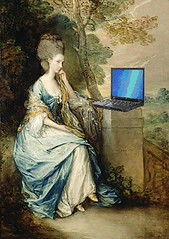 | 23 |
| 14011821038 | Didactic | Having an instructive purpose; intending to convey information to teach a lesson usually in a dry, pompous manner. |  | 24 |
| 14011821039 | Fallacy | An incorrect belief or supposition based on faulty data, defective evidence, or false information. |  | 25 |
| 14011821040 | Hubris | Excessive pride that often brings about one's fall. |  | 26 |
| 14011821041 | Alliteration | Repetition of consonant sounds, usually at the beginnings of words |  | 27 |
| 14011821042 | Litotes | A form of understatement in which the negative of the contrary is used to achieve emphasis or intensity. |  | 28 |
| 14011821043 | Paradox | A statement or idea that seems contradictory but is in fact true. |  | 29 |
| 14011821044 | Non Sequitur | A statement or idea that fails to follow logically from the one before. |  | 30 |
| 14011821045 | Anecdote | A short and amusing or interesting story about a real incident or person. |  | 31 |
| 14011821046 | Jargon | Special words or expressions that are used by a particular profession or group. |  | 32 |
| 14011821047 | Taciturn | Not talking much, reserved; silent, holding back in conversation. | 33 | |
| 14011821048 | Dogmatic | Inclined to lay down principles as incontrovertibly true. |  | 34 |
| 14011821049 | Pernicious | Having a harmful effect, especially in a gradual or subtle way. |  | 35 |
| 14011821050 | Truculent | Aggressive; confrontational |  | 36 |
| 14011821051 | Voracious | Craving or consuming large quantities of food. |  | 37 |
| 14011821052 | Zealous | Having or showing zeal. |  | 38 |
| 14011821053 | Tacit | Understood or implied without being stated. |  | 39 |
| 14011821054 | Innuendo | An allusive or oblique remark or hint, typically a suggestive or disparaging one. |  | 40 |
| 14011821055 | Indolent | Lazy; slow and relaxed. |  | 41 |
| 14011821056 | Consecrate | Make or declare (something, typically a church) sacred; dedicate formally to a religious or divine purpose. |  | 42 |
| 14011821057 | Chiasmus | A type of parallelism in which elements are reversed. "Ask not what your country can do for you, but what you can do for your country." |  | 43 |
| 14011821058 | Loose Sentence | A sentence in which the subject and verb come at the front of the sentence. | 44 | |
| 14011821059 | Petulant | Childishly sulky or bad-tempered. | 45 | |
| 14011821060 | Periodic Sentence | A sentence in which the subject and verb come toward the end of the sentence. | 46 | |
| 14011821061 | Exhort | Strongly encourage or urge someone to do something. |  | 47 |
| 14011821062 | Cloistered | Kept away from the outside world; sheltered. |  | 48 |
| 14011821063 | Sarcasm | Caustic, bitter language--iterally means "to tear the flesh." | 49 | |
| 14011821064 | Independent Clause | A complete sentence. | 50 | |
| 14011821065 | Dependent Clause | Includes a subordinate conjunction, such as because, while, etc. | 51 | |
| 14011821066 | Allusion | A reference to something (e.g., a book, a movie, an historical event) that is presumed to be well known to the audience. | 52 | |
| 14011821067 | Satire | A work that pokes fun human vices and follies in order to call attention to a larger problem. |  | 53 |
| 14011821068 | Parody | A work that closely imitates the style or content of another with the specific aim of comic effect and/or ridicule. |  | 54 |
| 14011821069 | Coup de Grace | The "death blow"--the culminating event in a bad situation. |  | 55 |
| 14011821070 | Coup d'Etat | Literally "blow to the state"--a violent overthrow. |  | 56 |
| 14011821071 | Faux Pas | A social misstep or inappropriate action. | 57 | |
| 14011821072 | Laissez-Faire | Literally "allow to do"--letting things run their natural course; hands off. | 58 | |
| 14011821073 | En Masse | In a body as a whole; as a group. | 59 | |
| 14011821074 | Proprietary | Characteristic of an owner of property; constituting property. | 60 | |
| 14011821075 | Propriety | The quality of behaving in a proper manner; obeying rules and customs. | 61 | |
| 14011821076 | Imminent | About to happen. | 62 | |
| 14011821077 | Eminent | Famous, outstanding, distinguished. | 63 | |
| 14011821078 | Ego | According to Freud, the decision-making component of personality that operates according to the reality principle. | 64 | |
| 14011821079 | Superego | According to Freud, that facet of the psyche that represents the internalized ideals and values of one's parents and society | 65 | |
| 14011821080 | Id | Literally the "It"--our base impulses, driven by selfishness and greed, for example. | 66 | |
| 14011821081 | Hamartia | A character's error in judgment that contributes to one's downfall. | 67 | |
| 14011821082 | Orwellian | The manipulation of language and ideas to control and obstruct the truth. | 68 | |
| 14011821083 | Autonomos | Independent, self-governing, not under the control of something or someone else. |  | 69 |
Flashcards
Pages

Need Help?
We hope your visit has been a productive one. If you're having any problems, or would like to give some feedback, we'd love to hear from you.
For general help, questions, and suggestions, try our dedicated support forums.
If you need to contact the Course-Notes.Org web experience team, please use our contact form.
Need Notes?
While we strive to provide the most comprehensive notes for as many high school textbooks as possible, there are certainly going to be some that we miss. Drop us a note and let us know which textbooks you need. Be sure to include which edition of the textbook you are using! If we see enough demand, we'll do whatever we can to get those notes up on the site for you!
