

Flashcards
Chapter 18 APES Friedland, Chapter 5 APES Flashcards
Terms : Hide Images
| 11530257630 | Extinction | When the last member of a species dies | 0 | |
| 11530257631 | Inbreeding Depression | When individuals with similar genotypes, typically relatives, breed with each other and produce offspring that have an impaired ability to survive and reproduce | 1 | |
| 11530257632 | Endangered | Serious risk of extinction | 2 | |
| 11530257633 | Svalbard Global Seed Vault | Contains strong seed varieties in case of natural disasters | 3 | |
| 11530257634 | Extinct species | Existed as recently as the year 1500 but no longer today | 4 | |
| 11530257635 | Threatened species | Have a high risk of extinction in the future | 5 | |
| 11530257636 | Near-threatened species | Very likely to become threatened in the future | 6 | |
| 11530257637 | Least concern species | Wide and abundant | 7 | |
| 11530257638 | Native species | Species that live in their historical range | 8 | |
| 11530257639 | Alien species | Species that live outside their historical range | 9 | |
| 11530257640 | Invasive specieas | When an alien species spreads rapidly across large areas | 10 | |
| 11530257641 | Lacey Act | Prohibits the transport of illegally harvested game animals across state lines, 1900 | 11 | |
| 11530257642 | CITES | Controls international trade of threatened plants and animals 1973 | 12 | |
| 11530257643 | Red List | List of threatened species made by IUCN | 13 | |
| 11530257644 | Convention on Biological Diversity | 1992, An international treaty to help protect biodiversity | 14 | |
| 11530257645 | Edge Habitat | Where two different communities come together, typically forming an abrupt transition, | 15 | |
| 11530257646 | Biosphere Reserves | Protected areas consisting of zones that vary in the amount of permissible human impact | 16 | |
| 11530257647 | Endangered Species Act | Has prevented or altered some construction projects to accommodate threatened or endangered species, 1973, on of the worlds toughest environmental laws. | 17 | |
| 11530257648 | Marine Mammal Protection Act | Prohibits the killing of all marine animals in the US and import and export of body parts, 1972 | 18 | |
| 11530257677 | Dodo | hunted to extinction on the island of Mauritius |  | 19 |
| 11530257678 | Silver Carp (asian carp) | invasive fish brought in to eat excess algae in fish farms and waste treatment holding ponds. |  | 20 |
| 11530257679 | Zebra Mussel | native to the Black Sea, unintentionally introduced into the Great Lakes from the ballast water of ships |  | 21 |
| 11530257680 | Brown Headed Cowbird | bird that lays its eggs in the nests of other birds |  | 22 |
| 11530257681 | captive breeding | animals that are bred in captivity with the intention of releasing their young back into the wild | 23 | |
| 11530257682 | passenger pigeon | last of its kind, Martha, died in the Cincinnati Zoo in 1914 | 24 | |
| 11530257683 | Kudzu | introduced plant used for asian beverages, to control soil erosion (since it grows fast!)and a source of tree free paper and herbal remedies. Problem is that it is invasive | 25 | |
| 11530257684 | Zebra Mussel | accidentally introduced in the ballast water from ships. Invasive animal | 26 | |
| 11530257685 | Japanese Beetle | deliberately introduced to control aphids, became invasive since no natural predators | 27 | |
| 11530257686 | water hyacinth | deliberately introduced for water gardens, invasive | 28 | |
| 11530257687 | purple loosestrife | deliberately introduced for water gardens, purple flower, invasive | 29 | |
| 11530257688 | african honey bee | deliberately introduced insect, agressive | 30 | |
| 11530257689 | European Starling | deliberately introduced bird, was in Shakespeares plays | 31 | |
| 11530257690 | illegal wildlife trafficking | 2nd larges black market commerce in the world | 32 | |
| 11530257691 | house sparrow | bird that was introduced to the US as a traveler on ships. | 33 | |
| 11530257692 | amphibians | great indicator species because they live in many different places and respond quickly to environmental change. They are easy to track and count. Suffering from Chytrid fungus. | 34 | |
| 11530257693 | Blue Whales | endangered species that can be hunted legally under the endangered species act for scientific purposes. | 35 | |
| 11530257694 | Fish and Wildlife Service (FWS) | Governmental agency that enforces the Endangered Species Act | 36 | |
| 11530257695 | Habitat Corridors | stretches of land that link isolated nature reserves | 37 | |
| 11530257696 | lumber, fuelwood, hunting | List three economic services provided by forests | 38 | |
| 11530257697 | 1995 | Year that wolves were released into Yellowstone | 39 | |
| 11530257698 | Habitat destruction | greatest threat to most species (which letter in HIPPCO?) | 40 | |
| 11530257699 | inbreeding depression | when individuals that are closely related breed with each other | 41 | |
| 11530257700 | 10 million | estimated number of species on earth | 42 | |
| 11530257701 | 2 million | identified number of species on earth | 43 | |
| 11530257702 | native species | species that live in their historical range | 44 | |
| 11530257703 | Marine Mammal Protection Act 1972 | environmental legislation that protects sea lions and other marine mammals | 45 | |
| 11530257649 | ecosystem diversity | the variety of ecosystems within a given region | 46 | |
| 11530257650 | species diversity | the variety of species within a given ecosystem | 47 | |
| 11530257651 | genetic diversity | the variety of genes within a given species | 48 | |
| 11530257652 | species richness | the number of species in a given area | 49 | |
| 11530257653 | species evenness | the relative proportion of different species in a given area | 50 | |
| 11530257654 | microevolution | evolution occurring below the species level (genes) | 51 | |
| 11530257655 | macroevolution | evolution that gives rise to new species, genera, families, classes, or phlya | 52 | |
| 11530257656 | speciation | the evolution of new species | 53 | |
| 11530257657 | mutation | a random change in the genetic code produced by a mistake in the copying process | 54 | |
| 11530257658 | artificial selection | a change in the genetic composition of a population over time as a result of humans selecting which individuals breed (with traits that are useful or aesthetically pleasing) | 55 | |
| 11530257659 | natural selection | a change in the genetic composition of a population over time as a result of the environment determining which individuals can survive and reproduce | 56 | |
| 11530257660 | fitness | an individual's ability to survive and reproduce | 57 | |
| 11530257661 | adaptation | a trait that improves an individual's fitness | 58 | |
| 11530257662 | geographic isolation | physical separation of a group of individuals from others of the same species | 59 | |
| 11530257663 | reproductive isolation | the result of two populations within a species evolving separately so they can no longer interbreed and produce viable offspring | 60 | |
| 11530257664 | genetically modified organism | an organism produced by copying genes from a species with a desirable trait and inserting them into another species | 61 | |
| 11530257665 | range of tolerance | the limits to the abiotic conditions that a species can tolerate | 62 | |
| 11530257666 | fundamental niche | the suite of ideal environmental conditions for a species, it includes abiotic factors such as temperature range, pH range, salinity, | 63 | |
| 11530257667 | realized niche | the range of abiotic and biotic conditions under which a species actually lives | 64 | |
| 11530257668 | species distribution | the distribution of species' population among a region | 65 | |
| 11530257669 | niche generalist | a species that can live under a wide range of abiotic and biotic conditions | 66 | |
| 11530257670 | niche specialist | a species that is specialized to live in a specific habitat to feed on a small group of species | 67 | |
| 11530257671 | mass extinction | a large extinction of species in a relatively short period of time | 68 | |
| 11530257672 | sixth mass extinction | extinction rates vary from 2% to 25% of species going extinct by 2020 | 69 | |
| 11530257673 | background extinction | the average rate at which species become extinct over the long term | 70 | |
| 11530257674 | coevolution | process by which two species evolve in response to changes in each other | 71 | |
| 11530257675 | resource partitioning | a situation in which two species divide a resource, based on differences in their behavior or morphology | 72 | |
| 11530257676 | competitive exclusion principle | two species competing for the same limiting resource cannot coexist | 73 | |
| 11530257704 | genetic drift | change in genetic composition of a population over time as a result of random mating | 74 | |
| 11530257705 | bottleneck effect | a reduction in genetic diversity of a population caused by reduction in the size of the population, this can be from habitat loss or a disaster. | 75 | |
| 11530257706 | founder effect | a change genetic composition due to a few individuals starting a new population away from a mainland population | 76 | |
| 11530257707 | allopatric speciation | type of speciation that occurs when species become geographically isolated from each other and then reproductive isolation occurs over time. Darwins finches are thought to have evolved this way | 77 | |
| 11530257708 | sympatric speciation | type of speciation that occurs in the absence of geographic isolation. Usually involves polyploidy, which is when the number of chromosomes increases from two sets to 3,4,6 o r 7 sets. Plants like wheat, bananas or strawberries do this. | 78 | |
| 11530257709 | generalists | organisms that have broad diets and wide habitat requirements. example raccoon, cock roach | 79 | |
| 11530257710 | specialists | organisms that have specific diets or specific habitat requirements. For example a panda that can eat only eucalyptus leaves. | 80 |
AP World History Strayer Chapter 8 Vocabulary Flashcards
Unit Three Part Three
Terms : Hide Images
| 12018865733 | Sui Dynasty | A short dynasty between Han and Tang. |  | 0 |
| 12018865734 | Tang Dynasty | A dynasty often referred to as "China's Golden Age". (618 CE - 907 CE) | 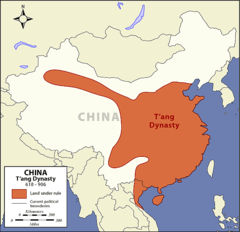 | 1 |
| 12018865735 | Song Dynasty | (960 CE - 1279 CE) Started by Tai Zu. |  | 2 |
| 12018865736 | Hangzhou | Capital of later Song Dynasty. |  | 3 |
| 12018865737 | Economic Revolution | Rapid population growth, economic speculation, increase in industrial production and innovations (Song dynasty). |  | 4 |
| 12018865738 | Foot Binding | Practice in Chinese society to mutilate women's feet to make them smaller. |  | 5 |
| 12018865739 | Tribute System | Chinese method of dealing with foreign lands and people that assumed subordination of all non-chinese authorities. They required all foreigners wanting access to China to pay tribute. |  | 6 |
| 12018865740 | Khitan/Jurchen People | Nomadic people who established a state that included parts of Northern China. |  | 7 |
| 12018865741 | Silla Dynasty (Korea) | First ruling dynasty to bring a measure of political unity to Korean Peninsula. |  | 8 |
| 12018865742 | Hangul | Phonetic alphabet in Korea (14th century). | 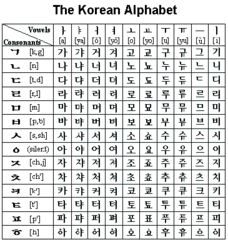 | 9 |
| 12018865743 | Shotoku Taishi | Japanese statesman who launched the drive to make Japan into centralized bureaucratic state modeled on China. |  | 10 |
| 12018865744 | Bushido | "Way of the Warrior". |  | 11 |
| 12018865745 | Chinese Buddhism | Entered China through cultural accommodations. |  | 12 |
| 12018865746 | Emperor Wendi | Sui Emperor who patronized Buddhism. |  | 13 |
| 12018865747 | Chu nom | The writing system of Vietnam |  | 14 |
| 12018865748 | Izumi Shikibu | Japanese poet who had an affair with the two sons of the emperor |  | 15 |
| 12018865749 | Xiongnu | A confederation of nomadic peoples living beyond the northwest frontier of ancient China. HAN Dynasty |  | 16 |
| 12018865750 | Gunpowder | An invention in the Tang and Song dynasty that changed history. |  | 17 |
AP Government Flashcards
Terms : Hide Images
| 13862153874 | Conservative | Status Quo, less Gov. | 0 | |
| 13862153875 | Moderate | Mid-Ground | 1 | |
| 13862153876 | Liberal | Peaceful gradual change, reject violent revolution | 2 | |
| 13862153877 | Radical | Far Left, Resorts to extreme methods to bring about change. | 3 | |
| 13862153878 | Political Spectrum | Tool used to visually compare different political positions by placing them on one or more axis. |  | 4 |
| 13862153879 | Right | Less Gov intervention, Traditional Values | 5 | |
| 13862153880 | Left | More Gov Intervention, support change | 6 | |
| 13862153881 | Parliamentary Government | Executive are members of the legislative branch | 7 | |
| 13862153882 | Presidential Governemt | Separates Power between executive/legislative | 8 | |
| 13862153883 | Reactionary | Far right, Extreme methods | 9 | |
| 13862153884 | Representative Democracy | People represented through elected officials. | 10 | |
| 13862153885 | The State | Body of people living in a defined territory, having power to make and enforce law without the consent of any higher authority. | 11 | |
| 13862153886 | Monarchy | Power in the hands of royalty | 12 | |
| 13862153887 | Dictatorship | Ruled by a single leader not elected. | 13 | |
| 13862153888 | Military Dictatorship | Army is in control | 14 | |
| 13862153889 | Theocracy | Religious based Government | 15 | |
| 13862153890 | Public Policies | All things a government decides to do. | 16 | |
| 13862153891 | Conferred Power | Power which is agreed upon. | 17 | |
| 13862153892 | Four aspects of the State | 1. Population: must have people 2. Territory: recognized boundaries 3. Sovereignty: Having supreme and absolute authority in it's own territory 4. Government- Different forms | 18 | |
| 13862153893 | Evolutionary theory | Developed out of early familiy | 19 | |
| 13862153894 | Divine Right Theory | State created by God and those of royal birth have a divine right to rule. | 20 | |
| 13862153895 | Force Theory | A group claimed control and forced all other to submit. | 21 | |
| 13862153896 | Social or Political Contract theory | Peoples moral and/or political obligations are dependent on an agreement among them to form the society in which they live. *Law and political order are not natural, they are human creations. | 22 | |
| 13862153897 | Confederate | An alliance of independent states | 23 | |
| 13862153898 | Federal | Power is divided between a central gov't and several local gov't. | 24 | |
| 13862153899 | State of Nature | Survival of the Fittest | 25 | |
| 13862153900 | Unitary | All power belongs to one level of gov't | 26 | |
| 13862153901 | Government | An organization of people set up to protect the community and make rules. -Protects community -Makes laws -Keeps order | 27 | |
| 13862153902 | Politics | Activities relate to governance of a country or area | 28 | |
| 13862153903 | Democracy | Gov elected by the people. Determine either directly or through elected Reps. | 29 | |
| 13862153904 | Direct Democracy | People vote Directly on every issue | 30 | |
| 13862153905 | Democrats | Generally liberal because they support gov reg. of the economy. | 31 | |
| 13862153906 | Republicans | Generally Conservatives because they advocate a reduction in gov. | 32 | |
| 13862153907 | Current issues (Left) | Left: Pro Gun control, Pro Choice, No Censorship, Prisons should Rehabilitate, Pro-privacy, Equal funding for Education. | 33 | |
| 13862153908 | Current issues (Right) | Right: Anti-gun Control, Pro-life, Anti Flag burning, Prisons should punish, Prayer in schools, School vouchers. | 34 | |
| 13862153909 | Taxation (Left) | Acceptable, Gov have $ to fund programs benefiting society, % taxes preferred over flat rate, rich= more tax | 35 | |
| 13862153910 | Taxation (Right) | Taxes infringe on personal freedoms Taxes= bad for free market Taxes= Penalization those who are successful Taxes= Punish Profit Prefers flat tax | 36 | |
| 13862153911 | Business Regulation (Left) | Yes on gov. Reg Market no reliable to provide safe work conditions Gov. reg= protect workers+ consumers= Everyone= chance to succeed | 37 | |
| 13862153912 | Business Regulations (Right) | Business need free from gov. and supply and demand will guide Gov policies that affect products are bad Trickle down economics is the way to stimulate economy | 38 | |
| 13862153913 | Political Rights (Left) | Extend Civil Rights to minority groups, students, prisoners, homosexuals, and poor. Protect individual rights: Free speech, pro-choice, anti-capital punishment, and privacy. | 39 | |
| 13862153914 | Political Rights (Right) | Cent gov= diminish Issues dealt best on state and local level No change in family values ( usually christian centered) O.K to censor obscure ideas that shake Status Quo. | 40 | |
| 13862153915 | Distribution of wealth (Left) | Disparity between rich and poor no good, taxes= distribute wealth. Gov more involved in ed, Health care, Child C., and Elderly. Pub Project= Stimulate economy | 41 | |
| 13862153916 | Distribution of wealth (Right) | Business= right to make profit People are rich or poor b/c of choices they make Prosperous people should no be penalized. | 42 | |
| 13862153917 | Economy (Left) | Minimum wage standards Public projects= more jobs Gov provide basic living standards of living to all citizens | 43 | |
| 13862153918 | Economy (Right) | Economy works best in free market (Laissez- Faire) Forces of the market= trusted to meet needs of business, consumer, and workers. Gov. programs should not compete with private industry. | 44 | |
| 13862153919 | Foreign Affairs (Left) | Spread Democracy + Protect human rights in the world Strong Support of UN. | 45 | |
| 13862153920 | Foreign Affairs (Right) | Gov role= pro us business and econ. intervention in other countries. Fix us before we fix others Support tariffs (tax on imports) | 46 | |
| 13862153921 | SCOPE OF THE GOVERNMENT (Left) | The government should serve as the equalizers in society and establish a basic standard of living, a minimum wage is an acceptable tool of government intervention. The left accepts government control and regulation of business and an active government that protects political rights. | 47 | |
| 13862153922 | SCOPE OF THE GOVERNMENT (Right) | Government should be downsized. Large governments, both federal and state, have the power to control business interests and therefore potentially infringe on the freedoms of individuals. Government programs tend to provide unnecessary services that go beyond the scope of the constitution. | 48 | |
| 13862153923 | Two- Party System | A system where two major political parties dominate politics within a government | 49 | |
| 13862153924 | Third party | Any political party that is not one of the two major parties in a two-party system | 50 | |
| 13862153925 | Plank | Each issue included in a political party's platform. Gives the candidates a clear political position with which they can campaign. They give voters a sense of what the candidates believe in, the issues they think are important, and how - if elected - they will address them. | 51 | |
| 13862153926 | Becoming President | Step 1: Formation of a Presidential Exploratory Committee Step 2: Announcement of intention to run for president based on findings of the exploratory committee Step 3: Fundraising and gathering of support and endorsements from the general public as well as other politicians, special interest groups, corporations, etc. Step 4: Campaigning early, especially in states where primaries are important (Iowa, New Hampshire, candidates home state, etc.) Step 5: Continuing to campaign to beat out all other opponents from within your own party Step 6: Attending your party's National Convention and securing the nomination of the party Step 7: Campaigning nationwide against your opponents from other parties Step 8: Winning election and securing enough electoral college votes to be named the next president | 52 | |
| 13862153927 | Three main concepts of Government brought by English Colonists | The need for an ordered social system, or government. The idea of limited government, that is, that government should not be all-powerful. The concept of representative government—a government that serves the will of the people. | 53 | |
| 13862153928 | Royal Colonies | Ruled directly by the English monarchy. | 54 | |
| 13862153929 | Proprietary colonies. | Land given to the colonist by the Monarchy | 55 | |
| 13862153930 | Charter Colonists | Self-governed, and their charters were granted to the colonists. | 56 | |
| 13862153931 | Confederation | A joining of several groups for a common purpose | 57 | |
| 13862153932 | The Albany Plan | In 1754, Benjamin Franklin proposed the Albany Plan, an annual congress of delegates (representatives) from each of the 13 colonies would be formed. | 58 | |
| 13862153933 | Stamp Act Congress | In 1765, a group of colonies sent delegates to the Stamp Act Congress in New York. These delegates prepared the Declaration of Rights and Grievances against British policies and sent it to the king. | 59 | |
| 13862153934 | First Continental Congress | The colonists sent a Declaration of Rights to King George III. The delegates urged each of the colonies to refuse all trade with England until British tax and trade regulations were repealed, or recalled. | 60 | |
| 13862153935 | Second Continental Congress | In 1775, each of the 13 colonies sent representatives to this gathering in Philadelphia. The Second Continental Congress served as the first government of the United States from 1776 to 1781. | 61 | |
| 13862153936 | Declaration of Independence | July 4, 1776, the Second Continental Congress adopted the Declaration of Independence. Between 1776 and 1777, most of the States adopted constitutions instead of charters. | 62 | |
| 13862153937 | Common Features of State Constitutions | Popular Sovereignty Limited Government Civil Rights and Liberties Separation of Powers and Checks and Balances | 63 | |
| 13862153938 | Popular Sovereignty | The principle of popular sovereignty was the basis for every new State constitution. That principle says that government can exist and function only with the consent of the governed. The people hold power and the people are sovereign. | 64 | |
| 13862153939 | Limited Government | The concept of limited government was a major feature of each State constitution. The powers delegated to government were granted reluctantly and hedged with many restrictions. | 65 | |
| 13862153940 | Civil Rights and Liberties | In every State it was made clear that the sovereign people held certain rights that the government must respect at all times. Seven of the new constitutions contained a bill of rights, setting out the "unalienable rights" held by the people. | 66 | |
| 13862153941 | Separation of Powers and Checks and Balances | The powers granted to the new State governments were purposely divided among three branches: executive, legislative, and judicial. Each branch was given powers with which to check (restrain the actions of) the other branches of the government. | 67 | |
| 13862153942 | Articles of Confederation (AC) | Approved November 15, 1777 Est. "a firm league of friendship" between the states Needed the ratification of the 13 states March 1, 1781 Second Continental Congress declared the Articles effective | 68 | |
| 13862153943 | Structure of Constitution | 3 parts; the preamble, the articles(7), and the amendments | 69 | |
| 13862153944 | The Preamble | intro, explains purpose of Constitution and purpose of govt | 70 | |
| 13862153945 | Article I | establishes legislative branch | 71 | |
| 13862153946 | Article II | creates an executive branch to carry out laws created by Congress | 72 | |
| 13862153947 | Article III | creates judicial branch | 73 | |
| 13862153948 | Article IV | explains the relationship of the states to one another and to the national govt | 74 | |
| 13862153949 | Article V | spells out the ways the Constitution can be amended | 75 | |
| 13862153950 | Article VI | contains the supremacy clause, establishing that federal law shall be the supreme law of the land | 76 | |
| 13862153951 | Article VII | addresses ratification and says that 9 states are needed to ratify the Constitution | 77 | |
| 13862153952 | Connecticut Compromise | Two houses Senate - equal representation House - proportional representation based on population Combination of Virginia and New Jersey plans | 78 | |
| 13862153953 | 6 Major Principles of Constitution | 1. Popular sovereignty- rule by people 2. Federalism- power is divided between national and state govts 3. Separation of powers- limits the central govt by dividing power among the legislative, executive, and judicial branches 4. checks and balances- each branch of govt exercises some control over the others | 79 | |
| 13862153954 | Electoral College | a compromise, combining features of both congressional selection and direct popular election | 80 | |
| 13862153955 | Electors | individuals selected in each state to officially cast that state's electoral votes; Wisconsin selects 10 electors | 81 | |
| 13862153956 | Popular Vote | the popular vote winner may not win the electoral college; for example: small-state bias caused by each state getting at least three electoral votes regardless of its size | 82 | |
| 13862153957 | The Virginia Plan | -Three Separate branches of government: Legislature, Executive, and Judicial -Bicameral legislature (2 parts) -Based on population or the amount of money given to support the central government -Members of House of Reps = based on population -Senate = chosen by House from a list from the State Legislature -Congress would be given powers it had under the Articles of Confederation -Any State law that conflicted with National Law would be vetoed -"National Executive" and "National Judiciary" -Council of Revision -Veto acts passed by Congress (but can be overridden by Congress) -State officers should take an Oath to the Union -Admission process for new States | 83 | |
| 13862153958 | New Jersey Plan | -Unicameral (one body) Congress of the Confederation -Each state equally represented -Give them limited and closely monitored powers -Tax and regulate trade -Federal Executive -More than one person -Chosen by Congress/could be removed with a majority vote -Federal Judiciary -Single "supreme Tribunal" -Selected by the Executive Branch | 84 | |
| 13862153959 | Three-Fifths Compromise | All "free persons" will be counted; 3/5 of all other persons Southerners could count slaves but had to pay taxes on them | 85 | |
| 13862153960 | judicial review | power of courts to say that laws and actions of govt are invalid bc they conflict w the constitution's principles | 86 | |
| 13862153961 | The Commerce and Slave Trade Compromises | Congress has the power to regulate foreign and interstate trade -Scared southerners because of slave trade -States cannot enact import/export taxes only federal government can -Could not act on the slave trade for 20 years | 87 | |
| 13862153962 | AC (Power of congress) | Make war and peace Send and receive ambassadors Make treaties Borrow money Set up a money system Est. post offices Build a navy Raise an army by asking the states for troops Fix uniform standards of weights and measures Settle disputes among the states | 88 | |
| 13862153963 | James Madison | James Madison was the co-author of the Articles of Confederation. Kept detailed records of the convention Conventions Floor leader Contributed more to the constitution than any other | 89 | |
| 13862153964 | Constitutional Convention | Mid-February of 1787 meeting of all thirteen States, which eventually became the Constitutional Convention in Philadelphia. | 90 | |
| 13862153965 | AC (States Obligations) | Pledge to obey the Articles and Acts of the Congress Provide the funds and troops requested by the congress Treat citizens of other states fairly and equally Give full faith and credit to public acts, records, and judicial proceedings Submit disputes to congress for settlement Allow open travel and trade b/w and among states Primarily responsible for protecting life and property Accountable for promoting the general welfare of the people. | 91 | |
| 13862153966 | Weaknesses of the Articles | -One vote for each state, regardless of size. -Congress powerless to lay and collect taxes, and regulate foreign and interstate commerce. -No executive to enforce acts of congress. -No national court system. Amendment only with consent of all states. -Amendment only with consent of all State. -A 9/13 majority required to pass laws. -Articles only a "firm league of friendship" | 92 | |
| 13862153967 | Lobbying | efforts by individuals or groups to influence governmental decision makers Types of lobbying; -full-time employee -temporary employee -often former legislatives | 93 | |
| 13862153968 | Inside lobbying | appeals directly to lawmakers and their staff -through meetings -by providing research and info -by testifying at committee hearings | 94 | |
| 13862153969 | Outside lobbying | attempt to influence decision makers indirectly, by influencing the public -try to build public support -increase conflict about an issue -lobby other groups and try to form alliances tactics: direct contact, direct mail, and media advertisements | 95 | |
| 13862153970 | Electioneering | -efforts to help candidates financially -efforts to help candidates gain voter support | 96 | |
| 13862153971 | Litigation | testifying to influence public policy | 97 | |
| 13862153972 | Types of Interest Groups | -economic interests -environmental interests -equality interests -consumer and other public interest lobbies | 98 | |
| 13862153973 | Economic Interests | trade associations; - organized commercial groups, farm organizations - corporations; form own interest groups, hire lobbyists - labor unions, professional associations | 99 | |
| 13862153974 | Environmental Interests | - sprang up since 1970 - profound policy impact bc of numbers, not money | 100 | |
| 13862153975 | PAC | Political Action Committees; raise and spend money to influence electoral outcomes | 101 | |
| 13862153976 | Equality Interests | 14th Amendment guarantees equality Minorities and Equality - social welfare policies Women | 102 | |
| 13862153977 | Consumer and Other Public Interest Lobbies | Represent broad classes of people or the public as a whole -consumer, voters, reformers, etc Public Interest Groups -policies that are in the public's interest Think tanks -conduct research -advocate a strong ideological viewpoint | 103 | |
| 13862153978 | How do interest groups shape public policy? | lobbying, electioneering, litigation, going public | 104 | |
| 13862153979 | Law making process | http://integrationsolutions.westlaw.com/gov/leghist/images/cap.gif | 105 | |
| 13862153980 | Presidential Roles | Chief of State - the ceremonial head of the government of the United States Chief Executive - given this title by the Constitution Chief Administrator - carry out the laws, head of the federal bureaucracy Chief Diplomat - main architect of America's foreign policy Commander in Chief - head of the nation's armed forces Chief Legislator - can push for laws to be passed Chief of Party - Leader of their political party | 106 | |
| 13862153981 | Presidential Qualifications | Must be a natural born citizen Be at least 35 years old Have lived in the U.S. for at least 14 years | 107 | |
| 13862153982 | Who takes over if pres. cannot | Vice President Speaker of the House President pro tempore Secretary of State | 108 | |
| 13862153983 | 22nd Amendment | set 2 term limit on | 109 | |
| 13862153984 | Presidential pay | $400,000 a year and $50,000 expense account | 110 | |
| 13862153985 | Presidential Benefits | Live in the White House (132 Rooms) Yacht, Automobiles, Air Force One Lifetime pension of $143,800 a year Camp David - Resort in Maryland | 111 | |
| 13862153986 | Presidential power | Power to appoint cabinet members, diplomats and ambassadors, judges Power to make treaties - formal agreement between two or more sovereign state Executive Agreement - pacts between the President and the heads of foreign states Recognition - President can acknowledge the legal existence of a country and its government | 112 | |
| 13862153987 | Presidential Legislative power | Recommend Legislation Veto Bills Can call for a special session of Congress | 113 | |
| 13862153988 | Presidential Judicial power | Reprieve - postponement of the execution of a sentence Pardon - legal forgiveness of a crime (only involving a federal offense) Commutation - reduce the length of a sentence or a fine Amnesty - a general pardon offered to a group of violators 1977 - Pardon to Vietnam War draft evaders | 114 | |
| 13862153989 | Main jobs of House and Senate | Make Laws Declare War Represent their Constituents | 115 | |
| 13862153990 | House Membership | 435 members (each state's delegation is determined by its population) | 116 | |
| 13862153991 | Senate Membership | 100 members (two per state) | 117 | |
| 13862153992 | House Qualifications | 25 years old U.S Citizens for 7 years Resident of State they're representing | 118 | |
| 13862153993 | Senate Qualifications | 30 years old U.S citizens for 9 years Resident of State they're representing | 119 | |
| 13862153994 | Terms limit for House | 2 years entire house elected every two years | 120 | |
| 13862153995 | Terms limit for Senate | 1/3 of Senate 2 years | 121 | |
| 13862153996 | "Leader" of House | Speaker of the House | 122 | |
| 13862153997 | "Leader" of Senate | Vice President | 123 | |
| 13862153998 | How House is elected | Directly voted by voter per district | 124 | |
| 13862153999 | How Senate is elected | Directly by the voters of a state | 125 | |
| 13862154000 | Reapportionment | Applies only to HOUSE redistribution of seats every 10 years states gain or lose seats based on their population growing or shrinking | 126 | |
| 13862154001 | Thomas Paine | Author of book "Common Sense" | 127 | |
| 13862154002 | Gerrymandering | an attempt by politicians to create unbalanced districts for their party's political gain | 128 | |
| 13862154003 | Special Powers of House | Brings impeachment charges May choose the President if there is no majority in the electoral system Must start all revenue bills | 129 | |
| 13862154004 | Special Powers of Senate | Acts as jury in impeachment trials (2/3 vote needed) May choose the Vice President if there is no majority in the electoral system Must ratify treaties with foreign nations by 2/3 vote Must approves Presidential appointments (majority needed) | 130 | |
| 13862154005 | What makes an interest group successful? | access, info, leadership skills, numerical strength, group unity, money | 131 | |
| 13862154006 | CBO | - strengthen Congress' role in the budgeting process | 132 | |
| 13862154007 | Pluralist Theory | - groups link ppl and govt - competition between interest groups is a central part of American democracy - different groups have strengths in different areas | 133 | |
| 13862154008 | Types of Committees | Standing committees - handle bills in different policy areas Select - may be temporary and permanent and usually have focused responsibility Joint Committees - draw their membership from both the Senate and the House Conference Committees - are formed when Senate and the house pass different versions of the same bill | 134 | |
| 13862154009 | Elite Theory | - reject the pluralists' assertion that competing groups balance power - believe unequal distribution of power in society ensures that interests of some groups will dominate others | 135 | |
| 13862154010 | Hyperpluralist Theory | - argue that pluralism in the US is out of control -results in govt that is very subservient to interest groups and tries to appease them all | 136 | |
| 13862154011 | 4 Models of Representations | delegate model - assumes that a representative's job is to convey the will of the majority of their constituents to the legislature trustee model - should take the majority view into account but use his or best judgment when voting or acting on behalf of constituents politico model -middle path between trustees and delegate model conscience model - should generally follow what the follow what the public says unless it goes against their deepest values | 137 | |
| 13862154012 | Agenda setting | bringing issues to the public's attention and placing them on the national agenda | 138 | |
| 13862154013 | GAO | Government Accountability Office - broad authority to oversee the operations and finances of executive agencies | 139 | |
| 13862154014 | GPOthec | Government Printing Office - distributes over 200,000 govt publications in U.S. govt bookstores throughout the nation | 140 | |
| 13862154015 | Types of gerrymandering | Partisan gerrymandering - drawing a district to favor one political party over others Incumbent gerrymandering - a state legislature is so closely divided that neither political party has an advantage Racial gerrymandering - drawing a district to favor one racial group over others Affirmative racial gerrymandering - creation of predominately African American and minority districts whenever possible | 141 | |
| 13862154016 | Free rider problem | barrier to collective action bc ppl can reap the benefits of group efforts without participating | 142 | |
| 13862154017 | Single-issue groups | groups that have a narrow interest, tend to dislike compromise, and often draw membership from people new to politics | 143 | |
| 13862154018 | CRS | Congressional Research Service - works for the U.S. Congress and provides nonpartisan an policy and research analysis to committees and members of both houses | 144 | |
| 13862154019 | Edmund Burke | contrasts with the idea of representatives as delegated who feel obligated to vote according to the views of the "folks back home" regardless of their own personal viewpoint | 145 | |
| 13862154020 | Caucus | a group of members of Congress sharing some interest or characteristic | 146 | |
| 13862154021 | House Rules Committee | the committee in the House of Representatives that reviews most bills coming from a House committee before they go to the full House | 147 | |
| 13862154022 | Companion legislation | similar or identical legislation which is introduced in Senate and House | 148 | |
| 13862154023 | Omnibus legislation | large bills that often cover several topics and may contain extraneous, or pork-barrel projects | 149 | |
| 13862154024 | Who runs for congress? | People involved: Law Business Public service | 150 | |
| 13862154025 | legislative oversight | congress' monitoring of the bureaucracy and its administration of policy, performed mainly through hearings | 151 | |
| 13862154026 | power of the purse | congressional exclusive power to authorize expenditures by all avenues of the federal govt | 152 | |
| 13862154027 | advice and consent | advice and consent and confirmation of presidential appointments and treaties | 153 | |
| 13862154028 | Seniority system | governs most committee assignments and movement into committee leadership positions | 154 | |
| 13862154029 | Pork barrel | federal projects, grants, and contracts available to state and local govts, businesses, colleges, and other institutions | 155 | |
| 13862154030 | congressional casework | activities of members of Congress that help constituents as individuals, particularly by cutting through bureaucratic red tape to get ppl what they think they have a right to get | 156 | |
| 13862154031 | partisan polarization | a vote in which a majority of democratic legislators oppose a majority of republican legislators | 157 | |
| 13862154032 | incumbent advantages | advertising - gather info through technological sources-thus having the incumbents' personal interests credit claiming - enhancing their standing w constituents through service to individuals and the district weak opponents -no name recognition campaign spending - the candidate who spends the most money tends to win misinformed voters | 158 | |
| 13862154033 | federalist | a person who advocates or supports a system of government in which several states unite under a central authority | 159 | |
| 13862154034 | anti-federalist | somebody who opposed the U.S. Constitution when it was being drawn up | 160 | |
| 13862154035 | filibuster | any member can speak for as long as he or she wants on any given use | 161 | |
| 13862154036 | Amendment 1 freedoms | Freedom of Religion, freedom of speech, Freedom of expression, Freedom of the Press, and Freedom of Assembly. | 162 | |
| 13862154037 | bill of rights | the first ten amendments to the US Constitution | 163 |
AP Language vocab Flashcards
Terms : Hide Images
| 10974777171 | Allegory | The device of using character and/or story elements symbolically to represent an abstraction in addition to the literal meaning. In some allegories, for example, an author may intend the characters to personify an abstraction lie hope or freedom. The allegorical meaning usually deals with moral truth or a generalization about human existence. A story, poem, or picture that can be interpreted to reveal a hidden meaning, typically a moral or political one. |  | 0 |
| 10974777172 | Alliteration | The repetition of sounds, especially initial consonants in tow or more neighboring words (as in "she sells sea shells). Although the term is not used frequently in the multiple-choice section, you can look for alliteration in any essay passage. The repetition can reinforce meaning, unify ideas, supply a musical sound, and/or echo the sense of the passage. |  | 1 |
| 10974777173 | Allusion | A direct or indirect reference to something which is presumably commonly known, such as an event, book, myth, place, or work of art. Allusions can be historical, literary, religious, topical, or mythical. There are many more possibilities, and a work may simultaneously use multiple layers of allusion. |  | 2 |
| 10974777174 | Ambiguity (am-bi-gyoo-i-tee) | The multiple meanings, either intentional or unintentional, of a word, phrase, sentence, or passage. |  | 3 |
| 10974777175 | Analogy | A similarity or comparison between two different things or the relationship between them. An analogy can explain something unfamiliar by associating it with or pointing out its similarity to something more familiar. Analogies can also make writing more vivid, imaginative, or intellectually engaging. Ex. He that voluntarily continues ignorance is guilty of all the crimes which ignorance produces, as to him |  | 4 |
| 10974777176 | Anaphora (uh-naf-er-uh) | One of the devices of repetition, in which the same expression (word or words) is repeated at the beginning of two or more lines, clauses, or sentences. |  | 5 |
| 10974777177 | Anecdote | A short narrative detailing particulars of an interesting episode or event. The term most frequently refers to an incident in the life of a person |  | 6 |
| 10974777178 | Antecedent (an-tuh-seed-nt) | The word, phrase, or clause referred to by a pronoun. The AP Language exam occasionally asks for the antecedent of a given pronoun in a long, complex sentence or in a group of sentences. |  | 7 |
| 10974777179 | Antithesis (an-tih-theh-sis) | Figure of balance in which two contrasting ideas are intentionally juxtaposed, usually through parallel structure; a contrasting of opposing ideas in adjacent phrases, clauses, or sentences. Antithesis creates a definite and systematic relationship between ideas. |  | 8 |
| 10974777180 | Aphorism | A terse statement of know authorship which expresses a general truth or a moral principle. (If the authorship is unknown, the statement is generally considered to be a folk proverb.) An aphorism can be a memorable summation of the author's point. |  | 9 |
| 10974777181 | Apostrophe | A figure of speech that directly addresses an absent or imaginary person or a personified abstraction, such as liberty or love. It is an address to someone or something that cannot answer. The effect is to give vent to or display intense emotion, which can no longer be held back: |  | 10 |
| 10974777182 | Asyndeton (uh-sin-di-tuhn) | consists of omitting conjunctions between words, phrases, or clauses. This can give the effect of unpremeditated multiplicity, of an extemporaneous rather than a labored account. Asyndetic lists can be more emphatic than if a final conjunction were used. |  | 11 |
| 10974777183 | Atmosphere | The emotional mood created by the entirety of a literary work, established partly by the setting and partly by the author's choice of objects that are described. Even such elements as description of the weather can contribute to the atmosphere. Frequently atmosphere forshadows events. Perhaps it can create a mood. |  | 12 |
| 10974777184 | Chiasmus (kahy-az-muhs) | (From the Greek word for "criss-cross," a designation baed on the Greek letter "chi," written X). Chiasmus is a figure of speech in which two successive phrases or clauses are parallel in syntax, but reverse the order of the analogous words. |  | 13 |
| 10974777185 | Clause | a grammatical unit that contains both a subject and a verb. An independent, or main, clause expresses a complete thought and can sand alone as a sentence. A dependent, or subordinate clause cannot stand alone as a sentence and must be accompanied by an independent clause. The point that you want to consider is the question of what or why the author subordinates one element to the other. You should also become aware of making effective use of subordination in your own writing. |  | 14 |
| 10974777186 | Colloquial/colloquialism (kuj-loh-kwee-uhl) | The use of slang or informalities in speech or writing. Not generally acceptable for formal writing, colloquialisms give a work a conversational, familiar tone. Colloquial expressions in writing include local or regional dialects. |  | 15 |
| 10974777187 | Coherence | A principle demanding that the parts of any composition be arranged so that the meaning of the whole may be immediately clear and intelligible. Words, phrases, clauses within the sentence; and sentences, paragraphs, and chpters in larger pieces of writing are the unit that by their progressive and logical arrangement, make for coherence. |  | 16 |
| 10974777188 | Conceit | A fanciful expression, usually in the form of an extended metaphor or surprising analogy between seemingly dissimilar objects. A conceit displays intellectual cleverness as a result of the unusual comparison being made. |  | 17 |
| 10974777189 | Connotation | - The nonliteral, associative meaning of a word; the implied, suggested meaning. Connotations may involve ideas, emotions, or attitudes. |  | 18 |
| 10974777190 | Denotation | The strict, literal, dictionary definition of a word, devoid of any emotion attitude, or color. |  | 19 |
| 10974777191 | Diacope | repetition of a word or phrase after an intervening word or phrase: word/phrase X, . . ., word/phrase X. |  | 20 |
| 10974777192 | Diction | Related to style, diction refers to the writer's word choices, especially with regard to their correctness, clearness, or effectiveness. For the AP exam, you should be able to describe an author's diction (for example, formal or informal, ornate or plain) and understand the ways in which diction can complement the author's purpose. Diction, combined with syntax, figurative language, literary devices, etc., creates an author's style. |  | 21 |
| 10974777193 | Didactic (dahy-dak-tik) | From the Greek, didactic literally means "teaching." Didactic works have the primary aim of teaching or instructing, especially the teaching of moral or ethical principles. |  | 22 |
| 10974777194 | Enumeratio | Figure of amplification in which a subject is divided into constituent parts or details, and may include a listing of causes, effects, problems, solutions, conditions, and consequences; the listing or detailing of the parts of something. |  | 23 |
| 10974777195 | Expletive (ek-spli-tiv) | Figure of emphasis in which a single word or short phrase, usually interrupting normal speech, is used to lend emphasis to the words on either side of the expletive. |  | 24 |
| 10974777196 | Euphemism (yoo-fuh-miz-uhm) | From the Greek for "good speech," euphemisms are a more agreeable or less offensive substitute for a generally unpleasant word or concept. The euphemism may be sued to adhere to standards of social or political correctness or to add humor or ironic understatement. |  | 25 |
| 10974777197 | Exposition | In essays, one of the four chief types of composition, the others being argumentation, description, and narration. The purpose of exposition is to explain something. In drama, the exposition is the introductory material, which creates the tone, gives the setting, and introduces the characters and conflict. |  | 26 |
| 10974777198 | Extended metaphor | A metaphor developed at great length, occurring frequently in or throughout the work. |  | 27 |
| 10974777199 | Figurative language | - Writing or speech that is not intended to carry literal meaning and is usually meant to be imaginative and vivid. |  | 28 |
| 10974777200 | Figure of speech | A device used to produce figurate language. Many compare dissimilar things. Figures of speech include apostrophe, hyperbole, irony, metaphor, metonymy, oxymoron, paradox, personification, simile, synecdoche, and understatement. |  | 29 |
| 10974777201 | Generic conventions | This term describes traditions for each genre. These conventions help to define each genre; for example, they differentiate an essay and journalistic writing or an autobiography and political writing. On the AP language exam, try to distinguish the unique features of a writer's work from those dictated by convention. |  | 30 |
| 10974777202 | Genre | The major category into which a literary work fits. The basic divisions of literature are prose, poetry, and drama. However, genre is a flexible term; within these broad boundaries exist many subdivisions that are often called genres themselves. For example, prose can be divided into fiction (novels and short stories) or nonfiction (essays, biographies, autobiographies, etc). Poetry can be divided into lyric, dramatic, narrative, epic, etc. Drama can be divided into tragedy, comedy, melodrama, farce, etc. ON the AP language exam, expect the majority of the passages to be from the following genres: autobiography, biography, diaries, criticism, essays, and journalistic, political, scientific, and nature writing. |  | 31 |
| 10974777203 | Homily (hom-uh-lee) | This term literally means "sermon," but more informally, it can include any serious talk, speech, or lecture involving moral or spiritual advice. |  | 32 |
| 10974777204 | Hyperbole (hahy-pur-buh-lee) | A figure of speech using deliberate exaggeration or overstatement. Hyperboles often have a comic effect; however, a serious effect is also possible. Often, hyperbole produces irony. |  | 33 |
| 10974777205 | Hypophora | Figure of reasoning in which one or more questions is/are asked and then answered, often at length, by one and the same speaker; raising and responding to one's own question(s). A common usage is to ask the question at the beginning of a paragraph and then use the paragraph to answer it. You can use hypophora to raise questions which you think the reader obviously has on his/her mind and would like to see formulated and answered. |  | 34 |
| 10974777206 | Imagery | The sensory details or figurative language used to describe, arouse emotion, or represent abstractions. On a physical level, imager y uses terms related to the five senses; we refer to visual, auditory, tactile, gustatory, or olfactory imagery. On a broader and deeper level, however, one image can represent more than one thing. For example, a rose may present visual imagery while also representing the color in a woman's cheeks and/or symbolizing some degree of perfection (It is the highest flower on the Great Chain of Being). An author may use complex imagery while simultaneously employing other figure s of speech, especially metaphor and simile. In addition, this term can apply to the total of all the images in a work. ON the AP exam, pay attention to how an author creates imagery and to the effect of this imagery. |  | 35 |
| 10974777207 | Inference/infer | To draw a reasonable conclusion from the information presented. When a multiple-choice question asks for an inference to be drawn from a passage, the most direct, most reasonable inference is the safest answer choice. If an inference is implausible, it's unlikely to be the correct answer. Note that if the answer choice is directly stated, it is not inferred and is wrong. You must be careful to note the connotation - negative or positive - of the choices. |  | 36 |
| 10974777208 | Invective | an emotionally violent, verbal denunciation or attach using strong, abusive language. | 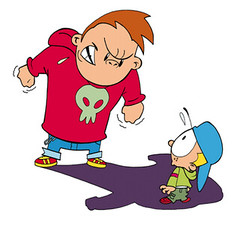 | 37 |
| 10974777209 | Irony/ironic | The contrast between what is stated explicitly and what is really meant. The difference between what appears to be and what actually is true. In general, there are three major types of irony used in language; (1) In a verbal irony, the words literally state the opposite of the writer's (or speaker's) true meaning. (2) In situational irony, events turn out the opposite of what was expected. What the characters and the readers think ought to happen. (3) In dramatic irony, facts or events are unknown to a character in a play or piece of fiction, but know to the reader, audience, or other characters in the work. Irony is used for many reasons, but frequently, it's used to create poignancy or humor. |  | 38 |
| 10974777210 | Juxtaposition (juhk-stuh-puh-zish-uhn) | When two words, phrases, images, ideas are placed close together or side by side for comparison or contrast. |  | 39 |
| 10974777211 | Litotes (lahy-toh-teez) | From the Greek word "simple" or "plain." Litotes is a figure of thought in which a point is affirmed by negating its opposite. It is a special form of understatement, where the surface denial serves, through ironic contrast, to reinforce the underlying assertion. |  | 40 |
| 10974777212 | Loose sentence | a type of sentence in which the main idea (independent clause) comes first, followed by wdependent grammatical units such as phrases and clauses. If a period were placed at the end of the independent clause, the clause would be a complete sentence. A work containing many loose sentences often seems informal, relaxed, and conversational. Generally loose sentences create loose style. |  | 41 |
| 10974777213 | Metaphor | A figure of speech using implied comparison of seemingly unlike things or the substitution of one for the other, suggesting some similarity. Metaphorical language makes writing more vivid, imaginative, thought provoking, and meaningful. |  | 42 |
| 10974777214 | Metonymy (mi-ton-uh-mee) | A term from the Greek meaning "changed label" or "substitute name." Metonymy is a figure of speech in which the name of one object is substituted for that of another closely associated with it. A news release that claims "the White House declared" rather that "the President declared" is using metonymy. The substituted term generally carries a more potent emotional response. |  | 43 |
| 10974777215 | Mood | This term has two distinct technical meanings in English writing. The first meaning is grammatical and eals with verbal units and a speaker's attitude. The indicative mood is used only for factual sentences. For example, "Joe eats too quickly." The subjective mod is used to express conditions contrary to fact. For example, "If I were you, I'd get another job." The imperative mood is used for commands. For example, "Shut the door!" The second meaning of mood is literary, meaning the prevailing atmosphere or emotional aura of a work. Setting, tone, and events can affect the mood. In this usage, mood is similar to tone and atmosphere. |  | 44 |
| 10974777216 | Narrative | The telling of a story or an account of an event or series of events. |  | 45 |
| 10974777217 | Onomatopoeia (on-uh-mat-uh-pee-uh) | A figure of speech in which natural sounds are imitated in the sounds of words. Simple examples include such words as buzz, hiss, hum, crack, whinny, and murmur. If you not eexamples of onomatopoeia in an essay passage, note the effect. |  | 46 |
| 10974777218 | Oxymoron | From the Greek for "pointedly foolish," an oxymoron is a figure of speech wherein the author groups apparently contradictory terms to suggest a paradox. Simple examples include "jumbo shrimp" and "cruel kindness." This term does not usually appear in the multiple-choice questions, but there is a chance that you might find it in an essay. Take note of the effect which the author achieves with this term. |  | 47 |
| 10974777219 | Paradox | A statement that appears to be self-contradictory or opposed to common sense but upon closer inspection contains some degree of truth or validity. |  | 48 |
| 10974777220 | Parallelism | Also referred to as parallel construction or parallel structure, this term comes from Greek roots meaning "beside one another." It refers to the grammatical or rhetorical framing of words, phrases, sentences, or paragraphs to give structural similarity. This can involve, but is not limited to repetition of a grammatical element such as a preposition or verbal phrase. A famous example of parallelism begins Charles Dickens's novel A Tale of Two Cities: "It was the best of times, it was the worst of times, it was the age of wisdom, it was the age of foolishness, it was the epoch of belief, it was the epoch of incredulity . . ." The effects of parallelism are numerous, but frequently they act as an organizing force to attract the reader's attention, add emphasis and organization, or simply provide a musical rhythm. |  | 49 |
| 10974777221 | Parody | A work that closely imitates the style or content of another with the specific aim of comic effect and/or ridicule. As comedy, parody distorts or exaggerated distinctive features of the original. As ridicule, it mimics the work by repeating and borrowing words, phrases, or characteristics in order to illuminate weaknesses in the original. Well-written parody offers enlightenment about the original, but poorly written parody offers only ineffectual imitation. Usually an audience must grasp literary allusion and understand the work being parodied in order to fully appreciate the nuances of the newer work. Occasionally, however, parodies take on a life of their own and don't require knowledge of the original |  | 50 |
| 10974777222 | Pedantic (puh-dan-tik) | An adjective that describes words, phrases, or general tone that is overly scholarly, academic, or bookish. |  | 51 |
| 10974777223 | Periodic sentence | A sentence that presents its central meaning in a main clause at the end. This independent clause is preceded by a phrase or clause that cannot stand alone. For example: "Ecstatic with my AP score, I let out a loud, joyful shout!" The effect of a periodic sentence is to add emphasis and structural variety. It is also a much stronger sentence than the loose sentence. |  | 52 |
| 10974777224 | Personification | A figure of speech in which the author presents or describes concepts, animals, or inanimate objects by endowing them with human attributes or emotions. Personification is used to make these abstractions, animal, or objects appear more vivid to the reader. |  | 53 |
| 10974777225 | Polysyndeton (paulee-sin-dih-tawn) | Figure of addition and emphasis which intentionally employs a series of conjunctions (FANBOYS: for, and, nor, but, or, yet, so) not normally found in successive words, phrases or clauses; the deliberate and excessive use of conjunctions in successive words or clauses. The effect is a feeling of multiplicity, energetic enumeration, and building up - a persistence or intensity. |  | 54 |
| 10974777226 | Predicate adjective | One type of subject complement is an adjective, group of adjectives, or adjective clause that follows a linking verb. It is an the predicate of the sentence, and modifies, or describes, the subject. |  | 55 |
| 10974777227 | Predicate nominative | A second type of subject complement - a noun, group of nouns, or noun clause that names the subject. It, like the predicate adjective, follows a linking verb and is located in the predicate of the sentence. |  | 56 |
| 10974777228 | Prose | One of the major divisions of genre, prose refers to fiction and non-fiction, including all its forms. In prose the printer determines the length of the line; in poetry, the poet determines the length of the line |  | 57 |
| 10974777229 | Repetition | The duplication, either exact or approximate, of any element of language, such as a sound, word, phrase, clause, sentence, or grammatical pattern. |  | 58 |
| 10974777230 | Rhetoric | From the Greek for "orator," this term describes the principles governing the art of writing effectively, eloquently, and persuasively. | 59 | |
| 10974777231 | Rhetorical modes | This flexible term describes the variety, the conventions, and purposes of the major kinds of writing. The four most common rhetorical modes and their purposes are as follows: (1) The purpose of exposition (or expository writing) is to explain and analyze information by presenting an idea, relevant evidence, and appropriate discussion. The AP language exam essay questions are frequently expository topics. (2) The purpose of argumentation is to prove the validity of an idea, or point of view, by presenting sound reasoning, discussion, and argument that thoroughly convince the reader. Persuasive writing is a type of argumentation having an additional aim of urging some form of action. (3) The purpose of description is to re-create, invent, or visually present a person, place, event or action so that the reader can picture that being described. Sometimes an author engages all five senses in description; good descriptive writing can be sensuous and picturesque. Descriptive writing may be straightforward and objective or highly emotional and subjective. (4) The purpose of narration is to tell a story or narrate an event or series of events. This writing mode frequently uses the tools of descriptive writing. These four modes are sometimes referred to as mode of discourse. |  | 60 |
| 10974777232 | Rhetorical Question [erotesis] | - differs from hypophora in that it is not answered by the writer because its answer is obvious or obviously desired, and usually just a yes or no answer would suffice. It is used for effect, emphasis, or provocation, or for drawing a conclusionary statement from the fact at hand. |  | 61 |
| 10974777233 | Sarcasm | From the Greek meaning "to tear flesh," sarcasm involves bitter, caustic language that is meant to hurt or ridicule someone or something. It may use irony is a device, but not all ironic statements are sarcastic, that is, intended to ridicule. When well done, sarcasm can be witty and insightful; when done poorly, it's simply cruel |  | 62 |
| 10974777234 | Satire | A work that targets human vices and follies or social institutions and conventions for reform or ridicule. Regardless of whether or not the work aims to reform human behavior, satire is best seen as a style of writing rather than a purpose for writing. It can be recognized by the many devices used effectively the satirist: irony, wit, parody, caricature, hyperbole, understatement, and sarcasm. The effects of satire are varied, depending on the writer's goal, but good satire, often humorous, is thought provoking and insightful about the human condition. |  | 63 |
| 10974777235 | Semantics | The branch of linguistics that studies the meaning of words, their historical and psychological development, their connotations, and their relation to one another |  | 64 |
| 10974777236 | Style | The consideration of style has two purposes: (1) An evaluation of the sum of the choices an author makes in blending diction, syntax, figurative language, and other literary devices. Some authors' styles are so idiosyncratic that we can quickly recognize works by the same author (or a writer emulating that author's style)/ Compare, for example, Jonathan's Swift to George Orwell or William Faulkner to Ernest Hemingway. We can analyze and describe an author's personal style and make judgments on how appropriate it is to the author's purpose. Styles can be called flowery, explicit, succinct, rambling, bombastic, commonplace, incisive, or laconic, to name only a few examples. (2) Classification of authors to a group and comparison of an author to similar authors. By means of such classification and comparison, we can see how an author's style reflects and helps to define a historical period, such as the Renaissance of the Victorian period, or a literary movement, such as the romantic, transcendental or realist movement. | | 65 |
| 10974777237 | Subject complement | The word (with any accompanying phrases) or clauses that follows a linking verb and complements, or completes, the subject of the sentence by either (1) renaming it or (2) describing it. The former is the technically a predicate nominative, the latter a predicate adjective. Multiple-choice questions. |  | 66 |
| 10974777238 | Subordinate clause | Like all clauses, this word group contains both a subject and a verb (plus any accompanying phrases or modifiers), but unlike the independent clause, the subordinate clause cannot stand alone; it does not express a complete thought. Also called a dependent clause, the subordinate clause depends on a main clause, sometimes called an independent clause, to complete its meaning. Easily recognized key words and phrases usually begin these clauses 0 for example: although, because, unless, if even though, since, as soon as, while who, when , where, how and that. |  | 67 |
| 10974777239 | Syllogism (sil- uh-jiz-uhm) | From the Greek for "reckoning together, " a syllogism (or syllogistic-reasoning or syllogistic logic is a deductive system of formal logic that presents two premises (the firs one called "major" and the second, "minor") that inevitably lead to a sound conclusion. A frequently cited example proceeds as follows; |  | 68 |
| 10974777240 | Symbol/symbolism | Generally, anything that represents itself and stands for something else. Usually a symbol is something concrete - such as object, action, character, or scene - that represents something more abstract. However, symbols, and symbolism can be much more complex. One system classifies symbols in three categories: (1) Natural symbols are objects and occurrences from nature to represent ideas commonly associated with them (dawn symbolizing hope or a new beginning, a rose symbolizing love, a tree symbolizing knowledge). (2) Conventional symbols are those that have been invested with meaning by a group (religious symbols such as a cross or Star of David; national symbols, such as a flag or an eagle; or group symbols, such as a skull an crossbones for pirates or the scales of justice for lawyers). (3) Literary symbols are sometimes also conventional in the sense that they are found in a variety of works and are generally recognized. However, a work's symbols may be more complicated as is the whale in Moby Dick and the jungle in Heart of Darkness. On the AP exam, try to determine what abstraction an object is a symbol for and to what extent it is successful in representing that abstraction. |  | 69 |
| 10974777241 | Synecdoche (si-nek-duh-kee) | is a type of metaphor in which the part stands for the whole, the whole for a part, the genus for the species, the species for the genus, the material for the thing made, or in short, any portion , section, or main quality for the whole or the thing itself (or vice versa). |  | 70 |
| 10974777242 | Syntax | The way an author chooses to join words into phrases, clauses, and sentences. Syntax is similar to diction, but you can differentiate them by thinking of syntax as the groups of words, while diction refers to the individual words. In the multiple-choice section, expect to be asked some questions about how an author manipulates syntax. In the essay section, you will need to analyze how syntax produces effects. |  | 71 |
| 10974777243 | Theme | The central idea or message of a work, the insight it offers into life. Usually theme is unstated in fictional works, but in nonfiction, the theme may be directly stated, especially in exposityr or argumentative writing. |  | 72 |
| 10974777244 | Thesis | In expository writing, the thesis statement is the sentence or a group of sentences that directly expresses the author's opinion, purpose, meaning, or position. Expository writing is usually judged by analyzing how accurately, effectively, and thoroughly a writer has proved the thesis. |  | 73 |
| 10974777245 | Tone | Similar to mood, tone describes the author's attitude toward his material, the audience, or both. Tone is easier to determine in spoken language than in written language. Considering how a work would sound if ti were read aloud can help in identifying an author's tone. Some words describing tone are playful, serious, businesslike, sarcastic, humorous, formal, ornate, sardonic, and somber |  | 74 |
| 10974777246 | Transition | A word or phrase that links different ideas. Used especially, although not exclusively, in expository and argumentative writing, transitions effectively signal a shift from one idea to another. A few commonly used transitional words or phrases are furthermore, consequently, nevertheless, for example, in addition, likewise, similarly and on the contrary. More sophisticated writers use more subtle means of transition. We will discuss these methods later. |  | 75 |
| 10974777247 | Understatement | The ironic minimizing of fact, understatement presents something as less significant than it is. The effect can frequently be humorous and emphatic. Understatement is the opposite of hyperbole. | 76 | |
| 10974777248 | Undertone | An attitude that may lie under the ostensible tone of the piece. Under a cheery surface, for example, a work may have threatening undertones. William Blake's "The Chimney Sweeper" from the Songs of Innocence has a grim undertone. |  | 77 |
| 10974777249 | Wit | In modern usage, intellectually amazing language that surprises and delights. A witty statement is humorous, while suggesting the speaker's verbal power in creating ingenious and perceptive remarks. Wit usually uses terse language that makes a pointed statement. Historically, wit originally meant basic understanding. Its meaning evolved to include speed of understanding, and finally (in the early seventeenth century), it grew to mean quick perception including creative fancy and a quick tongue to articulate an answer that demanded the same quick perception. |  | 78 |
AP Psychology Flashcards
Advanced Placement Psychology
Terms : Hide Images
| 13880464695 | Attribution Theory | The theory that we explain someone's behavior by crediting either the situation (external) or the person's disposition (internal). |  | 0 |
| 13880464696 | Fundamental Attribution Error | The tendency for observers, when analyzing another's behavior, to underestimate the impact of the situation and to overestimate the impact of personal disposition. |  | 1 |
| 13880464697 | Attitude | Feelings, often influenced by our beliefs, that predispose us to respond in a particular way to objects, people, and events. (ABC) |  | 2 |
| 13880464698 | Central Route Persuasion | Attitude change path in which interested people focus on the arguments, facts and respond with favorable thoughts. |  | 3 |
| 13880464699 | Peripheral Route Persuasion | Attitude change path in which people are influenced by incidental cues, emotional responses such as a speaker's attractiveness. |  | 4 |
| 13880464700 | Foot-in-the-Door Phenomenon | The tendency for people who have first agreed to a small request to comply later with a larger request. |  | 5 |
| 13880464701 | Role | A set of expectations (norms) about a social position, defining how those in the position ought to behave. |  | 6 |
| 13880464702 | Cognitive Dissonance Theory | The theory that we act to reduce the discomfort (dissonance) we feel when two of our thoughts (cognition) are inconsistent. For example, when our awareness of our attitudes and of our actions clash, we can reduce the resulting discomfort by changing our attitudes. |  | 7 |
| 13880464703 | Conformity | Adjusting one's behavior or thinking to coincide with a group standard. |  | 8 |
| 13880464704 | Normative Social Influence | Influence (conforming) resulting from a person's desire to gain approval or avoid disapproval. |  | 9 |
| 13880464705 | Informational Social Influence | Influence (conforming) resulting from one's willingness to accept others' opinions about reality. |  | 10 |
| 13880464706 | Social Facilitation | Stronger responses on simple or well-learned tasks in the presence of others. |  | 11 |
| 13880464707 | Social Loafing | The tendency for people in a group to exert less effort when pooling their efforts toward attaining a common goal than when individually accountable. |  | 12 |
| 13880464708 | Deindividuation | The loss of self-awareness and self-restraint occurring in group situations that foster arousal and anonymity. (Mob Mentality) |  | 13 |
| 13880464709 | Group Polarization | The enhancement of a group's prevailing inclinations through discussion within the group. (Extremes) |  | 14 |
| 13880464710 | Groupthink | The mode of thinking that occurs when the desire for harmony in a decision-making group overrides a realistic appraisal of alternatives. |  | 15 |
| 13880464711 | Culture | The enduring behaviors, ideas, attitudes, values and traditions shared by a group of people and transmitted from one generation to the next. |  | 16 |
| 13880464712 | Norm | An understood rule for accepted and expected behavior. They prescribe "proper" behavior. |  | 17 |
| 13880464713 | Personal Space | The buffer zone we like to maintain around our bodies. |  | 18 |
| 13880464714 | Prejudice | An unjustifiable (and usually negative) attitude toward a group and its members. It generally involves stereotyped beliefs, negative feelings, and a predisposition to discriminatory action. |  | 19 |
| 13880464715 | Stereotype | A generalized (sometimes accurate, but often overgeneralized) belief about a group of people. |  | 20 |
| 13880464716 | Discrimination | (Social) unjustifiable negative behavior toward a group and its members. |  | 21 |
| 13880464717 | Ingroup | "Us"—people with whom we share a common identity. |  | 22 |
| 13880464718 | Outgroup | "Them"—those perceived as different or apart from our ingroup. |  | 23 |
| 13880464719 | Ingroup Bias | The tendency to favor our own group. |  | 24 |
| 13880464720 | Scapegoat Theory | The theory that prejudice offers an outlet for anger by providing someone to blame. |  | 25 |
| 13880464721 | Other-Race Effect | The tendency to recall faces of one's own race more accurately than faces of other races. Also called the cross-race effect and the own-race bias |  | 26 |
| 13880464722 | Just-World Phenomenon | The tendency for people to believe the world is just and that people therefore get what they deserve and deserve what they get. (Blame the Victim) |  | 27 |
| 13880464723 | Aggression | Physical or verbal behavior intended to hurt someone. |  | 28 |
| 13880464724 | Frustration-Aggression Principle | The principle that frustration—the blocking of an attempt to achieve some goal—creates anger, which can generate aggression. |  | 29 |
| 13880464725 | Mere Exposure Effect | The phenomenon that repeated exposure to novel stimuli increases liking of them. |  | 30 |
| 13880464726 | Passionate Love | An aroused state of intense positive absorption in another, usually present at the beginning of a love relationship. |  | 31 |
| 13880464727 | Companionate Love | The deep affectionate attachment we feel for those with whom our lives are intertwined. |  | 32 |
| 13880464728 | Equity | A condition in which people receive from a relationship in proportion to what they give to it. |  | 33 |
| 13880464729 | Self-Disclosure | Revealing intimate aspects of oneself to others. |  | 34 |
| 13880464730 | Altruism | Unselfish regard for the welfare of others. |  | 35 |
| 13880464731 | Bystander Effect | The tendency for any given bystander to be less likely to give aid if other bystanders are present. |  | 36 |
| 13880464732 | Social Exchange Theory | The theory that our social behavior is an exchange process, the aim of which is to maximize benefits and minimize costs. |  | 37 |
| 13880464733 | Reciprocity Norm | An expectation that people will help, not hurt, those who have helped them. |  | 38 |
| 13880464734 | Social-Responsibility Norm | An expectation that people will help those dependent upon them. |  | 39 |
| 13880464735 | Conflict | A perceived incompatibility of actions, goals, or ideas. |  | 40 |
| 13880464736 | Social Trap | A situation in which the conflicting parties, by each rationally pursuing their self-interest, become caught in mutually destructive behavior. |  | 41 |
| 13880464737 | Mirror-Image Perceptions | Mutual views often held by conflicting people, as when each side sees itself as ethical and peaceful and views the other side as evil and aggressive. |  | 42 |
| 13880464738 | Self Fulfilling Prophecy | A belief that leads to its own fulfillment. |  | 43 |
| 13880464739 | Superordinate Goals | Shared goals that override differences among people and require their cooperation. |  | 44 |
| 13880464740 | Graduated and Reciprocated Initiatives in Tension Reduction (GRIT) | Graduated and Reciprocated Initiatives in Tension-Reduction—a strategy designed to decrease international tensions. |  | 45 |
| 13880464777 | Diffusion of Responsibility | Reduction in feelings of personal burden in the presence of others. |  | 46 |
| 13880464778 | Ethnocentricism | Evaluation of other cultures according to the standards and customs of one's own culture. |  | 47 |
| 13880464779 | Compliance | Conforming to a request or demand. |  | 48 |
| 13880464780 | Pygmalion in the Classroom | Experiment by Rosenthal and Jacobsen that measured the impact(s) of expectation on student performances; supporting the theory of a self-fulfilling prophecy. |  | 49 |
| 13880464781 | Temporal Comparison | when we compare our performance to our own past performance(s). | 50 | |
| 13880464782 | Social Comparison | when we compare our performance to the performance(s) of others. |  | 51 |
| 13880464783 | Reference Groups | Groups we are similar to with who we compare ourselves to. | 52 | |
| 13880464784 | Relative Deprivation | The tendency when we compare ourselves to others to feel worse off then them. |  | 53 |
| 13880464785 | False Consensus Effect | overestimating the number of people who share our belief or action. |  | 54 |
| 13880464786 | Leon Festinger | Measured cognitive dissonance by paying participants to $1 or $20 to lie about the enjoyment of a dull task. Participants paid $1 more likely to change their beliefs about the task. |  | 55 |
| 13880464787 | Dispositional (Internal) Attribution Theory | Explaining behaviors based on a person's characteristics; traits, maturity, etc. | 56 | |
| 13880464788 | Situational (External) Attribution Theory | Explaining behaviors based on outside factors influencing and individual. | 57 | |
| 13880464789 | Phillip Zimbardo | Examined the impact of social roles and authority on behavior with his famous Stanford Prison experiment. |  | 58 |
| 13880464790 | Solomon Asch | Examined the impact of conformity with his famous Line Perception experiment. |  | 59 |
| 13880464791 | Obedience | A change in behavior following a demand from an authority figure. |  | 60 |
| 13880464792 | Stanley Milgram | Examined the impact of obedience to authority with his controversial Shock experiment. |  | 61 |
| 13880464793 | Prisoner's Dilemma | Social trap where 2 prisoners are separated and have to consider the impacts of cooperating with their partner or competing to get the first confession. |  | 62 |
| 13880464794 | Commons Dilemma | Social trap where people must consider how much they take or use of a scarce resource. |  | 63 |
| 13880464795 | Public Goods Dilemma | Social trap where people must consider how much to give/contribute to a shared resource. |  | 64 |
| 13880464796 | Consummate Love | Sternberg believes this is the ultimate form of love that has all 3: Passion, Intimacy & Commitment (Companionate). |  | 65 |
| 13880464797 | Robert Sternberg | Theorized the Triangle Theory of Love when describing social relationships. PIC: Passion, Intimacy & Commitment (Companionate). |  | 66 |
| 13880464798 | Matching Hypothesis | Idea that individuals pair up into relationships with people who are similar to their level of physical attraction. |  | 67 |
| 13880464799 | Albert Bandura | Developed Social Learning Theory, where children learn through watching AND imitating actions. |  | 68 |
| 13880464741 | structuralism | an early school of psychology that used introspection to explore the structural elements of the human mind |  | 69 |
| 13880464742 | functionalism | a school of psychology that focused on how our mental and behavioral processes function-how they enable us to adapt, survive and flourish |  | 70 |
| 13880464743 | behaviorism | the view that psychology (1) should be an objective science that (2) studies behavior without reference to mental processes. Most research psychologists today agree with (1) but not with (2) |  | 71 |
| 13880464744 | humanistic psychology | historically significant perspective that emphasized the growth potential of healthy people and the individual's potential for personal growth |  | 72 |
| 13880464745 | psychology | the science of behavior and mental processes |  | 73 |
| 13880464746 | nature vs. nurture | the longstanding controversy over the relative contributions that genes and experience make to the development of psychological traits and behaviors. Today's science sees traits and behaviors arising from the interaction of nature and nurture |  | 74 |
| 13880464747 | natural selection | the principle that, among the range of inherited trait variations, those contributing to reproduction and survival with most likely be passed on to succeeding generations |  | 75 |
| 13880464748 | biopsychosocial approach | an integrated approach that incorporates biological, psychological, and social-cultural levels of analysis |  | 76 |
| 13880464749 | biological psychology | a branch of psychology that studies the links between biological (including neuroscience and behavior genetics) and psychological processes |  | 77 |
| 13880464750 | evolutionary psychology | the study of the roots of behavior and mental processes using the principles of natural selection |  | 78 |
| 13880464751 | psychodynamic psychology | a branch of psychology that studies how unconscious drives and conflicts influence behavior, and uses that information to treat people with psychological disorders |  | 79 |
| 13880464752 | behavioral psychology | the scientific study of observable behavior, and its explanation by principles of learning |  | 80 |
| 13880464753 | cognitive psychology | the scientific study of all the mental activities associated with thinking, knowing, remembering, and communicatin |  | 81 |
| 13880464754 | social-cultural psychology | the study of how situations and cultures affect our behavior and thinking | 82 | |
| 13880464755 | Mary Whiton Calkins | American psychologist who conducted research on memory, personality, and dreams; first woman president of the American Psychological Association |  | 83 |
| 13880464756 | Charles Darwin | English natural scientist who formulated a theory of evolution by natural selection (1809-1882) |  | 84 |
| 13880464757 | Dorothea Dix | A reformer and pioneer in the movement to treat the insane as mentally ill, beginning in the 1820's, she was responsible for improving conditions in jails, poorhouses and insane asylums throughout the U.S. and Canada. She succeeded in persuading many states to assume responsibility for the care of the mentally ill. She served as the Superintendant of Nurses for the Union Army during the Civil War. |  | 85 |
| 13880464758 | Sigmund Freud | Austrian neurologist who originated psychoanalysis (1856-1939); Said that human behavior is irrational; behavior is the outcome of conflict between the id (irrational unconscious driven by sexual, aggressive, and pleasure-seeking desires) and ego (rationalizing conscious, what one can do) and superego (ingrained moral values, what one should do). | 86 | |
| 13880464759 | G. Stanley Hall | american psychologist who established the first psychology research laboratory in the United States and founded the American Psychological Association |  | 87 |
| 13880464760 | William James | founder of functionalism; studied how humans use perception to function in our environment |  | 88 |
| 13880464761 | Abraham Maslow | humanistic psychology; hierarchy of needs-needs at a lower level dominate an individual's motivation as long as they are unsatisfied; self-actualization, transcendence |  | 89 |
| 13880464762 | Ivan Pavlov | Russian physiologist who observed conditioned salivary responses in dogs (1849-1936) |  | 90 |
| 13880464763 | Jean Piaget | Four stage theory of cognitive development: 1. sensorimotor, 2. preoperational, 3. concrete operational, and 4. formal operational. He said that the two basic processes work in tandem to achieve cognitive growth-assimilation and accomodation |  | 91 |
| 13880464764 | Carl Rogers | 1902-1987; Field: humanistic; Contributions: founded person-centered therapy, theory that emphasizes the unique quality of humans especially their freedom and potential for personal growth, unconditional positive regard, fully functioning person |  | 92 |
| 13880464765 | B. F. Skinner | behaviorism; pioneer in operant conditioning; behavior is based on an organism's reinforcement history; worked with pigeons |  | 93 |
| 13880464766 | Socrates | Greek philosopher; socratic method--questioning; sentenced to death for corrupting Athens youth |  | 94 |
| 13880464767 | E. B. Tictchner | Introduced experimental psychology to the United States |  | 95 |
| 13880464768 | Margaret Floyd Washburn | Was the first female PhD in psychology |  | 96 |
| 13880464769 | John B. Watson | behaviorism; emphasis on external behaviors of people and their reactions on a given situation; famous for Little Albert study in which baby was taught to fear a white rat |  | 97 |
| 13880464770 | Wilhelm Wundt | german physiologist who founded psychology as a formal science; opened first psychology research laboratory in 1879 |  | 98 |
| 13880464771 | Introspection | a method of self-observation in which participants report their thoughts and feelings |  | 99 |
| 13880464772 | Gestalt Psychology | a psychological approach that emphasizes that we often perceive the whole rather than the sum of the parts |  | 100 |
Flashcards
Flashcards
Flashcards
Pages

Need Help?
We hope your visit has been a productive one. If you're having any problems, or would like to give some feedback, we'd love to hear from you.
For general help, questions, and suggestions, try our dedicated support forums.
If you need to contact the Course-Notes.Org web experience team, please use our contact form.
Need Notes?
While we strive to provide the most comprehensive notes for as many high school textbooks as possible, there are certainly going to be some that we miss. Drop us a note and let us know which textbooks you need. Be sure to include which edition of the textbook you are using! If we see enough demand, we'll do whatever we can to get those notes up on the site for you!
