

AP Psychology AP Review Flashcards
Terms : Hide Images
| 13703782548 | psychology | the study of behavior and mental processes | 0 | |
| 13703782549 | psychology's biggest question | Which is more important in determining behavior, nature or nurture? | 1 | |
| 13703782550 | psychology's three levels of analysis | biopsychosocial approach (looks at the biological, psychological, and social-cultural approaches together) | 2 | |
| 13703782551 | biological approach | genetics, close-relatives, body functions | 3 | |
| 13703782552 | evolutionary approach | species - helped with survival (ancestors) | 4 | |
| 13703782553 | psychodynamic approach | (Freud) subconscious, repressed feelings, unfulfilled wishes | 5 | |
| 13703782554 | behavioral approach | learning (classical and operant) observed | 6 | |
| 13703782555 | cognitive approach | thinking affects behavior | 7 | |
| 13703782556 | humanistic approach | becoming a better human (behavior, acceptance) | 8 | |
| 13703782557 | social-cultural approach | cultural, family, environment | 9 | |
| 13703782558 | two reasons of why experiments are important | hindsight bias + overconfidence | 10 | |
| 13703782559 | types of research methods | descriptive, correlational, and experimental | 11 | |
| 13703782560 | descriptive methods | case study survey naturalistic observation (DON'T SHOW CAUSE/EFFECT) | 12 | |
| 13703782561 | case study | studies one person in depth may not be typical of population | 13 | |
| 13703782562 | survey | studies lots of people not in depth | 14 | |
| 13703782563 | naturalistic observation | observe + write facts without interference | 15 | |
| 13703782564 | correlational method | shows relation, but not cause/effect scatterplots show research | 16 | |
| 13703782565 | correlation coefficient | + 1.0 (both increase) 0 (no correlation - 1.0 (one increases, other decreases) | 17 | |
| 13703782566 | experimental method | does show cause and effect | 18 | |
| 13703782567 | population | type of people who are going to be used in experiment | 19 | |
| 13703782568 | sample | actual people who will be used (randomness reduces bias) | 20 | |
| 13703782569 | random assignment | chance selection between experimental and control groups | 21 | |
| 13703782570 | control group | not receiving experimental treatment receives placebo | 22 | |
| 13703782571 | experimental group | receiving treatment/drug | 23 | |
| 13703782572 | independent variable | drug/procedure/treatment | 24 | |
| 13703782573 | dependent variable | outcome of using the drug/treatment | 25 | |
| 13703782574 | confounding variable | can affect dependent variable beyond experiment's control | 26 | |
| 13703782575 | scientific method | theory hypothesis operational definition revision | 27 | |
| 13703782576 | theory | general idea being tested | 28 | |
| 13703782577 | hypothesis | measurable/specific | 29 | |
| 13703782578 | operational definition | procedures that explain components | 30 | |
| 13703782579 | mode | appears the most | 31 | |
| 13703782580 | mean | average | 32 | |
| 13703782581 | median | middle | 33 | |
| 13703782582 | range | highest - lowest | 34 | |
| 13703782583 | standard deviation | how scores vary around the mean | 35 | |
| 13703782584 | central tendency | single score that represents the whole | 36 | |
| 13703782585 | bell curve | (natural curve) |  | 37 |
| 13703782586 | ethics of testing on animals | need to be treated humanly basically similar to humans | 38 | |
| 13703782587 | ethics of testing on humans | consent debriefing no unnecessary discomfort/pain confidentiality | 39 | |
| 13703782588 | sensory neurons | travel from sensory receptors to brain | 40 | |
| 13703782589 | motor neurons | travel from brain to "motor" workings | 41 | |
| 13703782590 | interneurons | (in brain and spinal cord) connecting motor and sensory neurons | 42 | |
| 13703782784 | neuron |  | 43 | |
| 13703782591 | dendrites | receive messages from other neurons | 44 | |
| 13703782592 | myelin sheath | protects the axon | 45 | |
| 13703782593 | axon | where charges travel from cell body to axon terminal | 46 | |
| 13703782594 | neurotransmitters | chemical messengers | 47 | |
| 13703782595 | reuptake | extra neurotransmitters are taken back | 48 | |
| 13703782596 | excitatory charge | "Let's do it!" | 49 | |
| 13703782597 | inhibitory charge | "Let's not do it!" | 50 | |
| 13703782598 | central nervous system | brain and spinal cord | 51 | |
| 13703782599 | peripheral nervous system | somatic nervous system autonomic nervous system | 52 | |
| 13703782600 | somatic nervous system | voluntary movements | 53 | |
| 13703782601 | autonomic nervous system | involuntary movements (sympathetic and parasympathetic nervous systems) | 54 | |
| 13703782602 | sympathetic nervous system | arousing | 55 | |
| 13703782603 | parasympathetic nervous system | calming | 56 | |
| 13703782604 | neural networks | more connections form with greater use others fall away if not used | 57 | |
| 13703782605 | spinal cord | expressway of information bypasses brain when reflexes involved | 58 | |
| 13703782606 | endocrine system | slow uses hormones in the blood system | 59 | |
| 13703782607 | master gland | pituitary gland | 60 | |
| 13703782608 | brainstem | extension of the spinal cord responsible for automatic survival | 61 | |
| 13703782609 | reticular formation (if stimulated) | sleeping subject wakes up | 62 | |
| 13703782610 | reticular formation (if damaged) | coma | 63 | |
| 13703782611 | brainstem (if severed) | still move (without purpose) | 64 | |
| 13703782612 | thalamus | sensory switchboard (does not process smell) | 65 | |
| 13703782613 | hypothalamus | basic behaviors (hunger, thirst, sex, blood chemistry) | 66 | |
| 13703782614 | cerebellum | nonverbal memory, judge time, balance emotions, coordinate movements | 67 | |
| 13703782615 | cerebellum (if damaged) | difficulty walking and coordinating | 68 | |
| 13703782616 | amygdala | aggression, fear, and memory associated with these emotions | 69 | |
| 13703782617 | amygdala (if lesioned) | subject is mellow | 70 | |
| 13703782618 | amygdala (if stimulated) | aggressive | 71 | |
| 13703782619 | hippocampus | process new memory | 72 | |
| 13703782620 | cerebrum | two large hemispheres perceiving, thinking, and processing | 73 | |
| 13703782621 | cerebral cortex | only in higher life forms | 74 | |
| 13703782622 | association areas | integrate and interpret information | 75 | |
| 13703782623 | glial cells | provide nutrients to myelin sheath marks intelligence higher proportion of glial cells to neurons | 76 | |
| 13703782624 | frontal lobe | judgement, personality, processing (Phineas Gage accident) | 77 | |
| 13703782625 | parietal lobe | math and spatial reasoning | 78 | |
| 13703782626 | temporal lobe | audition and recognizing faces | 79 | |
| 13703782627 | occipital lobe | vision | 80 | |
| 13703782628 | corpus callosum | split in the brain to stop hyper-communication (eliminate epileptic seizures) | 81 | |
| 13703782629 | Wernicke's area | interprets auditory and hearing | 82 | |
| 13703782630 | Broca's area | speaking words | 83 | |
| 13703782631 | plasticity | ability to adapt if damaged | 84 | |
| 13703782632 | sensation | what our senses tell us | 85 | |
| 13703782633 | bottom-up processing | senses to brain | 86 | |
| 13703782634 | perception | what our brain tells us to do with that information | 87 | |
| 13703782635 | top-down processing | brain to senses | 88 | |
| 13703782636 | inattentional blindness | fail to "gorilla" because attention is elsewhere | 89 | |
| 13703782637 | cocktail party effect | even with tons of stimuli, we are able to pick out our name, etc. | 90 | |
| 13703782638 | change blindness | giving directions and person is changed and we don't notice | 91 | |
| 13703782639 | choice blindness | when defending the choice we make, we fail to notice choice was changed | 92 | |
| 13703782640 | absolute threshold | minimum stimulation needed in order to notice 50% of the time | 93 | |
| 13703782641 | signal detection theory | we notice what is more important to us (rather hear a baby crying) | 94 | |
| 13703782642 | JND (just noticeable difference) | (Weber's law) difference between different stimuli noticed in proportion | 95 | |
| 13703782643 | sensory adaptation | tired of noticing (Brain says, "Been there, done that. Next?" | 96 | |
| 13703782644 | rods | night time | 97 | |
| 13703782645 | cones | color | 98 | |
| 13703782646 | parallel processing | notice color, form, depth, movement, etc. | 99 | |
| 13703782647 | Young-Helmholtz trichromatic theory | 3 corresponding color receptors (RGB) | 100 | |
| 13703782648 | Hering's opponent-process theory | after image in opposite colors (RG, YB, WB) | 101 | |
| 13703782649 | trichromatic + opponent-process | Young-Helmholtz -> color stimuli Hering -> en route to cortex | 102 | |
| 13703782650 | frequency we hear most | human voice | 103 | |
| 13703782651 | Helmoltz (hearing) | we hear different pitches in different places in basilar membrane (high pitches) | 104 | |
| 13703782652 | frequency theory | impulse frequency (low pitches) | 105 | |
| 13703782653 | Helmholtz + frequency theory | middle pitches | 106 | |
| 13703782654 | Skin feels what? | warmth, cold, pressure, pain | 107 | |
| 13703782655 | gate-control theory | small fibers - pain large fibers - other senses | 108 | |
| 13703782656 | memory of pain | peaks and ends | 109 | |
| 13703782657 | smell | close to memory section (not in thalamus) | 110 | |
| 13703782658 | grouping | Gestalt make sense of pieces create a whole | 111 | |
| 13703782659 | grouping groups | proximity similarity continuity connectedness closure | 112 | |
| 13703782660 | make assumptions of placement | higher - farther smaller - farther blocking - closer, in front | 113 | |
| 13703782661 | perception = | mood + motivation | 114 | |
| 13703782662 | consciousness | awareness of ourselves and the environment | 115 | |
| 13703782663 | circadian rhythm | daily biological clock and regular cycle (sleep and awake) | 116 | |
| 13703782664 | circadian rhythm pattern | - activated by light - light sensitive retinal proteins signal brains SCN (suprachiasmatic nucleus) - pineal gland decreases melatonin | 117 | |
| 13703782665 | What messes with circadian rhythm? | artificial light | 118 | |
| 13703782666 | The whole sleep cycle lasts how long? | 90 minutes | 119 | |
| 13703782667 | sleep stages | relaxed stage (alpha waves) stage 1 (early sleep) (hallucinations) stage 2 (sleep spindles - bursts of activity) (sleep talk) stage 3 (transition phase) (delta waves) stage 4 (delta waves) (sleepwalk/talk + wet the bed) stage 5 (REM) (sensory-rich dreams) (paradoxical sleep) | 120 | |
| 13703782668 | purpose of sleep | 1. recuperation - repair neurons and allow unused neural connections to wither 2. making memories 3. body growth (children sleep more) | 121 | |
| 13703782669 | insomnia | can't sleep | 122 | |
| 13703782670 | narcolepsy | fall asleep anywhere at anytime | 123 | |
| 13703782671 | sleep apnea | stop breathing in sleep | 124 | |
| 13703782672 | night terrors | prevalent in children | 125 | |
| 13703782673 | sleepwalking/sleeptalking | hereditary - prevalent in children | 126 | |
| 13703782674 | dreaming (3) | 1. vivid bizarre intense sensory experiences 2. carry fear/survival issues - vestiges of ancestors' survival ideas 2. replay previous day's experiences/worries | 127 | |
| 13703782675 | purpose of dreaming (5 THEORIES) | 1. physiological function - develop/preserve neural pathways 2. Freud's wish-fulfillment (manifest/latent content) 3. activation synthesis - make sense of stimulation originating in brain 4. information processing 5. cognitive development - reflective of intelligence | 128 | |
| 13703782676 | 1. Can hypnosis bring you back in time? 2. Can hypnosis make you do things you wouldn't normally do? 3. Can it alleviate pain? 4. What state are you in during hypnosis? 5. Who is more susceptible? | 1. cannot take you back in time 2. cannot make you do things you won't do 3. can alleviate pain 4. fully conscious ((IMAGINATIVE PEOPLE MORE SUSCEPTIBLE)) | 129 | |
| 13703782677 | depressants | slows neural pathways | 130 | |
| 13703782678 | alcohol | ((depressant)) disrupts memory formation (REM) lowers inhibition expectancy effect | 131 | |
| 13703782679 | barbituates (tranquilizers) | ((depressant)) reduce anxiety | 132 | |
| 13703782680 | opiates | ((depressant)) pleasure reduce anxiety/pain | 133 | |
| 13703782681 | stimulants | hypes neural processing | 134 | |
| 13703782682 | methamphetamine | ((stimulant)) heightens energy euphoria affects dopamine | 135 | |
| 13703782683 | caffeine | ((stimulant)) | 136 | |
| 13703782684 | nicotine | ((stimulant)) CNS releases neurotransmitters calm anxiety reduce pain affects (nor)epinephrine and dopamine | 137 | |
| 13703782685 | cocaine | ((stimulant)) euphoria affects dopamine, serotonin, and norepinephrine | 138 | |
| 13703782686 | hallucinogen | excites neural activity | 139 | |
| 13703782687 | ecstasy | ((hallucinogen)) reuptake is blocked affects dopamine and serotonin | 140 | |
| 13703782688 | LSD | ((hallucinogen)) affects sensory/emotional "trip" (+/-) affects serotonin | 141 | |
| 13703782689 | marijuana | ((hallucinogen)) amplify sensory experience disrupts memory formation | 142 | |
| 13703782690 | learning | organism changing behavior due to experience (association of events) | 143 | |
| 13703782691 | types of learning | classical operant observational | 144 | |
| 13703782692 | famous classical psychologists | Pavlov and Watson | 145 | |
| 13703782693 | famous operant psychologist | Skinner | 146 | |
| 13703782694 | famous observational psychologists | Bandura | 147 | |
| 13703782695 | classical conditioning | outside stimulus | 148 | |
| 13703782696 | Pavlov's experiment | Step 1: US (food) -> UR (salivation) Step 2: NS (bell) -> US (food) -> UR (salivation) Later... CS (bell) -> CR (salivation) | 149 | |
| 13703782697 | Watson's experiment | white rat was given to Little Albert Step 1: US (noise) -> UR (cry) Step 2: NS (rat) -> US (noise) -> UR (cry) Later... CS (rat) -> CR (cry) | 150 | |
| 13703782698 | generalization | any small, white fluffy creature will make Albert cry now | 151 | |
| 13703782699 | discriminate | any large, white fluffy creature won't make Albert cry | 152 | |
| 13703782700 | extinction | stop "treating" with conditioned response | 153 | |
| 13703782701 | spontaneous recovery | bring stimulus back after a while | 154 | |
| 13703782702 | operant conditioning | control by organism | 155 | |
| 13703782703 | Skinner's experiment | operant chamber / Skinner box (lead to shaping) | 156 | |
| 13703782704 | shaping | get animal closer to doing what you want them to do | 157 | |
| 13703782705 | reinforcers | want to continue behavior (positive reinforcement: give money to do laundry) (negative reinforcement: do to avoid nagging) | 158 | |
| 13703782706 | punishments | want to stop behavior (positive reinforcement: smack) (negative reinforcement: take away phone) | 159 | |
| 13703782707 | fixed ratio | happens a certain number of times (Starbucks punch card) | 160 | |
| 13703782708 | variable ratio | happens an unpredictable number of times (winning the lottery) | 161 | |
| 13703782709 | organism must do these (2 times) | fixed ratio and variable ratio | 162 | |
| 13703782710 | fixed interval | happens at a certain time (mailman comes to the house at 10:00 AM) | 163 | |
| 13703782711 | variable interval | happens at any time (receive texts from friends) | 164 | |
| 13703782712 | these things happen regardless (2 times) | fixed interval and variable interval | 165 | |
| 13703782713 | Which (fixed/variable) conditions better? | variable | 166 | |
| 13703782714 | criticisms of Skinner | doesn't take into account intrinsic motivation | 167 | |
| 13703782715 | intrinsic motivation | doing something for yourself, not the reward | 168 | |
| 13703782716 | extrinsic motivation | doing something for reward | 169 | |
| 13703782717 | Skinner's legacy | use it personally, at school, and at work | 170 | |
| 13703782718 | famous observational experiment | Bandura's Bobo doll | 171 | |
| 13703782719 | famous observational psychologist | Bandura | 172 | |
| 13703782720 | mirror neurons | "feel" what is observed happens in higher order animals | 173 | |
| 13703782721 | Bobo doll experiment legacy | violent video games/movies desensitize us see good: do good see evil: do evil | 174 | |
| 13703782722 | observational learning | biological behaviors work best | 175 | |
| 13703782723 | habituation | get used to it -> stop reacting | 176 | |
| 13703782724 | examples for observational learning | lectures and reading | 177 | |
| 13703782725 | serotonin involved with memory | speeds the connection between neurons | 178 | |
| 13703782726 | LTP | ((long-term potentiation)) strengthens potential neural forming (associated with speed) | 179 | |
| 13703782727 | CREB | protein that can switch genes on/off with memory and connection of memories | 180 | |
| 13703782728 | glutamate involved with memory | neurotransmitter that enhances LTP | 181 | |
| 13703782729 | glucose involved with memory | released during strong emotions ((signaling important event to be remembered)) | 182 | |
| 13703782730 | flashbulb memory | type of memory remembered because it was an important/quick moment | 183 | |
| 13703782731 | amygdala (memory) | boosts activity of proteins in memory-forming areas to fight/flight | 184 | |
| 13703782732 | cerebellum (memory) | forms and stores implicit memories ((classical conditioning)) | 185 | |
| 13703782733 | hippocampus (memory) | active during sleep (forming memories) ((information "moves" after 48 hours)) | 186 | |
| 13703782734 | memory | learning over time contains information that can be retrieved | 187 | |
| 13703782735 | processing stages | encoding -> storage -> retrieval | 188 | |
| 13703782736 | encoding | information going in | 189 | |
| 13703782737 | storage | keeping information in | 190 | |
| 13703782738 | retrieval | taking information out | 191 | |
| 13703782739 | How long is sensory memory stored? | seconds | 192 | |
| 13703782740 | How long is short-term memory stored? | less than a minute | 193 | |
| 13703782741 | How many bits of information is stored in short-term memory? | 7 | 194 | |
| 13703782742 | How many chunks of information is stored in short-term memory? | 4 | 195 | |
| 13703782743 | How many seconds of words is stored in short-term memory? | 2 | 196 | |
| 13703782744 | short term memory goes to ______________ | working memory | 197 | |
| 13703782745 | working memory | make a connection and process information to mean something | 198 | |
| 13703782746 | working memory goes to _________________ | long-term memory | 199 | |
| 13703782747 | How much is stored in long-term memory? | LIMITLESS | 200 | |
| 13703782748 | implicit memory | naturally do | 201 | |
| 13703782749 | explicit memory | need to explain | 202 | |
| 13703782750 | automatic processing | space, time, frequency, well-learned information | 203 | |
| 13703782751 | effortful processing | processing that requires effort | 204 | |
| 13703782752 | spacing effect | spread out learning over time | 205 | |
| 13703782753 | serial position effect | primary/recency effect | 206 | |
| 13703782754 | primary effect | remember the first things in a list | 207 | |
| 13703782755 | recency effect | remember the last things in a list | 208 | |
| 13703782756 | effortful processing (4 things) | 1. recency effect 2. spacing effect 3. testing effect 4. serial position effect | 209 | |
| 13703782757 | semantic encoding (1) meaning (2) how to | make meaning out of something --- chunk, hierarchy, or connect to you | 210 | |
| 13703782758 | if we can't remember a memory... | 1. change memory to suit us 2. fill in the blanks with logical story | 211 | |
| 13703782759 | misinformation effect | not correct information | 212 | |
| 13703782760 | imagination inflation | imagine or visualize something that isn't real | 213 | |
| 13703782761 | source amnesia | what is the truth? (is it a dream, story, memory, etc.?) | 214 | |
| 13703782762 | priming | association (setting you up) | 215 | |
| 13703782763 | context | environment helps with memory | 216 | |
| 13703782764 | state-dependency | you may remember something if you go back to the state you were in (go back to high) | 217 | |
| 13703782765 | mood-congruency | emotion will bring back similar emotional memories | 218 | |
| 13703782766 | forgetting curve | forget after 5 days forget after 5 years | 219 | |
| 13703782767 | the forgetting curve was created by | Ebbinghaus | 220 | |
| 13703782768 | proactive interference | old information interferes with the new | 221 | |
| 13703782769 | retroactive interference | new information interferes with the old | 222 | |
| 13703782770 | children can't remember before age __ | 3 | 223 | |
| 13703782771 | Loftus | connected to abuse cases/childhood | 224 | |
| 13703782772 | prototypes | generalize | 225 | |
| 13703782773 | problem-solving (4) | trial + error algorithms heuristic (representative + availability) insight - "AHA!" | 226 | |
| 13703782774 | against problem-solving | fixation | 227 | |
| 13703782775 | mental set | what has worked in the past | 228 | |
| 13703782776 | functional fixedness | only way to do this is with this | 229 | |
| 13703782777 | Chomsky (nature or nurture?) | "born with language" (nature) | 230 | |
| 13703782778 | Skinner (nature or nurture?) | language is learned (nurture) | 231 | |
| 13703782779 | grammar is _________ | universal | 232 | |
| 13703782780 | phonemes | smallest sound unit | 233 | |
| 13703782781 | morphemes | smallest meaning unit | 234 |
Flashcards
Flashcards
Flashcards
AP Psychology AP Review Flashcards
Terms : Hide Images
| 13788557210 | psychology | the study of behavior and mental processes | 0 | |
| 13788557211 | psychology's biggest question | Which is more important in determining behavior, nature or nurture? | 1 | |
| 13788557212 | psychology's three levels of analysis | biopsychosocial approach (looks at the biological, psychological, and social-cultural approaches together) | 2 | |
| 13788557213 | biological approach | genetics, close-relatives, body functions | 3 | |
| 13788557214 | evolutionary approach | species - helped with survival (ancestors) | 4 | |
| 13788557215 | psychodynamic approach | (Freud) subconscious, repressed feelings, unfulfilled wishes | 5 | |
| 13788557216 | behavioral approach | learning (classical and operant) observed | 6 | |
| 13788557217 | cognitive approach | thinking affects behavior | 7 | |
| 13788557218 | humanistic approach | becoming a better human (behavior, acceptance) | 8 | |
| 13788557219 | social-cultural approach | cultural, family, environment | 9 | |
| 13788557220 | two reasons of why experiments are important | hindsight bias + overconfidence | 10 | |
| 13788557221 | types of research methods | descriptive, correlational, and experimental | 11 | |
| 13788557222 | descriptive methods | case study survey naturalistic observation (DON'T SHOW CAUSE/EFFECT) | 12 | |
| 13788557223 | case study | studies one person in depth may not be typical of population | 13 | |
| 13788557224 | survey | studies lots of people not in depth | 14 | |
| 13788557225 | naturalistic observation | observe + write facts without interference | 15 | |
| 13788557226 | correlational method | shows relation, but not cause/effect scatterplots show research | 16 | |
| 13788557227 | correlation coefficient | + 1.0 (both increase) 0 (no correlation - 1.0 (one increases, other decreases) | 17 | |
| 13788557228 | experimental method | does show cause and effect | 18 | |
| 13788557229 | population | type of people who are going to be used in experiment | 19 | |
| 13788557230 | sample | actual people who will be used (randomness reduces bias) | 20 | |
| 13788557231 | random assignment | chance selection between experimental and control groups | 21 | |
| 13788557232 | control group | not receiving experimental treatment receives placebo | 22 | |
| 13788557233 | experimental group | receiving treatment/drug | 23 | |
| 13788557234 | independent variable | drug/procedure/treatment | 24 | |
| 13788557235 | dependent variable | outcome of using the drug/treatment | 25 | |
| 13788557236 | confounding variable | can affect dependent variable beyond experiment's control | 26 | |
| 13788557237 | scientific method | theory hypothesis operational definition revision | 27 | |
| 13788557238 | theory | general idea being tested | 28 | |
| 13788557239 | hypothesis | measurable/specific | 29 | |
| 13788557240 | operational definition | procedures that explain components | 30 | |
| 13788557241 | mode | appears the most | 31 | |
| 13788557242 | mean | average | 32 | |
| 13788557243 | median | middle | 33 | |
| 13788557244 | range | highest - lowest | 34 | |
| 13788557245 | standard deviation | how scores vary around the mean | 35 | |
| 13788557246 | central tendency | single score that represents the whole | 36 | |
| 13788557247 | bell curve | (natural curve) | | 37 |
| 13788557248 | ethics of testing on animals | need to be treated humanly basically similar to humans | 38 | |
| 13788557249 | ethics of testing on humans | consent debriefing no unnecessary discomfort/pain confidentiality | 39 | |
| 13788557250 | sensory neurons | travel from sensory receptors to brain | 40 | |
| 13788557251 | motor neurons | travel from brain to "motor" workings | 41 | |
| 13788557252 | interneurons | (in brain and spinal cord) connecting motor and sensory neurons | 42 | |
| 13788557446 | neuron | | 43 | |
| 13788557253 | dendrites | receive messages from other neurons | 44 | |
| 13788557254 | myelin sheath | protects the axon | 45 | |
| 13788557255 | axon | where charges travel from cell body to axon terminal | 46 | |
| 13788557256 | neurotransmitters | chemical messengers | 47 | |
| 13788557257 | reuptake | extra neurotransmitters are taken back | 48 | |
| 13788557258 | excitatory charge | "Let's do it!" | 49 | |
| 13788557259 | inhibitory charge | "Let's not do it!" | 50 | |
| 13788557260 | central nervous system | brain and spinal cord | 51 | |
| 13788557261 | peripheral nervous system | somatic nervous system autonomic nervous system | 52 | |
| 13788557262 | somatic nervous system | voluntary movements | 53 | |
| 13788557263 | autonomic nervous system | involuntary movements (sympathetic and parasympathetic nervous systems) | 54 | |
| 13788557264 | sympathetic nervous system | arousing | 55 | |
| 13788557265 | parasympathetic nervous system | calming | 56 | |
| 13788557266 | neural networks | more connections form with greater use others fall away if not used | 57 | |
| 13788557267 | spinal cord | expressway of information bypasses brain when reflexes involved | 58 | |
| 13788557268 | endocrine system | slow uses hormones in the blood system | 59 | |
| 13788557269 | master gland | pituitary gland | 60 | |
| 13788557270 | brainstem | extension of the spinal cord responsible for automatic survival | 61 | |
| 13788557271 | reticular formation (if stimulated) | sleeping subject wakes up | 62 | |
| 13788557272 | reticular formation (if damaged) | coma | 63 | |
| 13788557273 | brainstem (if severed) | still move (without purpose) | 64 | |
| 13788557274 | thalamus | sensory switchboard (does not process smell) | 65 | |
| 13788557275 | hypothalamus | basic behaviors (hunger, thirst, sex, blood chemistry) | 66 | |
| 13788557276 | cerebellum | nonverbal memory, judge time, balance emotions, coordinate movements | 67 | |
| 13788557277 | cerebellum (if damaged) | difficulty walking and coordinating | 68 | |
| 13788557278 | amygdala | aggression, fear, and memory associated with these emotions | 69 | |
| 13788557279 | amygdala (if lesioned) | subject is mellow | 70 | |
| 13788557280 | amygdala (if stimulated) | aggressive | 71 | |
| 13788557281 | hippocampus | process new memory | 72 | |
| 13788557282 | cerebrum | two large hemispheres perceiving, thinking, and processing | 73 | |
| 13788557283 | cerebral cortex | only in higher life forms | 74 | |
| 13788557284 | association areas | integrate and interpret information | 75 | |
| 13788557285 | glial cells | provide nutrients to myelin sheath marks intelligence higher proportion of glial cells to neurons | 76 | |
| 13788557286 | frontal lobe | judgement, personality, processing (Phineas Gage accident) | 77 | |
| 13788557287 | parietal lobe | math and spatial reasoning | 78 | |
| 13788557288 | temporal lobe | audition and recognizing faces | 79 | |
| 13788557289 | occipital lobe | vision | 80 | |
| 13788557290 | corpus callosum | split in the brain to stop hyper-communication (eliminate epileptic seizures) | 81 | |
| 13788557291 | Wernicke's area | interprets auditory and hearing | 82 | |
| 13788557292 | Broca's area | speaking words | 83 | |
| 13788557293 | plasticity | ability to adapt if damaged | 84 | |
| 13788557294 | sensation | what our senses tell us | 85 | |
| 13788557295 | bottom-up processing | senses to brain | 86 | |
| 13788557296 | perception | what our brain tells us to do with that information | 87 | |
| 13788557297 | top-down processing | brain to senses | 88 | |
| 13788557298 | inattentional blindness | fail to "gorilla" because attention is elsewhere | 89 | |
| 13788557299 | cocktail party effect | even with tons of stimuli, we are able to pick out our name, etc. | 90 | |
| 13788557300 | change blindness | giving directions and person is changed and we don't notice | 91 | |
| 13788557301 | choice blindness | when defending the choice we make, we fail to notice choice was changed | 92 | |
| 13788557302 | absolute threshold | minimum stimulation needed in order to notice 50% of the time | 93 | |
| 13788557303 | signal detection theory | we notice what is more important to us (rather hear a baby crying) | 94 | |
| 13788557304 | JND (just noticeable difference) | (Weber's law) difference between different stimuli noticed in proportion | 95 | |
| 13788557305 | sensory adaptation | tired of noticing (Brain says, "Been there, done that. Next?" | 96 | |
| 13788557306 | rods | night time | 97 | |
| 13788557307 | cones | color | 98 | |
| 13788557308 | parallel processing | notice color, form, depth, movement, etc. | 99 | |
| 13788557309 | Young-Helmholtz trichromatic theory | 3 corresponding color receptors (RGB) | 100 | |
| 13788557310 | Hering's opponent-process theory | after image in opposite colors (RG, YB, WB) | 101 | |
| 13788557311 | trichromatic + opponent-process | Young-Helmholtz -> color stimuli Hering -> en route to cortex | 102 | |
| 13788557312 | frequency we hear most | human voice | 103 | |
| 13788557313 | Helmoltz (hearing) | we hear different pitches in different places in basilar membrane (high pitches) | 104 | |
| 13788557314 | frequency theory | impulse frequency (low pitches) | 105 | |
| 13788557315 | Helmholtz + frequency theory | middle pitches | 106 | |
| 13788557316 | Skin feels what? | warmth, cold, pressure, pain | 107 | |
| 13788557317 | gate-control theory | small fibers - pain large fibers - other senses | 108 | |
| 13788557318 | memory of pain | peaks and ends | 109 | |
| 13788557319 | smell | close to memory section (not in thalamus) | 110 | |
| 13788557320 | grouping | Gestalt make sense of pieces create a whole | 111 | |
| 13788557321 | grouping groups | proximity similarity continuity connectedness closure | 112 | |
| 13788557322 | make assumptions of placement | higher - farther smaller - farther blocking - closer, in front | 113 | |
| 13788557323 | perception = | mood + motivation | 114 | |
| 13788557324 | consciousness | awareness of ourselves and the environment | 115 | |
| 13788557325 | circadian rhythm | daily biological clock and regular cycle (sleep and awake) | 116 | |
| 13788557326 | circadian rhythm pattern | - activated by light - light sensitive retinal proteins signal brains SCN (suprachiasmatic nucleus) - pineal gland decreases melatonin | 117 | |
| 13788557327 | What messes with circadian rhythm? | artificial light | 118 | |
| 13788557328 | The whole sleep cycle lasts how long? | 90 minutes | 119 | |
| 13788557329 | sleep stages | relaxed stage (alpha waves) stage 1 (early sleep) (hallucinations) stage 2 (sleep spindles - bursts of activity) (sleep talk) stage 3 (transition phase) (delta waves) stage 4 (delta waves) (sleepwalk/talk + wet the bed) stage 5 (REM) (sensory-rich dreams) (paradoxical sleep) | 120 | |
| 13788557330 | purpose of sleep | 1. recuperation - repair neurons and allow unused neural connections to wither 2. making memories 3. body growth (children sleep more) | 121 | |
| 13788557331 | insomnia | can't sleep | 122 | |
| 13788557332 | narcolepsy | fall asleep anywhere at anytime | 123 | |
| 13788557333 | sleep apnea | stop breathing in sleep | 124 | |
| 13788557334 | night terrors | prevalent in children | 125 | |
| 13788557335 | sleepwalking/sleeptalking | hereditary - prevalent in children | 126 | |
| 13788557336 | dreaming (3) | 1. vivid bizarre intense sensory experiences 2. carry fear/survival issues - vestiges of ancestors' survival ideas 2. replay previous day's experiences/worries | 127 | |
| 13788557337 | purpose of dreaming (5 THEORIES) | 1. physiological function - develop/preserve neural pathways 2. Freud's wish-fulfillment (manifest/latent content) 3. activation synthesis - make sense of stimulation originating in brain 4. information processing 5. cognitive development - reflective of intelligence | 128 | |
| 13788557338 | 1. Can hypnosis bring you back in time? 2. Can hypnosis make you do things you wouldn't normally do? 3. Can it alleviate pain? 4. What state are you in during hypnosis? 5. Who is more susceptible? | 1. cannot take you back in time 2. cannot make you do things you won't do 3. can alleviate pain 4. fully conscious ((IMAGINATIVE PEOPLE MORE SUSCEPTIBLE)) | 129 | |
| 13788557339 | depressants | slows neural pathways | 130 | |
| 13788557340 | alcohol | ((depressant)) disrupts memory formation (REM) lowers inhibition expectancy effect | 131 | |
| 13788557341 | barbituates (tranquilizers) | ((depressant)) reduce anxiety | 132 | |
| 13788557342 | opiates | ((depressant)) pleasure reduce anxiety/pain | 133 | |
| 13788557343 | stimulants | hypes neural processing | 134 | |
| 13788557344 | methamphetamine | ((stimulant)) heightens energy euphoria affects dopamine | 135 | |
| 13788557345 | caffeine | ((stimulant)) | 136 | |
| 13788557346 | nicotine | ((stimulant)) CNS releases neurotransmitters calm anxiety reduce pain affects (nor)epinephrine and dopamine | 137 | |
| 13788557347 | cocaine | ((stimulant)) euphoria affects dopamine, serotonin, and norepinephrine | 138 | |
| 13788557348 | hallucinogen | excites neural activity | 139 | |
| 13788557349 | ecstasy | ((hallucinogen)) reuptake is blocked affects dopamine and serotonin | 140 | |
| 13788557350 | LSD | ((hallucinogen)) affects sensory/emotional "trip" (+/-) affects serotonin | 141 | |
| 13788557351 | marijuana | ((hallucinogen)) amplify sensory experience disrupts memory formation | 142 | |
| 13788557352 | learning | organism changing behavior due to experience (association of events) | 143 | |
| 13788557353 | types of learning | classical operant observational | 144 | |
| 13788557354 | famous classical psychologists | Pavlov and Watson | 145 | |
| 13788557355 | famous operant psychologist | Skinner | 146 | |
| 13788557356 | famous observational psychologists | Bandura | 147 | |
| 13788557357 | classical conditioning | outside stimulus | 148 | |
| 13788557358 | Pavlov's experiment | Step 1: US (food) -> UR (salivation) Step 2: NS (bell) -> US (food) -> UR (salivation) Later... CS (bell) -> CR (salivation) | 149 | |
| 13788557359 | Watson's experiment | white rat was given to Little Albert Step 1: US (noise) -> UR (cry) Step 2: NS (rat) -> US (noise) -> UR (cry) Later... CS (rat) -> CR (cry) | 150 | |
| 13788557360 | generalization | any small, white fluffy creature will make Albert cry now | 151 | |
| 13788557361 | discriminate | any large, white fluffy creature won't make Albert cry | 152 | |
| 13788557362 | extinction | stop "treating" with conditioned response | 153 | |
| 13788557363 | spontaneous recovery | bring stimulus back after a while | 154 | |
| 13788557364 | operant conditioning | control by organism | 155 | |
| 13788557365 | Skinner's experiment | operant chamber / Skinner box (lead to shaping) | 156 | |
| 13788557366 | shaping | get animal closer to doing what you want them to do | 157 | |
| 13788557367 | reinforcers | want to continue behavior (positive reinforcement: give money to do laundry) (negative reinforcement: do to avoid nagging) | 158 | |
| 13788557368 | punishments | want to stop behavior (positive reinforcement: smack) (negative reinforcement: take away phone) | 159 | |
| 13788557369 | fixed ratio | happens a certain number of times (Starbucks punch card) | 160 | |
| 13788557370 | variable ratio | happens an unpredictable number of times (winning the lottery) | 161 | |
| 13788557371 | organism must do these (2 times) | fixed ratio and variable ratio | 162 | |
| 13788557372 | fixed interval | happens at a certain time (mailman comes to the house at 10:00 AM) | 163 | |
| 13788557373 | variable interval | happens at any time (receive texts from friends) | 164 | |
| 13788557374 | these things happen regardless (2 times) | fixed interval and variable interval | 165 | |
| 13788557375 | Which (fixed/variable) conditions better? | variable | 166 | |
| 13788557376 | criticisms of Skinner | doesn't take into account intrinsic motivation | 167 | |
| 13788557377 | intrinsic motivation | doing something for yourself, not the reward | 168 | |
| 13788557378 | extrinsic motivation | doing something for reward | 169 | |
| 13788557379 | Skinner's legacy | use it personally, at school, and at work | 170 | |
| 13788557380 | famous observational experiment | Bandura's Bobo doll | 171 | |
| 13788557381 | famous observational psychologist | Bandura | 172 | |
| 13788557382 | mirror neurons | "feel" what is observed happens in higher order animals | 173 | |
| 13788557383 | Bobo doll experiment legacy | violent video games/movies desensitize us see good: do good see evil: do evil | 174 | |
| 13788557384 | observational learning | biological behaviors work best | 175 | |
| 13788557385 | habituation | get used to it -> stop reacting | 176 | |
| 13788557386 | examples for observational learning | lectures and reading | 177 | |
| 13788557387 | serotonin involved with memory | speeds the connection between neurons | 178 | |
| 13788557388 | LTP | ((long-term potentiation)) strengthens potential neural forming (associated with speed) | 179 | |
| 13788557389 | CREB | protein that can switch genes on/off with memory and connection of memories | 180 | |
| 13788557390 | glutamate involved with memory | neurotransmitter that enhances LTP | 181 | |
| 13788557391 | glucose involved with memory | released during strong emotions ((signaling important event to be remembered)) | 182 | |
| 13788557392 | flashbulb memory | type of memory remembered because it was an important/quick moment | 183 | |
| 13788557393 | amygdala (memory) | boosts activity of proteins in memory-forming areas to fight/flight | 184 | |
| 13788557394 | cerebellum (memory) | forms and stores implicit memories ((classical conditioning)) | 185 | |
| 13788557395 | hippocampus (memory) | active during sleep (forming memories) ((information "moves" after 48 hours)) | 186 | |
| 13788557396 | memory | learning over time contains information that can be retrieved | 187 | |
| 13788557397 | processing stages | encoding -> storage -> retrieval | 188 | |
| 13788557398 | encoding | information going in | 189 | |
| 13788557399 | storage | keeping information in | 190 | |
| 13788557400 | retrieval | taking information out | 191 | |
| 13788557401 | How long is sensory memory stored? | seconds | 192 | |
| 13788557402 | How long is short-term memory stored? | less than a minute | 193 | |
| 13788557403 | How many bits of information is stored in short-term memory? | 7 | 194 | |
| 13788557404 | How many chunks of information is stored in short-term memory? | 4 | 195 | |
| 13788557405 | How many seconds of words is stored in short-term memory? | 2 | 196 | |
| 13788557406 | short term memory goes to ______________ | working memory | 197 | |
| 13788557407 | working memory | make a connection and process information to mean something | 198 | |
| 13788557408 | working memory goes to _________________ | long-term memory | 199 | |
| 13788557409 | How much is stored in long-term memory? | LIMITLESS | 200 | |
| 13788557410 | implicit memory | naturally do | 201 | |
| 13788557411 | explicit memory | need to explain | 202 | |
| 13788557412 | automatic processing | space, time, frequency, well-learned information | 203 | |
| 13788557413 | effortful processing | processing that requires effort | 204 | |
| 13788557414 | spacing effect | spread out learning over time | 205 | |
| 13788557415 | serial position effect | primary/recency effect | 206 | |
| 13788557416 | primary effect | remember the first things in a list | 207 | |
| 13788557417 | recency effect | remember the last things in a list | 208 | |
| 13788557418 | effortful processing (4 things) | 1. recency effect 2. spacing effect 3. testing effect 4. serial position effect | 209 | |
| 13788557419 | semantic encoding (1) meaning (2) how to | make meaning out of something --- chunk, hierarchy, or connect to you | 210 | |
| 13788557420 | if we can't remember a memory... | 1. change memory to suit us 2. fill in the blanks with logical story | 211 | |
| 13788557421 | misinformation effect | not correct information | 212 | |
| 13788557422 | imagination inflation | imagine or visualize something that isn't real | 213 | |
| 13788557423 | source amnesia | what is the truth? (is it a dream, story, memory, etc.?) | 214 | |
| 13788557424 | priming | association (setting you up) | 215 | |
| 13788557425 | context | environment helps with memory | 216 | |
| 13788557426 | state-dependency | you may remember something if you go back to the state you were in (go back to high) | 217 | |
| 13788557427 | mood-congruency | emotion will bring back similar emotional memories | 218 | |
| 13788557428 | forgetting curve | forget after 5 days forget after 5 years | 219 | |
| 13788557429 | the forgetting curve was created by | Ebbinghaus | 220 | |
| 13788557430 | proactive interference | old information interferes with the new | 221 | |
| 13788557431 | retroactive interference | new information interferes with the old | 222 | |
| 13788557432 | children can't remember before age __ | 3 | 223 | |
| 13788557433 | Loftus | connected to abuse cases/childhood | 224 | |
| 13788557434 | prototypes | generalize | 225 | |
| 13788557435 | problem-solving (4) | trial + error algorithms heuristic (representative + availability) insight - "AHA!" | 226 | |
| 13788557436 | against problem-solving | fixation | 227 | |
| 13788557437 | mental set | what has worked in the past | 228 | |
| 13788557438 | functional fixedness | only way to do this is with this | 229 | |
| 13788557439 | Chomsky (nature or nurture?) | "born with language" (nature) | 230 | |
| 13788557440 | Skinner (nature or nurture?) | language is learned (nurture) | 231 | |
| 13788557441 | grammar is _________ | universal | 232 | |
| 13788557442 | phonemes | smallest sound unit | 233 | |
| 13788557443 | morphemes | smallest meaning unit | 234 |
AP World History Japan, Korea, Vietnam Flashcards
Terms : Hide Images
| 8353248383 | Kowtow | Bowing down. Korea and Japan have submission towards Chinese customs. | 0 | |
| 8353977595 | Silla | A kingdom located in the southern and central parts of Korea. | 1 | |
| 8353983047 | Nam viet | Ancient kingdom occupying what is not northern Vietnam. | 2 | |
| 8353983048 | Trung Sisters | Group who rebelled against the Han Empire. | 3 | |
| 8353994221 | Empress Wu | She was a Chinese sovereign who ruled China unofficially. | 4 | |
| 8353999560 | Samurai | Warriors that belonged to the noble classes of ancient Japanese society. | 5 | |
| 8353999561 | Shintoism | The traditional religion of Japan that focuses on ritual practices to establish connection with the past. | 6 | |
| 8354005246 | Bushi | Warrior leaders that control the Samurai. | 7 | |
| 8354005247 | Seppuku | Warriors who got injured during battle would commit suicide to show their courage. | 8 | |
| 8354015428 | Koguyro | The largest of the three kingdoms in Korea. | 9 |
AP Statistics: Probability jh Flashcards
Terms : Hide Images
| 13688395965 | Chance experiment | Any process that generates observations whose outcomes cannot be predicted with certainty |  | 0 |
| 13688395966 | Sample space | Set of all possible outcomes of a chance experiment |  | 1 |
| 13688395967 | Event | An outcome or set of outcomes of a chance experiment |  | 2 |
| 13688395968 | Simple event | An event that consists of exactly one outcome |  | 3 |
| 13688395969 | Complement | An event that contains the set or outcomes not included by a second event; probability(event) + probability(complement) = 1 |  | 4 |
| 13688395970 | Intersection | The set of all elements that are common to 2 or more sets. | 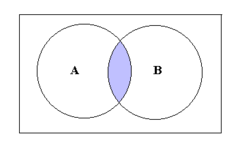 | 5 |
| 13688395971 | Union | Set of all elements that are contained in 2 or more sets |  | 6 |
| 13688395972 | Venn Diagram | A diagram that uses circles to display elements of different sets; overlapping circles show common elements |  | 7 |
| 13688395973 | Disjoint | Two non-overlapping sets; aka mutually exclusive events |  | 8 |
| 13688395974 | Mutually exclusive | Events that cannot happen at the same time | | 9 |
| 13688395975 | Probability of an event | Number of favorable outcomes divided by the total number of possible outcomes |  | 10 |
| 13688395976 | Law of large numbers | As the number of repetitions of a probability experiment increases, the empirical probability (the proportion with which a certain outcome is observed) gets closer to the theoretical probability of the outcome |  | 11 |
| 13688395977 | General Addition Rule | For any two events, A and B, the probability of A or B is the probability of A + probability of B - the joint probability of A and B |  | 12 |
| 13688395978 | General Multiplication Rule | For any two events, A and B, the probability of A and B is the probability of A times the probability of B occurring given that A has occurred |  | 13 |
| 13688395979 | Independent Events | Two or more events for which the outcome of one event does not affect the probability of the other; P(A) = P(A | B) |  | 14 |
| 13688395980 | Dependent Events | Two or more events in which the occurrence of one event affects the probability of the other events; do not always possess a cause-and-effect relationship |  | 15 |
| 13688395981 | Sampling without replacement | Removes each selected element from the population before the next selection is made to guarantee no element appears more than once in a single sample; probability of selecting any outcome changes after each selection |  | 16 |
| 13688395982 | Sampling with replacement | Once an element has been included in the sample, it is returned to the population and may be selected again; probability of selecting any outcome remains constant |  | 17 |
| 13688395983 | 10% sampling condition | When sampling without replacement, the change in the probability of an outcome can be regarded as insignificant and thus ignored when sampling less than 10% of a population |  | 18 |
| 13688395984 | Conditional Probability | Probability of an event occurring given that another event is known to have occurred; denoted as P(A | B) |  | 19 |
| 13688395985 | Bayes' Rule | Describes the probability of an event, based on prior knowledge of conditions that might be related to the event; for example, the prevalence of a disease in a population should be used when interpreting the results of an initial screening test |  | 20 |
| 13688395986 | Empirical probability | Probability that is based on simulation, experimentation or testing; the relative frequency of a successful outcome among those trials |  | 21 |
| 13688395987 | Simulation | Modeling a problem situation or event that would be too difficult or impractical to actually perform; often used to calculate empirical probabilities |  | 22 |
| 13688395988 | Table of Random Digits | Long string of digits (0 to 9) where the digits are independent of each other (knowing one digit does not give any knowledge to predicting another digit) and where any digit (0 to 9) has an equal chance of occurring as the next digit; used for probability simulations, random selection and random assignment |  | 23 |
Flashcards
Flashcards
Pages

Need Help?
We hope your visit has been a productive one. If you're having any problems, or would like to give some feedback, we'd love to hear from you.
For general help, questions, and suggestions, try our dedicated support forums.
If you need to contact the Course-Notes.Org web experience team, please use our contact form.
Need Notes?
While we strive to provide the most comprehensive notes for as many high school textbooks as possible, there are certainly going to be some that we miss. Drop us a note and let us know which textbooks you need. Be sure to include which edition of the textbook you are using! If we see enough demand, we'll do whatever we can to get those notes up on the site for you!
