

Flashcards
AP World History Ch. 32 Vocab Flashcards
Terms : Hide Images
| 13807256044 | proxy wars | During the Cold War, local or regional wars in which the superpowers armed, trained, and financed the combatants | 0 | |
| 13807256045 | Salvador Allende | Socialist politician elected president of Chile in 1970 and overthrown by the military in 1973 | 1 | |
| 13807256046 | Dirty War | War waged by the Argentine military (1976-1982) against leftist groups. Characterized by the use of illegal imprisonment, torture, and executions by the military | 2 | |
| 13807256047 | Sandinistas | Members of a leftist coalition that overthrew the Nicaraguan dictatorship of Anastasia Somoza in 1979 and attempted to install a socialist economy. The United States financed armed opposition by the Contras. They lost national elections in 1990 | 3 | |
| 13807256048 | Ayatollah Ruhollah Khomeini | Shi'ite philosopher and cleric who led the overthrow of the shah of Iran in 1979 and created an Islamic republic | 4 | |
| 13807256049 | neo-liberalism | A strategy for economic development that calls for free markets, balanced budgets, privatization, free trade, and minimal government intervention in the economy | 5 | |
| 13807256050 | Saddam Husain | President of Iraq since 1979. Waged war on Iran in 1980-1988. In 1990 he ordered an invasion of Kuwait but was defeated by United States and its allies in the Gulf War (1991) | 6 | |
| 13807256051 | keiretsu | Japanese business groups after the post-WWII dismantling of the zaibatsu. They are Alliances of corporations each often centered around a bank. They dominate the post-WWII Japanese economy | 7 | |
| 13807256052 | Asian Tigers | Collective name for South Korea, Taiwan, Hong Kong, and Singapore-nations that became economic powers in the 1970s and 1980s | 8 | |
| 13807256053 | newly industrialized economies | Rapidly growing, new industrial nations of the late twentieth century, including the Asian Tigers | 9 | |
| 13807256054 | Deng Xiaoping | Communist Party leader who forced Chinese economic reforms after the death of Mao Zedong | 10 | |
| 13807256055 | Tiananmen Square | Site in Beijing where Chinese students and workers gathered to demand greater political openness in 1989. The demonstration was crushed by Chinese military with great loss of life | 11 | |
| 13807256056 | Mikhail Gorbachev | Head of the Soviet Union from 1985 to 1991. His liberalization effort improved relations with the West, but he lost power after his reforms led to the collapse of Communist governments in eastern Europe | 12 | |
| 13807256057 | perestroika | a policy initiated by Mikhail Gorbachev that involved restructuring of the social and economic status quo in communist Russia towards a market based economy and society | 13 | |
| 13807256058 | Solidarity | Polish trade union created in 1980 to protest working conditions and political repression. It began the nationalist opposition to communist rule that led in 1989 to the fall of communism in eastern Europe | 14 | |
| 13807256059 | ethnic cleansing | Process in which more powerful ethnic group forcibly removes a less powerful one in order to create an ethnically homogeneous region | 15 | |
| 13807256060 | Thomas Malthus | an English economist who argued that increases in population would outgrow increases in the means of subsistence (1766-1834) | 16 | |
| 13807256061 | demographic transition | The process of change in a society's population from a condition of high crude birth and death rates and low rate of natural increase to a condition of low crude birth and death rates, low rate of natural increase, and a higher total population | 17 |
Flashcards
Flashcards
Flashcards
Flashcards
AP English Language Comp Flashcards
Terms : Hide Images
| 7224834741 | Rhetoric | study of effective speaking and writing and the art of persuasion | 0 | |
| 7224834742 | Kairos | the circumstances that open moments of opportunity | 1 | |
| 7224835088 | Decorum | requiring one's words and subject matter be aptly fit to each other, to the circumstances and occasion (kairos), the audience, and the speaker | 2 | |
| 7224835089 | Audience | oriented discourse is composed in light of those who will hear or read that discourse | 3 | |
| 7224835293 | Ethos | the persuasive appeal of one's character | 4 | |
| 7224835294 | Pathos | the appeal to emotion | 5 | |
| 7224835568 | Logos | the appeal to reason | 6 | |
| 7224835991 | Alliteration | repetition of the same letter or sound within nearby words most often repeated initial consonants | 7 | |
| 7224835992 | Anaphora | repetition of the same word or group of words at the beginning of successive clauses, sentences, or lines | 8 | |
| 7224836571 | Antithesis | juxtaposition of contrasting words or ideas | 9 | |
| 7224836572 | Ansyndecton | the omission of conjunctions between clauses, often resulting in a hurried rhythm or vehement effect | 10 | |
| 7224837098 | Epistrophe | ending a series of lines, phrases, clauses, or sentences with the same word or words | 11 | |
| 7224837099 | Hyperbole | rhetorical exaggeration | 12 | |
| 7224837386 | Irony | speaking in such a way as to imply the contrary of what one says, often for the purpose of derision, mockery, or jest | 13 | |
| 7224837517 | Litotes | deliberate understatement, especially when expressing a thought by denying its opposite | 14 | |
| 7224837850 | Metonymy | reference to something or someone by naming one of its attributes | 15 | |
| 7224838044 | Oxymoron | placing two ordinarily opposing terms adjacent to one another a compressed paradox | 16 | |
| 7224838045 | Paradox | a statement that is self-contradictory on the surface, yet seems to evoke a truth nonetheless | 17 | |
| 7224838183 | Parallelism | similarity of structure in a pair or series of related words, phrases, or clauses | 18 | |
| 7224838346 | Polysyndecton | employing many conjunctions between clauses, often slowing the tempo or rhythm | 19 | |
| 7224839404 | Rhetorical Question | defined as any question asked for a purpose other than to obtain the information the question asks | 20 | |
| 7224839405 | Sarcasm | use of mockery, verbal taunts, or bitter irony | 21 | |
| 7224839998 | Synecdoche | a whole is represented by naming one of its parts (genus named for species), or vice versa (species named for genus) | 22 | |
| 7224840202 | Zeugma | describing when one part of speech (most often the main verb, but sometimes a noun) governs two or more other parts of a sentence (often in a series) | 23 |
Flashcards
AP World History - Bentley-Unit One Flashcards
Important Terms from "Traditions and Encounters" chapters one-six
Terms : Hide Images
| 10589058193 | irrigation systems | Replacement or supplementation of rainfall with water from another source in order to grow crops |  | 0 |
| 10589058194 | ethnocentrism | Belief in the superiority of one's own ethnic group |  | 1 |
| 10589058195 | nomadic | (of groups of people) tending to travel and change settlements frequently |  | 2 |
| 10589058196 | cultural diffusion | The spread of cultural elements from one society to another |  | 3 |
| 10589058197 | Jericho | a village in Jordan near the north end of the Dead Sea |  | 4 |
| 10589058198 | Metallurgy | the science or art of metals. It includes the study of their properties and structure, the separation and refining of metals from their ores, the production of alloys, and the shaping and treatment of metals by heat and rolling. |  | 5 |
| 10589058199 | Gilgamesh | a legendary Sumerian king who was the hero of an epic collection of mythic stories |  | 6 |
| 10589058200 | Hammurabi | Amorite ruler of Babylon (r. 1792-1750 B.C.E.). He conquered many city-states in southern and northern Mesopotamia and is best known for a code of laws, inscribed on a black stone pillar, illustrating the principles to be used in legal cases. (p. 34) |  | 7 |
| 10589058201 | Nebuchadnezzar | A Babylonian king who conquered Jerusalem,and built the Hanging Gardens of Babylon |  | 8 |
| 10589058202 | Mesopotamia | first civilization located between the Tigris & Eurphrates Rivers in present day Iraq; term means "land between the rivers;" Sumerian culture |  | 9 |
| 10589058203 | fertile crescent | Found along the Tigris and Euphrates rivers, this was the first early river civilization. The cities in this area were governed by city-states and used irrigation to produced their corps. | | 10 |
| 10589058204 | ziggurat | a rectangular tiered temple or terraced mound erected by the ancient Assyrians and Babylonians |  | 11 |
| 10589058205 | Patriarchy | a form of social organization in which a male is the family head and title is traced through the male line |  | 12 |
| 10589058206 | Cuneiform | an ancient wedge-shaped script used in Mesopotamia and Persia | 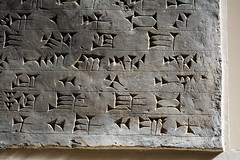 | 13 |
| 10589058207 | Palestine | an ancient country is southwestern Asia on the east coast of the Mediterranean |  | 14 |
| 10589058208 | Torah | (Judaism) the scroll of parchment on which the first five books of the Hebrew Scripture is written | 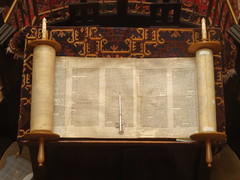 | 15 |
| 10589058209 | Bible | The book that contains the writings or scriptures that Christians recognize as the written word of God. |  | 16 |
| 10589058210 | Phoenicians | Sailing and trading people who had many colonies on the Mediterranean coast |  | 17 |
| 10589058211 | Sargon of Akkad | an ancient Mesopotamian ruler who reigned approximately 2334-2279 BC, and was one of the earliest of the world's great empire builders, conquering all of southern Mesopotamia as well as parts of Syria, Anatolia, and Elam (western Iran). He established the region's first Semitic dynasty and was considered the founder of the Mesopotamian military tradition. |  | 18 |
| 10589058212 | Hebrews | the ethnic group claiming descent from Abraham and Isaac (especially from Isaac's son Jacob) |  | 19 |
| 10589058213 | Abraham | Founder of Judaism who, according to the Bible, led his family from Ur to Canaan in obedience to God's command. |  | 20 |
| 10589058214 | Menes | king of upper egypt united the two kingdoms of upper and lower egypt |  | 21 |
| 10589058215 | Hatshepsut | Queen of Egypt (1473-1458 B.C.E.). Dispatched a naval expedition down the Red Sea to Punt (possibly Somalia), the faraway source of myrrh. There is evidence of opposition to a woman as ruler, and after her death her name was frequently expunged. (p.66) |  | 22 |
| 10589058216 | Nile River | the world's longest river (4180 miles) |  | 23 |
| 10589058217 | Nubia | an ancient region of northeastern Africa (southern Egypt and northern Sudan) on the Nile |  | 24 |
| 10589058218 | Pharaoh | a king of ancient Egypt, considered a god as well as a political and military leader |  | 25 |
| 10589058219 | Hieroglyphs | pictures, characters, or symbols standing for words, ideas, or sounds; ancient Egyptians used instead of an alphabet like ours |  | 26 |
| 10589058220 | Bantu | a family of languages widely spoken in the southern half of the African continent |  | 27 |
| 10589058221 | Indra | chief deity of the Aryans; depicted as a colossal, hard-drinking warrior God of thunder and strength |  | 28 |
| 10589058222 | Aryans | Indo-European speaking nomads who entered India from the Central Asian steppes between 1500 and 1000 BC and greatly affected Indian society. |  | 29 |
| 10589058223 | Dravidians | one of the main groups of people in India; probably descended from the Indus River culture that flourished at the dawn of Indian civilization over 4,000 yrs. ago |  | 30 |
| 10589058224 | Harappan | Civilization that developed along the Indus River (Present Day Pakistan), Controlled larges areas of land on both sides of the Indus River, Largest two settlements were _______ and Mohenjo Daro, Known for City planning, sewer systems, indoor plumbing, and fortresses around their cities |  | 31 |
| 10589058225 | Mohenjo-daro | Largest city of the Indus Valley civilization. It was centrally located in the extensive floodplain of the Indus River. Little is known about the political institutions of Indus Valley communities, but the large-scale implies central planning. Not Harappa |  | 32 |
| 10589058226 | Sanskrit | (Hinduism) an ancient language of India (the language of the Vedas and of Hinduism) |  | 33 |
| 10589058227 | Vedas | sacred texts in the Hindu religion, they are a set of four collections of hymns and religious ceremonies transmitted by memory through the centuries by Aryan priests |  | 34 |
| 10589058228 | Ganges River | Located in India, this river is considered sacred to Hindus and is used for spiritual cleansing, funeral rites, and other Hindu rituals. |  | 35 |
| 10589058229 | Caste | a social class separated from others by distinctions of hereditary rank or profession or wealth |  | 36 |
| 10589058230 | Brahmins | Priests, at the top of the caste system which the Aryans established |  | 37 |
| 10589058231 | Jati | sub castes; were groups of people within each caste that worked together for one economic function |  | 38 |
| 10589058232 | Upanishads | A group of writings sacred in Hinduism concerning the relations of humans, God, and the universe. |  | 39 |
| 10589058233 | karma | (Hinduism and Buddhism) the effects of a person's actions that determine his destiny in his next incarnation |  | 40 |
| 10589058234 | Dharma | In Hinduism, the duties and obligations of each caste |  | 41 |
| 10589058235 | Xia dynasty | This was the earliest known dynasty. There is no written evidence of this early time period, but artifacts have been found. The people of this time were farmers and made pottery. |  | 42 |
| 10589058236 | Huang He | a major river of Asia in northern China |  | 43 |
| 10589058237 | Shang dynasty | Second Chinese dynasty (about 1750-1122 B.C.) which was mostly a farming society ruled by an aristocracy mostly concerned with war. They're best remembered for their art of bronze casting. |  | 44 |
| 10589058238 | Mandate of Heaven | People believed that heaven gave them the authority to rule. They also believed that heaven would take it away |  | 45 |
| 10589058239 | Zhou dynasty | the imperial dynasty of China from 1122 to 221 BC; notable for the rise of Confucianism and Taoism |  | 46 |
| 10589058240 | Period of the Warring State | Civil War broke out in during the Zhou Dynasty, beginning an age known in Chinese historical records as the "____________ of the ____________________ _____________________." |  | 47 |
| 10589058241 | Olmecs | (1400 B.C.E. to 500 B.C.E.) earliest known Mexican civilization,lived in rainforests along the Gulf of Mexico, developed calendar and constructed public buildings and temples, carried on trade with other groups. |  | 48 |
| 10589058242 | Maya | a member of an American Indian people of Yucatan and Belize and Guatemala who had a culture (which reached its peak between AD 300 and 900) characterized by outstanding architecture and pottery and astronomy | 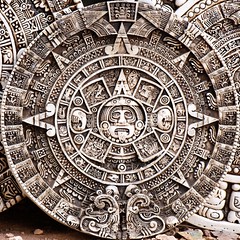 | 49 |
| 10589058243 | Tikal | the most important Maya political center between the 4th-9th centuries. It was a city that had temples, pyramids, palaces, and public buildings. |  | 50 |
| 10589058244 | Chichen Itza | Originally a Mayan city; conquered by Toltecs circa 1000 and ruled by Toltec dynasties; architecture featured pyramid of Feathered Serpent (Quetzacoatl). | 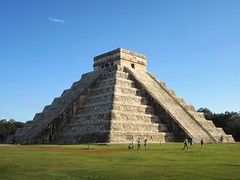 | 51 |
| 10589058245 | Popol Vuh | the most famous of the Maya books that recounts the Highland Maya's version of the story of creation. |  | 52 |
| 10589058246 | Teotihuacan | first major metropolis in Mesoamerica, collapsed around 800 CE. It is most remembered for the gigantic "pyramid of the sun". | 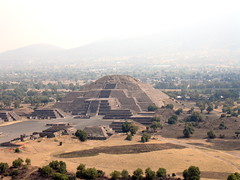 | 53 |
| 10589058247 | Akhenaten | early ruler of Egypt who rejected the old gods and replaced them with Aten, the sun god. | 54 | |
| 10589058248 | Andean | Surrounding farm villages, woven textiles, near northern highlands of Peru, Jaguar god | 55 | |
| 10589058249 | Austronesian | most native languages of oceania | 56 | |
| 10589058250 | book of songs | a collection of 305 of the earliest recorded poems in Chinese history | 57 | |
| 10589058251 | bantu | The people who spread throughout Africa spreading agriculture, language, and iron. | 58 | |
| 10589058252 | Catal Huyuk | one of the largest neolithic villages ever discovered | 59 | |
| 10589058253 | Chavin | Andean town that was the center of a large Peruvian religious movement | 60 | |
| 10589058254 | chiefdom | ranked in terms of prestige, precursor to States, agriculture / peasants | 61 | |
| 10589058255 | decentralized | the process of dispersing decision-making governance closer to the people and/or citizen | 62 | |
| 10589058256 | dynastic cycle | the historical pattern of the rise, decline, and replacement of dynasties | 63 | |
| 10589058257 | egalitarian | promoting equal rights for all people | 64 | |
| 10589058258 | Hittites | an Indo-European people who settled in Anatolia around 2000 B.C. | 65 | |
| 10589058259 | Hyksos | a group of nomadic invaders from southwest Asia who ruled Egypt from 1640 to 1570 B.C. | 66 | |
| 10589058260 | Indo-European | overarching group of languages including english french latin and greek | 67 | |
| 10589058261 | jade | Shiny stone that comes in many shades of green | 68 | |
| 10589058262 | lex talionis | Eye for an eye | 69 | |
| 10589058263 | loess | A wind-formed deposit made of fine particles of clay and silt | 70 | |
| 10589058264 | matrilineal | of or based on kinship with the mother or the female line | 71 | |
| 10589058265 | Phoenician | Middle Eastern people who traded around the Mediterranean Sea for hundreds of years | 72 | |
| 10589058266 | Sargon | 2340 BC leader of the Akkadians | 73 | |
| 10589058267 | Shang | 1700 to 1027 B.C. The first family of Chinese rulers to leave written records. | 74 | |
| 10589058268 | upanishads | Indian mystical and philosophical works, written between 800 and 400 B.C.E. | 75 | |
| 10589058269 | Venus figurine | exaggerate female characteristics: breasts, hips, buttock, and thighs are very large. | 76 | |
| 10589058270 | zhou | the longest lasting Chinese dynasty | 77 | |
| 10589058271 | oceania | the region of the world centered on the islands of the tropical Pacific Ocean | 78 | |
| 10589058272 | vedas | Ancient Sanskrit writings that are the earliest sacred texts of Hinduism. | 79 | |
| 10589058273 | veneration of ancestors | spirits of ancestors could bring good or bad fortune to living members of the family. | 80 |
Pages

Need Help?
We hope your visit has been a productive one. If you're having any problems, or would like to give some feedback, we'd love to hear from you.
For general help, questions, and suggestions, try our dedicated support forums.
If you need to contact the Course-Notes.Org web experience team, please use our contact form.
Need Notes?
While we strive to provide the most comprehensive notes for as many high school textbooks as possible, there are certainly going to be some that we miss. Drop us a note and let us know which textbooks you need. Be sure to include which edition of the textbook you are using! If we see enough demand, we'll do whatever we can to get those notes up on the site for you!
