AP Notes, Outlines, Study Guides, Vocabulary, Practice Exams and more!

Apes ch 21 Flashcards

Terms : Hide Images
7362965125sustainabilityusing less than nature replenishes so there is always adequate supply0
7362973410water is needed for?sanitation, cooking, growing food, producing energy1
7362984595human water usehydration // kills bacteria2
7362989930cooking water usekills bacteria (e coli & salmonella)3
7362994792producing energy water useelectricity production, fossil fuel extraction, tourism4
7363002352ecosystem water usemaintain habitats and ecosystem services // plants provide oxygen [environmental]5
7363009101photosynthesis6C02 + 6h20 -> C6H12O6 + 6O26
7363017440WatershedThe face of the mountain which directs water into rivers, lakes, etc ( catchment area)7
7363020740Surface Run offfeed rivers, lakes, reservoirs and returns the water to the ocean8
7363025255transpiration:water evaporates through plants9
7363027701infiltration:water coming in (shallow water) penetrating soil10
7363030281percolation:deep water [ 1 mile] to fill up aquifers, way deeper than soil level11
7363036466water in the air10 days12
7363038390water in reservoirs10 years13
7363040465water in the ground/ glaciers10,000 years14
7363048920when does run off occuroccurs when the precipitation cannot soak into the ground15
7363052920water tabletop of groundwater16
7363061944perennialpermanent stream (year round)17
7363065786effluentflows out of ground (exit)18
7363074546ephemeralon & off (seasonal)19
7363078647influent:flows into the ground (in)20
7363084045aquifer:an underground area that stores groundwater21
73630870362 types of aquifers-confined (trapped) water between 2 impervious layers -unconfined (untrapped) only 1 impervious layer22
7363093296artesian aquiferwater will squirt water out bc more pressure from the rock to squeeze it out23
7363097977vadose zonesoil24
7363098934cone of depressionwater table gets depressed around the well25
7363110066overdrafttoo much water taken out26
7363113252pollutantsoil, brake dust, sediment, plastic, cigarette butts and nutrients (fertilizer)27
73631177982 consequences of paved surfacesmore pollutants & not recharging aquifers28
7363121884urbanization effects-prevents recharge -creates flood if water isn't able to soak into the ground29
7363126868eutrophicationnutrients (fertilizer & pet waste) in water consequence = less oxygen30
7363132766reduce storm runoff?capture water: Reduce impervious surfaces at home and increase the vegetated land cover of your property.31
7391253958Subsidence-compacts the soil making it less productive since air and water cannot flow easily through it. -causes tilting and cracking in city buildings,32
7497650931most water we use is from what?surface water (snow melt)33
7497659865most water we have goes to industryindustrialized purposes34
7497665992daily water per capita100 gallons35
7497669424largest water use1/2 of water is OUTDOOR use36
7497674713largest indoor water usetoilet37
7497682261human benefit for keeping water in ecosystem:good @ cycling nutrients (nutrients needed to grow plants) , human food (rice, cranberrries) grows in wetlands, use bacteria in wetlands to degrade toxins in water38
7497691055biggest user of freshwateraggriculture39
7497695781Industrial uses includeooling systems, paper milling, mining (including hydrofracking) and processing of goods. Water sold for domestic uses include household and landscape needs.40
7497707094off stream useplants, animals (including humans), agriculture and industry and is not returned to its source41
7497718447Freshwater shortages can be due to-overdrawn -rivers changing course -pollution -compettiton42
7497728574anthropogeniccomes from man, begins with humans43
7497737066water diversion :canals, ditches, aqueducts are used to transport water but negatively affects ecosystems (flood plains around them)44
7497747628Aral Seainland freshwater lake (too much water was consumed for agriculture) (rice, wheat, cotton)45
74977605676 Consequences of diversion-salinity of the remaining water increases as water evaporates but salt remains -Water temperature increases - fish kills -Air pollution -Damage to local economy due to loss of fishing and port services -local climate change46
7497778865colorado riverremoved too much water for irrigation & urban use (severe reduction in the volume of water and stream flow)47
7497788059Consequences of diversion-Reduced habitat -Less clean drinking water supply -threatens outdoor recreation -Natural cycles of flooding and drought are disrupted, reducing soil fertility48
7554849164how is water used in the body**blood: helps transport nutrients between the organs and throughout the body, it also allows for the digestion of food, and the communication between cells49
7554852258domestic conversation strategy-price water differently (based on usage)50
7554855402Domestic conservation strategy (outdoors)-Replacing lawns with more drought tolerant plants (called xeriscaping - gray water -rain barrels -mulch and installing drip irrigation51
7554860541Domestic conservation strategy: indoorslow flow toilets, shower heads and front loading washers52
7554862034Urban conservation strategy-use waste water -reuse -captured by bioswales (ditch planted with vegetation- a rain garden) or permeable pavement. -fix aging infrastructure -RESTORING WETLANDS53
7554869073Wetland Characteristics1. areas with standing water on the ground for at least part of the year 2. particular type of plants such as mosses, sedges, cattails, lily pads, pond weeds, bulrushes 3. wetland soils are full of water with poor drainage so very little oxygen present (anaerobic soil)54
7554871572Wetland BenefitsProvide habitats for rich diversity of plants and animals Help maintain water quality Stores water and recharges aquifer Reduces frequency and severity of flooding downstream Good for recreation, educational and tourist activities Provides food, medicine and building material55
7554874989Agricultural water management and conservation strategy-Use drip irrigation -Monitor soil moisture -Irrigate in the early morning or evening -Mulching -Growing less water intensive -Growing several crops on each plot of land (polyculture) -irrigate with treated wastewater i56
7554883848Industrial conservation strategyreuse57
7554886065deliver waterdams, wetlands modifed, rivers channelized58
7554890307examples of wetlandsmarshes, swamps, bogs, prarie potholes, vernal pools59
7554893003wetland common featurewet at least part of the year & have a particular type of vegetation60
75548975033 commmon feature of wetlandshydrology (wetness) , type of vegetation, type of soil61
7554902703vertical accretionbuild up62
7554904712how are wetlands submergedsubsidence (sinking) // slow rise in sea // deprived o sediments, water & nutrients63
7554924297Environmental policy act of 1969must create additional wetlamds64
75549268644 advantages of damming a river-recreational activties -generate electricity -provides flood control -more stable water supply65
75549302974 disadvantages of damming a river-loss of land, agricultural & biological resoucres -potential flood hazard -fragmentation of ecosystems -downstream changes in hydrology66
7611300010what is a leveepresents water from going places undesirable67
7611302502what is a dambarrier that runs across a river // it stores water // splits downstream & upstream68
7611308909what is a canal & aqueductthing used to transport the water far distances69
7611334216channelizationnarrowing and straightening the river70
7611362479bad effects of levees-increase the speed of the river, causing more erosion -prevent sediments from leaving the rive -force flooding further downstream - loss of wetlands since the water is blocked off71
7611374329good effects of levees-prevent flooding -allow for safe residential and commercial use of land next to rivers.72
7611385447levee breaks consequences:social: will cause mold in the houses leads to respiratory disease // depression from loss of life economic: many damages to the city means much reparations ($) environmental: animal & plants will die = lower biodiversity73
7611408098World's largest damchina74
7611413223dam break consequences-displaces people -Habitats become damaged due to upstream flooding -interrupting fish migration and spawning -Increase sediment load in the river upstream, -Blocking sediments downstream,75
7760519906Dams affect water quantity and quality-upstream has larger surface area so more evaporation -Increase in nutrients from flooded farms = fish kills -downstream has reduced flow so heats up faster (becomes warmer). Warm water holds less dissolved oxygen, leading to fish kills.76
7760536853how can fishes reach their mates-fish ladders -fish cannons77
7760543560NEW water from dams and aqueducts must be cleaned through-Coagulation (and flocculation) uses ALUM and LIME to attract suspended particles in the water. -Sedimentation allows the water to sit around for hours, settling out the larger particles -Filtration is the process of removing solids by passing it through a membrane or filter -Disinfection is often done with chlorine78
7760554810managing existing water supplies-RECLAMATION-Treating and reusing wastewater (toilet to tap or purple pipe system) -CONSERVATION i79
77605652201 st stage of wastewater treatment (primary treatment)-Screening, filtration and sedimentation to catch large solid particles like grit and soil, plus flotation to remove oils and grease -good at removing nutrients -by screening you can divide big & small particles (in water) - Wastes that have different densities than water are physically removed80
7760570379wastewatersewage81
7760616283Secondary Treatment-Biological treatment using aerobic bacteria to consume dissolved organic waste -Disinfection using chlorine, ozone or UV light to kill any pathogens still in the water -BETTER at removing nutrients -feeding pollutants to bacteria (eats poop)82
7760638006harmful nutrients to environmentnitrates (NO-3) phospates (PO3-4)83
7760640750BOD (biological oxygen demand)organic waste84
7760655273Disinfect:removing pathogens / killing bacteria85
7760661819Turbidity:cloudy86
7768164200disadvantages of wastewater treatment-produces solid waste (sludge) .. takes up space -does not remove chemicals (metals, pesticides, pharmaceuticals) that interfere w/ fish -produces methane (leads to climate change)87
7768177709Mitigating the disadvantages-using a digester to anaerobically break down some of the organic solids, then collecting the methane -can be used as biofuel. Waste can provide a resource! -treated wastewater not suitable for drinking can still be used for cooling or irrigation88
7768184139Tertiary treatment-turns wastewater to DRINKING water -uses reverse osmosis89
7768195780reverse osmosis-uses pressure to force wastewater through a set of plastic membranes with very small pores -The membranes remove hormones, salts, pharmaceuticals, pesticides, heavy metals and pathogens from the water,90
7768200482potabledrinkable91
7768203181final water treatment step-ALWAYS disinfection -Chlorine, ozone and UV light are commonly used92
7768207018Desalination:remove salt from drinkable water93
7768212411safe Drinking Water act-Set and enforce minimum standards for purity of tap (drinking) water -Protect sources of drinking water94
7768212412Clean Water Act-turn water to their fishable and swimmable conditions -Prevents pollution in water -sets standards for wastewater returning to bodies of waters95
7768223220Dissolved Oxygen (DO)-Large numbers of aerobic bacteria lower DO -Concentration of DO is also affected by temperature **higher temp = less dissolved oxygen96
7768235164cellular respiration is needed by aquatic animalsall living things (plants, animals, people) need oxygen for cellular respiration97
7768236549diurnaldaily98
7768242901cellular respiration equation6O2 + C6H12O6 --> 6CO2 + 6H2O + energu (ATP)99

World History Pre - AP | Chapter 22, Sec. 1 Flashcards

Terms : Hide Images
13734768165Geocentric Theory>Earth-centered view of the universe. >Came from Aristotle and was expanded on by Ptolemy.0
13734780570Scientific RevolutionAs old assumptions were replaced with new theories, it launched a change in European thought, a new way of thinking about the natural world that was based upon careful observation and a willingness to question accepted beliefs.1
13734814106Nicolaus CopernicusPolish astronomer who proposed a heliocentric model of the universe after studying for 25 years, he did not publish his findings until 1543. He received a copy of his book, On the Revolutions of the Heavenly Bodies, on his deathbed.2
13734823443Heliocentric TheoryThe idea that the earth and the other planets revolve around the sun, did not completely explain why the planets orbited the way they did.3
13734851045Tycho BraheDanish astronomer who collected data to prove that Copernicus was correct.4
13734858682Johannes KeplerBrahe's assistant, a brilliant mathematician who continued his work, concluded that certain mathematical laws govern planetary motion. One of these laws showed that the planets revolve around the sun in elliptical orbits.5
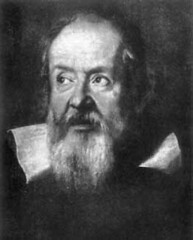
13734879854Galileo GalileiItalian scientist, built his own telescope and used it to study the heavens in 1609. He announced that Jupiter had four moons and that the sun had dark spots, the earth's moon had a rough, uneven surface (which shattered Aristotle's theory that the moon and stars were made of a pure, perfect substance). Lived under house arrest and died in 1642 at his villa near Florence.6
13734917948Starry Messenger (1610)Written by Galileo, contains numerous observations made through his telescope. And contains results of early observations.7
13734926778Dialogue Concerning the Two Chief World Systems (1632)Written by Galileo, presented the ideas of both Copernicus and Ptolemy, but it clearly showed that he supported the Copernican theory.8
13734940479Scientific MethodA logical procedure for gathering and testing ideas. It begins with a problem or question arising from an observation, next form a hypothesis, the hypothesis is then tested in an experiment or on the basis of data. In the final step, analyze and interpret the data to reach a new conclusion. It either confirms or disproves the hypothesis.9
13734959200Francis BaconAn English statesman and writer, believed that by better understanding the world, scientists would generate practical knowledge that would improve people's lives. He urged scientists to experiment and then draw conclusions. This approach is called empiricism, or the experimental method.10
13734971941René DescartesA mathematician, developed analytical geometry, which linked algebra and geometry, he relied on mathematics and logic to gain knowledge. Believed that everything should be doubted until proved by reason. He wrote, "I think, therefore I am."11
13734994822Isaac NewtonEnglish scientist, Newton studied mathematics and physics at Cambridge University, he discovered that the same force ruled motion of the planets and all matter on earth and in space. Newton believed that God was the creator of this orderly universe, the clockmaker who had set everything in motion.12
13735022538Law of Universal GravitationEvery object in the universe attracts every other object, the degree of attraction depends on the mass of the objects and the distance between them.13
13735032984The Mathematical Principles of Natural Philosophy (1687)Written by Isaac Newton, he described the universe like a giant clock, its parts all worked together perfectly in ways that could be expressed mathematically.14
13735049305Zacharias JanssenDutch maker of eyeglasses, invented the first microscope in 1590.15
13735064264Anton van LeeuwenhoekDutch drapery merchant and amateur scientist, used a microscope to observe bacteria swimming in tooth scrapings and red blood cells for the first time in the 1670s,16
13735073496Evangelista TorricelliOne of Galileo's students, developed the first mercury barometer, a tool for measuring atmospheric pressure and predicting weather in 1643.17
13735074799Gabriel FahrenheitGerman physicist, made the first thermometer to use mercury in glass in 1714, his thermometer showed water freezing at 32°.18
13735080687Anders CelsiusSwedish astronomer, created another scale for the mercury thermometer in 1742. His scale showed freezing at 0°.19
13735114764GalenAncient Greek physician, European doctors had accepted his writings as fact, however, he had never dissected the body of a human being, only pigs and other animals.20
13735131160Andreas VesaliusFlemish physician, proved Galen's assumptions wrong, he dissected human corpses and published his observations.21
13735140461On the Structure of the Human Body (1543)Written by Andreas Vesalius, filled with detailed drawings of human organs, bones, and muscle.22
13735149468Edward JennerBritish physician, Edward Jenner introduced a vaccine to prevent smallpox in the late 1700s. He discovered that inoculation with germs from a cattle disease called cowpox gave permanent protection from smallpox for humans, used it to produce the world's first vaccination.23
13735168155Robert BoylePioneered the use of the scientific method in chemistry, considered the "Founder of Modern Chemistry." Boyle's most famous contribution to chemistry is Boyle's law. This law explains how the volume, temperature, and pressure of gas affect each other.24
13735176617The Sceptical Chymist (1661)Written by Robert Boyle, challenged Aristotle's idea that the physical world consisted of four elements—earth, air, fire, and water, he instead proposed that matter was made up of smaller primary particles that joined together in different ways.25

AP-World History Flashcards

Terms : Hide Images
13494967313Opium Wars (1839-860)The wars between China and Britain. Britain faced an imbalance of trade with China over silk and tea, so Britain sold opium to the Chinese. The Chinese foreign minister Lin Xezu closed the ports. This led to Britain attacking the Chinese fleet for access. The result was the Treaty of Nanking, in which Britain got access to Chinese ports0
13494995885NeocolonialismAlso called economic imperialism, this is the domination of newly independent countries by foreign business interests that causes colonial-style economies to continue, which often caused monoculture (a country only producing one main export like sugar, oil, etc).1
13494995886LeninFounded the Communist Party in Russia and set up the world's first Communist Party dictatorship. He led the October Revolution of 1917, in which the Communists seized power in Russia. He then ruled the country until his death in 1924.2
13495002903CommunismA theory or system of social organization based on the holding of all property in common, actual ownership being ascribed to the community as a whole or to the state.3
13495007783Five Year PlanStalin's economic policy to rebuild the Soviet economy after WWI. tried to improve heavy industry and improve farm output, but resulted in famine4
13495007784GulagRussian prison camp for political prisoners5
13495012390StalinRussian leader who succeeded Lenin as head of the Communist Party and created a totalitarian state by purging all opposition (1879-1953)6
13495015463Mao Zedong(1893-1976) Leader of the Communist Party in China that overthrew Jiang Jieshi and the Nationalists. Established China as the People's Republic of China and ruled from 1949 until 1976.7
13495021490Cultural RevolutionCampaign in China ordered by Mao Zedong to purge the Communist Party of his opponents and instill revolutionary values in the younger generation.8
13495021491Great Depressionthe economic crisis beginning with the stock market crash in 1929 and continuing through the 1930s9
13495024566Fascisima political movement that promotes an extreme form of nationalism, a denial of individual rights, and a dictorial one-party rule10
13495029798New DealA series of reforms enacted by the Franklin Roosevelt administration between 1933 and 1942 with the goal of ending the Great Depression.11
13495029799HitlerGerman Nazi dictator during World War II (1889-1945), Nazi leader and founder; had over 6 million Jews assassinated during the Holocaust12
13495036197MussoliniItalian fascist dictator (1883-1945)13
13495042101HirohitoEmperor of Japan during WWII14
13495048313DehumanizationThe deprivation of human qualities, rights, or understanding.15
13495048314Atomic Bomba nuclear weapon in which enormous energy is released by nuclear fission (splitting the nuclei of a heavy element like uranium 235 or plutonium 239)16
13495051712Genoicidethe deliberate killing of a large group of people, especially those of a particular ethnic group or nation.17
13495061514Partition of IndiaThis led to the movement of millions of people in South Asia after India got its independence from Britian.18
13495061515GhandiHe became a leader in India against British rule. He had a movement of passive resistance against Britain. He lived a spiritual life. He started boycotts and encouraged Indians to refuse to obey unjust laws. He as also involved in the Indian National Congress19
13495075710NehruIndian statesman. He succeeded Mohandas K. Gandhi as leader of the Indian National Congress. He negotiated the end of British colonial rule in India and became India's first prime minister (1947-1964).20
13495078671JinnahIndian statesman who was the founder of Pakistan as a Muslim state (1876-1948). He was also the Leader of the Muslim League21
13495092436Muslim Leaguean organization formed in 1906 to protect the interests of India's Muslims, which later proposed that India be divided into separate Muslim and Hindu nations22
13495097499KenyaAn East African Country23
13495109456GhanaFirst known kingdom in sub-Saharan West Africa between the sixth and thirteenth centuries C.E. Also the modern West African country once known as the Gold Coast. gold and salt trade.24
13495122348NkrumahGhana's leader who wanted to form a socialist confederation of all African nations; ousted by a military revolt. (Ghanas first president)25
13495140881KenyattaLeader of Kenyan nationalist group Became the leader of Kenya26
13495147891postcolonial statesNew Nations after Decolonization27
13495163695Cold WarA conflict that was between the US and the Soviet Union. The nations never directly confronted each other on the battlefield but deadly threats went on for years.28
13495166714Soviet UnionA Communist nation, consisting of Russia and 14 other states, that existed from 1922 to 1991.29
13495174535Marshal Plan (1948)$12 billion to rebuild western Europe and help defence Marsh=Rebuild West30
13495174536NATO (North Atlantic Treaty Organization)A 1949 defense alliance initiated by the US, Canada, and 10 Western European nations31
13495185067Warsaw Pact IdeologyAn alliance between the Soviet Union and other Eastern European nations. This was in response to the NATO32
13495196865Ho Chi MinhCommunist leader of North Vietnam33
13495202786Vietnam WarA prolonged war (1954-1975) between the communist armies of North Vietnam who were supported by the Chinese and the non-communist armies of South Vietnam who were supported by the United States.34
13495211426Domino EffectThe fear that if Vietnam fell to communism, so would the surrounding countries.35
13495220743Proxy WarA war instigated by a major power that does not itself participate- A mini war36
13495230487dicatorshipa government leader who has almost total power over the entire country37
13495234680Nassarleader of Egypt during the Suez Crisis38
13495259326Non-Aligned MovementThe group of nations that didn't side with either the US or the USSR during the Cold War.39
13495263287relgious fundamentalismreligious movement whose objectives are to return to the foundations of the faith and to influence state policy40
13495275652Iranian Revolution(1978-1979) a revolution against the shah of Iran led by the Ayatollah Ruhollah Khomeini, which resulted in Iran becoming an Islamic republic with Khomeini as its leader41
13495283216AfghanistanIn South Asia and a Islamic Republic42
13495303620free marketAn economic system in which prices and wages are determined by unrestricted competition between businesses, without government regulation or fear of monopolies.43
13495308093Transnational CorporationA company that conducts research, operates factories, and sells products in many countries, not just where its headquarters or shareholders are located.44
13495312069World Trade OrganizationAdministers the rules governing trade between its 144 members. Helps producers, importers, and exporters conduct their business and ensure that trade flows smoothly.45
13495315379United NationsAn international organization formed after WWII to promote international peace, security, and cooperation.46
13495320795Tiananmen SquareSite in Beijing where Chinese students and workers gathered to demand greater political openness in 1989. The demonstration was crushed by Chinese military with great loss of life.47
13495329212Deng XiaopingCommunist Party leader who forced Chinese economic reforms after the death of Mao Zedong.48
13495329354NAFTANorth American Free Trade Agreement49
13495332906ASEANAssociation of Southeast Asian Nations50
13495339752fiber-optic cableA cable that transmits data at close to the speed of light along glass or plastic fibers.51
13495347330Containerizationgrouping individual items into an economical shipping quantity and sealing them in protective containers for transit to the final destination52
13495355281Vacinescontain damaged/dead bacteria, used to teach immune system to recognize bacteria so later infection system to recognize bacteria so later infection will trigger immediate immune system.53
13495358955antibiotica medicine used to save lives because it destroys harmful bacteria and cures infections54
13495366149Negritude Movementa movement to celebrate African culture, heritage, and values55
13495366150ApartheidLaws (no longer in effect) in South Africa that physically separated different races into different geographic areas.56
13495374617multinational corporationAn organization that manufactures and markets products in many different countries and has multinational stock ownership and multinational management57
13495378161NeoliberalismA strategy for economic development that calls for free markets, balanced budgets, privatization, free trade, and minimal government intervention in the economy.58
13495384563Ottoman EmpireA Muslim empire based in Turkey that lasted from the 1300's to 1922.59
13495384564Gunpowder EmpiresMuslim empires of the Ottomans, Safavids, and the Mughals that employed cannonry and gunpowder to advance their military causes.60
13495387885Savafid EmpireIran Abbas the Great: leads golden age, absolute monarch Shiite Muslim61
13495397446Castessocial groups into which people are born and cannot change62
13495397447MonopolyA market in which there are many buyers but only one seller.63
13495402574Ming DynastySucceeded Mongol Yuan dynasty in China in 1368; lasted until 1644; initially mounted huge trade expeditions to southern Asia and elsewhere, but later concentrated efforts on internal development within China.64
13495408635Qing dynasty empireRuling dynasty of China from 1644 to 1912; the Qing rulers were originally from Manchuria, which had conquered China.65
13495408637Forbidden CityThe walled section of Beijing where emperors lived between 1121 and 1924. A portion is now a residence for leaders of the People's Republic of China.66
13495417373Tokugawa ShogunateJapanese ruling dynasty that strove to isolate it from foreign influences67
13495423451MercantilismAn economic policy under which nations sought to increase their wealth and power by obtaining large amounts of gold and silver and by selling more goods than they bought68
13495427347CapitalismAn economic system based on private ownership of capital69
13495433532DeismA popular Enlightenment era belief that there is a God, but that God isn't involved in people's lives or in revealing truths to prophets.70
13495437614Consumerisma movement advocating greater protection of the interests of consumers71
13495442280HiroshimaCity in Japan, the first to be destroyed by an atomic bomb, on August 6, 1945. The bombing hastened the end of World War II.72
13495462319Taj Mahalbeautiful mausoleum at Agra built by the Mogul emperor Shah Jahan (completed in 1649) in memory of his favorite wife/ Combined Islam and Hindu Ideals73
13495483279Vizera high official in some Muslim countries, especially in Turkey under Ottoman rule.74
13495494531NaziNational Socialist German Workers Party that were against the Jews75
13495511037Spanish-American WarIn 1898, a conflict between the United States and Spain, in which the U.S. supported the Cubans' fight for independence76
13495514616Spanish Civil WarIn 1936 a rebellion erupted in Spain after a coalition of Republicans, Socialists, and Communists was elected. General Francisco Franco led the rebellion. The revolt quickly became a civil war. The Soviet Union provided arms and advisers to the government forces while Germany and Italy sent tanks, airplanes, and soldiers to help Franco.77
13495527918InflationA general and progressive increase in prices78
13740344438TotalitarianA form of government in which the ruler is an absolute dictator (not restricted by a constitution or laws or opposition etc.)79
13740354743Treaty of VersaillesTreaty particularly known for its harsh reparations towards the Germans after World War I.80
13740356849HolocaustA methodical plan orchestrated by Hitler to ensure German supremacy. It called for the elimination of Jews, non-conformists, homosexuals, non-Aryans, and mentally and physically disabled.81
13740360056Kristallnacht(Night of the Broken Glass) November 9, 1938, when mobs throughout Germany destroyed Jewish property and terrorized Jews.82
13740362060Weimar RepublicGerman republic founded after the WWI and the downfall of the German Empire's monarchy.83
13740367964GenocideDeliberate extermination of a racial or cultural group84
13740368553Proxy WarA war instigated by a major power that does not itself participate85
13740370045Paris Peace ConferenceThe great rulers and countries excluding Germany and Russia met in Versailles to negotiate the repercussions of the war, such leaders included Loyd George (Britain), Woodrow Wilson (America), Cleamancu (France) and Italy. The treaty of Versailles was made but not agreed to be signed and the conference proved unsuccessful.86
13740371328Franklin D. Roosevelt32nd US President - He began New Deal programs to help the nation out of the Great Depression, and he was the nation's leader during most of WWII87
13740370662Woodrow Wilson28th president of the United States, known for World War I leadership, created Federal Reserve, Federal Trade Commission, Clayton Antitrust Act, progressive income tax, lower tariffs, women's suffrage (reluctantly), Treaty of Versailles, sought 14 points post-war plan, League of Nations (but failed to win U.S. ratification), won Nobel Peace Prize88
13740377227Bay of Pigs InvasionA failed invasion of Cuba in 1961 when a force of 1,200 Cuban exiles, backed by the United States, landed at the Bay of Pigs.89

AP World History Chapter 28 Multiple Choice Flashcards

Terms : Hide Images
9042799440In what year were Russian serfs emancipated? a. 1861 b. 1914 c. 1868 d. 1831 e. 1854a.0
9042799441What war in the mid-19th century demonstrated Russia's widening gap with the West? a. Crimean War b. Russo-Turkish War c. Napoleon's invasion of Russia d. Sepoy rebellion e. Russo-Japanese Wara.1
9042799442What was the general goal of the Russian intelligentsia? a. Restriction of civil liberties, honor and deference to the emperor, retention of Russian culture b. Political freedom, social reform, and retention of Russian culture c. Political freedom, retention of the social hierarchy, and increased Westernization d. Globally competitive economy e. Radical Westernization as part of a program of increased industrializationb.2
9042799443All of the following were reforms introduced in Russia in the 1860s and 1870s EXCEPT a. the issuance of new law codes that cut back traditional punishments. b. the creation of local political councils, the zemstvoes. c. reorganization of the military. d. the creation of the Duma, a national parliament. e. technical legal freedom for the peasants.d.3
9042799444Peasants who responded to the reforms of 1905 by engaging in entrepreneurial activity including increasing production and buying up land were called a. Marxists. b. kulaks. c. zemstvoes. d. soviets. e. anarchists.b.4
9042799445Which of the following statements about Russian Marxism is most accurate? a. Marxist doctrines were most applicable to an agrarian economy, not an industrial society. b. Marxist insistence on careful revolutionary organization and a focus on the working class were rapidly assimilated by anarchists and peasant groups. c. Marxist doctrines were not imported from the West, but originated among the Russian intelligentsia. d. Lenin was dedicated to the mass electioneering typical of Western socialist parties. e. Lenin introduced important innovations in Marxist theory, including the idea that a proletarian revolution could take place without going through a middle-class phase.e.5
9042799446What minister was responsible for enacting reforms for the peasantry following the revolution of 1905? a. Prince Gortchakov b. Alexi Romanov c. Grigori Rasputin d. Count Witte e. Piotyr Stolypine.6
9042799447Which of the following statements concerning the emancipation of the serfs in Russia is most accurate? a. The emancipation of the serfs destroyed the Russian aristocracy. b. Few serfs were really emancipated due to the conditions imposed on their release. c. Following emancipation, peasants were free to move about Russia as they pleased leading to massive movements of agricultural labor. d. In addition to personal freedom, the serfs were granted parcels of land subject to redemption payments. e. Emancipation of the serfs loosened the grip of the tsarist state.d.7
9042799448Which of the following was present during the Russian program of industrialization? a. Rich natural resources b. A highly educated work force c. A large middle class d. Small, but efficient, factories e. Attitudinal change among workers similar to the Westa.8
9042799449Lenin's approach was adopted by the groups of Russian Marxists known as a. Mensheviks. b. Decembrists. c. Zemstvoes. d. anarchists. e. Bolsheviks.e.9
9042799450What tsar began the process of reform in the 19th century? a. Nicholas I b. Peter the Great c. Alexander II d. Nicholas II e. Alexander Ic.10
9042799451Failure in what war led to the Russian Revolution of 1905? a. Crimean b. Sino-Japanese c. Russo-Japanese d. World War I e. Russo-Turkishc.11
9042799452Which of the following religions gained new adherents in industrialized Japan? a. Confucianism b. Shinto c. Buddhism d. Judaism e. Christianityb.12
9042799453Which of the following statements concerning the development of Russia and Japan to 1900 is NOT accurate? a. Both Russia and Japan achieved economic autonomy and a share in the West's core position. b. Russia and Japan did launch significant industrialization by 1914. c. Both nations gained sufficient power to wield important political and military influence in the colonial scramble. d. Japan outstripped Russia's industrial gains by 1900. e. Neither Russia nor Japan rivaled the industrial might of the West by 1900.a.13
9042799454What nations were linked together in the Holy Alliance that grouped conservative monarchies together in defense of religion and the status quo in 1815? a. Britain, France, Spain b. France, Britain, Italy c. Russia, Prussia, Austria d. Austria, Japan, Russia e. Spain, Russia, Polandc.14
9042799455The Russian minister of finance from 1892 to 1903 responsible for much economic modernization was a. General Kuropatkin. b. Count Witte. c. Gregor Mendel. d. Piotyr Stolypin. e. Klemenz von Metternich.b.15
9042799456Which of the following was NOT a 19th-century Russian novelist? a. Pavlov b. Tolstoy c. Turgenev d. Gogol e. Dostoevskya.16
9042799457Which of the following was NOT a consideration in the reform of serfdom? a. Periodic peasant uprisings focused on lack of freedom, undue obligations, and lack of land b. The preservation of aristocratic power c. The development of a vigorous and mobile labor force d. A desire to meet Western humanitarian standards e. An attempt to sweep away the tightly knit peasant communities on which serfdom dependede.17
9042799458Which of the following groups in Tokugawa Japan advocated interest in Western scientific advance? a. National Studies group b. Confucian scholars c. Dutch Studies group d. Shinto priests e. Buddhist scholarsc.18
9042799459Which of the following statements concerning Japanese industrialization prior to World War I is correct? a. Japan lagged far behind the West industrially. b. Japan's work force was among the highest paid in the world. c. Abundant natural resources made Japan virtually self-sufficient as an industrialized nation. d. By 1914, Japan had reached the level of industrialization found in the West. e. Japan needed exports to pay for machine and resource imports.e.19
9042799460Which of the following statements best describes the Russian economy at the beginning of the 19th century? a. Russia had achieved economic autonomy in the 18th century, although most of eastern Europe remained largely agricultural. b. The Russian economy was geographically oriented to the Ottoman Empire, a feature of the Mongol domination of Russia until the 15th century. c. Russian heavy industry accounted for nearly all its economic growth. d. Russia's economic dynamism and innovation rivaled that of the West. e. In return for low-cost grain exports, Russia and other east European areas imported Western luxury goods for aristocrats to display as badges of respectability.e.20
9042799461In what year was a new emperor, Mutsuhito, but commonly called "Meiji" or "Enlightened One," proclaimed, signaling the end of a major political crisis? a. 1914 b. 1854 c. 1875 d. 1868 e. 1889d.21
9042799462Which of the following was NOT a sign of significant social stress in industrialized Japan? a. Disputes between generations over Westernization b. Growth of nationalism c. Racial unrest d. Growth of urban slums e. The increasing freedom and political influence of womene.22
9042799463One of the major similarities between Japanese and Russian industrialization was the fact that a. neither was able to complete construction of a railway system. b. both lacked natural resources. c. a small group of independent entrepreneurs led to movement in each case. d. neither had any experience of cultural exchange with the West. e. scarce capital and unfamiliarity of new technology compelled state direction.e.23
9042799464What was the chief political method used by the anarchists to achieve reform? a. Political rallies b. Non-violent protest c. Strikes d. Terrorism e. Voter registrationd.24
9042799465Which of the following statements concerning Tokugawa intellectual and cultural life is most accurate? a. Japanese literature reached its zenith during the last decades of the Tokugawa Shogunate. b. Literacy in Japan reached levels higher than anywhere else outside the West. c. The Tokugawa placed little emphasis on learning and intellectual development. d. Confucianism rapidly lost ground to Buddhism as the major religious and ethical basis for Japanese society. e. Japan continued to be largely imitative of conservative Chinese intellectual currents rather than developing dynamic ethical and philosophical systems.b.25
9042799466By 1900, how successful was the Russian industrialization program? a. Russia was unable to industrialize any of its larger businesses or regions. b. By 1900, Russia had surged to fourth rank in the world in steel production and was second to the United States in the newer area of petroleum production. c. Despite massive programs of forced labor and extensive government subsidies, the Russian program of industrialization failed. d. Russian industrialization progressed slowly and by 1900 had reached tenth in the world in terms of steel production. e. Without access to plentiful raw materials, Russia was dependent on constant territorial acquisitions to fuel its lagging industrial program.b.26
9042799467Huge industrial combines put together in Japan by the 1890s were called a. zaibatsus. b. haiku. c. zemstvoes. d. terakoya. e. khitan.a.27
9042799468Of the following regions, which defied the common pattern of growing Western domination in the 19th century? a. The Ottoman Empire b. Latin America c. Eastern Europe d. West Africa e. Russia and Japane.28
9042799469What was the first step toward industrialization in Russia? a. The construction of factories b. The development of the mining sector c. The end of the grain trade with the West d. Mechanization of agriculture e. The creation of an extensive system of railwayse.29
9042799470Which of the following statements concerning Russian territorial expansion is most accurate? a. Western powers actively aided Russia's pursuit of territories in the Ottoman Empire. b. Russia expanded rapidly south of Alaska to Oregon and east to Utah. c. Russia actively opposed nationalist movements in the Balkans in keeping with its conservative tradition. d. No massive acquisitions marked the early 19th century, but Russia continued to be an aggressive competitor for territorial expansion. e. Russia's loss of Poland in the revolt of 1830 stimulated other attempts at territorial expansion.d.30
9042799471All of the following were part of the rising tide of unrest in Russia during the second half of the 19th century EXCEPT a. ethnic minorities. b. peasants. c. the Orthodox church. d. the intelligentsia. e. the industrial workers.c.31
9042799472Which of the following Russian developments was NOT adopted in other east European states? a. Emancipation of serfs b. Economic autonomy from the West c. National parliaments d. Nationalism e. Monarchic forms of governmentb.32
9042799473Which of the following statements concerning Japanese political reforms in the period of the Meiji state is NOT accurate? a. The constitution issued in 1889 assured major prerogatives for the emperor along with limited powers for the lower house of the Diet. b. The bureaucracy was reorganized, insulated from political pressures, and opened to talent on the basis of civil service examinations. c. The Meiji came to power with very little violence due to the influence of the Western powers. d. Samurai, destroyed by the removal of government stipends, were banned from participation in the Meiji Diet. e. Meiji leaders established a new conservative nobility, stocked with former nobles and Meiji leaders that operated a British-style House of Peers.d.33
9042799474Russia's fear about Westernization in the first decades of the 19th century was rooted in a. the French Revolution. b. concern about British invasion. c. German nationalism. d. worry over loss of Poland. e. dislike of Western dress.a.34
9042799475The Duma was a. the Russian national labor union created after the Revolution of 1905. b. a national parliament created in the aftermath of the 1905 revolution. c. the imperial council that took over government after the abdication of the tsar in 1905. d. the confrontation between radical workers and the tsarist army in 1905. e. a system of collective farms for peasants introduced following 1905.b.35
9042799476Which of the following statements concerning the capitalization of Russian industry is most accurate? a. It was the contact with the Japanese that led to an influx of capital for Russian industrialization. b. By 1900 approximately half of Russian industry was foreign-owned by British, German, and French industrialists. c. Capital for Russian investment was almost entirely derived from liquidation of agricultural estates in Russia. d. United States investors were the largest owners of machinery in Russia by 1900. e. Russian industry was capitalized by a substantial middle class that had built up wealth in the grain trade with the West.b.36
9042799477Which of the following was NOT an advantage of Japan over China in the competition to assume leadership and to establish industrialization in Asia? a. Japan already knew the benefits of imitation, which China had never acknowledged. b. Japan had allowed a more autonomous merchant tradition. c. Japan's leadership was less secular and bureaucratic than that of China. d. Western countries were attracted to China first, so Japan had early leeway. e. Feudal traditions limited the heavy hand of government controls while stimulating a sense of competitiveness.c.37
9042799478Which of the following accounts for Russia's lack of significant revolution in 1830 and 1848? a. Major reforms, satisfying most Russians b. Absence of a coercive labor system in Russia left scant cause for rebellion. c. Political repression d. Russia lacked a substantial history of autocracy. e. Like England, Russia's history of participatory government and its national parliament forestalled revolution.c.38
9042799479What was the name of the Russian revolt inspired by Western values in 1825? a. Pugachev rebellion b. The November rebellion c. The Decembrist uprising d. Pushkin's revolt e. Potemkin mutinyc.39
9042799480What accounted for the West's victory over Russia in the Crimean War? a. The war was fought almost entirely at sea where the Russians were unable to bring numerical superiority to bear. b. The war was fought far from Russia, necessitating lengthy lines of communication and supply. c. The Western nations won because of industrial advantages. d. Sardinian and Polish assistance to the Russians was ineffective in the long run. e. Russia was forced to fight an offensive war against entrenched positions.c.40
9042799481Who was responsible for the forced opening of Japan in 1853? a. Admiral Horatio Nelson b. Commodore George Perry c. Captain William Farragut d. Commodore Matthew Perry e. Captain James Cookd.41
9042799482Which of the following Western cultural characteristics was NOT adopted by large numbers of Japanese? a. Standards of hygiene b. Hair styles c. Western calendar d. Work styles e. Christianitye.42
9042799483Which of the following did NOT contribute to working-class radicalism in late 19th-century Russia? a. Severe conditions of early industrialization b. Absence of unions c. Workplace reforms d. The absence of legal political outlets e. Rural unrest and adoption of peasant grievancesb.43
9042799484Which of the following reflects a significant similarity between Japan and Russia during the period of industrialization prior to 1914? a. Both Japan and Russia had prior experience of imitation, Japan from China and Russia from Byzantium and the West. b. Both experienced significant political revolutions. c. Both engaged in territorial acquisitions in the Ottoman Empire. d. Both demonstrated remarkable political flexibility resulting in sweeping transformations of political structure. e. Both had a large industrial labor force coupled with a small agricultural base.a.44
9042799485What was the primary difference between the reformed Japanese government and reformed Russian institutions by 1914? a. Russian institutions were more secular than Japan's. b. Japan's government was elected by a broad majority of the population. c. Japan retained an emperor at the head of government. d. Japan created a national parliament. e. Japan's government had incorporated business leaders into its governing structure.e.45
9042799486Which of the following represents a significant difference between Russia and Japan? a. Only Japan underwent significant political revolution prior to 1914. b. Only Japan experienced Communist uprisings by 1905. c. Russia engaged in selective borrowing from Western models by 1700. d. Only Japan had a significant aristocracy prior to industrialization. e. Only Russia participated in territorial expansion by 1914.c.46
9042799487Which of the following statements concerning the Tokugawa Shogunate in the 19th century is most accurate? a. Increasingly, the Shogunate depended on its long-standing alliances with Western powers to maintain its dominance. b. The Shogunate bureaucracy had been opened to talented commoners, a reform that improved the standing of the government with the masses of the Japanese people. c. By the 19th century, the Tokugawa were able to dispense with the feudal organization of earlier Japan. d. The Shogunate managed its finances carefully, and never carried a deficit. e. The Shogunate continued to combine a central bureaucracy with semi-feudal alliances with regional daimyos and the samurai.e.47
9042799488Russian radicals who sought the abolition of all formal government were called a. socialists. b. Decembrists. c. Latitudinarians. d. anarchists. e. abolitionists.d.48
9042799489What group did the imperial government appeal to in the reforms following the revolution of 1905? a. Marxists b. Conservatives c. Anarchists d. Liberals e. Workers organizationsd.49

AP World History Book of Isms and Ideas Flashcards

Terms : Hide Images
11556422991absolutismthe political doctrine and practice of unlimited, centralized authority and absolute sovereignty, as vested especially in a monarch or dictator0
11556422992agriculturalthe science or practice of farming, including cultivation of the soil for the growing of crops and the rearing of animals to provide food, wool, and other products1
11556422993anti-semitismthe prejudice against or hatred of Jews2
11556422994belief systemsa set of mutually supportive beliefs; the beliefs of any such system can be classified as religious, philosophical, or ideological.3
11556422995buddhisma religion of eastern and central Asia growing out of the teaching of Gautama Buddha that suffering is inherent in life and that one can be liberated from it by mental and moral self purification4
11556422996bureaucracya system of government in which most of the important decisions are made by state officials rather than by elected representatives5
11556422997calvinisma major branch of Protestantism that follows the theological tradition and forms of Christian practice of John Calvin and other Reformation-era theologians; the Five Points of Calvinism, otherwise known by the acronym TULIP summarize the teachings of the Calvinist faith6
11556422998capitalisman economic and political system in which a country's trade and industry are controlled by private owners for profit, rather than by the state.7
11556422999civilizationthe process by which a society or place reaches an advanced stage of social development and organization8
11556423000colonizationan ongoing process of by which a central system of power dominates the surrounding land and its components (people)9
11556423001commercethe activity of buying and selling, especially on a large scale10
11556423002communisma way of organizing a society in which the government owns the things that are used to make and transport products (such as land, oil, factories, ships, etc.) and there is no privately owned property11
11556423003confucianismA philosophy that adheres to the teachings of the Chinese philosopher Confucius. It shows the way to ensure a stable government and an orderly society in the present world and stresses a moral code of conduct.12
11556423004creationismthe belief that God created all things out of nothing as described in the Bible and that therefore the theory of evolution is incorrect13
11556423005cubisma style of painting and sculpture developed in the early 20th century, characterized chiefly by an emphasis on formal structure, the reduction of natural forms to their geometrical equivalents, and the organization of the planes of a represented object independently of representational requirements14
11556423006dadaisma post-World War 1 cultural movement in visual art as well as literature (mainly poetry), theatre, and graphic design15
11556423007daoisma spiritual, philosophical, and religious tradition of Chinese origin that emphasizes living in harmony with the Dao; Dao means "way", "path", or "principle".16
11556423008darwinismthe theory of the evolution of species by natural selection advanced by Charles Darwin17
11556423009decolonizationthe act of getting rid of colonization, or freeing a country from being dependent on another country18
11556423010deismthe belief in the existence of a supreme being, specifically of a creator who does not intervene in the universe; the term is used chiefly of an intellectual movement of the 17th and 18th centuries that accepted the existence of a creator on the basis of reason but rejected belief in a supernatural deity who interacts with humankind19
11556423011demographicrelating to the structure of populations; a particular sector of a population20
11556423012diffusiona social process through which cultural knowledge, practices, and materials spread from one social system to another21
11556423013egalitarianisma trend of thought that favors equality for all people; Egalitarian docrines maintain that all humans are equal in fundamental worth or social status22
11556423014empirean extensive group of states or countries under a single supreme authority, formerly especially an emperor or empress23
11556423015environmentalrelating to the natural world and the impact of human activity on its condition24
11556423016environmentalisma broad philosophy, ideology, and social movement regarding concerns for environmental protection and improvement of the health of the environment, particularly as the measure for this health seeks to incorporate the concerns of non-human elements25
11556423017existentialisma philosophical theory or approach that emphasizes the existence of the individual person as a free and responsible agent determining their own development through acts of the will26
11556423018fascisma way of organizing a society in which a government ruled by a dictator controls the lives of the people and in which people are not allowed to disagree with the government27
11556423019feminismthe advocacy of women's rights on the grounds of political, social, and economic equality to men28
11556423020feudalismthe dominant social system in medieval Europe, in which the nobility held lands from the Crown in exchange for military service, and vassals were in turn tenants of the nobles, while the peasants (villeins or serfs) were obliged to live on their lord's land and give him homage, labor, and a share of the produce, notionally in exchange for military protection29
11556423021fundamentalisma form of a religion, especially Islam or Protestant Christianity, that upholds beliefs in the strict, literal interpretation of scripture30
11556423022gender rolesa set of societal norms dictating the types of behaviors which are generally considered acceptable, appropriate, or desirable for people based on their actual or perceived sex or sexuality31
11556423023globalizationa process of interaction and integration among the people, companies, and governments of different nations, a process driven by international trade and investment and aided by information technology32
11556423024hierarchya system or organization in which people or groups are ranked one above the other according to status or authority33
11556423025hinduismthe religion of the majority of people in India and Nepal; it has no single founder, no single scripture, and no commonly agreed set of teachings34
11556423026humanisman outlook or system of thought attaching prime importance to human rather than divine or supernatural matters; humanist beliefs stress the potential value and goodness of human beings, emphasize common human needs, and seek solely rational ways of solving human problems35
11556423027ideologya system of ideas and ideals, especially one that forms the basis of economic or political theory and policy36
11556423028imperialisma policy of extending a country's power and influence through diplomacy or military force37
11556423029impressionisma 19th century art movement that originated with a group of Paris-based artists whose independent exhibitions brought them to prominence during the 1870s and 1880s38
11556423030interactiona kind of action that occurs as two or more objects have an effect upon one another39
11556423031isolationisma policy of remaining apart from the affairs or interests of other groups, especially the political affairs of other countries40
11556423032judaismthe first and oldest of the three great monotheistic faiths, is the religion and way of life of the Jewish people; the basic laws and tenets of Judaism are derived from the Torah, the first five books of the Bible41
11556423033labor systemsa plan or system for utilizing convict labor often authorized by law42
11556423034legalisma philosophical belief that human beings are more inclined to do wrong than right because they are motivated entirely by self-interest43
11556423035manicheisma dualistic religious system with Christian, Gnostic, and pagan elements, founded in Persia in the 3rd century by Manes; this system was based on a supposed primeval conflict between light and darkness; it spread widely in the Roman Empire and in Asia, and survived in eastern Turkestan (Xinjiang) until the 13th century44
11556423036maritime/maritime tradeconnected with the sea, especially in relation to seafaring commercial or military activity45
11556423037marxisma method of socioeconomic analysis, that analyzes class relations and societal conflict using a materialist interpretation of historical development and a dialectical view of social transformation; it originates from the mid-to-late 19th century works of German philosophers Karl Marx and Friedrich Engels46
11556423038materialismthe doctrine that nothing exists except matter and its movements and modifications47
11556423039mercantilismthe economic theory that trade generates wealth and is stimulated by the accumulation of profitable balances, which a government should encourage by means of protectionism48
11556423040militarismthe belief or desire of a government or people that a country should maintain a strong military capability and be prepared to use it aggressively to defend or promote national interests49
11556423041modernisma style of art, architecture, literature, etc., that uses ideas and methods which are very different from those used in the past50
11556423042monotheismthe doctrine or belief that there is only one God51
11556423043nation-buildingefforts of newly independent nations to redefine the populace of territories that had been carved out by colonial powers or empires without regard to ethnic, religious, or other boundaries; process of constructing or structuring a national identity using the power of the state52
11556423044nation-statea sovereign state whose citizens or subjects are relatively homogeneous in factors such as language or common descent53
11556423045nationalisma feeling that people have of being loyal to and proud of their country often with the belief that it is better and more important than other countries54
11556423046neo-confucianisma movement in religious philosophy derived from Confucianism in China around AD 1000 in response to the ideas of Taoism and Buddhism55
11556423047pacifismthe belief that any violence, including war, is unjustifiable under any circumstances, and that all disputes should be settled by peaceful means56
11556423048pandemica disease prevalent over a whole country or the world57
11556423049pantheisma doctrine that identifies God with the universe, or regards the universe as a manifestation of God58
11556423050polytheismthe belief in or worship of more than one god59
11556423051racismthe belief that all members of each race possess characteristics or abilities specific to that race, especially as to distinguish it as inferior or superior to another race or races60
11556423052realismthe doctrine that universals or abstract concepts have an objective or absolute existence; the theory that universals have their own reality is sometimes called Platonic realism because it was first outlined by Plato's doctrine of "forms" or ideas; in art, the accurate, detailed, unembellished depiction of nature or of contemporary life61
11556423053reformthe action or process of reforming an institution or practice62
11556423054revolutiona forcible overthrow of a government or social order in favor of a new system63
11556423055romanticisman artistic, literary, musical and intellectual movement that originated in Europe toward the end of the 18th century and in most areas was at its peak in the approximate period from 1800-1850; characterized by an appreciation of the beauties of nature, a general exaltation of emotion over reason and of the senses over intellect, a turning in upon the self and a heightened examination of human personality and its moods and mental potentialities64
11556423056schismin Christianity, a break in the unity of the church; a split or division between strongly opposed sections or parties, caused by differences in opinion or belief65
11556423057scholasticismthe system of theology and philosophy taught in medieval European universities, based on Aristotelian logic and the writings of the early Church Fathers and having a strong emphasis on tradition and dogma; an unprecedented process of learning, literally a vast "scholastic" enterprise66
11556423058skepticismthe theory that certain knowledge is impossible67
11556423059social darwinismthe theory that individuals, groups, and peoples are subject to the same Darwinian laws of natural selection as plants and animals; now largely discredited, social Darwinism was advocated by Herbert Spencer and others in the late 19th and early 20th centuries and was used to justify political conservatism, imperialism, and racism and to discourage intervention and reform68
11556423060social revolutiona bottom-up, as opposed to a vanguard party-led or purely political revolution aiming to reorganize all of society; a massive change in society; an upheaval in which existing property relations are smashed69
11556423061socialisma political and economic theory of social organization that advocated that the means of production, distribution, and exchange should be owned or regulated by the community as a whole; individuals do not live or work in isolation but live in cooperation with one another70
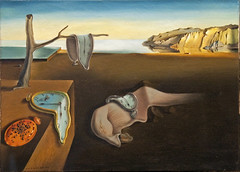
11556423062surrealisma 20th century avant-garde movement in art and literature that sought to release the creative potential of the unconscious mind, for example by the irrational juxtaposition of images; the movement represented a reaction against what its members saw as the destruction wrought by the "rationalism" that had guided European culture and politics in the past and that had culminated in the horrors of World War 171
11556423063terrorismthe use of violence and intimidation in the pursuit of political aims72
11556423064totalitarianisma political system where the state recognizes no limits to its authority and strives to regulate every aspect of public an private life whenever feasible; the totalitarian state pursues some special goal, such as industrialization or conquest, to the exclusion of all others; all resources are directed toward its attainment regardless of the cost73
11556423065trade networka network of roads, railroads, harbors, and airports that connect all of your cities together to share luxuries74
11556423066utilitarianisma doctrine that the useful is the good and that the determining consideration of right conduct should be the usefulness of its consequences; specifically: a theory that the aim of action should be the largest possible balance of pleasure over pain or the greatest happiness of the greatest number75

Pages

Subscribe to CourseNotes RSS

Need Help?

We hope your visit has been a productive one. If you're having any problems, or would like to give some feedback, we'd love to hear from you.

For general help, questions, and suggestions, try our dedicated support forums.

If you need to contact the Course-Notes.Org web experience team, please use our contact form.

Need Notes?

While we strive to provide the most comprehensive notes for as many high school textbooks as possible, there are certainly going to be some that we miss. Drop us a note and let us know which textbooks you need. Be sure to include which edition of the textbook you are using! If we see enough demand, we'll do whatever we can to get those notes up on the site for you!