

[node:title] Flashcards
Terms : Hide Images
| 14495637886 | DNA | Deoxyriboneucleic acid found mainly in the nucleus |  | 0 |
| 14495637887 | replication | double the chromosomes |  | 1 |
| 14495637888 | nucleotides | neuclic acid base pairs |  | 2 |
| 14495637889 | RNA | receives instructions from DNA |  | 3 |
| 14495637890 | Transcription | process of forming a neucleic acid using a template |  | 4 |
| 14495637891 | Translation | uses the codons in mRNA to make a specific amino acid |  | 5 |
| 14495637892 | proteins | monomers of amino acid chains |  | 6 |
| 14495637893 | mitosis, meiosis | body cell reproduction and sex cell reproduction |  | 7 |
| 14495637894 | sexual reproduction | 2 parents male and female |  | 8 |
| 14495637895 | asexual reproduction | 1 parent |  | 9 |
| 14495637896 | genes | segment of dna that codes for a specific trait |  | 10 |
| 14495637897 | Chromosomes | made up of DNA and proteins |  | 11 |
| 14495637898 | Endocrine system | composed of glands that secrete different types of hormone that affect almost every cell, organ and function of your body. It is essential in regulating growth and development, metabolism, as well as reproductive processes and mood. |  | 12 |
| 14495637899 | Pituitary | at the base of the brain; stimulates growth and controls functions of other glands |  | 13 |
| 14495637900 | thyroid | below the voice box; regulates body metabolism and causes storage of calcium in bones |  | 14 |
| 14495637901 | parathyroid | in the neck; controls the calcium levels in your body, and normals the bone growth |  | 15 |
| 14495637902 | thymus | in front of the heart; enables the body to produce certain antibodies |  | 16 |
| 14495637903 | adrenal | on top of the kidneys; prepares the body for action, controls the heart rate and breathing in times of emergency. |  | 17 |
| 14495637904 | pancreas | between the kidneys; regulates the blood sugar levels |  | 18 |
| 14495637905 | testes | lower abdomen; androgen and testosterone; control maturation and male characteristics | 19 | |
| 14495637906 | ovaries | lower abdomen; estrogen and progesterone; influence female traits and support reproductive function. |  | 20 |
| 14495637907 | homeostasis | state reaches when each part of the body functions in equilibrium with other parts. |  | 21 |
| 14495637908 | semen | the ejaculated fluid containing sperm cells and secretions from the seminal vesicle, prostate gland and bulbourethral gland. | 22 | |
| 14495637909 | sperm | shorter term for spermatozoon; male gamete | 23 | |
| 14495637910 | egg cell | also called ovum; female gamete | 24 | |
| 14495637911 | embryo | an organism in its early stages of development, especially before it has reaches a distinctively recognizable form. | 25 | |
| 14495637912 | fertilization | a process that occurs when the sperm and egg combine to produce an embryo |  | 26 |
| 14495637913 | radiometric dating | a method used to determine the age of rocks using the decay of radioactive isotopes present in rocks. | 27 | |
| 14495637914 | carbon dating | used to tell the age of organic materials. | 28 | |
| 14495637915 | homologous structure | perform different functions in the species living in the different environment, or it may gave the same origin but different functions | 29 | |
| 14495637916 | analogous structure | have similar functions but different origin | 30 | |
| 14495637917 | divergent evolution | splitting of an ancestral population into two or more subpopulations that are geographically isolated from one another. | 31 | |
| 14495637918 | convergent evolution | analogous structure of unrelated organisms from different ancestors develop similar function such as butterfly wings and bird wings. | 32 | |
| 14495637919 | convergence | is an increase similarities among species derived from different ancestors as a result of similar adaptation to similar environment. | 33 | |
| 14495637920 | Jean Baptiste de Lamarck | first evolutionist to believe that organisms change over time. Who developed three theories: the theory of need, the theory of use and disuse, the theory of acquired characteristics. |  | 34 |
| 14495637921 | Theory of Need | states that organisms change in response to their environment | 35 | |
| 14495637922 | Theory of Use and Disuse | organs not in use will disappear while organs in use will develop. | 36 | |
| 14495637923 | Variation | differences in traits of organisms in a population | 37 | |
| 14495637924 | Theory of Evolution | states that evolutionary change comes through the production of variation in each generation and differential survival of individuals with different combinations of these variable characters. | 38 | |
| 14495637925 | amino acids | the building blocks of protein | 39 | |
| 14495637926 | anticodon | the complement of mRNA; triplet code on the tRNA | 40 | |
| 14495637927 | chromosomal mutations | changes in the chromosomes where parts of the chromosomes are broken and lost during mitosis | 41 | |
| 14495637928 | codon | each set of three nitrogenous bases in mRNA representing an amino acid or start/stop signal | 42 | |
| 14495637929 | genetic code | set of rules that specify to the codons in DNA or RNA that corresponds to the amino acids in proteins | 43 | |
| 14495637930 | nitrogenous base | is a carbon ring structure that contains one or more atoms of nitrogen. In DNA, Adenine, Thymine, Cytosine, Guanine. | 44 | |
| 14495637931 | mutation | any change in the DNA sequence | 45 | |
| 14495637932 | mRNA | messenger RNA, brings information from the DNA in the nucleus to the cytoplasm | 46 | |
| 14495637933 | rRNA | ribosomal rna, hold tightly to the mRNA and use its information to assemble amino acids | 47 | |
| 14495637934 | tRNA | transfer RNA, a type of RNA that attach the correct amino acid to the protein chain that is being synthesized in the ribosomes. | 48 | |
| 14495637935 | Recombinant DNA | A form of DNA produced by combining two genetic material from two or more different sources by means of genetic engineering | 49 | |
| 14495637936 | Transcription | process of copying DNA sequence into RNA | 50 | |
| 14495637937 | Translation | process of converting information in mRNA into a sequence of amino acids in a protein | 51 | |
| 14495637938 | accessory pigments | energy absorbing plant pigments other than chlorophyll | 52 | |
| 14495637939 | metabolism | all chemical processes that synthesize or break down materials within an organism. | 53 | |
| 14495637940 | systolic | Blood pressure in the arteries during contraction of the ventricles. Contraction of the heart | 54 | |
| 14495637941 | diastolic | occurs when the ventricles are relaxed; the lowest pressure against the walls of an artery | 55 | |
| 14495637942 | blood pressure | Reflects the force the blood exerts against the walls of the arteries during contraction (systole) and relaxation (diastole) of the heart. | 56 | |
| 14495637943 | function of the blood | Transportation materials to and from cells Transports nutrients, carries O2, waste products, hormones to their target cells, regulates body temperature, protects against bacteria and viruses | 57 | |
| 14495637944 | blood components | Plasma, red blood cells, white blood cells, and platelets 55% Plasma, 45%-Formed Elements | 58 | |
| 14495637945 | plasma | Liquid portion of blood | 59 | |
| 14495637946 | RBC | red blood cell Erythrocytes 4.5-5 million | 60 | |
| 14495637947 | red blood cells | Carry oxygen Blood cells that carry oxygen from the lungs to the body cells. | 61 | |
| 14495637948 | hemoglobin function | *transports oxygen and carbon dioxide *carry oxygen and also CO2 back to the lungs *transport oxygen from the lungs to the tissues and carbon dioxide from the tissues to the lungs | 62 | |
| 14495637949 | Red blood cells regulated | 1. Oxygen deficiency stimulates Erythropoietin (EPO) production by kidneys | 63 | |
| 14495637950 | White blood count | *Neutrophils, lymphocytes, monocytes, eosinophils, basophils *tests to see what percentage of total white blood cell count is composed of each of the five types of leukocytes | 64 | |
| 14495637951 | neutrophils | Most abundant white blood cell., The most abundant type of white blood cell. Phagocytic and tend to self-destruct as they destroy foreign invaders, limiting their life span to a few days.- WBC | 65 | |
| 14495637952 | lymphocytes | The two types of white blood cells that are part of the body's immune system: B lymphocytes form in the bone marrow and release antibodies that fight bacterial infections; T lymphocytes form in the thymus and other lymphatic tissue and attack cancer cells, viruses, and foreign substances. | 66 | |
| 14495637953 | monocytes | *A type of white blood cell that transforms into macrophages, extends pseudopods, and engulfs huge numbers of microbes over a long period of time *An agranular leukocyte that is able to migrate into tissues and transform into a macrophage. | 67 | |
| 14495637954 | eosinophils | *What IgE-mediated cell secretes major basic protein and has elevated levels in the blood during asthma and parasitic infections? *What type of WBC is present in increased numbers during an allergic reaction? | 68 | |
| 14495637955 | basophils | *When performing a WBC differential, which cell has the large, scattered dark blue granules that are darker than the nucleus? *A circulating leukocyte that produces histamine. | 69 | |
| 14495637956 | White Blood Count | What is a marker for an infectious disease? Status of immune system and ability to fight off infection | 70 | |
| 14495637957 | Platelet function | They play a key role in retention of blood loss by forming a * plug at the site of tears when connective tissue is exposed. Serotonin is released and smooth muscles contract in the vessel walls. *Blood clotting - Cause capillary homeostasis by adhering to the inner surface of a vessel and sticking to each other to create a temp. mechanical plu | 71 | |
| 14495637958 | Platelet function in hemostasis | - Cause capillary homeostasis by adhering to the inner surface of a vessel and sticking to each other to create a temp. mechanical plug | 72 | |
| 14495637959 | blood cells made | blood cells and bone marrow | 73 | |
| 14495637960 | blood type | *a classification of blood that depends on the type of antigen present on the surface of the red blood cell; A, B, AB, or O *A, B, AB and O. Type O is the universal donor and AB blood is known as the universal recipient. | 74 | |
| 14495637961 | antigens | *Foreign material that invades the body *Anything that is foreign to the body and that causes an immune response *What mobilizes the adaptive defenses and provokes an immune response? | 75 | |
| 14495637962 | antibodies | An antigen-binding immunoglobulin, produced by B cells, that functions as the effector in an immune response. Specialized proteins that aid in destroying infectious agents | 76 | |
| 14495637963 | antigens in blood | Def A,B in blood macromolecules are foriegn to host organism and trigger an immune response | 77 | |
| 14495637964 | antibodies in blood | Passive immunity= When are HIV antibodies detectable in blood? | 78 | |
| 14495637965 | blood vessels | Veins Arteries | 79 | |
| 14495637966 | blood flow thru blood vessels | tissue perfusion |  | 80 |
| 14495637967 | heart function | *pumps blood throughout the body *Blood goes into right atrium from superior vena cava through tricuspid to right ventricle to the pulmonary valve to the pulmonary artery to lungs to pulmonary veins to bicuspid to left atrium to mitral valve to left ventricle to aortic valve to aorta | 81 | |
| 14495637968 | heart structure | 4 chambers: 2 atria (right and left) and 2 ventricles (right and left) |  | 82 |
| 14495637969 | heart valves | structures within the heart that open and close with the heartbeat to regulate the one-way flow of blood |  | 83 |
| 14495637970 | heart layers | Endocardium ( inner), myocardium ( middle), and epicardium ( outer) |  | 84 |
| 14495637971 | pericardium | Double-layered membrane surrounding the heart. |  | 85 |
| 14495637972 | blood flow thru heart | Blood enters from superior and inferior vena cava, right atrium, tricuspid valve, right ventricle, pulmonary semilunar valve, pulmonary trunk, pulmonary arteries, lungs, pulmonary veins, left atrium, mitral valve, left ventricle, aortic semilunar valve, aorta, rest of body |  | 86 |
| 14495637973 | cardiac cycle | A complete heartbeat consisting of contraction and relaxation of both atria and both ventricles the complete cycle of events in the heart from the beginning of one heart beat to the beginning of the next | 87 | |
| 14495637974 | cardiac conduction | a system of specialized muscle tissues that conducts electrical impulses that stimulate the heart to beat | 88 | |
| 14495637975 | digestive system | *Breaks down food into absorbable units that enter the blood for distribution to body cells. *Composed of the alimentary canal and accessory structures. Mouth, esophagus, stomach, small intestine (duodenum, jejunum, and ileum), large intestine (colon), and anus, Breaks down food into absorbable units that enter the blood for distribution to body cells. *The system of organs and structures responsible for the digestion of food. The digestive system includes teeth, mouth, esophagus, stomach, small, intestine, large intestine, and colon. |  | 89 |
| 14495637976 | chyme | mixture of enzymes and partially-digested food | 90 | |
| 14495637977 | digestive process | *The process by which the body breaks down foods and either absorbs or excretes them. *Ingestion➡digestion➡absorption➡egestion *Mechanical digestion, denaturation of proteins (by acidity), chemical digestion of proteins (by pepsin), intrinsic factor, delivers chyme to small intestine | 91 | |
| 14495637978 | saliva | softens food in the mouth making it easier to swallow; helps break down food into simpler forms; secreted by glands in the mouth | 92 | |
| 14495637979 | GI tract | stomach, colon. intestines, anus rectum *Oral cavity, pharynx, esophagus, stomach, small intestine, large intestine, rectum & anal canal *mouth -> esophagus -> LES -> stomach -> pyloric sphincter -> SI -> ileocecal sphincter -> LI -> rectum -> anus -> anal sphincter | 93 | |
| 14495637980 | motility | The capability of the GI tract to move material along its length is called The ability of an organism to move by itself | 94 | |
| 14495637981 | colon | The large intestine the largest section of the vertebrate large intestine; functions in water absorption and formation of feces; first, coiled part of large intestine | 95 | |
| 14495637982 | small intestine structure | The thinner of the two intestine but is much longer. Is highly folded, highly vascular so it can absorb nutrients into the blood - The small intestine has three main structures— the lining, villi, and microvilli—that absorb most of the nutrients from chyme | 96 | |
| 14495637983 | gastric juices | Secretions from the stomach lining that contain hydrochloric acid and pepsin, an enzyme that digests protein. | 97 | |
| 14495637984 | pancreas secretion | Secretes pancreatic juice to break down carbs, fats, and proteins Secrete pancreatic juices into the cavity and insulin, and glucagon into blood to regulate blood sugar Secretin - It is secreted from intestinal cells when acidic food from stomach enters small intestine. Secretin promotes secretion of bicarbonates and water from pancreas. | 98 | |
| 14495637985 | pancreas function | regulates blood sugar (insulin & glucagon) Secretes pancreatic juice which breaks down all categories of food produces digestive enzymes for fats, carbs, and proteins | 99 | |
| 14495637986 | bile function | digest fat; excrete waste | 100 | |
| 14495637987 | respiratory system | A system of organs, functioning in the process of gas exchange between the body and the environment, consisting especially of the nose, nasal passages, nasopharynx, larynx, trachea, bronchi, and lungs. | 101 | |
| 14495637988 | upper respiratory | consists of the nose, mouth, pharynx, epiglottis, larynx, and trachea |  | 102 |
| 14495637989 | lower respiratory | consists of the bronchial tree and lungs |  | 103 |
| 14495637990 | respiratory tract | The passageway that makes breathing possible. series of branching tubes that conduct air to and from the respiratory zone for gas exchange | 104 | |
| 14495637991 | larnyx | upper part of the trachea contains vocal chords - 3 bands of tissue stretched across the opening of trachea | 105 | |
| 14495637992 | epiglottis | A flap of tissue that seals off the windpipe and prevents food from entering. |  | 106 |
| 14495637993 | trachea | Allows air to pass to and from lungs Air passageway; has cartilage rings to help keep the air passage open as air rushes in; branches into right/left bronchus The respiratory process begins when air is inhaled through the nose and into the what? | 107 | |
| 14495637994 | lung | Main organs of the respiratory system An organ found in air-breathing vertebrates that exchanges oxygen and carbon dioxide with the blood | 108 | |
| 14495637995 | bronchi | The passages that branch from the trachea and direct air into the lungs Airways in the lungs that lead from the trachea to the bronchioles. | 109 | |
| 14495637996 | alveoli | (singular alveolus.) Tiny sacs, with walls only a single cell layer thick found at the end of the respiratory bronchiole tree. Alveoli are the site of gas exchange in the respiratory system. Terminal air sacs that constitute the gas exchange surface of the lungs. | 110 | |
| 14495637997 | breathing process | +The diaphragm muscle drops and creates a vacuum; Air rushes into the lungs; The diaphragm muscle contracts and pushes the air out *inhale through mouth or nose, are is filtered by cilia and mucus in nose, then the air goes to the pharynx, past the epiglottis, and through your larynx and trachea, at the base of the trachea are two tubes called bronchi which branch off into smaller air tubes called bronchioles, then the air reaches tiny sacs called alveoli where gas exchange occurs *Oxygen goes to the lungs , has a close contact to blood absorbs it and carries it to all body parts. Blood gives up CO2 which is from lungs to air breathed out *- active process that allows the diaphragm and intercostal muscles to contract, allowing lungs to expand (diaphragm goes down *Pharynx > Larynx (voice box) > Trachea (windpipe) > Bronchi > Bronchioles > Alveoli | 111 | |
| 14495638060 | oxegen transported in blood | 112 | ||
| 14495637998 | carbon dioxide transported in blood | *Carbon dioxide is released from the mitochondri *diffuses into blood, then to the capillaries, then to the alveoli in the lungs, and exhaled into the atmosphere *diffuses from the pulmonary capillaries into the alveol Process that moves CO2 from tissues to lungs in 3 forms: bicarbonate, bound to hemoglobin; as carbaminohemoglobin & as dissolved CO2 | 113 | |
| 14495637999 | Nervous system | Brain, nerve cells, spinal cord *the body's speedy, electrochemical communication network, consisting of all the nerve cells of the peripheral and central nervous systems. *The bodily system that in vertebrates is made up of the brain and spinal cord, nerves, ganglia, and parts of the receptor organs and that receives and interprets stimuli and transmits impulses to the effector organs. | 114 | |
| 14495638000 | graded potential | shift in electrical charge in a tiny area of the neuron (temporary); transmits a long cell membranes leaving neuron and polarized state; needs higher than normal threshold of excitation to fire A local voltage change in a neuron membrane induced by stimulation of a neuron, with strength proportional to the strength of the stimulus and lasting about a millisecond. | 115 | |
| 14495638001 | action potential | A neural impulse; a brief electrical charge that travels down an axon. The action potential is generated by the movement of positively charged atoms in and out of channels in the axon's membrane. Fast, moving change across a neurons membrane, also called an impulse. the local voltage change across the cell wall as a nerve impulse is transmitted | 116 | |
| 14495638002 | neurotransmitter | Chemical messengers that cross the synaptic gaps between neurons. When released by the sending neuron, neurotransmitters travel across the synapse and bind to receptor sites on the receiving neuron, thereby influencing whether that neuron will generate a neural impulse. Chemical messengers that cross the neuromuscular junction (synapse) to transmit electrical impulses from the nerve to the muscle. | 117 | |
| 14495638003 | Central nervous system | The brain and spinal cord A subdivision of the human nervous system comprising the brain and spinal cord. Transmits & receives messages to & from the PNS | 118 | |
| 14495638004 | Peripheral nervous system PNS | peripheral nervous system *sensory and motor neurons that connect the CNS to the rest of the body *All parts of the nervous system, excluding the brain and spinal cord, that relay information between the CNS and other parts of body | 119 | |
| 14495638005 | neuron cells | role of this type of cell is already determined and is not dictated by neighboring cells. communicate w/ send signals to other neurons and muscles in the body What is the nervous system composed of? | 120 | |
| 14495638006 | myelinated | Impulse conduction is fastest in neurons that are glia cells that wrap around the axon insulating it. conduct AP more rapidly bc less current lost to extracellular environment | 121 | |
| 14495638007 | schwann cells | Type of glia in the PNS, Supporting cells of the peripheral nervous system responsible for the formation of myelin. |  | 122 |
| 14495638008 | Central Nervous system protected | Brain and spinal cord | 123 | |
| 14495638009 | brain | The mass of nerve tissue that is the main control center of the nervous system | 124 | |
| 14495638010 | cerebrum | Area of the brain responsible for all voluntary activities of the body Largest part of the brain Largest part of the brain; coordinates thought, reasoning, movement, and memory, includes the cerebral cortex and the white matter beneath it. | 125 | |
| 14495638011 | brain stem | Connection to spinal cord. Filters information flow between peripheral nervous system and the rest of the brain. the central trunk of the mammalian brain, consisting of the medulla oblongata, pons, and midbrain, and continuing downward to form the spinal cord. | 126 | |
| 14495638012 | cerebelleum | motor control refines skeletal muscle contractions, role in cognition, language, problem solving, activity occurs subconsciously, composed like cerebrum, grey matter white matter (arbor vitae) grey islands. | 127 | |
| 14495638013 | diencephalon | thalamus and hypothalamus A portion of the embryonic forebrain that becomes the thalamus, hypothalamus, posterior pituitary gland, and pineal gland. | 128 | |
| 14495638014 | cerebrum structure | consisting of 2 hemispheres and olfactory lobes thought and intelligence and memory | 129 | |
| 14495638015 | breathing phases | inspiration and expiration | 130 | |
| 14495638016 | breathing process | *Respiration is the chemical process in which cells exchange oxygen and carbon dioxide to obtain energy, Air is breathed in and diffusion occurs and carbon dioxide is breathed out *Breathing is controlled by muscles. *[H+] and [CO2] are too high, medulla oblongata is stimulated > sends impulse to diaphragm and intercostal muscles > diaphragm contracts > ribs move up and out > diaphragm moves down > air rushes in > vice versa for exhalation • controlled by medula oblongata *inhale through mouth or nose, are is filtered by cilia and mucus in nose, then the air goes to the pharynx, past the epiglottis, and through your larynx and trachea, at the base of the trachea are two tubes called bronchi which branch off into smaller air tubes called bronchioles, then the air reaches tiny sacs called alveoli where gas exchange occurs | 131 | |
| 14495638017 | pleural cavity | *The space between the two moist membranes that separate the lungs from the thorax (chest cavity). Filled with lubricating fluid. *airtight space between fold of the pleural membranes; contains watery lubricating fluid that prevents friction between the membranes when they rub together during respiration |  | 132 |
| 14495638018 | PATHOGEN | MICROORGANISM THAT CAUSES ILLNESS OR DISEASE | 133 | |
| 14495638019 | ANTIBODY | PRODUCED BY WBC WHEN IMMUNE SYSTEM DETECTS A PARTICULAR PATHOGEN | 134 | |
| 14495638020 | BACTERIA | Bacteria are living cells and can multiply rapidly. Once inside the body, they release poisons or toxins that make us feel ill. BACTERIA GET IN BETWEEN CELLS | 135 | |
| 14495638021 | VIRUSES | Viruses can only reproduce inside host cells, and they damage the cell when they do this VIRUSES GET INTO CELL | 136 | |
| 14495638022 | DISEASES CAUSED BY VIRUSES | influenza - flu, colds, Measles, mumps, rubella, chicken pox, AIDS | 137 | |
| 14495638023 | DISEASES CAUSED BY BACTERIA | food poisoning, Cholera, typhoid, whooping cough, gonorrhoea - a sexually transmitted disease | 138 | |
| 14495638024 | WHAT ARE BODY'S DEFENCE MECHANISMS? | SKIN, STOMACH ACID, EYELASHES, TEARS, COUGH | 139 | |
| 14495638025 | WHITE BLOOD CELLS | White blood cells can ingest and destroy pathogens. They can produce antibodies to destroy pathogens | 140 | |
| 14495638026 | VACCINES | ARE SMALL AMOUNTS OF DEAD / WEAKENED PATHOGENS | 141 | |
| 14495638027 | MMR | MEASLES, MUMPS AND RUBELLA | 142 | |
| 14495638028 | EPIDEMIC | WIDESPREAD OUTBREAK OF AN INFECTIOUS DISEASE WITHIN A COUNTRY | 143 | |
| 14495638029 | PANDEMIC | A DISEASE THAT IS SPREAD RAPIDLY ACROSS MANY COUNTRIES | 144 | |
| 14495638030 | SYMPTOMS OF AN INFECTION | PAIN, FEVER, RASH, NAUSEA, HEADACHE, COUGHING | 145 | |
| 14495638031 | ANOMALY | SOMETHING THAT DEVIATES FROM NORMAL OR EXPECTED | 146 | |
| 14495638032 | DEPENDENT VARIABLE | WHAT YOU MEASURE- ON Y AXIS | 147 | |
| 14495638033 | INDEPENDENT VARIABLE | WHAT YOU CHOOSE VALUES FOR- ON Y AXIS | 148 | |
| 14495638034 | CONTROL VARIABLE | VARIABLES THAT REMAIN CONSTANT OR UNCHANGED | 149 | |
| 14495638035 | WHITE BLOOD CELLS CAN | -ingest pathogens and destroy them -produce antibodies to destroy pathogens -produce antitoxins that neutralise the toxins released by pathogens white blood cells do not eat the pathogens - they ingest them | 150 | |
| 14495638036 | DECAY | The breakdown of dead plant and animal material by fungi, bacteria and other organisms. Requires WOW W-warmth O-oxygen W- water | 151 | |
| 14495638037 | RELAY NEURONES | Neurones that carry information from a sensory nerve cell to a motor nerve cell |  | 152 |
| 14495638061 | NEUROTRANSMITTER | 153 | ||
| 14495638038 | CENTRAL NERVOUS SYSTEM (CNS) consists of | - the brain and spinal cord | 154 | |
| 14495638039 | PERIPHERAL NERVOUS SYSTEM (PNS) consists of | - nerve cells that carry information to or from the CNS. Includes spinal cord and peripheral nerves. | 155 | |
| 14495638040 | RECEPTORS | - can detect a change in the environment (stimulus) and produce electrical impulses in response. Sense organs contain groups of receptors that respond to specific stimuli. | 156 | |
| 14495638041 | EFFECTORS | -produces a response e.g.muscle contracts to move hand away from stimulus or gland squeezes and releases hormone into blood. | 157 | |
| 14495638042 | SYNAPSE | Where two neurones meet, there is a tiny gap called a synapse. Signals cross this gap using chemicals released by a neurone. The chemical diffuses across the gap makes the next neurone transmit an electrical signal. | 158 | |
| 14495638043 | REFLEX | -a way for the body to automatically and rapidly respond to a stimulus to minimise any further damage to the body. stimulus → receptor → sensory neurone → relay neurone → motor neurone → effector → response |  | 159 |
| 14495638044 | SENSORY NEURONE | A sensory neurone sends impulses (from a sensory receptor) to a relay neurone in the spinal cord/CNS. | 160 | |
| 14495638045 | RELAY NEURONE | -carry messages from one part of the CNS to another | 161 | |
| 14495638046 | MOTOR NEURONE | A motor neurone sends impulses from the spinal cord/CNS to effector (muscle of gland). | 162 | |
| 14495638062 | cancer | a growth defect in cells , a breakdown of the mechanism that controls cell division. Ex. his ___ was caused by smoking. |  | 163 |
| 14495638063 | development | the change in shape or organisms over time. Ex. a child's ________ is very fast. |  | 164 |
| 14495638064 | ecology | the branch of biology that studies the interactions of organisms with one another and with nonliving parts of their environment | 165 | |
| 14495638065 | gene | sections of chromosomes made of DNA that code for traits. The basic unit of heredity. |  | 166 |
| 14495638066 | genome | the complete genetic material contained in an individual. |  | 167 |
| 14495638067 | heredity | the passing of traits from parent to offspring. Ex. scientists know that _____ can increase chances for certain diseases. |  | 168 |
| 14495638068 | HIV | a virus that attacks and destroys the human immune system. | 169 | |
| 14495638069 | interdependence | organisms in a biological community live and interact with other organisms. |  | 170 |
| 14495638070 | mutation | a change in the DNA of a gene. |  | 171 |
| 14495638071 | natural selection | process in which organisms with favorable genes are more likely to survive to reproduce. Ex. the idea of ____ ______ was first presented by Charles Darwin. |  | 172 |
| 14495638072 | organism | any living thing; something that meets all criteria of life. Ex. so far, we have not found proof of any living ________ on another planet. |  | 173 |
| 14495638073 | pH | a relative measure of the hydrogen ion concentration within a solution; Latin for "probably hydrogens". | 174 | |
| 14495638074 | absorption | process by which substances are taken into the cell or an organism. | 175 | |
| 14495638075 | assimilation | incorporation of materials into the body of an organism. | 176 | |
| 14495638076 | circulation | process by which materials are distributed (moved) throughout the organism. | 177 | |
| 14495638077 | differentiation | process by which cells become specialized for specific functions. | 178 | |
| 14495638078 | digestion | the breakdown of complex food materials into forms the organism can use. Ex. Going to sleep after eating can be bad for ____. |  | 179 |
| 14495638079 | egestion | elimination of indigestible waste. | 180 | |
| 14495638080 | excretion | removal of metabolic waste. | 181 | |
| 14495638081 | ingestion | taking in food from the environment. | 182 | |
| 14495638082 | regulation | process by which organisms maintain homeostasis, a stable internal environment. | 183 | |
| 14495638083 | reproduction | process by which organisms produce new organisms of their own kind |  | 184 |
| 14495638084 | respiration | release of chemical energy from certain nutrients. | 185 | |
| 14495638085 | synthesis | chemical combination of simple substances to form complex substances. |  | 186 |
| 14495638047 | DNA | nucleic acid polymer that stores genetic information. | 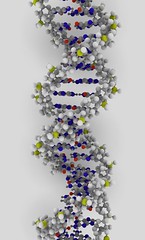 | 187 |
| 14495638048 | equilibrium | the state of both sides are balanced |  | 188 |
| 14495638049 | evolution | the process of change that has transformed life on Earth |  | 189 |
| 14495638050 | theory | a system of ideas that explains many related observations and is supported by a large body of evidence acquired through scientific investigation | 190 | |
| 14495638051 | species | group of similar organisms that can breed and produce fertile offspring. Ex. there are thousands of different ______ of butterflies. |  | 191 |
| 14495638052 | matter | the material that everything in the universe is made of, including solids, liquids, and gases | 192 | |
| 14495638053 | element | a substance that cannot be broken down to other substances by chemical reactions. Ex. carbon is an essential ________ of life. |  | 193 |
| 14495638054 | compound | a substance consisting of 2 or more elements in a fixed ratio. Ex. water is the most common _______ on Earth. |  | 194 |
| 14495638055 | bacteria | a very small living things. Ex. Although some cause illness or disease, many ______ are harmless. | 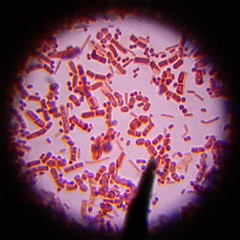 | 195 |
| 14495638056 | virus | a very small living thing that causes infectious illnesses. Ex. HIV is the _____ that causes AIDS. |  | 196 |
| 14495638057 | algae | a very simple plant without stems or leaves that grows in or near water. |  | 197 |
| 14495638058 | fungi | simple type of plant that has no leaves or flowers and that grows on plants or other surfaces. Ex. mushrooms are a _____. |  | 198 |
| 14495638059 | oxygen | a gas that has no color or smell, is present in air, and is necessary for most animals and plants to live. Ex. the chemical symbol for _____ is O. |  | 199 |


