

Flashcards
Chapter 2 Vocabulary AP Language Flashcards
Terms : Hide Images
| 14969126170 | Alliteration | repetition of the same sound beginning several words or syllables in sequence | 0 | |
| 14969126171 | Allusion | Brief reference to a person, event, place, or work of art | 1 | |
| 14969126172 | Anaphora | repetition of a word of phrase at the beginning of successive phrases, clauses, or lines | 2 | |
| 14969126173 | Antimetabole | repetition of words in reverse order | 3 | |
| 14969126174 | Antithesis | Opposition, or contrast, of ideas or words in a parallel construction | 4 | |
| 14969126175 | Archaic Diction | Old fashioned or outdated choice of words | 5 | |
| 14969126176 | Asyndeton | Omission of conjunctions between coordinate phrases, clauses or words | 6 | |
| 14969126177 | Cumulative Sentence | Sentence that completes the main idea at the beginning of the sentence and then builds and adds on | 7 | |
| 14969126178 | Horative Sentence | Sentence that exhorts, urges, entreats, implores, or calls to action | 8 | |
| 14969126179 | Imperative Sentence | Sentence used to command or enjoin | 9 | |
| 14969126180 | Inversion | Inverted order of words in a sentence | 10 | |
| 14969126181 | Juxtaposition | Placement of two things closely together to emphasize similarities or differences | 11 | |
| 14969126182 | Metaphor | Figure of speech that compare two things without using like or as | 12 | |
| 14969126183 | Oxymoron | Paradoxical juxtaposition of words that seem to contradict one another | 13 | |
| 14969126184 | Parallelism | Similarity of structure in a pair or series of related words, phrases or clauses | 14 | |
| 14969126185 | Periodic Sentence | Sentence whose main clause is withheld until the end | 15 | |
| 14969126186 | Personification | Attribution of lifelike quality to inanimate object or idea | 16 | |
| 14969126187 | Rhetorical Question | Figure of speech in the form of a question posed for rhetorical effect rather than for the purpose of getting an answer | 17 | |
| 14969126188 | Synedoche | figure of speech that uses a part to represent a whole | 18 | |
| 14969126189 | Zeugma | Use of two different words in grammatically similar way that produces different, often incongruous meanings | 19 |
Chapter 31 AP World History Flashcards
Terms : Hide Images
| 12791685207 | The leader of the Taiping Rebellion was | Hong Xiuquan | 0 | |
| 12791685208 | In 1851, Hong Xiuquan proclaimed his own dynasty, the Taiping tianguo, which meant | "Heavenly Kingdom of Great Peace" | 1 | |
| 12791685209 | The most significant territorial loss for the Ottomans was | Egypt | 2 | |
| 12791685210 | Muhammad Ali was | The egyptian leader who overthrew ottoman control | 3 | |
| 12791685211 | The capitulations were unfair trading agreements between the western Europeans and the | Ottoman sultans | 4 | |
| 12791685212 | Which of the following is not true about the capitulations? | they were imposed on the Europeans by the Ottomans | 5 | |
| 12791685213 | In the early 19th century, the Ottoman Sultan Selim III | Embarked on a program to remodel his army along the lines of European forces. | 6 | |
| 12791685214 | What was the name of the Sultan who, in 1826, had mutinous Janissaries slaughtered and thus opened the door for further reform with the Ottoman Empire? | Mahmud II | 7 | |
| 12791685215 | Which of the following is not a reform proposed in the Tanzimat era? | A commercial code | 8 | |
| 12791685216 | The Young Ottomans were | (Opposed the Tanzimat) A group who agitated for individual freedom, local autonomy, and political decentralization. Desired the establishment of a constitutional government along the lines of the British system. (Opposed the Tanzimat) | 9 | |
| 12791685217 | Sultan Abdul Hamid II | Was put in power by a group of radical dissidents from the Ottoman bureaucracy. Accepted a constitution, dissolved parliament, exiled many liberals, and executed others within a year. Ruled autocratically, developed army and administration according to TANZIMAT PRINCIPLES, and oversaw the formation of a police force, educational reforms, economic development, and construction of railroads. | 10 | |
| 12791685218 | Which of the following was not one of the leading principles of the YOung Turks? | Islam as the guiding principle in public life | 11 | |
| 12791685219 | Which of the following Young Turk proposals caused the most dissension in the empire? | Making Turkish the official language of the empire | 12 | |
| 12791685220 | The stipulation, "in order to obtain for Ottoman citizens an education of a homogenous and uniform character, the official schools will be open, their instruction will be free, and all nationalities will be admitted" is rom what document? | Proclamation of the Young Turks | 13 | |
| 12791685221 | Which of the following accounts for beginning of the social reform movement in Russia in the 19th century? | Military defeat in the Crimean War | 14 | |
| 12791685222 | A defeat in the Crimean War stopped expansion by the | Russian empire. | 15 | |
| 12791685223 | The key to social reform in Russia was | Emancipation of the serfs. | 16 | |
| 12791685224 | The Russian serfs were emancipated by | Tsar Alexander II | 17 | |
| 12791685225 | The emancipation of the Russian serfs | Resulted in little, if any, increase in agricultural production. | 18 | |
| 12791685226 | As part of the Russian reforms, during the reign of Alexander II the government created zemstvos, | which were elected district assemblies that remained subordinate to the tsarist autocracy. | 19 | |
| 12791685227 | The prime mover behind Russian industrialization was | Count Sergei Witte | 20 | |
| 12791685228 | the centerpiece of Sergei Witte's Russian industrial policy was | A massive program of railway construction that linked the far-flung regions of the Russian empire and also stimulated the development of other industries. | 21 | |
| 12791685229 | The working conditions of the growing Russian industrial class in St. Petersburg and Moscow | Became notorious for the miserable working and living conditions of factory workers. | 22 | |
| 12791685230 | Tsar Alexander II was assassinated in 1881 by | The People's Will, a terrorist faction of the Land and freedom party | 23 | |
| 12791685231 | After the Assassination of Alexander II, his successor Nicholas II | championed oppression and police control. | 24 | |
| 12791685232 | The decisive factor in the Russo Japanese War was the | Destruction of Russian navy | 25 | |
| 12791685233 | The 1905 Bloody Sunday massacre eventually | Led to labor unrest, peasant insurrections, student demonstrations, and mutinies in both the army and navy. | 26 | |
| 12791685234 | Lin Zexu | Confiscated and destroyed some twenty thousand chests of opium. Ignited a war that ended in a humiliating defeat for China | 27 | |
| 12791685235 | The decisive point in the Opium War was | When British forces decided to strike at the Grand Canal, "the jugular vein" of China, with the aid of steam-powered gunboats | 28 | |
| 12791685236 | The Opium War ended with the signing of the Treaty of | Nanjing | 29 | |
| 12791685237 | Who wrote, "As months accumulate and years pass by, the poison they have produced increases in its wicked intensity, and its repugnant odor reaches as high as the sky?" | Lin Zexu | 30 | |
| 12791685238 | Which of the following was not a rebellion that threatened China in the nineteenth century? | mongol | 31 | |
| 12791685239 | Which of the following was not one of the principles of the Taiping Rebellion? | Hong Xuiquan's belief that he was the reincarnation of the Buddha | 32 | |
| 12791685240 | The Self-Strengthening Movement was an attempt to blend indigenous cultural traditions with western technology in | China | 33 | |
| 12791685241 | For most of the last fifty years of the Qing dynsty, China was ruled by | Empress dowager Cixi, a former imperial concubine. | 34 | |
| 12791685242 | By the end of the nineteenth century, the only thing keeping China from being completely divided up into spheres of influence by foreigners was | Distrust amont the foreign powers. | 35 | |
| 12791685243 | Kang Youwei and Liang Qichao were the leaders of the | Hundred Days Reforms | 36 | |
| 12791685244 | In 1900, foreign embassies in China were besieged by | The Boxers, or the Society of Righteous and Harmonious Fists. | 37 | |
| 12791685245 | Japan was forcibly opened to foreign trade in 1853 by the | U.S. | 38 | |
| 12791685246 | they understood the danger of those two groups and wanted to find a way to avoid commercial and/or imperial domination by either one. | They wanted to obtain the knowledge and expertise to strengthen Japan and win revisions of the unequal treaties. | 39 | |
| 12791685247 | Which one of the following leaders played a major role in the Meiji Restoration? | The boy emperor Mutsuhito or Meiji. | 40 | |
| 12791685248 | which of the following was not one of the foundations of the meiji restoration? | turning japan into a constitutional republic | 41 | |
| 12791685249 | The event that best displayed Japan's rise to the level of a world power was their victory in the | Russo-Japanese and Sino-Japanese wars. | 42 |
AP World History Renaissance & Reformation (Ch 18) Flashcards
Terms : Hide Images
| 9524864190 | heliocentric | By Copernicus who said that the Sun is in the center & the Earth & planets revolves around it. | 0 | |
| 9524864191 | indulgence | The forgiveness of the punishment due for past sins by the Catholic Church to reduce one's time in purgatory after death. Martin Luther's protest against the sale of indulgences is often seen as touching off the Protestant Reformation. | 1 | |
| 9524864192 | theocracy | A government that is based on religion (divine authority). | 2 | |
| 9524864193 | caravel | A small, fast Spanish or Portuguese sailing ship of the 15th-17th centuries. Had triangular sails & established Portugal in Africa. | 3 | |
| 9524864194 | conquistador | 16th century Spanish adventurers who conquered Mexico, Central America & Peru. | 4 | |
| 9524864195 | Middle Passage | A voyage that brought enslaved Africans across the Atlantic Ocean to North America & the West Indies. Middle portion of triangular trade. | 5 | |
| 9524864196 | Mercantilism | A set of principles that dominated economic in the 17th century. The prosperity of a nation depended on a large supply of gold & silver. | 6 | |
| 9524864197 | humanism | Intellectual movement of the Renaissance based on the studies of humanities, which included grammar, rhetoric, poetry, moral philosophy and history. | 7 | |
| 9524864198 | astrolabe | An instrument used by sailors to determine their location in sea by observing the positions of the stars. | 8 | |
| 9524864199 | cartographer | A person who creates maps. | 9 | |
| 9524864200 | circumnavigate | To go sail around the entire Earth. | 10 | |
| 9524864201 | triangular trade | A pattern of trade that connected Europe, Asia, Africa & the Americas. Manufactured goods from Europe were sent to Africa, where they were exchanged for slaves, who were sent to the Americas, where they were exchanged for raw materials that were then sent to Europe. 1st: Good to Africa in exchanges for slaves, 2nd: (Middle Passage) Slaves to New World in exchange for molasses, tobacco, silver & sugar, 3rd: Products shipped to Europe | 11 | |
| 9524864202 | Colombian Exchange | Europe conquests the New World. It was a movement of goods and ideas between the New & Old World that impacted both sides. Exchanges of plants, animals, diseases & technology transformed European & Native American ways of life. | 12 | |
| 9524864203 | John Calvin | Converted to Protestantism & believed in the doctrine of justification of faith to explain how humans achieve salvation, like Luther. Emphasized God's powerful nature & predestination-God already knows who will be saved & who will be damned. (Swiss) | 13 | |
| 9524864204 | Henry VIII | Found the Angilican Church because he wanted to end papal control over the English Church & wanted to divorce his wife (Catherine of Argon) because the Pope wouldn't let him. | 14 | |
| 9524864205 | Leonardo da Vinci | Italian painter, engineer, musician, and scientist, as a painter Leonardo is best known for The Last Supper (c. 1495) and Mona Lisa (c. 1503). | 15 | |
| 9524864206 | Christopher Columbus | Persuaded Ferdinand & Isabella of Spain to finance his voyage. In 1492, he sailed to the west & reached the New World on October 12, 1492 & claimed the land for Spain. He encountered the Native Americans & started the Columbian Exchange. | 16 | |
| 9524864207 | Hernando Cortez | In 1519, he conquered the Aztec in Mexico with guns, horses & diseases. | 17 | |
| 9524864208 | Martin Luther | Started the Protestant Reformation | 18 | |
| 9524864209 | Council of Trent | Reaffirmed traditional Catholic teachings, condemned Protestantism, faith & good works leads to salvation, 7 sacraments, clerical celibacy & outlawed indulgences. New doctrine gave Catholic Church new confidence. | 19 | |
| 9524864210 | Niccolo Machiavelli | Italian Renaissance writer who wrote The Prince. Said monarchs should maintain their power by vague moral tenants & should be selfish (the end justifies the mean). | 20 | |
| 9524864211 | Ferdinand Magellan | Sailed all the way west from Spain & circumnavigated the globe. Died in the Philippines. | 21 | |
| 9524864212 | Henry the Navigator | Important figure in 15th century politics & started the profitable long distance sea trade routes for Portugal. Set up a school for sailors. | 22 | |
| 9524864213 | Moctezuma | Aztec emperor. | 23 | |
| 9524864214 | Copernicus | Discovered that the Earth & the planets revolve around the Sun (heliocentric). | 24 | |
| 9524864215 | Explain the importance of the explorations and ideas of Christopher Columbus. | Christopher Columbus' discovery of the New World resulted in the Columbian exchange which was a movement of goods and ideas between the New & Old World that impacted both sides. Exchanges of plants, animals, diseases & technology transformed European & Native American ways of life. | 25 | |
| 9524864216 | Explain the effects the development of printing had on the spread of knowledge. Give specific examples | Printing made ideas spread quickly & improved literacy of the common people. For example, Martin Luther used the printing press to publish his ideas for the people & translated the Bible into German so ordinary people could read it for themselves. | 26 | |
| 9524864217 | Why did Luther criticize the Catholic Church? | The Catholic Church became corrupt & wasn't following Biblical principles. Also, they were selling indulgences, which were unacceptable to Luther. He believed that the Pope & Church was not a direct path to heaven & people had to read the scriptures for themselves. | 27 | |
| 9524864218 | What were the results of the Catholic Reformation? | The Great Schism: the split between the Catholics & Protestants. Protestantism led to different interpretations of the Bible & denominations spin offs. There was religious mayhem, peasants revolutions & etc. It was considered to be a social & political movement that eventually led to religious tolerance. | 28 | |
| 9524864219 | Why did the Renaissance begin in Italy? | Italian city states were wealthy from the commerce & trade of the Middle Ages. Venice was the conduit for silk & spice trade from India & China. There was more leisure time, scholars preserved classical Greek & Roman learning & Rome was capital of Catholic Church. Italy was less entrenched in feudalism & no single monarchy. It had thriving economic centers & had wealthy patricians. | 29 | |
| 9524864220 | Why did the Renaissance begin much later in northern Europe? | The Black Death delayed economic growth & they had less exposure to trade & new ideas. The printing press was a factor of why it eventually started in the north. | 30 | |
| 9524864221 | How did Henry VIII react when the Pope refused to annul his first marriage? | He created the Anglican Church (Church of England) just so he could divorce his first wife. | 31 | |
| 9524864222 | Why did European kings and queens encourage ocean exploration? | They wanted to find new trade routes (easier & cheaper way to get to the east), wanted more land & wealth | 32 | |
| 9524864223 | In the 1600s, the Portuguese lost control of trade in the Indian Ocean to which nation? | The Dutch | 33 | |
| 9524864224 | Who took over control of the spice trade from the Portuguese? | The Dutch | 34 | |
| 9524864225 | Why did Spanish explorers travel to the Americas? | To find gold & other riches | 35 | |
| 9524864226 | How did the Native Americans influence Europe? (Hint: Columbian Exchange) | Columbian exchange of new foods & ideas. Gave Europeans syphillis. | 36 | |
| 9524864227 | By the 1500s, what was the most important element of African trade with Europe? | Enslaved Africans. | 37 | |
| 9524864228 | Explain three reasons why the Spanish were able to conquer the Aztec and Incan empires | The Spanish brought diseases that the Aztecs & Incas had no immunity to. The weapons of the Spanish were much more advanced. Strong armies & government. | 38 | |
| 9524864229 | List several ways the Renaissance differed from the Middle Ages. | Renaissance was the awakening or rebirth of culture. The Middle Ages was a time of feudalism because of political instability. | 39 | |
| 9524864230 | Explain the trade operations in existence from 1450 and 1750, between Europe, Russia, Asia, the Middle East and China. How did the discovery of America and a route around Africa affect those trades? | Triangular Trade & Columbian Exchange. | 40 | |
| 9524864231 | Explain the difference between Reformation and Protestant. What were the reasons that so many Protestant churches were created during the Renaissance? Think political, social and economic here. | Luther believed that if people just return to the scripture, they would see the one single truth & the church would be restored to its original simplicity. The problem was that this led to different interpretations of the Bible, leading to the formation of many Protestant churches. Catholic: Council of Trent reformed the Catholic Church to attract back followers. Protestants: Protestant Reformation to be separate from the corruption of the Catholic Church. | 41 |
AP world History Dates Flashcards
The entire dates packet, with a few other dates for my self.
Terms : Hide Images
| 13563815751 | Pottery, plows, woven textiles, metallurgy, and wheels Invented | 8000 BCE - 4000 BCE | 0 | |
| 13563815752 | Rise of Agriculture | About 8000 - 2000 | 1 | |
| 13563815753 | Mesopotamia | 4000 BCE - 600 BCE | 2 | |
| 13563815754 | Hammurabi's Code | 1770 BCE | 3 | |
| 13563815755 | Epic of Galgamesh | 1700 BCE | 4 | |
| 13563815756 | Invasion of the Hittites, who had iron | 1500 BCE | 5 | |
| 13563815757 | Nebuchadnezzar rebuilt Babylon | 600 BCE | 6 | |
| 13563815758 | Trade with Indus River Valley Throughout | 4000 BCE - 600 BCE | 7 | |
| 13563815759 | Zoroastrianism Springs up around Eastern Edge of Persian Empire | 600 BCE | 8 | |
| 13563815760 | Hebrews/ Judaism - Led by Moses, first Monotheistic Religion, between Egypt and Meso | 1300 BCE | 9 | |
| 13563815761 | Achaemenid Persian Empire | 550 BCE - 330 BCE | 10 | |
| 13563815762 | Seleucid Persian Empire | 310 BCE - 60 BCE | 11 | |
| 13563815763 | Jesus Christ, or Jesus of Nazareth lives | 2 BCE - 33 CE | 12 | |
| 13563815764 | Rise of Islam - Muhhammad | 600's | 13 | |
| 13563815765 | Islamic dynasty - Umayyad Dynasty | 650 - 750 CE | 14 | |
| 13563815766 | Islamic dynasty - Abbasid Dynasty | 750 - 1258 CE | 15 | |
| 13563815767 | Sufi Mystics and Missionaries spread Islam | 1200 - 1600 CE | 16 | |
| 13563815768 | Ottoman Empire | 1280 - 1923 CE | 17 | |
| 13563815769 | What 3 things did the Ottomans have during their existence. Think main things/ key terms | 1280 - 1923 CE 1) Janissaries and use of Gunpowder 2) Devshirme ( taking Christian boys, turned to military/ advisors) 3) Millets ( groups of non- muslims, like Jews, Greeks, ect. who were allowed to live in the Ottoman Empire | 18 | |
| 13563815770 | Conquest of Constantinople | 1453 CE | 19 | |
| 13563815771 | Height of Ottoman Power | 1550 CE in Europe and Middle East, most powerful. | 20 | |
| 13563815772 | Suleyman the Magnificent. What did he do and when? | 1520 - 1566 CE Expanded empire, Modernized army, known as the law giver because he improved legal system, patron of the arts. | 21 | |
| 13563815773 | Decline of Ottomans and Unequal Treaties with Europe | mid 1800's | 22 | |
| 13563815774 | Armenian Genocide. Who was killing the Armenians and when? | 1890 - 1920 CE | 23 | |
| 13563815775 | When did the Ottoman Empire collapse? What took it's place? | 1923 CE Was replaced by the Republic of Turkey | 24 | |
| 13563815776 | Republic of Turkey | 1923 - Present | 25 | |
| 13563815777 | Mandate system. who uses it? what region is it used on? When? | French and British Govern Middle East after WWI 1920 - 1945 | 26 | |
| 13563815778 | Iranian Revolution | 1979 | 27 | |
| 13563815779 | Islamic Republic or Iran | 1979 - Present | 28 | |
| 13563815780 | Creation of Isreal. Who are moved? | 1945 - Present Palestinians are displaced | 29 | |
| 13563815781 | Islamic Republic of Pakistan - Pakistan Splits from India | 1950 - Present | 30 | |
| 13563815782 | black Plague Dates | 1300's | 31 | |
| 13563815783 | The Crusades | 1100 - 1300 CE | 32 | |
| 13563815784 | Yellow River Civilization | 4000 BCE | 33 | |
| 13563815785 | Shang Dynasty in the Yellow River Yalley | 1600 - 1000 BCE | 34 | |
| 13563815786 | Zhou Dynasty | 1000 BCE - 250 BCE | 35 | |
| 13563815787 | Mandate of heaven. Years and who made it? | 1000 BCE Made by the Zhou | 36 | |
| 13563815788 | Beginning of the Great Wall | 600 BCE | 37 | |
| 13563815789 | Confucius and birth of Confucianism | 500 BCE | 38 | |
| 13563815790 | Warring States Period | 400 BCE - 220 BCE | 39 | |
| 13563815791 | Daoism. What years and made by who? | 400 BCE Developed by Laozi. | 40 | |
| 13563815792 | Qin Dynasty and Qin Shi Huangdi | 221 - 204 BCE | 41 | |
| 13563815793 | What did Qin Shi Huangdi do? | Massive Centralization of power, built roads, great wall strengthened, used currencies, irrigation systems, and massive tomb for himself. | 42 | |
| 13563815794 | Han dyansty. what continued. what was invented. | 206 BCE - 206 CE Mandate of Heaven continued The Sternpost Rudder invented | 43 | |
| 13563815795 | When was emperor Wudi in rule and what did she do? | in 120 BCE Began universities with Legalist and Confucian principles, and invaded Vietnam and Korea, Turned them to Tributary States. | 44 | |
| 13563815796 | Silk Roads are completed under Han Dynasty | 100 BCE | 45 | |
| 13563815797 | Civil Service Exam started | 605 CE | 46 | |
| 13563815798 | Tang Dynasty. What grows in china during this time? | 600 - 900 CE Neo Confucianism grows during this time; trying to get rid of "mystical" parts of Confucianism that had invaded it from Buddhism and Daoism; keeps filial piety | 47 | |
| 13563815799 | Song Dynasty | 900 - 1280 CE | 48 | |
| 13563815800 | What was invented in the Song Dyansty? | paper money, porcelain, gunpowder, printing (not the press!) all invented/popularized 900 - 1280 CE | 49 | |
| 13563815801 | What continued during the Song Dynasty? | Mandate of Heaven continues Big improvements in navigation for ships—although they were not all invented at this time the Magnetic Compass, Sternpost Rudders, and large ships became widely used for first time as Chinese mariners went to SE Asian islands to get spices 900-1300 CECivil Service Exam = more important | 50 | |
| 13563815802 | Mongol Invasion and start of Yuan Dynasty | 1200 - 1360 CE | 51 | |
| 13563815803 | Ghengis Khan | 1200 - 1230 CE | 52 | |
| 13563815804 | Marco Polo's Travels, visits Khubilai Khan's Court | 1280 CE | 53 | |
| 13563815805 | Ming Dynasty | 1350 - 1650 CE | 54 | |
| 13563815806 | Who was Emperor Hongwu and what did he do. what year? | 1350 CE -brings back Civil Service, -erases Mongol Influence --builds G Wall --expands Yongle Enxyclopedia | 55 | |
| 13563815807 | when does Zhen He voyage? what dynasty? | 1405 - 1430 CE Ming Dynasty | 56 | |
| 13563815808 | Forbidden city built when? capital of what dyansty? | 1400 - 1420 CE Capital of Ming and Qing Dyansty. | 57 | |
| 13563815809 | Great wall Strengthened and rebuilt | 1400 - 1650 CE | 58 | |
| 13563815810 | New Food Crops, like maize and peanuts, arrive from Americas | 1500 - 1600's | 59 | |
| 13563815811 | who was Matteo Ricci and what did he do? | Christian Missionary, unsuccessful for the most part, arrives late 1500s | 60 | |
| 13563815812 | Qing Dynasty, who started it. main things about this dynasty. | 1650 - 1911 Started by Manchu Invaders; Manchus rule until 1911 Manchu elites keep power in the society Mandate of Heaven continues | 61 | |
| 13563815813 | Emperor Kangxi. what did he do and what did he accomplish. when. | 1660 - 1720 -long term wealth, stability, flourishing of arts -military conquest; longest ruling Chinese Emperor | 62 | |
| 13563815814 | Emperor Qianlong. what did he do and what did he accomplish. when. | 1735 - 1795 CE -another long, prosperous ruler; expanded China's power -wrote letter to British about them being puny | 63 | |
| 13563815815 | Opium Wars | British economic imperialism--British dominate the war- 1839-1842 CE | 64 | |
| 13563815816 | Taiping Rebellion. what was it? how many died? | massive rebellion in China against Manchus, 20 mill dead -1850 CE | 65 | |
| 13563815817 | European Spheres of Influence and Economic Imperialism | late 1800's after Opium Wars | 66 | |
| 13563815818 | Self-Strengthening Movement. What dynasty? | failed movement to try to industrialize and modernize in Qing Dynasty in late 1800s | 67 | |
| 13563815819 | Boxer Rebellion | rebellion against foreign influence, 1900 CE | 68 | |
| 13563815820 | Republic of China | 1912 - 1949 Chinese Civil War for much of this time between Communists and Nationalists | 69 | |
| 13563815821 | Rape of Nanking | 1937 CE | 70 | |
| 13563815822 | People's Republic of China | 1949 - Present | 71 | |
| 13563815823 | Mao | 1945 - 1975 CE Cultural Revolution silences Mao's opponents, Great Leap Forward fails, increase in Chinese Nationalism | 72 | |
| 13563815824 | Deng Xiaoping | 1978-1992 modernized Chinese economy, allowed some capitalism | 73 | |
| 13563815825 | Black Plague Dates | 1300's and 1400's | 74 | |
| 13563815826 | Heian/Feudal Period | 800 CE to 1200 CE | 75 | |
| 13563815827 | Start of Kabuki performance theater in Japan; elaborate dance-dramas | 1600 CE | 76 | |
| 13563815828 | Tokugawa Shogunate. key details | 1600 to 1850 Tokugawa Ieyasu—1) starts Tokugawa Shogunate, 2) centralizes power, 3) makes Emperor a figurehead, and 4) also forbids European trading (except the Dutch—they were allowed!) 5) Lessens power of daimyo (nobles) by centralizing power and making them come to Tokyo every other year Isolation Peace and stability; new crops, population increase Merchant class rises Kabuki theater and flourishing of Japanese Culture | 77 | |
| 13563815829 | Arrival of American Commodore Matthew Perry—"opens" Japan | 1853 | 78 | |
| 13563815830 | Meiji Restoration/Empire of Japan. what did they do? | 1870 to 1914 Foreign advisors brought in, samurais abolished, Japan modernizes in industry | 79 | |
| 13563815831 | Sino-Japanese War | 1895 = Japanese victories | 80 | |
| 13563815832 | Russo-Japanese War | 1905 = Japanese victories | 81 | |
| 13563815833 | Japanese Imperialism | they establish an empire in the Pacific 1890 - 1945 | 82 | |
| 13563815834 | Atomic Bomb and japanese surrender in WW II | 1945 | 83 | |
| 13563815835 | Democratic Japan | 1945 - Present | 84 | |
| 13563815836 | Indus River Valley/Harappans | 2500 BCE to 1800 BCE | 85 | |
| 13563815837 | when was Aryan Invasion who did they over take? | overtook Harappans 1800 BCE | 86 | |
| 13563815838 | Vedic Age—Vedas—the primary texts of Hinduism—were recorded | . Also start of the caste system in India. 1500 - 500 | 87 | |
| 13563815839 | Jainism | 700 BCE ahimsa or non-violence; every living thing has a soul, even insects; appeals to lower classes because of less rigid social classes | 88 | |
| 13563815840 | Buddha and Birth of Buddhism | 540 BCE | 89 | |
| 13563815841 | Mauryan Empire | 300-150 BCE | 90 | |
| 13563815842 | Ashoka | 270 - 230 BCE great Buddhist Military leader, expanded Mauryan power, but cared for his subjects | 91 | |
| 13563815843 | Gupta Empire | 320 CE - 550 CE | 92 | |
| 13563815844 | Delhi Sultanate | 1200 to 1500 CE | 93 | |
| 13563815845 | Arrival of Islam in Northern India | 1100 CE | 94 | |
| 13563815846 | Vasco de Gama arrives where? When? what does he start? | 1498 Indian Coast start of trading posts on Indian coast.(BEIC VOC) | 95 | |
| 13563815847 | Mughal Empire | Muslim minority ruling over Hindu Majority 1520 - 1850 CE | 96 | |
| 13563815848 | Akbar the Great. What did he Do? When? | religious toleration, married a Hindu, expanded territory (window!) eliminated jizya tax on Hindus 1600 CE | 97 | |
| 13563815849 | Shah Jahan What did he Do? When? | peacock throne, Taj Mahal, expanded Mughal rule 1630 CE | 98 | |
| 13563815850 | Aurangzeb What did he Do? When? | no religious toleration, brough back jizya-- 1670 CE | 99 | |
| 13563815851 | BEIC starts building lots of trading posts, increasing influence | 1600 - 1857 CE | 100 | |
| 13563815852 | Sepoy Rebellion. What is it? When? | 1857—Indian troops rebel against BEIC rule | 101 | |
| 13563815853 | Royal British Colony of India. Colony to who? | 1860 - 1947 | 102 | |
| 13563815854 | Indian National Congress forms when and fights for what? | fights for independence eventually 1885 CE | 103 | |
| 13563815855 | Indian Muslim League forms. led by who? | led eventually by Muhammad Jinnah | 104 | |
| 13563815856 | Gandhi and Nehru lead fight for freedom | 1925 - 1950 CE | 105 | |
| 13563815857 | Salt March | Salt March | 106 | |
| 13563815858 | India negotiates independence | 1950 CE | 107 | |
| 13563815859 | Republic of India. when and what is it. | 1950 - Present; partition with Pakistan as boundaries are redrawn | 108 | |
| 13563815860 | what is Islamic Republic of Pakistan and when was it. | Pakistan splits and partitioned from India: 1950 - Present | 109 | |
| 13563815861 | what is Population Resettlement and when was it? | Migration of Indian Muslims to Pakistan 1950 - 1955 CE | 110 | |
| 13563815862 | Carolingian Empire - France at it's heart. | 800 - 900 CE | 111 | |
| 13563815863 | Vikings | 800-1200 CE | 112 | |
| 13563815864 | Europeans start using Sternpost Rudder, Lateen Sails, Astrolabe, Magnetic Compass, Caravel Ships | 1400 - 1600 | 113 | |
| 13563815865 | Britain | forms around 1500 | 114 | |
| 13563815866 | King Henry VIII | divorces wife and starts Church of England, 1540 CE | 115 | |
| 13563815867 | Writings of Shakespeare | 1600 CE | 116 | |
| 13563815868 | when was the English Civil War and what did it accomplish. | results in Constitutional Monarchy, meaning that Parliament has some power and the power of the absolute Monarch is limited 1650 CE | 117 | |
| 13563815869 | when does Adam Smith Publishes the Wealth of Nations and what does it accomplish. | the economic book that inspires capitalism during Industrialization 1776 CE | 118 | |
| 13563815870 | Stock Markets expand around the world and stock trading, | 1750-1914 CE | 119 | |
| 13563815871 | Absolutism and Louis XIV at Versailles | 1643 - 1715 CE | 120 | |
| 13563815872 | French Revolution and Reign of Terror | 1789 CE | 121 | |
| 13563815873 | Declaration of the Rights of Man and Citizen | 1789 CE | 122 | |
| 13563815874 | Napoleon | 1800 -1815 CE | 123 | |
| 13563815875 | Height of Spanish Power | 1500's and 1600's (American Colonies) | 124 | |
| 13563815876 | Isabella and Ferdinand Sponsor Columbus | 1492 | 125 | |
| 13563815877 | Decline of spanish Power | 1700s and 1800s especially in Asia and the Pacific | 126 | |
| 13563815878 | Prince Henry the Navigator, King sponsors Portugues exploration in Caravel Ships | 1400s | 127 | |
| 13563815879 | Dias explores African coast. sponsored by who? | 1480 Portugal | 128 | |
| 13563815880 | De Gama rounds Africa to India. Sponsored by who? | 1497 Portugal | 129 | |
| 13563815881 | Portuguese establish trading posts and attempt to dominate Indian Ocean Trade | 1500s | 130 | |
| 13563815882 | Portugues colonies in Brazil | 1500-1800 | 131 | |
| 13563815883 | Decline of Portuguese power in Asia, Pacific, and Indian Ocean | 1700s and 1800s | 132 | |
| 13563815884 | what did Otto Von Bismarck do? what time? | prime minister who wins wars against foreign countries to help spark German nationalism and unite Germany as a country 1871 CE | 133 | |
| 13563815885 | Marco Polo's Journeys | 1280 CE | 134 | |
| 13563815886 | Renaissance | 1300's to 1600's | 135 | |
| 13563815887 | what was Mercantilism? | economic theory that Europeans believed in; there was a race to control all of the gold/silver/valuable materials in the world; encouraged colonies 1500's to 1800 | 136 | |
| 13563815888 | Trading Post Empires in Africa, South Asia, SE Asia | 1500's to 1800's | 137 | |
| 13563815889 | When was the Thirty Years' War and what was it about? | religious conflict between European states, Holy Roman Empire left weak at the end 1620-1650 CE | 138 | |
| 13563815890 | Scientific Revolution | 1550 - 1750 | 139 | |
| 13563815891 | what was the Scientific Revolution discovery of Gallileo | sun was center of universe, not earth. Persecuted by church | 140 | |
| 13563815892 | what was the Scientific Revolution discovery of Newton | laws of physics and gravity | 141 | |
| 13563815893 | what was the Scientific Revolution discovery of Descartes | reason and logic were important in discovering truth; all of Scientific Revolution emphasizes reason and logic and threatens religion | 142 | |
| 13563815894 | Enlightenment | 1650 - 1800 | 143 | |
| 13563815895 | what was the Enlightenment ideology of Locke | life, liberty and property | 144 | |
| 13563815896 | what was the Enlightenment ideology of Montesquieu | branches of govt with legislative, executive, judicial, with checks and balances so that no one branch gets too much power | 145 | |
| 13563815897 | what was the Enlightenment ideology of Voltaire | free speech and religious toleration | 146 | |
| 13563815898 | what was the Enlightenment ideology of Rousseau | Social Contract = people must give up their own interests for public good | 147 | |
| 13563815899 | when and who invented the printing press? | Printing Press Invented by Johannes Gutenberg—1450 CE | 148 | |
| 13563815900 | Protestant Reformation | 1520 -1600 | 149 | |
| 13563815901 | Martin Luther | 1520 CE | 150 | |
| 13563815902 | Catholic Counter-Reformation | Catholics Strike back in 1500's and 1600s Witch Hunts! | 151 | |
| 13563815903 | Age of European Maritime Exploration in Western Europe | 1400 CE to 1780 CE | 152 | |
| 13563815904 | Columbus, where and when did he explore? | 1492 explored Carribean/Americas: | 153 | |
| 13563815905 | De Gama, where and when did he explore? | 1498's African Coast and India: | 154 | |
| 13563815906 | Dias. where and when did he explore? | African Coast: 1480's | 155 | |
| 13563815907 | Magellan. where and when did he explore? | Circumnavigated the world (although he died on way): early 1500's | 156 | |
| 13563815908 | Cook. where and when did he explore? | Explored Pacific Islands and Australia/New Zealand: 1760-1780 | 157 | |
| 13563815909 | when is the Seven Year's War? who is it between? what does it lead to? | 1756-63) -War between British and French for control of colonies in N. America, India, and Caribbean. Results in British Hegemony, strongest power in the world. | 158 | |
| 13563815910 | when does Industrialization in Western Europe take place and what does it do? | European urbanization, coal, iron and timber, and the development of machines lead to rise of industry 1750 - 1850 CE | 159 | |
| 13563815911 | Rise of steel, electricity, and better machinery | 2nd half of Industrial Revolution 1850-1920 | 160 | |
| 13563815912 | Industrialization takes off in Britain | early 1800s-1900 | 161 | |
| 13563815913 | Steam Engine | 1765 | 162 | |
| 13563815914 | Machine power, spinning jenny, flying shuttle, for textiles | late 1700s/early 1800s | 163 | |
| 13563815915 | Industrialization spreads to USA, rest of Europe, Japan when? | Throughout 1800s | 164 | |
| 13563815916 | Telegraph | 1830 Helps communication and with colonies as well. | 165 | |
| 13563815917 | Karl Marx publishes Communist Manifesto | 1848 | 166 | |
| 13563815918 | communism spreads through Europe until Lenin leads Bolshevik Revolution | 1917 | 167 | |
| 13563815919 | when does Socialism, related to communism, also spread? | 1850- 1900 | 168 | |
| 13563815920 | World War I | 1914 - 1918 CE | 169 | |
| 13563815921 | Great Depression and Rise of Fascism. What does it do and change? | 1930s (right before World War II!) Governments change how they act, New Deal, Capitalist govts get more involved in the economy to provide jobs | 170 | |
| 13563815922 | When was World War II and what are key events? | 939-1945 -The Holocaust -The Atomic Bomb | 171 | |
| 13563815923 | Cold War | 1945-1990 | 172 | |
| 13563815924 | when was NATO made and what is it? | democratic alliance of US and Western Europe 1949 | 173 | |
| 13563815925 | Who did the Warsaw Pact affect and when. | Soviet alliance with Eastern European and Central Asian countries 1955 | 174 | |
| 13563815926 | Proxy War -- Korean War | 1950 | 175 | |
| 13563815927 | Cuban Missile Crisis | 1960 | 176 | |
| 13563815928 | Proxy War --Vietnam War | 1960s/70s | 177 | |
| 13563815929 | Proxy War--Soviet War in Afghanistan | 1980s | 178 | |
| 13563815930 | Proxy Wars in South America | Proxy Wars in South America | 179 | |
| 13563815931 | Ivan the Terrible | expanded Russian Empire, killed boyars (Russian nobles) to strengthen his power 1550 CE | 180 | |
| 13563815932 | Serfdom in Russia. who ended it? | 1000 CE to 1861 CE Ended in 1861 CE by Alexander II | 181 | |
| 13563815933 | Great Emancipation Reform | Serfs still have massive problems finding jobs, many work in horrible factory conditions, rebellions in late 1800s | 182 | |
| 13563815934 | Romanov Dynasty | 1600 CE - 1917 CE | 183 | |
| 13563815935 | What did Peter the Great Do and when? | Westernization of Russia ; traveled to west, modernize military, cut off beards, etc. 1689-1725 | 184 | |
| 13563815936 | What are 3 important tings about Catherine the Great and what time was she. | Enlightened Absolute Monarch; 1-continued Peter's modernization; 2-expanded the empire, taking land from Ottomans; 3—built schools, hospitals, tolerant of religions 1760 - 1800 CE | 185 | |
| 13563815937 | Who tries to industrialize Russia? | Sergei Witte, Russia attempts to Industrialize. | 186 | |
| 13563815938 | What did Sergei Witte succeed in doing? | Successful in building Trans-Siberian Railroad, Steel Industry booms. Poor factory conditions. 1880-1910 | 187 | |
| 13563815939 | Bloody Sunday Massacre was when? what was happening and by who? | 1905 revolt of factory workers who used to be serfs which led to the in decline Romanov dynasty | 188 | |
| 13563815940 | Bolshevik Revolution was led by who? | 1917 CE led by Lenin | 189 | |
| 13563815941 | Soviet Union | 1920 -1990 | 190 | |
| 13563815942 | Stalin in power | Five Year Plans, collectivization, gulags, labor camps, 1925 - 1955 CE | 191 | |
| 13563815943 | Gorbachev | 1985-1990 CE | 192 | |
| 13563815944 | Fall of Soviet Union | 1990 | 193 | |
| 13563815945 | Russia | 1990 - Present | 194 |
AP Literature: Lesson 3 Vocabulary Flashcards
Terms : Hide Images
| 11258730779 | amalgam | (n.) an alloy of mercury and other metals; a mixture of different elements (composite, compound, fusion, soup, mishmash) |  | 0 |
| 11258730780 | antediluvian | (adj.) very old or old-fashioned (ancient, antique, old, primitive, archaic, primordial) |  | 1 |
| 11258730781 | apothecary | (n.) one who prepares and sells ointments, drugs, and similarities for medicinal purposes (pharmacologist, dispenser, druggist, gallipot) |  | 2 |
| 11258730782 | ascetic | (adj.) refraining from self-indulgence (abstinent, disciplined, puritanical, strict) |  | 3 |
| 11258730783 | beneficent | (adj.) doing or producing good (altruistic, benevolent, charitable, compassionate, generous, helpful, kind, humanitarian, philanthropic) | 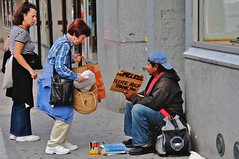 | 4 |
| 11258730784 | charlatan | (n.) one who falsely claims knowledge or ability (con artist, fake, cheat, fraud, imposter, phony, sham, pretender) |  | 5 |
| 11258730785 | denizen | (n.) an inhabitant, resident, or frequenter of a place (dweller, occupant, citizen, settler) |  | 6 |
| 11258730786 | doyen | (n.) a senior member of a group, especially one who is highly respected (chief, director, commander, head, manager, officer, ruler, boss, captain) |  | 7 |
| 11258730787 | flora | (n.) plants considered as a group in a particular area or era (vegetation, plants, verdure, greenery) |  | 8 |
| 11258730788 | imbibe | (v.) to consume by drinking (assimilate, ingest, absorb, gorge, swallow, devour) |  | 9 |
| 11258730789 | nostrum | (n.) a medicine or remedy whose effectiveness has not been proven (elixir, cure, drug, fix, potion, remedy, panacea) |  | 10 |
| 11258730790 | obviate | (v.) to prevent or make unnecessary; to get rid of (counteract, avert, block, hinder, remove, deter, interfere, restrain) |  | 11 |
| 11258730791 | perennial | (adj.) lasting indefinitely or recurring (chronic, persistent, continuing, eternal, everlasting, immortal, enduring, perpetual) |  | 12 |
| 11258730792 | putative | (adj.) commonly accepted or supposed; assumed to exist (presumed, hypothetical, reputed, alleged) |  | 13 |
| 11258730793 | savant | (n.) a person with detailed knowledge in a specialized field (expert, intellect, sage, scholar, connoisseur, adept, highbrow) |  | 14 |
Flashcards
Flashcards
Flashcards
Pages

Need Help?
We hope your visit has been a productive one. If you're having any problems, or would like to give some feedback, we'd love to hear from you.
For general help, questions, and suggestions, try our dedicated support forums.
If you need to contact the Course-Notes.Org web experience team, please use our contact form.
Need Notes?
While we strive to provide the most comprehensive notes for as many high school textbooks as possible, there are certainly going to be some that we miss. Drop us a note and let us know which textbooks you need. Be sure to include which edition of the textbook you are using! If we see enough demand, we'll do whatever we can to get those notes up on the site for you!
