

Flashcards
Ap language vocab list 23 Flashcards
Terms : Hide Images
| 13534477996 | ebullience | intense enthusiasm | 0 | |
| 13534477997 | inveterate | Deeply established (like traditions or habits ) | 1 | |
| 13534477998 | ingrate | an ungrateful person | 2 | |
| 13534477999 | efficacy | effectiveness | 3 | |
| 13534478000 | arbiter | a person who settles a dispute | 4 | |
| 13534478001 | ostentatious | showy | 5 | |
| 13534478002 | denigrate | To criticize unfairly | 6 | |
| 13534478003 | efface | to wipe out or erase | 7 | |
| 13534478004 | mercurial | Unpredictable with respect to changes in mood | 8 | |
| 13534478005 | soporific | tending to induce sleep | 9 |
AP Macroeconomics Unit 4 Flashcards
Financial Sector
Terms : Hide Images
| 13461757551 | medium of exchange | anything that is used to determine value during the exchange of goods and services must be accepted by others, portable, divisible, and uniform | 0 | |
| 13461757552 | store of value | an item that people can use to transfer purchasing power from the present to the future Durable and available in the future without losing value | 1 | |
| 13461757553 | measure of value | a function of money that allows it to serve as a common way to express value | 2 | |
| 13461757554 | m1 money | Measures money that can be spent immediately: currency, coin, travelers checks, funds in checking accounts | 3 | |
| 13461757555 | m2 money | a measure of the money supply: it consists of M1 plus other relatively liquid assets(savings accounts, small time deposit accounts, market deposit accounts) | 4 | |
| 13461757556 | liquidity of money | the ability to be used as, or directly converted to, cash | 5 | |
| 13461757557 | money demand | the amount that households, firms, and government want to hold in currency and deposits | 6 | |
| 13461757558 | stock | A share of ownership in a corporation. | 7 | |
| 13461757559 | bond | Certificate issued by a government or company promising to pay back a borrowed sum with interest. | 8 | |
| 13461757560 | time deposits | savings plans that require savers to leave their funds on deposit for certain periods of time | 9 | |
| 13461757561 | bank balance sheet | On a balance sheet, a firm's assets are listed on the left, and its liabilities and stockholder's equity are listed on the left. | 10 | |
| 13461757562 | asset of a bank | Anything owned by the bank or owed to the bank is an asset of the bank. Cash on reserve is an asset and so are loans made to citizens | 11 | |
| 13461757563 | liability of a bank | anything owned by depositors or lenders to the bank | 12 | |
| 13461757564 | fractional reserve banking | a banking system that keeps only a fraction of funds on hand and lends out the remainder | 13 | |
| 13461757565 | required reserves | reserves that a bank is legally required to hold, based on its checking account deposits | 14 | |
| 13461757566 | excess reserves | the amount of any deposit that does not have to be held aside and may be used to make loans and buy investments | 15 | |
| 13461757567 | federal funds rate | Interest rate banks charge each other for loans. Aligns with Fed interest rates. | 16 | |
| 13461757568 | prime interest rate | the lowest rate of interest that banks charge for short-term loans to their most creditworthy customers | 17 | |
| 13461757569 | discount rate | The interest rate on the loans that the Fed makes to banks | 18 | |
| 13461757570 | open market operations | Buying & selling government securities/bonds to change the supply of money | 19 | |
| 13461757571 | money multiplier | The amount of money the banking system generates with each dollar of reserves, the multiple by which deposits can increase for every dollar increase in reserves; equal to 1 divided by the required reserve ratio. | 20 | |
| 13461757572 | nominal interest rate | the interest rate as usually reported without a correction for the effects of inflation | 21 | |
| 13461757573 | real interest rate | the interest rate corrected for the effects of inflation | 22 | |
| 13461757574 | FDIC | Federal Deposit Insurance Corporation: a federally sponsored corporation that insures accounts in national banks and other qualified institutions | 23 | |
| 13461757575 | velocity of money | the rate at which money changes hands | 24 | |
| 13461757579 | money market graph |  | 25 | |
| 13461757580 | loanable funds market graph |  | 26 | |
| 13543808440 | easy money policy | monetary policy that increases the money supply AKA Expansionary monetary policy | 27 | |
| 13543816139 | tight money policy | monetary policy that reduces the money supply AKA Contractionary monetary policy | 28 | |
| 13543831784 | monetary policy | Federal Reserve Board managing the economy by altering the supply of money and interest rates | 29 |
Flashcards
AP LANGUAGE Flashcards
Burke Inspired
Terms : Hide Images
| 13983859822 | allegory | The device of using character and/or story elements symbolically to represent an abstraction in addition to the literal meaning. In some allegories, for example, an author may intend the characters to personify an abstraction like hope or freedom. The allegorical meaning usually deals with moral truth or a generalization about human existence. | 0 | |
| 13983859823 | alliteration | The repetition of sounds, especially initial consonant sounds in two or more neighboring words (as in "she sells sea shells"). Although the term is not frequently in the multiple choice section, you can look for alliteration in any essay page. It can reinforce meaning, unify ideas, supply a musical sound, and/or echo the sense of the passage | 1 | |
| 13983859824 | allusion | A direct or indirect reference to something which is presumably commonly known, such as an event, book, myth, place, or work of art. Allusions can be historical, literary, religious, topical, or mythical. There are many more possibilities, and a work may simultaneously use multiple layers of allusion | 2 | |
| 13983859825 | ambiguity | The multiple meanings, either intentional or unintentional, of a word, phrase, sentence, or passage. | 3 | |
| 13983859826 | analogy | A similarity or comparison between two different things or the relationship between them. An analogy can explain something unfamiliar by associating it with or pointing out its similarity to something more familiar. Analogies can also make writing more vivid, imaginative, or intellectually engaging. | 4 | |
| 13983859828 | antecedent | The word, phrase, or clause referred to by a pronoun. The AP Language exam occasionally asks for the antecedent of a given pronoun in a long, complex sentence or in a group of sentences. A question from the 200l AP test as an example follows: "But it is the grandeur of all truth which can occupy a very high place in human interests that it is never absolutely novel to the meanest of minds; "IT" exists eternally, by way of germ of latent principle, in the lowest as in the highest, needing to be developed but never to be planted. The antecedent of"it" (bolded) is...? [answer: "all truth"] | 5 | |
| 13983859829 | antithesis | the opposition or contrast of ideas; the direct opposite. | 6 | |
| 13983859830 | aphorism | A terse statement of known authorship which expresses a general truth or a moral principle. (If the authorship is unknown, the statement is generally considered to be a folk proverb.) An aphorism can be a memorable summation of the author's point | 7 | |
| 13983859831 | apostrophe | A figure of speech that directly addresses an absent or imaginary person or a personified abstraction, such as liberty or love. It is an address to someone or something that cannot answer. The effect may add familiarity or emotional intensity. William Wordsworth addresses John Milton as he writes, "Milton, thou shouldst be living at this hour: / England hath need of thee Another example is Keats "ode to a Grecian Um," in which Keats addresses the urnitself Thou still unravishhed bride of quietness." Many apostrophes imply a personification of the object addressed. | 8 | |
| 13983859832 | atmosphere | The emotional nod created by the entirety of a literary work, established partly by the setting and partly by the author's choice of objects that are described. Even such elements as a description of the weather can contribute to the atmosphere. Frequently, atmosphere foreshadows events. Perhaps it can create a mood. | 9 | |
| 13983859833 | caricature | a verbal description, the purpose of which is to exaggerate or distort, for comic effect, a person's distinctive physical features or other characteristics. | 10 | |
| 13983859834 | clause | A grammatical unit that contains both a subject and a verb. An independent, or main, clause expresses a complete thought and can stand alone as a sentence. A dependent, or subordinate clause, cannot stand alone as a sentence and must be accompanied by an independent clause. The point that you want to consider is the question of what or why the author subordinates one element should also become aware of making effective use of subordination in your own writing | 11 | |
| 13983859835 | colloquial/colloquialism | The use of slang or informalities in speech or writing. Not generally acceptable for formal writing, colloquialisms give a work a conversational, familiar tone. Colloquial expressions in writing include local or regional dialects. | 12 | |
| 13983859836 | conceit | A fanciful expression, usually in the form of an extended metaphor or surprising analogy between seemingly dissimilar objects. A conceit displays intellectual cleverness as a result of the unusual comparison being made. | 13 | |
| 13983859837 | connotation | The non-literal, associative meaning of a word; the implied, suggested meaning. Connotations may involve ideas, emotions, or attitudes | 14 | |
| 13983859838 | denotation | The strict, literal, dictionary definition of a word, devoid of any emotion, attitude, or color. (Example: the denotation of a knife would be a utensil used to cut; the connotation of a knife might be fear, violence, anger, foreboding, etc.) | 15 | |
| 13983859839 | diction | Related to style, diction refers to the writer's word choices, especially with regard to their correctness, cleaness, or effectiveness. For the AP exam, you should be able to describe an author's diction (for example, formal or informal, ornate or plain) and understand the ways in which diction can complement the author's purpose. Diction, combined with syntax, figurative language, literary devices, etc., creates an author's style. | 16 | |
| 13983859840 | didactic | From the Greek, didactic literally means "teaching." Didactic words have the primary aim of teaching or instructing. especially the teaching of moral or ethical principles. | 17 | |
| 13983859841 | euphemism | From the Greek for "good speech," euphemisms are a more agreeable or less offensive substitute for a generally unpleasant word or concept. The euphemism may be used to adhere to standards of social or political correctness or to add humor or ironic understatement. Saying "earthly remains" rather than "corpse" is an example of euphemism. | 18 | |
| 13983859842 | extended metaphor | A metaphor developed at great length, occurring frequently in or throughout a work. | 19 | |
| 13983859843 | figurative language | Writing or speech that is not intended to carry literal meaning and is usually meant to be imaginative and vivid. | 20 | |
| 13983882107 | figure of speech | A device used to produce figurative language. Many compare dissimilar things. Figures of speech include apostrophe, hyperbole, irony, metaphor, oxymoron, paradox, personification, simile, synecdoche, and understatement. | 21 | |
| 13983889077 | generic conventions | This term describes traditions for each genre. These conventions help to define each genre; for example, they differentiate an essay and journalistic writing or an autobiography and political writing. On the AP language exam, try to distinguish the unique features of a writer's work from those dictated by convention. | 22 | |
| 13983894586 | genre | The major category into which a literary work fits. The basic divisions of literature are prose, poetry, and drama. However, genre is a flexible term; within these broad boundaries exist many subdivisions that are often called genres themselves. For example, prose can be divided into fiction (novels and short stories) or nonfiction (essays, biographies, autobiographies, etc.). Poetry can be divided into lyric, dramatic, narrative, epic, etc. Drama can be divided into tragedy comedy, melodrama, farce, etc. On the AP language exam, expect the majority of the passages to be from the following genres: autobiography, bioraphy, diaries, criticism, essays, and journalistic, political, scientific, and nature writing. There may be fiction or poetry. | 23 | |
| 13983898650 | homily | This term literally means "sermon," but more informally, it can include any serious talk, speech, or lecture involving moral or spiritual advice. | 24 | |
| 13983909410 | hyperbole | A figure of speech using deliberate exaggeration or overstatement. (The literal Greek meaning is "overshoot.") Hyperboles often have a comic effect; however, a serious effect is also possible. Often, hyperbole produces irony. The opposite of hyperbole is understatement. | 25 | |
| 13983915387 | imagery | The sensory details or figurative language used to describe, arouse emotion, or represent abstractions. On a physical level, imagery uses terms related to the five senses: visual, auditory, tactile, gustatory, and olfactory. On a broader and deeper level, however, one image can represent more than one thing. For example, a rose may present visual imagery while also representing the color in a woman's cheeks and/or symbolizing some degree of perfection. An author may use employing other figures of speech, especially metaphor and simile. In addition this term can apply to the total of all the images in a work. On the AP language exam, pay attention to HOW an author creates imagery and to the effect of this imagery. | 26 | |
| 13983920678 | inference/infer | To draw a reasonable conclusion from the information presented. When a multiple choice question asks for an inference to be drawn from a passage, the most direct, most reasonable inference is the safest answer choice. If an inference is implausible, it's unlikely to be the correct answer. Note that if the answer choice is directly stated, it is not inferred and it is wrong. You must be careful to note the connotation - negative or positive - of the choices. | 27 | |
| 13983972716 | sarcasm | From the Greek meaning "to tear flesh," sarcasm involves bitter, caustic language that is meant to hurt or ridicule someone or something. It may use irony as a device, but not all ironic statements are sarcastic (that is, intended to ridicule). When well done, sarcasm can be witty and insightful; when poorly done, it is simply cruel | 28 | |
| 13983975213 | satire | A work that targets human vices and follies or social institutions and conventions for reform or ridicule. Regardless of whether or not the work aims to reform human behavior, satire is best seen as a style of writing rather than a purpose for writing. It can be recognized by the many devices used effectively by the satirist: irony, wit, parody, caricature hyperbole, understatement, and sarcasm. The effects of satire are varied, depending on the writer's goal, but good satire, often humorous, is thought provoking and insightful about the human condition. Some modern satirists include Josepłh Heller (Catch 22) and Kurt Vonnegut (Cat's Cradle, Player Piano). | 29 | |
| 13983978467 | semantics | The branch of linguistics that studies the meaning of words, their historical and psychological development, their connotations, and their relation to one another | 30 | |
| 13983984460 | style | The consideration of style has two purposes: (1) An evaluation of the sum of the choices an author makes in blending diction, syntax, figurative language, and other literary devices. Some authors' styles are so idiosyncratic that we can quickly recognize works by the same author We can analyze and describe an author's personal style and make judgments on how appropriate it is to the author's purpose. Styles can be called flowery, explicit, succinct, rambling, bombastic, commonplace, incisive, laconic, etc. (2) Classification of authors to a group and comparison of an author to similar authors. By means of such classification and comparison, we can see how an author's style reflects and helps to define a historical period, such as the Renaissance or the Victorian period, or a literary movement, such as the romantic, transcendental, or realist movement. | 31 | |
| 13983997245 | subject complement | The word (with any accompanying phrases) or clause that follows a linking verb and complements, or completes, the subject of the sentence by either (1) renaming it (the predicate nominative) or (2) describing it (the predicate adjective). These are defined below: (1) the predicate nominative- a noun, group of nouns, or noun clause that renames the subject. It, like the predicate adjective, follows a linking verb and is located in the predicate of the sentence. Example: Julia Roberts is a movie star movie star = predicate nominative, as it renames the subject, Julia Roberts (2) the predicate adjective-- an adjective, a group of adjectives, or adjective clause that follows a linking verb It is in the predicate of the sentence, and modifies, or describes, the subject. Example: Warren remained optimistic optimistic = predicate adjective, as it modifies the subject, Warren | 32 | |
| 13984001267 | subordinate clause | Like all clauses, this word group contains both a subject and a verb (plus any accompanying phrases or modifiers), but unlike the independent clause, the subordinate clause cannot stand alone; it does not express a complete thought. Also called a dependent clause, the subordinate clause depends on a main clause (or independent clause) to complete its meaning. Easily recognized key words and phrases usually begin these clauses. For example: although, because, unless, if, even though, since, as soon as, while, who, when, where, how and that Example: Yellowstone is a national park in the West that is known for its geysers. subordinate clause is "that.....geysers.". | 33 | |
| 13984011530 | syllogism | From the Greek for "reckoning together," a syllogism (or syllogistic reasoning or syllogistic logic) is a deductive system of formal logic that presents two premises (the first one called "major" and the second called "minor") that inevitably lead to a sound conclusion. A frequently cited example proceeds as follows: major premise: All men are mortal minor premise: Socrates is a man conclusion: Therefore, Socrates is a mortal A syllogism's conclusion is valid only if each of the two premises is valid. Syllogisms may also present the specific idea first (Socrates") and the general second ("all men") | 34 | |
| 13984026785 | symbol/symbolism | Generally, anything that represents itself and stands for something else. Usually a symbol is something concrete - such as an object, action, character, or scene- that represents something more abstract. However, symbols and symbolism can be much more complex. One system classifies symbols into three categories: (1) natural symbols are objects and occurrences from nature to symbolize ideas commonly associated with them (Dawn symbolizing hope or a new beginning, a rose symbolizing love, a tree symbolizing knowledge). 2) conventional symbols are those that have been invested with meaning by a group (religious symbols such as a cross or Star of David; national symbols, such as a flag or an eagle; or group symbols, such as a skull and crossbones for a/pirates or the scale of justice for lawyers). (3) literary symbols are sometimes also conventional in the sense that they are found in a variety of works and are more generally recognized. However, a work's symbols may be more complicated, as is the jungle in Heart of Darkness. On the AP exam, try to determine what abstraction an object is a symbol for and to what extent it is successful in representing that abstraction. | 35 | |
| 13984032243 | synecdoche | a figure of speech in which a part of something is used to represent the whole or, occasionally, the whole is used to represent a part. Examples: To refer to a boat as a "sail"; to refer to a car as "wheels"; to refer to the violins, violas, etc. in an orchestra as "the strings." **Different than metonymy, in which one thing is represented by another thing that is commonly physically associated with it (but is not necessarily a part of it), ie., referring to a monarch as "the crown" or the President as "The White House | 36 | |
| 13984035797 | synesthesia | when one kind of sensory stimulus evokes the subjective experience of another. Ex: The sight of red ants makes ou itchy. In literature, synesthesia reters to the practice of associating two or more different senses in the same image. Red Hot Chili Peppers' song title,Taste the Pain," is an example | 37 | |
| 13984039484 | syntax | The way an author chooses to join words into phrases, clauses, and sentences. Syntax is similar to diction, but you can differentiate them by thinking of syntax as groups of words, while diction refers to the individual words. In the multiple- choice section of the AP exam, expect to be asked some questions about how an author manipulates syntax. In the essay section, you will need to analyze how syntax produces effects. | 38 | |
| 13984041641 | theme | The central idea or message of a work, the insight it offers into life. Usually theme is unstated in fictional works, but in nonfiction, the theme may be directly state, especially in expository or argumentative writing | 39 | |
| 13984045410 | thesis | In expository writing, the thesis statement is the sentence or group of sentences that directly expresses the author's opinion, purpose, meaning, or position. Expository writing is usually judged by analyzing how accurately, effectively and thoroughly a writer has proven the thesis | 40 | |
| 13984061931 | tone | Similar to mood, tone describes the author's attitude toward his material, the audience, or both. Tone is easier to determine in spoken language than in written language. Considering how a work would sound if it were read aloud can help in identifying an author's tone. Some words describing tone are playfiul, serious, businesslike, sarcastic, humorous, formal, ornate, sardonic, somber, etc. | 41 | |
| 13984066778 | transition | A word or phrase that links different ideas. Used especially, although not exclusively, in expository and argumentative writing, transitions effectively signal a shift from one idea to another. A few commonly used transitional words or phrases are furthermore, consequently, nevertheless, for example, in addition, likewise, similarly, on the contrary, etc. More sophisticated writers use more subtle means of transition. | 42 | |
| 13984071979 | understatement | the ironic minimalizing of fact, understatement presents something as less significant than it is. The effect can frequently be humorous and emphatic. Understatement is the opposite of hyperbole. Example: Jonathan Swift's A Tale of a Tub: "Last week I saw a woman flayed, and you will hardly believe how much it altered her person for the worse." | 43 | |
| 13984076501 | wit | in modern usage, intellectually amusing language that surprises and delights. A witty statement is humorous, while suggesting the speaker's verbal power in creating ingenious and perceptive remarks. Wit usually uses terse language tha makes a pointed statement. Historically, wit originally meant basic understanding. Its meaning evolved to include speed of understanding, and finally, it grew to mean quick perception including creative fancy and a quick tongue to articulate an answer that demanded the same quick perception. | 44 | |
| 13984143646 | Invective | an emotionally violent, verbal denunciation or attack using strong, abusive language. (For example, in Henry IV, Part L, Prince Hal calls the large character of Falstaff "this sanguine coward, this bedpresser, this horseback breaker, this huge hill of flesh.") | 45 | |
| 13984149373 | irony/ironic | The contrast between what is stated explicitly and what is really meant, or the difference between what appears to be and what is actually true. Irony is often used to create poignancy or humor. In general, there are three major types of irony used in language (1) verbal irony - when the words literally state the opposite of the writer's (or speaker's) meaning (2) situational irony - when events turn out the opposite of what was expected; when what the characters and readers think ought to happen is not what does happen (3) dramatic irony- when facts or events are unknown to a character in a play or piece of fiction but known to the reader, audience, or other characters in the work. | 46 | |
| 13984151500 | litotes | a form of understatement that involves making an affirmative point by denying its opposite. Litote is the opposite of hyperbole. Examples: "Not a bad idea," "Not many," "It isn't very serious. I have this tiny little tumor on the brain" (Salinger, Catcher in the Rye). | 47 | |
| 13984154826 | loose sentence/non-periodic sentence | A type of sentence in which the main idea (independent clause) comes first, followed by dependent grammatical units such as phrases and clauses. Ifa period were placed at the end of the independent clause, the clause would be a complete sentence. A work containing many loose sentences often seems informal, relaxed, or conversational. Generally, loose sentences create loose style. The opposite of a loose sentence is the periodic sentence. Example: I arrived at the San Diego airport after a long, bumpy ride and multiple delays. Could stop at: I arrived at the San Diego airport. | 48 | |
| 13984156367 | metaphor | A figure of speech using implied comparison of seemingly unlike things or the substitution of one for the other, suggesting some similarity. Metaphorical language makes writing more vivid, imaginative, thought provoking, and meaningful | 49 | |
| 13984166664 | metonymy | A term from the Greek meaning "changed label" or "substitute name," metonymy is a figure of speech in which the name of one object is substituted for that of another closely associated with it. For example, a news release that claims "the White House declared" rather than "the President declared" is using metonymy; Shakespeare uses it to signify the male and female sexes in As You Like Ir: "doublet and hose ought to show itself courageous to petticoat." The substituted term generally carries a more potent emotional impact. | 50 | |
| 13984168524 | mood | The prevailing atmosphere or emotional aura of a work. Setting, tone, and events can affect the mood. Mood is similar to tone and atmosphere. | 51 | |
| 13984170248 | narrative | The telling of a story or an account of an event or series of events. | 52 | |
| 13984173915 | onomatopoeia | A figure of speech in which natural sounds are imitated in the sounds of words. Simple examples include such words as buzz, hiss, hum, crack, whinny, and murmur. If you note examples of onomatopoeia in an essay passage, note the effect. | 53 | |
| 13984188600 | oxymoron | From the Greek for "pointedly foolish," an oxymoron is a figure of speech wherein the author groups apparently contradictory terms to suggest a paradox. Simple examples include "jumbo shrimp" and "cruel kindness." This term does not usually appear in the multiple-choice questions, but there is a chance that you might find it in an essay. Take note of the effect that the author achieves with the use of oxymoron. | 54 | |
| 13984200157 | paradox | A statement that appears to be self-contradictory or opposed to common sense but upon closer inspection contains some degree of truth or validity. (Think of the beginning of Dickens' Tale of Two Cities: "It was the best of times, it was the worst of times...." | 55 | |
| 13984205414 | parallelism | parallelism Also referred to as parallel construction or parallel structure, this term comes from Greek roots meaning "beside one another." It refers to the grammatical or rhetorical framing of words, phrases, sentences, or paragraphs similarity. This can involve, but is not limited to, repetition of a grammatical element such as a preposition or verbal phrase. (Again, the opening of Dickens' Tale of Two Cities is an example: "It was the best of times, it was the worst of times, it was the age of wisdom, it was the age of foolishness, it was the epoch of believe, it was incredulity." The effects of paraltetsm are mumerous, but frequently they act as an organizing force to attract the reader's attention, add emphasis and organization, or simply provide a musical rhythm. | 56 | |
| 13984218702 | anaphora | A sub-type of parallelism, when the exact repetition of words or phrases at the beginning of successive lines or sentences. MLK used anaphora in his famous "I Have a Dream" speech (1963) | 57 | |
| 13984222433 | parody | A work that closely imitates the style or content of another with the specific aim of comic effect and or ridicule. It exploits peculiarities of an author's expression (propensity to use too many parentheses, certain favorite words, etc.) Well-written parody offers enlightenment about the original, but poorly written parody offers only ineffectual imitation. Usually an audience must grasp literary allusion and understand the work being parodied in order to fully appreciate the nuances of the newer work. Occasionally, however, parodies take on a life of their own and don't require knowledge of the original. | 58 | |
| 13984226149 | pedantic | An adjective that describes words, phrases, or general tone that is overly scholarly, academic, or bookish (language that might be described as "show-offy", using big words for the sake of using big words). | 59 | |
| 13984230059 | periodic sentence | The opposite of loose sentence, a sentence that presents its central meaning in a main clause at the end. This independent clause is preceded by a phrase or clause that cannot stand alone. The effect of a periodic sentence is to add emphasis and structural variety. It is also a much stronger sentence than the loose sentence. (Example: After a long, bumpy flight and multiple delays, I arrived at the San Diego airport.) | 60 | |
| 13984232248 | personification | A figure of speech in which the author presents or describes concepts, animals, or inanimate objects by endowing them with human attributes or emotions. Personification is used to make these abstractions, animals, or objects appear more vivid to the reader. | 61 | |
| 13984240958 | point of view | In literature, the perspective from which a story is told. There are two general divisions of point of view, and many subdivisions within those. (1) first person narrator tells the story with the first person pronoun, "I," and is a character in the story. This narrator can be the protagonist, a secondary character, or an observing character. (2) third person narrator relates the events with the third person pronouns, "he," "she," and "it." There are two main subdivisions to be aware of: a. third person omniscient, in which the narrator, with godlike knowledge, presents the thoughts and actions of any or all characters b. third person limited omniscient, in which the narrator presents the feelings and thoughts of only one character, presenting only the actions of all the remaining characters. In addition, be aware that the term point of view carries an additional meaning. When you are asked to analyze the author's point of view, the appropriate point for you to address is the author's attitude. | 62 | |
| 13984244945 | prose | one of the major divisions of genre, prose refers to fiction and nonfiction, including all its forms. In prose the printer determines the length of the line; in poetry, the poet determines the length of the line. | 63 | |
| 13984250577 | repetition | The duplication, either exact or approximate, of any element of language, such as a sound, word, phrase, clause, sentence, or grammatical pattern. | 64 | |
| 13984252931 | rhetoric | From the Greek for "orator," this term describes the principles governing the art of writing effectively, eloquently, and persuasively. | 65 | |
| 13984258969 | rhetorical modes | This flexible term describes the variety, the conventions, and the purposes of the major kinds of writing. The four most common rhetorical modes (often referred to as "modes of discourse") are as follows: (1) The purpose of exposition (or expository writing) is to explain and analyze information by presenting an idea, relevant evidence, and appropriate discussion. The AP language exam essay questions are frequently expository topics. (2) The purpose of argumentation is to prove the validity of an idea, or point of view, by presenting sound reasoning, discussion, and argument that thoroughly convince the reader. Persuasive writing is a type of argumentation having an additional aim of urging some form of action. (3) The purpose of description is to recreate, invent, or visually present a person, place, event or action so that the reader can picture that being described. Sometimes an author engages all five senses in description; good descriptive writing can be sensuous and picturesque. Descriptive writing may be straightforward and objective or highly emotional an subjective (4) The purpose of narration is to tell a story or narrate an event or series of events. This writing mode frequently uses the tools of descriptive writing. | 66 |
AP Language and Literature- Fallacies Flashcards
Terms : Hide Images
| 10902776554 | Ad Hominem | Attacking a person or their character, rather than their argument or reasoning | 0 | |
| 10902793571 | Ad Populum | Attempting to swap popular support by appealing to sentimental weakness, rather than facts | 1 | |
| 10902804874 | Appeal to Authority | Arguing that since an authority (not necessarily an expert in the matter, either) thinks something, it must be true | 2 | |
| 10902845699 | Appeal to Ignorance | Asserting a clam is true because it has not yet been proven false | 3 | |
| 10902853175 | Appeal to Fear | Attempting to create support for an idea using deception and propaganda in attempts to increase fear and prejudice towards the competition | 4 | |
| 10902882823 | Bandwagon | Claiming something is true because most people believe it | 5 | |
| 10902895578 | Black/White; Either/Or | Suggesting that only two options exist when, in reality, there are several options | 6 | |
| 10902911289 | Circular Reasoning | Using evidence that hasn't been proven in order to prove something else, then using that something else to prove the original claim | 7 | |
| 10902934707 | Faulty Analogy | Assuming that because two things are alike in one respect, they are alike in all respects | 8 | |
| 10902943975 | Hasty Generalization | Using small numbers or percentages to represent a whole | 9 | |
| 10902959361 | Moral Equivalence | Arguing that serious wrongdoings are the same as minor offenses; comparison that doesn't work because one problem/decision is far greater or worse than others | 10 | |
| 10902994024 | Non Sequitur | Making a conclusion that doesn't follow based on the evidence provided | 11 | |
| 10903005363 | Red Herring | Diverting attention from something (usually something the arguer wants to avoid) by changing the subject to something else | 12 | |
| 10903020511 | Slippery Slope | Arguing that if one thing happens, a series of bad things will follow | 13 | |
| 10903031698 | Straw Man | Misrepresenting a scenario, then attacking that to make the opponent look bad | 14 |
Flashcards
American Pageant Chapter 3 Flashcards
Terms : Hide Images
| 7571923294 | Calvinism | Reformed theology that emphasizes the rule of God over all things. Associated with John Calvin. |  | 0 |
| 7571923295 | Predestination | Belief that God has determined which souls will preside in heaven and which will not, a decision than cannot be altered. |  | 1 |
| 7571923296 | Puritans | Protestants seeking to reform the Church of England in the sixteenth and seventeenth centuries. |  | 2 |
| 7571923297 | Separatists | Those who sought to break away from the Church of England. |  | 3 |
| 7571923298 | Mayflower Compact | 1620 - The first agreement for self-government in America. It was signed by the 41 men on the Mayflower and set up a government for the Plymouth colony. |  | 4 |
| 7571923299 | Massachusetts Bay Colony | King Charles gave the Puritans a right to settle and govern a colony in the Massachusetts Bay area. |  | 5 |
| 7571923300 | Great Migration | 70,000 refugees left England for the New World. |  | 6 |
| 7571923301 | Fundamental Orders of Connecticut | Is considered by some as the first written Constitution. A short document, but contains some principles that were later applied in creating the United States government. It states the powers of the government, and some limits within which that power is exercised. |  | 7 |
| 7571923302 | King Phillip's War | A Native American uprising that attacked New England and New York in which helped lead to the formation of the Dominion of New England. |  | 8 |
| 7571923303 | English Civil War | Featured religious disputes mixed with constitutional issues concerning the powers of the monarchy. |  | 9 |
| 7571923304 | Dominion Of New England | The British government combined the colonies of Massachusetts, Rhode Island, New Hampshire, and Connecticut into a single province headed by a royal governor (Andros). |  | 10 |
| 7571923305 | Navigation Laws | Promoted English shipping and control colonial trade; made Americans ship all non-British items to England before going to America. |  | 11 |
| 7571923306 | Glorious Revolution | Following the English Civil War, this event involve the British Parliament once again overthrowing their monarch in 1688-1689. James II was expelled and William and Mary were made king and queen. Marks the point at which Parliament made the monarchy powerless, gave themselves all the power, and wrote a bill of Rights. |  | 12 |
| 7571923307 | Salutary Neglect | An English policy of not strictly enforcing laws in its colonies. |  | 13 |
| 7571923308 | Blue Laws | Laws designed to restrict personal behavior. |  | 14 |
| 7571923309 | Martin Luther | A German theological reformer who denied papal power, and claimed the only sacraments were baptism and communion. |  | 15 |
| 7571923310 | William Bradford | Governor of the Plymouth colony. He helped the colony survive droughts, crop failures, and Indian attacks. |  | 16 |
| 7571923311 | John Winthrop | Governor of the Massachusetts Bay Colony. |  | 17 |
| 7571923312 | Anne Hutchinson | A Puritan woman who disagreed with the Puritan Church in Massachusetts Bay Colony. Her actions resulted in her banishment from the colony. |  | 18 |
| 7571923313 | Roger Williams | He left the Massachusetts colony and purchased the land from a neighboring Indian tribe to found the colony of Rhode Island. Rhode Island was the only colony at that time to offer complete religious freedom. |  | 19 |
| 7571923314 | Sir Edmund Andros | Governor of the Dominion of New England. |  | 20 |
| 7571923315 | Henry Hudson | Explorer for the Dutch. He claimed the Hudson River around present day New York and called it New Netherland. |  | 21 |
| 7571923316 | Peter Stuyvesant | Dutch leader known as "Father Wooden Leg". Lost the New Netherlands to the English. |  | 22 |
| 7571923317 | James the Duke Of York | Brother of Charles II, namesake of New York. |  | 23 |
| 7571923318 | William Penn | A devout Quaker who founded the colony of Pennsylvania. |  | 24 |
| 8502949926 | Predestination | 宿命论 The belief that God has decided everything that will happen and that people cannot change this. | 25 | |
| 8502950289 | Preside | 主持 To be in charge of a formal event, organization, ceremony. | 26 | |
| 8502949927 | Puritans | 禁欲者 A person with censorious moral beliefs, especially about pleasure and sex. | 27 | |
| 8502951008 | Separatists | 分离主义者 A person who supports the separation of a particular group of people from a larger body on the basis of ethnicity, religion, or gender. | 28 | |
| 8502951217 | Refugee | 难民 Someone who has been forced to leave their country, especially during a war, or for political or religious reasons. |  | 29 |
| 8502952018 | Migration | 移居 Go to live in another area or country, especially in order to find work. |  | 30 |
| 8502952214 | Reformer | 改革者 Someone who works to improve a social or political system. | 31 | |
| 8502952270 | Puritanism | 清教 The beliefs and practices characteristic of Puritans. | 32 | |
| 8502952363 | Doctrines | 信条,教义 A belief or set of beliefs held and taught by a Church, political party, or other group: the doctrine of predestination. | 33 | |
| 8502953313 | Purification | 净化,涤罪 The act of cleaning by getting rid of impurities. |  | 34 |
| 8502953363 | Harass | 使困扰,使烦恼 To make someone's life unpleasant, for example by frequently saying offensive things to them or threatening them. | 35 | |
| 8502953443 | Pilgrims | 朝圣者,旅行者 A person who journeys to a sacred place for religious reasons. | 36 | |
| 8502953538 | Commonwealth | 联邦;共和国;国民整体 An independent country or community, especially a democratic republic. | 37 | |
| 8502953615 | Covenant | 契约,盟约;圣约 A signed written agreement between two or more parties (nations) to perform some action. | 38 | |
| 8502954164 | Franchise | 特权,公民权 The legal right to vote in your country's elections |  | 39 |
| 8502955447 | Clergy | 神职人员;牧师;僧侣 The official leaders of religious activities in organized religions, such as priests, rabbis , and mullahs. |  | 40 |
| 8502955554 | Oaths | 宣言 A formal and very serious promise | 41 | |
| 8502955848 | Neglect | 疏忽 To fail to look after someone or something properly. | 42 | |
| 8502955951 | Dissenter | 反对者 A person or organization that disagrees with an official decision or accepted opinion. | 43 | |
| 8502956010 | Strife | 冲突,不和 Trouble between two or more people or groups. | 44 | |
| 8502956999 | Shrewd | 精明的,狡猾的 Be good at judging what people or situations are really like. |  | 45 |
AP World History - Strayer Chapter 18 Flashcards
Terms : Hide Images
| 10944567425 | European Racism | Europeans began to use scientific methods to back up why they should be in power, Belief that whites are generally just superior |  | 0 |
| 10944567426 | Scramble for Africa | European countries fought each other for rapid colonization of Africa, used both negotiation and military tactics to win land |  | 1 |
| 10944567427 | Indian Rebellion | People were protesting the influence of Christianity and military tactics and defending Hinduism |  | 2 |
| 10944567428 | Congo Free State | took millions of lives of locals by forcing villagers to collect rubber, massive use of forced labor | 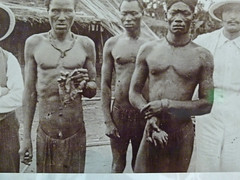 | 3 |
| 10944567429 | Leopold II | Belgian king who ruled the Congo free state |  | 4 |
| 10944567430 | Cultivation system | Peasants were forced to cultivate specified cash crops and meet tax requirements by the state, helped the Dutch but really hurt the natives | 5 | |
| 10944567431 | cash-crop agriculture | production of crops for sale on the global market, such as sugar or coffee, interfered with the production of food crops in the colonies, had many environmental consequences |  | 6 |
| 10944567432 | Western-Educated Elite | Ability for social mobility and interaction with the government, Africans and Asians who were literate were seen as a lot more valuable and often adopted elements of Western Culture |  | 7 |
| 10944567433 | Wanijuku | Woman who experienced a changing of times into British control, and although being circumcized, was married and became Christian, further living a Western life | 8 | |
| 10944567434 | Africanization of Christianity | African customs merged with Christianity to be more appealing and to involve more mystical practices |  | 9 |
| 10944567435 | Swami Vivekananda | Influential Indian religious leader who used Hinduism to unite his country and offer a sense of community |  | 10 |
| 10944567436 | Edward Blyden | Believed that every race had a specific contribution to make, and it was the distinguishing feature between societies |  | 11 |
Pages

Need Help?
We hope your visit has been a productive one. If you're having any problems, or would like to give some feedback, we'd love to hear from you.
For general help, questions, and suggestions, try our dedicated support forums.
If you need to contact the Course-Notes.Org web experience team, please use our contact form.
Need Notes?
While we strive to provide the most comprehensive notes for as many high school textbooks as possible, there are certainly going to be some that we miss. Drop us a note and let us know which textbooks you need. Be sure to include which edition of the textbook you are using! If we see enough demand, we'll do whatever we can to get those notes up on the site for you!
