

Flashcards
Flashcards
Flashcards
Flashcards
AP Language + Composition Flashcards
Terms : Hide Images
| 8638922629 | Argument | Convincing readers of the soundness of a particular opinion on a controversial issue using clear thinking and logic. (logic based) | 0 | |
| 8638947929 | Persuasion | Utilizes emotional language and dramatic appeals to readers concerns, beliefs and values in order to convince the reader and urge him/her to commit to a course of action. (emotional based) | 1 | |
| 8638979478 | Induction | Inference of generalization based on specific evidence; specific to general. | 2 | |
| 8638995221 | Deduction | General to specific then back to general. Begin with a premise/assumption, provide evidence or new information, then draw a conclusion. | 3 | |
| 8639021560 | Fallacies | A mistaken belief, especially one based on unsound argument. | 4 | |
| 8639041227 | Begging the Question (fallacy) | Treating an opinion that is open to question as of it were already proved or disproved. | 5 | |
| 8639055230 | Red Herring (fallacy) | Introducing an irrelevant issue intended to distract readers from relevant issue. | 6 | |
| 8639088859 | Ad Hominem (fallacy) | Attacking the qualities of the people holding the opposing view rather than the substance of the view itself. | 7 | |
| 8639104317 | Bandwagon | Inviting readers to accept a claim because everyone else does. | 8 | |
| 8639121228 | Hasty Generalization | Making a claim on the basis of inadequate evidence. | 9 | |
| 8639141491 | Sweeping Generalization | Making an insupportable statement; these are often absolute statements involving words such as all always, never, and no one that allow no exceptions; can also be stereotypes. | 10 | |
| 8639163748 | Either/or Fallacy | Assuming that a complicated question has only two answers, one good and one bad, both good or both bad. | 11 | |
| 8941288742 | Rhetoric | The term describes the principles governing the art of writing effectively, eloquently, and persuasively | 12 | |
| 8941292054 | Ethos | The trustworthiness or credibility of the writer or speaker | 13 | |
| 8941294376 | Logos | Appeal to logic; the author will persuade using logical reasoning and effective evidence | 14 | |
| 8941304877 | Pathos | Appeal to emotion; the author creates an emotional response | 15 | |
| 8941310126 | Mood | The prevailing atmosphere of a work--- the effect the author has on the reader | 16 | |
| 8941313437 | Tone | The author's attitude towards his/her subject or audience | 17 | |
| 8941317399 | Persona | The fictional mask or narrator that tells a story | 18 | |
| 8941322658 | Anecdote | A short narrative detailing particulars of an interesting episode or event | 19 | |
| 8941326337 | Figurative Language | Writing or speech that is not intended to carry literal meaning and is usually meant to be imaginative and vivid | 20 | |
| 8941329614 | Flashback | A narrative technique that allows a writer to present past events during currents events, in order to provide background for the current narration. | 21 | |
| 9022905083 | Parallelism | The repetition of syntactic construction successive sentences for rhetorical effect | 22 | |
| 9022922092 | Anaphora | The same expression (word or words) repeated at the beginnning of two or more lines, clauses, or sentences. | 23 | |
| 9022929502 | Epistrophe | The repetition of a word or words at the end of two or more successive clauses or sentences | 24 | |
| 9022951609 | Polysyndeton | When a writer creates a list of items which are all separated by conjunctions. | 25 | |
| 9022936867 | Asyndeton | the intentional elimination of conjunctions between the phrases and in the sentence, yet maintain the grammatical accuracy | 26 | |
| 9022959897 | Allusion | A direct or indirect reference to something which is presumably commonly know, such as an event, book, myth, place, or work of art. | 27 | |
| 9023004613 | Synecdoche | A figure of speech in which part of something is used to represent the whole or, occasionally, the whole is used to represent a part. | 28 | |
| 9023025457 | Analogy | A similarity or comparison between two different things or the relationship between them.--- explains the unfamiliar by connecting it to familiar | 29 | |
| 9023044605 | Aphorism | A terse statement which expresses a general truth or a moral principle. | 30 | |
| 9023070554 | Narration | The telling of a story or an account of an event or series of events | 31 | |
| 9120020140 | Diction | The choice of a particular word as opposed to others | 32 | |
| 9120030610 | Colloquialism | The use of slang or in-formalities in speech or writing | 33 | |
| 9120047452 | Jargon | The specialized language or vocabulary of a particular group or profession | 34 | |
| 9120070684 | Connotation | The emotions, values, or images associated with a word | 35 | |
| 9120103866 | Denotation | The literal meaning of a word; there are no emotions, values, or images associated with denotative meaning | 36 | |
| 9470244113 | Cumulative Sentences (or loose) | The main clause come first but may be followed by details | 37 | |
| 9470244114 | Periodic Sentences | Delay the main idea until the end (or introduce the main clause early but postpone its completion until the end) | 38 | |
| 9470244115 | Balanced Sentences | Two parallel clauses or phrases are set off against each other like equal weights on a scale | 39 | |
| 9470244116 | Interrupted Sentences | Subordinate elements that come in the middle , often set off by dashes | 40 | |
| 9485434238 | Simple Sentence | Consists of one independent clause (subject + verb) | 41 | |
| 9485439549 | Compound Sentence | Consists of at least two independent clauses | 42 | |
| 9485440574 | Complex Sentence | Consists of one independent clause and at least one dependent clause | 43 | |
| 9485442570 | Compound-Complex Sentence | Consists of at least two independent clauses and at least one dependent clause | 44 | |
| 9485442571 | Declarative Sentence | Makes a statement of fact or possibility Represents most sentences Ends with period | 45 | |
| 9485445995 | Interrogative Sentence | Asks a question Ends with a question mark Always rhetorical in academic writings | 46 | |
| 9485447839 | Exclamatory Sentence | Expresses a thought with strong emotion Ends with an exclamation mark Use sparingly, particularly in academic writing | 47 | |
| 9485449517 | Imperative Sentence | Makes a request or gives a command Can end with either a period or exclamation mark Generally inappropriate in academic writing, due to its use of 2nd person voice (you = understood subject), but can be used to establish tone | 48 | |
| 9603192884 | Sarcasm | From the Greek meaning "to tear flesh," sarcasm involves bitter, caustic language that is meant to hurt or ridicule someone or something. | 49 | |
| 9603196030 | Satire | A work that targets human vices and follies or social institutions and conventions for reform or ridicule. | 50 | |
| 9603200661 | Irony | The contrast between what is stated explicitly and what is really meant, or the difference between what appears to be and what is actually true. verbal irony - when the words literally state the opposite of the writer's (or speaker's) meaning | 51 | |
| 9603207646 | Understatement | The ironic minimalizing of fact; understatement presents something as less significant than it is. The effect can frequently be humorous and emphatic. | 52 | |
| 9603209210 | Paradox | A seemingly contradictory situation which is actually true."You can't get a job without experience, and you can't get experience without getting a job." | 53 | |
| 9635102420 | Euphemism | A more agreeable or less offensive substitute for a generally unpleasant word or concept | 54 | |
| 9635102421 | Hyperbole | A figure of speech using deliberate exaggeration or overstatement | 55 | |
| 9635102422 | Imagery | The sensory details or figurative language used to describe arouse emotion or represent abstractions | 56 | |
| 9635102423 | Pedantic | Words, phrases, or general tone that is overly scholarly, academic, or bookish | 57 | |
| 9635102424 | Apostrophe | An address to someone or something that cannot answer | 58 | |
| 9635125335 | Idiom | An expression that cannot be understood from the meanings of its separate words but that has a separate meaning of its own Ex: 'kick the bucket' | 59 | |
| 9771114637 | Juxtaposition | An act or instance of placing words, phrases, or images close together or side by side, especially for comparison or contrast | 60 | |
| 9771114638 | Antithesis | the opposition or contrast of ideas; the direct opposite. | 61 | |
| 9771114639 | Meiosis | Understatement, the opposite of exaggeration | 62 | |
| 9771114640 | Litotes | A type of meiosis in which the writer uses a statement in the negative to create the effect | 63 | |
| 9863964835 | Oxymoron | A figure of speech wherin the quthor groups apparently contradictory terms to suggest a paradox | 64 | |
| 9863977370 | Anastrophe | the inversion of the usual order of words or clauses emphasizes the displaced word or phrase. | 65 | |
| 9863985413 | Catalogue | Creating long lists for poetic or rhetorical effect. | 66 | |
| 9863989747 | Rhetorical Question | Question not asked for information but for effect. | 67 | |
| 9863994220 | Symbolism | the use of symbols (action, person, place, word, or object) to represent ideas or qualities | 68 |
AP Language Midterm Flashcards
Terms : Hide Images
| 5759580162 | Unknown Author | author of Beowulf | 0 | |
| 5759584101 | Beowulf (Character) | Geat from Southern Sweden who sailed from Denmark to help King Hrothgar fight Grendel | 1 | |
| 5759591111 | Grendel | born of Cain, half-human/half-demon animal that terrorizes King Hrothgar and his men; defeated by Beowulf by having his arm torn off | 2 | |
| 5759603844 | Grendel's Mother | the mother of Grendel who fights Beowulf and is defeated by him; lives in the lake where Grendel crawled into to die | 3 | |
| 5759636538 | King Hrothgar | the King of the Danes who is terrorized by Grendel | 4 | |
| 5759658722 | Herot | the drinking hall that Grendel attacks in the night | 5 | |
| 5759674525 | Danish Watchman | guard that allows Beowulf and his men to enter the country | 6 | |
| 5759682332 | Edgetho | Beowulf's father | 7 | |
| 5759690227 | Higlac | Beowulf's relative | 8 | |
| 5759714684 | Wiglaf | one of Beowulf's men who is the only one to turn back and fight when the rest of his men run away whilst Beowulf is fighting the dragon | 9 | |
| 5759759778 | Beowulf (Plot) | Beowulf sails to help King Hrothgar defeat Grendel, a monster who terrorizes the people, and goes on a rampage of killing Grendel, his mother, and dies trying to defeat a dragon guarding a tower | 10 | |
| 5759755847 | Geoffrey Chaucer | Author of The Canterbury Tales | 11 | |
| 5759791623 | The Canterbury Tales (Plot) | a group of pilgrims is going to visit the shrine of St. Thomas Beckett. Along the way, they meet an innkeeper who agrees to travel with them as a judge for a game he creates. He says that everyone on the pilgrimage is allowed to tell two stories and he will pick the best one at the end of the journey, and whoever wins will have a feast hosted by the other people on the journey. | 12 | |
| 5759879019 | The Pardoner's Tale (Plot) | three men set out on a quest to defeat death, and come across crap loads of money, to which they agree to split. They send one man out to buy food and drink and the other two plot to murder him when he returns. In the end, all three men die by their own attempts at murdering the others. | 13 | |
| 5759901891 | The Wife of Bath's Tale (Plot) | A rapist is sentenced to find out what women really want in one year or he shall be killed. He travels all over, but every women he asks gives him a different answer. On the day of his execution, he meets an old witch in the woods who gives him the answer, which saves his life. However, to receive this answer from the woman, he has to marry her if he lives. After marrying her, she asks if he would rather her be young and unfaithful or old and faithful. He asks her what she wants, and she becomes a young and faithful wife. | 14 | |
| 5759959367 | William Shakespeare | Author of Hamlet | 15 | |
| 5759960807 | Hamlet (Character) | the protagonist of the play; is visited by the ghost of his father and told the truth about his murder. The ghost of his father tells him to kill his uncle. Throughout the play, he struggles with whether or not he should kill his mother. His family believes he is crazy and he ends up dying by a poisoned sword in the end. | 16 | |
| 5759983996 | Ghost of Hamlet's Father (King Hamlet) | is killed by his brother, Claudius, while he is asleep in the garden by poison in his ear. He visits Hamlet and tells him to kill his Uncle and leave his mother alone. | 17 | |
| 5760073046 | Fortinbras | is trying to steal back land that Hamlet's father won in battle. At the end of the play he ends up ruling in Denmark | 18 | |
| 5760083149 | Ophelia | Hamlet's love interest, daughter of Polonius and sister of Laertes; ends up going crazy and drowning, although it is unknown if she drowned herself or if she was murdered | 19 | |
| 5760091239 | Claudius | Hamlet's uncle who killed his father. He takes over Elsinore and marries Hamlet's mother. He plots to kill Hamlet because of his madness; he ends up being poisoned by his own poisoned cup and stabbed by poisoned sword | 20 | |
| 5760100423 | Queen Gertrude | Hamlet's mother who marries his uncle VERY soon after her husband's death, has a strange relationship with her son as well. She is killed by drinking of the cup which Claudius poisoned. | 21 | |
| 5760115899 | Horatio | Hamlet's best friend. Almost killed himself, but Hamlet instructed him not to so he could tell his story. | 22 | |
| 5760123163 | Polonius | father of Laertes and Ophelia, advisor to the King. Claudius and he plot to kill Hamlet. Is stabbed through an arras by Hamlet because he was snooping on Hamlet and Queen Gertrude's conversation. | 23 | |
| 5760146168 | Laertes | Son of Polonius, leaves at the beginning of the play to return to school, but comes back to Elsinore to avenge his father's death. Is killed when dueling against Hamlet and their swords are switched and he is stabbed by the one that is poisoned. | 24 | |
| 5760160674 | Rosencrantz and Guildenstern | old friends of Hamlet that Claudius and Gertrude have try and get Hamlet to stop acting crazy. They travel with him to England where Claudius sends Hamlet to be murdered. Hamlet switches the letter they are taking to the King of England with one he wrote. The two are murdered and Hamlet returns to Elsinore. | 25 | |
| 5760186389 | Yorick | the old court jester who Hamlet speaks to before Ophelia's burial | 26 | |
| 5760199851 | Bill Shakespeare | Author of Macbeth | 27 | |
| 5760259501 | Macbeth (Character) | main character of the play who is given a prophecy that affects all of his decisions throughout the entire play. He goes slightly crazy and is beheaded by Macduff. All of the prophecies he was given came true | 28 | |
| 5760267503 | Banquo | good friend of Macbeth who is also given a prophecy: that his sons will rule as kings. He is killed my murderers who were sent by Macbeth | 29 | |
| 5760307330 | Witches | three women with beards who give Macbeth and Banquo prophecies | 30 | |
| 5760313993 | King Duncan | friend of Macbeth's who grants him the Thane of Cawdor. He is stabbed to death by Macbeth. | 31 | |
| 5760331652 | Lady Macbeth | Macbeth's wife who pushes him to murder all those in the way of him becoming and staying king. She goes crazy with the murders and kills herself just before the end of the play. | 32 | |
| 5760343977 | Malcolm and Donalbain | sons of Duncan; after hearing of his death, they flee the country and are then assumed to be guilty of his death. | 33 | |
| 5760356722 | Fleance | Banquo's son who escapes the murderers that Macbeth sent. Takes the throne of Scotland after Macbeth is killed. | 34 | |
| 5760364109 | Hecate | goddess of witchcraft | 35 | |
| 5760366453 | Macduff | friend of Macbeth who realizes his insanity and beheads him | 36 | |
| 5760373783 | Lady Macduff | is left by her husband when he goes to prepare for war and is murdered by Macbeth's men | 37 | |
| 5760429115 | John Donne | Author of "A Valediction Forbidding Mourning," "Meditation 17," and "Death Be Not Proud" | 38 | |
| 5760437544 | Alexander Pope | Author of "An Essay on Man" | 39 | |
| 5760442044 | Jonathon Swift | Author of "A Modest Proposal" | 40 | |
| 5760443118 | Robert Burns | Author of "Auld Lang Syne" | 41 | |
| 5760446896 | William Blake | Author of "The Chimney Sweeper" from Songs of Innocence and Songs of Experience, "The Tyger" and "The Lamb" | 42 | |
| 5760457614 | George Gordon/Lord Byron | Author of "She Walks in Beauty" | 43 | |
| 5760460244 | Percy Bysshe Shelley | Author of "Ozymandias" | 44 | |
| 5760463903 | John Keats | Author of "Ode on a Grecian Urn" | 45 | |
| 5760465772 | Robert Herrick | Author of "To the Virgins, to make much of Time" | 46 | |
| 5760470668 | Lewis Carroll | Author of "Jabberwocky" | 47 | |
| 5760472115 | A.E. Hoursman | Author of "To an Athlete Dying Young" | 48 | |
| 5760481567 | Conceit | poet compares two unlike things in a long, extended comparison | 49 | |
| 5760485587 | Literary Paradox | images or descriptions that appear to be contradictory, but reveal deeper truth | 50 | |
| 5760492050 | Metaphysical Poet | 17th century poet who used a less formal tone, simpler word choice and wrote about love, death, and man's relationship with God | 51 | |
| 5760514168 | Satire | often humorous, written to actually make a serious point | 52 | |
| 5760521651 | Romantic Writers | wrote about the beauty of untamed nature, genius of individual artist's emotion and depiction of human feelings | 53 | |
| 5760694696 | A Valediction Forbidding Mourning (Plot) | the poem is arguing how the speaker and their partner's love is superior because their love doesn't depend on physical things like other people's might. | 54 | |
| 5760760779 | Meditation 17 (Plot) | the poem tells of how all men are united and that no one is left alone. We are all united and anything that happens to one effects the others. | 55 | |
| 5760804104 | Death Be Not Proud (Plot) | Death shouldn't be proud because it is not all powerful because people may be taken from earth but they live forever in heaven. All men die, no one is spared, but we all join again in heaven, and even death shall die. | 56 | |
| 5760817177 | An Essay on Man (Plot) | Humanity is always caught in between two things such as decisions and what we are, but we are all destined for the same thing and we will all make mistakes despite our superiority in the circle of life. | 57 | |
| 5760844107 | A Modest Proposal(Plot) | Satire used to show how ridiculous some of the ideas for solving child poverty were at the time. Proposes that people have children and then sell them to the rich to feast on that way there would be an abundance of food, wealth for the poor, and fewer starving children on the streets of Ireland. | 58 | |
| 5760854446 | Auld Lang Syne (Plot) | An old drinking song about the good old days and how we shouldn't forget them | 59 | |
| 5760870073 | The Chimney Sweeper(Plot) | Songs of Innocence: the boys walked through the streets crying "weep" hoping to get a job cleaning chimneys, which became like black coffins to them. All they dream of is being clean. They hope to die because they know they will be happy in heaven. Songs of Experience: the boys' parents make them walk through the streets to make money for them. The parents claim they make them work because of their religion. | 60 | |
| 5760928000 | The Tyger(Plot) | the poems asks what kind of person could build such a creature and describes the brutal process through which it was made. | 61 | |
| 5760937897 | The Lamb(Plot) | the poems asks the lamb if it knows what gentle hand made it and describes it's beauty and innocence | 62 | |
| 5760944413 | She Walks in Beauty(Plot) | the poem compares the woman to the beautiful surroundings she walks through as if she is those surroundings | 63 | |
| 5760946910 | Byronic Heroes | dramatic, handsome men who live short, fast, lives of excitement and passion. They tend to be dark and brooding bad boys | 64 | |
| 5760960144 | Ozymandius(Plot) | a poem about a fake statue built for a fake person and asks the question of what will and won't last forever, no matter how powerful | 65 | |
| 5760967537 | Ode on a Grecian Urn(Plot) | the poem depicts three different scenes: the first of a man chasing after a woman and being told to never give up, the second of a man playing a flute under a tree that cannot shed its leaves, and the third of a man leading a cow to be sacrificed | 66 | |
| 5760985612 | To the Virgins, to make much of Time(Plot) | Gather what you can in your time, but do not rush it. Do not rush your time. Time is more powerful than anything, the sun is a lamp that helps us see and it can't defeat time | 67 | |
| 5761000107 | Jabberwocky(Plot) | a poem that uses made up words to send a message about a made up creature | 68 | |
| 5761007941 | To an Athlete Dying Young(Plot) | a poem about a talented athlete that died too young, even though he was in his prime | 69 |
AP Language vocabulary Flashcards
Terms : Hide Images
| 11247613560 | analyze | to break down into parts | 0 | |
| 11247613561 | Synthesis | Put an idea together based on multiple parts | 1 | |
| 11247613562 | Well developed | Well throughout details | 2 | |
| 11247613563 | coherent | Clear; make sense | 3 | |
| 11247613564 | Speaker | The one who is delivering the type of writing | 4 | |
| 11247613565 | occasion | The scenery | 5 | |
| 11247613566 | audience | The one who is absorbing the information | 6 | |
| 11247613567 | purpose | The reason why they are doing something | 7 | |
| 11247613568 | Argument | Different points/sides | 8 | |
| 11247613569 | Position | Certain side, claim, thesis, purpose | 9 | |
| 11247613570 | Evidence | Information to back you up | 10 | |
| 11247613571 | passage/excerpt | a section of text | 11 | |
| 11247613572 | Rhetoric | effective writing or speaking | 12 | |
| 11247613573 | rhetorical strategies | Covers figurative language like diction, syntax, etc. | 13 | |
| 11247613574 | attitude | How speaker feels towards a subject | 14 | |
| 11247613575 | Tone | How the writer is impacted | 15 | |
| 11247613576 | Diction | word choice | 16 | |
| 11247613577 | Syntax | Sentence structure | 17 | |
| 11247613578 | cumulative sentence | sentence that completes the main idea at the beginning of the sentence and then builds and adds on | 18 | |
| 11247613579 | periodic sentence | sentence whose main clause is withheld until the end | 19 | |
| 11247613580 | Appositive | A word or phrase that renames a nearby noun or pronoun. | 20 | |
| 11247613581 | Antecedent/reference | Before/(like they/she/he) | 21 | |
| 11247613582 | Logos | logic | 22 | |
| 11247613583 | Ethos | credibility | 23 | |
| 11247613584 | Pathos | Appeal to emotion | 24 | |
| 11247613585 | Claim/Thesis | a statement of the author's point of view | 25 | |
| 11247613586 | authority | Information from authorities people, ex: doctors and scientists | 26 | |
| 11247613587 | credibility | believability | 27 | |
| 11247613588 | Style | A basic and distinctive mode of expression. | 28 | |
| 11247613589 | Parallelism | similarity of structure in a pair or series of related words, phrases, or clauses | 29 | |
| 11247613590 | Imagery | Words that paint a picture | 30 | |
| 11247613591 | Irony | Something happens that you didn't expect | 31 | |
| 11247613592 | formal | Sounding professional, ex: formal speech | 32 | |
| 11247613593 | colloquial | How you speak to someone | 33 | |
| 11247613594 | figurative language | writing or speech that is not meant to be taken literally | 34 | |
| 11247613595 | Metaphor | A comparison without using like or as; Something true but make it extreme | 35 | |
| 11247613596 | Simile | A comparison using "like" or "as" | 36 | |
| 11247613597 | Symbol | anything that stands for or represents something else | 37 | |
| 11247613598 | Personification | the giving of human qualities to an animal, object, or idea | 38 | |
| 11247613599 | Hyperbole | extreme exaggeration; not true | 39 |
AP Language and Composition Vocabulary List #2 Flashcards
Terms : Hide Images
| 10836222667 | Syntax | the grammatical structure of a sentence; the arrangement of words in a sentence. | 0 | |
| 10836222668 | Transition | A word or phrase that links one idea to the next and carries the reader from sentence to sentence, paragraph to paragraph. | 1 | |
| 10836364840 | Tone | the characteristic emotion or attitude of an author toward the characters, subject, and audience (anger, sarcastic, loving, didactic, emotional, etc.) | 2 | |
| 10836364841 | Style | an author's characteristic manner of expression - his or her diction, syntax, imagery, structure, and content all contribute to style. | 3 | |
| 10836364842 | Point of View | The perspective from which a story is presented. | 4 | |
| 10836364843 | First Person Narrator | a narrator within the story who tells the story from the "I" perspective. | 5 | |
| 10836364844 | Stream of Consciousness | like a first person narrator, but instead placing the reader inside the character's head, making the reader privy to the continuous, chaotic flow of disconnected, half-formed thoughts and impressions in the character's mind. | 6 | |
| 10836364845 | Omniscient | A third person narrator who sees into each character's mind and understands all the action going on. | 7 | |
| 10836364846 | Limited Omniscient | a third person narrator who reports the thoughts of only one character and generally only what that one character sees. | 8 | |
| 10836364847 | Mood | similar to tone, it is the primary emotional attitude of a work (the feeling of the work; the atmosphere). Syntax is also a determiner of this term because sentence strength, length, and complexity affect pacing. | 9 | |
| 10836364848 | Coherence | quality of a piece of writing in which all the parts contribute to the development of the central idea, theme, or organizing principle. | 10 | |
| 10836364849 | Jargon | the special language of a profession or group. | 11 | |
| 10836364850 | Corroborate | To confirm or increase in certainty. | 12 | |
| 10836364851 | Enunicate | To articulate or pronounce clearly. | 13 | |
| 10836364852 | Malleable | Easily shaped or reformed. | 14 |
Ap Language and Composition Vocab 3 Flashcards
Terms : Hide Images
| 7674294825 | Analogous | adjective possessing connections, similarities |  | 0 |
| 7674294826 | Apathetic | adjective feeling or showing little emotion |  | 1 |
| 7674294827 | Benevolent | adjective friendly, helpful |  | 2 |
| 7674294828 | Brash | adjective heedless of consequences, lacking restraint, vivid contrast |  | 3 |
| 7674294829 | Caustic | adjective able to burn or eat away by chemical action; biting, sarcastic |  | 4 |
| 7674294830 | Complicity | noun involvement in wrongdoing; the state of being an accomplice |  | 5 |
| 7674294831 | Delude | verb to fool, deceive; to mislead utterly |  | 6 |
| 7674294832 | Elusive | adjective difficult to find, catch, or achieve |  | 7 |
| 7674294833 | Exuberant | adjective high-spirited, enthusiastic, unrestrained; excessive, abundant |  | 8 |
| 7674294834 | Generate | verb to create; to bring into being |  | 9 |
| 7674294835 | Gullible | adjective easily deceived |  | 10 |
| 7674294836 | Heterogeneous | adjective Composed of different kinds, diverse |  | 11 |
| 7674294837 | Illuminate | verb to light up or make clear |  | 12 |
| 7674294838 | Melancholy | adjective Depression of spirits | 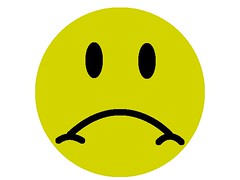 | 13 |
| 7674294839 | Morose | adjective having a gloomy or sullen manner; not friendly or sociable |  | 14 |
| 7674294840 | Render | verb to cause to become; to perform; to deliver officially; to process, extract | 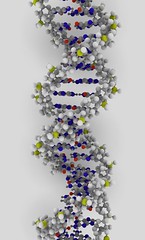 | 15 |
| 7674294841 | Scrutinize | verb to examine closely |  | 16 |
| 7674294842 | Signal | verb Anything that serves to direct, guide, or warn |  | 17 |
| 7674294843 | Urbane | adjective refined in manner or style, suave |  | 18 |
| 7674294844 | Winsome | adjective charming, pleasing |  | 19 |
Pages

Need Help?
We hope your visit has been a productive one. If you're having any problems, or would like to give some feedback, we'd love to hear from you.
For general help, questions, and suggestions, try our dedicated support forums.
If you need to contact the Course-Notes.Org web experience team, please use our contact form.
Need Notes?
While we strive to provide the most comprehensive notes for as many high school textbooks as possible, there are certainly going to be some that we miss. Drop us a note and let us know which textbooks you need. Be sure to include which edition of the textbook you are using! If we see enough demand, we'll do whatever we can to get those notes up on the site for you!
