| 10713120550 | Agriculture | The deliberate effort to modify a portion of Earth's surface through the cultivation of crops and the raising of livestock for sustenance or economic gain. | | 0 |
| 10713120551 | Agrarian | pertaining to land or its cultivation; Ex. agrarian reform, agrarian society | | 1 |
| 10713120552 | Bands/ Clans | extended family groups that generally lived together | | 2 |
| 10713120553 | Barbarian | without civilizing influences | | 3 |
| 10713120554 | Bureaucracy | system of managing government through departments run by appointed officials (not elected) | | 4 |
| 10713120555 | Civilization | a society in an advanced state of social development (e.g., with complex legal and political and religious organizations) | | 5 |
| 10713120556 | City-States | different sections of land owned by the same country but ruled by different rulers (e.g. Greece) | | 6 |
| 10713120557 | Classical | of or characteristic of a form or system felt to be of first significance before modern times | | 7 |
| 10713120558 | Domestication | process of changing plants or animals to make them more useful to humans | | 8 |
| 10713120559 | Economy | system by which goods and services are produced and distributed to meet people's needs | | 9 |
| 10713120560 | Egalitarian | a person who believes in the equality of all people | | 10 |
| 10713120561 | Emperor | supreme ruler of an empire | | 11 |
| 10713120562 | Empire | many territories, countries, or peoples controlled by one government (also just any territory ruled by an emperor) | | 12 |
| 10713120563 | Feudalism | a political system and a social system where by a powerful lord would offer "protection" in return for "service" | | 13 |
| 10713120564 | Foraging | the process of scavenging for food | | 14 |
| 10713120565 | Hierarchy | a series of ordered groupings of people or things within a system | | 15 |
| 10713120566 | Hierarchical | Of, relating to, or arranged in a hierarchy | | 16 |
| 10713120567 | Hunter-Gatherer | A hunter-gatherer society is one whose primary subsistence method involves the direct procurement of edible plants and animals from the wild, foraging and hunting without significant recourse to the domestication of either plants nor animals | | 17 |
| 10713120568 | Irrigation | supplying dry land with water by means of ditches, sprinklers, etc. | | 18 |
| 10713120569 | Monarchy | a government in which power is in the hands of a single person who usually inherits their power | | 19 |
| 10713120570 | Monotheism | belief in a single God | | 20 |
| 10713120571 | Neolithic | The New Stone Age from circa 8500 to 4500 BCE: The period of the Stone Age associated with the ancient Agricultural Revolution(s) | | 21 |
| 10713120572 | Nomadic | (of groups of people) tending to travel and change settlements frequently | | 22 |
| 10713120573 | Pastoral | relating to shepherds or herdsmen or devoted to raising sheep or cattle (e.g. pastoral peoples) | | 23 |
| 10713120574 | Paleolithic | The Old Stone Age from circa 750,00 to 500,000 years BCE to 8,500 years BCE: The period of the Stone Age associated with the evolution of humans and the development of minor tools | | 24 |
| 10713120575 | Philosophy | the rational investigation of questions about existence, knowledge, and ethics | | 25 |
| 10713120576 | Polytheism | belief in multiple Gods | | 26 |
| 10713120577 | River Valley | the fertile land surrounding a river- the first civilizations arose near them | | 27 |
| 10713120578 | Sedentary | remaining in one place | | 28 |
| 10713120579 | Settlement | the act of colonizing or a small group of people in a sedentary position | | 29 |
| 10713120580 | Subsistence | the necessities of life, the resources of survival | | 30 |
| 10713120581 | Surplus | a quantity much larger than is needed | | 31 |
| 10713120582 | Sustenance | the act of sustaining life by food or providing a means of subsistence | | 32 |
| 10713120583 | Theocracy | government run by religious leaders | | 33 |
| 10713120584 | Traditional | consisting of or derived from tradition; customary practices | | 34 |
| 10713120585 | Urbanization | the social process whereby cities grow and societies become more urban | | 35 |
| 10713120586 | Vassals | lesser lords who pledged their service and loyalty to a greater lord -- in a military capacity | | 36 |
| 10713120587 | Alexander the Great | king of Macedon, conqueror of Greece, Egypt, and Persia; founder of Alexandria (356-323 BC) |  | 37 |
| 10713120588 | Analects of Confucius | "something that is repeated" - a collection of Confucius' famous sayings | | 38 |
| 10713120589 | Bronze Age | a period between the Stone and Iron ages, characterized by the manufacture and use of bronze tools and weapons |  | 39 |
| 10713120590 | Calendar | a system of timekeeping that defines the beginning and length and divisions of the year | | 40 |
| 10713120591 | Code of Hammurabi | the set of laws drawn up by Babylonian king Hammurabi dating to the 18th century BC, the earliest legal code known in its entirety |  | 41 |
| 10713120592 | Cuneiform | One of the first written languages known: A system of writing in which wedge-shaped symbols represented words or syllables. It originated in Mesopotamia and was used initially for Sumerian and Akkadian but later was adapted to represent other languages of western Asia. | 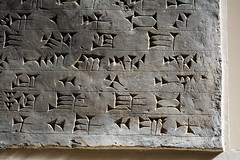 | 42 |
| 10713120593 | Democracy | a political system in which the supreme power lies in a body of citizens who can elect people to represent them | | 43 |
| 10713120594 | Eight Fold Path | Eight steps to end suffering and attain enlightenment according to Buddhist tradition. | | 44 |
| 10713120595 | Four Noble Truths | as taught by the Buddha, the four basic beliefs that form the foundation of Buddhism | | 45 |
| 10713120596 | Gothic Migrations | The Migration period, also called the Barbarian Invasions or German: Völkerwanderung (wandering of the peoples), was a period of human migration that occurred roughly between the years 300 to 700 CE in Europe, marking the transition from Late Antiquity to the Early Middle Ages. These movements were catalyzed by profound changes within both the Roman Empire and the so-called 'barbarian frontier'. Migrating peoples during this period included the Goths, Vandals, Bulgars, Alans, Suebi, Frisians, and Franks, among other Germanic and Slavic tribes. | | 46 |
| 10713120597 | Great Wall | a fortification 1,500 miles long built across northern China in the 3rd century BC | | 47 |
| 10713120598 | Han Dynasty | imperial dynasty that ruled China (most of the time from 206 BC to AD 220) and expanded its boundaries and developed its bureaucracy |  | 48 |
| 10713120599 | Hellenism | The ideals and principles that spread from Greece through much of the ancient world. Much of its influence such as philosophy, athletics, and architecture penetrated the Middle East. |  | 49 |
| 10713120600 | The Huns | Fierce warriors from Central Asia- First invaded southeastern Europe and then launched raids on nearby kingdoms | | 50 |
| 10713120601 | Indian Ocean Trade | connected to Europe, Africa, and China.; worlds richest maritime trading network and an area of rapid Muslim expansion. |  | 51 |
| 10713120602 | Iron Age | the period following the Bronze Age; characterized by rapid spread of iron tools and weapons | | 52 |
| 10713120603 | Jewish Diaspora | A "scattering" of the Jewish people | | 53 |
| 10713120604 | Legalism | In Chinese history, Legalism was one of the main philosophic currents during the Warring States Period- A philosophy of focusing on the text of written law to the exclusion of the intent of law, elevating strict adherence to law over justice, mercy and common sense |  | 54 |
| 10713120605 | Pax Romana | A period of peace and prosperity throughout the Roman Empire, lasting from 27 B.C. to A.D. 180. |  | 55 |
| 10713120606 | Pyramids | Huge stone tombs with four triangle-shaped walls that met in a point on top |  | 56 |
| 10713120607 | Roman Republic | The period from 507 to 31 B.C.E., during which Rome was largely governed by the aristocratic Roman Senate. | | 57 |
| 10713120608 | Roman Senate | a council of wealthy and powerful Romans that advised the city's leaders | | 58 |
| 10713120609 | Shang Civilization | China's first dynasty almost 2000 BCE | | 59 |
| 10713120610 | Shi Huang Di | harsh ruler who united China for the first time and used legalism in ruling (Qin China) |  | 60 |
| 10713120611 | Siddhartha Gautama | founder of Buddhism; born a prince; left his father's wealth to find the cause of human suffering; also know as Buddha |  | 61 |
| 10713120612 | Silk Road Trade | The most famous of the trading routes established by pastoral nomads connecting the Chinese, Indian, Persian, and Mediterranean civilizations; transmitted goods and ideas among civilization. |  | 62 |
| 10713120613 | The Torah | the most sacred text of Judaism | 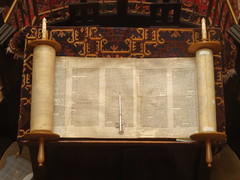 | 63 |
| 10713120614 | The Vedas of Hinduism | Aryan hymns originally transmitted orally but written down in sacred books from the 6th century B.C.E. |  | 64 |
| 10713120615 | Ziggurats | a temple or tomb of the ancient Assyrians, Sumerians, or Babylonians, having the form of a terraced pyramid of successively receding stories |  | 65 |
| 10713120616 | Christianity | Monotheistic religion born out of Judaism, preached by Jesus of Nazareth and later codified by his disciples. Persecuted by Romans early on; however, gained support under Constantine in the Rome. |  | 66 |
| 10713120617 | Buddhism | originally preached by Siddhartha and codified by his disciples into the sutras. Rejected Vedic rituals and the caste system. Spread throughout SE Asia and China and split into Mahayana(Buddha as a God, local gods tacked on as Bodhisativas) and Theravada(original, strict non-theistic version). | 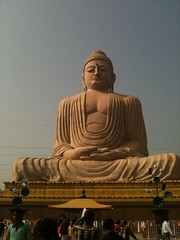 | 67 |
| 10713120618 | Asoka | Third ruler of the Mauryan Empire in India (r. 270-232 B.C.E.). He converted to Buddhism and broadcast his precepts on inscribed stones and pillars, the earliest surviving Indian writing. |  | 68 |
| 10713120619 | Hinduism | Term for a wide variety of beliefs and ritual practices that have developed in the Indian subcontinent since antiquity. It has roots in ancient Vedic, Buddhist, and south Indian religious concepts and practices. |  | 69 |
| 10713120620 | Trans Saharan | route across the sahara desert. Major trade route that traded for gold and salt, created caravan routes, economic benefit for controlling dessert, camels played a huge role in the trading |  | 70 |
| 10713120621 | Monsoons | Major winds in the Indian Ocean that blew into India for half the year, and blew away from India for the other half. Helped facilitate trade in the Indian Ocean. |  | 71 |
| 10713120622 | Sumerians | people who dominated Southern Mesopotamia through the end of the 3rd Millennium BCE. Responsible for the creation of irrigation technology, cuneiform, and religious conceptions. |  | 72 |
| 10713120623 | Indo-Europeans | Groups of people who came from the area north of the Caucasus mountains, which are between the Black and Caspian seas. Herded multiple animals. Rode into battle on chariots. The Indo-European language of Sanskrit, by the Aryans, are the basis of many languages today. Often accepted and adapted aspects of technology, religions, and social order of those with whom they came in contact. |  | 73 |
| 10713120624 | Before agriculture, men and women are believed to have a greater degree of equality. But after the rise of agriculture, most human societies became ________ as a result of greater male strength. | Patriarchal |  | 74 |
| 10713120625 | caste system | a set of rigid social categories that determined not only a person's occupation and economic potential, but also his or her position in society, there was virtually no social mobility |  | 75 |
| 10713120626 | Paleolithic | (Old Stone Age) a long period of human development before the development of agriculture |  | 76 |
| 10713120627 | Carthage | This city has existed for nearly 3,000 years, developing from a Phoenician colony of the 1st millennium BC into the capital of the Carthaginian Empire. Controlled commerce in the Mediterranean prior to the rise of Roman Power. The expanding Roman Republic took control of many of its outposts after the two Punic Wars. |  | 77 |
| 10713120628 | Hellenization | The spread of Greek language and culture (Hellenism) throughout the Mediterranean, starting with t
he conquests of Alexander the Great. Upon Alexander's death at the age of thirty-three (323 B.C.E.), his realm was divided among his leading generals. During their reigns and those of their successors, Hellenism (i.e., Greek culture) continued to flourish in major urban centers around the eastern Mediterranean (less so in rural areas). People traveling to different areas could communicate with people of other kingdoms through Greek. More than at any time in previous history, the eastern Mediterranean that emerged in Alexander's wake experienced a form of cultural unity and cosmopolitanism (a "cosmopolite" is a "citizen of the world," as opposed to a person who belongs to only one locality). The Roman Empire arose in the context of the Hellenistic world and took full advantage of its unity, promoting the use of Greek language, accepting aspects of Greek culture, and even taking over features of the Greek religion, to the point that the Greek and Roman gods came to be thought of as the same, only with different names. This complex unity achieved culturally through Hellenization and politically through the conquests of Rome is summed up by the term Greco-Roman world. | | 78 |
| 10713120629 | Daoism | Chinese religion that believes the world is always changing and is devoid of absolute morality or meaning. They accept the world as they find it, avoid futile struggles, and deviate as little as possible from 'the way' or 'path' of nature. |  | 79 |
| 10713120630 | Bureaucrat | government official | | 80 |



