AP Notes, Outlines, Study Guides, Vocabulary, Practice Exams and more!

AP World History: Period 6 Flashcards

Original from MrsBHatchTEACHER

Terms : Hide Images
9898050196African National CongressANC; South African political party formed in 1912; strongly opposed to apartheid0
9898050197apartheid"separateness"; a series of laws initiated by the Afrikaner National Party in South Africa which was designed to divide South African society by skin color and ethnicity; this system also reserved South Africa's resources for whites1
9898050198Ayatollah Ruholla Khomeinilived from 1900 to 1989; religious leader of the Islamic Republic of Iran2
9898050199Vladimir Leninthe leader of the Russian Soviet Federation Socialist Republic and premier of the Soviet Union3
9898050200Central Powersone of the two warring factions in World War I; composed of Germany, Austria-Hungary, the Ottoman Empire and Bulgaria4
9898050201Charles de Gaullelived from 1890 to 1970; French general and statesman who led French forces in World War II; served as the president of France from 1959 to 19695
9898050202Chiang Kai-sheklived from 1887 to 1975; Chinese military officer who was leader of the Guomindang; fled to Taiwan after the Chinese Communist Party came to power in China6
9898050203Chinese Revolutionprolonged communist movement in China and lasted from 1946 to 1950; resulted in the communist takeover of mainland China7
9898050204Cold Wara sustained state of political and military tension between members of NATO and members of the Warsaw Pact; dissolution of the Soviet Union was the end of this "conflict"8
9898050205collectivizationalso known as collective farming and communal farming; system in which the holdings of several farmers are run collectively as a unit; imposed by the government in the Soviet Union9
9898050206command economyplanned economy; the economic system in which decisions regarding production and investment are embodied in a plan formulated by a central authority, usually by a public body such as a government agency10
9898050207containmentthe United States policy to prevent the spread of communism abroad during the Cold War; a response to a series of moves by the Soviet Union to enlarge communist influence in Eastern Europe, China, Korea, Africa, and Vietnam11
9898050208Cuban missile crisisa 13-day confrontation in October 1962 between the Soviet Union and the United States; Soviet missiles moved to Cuban soil in an agreement by Fidel Castro and Nikita Khrushchev; U.S. responds by blockading Cuba; Khrushchev and U.S. President John F. Kennedy reach an agreement in which the Soviets would remove their missiles from Cuba in return for an American promise not to invade Cuba12
9898050209Cultural Revolutionalso known as the Great Proletarian Cultural Revolution; launched by Mao in the late 1960's; aimed to combat the capitalist tendencies he believed had penetrated even the highest ranks of the communist party itself; involved new policies to bring health care and education to the countryside and reinvigorate earlier efforts at rural industrialization under local control13
9898050210decolonizationthe process of the dissolution of colonial territories and the establishment of independent nations14
9898050211Deng Xiaopinglived from 1904 to 1997; successor to Mao Zedong; reformist who sought to incorporate The People's Republic of China into the world economy; dismantled collectivized farming, state enterprises given greater authority, welcomed foreign investment; crushed democracy movement in Beijing's Tiananmen Square15
9898050212environmentalismideology which regards the environmental concerns16
9898050213European Economic CommunityEEC; also known as the Common Market; founded in 1957; originally consisted of Italy, France, West Germany, Belgium, the Netherlands, and Luxembourg; expanded membership to almost all of Europe, including former communist states; renamed the European Union in 199417
9898050214Fascismpolitical ideology which was intensely nationalistic; celebrated action and placed faith in charismatic leaders; and condemned individualism, liberalism, feminism, parliamentary democracy, and communism; adopted by Italy, Germany, and Japan in the years following World War I18
9898050215Five Year PlanJoseph Stalin's planned economy to rapidly industrialize the Soviet Union19
9898050216fundamentalismideology which demands strict adherence to orthodox theological doctrines20
9898050217Gamel Abdel Nasserlived from 1918 to 1970; second President of Egypt from 1956 to 1970; planned the overthrow of the monarchy and sought to nationalize the Suez Canal21
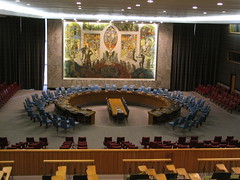
9898050218UN General Assemblyone of the six principal organs of the United Nations and the only one in which all member nations have equal representation; oversee the budget of the United Nations, appoint the non-permanent members to the Security Council, receive reports from other parts of the United Nations and make recommendations in the form of General Assembly Resolutions22
9898050219genocidethe systematic destruction of all or part of a racial, ethnic, religious or national group23
9898050220global warmingterm which refers to the continuing rise in the average temperature of Earth's climate system; viewed as a result of human emissions of greenhouse gases24
9898050221globalization of democracythe spread of democracy throughout the world25
9898050222Great Depressioneconomic depression as a result of the crash of the American stock market; lasted from 1929 until World War II; causes drop in world trade, loss of investment, and businesses unable to make profit; countries or colonies tied to exporting one or two products hard hit as the West consumed less; conditions resulting in the Great Depression led to widespread unemployment and social tensions26
9898050223Great Leap Forwardlasted from 1958 to 1960; marked Mao's response to distortions of Chinese socialism; promoted smallscale industrialization in rural areas; tried to foster widespread and practical technological education for all rather than relying on a small elite of highly trained technical experts; envisioned an immediate transition to full communism in the "people's communes" rather than waiting for industrial development to provide the material basis for that transition; massive famine which followed temporarily discredited Mao's radicalism27
9898050224Great Purgesalso known as the Terror; period of immense paranoia in the Soviet Union of the late 1930's in which communist members accused each other being corrupted by capitalist ideals; enveloped tens of thousands of prominent communists, including all of Lenin's top associates, and millions more of ordinary peoples; based on suspicious associations in the past, denunciations by colleagues, connections to foreign countries, or bad luck; such people were arrested in the middle of the night, then tried and sentenced to either death or long harsh years in remote labor camps known as gulags; close to 1 million peoples executed between 1936 and 1941; additional 4 to 5 million people sent to the gulag, where they were forced to work in horrendous conditions and died in appalling numbers28
9898050225Green Revolutiona series of research, and development, and technology transfer initiatives, occurring between the 1940s and the late 1960s, that increased agriculture production worldwide, particularly in the developing world29
9898050226Adolf Hitlerlived from 1889 to 1945; leader of the Nazi party in Germany; chancellor of Germany from 1933 to 1945; dictator of Nazi Germany from 1934 to 194530
9898050227Ho Chi Minhlived from 1890 to 1969; Vietnamese communist revolutionary leader; was prime minister (from 1945 to 1955) and president (from 1945 to 1969) of the Democratic Republic of Vietnam31
9898050228Holocaustthe mass murder of approximately six million Jews during World War II; a program of systematic state-sponsored murder by Nazi Germany; led by Adolf Hitler and the Nazi Party32
9898050229International Monetary FundIMF; established in 1944 by the Bretton Woods Conference in New Hampshire; sought to promote market economies, free trade, and high growth rates33
9898050230Indian National CongressINC; organization established in 1885; gave expression to the idea of India as a single nation; played a major role in India's independence movement from British colonial rule34
9898050231Islamic renewalalso referred to as Islamic revival; refers to a renewing of the Islamic religion throughout the Islamic world, that began roughly sometime in 1970s; sought greater religious piety and a growing adoption of Islamic culture35
9898050232Jawaharlal Nehrulived from 1889 to 1964; first Prime Minister of India and was a leading figure in the independence movement against British rule over India36
9898050233League of Arab Statesa regional organization of Arab countries in and around North Africa, the Horn of Africa, and Southwest Asia; formed in Cairo in 1945 with six members: Egypt, Iraq, Transjordan (Jordan), Lebanon, Saudi Arabia and Syria; currently has 22 members37
9898050234League of Nationsinternational peacekeeping organization founded as a result of the First World World; proposed by US president Woodrow Wilson; committed to the principle of "collective security" and intended to avoid the repetition of war38
9898050235Mahatma Gandhilived from 1869 to 1948; leader of the Indian nationalist movement during British control over India; used nonviolent civil disobedience, such as hunger strikes39
9898050236Mao Zedonglived from 1893 to 1976; Chinese communist revolutionary and leader of the People's Republic of China from its establishment 1949 to his death in 197640
9898050237Marshall Planplan which sought to rebuild and reshape devastated European economies; funneled Europe some $12 billion with numerous advisers and technicians; motivated by combination of humanitarian concern, a desire to prevent a new depression by creating overseas customers for American goods, and interest in undermining the growing appeal of European communist parties; required European nations to cooperate with one another41
9898050238Mikhail Gorbachevborn in 1931; last general secretary of the Soviet Union (1985 to 1991); passed reforms such as perestroika and policies such as glasnost which led to the dissolution of the Soviet Union42
9898050239Muhammad Ali Jinnahlived from 1876 to 1948; founder of Pakistan and the leader of the All-India Muslim League until Pakistan's independence43
9898050240Benito Mussolinilived from 1883 to 1945; leader of the Italian National Fascist Party; prime minister of Italy from 1922 to 194344
9898050241Mustafa Kemal Ataturklived from 1881 to 1938; founder and the first President of the Republic of Turkey; passed a series of reforms to transform the former Ottoman Empire into a modern, secular, and democratic nation45
9898050242North American Free Trade AgreementNAFTA; regional alliance founded in 1993 and consists of Canada, Mexico, and the United States; the world's second largest free-trade zone46
9898050243North Atlantic Treaty OrganizationNATO; a military alliance based on the North Atlantic Treaty which was signed in 1949; alliance in which its member states agree to mutual defense in response to an attack by any external party; consists of 28 member states across North America and Europe47
9898050244Nazi Germanythe Third Reich; lasted from 1933 to 1945; Germany under the leadership of Adolf Hitler and the Nazi Party48
9898050245Nelson Mandelalived from 1918 to 2013; South African anti-apartheid revolutionary and politician; President of South Africa from 1994 to 1999; served as President of the African National Congress from 1991 to 199749
9898050246New Deala series of reforms proposed by United States President Woodrow Wilson; lasted from 1933 to 1942; experimental combination of reforms seeking to restart economic growth and prevent similar failures in the future; reflected the thinking of British economist John Maynard Keynes; argued that government actions and spending programs could moderate recessions and depressions; consisted of immediate programs of public spending (for dams, highways, bridges, and parks) and long-term reforms, such as the Social Security system, minimum wage, and various relief and welfare programs50
9898050247non-governmental organizationNGO; an organization that is neither a part of a government nor a conventional for-profit business51
9898050248Nikita Khrushchevlived from 1894 to 1971; leader of the Soviet Union from 1953 to 1964; responsible for the de-Stalinization of the Soviet Union and backing of the Soviet space program52
9898050249Osama bin Ladenlived from 1957 to 2011; Islamic militant who was the leader of the terrorist group al-Qaeda; mastermind behind the 9/11 attacks; played a key role in the US-backed effort to aid mujaheddin who fought Soviet forces in Afghanistan53
9898050250al-Qaeda"the base"; terrorist organization formerly headed by Osama bin Laden; behind the 9/11 attacks54
9898050251Palestinian Liberation OrganizationPLO; an organization founded in 1964 with the purpose of creating an independent State of Palestine55
9898050252Pan-Arabisman ideology proposing the unification of the countries of North Africa and West Asia from the Atlantic Ocean to the Arabian Sea, referred to as the Arab World56
9898050253Pan-Africanisman ideology which encourages the unity of Africans worldwide57
9898050254ebola epidemican epidemic caused by the Ebola virus; symptoms include fever, throat and muscle pains, headaches, nausea, vomiting and diarrhea, and decreased functioning of the liver and kidneys; an 2014 outbreak in West Africa has led to a reported 142 deaths58
9898050255influenza epidemican epidemic caused by the H1N1 influenza virus; lasted from 1918 to 1920; resulted in 50 to 100 million deaths, ranking it one of the most deadliest natural disasters in human history59
9898050256perestroikaan economic program launched by Soviet leader Mikhail Gorbachev which freed state enterprises from government regulation, permitted small-scale private businesses, offered opportunities for private farming, and welcomed foreign investment in joint enterprises60
9898050257glasnosta Soviet policy established by Mikhail Gorbachev which permitted cultural and intellectual freedoms61
98980502581917 Russian Revolutiona collective term for the series of revolutions in 1917 which ousted Tsar Nicholas II and the tsarist autocracy and replaced it with the communist Bolshiveks62
9898050259UN Security Councilone of the six principal organs of the United Nations; in charge of the maintenance of international peace and security; this body is able to establish peacekeeping operations, establish international sanctions, and authorize military action through resolutions; the only UN body with the authority to issue binding resolutions to member states63
9898050260space racelasted from 1955 to 1972; a competition between the Soviet Union and the United States for supremacy in spaceflight capability; pioneered advancements such as artificial satellites, as well as manned and unmanned missions into outer space64
9898050261sphere of influencea concept in which a state or organization has a level of cultural, economic, military, or political exclusivity, accommodating to the interests of powers outside the sphere; examples include European "semi-colony" of China65
9898050262Joseph Stalinlived from 1878 to 1953; the leader of the Soviet Union from 1922 to 1952; implemented a highly centralized command economy, which resulted in the transformation of Russian society from agrarian to industrialized; imprisoned millions in labor camps and deported many to remote areas; issued the Great Purges, in which hundreds of thousands, including many prominent communists, were executed66
9898050263Third Worldterm which describes the countries that did not align with the Soviet Union or the United States67
9898050264total warwar which requires the mobilization of each country's entire populations68
9898050265transnational corporationsmulti-national corporation; an organization that owns or controls production or services facilities in one or more countries other than its home country69
9898050266Treaty of Versaillestreaty which formally concluded the World War I in 1919; established the conditions for a World War II; Germany losses colonial empire and 15% of its European territory, required to pay heavy reparations to the winners, had its military forces severely restricted, and had to accept sole responsibility for the war; immense German resentment created from the treaty70
9898050267trench warfaretype of warfare using occupied fighting lines consisting largely of trenches, in which troops are significantly protected from the enemy's small arms fire and are substantially sheltered from artillery; resulted in enormous casualties while gaining or losing a few yards of ground during World War I71
9898050268Truman Doctrinean international relations policy set by the U.S. President Harry Truman in a speech on March 12, 1947; stated that the U.S. would support Greece and Turkey with economic and military aid to prevent them from falling into the Soviet sphere; often referred to as the beginning of the US policy of containment72
9898050269United Nationsorganization established in 1945 as a successor to the League of Nations; attempts to find solutions to global problems and deal with virtually any matter of concern to humanity73
9898050270Vietnam Warwar which occurred in Vietnam, Laos, and Cambodia from 1956 to 1975; U.S. entered the war to prevent South Vietnam from becoming communist, as a result of its containment policy; Soviet Union backed Northern Vietnamese forces in an attempt to spread communism to Southeast Asia; resulted in the unification of Vietnam under a communist government and the spread of communism to Cambodia and Laos74
9898050271Weimar Republicthe federal republic and semi-presidential representative democracy established in 1919 in Germany to replace the imperial form of government after World War I; lasted until the Nazi Party rose to power in 1933; faced numerous problems, including hyperinflation, political extremists and continuing contentious relationships with the victors of World War I75
9898050272Winston Churchilllived from 1874 to 1965; British politician; Prime Minister of the United Kingdom from 1940 to 1945 and from 1951 to 195576
9898050273weapon of mass destructionWMD; a weapon which has the capability to kill large numbers of people and decimate large swaths of land77
9898050274Woodrow Wilsonlived from 1856 to 1924; 28th President of the United States (1913-1921); leader of the Progressive Movement; famous for his Fourteen Points, which sought to avoid another worldwide conflict78
9898050275World Banka United Nations international financial institution that provides loans to developing countries for capital programs; its primary goal is to reduce poverty79
9898050276World War Iwar which lasted from 1914 to 1918; also known as the Great War; pitted the Allies (United Kingdom, France, Russia, Italy, Japan, and the United States) and the Central Powers (Germany, Austria-Hungary, the Ottoman Empire, and Bulgaria); resulted in an Allied victory and Treaty of Versailles, which set the stage for another world war80
9898050277World War IIwar which lasted from 1939 to 1945; pitted the Allied Powers (Soviet Union, United Kingdom, United States, China and France) against the Axis Powers (Germany, Japan, and Italy); resulted in an Allied victory, the creation of the United Nations, and set the stage for the Cold War81
9898050278World Trade OrganizationWTO; established in 1994 by the 123 members of GATT; took over GATT activities in 1995; developed into a forum for settling international trade disputes82
9898050279Zionist Movementthe national movement of Jews and Jewish culture that supports the creation of a Jewish homeland in the territory defined as the Land of Israel83
9898050282Universal Declaration of Human RightsA 1946 United Nations covenant binding signatory nations to the observance of specified rights.84
9898050283nongovernmental organizationsOrganizations that are not established or associated with any specific organizations. They may be recognized, however, they run on their own. Examples are Green Peace and Amnesty International.85
9898050284Tiananmen SquareSite in Beijing where Chinese students and workers gathered to demand greater political openness in 1989. The demonstration was crushed by Chinese military with great loss of life.86
9898050285Salvador AllendeThe first Marxist politician elected president in the Americas. He was elected president of Chile in 1970 and overthrown by a US-backed military coup in 1973.87
9898050286NATOAn international organization created in 1949 by the North Atlantic Treaty for purposes of collective security.88
9898050287Warsaw PactAn alliance between the Soviet Union and other Eastern European nations. This was in response to the NATO89

AP World History: Classical Civilizations--Middle East and Mediterranean, Pt. 1 Flashcards

Terms : Hide Images
5044245261PheidippidesGreek soldier who ran 26 miles to Athens to bring news of the Greek victory over the Persian Army at Marathon in 490 B.C.E.0
5044245262XerxesPersian king who took personal charge of his army around 480 B.C.E. bent on destroying the Greek Army.1
5044245263ThermopylaeSite of naval battle where superior numbers of Persian troops were tricked into a narrow strait where their numbers did not matter.2
5044245264Cyrus the GreatPersian ruler who emerged in 550 B.C.E. to establish a massive Persian empire that ran from the northern Middle East to India that succeeded Mesopotamia.3
5044245265ToleranceKey feature of Persian politics that allowed for diversity in languages and cultures.4
5044245266DariusSuccessor to Cyrus the Great who worked hard to establish a bureaucracy that centralize laws and tax collection.5
5044245267SpiesUsed to make sure that that regional officials were remaining loyal to the central government.6
5044245268ZoroastrianismA major new monotheistic religion that included a concept of individual salvation through free choice; major component was the fight between good and evil.7
5044245269Alexander The GreatExtended the Macedonian empire through the Middle East, Persia, and to the border of Indian and Egypt but dies at 33.8
5044245270CreteIsland in the Greek realm that showed results of Egyptian influence as early as 2000 B.C.E.9
5044245271City-StateGeo-Political organization between 800-600 B.C.E. that accounted for the rapid rise of Greece.10
5044245272Olympic GamesAn opportunity for Greek city-states divided by geography to come together and celebrate.11
5044245273SpartaCity-state known for its strong military aristocracy who dominated their slave population.12
5044245274AthensCity-state noted for its diverse commercial presence, and artistic and intellectual leadership.13
5044245275Pericles5th century Greek political figure who advocated a democratic-like structure where each citizen would participate in city-state assemblies.14
5044245276Peloponnesian WarsOngoing conflict between Athens and Sparta from 431-404 B.C.E.15
5044245277Philip of MacedoniaOpportunist leader who swept in an seized power in 338 B.C.E. in the wake of the destruction of the Peloponnesian War.16
5044245278HellenisticA cultural art form blending influences from Greece and the Middle East.17
5044245279Roman RepublicEstablished around 509 B.C.E. when the aristocratic class drove out the monarchy and established more elaborate political institutions for their city-state.18
5044245280Punic WarsConflict from 264-146 B.C.E. where Rome fought Carthage situated in North Africa.19
5044245281HannibalCarthaginian general who led pack-laden war elephants against Rome.20
5044245282Julius CaesarRoman general who emerged from civil wars in Rome in 43 B.C.E. ushering in a new kind of rule.21
5044245283Augustus CaesarAfter Julius Caesar's murder, he took power in Rome and laid the foundation for the transition from Republic to Empire.22
5044245284Marcus AureliusRoman emperor who oversaw a period of Roman peace and prosperity through 180 C.E.23
5044245285TrajanRoman emperor whose victories went as far as Mesopotamia24
5044245286DiocletianStrong Roman emperor who ruled when Rome was in decline, but is best known for adopting Christianity in an attempt to unite the empire in 313 B.C.E.25
5044245287PolisWord alluding to "politics" which comes from the term for the Greek word meaning city-state.26
5044245288"Good Life"Active participation in politics for upper-class Athenians and Romans.27
5044245289DeomcracyGreek word for "the people," which was an important alternative in classical Mediterranean society.28
5044245290Direct DemocracyRule directly by the people, not elected representatives.29
5044245291Aristocratic AssembliesThe most widely preferred political framework in the Mediterranean world.30
5044245292AristocracyGreek term meaning "rule of the best."31
5044245293Roman ConstitutionAttempt to mesh and reconcile the various elements of political variations developed by the Greeks.32
5044245294SenateRoman legislative body made predominantly of aristocrats whose members held virtually all executive office. s33
5044245295ConsulsTwo Roman leaders who shared executive powers.34
5044245296Equitable LawGreek and Roman republicans understood the importance of codified legal principles that balanced the defense of private property with the protection of poor citizens.35
5044245297Twelve TablesEarly Roman law code introduced around 450 B.C.E. that restrained the upper class from arbitrary action and put them under the law like everyone else.36
5044245298"Bread and Circuses"Entertainment for the masses that was designed to prevent popular disorder.37

Contemporary Period // AP World History Flashcards

Terms : Hide Images
9756151895Bloody Sunday1905; peaceful march by russians turned deadly when Czar's guards fire on crowd, killing hundreds0
9756151896Russian Revolutionoverthrow of the Russian tsar by the socialist Bolshevik Party in 1917; led to their withdrawal from WWI due to a communist takeover of their government1
9756151897Czar Nicholasthe Romanov ruler of Russia who was forced to abdicate his throne and flee with his family2
9756151899Alexander KerenskyRussian lawyer and politician who served as the minister of the Russian Provisional Government3
9756151900Russian Provisional Governmentmiddle-class and intellectual leaders who had little sympathy for workers and peasants; a temporary government4
9756151901Bolsheviksa group of revolutionary Russian Marxists, led by Vladimir Lenin, who took control of Russia's government in November 19175
9756151902Vladimir LeninRussian founder of the Bolsheviks and leader of the Russian Revolution and first head of the USSR6
9756151903April Thesesa document that promised the Russian people peace, land, and bread and rejected the Provisional Government of Russia7
9756151905nowas Russia part of the Treaty of Versailles?8
9756151906Soviet Uniona Communist nation, consisting of Russia and 14 other states, that existed from 1922 to 1991.9
9756151907Red Armythe regular army of the former Soviet Union created by the Bolsheviks10
9756151908Leon TrotskyRussian revolutionary and Communist theorist who helped Lenin and was the leader of the Red Army11
9756151909Mustafa Kemalled revolutionaries to overthrow the last Ottoman sultan and after became the president of Turkey12
9756151911New Economic Policya plan started by Lenin which made the people of Russia believe they had some capitalistic opportunities in order to increase food production13
9756151912Joseph Stalinwho became leader of the Soviet Union after the death of Vladimir Lenin?14
9756151913Five Year Plansplans outlined by Joseph Stalin in 1928 for the development of the Soviet Union's economy; called for collectivization15
9756151914collectivizationa system in which private farms are eliminated and peasants work land owned by the government16
9756151915Union of Soviet Socialism Republicswhat was the formal name for the Soviet Union (USSR)?17
9756151916Great Purgestarted in 1934, a campaign of terror consisting of arrest, exile, or killings of thousands of people who were enemies or threatened Joseph Stalin and the Communist Party18
9756151917capitalismwhich economic system financed most of the recovery from World War I?19
9756151918New Yorkwhere was the financial headquarters, once in London, moved to after World War I?20
9756151919yesdid America lend the Europeans lots of money after World War I?21
9756151920France and Germanywhich two European economies relied most on American credit?22
9756151921Great Depressionthe economic crisis beginning with the stock market crash in 1929 and continuing through the 1930s23
9756151922industrial capitalisman economic system in which business leaders use profits to expand their companies; contributed to the great depression24
9756151923germany to francewhich country got credit from America that was used to pay reparations to another country? which country was the other country?25
9756151924United States and Germanywhich two countries did the Great Depression hit the hardest?26
9756151925Franklin Rooseveltwho was President during the Great Depression and World War II?27
9756151926anathemaan object of intense dislike; a curse or strong denunciation28
9756151927fascisma political philosophy that advocates the glorification of the state • single-party system • one ruler • aggressive nationalism • state is most importantf29
9756151928totalitarianismform of government that theoretically permits no individual freedom and that seeks to subordinate all aspects of individual life to the authority of the state30
9756151929italywhich country was the first state to have a fascist government?31
9756151930Benito Mussolinithe founder and leader of Fascism; creator of the National Fascist Party (1919)32
9756151931blackshirtsgroup of military men "gangs" who were paid by the National Fascist Party to fight socialist and communist organizations (Italy)33
9756151932yesafter World War I, did the emperor of Germany abdicate?34
9756151933socialistperson who supports community ownership of property and the sharing of all profits35
9756151934Weimar RepublicGerman democratic republic founded after the WWI and the downfall of the German Empire's monarchy36
9756151935yeswas the Weimar Republic weak and unstable where political parties could not cooperate?37
9756151936democratic republicdid the people of Germany favor a socialist and/or communist system or a democratic republic?38
9756151937Reichstagthe Weimar Republic's elected body; German parliament39
9756151938National Socialist Partyalso known as the Nazi Party, was a far-right, racist political party in Germany between 1920 and 1945.40
9756151939nazisma form of socialism featuring racism and expansionism41
9756151940dictatorshipwhat did the Nazi Party want?42
9756151941democracywhat were the Nazi Party attacking?43
9756151942Adolf Hitlerwho was the head leader of the Nazi Party?44
9756151943the aryan racewhich race was Hitler convinced was the most highly evolved race?45
9756151944slavs and jewswhich races did Hitler believe were "inferior" and had "corrupted" the German race?46
9756151945yesdid Hitler become the chancellor, leader of the Reichstag in 1933?47
9756151946Third Reichthe Third Republic/Empire of Germany which began Hitler's rule in 1933 and ended with his defeat in 194548
9756151947nationalisma strong feeling of pride in and devotion to one's country49
9756151948yeswas nationalism thought of differently from Europe and Japan compared to colonies?50
9756151949yesdid Hitler go against the Treaty of Versailles by rebuilding the German military?51
9756151950yesdid Gemany withdraw from the League of Nations?52
9756151951yesdid the rest of the world choose to not object in Germany disregarding the Treaty of Versailles in fear of another war?53
9756151952Francisco Francothe Fascist leader of the Spanish revolution who was helped by Hitler and Mussolini54
9756151953Rhinelandname of the territory in which Hitler sent troops to regain after it was taken away from them in WWI in defiance of the Versailles treaty in 193555
9756151954Munich Conference of 1938a conference in which Hitler and Germany was given Sudetenland in return for the promise that Hitler end his expansionist activities56
9756151955Neville Chamberlaina British statesman who as Prime Minister pursued a policy of appeasement toward fascist Germany57
9756151956appeasementaccepting demands of dissatisfied powers in order to avoid conflict58
9756151957noafter the Munich Conference of 1938, did Hitler stop his expansions as he promised?59
9756151958Nazi-Soviet Pactan agreement between Stalin and Hitler to not fight each other, but invade and divide up Poland60
9756151959Britain then Franceafter Germany went to invade Poland, which two countries declared war on Germany?61
9756151962blitzkreigalso known as the "Lighting Wars," a type of fast-moving warfare used by German forces against Poland in 193962
9756151963Winston Churchillwho was the Prime Minister of Great Britain during World War II?63
9756151965yesdid Germany break the Nazi-Soviet Pact?64
9756151966Tripartite Pactan agreement that created an alliance between Germany (Berlin), Italy (Rome), and Japan during WWII65
9756151967Pearl Harborthe bombing of a U.S. naval base in Hawaii by the Japanese on December 7, 1941; this eagered America to enter WWII66
9756151968Manhattan Projectcode name for the American project to build the first atomic bomb during WWII by67
9756151969D-daythe allied invasion of France (Normandy) on June 6, 194468
9756151970Harry Trumanwhich US president ordered the dropping of the atomic bomb in Hiroshima and Nagasaki, Japan?69
9756151971yesafter the atomic bombs were dropped by the US, did Japan surrender, ending WWII?70
9756151972Holocaustthe mass murder of Jews who lived in Germany and German-occupied lands under the Nazi Regime71
9756151973genocidethe systematic killing of a racial or cultural group72
9756151974Marshall Planthe United States program of economic aid for the reconstruction of Europe (1948-1952)73
9756151975United Nationsan organization of independent states formed in 1945 to promote international peace and security74
9756151976Cold Warthe power struggle between the Soviet Union and the United States after World War II75
9756151977Americawhich country was in charge of West Germany?76
9756151978Soviet Unionwhich country was in charge of East Germany?77
9756151979Berlin Blockadewhen the Soviet Union blocked off Berlin from the allies, causing the Berlin Airlift78
9756151980Berlin Airliftprogram in which U.S. and British pilots flew supplies to West Berlin during the Soviet blockade79
9756151981spheres of influenceareas in which countries have some political and economic control but do not govern directly80
9756151982Soviet blocthe communist nations of Europe, under the influence of the Soviet Union.81
9756151983Western blocparts of Western Europe that was not controlled by the Soviets.82
9756151984NATONorth Atlantic Treaty Organization; the Cold War military alliance (USA + Western Europe vs. USSR).83
9756151985Warsaw Pacta military alliance, formed in 1955, of the Soviet Union and its Eastern European satellite nations.84
9756151986Iron Curtaina "curtain" split between the democratic nations and communist nations during the Cold War85
9756151987Nuclear Non Proliferation Treatya landmark international treaty whose objective is to prevent the spread of nuclear weapons and weapons technology, to promote cooperation in the peaceful uses of nuclear energy and to further the goal of achieving nuclear disarmament and general and complete disarmament86
9756151988International Atomic Energy AgencyCooperates with partners worldwide to promote safe, secure and peaceful nuclear technologies; United Nations87
9756151989Sun Yat-senthe founder of the Kuomintang Party who led the movement to create a united, democratic Chine that would be free from control88
9756151990Chinese Revolution of 1911the overthrow of the Manchu Dynasty that ended 2,000 years of Imperial Rule89
9756151991Three Principles of the PeopleSun Yat-sen hoped to establish a new government in China based on these ideals: 1. Nationalism 2. Socialism 3. Democracy90
9756151992Chiang Kai-shekleader of the Nationalist Party in China that fell to the Communist Party after World War II91
9756151993Mao Zedonga Chinese Communist leader from 1949 to 1976.92
9756151994Republic of Chinathe Nationalist government that the United States set up on the island of Taiwan93
9756151995People's Republic of Chinathe name given to communist China under Mao Zedong94
9756151996Great Leap ForwardMao Zedong's attempt to build Chinese industry and agriculture95
9756151997Cultural Revolutiona radical reform in China initiated by Mao Zedong in 1965 and carried out largely by the Red Guard96
9756151998egalitarianismthe belief that all people should have equal political, economic, social, and civil rights97
9756151999westernizationadoption of western ideas, technology, and culture98
9756152000yeswhen Communism was first introduced to China, did Confucianism vanish?99
9756152001Tiananmen Square massacrewhen a million demonstrators, calling for democratic reforms, converged on Tiananmen Square and hundreds were killed by troops sent by the government100
9756152002General MacArthurcommander of UN forces in Korean War101
9756152003IndochinaFrench colony made up of Cambodia, Laos, and Vietnam102
9756152004Vietminha Communist group led by Ho Chi Minh where the organization had goals to win Vietnam's independence from foreign rule103
9756152005guerilla warfaretype of fighting in which soldiers use swift hit-and-run attacks against the enemy104
9756152006Ho Chi Minhthe Communist leader of North Vietnam105
9756152007Ngo Dihn Diemthe president of the democratic South Korea106
9756152008Viet Congthe communist rebels trying to overthrow South Vietnam's government107
9756152009Fidel Castroa Communist dictator of Cuba who came into power in 1959108
9756152010Cuban Revolutiona revolt in 1959 that resulted in Fidel Castro overthrowing President Fulgencio Batista and forming a communist government in Cuba109
9756152011Platt Amendmentamendment to the 1902 Cuban constitution that allowed the United States to intervene in Cuba110
9756152012Bay of Pigs InvasionPresident Kennedy's failed plan to round up Cuban exiles to invade Cuba and overthrow Castro at the Bay of Pigs111
9756152013Cuban Missile Crisisthe 13 Day period in October 1962 when Soviet nuclear missile were pointed at the United States in Cuba112
9756152014Good NeighborRoosevelt's policy against military intervention in Latin America113
9756152015National Action Partya Mexican political party that took power in the 2000 presidential election (PAN)114
9756152016export economya type of economy in which goods are produced mainly for export rather than for domestic use115
9756152021Mikhail Gorbachevthe last leader of the Soviet Union in the 1980s who worked with Reagan to end the Cold War116
9756152022ethnic cleansingthe mass expulsion or killing of members of an unwanted ethnic or religious group in a society - Bosnian and Albanian Muslims were raped and slaughtered by Christian Serbians117
9756152023Boris YeltsinPresident of the Russian Republic in 1991. Helped end the USSR and force Mikhail Gorbachev (Former General Secretary of the Communist Party of the Soviet Union) to resign.118
9756152024Vladimir Putinthe current President of Russia119
9756152025Muslim Leaguean organization formed by muslims in 1906 to protect their interests against British Rule120
9756152026Indian National Congressa movement and political party founded in 1885 to demand greater Indian participation in government121
9756152027Amritsar massacrethe killing of 319 Indians by British troops during a peaceful protest in a park against the arrest of two peace protesters122
9756152028Mohandas Gandhithe Indian leader who used nonviolent methods to seek independence from Great Britain123
9756152029passive resistancepeaceful resistance to a government by fasting or refusing to cooperate; civil disobedience124
9756152030Muhammad Ali JinnahIndian statesman who was the founder of Pakistan as a Muslim state and the leader of the Muslim League (1876-1948)125
9756190142Causes of WW1nationalism, imperialism, militarism, creation of alliances (Central and Allied Powers); immediate cause: assassination of Archduke Francis Ferdinand (heir to Austrian throne) by a Serb on June 28, 1914126
9756199060LusitaniaA British passenger ship that was sunk by a German U-Boat on May 7, 1915. 128 Americans died. The sinking greatly turned American opinion against the Germans, helping the move towards entering the war.127
9756201928Zimmerman TelegraphMarch 1917. Sent from German Foreign Secretary, addressed to German minister in Mexico City. Mexico should attack the US if US goes to war with Germany (needed that advantage due to Mexico's proximity to the US). In return, Germany would give back Tex, NM, Arizona etc to Mexico.128
9756205234Treaty of Versailles1918, , Created by the leaders victorious allies Nations: France, Britain, US, and signed by Germany to help stop WWI. The treaty stripped Germany of all Army, Navy, Air force, forced Germany to repay war damages (33 billion), Germany had to acknowledge guilt for causing WWI, and Germany could not manufacture any weapons.129
9756212575Arab- Isreali ConflictThis conflict has been going on for years. It started when both the Jewish and Arab Palestinians wanted Palestine for their own. Eventually the Jews got control of Palestine, but there has been a number of wars and terrorist attacks between these two. This conflict continues today.130
9756217541Kristallnacht(Night of the Broken Glass) November 9, 1938, when mobs throughout Germany destroyed Jewish property and terrorized Jews.131
9756221425AppeasmentA policy of making concessions to an aggressor in the hopes of avoiding war. Associated with Neville Chamberlain's policy of making concessions to Adolf Hitler.132
9756224779Iron CurtainA political barrier that isolated the peoples of Eastern Europe after WWII, restricting their ability to travel outside the region133
9756230715Truman DoctrineA US policy announced by President Harry Truman of providing economic and military aid to free nations threatened by internal or external opponents134
9756234828Chinese Civil WarWar between communist Mao Zse Tong and nationalist Chaing-Kai Shek. The communists took over and forced the nationalists to retreat to Taiwan135
9756238837Cuban Missile Crisis1962 crisis that arose between the United States and the Soviet Union over a Soviet attempt to deploy nuclear missiles in Cuba136
9756246345Cambodian GenocideThe four-year period saw the deaths of approximately two million Cambodians through the combined result of political executions, starvation, and forced labour by Pol Pot's Khmer Rouge.137

AP World History- Period 6 Flashcards

Terms : Hide Images
9962236719African National CongressANC; South African political party formed in 1912; strongly opposed to apartheid0
9962236720apartheid"separateness"; a series of laws initiated by the Afrikaner National Party in South Africa which was designed to divide South African society by skin color and ethnicity; this system also reserved South Africa's resources for whites1
9962236721Ayatollah Ruholla Khomeinilived from 1900 to 1989; religious leader of the Islamic Republic of Iran2
9962236722Big Bang theorytheory which suggests that at some moment all matter in the universe was contained in a single point, which is considered the beginning of the universe3
9962236723Vladimir Leninborn Vladimir Ilyich Ulyanov; lived from 1870 to 1924; the leader of the Russian Soviet Federative Socialist Republic and premier of the Soviet Union4
9962236724Central Powersone of the two warring factions in World War I; composed of Germany, Austria-Hungary, the Ottoman Empire and Bulgaria; also known as the Quadruple Alliance5
9962236725Charles de Gaullelived from 1890 to 1970; French general and statesman who led French forces in World War II; served as the president of France from 1959 to 19696
9962236726Che Guevaralived from 1928 to 1967; Argentine marxist revolutionary who was a major figure in the Cuban Revolution7
9962236727Chiang Kai-sheklived from 1887 to 1975; Chinese military officer who was leader of the Guomindang; fled to Taiwan after the Chinese Communist Party came to power in China8
9962236728Chinese Revolutionprolonged communist movement in China and lasted from 1946 to 1950; resulted in the communist takeover of mainland China9
9962236729Cold Wara sustained state of political and military tension between members of NATO and members of the Warsaw Pact; dissolution of the Soviet Union was the end of this "conflict"10
9962236730collectivizationalso known as collective farming and communal farming; system in which the holdings of several farmers are run collectively as a unit; imposed by the government in the Soviet Union11
9962236731command economya.k.a planned economy; the economic system in which decisions regarding production and investment are embodied in a plan formulated by a central authority, usually by a public body such as a government agency12
9962236732containmentthe United States policy to prevent the spread of communism abroad during the Cold War; a response to a series of moves by the Soviet Union to enlarge communist influence in Eastern Europe, China, Korea, Africa, and Vietnam13
9962236733Cuban missile crisisa 13-day confrontation in October 1962 between the Soviet Union and the United States; Soviet missiles moved to Cuban soil in an agreement by Fidel Castro and Nikita Khrushchev; U.S. responds by blockading Cuba; Khrushchev and U.S. President John F. Kennedy reach an agreement in which the Soviets would remove their missiles from Cuba in return for an American promise not to invade Cuba14
9962236734cultural imperialismthe practice of promoting or imposing one's culture on another, usually between powerful societies and less-powerful ones15
9962236735Cultural Revolutionalso known as the Great Proletarian Cultural Revolution; launched by Mao in the late 1960's; aimed to combat the capitalist tendencies he believed had penetrated even the highest ranks of the communist party itself; involved new policies to bring health care and education to the countryside and reinvigorate earlier efforts at rural industrialization under local control16
9962236736decolonizationthe process of the dissolution of colonial territories and the establishment of independent nations17
9962236737Deng Xiaopinglived from 1904 to 1997; successor to Mao Zedong; reformist who sought to incorporate The People's Republic of China into the world economy; dismantled collectivized farming, state enterprises given greater authority, welcomed foreign investment; crushed democracy movement in Beijing's Tiananmen Square18
9962236738environmentalismideology which regards the environmental concerns19
9962236739European Economic CommunityEEC; also known as the Common Market; founded in 1957; originally consisted of Italy, France, West Germany, Belgium, the Netherlands, and Luxembourg; expanded membership to almost all of Europe, including former communist states; renamed the European Union in 199420
9962236740Fascismpolitical ideology which was intensely nationalistic; celebrated action and placed faith in charismatic leaders; and condemned individualism, liberalism, feminism, parliamentary democracy, and communism; adopted by Italy, Germany, and Japan in the years following World War I21
9962236741Five Year Plana planned economy in which a committee came together to determine rations22
9962236742fundamentalismideology which demands strict adherence to orthodox theological doctrines23
9962236743Gamel Abdel Nasserlived from 1918 to 1970; second President of Egypt from 1956 to 1970; planned the overthrow of the monarchy and sought to nationalize the Suez Canal24
9962236744UN General Assemblyone of the six principal organs of the United Nations and the only one in which all member nations have equal representation; oversee the budget of the United Nations, appoint the non-permanent members to the Security Council, receive reports from other parts of the United Nations and make recommendations in the form of General Assembly Resolutions25
9962236745genocidethe systematic destruction of all or part of a racial, ethnic, religious or national group26
9962236746Getulio Vargaslived from 1882 to 1954; ruled Brazil from 1930 to 1945; discrediting of established export elites during the Great Depression leads to his dictatorship; supported the military; took steps to modernize Brazil's urban industrial sector27
9962236747global warmingterm which refers to the continuing rise in the average temperature of Earth's climate system; viewed as a result of human emissions of greenhouse gases28
9962236748globalization of democracythe spread of democracy throughout the world29
9962236749Great Depressioneconomic depression as a result of the crash of the American stock market; lasted from 1929 until World War II; causes drop in world trade, loss of investment, and businesses unable to make profit; countries or colonies tied to exporting one or two products hardhit as the West consumed less; conditions resulting in the Great Depression led to widespread unemployment and social tensions30
9962236750Great Leap Forwardlasted from 1958 to 1960; marked Mao's response to distortions of Chinese socialism; promoted smallscale industrialization in rural areas; tried to foster widespread and practical technological education for all rather than relying on a small elite of highly trained technical experts; envisioned an immediate transition to full communism in the "people's communes" rather than waiting for industrial development to provide the material basis for that transition; massive famine which followed temporarily discredited Mao's radicalism31
9962236751Great Purgesalso known as the Terror; period of immense paranoia in the Soviet Union of the late 1930's in which communist members accused each other being corrupted by capitalist ideals; enveloped tens of thousands of prominent communists, including all of Lenin's top associates, and millions more of ordinary peoples; based on suspicious associations in the past, denunciations by colleagues, connections to foreign countries, or bad luck; such people were arrested in the middle of the night, then tried and sentenced to either death or long harsh years in remote labor camps known as gulags; close to 1 million peoples executed between 1936 and 1941; additional 4 to 5 million people sent to the gulag, where they were forced to work in horrendous conditions and died in appalling numbers32
9962236752Green Revolutiona series of research, and development, and technology transfer initiatives, occurring between the 1940s and the late 1960s, that increased agriculture production worldwide, particularly in the developing world33
9962236753Adolf Hitlerlived from 1889 to 1945; leader of the Nazi party in Germany; chancellor of Germany from 1933 to 1945; dictator of Nazi Germany from 1934 to 194534
9962236754Ho Chi Minhlived from 1890 to 1969; Vietnamese communist revolutionary leader; was prime minister (from 1945 to 1955) and president (from 1945 to 1969) of the Democratic Republic of Vietnam35
9962236755Holocaustthe mass murder of approximately six million Jews during World War II; a program of systematic state-sponsored murder by Nazi Germany; led by Adolf Hitler and the Nazi Party36
9962236756International Monetary FundIMF; established in 1944 by the Bretton Woods Conference in New Hampshire; sought to promote market economies, free trade, and high growth rates37
9962236757Indian National CongressINC; organization established in 1885; gave expression to the idea of India as a single nation; played a major role in India's independence movement from British colonial rule38
9962236758Iranian Cultural Revolutionlasted from 1980 to 198; a period following the Iranian Revolution where intellectuals of Iran were purged of Western and non-Islamic influences to bring it in line with Shia Islam; closed universities between 1980 and 1983, banned many books, and purged thousands of students and lecturers from schools39
9962236759iron curtainthe heavily fortified border between Eastern and Western Europe40
9962236760Islamic renewalalso referred to as Islamic revival; refers to a renewing of the Islamic religion throughout the Islamic world, that began roughly sometime in 1970s; sought greater religious piety and a growing adoption of Islamic culture41
9962236761Jawaharlal Nehrulived from 1889 to 1964; first Prime Minister of India and was a leading figure in the independence movement against British rule over India42
9962236762League of Arab Statesa regional organization of Arab countries in and around North Africa, the Horn of Africa, and Southwest Asia; formed in Cairo in 1945 with six members: Egypt, Iraq, Transjordan (Jordan), Lebanon, Saudi Arabia and Syria; currently has 22 members43
9962236763League of Nationsinternational peacekeeping organization founded as a result of the First World World; proposed by US president Woodrow Wilson; committed to the principle of "collective security" and intended to avoid the repetition of war44
9962236764Mahatma Gandhilived from 1869 to 1948; leader of the Indian nationalist movement during British control over India; used nonviolent civil disobedience, such as hunger strikes45
9962236765Mao Zedonglived from 1893 to 1976; Chinese communist revolutionary and leader of the People's Republic of China from its establishment 1949 to his death in 197646
9962236766Marshall Planplan which sought to rebuild and reshape devastated European economies; funneled Europe some $12 billion with numerous advisers and technicians; motivated by combination of humanitarian concern, a desire to prevent a new depression by creating overseas customers for American goods, and interest in undermining the growing appeal of European communist parties; required European nations to cooperate with one another47
9962236767Mikhail Gorbachevborn in 1931; last general secretary of the Soviet Union (1985 to 1991); passed reforms such as perestroika and policies such as glasnost which led to the dissolution of the Soviet Union48
9962236768military-industrial complexthe policy and monetary relationships which exist between legislators, national armed forces, and the military industrial base that supports them; include political contributions, political approval for military spending, lobbying to support bureaucracies, and oversight of the industry; most often used in reference to the system behind the military of the United States49
9962236769Muhammad Ali Jinnahlived from 1876 to 1948; founder of Pakistan and the leader of the All-India Muslim League until Pakistan's independence50
9962236770Munich Conferencea conference in Munich which permitted Nazi Germany's annexation of portions of Czechoslovakia along German borders mainly inhabited by German speakers; territory now known as "Sudetenland"; widely regarded as a failed act of appeasement toward Germany; agreement was signed in the early hours of 30 September 1938; agreement was signed by Germany, France, the United Kingdom, and Italy; Czechoslovakia not invited to the conference51
9962236771Benito Mussolinilived from 1883 to 1945; leader of the Italian National Fascist Party; prime minister of Italy from 1922 to 194352
9962236772Mustafa Kemal Ataturklived from 1881 to 1938; founder and the first President of the Republic of Turkey; passed a series of reforms to transform the former Ottoman Empire into a modern, secular, and democratic nation53
9962236773North American Free Trade AgreementNAFTA; regional alliance founded in 1993 and consists of Canada, Mexico, and the United States; the world's second largest free-trade zone54
9962236774North Atlantic Treaty OrganizationNATO; a military alliance based on the North Atlantic Treaty which was signed in 1949; alliance in which its member states agree to mutual defense in response to an attack by any external party; consists of 28 member states across North America and Europe55
9962236775Nazi Germanya.k.a the Third Reich; lasted from 1933 to 1945; Germany under the leadership of Adolf Hitler and the Nazi Party56
9962236776Nelson Mandelalived from 1918 to 2013; South African anti-apartheid revolutionary and politician; President of South Africa from 1994 to 1999; served as President of the African National Congress from 1991 to 199757
9962236777New Deala series of reforms proposed by United States President Woodrow Wilson; lasted from 1933 to 1942; experimental combination of reforms seeking to restart economic growth and prevent similar failures in the future; reflected the thinking of British economist John Maynard Keynes; argued that government actions and spending programs could moderate recessions and depressions; consisted of immediate programs of public spending (for dams, highways, bridges, and parks) and long-term reforms, such as the Social Security system, minimum wage, and various relief and welfare programs58
9962236778non-governmental organizationNGO; an organization that is neither a part of a government nor a conventional for-profit business59
9962236779Nikita Khrushchevlived from 1894 to 1971; leader of the Soviet Union from 1953 to 1964; responsible for the de-Stalinization of the Soviet Union and backing of the Soviet space program60
9962236780Osama bin Ladenlived from 1957 to 2011; Islamic militant who was the leader of the terrorist group al-Qaeda; mastermind behind the 9/11 attacks; played a key role in the US-backed effort to aid mujahideen who fought Soviet forces in Afghanistan61
9962236781al-Qaeda"the base"; terrorist organization formerly headed by Osama bin Laden; behind the 9/11 attacks62
9962236782Palestinian Liberation OrganizationPLO; an organization founded in 1964 with the purpose of creating an independent State of Palestine63
9962236783Pan-Arabisman ideology proposing the unification of the countries of North Africa and West Asia from the Atlantic Ocean to the Arabian Sea, referred to as the Arab World64
9962236784Pan-Africanisman ideology which encourages the unity of Africans worldwide65
9962236785HIV/AIDS epidemicepidemic which was first discovered in 1981 among homosexual men and intravenous drug users in New York and San Francisco; eventually became widespread around the world, particularly sub-Saharan Africa; virus attacks and destroys the immune system, which causes a fatal disorder in the immune system; spread through sexual contact with an infected person, contact with contaminated blood, and transmission from mother to child during pregnancy and breastfeeding66
9962236786ebola epidemican epidemic caused by the Ebola virus; symptoms include fever, throat and muscle pains, headaches, nausea, vomiting and diarrhea, and decreased functioning of the liver and kidneys; an 2014 outbreak in West Africa has led to a reported 142 deaths67
9962236787influenza epidemican epidemic caused by the H1N1 influenza virus; lasted from 1918 to 1920; resulted in 50 to 100 million deaths, ranking it one of the most deadliest natural disasters in human history68
9962236788perestroikaan economic program launched by Soviet leader Mikhail Gorbachev which freed state enterprises from government regulation, permitted small-scale private businesses, offered opportunities for private farming, and welcomed foreign investment in joint enterprises69
9962236789glasnosta Soviet policy established by Mikhail Gorbachev which permitted cultural and intellectual freedoms70
9962236790post-modernisma late 20th Century movement in the arts, architecture, and criticism; includes skeptical interpretations of culture, literature, art, philosophy, history, economics, architecture, fiction, and literary criticism71
9962236791Potsdam Conferencea conference which was held from July 17 to August 2, 1945; participants include the Soviet Union, the United Kingdom, and the United States; gathered to decide how to punish Nazi Germany, sought to establish a post-war order, address peace treaty issues, and counter the effects of World War II72
9962236792Prague Springa period of political liberalization in Czechoslovakia during the era of Soviet domination; began on January 5, 1968, when reformist Alexander Dubček was elected First Secretary of the Communist Party of Czechoslovakia, and continued until August 21 when the Soviet Union and other members of the Warsaw Pact invaded the country to halt the reforms73
99622367931917 Russian Revolutiona collective term for the series of revolutions in 1917 which ousted Tsar Nicholas II and the tsarist autocracy and replaced it with the communist Bolshiveks74
9962236794second-wave feminisma period of feminist activity that first began in the United States in the early 1960s and eventually spread throughout the Western world; later became a worldwide movement that was strong in Europe and parts of Asia, such as Turkey and Israel; focused on sexuality, family, the workplace, reproductive rights, and various legal and de facto inequalities75
9962236795UN Security Councilone of the six principal organs of the United Nations; in charge of the maintenance of international peace and security; this body is able to establish peacekeeping operations, establish international sanctions, and authorize military action through resolutions; the only UN body with the authority to issue binding resolutions to member states76
9962236796space racelasted from 1955 to 1972; a competition between the Soviet Union and the United States for supremacy in spaceflight capability; pioneered advancements such as artificial satellites, as well as manned and unmanned missions into outer space77
9962236797sphere of influencea concept in which a state or organization has a level of cultural, economic, military, or political exclusivity, accommodating to the interests of powers outside the sphere; examples include European "semi-colony" of China78
9962236798Joseph Stalinlived from 1878 to 1953; the leader of the Soviet Union from 1922 to 1952; implemented a highly centralized command economy, which resulted in the transformation of Russian society from agrarian to industrialized; imprisoned millions in labor camps and deported many to remote areas; issued the Great Purges, in which hundreds of thousands, including many prominent communists, were executed79
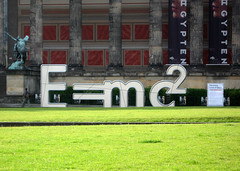
9962236799theory of relativitytheory which is composed of special relativity and general relativity; proposed by Albert Einstein; proposes that measurements of various quantities are relative to the velocities of observers, space and time should be considered together and in relation to each other (Spacetime), and the speed of light is constant80
9962236800Third Worldterm which describes the countries that did not align with the Soviet Union or the United States81
9962236801total warwar which requires the mobilization of each country's entire populations82
9962236802transnational corporationsa.k.a multi-national corporation; an organization that owns or controls production or services facilities in one or more countries other than its home country83
9962236803Treaty of Versaillestreaty which formally concluded the World War I in 1919; established the conditions for a World War II; Germany losses colonial empire and 15% of its European territory, required to pay heavy reparations to the winners, had its military forces severely restricted, and had to accept sole responsibility for the war; immense German resentment created from the treaty84
9962236804trench warfaretype of warfare using occupied fighting lines consisting largely of trenches, in which troops are significantly protected from the enemy's small arms fire and are substantially sheltered from artillery; resulted in enormous casualties while gaining or losing a few yards of ground during World War I85
9962236805Truman Doctrinean international relations policy set by the U.S. President Harry Truman in a speech on March 12, 1947; stated that the U.S. would support Greece and Turkey with economic and military aid to prevent them from falling into the Soviet sphere; often referred to as the beginning of the US policy of containment86
9962236806United Nationsorganization established in 1945 as a successor to the League of Nations; attempts to find solutions to global problems and deal with virtually any matter of concern to humanity87
9962236807Vietnam Warwar which occurred in Vietnam, Laos, and Cambodia from 1956 to 1975; U.S. entered the war to prevent South Vietnam from becoming communist, as a result of its containment policy; Soviet Union backed Northern Vietnamese forces in an attempt to spread communism to Southeast Asia; resulted in the unification of Vietnam under a communist government and the spread of communism to Cambodia and Laos88
9962236808Weimar Republicthe federal republic and semi-presidential representative democracy established in 1919 in Germany to replace the imperial form of government after World War I; lasted until the Nazi Party rose to power in 1933; faced numerous problems, including hyperinflation, political extremists and continuing contentious relationships with the victors of World War I89
9962236809Winston Churchilllived from 1874 to 1965; British politician; Prime Minister of the United Kingdom from 1940 to 1945 and from 1951 to 195590
9962236810weapon of mass destructionWMD; a weapon which has the capability to kill large numbers of people and decimate large swaths of land91
9962236811Woodrow Wilsonlived from 1856 to 1924; 28th President of the United States (1913-1921); leader of the Progressive Movement; famous for his Fourteen Points, which sought to avoid another worldwide conflict92
9962236812Fourteen Pointsa statement given on January 8, 1918 by United States President Woodrow Wilson declaring that World War I was being fought for a moral cause and called for postwar peace in Europe93
9962236813World Banka United Nations international financial institution that provides loans to developing countries for capital programs; its primary goal is to reduce poverty94
9962236814World War Iwar which lasted from 1914 to 1918; also known as the Great War; pitted the Allies (United Kingdom, France, Russia, Italy, Japan, and the United States) and the Central Powers (Germany, Austria-Hungary, the Ottoman Empire, and Bulgaria); resulted in an Allied victory and Treaty of Versailles, which set the stage for another world war95
9962236815World War IIwar which lasted from 1939 to 1945; pitted the Allied Powers (Soviet Union, United Kingdom, United States, China and France) against the Axis Powers (Germany, Japan, and Italy); resulted in an Allied victory, the creation of the United Nations, and set the stage for the Cold War96
9962236816World Trade OrganizationWTO; established in 1994 by the 123 members of GATT; took over GATT activities in 1995; developed into a forum for settling international trade disputes97
9962236817Yalta Conferenceconference which lasted from February 4 to February 11, 1945; meeting attended by President Franklin D. Roosevelt, Prime Minister Winston Churchill and Premier Joseph Stalin for the purpose of discussing Europe's post-war reorganization; convened in the Livadia Palace near Yalta in Crimea98
9962236818Zionist Movementthe national movement of Jews and Jewish culture that supports the creation of a Jewish homeland in the territory defined as the Land of Israel99
9962236819Brazilian SolutionCombination of dictatorship, violent repression, and gov't promotion of industrialization in South American countries100
9962236820Universal Declaration of Human RightsA 1946 United Nations covenant binding signatory nations to the observance of specified rights.101
9962236821nongovernmental organizationsOrganizations that are not established or associated with any specific organizations. They may be recognized, however, they run on their own. Examples are Green Peace and Amnesty International.102
9962236822Tiananmen SquareSite in Beijing where Chinese students and workers gathered to demand greater political openness in 1989. The demonstration was crushed by Chinese military with great loss of life.103
9962236823keiretsuJapanese business groups after the post-WWII dismantling of the zaibatsu. They are Alliances of corporations each often centered around a bank. They dominate the post-WWII Japanese economy.104
9962236824Salvador AllendeThe first Marxist politician elected president in the Americas. He was elected president of Chile in 1970 and overthrown by a US-backed military coup in 1973.105
9962236825NATOAn international organization created in 1949 by the North Atlantic Treaty for purposes of collective security.106
9962236826Warsaw PactAn alliance between the Soviet Union and other Eastern European nations. This was in response to the NATO107

AP World History Chapter 19 Flashcards

Terms : Hide Images
9045695740Taiping Uprisingmassive Rebellion in China during the Qing dynasty. War resulted in over 20 million deaths and showed rising discontent in the way China handled matters and change.0
9045695741Opium Warswars between Britain and China, when Britain wouldn't stop opium exports. Resulted in 4 new ports opening in China and Opium legalized with British control.1
9045695742Commissioner LinCommander in China sent to destroy opium (dumped and burned opium).2
9045696602unequal treatiestreaties between China and Western powers after Opium war. Favored Western Powers and weakened China.3
9045696603Self-strengthening governmenta time of institutional reforms in China during the late Qing dynasty. China adopted Western military technology and maintained traditional Confucian values.4
9045696604Boxer Uprisingmilitant uprising in China against the spread of Western and Japanese influence. Showed increasing resentment of Western countries and influence in China.5
9045697973Chinese revolution of 1911-1912collapse of China's imperial order officially at the hands of organized revolutionaries but really under the weight of troubles that had overwhelmed the government for the previous century.6
9045697974the sick man of Europeterm used to describe European country in time of difficulty (1st one- Ottomans). Showed diminishing power of a once powerful Ottoman Empire.7
9045697975Tanzimatperiod of Reformation in Ottoman Empire. Showed the Ottoman Empire's need to adopt from and copy other nations in order to stay alive and keep up with Western countries.8
9045698515Young OttomansMovement of young scholars to institute liberal reforms and build the feeling of national identity. Helped build nationalism inside the Ottoman Empire.9
9045698516Sultan Abd al-Hamid IIOttoman sultan who accepted a reform constitution but quickly suppressed it. Reactionary ruler (autocrat). He was the last to exert effective autocratic control over the Ottoman Empire.10
9045698517Young Turksmembers of a revolutionary party in Ottoman Empire. Carried out a revolution in 1908 and advocated for reforms and change.11
9045699250informal empiresarea dominated by Western powers but retained own government and measure of independence. Allowed people to be independent but also be helpful and useful to European powers (similar climate areas).12
9045699251Battle of Adowabattle where the Italians were defeated by the Ethiopian Army13
9045699252Tokugawa Japantime known as great peace. Hostage system: Shoguns retained power. Spouses and children of important families kept at the capital (4 social classes).14
9045700386Meiji Restorationseries of Events that restored imperial rule in Japan under Emperor Meiji (1868). Marked Japan's opening to the West and establishment of strong centralized government.15
9045701231Russo-Japanese War (1904-1905)War fueled by Japanese and Russian imperialism Japan won and forced Russia to change and industrialize.16

AP World History Summer Assignment Flashcards

Terms : Hide Images
10375881204absolutismthe acceptance of or belief in absolute principles in political, philosophical, ethical, or theological matters.0
10375881205agriculturethe cultivation and breeding of animals and plants to provide food, fiber, medicinal plants and other products to sustain and enhance life.1
10375881206aristocracythe highest class in certain societies, especially those holding hereditary titles or offices.2
10375881207bureaucracyThis is a specific style of organization, that is characterized by its complexity, division of labor, permanence, professional management, strict chain of management, and legal authority. In its pure form, it should be not personal, but rational and based on rules, rather than emotions. This was created by German sociologist Max Webster.3
10375881208chiefdomis a form of hierarchical political organization in non-industrial societies usually based on kinship, and in which formal leadership is monopolized by the legitimate senior members of select families or 'houses'.4
10375881209city-statea city that with its surrounding territory forms an independent state.5
10375881210civilizationthe stage of human social development and organization that is considered most advanced.6
10375881211colonialismthe policy or practice of acquiring full or partial political control over another country, occupying it with settlers, and exploiting it economically.7
10375881212demographythe study of statistics such as births, deaths, income, or the incidence of disease, which illustrate the changing structure of human populations.8
10375881213diasporathe dispersion of any people from their original homeland.9
10375881214divineof, from, or like God or a god.10
10375881215dynastya line of hereditary rulers of a country.11
10375881216empirean extensive group of states or countries under a single supreme authority, formerly especially an emperor or empress.12
10375881217epidemica widespread occurrence of an infectious disease in a community at a particular time.13
10375881218feudalismA system that was common in the middle ages. In which the people worked for, gave loyalty, and gave produce to the king in exchange for military protection. Nobility gets land from the king when they serve in the military.14
10375881219foragerThey collect food by hunting, fishing, or by gathering fruits/vegetables.15
10375881220genocidethe deliberate and systematic extermination of a national, racial, political, or cultural group.16
10375881221globalizationthe act of globalizing, or extending to other or all parts of the world.17
10375881222imperialismthe policy of extending the rule or authority of an empire or nation over foreign countries, or of acquiring and holding colonies and dependencies.18
10375881223indentured servanta person who came to America and was placed under contract to work for another over a period of time, usually seven years, especially during the 17th to 19th centuries. Generally, indentured servants included redemptioners, victims of religious or political persecution, persons kidnapped for the purpose, convicts, and paupers.19
10375881224interregionalrelatinɡ to or occurring between different regions.20
10375881225kingdoma country, state, or territory ruled by a king or queen.21
10375881226medievalrelating to the Middle Ages.22
10375881227merchanta person or company involved in wholesale trade, especially one dealing with foreign countries or supplying merchandise to a particular trade.23
10375881228monotheismthe doctrine or belief that there is only one God.24
10375881229nationa large aggregate of people united by common descent, history, culture, or language, inhabiting a particular country or territory.25
10375881230nation-statea sovereign state whose citizens or subjects are relatively homogeneous in factors such as language or common descent.26
10375881231Neolithicrelating to or denoting the later part of the Stone Age, when ground or polished stone weapons and implements prevailed.27
10375881232nobilitythe quality of being noble in character, mind, birth, or rank.28
10375881233nomada member of a people having no permanent abode, and who travel from place to place to find fresh pasture for their livestock.29
10375881234pandemic(of a disease) prevalent over a whole country or the world.30
10375881235papacythe office or authority of the Pope.31
10375881236pastoral(especially of land or a farm) used for or related to the keeping or grazing of sheep or cattle.32
10375881237patriarchalrelating to or characteristic of a system of society or government controlled by men.33
10375881238periodizationThe study of categorizing the past into discrete quantified named blocks of time in order to facilitate the study and analysis of history.34
10375881239polytheismthe belief in or worship of more than one god.35
10375881240prehistoricrelating to or denoting the period before written records.36
10375881241primary sourceis an artifact, a document, diary, manuscript, autobiography, a recording, or any other source of information that was created at the time under study.37
10375881242revolutionan overthrow or repudiation and the thorough replacement of an established government or political system by the people governed.38
10375881243ruralof, relating to, or characteristic of the country, country life, or country people; rustic.39
10375881244scribea person who serves as a professional copyist, especially one who made copies of manuscripts before the invention of printing.40
10375881245secondary sourceis one that was created later by someone who did not experience first-hand or participate in the events or conditions you're researching. For the purposes of a historical research project.41
10375881246serfSomeone who is forced to work on a piece of land, usually during the Medieval Times. This was a part of Feudalism.42
10375881247shaman(especially among certain tribal peoples) a person who acts as intermediary between the natural and supernatural worlds, using magic to cure illness, foretell the future, control spiritual forces, etc.43
10375881248slavea person who is the property of and wholly subject to another; a bond servant.44
10375881249socialismA system in which items are owned by the government, not the private individuals. Cooperation guides the economy, not competition. There are many variations of this, like in the EU45
10375881250stateAn area in which there is political system, but are a part of a collection of states. These states form a country. Although these states have their own government, they still follow rules and judgement by the country's government.46
10375881251syncretismthe attempted reconciliation or union of different or opposing principles, practices, or parties, as in philosophy or religion.47
10375881252theocracya form of government in which God or a deity is recognized as the supreme civil ruler, the God's or deity's laws being interpreted by the ecclesiastical authorities.48
10375881253urbanof, relating to, or designating a city or town.49
10375881254synthesisthe combining of the constituent elements of separate material or abstract entities into a single or unified entity (opposed to analysis, ) the separating of any material or abstract entity into its constituent elements.50

Pages

Subscribe to CourseNotes RSS

Need Help?

We hope your visit has been a productive one. If you're having any problems, or would like to give some feedback, we'd love to hear from you.

For general help, questions, and suggestions, try our dedicated support forums.

If you need to contact the Course-Notes.Org web experience team, please use our contact form.

Need Notes?

While we strive to provide the most comprehensive notes for as many high school textbooks as possible, there are certainly going to be some that we miss. Drop us a note and let us know which textbooks you need. Be sure to include which edition of the textbook you are using! If we see enough demand, we'll do whatever we can to get those notes up on the site for you!