

AP US History Chapter 18 Flashcards
AMSCO United States History 2015 Edition, Chapter 18 The Growth of Cities and American Culture, 1865-1900
Terms : Hide Images
| 5971121048 | old immigrants | Through the 1880s, they came to the United States from northern and western Europe. They were mostly Protestant and had a high-level of literacy. |  | 0 |
| 5971121049 | new immigrants | From the 1890s to 1914, they came to the United States from southern and eastern Europe. Mostly non-Protestant, poor and illiterate. |  | 1 |
| 5971121051 | Chinese Exclusion Act of 1882 | It was the first bill regarding immigration. It placed a ban on all new immigrants from China. |  | 2 |
| 5971121053 | American Protective Association | A nativist society that was prejudiced against Roman Catholics. |  | 3 |
| 5971121059 | political machines, boss | Political parties in major cities came under the control of tightly organized groups of politicians, known as political machines. Each machine had its boss, the top politician who gave orders and doled out government jobs. 364) |  | 4 |
| 5971121060 | Tammany Hall | A political machine in New York City, which developed into a power center. |  | 5 |
| 5971121066 | Social Gospel | In the 1880s and 1890s this movement espoused social justice for the poor based on Christian principles. |  | 6 |
| 5971121068 | Salvation Army | Imported from England in 1879, this charity provided the basic necessities of life for the homeless and the poor while also preaching Christian Gospel. |  | 7 |
| 5971121070 | Francis Willard, WCTU | Leader of the Women's Christian Temperance Union (WCTU) which advocated total abstinence from alcohol. |  | 8 |
| 5971121072 | Carrie Nation | She raided saloons and smashed barrels of beer with a hatchet. |  | 9 |
| 5971121078 | Mark Twain | The first great realist author, he is famous for his classic "The Adventures of Huckleberry Finn" and the term The Gilded Age |  | 10 |
| 5974147715 | Plessy v Ferguson | upheld the constitutionality of Jim crow laws |  | 11 |
| 5974167113 | Sierra Club | created to protect mountains |  | 12 |
| 5974175918 | Booker T. Washington | creates the Tuskegee Institute for African Americans |  | 13 |
| 5974187461 | Suffrage | the right to vote |  | 14 |
| 5974194398 | Social Darwinism | belief in survival of the fittest |  | 15 |
| 5974205116 | Eugenics | the science of racial superiority |  | 16 |
| 5974254995 | Nativism | the policy of protecting the interests of native-born or established inhabitants against those of immigrants. |  | 17 |
AP US History Chapter 24 People Flashcards
Key terms, people, and events from Chapter 24 of the 13th edition of the American Pageant.
Terms : Hide Images
| 7965131214 | Cornelius Vanderbilt | He was a railroad tycoon. He earned his 1st fortune as a shipping magnate in New York where he gained the nickname "The Commodore" while shipping. Then, turned to railroads by consolidating the lines from NYC to Chicago | 0 | |
| 7965169198 | Jay Gould | He manipulated the stocks of railroad companies to his own benefit. | 1 | |
| 7965185420 | Alexander Graham Bell | He was the inventor of the telephone. Less well known, he was a teacher of the deaf. It was because of his work with the mechanics of sound and speech (teaching the deaf how to speak) that he began his work on the telephone | 2 | |
| 7965131223 | Andrew Carnegie | He was a steel tycoon. He was a master of "vertical integration." He eventually turned to philanthropy and gave huge sums to libraries and arts | 3 | |
| 7965208704 | Thomas Edison | He perfected the incandescent light bulb, and many other inventions such as the phonograph, mimeograph, dictaphone, and moving pictures. Much of his work was done at his New Jersey lab, Menlo Park | 4 | |
| 7965241273 | John D. Rockefeller | He was an oil tycoon. He owned the Standard Oil Company that eventually controlled at least 90% of American oil. Was a master of "horizontal integration" where he ruthlessly drove others out of business | 5 | |
| 7965261826 | J.P. Morgan | He was a banker and financier. He orchestrated several blockbuster deals in railroads, insurance, and banking. He bought Andrew Carnegie's steel operation for $400 million to start the U.S. Steel Company. He symbolized the greed, power, arrogance, and snobbery of the Gilded Age business. | 6 | |
| 7965131229 | Samuel Gompers | Very powerful union leader that focused issues more on higher wages and shorter hours. | 7 |
AP US History 1 Chapter 13 People Flashcards
Terms : Hide Images
| 7444113657 | John Quincy Adams | He was the sixth president of the United States. He was the first minority president (less than 50% of Americans did not vote for him). He served only four years, from 1824-1828. He could never gain the support of the Americans because he was a minority president. He was in favor of funding national research and he appointed Henry Clay as his Secretary of State in the infamous "Corrupt Bargain" election. | 0 | |
| 7444127287 | Andrew Jackson | He was a Democratic-Republican who was elected president in 1828. He was the first president from the west, and he represented many of the characteristics of the west. He appealed to the common man as he was said to be one. He believed in the strength of the Union and the supremacy of the federal government over the state government. | 1 | |
| 7444156813 | William Crawford | Originally from Georgia, he ran in the 1824 election representing the South. He was forced to drop out of the race due to a stroke. | 2 | |
| 7444162590 | Peggy Eaton | Married to Jackson's Sec. of War. She was snubbed by the ladies Washington D.C., for allegedly being disreputable. Jackson tried to help her be accepted, but failed. This helped in the dissolution of Jackson and Calhoun, and moved Calhoun down a states' rights path. | 3 | |
| 7444207088 | Daniel Webster | He was a nationalist and was involved in the Webster-Haynes debate over states' rights. He served as Secretary of State under the Tyler administration. In 1836, he ran for the presidency as a member of the Whig party, losing to Martin Van Buren. He was also America's greatest orator for his time period. | 4 | |
| 7444218418 | Denmark Vesey | He was a black man who lived in the Carolinas. He led a slave rebellion in Charleston in 1822. This slave rebellion was part of what led to the anxieties of the South, especially in South Carolina. | 5 | |
| 7444761064 | Robert Hayne | He was a senator from South Carolina, a major player in the sectional debate during 1829 and 1830. A great orator, he denounced New England. He pointed out New England's treasonous activities during the War of 1812. He also spoke out against the "Tariff of Abominations," which hurt the South. He supported Calhoun's idea of nullification. While he did not want secession, he did add fuel to the sectional flames, and this led to secession. | 6 | |
| 7444807514 | Nicholas Biddle | He was president of the Bank of the United States from 1822-1836. | 7 | |
| 7444830219 | Osceola | He was a leader of the Seminole. He led one of the many Indian conflicts that furthered westward expansion for the Americans. He was eventually captured by the Americans and died in captivity. | 8 | |
| 7444859088 | Martin Van Buren | He was Andrew Jackson's own choice as his successor. He became the eighth president in 1836. He was doomed from the start, though, as the people thought he was only "mediocre" and the Democrats hated him. | 9 | |
| 7444871115 | Stephen Austin | He was an American colonizer and pioneer from Virginia who led the first American settlers into Texas. | 10 | |
| 7444883081 | William Henry Harrison | He was a war hero fighting Indians back in the War of 1812 and was not nominated for president in 1840 based mostly on his war record. He won the 1840 presidential election with his log cabin and hard cider campaign. He became the 1st Whig president & 1st president to die in office. | 11 | |
| 7444898169 | Henry Clay | He was a National-Republican and chief player in the presidential contest of 1832. He threw himself behind the Senate's move to re-charter the bank. He was able to pass a compromise bill that would slowly reduce the 1832 Tariff. He came from Kentucky and strongly disliked Jackson, his western rival. | 12 | |
| 7444909892 | Sam Houston | He was commander in chief of the Texas army fighting against Santa Anna when Texas declared it independence from Mexico in 1836. He later became the president of the Republic of Texas. | 13 | |
| 7444939730 | John Tyler | He ran as Vice President to William Henry Harrison in the election of 1840 as a Whig. Harrison was elected, but shortly died, so he became the first Vice President to take the office of a deceased president. | 14 | |
| 7444951448 | John C. Calhoun | He was Vice-President under Andrew Jackson although he continually moved away from Jackson and his national policies and toward his native South Carolina and a states' rights position. | 15 | |
| 7444967605 | Santa Anna | He was a Mexican dictator who in 1835 wiped out all local rights in Texas and started to raise an army to put down the Texans. | 16 | |
| 7444973897 | Black Hawk | He was the leader of the Illinois tribes of Indians in the 1830's. When the Indians were uprooted, and forced out of their homes, He led the Indians in resisting the move. However, he wasn't powerful enough, because in 1832, they were brutally defeated, and forced to move into Oklahoma | 17 | |
| 7444985260 | William Travis | He was a colonel during the Texas Revolution. He fought on the side of the Texans against the Mexicans in 1836 at the Alamo in San Antonio, Texas. Along with two hundred Texans, he was trapped at the Alamo by Santa Anna and his six thousand men. | 18 |
US AP History Period 1 Flashcards
Terms : Hide Images
| 4837046746 | How did early Americans reach North and South America? | They crossed a land bridge from Asia | 0 | |
| 4837046747 | When was the land bridge formed? What was it made of? | During the ice age, ice/land | 1 | |
| 4837046748 | What were the Indians doing when they crossed the land bridge? | Following food or herds | 2 | |
| 4837046749 | What were the most complex Indian communities? | Mayan, Inca and Aztecs | 3 | |
| 4837046750 | What did the cultivation of maize do? | Transform nomadic hunter-gather societies into settled farming communities | 4 | |
| 4837046751 | What kinds of items did Europeans desire from Persia and China? | Silk, Spices, Oils/Perfumes | 5 | |
| 4837046752 | What were the Spanish 3 motives for exploration? | 1. God 2. Gold 3. Glory | 6 | |
| 4837046753 | Which direction did Portugal head to reach Asia and India? | South along the West coast of Africa. | 7 | |
| 4837046754 | Who married to make Spain whole? | Ferdinand of Aragon and Isabella of Castille | 8 | |
| 4837046755 | Where did Columbus land? | Hispainola | 9 | |
| 4837046756 | Columbus died thinking what? | That he had found a trade route to Asia and that he had landed on the outskirts of India | 10 | |
| 4837046757 | When Spain and Portugal went to the pope to see how to divide the world, the pope made what? | The Treaty of Tordesillas | 11 | |
| 4837046758 | What did the Treaty of Tordesillas say? | Divided the trade routes to Asia: Spain gets the route across the Atlantic and Portugal gets the route around Africa. Also, Spain got a lot of land in the New World and Portugal got present-day Brazil. | 12 | |
| 4837046759 | Who came to the New World once it was discovered? | Spanish conquistadors | 13 | |
| 4837046760 | Who conquered the Aztecs? Who conquered the Incas? | Cortes-Aztecs Pizzaro- Incas | 14 | |
| 4837046761 | What are the 2 things the Spanish give the Indians in exchange for their work (in the Encomienda System) | 1. Provide food, shelter, and good treatment to the Indians 2. Convert them to Christians | 15 | |
| 4837046762 | What was the Encomienda System basically? | Slavery | 16 | |
| 4837046763 | Who worked for Indian's rights? | Bartolome de las Casas | 17 | |
| 4837046764 | What happened when the Spanish ran out of Indians to do work? | They went and got Africans | 18 | |
| 4837046765 | Who was the explorer sent by England to the New World? Where did he explore? | John Cabot- coastline of North America | 19 | |
| 4837046766 | Who was an explorer sent by Spain to the New World? (not Columbus) Where did he explore? | Vasco Nunez de Balboa- Pacific Ocean | 20 | |
| 4837046767 | What is Ferdinand Magellan credited with? | The 1st circumnavigation of the earth | 21 | |
| 4837046768 | When the Spanish moved north, what did they establish? Where? | A fort (outpost) in St. Augustine, Fl | 22 | |
| 4837046769 | What is the Biological (Columbian) Exchange? | Exchange of plants, animals, and diseases between Old World and New World after the time of Columbus. | 23 | |
| 4837046770 | What 3 crops from the Americas ended up being staple crops in Europe? | 1. Corn 2. Beans 3. Potatoes | 24 | |
| 4837046771 | What was the "big" animal brought to the Americas that changed Indian life? | Horses | 25 | |
| 4837046772 | What diseases were from the Old World and went to the New World? | Smallpox, malaria, yellow fever, influenza | 26 | |
| 4837046773 | What disease did the Indians give Europeans? | Syphillis | 27 | |
| 4837046774 | Columbian Exchange | An exchange of goods, ideas and skills from the Old World (Europe, Asia and Africa) to the New World (North and South America) and vice versa. |  | 28 |
| 4837046775 | Encomienda | A grant of land made by Spain to a settler in the Americas, including the right to use Native Americans as laborers on it |  | 29 |
| 4837046776 | Atlantic slave trade | Lasted from 16th century until the 19th century. Trade of African peoples from Western Africa to the Americas. 98% of Africans were sent to the Caribbean, South and Central America. | 30 | |
| 4837046777 | Bartolome de las Casas | First bishop of Chiapas, in southern Mexico. He devoted most of his life to protecting Amerindian peoples from exploitation. His major achievement was the New Laws of 1542, which limited the ability of Spanish settlers to compel Amerindians to labor; however his suggestion to replace Natives with Africans was won he would regret. |  | 31 |
| 4837046778 | Maize | An early form of corn grown by Native Americans | 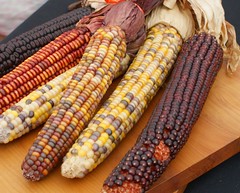 | 32 |
| 4837046779 | Anasazi | A Native American who lived in what is now southern Colorado and Utah and northern Arizona and New Mexico and who built cliff dwellings |  | 33 |
| 4837046780 | Iroquois | A later native group to the eastern woodlands. They blended agriculture and hunting living in common villages constructed from the trees and bark of the forests |  | 34 |
| 4837046781 | Cherokee | Are a Native American people historically settled in the Southeastern United States (principally Georgia, the Carolinas and Eastern Tennessee). Linguistically, they are part of the Iroquoian-language family. In the 19th century, historians and ethnographers recorded their oral tradition that told of the tribe having migrated south in ancient times from the Great Lakes region, where other Iroquoian-speaking peoples were located. |  | 35 |
| 4837046782 | Inuit | A member of a people inhabiting the Arctic (northern Canada or Greenland or Alaska or eastern Siberia) |  | 36 |
| 4837046783 | Maya | Mesoamerican civilization concentrated in Mexico's Yucatan Peninsula and in Guatemala and Honduras but never unified into a single empire. Major contributions were in mathematics, astronomy, and development of the calendar. |  | 37 |
| 4837046784 | Aztec | (1200-1521) 1300, they settled in the valley of Mexico. Grew corn. Engaged in frequent warfare to conquer others of the region. Worshipped many gods (polytheistic). Believed the sun god needed human blood to continue his journeys across the sky. Practiced human sacrifices and those sacrificed were captured warriors from other tribes and those who volunteered for the honor. |  | 38 |
| 4837046785 | Inca | Their empire stretched from what is today Ecuador to central Chili in the Andes Mountain region of South America. Called the Children of the Sun. |  | 39 |
| 4837046786 | Tenochtitlan | Capital of the Aztec Empire, located on an island in Lake Texcoco. Its population was about 150,000 on the eve of Spanish conquest. Mexico City was constructed on its ruins. | | 40 |
| 4837046787 | Aztec calendar | 365 days, divided into 18 months each with 20 days. |  | 41 |
| 4837046788 | Terrace farming | The cutting out of flat areas (terraces) into near vertical slopes to allow farming. Terrace farms appears as steps cut into a mountainside. This adaptation allowed both the early Chinese, and the Inca of Mesoamerica to grow enough food for their large populations. |  | 42 |
| 4837046789 | Nomad | Early, simplistic man that migrated across the land bridge. | 43 | |
| 4837046790 | Causes for European interest in exploration? | The Holy Crusades, Renaissance and The Protestant Reformation. | 44 | |
| 4837046791 | Martin Luther | Broke away from the Catholic Church because of his 95 problems with the Catholic Church. | 45 | |
| 4837046792 | King Henry VIII | Broke away from the Catholic Church because of his disagreement with his inability to get divorced; which eventually led to civil unrest in his country. | 46 | |
| 4837046793 | New France | Established in Canada and along the Mississippi River, focused on fur trade. | 47 |
AP US History Flashcards
Terms : Hide Images
| 7963490581 | suffrage | the right to vote in political elections | 0 | |
| 7963492747 | andrew jackson | general and political leader, war of 1812, he defeated british in battle of new orleans | 1 | |
| 7963495523 | whigs | members of the british reforming and constitutional party that sought supremacy of parliament | 2 | |
| 7963501143 | second national bank | second federally authorized hamiltonian national bank in the u.s | 3 | |
| 7963506042 | tariff of abominations | protective tariff passed by the congress of the u.s | 4 | |
| 7963511509 | second great awakening | protestant religious revival during early 19th century | 5 | |
| 7963515177 | romanticism | movement in the arts and literature that originted in the late 18th century | 6 | |
| 7963521131 | temperance | abstinence from alcoholic drink | 7 | |
| 7963527484 | seneca falls convention | first women's rights convention | 8 | |
| 7963529654 | marbury vs. madison | a case decided by the supreme court under chief justice john marshall | 9 | |
| 7963532938 | jacksonian democrats | movement for more democracy | 10 | |
| 7963534882 | henry clay | whig political leader known for his efforts to keep the u.s one nation despite controversy over slavery | 11 | |
| 7963544576 | internal improvements | term used historically in the u.s for public works | 12 | |
| 7963550426 | market revolution | historical models which argues that there was a drastic change of the economy | 13 | |
| 7963552749 | utopian movements | imagined community or society that possesses highly desirable quantities for its citizens | 14 | |
| 7963558165 | perfectionism | refusal to accept any standard sort of perfection | 15 | |
| 7963561766 | gradual emancipation | one of the first attempts by a gov't in the u.s to begin abolition of slavery | 16 | |
| 7963566150 | john marshall | american politician | 17 | |
| 7963570538 | william lloyd garrison | prominent american abolitionist, journalist, suffragist, and social reformer | 18 | |
| 7963573867 | henry david thoreau | american essayist, poet, philosopher, and historian | 19 | |
| 7963578069 | frederick douglass | abolitionist | 20 | |
| 7963580126 | joseph smith | religious leader who founded mormon church | 21 | |
| 7963589566 | interchangeable parts | made to specifications that ensure that they are so nearly identical that they will fit into any assembly of the same type | 22 | |
| 7963601662 | american system | he policy of promoting industry in the U.S. by adoption of a high protective tariff | 23 | |
| 7963603858 | lowell girls | young female workers who came to work in industrial corporations in Lowell | 24 | |
| 7963603859 | separate spheres | public dichotomy is an ideology | 25 | |
| 7963603860 | cotton gin | a machine for separating cotton from its seeds | 26 | |
| 7963605754 | erie canal | canal in New York | 27 | |
| 7963655096 | louisiana purchase | acquisition of the Louisiana territory | 28 | |
| 7963658135 | missouri compromise | settlement of a dispute between slave and free states | 29 | |
| 7963658136 | indian removal act | law authorized the president to negotiate with southern Indian tribes for their removal to federal territory west of the Mississippi River in exchange for their lands | 30 | |
| 7963658137 | monroe doctrine | originated by President James Monroe in 1823, that any intervention by external powers in the politics of the Americas is a potentially hostile act against the US | 31 | |
| 7963660533 | trail of tears | route along which the United States government forced several tribes of Native Americans to migrate to reservations west of the Mississippi River | 32 |
AP US History Chapter 1 Flashcards
Terms : Hide Images
| 4964189053 | Native American History: Origins of Early People in the Americas | Native American History: Origins of Early People in the Americas | 0 | |
| 4964191465 | Berengia | the idea is that during the last ice age, about 20,000 years ago (or a little less), lower water levels created a frozen bridge of land. The first settlers of the Americas are believed to have come across this land bridge | 1 | |
| 4964213988 | Atlantic Theory | Archeologists have found these specific, early spear points, originally found near Clovis, New Mexico. Being deemed Clovis Points, for a long time they were offered as evidence for the Land Bridge theory because similar points have been discovered in the area the around Beringia. It turns out, though, these spear points are very similar to points found in Europe, and the oldest example to be found in the Americas have actually been found in the Eastern U.S. This points to migration from Europe to the east of the Americas. This migration pattern would mean that the people who made these earliest spear points had to cross the Atlantic. | 2 | |
| 4964216846 | Oceania Theory | The best evidence of this is the finding of the Kennewick Man. The 9,500-year old Kennewick skeletal remains were found in Washington State in the nineties. Theory based on the cultural and linguistic similarities between native South American people's and those from Australia and Polynesia. This theory would also mean people would have had to use boats to cross the Pacific. Theory based on the cultural and linguistic similarities between native South American people's and those from Australia and Polynesia. This theory would also mean people would have had to use boats to cross the Pacific. | 3 | |
| 4964398890 | The 'Kennewick Man' has features resembling: | Ainu | 4 | |
| 4964398891 | The most accepted theory of how early people found their way to the Americas is: | The Bering Land Bridge Theory | 5 | |
| 4964401327 | The Oceania Theory is based on the notion that cultural and linguistic similarities exist between native South American peoples and those from: | Australia and Polynesia | 6 | |
| 4964404399 | Clovis Points are spear tips that were first found in: | Clovis, New Mexico | 7 | |
| 4964406929 | The exposed area of frozen land where it is believed the earliest people crossed to the Americas is called: | Beringia | 8 | |
| 4981879288 | Mesoamerican Civilizations: The Olmecs to Cortes | Mesoamerican Civilizations: The Olmecs to Cortes | 9 | |
| 4981888063 | Mesoamerica | 'Meso' means 'middle', and these Mesoamerican cultures are the early advanced civilizations of Mexico and Central America. | 10 | |
| 4981891071 | Olmec | - The Olmec were the first complex society in the region. - inhabited a small area of about 125 by 50 miles in what is today southern Mexico from around 1400 BCE to about 400 BCE - developed the first written language and numbering system in Mesoamerica - left amazing artifacts, like this jade mask and this giant head, |  | 11 |
| 4981916699 | Maya | - flourished with their great cities from about 250 CE until around 1400 - covered southern Mexico, Guatemala and Honduras - included amazing pyramids, like this from Tikal, one of the largest sites left of the Maya. | 12 | |
| 4981937335 | The Aztec and Cortes | - Aztecs emerged around 1325 and were conquered by Hernando Cortes in 1521 - Westerners actually encountered Aztec culture in all its glory - believed that the god, Quetzalcoatl (who, coincidentally, was believed to have light skin, red hair and light eyes), was supposed to return to earth. When the Spanish showed up, the Aztecs gave them food, gold and women... - believed that the god, Quetzalcoatl (who, coincidentally, was believed to have light skin, red hair and light eyes), was supposed to return to earth. When the Spanish showed up, the Aztecs gave them food, gold and women... | 13 | |
| 4981980425 | Why are the Olmecs considered the first complex society in Mesoamerica? | They developed the region's first written language and numbering system. | 14 | |
| 4981982356 | How did the Aztecs become a wealthy and glorious empire? | By conquering other tribes and collecting tributes | 15 | |
| 4981984165 | The most influential factor in the fall of the Aztecs was: | Vulnerability to European disease | 16 | |
| 4981986265 | How did the Aztecs react to the arrival of the Spanish? | They welcomed the Spanish with gold, food and women. | 17 | |
| 4981988167 | Today, Mayan people can be found all over Southern Mexico, but then, why do so many people consider that the Maya have disappeared? | The Maya left their cities and scattered around the villages of the region. | 18 | |
| 4981998138 | The Inca Civilization and Pizarro: Pre-Columbian South America | The Inca Civilization and Pizarro: Pre-Columbian South America | 19 | |
| 4982041002 | The Inca | - originated in what today is Peru but built their empire to include a large component of the western coast of South America - step agriculture - line of the Inca kings actually begins in the 12th century with Manco Capac - Empire didn't really begin until a couple of centuries later when the Inca began conquering other peoples of the region under King Pachacutec | 20 | |
| 4982045642 | step agriculture | This form of agriculture has been developed in other mountainous areas, like China's famous dragon back terraces. The accomplishment of the Inca was equally impressive! | 21 | |
| 4982068557 | The Incan Army | Their uniforms were colorful. They entered battle accompanied by drums, flutes and trumpets. The army was well organized, healthy and well trained. They even had protective headgear and a lot of medicines. They were armed with superior weapons compared to all the other neighboring tribes. Their main weapon was a wooden club, but they also had spears, bows and other weapons as well! | 22 | |
| 4982084829 | Francisco Pizarro | had heard the stories of Inca wealth, so like any good conquistador, he wanted to go get some of that Inca gold, conquered the inca within yeats | 23 | |
| 4982141554 | The Inca were defeated by: | Francisco Pizarro | 24 | |
| 4982143569 | The last ruler of the Inca before the Spanish was: | Atahualpa | 25 | |
| 4982145337 | King Pachacutec of the Inca was: | The subject of many differeing stories and legends An excellent leader who invited conquered peoples to join the Inca Empire His father's replacement as king The first king of the Inca Empire | 26 | |
| 4982152911 | The area from which the Inca originated is what country today? | Peru | 27 | |
| 4982154646 | The people known for leaving amazing lines in the deserts of Peru are called: | The Nazca People | 28 | |
| 4994579934 | Pre-Columbian Civilization: North American Indians Before Europeans | Pre-Columbian Civilization: North American Indians Before Europeans | 29 | |
| 4994581093 | The Tribes of the Northeast | - tribes that encountered the Pilgrim - lived in the territory from the Atlantic shores to the Mississippi Valley and from the Great Lakes to as far south as the Cumberland River in Tennessee - cleared forests to plant crops and used the lumber to build homes and make tools. The women of many of these tribes did all of the work with crops, while the men primarily hunted and fished. - Iroquois social structure is that it was matrilineal - quite famous because it is believed that the coming together of the 13 colonies was based on this coming together of this group consisting of the Seneca, Cayuga, Onondaga, Oneida, and the Mohawk tribes | 30 | |
| 4994582534 | The Tribes of the Southeast | - cultural group stretched from the Atlantic Ocean to the Trinity River in what is today Texas and from the Gulf of Mexico north as far as points in modern-day Missouri, Kentucky, and West Virginia. - tribes in this group included the Cherokee, Choctaw, Chickasaw, Creek, and Seminole - many of them decided to adopt customs of the colonists. - people who later were victims of the forced relocation known as the Trail of Tears. - first and foremost farmers with hunting and fishing coming in second as their source of sustenance. They lived in various styles of houses. They included thatched roofs and various styles for the sides. | 31 | |
| 4994584028 | The Tribes of the Southwest | - goes from the south of present-day Utah and Colorado down through Arizona and New Mexico. This includes parts of Texas, California, and Oklahoma and continues into Mexico. - farming and nomadic - tribes like the Hopi and Zuni developed desert farming techniques that did not require irrigation - hunters/gatherers | 32 | |
| 4994585703 | The Tribes of the Northwest Coast | - followed the West Coast all the way from Northern California all the way up to the southernmost parts of Alaska. - oceans, rivers, and forests to offer up plenty of fish and gam - Chinook and Tillamook are two of the well-known tribes of this region. | 33 | |
| 4994586445 | The Tribes of the Great Plains | - covered much of the middle of what is today the U.S. and Canada. - The Plains tribes are greatly tied to horse culture and the hunting of the buffalo, but remember, this lifestyle was not possible until the horse was introduced to the Americas by Europeans. - Earlier, many of these tribal groups were hunter-gatherers and farmers who lived in villages or at least semi-permanent settlements | 34 | |
| 4994600119 | How were the Chinook and Tillamook tribes able to achieve an affluent, highly complex society? | Food and building materials were readily available due to their positioning, so these tribes had time to achieve an affluent, highly complex society. | 35 | |
| 4994600120 | How did the Dakota, Lakota, and Nakota people acquired the name Sioux? | Through their enemies. | 36 | |
| 4994601018 | Which of the following best describes the Iroquois social structure? | At the time of marriage a man joins his wife's family. | 37 | |
| 4994601196 | Why were the tribes that included the Cherokee, Choctaw, Chickasaw, Creek, and Seminole considered to be civilized? | Because they adopted customs of the colonists. | 38 | |
| 4994601979 | Effects of European Colonization: Christopher Columbus and Native Americans | Effects of European Colonization: Christopher Columbus and Native Americans | 39 | |
| 4994602873 | God, gold, and glory. | Columbus was followed by wave upon wave of European explorers and conquerors motivated by | 40 | |
| 4994605507 | native cultures | were quite advanced in, say, astronomy or agriculture or engineering, they still used Stone Age tools made from bone, wood, stone, or clay with very limited knowledge of metalworking and no steel. | 41 | |
| 4994608220 | the Treaty of Tordesillas | Pope had divided the so-called 'uncivilized world' between Portugal and Spain in a deal known as | 42 | |
| 4994619443 | How did European metal affect the lives of Native Americans? | European metal tools were superior to their tools. | 43 | |
| 4994619444 | Which were the most common motivators for European exploration in the time of Columbus? | Gold, glory and God | 44 | |
| 4994619647 | How did the reintroduction of horses affect the lives of American tribes? | Horses were used for war and hunting. | 45 | |
| 4994619769 | Why did European monarchs of the 15th century sponsor the voyages of many explorers? | They wanted to engage in lucrative trade in Asia. | 46 | |
| 4994619856 | What was the most significant cause of death among Native Americans following contact with Europeans? | Disease | 47 | |
| 5010853131 | New Spain: Spanish Explorers and Spanish Colonies | New Spain: Spanish Explorers and Spanish Colonies | 48 | |
| 5010856135 | Christopher Columbus | was the first European to discover the New World. | 49 | |
| 5010860378 | Amerigo Vespucci | born in Italy, but he eventually became a Spanish citizen. You might notice what his biggest legacy in the new world is - his name. You see, it was Vespucci who realized that the Americas were, in fact, not in Asia. A very well-educated man, he figured out the Earth's circumference at the equator within about 50 miles of accuracy. | 50 | |
| 5010865240 | Conquistadors | are soldier/explorers who sailed for personal profit under the banner of the Spanish crown, but they also considered themselves to basically be crusaders. Conquistadors always had priests with them whose duty it was to bring Christianity to the natives they | 51 | |
| 5010872120 | Francisco Pizarro | is most known for his defeat of the Inca in 1535 | 52 | |
| 5010876100 | Vasco Nunez de Balboa | came from a poor Spanish family, but he rose to be famous for being the first European to cross Panama and actually see the Pacific Ocean in 1513. When he climbed a peak alone on the expedition, he saw the great water mass and claimed it for Spain. | 53 | |
| 5010879975 | Juan Ponce de Leonil | is most famous for searching for and possibly finding the Fountain of Youth. Of course, fame and fact are not the same thing. It was published after his death that this was his reason for exploration. What we know as more dependable information is that he was the first European to step foot in Florida. So, he is the first of the age of discovery in 1513 to step on what is today U.S. so | 54 | |
| 5010883530 | Francisco Vasquez de Coronado | conquistador known for looking for something thought of as a myth. He was looking for El Dorado - the seven cities of gold. El Dorado was quite possibly a deception on the part of natives. They may have been telling the Spanish about it so that they would go off to find it and leave them alone. It is also possible that it just grew out of old stories of the great cities of some of the early American civilizations. | 55 | |
| 5010888569 | Hernando Cortes | 1521, defeated the Aztecs. This is what he is most known for. | 56 | |
| 5010893453 | patrón | head of a hacienda was called the | 57 | |
| 5010895831 | peones | Peasants who worked land that belonged to the patrón | 58 | |
| 5010912798 | campesinos | worked small holdings, and owed a portion to the patrón. | 59 | |
| 5011048312 | Why were mulattos considered to be above the lowest societal group? | They were mixed with Spanish and African blood but were not slaves | 60 | |
| 5011050434 | Juan Ponce de Leon was the first European explorer to _____ in 1513. | arrive in what is now Florida | 61 | |
| 5011052984 | How did a hacienda differ from an encomienda? | How did a hacienda differ from an encomienda? | 62 | |
| 5011053053 | Amerigo Vespucci's biggest legacy was _____. | having the new world named after him in 1507 | 63 | |
| 5011055334 | Which of the following statements about Hernando Cortes is FALSE? | He was searching for El Dorado | 64 | |
| 5011087081 | The Columbian Exchange | The Columbian Exchange | 65 | |
| 5011092058 | The Columbian Exchange | is the term used to describe the flow of ideas, people, plants animals, technology, and disease that took place because of Columbus' discovery of the New World. The starting point of the Columbian Exchange is 1492. | 66 | |
| 5011161859 | How was 90% of the native populations destroyed? | How was 90% of the native populations destroyed? | 67 | |
| 5011163829 | What led Columbus to find the 'New World'? | He was in search of a faster and easier way to Asia | 68 | |
| 5011166439 | The Old world 'received' _____ from the Columbian Exchange. | Tomatoes and habanero peppers | 69 | |
| 5011166440 | Which of the following illustrates how people was part of the Columbian Exchange process? | People were removed from their homes in the west of Africa. | 70 | |
| 5011168695 | The beginning of the Columbian Exchange was marked after the year _____. | 1492 CE | 71 |
AP US History: American Pageant Chapter 6 Flashcards
Terms : Hide Images
| 5010862331 | George Washington | Virginian general. He fought in the French and Indian War, and then was the leader of the American Revolutionary War. | 0 | |
| 5010862332 | Samuel de Champlain | He was a French explorer who sailed to the West Indies, Mexico, and Panama. He wrote many books telling of his trips to Mexico City and Niagara Falls. His greatest accomplishment was his exploration of the St. Lawrence River and his latter settlement of Quebec. | 1 | |
| 5010862333 | Robert de La Salle | He was responsible for naming Louisiana. He was the first European to float down the Mississippi river to the tip from Canada and upon seeing the beautiful river valley named Louisiana after his king Louis XIV in 1682. | 2 | |
| 5010862334 | William Pitt | English statesman who brought the Seven Years' War to an end (1708-1778) | 3 | |
| 5010862336 | James Wolfe | He was the British general whose success in the Battle of Quebec won Canada for the British Empire. Even though the battle was only fifteen minutes, Wolfe was killed in the line of duty. This was a decisive battle in the French and Indian War. | 4 | |
| 5010862337 | Edward Braddock | He was a British commander during the French and Indian War. He attempted to capture Fort Duquesne in 1755. He was defeated by the French and the Indians. At this battle, Braddock was mortally wounded. | 5 | |
| 5010862338 | Pontiac | Indian Chief; led post war flare-up in the Ohio River Valley and Great Lakes Region in 1763; his actions led to the Proclamation of 1763; the Proclamation angered the colonists. | 6 | |
| 5010862340 | Quebec | First permanent French settlement in North America, founded by Samuel de Champlain | 7 | |
| 5010862341 | Huguenots | A group of French Protestants that lived from about 1560 to 1629. Protestantism was introduced into France between 1520 and 1523, and the principles were accepted by many members of the nobility, the intellectual classes, and the middle class. At first the new religious group was royally protected, but toward the end of the reign of King Francis I they were persecuted. Nevertheless, they continued to grow. | 8 | |
| 5010862342 | Ohio River Valley | The point of contention that sparked the French and Indian War. Both the French and British claimed it. They wanted the area because the rivers allowed for transportation. | 9 | |
| 5010862343 | French and Indian War | Was a war fought by French and English on American soil over control of the Ohio River Valley-- English defeated French in1763. Historical Significance: established England as number one world power and began to gradually change attitudes of the colonists toward England for the worse. | 10 | |
| 5010862344 | The Myth of Invincibility | Proclamation of 1763 New France | 11 | |
| 5010862345 | Cajun | A descendant of French pioneers, chiefly in Louisiana, who in 1755 chose to leave Acadia rather than live under the British Crown. | 12 | |
| 5010862346 | Iroquois | Native North American Indian peoples formerly living in New York state. Grew strong through their alliances with other tribes, and fought against the Huron tribe. | 13 | |
| 5010862347 | Acadians | French settlers who would not pledge their loyalties to the British and were driven from their homes; cajuns of Louisiana are descendants of these people | 14 | |
| 5010862349 | Albany Congress | A conference in the United States Colonial history form June 19 through July 11, 1754 in Albany New York. It advocated a union of the British colonies for their security and defense against French Held by the British Board of Trade to help cement the loyalty of the Iroquois League. After receiving presents, provisions and promises of Redress of grievances. 150 representatives if tribes withdrew without committing themselves to the British cause. | 15 | |
| 5010862350 | Battle of Quebec | turning point of war when Quebec surrendered to the French in 1759 | 16 | |
| 5010862353 | Proclamation of 1763 | This was an English law enacted after gaining territory from the French at the end of the French and Indian War. It forbade the colonists from settling beyond the Appalachian Mountains. The Colonists were no longer proud to be British citizens after the enactment. This caused the first major revolt against the British. | 17 | |
| 5012596278 | haphazard | randomly or without reliability | 18 | |
| 5012599302 | prerogative | to have a right, to have an exclusive right | 19 | |
| 5012615216 | conscientious | done thoughtfully, or wanting to do what is right | 20 |
Flashcards
AP US History Combines Periods 1 and 2 Williams Flashcards
Terms : Hide Images
| 10034730508 | Columbian Exchange | "Triangle Trade: Widespread transfer of animals, plants, culture, human populations, technology and ideas between the American and Afro-Eurasian hemispheres in 15th-16th centuries, related to European colonization and trade after Christopher Columbus' 1492 voyage. |  | 0 |
| 10034730509 | Feudalism | A way of structuring society around relationships derived from the holding of land in exchange for service or labour. |  | 1 |
| 10034730510 | Capitalism | An economic and political system in which a country's trade and industry are controlled by private owners for profit, rather than by the state. |  | 2 |
| 10034730511 | Joint-Stock Companies | A business entity where different stocks can be bought and owned by shareholders. Each shareholder owns company stock in proportion, evidenced by his or her shares (certificates of ownership).[1]This allows for the unequal ownership of a business with some shareholders owning a bigger proportion of a company than others do. |  | 3 |
| 10034730512 | Encomienda System | A system in which the Spanish crown granted a person a specified number of natives of a specific community, with the indigenous leaders in charge of mobilizing the assessed tribute and labor. In turn, encomenderos were to take responsibility for instruction in the Christian faith, protection from warring tribes and pirates, instruction in the Spanish language and development and maintenance of infrastructure. |  | 4 |
| 10034730513 | subjugate | to bring under complete control or subjection; conquer; master, enslave. |  | 5 |
| 10034730514 | Northwest Passage | The Northwest Passage is a sea route connecting the northern Atlantic and Pacific Oceans through the Arctic Ocean, along the northern coast of North America via waterways through the Canadian Arctic Archipelago |  | 6 |
| 10034730515 | Bering Strait | Stretch of ocean separating North America from Asia that was, during the Ice Age, the location of a land bridge as wide as Alaska. Then, human migration was possible over the land bridge from Siberia, and human beings came across likely in pursuit of game. From this point of origin, American Indians dispersed down across the entire Western hemisphere. |  | 7 |
| 10034730516 | Iroquois | The name not of a tribe but of a confederacy of six separate tribes centered in what would become New York. Coposed of the Mohawk, Seneca, Cayuga, Onondaga, Oneida and Tuscarora Tribes united in a military alliance against the Huron tribe located in the Great Lakes Region. |  | 8 |
| 10034730517 | Renaissance | The flowering of scholarship and individualistic, humanistic endeavor that ended the medieval period of European history. In English: "Rebirth." |  | 9 |
| 10034730518 | Prince Henry the Navigator | Regarded as the main initiator of what would be known as the Age of Discoveries, responsible for the early development of Portuguese exploration and maritime trade with other continents through the systematic exploration of Western Africa, the islands of the Atlantic Ocean, and the search for new routes. |  | 10 |
| 10034730519 | Ferdinand and Isabella of Spain | Christopher Columbus' patrons; launched the Spanish Empire after hearing of his discoveries of a supposed water route to Asia. Established management precedents that cpaitalized on treasures discovered in the New World, served as a model for other European nations attempting similar exploits. |  | 11 |
| 10034730520 | Bartolome de las Casas | Dominican friar, priest and scholar that worked tirelessly throughout the sixteenth century, decrying the plight of the American Indians. |  | 12 |
| 10034730521 | Protestant Reformation | Early 16th century writings by the priest and scholar Martin Luther, focusing primarily on biblical doctrines of grace, inspired this movement. Its key doctrine: each person having an individual calling and a Christian duty to work diligently at that calling for the Glory of God. This idea became a seminal attribute of American society through the influence of Dutch, English, Swedish, Germany and French Huguenot colonists. |  | 13 |
| 10034730522 | Martin Luther | A German priest and scholar who defied Rome and launched the Protestant Reformation by contesting certain teachings of the Roman Catholic Church, beginning in 1517. |  | 14 |
| 10034730523 | John Calvin | Frenchman that began as a priest but joined the Protestant cause as a legal scholar and minister in Geneva, Switzerland. Wrote the Institutes of Christian Religion, emphasizing the sovereignty of God in salvation. His student, John Knox, formed the Scottish Presbyterian Church brought to the shores of America by Scots-Irish immigrants. The Puritans were also Calvinist in doctrine and were the founders of Congregational Churches in New England. |  | 15 |
| 10034730524 | Henry VIII of England | Tudor King of England who launched the English Reformation because the Roman Catholic Church opposed his actions of divorcing Catherine of Aragon and marrying Anne Boleyn. Also: severed ties with Rome and allowed the Bible to be printed in English legally for the first time. |  | 16 |
| 10034730525 | New Amsterdam | Dutch Colony in North America that began when Peter Minuit purchased the best harbor on the Atlantic Seaboard from local Indians with a few trading goods. Established the Dutch as competent fur traders, excellent merchants, responsible for founding the most ethnically diverse colony that fittingly, became the site of the trade and culture capital of the world, New York City. | 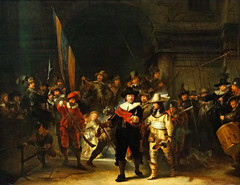 | 17 |
| 10034730526 | Elizabeth I | The daughter of Henry VIII and Anne Boleyn, who was more responsible than any other monarch for positioning her country to take advantage of New World discoveries. |  | 18 |
| 10034730527 | nation-state | The modern form of political society that combines centralized government with a high degree of ethnic and cultural unity. |  | 19 |
| 10034730528 | confederacy | An alliance or league of nations or peoples looser than a federation. | | 20 |
| 10034730529 | primeval | Concerning the earliest origin of things. |  | 21 |
| 10034730530 | caravel | A small vessel with a high deck and three triangular sails. |  | 22 |
| 10034730531 | plantation | A large-scale agricultural enterprise growing commercial crop and usually employing coerced or slave labor. |  | 23 |
| 10034730532 | conquistador | A Spanish conqueror or adventurer in the Americas. |  | 24 |
| 10034730533 | mestizo | A person of mixed Native American and European ancestry. |  | 25 |
| 10034730534 | nationalism | Fervent belief and loyalty given to the political unit of the nation-state, leading to a belief in the superiority of one's culture over another. |  | 26 |
| 10034730535 | charter | A legal document granted by a government to some group or agency to implement a stated purpose, and spelling out the attending rights and obligations. |  | 27 |
| 10034730536 | indentured servant | A poor person obligated to a fixed term of labor. |  | 28 |
| 10034730537 | toleration | Originally, religious freedom granted by an established church to a religious minority. |  | 29 |
| 10034730538 | squatter | A frontier farmer who illegally occupied land owned by others or not yet officially opened for settlement. |  | 30 |
| 10034730539 | matriarch | A respected, usually elderly, female head of a household or extended clan. |  | 31 |
| 10034730540 | conversion | A religious turn to God, thought by Calvinists to involve an intense, identifiable person experience. | | 32 |
| 10034730541 | heresy | Departure from correct or officially defined belief. |  | 33 |
| 10034730542 | seditious | Concerning resistance to or rebellion against the government. |  | 34 |
| 10034730543 | commonwealth | An organized civil government or social order. |  | 35 |
| 10034730544 | autocratic | Absolute or dictatorial rule. |  | 36 |
| 10034730545 | proprietary | Concerning exclusive legal ownership, as of colonies granted to individuals by the monarch. |  | 37 |
| 10034730546 | naturalization | The granting of citizenship to foreigners or immigrants. |  | 38 |
| 10034730547 | congregationalism | Church and town organization independent (no state control) and non-hierarchical; Citizenship = church membership (covenant); New England and Middle colonies; Puritans, Quakers, Baptists, etc. | 39 | |
| 10034730548 | covenant | Agreement between church members to form an independent church congregation; Membership was tied to citizenship. | 40 | |
| 10034730549 | Richard Hakluyt | English writer who extravagantly exhorted his countrymen to undertake the colonization of the New World after defeat of the Spanish Armada. | 41 | |
| 10034730550 | Sir Francis Drake | The most famous of the "sea dogs" (English Privateers); Plundered his way all around the planet; Financially supported by Queen Elizabeth; Knighted by queen because defying Spanish protest. |  | 42 |
| 10034730551 | Destruction of the Spanish Armada | 16th century England vs. Spain naval war; Marked the beginning of the end of the Spanish Empire and opened the path for the British Empire to flourish. |  | 43 |
| 10034730552 | Calvinism | A major branch of Protestantism; The credo of many American foundational settlers including English Puritans, Scottish Presbyterians, French Hugenots, and Dutch Reformed Church in America | 44 | |
| 10034730553 | Barbados | located in Caribbean; where the settlers in Carolina come from |  | 45 |
| 10034730554 | Joint Stock Company | A commercial venture in which multiple shareholders invest and spread risk; e.g. Hudson's Bay Company, Virginia Company, Dutch West India Company | 46 | |
| 10034730555 | Hudson's Bay Company | one of the Joint-stock companies founded in England for the purpose of trapping and fur trading. |  | 47 |
| 10034730556 | Navigation Acts | A series of economic regulations set by England starting in 1651 in order to gain control over its' colonies; Inspired by merchantilist policies |  | 48 |
| 10034730557 | Queen Elizabeth | A.K.A. Virginia, the "virgin" queen; An ambitious ruler, she secured the Protestant Reformtation in England and reigned during the destruction of the Spanish Armada, Drake's circumnavigation, the English Renaissance (Shakespeare!), and the beginning of the British Empire. | | 49 |
| 10034730558 | Sir Walter Raleigh | A dashing courtier favored by Queen Elizabeth; Launched the first English colony in the New World in 1585 on Roanoke Island, off the coast of Virginia (present day North Carolina); The colony was a failure due to England's preoccupation with war with Spain. |  | 50 |
| 10034730559 | Roanoke colony | Located in present day North Carolina; Known as "The Lost colony" established by Sir Walter Raleigh in 1585, disappeared during the first Anglo-Spanish War. |  | 51 |
| 10034730560 | Virginia Company of London | A joint-stock company that established the first enduring English colony in the New World at Jamestown. |  | 52 |
| 10034730561 | Plantation economy | large scale agriculture worked by slaves, especially sugar and tobacco plantation. | | 53 |
| 10034730562 | Chesapeake Bay | Large estuary between Maryland and Virginia; Site of both Jamestown and St. Marys. |  | 54 |
| 10034730563 | Jamestown | The first permanent English settlement in North America; Founded in 1607 as a joint-venture of the Virginia Company. | 55 | |
| 10034730564 | Maryland | Proprietary colony established on the Chesapeake Bay; George Calvert and Lord Baltimore were its proprietors; Established as a Catholic haven in the largely Protestant British Americas. |  | 56 |
| 10034730565 | Powhatan confederacy | A group of native American tribes in 17th century that settled in Virginia and came into conflict with the Virginia colonists. | 57 | |
| 10034730566 | Lord De La Warr | Governor of Jamestown; "he shall not work shall not eat" | 58 | |
| 10034730567 | Anglo-Powhatan Wars | 1614-1644; Series of wars between English Virginia Company settlers and local Indian tribes; "Irish tactics" used; Settled by Marriage of Pocahontas and John Rolfe; Led to the banishment of Chesapeake Indians and English encroachment of land. | 59 | |
| 10034730568 | "starving time" | Jamestown winter of 1609 to 1610; Only 60 of the 400 colonists survived because they didn't found plants or the methods to grow crops; Most colonists were gentlemen "adventurers" who refused to work or didn't know how to grow crops. |  | 60 |
| 10034730569 | House of Burgesses | The first representative legislative body formed in 1619 in Virginia; Evolved into a "planter oligarchy" that represented the wealthy plantation owners, and a competitor to the Parliament in London. | 61 | |
| 10034730570 | Maryland Acts of Toleration | In 1649, passed in Maryland, guaranteeing rights to Christians of all denominations; A measure to protect Maryland's Catholics. | 62 | |
| 10034730571 | Headright System | New immigrants were enticed to come to the New World with the offer of 50 arces (1 arce= 4047m2) | 63 | |
| 10034730572 | Bacon's Rebellion | 1676 rebellion of discontent landless servants in Virginia; Exposed the weakness of the indentured servant system to the ruling planter oligarchy, who thereafter relied more and more on African slaves. | 64 | |
| 10034730573 | Lord Baltimore | Catholic proprietor of the colony of Maryland; Permitted religious freedom to all Christian colonists in a mesure to protect Catholics. | 65 | |
| 10034730574 | John Rolfe | Virginia "father of tobacco"; Husband of Pocahontas. | 66 | |
| 10034730575 | Indentured servant | Potential England immigrants sign a contact with wealthy Virginians to work for a certain years in the New World in exchange of the passage over the Atlantic. | 67 | |
| 10034730576 | Virginia | The first colony of the British Empire; Established during the rule of Queen Elizabeth I. | 68 | |
| 10034730577 | Quebec | French major colony in Canada. |  | 69 |
| 10034730578 | Jesuit | "Society of Jesus"; Catholic missionaries. | 70 | |
| 10034730579 | Huguenots | French Protestants | 71 | |
| 10034730580 | Metis People | Descendant of French and indigenous people | 72 | |
| 10034730581 | Fundamental Orders of Connecticut | First written constitution in the New World (and all of Western Tradition); established townhall style of government similar to much of Puritan New England. | 73 | |
| 10034730582 | Pilgrims | Traveler on a holy journey; Puritan separatists who first settled Plymouth in New England |  | 74 |
| 10034730583 | Puritans | A group of English Reformed Protestants who sought to "purify" the Church of England | 75 | |
| 10034730584 | Protestantism | The "reformed" Christian faith that emerged from Martin Luther's 16th century protests against the corruption and control of the Catholic Church; A major religious and political force in the English colonies of the New World. | 76 | |
| 10034730585 | Town hall meeting | A form of direct democratic rule, used principally in New England where most or all the members of a community come together to participate in direct democratic government. | 77 | |
| 10034730586 | Congregational church | Protestant churches practicing congregationalist church governance; The independence of each congregation in New England mirrored the independence of each town and its political organization. | 78 | |
| 10034730587 | Royal charter | A formal document issued by a monarch as letters patent, granting a right or power to an individual or a body corporate. | 79 | |
| 10034730588 | Charter | The grant of authority or rights, stating that the granter formally recognizes the prerogative of the recipient to exercise the rights specified; 3 types: Royal, Commercial, Proprietary. | 80 | |
| 10034730589 | Plymouth colony | Founded by a group of Separatists who came to be known as the Pilgrims; the first sizable permanent English settlement in the New England region,https://o.quizlet.com/YWD0OaZqPqntAaSERr.dQA_m.jpg | 81 | |
| 10034730590 | Roger Williams | A Puritan, an early proponent of religious freedom and separation of church and state; he was expelled from the colony of Massachusetts and began the colony of Providence Plantation. | 82 | |
| 10034730591 | Providence | Colony established by the puritan dissenter Roger Williams; Later merged with Portsmouth to form the colony of Rhode Island. | 83 | |
| 10034730592 | Anne Hutchinson | An important participant in the Antinomian Controversy; banished from the Massachusetts Bay Colony and formed Portsmouth (later merged into Rhode Island). |  | 84 |
| 10034730593 | John Winthrop | One of the leading figures in the founding of the Massachusetts Bay Colony; his vision of the colony as a Puritan "city upon a hill" dominated New England colonial development. |  | 85 |
| 10034730594 | Mayflower | The ship that transported the first English Separatists—Pilgrims—in 1620. | 86 | |
| 10034730595 | Separatist | Puritans who felt needed to separate from the Church of England. | 87 | |
| 10034730596 | "city upon a hill" | In the 1630 sermon "A Model of Christian Charity" preached by Puritan John Winthrop. Winthrop admonished the future Massachusetts Bay colonists that their new community would be "as a city upon a hill", the ideal community, watched by the world. | 88 | |
| 10034730597 | Mayflower Compact | The first governing document of Plymouth Colony, written by the male passengers of the Mayflower, consisting of separatist Congregationalists. |  | 89 |
| 10034730598 | Salem Witch Trials | A series of hearings and prosecutions of people accused of witchcraft in colonial Massachusetts between February 1692 and May 1693; Religious fear that resulted from unrest in the colonies. | 90 | |
| 10034730599 | slave codes | Series of laws in southern plantation colonies that established Africans as lifelong slaves and a cornerstone of the plantation economy. | 91 | |
| 10034730600 | King Philip's War | AKA Metacom's War; Savage conflict between New England colonists and local Indian tribes; Both sides resorted to brutal massacre tactics; Defeat of Indians resulted in white land expansion. |  | 92 |
| 10034730601 | Middle Colonies | New York, New Jersey, Pennsylvania, Delaware; Dominated by Quakers. | 93 | |
| 10034730602 | Supreme gonverner of Anglican Church | The Supreme Governor of the Church of England is a title held by the British monarch that signifies titular leadership over the Church of England; Since the English Reformation under the Tudors, the monarch has been the head of the church; One of the major problems Puritans, Quakers, and other groups had with the Anglican church. | 94 | |
| 10034730603 | Jamaica | An island in Caribbean sea. Visited by Columbus in 1494 and Colonized by Spanish who enslaved or killed the Natives. Became a major sugar colony of the British Empire in the 17th century. |  | 95 |
| 10034730604 | South Carolina | Plantation colony established by the eight nobles (lords proprietor) after the restoration of King Charles II; Mostly rural plantations, but has primary settlement at Charles Town. |  | 96 |
| 10034730605 | "buffer colony" | A colony established to serve primarily as a defensive boundary against a competing colonial power; California and Georgia, for example. | 97 | |
| 10034730606 | North Carolina | A relatively poor and underdeveloped colony settled by landless squatters from Virginia |  | 98 |
| 10034730607 | "holy experiment" | William Penn's term for the ideal government that would uphold religious freedom and attract virtuous settlers; Largely a Quaker ideal; Its failure was apparent after Penn's death when settlers came into conflict with natives and Quakers lost political power for advocating nonviolence in the face of Indian and competing colonial power threat. | 99 | |
| 10034730608 | Philadelphia | "The city of brotherly love" established by William Penn; It was by far the largest and most important city in the English colonies on the eve of the Revolution. | 100 | |
| 10034730609 | mercantilism | The driving economic philosophy of the colonial powers in the 17th and 18th centuries; Colonial competition was a zero-sum game; Trade imbalances (more imports than exports) were evil; Colonies served the mother country and were not allowed to compete economically. | 101 | |
| 10034730610 | New Netherland | Dutch colony in Northern America; Established as a trading center; Later taken by the English and renamed New York. | 102 | |
| 10034730611 | Gullah culture | Black people off the coast of South Carolina; Speak an English-based creole language containing many African loanwords and grammar; Their isolation is an example of how many Africans held onto their traditional culture despite enslavement and Christianization. | 103 |
Pages

Need Help?
We hope your visit has been a productive one. If you're having any problems, or would like to give some feedback, we'd love to hear from you.
For general help, questions, and suggestions, try our dedicated support forums.
If you need to contact the Course-Notes.Org web experience team, please use our contact form.
Need Notes?
While we strive to provide the most comprehensive notes for as many high school textbooks as possible, there are certainly going to be some that we miss. Drop us a note and let us know which textbooks you need. Be sure to include which edition of the textbook you are using! If we see enough demand, we'll do whatever we can to get those notes up on the site for you!
