| 7964211888 | Gebel Barkal | "Holy Mountain" of Nubia(Northern Sudan) at bend in Nile(4th cataract).
-Napata: capital of New Kingdom
Egypt forces->Kush
-home of local god |  | 0 |
| 7964211889 | Nomads | Migrated periodically to familiar,temporary,and seasonal encampments for subsistence.
-often with herds |  | 1 |
| 7964211890 | Steppe | Treeless plains made up of grass/shrubs that are too arid for agriculture. | 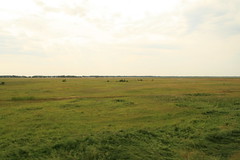 | 2 |
| 7964211891 | Caucasus Mountains | bounds Zagros to the northwest |  | 3 |
| 7964211892 | Aegean Sea | Borders the lands where Greek civilization arose.
-was a connector(Greece to other places(Anatolia))
-were drawn to the sea(overland transport hard,need to transport materials) |  | 4 |
| 7964211893 | Peloponnese | Ancestors of Spartans migrated here.Southernmost part of Greek mainland. |  | 5 |
| 7964211894 | Chinampas | Mesoamerican.Raised fields constructed along lakeshores to increase agricultural yields.
-waste material on bed of anchored reeds
-year round agriculture(sustained population) |  | 6 |
| 7964211895 | Phonetic Alphabet | Alphabetic system of writing(each symbol represents a sound) based off of early Canaanite model. |  | 7 |
| 7964211896 | Tophets | Carthaginian(phoenician) towns: walled enclosures where thousands of small,sealed urns containing the burned bones of sacrificed children are buried. |  | 8 |
| 7964211897 | Herodotus | Father of Historia,western tradition of historical writing.From Greek Anatolia and traveled to west Asia,and Mediterranean. Recorded wars between Greece and Persia.
-claims nomadic cimmerians invaded Anatolia |  | 9 |
| 7964211898 | Sima Qian | Chief astrologer of Wu(Han emperor).History of china:father of Chinese history.
-portrayed negative view of Wu as being religiously manipulated. |  | 10 |
| 7964211899 | Paradayam | (meaning "walled enclosure" or "paradise") a green oasis in an arid landscape that advertised the prosperity that the king could bring to his loyal followers.
-Persian Darius |  | 11 |
| 7964211900 | Greek Dark Ages | A time of depopulation, poverty, and backwardness centuries after the destruction of the Mycenaean palace-states.
-isolated and lack of resources
-development of new political, social, and economic forms
-Isolation of Greece ended when Phoenician ships began to visit , started the Archaic period. |  | 12 |
| 7964211901 | Iliad and Odyssey | depicts the kings that ruled during the dark ages. |  | 13 |
| 7964211902 | Sacrifice | Gift to deity in order to curry favor for the sacrificer. May be to sustain the deity and continue prosperity.
-Main ritual of Greek religion performed at altars
in front of temples. |  | 14 |
| 7964211903 | Thucydides | Athenian historian that said no one would be able to guess Sparta's power from the ruins as it only seemed to be only a large village |  | 15 |
| 7964211904 | Tirirme | Greek/Phoenician warship that was sleek,light,and powered by 170 oars in three vertical tiers.
-Athenian crews were the best/skilled sailors who used the ships for bursts of speed and complex maneuvers. |  | 16 |
| 7964211905 | Socrates | Athenian philosopher who emphasized philosophical investigation and attracted young elites but made enemies by revealing the pretensions of others,eventually leading to his trial and execution. |  | 17 |
| 7964211906 | Plato | Student of Socrates who represents the first truly literate generation.
-wrote down thoughts,gained knowledge from books
-founded the Academy(higher education)
-dialogues using "Socratic method"
-advanced philosophic discussion must be personally passed down. | 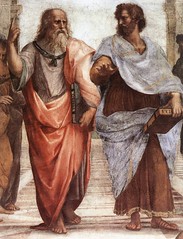 | 18 |
| 7964211907 | Aristotle | Great classical philosopher from Stagira(N Aegea).Chosen by king of Macedonia(Philip) to tutor his son,Alexander.
-founded Lyceum
-contrary to Plato,collected a vast array of knowledge |  | 19 |
| 7964211908 | Library of Alexandria | Hellenistic(Ptolemies) in capital,Alexandria. Had several hundred thousand volumes and gave Alexandria luster. |  | 20 |
| 7964211909 | Romanization | Process in which Latin language and Roman culture became dominant in western provinces.The allure of roman success and political and economic advantages led to its adoption by indigenous people in the provinces. |  | 21 |
| 7964211910 | Aqueduct | Roman conduit(elevated/underground) that used gravity to guide water from the source to a needed location.Romans built many during substantial urbanization. |  | 22 |
| 7964211911 | Ramayana | one of the two greatest Indian epics based on oral predecessors dating back many centuries
- cultural context seem to reflect the conditions of the early Vedic period |  | 23 |
| 7964211912 | Mahabharata | Epic chronicling the events leading up to the battle between kinship groups(sets of cousins) in early India.
-Includes Bhagavad-Gita
-destructive battle over succession to the throne |  | 24 |
| 7964211913 | Bhagavad-Gita | Most important work of Indian sacred literature. Dialogue between warrior Arjuna and Krishna on duty and fate of the spirit.
-dharma is more important as souls are reborn
-disciplined action for gods will be rewarded |  | 25 |
| 7964211914 | Faxian | Chinese Buddhist monk who made a pilgrimage to homeland of faith(India) and left a record of his experience. |  | 26 |
| 7964211915 | Sati | Ritual where wife was expected to cremate herself on husband's funeral pyre.
-Keeps women "pure"
-if declined,forbidden to remarry,socially shunned,and no opportunity. |  | 27 |
| 7964211916 | Borobudur | Massive Sailendran(Buddhist) stone temple on Java(Indonesian island) that has winding ascent though ten levels that is an allegory for progressive stages of enlightenment.
-rich relief carvings
-In central Java local dynasties allied with Srivijaya built magnificent temple complexes to advertise their glory. |  | 28 |
| 7964211917 | Quetzalcoatl | Feathered serpent(culture-god) thought to be originator of agriculture and the arts.
-Teotihuacan civilization of Mesoamerica dedicated pyramids to gods and spirits. |  | 29 |
| 7964211918 | Phoenicians | Merchants and sailors explored Mediterranean, widespread commerce,and founded Carthage and others in W Mediterranean.
-Semitic-speaking Canaanites
-coast of modern Lebanon and Syria
-Major cities such as Tyre and Sidon |  | 30 |
| 7964211919 | Byblos,Tyre | Byblos-most important Phoenician city-state.Distribution center for cedar timber(Lebanon) and papyrus(Egypt),
Tyre-Rise due to King Hiram who provided labor for Solomon's first temple and in return got goods and trade routes:dominated Med coastal trade. |  | 31 |
| 7964211920 | Carthage | Phoenician city in present day Tunisia that was major commercial and naval center in western Med before defeated by Rome. |  | 32 |
| 7964211921 | Nubia | Stretch of Nile Valley that straddles southern part of Egypt and Northern part of Sudan.
-continuously inhabited
-connects N Africa with Sub-Saharan. Corridor of trade with Med.
-natural resources |  | 33 |
| 7964211922 | Kush | Egyptian name for Nubia (indigenous kingdom with distinctive institutions and cultural traditions) |  | 34 |
| 7964211923 | Meroe | Capital of flourishing S Nubian kingdom that shows independence from Egypt(during Egypt's weakness) and the influence of SS Africa.
-2nd part of Powerful Nubian kingdom |  | 35 |
| 7964211924 | Scythian | Term used by ancient Greeks to describe the nomadic people living in the steppe N of the Black and Caspian seas.
-N and E of Aegean homeland
-Herodotus talked about them |  | 36 |
| 7964211925 | Xiongnu/White huns | Nomadic confederation N of China;Chinese rulers tried many strategies to ward them off and finally succeeded.
-No fixed dwellings,agriculture or writing.
-N nomads reported by Sima Qian that were trained warriors at a young age and the fit were preferred.
-Fought for personal gain and did human sacrifice.
-Controlled/allied with agricultural groups for food. |  | 37 |
| 7964211926 | Celts | People sharing common linguistic and cultural features that originated in central Europe in first half of first millennium. |  | 38 |
| 7964211927 | Medes | the first of the Iranians to achieve a complex level of political organization
- settled in the northwest and came under the influence of the ancient centers in Mesopotamia
-played a major role in destruction of Assyrian empire |  | 39 |
| 7964211928 | Achaemenids | Persian rulers that traced their lineage back to Achaemenes
-relationship w/ Median court through marriage
-expansive empire started by Cyrus the great and expanded by Darius |  | 40 |
| 7964211929 | Cyrus the great | Founder of Achaemenids Persian empire.
-conquered Media,Lydia,Babylon
-revered in Iran and subjects as he employed Persians and Medes in his administration and respected beliefs of subjects. |  | 41 |
| 7964211930 | Cambyses | Son of Cyrus who set his hopes on Egypt.
- the Persians prevailed in a series of bloody battles, then sent exploratory expeditions south to Nubia and west to Libya |  | 42 |
| 7964211931 | Darius I | 3rd ruler of Persian empire who crushed initial resistance and gave major governmental posts to Persians(not Medes).
-system of provinces+tribute
-construction of Persepolis and expanded Persian control to the east and west |  | 43 |
| 7964211932 | Satrap | Governor of Persian province,often king's relative.Responsible for the protection of province and for forwarding tribute to central administration.
-in outlying provinces had considerable autonomy |  | 44 |
| 7964211933 | Persepolis | a complex of palaces, reception halls, and treasury buildings erected by the Persian kings Darius I and his son Xerxes
-In Persia Homeland |  | 45 |
| 7964211934 | Xerxes | son of Darius I
-completed the project of Persepolis |  | 46 |
| 7964211935 | Archaic Period of Greece | When Phoenician ships began to visit the Aegan. after Greek "Dark Age".
-New ideas and alphabet emerged from the east
-where Greeks were soon also active
explosion of population, probably due in part to more intensive use of land
-Greece of this time consisted of hundreds of independent- polis (city-states)
-innovations in intellectual outlook and artistic expression, such as growing emphasis on the uniqueness and rights of the individual |  | 47 |
| 7964211936 | Polis | the Greek term for a city-state, an urban center and the agricultural territory under its control.
-the characteristic form of political organization in southern and central Greece in the Archaic and Classical periods
-some were oligarchic, others democratic, depending on the powers delegated to the Council and the Assembly
-decentralized form of government with fortified sites serving as the center for city states |  | 48 |
| 7964211937 | Acropolis | hilltop, top of the city
-offered refuge in an emergency, town spread out around the base of the fortified high point |  | 49 |
| 7964211938 | Hoplite | a heavily armored Greek infantryman of the Archaic and Classical periods who fought in the close-packed phalanx formation.
-hoplite armies - militias composed of middle- and upper-class citizens supplying their own equipment - were for centuries superior to all other military forces |  | 50 |
| 7964211939 | Tyrant | the term Greeks used to describe someone who seized and held power in violation of the normal procedures and traditions of the community.
-Tyrants appeared in many Greek city-states, often taking advantage of the disaffection of the emerging middle class and, by weakening the old elite, unwittingly contributing to the evolution of democracy. |  | 51 |
| 7964211940 | Oligarchy | the exercise of political privilege by the wealthier members of society
-one of two Greek communities |  | 52 |
| 7964211941 | Democracy | system of government in which all "citizens" (however defined) have equal political and legal rights, privileges, and protections, as in the Greek city-state of Athens.
- fifth and fourth centuries BCE.
-exercise of political power by all free,adult males |  | 53 |
| 7964211942 | Athens | one of the two preeminent Greek city-states of the late Archaic and Classical periods
-possessed an unusually large and populous territory: the entire region of Attica, containing a number of moderately fertile plains and well suited for cultivation of olive trees
- in addition to the urban center of Athens, 5 miles from the sea, the peninsula was dotted with villages and a few larger towns |  | 54 |
| 7964211943 | Sparta | the other preeminent Greek city-state of the late Archaic and Classical periods
- ancestors of Spartans migrated into the Peloponnese.
-normal ->increasing population-> invaded the fertile plain of neighboring Messenia and reduced the native population to the status of helots->
unique Spartan way of life - became a military camp in a permanent state of preparedness - the Spartan soldier was the best in Greece.
- paid huge price, as boys were taken at 7 and put into barracks, their whole life was subordinated to the needs of the state
- no longer any poets or artists, metal/coinage banned to maintain equality, commerce forbidden
-Cautious and isolationist foreign policy, rarely put their reputation to the test |  | 55 |
| 7964211944 | Helots | state-owned serfs, who became the most abused and exploited population on the Greek mainland
-worked the land so Spartans were freed from food production |  | 56 |
| 7964211945 | Pisistratus | aristocrat who seized power in Athens
- to strengthen his position and weaken the aristocracy, enticed the largely rural population to identify with the urban center of Athens, where he was the dominant figure
- took monumental building projects (Temple of Athena), expanded major festivals that drew people to Athens for processions, plays, and athletic/poetic competitions
- passed on the tyranny to his sons, but the Spartans and Athenians turned the tyrant family out |  | 57 |
| 7964211946 | Pericles | aristocratic leader who guided the Athenian state to full participatory democracy for all male citizens
-supervised construction of the Acropolis, and pursued a policy of imperial expansion that led to the Peloponnesian War
-formulated a strategy of attrition but died from the plague early in the war |  | 58 |
| 7964211947 | Persian Wars | conflicts between Greek city-states and Persian Empire
-major setback for Persian arms launched the Greeks into their period of greatest cultural productivity
- Herodotus chronicled these events in the first "history". |  | 59 |
| 7964211948 | Battle of Thermopylae | the pass in central Greece where 300 Spartans and their king gave their lives to buy time for their allies to escape during the Persian wars. |  | 60 |
| 7964211949 | Battle of Salamis | the Persian navy was lured into the narrow straits of nearby Salamis, and suffered a devastating defeat.
-after Athens had been sacked
-one of key battles to defeat Persians |  | 61 |
| 7964211950 | Delian League | a navy formed by the Greeks to defeat Persia
- Athens replaced Sparta as leader
- initially a voluntary alliance of Greek states to prosecute the war against Persia
- in less than 20 years Athenian-led League forces swept the Persians from the waters of the E. Med and freed all Greek communities except in Cyprus.
-eventually Athens saw other members as their subjects |  | 62 |
| 7964211951 | Classical period of Greece | begins with the successful defense of the Greek homeland.
-the Athenians exploited these events to become an imperial power.
-advances is economy and culture |  | 63 |
| 7964211952 | Peloponnesian War | a protracted and costly conflict between the Athenian and Spartan alliance systems that convulsed most of the Greek world.
-The war was largely a consequence of Athenian imperialism.
-Possession of a naval empire allowed Athens to fight a war of attrition, but ultimately Sparta prevailed because of Athenian errors and Persian financial support. |  | 64 |
| 7964211953 | Phillip II of Macedon | transformed his previously backward kingdom of Macedonia in N Greece into the premier military power in the Greek world (during the Peloponnesian War)
-Made a number of improvements to the traditional hoplite formation
-First catapults |  | 65 |
| 7964211954 | Alexander the Great | King of Macedonia after father Philip II was assassinated
- he conquered the Persian Empire (of Darius III), reached the Indus Valley (Punjab of modern Pakistan), founded many Greek-style cities, and spread Greek culture across the Middle East. |  | 66 |
| 7964211955 | Darius III | Persian king whose empire was defeated by Alexander the Great. |  | 67 |
| 7964211956 | Seleucid Dynasty | One of the three kingdoms ruled by a Macedonian dynasty.
-took over the bulk of Alexander's conquests
-From capital at Syrian Antioch, monarchs controlled Mesopotamia, Syria, and parts of Anatolia. Sprawling territories and various ethnic groups.
-Largely maintained the Persian administrative system, continued Alexander's policy of founding Greek-style cities to serve as admin centers and attract Greek colonists |  | 68 |
| 7964211957 | Ptolemaic Dynasty | One of the three kingdoms ruled by a Macedonian dynasty.
-ruled Egypt and sometimes laid claims to the adjacent Syria-Palestine
-The people of Egypt only belonged to one ethnic group and were easily controlled because the vast majority were farmers.
-Ruled from Alexandria (where westernmost branch of Nile runs into Med), nearly perfected an admin system devised by pharaohs to extract the surplus wealth of the land |  | 69 |
| 7964211958 | Antigonid dynasty | One of the three kingdoms ruled by a Macedonian dynasty.
-ruled a compact and ethnically homogeneous kingdom in the Macedonian homeland and northern Greece
-Garrisons at strong-points gave them a toe-hold in central and southern Greece | | 70 |
| 7964211959 | Hellenistic Age | era in which Greek culture spread across western Asia and northeastern Africa after the conquests of Alexander the Great.
-The period ended with the fall of the last major Hellenistic kingdom to Rome, but Greek cultural influence persisted until the spread of Islam. |  | 71 |
| 7964211960 | Ptolemies | The Macedonian dynasty, descended from one of Alexander the Great's officers, that ruled Egypt for three centuries.
-capital at Alexandria on the Mediterranean coast, largely took over the system created by Egyptian pharaohs to extract the wealth of the land, rewarding Greeks and Hellenized non- Greeks serving in the military and administration. |  | 72 |
| 7964211961 | Alexandria | City on the Mediterranean coast of Egypt founded by Alexander.
-It became the capital of the Hellenistic kingdom of the Ptolemies.
-contained the famous Library and the Museum, a center for leading scientific and literary figures |  | 73 |
| 7964211962 | Achaean League | the southern states (of Greece) met the threat (of the Macedonians) by banding together in confederations
-such as the Achaean League in the Peloponnese in which the member-states maintained local autonomy but pooled resources and military power |  | 74 |
| 7964211963 | Roman Republic | The period during which Rome was largely governed by the aristocratic Roman Senate. |  | 75 |
| 7964211964 | Roman Senate | A council whose members were the heads of wealthy, landowning families.
-effectively governed the Roman state and the growing empire. |  | 76 |
| 7964211965 | Tribune | new officials who were drawn from the non-elite classes and who could veto the actions of assembly that threatened the interests of the lower orders
-The elite still found a way to blunt the reforms |  | 77 |
| 7964211966 | Pax Decorum | "peace of the gods"
- a covenant between the gods and the Roman state that the Romans labored to maintain
- boards of priests drawn from the aristocracy performed sacrifices and other rituals to win the gods' favor and the gods were expected to support the undertakings of the Roman state |  | 78 |
| 7964211967 | Principate | term used to characterize Roman government in the first three centuries C.E., based on the ambiguous title princeps ("first citizen") adopted by Augustus to conceal his military dictatorship.
-Period following the Republic | 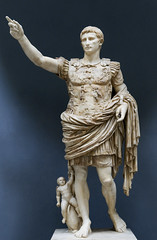 | 79 |
| 7964211968 | Augustus | Honorific name of Octavian, founder of the Roman Principate, the military dictatorship that replaced the failing rule of the Roman Senate.
-After defeating all rivals,he laid the groundwork for several centuries of stability and prosperity in the Roman Empire.
-Grandnephew of Julius Caesar, eliminated rivals and refashioned Roman government | | 80 |
| 7964211969 | Equites | In ancient Italy, prosperous landowners second in wealth and status to the senatorial aristocracy.
-The Roman emperor (Augustus) allied with this group to counterbalance the influence of the old aristocracy and used the equites to staff the imperial civil service. |  | 81 |
| 7964211970 | Pax Romana | Literally "Roman peace,"
-it connoted the stability and prosperity that Roman rule brought to the lands of the Roman Empire.
-The movement of people and trade goods along Roman roads and safe seas allowed for the spread of cultural practices, technologies, and religious ideas. |  | 82 |
| 7964211971 | Gaul | France
- revenues were collected and transferred to Rome (to support the emperor and central govt) and then to the frontier provinces to subsidize the armies |  | 83 |
| 7964211972 | Third Century Crisis | Historians' term for the political, military, and economic turmoil that beset the Roman Empire during much of the third century C.E.
-frequent changes of ruler, civil wars, barbarian invasions, decline of urban centers, and near-destruction of long-distance commerce and the monetary economy |  | 84 |
| 7964211973 | Constantine | Roman emperor. After reuniting the Roman Empire, he moved the capital to Constantinople and made Christianity a favored religion. |  | 85 |
| 7964211974 | Qin Dynasty | A people and state in the Wei River Valley of eastern China that conquered rival states and created the first Chinese empire.
-The Qin ruler, Shi Huangdi, standardized many features of Chinese society and ruthlessly marshaled subjects for military and construction projects, engendering hostility that led to the fall of his dynasty shortly after his death.
-The Qin framework was largely taken over by the succeeding Han dynasty. |  | 86 |
| 7964211975 | Shi Huangdi | Qin ruler remembered for ruthless conquests of rival states,standardization of practices,and forcible organization of labor for military and engineering tasks.
-Terracotta army in grave |  | 87 |
| 7964211976 | Han Dynasty | Succeeded the Qin
-long history of imperial china: political and cultural unity. |  | 88 |
| 7964211977 | Liu Bang/Gaozu | one of the rebel leaders who brought down the Qin and founded the Han dynasty
- Gaozu = throne name |  | 89 |
| 7964211978 | Empress Lu | Gaozu's formidable wife who essentially ruled when he died and throne was passed to a young child. |  | 90 |
| 7964211979 | Wang Mang | ambitious Han official who seized power, breaking long sequence of Han rulers
-Implemented major reforms to address serious economic issues and to cement his popularity with the common people |  | 91 |
| 7964211980 | Chandragupta Maurya | a young man from the Vaishya or Shudra class, gained control of the kingdom of Magadha and expanded it into the Mauryan Empire - India's first centralized empire |  | 92 |
| 7964211981 | Mauryan Empire | India's first centralized empire - first state to unify most of the Indian subcontinent.
- it grew wealthy from taxes on agriculture, iron mining, and control of trade routes |  | 93 |
| 7964211982 | Arthshastra | treatise on government that is said to have been written by Kautilya, a crafty elderly Brahmin who guided Chandragupta in his conquests and consolidation of power.
-Advocated the mandala (circle) theory of foreign policy - enemy of enemy is friend |  | 94 |
| 7964211983 | Pataliputra | capital of the Mauryan empire in the Ganges Valley |  | 95 |
| 7964211984 | Ashoka | third ruler of Mauryan Empire in India who converted to Buddhism and inscribed stones and pillars, the earliest surviving Indian writing (did not force)
-Overwhelmed by the brutality of his victory at Kalinga, convert to Buddhism
-Chandragupta's son |  | 96 |
| 7964211985 | Tamil Kingdoms | the kingdoms of southern India, inhabited primarily by speakers of Dravidian languages, which developed in partial isolation, and somewhat differently, from the Arya north.
-Produced epics, poetry, and performance arts
-Elements of Tamil religious beliefs were merged into the Hindu synthesis |  | 97 |
| 7964211986 | Gupta empire | a powerful Indian state based (like its Mauryan predecessor) on a capital at Pataliputra in the Ganges Valley
-Controlled most of the Indian subcontinent through a combination of military force and its prestige as a center of sophisticated culture |  | 98 |
| 7964211987 | Theater state | historians' term for a state that acquires prestige and power by developing attractive cultural forms and staging elaborate public ceremonies (as well as distributing valuable resources) to attract and bind subjects to the center
-Gupta Empire in India |  | 99 |
| 7964211988 | Maharaja | Sanskrit term "great king," borrowed by Malay rulers in southeast Asia. |  | 100 |
| 7964211989 | Funan | an early complex society in Southeast Asia.
Centered in the rich rice growing region of southern Vietnam, it controlled the passage of trade across the Malaysian isthmus |  | 101 |
| 7964211990 | Srivijayan | a state based on the Indonesian island of Sumatra
-It amassed wealth and power by a combo of selective adaptations of Indian tech/concepts, control of lucrative trade routes b/w India and China, and skillful showmanship and diplomacy in holding together a disparate realm of inland and coastal territories. | | 102 |
| 7964211991 | Malacca | strait used by the Srivijaya for shipping, vital |  | 103 |
| 7964211992 | Teotihuacan | a powerful city-state in central Mexico |  | 104 |
| 7964211993 | Maya | Mesoamerican civilization concentrated in Mexico's Yucatan Peninsula and in Guatemala and Honduras but never unified into a single empire
-Major contributions were in mathematics, astronomy, and development of the calendar |  | 105 |
| 7964211994 | Sasanid empire | Iranian empire established with a capital in Ctesiphon, Mesopotamia. The Sasanid emperors established Zoroastrianism as the state religion
-Islamic Arab armies overthrew the empire |  | 106 |
| 7964211995 | Moche Civilization | Andean civilization.
-no writing system,but artistic remains
-political organization unclear,but maybe theocratic
-social stratification can be seen in burial items |  | 107 |
| 7964211996 | Cahokia | pre-Colombian Native American city - southern Illinois - mounds. |  | 108 |
| 7964211997 | murex snails | Used to create a red-purple dye for textiles in the Mediterranean
- Phonecians, Tyrian purple, most prized color dye |  | 109 |
| 7964211998 | Pheonician triangle | A trading network composed of the North African coast; the south and southeast coast of Spain, and Malta | | 110 |
| 7964211999 | Lydian Coinage | a piece of metal whose value was guaranteed by the state in Lydia, western Anatolia |  | 111 |
| 7964212000 | Paterfamilias | male head of a household or family - oldest living male - Rome |  | 112 |
| 7964212001 | Patron/Client Relationship | a fundamental social relationship in which the patron (wealthy and powerful individual) provided legal and economic protection and assistance to clients (men of lesser status and means); clients supported political careers and economic interests of their patron |  | 113 |
| 7964212002 | Latifundia | broad estates or ranches that replaced the small self-sufficient farms of the Italian countryside whose peasant owners had been the backbone of the Roman legions |  | 114 |
| 7964212003 | Corvee Labor | a form of unpaid labor - intermittent, not lasting for long |  | 115 |
| 7964212004 | Patrician | elite in Roman society |  | 116 |
| 7964212005 | Plebian | majority of Roman population of lesser social status, Roman commoners |  | 117 |



