AP Notes, Outlines, Study Guides, Vocabulary, Practice Exams and more!

AMSCO AP US History Chapter 21 Flashcards

AMSCO United States History 2015 Edition, Chapter 21 The Progressive Era, 1901-1917

Terms : Hide Images
9061372042professional associationsGroups of individuals who share a common profession and are often organized for common political purposes related to that profession. (p. 432)0
9061372043PragmatismIn the early 20th century this philosophy focused on using a practical approach to morals, ideals, and knowledge. They encouraged experimentation to find solutions that would produce a well-functioning democratic society. (p. 433)1
9061372045John DeweyHe was a philosopher who believed in "learning by doing" which formed the foundation of progressive education. He believed that the teachers' goal should be "education for life and that the workbench is just as important as the blackboard."2
9061372046Frederick W. TaylorAn engineer who sought to eliminate wasted motion. Famous for scientific-management, especially time-management studies. (p. 433)3
9061372047scientific managementA management theory using efficiency experts to examine each work operation, then find ways to minimize the time needed to complete the work. (p. 433)4
9061372049Standard Oil CompanyCompany of oil refineries that eventually became a virtual monopoly for all refineries through a trust, which consolidated power into 9 trustees in the group that allowed one very large company without one actually owning another. (FIRST EXAMPLE OF A MONOPOLY)5
9061372050Lincoln SteffansHe wrote "The Shame of the Cities" (1904) which described in detail the corruption that characterized big-city politics. (p. 434)6
9061372051Ida TarbellA leading muckraker and magazine editor, she exposed the corruption of the oil industry with her 1902 series "The History of the Standard Oil Company". (p. 434)7
9061372052Jacob RiisIn 1890 he wrote "How The Other Half Lives" which showed the terrible conditions of the tenement houses of the big cities where immigrants lived during the late 1800s. (p. 434)8
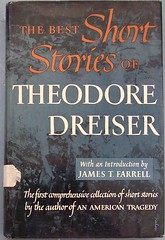
9061372053Theodore DreiserAn American author who wrote "The Financier" and "The Titan", novels which portrayed the avarice and ruthlessness of an industrialist. (p. 434)9
9061372054Australian ballotA government printed ballot of uniform size and shape to be cast in secret that was adopted by many states around 1890. (p. 435)10
9061372055direct primaryA primary where voters directly select the candidates who will run for office11
9061372056Robert La FollettIn 1903 this Progressive Wisconsin Governor introduced a new system which allowed the voters to directly choose party candidates, rather than being selected directly by party bosses. (p. 435)12
9061372057Seventeenth Amendment1913 constitutional amendment allowing American voters to directly elect US senators13
9061372058direct election of senatorsIn 1899 Nevada was the first state to elect U.S. senators directly. Previously state legislatures had chosen them. (p. 435). Made national by the 17th Amendment14
9061372059initiative, referendum, and recallInitiative allowed reformers to circumvent state legislatures by submitting new legislature to the voters in general direct election. Referendum is the method by which actions of the legislature could be returned to the electorate for approval. Recall allows for the removal of a politician from office.15
9061372060municipal reformCity bosses and their corrupt alliance with local businesses such as trolley lines and utility companies were targeted for reform by Progressives. (p. 436)16
9061372063commission planA city's government would be divided into several departments, which would each be placed under the control of an expert commissioner. (p. 436)17
9061372064city manager planLegislation designed to break up political machines and replace traditional political management of cities with trained professional urban planners and managers. (p. 436)18
9061372066Wisconsin IdeaA series of Progressive measures that included a direct primary law, tax reform, and state regulatory commissions. (p. 436)19
9061372068state Prohibition lawsBy 1915 two-thirds of the states had passed these laws which prohibited the sale of alcohol. (p 437)20
9061372069National Child Labor CommitteeThey proposed child labor laws which were adopted by many of the states. (p. 437)21
9061372070compulsory school attendanceMany states passed laws such as this, which made it mandatory for children to go to public schools.22
9061372071Florence KelleyA reformer who prompted state laws which protected women from long working hours. (p. 437)23
9061372074Muller v. OregonA 1908 Supreme Court ruling that women needed protection against working long hours. (p. 437)24
9061372075Triangle Shirtwaist fireIn 1911 a high-rise garment factory burned in New York, killing 146 people, mostly immigrant women. Led to improved safety and working conditions in factories.25
9061372076Square DealEconomic policy by President Theodore Roosevelt that favored fair relationships between companies and workers. (p. 438)26
9061372077anthracite coal miners' strike 1902Pennsylvania coal miners went on strike for and increase in pay and shorter working day. When the mine owners refused to negotiate, Roosevelt threatened to seize control of mines. A compromise was finally agreed upon. (p. 438)27
9061372078trust-bustingPresident Roosevelt broke up the railroads and Standard Oil by using the Sherman Antitrust Act. (p. 438)28
9061372079Elkins ActThis 1903 act allowed the Interstate Commerce Commission (ICC) to stop railroads from granting rebates to favored customers. (p. 438)29
9061372080Hepburn ActThis 1906 act tightened existing railroad regulation. Empowered the Interstate Commerce Commission to set maximum railroad rates and to examine railroad's financial records. (p. 438)30
9061372081Uptown SinclairHe wrote "The Jungle" which described the Chicago stockyards and meatpacking industry. (p. 438)31
9061372082Pure Food and Drug ActThis 1906 act forbade the manufacture or sale of mislabeled or adulterated food or drugs, it gave the government broad powers to ensure the safety and efficacy of drugs in order to abolish the "patent" drug trade. (p. 438)32
9061372083Meat Inspection ActThis 1906 act provided federal inspectors to visit meatpacking plants to insure that they met sanitation standards. (p. 439)33
9061372084Newlands Reclamation ActA 1902 act that provide public land for irrigation project in western states. (p. 439)34
9061372087Socialist Party of AmericanThis third party was dedicated to the welfare of the working class. Their platform called for more radical reforms such as public ownership of the railroads, utilities, and even some major industries such as oil and steel. (p. 440)35
9061372088Eugene V. DebsOne of the founders of the Socialist party and the party's presidential candidate from 1990 to 1920. (p. 440)36
9061372089Bull Moose PartyNickname for the new Progressive Party, which was formed to nominate Theodore Roosevelt in the 1912 presidential election. (p. 441)37
9061372090New Nationalism New FreedomRoosevelt's political philosophies during the 1912 election. He argued was human welfare versus property rights38
9061372092Sixteenth AmendmentRatified in 1913 this constitutional amendment explicitly permitted Congress to levy an income tax. (p. 439)39
9061372093federal income taxA payroll deduction collected by employers by law and sent to the federal government to pay for governmental programs.40
9061372096Underwood Tariff 1913a graduated income tax under the 16th amendment that applied solely to corporations and the tiny fraction of Americans who earned more than $4000 a year41
9061372097Federal Reserve ActIn 1914 this act created a central banking system, consisting of twelve regional banks governed by the Federal Reserve Board. It was an attempt to provide the United States with a sound yet flexible currency. It still plays a major role in the American economy today. (p. 442)42
9061372099Clayton Antitrust ActAntitrust legislation passed in 1914 constructed to remedy deficiencies of the Sherman Antitrust Act for breaking up monopolies. It exempted unions for being prosecuted as trusts. (p. 442)43
9061372100Federal Trade CommisionA government agency established in 1914 to prevent unfair business practices and help maintain a competitive economy. (p. 442)44
9061372104Booker T. WashingtonAfrican American progressive who argued that African Americans should concentrate on learning industrial skills for better wages. (p. 443)45
9061372105W. E. B. Du BoisHe argued that African American should demand equal rights and only that would help them achieve economic advances. (p. 444)46
9061372106National Association for the Advancement of Colored PeopleThis organizations mission was to abolish all forms and abolish all segregation and increase educational opportunities for African Americans. (p. 444)47
9061372107National Urban LeagueFormed in 1911 this organization helped people migrating from the south to northern cities. (p. 444)48
9061372108Carrie Chapman CattA suffragette who was president of the National Women's Suffrage Association, and founder of the International Woman Suffrage Alliance. Instrumental in obtaining passage of the 19th Amendment in 1920. (p. 445)49
9061372109National American Woman Suffrage AssociationA group formed by leading suffragist in the late 1800s to organize the women's suffrage movement. (p. 445)50
9061372110Alice PaulA suffragette who focused on obtaining an amendment to the Constitution for women's suffrage. (p. 445)51
9061372111National Woman's partyradical group founded by Alice Paul which fought for woman's suffrage52
9061372112Nineteenth AmendmentIn 1920 this amendment passed which gave women the right to vote. (p. 445)53
9061372113League of Woman VotersOrganized by Carrie Chapman Catt. A civic organization dedicated to keeping voters informed about candidates and issues. (p. 445)54
9061372114Margaret SangerShe founded an organization the became Panned Parenthood. They advocated for birth-control education. (p. 445)55

1920s (AP US History Flashcards

Terms : Hide Images
10033618277Treaty of VersaillesTreaty created during the Paris Peace Conference that demanded Germany pay for the war and create the League of Nations, US Senate rejected treaty & US involvment in the League0
10033618278BolshevismCommunist sentiment, related to the Bolshevik Revolution in Russia that overthrew the government...feared spread to US among radicals and Russian immigrants1
10033618279First Red ScareFear that communism would spread to the United States in the 1920s.2
10033618280Many Americans feared that labor strikes were being instigated by communist sympathizers.What was the link between labor unions and the Red Scare?3
10033618281Wilson had angered many by spending six months at the Paris Peace Conference, many felt that democrats' policies had pulled us into a war that was not our fight, desired a return to isolationism.What factors led to the political shift from Democrat to Republican during the election of 1920?4
10033618282A. Mitchell PalmerUS Attorney General who appointed J. Edgar Hoover to lead an investigation into radicalism in the United States.5
10033618283Palmer RaidsInvestigation led by J. Edgar Hoover of more than 150,000 people for ties to communism, anarchism, and radicalism. More than 10,000 detained and/or deported6
10033618284Sacco & VanzettiNicola Sacco & Bartolomeo Vanzetti charged with killing two in suburb of Boston, accused of being radicals, draft dodgers, and anarchists during the trial. Found guilty, but many felt trial was unjust. Resulted in wide-spread public and international outcry, but they were ultimately electrocuted despite demands for new trial7
10033618285Emergency Quota Act (1921)Ended open immigration by placing a strict quota on the number of people allowed into the United States (only 3% of the population)8
10033618286Immigration Act of 1924Extended the Emergency Quota Act and further cut allowable immigration from 3% to 2% of US population based on the 1890 Census, Asians banned completely, aimed primarily at Eastern Europeans, Latin Americans and Canadians not banned at all.9
10033618287Scopes Money Trial (1925) (Scopes v. Tennessee)Tennessee bans the teaching of evolution, TN high school biology teachers, John Scopes, indicted for teaching evolution. Noted lawyer, Clarence Darrow, defends Scopes and William Jennings Bryan was the lawyer for the prosecution. Seen as putting religion versus science on trial. Huge public interest in the trial. Scopes found guilty.10
1003361828818th AmendmentOutlawed the sells, distribution , and consumption of alcoholic drink11
10033618289Felt it led to violence against women and children, encouraged laziness, and led to the moral decay of society. Prohibition was supported by religious conservatives and womenWhy was alcohol prohibited?12
10033618290Did not have wide-spread public support, Led to increase in crime, alcohol was easily manufactured at home, huge profits could be made from bootlegging, many local governments and police refused to enforce it, led to organized crimeWhat were the key problems of the 18th Amendment?13
10033618291What was the main idea behind Harding's campaign?A return to normalcy14
10033618292NativismAnti-immigration sentiment15
10033618293Feelings that immigration help pull US into WWI, post-war economic recession, fear that immigrants were taking American jobs, dissatisfaction of returning war vets, fear of the rise of communism and anarchyWhat fueled nativism in the 1920s?16
10033618294Sedition Act of 1918Act that outlawed speech that opposed the US involvement in WWI and the US war effort17
10033618295"Reds"Communist sympathizers18
10033618296The Klan of the 1920's focused on "Americanism" and opposed Catholics, Jews, immigrants, labor unions, socialist, as well as African Americans.What was "new" about the Ku Klux Klan of the 1920s?19
10033618297Increased nativist sentiment, fear of the spread of communism and anarchy, the political and economic unrest of 1919, their support for prohibition, and leadership could profit by selling Klan regalia to new members resulting in wide-spread active recruitment campaignsWhat helped the Ku Klux Klan gain in membership during the 1920s?20
10033618298Washington Naval Conference (1921)Meeting of nine nations in Washington DC to discuss disarming large naval powers. Resulted in the Five Power (5-5-3) Treaty21
10033618299Five Power TreatyTreaty agreed to in the Washington Naval Conference to limit naval forces to 500,000 tons for US & Great Britain and 300,000 tons for Japan22
10033618300Fordeny-McCumber TariffProposed to increase tariff on imported goods to 60% to protect American industry. Ultimately hurt the global economy because it hurt European trade23
10033618301Dawes PlanPlan to allow Germany to take out low-cost loans from several nations, including the US, in order to pay back war reparations. Angered Great Britain and France24
10033618302Kellogg-Briand PactA Republican push to get nations to agree to not use war as an instrument of national policy. Signed by 61 nations, had no enforcement plan25
10033618303Teapot Dome ScandalHarding's Sec of the Interior, Albert Fall, illegally leased two naval oil reserves (Teapot Dome, WY and Elk Grove, CA), then sold the reserves to oilman Harry Sinclair pocketing the money for himself. Senate investigated, found Fall and Sinclair guilty of wrongdoing. Fall and Sinclair sentenced to prison.26
10033618304What happens to Warren G. Harding?Harding suffers bout of influenza in 1923 after a trip to Alaska leaving him weakened. Dies of a heart attack August 1923 in San Francisco27
10033618305President Calvin CoolidgeSupported pro-business and industry policies, continued high tariffs to protect American industry, wanted to give businesses tax credits to spur growth (similar to Reagan's "Trickle-Down" Theory, tended to be quiet and introspective28
10033618306Henry FordIntroduced mass-production technique for automobiles, making them affordable29
10033618307Why was the Model T importantIt was able to be mass produced and affordable car. By 1925, producing more than 9000 cars per day, cost for a Model T was $300. Marketed that every man could own a car30
10033618308"Welfare Capitalism"Industrialists belief that by providing benefits and higher wages, they could stop the spread of labor unions31
10033618309What was the impact of "Welfare Capitalism"People were earning higher wages, had a reduced work day, and better working conditions, decreased absenteeism and employee turnover, decreased the influence of labor unions.32
10033618310What were the positive effects of the automobile?Created jobs, fostered tourism industry, gave people a sense of freedom, allowed people in rural areas to connect, helped create suburbs, encouraged pavement of roads33
10033618311What were the negative effects of the automobile?Decreased construction of public transportation, increased accidents, traffic congestion, air pollution34
10033618312ConsumerismRising demands for consumer goods, especially luxury items and appliances35
10033618313What were the causes of consumerism?Increase wages, mass production of goods, relatively low cost of living, increasing access to electricity, people could buy on credit (installment payments)36
10033618314How does advertising change in the 1920s?Technology enables wide-spread color print ads. Advertising became a BIG business. Companies sponsored radio programs and advertisements (Soap Operas Serials)37
10033618315Harlem RenaissanceThe name given to the cultural, social, and artistic explosion that took place in Harlem between the end of World War I and the middle of the 1930s. During this period Harlem was a cultural center, drawing black writers, artists, musicians, photographers, poets, and scholars.38
10033618316The Great MigrationThe movement of 6 million African-Americans out of the rural Southern United States to the urban Northeast, Midwest, and West that occurred between 1910 and 1970.39
1003361831719th AmendmentAmendment that gave women the right to vote in 192040

AP US History Period 7 (1890-1945) Flashcards

Terms : Hide Images
9870870349The Great DepressionThe deepest and longest-lasting economic downturn in the history of the Western industrialized world. In the United States, the Great Depression began soon after the stock market crash of October 1929, which sent Wall Street into a panic and wiped out millions of investors.0
9870870350Progressive EraA period of widespread social activism and political reform across the United States, from the 1890s to 1920s.1
9870870351ProhibitionA nationwide constitutional ban on the production, importation, transportation and sale of alcoholic beverages that remained in place from 1920 to 1933.2
9870870352Women's suffrageThe women's right to vote, granted by the 19th amendment to the U.S. Constitution (1920).3
9870870353Welfare StateA system whereby the government undertakes to protect the health and well-being of its citizens, especially those in financial or social need, by means of grants, pensions, and other benefits. The foundations for the modern welfare state in the US were laid by the New Deal programs of President Franklin D. Roosevelt.4
9870870354LiberalismA viewpoint or ideology associated with free political institutions and religious toleration, as well as support for a strong role of government in regulating capitalism and constructing the welfare state.5
9870870355The Great MigrationThe movement of 6 million African-Americans out of the rural Southern United States to the urban Northeast, Midwest, and West that occurred between 1910 and 1970.6
9870870356imperialistA policy of extending a country's power and influence through diplomacy or military force.7
9870870357isolationismA category of foreign policies institutionalized by leaders who asserted that their nations' best interests were best served by keeping the affairs of other countries at a distance.8
9870870358Spanish-American WarA conflict fought between Spain and the United States in 1898. Hostilities began in the aftermath of sinking of the USS Maine in Havana harbor leading to American intervention in the Cuban War of Independence.9
9870870359Treaty of VersaillesOne of the peace treaties at the end of World War I. It ended the state of war between Germany and the Allied Powers. Signed on 28 June 1919, exactly five years after the assassination of Archduke Franz Ferdinand.10
9870870360League of NationsAn intergovernmental organization founded on 10 January 1920 as a result of the Paris Peace Conference that ended the First World War. It lacked an armed force to enforce policy and was not joined by the United States.11
9870870361fascismAn authoritarian and nationalistic right-wing system of government and social organization.12
9870870362totalitarianismA political system where the state recognizes no limits to its authority and strives to regulate every aspect of public and private life wherever feasible.13
9870870363Axis PowersGermany, Italy, and Japan, which were allied before and during World War II.14
9870870364Allied PowersU.S., Britain, France, which were allied before and during World War II.15
9870870365Nazi Concentration CampA guarded compound for the detention or imprisonment of aliens, members of ethnic minorities, political opponents. Primarily Jewish Europeans during WWII.16
9870870366HolocaustA genocide in which Adolf Hitler's Nazi Germany and its collaborators killed about six million Jews and members from other fringe social groups during World War II.17
9870870367Internment of Japanese AmericansForced relocation and incarceration in camps in the interior of the U.S. of between 110,000 and 120,000 people of Japanese ancestry who had lived on the Pacific coast.18
9870870368Pacific "Island Hopping"A military strategy employed by the Allies in the Pacific War against Japan and the Axis powers during World War II. The idea was to bypass heavily fortified Japanese positions and instead concentrate the limited Allied resources on strategically important islands that were not well defended but capable of supporting the drive to the main islands of Japan.19
9870870369D-DayThe landing operations on Tuesday, 6 June 1944 of the Allied invasion of Normandy in Operation Overlord during World War II.20
9870870370atomic bombA "fission" bomb dropped on Nagasaki and Hiroshima at the end of World War II.21
9870870371partitionIn politics, the act of dividing a weaker territory or government among several more powerful states.22
9870870372banana republicA disparaging term for the small nations of Central America, with particular reference to their political instability and poor, single-crop economies.23
9870870373progressiveIn politics, one who believes in continuing progress, improvement, or reform.24
9870870374initiativeIn politics, the procedure whereby voters can, through petition, present proposed legislation directly to the electorate.25
9870870375referendumThe submission of a law, proposed or already in effect, to a direct vote of the electorate.26
9870870376recallIn politics, a procedure for removing an official from office through popular election or other means.27
9870870377self-determinationIn politics, the right of a people (usually based on ethnicity) to shape its own national identity and form a government, without outside coercion of influence.28
9870870378Northern Securities Co. v. U. S. (1904)Re-established the authority of the federal government to fight monopolies under the Sherman Anti-Trust Act.29
9870870379Muller v. Oregon (1908)First case to use the "Brandeis brief"; recognized a 10-hour work day for women laundry workers on the grounds of health and community concerns.30
9870870380Schenck v. U. S. (1919)Unanimously upheld the Espionage Act of 1917 which declared that people who interfered with the war effort were subject to imprisonment; declared that the 1st Amendment right to freedom of speech was not absolute; free speech could be limited if its exercise presented a "clear and present danger."31
9870870381Korematsu v. U. S. (1941)The court upheld the constitutionality of detention camps for Japanese-Americans during World War 2.32
9870870382Open Door PolicyThe policy that China should be open to trade with all of the major powers, and that all, including the United States, should have equal right to trade there. This was the official American position toward China as announced by Secretary of State John Hay in 1899.33
9870870383socialismAn economic and governmental system based on public ownership of the means of production and exchange.34
9870870384Eugene DebsProminent socialist leader (and five time presidential candidate) who founded the American Railroad Union and led the 1894 Pullman Strike35
9870870385Roosevelt CorollaryRoosevelt's 1904 extension of the Monroe Doctrine, stating that the United States has the right to protect its economic interests in South And Central America by using military force.36
9870870386Industrial Workers of the World (IWW)Founded in 1905, this radical union, also known as the Wobblies aimed to unite the American working class into one union to promote labor's interests. It worked to organize unskilled and foreign-born laborers, advocated social revolution, and led several major strikes. Stressed solidarity.37
9870870387Pure Food and Drug ActForbade the manufacture or sale of mislabeled or adulterated food or drugs, it gave the government broad powers to ensure the safety and efficacy of drugs in order to abolish the "patent" drug trade. Still in existence as the FDA.38
9870870388Teddy RooseveltTwenty-sixth president of the United States; he focused his efforts on trust busting, environment conservation, and strong foreign policy.39
9870870389William Taft27th president of the U.S.; he angered progressives by moving cautiously toward reforms and by supporting the Payne-Aldrich Tariff; he lost Roosevelt's support and was defeated for a second term.40
9870870390Triangle Shirtwaist FireMarch 1911 fire in New York factory that trapped young women workers inside locked exit doors; nearly 50 ended up jumping to their death; while 100 died inside the factory; led to the establishment of many factory reforms, including increasing safety precautions for workers41
9870870391segregationSeparation of people based on racial, ethnic, or other differences. Common in the South after the Civil War through the 1960s.42
9870870392Harlem RenaissanceBlack literary and artistic movement centered in Harlem that lasted from the 1920s into the early 1930s that both celebrated and lamented black life in America; Langston Hughes and Zora Neale Hurston were two famous writers of this movement.43
9870870393Fourteen PointsThe war aims outlined by President Wilson in 1918, which he believed would promote lasting peace; called for self-determination, freedom of the seas, free trade, end to secret agreements, reduction of arms and a league of nations.44
9870870394Red ScareA social/political movement designed to prevent a socialist/communist/radical movement in this country by finding "radicals," incarcerating them, deporting them, and subverting their activities. Periods of Red Scare occurred after both World Wars in the United States.45
9870870395Sedition ActA law passed by Congress in 1918 (during World War I) to make it illegal to say anything disloyal, profane, or abusive about the government or the war effort in WWI. Seen as a military necessity by some for effectively fighting in WWI.46
9870870396Emergency Quota ActA government legislation that limited the number of immigrants from Europe which was set at 3% of the nationality currently in the U.S. It greatly limited the number of immigrants who could move to the U.S. And it reflected the isolationist and anti-foreign feeling in America as well as the departure from traditional American ideals.47
9870870397Scopes TrialAlso known as the Scopes Monkey Trial; 1925 court case argued by Clarence Darrow and William Jennings Bryan in which the issue of teaching evolution in public schools was debated. Highlighted the growing divide between rural (more conservative) and urban (more liberal) interests in the United States.48
9870870398Sacco and Vanzetti TrialNicola Sacco and Bartolomeo Vanzetti were Italian immigrants charged with murdering a guard and robbing a shoe factory in Braintree, Massachusetts. The trial lasted from 1920-1927. Convicted on circumstantial evidence; many believed they had been framed for the crime because of their anarchist and pro-union activities.49
9870870399Kellog-Briand PactIdealistic agreement signed in 1928 in which nations agreed not to pose the threat of war against one another.50
9870870400Herbert HooverRepublican president at the outset of the Great Depression. As a Republican, he believed that the federal government should not interfere in economic problems; the severity of the Great Depression forced his hand to provide some federal assistance to those in need, but he mostly left these efforts to the states.51
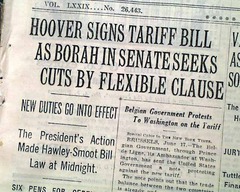
9870870401Smoot-Hawley TariffOne of Herbert Hoover's earliest efforts to protect the nation's farmers following the onset of the Great Depression. Tariff raised rates to an all-time high.52
9870870402Platt AmendmentThis amendment to the new Cuban constitution authorized U.S. intervention in Cuba to protect its interests. Cuba pledged not to make treates with other countries that might compromise its independence, and it granted naval bases to the United States, most notable being Guantanamo Bay.53
9870870403Indian Reorganization ActGovernment legislation that allowed the Indians a form of self-government and thus willingly shrank the authority of the U.S. government. It provided the Indians direct ownership of their land, credit, a constitution, and a charter in which Indians could manage their own affairs.54
9870870404Yalta ConferenceFDR, Churchill and Stalin met at Yalta. Russia agreed to declare war on Japan after the surrender of Germany and in return FDR and Churchill promised the USSR concession in Manchuria and the territories that it had lost in the Russo-Japanese War.55
9870870405William Jennings BryanUnited States lawyer and politician who advocated free silver and prosecuted John Scopes (1925) for teaching evolution in a Tennessee high school (1860-1925).56
9870870406Woodrow Wilson(1856-1924) President of the United States (1913-1921) and the leading figure at the Paris Peace Conference of 1919. He was unable to persuade the U.S. Congress to ratify the Treaty of Versailles or join the League of Nations.57
9870870407United NationsAn international organization formed after WWII to promote international peace, security, and cooperation.58
9870870408Bolshevik RevolutionThe overthrow of Russia's Provisional Government in the fall of 1917 by Lenin and his Bolshevik forces, made possible by the government's continuing defeat in the war, its failure to bring political reform, and a further decline in the conditions of everyday life.59

AMSCO AP US History Chapter 30 & 31 Flashcards

AMSCO United States History 2015 Edition, Chapter 30 Conservative Resurgence, 1980-2000

Terms : Hide Images
9391656948Milton FriedmanFree market economist who gave evidence in the 1970s of a steady shift to the right, away from the liberalism of the 1960s. (p. 654)0
9391656949political action committees (PACs)Political action committees which became a force for change. Opposed big government, New Deal liberalism, gun control, feminism, gay rights, welfare, affirmative action, sexual permissiveness, abortion, and drug use. (p. 654)1
9391656950Proposition 13In 1978, California voters passed this measure that sharply cut property taxes. (p. 654)2
9391656951Arthur LafferConservative economist who believed that tax cuts would increase government revenues. (p. 655)3
9391656952religious fundamentalismPeople who attacked secular humanism as a godless creed taking over public education. They campaigned for the return of prayers and the teaching of the Biblical account of creation in public schools. (p. 655)4
9391656953televangelistsPat Robertson, Oral Roberts, and Jim Baker brought in 100 million viewers in which religion became an instrument of electoral politics. (p. 655)5
9391656954Moral MajorityReligion became an instrument for electoral politics when an evangelist from Virginia, Jerry Falwell founded this organization, which helped financed campaigns to unseat liberal members of Congress. (p. 655)6
9391656955abortion rights; Roe v. WadeThe legalization of abortion in the 1973 Roe v. Wade Supreme Court case, sparked the right-to-life movement. The movement united Catholics and fundamentalist Protestants, who believed that life begins at conception. (p. 655)7
9391656956reverse discriminationAfter years of stagflation in the 1970s, many whites blamed their troubles on affirmative action, calling it reverse discrimination. (p. 655)8
9391656957Regents of University of California v. BakkeThe admissions policies of one medical school were challenged. The Supreme Court ruled that while race could be considered, the school had created racial quotas, which were unconstitutional. Conservatives used this decision to intensified their campaign to end all preferences based on race and ethnicity. (p. 655)9
9391656958election of 1980Ronald Reagan won this presidential election, defeating Jimmy Carter because of the Iranian hostage crisis and America's stagflation. It was significant because the Senate had Republican majority and more seats in the house allowing them to pass many key Republican programs. The 1980 election ended a half-century of Democratic dominance of Congress. (p. 655)10
9391656959Ronald ReaganHe was president from 1981 to 1988, he led a conservative movement against détente with the Soviet Union and the growth of the federal government. Some people credit him with America's victory in the Cold War while others fault his insensitive social agenda and irresponsible fiscal policies. (p. 656)11
9391656960supply-side economics (Reaganomics)This economic theory argued that tax cuts and reduced government spending would increase investment by the private sector, which would lead to increased production, jobs, and prosperity. (p. 656)12
9391656961"trickle down" economicsReaganomics was compared to the "trickle-down" economics of the 1920s, in which wealthy Americans prospered, and some of their increased spending benefited the middle class and the poor. (p. 656)13
9391656962Economic Recovery Tax ActA measure signed by Reagan in 1981 which cut personal income taxes by 25 percent over three years, cut the corporate income tax, capital gains tax, and the gift and inheritance taxes. It offered the wealthy a broad array of other tax concessions. (p. 656)14
9391656963business deregulationReagan followed up on the promise of "getting governmnet off the backs of people" by reducing federal regulations on business and industry. Restrictions were eased on savings and loans, mergers and takeovers by large corporations, and environmental protection. (p. 657)15
9391656964PACTO strikeReagan took a tough stand against unions, he fired thousands of striking federal air traffic controllers for violating their contract and decertified their union. (p. 657)16
9391656965Sandra Day O'ConnorPresident Reagan appointed this conservative judge to the Supreme Court, she was the first woman to serve on the Court. (p. 658)17
9391656966William RehnquistDuring the Reagan administration, he was the new Supreme Court chief justice. Under his leadership the court scaled back on affirmative action in hiring and promotions and limited Roe v. Wade influence by allowing states to impose some restrictions on abortions. (p. 658)18
9391656967growth of upper incomesIn the 1980s, well educated workers and yuppies (young urban professionals) enjoyed higher incomes from the deregulated marketplace while the standard of living for the middle class remained stagnant or declined. (p. 658)19
9391656968budget and trade deficitsPresident Reagan's tax cuts combined with large increases in military spending lead to federal deficits of more than $200 million a year. During his two terms the national debt tripled from $900 million to $2.7 trillion. The U.S. trade deficit reached $150 billion a year. (p. 658)20
9391656969election of 1984In this presidential election, Ronald Reagan ran against Walter Mondale, who chose Geraldine Ferraro as the first woman for vice presidential candidate. Reagan won by a landslide winning every state except for Mondale's home state of Minnesota. (p. 658)21
9391656970expand militaryPresident Reagan expanded the military to fight against the Soviet Union which he referred to as the "evil empire". The defense budget grew from $171 billion in 1981 to $300 billion in 1985. (p. 659)22
9391656971Strategic Defense Initiative (Star Wars)An ambitious plan for building a high-tech system of laser and particle beams to destroy enemy missiles before they could reach the United States. Critics called it "Star Wars" and argued that the costly program would only escalate the arms races. (p. 659)23
9391656972Nicaragua; SandinistasIn Central America, Reagan supported right-wing dictators as long as they were friendly to the United States and anti-Communists. In Nicaragua, a Marxist movement known as the Sandinistas had overthrown the dictator. The U.S. responded by providing military aid to the "contras" in their efforts to remove the Sandinistas. (p. 660)24
9391656973Boland AmendmentIn 1985, the Democrats passed this amendment which prohibited further aid to the contras in Nicaragua. (p. 660)25
9391656974Iran-contra affairIran and Iraq were at war, the United States sold antitank and antiaircraft missiles to Iran's government for their help in freeing Americans held hostage by radical Arab group. The U.S. then used the profits from the sale to fund the contras in Nicaragua. This violated the Boland Amendment and congressional budget authority. (p. 660)26
9391656975Beirut bombingsIn April 1983, an Arab suicide bomber killed 63 people at the U.S. embassy in Beirut. A few months later, an Arab terrorist drove a bomb-filled truck into a U.S. Marines barracks, killing 241 servicemen. (p. 660)27
9391656976Palestine Liberation Organization (PLO)The terrorist group that Israel fought with U.S. support. (p. 660)28
9391656977Yasser ArafatThe PLO leader who agreed in 1988 to recognize Israel's right to exist. (p. 661)29
9391656978evil empireReagan's term for the Soviet Communists and also "focus of evil in the modern world". (p. 659)30
9391656979Mikhail Gorbachev; glasnost, perestroikaNew Soviet leader who impletmented changes in their domestic politics with these reforms: 1) glasnost: an openness to end political repression and move toward greater political freedom for Soviet citizens. 2) perestroika: reconstruction of the Soviet economy by introducing some free-market practices. (p. 661)31
9391656980tear down this wallReagan said this in a speech in front of the Berlin Wall to challenge Mikhail Gorbachev into falling through with his reforms. (p. 661)32
9391656981INF agreementWith this agreement, Reagan and Gorbachev agreed to remove and destroy all intermediate-range missiles. (p. 661)33
9391656982Tiananmen SquareIn 1989, Chinese pro democracy students demonstrated for freedom in Beijing's Tiananmen Square. The Chinese government crushed the protest with tanks, killing hundreds. (p 662)34
9391656983Soviet satellitesGorbachev declared that he would no longer support the various Communist governments of Eastern Europe with Soviet armed forces. (p 662)35
9391656984Poland, Lech WalesaStarting in Poland 1989 the election of Lech Walesa, the leader of the once-outlawed Solidarity movement, the communist party fell from power in many countries in eastern Europe. (p. 663)36
9391656985Berlin Wall fallsIn 1989, the Communists in East Germany were forced out of power after protesters tore down the Berlin Wall. In October 1990, the two Germanys reunited into one country. (p. 663)37
9391656986Soviet Union breakupMany republics declared independence; the Soviet government was clearly powerless to stop the fragmentation. The Communist Party and Soviet government became powerless and ceased to exist. (p. 663)38
9391656987Russia Republic, CISBoris Yeltsin, joined with nine former Soviet republics to form a loose confederation, The Common Wealth of Independent States. (p. 663)39
9391656988Boris YeltsinPresident of the Russian Republic, he formed the Commonwealth of Independent States (CIS). He disbanded the Communist party in Russia and attempted to establish a democracy and a free-market economy. (p. 663)40
9391656989START I and IIIn 1991, U.S. President George H. W. Bush and Gorbachev signed the START I agreement which reduced the number of nuclear warheads to under 10,000 for each side. In 1992, President Bush and Yeltsin signed the START II agreement which reduced the number of nuclear weapons to just over 3,000 each. The U.S offered economic assistance to the troubled Russian economy. (p. 663)41
9391656990Yugoslavia civil warYugoslavia started to disintegrate in 1991, a civil war broke out in Bosnia and Herzegovina in 1992. (p. 664)42
9391656991election of 1988In this presidential election George H. W. Bush defeated Michael Dukakis. Bush had been Reagan's vice president. (p. 662)43
9391656992George H. W. BushHe won the 1988 presidential election. He was president during the Persian Gulf War. His ability to quickly bring the war to a conclusion while suffering relatively few casualties resulted in a very high approval rating of nearly 90 percent after the war. (p. 662)44
9391656993Panama invasionIn December 1989, President George H. W. Bush ordered the invasion of Panama to remove the autocratic General Manuel Noriega. The alleged purpose of the invasion was to stop Noriega from using his country as a drug pipeline to the United States. U.S. troops remained in Panama until elections established a more credible government. (p. 664)45
9391656994Saddam HusseinIn August 1990, this Iraqi dictator invaded oil-rich Kuwait. This invasion threatened Western oil sources. (p. 664)46
9391656995Persian Gulf WarAfter Saddam Hussein invaded oil rich Kuwait, President George H. W. Bush built a coalition of United Nations members to pressure Hussein to withdraw from Kuwait. The U.N. embargo had little effect. In January 1991, the massive Operation Desert Storm brought air strikes down on Iraq. After only 100 hours of fighting on the ground, Iraq conceded defeat. (p. 664)47
9391656996Operation Desert StormMassive operation in which more than 500,000 Americans were joined by military units from 28 nations. For 5 weeks they carried out relentless airstrikes and followed up with an invasion led by U.S. General Norman Schwarzkopf. After 100 hours of ground fighting, Iraq conceded defeat. (p. 664)48
9391656997Clarence ThomasPresident George H. W. Bush nominated this man to replace the retiring Thurgood Marshall on the Supreme Court. It was controversial because of his conservative views on judicial issues and the charges of sexual harassment against him. Nevertheless, the Senate confirmed him. (p. 664)49
9391656998no new taxesPresident George H. W. Bush had promised "no new taxes" during the presidential campaign, but he agreed to accept the Democratic Congress' proposed $133 billion in new taxes. (p. 665)50
9391656999Americans With Disabilities ActIn 1990, this act prohibited the discrimination against citizens with physical and mental disabilities in hiring, transportation, and public accommodation. (p. 665)51
9391657000election of 1992In the 1992 presidential election, Democrat Bill Clinton defeated George H. W. Bush. Clinton presented himself as a moderate "New Democrat" who focused on economic issues. (p. 666)52
9391657001William (Bill) ClintonHe served as president from 1993 to 2000. He was a moderate "New Democrat" who focused on economic issues such as jobs, education, and health care. (p. 666)53
9391657002H. Ross PerotHe was a Texas billionaire, who entered the 1992 presidential election as an independent. He received nearly 20% of the vote, the best showing by an independent since Teddy Roosevelt in 1912. (p. 666)54
9391657003failure of health reformPresident Clinton asked Hillary Rodham Clinton (his wife) to head a task force to propose a plan for universal health coverage. It ran into opposition from the insurance industry, small business organizations, and the Republicans. It failed to pass. (p. 666)55
9391657004don't ask, don't tellPresident Clinton failed to end discrimination against gays in the military and settled for the rule, "Don't ask, don't tell". Under this policy a member of the military could still be dismissed for being gay or lesbian but was not required to provide sexual orientation information. (p. 666)56
9391657005NAFTANorth American Free Trade Agreement, which created a free-trade zone with Canada and Mexico. (p. 667)57
9391657006Brady BillThis bill mandated a five-day waiting period for the purchase of handguns. (p. 666)58
9391657007National Rifle Association (NRA)In 1974, this organization, which led the gun lobby, was angered when the Anti-Crime Bill banned the sale of most assault rifles. (p. 666)59
9391657008deficit reduction budgetIn 1994, Congress passed this budget which included $225 billion in spending cuts and $241 billion in tax increases. Part of the budget would go towards increased spending on education and job training. (p. 666)60
9391657009Anti-Crime BillBill Clinton's bill that provided $30 billion in funding for more police protection and crime prevention programs, also banned the sale of most assault rifles. (p. 666)61
9391657010election of 1994In these midterm elections, Republicans gained control of both houses of Congress for the first time since 1954. (p. 667)62
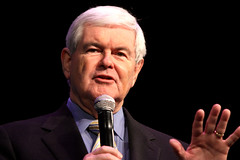
9391657011Newt GingrichNew Speaker of the House, who led the Republicans in an attack on federal programs and spending, outlined in their campaign manifesto "Contract with America". (p. 667)63
9391657012Contract with AmericaRepublican plan headed by Newt Gingrich that focused on scaling back the government, balancing the budget, and cutting taxes. (p. 667)64
9391657013government shutdownsThe confrontations of between Newt Gingrich and President Clinton resulted in two shutdowns of the federal government in late 1995. Many Americans blamed overzealous Republicans in Congress for the shutdown. (p 667)65
9391657014Oklahoma City bombingIn 1995, a federal building in Oklahoma City was bombed by militia-movement extremists. The bombing took 169 lives, the worse act of domestic terrorism in the nation's history until the attack on 9/11. (p. 667)66
9391657015welfare reformThe 1996 budget reform which left Medicare and Social Security benefits intact, limited welfare benefits to five years under the Personal Responsibility and Work Opportunity Act. (p. 667)67
9391657016balanced budgetsThe spending cuts and tax increases during President Clinton's first term, along with record growth in the economy, created this budget in 1998. (p. 667)68
9391657017election of 1996In this presidential election, Democrats Bill Clinton and Al Gore defeated Republicans Bob Dole and Jack Kemp. (p. 668)69
9391657018Clinton impeachmentIn December 1998, the House voted to impeach President Bill Clinton on two counts, perjury and obstruction of justice. Neither impeachment charge was upheld by the Senate. (p. 669)70
9391657019Madeleine K. AlbrightIn 1997, she became the first woman to serve as secretary of state. (p. 669)71
9391657020humanitarian missionsIn 1993, United States soldiers were killed in the civil war in Somalia while on a humanitarian mission. In 1994, President Clinton sent 20,000 troops into Haiti to restore its elected president after a military coup. (p. 669)72
9391657021Northern Ireland accordsIn 1998, the U.S. played a key diplomatic role in negotiating an end to British rule and the armed conflict in Northern Ireland. (p. 669)73
9391657022Yugoslavia breakupSerbian dictator, Slobodan Milosevic carried out a series of armed conflicts to suppress independence movements in the former Yugoslav provinces of Slovenia, Croatia, Bosnia-Herzegovina, and Kosovo. (p. 670)74
9391657023Balkan Wars; Bosnia, KosovoDiplomacy, bombing, and NATO ground troops stopped the bloodshed in Bosnia in 1995, then in Kosovo in 1999. These were the worst battles Europe had seen since World War II. (p. 670)75
9391657024ethnic cleansingHundred of thousands of ethnic and religious minorities were killed in Bosnia and Kosovo by the Serbian dictator Milosevic. (p. 670)76
9391657025nuclear proliferationIn the 1990s there were growing nuclear programs in North Korea, India, and Pakistan. (p. 670)77
9391657026West Bank, Gaza StripIsrael granted home rule to the Palestinians in the Gaza Strip and parts of the West Bank territories, and signed a peace treaty with Jordan in 1994. Israeli-Palestinian peace process slowed down after the assassination of the Israeli Prime Minister Yitzhak Rabin in 1995. (p. 670)78
9391657027European Union (EU); euroIn 2002, the European Union (EU) became a unified market of 15 nations, 12 of which adopted the euro as their currency. The EU grew to include 27 European nations by 2007, including ten former satellites of the USSR. (p. 669)79
9391657028World Trade OrganizationIn 1994, this organization was established to oversee trade agreements, enforce trade rules, and settle disputes. (p. 670)80
9391657029World Bank, G-8This powerful bank made loans to and supervised the economic policies of poorer nations with debt problems. The Group of Eight, made up of the world's largest industrial powers (Canada, France, Germany, Italy, Japan, Russia, United Kingdom, and United States), controlled two-thirds of the world's wealth. (p 670)81
9391657030China, India, BrazilIn the 21st century, these three countries would soon surpass many of the older industrial powers. The growing gap between rich and poor nations of the world caused tensions. (p. 671)82
9391657031effects on jobsWorkers and unions in the richest nations often resented globalization, because they lost their jobs to cheaper labor markets in the developing world. (p. 671)83
9391657032prosperity of 1990sDuring President Clinton's two terms in office the U.S. enjoyed the longest peacetime economic expansion in history, with annual growth rates of more than 4 percent. (p 668)84
9391657033technology boomIn the 1990's national productivity was improved by personal computers, software, Internet, cable, and wireless communications. (p. 668)85
9391657034Internet, e-commerceThe 1990s saw growth in the Internet and in electronic commerce (purchases made online). (p. 668)86
9391657035rise of South and WestThe 2000 census reported the population of the United States was 281.4 million people. The fastest growing regions were the West and the South. Greater populations meant more congressional representatives and electoral votes. (p. 671)87
9391657036Immigration Act of 1986This act attempted to create a fair entry process for immigrants, but failed to stop the problem of illegal entry into the U.S. from Mexico. It was criticized for granting amnesty to undocumented immigrants from Mexico and the Americas. (p. 671)88
9391657037growth of HispanicsIn 2000, the Hispanic population was the fasted growing segment of the population and emerged as the largest minority part in the nation. (p. 671)89
9391657038"graying" AmericaIn 2000, 35 million people were over 65, but the fastest growing segment of the population were those 85 and over. As the baby-boom generation aged, concerns about health care, prescription drugs, senior housing, and Social Security increased. (p. 671)90
9391657039single-parent familiesIn the 1990s there was a decline of traditional family, and a growing number of single-parent families. By 2000, there were 12.8 million single-parent families. (p. 671)91
9391657040distribution of incomeIn 1999, the top fifth of American households received more than half of all income. (p. 672)92
9391657041concentration of wealthAmong industrialized nations, the United States had the largest gap between the lowest and the highest paid workers and the greatest concentration of wealth at the top. (p. 672)93
9391657042debate over freedomFreedom is a main theme in American history, but an essentially contested concept. Through the years it has meant many different things to different people: freedom to enslave others, equal rights for all, liberation from big government and federal regulations, unregulated capitalism, among others. (p. 672)94
9391657043political polarizationIn the 2000s the political parties became regionally divided. Traditional, religious, and anti-government voters were often in rural and suburban areas and voted Republican. Liberals were commonly found in urban areas and voted Democrat. (p. 679)95
9391657044Southern white conservativesSoutherners Newt Gingrich, Tom DeLay, and Trent Lott took over the leadership of the Republican party, making it more conservative and partisan. (p. 679)96
9391657045gerrymandered "safe seats"Democrats and Republicans manipulated congressional districts to create "safe seats", which rewarded partisanship and discouraged compromise in Congress. (p. 679)97
9391657046election of 2000In this presidential race Al Gore won the popular vote, George W. Bush won the electoral vote. It was the closest election since 1876. The Supreme Court settled the election in Bush's favor. (p. 680)98
9391657047George W. BushHe won the 2000 and 2004 presidential elections. He was the son of former president George H. W. Bush. (p. 680)99
9391657048Al GoreHe was Bill Clinton's vice president. In 2000 he lost a very close presidential election to George W. Bush. (p. 680)100
9391657049Bush v. GoreIn the 2000 election, Florida was the deciding state. George Bush led by 537 popular vote after a partial recount in that state. The Democrats asked for a manual recount. The Supreme Court majority ruled that the varying standards used in Florida's recount violated the Equal-Protection Clause of the 14th Amendment. Al Gore ended the election crisis by accepting the ruling. (p. 680)101
9391657050Bush tax cutsPresident George W. Bush cut taxes on the top tax bracket, gradually eliminated estate taxes, increased child tax credits, gave all taxpayers an immediate rebate. Bush pushed for tax cuts for stock dividends, capital gains, and married couples. (p. 680)102
9391657051No Child Left Behind ActThis act aimed to improve student performance and close the gap between rich students and poor students, gave students the right to transfer to better schools, stronger reading programs, and trained high-quality teachers. (p. 681)103
9391657052Enron, corporate corruptionThis large corporation falsified stated earnings and profits with the help of accounting companies. (p. 681)104
9391657053housing bubbleWhen the stock market gains turned down, many investors put their money into real estate, creating a speculative bubble that would burst in George W. Bush's second term. (p. 681)105
9391657054election of 2004In this presidential election George W. Bush was reelected, defeating Senator John Kerry. The Republicans energized their base of voters by focusing on the war against terrorism, more tax cuts, and opposition to gay marriage and abortion. (p. 684)106
9391657055John KerryIn 2004, this senator from Massachusetts was the Democratic presidential nominee. (p. 684)107
9391657056privatization of Social SecurityPresident Bush pushed Congress to privatize Social Security by encouraging Americans to invest part of their Social Security payroll deductions into various market investments. (p. 685)108
9391657057Hurricane KatrinaWhen the hurricane hit, FEMA failed to anticipate and respond to the crisis, resulting in more than 1,000 deaths, and tens of thousands of mostly poor people left in desperate conditions. (p. 685)109
9391657058corruption in CongressIn George W. Bush's second term, Republican's reputations were tarnished by scandals including, taking bribes from lobbyists, committing perjury and obstruction of justice, and having improper relations with congressional pages. (p. 685)110
9391657059John RobertsPresident George W. Bush appointed this conservative judge to the Supreme Court as chief justice. (p. 685)111
9391657060Samuel AlitoPresident George W. Bush appointed this conservative judge to the Supreme Court. (p. 685)112
9391657061Colin PowellThis general became George W. Bush's secretary of state, the first African American to hold the job. (p. 681)113
9391657062Islamic roots of anti-AmericanismAfter World War I, the Ottoman Empire, the last of Islamic empires, was replaced with Western-style secular nation states. The U.S. stationed troops in the Middle East after the Gulf War. Islamic religious fundamentalists objected to these actions. (p. 682)114
9391657063Al-Qaeda"The Base" preached jihad, which they defined as a holy war against "Jews and Crusaders", to restore an Islamic realm in the Middle East. (p. 682)115
9391657064Osama bin LadenThe founder of Al-Qaeda, the terrorist network responsible for the attacks of September 11, 2001, and other attacks. (p. 682)116
9391657065asymmetric warfareWarfare conducted by terrorists when combatants have highly unequal military capabilities, such as when terrorists or rebel groups fight strong states. (p. 682)117
9391657066bombing of U.S. embassiesIn 1998, terrorists bombed two U.S. embassies in Kenya and Tanzania. The U.S. responded by bombing Al-Qaeda camps in Afghanistan and the Sudan. (p. 682)118
9391657067U.S.S. ColeIn 2000, two suicide bombers in a small rubber boat nearly sank a billion dollar warship docked in Yemen, the USS Cole. (p. 682)119
9391657068World Trade CenterA group of buildings in New York City. Two of the largest tower buildings were attacked and destroyed on September 11, 2001. (p. 682)120
9391657069September 11, 2001On this date, know as 9/11, Al-Qaeda terrorists flew planes into World Trade Center twin towers, the Pentagon, and crashed a jetliner into a field in Pennsylvanian. Nearly 3,000 people were killed in the attacks. The attacks galvanized public opinion as nothing since the Pearl Harbor attack in 1941. (p. 682)121
9391657070Afghanistan, TalibanPresident Bush declared he wanted Osama bin Laden and other Al-Qaeda leaders "dead or alive". The Taliban refused to turn them over, so in response the U.S. quickly overthrew the Taliban government in Afghanistan. U.S. led troops pursued bin Laden to the mountains bordering Pakistan, but were unable to catch him. (p. 682)122
9391657071Hamid KarzaiHe became the head of the Afghanistan government in Kabul with the U.S. backing. However, Afghanistan remained unstable and divided by the Taliban insurgency and tribal conflicts. (p. 682)123
9391657072Homeland Security DepartmentPresident George W. Bush created this new department by combining more than 20 federal agencies with 170,000 employees. The agencies including the Secret Service, Coast Guard, and customs and immigration agencies. Many questioned why the FBI and CIA were left out of the new department. (p. 683)124
9391657073connect the dotsIn 2004, a bipartisan commission on terrorism criticized the FBI, CIA, and the Defense Department for failing to work together to "connect the dots" that may have uncovered the 9/11 plot. Congress followed up on their recommendations, creating a Director of National Intelligence position. (p. 683)125
9391657074Director of National IntelligenceThis newly created position was responsible for coordinating the intelligence activities of all agencies. (p. 683)126
9391657075Kyoto AccordThe Bush administration refused to join this climate agreement to prevent global warming. (p. 683)127
9391657076Bush DoctrineThis doctrine argued that the old policies of containment and deterrence were no longer effective in a world of stateless terrorism. It stated that to protect itself, the United States should take preemptive action against terrorist threats to its national security. (p. 683)128
9391657077unilateralist approachThe United States would pursue its own defense policy with little or no cooperation with other nations. (p. 683)129
9391657078axis of evilIn his 2002 State of the Union Address, President George W. Bush used this term for the countries of North Korea, Iraq, and Iran. (p. 683)130
9391657079WMDsWeapons of Mass destruction (p. 683)131
9391657080Saddam HusseinHe was the Iraq dictator in Iraq who invaded Kuwait. He refused to let the U.N. into Iraq for WMD inspections. (p. 683)132
9391657081U.N. inspectionsU.N. inspections failed to find WMD's in Iraq. However, the Bush administration continued to present claims of their existence based on intelligence information that proved to be false. (p. 683)133
9391657082Operation Iraq FreedomIn early 2003, President Bush declared that Iraq had not complied with numerous U.N. resolutions, and that "the game was over". In March 2003 the United States launched air attacks on Iraq, and within 4 weeks U.S., British, and other allies captured the capital city, Baghdad. (p. 684)134
9391657083regime changeWhen U.S. forces could not find WMDs in Iraq, criticism of the "regime change" mounted. (p. 684)135
9391657084war of choiceA term used for the Iraq War because it was not clear that is was a war that was required. (p. 684)136
9391657085Sunni vs. ShiiteAfter Saddam Hussein's death, the Sunni and Shiites attacked each other, and millions of Iraqis fled the country or were displaced. The Bush administration was widely criticized for going into Iraq without sufficient troops to control the country and to disband the Iraqi army. (p. 684)137
9391657086Abu Ghraib prisonPictures of the barbaric treatment of prisoners by U.S. troops in this prison further diminished America's reputation in Iraq and around the world. (p. 684)138
9391657088securitizationWall Street packaged the high risk housing loans into a variety of complex investments , then sold them to unsuspecting investors around the world. (p. 685)139
9391657089liquidity crisisWhen the housing market bubble burst, banks and financial institutions faced failure resulting in this crisis. Banks either lacked funds or were unable to make the loans to businesses and consumers necessary for the day-to-day functioning of the economy. (p. 685)140

AMSCO AP US History Chapter 6 Flashcards

AMSCO United States History 2015 Edition, Chapter 6 The Constitution and the New Republic, 1787-1800

Terms : Hide Images
9894306494James MadisonHe is one of the people who wrote the Constitution, and he is known as the Father of the Constitution. He was later elected president in 1808, and served for two terms. (p. 104)0
9894306495Alexander HamiltonOne of the authors of the Federalist Papers. He favored a strong central government. He was George Washington's secretary of the treasury. (p. 106)1
9894306496Framers of the ConstitutionIn the summer of 1787, 55 delegates met in Philadelphia to create a federal constitution. As a group they were wealthy, white, male, educated and most were heavily involved in state governments. (p. 104)2
9894306497Gouverneur MorrisLeader who helped write the Constitution. (p. 105)3
9894306546John DickinsonLeader who helped write the Constitution. (p. 105)4
9894306498FederalistsFavored a strong central government, and a Constitution to improve on the Articles of Confederation. They were most common along the Atlantic coast and in the large cities. (p. 106)5
9894306499Anti-FederalistArgued that the proposed Constitution contained no protection of individual rights, and that it gave the federal government too much power. They tended to be small farmers and settlers on the western frontier. (p. 106)6
9894306500The Federalist PapersSeries of essays, later published as a book, written by James Madison, Alexander Hamilton, and John Jay. It argued effectively in favor of Constitution. (p. 106)7
9894306501Bill of Rights; amendmentsThe first ten amendments to the Constitution, added to protect the rights of individual citizens, and adopted in 1781. (p. 108)8
9894306502Washington's Farewell AddressIn late 1796, George Washington wrote this address for publication in newspapers. It warned Americans: not to get involved in European affairs, not to make permanent alliances in foreign affairs, not to from political parties, and not to fall into sectionalism. (p. 115)9
9894306503permanent alliancesGeorge Washington's farewell address warned against in having permanent alliances in foreign affairs. (p. 115)10
9894306504Alien and Sedition ActsActs by the Federalists, which authorized the president to deport dangerous aliens, and detain enemy aliens in wartime. Made it illegal for newspaper editors to criticize the president or Congress. (p. 117)11
9894306505Kentucky and Virginia ResolutionsIn 1799, two states passed resolutions that argued states had the right to nullify laws passed at the federal level. (p. 117)12
9894306506slave tradeAt the Constitutional Convention it was agreed that the slaves could be imported for twenty more years, until 1808. At that time, Congress could vote to abolish the practice. (p. 105)13
9894306507infant industriesThis was part of Federalist Alexander Hamilton's economic plan. The term for new and developing industries, which were supported by placing high tariffs on imported goods. (p. 110)14
9894306508national bankThis was part of Federalist Alexander Hamilton's economic plan. He favored a bank for depositing government funds and printing banknotes that could provide the basis for a stable U.S. currency. (p. 110)15
9894306547tariffs; excise taxesThis was part of Federalist Alexander Hamilton's economic plan. High tariffs were placed on imported goods to help new and developing industries. (p. 110)16
9894306509Battle of Fallen TimbersIn 1794, the U.S. Army led by General Anthony Wayne defeated the American Indians at this battle in northwestern Ohio. (p. 113)17
9894306510Treaty of GreenvilleIn this treaty in 1795, the American Indians surrendered claims to the Ohio Valley and promised to open it to settlement. (p. 113)18
9894306548Public Land Act (1796)In 1796, this act established orderly procedures for dividing and selling federal lands at reasonable prices. (p. 113)19
9894306511Mt. Vernon ConferenceIn 1785, George Washington hosted a conference at his home, in Mt. Vernon, Virginia. It led to the Annapolis Convention of 1786. (p. 104)20
9894306512Annapolis ConventionIn 1786, only five states sent delegates to this convention. However, it led to Constitutional Convention of 1787. (p. 104)21
9894306513Constitutional ConventionIn the summer of 1787, 55 delegates from the thirteen states, excluding Rhode Island, met in Philadelphia, Pennsylvania. The purpose was to create the Constitution, which would replace the Articles of Confederation. (p. 104)22
9894306514checks and balancesSo that one one branch of government could not dominate, the Constitution divided the government into three branches: 1) executive branch led by the president, 2) legislative branch consisting of the Senate and the House of Representatives 3) judicial branch lead by the Supreme Court (p. 109)23
9894306515Virginia PlanJames Madison's proposal at the Constitutional Convention, which favored the large states. (p. 105)24
9894306516New Jersey PlanThe counter proposal to the Virginia plan at the Constitutional Convention, it favored the small states. (p 105)25
9894306517Connecticut Plan; Great CompromiseThe compromise solution that was adopted at the Constitutional Convention. It was created by Roger Sherman of Connecticut, it provided for a two house Congress. In the Senate, states would have two senators each, but in the House of Representatives, each state would be represented according to the size of its population. (p. 105)26
9894306518House of RepresentativesPart of the legislative branch, representation would be based on population of each state. (p. 105)27
9894306519SenatePart of the legislative branch, there would be two senators from each state. (p. 105)28
9894306520Three Fifths CompromiseAt the Constitutional Convention it was agreed that each slave would be counted as three-fifths of a person for the purpose of determining a state's level of taxation and representation. (p. 105)29
9894306521Commercial CompromiseAt the Constitutional Convention Congress was allowed to regulate interstate and foreign commerce, including placing tariffs on foreign imports but prohibited for placing taxes on exports. (p. 105)30
9894306522electoral college systemThis system would determine the president of the United States. Each state was given a number of electors equal to the total of their number of representatives and senators. These electors would then vote to determine the president. (p. 106)31
9894306523Legislative branchThe branch of the federal government that makes the laws, consisting of the Senate and the House of Representatives. (p. 105)32
9894306524CongressThe legislative branch consisting of the Senate and the House of Representatives. (p. 105)33
9894306525executive departments; cabinetGeorge Washington organized new departments of the executive (law-enforcing) branch. These appointments had to be confirmed by the Senate. The term for the heads of the executive departments appointed by the president. (p. 110)34
9894306526Henry KnoxPresident George Washington's secretary of war. (p. 110)35
9894306527Edmund RandolphPresident George Washington's attorney general. (p. 110)36
9894306528Judiciary Act (1789)In 1789, this act established a Supreme Court with one chief justice and five associate justices. The Supreme Court was able to rule on the constitutionality of state courts. It provided for a system of thirteen district courts and three courts of appeals. (p. 110)37
9894306529federal courtsThirteen district courts and three courts of appeals created by the Judiciary Act. (p. 110)38
9894306530Supreme CourtThe only court mentioned in the Constitution. Although, other federal courts were created. (p. 110)39
9894306531national debtThis was part of Federalist Alexander Hamilton's economic plan. He insisted that the federal government assume the war debts of the states and pay off the national debt at face value. (p. 110)40
9894306532Whiskey RebellionIn 1794, a group of farmers in western Pennsylvania, refused to pay a federal excise tax (tax on a specific product) on whiskey they were producing. President Washington responded by using 15,000 militiamen to stop the rebellion with almost no bloodshed. (p. 113)41
9894306533Federalists eraThe period of U.S. history in the 1790s when Federalists, led by Alexander Hamilton, dominated the government. (p. 114)42
9894306534Democratic-Republican PartyPolitical party that were against the Federalists. They opposed strong central government and favored states rights. They were led by Thomas Jefferson. (p. 114)43
9894306535political partiesNot anticipated by founders of the United States. However, buy 1787, the Federalists and Democratic-Republicans parties were forming to push their agendas. (p. 113)44
9894306536two-term traditionIn 1796, George Washington decided to step down after two terms (four years per term) as president. This set the precedent, until Franklin Delano Roosevelt won four elections. In 1951, the 22nd amendment made two-term limit part of the Constitution. (p. 115)45
9894306537John AdamsIn 1796, this Federalist, was elected as the second president of the United States. In 1800, he lost the presidential election to Thomas Jefferson, a Democratic-Republican. (p. 115, 117)46
9894306538Revolution of 1800In the 1800 election, Democratic-Republicans came into power in both the executive and legislative branches of government. They defeated the Federalists and peacefully took power, which was an uncommon event at that time in history. (p. 118)47
9894306539French RevolutionAmericans generally supported the French people's aspiration to establish a republic, but many were horrified by the reports of mob hysteria and mass executions. Thomas Jefferson and his supporters argued that the U.S. should join France in its defensive war against Britain. However, George Washington believed that the U.S. was too young a nation and not strong enough to engage in a European war. (p. 111)48
9894306540Proclamation of Neutrality (1793)In 1793, President George Washington issued a proclamation the U.S. would remain neutral in the war between Britain and France. (p. 111)49
9894306541"Citizen" GenetEdmund Gent, the French minister to the United States, objected to Washington's neutrality in the war between Britain and France. He appealed directly to the American people to support the French cause. France removed him from his position at the United States's request. (p. 111)50
9894306542Jay Treaty (1794)In 1794, this treaty with Britain, was negotiated by Chief Justice John Jay. The U.S. wanted Britain to stop seizing U.S. ships and impressing our sailors. However, the treaty said nothing about ship seizures, and Britain only agreed to evacuate posts on the U.S. frontier. (p. 111)51
9894306543Pinckney Treaty (1795)In 1795, Thomas Pinckney, the U.S. minister to Spain, negotiated this treaty with Spain. Spain agreed to open the lower Mississippi and New Orleans to trade. The right of deposit was granted to Americans so they could transfer cargos in New Orleans without paying duties. It was agreed that Spain would only control area south of the 31st parallel. (p 112)52
9894306544Right of depositUnited States ships gained right to transfer cargoes in New Orleans without Spanish duties. (p. 112)53
9894306545XYZ AffairPresident John Adams sent a delegation to Paris to negotiate over U.S. merchant ships being attacked by French ships. French ministers, known as X, Y, and Z, because there names were never revealed, requested bribes. President Adams resisted a call for war, by sending a new delegation to France. (p. 116)54

AMSCO AP US History Chapter 13 Flashcards

AMSCO United States History 2015 Edition, Chapter 13 The Union in Peril, 1848-1861

Terms : Hide Images
9894348269free-soil movementThis movement did not oppose slavery in the South, but they did not want the Western states to allow slavery. (p. 247)0
9894348302Free-Soil partyIn 1848, Northerns organized this party to advocate that the new Western states not allow slavery and provide free homesteads. Their slogan was, "free soil, free labor, free men". (p. 248)1
9894348270conscience WhigsWhigs that opposed slavery. (p. 248)2
9894348271barnburnersAntislavery Democrats, whose defection threatened to destroy the the Democratic party. (p 248)3
9894348272New England Emigrant Aid CompanyNorthern abolitionist and Free-Soilers set up this company to pay for the transportation of antislavery settlers to the Kansas Territory. They did this to shift the balance of power against slavery in this new territory. (p. 253)4
9894348273bleeding KansasAfter 1854, the conflicts between antislavery and proslavery forces exploded in the Kansas Territory. (p. 252)5
9894348274Pottawatomie CreekIn 1856, abolitionist John Brown and his sons attacked this proslavery farm settlement and killed five settlers. (p. 253)6
9894348275Lecompton constitutionIn 1857, President James Buchanan asked that Congress accept this document and admit Kansas as a slave state. Congress did not accept it. (p. 255)7
9894348276popular sovereigntyAround 1850, this term referred to the idea that each new territory could determine by vote whether or not to allow slavery would be allowed in that region. (p. 248)8
9894348277Lewis CassThis Democratic senator from Michigan, proposed popular sovereignty as the solution to the slavery question in the territories. (p. 248)9
9894348303Henry ClayHe proposed the Compromise of 1850. (p. 249)10
9894348278Zachary TaylorThe twelfth president of the United States from 1849 to 1850. He was a general and hero in the Mexican War. He was elected to the presidency in 1848, representing the Whig party. He died suddenly in 1850 and Millard Fillmore became the president. (p 248, 249)11
9894348279Compromise of 1850Henry Clay proposed and it was signed into law by President Millard Fillmore. It proposed: * Admit California to the Union as a free state * Divide the remainder of the Mexican Cession into New Mexico and Utah (popular sovereignty) * Give land in dispute between Texas and New Mexico to federal government in return for paying Texas' public debt of 10 million * Ban slave trade in D. C., but permit slaveholding * New Fugitive Slave Law to be enforced (p. 249)12
9894348280Stephen A. DouglasIn 1854, he devised the Kansas-Nebraska Act, which in effect overturned the Missouri Compromise, and allowed the South the opportunity to expand slavery. In 1858, he debated Abraham Lincoln in a famous series of seven debates in the campaign for the Illinois senate seat. He won the campaign for reelection to the Senate, but he alienated Southern Democrats. In 1860, he won the Democratic presidential nomination, but Southern Democrats nominated their own candidate, John Breckinridge. He was easily defeated by Abraham Lincoln in the presidential election that year. (p. 252, 256, 258)13
9894348281Millard FillmoreThe thirteenth president of the United States, serving from 1850 until 1853, and the last member of the Whig Party to hold that office. He was the second Vice President to become president upon the death of a sitting President, when he succeeded Zachary Taylor. As vice president he helped pass the Compromise of 1850. (p. 249, 255)14
9894348282Kansas-Nebraska ActThis 1854 act, sponsored by Senator Stephen A Douglas, would build a transcontinental railroad through the central United States. In order gain approval in the South, it would divide the Nebraska territory into Nebraska and Kansas and allow voting to decide whether to allow slavery. This increased regional tensions because it effectively repealed the Missouri Compromise, which had already determined that this area would not allow slavery. (p. 252)15
9894348283Crittenden compromiseIn the winter of 1860-1861, Senator John Crittenden proposed a constitutional amendment to appease the South. He proposed that slavery would be allowed in all areas south of the 36 30 line. The Republicans rejected the proposal because it would allow extension of slavery into the new territories. (p. 260)16
9894348284Franklin PierceThe fourteenth President of the United States from 1853 to 1857. A Democrat from New Hampshire, he was acceptable to Southern Democrats because he supported the Fugitive Slave Law. (p. 252)17
9894348285Know-Nothing partyThis political party started in the mid-1850s. Also known as the American party, they were mostly native-born Protestant Americans. Their core issue was opposition to Catholics and immigrants who were entering Northern cities in large numbers. (p. 254)18
9894348286Republican partyThis political party formed in 1854, in response to the passage of the Kansas-Nebraska Act. It was composed of a coalition of Free-Soilers, antislavery Whigs, and Democrats. Although not abolitionist, it sought to block the spread of slavery in the territories. (p. 254)19
9894348287John C. FremontIn the presidential election of 1856, this California senator was the Republican nominee. The Republican platform called for no expansion of slavery, free homesteads, and a probusiness protective tariff. He lost the election to James Buchanan, but won 11 of the 16 free states, which foreshadowed the emergence of a powerful Republican party. (p. 255)20
9894348288James BuchananThe fifteenth President of the United States from 1857 to 1861. He tried to maintain a balance between proslavery and antislavery factions, but his moderate views angered radicals in both North and South, and he was unable to forestall the secession of South Carolina to December 20, 1860. During his term: "Bleeding Kansas" (1856), Caning of Senator Sumner (1856), Lecompton Constitution (1857), Dred Scott case (1857) (p. 255)21
9894348289election of 1860In this presidential election, the Republican candidate, Abraham Lincoln won. Lincoln won all the northern states, while John C. Breckinridge, a South Democrat, won all the southern states. The South felt like it no longer had a voice in national politics and a number of states soon seceded from the Union. (p. 258)22
9894348304sucessionThe election of Abraham Lincoln was the final event that caused the southern states to leave the Union. In December 1860, South Carolina voted unanimously to secede. Within the next six weeks Georgia, Florida, Alabama, Mississippi, Louisiana, and Texas had all seceded. In February 1861, representatives of seven states met in Montgomery, Alabama to create the Confederate States of America. (p. 259)23
9894348290Fugitive Slave LawCongress passed a second version of this law in 1850. The law's chief purpose was to track down runaway slaves who had escaped to a Northern state, capture them, and return them to their Southern owners. Enforcement of the law in the North was sometimes opposed even though there were penalties for hiding a runaway slave or obstructing enforcement of the law. (p. 250)24
9894348291Underground RailroadA network of people who helped thousands of enslaved people escape to the North by providing transportation and hiding places. (p. 250)25
9894348292Harriet TubmanBorn a slave, she escaped to the North and became the most renowned conductor on the Underground Railroad, leading more than 300 slaves to freedom. (p. 250)26
9894348293Dred Scott v. SandfordAn 1857 Supreme Court case, in which Chief Justice Roger Taney ruled that African Americans (free or slave), were not citizens of the United States, that Congress could not exclude slavery from any federal territory, and that the Missouri Compromise was unconstitutional. The ruling delighted Southern Democrats and infuriated Northern Republicans. (p. 255)27
9894348305Roger TaneyHe was a Southern Democrat and chief justice of the Supreme Court during the Dred Scott v. Sandford case. (p. 255)28
9894348306Abraham LincolnHe was elected president of the United States in 1860. He was a Republican, who ran on a platform that appealed to those in the North and the West. It called for the exclusion of slavery in the new territories, a protective tariff for industry, free land for homesteaders, and a railroad to the Pacific. (p. 258)29
9894348294Lincoln-Douglas debatesIn 1858, Stephen Douglas and Abraham Lincoln had seven debates in the campaign for the Illinois senate seat. Lincoln was not an abolitionist, but he attacked Douglas's seeming indifference to slavery as a moral issue. Although Lincoln lost the election to Douglas, he emerged as a national figure and leading contender for the Republican nomination for president. (p. 256)30
9894348295house-divided speechThe speech given by Abraham Lincoln when accepting the Republican nomination for the Illinois senate seat. He said, "This government cannot endure permanently half slave and half free". (p. 256)31
9894348296Freeport DoctrineDoctrine developed by Stephen Douglas that said slavery could not exist in a community if the local citizens did not pass laws (slave codes) maintaining it. This angered Southern Democrats. (p. 257)32
9894348297Sumner-Brooks incidentThis incident took place in 1856, when Congressman Preston Brooks severely beat Massachusetts Senator Charles Sumner. The attack occurred in the Senate chamber, after Sumner gave a vitriolic speech, "The Crime Against Kansas". (p. 254)33
9894348307John BrownHe led his four sons and some former slaves, in an attack on the federal arsenal, called the Harpers Ferry raid. (p. 257)34
9894348298Harpers Ferry raidIn October 1859, John Brown led his four sons and some former slaves, in an attack on the federal arsenal at Harpers Ferry. His impractical plan was to obtain guns to arm Virginia's slaves, whom he hoped would rise up in a general revolt. He and six of his followers were captured and hanged. Southern whites saw the raid as proof of the north's true intentions - to use slave revolts to destroy the South. (p. 257)35
9894348299Harriet Beecher Stowe, Uncle Tom's CabinIn 1852, she wrote this influential book about the conflict between a slave named Tom, and a brutal white slave owner, Simon Legree. It caused a generation of Northerners and many Europeans to regard all slave owners as cruel and inhuman. Southerners believed it to be proof of Northern prejudice against the Southern way of life. (p. 250)36
9894348300Hinton R. Helper, Impending Crisis of the SouthIn 1857, he wrote this nonfiction book, that attacked slavery using statistics to demonstrate to fellow Southerners that slavery weakened the South's economy. Southern states banned the book, but it was widely read in the North. (p. 250)37
9894348301George Fitzhugh, Sociology of the SouthIn 1854, he wrote this proslavery book which argued that slavery was a positive good for slave and master alike. He was the boldest and most well known of proslavery authors. He questioned the principle of equal rights for unequal men and attacked the capitalist wage system as worse than slavery. (p. 251)38

AMSCO AP US History Chapter 16 Flashcards

AMSCO United States History 2015 Edition, Chapter 16 The Rise of Industrial America, 1865-1900

Terms : Hide Images
9894362800nation's first big businessRailroads created a nationwide market for goods. This encouraged mass production, mass consumption, and economic specialization. (p. 320)0
9894362801Cornelius VanderbiltHe merged local railroads into the New York Central Railroad, which ran from New York City to Chicago. (p. 320)1
9894362802Eastern Trunk LinesIn the early days of the railroads, from the 1830s to the 1860s, railroad lines in the east were different incompatible sizes which created inefficiencies. (p. 320)2
9894362803transcontinental railroadsDuring the Civil War, Congress authorized land grants and loans for the building of the first transcontinenal railroad. Two new companies were formed to share the task of building the railroad. The Union Pacific started in Omaha, Nebraska, and the Central Pacific started in Sacramento, California. On May 10, 1869, at Promontory Point, Utah, a golden spike was driven into the rail ties to mark the completion of the railroad. (p. 321)3
9894362804Union Pacific and Central PacificTwo railroad companies, one starting in Sacramento, California and the other in Omaha, Nebraska were completed in Utah in 1869 to create the first first transcontinental railroad. (p. 321)4
9894362805American Railroad AssociationIn 1883, this organization divided the country into four different time zones, which would become the standard time for all Americans. (p. 320)5
9894362806railroads and time zonesThe United States was divided into four time zones by the railroad industry. (p. 320)6
9894362807speculation and overbuildingIn the 1870s and 1880s railroad owners overbuilt. This often happens during speculative bubbles, created by exciting new technology. (p. 321)7
9894362808Jay Gould, watering stockEntered railroad business for quick profits. He would sell off assets inflate the value of a corporation's assets and profits before selling its stock to the public. (p. 321)8
9894362809rebates and poolsIn a scramble to survive, railroads offered rebates (discounts) to favored shippers, while charging exorbitant freight rates to smaller customers. They also created secret agreements with competing railroads to fix rates and share traffic. (p. 321)9
9894362810bankruptcy of railroadsA financial panic in 1893 forced a quarter of all railroads into bankruptcy. J.P. Morgan and other bankers moved in to take control of bankrupt railroads and consolidate them. (p.321)10
9894362811Panic of 1893In 1893, this financial panic led to the consolidation of the railroad industry. (p. 321)11
9894362812causes of industrial growthAfter the Civil War, a "second Industrial Revolution" because of an increase in steel production, petroleum, electrical power, and industrial machinery. (p. 323)12
9894362813Andrew CarnegieA Scottish emigrant, in the 1870s he started manufacturing steel in Pittsburgh. His strategy was to control every stage of the manufacturing process from mining the raw materials to transporting the finished product. His company Carnegie Steel became the world's largest steel company. (p. 323)13
9894362814vertical integrationA business strategy by which a company would control all aspects of a product from raw material mining to transporting the finished product. Pioneered by Andrew Carnegie. (p. 323)14
9894362815U.S. SteelIn 1900, Andrew Carnegie sold Carnegie Steel to a group headed by J. P. Morgan. They formed this company, which was the largest enterprise in the world, employing 168,000 people, and controlling more than three-fifths of the nation's steel business. (p. 323)15
9894362816John D. RockefellerHe started Standard Oil in 1863. By 1881, Standard Oil Trust controlled 90 percent of the oil refinery business. His companies produced kerosene, which was used primarily for lighting at the time. The trust that he created consisted of various acquired companies, all managed by a board of trustees he controlled. (p. 323)16
9894362817horizontal integrationBuying companies out and combining the former competitors under one organization. This strategy was used by John D. Rockefeller to build Standard Oil Trust. (p. 323)17
9894362818Standard Oil TrustIn 1881, the name of John D. Rockefeller's company, which controlled 90 percent of the oil refinery business in the United States. (p. 323)18
9894362819interlocking directoratesThe term for the same directors running competing companies. (p. 322)19
9894362820J. P. MorganA banker who took control and consolidated bankrupt railroads in the Panic of 1893. In 1900, he led a group in the purchase of Carnegie Steel, which became U.S. Steel. (p. 321, 323)20
9894362821leading industrial powerBy 1900, the United States was the leading industrial power in the world, manufacturing more than an of its rivals, Great Britain, France, or Germany. (p. 319)21
9894362822Second Industrial RevolutionThe term for the industrial revolution after the Civil War. In the early part of the 19th century producing textiles, clothing, and leather goods was the first part of this revolution. After the Civil War, this second revolution featured increased production of steel, petroleum, electric power, and industrial machinery. (p. 323)22
9894362823Bessemer processIn the 1850s, Henry Bessemer discovered this process. By blasting air through molten iron you could produce high-quality steel. (p. 323)23
9894362824transatlantic cableIn 1866, Cyrus W. Field's invention allowed messages to be sent across the oceans. (p. 325)24
9894362825Alexander Graham BellIn 1876, he invented the telephone. (p. 325)25
9894362826Thomas EdisonPossibly the greatest inventor of the 19th century. He established the first modern research labratory, which produced more than a thousand patented inventions. These include the phonograph, first practical electric light bulb, dynamo for electric power generation, mimeograph machine, and a motion picture camera. (p. 326)26
9894362827Menlo Park Research LabThe first modern research laboratory, created in 1876, by Thomas Edison in Menlo Park, New Jersey. (p. 326)27
9894362828electric power, lightingIn 1885, George Westinghouse produced a transformer for producing high-voltage alternating current, which made possible the lighting of cities, electric streetcars, subways, electrically powered machinery, and appliances. (p. 326)28
9894362829George WestinghouseHe held more than 400 patents. He invented the high-voltage alternating current transformer, which made possible the nationwide electrial power system. (p. 326)29
9894362830Eastman's Kodak cameraIn 1888, George Eastman invented the camera. (p. 325)30
9894362831large department storesR.H. Macy and Marshall Field made these stores the place to shop in urban centers. (p. 326)31
9894362832R.H. MacyHe created a New York department store. (p. 326)32
9894362833mail-order companiesTwo companies, Sears Roebuck, and Montgomery Ward, used the improved rail system to ship to rural customers to sell many different products. The products were ordered by mail from a thick paper catalog. (p. 326)33
9894362834Sears-RoebuckMail order company that used the improved rail system to ship to rural customers. (p. 326)34
9894362835packaged foodsBrand name foods created by Kellogg and Post became common items in American homes. (p. 326)35
9894362836refrigeration; canningThese developments in the food industry changed American eating habits. (p. 326)36
9894362837Gustavus SwiftHe changed American eating habits by making mass-produced meat and vegetable products. (p. 326)37
9894362838advertisingThis new technique was important to creating the new consumer economy. (p. 326)38
9894362839consumer economyAdvertizing and new marketing techniques created a new economy. (p. 326)39
9894362840federal land grants and loansThe federal government provided land and loans to the railroad companies in order to encourage expansion of the railroads. (p. 320)40
9894362841fraud and corruption, Credit MobilierInsiders used construction companies to bribe government officials and make huge profits. (p. 321)41
9894362842Interstate Commerce Act of 1886This act, created in 1886, did little to regulate the railroads. (p. 322)42
9894362843anti-trust movementMiddle class people feared a growth of new wealth due to the trusts. In the 1880s trust came under widespread scrutiny and attack. In 1890, the Sherman Antitrust Act was passed, but it was too vaguely worded to stop the development of trusts. Not until the Progressive era, would the trusts be controlled. (p. 324)43
9894362844Sherman Antitrust Act of 1890In 1890, Congress passed this act, which prohibited any "contract, combination, in the form of trust or otherwise, or conspiracy in restraint of trade or commerce." The U.S. Department of Justice secured few convictions until the law was strenghted during the Progressive era. (p. 324)44
9894362845federal courts, U.S. v. E.C. KnightIn 1895, the Supreme Court ruled that the Sherman Antitrust Act could be applied only to commerce, not manufacturing. (p. 324)45
9894362846causes of labor discontentWorker's discontent was caused by performing monotonous task required completion within a certain time, dangerous working conditions, and exposure to chemicals and pollutants. (p. 328)46
9894362847iron law of wagesDavid Ricardo developed this theory which stated that low wages were justified. He argued that raising wages would only increase the working population, the availability of more workers would cause wages to fall, thus creating a cycle of misery. (p. 327)47
9894362848anti-union tacticsEmployers used the following tactics to defeat unions: the lockouts (closing the factory), blacklists (lists circulated among employers), yellow dog contracts (contracts that forbade unions), private guards to quell strikes, and court injunctions against strikes. (p. 329)48
9894362849railroad strike of 1877In 1887, this strike spread across much of the nation and shut down two-thirds of the country's railroads. An additional 500,000 workers from other industries joined the strike. The president used federal troops to end the violence, but more than 100 people had died in the violence. (p. 329)49
9894362850Knights of LaborStarted in 1869 as a secret national labor union. It reached a peak of 730,000 members. (p. 330)50
9894362851Haymarket bombingOn May 4, 1886 workers held a protest in which seven police officers were killed by a protester's bomb. (p. 330)51
9894362852American Federation of LaborThe labor union focused on just higher wages and improved working conditions. By 1901 they had one million members. (p. 330)52
9894362853Samuel GompersHe led the American Federation of Labor until 1924. (p. 330)53
9894362854Pullman StikeIn 1894, workers at Pullman went on strike. The American Railroad Union supported them when they refused to transport Pullman rail cars. The federal government broke the strike. (p. 331)54
9894362855Eugene DebsThe American Railroad Union leader, who supported the Pullman workers. The government broke the strike and he was sent to jail for six months. (p. 331)55
9894362856railroad workers: Chinese, Irish, veteransIn the construction of the first transcontinental railroad, the Union Pacific, starting in Omaha, employed thousands of war veterans and Irish immigrants. The Central Pacific, starting from Sacramento, included 6,000 Chinese immigrants among their workers. (p. 321)56
9894362857old rich vs. new richThe trusts came under widespread scrutiny and attack in the 1880s, urban elites (old rich) resented the increasing influence of the new rich. (p. 324)57
9894362858white-collar workersThe growth of large corporation required thousands of white-collar workers (jobs not involving manual labor) to fill the highly organized administrative structures. (p. 327)58
9894362859expanding middle classIndustrialization helped expand the middle class by creating jobs for accountants, clerical workers, and salespeople. The increase in the number of good-paying jobs after the Civil War significantly increased the size of the middle class. (p. 327)59
9894362860factory wage earnersBy 1900, two-thirds of all working Americans worked for wages, usually at jobs that required them to work ten hours a day, six days a week.(p. 327)60
9894362861women and children factory workersBy 1900, 20 percent of adult woman working for wages in the labor force. Most were young and single women, only 5 percent of married women worked outside the home. (p. 327)61
9894362862women clerical workersAs the demand for clerical workers increased, women moved into formerly male occupations as secretaries, bookkeepers, typists, and telephone operators. (p. 328)62
9894362863Protestant work ethicThe believe that hard work and material success are signs of God's favor. (p. 325)63
9894362864Adam SmithIn 1776, this economist wrote "The Wealth of Nations" which argued that business should not be regulated by government, but by the "invisible hand" (impersonal econmic forces). (p. 324)64
9894362865laissez-faire CapitalismIn the late 19th century, american industrialists supported the theory of no government intervention in the economy, even as they accepted high tariffs and federal subsidies. (p. 324)65
9894362866concentration of wealthBy the 1890s, the richest 10 percent of the U.S. population controlled 90 percent of the nation's wealth. (p. 326)66
9894362867Social DarwinismThe belief that government's helping poor people weakened the evolution of the species by preserving the unfit. (p. 324)67
9894362868William Graham SumnerAn English social philosopher, he argued for Social Darwism, the belief that Darwin's ideas of natural slection and survival of the fittest should be applied to the marketpalce and society. (p. 324)68
9894362869survival of the fittestThe belief that Charles Darwin's ideas of natural selection in nature applied to the economic marketplace. (p. 324)69
9894362870Gospel of WealthSome Americans thought religion ideas justified the great wealth of successful industrialists. (p. 325)70
9894362871Horatio Alger Stories self-made manHis novels portrayed young men who became wealth through honesty, hard work and a little luck. In reality these rags to riches stories were somewhat rare. (p. 327)71

AMSCO AP US History Chapter 14 Flashcards

AMSCO United States History 2015 Edition Chapter 14 The Civil War, 1861-1865

Terms : Hide Images
9894352466border statesDuring the Civil War the term for the the states of Delaware, Maryland, Kentucky and Missouri. Keeping these states in the Union was a primary political and military goal of President Lincoln. They were slave states, but did not secede. (p. 269)0
9894352467Confederate States of AmericaIn February 1861, representatives of South Carolina, Georgia, Florida, Alabama, Mississippi, Louisiana, and Texas met in Montgomery, Alabama to form this new country. After the attack on Fort Sumter, the states of Virginia, North Carolina, Tennessee, Arkansas also seceded and joined the Confederacy. The Confederate capital was moved to Richmond, Virginia. The Confederate Constitution was modeled after the U.S. Constitution, except that it provided a single six-year term for the president and gave the president an item veto (power to veto part of a bill). (p. 269, 270)1
9894352468Jefferson DavisHe served as President of the Confederate States during the Civil War. (p. 270)2
9894352469Alexander H. StephensHe served as vice president of the Confederate States of America during the Civil War. He acted in defense of states' rights, and even urged the secession of Georgia in response to the "despotic" actions of the Confederate government. (p. 270)3
9894352502Second American RevolutionA term sometimes used for the Civil War. (p. 282)4
9894352470greenbacksName given to paper money issued by the Union government during the Civil War. They bills were not redeemable for gold, which contributed to creeping inflation. (p. 280)5
9894352471Morrill Tariff ActIn 1861, this tariff act raised rates to increase revenue and protect American manufacturers. (p. 281)6
9894352472Morrill Land Grant ActIn 1862, this act encouraged states to use the sale of federal land grants to maintain agricultural and technical colleges. (p. 281)7
9894352473Pacific Railway ActIn 1862, this act authorized the building of a transcontinental railroad over a northern route in order to link the economies of California and the western territories to the eastern states. (p. 281)8
9894352474Homestead ActIn 1862, this act promoted settlement of the Great Plains by offering parcels of 160 acres of public land free to any person or family that farmed that land for at least five years. (p. 281)9
9894352475Fort SumterA federal fort in the harbor of Charleston, South Carolina. It was cut off from vital supplies because the South controlled the harbor. President Lincoln announced that he was sending provisions to the Union fort. On April 12, 1861, Carolina guns opened on the Union, and the Civil War began. (p. 269)10
9894352476Bull RunIn July 1861, 30,000 federal troops marched from Washington D.C. to attack Confederate forces near Bull Run Creek at Manassas Junction, Virginia. In the first major battle of the Civil War, Union forces seemed close to victory, but then Confederate reinforcements counterattacked and sent the inexperienced Union troops in retreat. (p. 271)11
9894352477Thomas (Stonewall) JacksonIn July 1861, at the First Battle of Bull Run, this Confederate general counterattacked the Union and sent their troops in a retreat back to Washington D.C. (p. 271)12
9894352503Winfield ScottHe was the Union General-in-Chief at the start of the Civil War. (p. 271)13
9894352478Anaconda PlanThe Union's Civil War plan, created by General Winfield Scott. It called for the U.S. Navy to blockade Southern ports cutting off essential supplies from reaching the Confederacy. (p. 271)14
9894352479George McClellanThe commander of the Union army in the East. After extensive training of his army, he invaded Virginia in March 1862. The Union army was stopped as a result of brilliant tactical moves by the Confederate army. After five months he was forced to retreat to the Potomac, and was replaced by General John Pope. (p. 271)15
9894352480Robert E. LeeConfederate general who defeated the Union at the Second Battle of Bull Run. At the Battle of Antietam (in Maryland) he was unable to break through the Union line and had to retreat back to Virginia. At Fredericksburg, Virginia his army suffered 5,000 casualties compared to 12,000 casualties for the Union army. His army was finally defeated and he surrendered to Union General Grant at Appomattox Court House on April 9, 1865. (p. 272 273, 277, 278)16
9894352481AntietamThis battle took place in September 1862, when Confederate General Robert E. Lee moved his troops into Union territory in Maryland. The Union army met them at Antietam Creek, in Sharpsburg, Maryland. It was the bloodiest single-day battle in American history, with more than 22,000 killed or wounded. Unable to break through the Union lines the Confederate army retreated to Virginia. The win was important because it stopped the Confederate invasion of the North and gave Lincoln the victory he was waiting for. He could now act against slavery. (p. 273)17
9894352482FredericksburgOn December 13, 1862, General Ambrose Burnside launched a frontal attack on General Lee's strong position at this Virginia city. The Union army suffered 12,000 casualties (dead or wounded), while the Confederates only 5,000 casualties. (p. 273)18
9894352483Monitor vs. MerrimacFirst engagement ever between two iron-clad naval vessels. On March 9, 1862, the two ships battled for five hours, ending in a draw. This marked a turning point in naval warfare, wooden ships would be replaced by ironclad ones. (p. 273)19
9894352484Ulysses S. GrantIn early 1862, this Union general led his troops from Illinois to capture Fort Henry and Fort Donelson on the Cumberland River (branch of the Mississippi). These victoires opened up the state of Mississippi to attack by the Union. A Confederate army surprised him at Shiloh, Tennessee, but the his army held its ground and finally forced the Confederates to retreat after 23,000 total casualties. In July 1863, he captured Vicksburg, Mississippi and the Union now controlled the Mississippi River. In early 1864 Lincoln made him commander of all the Union armies. As General Robert E. Lee tried to flee to mountains with army of less than 30,000 men he cut off his army and forced them to surrender at Appomattox Court House. (p. 273, 274, 277, 278)20
9894352485ShilohMajor battle in the American Civil War, fought in 1862, in southwestern Tennessee. Confederate forces led by Albert Johnston launched a surprise attack against the Union army led by General Ulysses S. Grant. The Union army held its ground and finally forced the Confederates to retreat after 23,000 casualties (dead and wounded) on both sides. (p. 274)21
9894352486David FarragutHe led the Union navy when they captured New Orleans, in April 1862. (p. 274)22
9894352487GettysburgOn July 1, 1863, General Robert E. Lee led a Confederate army into Pennsylvania. He surprised the Union troops, and started the most crucial and bloodiest battle of the war. There were 50,000 casualties, but the Confederate army eventually retreated to Virginia, never to regain the offensive. (p. 277)23
9894352488VicksburgIn May 1863, Union General Ulysses S. Grant began an artillery bombardment of this Mississippi city, which last for seven weeks. On July 4, 1863, the Confederates finally surrendered the city, along with 29,000 soldiers. The Union now controlled the full length of the Mississippi River. (p. 277)24
9894352489Sherman's MarchUnion General William Tecumseh Sherman led a force of 100,000 troops on a destructive march through Georgia. Destroying everything in their path, they captured Atlanta, Georgia in September 1864, then marched into Savannah by that December, then they captured and burned Columbia, South Carolina in February 1865. (p. 277)25
9894352490Appomattox Court HouseSite of the surrender of the Confederate army led by Robert E. Lee to Union commander Ulysses S. Grant, on April 9, 1865. (p. 278)26
9894352504executive powerDuring the Civil War, President Abraham Lincoln acted in unprecedented ways, often without the approval of Congress. He called for 75,000 volunteers to stop the Confederacy, authorized spending for the war, and suspended habeas corpus. (p. 270)27
9894352491habeas corpusThis is the term for the constitutional right to be informed of charges and to be given a fair trial. During the Civil War Abraham Lincoln suspended this right, and arrested an estimated 13,000 people on suspicion of aiding the Confederates. (p. 279)28
9894352505insurrectionA term President Lincoln used, to describe the Confederacy actions at the start of the Civil War. (p. 269)29
9894352492Confiscation actsSeries of acts passed by the Union government, designed to liberate slaves in Confederate states. The second act in July 1862, freed slaves from anyone engaged in rebellion against the United States (Union). (p. 275)30
9894352493Emancipation ProclamationAfter the Battle of Antietam, on September 22, 1862, President Lincoln warned that enslaved people in all states still in rebellion on January 1, 1863 would be freed. He also urged the border states to draft plans for emancipation of slaves in their states. On January 1, 1863, Lincoln as promised issued this famous proclamation. This led to slaves joining the Union army and increased Union support from Europe. (p. 276)31
989435249413th AmendmentThis constitutional amendment, ratified in December 1865, forbade slavery and involuntary servitude in all states. (p. 276)32
9894352495Ex Parte MilliganIn 1866, the Supreme Court ruled that the government had acted improperly in Indiana where, certain civilians had been subject to a military trial during the war. The Court ruled that such trials could be used only when regular civilian courts were unavailable. (p. 279)33
9894352496draft riotsIn July 1863 riots against the draft erupted in New York City. Some 117 people were killed before federal troops and a temporary suspension of the draft restored order. (p. 280)34
9894352497CopperheadsNorthern Democrats who opposed the Civil War and wanted a negotiated peace. (p. 279)35
9894352498election of 1864In this presidential election, the Democrats nominated the popular General George McClellan. The Republicans renamed to the Unionist party, nominated President Abraham Lincoln. Abraham Lincoln won the election, however McClellan did win 45 percent of the popular vote. (p. 278)36
9894352499Trent AffairIn 1861, the Confederacy sent diplomats to Britain on a British steamer, to gain recognition for their government. A Union ship captured both men and took them as prisoners of war. The British threatened war if they were not released, and Lincoln gave into their demands. However, the diplomats were not able to get recognition for the Confederacy, from Britain or France. (p. 274)37
9894352506AlabamaA Confederate war ship purchased from Britain. It captured more than 60 Union merchant ships before being sunk off the coast of France. (p. 274)38
9894352507Laird ramsThese ships with iron rams could have been used against the Union's naval blockade. However, the Union persuaded the British government to cancel the sale of these ships to the Confederacy, rather than risk war with the Union. (p. 274)39
9894352500John Wilkes BoothAn American stage actor who, as part of a conspiracy plot, assassinated President Abraham Lincoln at Ford's Theatre in Washington, D.C., on April 14, 1865. (p. 278)40
9894352508segregated black troopsAlmost 200,000 African Americans joined the Union army during the Civil War. (p. 276)41
9894352509Massachusetts 54th RegimentAn all black regiment in the Civil War. (p. 276)42
9894352510women in the workplaceAs men went off to battle in the Civil War, women stepped into the labor vacuum, operated farms and took factory jobs customarily held by men. (p. 282)43
9894352511women in nursingDuring the Civil War women played a critical role as military nurses. (p. 282)44
9894352512war's long term effectsThe Civil War had long term effects on women. The field of nursing was now open to women for the first time. The enormous responsibilities undertaken by women gave impetus to the movement to obtain equal voting rights for women. (p. 282)45
98943525134 million freedmenWith the passage of the thirteenth amendment in 1865, 4 million African Americans were now free. (p. 282)46

AMSCO AP US History Chapter 21 Flashcards

AMSCO United States History 2015 Edition, Chapter 21 The Progressive Era, 1901-1917

Terms : Hide Images
9894398061urban middle classMost Progressives were urban middle-class men and women. They included: doctors, lawyers, ministers, storekeepers, office workers, and middle managers. (p. 432)0
9894398062male and femaleThe Progressive were composed of both men and women. (p. 432)1
9894398063white, old stock ProtestantsNative-born, their churches preached against vice and taught social responsibility. (p. 432)2
9894398064professional associationsGroups of individuals who share a common profession and are often organized for common political purposes related to that profession. (p. 432)3
9894398065PragmatismIn the early 20th century this philosophy focused on using a practical approach to morals, ideals, and knowledge. They encouraged experimentation to find solutions that would produce a well-functioning democratic society. (p. 433)4
9894398066William JamesIn the early 20th century, he was an advocate of the new philosophy of pragmatism. He argued that people should take a practical approach to morals, ideals, and knowledge. (p. 433)5
9894398067John DeweyHe was a philosopher who believed in "learning by doing" which formed the foundation of progressive education. (p. 433)6
9894398068Frederick W. TaylorAn engineer who sought to eliminate wasted motion. Famous for scientific-management, especially time-management studies. (p. 433)7
9894398069scientific managementA management theory using efficiency experts to examine each work operation, then find ways to minimize the time needed to complete the work. (p. 433)8
9894398070Henry Demarest LloydIn 1894, he wrote the book "Wealth Against Commonwealth". He attacked the practices of Standard Oil and the railroads. (p. 434)9
9894398071Standard Oil CompanyAn oil trust with control of many oil refinery companies, which created a monopoly in the oil industry. (p. 434)10
9894398072Lincoln SteffansHe wrote "The Shame of the Cities" (1904) which described in detail the corruption that characterized big-city politics. (p. 434)11
9894398073Ida TarbellA leading muckraker and magazine editor, she exposed the corruption of the oil industry with her 1902 series "The History of the Standard Oil Company". (p. 434)12
9894398074Jacob RiisIn 1890, he wrote "How The Other Half Lives", which showed the terrible conditions of the tenement houses of the big cities where immigrants lived during the late 1800s. (p. 434)13
9894398075Theodore DreiserAn American author who wrote "The Financier" and "The Titan", novels which portrayed the avarice and ruthlessness of an industrialist. (p. 434)14
9894398076Australian ballotA government printed ballot of uniform size and shape to be cast in secret that was adopted by many states around 1890. (p. 435)15
9894398077direct primaryA nominating process where voters directly select the candidates who will run for office. (p. 435)16
9894398078Robert La FollettIn 1903, this Progressive Wisconsin Governor introduced a new system which allowed the voters to directly choose party candidates (direct primary), rather than being selected by party bosses. (p. 435)17
9894398079Seventeenth AmendmentIn 1913, this constitutional amendment was passed. It required that all U.S. senators be elected by a popular vote. (p. 435)18
9894398080direct election of senatorsIn 1899, Nevada became the first state to elect U.S. senators directly. Previously state legislatures had chosen them. (p. 435)19
9894398081initiative, referendum, and recallAmendments to state constitutions made changes to politics. An initiative allowed reformers to circumvent state legislatures by submitting new legislature to the voters in a general direct election. A referendum is the method by which actions of the legislature could be returned to the electorate for approval. A recall allowed voters to remove a politician from office before their term was completed. (p. 435)20
9894398082municipal reformCity bosses and their corrupt alliance with local businesses such as trolley lines and utility companies were targeted for reform by Progressives. (p. 436)21
9894398083Samuel M. JonesThis Toledo mayor used "Golden Rule" as his middle name. He instituted free kindergartens, night schools, and public playgrounds. (p. 436)22
9894398084Tom L. JohnsonThis Cleveland mayor devoted himself to the cause of tax reform and three-cent trolley fares. He fought for public controlled city utilities and services, but failed. (p. 436)23
9894398085commission planA city's government would be divided into several departments, which would each be placed under the control of an expert commissioner. (p. 436)24
9894398086city manager planLegislation designed to break up political machines and replace traditional political management of cities with trained professional urban planners and managers. (p. 436)25
9894398087Charles Evans HughesIn New York, he battled fraudulent insurance companies. (p. 436)26
9894398088Hiram JohnsonIn California, he fought against the economic and political power of the Southern Pacific Railroad. (p. 436)27
9894398089Wisconsin IdeaA series of Progressive measures that included a direct primary law, tax reform, and state regulatory commissions. (p. 436)28
9894398090regulatory commissionsProgressives created state regulatory commissions to monitor railroads, utilities, and business such as insurance. (p. 436)29
9894398091state Prohibition lawsBy 1915, two-thirds of the states had passed these laws which prohibited the sale of alcohol. (p 437)30
9894398092National Child Labor CommitteeThey proposed child labor laws which were adopted by many of the states. (p. 437)31
9894398093compulsory school attendanceMany states passed laws, which made it mandatory for children to go to public schools. (p. 437)32
9894398094Florence KelleyShe was a reformer who promoted state laws which protected women from long working hours. (p. 437)33
9894398095National Consumers' LeagueThis organization was formed in the 1890's, under the leadership of Florence Kelly. They attempted to mobilize the power of women as consumers to force retailers and manufacturing to improve wages and working conditions. (p. 437)34
9894398096Lochner v. New YorkA 1905, this Supreme Court case ruled against a state law that limited workers to a ten-hour workday. (p 437)35
9894398097Muller v. OregonA 1908 Supreme Court case, it ruled that women needed special protection against working long hours. (p. 437)36
9894398098Triangle Shirtwaist fireIn 1911, a high-rise garment factory burned, killing 146 people, mostly women. (p. 437)37
9894398099Square DealEconomic policy by President Theodore Roosevelt that favored fair relationships between companies and workers. (p. 438)38
9894398100anthracite coal miners' strike 1902Pennsylvania coal miners went on strike for an increase in pay and a shorter working day. When the mine owners refused to negotiate, President Theodore Roosevelt threatened to seize control of the mines. A compromise was finally agreed upon. (p. 438)39
9894398101trust-bustingPresident Theodore Roosevelt broke up the railroads and Standard Oil by using the Sherman Antitrust Act. (p. 438)40
9894398102bad vs. good trustsPresident Theodore Roosevelt did make a distinction between breaking up "bad trusts", which harmed the public and stifled competition, and regulating "good trusts" which through efficiency and low prices dominated a market. (p. 438)41
9894398103Elkins ActThis 1903 act allowed the Interstate Commerce Commission (ICC) to stop railroads from granting rebates to favored customers. (p. 438)42
9894398104Hepburn ActThis 1906 act tightened existing railroad regulation. It empowered the Interstate Commerce Commission to set maximum railroad rates and to examine railroad's financial records. (p. 438)43
9894398105Uptown Sinclair; "The Jungle"He wrote "The Jungle" which described the Chicago stockyards and meatpacking industry. (p. 438)44
9894398106Pure Food and Drug ActThis 1906 act forbade the manufacture or sale of mislabeled or adulterated food or drugs, it gave the government broad powers to ensure the safety and efficacy of drugs in order to abolish the "patent" drug trade. (p. 438)45
9894398107Meat Inspection ActThis 1906 act provided federal inspectors to visit meatpacking plants to insure that they met sanitation standards. (p. 439)46
9894398108conservation of public landsPresident Theodore Roosevelt's most original and lasting contribution in domestic policy may have been his efforts to protect the nation's natural resources. (p. 439)47
9894398109Newlands Reclamation ActA 1902 act that provide public land for irrigation projects in western states. (p. 439)48
9894398110White House Conference of GovernorsA conference at the White House which publicized the need for conservation. (p. 439)49
9894398111Gifford PinchotFirst head of the U.S. Forest Service under President Theodore Roosevelt (p. 439)50
9894398112Socialist Party of AmericanThis third party was dedicated to the welfare of the working class. Their platform called for radical reforms such as public ownership of the railroads, utilities, and even some major industries such as oil and steel. (p. 440)51
9894398113Eugene V. DebsOne of the founders of the Socialist party and the party's presidential candidate from 1900 to 1920. (p. 440)52
9894398114Bull Moose PartyNickname for the new Progressive Party, which was formed to nominate Theodore Roosevelt in the 1912 presidential election. (p. 441)53
9894398115New Nationalism; New FreedomIn the election of 1912, the Theodore Roosevelt and Woodrow Wilson were the main competitors. Roosevelt called for a "New Nationalism", with more government regulation of business and unions, women's suffrage (voting rights), and more social welfare programs. Wilson supported a "New Freedom", which would limit both big business and big government, bring about reform by ending corruption, and revive competition by supporting small business. (p. 441)54
9894398116Mann-Elkins ActThis 1910 act gave the Interstate Commerce Commission the power to suspend new railroad rates and oversee telephone, telegraph, and cable companies. (p. 432)55
9894398117Sixteenth Amendment, federal income taxRatified in 1913, this constitutional amendment, explicitly permitted Congress to levy a federal income tax. (p. 439)56
9894398118Payne-Aldrich Tariff 1909In 1909, President William Howard Taft signed this bill which raised the tariffs on most imports. (p. 440)57
9894398119firing of PinchotIn 1910, he was head of the Forest Service, but was fired by President Taft. (p. 440)58
9894398120Underwood TariffIn 1913, this tariff substantially lowered tariffs for the first time in over 50 years. To compensate for the reduced tariff revenues, the bill included a graduated income tax with rates from 1 to 6 percent. (p. 442)59
9894398121Federal Reserve ActIn 1914, this act created a central banking system, consisting of twelve regional banks governed by the Federal Reserve Board. It was an attempt to provide the United States with a sound yet flexible currency. It still plays a major role in the American economy today. (p. 442)60
9894398122Federal Reserve BoardThis board was organized to supervise twelve district banks in the Federal Reserve Bank system. (p. 442)61
9894398123Clayton Antitrust ActIn 1914, this antitrust legislation strengthened the provisions in the Sherman Antitrust Act for breaking up monopolies. It exempted unions from being prosecuted as trusts. (p. 442)62
9894398124Federal Trade CommisionA federal regulatory agency, established in 1914 to prevent unfair business practices and help maintain a competitive economy. (p. 442)63
9894398125Federal Farm Loan ActA 1916, 12 regional federal farm loan banks were established to provide farm loans at low interest rates. (p. 443)64
9894398126racial segregation lawsIn the Progressive era (1901 - 1917), racial segregation was the rule in the South and the unofficial policy in the North. (p. 443)65
9894398127increased lynchingIn the Progressive era, thousands of blacks were lynched (hung) by racist mobs. (p. 443)66
9894398128Booker T. WashingtonThis African American progressive argued that African Americans should concentrate on learning industrial skills in order to get better wages. (p. 443)67
9894398129W. E. B. Du BoisThis African American was a northerner with a college education. He argued that African American should demand equal political and social rights, which he believed were a prerequisite for economic independence. (p. 444)68
9894398130National Association for the Advancement of Colored PeopleThis organization's mission was to abolish all forms of segregation and to increase educational opportunities for African Americans. (p. 444)69
9894398131National Urban LeagueFormed in 1911, this organization helped African Americans migrating from the south to northern cities. (p. 444)70
9894398132Carrie Chapman CattA suffragette, she worked to obtain the right for women to vote. She was president of the National Women's Suffrage Association, and founder of the International Woman Suffrage Alliance. Instrumental in obtaining passage of the 19th Amendment in 1920. (p. 445)71
9894398133National American Woman Suffrage AssociationA group formed in the late 1800s to organize the women's suffrage movement. (p. 445)72
9894398134Alice PaulA suffragette who focused on obtaining an amendment to the Constitution for women's suffrage (voting rights). (p. 445)73
9894398135National Woman's partyIn 1916, Alice Paul formed this organization to focus on winning the support of Congress and the president for a Constitutional amendment for women's suffrage. (p. 445)74
9894398136Nineteenth AmendmentIn 1920, this amendment passed which gave women the right to vote. (p. 445)75
9894398137League of Woman VotersOrganized by Carrie Chapman Catt. A civic organization dedicated to keeping voters informed about candidates and issues. (p. 445)76
9894398138Margaret SangerShe founded an organization the became Panned Parenthood. They advocated for birth-control education. (p. 445)77

AMSCO AP US History Chapter 20 Flashcards

AMSCO United States History 2015 Edition, Chapter 20 Becoming a World Power, 1898-1917

Terms : Hide Images
9894390247William SewardSecretary of State who was responsible for purchasing Alaskan Territory from Russia. By purchasing Alaska, he expanded the territory of the country at a reasonable price. (p. 409)0
9894390248Monroe DoctrineThis doctrine stated that European powers could not interfere in the Western Hemisphere. In 1895 and 1896, the U.S. applied this doctrine to push Great Britain to arbitrate a boundary dispute between Venezuela and British colony of Guiana. (p. 412)1
9894390249French in MexicoIn 1865, Secretary of State William Seward invoked the Monroe Doctrine when Napoleon III sent French troops to occupy Mexico. He threatened U.S. military action unless France withdrew their troops, and they did. (p. 410)2
9894390250Alaska PurchaseIn 1867, Secretary of State William Seward bought Alaska from Russia for $7.2 Million ("Seward's Folly"). (p. 410)3
9894390251Pan-American Conference (1889)In 1889, this conference was called by Secretary of State James G. Blaine. It created an organization of cooperation between the United States and Latin American countries. (p. 412)4
9894390252James BlaineIn 1889, as secretary of state he arranged the first Pan-American Conference in Washington D.C. Various nations in the Western Hemisphere met to discuss trade and other issues. (p. 412)5
9894390253Venezuela boundary disputeAn issue between Venezuela and the neighbouring territory, the British colony of Guiana. The United States convince Great Britain to arbitrate the dispute. (p. 412)6
9894390254Cleveland and OlneyIn 1895 and 1896, President Grover Cleveland and Secretary of State Richard Olney insisted that Great Britain agree to arbitrate the border dispute between Venezuela and the British colony of Guiana. (p. 412)7
9894390255HawaiiIn 1893, American settlers aided in the overthrow of Queen Liliuokalani. President McKinley completed the annexation of Hawaii in 1898. (p. 415)8
9894390256Queen LiliuokalaniThe Hawaiian queen who was forced out of power by a revolution started by American business interests. (p. 414)9
9894390257Cleveland blocks annexationIn 1893, President Grover Cleveland block the annexation of Hawaii because he opposed imperalism. However, in 1898, President McKinley did annex Hawaii. (p. 414)10
9894390258international DarwinismDarwin's concept of the survival of the fittest was applied not only to competition in the business world but also to competition among nations. Therefore, expansionist wanted the U.S. to demonstrate its strength by acquiring territories overseas. (p. 410)11
9894390259business and imperialists competitorsThe United States was not alone in pursuing imperialism, which meant acquiring territory or gaining control over the political or economic life of other countries. Great Britain, France, Germany, Russia, and Japan tried to influence or possess weaker countries around the world. (p. 410)12
9894390260spreading religion and scienceSome Protestant Americans believed that the United States had a religious duty to colonize other lands in order to spread Christianity and our superior science technology. (p. 411)13
9894390261Josiah StrongThis reverend believed that Protestant American had a religious duty to colonize other lands in order to spread Christianity and the benefits of their superior civilization . (p. 411)14
9894390262expansionist politiciansRepublican politicians generally endorsed the use of foreign affairs to search for new markets. (p. 411)15
9894390263steel and steam navyBy 1900, The United States had the third largest navy in the world. (p. 411)16
9894390264Alfred Thayer MahanHe was a U.S. Navy captain whose ideas on naval warfare and the importance of seapower changed how America viewed its navy. (p. 411)17
9894390265nationalist mediaNewspapers and magazines published printed stories about ]distant and exotic places. This increased public interest and stimulated demands for a larger U.S. role in world affairs. (p. 411)18
9894390266Cuban revoltIn 1895, Cuban nationalists sabotaged and laid waste to Cuban plantations. Spain sent General Valeriano Weyler who put civilians into armed camps where many died. (p. 413)19
9894390267Valeriano WeylerA general sent by Spain to stop the Cuban revolt. He forced civilians into armed camps, where tens of thousands died of starvation and disease. (p. 413)20
9894390268jingoismAn intense form of nationalism calling for an aggressive foreign policy. (p. 412)21
9894390269yellow journalismJournalism that exploits, distorts, or exaggerates the news to create sensations and attract readers. (p. 413)22
9894390270De Lome LetterSpanish Ambassador's letter that was leaked to the press and and published by American newspapers. It criticized President McKinley in insulting terms. Many considered it an official Spanish insult against U.S. national honor. (p. 413)23
9894390271sinking of the MaineOn February 15, 1898, the USS Maine battleship exploded in Havana Harbor. The yellow press accused Spain of blowing up the ship even though experts later concluded that the explosion was probably an accident. (p. 413)24
9894390272Teller AmendmentA resolution authorizing war, but it promised the U.S. would not annex Cuba after winning the Spanish-American war. (p. 414)25
9894390273a splendid little warThe ambassador to England wrote to his friend, Teddy Roosevelt, with these words because of low casualties in the war against Spain. (p. 414)26
9894390274invade the PhilippinesCommodore George Dewey led a U.S. fleet to the Philippines where he defeated Spain. (p. 414)27
9894390275George DeweyA United States naval officer remembered for his victory at Manila Bay, Philippines in the Spanish-American War. (p. 414)28
9894390276Rough RidersVolunteer regiment of U.S. Cavalry led by Teddy Roosevelt during the Spanish American War. (p. 414)29
9894390277Theodore RooseveltHe became that 26th President in 1901. He as an expansionist who increased the size of Navy, "Great White Fleet". He added the Roosevelt Corollary to Monroe Doctrine. His motto was to "speak softly and carry a big stick". He received the Nobel Peace Prize for mediation of end of Russo-Japanese war. Later arbitrated split of Morocco between Germany and France. (p. 417)30
9894390278Treaty of Paris: Puerto RicoThis treaty was signed on December 10, 1898 with Spain. It provided for: 1) Cuban independence, 2) Purchase of Puerto Rico and Guam, 3) Purchase of the Philippines. (p. 415)31
9894390279Guam and PhilippinesOn December 10, 1898, the Spanish-American War treaty was signed in Paris. Under the treaty the U.S. acquired Guam and also the Philippines. (p. 415)32
9894390280Emilio AguinaldoFilipino nationalist leader who led guerrilla fighters in a three year war against U.S. control of the Philippines. (p. 415)33
9894390281Anti-Imperialist LeagueLead by William Jennings Bryan, they opposed further expansion in the Pacific. (p. 415)34
9894390282Insular casesA series of Supreme Court cases from 1901 to 1903 which arose when the United States acquired the Philippines and Puerto Rico. The court ruled that constitutional rights were not automatically extended to territorial possessions and that the power to decide whether or not to grant such rights belonged to Congress. (p. 416)35
9894390283Platt AmendmentA 1901 amendment to an army appropriations bill that said Cuba would make no treaties that compromised its independence, permit the U.S. to maintain law and order in Cuba, and allow the U.S. to maintain naval bases in Cuba. (p 416)36
9894390284spheres of influenceThe term when countries came to dominate trade and investment within a particular region and shut out competitors. In the 1890s, Russia, Japan, Great Britain, France, and Germany were all establishing close ties with China that disturbed the United States. (p. 417)37
9894390285John HayIn 1899, as William McKinley's secretary of state, he sent a note to all the major countries involved in trade with China. He asked them to accept the concept of an Open Door, by which all nations would have equal trading privileges in China. The replies that he got were evasive, so he declared that all nations had accepted the Open Door policy. (p. 416)38
9894390286Open Door PolicyA policy proposed by the U.S. in 1899, under which all nations would have equal opportunities to trade in China. (p. 416)39
9894390287Boxer RebellionA 1900 rebellion in Beijing, China that was started by a secret society of Chinese who opposed the "foreign devils". An international force marched into Beijing and crushed the rebellion. (p. 417)40
9894390288U.S. joined international forceTo protect American lives and property, U.S. troops participated in an international force that marched into Peking (Beijing) and quickly crushed the rebellion of the Boxers. (p. 417)41
9894390289Second Hay NoteIn 1900, the U.S. was fearful that the international force sent to Beijing might try to occupy China. A second note was written to all the major imperialist countries, stating that China's territory must be preserved and that equal and impartial trade with all parts of China must be maintained. (p. 417)42
9894390290big-stick policyTheodore Roosevelt's foreign policy motto was to "speak softly and carry a big stick". By acting boldly and decisively in a number of situation, Roosevelt attempt to build the reputation of the United States as a world power. (p. 417)43
9894390291TR supports Panama revoltIn 1903, President Theodore Roosevelt orchestrated a revolt for Panama's independence from Columbia. The revolt succeeded quickly and with little bloodshed. (p. 418)44
9894390292Hay-Bunau-Varilla Treaty (1903)In 1903, the Panama government signed this treaty with the United States. It granted the U.S. all rights to the 51 mile long and 10 mile wide Canal Zone, in exchange for U.S. protection. (p. 418)45
9894390293building the Panama CanalThis canal was started in 1904 and completed 10 years later. The building of this large canal was important because it would benefit American commerce and military capability. (p. 418)46
9894390294George GoethalsUnited States army officer and engineer who supervised the construction of the Panama Canal. (p. 418)47
9894390295William GorgasArmy physician who helped eradicate yellow fever and malaria from Panama, so work on the Panama Canal could proceed. (p. 418)48
9894390296Roosevelt CorollaryTheodore Roosevelt's 1904 extension of the Monroe Doctrine. It stated that the United States would intervene in the Americas, on the behalf of European interests. (p. 418)49
9894390297Santo DomingoThe capital of the Dominican Republic. In 1904, European powers were ready to use military power here in order to force debt payments. (p. 418)50
9894390298Russo-Japanese WarIn 1904, Russia and Japan went to war over imperial possessions in the region. In 1905, President Theodore Roosevelt arranged a successful treaty conference for the two foes at Portsmouth, New Hampshire. (p. 419)51
9894390299Treaty of Portsmouth (1905)In 1905, the United States mediated the end of the Russo-Japanese War. Negotiating the treaty in the U.S. increased U.S. prestige. Roosevelt received a Nobel Peace Prize for the mediation. (p. 419)52
9894390300Nobel Peace PrizeFor his work in settling the Russo-Japanese War, President Theodore Roosevelt was awarded the Nobel Peace Prize in 1906. (p. 420)53
9894390301segregation in San Francisco schoolsIn the early 20th century San Francisco schools required that Japanese American students attend segregated schools. In 1908, President Roosevelt worked out a "gentleman's agreement" with Japan, Japanese American students would be allowed to attend normal schools and Japan would restrict the emigration of Japanese workers to the United States. (p. 420)54
9894390302gentlemen's agreementIn 1908, an informal agreement between the United States and Japan. President Roosevelt agreed that Japanese American students would be allowed to attend normal schools in San Francisco and Japan agreed to curb the number of workers coming to the U.S. (p. 420)55
9894390303Great White FleetSixteen United States battleships, painted white, were sent around the world to display American naval power. (p. 419 )56
9894390304Algeciras ConferenceIn 1906, this conference held after the First Moroccan Crisis in which the dispute between Germany and France over control of Morocco was settled. (p. 420)57
9894390305Hague ConferenceIn 1907, the Second International Peace Conference at the Hague discussed rules for limiting warfare. (p. 420)58
9894390306Root-Takahira AgreementIn 1908, this executive agreement between the United States and Japan pledged mutual respect for each nation's possessions in the Pacific region and support for the Open Door policy in China. (p. 419)59
9894390307William Howard TaftThe 27th President of the United States, from 1909 to 1913. He adopted a foreign policy that was mildly expansionist but depended more on investors' dollars than on the military. His policy of promoting U.S. trade by supporting American business abroad was known as dollar diplomacy. (p. 420)60
9894390308role of American moneyPresident Taft believed that private U.S. investment in China and Central America would lead to greater stability there. His policy, was thwarted by growing anti-imperliasm both in the U.S. and overseas. (p. 420)61
9894390309railroads in ChinaIn 1911, President Taft succeeded in securing American participation in agreement to invest in railroads in China along with Germany and France. (p. 420)62
9894390310Manchurian problemIn 1911, the U.S. was excluded from investing in railroads in Manchuria because of a joint agreement between Russia and Japan, which was in direct defiance of the Open Door Policy. (p. 420)63
9894390311intervention in NicaraguaIn 1912, President Taft sent military troops here when a civil war broke out. (p. 420)64
9894390312Henry Cabot LodgeA Republican senator, he was in favor building U.S. power through global expansion. He introduced the Lodge Corollary to the Monroe Doctrine. (p. 411)65
9894390313Lodge CorollaryIn 1912, the Senate passed this resolution as an addition to the Monroe Doctrine. It stated that non-European powers (such as Japan) would be excluded from owning territory in Western Hemisphere. (p. 420)66
9894390314Woodrow WilsonThe 28th president of the United States from 1913 to 1921. This Democrats is known for his leadership during World War I, creating the Federal Reserve, Federal Trade Commission, Clayton Antitrust Act, progressive income tax, lower tariffs, women's suffrage (reluctantly), Treaty of Versailles, sought 14 points post-war plan, League of Nations (but failed to win U.S. ratification). He won the Nobel Peace Prize. (p. 421)67
9894390315anti-imperialismPresident Woodrow Wilson differed from his Republican presidential predecessors. He believed that the U.S. should not expand its territory overseas. (p. 421)68
9894390316William Jennings BryanIn 1913, he was Woodrow Wilson's secretary of state. He tried to demonstrate that the U.S. respected other nations' rights and would support the spread of democracy. (p. 421)69
9894390317Jones ActIn 1916, this act granted the Philippines full territorial status, guaranteed a bill of rights and universal male suffrage to Filipinos, and promised independence for the Philippines as soon as a stable government was established. (p. 422)70
9894390318Puerto Rico citizenshipIn 1917, an act of Congress granted U.S. citizenship and limited self government for this island. (p. 422)71
9894390319Conciliation treatiesWilson's commitment to democracy was shared by Secretary of State William Jennings Bryan. Bryan negotiated treaties in which nations pledged to submit disputes to international commissions and observe a one-year cooling-off period before taking military action. Thirty of these treaties were negotiated. (p. 422)72
9894390320military interventionPresident Woodrow Wilson used military action to influence Mexico, Central America, and the Caribbean. (p. 423)73
9894390321Mexican civil warPresident Wilson's moral approach to foreign affairs was severely tested by a revolution and civil war in Mexico. He refused to recognize the military dictatorship of General Victoriano Huerta, who had seized power in Mexico in 1913 by arranging to assassinate the democratically elected president. (p. 423)74
9894390322General HuertaIn 1913, this Mexican revolutionary seized power in Mexico by killing the democratically elected president. (p. 423)75
9894390323Tampico incidentIn April 1914, some U.S. sailors were arrested in Tampico, Mexico. President Wilson used the incident to send U.S. troops into northern Mexico. His real intent was to unseat the Huerta government there. After the Niagara Falls Conference, Huerta abdicated and the confrontation ended. (p. 423)76
9894390324ABC powersThe South American countries of Argentina, Brazil, and Chile, which attempted to mediate a dispute between Mexico and the United States in 1914. (p. 423)77
9894390325Pancho VillaThis Mexican leader led raids across the U.S.-Mexican border and murdered several people in Texas and New Mexico. (p. 423)78
9894390326expeditionary forceThe name given to the group sent to capture Pancho Villa in Mexico. (p. 423)79
9894390327John J. PershingThe U.S. general who chased Pancho Villa over 300 miles into Mexico but didn't capture him. (p. 423)80

Pages

Subscribe to CourseNotes RSS

Need Help?

We hope your visit has been a productive one. If you're having any problems, or would like to give some feedback, we'd love to hear from you.

For general help, questions, and suggestions, try our dedicated support forums.

If you need to contact the Course-Notes.Org web experience team, please use our contact form.

Need Notes?

While we strive to provide the most comprehensive notes for as many high school textbooks as possible, there are certainly going to be some that we miss. Drop us a note and let us know which textbooks you need. Be sure to include which edition of the textbook you are using! If we see enough demand, we'll do whatever we can to get those notes up on the site for you!