AP Notes, Outlines, Study Guides, Vocabulary, Practice Exams and more!

AMSCO AP US History Chapter 26 Flashcards

AMSCO United States History 2015 Edition, Chapter 26 Truman and the Cold War 1945-1952

Terms : Hide Images
9894425875Servicemen's Readjustment Act of 1944 (GI Bill)Signed into law by President Franklin D. Roosevelt on June 22, 1944, it was also known as the GI Bill. It provided veterans of the Second World War with funds for college education, unemployment insurance, and housing. (p. 557)0
9894425876early marriagesOne sign of confidence in post World War II era was an explosion of marriages at a younger age and new births. (p. 558)1
9894425877baby boomBetween 1945 and 1960, 50 million babies were born. This generation would profoundly affect the nation's social institutions and economic life. (p. 558)2
9894425878suburban growthLow interest rates on mortgages that were government-insured and tax deductible made the move from the city to the suburb affordable for almost any family. In a single generation the majority of middle-class Americans became suburbanites. (p. 558)3
9894425879LevittownWilliam Levitt used mass production techniques to build 17,000 inexpensive homes on Long Island, New York. It became a symbol of the movement to the suburbs in the years after World War II. (p. 558)4
9894425880SunbeltAfter World War II, many Americans moved to southern states. They were attracted by a warmer climate, lower taxes, and defense-related industry jobs. (p. 558)5
9894425881Harry TrumanA moderate Democrat, he became president when Franklin Roosevelt died. He was a decisive, honest and unpretentious leader. (p. 558)6
9894425882Employment Act of 1946President Truman's act included progressive measures such as increased minimum wage and efforts to maintain full employment. (p. 559)7
9894425883Council of Economic AdvisersEstablished by Truman's Employment Act of 1946, they counseled the president and Congress on promoting national economic welfare. (p. 559)8
9894425884inflation and labor unionsRelaxed controls on the Office of Price Administration resulted in an inflation rate of about 25 percent during the first year and a half after World War II. Workers and unions wanted wages to increase after years of wage controls during World War II. (p. 559)9
9894425885Committee on Civil RightsIn 1946, President Truman used his executive powers to create this committee to challenge racial discrimination. (p. 559)10
9894425886racial integration of militaryIn 1948, President Truman ordered the end of racial discrimination throughout the federal government including the armed forces. The end of segregation changed life on military bases, many of which were in the South. (p. 559)11
989442588722nd AmendmentIn response to Franklin Roosevelt's four elections, Congress passed this constitutional amendment, which limited a president to a maximum of two full terms in office. (p. 560)12
9894425888Taft-Hartley ActIn 1947, President Truman called it a "slave labor" bill and vetoed it, but Congress overrode his veto. It established limits on unions by outlawing the closed shop, permitting states to pass "right to work" laws, outlawing secondary boycotts, and giving the president the power to invoke an 80-day cooling off period for some strikes. (p. 560)13
9894425889Progressive PartyIn 1948, liberal Democrats who thought President Truman's aggressive foreign policy threatened world peace, formed this new party. (p. 560)14
9894425890Henry WallaceIn 1948, this former vice president was nominated as the Progressive party's presidential candidate. (p. 560)15
9894425891States-Rights party (Dixiecrats)In 1948, Southern Democrats formed this new party in reaction the President Truman's support of civil rights. (p. 560)16
9894425892J. Strom ThurmondThe South Carolina Governor, who the States-Rights party (Dixiecrats) chose as their 1948 presidential nominee. (p. 560)17
9894425893Thomas DeweyThis Republican New York governor started the 1948 presidential election as the expected winner. He lost to Harry Truman after running a cautious and unexciting campaign. (p. 560)18
9894425894Fair DealPresident Truman's attempt at extending the New Deal with national health insurance, federal aid to education, civil rights legislation, public housing, and a new farm program. Most of the Fair Deal was defeated because of Truman's political conflicts with Congress and the pressing foreign policy concerns of the Cold War. (p. 561)19
9894425895Cold WarFrom the late 1940's to 1991, it dominated international relations. The Communist empire of the Soviet Union against the Western democracy of the United States. It was fought mainly through diplomacy rather than armed conflict, but brought the world dangerously close to a nuclear war. (p. 561)20
9894425896Soviet UnionA Communist nation, consisting of Russia and 14 other states, that existed from 1922 to 1991. (p. 561)21
9894425897Joseph StalinThe leader of the Soviet Union during World War II. In the Nonaggression Pact of 1939, he and Hitler agreed to divide up Eastern Europe. The Soviets later fought Hitler in World War II. They were unhappy when the British and Americans waited until 1944 to open a second battle front in France. (p. 562)22
9894425898United NationsIn the fall of 1945, this worldwide organization was founded and allowed membership of all countries. It had a 15-member Security Council that was to maintain international security and authorize peacekeeping missions. It is often referred to as the U.N. (p. 562)23
9894425899Security CouncilWithin the United Nations, this council consisted of 15 members. There were five permanent members that had veto power: United States, Great Britain, France, China, and the Soviet Union. (p. 562)24
9894425900World BankCreated at the Bretton Woods Conference in 1944. The bank's initial purpose was to fund rebuilding after World War II. Also know as International Bank for Reconstruction and Development. The Soviets declined to join because they saw the bank as an instrument of capitalism. (p. 562)25
9894425901Communist satellitesCentral and Eastern European nations ruled by Communist dictators, most of them loyal to the Soviet Union. They included: Poland, Romania, Bulgaria, Albania, Hungary, and Czechoslovakia, and others. (p. 562)26
9894425902Occupation zonesAt the end of World War II, Germany was divided into four regions controlled by the Soviets, United States, Britain, and France. These areas were supposed to be temporary but the Soviets maintained control of the eastern area. (p. 563)27
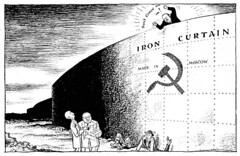
9894425903Iron CurtainThe term popularized by British Prime Minister Winston Churchill to describe the Soviet Union's policy of isolating and controlling the Soviet satellite states of Eastern Europe. (p. 563)28
9894425904Winston ChurchillAfter World War II he declared, "An iron curtain has been descended across the continent". He called for a partnership between Western democracies to halt the expansion of communism. (p. 563)29
9894425905historians: traditionalists vs. revisionistsTraditional historians believe the Cold War was started by the Soviet government subjugating the countries of Eastern Europe in the late 1940s. In the 1960s, revisionist historians began to argue that the United States contributed to starting the Cold War. (p. 572)30
9894425906George KennanHelped formulate Truman's containment policy. Expert on Soviet Affairs, in an influential article he wrote that only "a long-term, patient but firm and vigilant containment of Russian expansive tendencies" would eventually cause the Soviets to back off their Communist ideology of world domination and live in peace with other nations. (p. 563)31
9894425907Dean Achesonundersecretary of state who helped formulate Truman's containment policy (p.32
9894425908containment policyIn 1947, President Truman adopted the advice of three top advisers on how to contain Soviet aggression. This policy called for a long-term, firm, and vigilant containment of the Soviet's expansion tendencies. They believed this would eventually cause them to back off their Communist ideology of world domination. (p. 563)33
9894425909Truman DoctrineThis doctrine was in response to a Communist-led uprising against the government in Greece and Soviet demand for some control of a water route in Turkey. In 1947, President Truman asked Congress for $400 million in economic and military aid to assist Greece and Turkey against totalitarian regimes. (p. 564)34
9894425910Marshall PlanA 1947 plan of U.S. economic aid to help European nations revive their economies and strengthen democratic governments, after the devastation of World War II. This plan offered $12 billion in aid to western and southern Europe. The Soviet Union refused to take any of the aid and the result was a deepening rift between non-Communist West and the Communist East. (p. 564)35
9894425911Berlin airliftThe Soviets cut off all access by land to West Berlin. The United States flew planes in with supplies to help the people. At the same time, the U.S. sent 60 bombers capable of carrying atomic bombs to bases in England. Stalin chose not to challenge the airlift and war was averted. (p. 564)36
9894425912East GermanyAfter World War II, this country was the German Democratic Republic, a satellite of the Soviet Union. (p. 564)37
9894425913West GermanyAfter World War II, this country was the Federal Republic of Germany, a U.S. ally. (p. 564)38
9894425914North Atlantic Treaty OrganizationA military alliance, commonly known as NATO. It consists of the United States, Canada, and ten European nations. Its purpose was to defend Western Europe against outside attack. (p. 565)39
9894425915National Security ActIn 1947, this act provided for 1) a centralized Department of Defense to coordinate the operations of the military, 2) creation of the National Security Council (NSC) to coordinate the making of foreign policy in the Cold War, 3) creation of the Central Intelligence Agency (CIA) to employ spies to gather information on foreign governments. (p. 566)40
9894425916Nuclear arms raceSoviet and American scientists were in an arms race to develop superior weapons systems. From 1945 to 1949 the U.S. was only country to have atomic bombs. In 1949 the Soviets tested their first atomic bomb. President Truman responded by approving the development of a hydrogen bomb which would be 1000 times more powerful than the atomic bomb. (p. 566)41
9894425917NSC-68A 1950 secret report in which the National Security Council that U.S must fight the Cold War by: 1) quadruple U.S. defense spending to 20% of GNP 2) form alliances with non-Communist countries 3) convince Americans that a costly arms build up was necessary for defense (p. 566)42
9894425918U.S. - Japanese Security TreatyA 1951 treaty, in which Japan surrendered its claims to Korea and islands in the Pacific and the U.S. ended formal occupation of Japan. U.S troops remained on military bases in Japan to protect it from external enemies. (p. 567)43
9894425919Douglas MacArthurPopular general who aggressively directed American forces during the Korean War. He clashed with President Truman, who removed him from command in 1951. (p. 566)44
9894425920Chinese civil warThe war between Communist Mao Zedong and Nationalist Chiang-Kai Shek. The United States gave $400 million in aid to the Nationalists, but 80 percent of it landed in Communist hands. The Communists took over China and forced the Nationalists to retreat to Taiwan. The U.S. did not recognize the People's Republic of China until 1979. (p. 567)45
9894425921Chiang Kai-shekNationalist leader of China, forced out of China by the Communists. He retreated to Taiwan, where the U.S. continued to support him. (p. 567)46
9894425922TaiwanWhen the Communists took control of the China mainland, the Nationalists led by Chiang Kai-shek were forced to retreat to this island. (p. 567)47
9894425923Mao ZedongThe Communist leader of the People's Republic of China. He overthrew Chiang Kai-shek and the Nationalists. (p. 567)48
9894425924People's Republic of ChinaCommonly known as China, it is the largest country in East Asia. A socialist republic ruled by the Communist Party of China under a single-party system. (p. 567)49
9894425925Korean WarOn June 25, 1950 the North Korean army invaded South Korea. General Douglas MacArthur led a United Nations force consisting of mostly U.S. troops to help the South Korean army. By the time a peace agreement was signed in 1953 the north and south border was nearly in the same location, but 2.5 million people, including 54,000 Americans had died. (p. 568)50
9894425926Kim Il SungThe Communist leader of North Korea during the Korean War. (p. 568)51
9894425927Syngman RheeThe nationalist leader of South Korea during the Korean War. (p. 568)52
9894425928U.N. police actionThe term to describe the Korean War because Congress supported the use of U.S. troops under the U.N. but had never declared war. (p. 568)53
989442592938th parallelAfter World War II Japan gave up its former colony Korea and the country was divided along this parallel. The northern area was occupied by the Soviet forces and the south by the U.S. forces. (p. 568)54
9894425930soft on communismThe Republican's term to describe the Democrats after China adopted Communism and the Korean War stalemate. (p. 569)55
9894425931Loyalty Review BoardIn 1947 under pressure from the Republicans this board was established to investigate the background of more than 3 million employees. (p. 570)56
9894425932Smith ActIn 1940, this act made it illegal to advocate or teach the overthrow of the government by force or belong to an organization with this objective. (p. 570)57
9894425933Dennis et al. v. United StatesIn 1951, the Supreme Court upheld the constitutionality of the Smith Act. (p. 570)58
9894425934McCarran Internal Security ActIn 1950, Congress passed this act over Truman's veto which did the following: 1) Made it unlawful to advocate or support the establishment of a totalitarian government. 2) Restrict the employment and travel of those joining Communist -front organizations. 3) Authorized the creation of detention camps for subversives. (p. 570)59
9894425935House Un-American Activities CommitteeAfter World War II, this House of Representative committee investigated Communist influence in the government and within organizations such as the Boy Scouts and Hollywood film industry. Many were called to testify before the committee and some were blacklisted. (p. 570)60
9894425936Hollywood blacklistsThe House Un-American Activities Committee created a list of people who would be denied work in the film industry. (p. 570)61
9894425937freedom of expression in artsThe Second Red Scare, the search for Communists, had a chilling effect on freedom of expression. (p. 570)62
9894425938Alger HissHe was a state department official who assisted Roosevelt at the Yalta conference. He denied that he was a Communist and had given secret documents to Whittaker Chambers. In 1950, he was convicted of perjury and sent to prison. (p. 571)63
9894425939Whittaker ChambersA confessed Communist and witness for the House Un-American Activities Committee. (p. 571)64
9894425940Rosenberg caseThis couple, Julius and Ethel, were charged with running a spy ring for the Soviets in New York. In 1953, they were convicted of treason and executed. (p 571)65
9894425941Joseph McCarthyA Republican senator from Wisconsin, who recklessly accused many government officials of being Communists. In December 1954 censured by the Senate which brought an end to his era. (p. 571)66
9894425942McCarthyismDuring the early 1950s, this term was applied to the process of recklessly accusing people in the government and the arts of being Communists. (p. 571)67

AMSCO AP US History Chapter 15 Flashcards

AMSCO United States History 2015 Edition, Chapter 15 Reconstruction, 1863-1877

Terms : Hide Images
8343069629Civil Rights Act of 1866This act declared that all African Americans were U.S. citizens and also attempted to provide a shield against the operation of the Southern states' Black Codes. (p. 295)0
834306963014th AmendmentRatified in 1868, this Constitutional amendment, declares that all persons born or naturalized in the United States were citizens, and it obligated the states to respect the rights of U.S. citizens and provide them with "equal protection of the laws" and "due process of law". Other parts of the amendment related to Congress' plan for Reconstruction. (p. 295)1
834306963315th AmendmentRatified in 1870, this Constitutional amendment, prohibited any state from denying or abridging a citizen's right to vote "on account of race, color, or previous condition of servitude." (p. 297)2
8343069634Civil Rights Act of 1875The last major piece of Reconstruction legislation, this law prohibited racial discrimination in all public accommodation and transportation. It also prohibited courts from excluding African Americans from juries. However, the law was poorly enforced. (p. 297)3
8343069641Liberal RepublicansIn 1872, this party advocated civil service reform, an end of railroad subsidies, withdrawal of troops from the South, reduced tariffs, and free trade.4
8343069643Panic of 1873Economic panic caused by over speculation by financiers and over building by industry and railroads. In 1874, President Grant sided with the hard-money bankers who wanted gold backing of the money supply. He vetoed a bill calling for the release of additional greenbacks. (p. 302)5
8343069644greenbacksName given to paper money issued by the government, so called because the back side was printed with green ink. They were not redeemable for gold. (p 302)6
8343069645redeemersBy 1877, these Southern conservatives had taken control of state governments in the South. Their foundation rested on states rights, reduced taxes, reduced social programs, and white supremacy. (p. 302)7
8343069646HayesHe won the presidential election of 1876, which was a highly contested election. He was a Republican governor from Ohio. (p. 302)8
8343069647S.TildenIn the presidential election of 1876, this New York reform governor was the Democrat nominee. He had gained fame for putting Boss Tweed behind bars. He collected 184 of the necessary 185 electoral votes, but was defeated by Rutherford B. Hayes, when all of the electoral votes from the contested states of South Carolina, Florida, and Louisiana went to Hayes. (p. 303)9
8343069648Compromise of 1877This informal deal settled the 1876 presidential election contest between Rutherford Hayes (Republican) and Samuel Tilden (Democrat). It was agreed that Hayes would become president. In return, he would remove all federal troops from the South and support the building of a Southern transcontinental railroad. (p. 303)10
8343069649presidential reconstructionPresident Abraham Lincoln believed that the Southern states could not leave the Union and therefore never did leave. He consider them a disloyal minority. After Lincoln's assassination, President Andrew Johnson attempted to carry out Lincoln's plan for reconstruction. (p. 292)11
8343069650Proclamation of Amnesty and ReconstructionIn 1863, President Lincoln's proclamation set up a process for political reconstruction, creating state governments in the South so that Unionists were in charge rather than secessionists. It include a full presidential pardon for most Confederates who took an oath of allegiance to the Union and the U.S. Constitution, and accepted the emancipation of slaves. It also reestablished state governments as soon as at least 10 percent of the voters in the state took the loyalty oath. In practice, the proclamation meant that each Southern state would need to rewrite its state constitution to eliminate existence of slavery. (p. 292)12
8343069651Wade-Davis BillIn 1864, this harsh Congressional Reconstruction bill stated that the president would appoint provisional governments for conquered states until a majority of voters took an oath of loyalty to the Union. It required the abolition of slavery by new state constitutions, only non-Confederates could vote for a new state constitution. President Lincoln refused to sign the bill, pocket vetoing it after Congress adjourned. (p. 292)13
8343069652Andrew JohnsonThe 17th President of the United States from 1865 to 1869. This Southerner from Tennessee was Lincoln's vice president, and he became president after Lincoln was assassinated. He opposed radical Republicans who passed Reconstruction Acts over his veto. The first U.S. president to be impeached, he survived the Senate removal by only one vote. (p. 297)14
8343069653Freedmen's BureauIn March 1865, an organization created at end of Civil War, which provided aid to the both black and whites in the South. It provided food, shelter, and medical aid for those made destitute by the Civil War. (p. 292)15
8343069654Black CodesSouthern state legislatures created these codes after the Civil War. They restricted the rights and movements of newly freed African Americans. 1) prohibited blacks from either renting land or borrowing money to buy land, 2) placed freemen into a form of semi bondage by forcing them, as "vagrants" and "apprentices" to sign work contracts, 3) prohibited blacks from testifying against whites in court. (p. 294)16
8343069655Congressional ReconstructionIn the spring of 1866, many in Congress were unhappy with President Andrew Johnson's policies and this led to the second round of reconstruction. Its creation was dominated by Congress and featured policies that were harsher on Southern whites and more protective of freed African Americans. (p. 295)17
8343069656Radical RepublicansIn the 1860s, this was the smaller portion of the Republican party than the moderates. They were led by Senator Charles Sumner and Congressman Thaddeus Stevens. They supported various programs that were most beneficial to the newly freed African Americans in the South. (p. 295)18
8343069657SumnerThe leading Radical Republican in the Senate from Massechusetts. (p. 295)19
8343069658T. StephensThis Pennsylvania Congressman was a Radical Republican. He hoped to revolutionize Southern society through an extended period of military rule in which blacks would be free to exercise their civil rights, receive education, and receive lands confiscated from planter class. (p. 295)20
8343069660Reconstruction ActsIn 1867, Congress passed three acts which placed the South under military occupation. They created five military districts in the former Confederate states, each under control of the Union army. To rejoin the Union, ex-Confederate states were required to ratify the 14th amendment and place guarantees in their state constitution that all adult males of all races would be guaranteed the right to vote. (p. 296)21
8343069661Tenure of Office ActIn 1867, this act prohibited the president from removing a federal official or military commander, without the approval of the Senate. The purpose of the law was purely political, to protect the Radical Republicans in Johnson's cabinet from dismissal. (p. 297)22
8343069663impeachmentPresident Johnson was the first president impeached, for the charge of High Crimes and Misdemeanors on February 24, 1868. Happened to him after violating the Tenure of Office Act. He had removed Edwin M. Stanton, the Secretary of War, from office. The impeachment failed, falling just one vote short. (p. 297)23
8343069664scalawagsThe term for White Republican Southerners who cooperated with and served in Reconstruction governments. (p. 298)24
8343069665carpetbaggersThe term for Northern newcomers who came to the South during Reconstruction. (p. 298)25
8343069667H. RevelsDuring the Reconstruction era, this black politician, was elected to the Mississippi senate seat that had been occupied by Jefferson Davis before the Civil War. (p. 298)26
8343069668sharecroppingCommon form of farming for freed slaves in the South. They received a small plot of land, seed, fertilizer, tools from the landlord who usually took half of the harvest. It evolved into a new form of servitude. (p. 300)27
8343069669Ku Klux KlanFounded in 1867, by ex-Confederate general, Nathaniel Bedford Forrest. This organization of white supremacists used lynchings, beatings, and threats to control the black population in the South. (p. 302)28
8343069670Force Acts (1870, 1871)These act passed in 1870 and 1871, gave power to federal authorities to stop Ku Klux Klan violence and to protect the civil rights of citizens in the South. (p. 302)29
8343069671Amnesty Act of 1872This act removed the last of the restrictions on ex-Confederates, except for the top leaders. Allowed southern conservatives to vote for Democrats to retake control of state governments. (p. 302)30

Chapter 8 US History Flashcards

Terms : Hide Images
5865551803Wilderness RoadA road that traveled westward over the Appalachian Mountains into Kentucky0
5865555709Articles of Confederation1st Constitution of the U.S. 1781-1788 (weaknesses-no executive, no judicial, no power to tax, no power to regulate trade)1
5865560397Land Ordinance of 1785law that divided much of U.S. into system of townships to facilitate sale of land to settlers2
5865560398Northwest TerritoryIllinois, Indiana, Michigan, Ohio and Wisconsin, (Northwest of Virginia)3
5865568336Northwest OrdinanceThe 1787 Northwest Ordinance defined the process by which new states could be admitted into the Union from the Northwest Territory. He ordinance forbade slavery in the territory but allowed citizens to vote on the legality of slavery once statehood had been established. The Northwest Ordinance was the most lasting measure of the national government under the Articles of Confederation4
5865580041Shay's RebellionRebellion led by Daniel Shays of farmers in western Massachusetts in 1786-1787, protesting mortgage foreclosures. It highlighted the need for a strong national government just as the call for the Constitutional Convention went out.5
5865598434Constitutional ConventionMeeting in 1787 of the elected representatives of the thirteen original states to write the Constitution of the United States.6
5865601224James Madison"Father of the Constitution"7
5865603054Virginia PlanThe Virginia Plan was presented to the Constitutional Convention and proposed the creation of a bicameral legislature with representation in both houses proportional to population. The Virginia Plan favored the large states, which would have a much greater voice. In opposition, the small states proposed the New Jersey Plan. In the end, the two sides found common ground through the Connecticut Compromise.8
5867482857New Jersey PlanProposal at the Constitutional Convention made by William Paterson of New Jersey for a central government with a single-house legislature in which each state would be represented equally.9
5867488157Great Compromise1787; This compromise was between the large and small states of the colonies. The Great Compromise resolved that there would be representation by population in the House of Representatives, and equal representation would exist in the Senate. Each state, regardless of size, would have 2 senators. All tax bills and revenues would originate in the House. This compromise combined the needs of both large and small states and formed a fair and sensible resolution to their problems.10
5867521553Three fifths compromiseCompromise between northern and southern states at the Constitutional Convention that three-fifths of the slave population would be counted for determining direct taxation and representation in the House of Representatives.11
5867534833FederalismA system in which power is divided between the national and state governments12
5867537444FederalistA term used to describe supporters of the Constitution during ratification debates in state legislatures.13
5867541513Anti FederalistThey opposed the ratification of the Constitution because it gave more power to the federal government and less to the states, and because it did not ensure individual rights. Many wanted to keep the Articles of Confederation. The Anti-federalists were instrumental in obtaining passage of the Bill of Rights as a prerequisite to ratification of the Constitution in several states. After the ratification of the Constitution, the Anti-federalists regrouped as the Democratic-Republican (or simply Republican) party.14
5867551259The Federalist PapersSeries of newspaper articles written by John Hay, James Madison and Alexander Hamilton which enumerated arguments in favor of the Constitution and refuted the arguments of the anti-federalists15
5867556916George MasonAmerican Revolutionary leader from Virginia whose objections to the Constitution led to the drafting of the Bill of Rights Delegate who opposed the constitution16
5867571141Bill of RightsFirst 10 amendments17
5867584071RepublicA form of government in which citizens choose their leaders by voting18

AP US HISTORY REVIEW Flashcards

Terms : Hide Images
7610621461Jefferson Bill of religious freedomConsidered one of Jefferson's great accomplishments0
7610629780Loyalist during revolutionary warThe majority of them stayed and fought with British, fled to Canada, and were harassed by Patriots1
7610629781Yorktown"The Battle of Yorktown" in Virginia, where Washington forced generals to surrender under General Cornwallis. French waved General Ohara toward Washington to surrender.2
7610634374Articles of ConfederationThe first form of government for the US in November of 1777. - Each state only had one vote. - During the Revolution, colonists were working of making each colony independently governed and have own constitutions. - Each state had a Bill of Rights that they believed in. - Who had the power to conduct foreign affairs but they didn't have power to tax. - 9/13 votes could change things.3
7610642261Northwest Ordinance of 1787Congress established rules for crating states between Great Lakes & Ohio River - granted limited self gov. & prohibited slavery4
7610645974Virginia Declaration of RightsWritten by George Mason in June of 1776 - right to pursue happiness - reform, alter, or abolish - prohibited excessive bail - addressed cruel and unusual punishment - free speech and assembly5
7610648806Thomas Paine: Common SenseJanuary of 1776, where he labeled King George III as a "royal brute"6
7610661991John Dickinson: Letters from a Farmer in PennsylvaniaArgued for taxes, but wanted to come from a perceptive to a large majority of people.7
76106654901 & 2 Continental CongressMeet and talked over responses - couldn't agree: diverse groups - Georgia did not come - Sufflok resolved eliminated Intolerable Acts - Delecaration of Rights and Grievances8
7610673141Boston Massacre9
7610682201Ways American colonist resisted British colonist boycott nonimportation Gaspee affair10
7610684763Stamp Act11
7610687679Tea Act12
7610689709Boston Tea Party13
7610692820Decretory Act14
7610692821Quebec Act15
7610695875Coercive Act16
7610708668Albany Conference 175417
76107112457 yrs war French and Indian War18
7610720834French, Spanish, and English colonies know difference19
7610720835Great Awakening20
7610726292George Whitefield21
7610729936Enlightenment22
7610741100Jonathan Edwards, Roger Williams, John Winthrop, William Bradford colonies/religions23
7610746798Difference between New England colonies and middle colonies and Chesapeake24
7610754835Tobacco25
7610754836Slavery26
7610759380Middle Passage Triangle Trade Route27
7610759381Stono Rebellion28
7610763604Crops cultivated in certain areas29
7610763605Quakers30
7610768080Puritans31
7610768081Pilgrims32
7610768082Catholics33
7610773437Who opposed slavery34
7610773438Slaves resisted35
7610782623Restoration of Stuart Monarchy led to new colonies, British colonizing36
7610785562Roanoke37
7610791785Portuguese prince Henry38
7610791786Christopher Columbus39
7610794854Amerigo Vespucci40
7610794855French and fur trade41
7610798916Jamestown42
7610807039Settle NE (family unit) settled Chesapeake (young, single indentured servants)43
7610807040King Charles44
7610811070Virginia Company45
7610817086One folded as safe haven catholics46
7610817087City on a Hill47
7610820822Plymouth48
7610820823Rhode Island49
7610823701Puritan society50
7610832605Salem Witch Trials51
7610835034Great Migration52
7610855784Holy experiment (William Penn, Quakers)53
7610855785Bacon Rebellion54
7610861332Mundus Novus - Amerigo Vepucci55
7610865063Columbian Exchange crops new to old - good to bad56
7610869643Vartolome Delascasas57
7610873202Longest standing St. Augustine, Florida58
7610873203Encomienda system59
7610881357Protestant reformation - Henry VIII breaking away Martin Luther60
7610892248Frontier of inclusion (French and Spanish) and exclusion (English)61
7610892249Head-right system62
7610896400Anne Hutchinson63
7610896401John Locke64
7610902419Treaty of Tordesillas - Pope divided65
7610902420Miracle Crops66
7610904802Mestizo - Mullato67
7610913157Beringia Land Mass68
7610932857Clovis Tradition69
7610936582Meso America70
7610941909Iroquois Confederacy71

AP US History (Turning Points) The 10 Amendments Flashcards

Terms : Hide Images
7609403311First5 freedoms: speech, press, religion, assembly, and petition.0
7609411788secondRight to bear arms1
7609415765thirdNo quartering troops2
7609426069FiveRights of the accused: double jeopardy, self-incrimination.3
7609432591FourRights of the accused: due process, no unlawful search and seizure (warrants)4
7609463736sixRight to a fair and speedy trial5
7609467484sevenRight to a jury trial in cases over $206
7609479670eightno excessive bail, no cruel or unusual punishment7
7609482643ninepowers to the people8
7609485084tenpowers to the states9

AMSCO AP US History Chapter 20 Flashcards

AMSCO United States History 2015 Edition, Chapter 20 Becoming a World Power, 1898-1917

Terms : Hide Images
5784588721William SewardSecretary of State who was responsible for purchasing Alaskan Territory from Russia. By purchasing Alaska, he expanded the territory of the country at a reasonable price.0
5784588722Monroe DoctrineThis doctrine stated that European powers could not interfere in the Western Hemisphere. In 1895 and 1896, the U.S. applied this doctrine to push Great Britain to arbitrate a boundary dispute between Venezuela and British colony of Guiana.1
5784588723French in MexicoIn 1865, Secretary of State William Seward invoked the Monroe Doctrine when Napoleon III sent French troops to occupy Mexico. He threatened U.S. military action unless France withdrew their troops, and they did.2
5784588724Alaska PurchaseIn 1867, Secretary of State William Seward bought Alaska from Russia for $7.2 Million ("Seward's Folly").3
5784588725Pan-American Conference (1889)In 1889, this conference was called by Secretary of State James G. Blaine. It created an organization of cooperation between the United States and Latin American countries.4
5784588726James BlaineIn 1889, as secretary of state he arranged the first Pan-American Conference in Washington D.C. Various nations in the Western Hemisphere met to discuss trade and other issues.5
5784588727Venezuela boundary disputeAn issue between Venezuela and the neighbouring territory, the British colony of Guiana. The United States convince Great Britain to arbitrate the dispute.6
5784588728Cleveland and OlneyIn 1895 and 1896, President Grover Cleveland and Secretary of State Richard Olney insisted that Great Britain agree to arbitrate the border dispute between Venezuela and the British colony of Guiana.7
5784588729HawaiiIn 1893, American settlers aided in the overthrow of Queen Liliuokalani. President McKinley completed the annexation of Hawaii in 1898.8
5784588730Queen LiliuokalaniThe Hawaiian queen who was forced out of power by a revolution started by American business interests.9
5784588731Cleveland blocks annexationIn 1893, President Grover Cleveland block the annexation of Hawaii because he opposed imperalism. However, in 1898, President McKinley did annex Hawaii.10
5784588732international DarwinismDarwin's concept of the survival of the fittest was applied not only to competition in the business world but also to competition among nations. Therefore, expansionist wanted the U.S. to demonstrate its strength by acquiring territories overseas.11
5784588733business and imperialists competitorsThe United States was not alone in pursuing imperialism, which meant acquiring territory or gaining control over the political or economic life of other countries. Great Britain, France, Germany, Russia, and Japan tried to influence or possess weaker countries around the world.12
5784588734spreading religion and scienceSome Protestant Americans believed that the United States had a religious duty to colonize other lands in order to spread Christianity and our superior science technology.13
5784588735Josiah StrongThis reverend believed that Protestant American had a religious duty to colonize other lands in order to spread Christianity and the benefits of their superior civilization .14
5784588736expansionist politiciansRepublican politicians generally endorsed the use of foreign affairs to search for new markets.15
5784588737steel and steam navyBy 1900, The United States had the third largest navy in the world.16
5784588738Alfred Thayer MahanHe was a U.S. Navy captain whose ideas on naval warfare and the importance of seapower changed how America viewed its navy.17
5784588739nationalist mediaNewspapers and magazines published printed stories about ]distant and exotic places. This increased public interest and stimulated demands for a larger U.S. role in world affairs.18
5784588740Cuban revoltIn 1895, Cuban nationalists sabotaged and laid waste to Cuban plantations. Spain sent General Valeriano Weyler who put civilians into armed camps where many died.19
5784588741Valeriano WeylerA general sent by Spain to stop the Cuban revolt. He forced civilians into armed camps, where tens of thousands died of starvation and disease.20
5784588742jingoismAn intense form of nationalism calling for an aggressive foreign policy.21
5784588743yellow journalismJournalism that exploits, distorts, or exaggerates the news to create sensations and attract readers.22
5784588744De Lome LetterSpanish Ambassador's letter that was leaked to the press and and published by American newspapers. It criticized President McKinley in insulting terms. Many considered it an official Spanish insult against U.S. national honor.23
5784588745sinking of the MaineOn February 15, 1898, the USS Maine battleship exploded in Havana Harbor. The yellow press accused Spain of blowing up the ship even though experts later concluded that the explosion was probably an accident.24
5784588746Teller AmendmentA resolution authorizing war, but it promised the U.S. would not annex Cuba after winning the Spanish-American war.25
5784588747a splendid little warThe ambassador to England wrote to his friend, Teddy Roosevelt, with these words because of low casualties in the war against Spain.26
5784588748invade the PhilippinesCommodore George Dewey led a U.S. fleet to the Philippines where he defeated Spain.27
5784588749George DeweyA United States naval officer remembered for his victory at Manila Bay, Philippines in the Spanish-American War.28
5784588750Rough RidersVolunteer regiment of U.S. Cavalry led by Teddy Roosevelt during the Spanish American War.29
5784588751Theodore RooseveltHe became that 26th President in 1901. He as an expansionist who increased the size of Navy, "Great White Fleet". He added the Roosevelt Corollary to Monroe Doctrine. His motto was to "speak softly and carry a big stick". He received the Nobel Peace Prize for mediation of end of Russo-Japanese war. Later arbitrated split of Morocco between Germany and France.30
5784588752Treaty of Paris: Puerto RicoThis treaty was signed on December 10, 1898 with Spain. It provided for: 1) Cuban independence, 2) Purchase of Puerto Rico and Guam, 3) Purchase of the Philippines.31
5784588753Guam and PhilippinesOn December 10, 1898, the Spanish-American War treaty was signed in Paris. Under the treaty the U.S. acquired Guam and also the Philippines.32
5784588754Emilio AguinaldoFilipino nationalist leader who led guerrilla fighters in a three year war against U.S. control of the Philippines.33
5784588755Anti-Imperialist LeagueLead by William Jennings Bryan, they opposed further expansion in the Pacific.34
5784588756Insular casesA series of Supreme Court cases from 1901 to 1903 which arose when the United States acquired the Philippines and Puerto Rico. The court ruled that constitutional rights were not automatically extended to territorial possessions and that the power to decide whether or not to grant such rights belonged to Congress.35
5784588757Platt AmendmentA 1901 amendment to an army appropriations bill that said Cuba would make no treaties that compromised its independence, permit the U.S. to maintain law and order in Cuba, and allow the U.S. to maintain naval bases in Cuba.36
5784588758spheres of influenceThe term when countries came to dominate trade and investment within a particular region and shut out competitors. In the 1890s, Russia, Japan, Great Britain, France, and Germany were all establishing close ties with China that disturbed the United States.37
5784588759John HayIn 1899, as William McKinley's secretary of state, he sent a note to all the major countries involved in trade with China. He asked them to accept the concept of an Open Door, by which all nations would have equal trading privileges in China. The replies that he got were evasive, so he declared that all nations had accepted the Open Door policy.38
5784588760Open Door PolicyA policy proposed by the U.S. in 1899, under which all nations would have equal opportunities to trade in China.39
5784588761Boxer RebellionA 1900 rebellion in Beijing, China that was started by a secret society of Chinese who opposed the "foreign devils". An international force marched into Beijing and crushed the rebellion.40
5784588762U.S. joined international forceTo protect American lives and property, U.S. troops participated in an international force that marched into Peking (Beijing) and quickly crushed the rebellion of the Boxers.41
5784588763Second Hay NoteIn 1900, the U.S. was fearful that the international force sent to Beijing might try to occupy China. A second note was written to all the major imperialist countries, stating that China's territory must be preserved and that equal and impartial trade with all parts of China must be maintained.42
5784588764big-stick policyTheodore Roosevelt's foreign policy motto was to "speak softly and carry a big stick". By acting boldly and decisively in a number of situation, Roosevelt attempt to build the reputation of the United States as a world power.43
5784588765TR supports Panama revoltIn 1903, President Theodore Roosevelt orchestrated a revolt for Panama's independence from Columbia. The revolt succeeded quickly and with little bloodshed.44
5784588766Hay-Bunau-Varilla Treaty (1903)In 1903, the Panama government signed this treaty with the United States. It granted the U.S. all rights to the 51 mile long and 10 mile wide Canal Zone, in exchange for U.S. protection.45
5784588767building the Panama CanalThis canal was started in 1904 and completed 10 years later. The building of this large canal was important because it would benefit American commerce and military capability.46
5784588768George GoethalsUnited States army officer and engineer who supervised the construction of the Panama Canal.47
5784588769William GorgasArmy physician who helped eradicate yellow fever and malaria from Panama, so work on the Panama Canal could proceed.48
5784588770Roosevelt CorollaryTheodore Roosevelt's 1904 extension of the Monroe Doctrine. It stated that the United States would intervene in the Americas, on the behalf of European interests.49
5784588771Santo DomingoThe capital of the Dominican Republic. In 1904, European powers were ready to use military power here in order to force debt payments.50
5784588772Russo-Japanese WarIn 1904, Russia and Japan went to war over imperial possessions in the region. In 1905, President Theodore Roosevelt arranged a successful treaty conference for the two foes at Portsmouth, New Hampshire.51
5784588773Treaty of Portsmouth (1905)In 1905, the United States mediated the end of the Russo-Japanese War. Negotiating the treaty in the U.S. increased U.S. prestige. Roosevelt received a Nobel Peace Prize for the mediation.52
5784588774Nobel Peace PrizeFor his work in settling the Russo-Japanese War, President Theodore Roosevelt was awarded the Nobel Peace Prize in 1906.53
5784588775segregation in San Francisco schoolsIn the early 20th century San Francisco schools required that Japanese American students attend segregated schools. In 1908, President Roosevelt worked out a "gentleman's agreement" with Japan, Japanese American students would be allowed to attend normal schools and Japan would restrict the emigration of Japanese workers to the United States.54
5784588776gentlemen's agreementIn 1908, an informal agreement between the United States and Japan. President Roosevelt agreed that Japanese American students would be allowed to attend normal schools in San Francisco and Japan agreed to curb the number of workers coming to the U.S.55
5784588777Great White FleetSixteen United States battleships, painted white, were sent around the world to display American naval power.56
5784588778Algeciras ConferenceIn 1906, this conference held after the First Moroccan Crisis in which the dispute between Germany and France over control of Morocco was settled.57
5784588779Hague ConferenceIn 1907, the Second International Peace Conference at the Hague discussed rules for limiting warfare.58
5784588780Root-Takahira AgreementIn 1908, this executive agreement between the United States and Japan pledged mutual respect for each nation's possessions in the Pacific region and support for the Open Door policy in China.59
5784588781William Howard TaftThe 27th President of the United States, from 1909 to 1913. He adopted a foreign policy that was mildly expansionist but depended more on investors' dollars than on the military. His policy of promoting U.S. trade by supporting American business abroad was known as dollar diplomacy.60
5784588782role of American moneyPresident Taft believed that private U.S. investment in China and Central America would lead to greater stability there. His policy, was thwarted by growing anti-imperliasm both in the U.S. and overseas.61
5784588783railroads in ChinaIn 1911, President Taft succeeded in securing American participation in agreement to invest in railroads in China along with Germany and France.62
5784588784Manchurian problemIn 1911, the U.S. was excluded from investing in railroads in Manchuria because of a joint agreement between Russia and Japan, which was in direct defiance of the Open Door Policy.63
5784588785intervention in NicaraguaIn 1912, President Taft sent military troops here when a civil war broke out.64
5784588786Henry Cabot LodgeA Republican senator, he was in favor building U.S. power through global expansion. He introduced the Lodge Corollary to the Monroe Doctrine.65
5784588787Lodge CorollaryIn 1912, the Senate passed this resolution as an addition to the Monroe Doctrine. It stated that non-European powers (such as Japan) would be excluded from owning territory in Western Hemisphere.66
5784588788Woodrow WilsonThe 28th president of the United States from 1913 to 1921. This Democrats is known for his leadership during World War I, creating the Federal Reserve, Federal Trade Commission, Clayton Antitrust Act, progressive income tax, lower tariffs, women's suffrage (reluctantly), Treaty of Versailles, sought 14 points post-war plan, League of Nations (but failed to win U.S. ratification). He won the Nobel Peace Prize.67
5784588789anti-imperialismPresident Woodrow Wilson differed from his Republican presidential predecessors. He believed that the U.S. should not expand its territory overseas.68
5784588790William Jennings BryanIn 1913, he was Woodrow Wilson's secretary of state. He tried to demonstrate that the U.S. respected other nations' rights and would support the spread of democracy.69
5784588791Jones ActIn 1916, this act granted the Philippines full territorial status, guaranteed a bill of rights and universal male suffrage to Filipinos, and promised independence for the Philippines as soon as a stable government was established.70
5784588792Puerto Rico citizenshipIn 1917, an act of Congress granted U.S. citizenship and limited self government for this island.71
5784588793Conciliation treatiesWilson's commitment to democracy was shared by Secretary of State William Jennings Bryan. Bryan negotiated treaties in which nations pledged to submit disputes to international commissions and observe a one-year cooling-off period before taking military action. Thirty of these treaties were negotiated.72
5784588794military interventionPresident Woodrow Wilson used military action to influence Mexico, Central America, and the Caribbean.73
5784588795Mexican civil warPresident Wilson's moral approach to foreign affairs was severely tested by a revolution and civil war in Mexico. He refused to recognize the military dictatorship of General Victoriano Huerta, who had seized power in Mexico in 1913 by arranging to assassinate the democratically elected president.74
5784588796General HuertaIn 1913, this Mexican revolutionary seized power in Mexico by killing the democratically elected president.75
5784588797Tampico incidentIn April 1914, some U.S. sailors were arrested in Tampico, Mexico. President Wilson used the incident to send U.S. troops into northern Mexico. His real intent was to unseat the Huerta government there. After the Niagara Falls Conference, Huerta abdicated and the confrontation ended.76
5784588798ABC powersThe South American countries of Argentina, Brazil, and Chile, which attempted to mediate a dispute between Mexico and the United States in 1914.77
5784588799Pancho VillaThis Mexican leader led raids across the U.S.-Mexican border and murdered several people in Texas and New Mexico.78
5784588800expeditionary forceThe name given to the group sent to capture Pancho Villa in Mexico.79
5784588801John J. PershingThe U.S. general who chased Pancho Villa over 300 miles into Mexico but didn't capture him.80

AMSCO AP US History Chapter 3 Flashcards

AMSCO United States History 2015 Edition, Chapter 3 Colonial Society in the 18th Century

Terms : Hide Images
5729087750English cultural dominationIn the 18th century, cultural life in the colonies was dominated by English culture. Architecture, painting, and literature were strongly influenced by the English. (p. 50)0
5729087751Benjamin WestPainter who went to England to acquire the necessary training and financial support to establish himself as a prominent artist. (p. 51)1
5729087752John CopleyPainter who went to England to acquire the necessary training and financial support to establish himself as a prominent artist. (p. 51)2
5729087753Benjamin FranklinHe was the most popular and successful American writer of the 18th century. (p. 51)3
5729087754Poor Richard's AlmanackWritten by Benjamin Franklin, this book written in 1732 and annually revised, contained aphorisms and advice. (p. 51)4
5729087755Phillis WheatleyHer poetry is noteworthy for her triumph over slavery and the quality of her verse. (p. 51)5
5729087756John BartramSelf-taught botanist from Philadelphia. (p. 51)6
5729087757professions; religion, medicine, lawMinisters, physicians, and lawyers were all respected careers in the 18th century colonies. (p. 52)7
5729087758religious tolerationThe overwhelming majority of colonists were Protestants. Jews, Catholics, and Quakers suffered from the most serious discrimination and even persecution. (p. 49)8
5729087759established churchChurches that were financed by the government. (p. 49)9
5729087760Great AwakeningThis religious movement was at its peak in the 1730s and 1740s. It was characterized by fervent expressions of religious feeling among masses of people. (p. 49)10
5729087761Jonathan EdwardsThis reverend from Massachusetts argued that God was rightfully angry with human sinfulness. Those who repented could be saved by God's grace, but those who did not would suffer eternal damnation. (p. 49)11
5729087762George WhitefieldHe came to the colonies from England in 1739. He spread the Great Awakening throughout the colonies, sometime attracting crowds of 10,000 people. His sermons stressed that God was all powerful and would save only those who openly professed belief in Jesus Christ. He taught that ordinary people could understand scripture without depending on ministers to lead them. (p. 50)12
5729087763Cotton MatherThis minister from Massachusetts, was the author of several widely read religious tracts. (p. 51)13
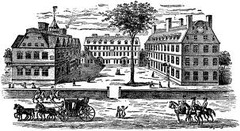
5729087764sectarianThe first colonial colleges were sectarian, meaning they promoted the doctrines of a particular religion. The Puritans founded Harvard in Cambridge, Massachusetts, in 1636. (p. 51)14
5729087765nonsectarianIn the mid 18th century, one nonsectarian colleges was founded. The College of Philadelphia (later University of Pennsylvania) was founded, with no religious sponsors. (p. 52)15
5729087766subsistence farmingIn the mid 18th century the colonies had little manufacturing and were devoted almost entirely to agriculture. In New England colonies, most farms were under 100 acres and farming was limited to subsistence levels that provided just enough for a farm family to survive. In the southern colonies, most people lived on small subsistence family farms with no slaves. (p. 48)16
5729087767J. Hector St. John CrevecoeurIn 1782, this Frenchman wrote , "America is a new man, who acts upon new principles; he must therefore entertain new ideas, and form new opinions. From involuntary idleness, servile dependence, and useless labor, he has passed to toils of a very different nature, rewarded by ample subsistence. This is an American." (p. 45)17
5729087768colonial familiesIn the mid 18th century, there was an abundance of fertile land and a dependable food supply in the colonies. This attracted thousands of European settlers each year and supported the raising of large families. (p. 45)18
5729087769GermansThis group of immigrants settled chiefly on the rich farmlands west of Philadelphia. By 1775, they comprised 6 percent of the colonial population. (p. 46)19
5729087770Scotch-IrishThese English-speaking people emigrated from northern Ireland. They were known as Scotch-Irish because their ancestors had moved to Ireland from Scotland. By 1775, they comprised 7 percent of the colonial population. (p.46)20
5729087771Huguenots; Dutch; SwedesThe Huguenots (French Protestants), the Dutch, and the Swedes came to the colonies. By 1775, these groups comprised 5 percent of the colonial population. (p. 46)21
5729087772AfricansThe largest single group of non-English immigrants did not come to America by choice. By 1775, the African American population (slave and free) comprised 20 percent of the colonial population. About 90 percent were in the southern colonies. (p. 46)22
5729087773immigrantsNewcomers to the colonies, were mostly Protestant, and came from England, Scotland, Wales, and Ireland, and Western and Central Europe. Some left Europe to escape religious persecution and wars. Others sought economic opportunities in farming, or setting up shop as an artisan or merchant. Africans were also brought in large numbers to the colonies, albeit unwillingly. (p. 45)23
5729087774social mobilityEveryone in colonial society, except African Americans, could improve their standard of living and social status with hard work. (p. 47)24
5729087775hereditary aristocracyThere was no hereditary aristocracy in the colonies. Their class system was based on economics with wealthy landowners at the top. Craft workers and small farmers made up the majority of the population. (p. 47)25
5729087776John Peter ZengerIn 1735, he published a true, but unflattering article about New York's royal governor. According to English common law at the time this was a criminal act, but he was acquitted by a jury. This encouraged newspapers in the colonies to take greater risks in criticising the government. (p. 52)26
5729087777Andrew HamiltonIn 1735, he was the lawyer for John Peter Zenger in the Zenger case. (p. 52)27
5729087778EnlightenmentIn the 18th century, some colonists were attracted to this European movement in literature and philosophy. They believed that human reason could be used to solve most of humanity's problems. They reasoned that while the state is supreme, it is bound to follow natural law based on the rights of individual. (p. 53)28
5729087779colonial governorsIn 1750, there were 13 colonies. In the eight royal colonies the governors were appointed by the King, in the three proprietary colonies the governors were appointed by the proprietors, and in Rhode Island and Connecticut the governors were elected by popular vote. (p. 54)29
5729087780colonial legislaturesIn every colony, the legislature consisted of two houses. In every colony, the members of the lower house were elected by eligible voters. In the royal and proprietary colonies, the members of the upper house were appointed by the king or the proprietor. Only in Rhode Island and Connecticut, the members of both houses were elected by eligible voters. (p. 54)30
5729087781town meetingsThe dominant form of local government in the New England colonies, in which the people of the town would regularly come together to vote directly on public issues. (p. 54)31
5729087782county governmentIn the southern colonies, the local government was carried on by a sheriff and other officials who served a large territory called a county. (p. 54)32
5729087783limited democracyIn the mid 18th century, colonial democracy was limited to mostly white men that owned land. Those barred from voting included white women, poor white men, all slaves, and most free blacks. (p. 54)33

AP US History: Chapter 24 Flashcards

Terms : Hide Images
5877183381Pacific Railroad Act, 1862Land grants; commissioned a transcontinental rail line.0
5877183382Union Pacific RailroadThis railroad company was commissioned to build the transcontinental railroad from the east. Insiders of the Credit Mobilier reaped $23 million in profits; Indians attacked while trying to save their land.1
5877183383Central Pacific RailroadBacked by the Big Four, it used Chinese Workers and received the same incentives as the Union Pacific, but it had to drill through the hard rock of Sierra Nevada. Built from the west.2
5877183386James J. HillHe created the railroad: the Great Northern. Was probably the greatest railroad builder of all.3
5877183388Cornelius VanderbiltLeader of old eastern railroad New York Central.4
5877183389Time zonesInstead of each city having its own time zone, to not confuse railroad operators, four national time zones was created.5
5877183390Stock-wateringA method of cheap moneymaking; railroad companies grossly over-inflated the worth of their stock and sold them at huge profits.6
5877183391Jay GouldMade millions embezzling stocks from the Erie Kansas Pacific, the Union Pacific, and the Texas and Pacific railroad companies.7
5877183392"Pool"A group of supposed competitors who agreed to work together, usually to set prices.8
5877183393Wabash case (Wabash v. Illinois)1886 issued by Supreme Court, stopped the Grange (the Grange's purpose is to stop the railroad monopoly occurred). States could not regulate interstate commerce.9
5877183394Interstate Commerce Act1887 This act banned rebates and pools; required the railroads to publish their rates openly.10
5877183395Interstate Commerce CommissionIt was set up to enforce Interstate Commerce Act, ineffective at this time11
5877183398Andrew CarnegieSteel tycoon. Master of "vertical integration." Turned to philanthropy and gave huge sums to libraries and arts in his late years. Forced Morgan to buy him out.12
5877183399Vertical IntegrationA business method where a corporation bought out other businesses (though not competitors) along its line of production. Example: Andrew Carnegie13
5877183401Horizontal integrationA business method where the company bought out its competitors. Example: Rockefeller's Standard Oil14
5877183402John D. RockefellerOil tycoon. Ruthless and merciless, owned Standard Oil Company which eventually controlled at least 90% of American oil. Was a master of "horizontal integration" where he ruthlessly drove others out of business.15
5877183403Standard Oilowned by John D. Rockefeller. monopoly, horizontal integration16
5877183405J. P. MorganBanker and financier. Orchestrated several blockbuster deals in railroads, insurance, and banking. Bought Andrew Carnegie's steel operation for $400 million to start the U.S. Steel Company. Greed, power, arrogance, and snobbery of the Gilded Age business.17
5877183409Gospel of WealthMany of the newly rich had worked from poverty to wealth; thus felt that some people in the world were destined to become rich; help society with their money.18
5877183410Social DarwinismApplied Charles Darwin's survival-of-the-fittest theories to business. Implied the reason that Carnegie was at the top of the steel industry.19
5877183411William Graham SumnerYale professor, survival of the fittest, natural law, etc.20
5877183412Sherman Antitrust Act1890 This act forbade combinations (trusts, pools, interlocking directorates, holding companies) in restraint of trade. It was ineffective since it couldn't be enforced.21
5877183414Henry W. Grady and the New SouthEditor of the Atlanta Constitution newspaper, urged the South to industrialize.22
5877183417LockoutEmployers could lock their doors against rebellious workers and then starve them into submission.23
5877183418Yellow-dog contractsContracts that the workers had to sign, which banned them from joining unions.24
5877183419National Labor UnionThis union represented a giant boot stride; only lasted 6 years. Excluded Chinese; didn't welcome Blacks or women. Aim for eight-hour workday.25
5877183420Colored National Labor UnionExcluded workers such as Chinese or Blacks established this union.26
5877183421Knights of Laboronly barred liquor dealers, professional gamblers, lawyers, bankers, and stockbrokers. Campaigned for economic and social reform.27
5877183424Haymarket Square bombing, 1886It was an explosion in Chicago during labor disorders, killed several people including police officers.28
5877183425Gov. John P. AltgeldGerman-born Democrat, elected governor of Illinois; pardoned the three survivors after studying the Haymarket Square Bombing extensively.29
5877183426Samuel GompersFounder of AF of L, demanded a fairer share for labor; sought better wages, hours, and working conditions.30
5877183427The American Federation of LaborThe AF of L united many independent small unions and worked out overall strategies. It focused only on skilled labor. Their success was only mild.31
5877183428Railroad Strike of 1877This strike's failure exposed the weakness of the labor movement. Racist and ethnic fissures among workers everywhere fractured labor unity.32

Pages

Subscribe to CourseNotes RSS

Need Help?

We hope your visit has been a productive one. If you're having any problems, or would like to give some feedback, we'd love to hear from you.

For general help, questions, and suggestions, try our dedicated support forums.

If you need to contact the Course-Notes.Org web experience team, please use our contact form.

Need Notes?

While we strive to provide the most comprehensive notes for as many high school textbooks as possible, there are certainly going to be some that we miss. Drop us a note and let us know which textbooks you need. Be sure to include which edition of the textbook you are using! If we see enough demand, we'll do whatever we can to get those notes up on the site for you!