AP Notes, Outlines, Study Guides, Vocabulary, Practice Exams and more!

AP US History Chapter 24 Flashcards

AMSCO United States History 2015 Edition, Chapter 24 The Great Depression and the New Deal, 1929-1939

Terms : Hide Images
5769767842stock market crashA boom stock market of 1928 led to a sell off starting in October 1929. Within three years the stock market would decline to one-ninth of its peak. (p. 497)0
5769767843Black TuesdayOn October 29, 1929, millions of panicky investors sold, as the bottom fell out of the stock market. (p. 497)1
5769767844Dow Jones indexThe Wall Street stock market index. In September 1929 the index was at a high of 381, in three months it fell to 198. Three years later, the index would finally hit bottom at 41, less than one-ninth of the peak. (p. 497)2
5769767845buying on marginThis purchase method allowed people to borrow most of the cost of the stock, making down payments as low as 10 percent. Investors depended on the price of the stock increasing so they could repay their loans. (p. 497)3
5769767846uneven income distributionWages had risen relatively little compared to the large increases in productivity and corporate profits. Economic success was not shared by all, as the top 5 percent of the richest Americans received over 33 percent of all income. (p. 497)4
5769767847excessive debtConsumers and businesses believed the economic boom was permanent so they increased borrowing, which later led to loan defaults and bank failures. (p. 498)5
5769767848overproductionBusiness growth, aided by increased productivity and use of credit, had produced a volume of goods that workers with stagnant wages could not continue to purchase. (p. 498)6
5769767849Federal ReserveDuring the Great Depression, the Federal Reserve followed a tight money policy. Instead of trying to stabilize banks, the money supply and prices, they tried to preserve the gold standard. (p. 498)7
5769767850postwar EuropeEurope had not recovered from World War I and the U.S. insistence on loan repayment and tariffs weaken Europe and contributed to the Worldwide depression. (p. 498)8
5769767851debts and high tariffsLeading up to the Great Depression, the United States insisted on full World War I loan repayments and high tariffs on imports. This weakened Europe and contributed to the worldwide depression. (p. 498)9
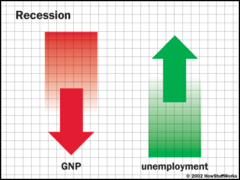
5769767852Gross National ProductThe value of all the goods and services produced by a nation in one year. In 1929, the United States Gross National Product was $104 billion, but it dropped to $56 billion in 1932. (p. 498)10
5769767853unemploymentBy 1933 25% of the workforce, not including farmers, did not have employment. (p. 498)11
5769767854bank failuresDuring the Great Depression 20 percent of all banks failed. (p. 498)12
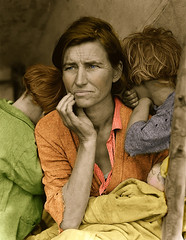
5769767855poverty and homelessDuring the Great Depression poverty and homelessness increased. (p. 499)13
5769767856Herbert HooverHe was President of the United States at the time of the stock market crash. He thought that prosperity would soon return. He was slow to call for legislative action and he thought public relief should come from the state and local governments, not the federal government. (p. 500)14
5769767857self-reliancePresident Herbert Hoover did not ask Congress for legislative action on the economy until the summer of 1930. He was concerned that government assistance to individuals would destroy their self-reliance. (p. 500)15
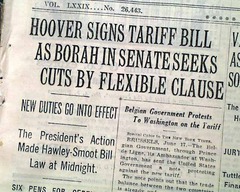
5769767858Hawley-Smoot TariffIn June 1930, President Hoover signed into law the highest tariff rates in history, ranging from 31 to 49 percent. In retaliation, European countries enacted their own tariffs. This reduced trade for all nations and worsened the worldwide depression. (p. 500)16
5769767859debt moratoriumSuspension on the payment of international debts. In 1931, President Hoover proposed a suspension of international debt payments. (p. 500)17
5769767860Farm BoardIt was authorized to help farmers stabilize prices by temporarily holding surplus grain and cotton in storage. (p. 500)18
5769767861Reconstruction Finance CorporationIn 1932, Congress funded this government-owned corporation as a measure for propping up faltering railroads, banks, life insurance companies, and other financial institutions. President Hoover thought that emergency loans would stabilize key business and the benefits would "trickle down" to smaller businesses and ultimately bring recovery. (p. 501)19
5769767862Twentieth AmendmentAlso known as the lame-duck amendment, this amendment shortened the period between the presidential election and inauguration. The new president's term would start on January 20. (p. 502)20
5769767863bonus marchThousands of unemployed World War I veterans marched to Washington, D.C. and set up encampments to demand immediately payment of the bonuses promised to them at a later date. The Army, led by General Douglas MacArthur broke up the encampment. (p. 501)21
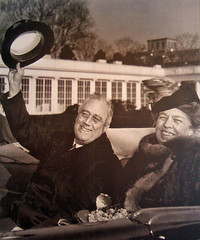
5769767864Franklin D. RooseveltThis Democratic candidate won the 1932 presidential election. As a candidate, he promised a "new deal" for the American people, the repeal of Prohibition, aid for the unemployed, and cuts in government spending. (p. 502)22
5769767865Eleanor RooseveltShe was the most active first lady in history, writing a newspaper column, giving speeches, and traveling the country. She served as the president's social conscience and influenced him to support minorities. (p. 502)23
5769767866New DealFranklin D. Roosevelt's plan to help people at the bottom of the economic pyramid. (p. 503)24
5769767867relief, recovery, reformThe New Deal included the three R's: relief for people out of work, recovery for business and the economy, and reform of American economic institutions. (p. 503)25
5769767868Brain TrustFor advice on economic matters, Roosevelt turned to a group of university professors. (p. 503)26
5769767869Frances PerkinsRoosevelt's secretary of labor, she was the first woman to serve in a president's cabinet. (p. 503)27
5769767870Hundred DaysOn March 4, 1933, Franklin Roosevelt started his term and called Congress into a one hundred day session. They passed into law all of Roosevelt's legislation. (p. 503)28
5769767871repeal of ProhibitionIn 1933, the 21st Amendment was passed. It repealed the 18th Amendment. This ended Prohibition. (p. 503)29
5769767872bank holidayPresident Franklin Roosevelt ordered the banks to be closed on March 6, 1933. He made a radio address explaining that the banks would be reopened after allowing enough time for the government to reorganize them on a sound basis. (p. 503)30
5769767873fireside chatsPresident Franklin Roosevelt spoke on the radio to the American people. (p. 504)31
5769767874Federal Deposit Insurance CorporationThis agency guaranteed individual bank deposits. (p. 504)32
5769767875Public Works AdministrationDirected by Secretary of the Interior Harold Ickes, it allotted money to state and local governments for building roads, bridges, dams, and other public works. (p. 504)33
5769767876Harold IckesPresident Franklin D. Roosevelt's secretary of the interior. (p. 504)34
5769767877Civilian Conservation CorpThis organization employed young men for projects on federal lands and paid their families small monthly sums. (p. 504)35
5769767878Tennessee Valley AuthorityA government corporation that hired thousands of people in the Tennessee Valley, to build dams, operate electric power plants, control flooding, and erosion, and manufacture fertilizer. (p. 505)36
5769767879National Recovery AdministrationDirected by Hugh Johnson, this agency attempted to guarantee reasonable profits for business and fair wages and hours for labor. The complex program operated with limited success for two years before the Supreme Court declared it unconstitutional. (p. 505)37
5769767880Schechter v. U.S.In 1935, the Supreme Court declared the National Recovery Administration (NRA) unconstitutional. (p. 505)38
5769767881Securities and Exchange CommissionThis agency was created to regulate the stock market and to place strict limits on the kind of speculative practices that led to the 1929 stock crash. (p. 505)39
5769767882Federal Housing AdministrationIt insured bank loans for building new houses and repairing old ones. (p. 505)40
5769767883Works Progress AdministrationThis agency created in 1935, part of the Second New Deal, it was much more ambitious than earlier efforts. Between 1935 and 1940 up to 3.4 million people were hired to construct bridges, roads, airports, and public buildings. Artists, writers, actors, and photographers were also employed. (p. 506)41
5769767884Harry HopkinsHe headed the Works Progress Administration (WPA) in the 1930s. (p. 506)42
5769767885National Labor Relations (Wagner) ActA 1935 act that guaranteed a worker's right to join a union and a union's right to bargain collectively. It outlawed business practices that were unfair to labor. (p. 507)43
5769767886Social Security ActIn 1935, this act created a federal insurance program based on the automatic collection of taxes from employees and employers throughout people's working careers. Monthly payments would be made to retired people over the age of 65. (p. 507)44
5769767887election of 1936Franklin D. Roosevelt easily defeated the Republican nominee, Alf Landon. (p. 507)45
5769767888New Deal coalitionFrom the 1930s to 1960s, this political coalition consisted of the Solid South, white ethnic groups in cities, midwestern farmers, labor unions, and liberals. (p. 508)46
5769767889John Maynard KeynesBritish economist, whose theory said that in difficult times government needed to spend well above its tax revenues in order to stimulate economic growth. After the 1937 recession, Roosevelt adopted this strategy, which was successful. (p. 511)47
5769767890recession of 1937In the winter of 1937 the economy went into recession again. The new Social Security tax had reduced consumer spending and at the same time Roosevelt had cut back government spending in hopes of balancing the budget. (p. 511)48
5769767891Father Charles CoughlinA Catholic priest who founded the National Union for Social Justice, which called for issuing inflated currency and nationalizing all banks. His radio program attacks on the New Deal were anti-Semitic and Fascist. (p. 508)49
5769767892Francis TownsendHe proposed a simple plan for guaranteeing a secure income for the elderly. He proposed that a 2 percent federal sales tax be used to create a special fund from which every retired person over the age of 60 would receive $200 a month thus stimulating the economy. (p. 509)50
5769767893Huey LongHe proposed a "Share Our Wealth" program that promised a minimum annual income of $5000 for every American family to be paid for by taxing the wealthy. In 1935 he challenged Roosevelt's leadership of the Democratic party by becoming a candidate for president but was soon assassinated. (p. 509)51
5769767894Supreme CourtIn 1935, they declared two of President Roosevelt's recovery programs unconstitutional. (p. 509)52
5769767895reorganization planPresident Franklin Roosevelt proposed a plan that allowed the president to appoint a new Supreme Court justice for each current justice over the age of 70. Congress refused to pass this legislation. (p. 509)53
5769767896conservative coalitionRepublicans and many Democrats were outraged by President Franklin Roosevelt's plan to reorganize the Supreme Court. (p. 509)54
5769767897Congress of Industrial OrganizationsThis labor union concentrated on organizing unskilled workers in the automobile, steel, and southern textile industries. (p. 510)55
5769767898John L. LewisHe was President of the United Mine Workers Union and Leader of the Congress of Industrial Organizations. (p. 510)56
5769767899sit-down strikeIn 1937 workers at the General Motors plant in Flint, Michigan insisted on the right to join a union by sitting down at the assembly line. (p. 510)57
5769767900Fair Labor Standards ActIn 1938 this act established a minimum wage, a maximum standard workweek with extra pay for overtime, and child labor restrictions. (p. 511)58
5769767901minimum wageEstablish minimum pay for workers, initially set at 40 cents per hour. (p. 511)59
5769767902depression mentalityMillions of people who lived through the Great Depression developed an attitude of insecurity and economic concern that remained throughout their lives. (p. 512)60
5769767903drought, dust bowl, OkiesA severe drought in the early 1930s and poor farming practices led to the Oklahoma dust bowl. High winds away large amounts of topsoil. (p. 512)61
5769767904John Steinbeck, "The Grapes of Wrath"A novelist that wrote about hardships in his classic study of economic heartbreak in 1939, "The Grapes of Wrath". (p. 512)62
5769767905Marian AndersonAn African American singer who had been refused the use of Constitution Hall, she performed a special concert at the Lincoln Memorial. (p. 513)63
5769767906Mary McLeod BethuneOne of the African Americans that was appointed to middle-level positions in federal government. She was a leader of efforts for improving education and economic opportunities for women. (p. 513)64
5769767907Fair Employment Practices CommitteeIt was set up to assist minorities in gaining jobs in defense industries. (p. 513)65
5769767908A. Phillip RandolphHead of Railroad Porters Union who threatened a march on Washington D.C. to demand equal job opportunities for African Americans. (p. 513)66
5769767909Indian Reorganization (Wheeler-Howard) ActIn 1934 Congress repealed the Dawes Act of 1887 and replaced it with this act which returned lands to the control of tribes and supported preservation of Indian cultures. (p. 513)67
5769767910Mexican deportationDiscrimination in the New Deal programs and competition for jobs forced thousands of Mexican Americans to return to Mexico. (p. 513)68

AP US History Period 9 Flashcards

Terms : Hide Images
6746624371Proposition 13·It was result of a tax cut revolt in 1979 which slashed the property taxes resulting in large reductions in government services ·This was closely aligned with the conservative politics ·Wrk exc tech ·California ·Conservative politics0
6746624372Arthur Laffer·An economic philosophy that believes in the action of sharply cutting taxes which will then increase the incentive people have to work, save, and invest. · He then believed that greater investments will lead to more jobs, a more productive economy, and more tax revenues for the government. ·Peo ·Economics ·Tax Cuts1
6746624373Religious Fundamentalism· A Religious movement where the followers are to return to the foundations of the faith and to influence state policy where every word of the bible is interpreted literally. ·This was a new uprising in the way of worship and lead to new takings on religious aspects ·Ideas belifs and cul ·William J Bryan2
6746624374Televangelists·Baptist Billy Graham, and Oral Roberts, and Roman Catholic Fulton J. Sheen took to the television airwaves to spread Christianity. ·Was a new surge in the popularity in choosing to spread the gospel through forms of media ·Ideas belfs cul ·Billy Graham Oral Roberts3
6746624375Moral Majority·A religious en devour that moved to have a faith based political agenda in lobbying. ·Was comprised of mostly conservatives who believed in the idea of mortal law and wished to implement it into politics ·They went against the idea of abortion and the legalization of same sex marriage ·Pol Pow ·Conservative agenda4
6746624376Roe v. Wade·A supreme court case in which it was to be the ruling on the legality of abortion ·The court case made try ed to overturn the ruling on the states banning the right to ban abortion ·This was a pro abortion court case ·Pol and Pow ·Abortions Conservatism5
6746624377Reverse Discrimination·Reverse discrimination is the discrimination of whites due to their skin color also their social status ·this played a large role in the idea of affirmative action and the legality of it ·ideas belf cul ·Conservative beliefs ·Affirmative Action6
6746624378Regents of the University of California v. Bakke·Was a supreme court case which covered the topic of affirmative action and the acceptance of people into colleges due to racial quotas. ·a 1978 Supreme Court ruling that narrowly upheld affirmative action, declaring that race may be one factor, but not the sole criterion in school admissions ·pol and pow ·Supreme court ruling ·Affirmative Action7
6746624379Supply side economics·The idea that the American Economy was weak because of the too many rules and taxes on U.S Businesses. ·The solution would be to lower taxes and rules so that these businesses got more profitable and made more jobs. ·This was a way to fix the many problems of the economy of the united states ·wrk exc tech ·Lowering taxes8
6746624380Economy Recovery Tax Act (1981)·Passed by Congress, it included a 25 percent decrease in personal income taxes over three years. There were also cuts in corporate income tax, capital gains tax, and gift and inheritance taxes ·Wrk exc Tech ·FDR First hundred days, Individual Retirement Accounts (IRAs)9
6746624381Business Deregulation·Reagan's belief that the American government should allow businesses to operate in a free-market system, with minimal governmental oversight ·Was a philosophy that many politicians lived by ·Wrk Exc Tech ·Reaganomics10
6746624382Sandra Day O'Connor·First woman supreme court justice appointed by Pres Ronald reagan ·Was an important step for equality between the sexes ·Peo ·Supreme Court11
6746624383Expand Military· A movement which sought to expand the power of the united states military to protect the nation. ·Pol Pow ·Sphere of influance12
6746624384Star Wars·A program to protect the United States against attack by enemy missiles, proposed in 1983 by President Ronald Reagan, but never implemented- formally known as the Strategic Defense Initiative. ·Wrk Exc Tech ·Ronald Reagan13
6746624385Nicaragua; Sandinistas·Members of a leftist coalition that overthrew the Nicaraguan dictatorship of Anastasia Somoza in 1979 and attempted to install a socialist economy ·The United States financed armed opposition by the Contras. They lost national elections in 1990 ·pol pow ·election 199014
6746624386Iran- Contra·This involved high officials in the Reagan administration secretly selling arms to Iran (in return for the release of Western hostages in the Middle East) and illegally using the proceeds to finance the Contra rebels in Nicaragua. ·Pol Pow ·Boland Amendment15
6746624387PLO·Palestinian Liberation Organization; formed in 1964 with the purpose of creating a homeland for Palestinians in Israel ·Wrk Exc Tech ·Reagen Revloution16
6746624388"Evil Empire"·Ronald Reagan's description of Soviet Union because of his fierce anti-communist views and the USSR's history of violation of human rights and aggression. ·Ideas belifs and Culture ·Soviet Union17
6746624389Mikhail Gorbachev·Head of the Soviet Union from 1985 to 1991. His liberalization effort improved relations with the West, but he lost power after his reforms led to the collapse of Communist governments in eastern Europe. ·Peo ·Soviet Union18
6746624390"tear down this wall"·Ronald Reagan said this referring to the Berlin wall while his speech, wanting for Mikhail Gorbachev to hear it. ·Wanting the stop of communism ·Idea belif cult ·Berlin Wall19
6746624391INF Agreement·Reagan and Gorbachev agreed to destroy all intermediate range missiles, eventually Soviets began to pull troops from Afghanistan ·Agreement that stopped all tensions ·Wrk Exc Tech ·Soviet Union united States20
6746624392Soviet Satellites·Eastern European States (East Germany, Poland, Czechoslovakia, Hungary, Romania, and Bulgaria) · The effected countries around the soviet union ·Pol Pow ·Soviet union ·Communism21
6746624393Fall of Berlin Wall·This event in 1989 marked the symbolic end of the Cold War and was the beginning of the collapse of communism in eastern Europe. ·Ideas belifs culture ·Fall of Communism22
6746624394Soviet Union Breakup·Boris Yeltsin turns Russia into a Republic and the country is out of turmoil. Many republics declared independence; the Soviet government was clearly powerless to stop the fragmentation. ·The Communist Party and Soviet government became powerless and ceased to exist. ·Pol Pow ·Soviet Union ·Fall of Communistic23
6746624395Boris Yeltsin·President of the Russian Republic in 1991. Helped end the USSR and force Gorbachev to resign. ·Pol Pow ·Russian Republic24
6746624396START 1 and 2·Strategic Arms Reduction Talks, 1993-94 between USA and Russia to reduce the active deployment of ICBMs ·Nuclear Warfare25
6746624397Panama invasion·Bush ordered this to remove the autocratic General Manuel Noriega; the alleged purpose of this was to stop Noriega from using his country as a drug pipeline to the US ·War on Drugs26
6746624398Saddam Hussein·President of Iraq from 1979 to 2003. Waged war on Iran in 1980-1988. In 1990 he ordered an invasion of Kuwait but was defeated by United States and its allies in the Gulf War (1991). Defeated by US led invasion in 2003. ·Peo ·Terrorism27
6746624399Persian golf war·Conflict between Iraq and a coalition of countries led by the United States to remove Iraqi forces from Kuwait which they had invaded in hopes of controlling their oil supply. ·A very one sided war with the United States' coalition emerging victorious. ·Pol Pow ·Saddam Hussein28
6746624400Operation Desert storm·Military operations that started on January 16, 1991, with a bombing campaign, followed by a ground invasion of February 23 and 24, 1991. The ground war lasted 100 hours and resulted in a spectacularly one-sided military victory for the Coalition. ·Pol Pow ·Persian golf war29
6746624401Clarence Thomas·African American nominated by George H. W. Bush to be on the Supreme Court; against Affirmative Action; was accused of sexual harassment by Anita Hill; became the second African American to hold a seat in the Supreme Court30
6746624402"No New Taxes"·Bush's 1988 campaign pledge that needed to be abandoned because of the sharp recession ·George H.W Bush31
6746624403Americans with Disabilities Act·1990 A wide-ranging civil rights law that prohibits discrimination based on disability; covers employment, transportation, building accessibility, transportation, etc. ·Equality32
6746624404" Dont ask Dont tell"·the policy in the US military for homosexuals who served. No one would ask your sexuality but if you were outwardly homosexual and engaging in homosexual activities you would be discharged ·Ideas belifs culture ·Homosexuality33
6746624405NAFTA·A trade agreement between Canada, the United States and Mexico that encourages free trade between these North American countries. ·Wrk exc Tech ·Free trade34
6746624406NRA·National Recovery Administration: established and administered a system of industrial codes to control production, prices, labor relations, and trade practices ·Economic activites35
6746624407Newt Gingrich·Gingrich was the Republican speaker in the House. He pushed for more conservative legislation during Clinton's presidency. ·Conservative Agenda36
6746624408Contract with America-President can delete specific items passed by the Congress, proposed constitutional amendment to limit the term of office was ignore, imposed federal mandates on states without providing the money ·Newt Gingrich37
6746624409Welfare Reform·Clinton takes a moderate approach. He wants to scale back on welfare by cutting funding for programs like food stamps and put limits on how long you can rely on it without getting a job. ·This fulfilled his campaign promise to "end welfare as we know it.38
6746624410Balanced Budgets·state and local governments can not deficit spend unlike the federal government, they can only spend the money that they take in39
6746624411Clinton impeachment·Impeached on two charges, one of perjury and one of obstruction of justice, on December 19, 1998. Two other impeachment articles, a second perjury charge and a charge of abuse of power, failed in the House. The charges arose from the Lewinsky scandal and the Paula Jones lawsuit. ·Bill Clinton ·Lewinsky Scandal40
6746624412Northern Ireland accords·A peace agreement that was estiblished by the us between north and south ireland ·america in the world ·a world police man41
6746624413Yugoslavia break up·Was a break up of the nation of Yugoslavia because they had different religions and cultures- ethnic tensions ·America in the world ·USSR42
6746624414Balkan Wars·A series of wars fought between Austria Hungry and Russia over the Balkan territories during the decline of the Turkish empire, caused tension between the great Power of Europe ·America in the world43
6746624415West Bank, Gaza Strip·The land of Jerusalem located the the middle east ·Jerusalem44
6746624416Globalization·A set of processes that are increasing interactions, deepening relationships, and heightening interdependence without regard to country borders.45
6746624417World Trade Organization·An international agency which encourages trade between member nations, administers global trade agreements and resolves disputes when they arise. ·America in the world ·European union46
6746624418World Bank·A specialized agency of the United Nations that makes loans to countries for economic development, trade promotion, and debt consolidation. ·America in the world ·United nations47
6746624419Immigration act of 1986·Also known as the Johnson-Reed Act. Federal law limiting the number of immigrants that could be admitted from any country to 2% of the amount of people from that country who were already living in the U.S. as of the census of 1890.48
6746624420Bush v. Gore·this case ruled in favor of Bush by saying that recounting the votes in certain counties of Florida was unconstitutional because of equal protection of the law; Gore's wish to make the process as simple and painless as possible backfired49
6746624421No Child left Behind·Holds states, schools, and school districts more accountable for their standardized tests scores. The wanted outcome was better tests scores all around and overall a smarter and better population of young people that would positively contribute to a growing America. ·Geroge w. Bush50
6746624422Housing Bubble·Unstable increase in housing prices, to the extent of which, a sudden drop or "bursting" of the bubble could result in a widespread loss of equity.51
6746624423Al-Qaeda·A radical Sunni Muslim organization dedicated to the elimination of a Western presence in Arab countries and militantly opposed to Western foreign policy: founded by Osama bin Laden in 1988. ·America in the world ·Osama bin laden52
6746624424Osama Bin Laden·Arab terrorist who established al-Qaeda (born in 1957). Planned attack of 9-11. ·peo ·Al-Qaeda53
6746624425Bombing of U.S Embassies·The bombing of the us embassies is a series of terrorist attacks against the nation of the united states.54
6746624426World Trade Center·Once an icon for the global economy in New York, became a target for terrorism in 1993 and 2001; al Queda was solely responsible for the 9-11 attacks ·america in the world ·9/1155
67466244279/11/2001·The terrorist attack on the world trade center in NYC ·america in the world ·World Trade Center56
6746624428Afghanistan, Taliban·War on Terror ·A terrorist group in Afghanistan who use terror as a tacit and wants complete control over the people ·America in the world ·War on Terror57
6746624429Hamid Karzai·President of Afghanistan, helped overthrow Taliban, sought international aid for Afghanistan. ·America in the world ·Afghanistan58
6746624430Homeland Security Department·newst executive department set up to combat issues of terrorism, border control, and intelligence: immigration services. FEMA, and the coast guard ·wrk exc tech ·FEMA59
6746624431Kyota Accord·International treaty to limit the greenhouse gas emissions. 1997 to enact in 2005. Bush thought too costly.60
6746624432Bush Doctrine·Foreign Policy based on the idea that the US should take preemptive action against threats to its national security ·wrk exc tech ·War on Terror61
6746624433"Axis of Evil"·Iraq, Iran, and North Korea- named by President Bush in 2002 as significant threats to the security ·ideas belif cul ·Nations against the us62
6746624434WMDs·Generally nuclear weapons with tremendous capability to destroy a population and the planet. WMD warfare refers to the application of force between countries using biological, chemical, and nuclear weapons. ·wrk exc Tech ·Nuclear Warfare63
6746624435Operation Iraq Freedom·An Act to remove Saddam Hussein from power and to help the Iraq people build a stable and free government ·Wrk Exc Tech ·Iraq64
6746624436Sunni v. Shiite·Sunni and Shia Islam are the two major denominations of Islam. With most Shias belonging to the Twelver tradition and the rest divided between several other groups. ·An ongoing division between the two ·ideas belifs cul · Islamic war65
67466244372007 Troop Surge·In 2007 there was a surge in the amount of us troops being put into action overseas. ·This strengthened the Us military ·peo ·Iraq war66
6746624438Liquidity crisis·A cash flow emergency situation where a business does not have enough cash to pay its current liabilities (short-term debts). ·wrk exc tech ·Business debt67
6746624439Fannie May, Freddi Mac·reassured investors who were worried about homeowners defaulting on mortgages by selling bonds to investors and using the funds to purchase mortgages from banks.68
6746624440TARP·controversial, purchased failing assets that included mortgages + mortgage-related securities from financial institutions. Conservatives called TARP socialism, and liberals called it a bailout of the people who had caused the problems in the first place69
67466244412009 Stimulus·The American Recovery and Reinvestment Act of 2009 added significant funding for IDEA activities. A priority for these funds has been children ages three to five having early access to a free appropriate public education. ·pol pow ·Goverment help70
6746624442Dodd-Frank·Law that calls for fundamental changes in executive compensation disclosure, compensation committee independence, shareholder voting rights, and clawback provisions in publicly traded companies.71
6746624443Auto bailout·The bailout of the auto industry in Detroit Michigan putting the companies Chrysler and Gm back on their feet ·Barrack Obama72
6746624444Affordable Care act·An expansion of medicaid, most of employers must provide health insurance, have insurance or face surtax, prevents rejection based on pre-existing condition. Also referred to as "Obamacare", signed into law in 2010.73
6746624445Bowles- Simpson·would have eliminated the deficit by 2035 through $2 of spending cuts for every $1 increase in revenues, compromise widely praised but rejected by Democrats for its cuts to social services and by Republicans for its tax increases74
6746624446Tea Party·A national social movement, primarily attracting fiscal and social conservatives, that seeks to limit government spending and cut taxes75
67466244472013 Goverment Shutdown·In 2013, the government shutdown because legislation appropriating funds for fiscal year 2014 wasn't enacted in time.76
6746624448Withdrawal from Iraq·After the assassination of Osama bin Laden there was a withdrawal of troops by Barack Obama77
6746624449Death of Osama bin Laden·Former head of the Islamist militant group al-Qaeda, killed in his compound in Abbottabad, Pakistan on May 2, 2011 by US Navy Seals. Ordered by President Obama ,78
6746624450Arab Spring·A revolutionary wave of protests and demonstrations overtaking dictators in the Middle East (2011). ·America in the world ·Middle east79
6746624451Repeal of "dont ask dont tell"The repealment of the dont ask dont tell overturns the legality of homosexuals in the us military and their openness about their preference. ·pol pow ·Dont ask dont tell80
6746624452Same-Sex marriage·controversial issue in contemporary Western culture focusing on whether homosexual couples should be legally allowed to marry ·pol pow ·Homosexuality81
6746624453Citizens United·a landmark decision by the United States Supreme Court holding that the First Amendment prohibits government from censoring political broadcasts in candidate elections when those broadcasts are funded by corporations or unions82

AP US History early reformers Flashcards

Terms : Hide Images
7830571461Catherine Beecherpushed for women's education in the domestic arts; established Hartford Female Seminary; opposed women's suffrage0
7830571463Lucretia Mott andA Quaker who started out as an abolitionist then progressed into the women's rights movement1
7830571464Amelia BloomerWomen's health to be protected; popularized a short dress with full length Turkish style pants; published The Lily; loved bicycles and said women should be able to do more things/have more flexibility2
7830571466Charles G. FinneyPresbyterian revivalist; most important preacher during second great awakening; preached fear of damnation; reform and personal morality; "burned over district"3
7830571470Robert OwenBelieved environment forms the character; not religiously grounded; believed in free love not marriage; private property, religion, and rational property are bad; believed in birth control4
7830571473John Humphrey NoyesRejected tradition family and marriage; complex marriage-all women are married to all men Postmillenialism-Jesus came, resurrected, 1,000 years of perfectibility of man, when achieved, Jesus will come back (not literal 1,000 years5
7830571474Joseph SmithBook of Mormon; Faced discrimination everywhere he went; only success: founded church or Morm; came to hime in dream saying all religions are wrong6
7830571475Brigham YoungFounded "New Zion"; practice of polygamy and secrecy aroused hostility of US government7
7830571478Dorothea DixCrusader for the mentally ill and reform of insane asylums8
7830571480Neal Dow"Father of Prohibition" sponsored the Maine Law of 1851 which prohibited the manufacture and sale of alcohol9
7830571482Horace MannEducation is essential for democracy; people have a voice in what they are doing; teachers should be paid good; need education more than a few months; Board of Education-uniformed and expanded schools10
7830571483William Holmes McGuffeyPopular; textbooks are fabulous and promoted democracy and patriotism11
7830571484Oberlin College, OHFirst school to admit women and blacks12
7830571489Harriet Beecher StoweWrote Uncle Tom's Cabin-inflamed passions in the North and South; romantic fiction combined with abolitionist political agenda; changed nature of anti-slavery debate13
7830571491Fredrick DouglassNorth start; organized efforts to help fugitive slaved escape to North and Canada; lectured against slavery14
7830571492Harriet TubmanUnderground Railroad "Moses" of her people15
7830571493Sojourner TruthFreed slave and feminist-eloquent antislavery advocate16
7830571494David WalkerMost radical black abolitionist who called for an uncompromising opposition to and violent overthrow of slavery in his Appeal to the Coloured Citizens of the World; worked for Freedom's Journal17
7830571495William Lloyd Garrisonabolitionist who founded "The Liberator"18
7830571496Elijah LovejoyFirst martyr for abolition; resulted in a more moderate stance by some abolitionists19
7830571501James Fenimore CooperSignificance of Americas westward expansion, life on the frontier and wilderness20
7830571502Nathaniel HawthorneScarlet Letter21
7830571504Edgar Allen PoePain and horror, darker side of the human spirit The Raven and Fall of the House of Usher22
7830571505Emily DickinsonRecluse who published 2,000 poems23
7830571506Walt WhitmanLeaves of Grass-poet, love of American democracy, personal liberty, and individuality24
7830571507Ralph Waldo EmersonFormer Unitarian minister; leading critic of slavery and ardent supporter of the Union in the Civil War Transcendentalist25
7830571511Margaret FullerFeminist who addressed issues of gender roles26
7830719315Lucy Stonepushed for women's suffrage; refused to change her maiden name after marriage27
7830736796Sarah and Angelina Grimkeabolitionists who freed their slaves after they inherited them28
7830742766Declaration of SentimentsWritten for the Seneca Falls Convention declaring the rights of women29
7830765822Nat TurnerA black preacher who led a rebellion in 1831 and killed 60 Virginians30
7830777798American Colonization SocietyFounded to send free blacks to Liberia31
7847411053Elizabeth Cady Stanton and Susan B. AnthonyWomen's rights Activists and abolitionists32
7847418091Seneca Falls Convention 1848First Women's Rights Convention33

AP US History Chapter 15 Flashcards

AMSCO United States History 2015 Edition, Chapter 15 Reconstruction, 1863-1877

Terms : Hide Images
5769732175Civil Rights Act of 1866This act declared that all African Americans were U.S. citizens and also attempted to provide a shield against the operation of the Southern states' Black Codes. (p. 295)0
576973217614th AmendmentRatified in 1868, this Constitutional amendment, declares that all persons born or naturalized in the United States were citizens, and it obligated the states to respect the rights of U.S. citizens and provide them with "equal protection of the laws" and "due process of law". Other parts of the amendment related to Congress' plan for Reconstruction. (p. 295)1
5769732177equal protection of the lawsPart of the 14th amendment, it emphasizes that the laws must provide equivalent "protection" to all people. (p. 295)2
5769732178due process of lawPart of the 14 Amendment, it denies the government the right, without due process, to deprive people of life, liberty, and property. (p. 295)3
576973217915h AmendmentRatified in 1870, this Constitutional amendment, prohibited any state from denying or abridging a citizen's right to vote "on account of race, color, or previous condition of servitude." (p. 297)4
5769732180Civil Rights Act of 1875The last major piece of Reconstruction legislation, this law prohibited racial discrimination in all public accommodation and transportation. It also prohibited courts from excluding African Americans from juries. However, the law was poorly enforced. (p. 297)5
5769732181Jay GouldIn 1869, this Wall Street financier obtained the help of President Grant's brother in law, to corner the gold market. The Treasury Department broke the scheme, but after he had already made a huge profit. (p. 300)6
5769732182Credit MobilierIn this affair, insiders gave stock to influential members of Congress, to avoid investigation of the huge profits they were making from government subsidies for building the transcontinental railroad. (p. 300)7
5769732183William (Boss) TweedThis New York City politician, arranged schemes that allowed he and his cronies to steal about $200 million dollars from New York. He was eventually sentenced to prison in 1871. (p. 301)8
5769732184spoilsmenIn the 1870s, political manipulators such as Senator Roscoe Conkling and James Blaine, used patronage - giving jobs and government favors to their supporters. (p. 300)9
5769732185patronageTerm for one of the key inducements used by party machines. A job, promotion, or contract that is given for political reasons rather than for merit or competence. (p. 300)10
5769732186Thomas NastNew York Times political cartoonist who exposed the abuses of the "Boss" Tweed ring. Tweed was eventually arrested and imprisoned in 1871. (p. 310)11
5769732187Liberal RepublicansIn 1872, this party advocated civil service reform, an end of railroad subsidies, withdrawal of troops from the South, reduced tariffs, and free trade.12
5769732188Horace GreeleyIn the presidential election of 1872, both the Liberal Republicans and the Democrats made this newspaper editor their nominee. He lost the election to Ulysses S. Grant, he died just days before the counting of the electoral vote count. (p. 301)13
5769732189Panic of 1873Economic panic caused by over speculation by financiers and over building by industry and railroads. In 1874, President Grant sided with the hard-money bankers who wanted gold backing of the money supply. He vetoed a bill calling for the release of additional greenbacks. (p. 302)14
5769732190greenbacksName given to paper money issued by the government, so called because the back side was printed with green ink. They were not redeemable for gold. (p 302)15
5769732191redeemersBy 1877, these Southern conservatives had taken control of state governments in the South. Their foundation rested on states rights, reduced taxes, reduced social programs, and white supremacy. (p. 302)16
5769732192Rutherford B. HayesHe won the presidential election of 1876, which was a highly contested election. He was a Republican governor from Ohio. (p. 302)17
5769732193Samuel J. TildenIn the presidential election of 1876, this New York reform governor was the Democrat nominee. He had gained fame for putting Boss Tweed behind bars. He collected 184 of the necessary 185 electoral votes, but was defeated by Rutherford B. Hayes, when all of the electoral votes from the contested states of South Carolina, Florida, and Louisiana went to Hayes. (p. 303)18
5769732194Compromise of 1877This informal deal settled the 1876 presidential election contest between Rutherford Hayes (Republican) and Samuel Tilden (Democrat). It was agreed that Hayes would become president. In return, he would remove all federal troops from the South and support the building of a Southern transcontinental railroad. (p. 303)19
5769732195presidential reconstructionPresident Abraham Lincoln believed that the Southern states could not leave the Union and therefore never did leave. He consider them a disloyal minority. After Lincoln's assassination, President Andrew Johnson attempted to carry out Lincoln's plan for reconstruction. (p. 292)20
5769732196Proclamation of Amnesty and ReconstructionIn 1863, President Lincoln's proclamation set up a process for political reconstruction, creating state governments in the South so that Unionists were in charge rather than secessionists. It include a full presidential pardon for most Confederates who took an oath of allegiance to the Union and the U.S. Constitution, and accepted the emancipation of slaves. It also reestablished state governments as soon as at least 10 percent of the voters in the state took the loyalty oath. In practice, the proclamation meant that each Southern state would need to rewrite its state constitution to eliminate existence of slavery. (p. 292)21
5769732197Wade-Davis BillIn 1864, this harsh Congressional Reconstruction bill stated that the president would appoint provisional governments for conquered states until a majority of voters took an oath of loyalty to the Union. It required the abolition of slavery by new state constitutions, only non-Confederates could vote for a new state constitution. President Lincoln refused to sign the bill, pocket vetoing it after Congress adjourned. (p. 292)22
5769732198Andrew JohnsonThe 17th President of the United States from 1865 to 1869. This Southerner from Tennessee was Lincoln's vice president, and he became president after Lincoln was assassinated. He opposed radical Republicans who passed Reconstruction Acts over his veto. The first U.S. president to be impeached, he survived the Senate removal by only one vote. (p. 297)23
5769732199Freedmen's BureauIn March 1865, an organization created at end of Civil War, which provided aid to the both black and whites in the South. It provided food, shelter, and medical aid for those made destitute by the Civil War. (p. 292)24
5769732200Black CodesSouthern state legislatures created these codes after the Civil War. They restricted the rights and movements of newly freed African Americans. 1) prohibited blacks from either renting land or borrowing money to buy land, 2) placed freemen into a form of semi bondage by forcing them, as "vagrants" and "apprentices" to sign work contracts, 3) prohibited blacks from testifying against whites in court. (p. 294)25
5769732201Congressional ReconstructionIn the spring of 1866, many in Congress were unhappy with President Andrew Johnson's policies and this led to the second round of reconstruction. Its creation was dominated by Congress and featured policies that were harsher on Southern whites and more protective of freed African Americans. (p. 295)26
5769732202Radical RepublicansIn the 1860s, this was the smaller portion of the Republican party than the moderates. They were led by Senator Charles Sumner and Congressman Thaddeus Stevens. They supported various programs that were most beneficial to the newly freed African Americans in the South. (p. 295)27
5769732203Charles SumnerThe leading Radical Republican in the Senate from Massechusetts. (p. 295)28
5769732204Thaddeus StephensThis Pennsylvania Congressman was a Radical Republican. He hoped to revolutionize Southern society through an extended period of military rule in which blacks would be free to exercise their civil rights, receive education, and receive lands confiscated from planter class. (p. 295)29
5769732205Benjamin WadeRadical Republican who endorsed woman's suffrage, rights for labor unions, and civil rights for northern blacks. (p. 295)30
5769732206Reconstruction ActsIn 1867, Congress passed three acts which placed the South under military occupation. They created five military districts in the former Confederate states, each under control of the Union army. To rejoin the Union, ex-Confederate states were required to ratify the 14th amendment and place guarantees in their state constitution that all adult males of all races would be guaranteed the right to vote. (p. 296)31
5769732207Tenure of Office ActIn 1867, this act prohibited the president from removing a federal official or military commander, without the approval of the Senate. The purpose of the law was purely political, to protect the Radical Republicans in Johnson's cabinet from dismissal. (p. 297)32
5769732208Edwin StantonHe was President Andrew Johnson's secretary of war. President Johnson believed the new Tenure of Office Act was unconstitutional and he challenged the law, by dismissing him from his position. This led to Johnson's impeachment. (p. 297)33
5769732209impeachmentPresident Johnson was the first president impeached, for the charge of High Crimes and Misdemeanors on February 24, 1868. One of the articles of impeachment was violating the Tenure of Office Act. He had removed Edwin M. Stanton, the Secretary of War, from office. The impeachment failed, falling just one vote short. (p. 297)34
5769732210scalawagsThe term for White Republican Southerners who cooperated with and served in Reconstruction governments. (p. 298)35
5769732211carpetbaggersThe term for Northern newcomers who came to the South during Reconstruction. (p. 298)36
5769732212Blanche K. BruceDuring the Reconstruction era, he represented Mississippi as a Republican U.S. Senator, from 1875 to 1881. He was the first black to serve a full term in the Senate. (p. 298)37
5769732213Hiram RevelsDuring the Reconstruction era, this black politician, was elected to the Mississippi senate seat that had been occupied by Jefferson Davis before the Civil War. (p. 298)38
5769732214sharecroppingCommon form of farming for freed slaves in the South. They received a small plot of land, seed, fertilizer, tools from the landlord who usually took half of the harvest. It evolved into a new form of servitude. (p. 300)39
5769732215Ku Klux KlanFounded in 1867, by ex-Confederate general, Nathaniel Bedford Forrest. This organization of white supremacists used lynchings, beatings, and threats to control the black population in the South. (p. 302)40
5769732216Force Acts (1870, 1871)These act passed in 1870 and 1871, gave power to federal authorities to stop Ku Klux Klan violence and to protect the civil rights of citizens in the South. (p. 302)41
5769732217Amnesty Act of 1872This act removed the last of the restrictions on ex-Confederates, except for the top leaders. Allowed southern conservatives to vote for Democrats to retake control of state governments. (p. 302)42

AP US History Chapter 20 Flashcards

AMSCO United States History 2015 Edition, Chapter 20 Becoming a World Power, 1898-1917

Terms : Hide Images
5769735692William SewardSecretary of State who was responsible for purchasing Alaskan Territory from Russia. By purchasing Alaska, he expanded the territory of the country at a reasonable price. (p. 409)0
5769735693Monroe DoctrineThis doctrine stated that European powers could not interfere in the Western Hemisphere. In 1895 and 1896, the U.S. applied this doctrine to push Great Britain to arbitrate a boundary dispute between Venezuela and British colony of Guiana. (p. 412)1
5769735694French in MexicoIn 1865, Secretary of State William Seward invoked the Monroe Doctrine when Napoleon III sent French troops to occupy Mexico. He threatened U.S. military action unless France withdrew their troops, and they did. (p. 410)2
5769735695Alaska PurchaseIn 1867, Secretary of State William Seward bought Alaska from Russia for $7.2 Million ("Seward's Folly"). (p. 410)3
5769735696Pan-American Conference (1889)In 1889, this conference was called by Secretary of State James G. Blaine. It created an organization of cooperation between the United States and Latin American countries. (p. 412)4
5769735697James BlaineIn 1889, as secretary of state he arranged the first Pan-American Conference in Washington D.C. Various nations in the Western Hemisphere met to discuss trade and other issues. (p. 412)5
5769735698Venezuela boundary disputeAn issue between Venezuela and the neighbouring territory, the British colony of Guiana. The United States convince Great Britain to arbitrate the dispute. (p. 412)6
5769735699Cleveland and OlneyIn 1895 and 1896, President Grover Cleveland and Secretary of State Richard Olney insisted that Great Britain agree to arbitrate the border dispute between Venezuela and the British colony of Guiana. (p. 412)7
5769735700HawaiiIn 1893, American settlers aided in the overthrow of Queen Liliuokalani. President McKinley completed the annexation of Hawaii in 1898. (p. 415)8
5769735701Queen LiliuokalaniThe Hawaiian queen who was forced out of power by a revolution started by American business interests. (p. 414)9
5769735702Cleveland blocks annexationIn 1893, President Grover Cleveland block the annexation of Hawaii because he opposed imperalism. However, in 1898, President McKinley did annex Hawaii. (p. 414)10
5769735703international DarwinismDarwin's concept of the survival of the fittest was applied not only to competition in the business world but also to competition among nations. Therefore, expansionist wanted the U.S. to demonstrate its strength by acquiring territories overseas. (p. 410)11
5769735704business and imperialists competitorsThe United States was not alone in pursuing imperialism, which meant acquiring territory or gaining control over the political or economic life of other countries. Great Britain, France, Germany, Russia, and Japan tried to influence or possess weaker countries around the world. (p. 410)12
5769735705spreading religion and scienceSome Protestant Americans believed that the United States had a religious duty to colonize other lands in order to spread Christianity and our superior science technology. (p. 411)13
5769735706Josiah StrongThis reverend believed that Protestant American had a religious duty to colonize other lands in order to spread Christianity and the benefits of their superior civilization . (p. 411)14
5769735707expansionist politiciansRepublican politicians generally endorsed the use of foreign affairs to search for new markets. (p. 411)15
5769735708steel and steam navyBy 1900, The United States had the third largest navy in the world. (p. 411)16
5769735709Alfred Thayer MahanHe was a U.S. Navy captain whose ideas on naval warfare and the importance of seapower changed how America viewed its navy. (p. 411)17
5769735710nationalist mediaNewspapers and magazines published printed stories about ]distant and exotic places. This increased public interest and stimulated demands for a larger U.S. role in world affairs. (p. 411)18
5769735711Cuban revoltIn 1895, Cuban nationalists sabotaged and laid waste to Cuban plantations. Spain sent General Valeriano Weyler who put civilians into armed camps where many died. (p. 413)19
5769735712Valeriano WeylerA general sent by Spain to stop the Cuban revolt. He forced civilians into armed camps, where tens of thousands died of starvation and disease. (p. 413)20
5769735713jingoismAn intense form of nationalism calling for an aggressive foreign policy. (p. 412)21
5769735714yellow journalismJournalism that exploits, distorts, or exaggerates the news to create sensations and attract readers. (p. 413)22
5769735715De Lome LetterSpanish Ambassador's letter that was leaked to the press and and published by American newspapers. It criticized President McKinley in insulting terms. Many considered it an official Spanish insult against U.S. national honor. (p. 413)23
5769735716sinking of the MaineOn February 15, 1898, the USS Maine battleship exploded in Havana Harbor. The yellow press accused Spain of blowing up the ship even though experts later concluded that the explosion was probably an accident. (p. 413)24
5769735717Teller AmendmentA resolution authorizing war, but it promised the U.S. would not annex Cuba after winning the Spanish-American war. (p. 414)25
5769735718a splendid little warThe ambassador to England wrote to his friend, Teddy Roosevelt, with these words because of low casualties in the war against Spain. (p. 414)26
5769735719invade the PhilippinesCommodore George Dewey led a U.S. fleet to the Philippines where he defeated Spain. (p. 414)27
5769735720George DeweyA United States naval officer remembered for his victory at Manila Bay, Philippines in the Spanish-American War. (p. 414)28
5769735721Rough RidersVolunteer regiment of U.S. Cavalry led by Teddy Roosevelt during the Spanish American War. (p. 414)29
5769735722Theodore RooseveltHe became that 26th President in 1901. He as an expansionist who increased the size of Navy, "Great White Fleet". He added the Roosevelt Corollary to Monroe Doctrine. His motto was to "speak softly and carry a big stick". He received the Nobel Peace Prize for mediation of end of Russo-Japanese war. Later arbitrated split of Morocco between Germany and France. (p. 417)30
5769735723Treaty of Paris: Puerto RicoThis treaty was signed on December 10, 1898 with Spain. It provided for: 1) Cuban independence, 2) Purchase of Puerto Rico and Guam, 3) Purchase of the Philippines. (p. 415)31
5769735724Guam and PhilippinesOn December 10, 1898, the Spanish-American War treaty was signed in Paris. Under the treaty the U.S. acquired Guam and also the Philippines. (p. 415)32
5769735725Emilio AguinaldoFilipino nationalist leader who led guerrilla fighters in a three year war against U.S. control of the Philippines. (p. 415)33
5769735726Anti-Imperialist LeagueLead by William Jennings Bryan, they opposed further expansion in the Pacific. (p. 415)34
5769735727Insular casesA series of Supreme Court cases from 1901 to 1903 which arose when the United States acquired the Philippines and Puerto Rico. The court ruled that constitutional rights were not automatically extended to territorial possessions and that the power to decide whether or not to grant such rights belonged to Congress. (p. 416)35
5769735728Platt AmendmentA 1901 amendment to an army appropriations bill that said Cuba would make no treaties that compromised its independence, permit the U.S. to maintain law and order in Cuba, and allow the U.S. to maintain naval bases in Cuba. (p 416)36
5769735729spheres of influenceThe term when countries came to dominate trade and investment within a particular region and shut out competitors. In the 1890s, Russia, Japan, Great Britain, France, and Germany were all establishing close ties with China that disturbed the United States. (p. 417)37
5769735730John HayIn 1899, as William McKinley's secretary of state, he sent a note to all the major countries involved in trade with China. He asked them to accept the concept of an Open Door, by which all nations would have equal trading privileges in China. The replies that he got were evasive, so he declared that all nations had accepted the Open Door policy. (p. 416)38
5769735731Open Door PolicyA policy proposed by the U.S. in 1899, under which all nations would have equal opportunities to trade in China. (p. 416)39
5769735732Boxer RebellionA 1900 rebellion in Beijing, China that was started by a secret society of Chinese who opposed the "foreign devils". An international force marched into Beijing and crushed the rebellion. (p. 417)40
5769735733U.S. joined international forceTo protect American lives and property, U.S. troops participated in an international force that marched into Peking (Beijing) and quickly crushed the rebellion of the Boxers. (p. 417)41
5769735734Second Hay NoteIn 1900, the U.S. was fearful that the international force sent to Beijing might try to occupy China. A second note was written to all the major imperialist countries, stating that China's territory must be preserved and that equal and impartial trade with all parts of China must be maintained. (p. 417)42
5769735735big-stick policyTheodore Roosevelt's foreign policy motto was to "speak softly and carry a big stick". By acting boldly and decisively in a number of situation, Roosevelt attempt to build the reputation of the United States as a world power. (p. 417)43
5769735736TR supports Panama revoltIn 1903, President Theodore Roosevelt orchestrated a revolt for Panama's independence from Columbia. The revolt succeeded quickly and with little bloodshed. (p. 418)44
5769735737Hay-Bunau-Varilla Treaty (1903)In 1903, the Panama government signed this treaty with the United States. It granted the U.S. all rights to the 51 mile long and 10 mile wide Canal Zone, in exchange for U.S. protection. (p. 418)45
5769735738building the Panama CanalThis canal was started in 1904 and completed 10 years later. The building of this large canal was important because it would benefit American commerce and military capability. (p. 418)46
5769735739George GoethalsUnited States army officer and engineer who supervised the construction of the Panama Canal. (p. 418)47
5769735740William GorgasArmy physician who helped eradicate yellow fever and malaria from Panama, so work on the Panama Canal could proceed. (p. 418)48
5769735741Roosevelt CorollaryTheodore Roosevelt's 1904 extension of the Monroe Doctrine. It stated that the United States would intervene in the Americas, on the behalf of European interests. (p. 418)49
5769735742Santo DomingoThe capital of the Dominican Republic. In 1904, European powers were ready to use military power here in order to force debt payments. (p. 418)50
5769735743Russo-Japanese WarIn 1904, Russia and Japan went to war over imperial possessions in the region. In 1905, President Theodore Roosevelt arranged a successful treaty conference for the two foes at Portsmouth, New Hampshire. (p. 419)51
5769735744Treaty of Portsmouth (1905)In 1905, the United States mediated the end of the Russo-Japanese War. Negotiating the treaty in the U.S. increased U.S. prestige. Roosevelt received a Nobel Peace Prize for the mediation. (p. 419)52
5769735745Nobel Peace PrizeFor his work in settling the Russo-Japanese War, President Theodore Roosevelt was awarded the Nobel Peace Prize in 1906. (p. 420)53
5769735746segregation in San Francisco schoolsIn the early 20th century San Francisco schools required that Japanese American students attend segregated schools. In 1908, President Roosevelt worked out a "gentleman's agreement" with Japan, Japanese American students would be allowed to attend normal schools and Japan would restrict the emigration of Japanese workers to the United States. (p. 420)54
5769735747gentlemen's agreementIn 1908, an informal agreement between the United States and Japan. President Roosevelt agreed that Japanese American students would be allowed to attend normal schools in San Francisco and Japan agreed to curb the number of workers coming to the U.S. (p. 420)55
5769735748Great White FleetSixteen United States battleships, painted white, were sent around the world to display American naval power. (p. 419 )56
5769735749Algeciras ConferenceIn 1906, this conference held after the First Moroccan Crisis in which the dispute between Germany and France over control of Morocco was settled. (p. 420)57
5769735750Hague ConferenceIn 1907, the Second International Peace Conference at the Hague discussed rules for limiting warfare. (p. 420)58
5769735751Root-Takahira AgreementIn 1908, this executive agreement between the United States and Japan pledged mutual respect for each nation's possessions in the Pacific region and support for the Open Door policy in China. (p. 419)59
5769735752William Howard TaftThe 27th President of the United States, from 1909 to 1913. He adopted a foreign policy that was mildly expansionist but depended more on investors' dollars than on the military. His policy of promoting U.S. trade by supporting American business abroad was known as dollar diplomacy. (p. 420)60
5769735753role of American moneyPresident Taft believed that private U.S. investment in China and Central America would lead to greater stability there. His policy, was thwarted by growing anti-imperliasm both in the U.S. and overseas. (p. 420)61
5769735754railroads in ChinaIn 1911, President Taft succeeded in securing American participation in agreement to invest in railroads in China along with Germany and France. (p. 420)62
5769735755Manchurian problemIn 1911, the U.S. was excluded from investing in railroads in Manchuria because of a joint agreement between Russia and Japan, which was in direct defiance of the Open Door Policy. (p. 420)63
5769735756intervention in NicaraguaIn 1912, President Taft sent military troops here when a civil war broke out. (p. 420)64
5769735757Henry Cabot LodgeA Republican senator, he was in favor building U.S. power through global expansion. He introduced the Lodge Corollary to the Monroe Doctrine. (p. 411)65
5769735758Lodge CorollaryIn 1912, the Senate passed this resolution as an addition to the Monroe Doctrine. It stated that non-European powers (such as Japan) would be excluded from owning territory in Western Hemisphere. (p. 420)66
5769735759Woodrow WilsonThe 28th president of the United States from 1913 to 1921. This Democrats is known for his leadership during World War I, creating the Federal Reserve, Federal Trade Commission, Clayton Antitrust Act, progressive income tax, lower tariffs, women's suffrage (reluctantly), Treaty of Versailles, sought 14 points post-war plan, League of Nations (but failed to win U.S. ratification). He won the Nobel Peace Prize. (p. 421)67
5769735760anti-imperialismPresident Woodrow Wilson differed from his Republican presidential predecessors. He believed that the U.S. should not expand its territory overseas. (p. 421)68
5769735761William Jennings BryanIn 1913, he was Woodrow Wilson's secretary of state. He tried to demonstrate that the U.S. respected other nations' rights and would support the spread of democracy. (p. 421)69
5769735762Jones ActIn 1916, this act granted the Philippines full territorial status, guaranteed a bill of rights and universal male suffrage to Filipinos, and promised independence for the Philippines as soon as a stable government was established. (p. 422)70
5769735763Puerto Rico citizenshipIn 1917, an act of Congress granted U.S. citizenship and limited self government for this island. (p. 422)71
5769735764Conciliation treatiesWilson's commitment to democracy was shared by Secretary of State William Jennings Bryan. Bryan negotiated treaties in which nations pledged to submit disputes to international commissions and observe a one-year cooling-off period before taking military action. Thirty of these treaties were negotiated. (p. 422)72
5769735765military interventionPresident Woodrow Wilson used military action to influence Mexico, Central America, and the Caribbean. (p. 423)73
5769735766Mexican civil warPresident Wilson's moral approach to foreign affairs was severely tested by a revolution and civil war in Mexico. He refused to recognize the military dictatorship of General Victoriano Huerta, who had seized power in Mexico in 1913 by arranging to assassinate the democratically elected president. (p. 423)74
5769735767General HuertaIn 1913, this Mexican revolutionary seized power in Mexico by killing the democratically elected president. (p. 423)75
5769735768Tampico incidentIn April 1914, some U.S. sailors were arrested in Tampico, Mexico. President Wilson used the incident to send U.S. troops into northern Mexico. His real intent was to unseat the Huerta government there. After the Niagara Falls Conference, Huerta abdicated and the confrontation ended. (p. 423)76
5769735769ABC powersThe South American countries of Argentina, Brazil, and Chile, which attempted to mediate a dispute between Mexico and the United States in 1914. (p. 423)77
5769735770Pancho VillaThis Mexican leader led raids across the U.S.-Mexican border and murdered several people in Texas and New Mexico. (p. 423)78
5769735771expeditionary forceThe name given to the group sent to capture Pancho Villa in Mexico. (p. 423)79
5769735772John J. PershingThe U.S. general who chased Pancho Villa over 300 miles into Mexico but didn't capture him. (p. 423)80

AP US History Chapter 5 Flashcards

AMSCO United States History 2015 Edition, Chapter 5 The American Revolution and Confederation, 1774-1787

Terms : Hide Images
5769717006Intolerable ActsIn 1774, the British Parliament passed the Intolerable Acts, which intensified the conflict between the colonies and Great Britain. (p. 85)0
5769717007Patrick HenryRadical delegate from Virginia to the Continental Congress. Radical delegates were those demanding the greatest concessions from Great Britain. (p. 85)1
5769717008Samuel AdamsRadical delegate from Massachusetts to the Continental Congress. He started Committees of Correspondence. (p. 85)2
5769717009John AdamsRadical delegate from Massachusetts to the Continental Congress. He had acted as a lawyer for British soldiers involved in the Boston Massacre. (p. 85)3
5769717010John DickinsonModerate delegate from Pennsylvania to the Continental Congress. He wrote "Letters from a Farmer in Pennsylvania". (p. 85)4
5769717011John JayConservative delegate from New York to the Continental Congress, favored a mild statement of protest. (p. 85)5
5769717012First Continental CongressIn September 1774, all of the colonies except Georgia sent delegates to a convention in Philadelphia. The purpose was to determine how the colonies should react to the threat to their rights and liberties caused by Intolerable Acts. (p. 85)6
5769717013Joseph GallowayConservative delegate from Pennsylvania to the Continental Congress. He proposed a plan that would have reordered relations with Parliament, but the plan lost by one vote. (p. 86)7
5769717014Suffolk ResolvesThe First Continental Congress adopted this statement. It rejected the Intolerable Acts and called for their repeal. It also urged the colonies to make military preparations and organize boycotts against British goods. (p. 86)8
5769717015Declaration for Rights and GrievancesThe First Continental Congress passed this resolutions urging the king to make right colonial grievances and restore colonial rights. (p. 86)9
5769717016economic sanctionsIn September 1774, the First Continental Congress created the Continental Association, a network of committees to enforce the economic sanctions of the Suffolk Resolves. (p. 86)10
5769717017Second Continental CongressIn May 1775, representatives met in Philadelphia. They adopted the Declaration of the Causes and Necessities for Taking Up Arms. In July 1775 they sent the Olive Branch Petition to King George III. (p. 87)11
5769717018Olive Branch PetitionIn July 1775, the Second Continental Congress tried a last effort for peace. Colonists pledged their loyalty and asked the king to go to Parliament to secure peace and protect their colonial rights. (p. 87)12
5769717019Declaration of the Causes and Necessities for Taking Up ArmsIn May 1775, in Philadelphia, delegates to the Sencond Continental Congress met. This declaration called on all colonies to provide troops to the central government. (p. 87, 128)13
5769717020Thomas JeffersonIn 1776, he was the primary author of the Declaration of Independence. (p. 88)14
5769717021Declaration of IndependenceThis declaration, written by Thomas Jefferson, declared independence and expressed the basic principles of the American revolution. It was ratified on July 4, 1776. (p. 88)15
5769717022George WashingtonModerate delegate from Virginia to the Continental Congress. In 1775, at the Second Continental Congress he was appointed commander-in chief of a new colonial army and sent to Boston to lead the Massachusetts militia and volunteer units from other colonies. He later became the first president of the United States. (p. 88-89)16
5769717023Land Ordinance of 1785A policy that established surveying and selling of western lands. It was part of the Articles of Confederation. (p. 93)17
5769717024Northwest Ordinance of 1787Created the Northwest Territory (area north of the Ohio River and west of Pennsylvania), established conditions for creating new states. Granted limited self-government and prohibited slavery in the region. (p. 93)18
5769717025Paul RevereHe warned the militia that the British were coming along with William Dawes at the Battle of Lexington and Concord. (p. 86)19
5769717026William DawesWarned the militia that the British were coming along with Paul Revere at the Battle of Lexington and Concord. (p. 86)20
5769717027LexingtonOn April 18, 1775 British soldiers in Boston marched to this town to seize colonial military supplies. This is where the first shot of the Revolutionary War was fired. (p. 86)21
5769717028ConcordAfter the British had marched to Lexington, they marched on to this town to destroy colonial military supplies. (p. 86)22
5769717029Battle of Bunker HillOn June 17, 1775 a colonial militia lost this battle to British on the outskirts of Boston. However, the British suffered heavy casualties in this first true battle of the Revolutionary War. (p. 87)23
5769717030Battle of SaratogaIn October 1777, General John Burgoyne's British forces were defeated by American Generals Horatio Gates and Benedict Arnolds army. This was a turning point of the war because it led to the French joining the war against Great Britain. (p. 90)24
5769717031George Rogers ClarkIn 1778-1789, he led the capture of series of British forts in the Illinois country. (p. 90)25
5769717032Battle of YorktownIn 1781, the last major battle of the Revolutionary War was fought on the shores of Chesapeake Bay. Supported by French naval and military forces, Washington's army forced the surrender of a large British army commanded by General Charles Cornwallis. (p. 90)26
5769717033Articles of ConfederationAdopted by Congress in 1777, it created a central government with limited powers. In 1788, it was was replaced by the Constitution. (p. 91)27
5769717034unicameral LegislatureThe Articles of Confederation established a central government that consisted of just one body, a Congress. In this unicameral (one-house) legislature, each state was given one vote, with at least 9 of 13 votes required to pass important laws. (p. 92)28
5769717035absolute monarchAlthough France had this kind of government, King Louis XVI decided to help the colonies succeed in their rebellion in order to weaken Great Britain. (p. 90)29
5769717036Prohibitory ActIn August 1775, Britain's King George III agreed to this act passed by Parliament, and declared the colonies were in rebellion. (p. 87)30
5769717037Treaty of ParisIn 1783, this treaty between Britain and the United States brought an end to the Revolutionary War. It stated that: 1. Britain would recognize the existence of the US. 2. The Mississippi River would be the western border of the US. 3. Americans would have fishing rights off the coast of Canada. 4. Americans would pay debts owed to British merchants and honor Loyalist claims for property confiscated during the war. (p. 91)31
5769717038Thomas Paine; Common SenseIn January 1776, Thomas Paine wrote this pamphlet that argued in clear and forceful language that the colonies should break with Britain. (p. 88)32
5769717039PatriotsMost of these soldiers came from New England or Virginia and wanted freedom for the colonies. (p. 88)33
5769717040Loyalists (Tories)The pro-British Loyalists, the majority of this group tended to be wealthy and conservative and many were clergy and government officials. (p. 89)34
5769717041MinutemenThe colonial militia. (p. 86)35
5769717042ContinentalsPaper money issued by Congress which became almost worthless due to inflation. (p. 90)36
5769717043Abigail AdamsShe was the wife of John Adams. During the Revolutionary War, she wrote letters to her husband describing life on the homefront. She urged her husband to remember America's women in the new government he was helping to create. (p. 94)37
5769717044Deborah SampsonAt the age of 21, she dressed up as a man in order to fight in the Revolutionary War. (p. 94)38
5769717045Valley ForgeWashington's troops spent the harsh winter of 1777-1778 here after losing Philadelphia to the British. (p. 89)39
5769717046Mary McCauley (Molly Pitcher)Also know as Molly Pitcher, she carried water to soldiers during the Battle of Monmouth Court House and took over her husband's gun when he was overcome by heat. (p. 94)40
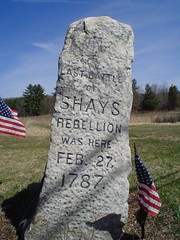
5769717047Shay's RebellionDaniel Shays led other farmers in this uprising against high state taxes, imprisonment for debt, and lack of paper money. (p. 93)41

Pages

Subscribe to CourseNotes RSS

Need Help?

We hope your visit has been a productive one. If you're having any problems, or would like to give some feedback, we'd love to hear from you.

For general help, questions, and suggestions, try our dedicated support forums.

If you need to contact the Course-Notes.Org web experience team, please use our contact form.

Need Notes?

While we strive to provide the most comprehensive notes for as many high school textbooks as possible, there are certainly going to be some that we miss. Drop us a note and let us know which textbooks you need. Be sure to include which edition of the textbook you are using! If we see enough demand, we'll do whatever we can to get those notes up on the site for you!