AP Notes, Outlines, Study Guides, Vocabulary, Practice Exams and more!

AP Us History Period 8 Flashcards

Period 8 key terms

Terms : Hide Images
6391160288Peace with HonorNixon administration plan to focus bringing North Vietnam to the negotiating table0
6391160289William Calley•charged with overseeing a massacre of more than 100 unarmed South Vietnamese civilians in 1968 in the village of My Lai •attracted wide public attention to the dehumanizing impact of the war on those who fought it, and the consequences of those actions on the Vietnamese people1
6391160290The Election of 1952•Eisenhower beats Stevenson. First republican to win election since Hoover-"I like Ike" campaign •Eisenhower-Nixon Ticket won in a landslide2
6391160291Dwight Eisenhower•leader of the Allied forces in Europe during WW2 and leader of troops in Africa and commander in D-Day invasion •Elected president and president during integration of Little Rock Central High School3
6391160292Iron Curtain•Term used by Churchill to describe the barrier that isolated the peoples of Eatern Europe after WWII4
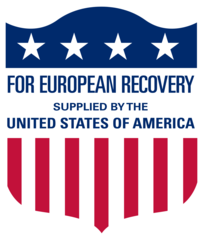
6391160293Marshall Plan•A plan that the US came up with to revive war-torn economies of Europe •This plan offered $13 billion in aid to western and Southern Europe.5
6391160294Henry Kissinger•Harvard professor whom Nixon appointed as his special assistant for national security affairs ~Introduced Real Politik6
6391160295Roe vs Wade•1973 Supreme Court decision that invalidated all laws prohibiting abortion during the "first trimester."7
6391160296NATO•1949 alliance of nations that agreed to band together in the event of war and to support and protect each nation involved •first alliance made when there wasn't a war going on8
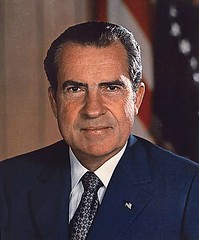
6391160297Richard Nixon•He was a committee member of the House of Representatives and Committee on Un-American Activities • he was Eisenhower's Vice-President Won the presidency in 19689
6391160298Nikita Khrushchev•Stalin's successor, wanted peaceful coexistence with the U.S. •Eisenhower agreed to a summit conference with him, France and Great Britain in Geneva, Switzerland in July, 1955 to discuss how peaceful coexistence could be achieved10
6391160299Energy Crisis•when Carter entered office inflation soared, due to toe the increases in energy prices by OPEC. In the summer of 1979, instability in the Middle East produced a major fuel shortage in the US, and OPEC announced a major price increase11
6391160300Pentagon Papers• 7,000-page top-secret United States government report on the history of the internal planning and policy-making process within the government itself concerning the Vietnam War12
6391160301Jimmy Carter•President who stressed human rights •Biggest success was the Camp David Accords13
6391160302Gerald Ford•president 1974-77, Nixon's Vice president, only person not voted into the White House, appointed vice president by Nixon •became president after Nixon resigned14
6391160303Ho Chi-Minh•He was a Vietnamese Communist revolutionary and statesman who was prime minister and president of the Democratic Republic of Vietnam15
6391160304Fidel Castro•Cuban revolutionary leader who overthrew the regime of the dictator Batista in 1959 and soon after established a Communist state16
6391160305U-2 Incident•an American plane was shot down over the Soviet Union. The U.S. denied the true purpose of the plane at first, but was forced to when the U.S.S.R. produced the living pilot and the largely intact plane to validate their claim of being spied on aerially •worsened East-West relations during the Cold War and was a great embarrassment for the United States17
6391160306Silent Majoritythat group of quiet honest hard-working middle class Americans who do their job, respect their country and support gov •Nixon wants their votes in 1968 and 197218
639116030738th Parallel•This location in Korea was the line crossed when the North Korean Army invaded the South in 1950 •The North Koreans cut their way easily to the heart of the South. However, General MacArthur, an American, was able to push the North Koreans back across this line with a surprise landing of UN forces at Inchon, near the border of the two Koreas19
6391160308Bay of Pigs•An invasion took place in April 1961 in this location in Cuba •With faulty intelligence, CIA operatives landed here and were immediately surrounded by unhappy Cubans. The invasion was a failure and an embarrassment for President Kennedy20
6391160309Berlin Airlift•This program delivered supplies to a German city, day after day, for 11 months. •the city had been cut off from Western contact by Joseph Stalin21
6391160310The Great Society•Lyndon Johnson's program for poverty relief, healthcare, civil rights, etc. during his presidency •Improved nation's moral and people's lives22
6391160311McCarthyism•This term came from the name of a Republican senator who started raising suspicion that communist besides Alger Hiss were still working in the State Department •this became like a witch hunt for communists--although many of the accusations were false23
6391160312Sputnik•This Russian satellite was launched in 1957- 1st satellite in space •When this happened, Americans were convinced that they had better get moving if they were to keep up with the Russian space programs24
6391160313Martin Luther King•United States charismatic civil rights leader and Baptist minister who campaigned against the segregation of Blacks (1929-1968)25
6391160314Alger HIss•This man, who had assisted President Franklin Roosevelt during the Yalta Conference, was accused of leaking secrets to the communists •He denied any connections to the communist party or any spy networks. Nonetheless, he was convicted and sent to prison for perjury; he had falsely testified under oath that he had never been a member of a communist party26
6391160315CIA•This organization was provided for in the National Security Act in 1947. In 1953, this organization staged a coup that led to the return of the corrupt and ruthless Shah of Iran •Similarly, this organization aided in the overthrow of a left-leaning government in Guatemala in 195427
6391160316WAACS•Women in the army and WAVEs were women in the navy •Most female work was clerical28
6391160317Truman Doctrine•In March 1947, Truman made this speech where he asked Congress for funding to assist Greece and Turkey in repelling a possible communist take-over •The president's speech explained that the United States had a duty to give financial assistance to free nations under communist threat. This policy passed its first test, as both Greece and Turkey successfully thwarted communism29
6391160318Vietnamization•This process was Nixon's plan to turn the war over to those who should be fighting it--the Vietnamese. This process involved the United States military instructing the South Vietnamese on how to go about fighting the war of their own •The number of U.S. troops in the country slowly decreased. Within the span of three years, the number of U.S. troops in Vietnam decreased from 500,000 in 1969 t just under 30,000 in 197230
6391160319John F. Kennedy•The Democratic nomination for the 1960 presidential election •he won with just enough delegates behind him for the nomination. He was the first Catholic presidential candidate since Al Smith in 192831
6391160320Camp David Accords•occurred when President Carter invited Egyptian President Anwar Sadat and Israeli Prime Minister Menachem Begin to meet at the presidential retreat in Maryland. Sadat and Begin discussed peace options while Carter acted as mediator •signed in September 1978. The treaty served as the first step toward peace in the Middle East since the founding of the states of Israel in 194832
6391160321Warsaw Pact•Joseph Stalin formed this alliance in 1955, which provided the military protection but at a cost •once a country was a member, it could never leave the alliance33
6391160322Robert F. Kennedy•american politician •attorney general during brothers presidency and was assassinated during his bid for the 1968 Democratic presidential nomination34
6391160323Rock 'N' Roll•"crossover" musical style that rose to dominance in the 1950s, merging rhythm and blues with white bluegrass and country •featuring a heavy beat and driving rhythm, rock 'n' roll music became a defining feature of 1950s35
6391160324OPEC•Cartel compromising Middle Eastern states and Venezuela first organized in 1960, it aimed to control access to and prices of oil, wresting power from Western oil companies and investors •In the process, it gradually strengthened the hand of non-Western powers on the world stage36
6391160325Baby Boom•A cohort of individuals born in the United States between 1946 and 1964, which was just after World War II in a time of relative peace and prosperity •These conditions allowed for better education and job opportunities, encouraging high rates of both marriage and fertility37
6391160326J. Robert Oppenhiemer•lead the Manhattan Project •the World War II effort to develop the first nuclear bomb. He was remembered as the "Father of the Atomic Bomb."38
6391160327NASA• US government agency in charge of the space program39
6391160328Levittown•In 1947, first mass-produced suburban neighborhood after WWII40
6391160329Domino Theory•Made by President Eisenhower •if S Vietnam fell under Communist Control, one nation after another in SE Asia would also fall, until Australia and New Zealand were in dire danger41
6391160330Beatniks•A group of rebellious writers and intellectuals •They advocated spontaneity, use of drugs, and rebellion against social standards42
6391160331Fair Deal•Truman's policy of social improvement, which included support for increasing welfare, slum clearance, and civil rights •Most of his Fair Deal bills were shot down, save his initiative to expand unemployment benefits43
6391160332GI Bill 1944provided for college or vocational education for returning World War II veterans (commonly referred to as GIs or G. I.s) as well as one-year of unemployment compensation •It also provided loans for returning veterans to buy homes and start businesses44
6391160333United Nations•An international organization whose stated aims are to facilitate co-operation in international law, international security, economic development, social progress and human rights issues •It was founded in 194545
6391160334Cold War•A constant nonviolent state of hostility between the Soviet Union and the US •began shortly after WWII with the rapid extension of Soviet influence over eastern Europe and North Korea; ended with the collapse of communism in Eastern Europe and the former Soviet Union46
6391160335World Bank•an international bank established in 1944 to help member nations reconstruct and develop, esp. by guaranteeing loans: a specialized agency of the United Nations47
6391160336Joseph Stalin•Soviet leader during WWII. He created consecutive five year plans to expand heavy industry. He tried to crush all opposition and ruled as the absolute dictator48
6391160337Mao Zedong•this mad led the Communist Party of China (CPC) against the Kuomintang (KMT) in the Chinese Civil War, allowing the establishment of the People's Republic of China (PRC) in 194949
6391160338Arms Race•competition between two or more parties for military supremacy •the most prominent instance of such a competition was the rapid development by the United States and the Soviet Union of more and better nuclear weapons during the Cold War50
6391160339Containment Policy•Refers to the foreign policy strategy of the U.S. in the early years of the Cold War •it attempted to stop what it called the domino effect of nations moving politically towards Soviet Union-based communism, rather than European-American-based democracy •america in the world •cold war51
6391160340Winston ChurchillPrime Minister of the United Kingdom during the Second World War.52
6391160341Rosenberg Case•Americans who were executed for passing nuclear weapons secrets to the USSR53
6391160342Supply-side economicsGive tax breaks to the wealthy and the money will "trickle down" to the middle class and poor54
6391160343Great MigrationDuring and after WWI, large numbers of African Americans move North for job opportunities55
639116034418th AmendmentBanned the production and sale of alcoholic beverages56
6391160345Social SecurityPart of FDR's New Deal. Provided retirement benefits for the elderly and disabled57
6391160346Emergency Banking ActNew Deal plan that restructured financial institutions and introduced the FDIC58
6391160347New FrontierName given to Kennedy's domestic policies that included aid to education, poverty relief, and civil rights59

AP US History: Cold War Flashcards

Terms : Hide Images
6913984641Teheran ConferenceDecember, 1943 - A meeting between FDR, Churchill and Stalin in Iran to discuss coordination of military efforts against Germany, they repeated the pledge made in the earlier Moscow Conference to create the United Nations after the war's conclusion to help ensure international peace.0
6913984642ContainmentAmerican policy of resisting further expansion of communism around the world1
6913984643Marshall PlanIntroduced by Secretary of State George G. Marshall in 1947, he proposed massive and systematic American economic aid to Europe to revitalize the European economies after WWII and help prevent the spread of Communism.2
6913984644National Security ActPassed in 1947 in response to perceived threats from the Soviet Union after WWII. It established the Department of Defense and the Central Intelligence Agency (CIA) and National Security Council.3
6913984645GI Billlaw passed in 1944 to help returning veterans buy homes and pay for higher educations4
6913984646"Fair Deal"Truman's extension of the New Deal that increased min wage, expanded Social Security, and constructed low-income housing5
6913984647Taft-Hartley Acta 1947 law giving the president power to halt major strikes by seeking a court injunction and permitting states to forbid requirements in labor contracts that force workers to join a union.6
6913984648Dixiecratssouthern Democrats who opposed Truman's position on civil rights. They caused a split in the Democratic party.7
6913984649Strom ThurmondHe was an American politician who served as governor of South Carolina and as a United States Senator. He also ran for the presidency of the United States in 1948 under the segregationist States Rights Democratic Party banner. This group of "Dixiecrats" broke off from the democrats after Truman's acceptance speech at the 1948 democratic convention in which he asked for an end to segregation8
6913984650Inchon LandingThe landing of UN troops, by General Douglas MacArthur, behind enemy lines at Inchon in Korea. In order to push back the North Korean troops.9
691398465138th Parallellatitudinal line that divided North and South Korea at approximatly the midpoint of the peninsula10
6913984652Douglas MacArthur(1880-1964), U.S. general. Commander of U.S. (later Allied) forces in the southwestern Pacific during World War II, he accepted Japan's surrender in 1945 and administered the ensuing Allied occupation. He was in charge of UN forces in Korea 1950-51, before being forced to relinquish command by President Truman.11
6913984653Yalta ConferenceFDR, Churchill and Stalin met at Yalta. Russia agreed to declare war on Japan after the surrender of Germany and in return FDR and Churchill promised the USSR concession in Manchuria and the territories that it had lost in the Russo-Japanese War12
6913984654Cold WarThe ideological struggle between communism (Soviet Union) and capitalism (United States) for world influence. The Soviet Union and the United States came to the brink of actual war during the Cuban missile crisis but never attacked one another.13
6913984655Iron CurtainWinston Churchill's term for the Cold War division between the Soviet-dominated East and the U.S.-dominated West.14
6913984656Truman DoctrinePresident Truman's policy of providing economic and military aid to any country threatened by communism or totalitarian ideology15
6913984657Berlin Blockade/AirliftIn 1948, Berlin was blocked off by the Soviet Union in order to strangle the Allied forces. In order to combat this, the United States began to airlift supplies into Berlin.16
6913984658HUACThe House Committee on Un-American Activities was an investigating committee which investigated what it considered un-American propaganda,17
6913984659Alger HissA former State Department official who was accused of being a Communist spy and was convicted of perjury. The case was prosecuted by Richard Nixon.18
6913984660Joseph McCarthy1950s; Wisconsin senator claimed to have list of communists in American gov't, but no credible evidence; took advantage of fears of communism post WWII to become incredibly influential; "McCarthyism" was the fearful accusation of any dissenters of being communists19
6913984661Julius & Ethel Rosenbergan engineer and his wife who were accused, tried, and executed in the early 1950s for running an espionage ring in New York City that gave atomic secrets to the Soviet Union; long considered unjustly accused to victims of the Red Scare, recent evidence suggests that Julius was indeed a Soviet agent.20
6913984662McCarran Internal Security Act1950 - Required Communists to register and prohibited them from working for the government. Truman described it as a long step toward totalitarianism. Was a response to the onset of the Korean war.21
6913984663Army-McCarthy Hearings1954 televised hearings on charges that Senator Joseph McCarthy was unfairly tarnishing the United States Army with charges of communist infiltration into the armed forces; hearings were the beginning of the end for McCarthy, whose bullying tactics were repeatedly demonstrated22
6913984664North Atlantic Treaty OrganizationIn 1949, the United States, Canada, and ten European nations formed this military mutual-defense pact. In 1955, the Soviet Union countered NATO with the formation of the Warsaw Pact, a military alliance among those nations within its own sphere of influence.23
6913984665Warsaw Pacttreaty signed in 1945 that formed an alliance of the Eastern European countries behind the Iron Curtain; USSR, Albania, Bulgaria, Czechoslovakia, East Germany, Hungary, Poland, and Romania24
6913984666NSC-68A National Security Council document, approved by President Truman in 1950, developed in response to the Soviet Union's growing influence and nuclear capability; it called for an increase in the US conventional and nuclear forces to carry out the policy of containment25
6913984667BrinkmanshipA 1956 term used by Secretary of State John Dulles to describe a policy of risking war in order to protect national interests26
6925479888DetenteArms Control, 1969-1979. Between the late 1960s and the late 1970s, there was a thawing of the ongoing Cold War between the United States and the Soviet Union. This 'thawing" took several forms, including increased discussion on arms control.27
6925622885Cuban Missile CrisisIn October 1962, the United States and the Soviet Union came close to nuclear war when President Kennedy insisted that Nikita Khrushchev (leader of the USSR) remove the 42 missiles he had secretly inserted in Cuba. The Soviets eventually did so, nuclear war was averted, and the crisis ended.28
6925626415Bay of Pigs InvasionIn April 1961, a group of Cuban exiles organized and supported by the U.S. Central Intelligence Agency landed on the southern coast of Cuba in an effort to overthrow Fidel Castro. When the invasion ended in disaster, President Kennedy took full responsibility for the failure.29

AP US History Period 5 Flashcards

From back of chapters 1-30 in Kaplan AP US History 2010

Terms : Hide Images
5832574169peculiar institution..., southern euphemism for slavery0
5832574170John C. Calhoun..., South Carolina Senator - advocate for state's rights, limited government, and nullification1
5832574171Harriet Tubman..., United States abolitionist born a slave on a plantation in Maryland and became a famous conductor on the Underground Railroad leading other slaves to freedom in the North (1820-1913)2
5832574173Fredrick Douglas..., former slave + abolitionist, stood up for his beliefs, fought for womens + blacks rights, runaway slave, newspaper-the north star3
5832574174Nat Turner's Rebellion...,slaves in Virginia, unsuccessful attempt to overthrow and kill planter families4
5832574175Declaration of Sentiments..., declared that all "people are created equal"; used the Declaration of Independence to argue for women's rights5
5832574176Underground Railroad..., abolitionists secret aid to escaping slaves6
5832574177James K. Polk..., president in March 1845. wanted to settle oregon boundary dispute with britain. wanted to aquire California. wanted to incorperate Texas into union.7
5832574178Wilmot Proviso..., Bill that would ban slavery in the territories acquired after the War with Mexico8
5832574181Harriet Beecher Stowe..., United States writer of a novel about slavery that advanced the abolitionists' cause (1811-1896)9
5832574182John Brown..., abolitionist who was hanged after leading an unsuccessful raid at Harper's Ferry, Virginia (1800-1858)10
5832574183apologists..., Christian thinkers who defended slavery and explained its "positive good" through Christian beliefs11
5832574184Free-soil party..., Formed in 1847 - 1848, dedicated to opposing slavery in newly acquired territories such as Oregon and ceded Mexican territory.12
5832574186Confederate States of America..., a republic formed in February of 1861 and composed of the eleven Southern states that seceded from the United States13
5832574187Gadsden Purchase..., purchase of land from mexico in 1853 that established the present U.S.-mexico boundary14
5832574188Fugitive Slave Law..., Enacted by Congress in 1793 and 1850, these laws provided for the return of escaped slaves to their owners. The North was lax about enforcing the 1793 law, with irritated the South no end. The 1850 law was tougher and was aimed at eliminating the underground railroad.15
5832574189The Compromise of 1850..., Slavery becomes outlawed in Washington D.C., California is admitted as a free state, and Utah and New Mexico will determine whether slavery is allowed through popular sovereignty. Also, the Fugitive Slave Law is passed.16
5832574190The Kansas-Nebraska Act..., 1854; sponsored by Senator Stephen Douglas, this would rip open the slavery debate; repealed the Missouri Compromise of 1820, and allowed settlers in those territories to determine if they would allow slavery within their boundaries.17
5832574191Dred Scott v. Sanford..., Supreme Court case that decided US Congress did not have the power to prohibit slavery in federal territories and slaves, as private property, could not be taken away without due process - basically slaves would remain slaves in non-slave states and slaves could not sue because they were not citizens18
5832574192Bleeding Kansas..., A sequence of violent events involving abolitionists and pro-Slavery elements that took place in Kansas-Nebraska Territory. The dispute further strained the relations of the North and South, making civil war imminent.19
5832574193Harper's Ferry..., John Brown's scheme to invade the South with armed slaves, backed by sponsoring, northern abolitionists; seized the federal arsenal; Brown and remnants were caught by Robert E. Lee and the US Marines; Brown was hanged20
5832574194popular sovereignty..., The doctrine that stated that the people of a territory had the right to decide their own laws by voting. In the Kansas-Nebraska Act, this would decide whether a territory allowed slavery.21
5832574195Robert E. Lee..., Confederate general who had opposed secession but did not believe the Union should be held together by force22
5832574196Ulysses S. Grant..., an American general and the eighteenth President of the United States (1869-1877). He achieved international fame as the leading Union general in the American Civil War.23
5832574197Abraham Lincoln..., 16th President of the United States saved the Union during the Civil War and emancipated the slaves; was assassinated by Booth (1809-1865)24
5832574198John Wilkes Booth..., was an American stage actor who, as part of a conspiracy plot, assassinated Abraham Lincoln, the 16th President of the United States, at Ford's Theatre in Washington, D.C. on April 14, 1865.25
5832574199Copperheads..., northern democrat who advocated making peace with the Confederacy during the Civil War26
5832574200New York Draft Riots..., July 1863 just after the Battle at Gettysburg. Mobs of Irish working-class men and women roamed the streets for four days until federal troops suppressed them. They loathed the idea of being drafted to fight a war on behalf of slaves who, once freed, would compete with them for jobs.27
5832574201Antietam..., the first major battle in the American Civil War to take place on Northern soil. It was the bloodiest single-day battle in American history, with almost 23,000 casualties. After this "win" for the North, Lincoln announced the Emancipation Proclamation28
5832574202Gettysburg..., a small town in southern Pennsylvania, The most violent battle of the American Civil War and is frequently cited as the war's turning point, fought from July 1 - July 3, 1863.29
5832574203Anaconda Plan..., Union war plan by Winfield Scott, called for blockade of southern coast, capture of Richmond, capture Mississippi R, and to take an army through heart of south30
5832574204Emancipation Proclamation..., Issued by Abraham Lincoln on September 22, 1862 it declared that all slaves in the confederate states would be free31
5832574205Thirteenth Amendment..., The constitutional amendment ratified after the Civil War that forbade slavery and involuntary servitude.32
5832574209Freedmen's Bureau..., 1865 - Agency set up to aid former slaves in adjusting themselves to freedom. It furnished food and clothing to needy blacks and helped them get jobs33
5832574210carpetbaggers..., northern whites who moved to the south and served as republican leaders during reconstruction34
5832574211ku klux klan..., a secret society of white Southerners in the United States35
5832574212redeemers..., Largely former slave owners who were the bitterest opponents of the Republican program in the South. Staged a major counterrevolution to "redeem" the south by taking back southern state governments. Their foundation rested on the idea of racism and white supremacy.36
5832574213reconstruction..., the period after the Civil War in the United States when the southern states were reorganized and reintegrated into the Union37
5832574214proclamation of amnesty and reconstruction..., (Dec. 1863) issued by Lincoln: offered full pardon to Southerners who would take oath of allegiance to the Union and acknowledge emancipation38
5832574215wade-davis billopposed 10% plan and called for more than 50%39
583257421610 percent plan..., It was a reconstruction plan that decreed that a state could be reintegrated into the union when 10 percent of voters in the presidential election of 1860 had taken an oath of allegiance to the United States and pledged to abide by emancipation. The next step would be erection of a state gov. and then purified regime. (Lincoln)40
5832574217civil rights bill of 1866..., first congressional attempt to guarantee black rights in the south, passed over johnson's veto41
5832574218fourteenth amendment..., made "all persons born or naturalized in the United States" citizens of the country42
5832574219military reconstruction act..., It divided the South into five military districts that were commanded by Union generals. It was passed in 1867. It ripped the power away from the president to be commander in chief and set up a system of Martial Law43
5832574220tenure of office act..., 1866 - enacted by radical congress - forbade president from removing civil officers without senatorial consent - was to prevent Johnson from removing a radical republican from his cabinet44
5832574221fifteenth amendment..., The right of citizens of the United States to vote shall not be denied or abridged by the United States or by any State on account of race, color, or previous condition of servitude.45
5832574222force acts..., the government banned the use of terror, force or bribery to prevent someone from voting because of their race. Other laws banned the KKK entirely and brought forth military help to enforce these laws.46
5832574223the compromise of 1877..., It withdrew federal soldiers from their remaining position in the South, enacted federal legislation that would spur industrialization in the South, appointed Democrats to patronage positions in the south, and appointed a Democrat to the president's cabinet.47
5832574224black codes..., Southern laws designed to restrict the rights of the newly freed black slaves48
5832574225sharecroppers..., people who rent a plot of land from another person, and farm it in exchange for a share of the crop49
5832588517Seneca Falls Convention..., a meeting drawing attention to the cause of women's rights in upstate New York, 1848. Women and men sympathetic to their cause called for equality under the law and suffrage for women.50

AP US History chapter 10 Flashcards

Terms : Hide Images
5550022279franchiseThe right to vote0
5550022280notablesWealthy, northern landlords, slave-owning planters and seaport merchants. Where able to dominate the political system in the new republic. "Those who own the country are the most fit persons to participate in the government of it.1
5550022281political machinesnick name of new political parties because they efficiently wove together the interests of diverse social and economic groups2
5550022282spoils systemThe practice of a successful political party giving public office to its supporters3
5550022283caucusA meeting of local party members to choose party officials or candidates for public office and to decide the platform.4
5550022284American SystemEconomic program advanced by Henry Clay that included support for a national bank, high tariffs, and internal improvements; emphasized strong role for federal government in the economy.5
5550022285internal improvementsThis included the construction of better roads and canals. It was a part of Clay's American System6
5550022286corrupt bargainA political scandal that arose when the Speaker of the House, Henry Clay, allegedly met with John Quincy Adams before the House election to break a deadlock. Adams was elected president against the popular vote and Clay was named Secretary of State.7
5550022287consolidated governmentIn 1824, Martin Van Buren likewise declared his allegiance to constitutional "doctrines of the Jefferson school" and his opposition to this idea of a powerful and potentially oppressive national administration. Now a member of the U.S. Senate, Van Buren helped to defeat most of Adams' proposed subsidies for roads and canals.8
5550022288Tariff of Abominations1828 - Also called Tariff of 1828, it raised the tariff on imported manufactured goods. The tariff protected the North but harmed the South; South said that the tariff was economically discriminatory and unconstitutional because it violated state's rights.9
5550022289nullificationa state attempting to declare federal laws unconsitutional if such laws were seen to overstep Congressional powers10
5550022290states' rightsthe idea that a state convention could declare a law to be void within the state's border11
5550022291Second Bank of the United StatesCongress had established the bank in 1816, giving it a 20 year charter, was privately managed and operated The purpose of the bank was to stabilize the nation's money supply. Went out of existence during Jackson's presidency.12
5550022293Trail of TearsForced westward journey of the Cherokees from land in Georgia to Oklahoma in 1838 under Jackson's Indian Removal Act on 1830. 3,000 died along the way.13
5550022294Indian Removal Act of 1830Passed by Congress under the Jackson administration; this act removed all Indians east of the Mississippi to an "Indian Territory" where they would be "permanently" housed.14
5550022295laissez-faireThe principle that the less government does, the better, particularly in reference to the economy.15
5550022296WhigsSecond national party, against Jackson16
5550022299Mayor of New York v. MilnState of New York could use its "police power" to inspect the health of arriving immigrants17
5550022301Panic of 1837The second major economic crisis o the U. S. , 1837-1843 When Jackson was president, many state banks received government money that had been withdrawn from the Bank of the U.S. These banks issued paper money and financed wild speculation, especially in federal lands. Jackson issued the Specie Circular to force the payment for federal lands with gold or silver. Many state banks collapsed as a result. A panic ensued (1837). Bank of the U.S. failed, cotton prices fell, businesses went bankrupt, and there was widespread unemployment and distress.18
5550022303ethnocultural politicsRefers to the fact that the political allegiance of many American voters was determined less by party policy than by their membership in a specific ethnic or religious group.19
5550022304Martin Van Buren(1837-1841) Advocated lower tariffs and free trade, and by doing so maintained support of the south for the Democratic party. He succeeded in setting up a system of bonds for the national debt. 8th President20
5554875786Worcester v georgiaSupreme Court Decision - Cherokee Indians were entitled to federal protection from the actions of state governments which would infringe on the tribe's sovereignty - Jackson ignored it21
5554904580whigsconservatives and popular with pro-Bank people and plantation owners. They mainly came from the National Republican Party, which was once largely Federalists. They took their name from the British political party that had opposed King George during the American Revolution. Their policies included support of industry, protective tariffs, and Clay's American System. They were generally upper class in origin. Included Clay and Webster22
5554917434working men partyRise of unions23
5554923510John tyler10th President (1841-1845) His opinions on all the important issues had been forcefully stated, and he had only been chosen to balance the Whig ticket with no expectation he would ever have power. He was in favor of state's rights, and a strict interpretation of the constitution, he opposed protective tariffs, a national bank and internal improvements at national expense.24
55549310012nd Great AwakeningSeries of religious revivals starting in 1801, based on methodism and baptism, stressed philosophy of salvation through good deeds and tolerance for protestants. Attracted women, African Americans,and Native Americans25
5554934079transcendentalismA philosophy pioneered by Ralph Waldo Emerson in the 1830's and 1840's, in which each person has direct communication with God and Nature, and there is no need for organized churches. It incorporated the ideas that mind goes beyond matter, intuition is valuable, that each soul is part of the Great Spirit, and each person is part of a reality where only the invisible is truly real. Promoted individualism, self-reliance, and freedom from social constraints, and emphasized emotions.26
5554950430American Lyceum movementsocial movement to spread education through lectures27
5554959979walden, civil disobedienceHenry David Thoreau,28
5554968599shakers1770's by "Mother" Ann Lee; Utopian group that splintered from the Quakers; believed that they & all other churches had grown too interested in this world & neglectful of their afterlives; prohibited marriage and sexual relationships; practiced celibacy29
5554971190oneida"Perfectionists"; John Humphrey Noyes; rejected traditional notions of family & marriage30
5554973036book of mormonJoseph Smith31
5554976425minstrel showsConsisted of white actors in blackface. Consisted of comedy routines, dances, and instrumental solos. While today this is seen as racist, it does speak to the profound effect African American music had on American music32
5554980046Liberty partyA former political party in the United States; formed in 1839 to oppose the practice of slavery; merged with the Free Soil Party in 184833
5554982302gag rule1835 law passed by Southern congress which made it illegal to talk of abolition or anti-slavery arguments in Congress34
5554985112declaration of sentimentsdeclared that all "people are created equal"; used the Declaration of Independence to argue for women's rights35
5554987979underground railroadA system that helped enslaved African Americans follow a network of escape routes out of the South to freedom in the North36
5554989885Seneca falls(1848) the first national women's rights convention at which the Declaration of Sentiments was written37
5555035156walt whitmanLeaves of Grass38
5555038654Margaret fullerWoman in the Nineteenth Century, 184539
5555091771brigham youngled the Mormons to Utah40

AP US History Period 5 (1844-1877)--Barron Flashcards

Terms : Hide Images
8185108025Popular SovereigntyNotion that the sovereign people of a given territory should decide whether to allow slavery. Seemingly a compromise, it was largely opposed by Northern abolitionists who feared it would promote the spread of slavery to the territories.0
8185108026Fugitive Slave LawPassed as part of the Compromise of 1850, it set high penalties for anyone who aided escaped slaves and compelled all law enforcement officers to participate in retrieving runaways. Strengthened the antislavery cause in the North.1
8185108027Uncle Tom's CabinHarriet Beecher Stowe's widely read novel that dramatized the horrors of slavery. It heightened Northern support for abolitions and escalated the sectional conflict.2
8185108028New York Draft RiotsUprisings during the Civil War (1863), mostly of working-class Irish-Americans, in protest of the draft. Rioters were particularly incensed by the ability of the rich to hire substitutes or purchase exemptions.3
8185108029Emancipation Proclamation1863. Declared all slaves in rebelling states to be free but did not affect slavery in non-rebelling Border States. The Proclamation closed the door on possible compromise with the South and encouraged thousands of Southern slaves to flee to Union lines.4
8185108030Sherman's March to the Sea1864-1865. Union General William Tecumseh Sherman's destructive march through Georgia. An early instance of "total war", purposely targeting infrastructure and civilian property to diminish morale and undercut the Confederate War effort.5
8185108031Freedmans' Bureau1865-1872. Created to aid newly emancipated slaves by providing food, clothing, medical care, education, and legal support. Its achievements were never and depended largely on the quality of local administrators.6
8185108032Black Codes1865-1866. Laws passed throughout the South to restrict the rights of emancipated blacks, particularly with respect to negotiating labor contracts. Increased Norhterners' criticisms of President Andrew Johnson's lenient Reconstruction policies.7
8185108033KKK (Ku Klux Klan)An extremist, paramilitary, right-wing secret society founded in the mid-nineteenth century and revived during the 1920s. It was anti-foreign, anti-black, anti-Jewish, anti-pacifist, anti-Communist, anti-internationalist, anti-evolutionist, and anti-bootlegger, but pro-Anglo-Saxon and pro-Protestant. Its members, cloaked in sheets to conceal their identities, terrorized freedmen and sympathetic whites throughout the South after the Civil War. By the 1890s, Klan-style violence and Democratic legislation succeeded in virtually disenfranchising all Southern blacks.8
8185108034SharecroppingAn agricultural system that emerged after the Civil War in which black and white farmers rented land and residences from a plantation owner in exchange for giving him a certain "share" of each year's crop. Sharecropping was the dominant form of southern agriculture after the Civil War, and landowners manipulated this system to keep tenants in perpetual debt and unable to leave their plantation.9
8185108035Hayes-Tilden ElectionThe South conceded to let Hayes win the presidency because he agreed to pull out the troops.10
8185108036Compromise of 1850Admitted California as a free state, opened New Mexico and Utah to popular sovereignty, ended the slave trade (but not slavery itself) in Washington D.C., and introduced a more stringent fugitive slave law. Widely opposed in both the North and South, it did little to settle the escalating dispute over slavery.11
8185108037Kansas-Nebraska Act1854. Proposed that the issue of slavery be decided by popular sovereignty in the Kansas and Nebraska territories, thus revoking the 1820 Missouri Compromise. Introduced by Stephen Douglass in an effort to bring Nebraska into the Union and pave the way for a northern transcontinental railroad.12
8185108038Homestead Act1862. A federal law that gave settlers 160 acres of land for about $30 if they lived on it for five years and improved it by, for instance, building a house on it. The act helped make land accessible to hundreds of thousands of westward-moving settlers, but many people also found disappointment when their land was infertile or they saw speculators grabbing up the best land.13
8185108039Gettysburg Address1863. Abraham Lincoln's oft-quoted speech, delivered at the dedication of the cemetery at Gettysburg battlefield. In the address, Lincoln framed the war as a means to uphold the values of liberty.14
8185108040Appomattox Court HouseSite (city) where Robert E. Lee surrendered to Ulysses S. Grant in April 1865 after almost a year of brutal fighting throughout Virginia in the "Wilderness Campaign".15
818510804110% Reconstruction Plan1863. Introduced by President Lincoln, it proposed that a state be readmitted to the Union once 10 percent of its voters had pledged loyalty to the United States and promised to honor emancipation of slaves.16
818510804213th, 14th, 15th Amendments (Reconstruction Amendments)13th: Abolished slavery except for criminal punishment. 14th: Gave equal rights and government protection to all men. 15th: Secured suffrage for men.17
8185108043Radical RepublicansMost liberal part of the Republican Party. Desired political, economic, and social equality for African Americans. Wanted harsh punishment for the South after the Civil War. Became much more powerful after Andrew Johnson's impeachment.18
8185108044Election of LincolnAngered many people in the south who owned slaves because he wanted to end slavery. Won the election of 1860 but did not win the popular vote. South Carolina was happy at the outcome of the election because now it had a reason to secede.11 states in the south seceded and made themselves the Confederacy after the election.19
8185108045Abolitionist MovementThe movement to end the practice of slavery within the entirety of the United States.20
8185108046Anaconda PlanUnion war plan by Winfield Scott, called for blockade of southern coast, capture of Richmond, capture of the Mississippi River, and to take an army through heart of south.21
8185108047The American Party (The Know-Nothing Party)(1840s-1850s) This political party carried anti-immigrant sentiments against the Catholic and the Irish and saw some electoral success.22
8185108048Wilmot Proviso(1846) Proposal to prohibit slavery in any land acquired in the Mexican War. Never passed by both houses of Congress but helped fan the flame of sectional tension.23
8185108049Free-Soil Party(1848) Political party dedicated to stopping the expansion of slavery into new territories.24
8185108050Treaty of Guadalupe Hidalgo(1848) The Mexican government gave up the area of Texas and offered to sell the provinces of California and New Mexico as a result of its defeat in the Mexican-American War.25
8185108052Gadsden Purchase(1853) Agreement w/ Mexico that gave the US parts of present-day New Mexico & Arizona in exchange for $10 million; all but completed the continental expansion envisioned by those who believed in Manifest Destiny.26
8185108053Ostend Manifesto(1854) A declaration issued from Ostend, Belgium, by the U.S. ministers to England, France, and Spain, stating that the U.S. would be justified in seizing Cuba if Spain did not sell it to the U.S.27
8185108054Bleeding Kansas(1856-1861) A sequence of violent events involving abolitionists and pro-Slavery elements that took place in Kansas-Nebraska Territory. The dispute further strained the relations of the North and South, making civil war imminent.28
8185108055Dred Scott v. Sanford(1857) Supreme Court case that decided US Congress did not have the power to prohibit slavery in federal territories and slaves, as private property, could not be taken away without due process. Invalidated the Missouri Compromise.29
8185108056John Brown's Raid on Harper's Ferry(1859) John Brown led a raid on Harper's Ferry. He hoped to start a rebellion against slaveholders by arming enslaved African Americans. Brown was quickly defeated by citizens and federal troops. Brown became a villain to southerners who now thought northerners would use violence to end slavery as well as a martyr to some northerners who saw Brown as someone who sacrificed himself for the ideal of freedom for all.30
8185108057Election of 1860(1860) The United States presidential election of 1860 set the stage for the American Civil War. Hardly more than a month following Lincoln's victory came declarations of secession by South Carolina and other states, which were rejected as illegal by outgoing President James Buchanan and President-elect Lincoln.31
8185108059Civil Rights Act of 1867(1867) Banned discrimination in public accommodations, prohibited discrimination in any federally assisted program, outlawed discrimination in most employment; enlarged federal powers to protect voting rights and to speed school desegregation.32
8185108060Thirteenth Amendment(1865) The constitutional amendment ratified after the Civil War that forbade slavery and involuntary servitude.33
8185108061Fourteenth Amendment(1868) Provided equal protection of the law to freed slaves. Representation for any state that withheld voting from African Americans would be reduced.34
8185108062Fifteenth Amendment(1870) Prohibited any state from denying citizens the right to vote on the grounds of race, color, or previous condition of servitude.35
8185108063Compromise of 1877(1877) It withdrew federal soldiers from their remaining position in the South, enacted federal legislation that would spur industrialization in the South, appointed Democrats to patronage positions in the south, appointed a Democrat to the president's cabinet, and allowed Rutherford B. Hayes to win the election. Marked the end of reconstruction.36
8185108064Manifest DestinyA notion held by a nineteenth-century Americans that the United States was destined to rule the continent, from the Atlantic the Pacific.37
8185108065John Louis O'SullivanCoined the term Manifest Destiny in a newspaper article.38
8185108066Texas Annexation1845. Originally refused in 1837, as the U.S. Government believed that the annexation would lead to war with Mexico. Texas remained a sovereign nation. Annexed via a joint resolution through Congress, supported by President-elect Polk, and approved in 1845. Land from the Republic of Texas later became parts of NM, CO, OK, KS, and WY.39
8185108067"Fifty-Four Forty or Fight"The phrase used in James K Polk's 1844 presidential election dealing with the Oregon Territory. Polk's campaign used the phrase as a rallying cry for the United States to obtain all of Oregon Territory, including land claimed by the English, up through Northern Canada.40
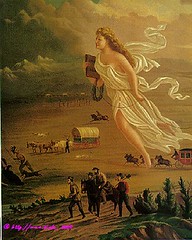
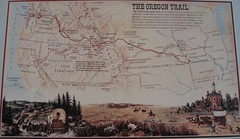
8185108068Oregon Trail2000 mile long path along which thousands of Americans journeyed to the Willamette Valley in the 1840's.41
8185108069Mountain MenFur trappers of the northwest who paved the way for continuous settlement of the great west42
8185108070California Gold Rush1849. Gold discovered in California attracted a rush of people all over the country and world to San Francisco; arrival of the Chinese; increased pressure on federal government to establish a stable government43
8185108071Mexican American War1846 - 1848. President Polk declared war on Mexico over the dispute of land in Texas. At the end, American ended up with 55% of Mexico's land, called the Mexican Cession.44
8185108072Republican Party1854. Established by anti-slavery Whigs and Democrats, "free-soilers" and reformers from the Northwest met and formed party in order to keep slavery out of the territories.45
8185108073Stephen A. DouglasSenator from Illinois who ran for president against Abraham Lincoln and was a leading voice in the debates over slavery and its expansion before the Civil War. Wrote the Kansas-Nebraska Act and the Freeport Doctrine.46
8185108075Abraham Lincoln16th President of the United States saved the Union during the Civil War and emancipated the slaves; was assassinated by Booth (1809-1865)47
8185108076secessionFormal withdrawal of states or regions from a nation48
8185108077habeas corpusPetition requiring law enforcement officers to present detained individuals before the court to examine the legality of the arrest. Protects individuals from arbitrary state action. Suspended by Lincoln during the Civil War.49
8185108078sectionalismTerm used to describe the growing differences between the regions of the United States, especially the North and South, leading up to the Civil War.50
8185108079Robert E. LeeConfederate general who had opposed secession but did not believe the Union should be held together by force. Military genius whose aggressiveness made him a fearsome opponent throughout the Civil War.51
8185108080Fort SumterFederal fort in the harbor of Charleston, South Carolina; the confederate attack on the fort marked the start of the Civil War.52
8185108081Battle of AntietamA battle near a sluggish little creek, it proved to be the bloodiest single day battle in American History with over 26,000 lives lost in that single day. Prevented an Confederate invasion of Maryland.53
8185108082Battle of VicksburgGrant besieged the city from May 18 to July 4, 1863, until it surrendered, yielding command of the Mississippi River to the Union effectively splitting the South in two.54
8185108083Battle of GettysburgA large battle in the American Civil War, took place in southern Pennsylvania from July 1 to July 3, 1863. Union General George G. Meade led an army of about 90,000 men to victory against General Robert E. Lee's Confederate army of about 75,000. Proved to be a significant turning point in the war because of the loss of about 1/3 of Lee's army.55
8185108084Ulysses S. GrantAn American general and the eighteenth President of the United States (1869-1877). He achieved international fame as the leading Union general in the American Civil War.56
8185108085William Tecumseh ShermanUnion General who destroyed South during "march to the sea" from Atlanta to Savannah; example of total war and "scorched-earth" military tactics.57
8185108086Thomas "Stonewall" JacksonHe was a confederate general who was known for his fearlessness in leading rapid marches, bold flanking movements, and furious assaults. He earned his nickname at the battle of first bull run for standing courageously against union fire. During the battle of Chancellorsville his own men accidently mortally wounded him.58
8185108087martial lawRule by the army instead of the elected government (such as in the South as a result of the Military Reconstruction Act)59
8185108088emergency powersWide-ranging powers a president may exercise during times of crisis or those powers permitted the president by Congress for a limited time.60
8185108089Radical ReconstructionName given to the period when Congress, which was controlled by Republicans, took over Reconstruction efforts. When southerners balked at some of the more moderate reforms proposed, more radical republicans started to gain more power and pass more legislation.61
8185108090Military Reconstruction Act1867. Divided the South into five districts and placed them under military rule; required Southern States to ratify the 14th amendment; guaranteed freedmen the right to vote in convention to write new state constitutions62
8185108091Freedmen's Bureau1865. Organization (turned government agency) run by the army to care for and protect southern Blacks after the Civil War, sometimes including settling them on confiscated confederate lands.63
8185108092Election of 1876Ended reconstruction because neither candidate had an electoral majority. The Democrat Sam Tilden loses the election to Rutherford B Hayes, Republican, was elected, and then ended reconstruction as he secretly promised.64
8185108093carpetbaggerA northerner who went to the South immediately after the Civil War; especially one who tried to gain political advantage or other advantages from the disorganized situation in southern states (as viewed from the southern perspective).65
8185108094scalawagA derogatory term for southerners who were working with the North to buy up land from desperate southerners; sometimes used in a general way by southerners criticizing other southerners who had northern sympathies.66
8185108098Cotton KingdomAreas in the south where cotton farming developed because of the high demand for cotton and soon dominated the economy.67
8185108101James K. PolkDemocratic president after John Tyler who was best known for policies that promoted Manifest Destiny and expansionism.68
8185108105John C. CalhounSenator who argued for states' rights for the South. He asked for slavery to be left alone, slaves to be returned to the South, and state balance to be kept intact.69
8185108106William H. SewardCongressman of the "Young Guard" who fiercely opposed slavery and argued that Americans should follow a "higher law" (God's law) over the Constitution when it came to the issue of slavery.70
8185108107Henry ClayKnown as the "Great Compromiser"; senator who pushed for compromise between the North and South and worked with Stephen Douglas; major figure in the passing of both the Missouri Compromise (1820) and Compromise of 1850.71
8185108109"Fire Eaters"Refers to a group of extremist pro-slavery politicians from the South who urged the cessation of southern states.72
8185108110Charles SumnerSenator who spoke out for black freedom and racial equality post-Civil War. Publicly beaten by Preston Brooks for speaking out against the violence in Kansas, an event that marked increasing tensions between the North and South prior to the Civil War.73
8185108111Roger TaneyChief Justice of the Supreme Court who wrote an opinion in the 1857 Dred Scott case that declared the Missouri compromise unconstitutional, thereby legally preventing Congress from prohibiting slavery in new territories (and made Popular Sovereignty illegal).74
8185108112Jefferson DavisPresident of the Confederate States of America prior to and during the Civil War.75
8185108113Pottawatomie Creek MassacreIn reaction to the sacking of Lawrence (Kansas) by pro-slavery forces, John Brown and a band of abolitionist settlers killed five pro-slavery settlers north of Pottawatomie Creek in Franklin County, Kansas.76
8185108114Lecompton ConstitutionSupported the existence of slavery in the proposed state and protected rights of slaveholders. It was rejected by Kansas, making Kansas an eventual free state (and was a factor in spurring violence there).77
8185108117Border StatesSouthern states that never chose secession and joined the Confederacy during the Civil War (Missouri, Kentucky, Maryland, and Deleware).78
8185108118Andrew Johnson17th President of the United States, A Southerner form Tennessee, as V.P. when Lincoln was killed, he became president. He opposed radical Republicans who passed Reconstruction Acts over his veto. The first U.S. president to be impeached, he survived the Senate removal by only one vote.79
8185108122CopperheadsNickname for Northerners who were pro-Confederacy.80
8185108123First Battle of Bull Run (Battle of Manassas)(July 1861) first major conflict of the Civil War. Southern victory led to overconfidence.81
8185108124Thaddeus StevensRadical Republican congressman from Pennsylvania who defended runaway slaves in court for free and insisted on being buried in a black cemetery; hated white Southerners. Leading figure on the Joint Committee on Reconstruction and for the social equality of African Americans.82
8185108125Wade-Davis BillBill pushed by Congress in 1864 that required 50 percent of a state's voters take the oath of allegiance and demanded stronger safe-guards for emancipation than proposed in Lincoln's 10 percent plan. Pocket-vetoed by Lincoln.83
818510812610 Percent PlanLincoln's plan for re-admitting the Southern states into the Union: a state could be reintegrated into the Union when 10 percent of its voters in the presidential election of 1860 had taken an oath of allegiance to the United States and pledged to abide by emancipation.84
8185108127Civil Rights Act (1866)A Reconstruction bill which gave which granted citizenship to African Americans and weakened the poliferation of Black Codes in the South.85
8185108128RedeemersLargely former slave owners who were the bitterest opponents of the Republican program in the South. Staged a major counterrevolution to "redeem" the south by taking back southern state governments. Their foundation rested on the idea of racism and white supremacy.86
8185108129Ku Klux KlanThe "Invisible Empire of the South", founded in Tennessee in 1866, made up of embittered white Southerners who resented the success and ability of Black legislators. They would terrorize, mutilate, and even murder "upstart" blacks or their supporters to "keep them in their place".87
8185108130"Seward's Folly"Refers to the United States' Secretary of State William Seward's decision to purchase the Alaskan territory from Russia in 1867. At the time, Seward's decision to buy the land was regarded as a terrible one by many critics in the United States.88

AP US History Period 8 (1945-1980) Mr. Pyle Flashcards

Terms : Hide Images
9830934869Cold WarA state of political and military tension after World War II between powers in the Western Bloc and powers in the Eastern Bloc. Historians do not fully agree on the dates, but 1947-91 is common.0
9830934870authoritarianA form of government characterized by strong central power and limited political freedoms.1
9830934871containmenta foreign policy of collective security, in which economic security was recognized as a major component2
9830934872communistA political system focused on creating a socioeconomic order structured upon the common ownership of the means of production and the absence of social classes, money, and the state. Purists of the communist movement also advocated for a violent overthrow of the upper class by the lower classes in order to create such a society.3
9830934873free-market economyA system in which the prices for goods and services are set freely by consent between vendors and consumers, in which the laws and forces of supply and demand are free from any intervention by a government, price-setting monopoly, or other authority.4
9830934874collective securityA type of coalition building strategy in which a group of nations agrees not to attack each other and to defend each other against an attack from one of the others, if such an attack is made.5
9830934875DétenteA French term often used in reference to the general easing of the geo-political tensions between the Soviet Union and the United States which began in 1969, as a foreign policy of U.S. presidents Richard Nixon and Gerald Ford called détente; a "thawing out" or "un-freezing" at a period roughly in the middle of the Cold War.6
9830934876nuclearU.S. policy following World War II, was one of maintaining a strong military and building up a ______________ arsenal.7
9830934877ICBMInter-continental Ballistic Missile - a ballistic missile with a minimum range of more than 5,500 kilometers (3,400 mi) primarily designed for nuclear weapons delivery (delivering one or more nuclear warheads).8
9830934878civil libertiesDuring the quest to stop the spread of communism in the American ____________ were under threat.9
9830934879SALT TalksTwo rounds of bilateral conferences and corresponding international treaties involving the United States and the Soviet Union—the Cold War superpowers—on the issue of armament control. The two rounds of talks and agreements were SALT I and SALT II.10
9830934880McCarthyHis investigative tactics found support among many Americans because there was widespread fear of communist infiltration in the United States.11
9830934881Tet OffensiveOne of the largest military campaigns of the Vietnam War, launched on January 30, 1968, by forces of the Viet Cong and North Vietnamese People's Army of Vietnam against the forces of the South Vietnamese Army of the Republic of Vietnam, the United States, and their allies. A campaign of surprise attacks against military and civilian commands and control centers throughout South Vietnam12
9830934882Students for a Democratic Society (SDS)A student activist movement in the United States that was one of the main representations of the New Left. The organization developed and expanded rapidly in the mid-1960s before dissolving at its last convention in 1969.13
9830934883Martin Luther King, Jr.An American Baptist minister, activist, humanitarian, and leader in the African-American Civil Rights Movement.14
9830934884communistsJoseph McCarthy used various methods to root out possible __________ within the United States15
9830934885nonviolent resistanceThe practice of achieving goals such as social change through symbolic protests, civil disobedience, economic or political noncooperation, satyagraha, or other methods, without using violence. Common examples: Boycotts, Sit-ins16
9830934886boycottTo withdraw from commercial or social relations with (a country, organization, or person) as a punishment or protest.17
9830934887WWIThe political climate during McCarthy's era had the most in common with the attacks on radicals and immigrants following _________.18
9830934888sit-InA form of direct action that involves one or more people occupying an area for a protest, often to promote political, social, or economic change.19
9830934889Executive Order 9981Issued by President Harry S. Truman on July 26, 1948. It abolished racial discrimination in the United States Armed Forces and eventually led to the end of segregation in the services.20
9830934890Brown v. Board of Education of Topeka, Kansas (1954, Warren)Unanimous decision declaring the "separate but equal" clause of the Plessy v. Ferguson ruling unconstitutional.21
9830934891Civil Rights Act of 1964A landmark piece of civil rights legislation in the United States[5] that outlawed discrimination based on race, color, religion, sex, or national origin.22
9830934892The Great SocietyA set of domestic programs in the United States launched by Democratic President Lyndon B. Johnson in 1964-65. The main goal was the elimination of poverty and racial injustice.23
9830934893containingThe Truman Doctrine and the Marshall Plan were similar in that they provided economic aid while ____________ Soviet influence.24
9830934894The Baby Boom(1946-1964) The period of time when the number of annual births exceeded 2 per 100 women (or approximately 1% of the total population size) in the United States.25
9830934895social mobilityThe movement of individuals, families, households, or other categories of people within or between layers or tiers in an open system of social stratification.26
9830934896suburbA residential area or a mixed use area, either existing as part of a city or urban area or as a separate residential community within commuting distance of a city.27
9830934897Sun BeltA region of the United States generally considered to stretch across the Southeast and Southwest (the geographic southern United States). Another rough boundary of the region is the area south of the 36th parallel, north latitude.28
9830934898CountercultureA subculture whose values and norms of behavior differ substantially from those of mainstream society, often in opposition to mainstream cultural mores. Such opinions became more visible and popular, especially in the 1960s and early 1970s in response to the Vietnam War.29
9830934899AsiaThe U.S. applied the policy of containment in _________ as well as in Europe.30
9830934900Gideon v. Wainwright (1963)Extends to the defendant the right of counsel in all state and federal criminal trials regardless of their ability to pay.31
9830934901Escobedo v. Illinois (1964)Ruled that a defendant must be allowed access to a lawyer before questioning by police.32
9830934902Miranda v. Arizona (1966)The court ruled that those subjected to in-custody interrogation be advised of their constitutional right to an attorney and their right to remain silent.33
9830934903insubordination to TrumanWhy was Douglas MacArthur removed from command during the Korean War?34
9830934904Roe v. Wade (1973)The court legalized abortion by ruling that state laws could not restrict it during the first three months of pregnancy. Based on 4th Amendment rights of a person to be secure in their persons.35
9830934905Dwight D. EisenhowerA World War II hero and former supreme commander of NATO who became U.S. president in 1953 after easily defeating Democratic opponent Adlai E. Stevenson.36
9830934906DixiecratsConservative southern Democrats who objected to President Truman's strong push for civil-rights legislation. Southern Democrats who broke from the party in 1948 over the issue of civil rights and ran a presidential ticket as the States' Rights Democrats with J. Strom Thurmond of South Carolina as a canidate.37
9830934907Truman DoctrinePresident Truman's policy of providing economic and military aid to any country threatened by communism or totalitarian ideology; mainly helped Greece and Turkey.38
9830934908Marshall PlanA plan that the US came up with to revive war-torn economies of Europe and encourage loyalty and friendliness to the United States and democracy (instead of influence from the Soviet Union). This plan offered $13 billion in aid to western and Southern Europe.39
9830934909Joseph McCarthyThe senator of Wisconsin; he charged 205 State Department employees, and accused them of being communist party members, but they were never proven. Eventually he came across as a bully, and his popularity plunged.40
9830934910Soviet UnionA Communist nation, consisting of Russia and 14 other states, that existed from 1922 to 1991.41
9830934911ContainmentA U.S. foreign policy adopted by President Harry Truman in the late 1940s, in which the United States tried to stop the spread of communism by creating alliances and helping weak countries to resist Soviet advances.42
9830934912NSC-68A National Security Council document, approved by President Truman in 1950, developed in response to the Soviet Union's growing influence and nuclear capability; it called for an increase in the US conventional and nuclear forces to carry out the policy of containment.43
9830934913Domino TheoryA theory that if one nation comes under Communist control, then neighboring nations will also come under Communist control.44
9830934914Martin Luther King, Jr.U.S. Baptist minister and civil rights leader. A noted orator, he opposed discrimination against blacks by organizing nonviolent resistance and peaceful mass demonstrations. He was assassinated in Memphis, Tennessee. Nobel Peace Prize (1964)45
9830934915Malcolm XMinister of the Nation of Islam, urged blacks to claim their rights by any means necessary, more radical than other civil rights leaders of the time.46
9830934916Little Rock NineIn September 1957 the school board in Little rock, Arkansas, won a court order to admit nine African American students to Central High a school with 2,000 white students. The governor ordered troops from Arkansas National Guard to prevent the nine from entering the school. The next day as the National Guard troops surrounded the school, an angry white mob joined the troops to protest the integration plan and to intimidate the AA students trying to register. The mob violence pushed Eisenhower's patience to the breaking point. He immediately ordered the US Army to send troops to Little Rock to protect and escort them for the full school year.47
9830934917Voting Rights Act of 1965A law designed to help end formal and informal barriers to African American suffrage. Under the law, hundreds of thousands of African Americans were registered and the number of African American elected officials increased dramatically.48
9830934918SputnikFirst artificial Earth satellite, it was launched by Moscow in 1957 and sparked U.S. fears of Soviet dominance in technology and outer space. It led to the creation of NASA and the space race.49
9830934919John F. Kennedy35th President of the United States 35th President of the United States; only president to have won a Pulitzer Prize; events during his administration include the Bay of Pigs Invasion, the Cuban Missile Crisis, the building of the Berlin Wall, the Space Race, the African American Civil Rights Movement and early events of the Vietnam War; assassinated in Dallas, TX in 196350
9830934920Election of 1960Brought about the era of political television. Between Kennedy and Nixon. Issues centered around the Cold War and economy. Kennedy argued that the nation faces serious threats from the soviets. Nixon countered that the US was on the right track under the current administration. Kennedy won by a narrow margin.51
9830934921Kent State ShootingsIncident in which National Guard troops fired at a group of students during an antiwar protest at Kent State University in Ohio, killing four people.52
9830934922Golf of Tonkin ResolutionBill passed in 1964 that gave President Johnson authority to take "all necessary measures to repel any armed attack against forces of the U.S." after an alleged attack on a naval vessel off the coast of Vietnam. It gave Johnson the ability to send over a large amount of combat troops to Vietnam.53
9830934923War Powers Act1973. A resolution of Congress that stated the President can only send troops into action abroad by authorization of Congress or if America is already under attack or serious threat.54
9830934924Richard NixonElected President in 1968 and 1972 representing the Republican party. He was responsible for getting the United States out of the Vietnam War by using "Vietnamization", which was the withdrawal of 540,000 troops from South Vietnam for an extended period. He was responsible for the Nixon Doctrine. Was the first President to ever resign, due to the Watergate scandal.55
9830934925New ConservatismThis mostly republican political movement started as a reaction to the New Deal policies of the 1930's. Its goal was to reduce the role of government.56
9830934926Iron CurtainA term popularized by British Prime Minister Winston Churchill to describe the Soviet Union's policy of isolation during the Cold War. The barrier isolated Eastern Europe from the rest of the world.57
9830934927Fair DealAn economic extension of the New Deal proposed by Harry Truman that called for higher minimum wage, housing and full employment. It led only to the Housing Act of 1949 and the Social Security Act of 1950 due to opposition in congress.58
9830934928Rosenberg TrialThe controversial 1951 trial of two Americans, Ethel and Julius Rosenberg, charged with passing atomic secrets to the Soviet Union; the two were sentenced to death and executed in 1953, making them the only American civilians to be put to death for spying during the Cold War.59
9830934929RollbackA strategy that called for liberating countries that were under Soviet dominion.60
9830934930House Un-American Activities CommitteeThe House of Representatives established the Committee on Un-American Activities, popularly known as "HUAC," in order to investigate "subversion." Represented the political group associated with McCarthy's anti-communism.61
9830934931Post WWIIIn reshaping the role of the U.S. in global affairs, the U.S. became the political and economic leader of the Western world.62
9830934932Interstate ActThe largest public works project in the US history in acted during the Eisenhower administration it was designed for military and economic purposes.63
9830934933Suez CrisisNasser took over the Suez Canal to show separation of Egypt from the West, but Israel, the British, Iraq, and France were all against Nasser's action. The U.S. stepped in before too much serious fighting began.64
9830934934political and economic resistance to the spread of Soviet communismWhich broad U.S. policy goal of the mid-twentieth century was supported by George C. Marshall?65
9830934935Massive RetaliationThe "new look" defense policy of the Eisenhower administration of the 1950's was to threaten "massive retaliation" with nuclear weapons in response to any act of aggression by a potential enemy.66
9830934936U-2 IncidentThe incident when an American U-2 spy plane was shot down over the Soviet Union. The U.S. denied the true purpose of the plane at first, but was forced to when the U.S.S.R. produced the living pilot and the largely intact plane to validate their claim of being spied on aerially. The incident worsened East-West relations during the Cold War and was a great embarrassment for the United States.67
9830934937LevvitownPost-WWII Suburban areas that were practically factory made and then put together which each house look the same.68
9830934938Operation WetbackProgram which apprehended and returned some one million illegal immigrants to Mexico - end of the Braceros program started during WWII.69
9830934939Affluent SocietyTerm used by economist John Kenneth Galbraith to describe the American economy in the 1950s, during which time many Americans joined the middle class and became enraptured with appliances and homes in the suburbs.70
9830934940Mortgages were at low rates, government-insured, and tax deductible.The main reason for the dramatic increase in personal ownership of homes after World War II was71
9830934941BeatsYoung people, many of whom were writers and artists, who discussed their dissatisfaction with the American society of the 1950s.72
9830934942HippiesMembers of the youthful counterculture that dominated many college campuses in the 1960s; rather than promoting a political agenda, they challenged conventional sexual standards, rejected traditional economic values, and encouraged the use of drugs.73
9830934943Betty FriedenAuthor of The Feminine Mystique (1963) she spoke out against women seeking fulfillment solely as wives and mothers and wanted women to "establish goals that will permit them to find their own identity."74
9830934944William LevittHelped the expansion of the American suburbs by D. introducing mass-produced housing developments75
9830934945Warren CourtThe Supreme Court during the period when Earl Warren was chief justice, noted for its activism in the areas of civil rights and free speech.76
9830934946CORECongress of Racial Equality, and organization founded in 1942 that worked for black civil rights.77
9830934947NAACPNational Association for the Advancement of Colored People, founded in 1909 to abolish segregation and discrimination, to oppose racism and to gain civil rights for African Americans, got Supreme Court to declare grandfather clause unconstitutional.78
9830934948consumerismThe baby boom generation spurred ___________ as manufacturers produced age-specific products for "boomers."79
9830934949SCLCThe Southern Christian Leadership Conference is an African-American civil rights organization. SCLC, which is closely associated with its first president, Dr. Martin Luther King, Jr., had a large role in the American Civil Rights Movement.80
9830934950Freedom rides1961 event organized by CORE and SNCC in which an interracial group of civil rights activists tested southern states' compliance to the Supreme Court ban of segregation on interstate buses.81
9830934951SNCC(Student Non-Violent Coordinating Committee) a group established in 1960 to promote and use non-violent means to protest racial discrimination; they were the ones primarily responsible for creating the sit-in movement.82
9830934952March on WashingtonIn August 1963, civil rights leaders organized a massive rally in Washington to urge passage of President Kennedy's civil rights bill. The high point came when MLK Jr., gave his "I Have a Dream" speech to more than 200,000 marchers in front of the Lincoln Memorial.83
9830934953Black PowerA slogan used to reflect solidarity and racial consciousness, used by Malcolm X. It meant that equality could not be given, but had to be seized by a powerful, organized Black community.84
9830934954traditionalAs the baby boom generation reached late adolescence in the early 1960s, they tended to challenge the ____________ views and values of the older generation.85
9830934955Black PanthersA black political organization that was against peaceful protest and for violence if needed. The organization marked a shift in policy of the black movement, favoring militant ideals rather than peaceful protest.86
9830934956Cesar ChavezNon-violent leader of the United Farm Workers from 1963-1970. Organized laborers in California and in the Southwest to strike against fruit and vegetable growers. Unionized Mexican-American farm workers.87
9830934957Elvis Presley1950s; a symbol of the rock-and-roll movement of the 50s when teenagers began to form their own subculture, dismaying to conservative parents; created a youth culture that ridiculed phony and pretentious middle-class Americans, celebrated uninhibited sexuality and spontaneity; foreshadowed the coming counterculture of the 1960s.88
9830934958baby boomThe ______________ generation was sometimes referred to as a "pig in a python" because society had to adjust to baby boomers as they passed through various life stages89
9830934959Equal Rights AmendmentA constitutional amendment originally introduced in Congress in 1923 and passed by Congress in 1972, stating that "equality of rights under the law shall not be denied or abridged by the United States or by any state on account of sex." Despite public support, the amendment failed to acquire the necessary support from three-fourths of the state legislatures.90
9830934960Silent SpringA book written (Rachel Carson) to voice the concerns of environmentalists. Launched the environmentalist movement by pointing out the effects of civilization development.91
9830934961Berlin Airliftthe delivery of goods and necessities after a Soviet blockade of West Berlin92

AP US History Period 7 (1890-1945)-Mahan Flashcards

Terms : Hide Images
8827414950Progressive EraA period of widespread social activism and political reform across the United States, from the 1890s to 1920s.0
8827414951ProhibitionA nationwide constitutional ban on the production, importation, transportation and sale of alcoholic beverages that remained in place from 1920 to 1933.1
8827414952Women's suffrageThe women's right to vote, granted by the 19th amendment to the U.S. Constitution (1920).2
8827414953preservationistsThose who attempt to maintain in their present condition areas of the Earth that are so far untouched by humans.3
8827414954conservationistsThose who advocate for the sustainable use and management of natural resources including wildlife, water, air, and earth deposits, both -- renewable and non-renewable.4
8827414955Welfare StateA system whereby the government undertakes to protect the health and well-being of its citizens, especially those in financial or social need, by means of grants, pensions, and other benefits. The foundations for the modern welfare state in the US were laid by the New Deal programs of President Franklin D. Roosevelt.5
8827414958The Great MigrationThe movement of 6 million African-Americans out of the rural Southern United States to the urban Northeast, Midwest, and West that occurred between 1910 and 1970.6
8827414959imperialistA policy of extending a country's power and influence through diplomacy or military force.7
8827414960isolationismA category of foreign policies institutionalized by leaders who asserted that their nations' best interests were best served by keeping the affairs of other countries at a distance.8
8827414961Spanish-American WarA conflict fought between Spain and the United States in 1898. Hostilities began in the aftermath of sinking of the USS Maine in Havana harbor leading to American intervention in the Cuban War of Independence.9
8827414962Treaty of VersaillesOne of the peace treaties at the end of World War I. It ended the state of war between Germany and the Allied Powers. Signed on 28 June 1919, exactly five years after the assassination of Archduke Franz Ferdinand.10
8827414963League of NationsAn intergovernmental organization founded on 10 January 1920 as a result of the Paris Peace Conference that ended the First World War. It lacked an armed force to enforce policy and was not joined by the United States.11
8827414974americanizationThe process of assimilating American character, manner, ideals, culture, and so on.12
8827414975sphere of influenceThe territory of weaker states where a powerful state exercises the dominant control.13
8827414979progressiveIn politics, one who believes in continuing progress, improvement, or reform.14
8827414981direct primaryIn politics, the nomination of a party's candidates for office through a special election of that party's voters.15
8827414982initiativeIn politics, the procedure whereby voters can, through petition, present proposed legislation directly to the electorate.16
8827414983referendumThe submission of a law, proposed or already in effect, to a direct vote of the electorate.17
8827414984recallIn politics, a procedure for removing an official from office through popular election or other means.18
8827414987self-determinationIn politics, the right of a people (usually based on ethnicity) to shape its own national identity and form a government, without outside coercion of influence.19
8827414988graduated income taxA tax on income in which the taxation rates are progressively higher for those whit higher income.20
8827414993Muller v. Oregon (1908)First case to use the "Brandeis brief"; recognized a 10-hour work day for women laundry workers on the grounds of health and community concerns.21
8827414994Schenck v. U. S. (1919)Unanimously upheld the Espionage Act of 1917 which declared that people who interfered with the war effort were subject to imprisonment; declared that the 1st Amendment right to freedom of speech was not absolute; free speech could be limited if its exercise presented a "clear and present danger."22
8827414997Open Door PolicyThe policy that China should be open to trade with all of the major powers, and that all, including the United States, should have equal right to trade there. This was the official American position toward China as announced by Secretary of State John Hay in 1899.23
8827414998socialismAn economic and governmental system based on public ownership of the means of production and exchange.24
8827414999Eugene DebsProminent socialist leader (and five time presidential candidate) who founded the American Railroad Union and led the 1894 Pullman Strike25
8827415000Roosevelt CorollaryRoosevelt's 1904 extension of the Monroe Doctrine, stating that the United States has the right to protect its economic interests in South And Central America by using military force.26
8827415001Industrial Workers of the World (IWW)Founded in 1905, this radical union, also known as the Wobblies aimed to unite the American working class into one union to promote labor's interests. It worked to organize unskilled and foreign-born laborers, advocated social revolution, and led several major strikes. Stressed solidarity.27
8827415002Pure Food and Drug ActForbade the manufacture or sale of mislabeled or adulterated food or drugs, it gave the government broad powers to ensure the safety and efficacy of drugs in order to abolish the "patent" drug trade. Still in existence as the FDA.28
8827415003Teddy RooseveltTwenty-sixth president of the United States; he focused his efforts on trust busting, environment conservation, and strong foreign policy.29
8827415004William Taft27th president of the U.S.; he angered progressives by moving cautiously toward reforms and by supporting the Payne-Aldrich Tariff; he lost Roosevelt's support and was defeated for a second term.30
8827415005Triangle Shirtwaist FireMarch 1911 fire in New York factory that trapped young women workers inside locked exit doors; nearly 50 ended up jumping to their death; while 100 died inside the factory; led to the establishment of many factory reforms, including increasing safety precautions for workers31
8827415008Fourteen PointsThe war aims outlined by President Wilson in 1918, which he believed would promote lasting peace; called for self-determination, freedom of the seas, free trade, end to secret agreements, reduction of arms and a league of nations.32
8827415010Sedition ActA law passed by Congress in 1918 (during World War I) to make it illegal to say anything disloyal, profane, or abusive about the government or the war effort in WWI. Seen as a military necessity by some for effectively fighting in WWI.33
8827415017Platt AmendmentThis amendment to the new Cuban constitution authorized U.S. intervention in Cuba to protect its interests. Cuba pledged not to make treates with other countries that might compromise its independence, and it granted naval bases to the United States, most notable being Guantanamo Bay.34
8827415021William Jennings BryanUnited States lawyer and politician who advocated free silver and prosecuted John Scopes (1925) for teaching evolution in a Tennessee high school (1860-1925).35
8827415022Woodrow Wilson(1856-1924) President of the United States (1913-1921) and the leading figure at the Paris Peace Conference of 1919. He was unable to persuade the U.S. Congress to ratify the Treaty of Versailles or join the League of Nations.36
9047467420muckraker1906 - Journalists who searched for corruption in politics and big business37
904746892218th AmendmentProhibited the manufacture, sale, and distribution of alcoholic beverages38
904746892319th AmendmentWomen's suffrage39
9047471876National Parksland set aside by the government for conservation40
9047471877American Expeditionary ForceThe name given to the American military force that fought in World War I41

AP US History: US Presidents Flashcards

Terms : Hide Images
7876198717George Washington1789-1797 Federalist Whiskey Rebellion; Judiciary Act; Farewell Address0
7876198718John Adams1797-1801 Federalist XYZ Affair; Alien and Sedition Acts1
7876198719Thomas Jefferson1801-1809 Democratic-Republican Marbury v. Madison; Louisiana Purchase; Embargo of 18072
7876198720James Madison1809-1817 Democratic-Republican War of 1812; First Protective Tariff3
7876198721James Monroe1817-1825 Democratic-Republican Missouri Compromise of 1820; Monroe Doctrine4
7876198722John Quincy Adams1825-1829 Democratic-Republican "Corrupt Bargain"; "Tariff of Abominations"5
7876198723Andrew Jackson1829-1837 Democrat Nullification Crisis; Bank War; Indian Removal Act6
7876198724Martin Van Buren1837-1841 Democrat Trail of Tears; Specie Circular; Panic of 18377
7876198725William Henry Harrison1841 Whig "Tippecanoe and Tyler too!"; First Whig President8
7876198726John Tyler1841-1845 Whig "His Accidency"; Webster-Ashburton Treaty9
7876198727James Polk1845-1849 Democrat Texas annexation; Mexican War10
7876198728Zachary Taylor1849-1850 Whig Mexican War hero and staunch Unionist11
7876198729Millard Fillmore1850-1853 Whig Compromise of 185012
7876198730Franklin Pierce1853-1857 Democrat Kansas-Nebraska Act; Gadsden Purchase13
7876198731James Buchanan1857-1861 Democrat Dred Scott decision; Harpers Ferry raid14
7876198732Abraham Lincoln1861-1865 Republican Secession and Civil War; Emancipation Proclamation15
7876198733Andrew Johnson1865-1869 Democrat 13th and 14th amendments; Radical Reconstruction; Impeachment16
7876198734Ulysses Grant1869-1877 Republican 15th amendment; Panic of 187317
7876198735Rutherford Hayes1877-1881 Republican Compromise of 1877; labor unions and strikes18
7876198736James Garfield1881, Republican Brief resurgence of presidential authority; Increase in American naval power; Purge corruption in the Post Office19
7876198737Chester Arthur1881-1885 Republican Standard Oil trust created Edison lights up New York City20
7876198738Grover Cleveland1885-1889 (1st term), 1893-1897 (2nd term) Democrat Interstate Commerce Act; Dawes Act; Panic of 1893; Pullman Strike21
7876198739Benjamin Harrison1889-1893 Republican Sherman Anti-Trust Act; Closure of the frontier22
7876198740William McKinley1897-1901 Republican Spanish-American War; Open Door policy23
7876198741Theodore Roosevelt1901-1909 Republican Progressivism; Square Deal; Big Stick Diplomacy24
7876198742William Howard Taft1909-1913 Republican Dollar diplomacy NAACP founded25
7876198743Woodrow Wilson1913-1921 Democrat WWI; League of Nations; 18th and 19th amendments; Segregation of federal offices; First Red Scare26
7876198744Warren Harding1921-1923 Republican "Return to normalcy", return to isolationism; Tea Pot Dome scandal; Prohibition27
7876198745Calvin Coolidge1923-1929 Republican Small-government (laissez-faire) conservative28
7876198746Herbert Hoover1929-1933 Republican "American individualism"; Stock Market Crash; Dust Bowl; Hawley-Smoot Tariff29
7876198747Franklin Delano Roosevelt1933-1945 Democrat New Deal; WWII; Japanese Internment; "Fireside Chats"30
7876198748Harry Truman1945-1953 Democrat A-bomb; Marshall Plan; Korean War; United Nations31
7876198749Dwight Eisenhower1953-1961 Republican Brown v. Board of Education; Second Red Scare; Highway Act and suburbanization ("white flight"); Farewell Address warning of the military industrial complex32
7876198750John Kennedy1961-1963 Democrat Camelot; Bay of Pigs; Cuban Missile Crisis; Space program; Peace Corps33
7876198751Lyndon Johnson1963-1969 Democrat Civil and Voting Rights acts; Gulf of Tonkin Resolution; Great Society34
7876198752Richard Nixon1969-1974 Republican Environmental Protection Act; China visit; Moon Landing; Watergate35
7876198753Gerald Ford1974-1977 Republican Pardoning of Nixon; OPEC crisis36
7876198754Jimmy Carter1977-1981 Democrat stagflation / energy crisis; Iran hostage crisis; Camp David Accords37
7876198755Ronald Reagan1981-1989 Republican Conservative revolution; Iran-Contra scandal38
7876198756George H. W. Bush1989-1993 Republican Persian Gulf War39
7876198757Bill Clinton1993-2001 Democrat NAFTA; Lewinsky scandal and impreachment40
7876198758George W. Bush2001-2008 Republican War on terrorism; Patriot Act; Tax cuts; "No Child Left Behind"41
7876198759Barack Obama2008-2017 Democrat Affordable Care Act42
7876198760Donald Trump2017-? Republican "Make America Great Again"43

ap US history period 3 Flashcards

Terms : Hide Images
5097715662Washington's farewell addressWarns against sectionalism and foreign affairs, wants everyone to stay strong as a nation. Encourages things written by Hamilton0
5097715663Thomas PaineAmerican Revolutionary leader and pamphleteer (born in England) who supported the American colonist's fight for independence and supported the French Revolution (1737-1809)1
5097715665ConstitutionA document which spells out the principles by which a government runs and the fundamental laws that govern a society2
5097715666federalismA system of government in which power is distributed among certain geographical territories rather than concentrated within a central government.3
5097715669Republican MotherhoodExpectation that women would instill Republican values in children and be active in families; helped increase education for women4
5097715672French RevolutionThe revolution that began in 1789, overthrew the absolute monarchy of the Bourbons and the system of aristocratic privileges, and ended with Napoleon's overthrow of the Directory and seizure of power in 1799.5
5097715673republican governmentSystem of government in which power is held by the voters and is exercised by elected representatives responsible for promoting the common welfare.6
5097715675legislative branchBranch of government that makes the laws7
5097715676separation of powersConstitutional division of powers among the legislative, executive, and judicial branches, with the legislative branch making law, the executive applying and enforcing the law, and the judiciary interpreting the law8
5097715677ratification processthe ratification of the Constitution required only nine of the thirteen states (not unanimity, like the Articles of Confederation)9
5097715681Seven Year' WarA war between New France and the British. The reason this war started was because New England wasn't allowed to cross the Allegheny mountains and this made them mad. Also there were small fights at the border but other than those two things there countries were supposed to be at peace.10
5097715682loyalistAmerican colonists who remained loyal to Britain and opposed the war for independence.11
5097715683George Washington1st President of the United States; commander-in-chief of the Continental Army during the American Revolution (1732-1799)12
5097715684natural rightsthe idea that all humans are born with rights, which include the right to life, liberty, and property13
5097715688American RevolutionThis political revolution began with the Declaration of Independence in 1776 where American colonists sought to balance the power between government and the people and protect the rights of citizens in a democracy.14
5097715690Northwest OrdinanceEnacted in 1787, it is considered one of the most significant achievements of the Articles of Confederation. It established a system for setting up governments in the western territories so they could eventually join the Union on an equal footing with the original 13 states15
5097715696Albany CongressA conference in the United States Colonial history form June 19 through July 11, 1754 in Albany New York. It advocated a union of the British colonies for their security and defense against French Held by the British Board of Trade to help cement the loyalty of the Iroquois League. After receiving presents, provisions and promises of Redress of grievances. 150 representatives if tribes withdrew without committing themselves to the British cause.16
5097715697William PittThe Prime Minister of England during the French and Indian War. He increased the British troops and military supplies in the colonies, and this is why England won the war.17
5097715699Paris Peace, 1763ended the French and Indian War/Seven Years' War between Great Britain and France, as well as their respective allies. In the terms of the treaty, France gave up all its territories in mainland North America, effectively ending any foreign military threat to the British colonies there18
5097715700Pontiac1763 - An Indian uprising after the French and Indian War, led by an Ottowa chief named Pontiac. They opposed British expansion into the western Ohio Valley and began destroying British forts in the area. The attacks ended when Pontiac was killed.19
5097715701Proclamation of 1763A proclamation from the British government which forbade British colonists from settling west of the Appalachian Mountains, and which required any settlers already living west of the mountains to move back east.20
5097715705mercantilismEconomic policy common to many absolute monarchies. Government control of foreign trade is of paramount importance for ensuring the military security of the country. In particular, it demands a positive balance of trade and desires new sources of gold and silver bullion, thus fueling more colonialism.21
5097715708Quartering Act, 1765Was an act enforced by the British on their North American colonies. It required colonist to provide adequate housing and basic necessities like food and drink to British soldiers.22
5097715709Stamp Act, 1765Direct tax imposed on the colonists by Parliament which increased the money colonists paid on printed goods. Purpose was to pay for British soldiers stationed in North America after the French and Indian War. Protests against this tax often turned violent, intimidating the tax collectors, so it was never efficiently collected.23
5097715710Admiralty CourtsBritish courts originally established to try cases involving smuggling or violations of the Navigation Acts which the British government sometimes used to try American criminals in the colonies. Trials in Admiralty Courts were heard by judges without a jury.24
5097715712Sons/Daughter of LibertyA radical political organization for colonial independence which formed in 1765 after the passage of the Stamp Act. They incited riots and burned the customs houses where the stamped British paper was kept. After the repeal of the Stamp Act, many of the local chapters formed the Committees of Correspondence which continued to promote opposition to British policies towards the colonies. The Sons leaders included Samuel Adams and Paul Revere.25
5097715713Declaratory ActAct passed in 1766 after the repeal of the stamp act; stated that Parliament had authority over the colonies and the right to tax and pass legislation "in all cases whatsoever."26
5097715716Boston MassacreThe first bloodshed of the American Revolution (1770), as British guards at the Boston Customs House opened fire on a crowd killing five Americans27
5097715717Committee Correspondenceshadow governments organized by the Patriot leaders of the Thirteen Colonies on the eve of the American Revolution.28
5097715718Intolerable Actsin response to Boston Tea Party, 4 acts passed in 1774, Port of Boston closed, reduced power of assemblies in colonies, permitted royal officers to be tried elsewhere, provided for quartering of troop's in barns and empty houses29
5097715719First Continental CongressThe First Continental Congress convened on September 5, 1774, to protest the Intolerable Acts. The congress endorsed the Suffolk Resolves, voted for a boycott of British imports, and sent a petition to King George III, conceding to Parliament the power of regulation of commerce but stringently objecting to its arbitrary taxation and unfair judicial system.30
5097715720HessiansGerman soldiers hired by George III to smash Colonial rebellion, proved good in mechanical sense but they were more concerned about money than duty.31
5097715721Second Continental CongressConvened in May 1775, the Congress opposed the drastic move toward complete independence from Britain. In an effort to reach a reconciliation, the Congress offered peace under the conditions that there be a cease-fire in Boston, that the Coercive Acts be repealed, and that negotiations begin immediately. King George III rejected the petition.32
5097715722Lexington and ConcordApril 8, 1775: Gage leads 700 soldiers to confiscate colonial weapons and arrest Adam, and Hancock; April 19, 1775: 70 armed militia face British at Lexington (shot heard around the world); British retreat to Boston, suffer nearly 300 casualties along the way (concord)33
5097715723Common Sense1776: a pamphlet written by Thomas Paine that claimed the colonies had a right to be an independent nation34
5097715725Loyalist and patriotsloyalist: American colonists who remained loyal to Britain and opposed the war for independence. Patriots: American colonists who were determined to fight the British until American independence was won35
5097715729SaratogaA battle that took place in New York where the Continental Army defeated the British. It proved to be the turning point of the war. This battle ultimately had France to openly support the colonies with military forces in addition to the supplies and money already being sent.36
5097715734Treaty of Paris, 1783agreement signed by British and American leaders that stated the United States of America was a free and independent country37
5097715736Republican MotherhoodExpectation that women would instill Republican values in children and be active in families; helped increase education for women38
5097715738state constitutionsStates wrote a new constitution to replace their colonial charters after they declared independence. Most called for bicameral legislature and a governor (usually one year term for elected officials). You had to own property or pay a certain amount of tax to vote. Individual liberties protected people (including freedom of religion), but did not separate church and state.39
5097715739Articles of Confederation1st Constitution of the U.S. 1781-1788 (weaknesses-no executive, no judicial, no power to tax, no power to regulate trade)40
5097715740Land Ordinance 1785A law that divided much of the United States into a system of townships to facilitate the sale of land to settlers.41
5097715741Northwest Ordinance 1787A major success of the Articles of Confederation. Set up the framework of a government for the Northwest territory. The Ordinance provided that the Territory would be divided into 3 to 5 states, outlawed slavery in the Territory, and set 60,000 as the minimum population for statehood42
5097715742Shays' RebellionRebellion led by Daniel Shays of farmers in western Massachusetts in 1786-1787, protesting mortgage foreclosures. It highlighted the need for a strong national government just as the call for the Constitutional Convention went out.43
5097715744Virginia Plan"Large state" proposal for the new constitution, calling for proportional representation in both houses of a bicameral Congress. The plan favored larger states and thus prompted smaller states to come back with their own plan for apportioning representation.44
5097715745New Jersey PlanNew Jersey delegate William Paterson's plan of government, in which states got an equal number of representatives in Congress45
5097715746Great Compromise1787; This compromise was between the large and small states of the colonies. The Great Compromise resolved that there would be representation by population in the House of Representatives, and equal representation would exist in the Senate. Each state, regardless of size, would have 2 senators. All tax bills and revenues would originate in the House. This compromise combined the needs of both large and small states and formed a fair and sensible resolution to their problems.46
5097715747Three-fifths CompromiseAgreement that each slave counted as three-fifths of a person in determining representation in the House for representation and taxation purposes (negated by the 13th amendment)47
5097715748"The federalist Number 10"Madison state that one of the strongest arguments in favor of the Constitution is the fact that it establishes a government capable of controlling the violence and damage caused by factions.48
5097715750Electoral CollegeA certain number of electors from each state proportional to and seemingly representative of that state's population. each elector chooses a candidate believing they are representing their constituency's choice. The candidate who receives a higher proportion of electoral votes within a state receives all the electoral votes for that state.49
5097715751CabinetAdvisory council for the president consisting of the heads of the executive departments, the vice president, and a few other officials selected by the president.50
5097715752Bill of RightsAlthough the Anti-Federalists failed to block the ratification of the Constitution, they did ensure that the Bill of Rights would be created to protect individuals from government interference and possible tyranny. The Bill of Rights, drafted by a group led by James Madison, consisted of the first ten amendments to the Constitution, which guaranteed the civil rights of American citizens.51
50977157531st, 5th, 8th, 9th, 10th Amendments1st Amendment: Freedom of Religion, Speech, Press, Assembly, and Petition 5th Amendment: restrictions on the government's prosecution of persons accused of crimes. It prohibits self-incrimination and double jeopardy and mandates due process of law. 8th Amendment: Excessive bail shall not be required, nor excessive fines imposed, nor cruel and unusual punishments inflicted. 9th Amendment: Give rights to states and individuals that are not specifically listed in the Bill of Rights 10th Amendment: the balance of power between the federal government and the states52
5097715757Bank of the United StatesProposed by Alexander Hamilton as the basis of his economic plan. He proposed a powerful private institution, in which the government was the major stockholder. This would be a way to collect and amass the various taxes collected. It would also provide a strong and stable national currency. Jefferson vehemently opposed the bank; he thought it was un-constitutional. nevertheless, it was created. This issue brought about the issue of implied powers. It also helped start political parties, this being one of the major issues of the day.53
5097715758strict/loose interpretationstrict interpretation: whatever is not mentioned specifically in the Constitution cannot be done loose interpretation: A broad way of interpreting the Constitution that allows the Federal Government to take actions that the Constitution doesn't forbid it from taking. Favored by Alexander Hamilton as a way of creating the National Bank.54
5097715759implied powersPowers not specifically mentioned in the constitution55
5097715760Whiskey RebellionIn 1794, farmers in Pennsylvania rebelled against Hamilton's excise tax on whiskey, and several federal officers were killed in the riots caused by their attempts to serve arrest warrants on the offenders. In October, 1794, the army, led by Washington, put down the rebellion. The incident showed that the new government under the Constitution could react swiftly and effectively to such a problem, in contrast to the inability of the government under the Articles of Confederation to deal with Shay's Rebellion.56
5097715764Jay's Treaty, 1794Treaty signed in 1794 between the U.S. And Britain in which Britain sought to improve trade relations and agreed to withdraw from forts in the northwest territory57
5097715765Pinckney's Treaty, 1795Gave Americans free navigation of the Mississippi and trade at New Orleans58
5097715766Farewell Address, 17961796 speech by Washington urging US to maintain neutrality and avoid permanent alliances with European nations59
5097715767XYZ Affair1798 - A commission had been sent to France in 1797 to discuss the disputes that had arisen out of the U.S.'s refusal to honor the Franco-American Treaty of 1778. President Adams had also criticized the French Revolution, so France began to break off relations with the U.S. Adams sent delegates to meet with French foreign minister Talleyrand in the hopes of working things out. Talleyrand's three agents told the American delegates that they could meet with Talleyrand only in exchange for a very large bribe. The Americans did not pay the bribe, and in 1798 Adams made the incident public, substituting the letters "X, Y and Z" for the names of the three French agents in his report to Congress.60

AP US History Hot Topics Flashcards

The top 60 most often asked topics on APUSH national exam.
Information taken from:
Barron's AP US History
5 Steps to a 5: US History
Sparknotes Guide to AP US History
Out of Many, AP Edition (5th)

Terms : Hide Images
5108110363Puritan motive- Build a "city on a hill" - provide a model for idealistic society - religious freedoms from England0
5108110364Motive of settling Virginia- paid for by Virginia Company - wanted profit - mercantilism in England1
5108110365First Great Awakening- led by charismatic ministers in 1730 - made religion more emotional, less cerebral - "Sinners in the Hands of an Angry God" sermon by Puritan minister Jonathan Edwards2
5108110366Deism- 1700 religious revolution which moved away from religious doctrines - God is a distant entity - No Godly intervention in daily affairs3
5108110367Albany Congress, 1754- led by Benjamin Franklin - first meeting of all colonies to debate unification - Franklin's union plan, Albany Plan, rejected4
5108110368Legal rights of women-no suffrage under practically every circumstance -couldn't own land in most cases -were subordinate to men as caretakers, mothers, and housekeepers5
5108110369Stamp Act / Stamp Congress- tax on paper used for various documents - included recreation like playing cards - sparked most uproar and opposition of any British tax6
5108110370Slavery in pre-independence times- unregulated slave trade (no limits) - molasses, rum, slaves / Triangular Slave Trade - slaves were responsible for majority of labor in southern economy7
5108110371Indentured servants- extraordinarily popular prior to massive influx of slaves - workers receive free ride to America and housing once there - in exchange for house/ride, they work unpaid for 5-10 years8
5108110372Proclamation of 1763- created a line through Appalachian mountains - colonists could not settle any further west - land from Appalachia to Mississippi was "Indian Reserve"9
5108110373Articles of Confederation- first written form of government for newly freed colonies - created a "firm league of friendship" between states - heavily favored state government, making federal government useless (no taxing, or federal laws without nullification)10
5108110374Bill of Rights- 1st 10 amendments to the Constitution - protected individual liberties not specified in Constitution - gave states powers not specifically assigned to federal government11
5108110375Hamilton's economic plans- national bank, 20% publicly 80% privately held - federal government repays all war debts in full - high tariffs to encourage American industry and discourage British/French/Spanish imports12
5108110376Shays' Rebellion- farmers revolt 1786-1787 - many lost farms because couldn't pay debts in gold/silver - freed debtors prisons, burnt down city halls and courts13
5108110377XYZ affair- France was upset by alliances with Britain and seized US ships - US tried to negotiate with France, French agents bribed US agents - French agents X, Y and Z wanted $250,000 and a $12M loan14
5108110378Marbury v. Madison- Marbury, an Adams midnight judge, wanted his position/paycheck - said his appointment was unconstitutional - Chief Justice Marshall established Supreme Court power of judicial review15
5108110379Louisiana Purchase- Louisiana territory purchased by Jefferson from France - not constitutional, but Jefferson wanted land and France needed $ - Jefferson only intended on buying New Orleans for a western port16
5108110380Hartford Convention- group of Federalists meeting in opposition to War of 1812 - merchants saw large amount of trade with Britain stop - passed a resolution requiring a 2/3 vote in Congress for declaration of war in the future17
5108110381Eli Whitney- 1793 Eli Whitney invents cotton gin - helps satisfy the massive demand for cotton/make slaves efficient - also invented interchangeable parts for rifle18
5108110382Henry Clay's "American System"- high tariffs on imports (20%-25%) - provide federal funding for internal improvements - support and maintain Bank of the United States19
5108110383Monroe Doctrine- done to limit European influence on Western Hemisphere - said European countries must be "hands off" of America - became cornerstone of US isolationist foreign policy20
5108110384Andrew Jackson- Indian removal, supported westward expansion - loses VP Calhoun in Nullification Crisis with South Carolina - vetoed Congress more times than any other president, tried to eliminate United States Bank21
5108110385Trail of Tears- 1838 removal of Native Americans from Georgia into the west - showed President Jackson's support for state's rights - led to the death of thousands of innocent Native Americans (too grueling of a journey on foot)22
5108110386Nullification/Calhoun/Tariff of Abominations- South Carolina tried to nullify federal laws, Jackson wouldn't allow it - Jackson passes Tariff of 1828 (Abominations) harshly limiting trade - South Carolina, with Jackson's VP, Calhoun, tries to secede from US, Jackson sends military to stop them23
5108110387Transcendentalists- an intellectual movement criticizing new US materialistic lifestyle - focus on nature, and finding meaning and self reliance - primarily led by authors Henry David Thoreau and Ralph Waldo Emerson24
5108110388Ralph Waldo Emerson- transcendentalist leader who encouraged self reliance - published essays "Nature" (1836) "On Self Reliance" (1841) - Speech "The American Scholar" considered the Intellectual Declaration of Independence25
5108110389William Lloyd Garrison- published "The Liberator" and abolitionist publication - leader of the movement for immediate, uncompensated abolition - said that blacks were equal, and entitled to freedom and equal rights26
5108110390Harriet Tubman- escaped slave - started the Underground railroad, a system for escaping slaves - called the "Conductor", helped hundreds of slaves escape27
5108110391Dred Scott v. Sanford- 1857 Supreme Court case: slaves are not citizens - slaves are property, Missouri Compromise is dead - said since Scott was property, case shouldn't have even been brought to court28
5108110392Popular Sovereignty- measure proposed by Sen. Lewis Cass on slavery in new territories - allowed residents of a territory to vote on yes/no for slavery - Congress didn't approve, but it became a bigger idea in 1850s29
5108110393Kansas-Nebraska Act- 1854 legislation by Sen. Stephen Douglas on organizing territories - took Louisiana Purchase land and split into Kansas and Nebraska - unpopular with North, as it allowed possibility of slavery, therefore completely repealing Missouri Compromise30
5108110394Douglas's Freeport Doctrine- statement by Stephen Douglas at 2nd Lincoln-Douglas debate - used by Lincoln to prove Douglas was a hypocrite - when asked whether he believed in popular sovereignty or Dred Scott decision, he compromised, favoring popular sovereignty31
5108110395Causes of Civil War- maintain the Union, under Lincoln - stop expansion of slavery - eventually, with Emancipation Proclamation, to end slavery32
5108110396Emancipation Proclamation- 1863 decree by Lincoln that all slaves in Confederacy were free - not effective, simply symbolic - made North the moral side of the war33
5108110397Radical Reconstruction- Johnson, Lincoln's VP, now president, proposes plan - Johnson almost thrown out of office for obstructing reconstruction - Eventually radical republicans used 2/3 majority to pass legislation and override vetoes for an effective reconstruction plan34
5108110398Compromise of 1877- 1876 Pres. election Samuel Tilden (D) vs. Rutherford Hayes (R) - Tilden wins popular vote, Rutherford supposedly wins electoral vote - no winner clear, compromise makes Hayes the President, but Republicans will end Reconstruction35
5108110399Knights of Labor- first major labor union to survive through economic turmoil - included all workers to join: skilled, unskilled, blacks, women - ended after wrongfully associated with Haymarket Square Bombing in Chicago, 188636
5108110400Dawes Act- 1887 legislation to assimilate stranded Native Americans - not wanted by the Native Americans, killed their tribal identity - eliminated by Indian Reorganization Act (1934) as it was discriminatory and hurtful for Native Americans37
5108110401Social Gospel- Protestant Christian movement around 1900 - applied Protestant Christian logic to social issues in US - tried to aid poverty, alcoholism, equality, and poor working conditions38
5108110402Populists- political party and movement led by disadvantaged farmers - William Jennings Bryan and "Cross of Gold" speech - fought for elimination of gold standard, unlimited silver coinage, graduated income tax, government regulation of major industry39
5108110403Yellow Press- started by William Randolph Heart's New York Journal stories - often highly exaggerated, encouraging impulsive American action - led US into Spanish American war with "Remember the Maine", firing up citizens40
5108110404"New Immigration"- immigration jumped in Gilded Age, post Civil War - mainly immigrants from South, East and Southeast Europe - result of poor European economic conditions41
5108110405Open Door Policy- European countries began claiming ports in China - US did not have a port, and China had huge economic opportunity - says China is open to trade with the United States42
5108110406DuBois & Booker T. Washington- W.E.B. DuBois wanted equality and full integration - Booker T. Washington pushed for blacks to find economic purpose - differed in that DuBois saw all as a equal, and Washington knew blacks were lesser at the time, and wanted them to fit it43
5108110407Muckrakers- term coined by T. Roosevelt for investigative journalism on business - showed political and social injustices in big business and politics - led by Sinclair Lewis, Mother Jones, Jacob Riis, and more44
5108110408Germany's unrestricted submarine warfare- U-boat campaign by Germany in relentlessly attacking Britain - led to the US involvement in WWI, along with Zimmerman Telegraph - sunk approximately 178 boats, and killed about 5000 in opposition Navy45
5108110409Wilson's 14 Points- 1918 plan by Wilson as a plan for restructuring post-WWI world - ideas rejected by European powers except for the League of Nations - plan included freedom of seas, removal of trade barriers, self-determination for Europeans, and international organization46
5108110410Bonus Army- 1932 organization of WWI veterans in Washington DC - result of Hoover's inaction during economic turmoil in US - WWI veterans demanded their bonuses be paid immediately, even though they were due in 194547
5108110411100 Day Congress, New Deal- passed recovery legislation, more than ever in history - restricted more rights, and gave government more power than ever - GSA, NIRA, AAA, TVA, FERA, CCC, SEC all legislation passed in first 100 days of FDR presidency48
5108110412Civilian Conservation Corps- FDR agency created in first 100 days - provided/created outdoor work for 2.75M 18-24 year old men - projects included soil conservation, flood control, trail/road building, and forest projects49
5108110413Cuban Missile Crisis- 1962 event when US U2 spy planes saw Cuba was getting missiles - Missiles were from USSR, US ordered them to stop sending them - ended in 13 days after USSR stopped missiles in Cuba, and US stopped missiles in Turkey, and stopped Cuba interference50
5108110414Brown v. Board of Education- ordered immediate desegregation of schools and other public places - overturned "separate but equal" in Plessy v. Ferguson - major turning point in civil rights movement51
5108110415Sputnik- 1957 launching of Soviet sattelite into space - led to space race and education movement in US - government called for more and better technological and science education, from high school to graduate school52
5108110416Sit-Ins- form of civil disobedience by African Americans for civil rights - African Americans sat at white-only counters and areas - refused service or moving, when one group left, another would sit down, hurting business and making a point53
5108110417Civil Rights Act of 1964- most meaningful legislation to end Jim Crow in the South - passed by LBJ to end discrimination by race or sex - guaranteed equal opportunity with employment, public education, public services and voting54
5108110418Malcolm "X"- leader of Nation of Islam, member from 1952-1964 - fought for black separatism, and supremacy for blacks and islam - assassinated by Nation of Islam after changing opinion on black separatism55
5108110419Gulf of Tonkin incident- said that American destroyers were attacked in Gulf of Tonkin - Congress passed Gulf of Tonkin resolution, escalating confict - unofficially started Vietnam War, allowed LBJ to have a "blank check" in doing whatever he wanted in Vietnam56
5108110420Watergate- scandal regarding spying on Democrats led by Richard Nixon - 5 men were caught breaking in to Democratic HQ at DCCC - Nixon used executive privilege to not turn over evidence, supreme court made him, he deleted some, then resigned57
5108110421Tet Offensive- Vietcong and N. Vietnamese offensive against US - began on Tet, lunar calendar new year, everyone was celebrating - 1600 dead US, 40000 dead Vietcong, and while US stopped the attack, it showed that Vietcong could organize large attacks58
5108110422Camp David Accords- 1978 meeting of Middle East leaders organized by Carter - Egypt, Israel and US met at presidential retreat Camp David - after 13 days of meetings, the three had arranged a peace treaty, which worked, but tensions were still high59

Pages

Subscribe to CourseNotes RSS

Need Help?

We hope your visit has been a productive one. If you're having any problems, or would like to give some feedback, we'd love to hear from you.

For general help, questions, and suggestions, try our dedicated support forums.

If you need to contact the Course-Notes.Org web experience team, please use our contact form.

Need Notes?

While we strive to provide the most comprehensive notes for as many high school textbooks as possible, there are certainly going to be some that we miss. Drop us a note and let us know which textbooks you need. Be sure to include which edition of the textbook you are using! If we see enough demand, we'll do whatever we can to get those notes up on the site for you!