AP Notes, Outlines, Study Guides, Vocabulary, Practice Exams and more!

ap US history period 3 Flashcards

Terms : Hide Images
6597406618Washington's farewell addressWarns against sectionalism and foreign affairs, wants everyone to stay strong as a nation. Encourages things written by Hamilton0
6597406620ConstitutionA document which spells out the principles by which a government runs and the fundamental laws that govern a society1
6597406621federalismA system of government in which power is distributed among certain geographical territories rather than concentrated within a central government.2
6597406622Republican MotherhoodExpectation that women would instill Republican values in children and be active in families; helped increase education for women3
6597406623French RevolutionThe revolution that began in 1789, overthrew the absolute monarchy of the Bourbons and the system of aristocratic privileges, and ended with Napoleon's overthrow of the Directory and seizure of power in 1799.4
6597406624republican governmentSystem of government in which power is held by the voters and is exercised by elected representatives responsible for promoting the common welfare.5
6597406625legislative branchBranch of government that makes the laws6
6597406626separation of powersConstitutional division of powers among the legislative, executive, and judicial branches, with the legislative branch making law, the executive applying and enforcing the law, and the judiciary interpreting the law7
6597406627ratification processthe ratification of the Constitution required only nine of the thirteen states (not unanimity, like the Articles of Confederation)8
6597406628French and Indian WarA war between New France and the British. The reason this war started was because New England wasn't allowed to cross the Allegheny mountains and this made them mad. Also there were small fights at the border but other than those two things there countries were supposed to be at peace.9
6597406629loyalistAmerican colonists who remained loyal to Britain and opposed the war for independence.10
6597406630George Washington1st President of the United States; commander-in-chief of the Continental Army during the American Revolution (1732-1799)11
6597406631natural rightsthe idea that all humans are born with rights, which include the right to life, liberty, and property12
6597406632American RevolutionThis political revolution began with the Declaration of Independence in 1776 where American colonists sought to balance the power between government and the people and protect the rights of citizens in a democracy.13
6597406633Northwest OrdinanceEnacted in 1787, it is considered one of the most significant achievements of the Articles of Confederation. It established a system for setting up governments in the western territories so they could eventually join the Union on an equal footing with the original 13 states14
6597406634Albany CongressA conference in the United States Colonial history form June 19 through July 11, 1754 in Albany New York. It advocated a union of the British colonies for their security and defense against French Held by the British Board of Trade to help cement the loyalty of the Iroquois League. After receiving presents, provisions and promises of Redress of grievances. 150 representatives if tribes withdrew without committing themselves to the British cause.15
6597406638Proclamation of 1763A proclamation from the British government which forbade British colonists from settling west of the Appalachian Mountains, and which required any settlers already living west of the mountains to move back east.16
6597406640Quartering Act, 1765Was an act enforced by the British on their North American colonies. It required colonist to provide adequate housing and basic necessities like food and drink to British soldiers.17
6597406641Stamp Act, 1765Direct tax imposed on the colonists by Parliament which increased the money colonists paid on printed goods. Purpose was to pay for British soldiers stationed in North America after the French and Indian War. Protests against this tax often turned violent, intimidating the tax collectors, so it was never efficiently collected.18
6597406643Sons/Daughter of LibertyA radical political organization for colonial independence which formed in 1765 after the passage of the Stamp Act. They incited riots and burned the customs houses where the stamped British paper was kept. After the repeal of the Stamp Act, many of the local chapters formed the Committees of Correspondence which continued to promote opposition to British policies towards the colonies. The Sons leaders included Samuel Adams and Paul Revere.19
6597406644Declaratory ActAct passed in 1766 after the repeal of the stamp act; stated that Parliament had authority over the colonies and the right to tax and pass legislation "in all cases whatsoever."20
6597406645Boston MassacreThe first bloodshed of the American Revolution (1770), as British guards at the Boston Customs House opened fire on a crowd killing five Americans21
6597406646Committee Correspondenceshadow governments organized by the Patriot leaders of the Thirteen Colonies on the eve of the American Revolution.22
6597406647Intolerable Actsin response to Boston Tea Party, 4 acts passed in 1774, Port of Boston closed, reduced power of assemblies in colonies, permitted royal officers to be tried elsewhere, provided for quartering of troop's in barns and empty houses23
6597406648First Continental CongressThe First Continental Congress convened on September 5, 1774, to protest the Intolerable Acts. The congress endorsed the Suffolk Resolves, voted for a boycott of British imports, and sent a petition to King George III, conceding to Parliament the power of regulation of commerce but stringently objecting to its arbitrary taxation and unfair judicial system.24
6597406650Second Continental CongressConvened in May 1775, the Congress opposed the drastic move toward complete independence from Britain. In an effort to reach a reconciliation, the Congress offered peace under the conditions that there be a cease-fire in Boston, that the Coercive Acts be repealed, and that negotiations begin immediately. King George III rejected the petition.25
6597406651Lexington and ConcordApril 8, 1775: Gage leads 700 soldiers to confiscate colonial weapons and arrest Adam, and Hancock; April 19, 1775: 70 armed militia face British at Lexington (shot heard around the world); British retreat to Boston, suffer nearly 300 casualties along the way (concord)26
6597406652Common Sense1776: a pamphlet written by Thomas Paine that claimed the colonies had a right to be an independent nation27
6597406658Articles of Confederation1st Constitution of the U.S. 1781-1788 (weaknesses-no executive, no judicial, no power to tax, no power to regulate trade)28
6597406661Shays' RebellionRebellion led by Daniel Shays of farmers in western Massachusetts in 1786-1787, protesting mortgage foreclosures. It highlighted the need for a strong national government just as the call for the Constitutional Convention went out.29
6597406664Great Compromise1787; This compromise was between the large and small states of the colonies. The Great Compromise resolved that there would be representation by population in the House of Representatives, and equal representation would exist in the Senate. Each state, regardless of size, would have 2 senators. All tax bills and revenues would originate in the House. This compromise combined the needs of both large and small states and formed a fair and sensible resolution to their problems.30
6597406665Three-fifths CompromiseAgreement that each slave counted as three-fifths of a person in determining representation in the House for representation and taxation purposes (negated by the 13th amendment)31
6597406668CabinetAdvisory council for the president consisting of the heads of the executive departments, the vice president, and a few other officials selected by the president.32
6597406669Bill of RightsAlthough the Anti-Federalists failed to block the ratification of the Constitution, they did ensure that the Bill of Rights would be created to protect individuals from government interference and possible tyranny. The Bill of Rights, drafted by a group led by James Madison, consisted of the first ten amendments to the Constitution, which guaranteed the civil rights of American citizens.33
6597406671Bank of the United StatesProposed by Alexander Hamilton as the basis of his economic plan. He proposed a powerful private institution, in which the government was the major stockholder. This would be a way to collect and amass the various taxes collected. It would also provide a strong and stable national currency. Jefferson vehemently opposed the bank; he thought it was un-constitutional. nevertheless, it was created. This issue brought about the issue of implied powers. It also helped start political parties, this being one of the major issues of the day.34
6597406674Whiskey RebellionIn 1794, farmers in Pennsylvania rebelled against Hamilton's excise tax on whiskey, and several federal officers were killed in the riots caused by their attempts to serve arrest warrants on the offenders. In October, 1794, the army, led by Washington, put down the rebellion. The incident showed that the new government under the Constitution could react swiftly and effectively to such a problem, in contrast to the inability of the government under the Articles of Confederation to deal with Shay's Rebellion.35
6597406678XYZ Affair1798 - A commission had been sent to France in 1797 to discuss the disputes that had arisen out of the U.S.'s refusal to honor the Franco-American Treaty of 1778. President Adams had also criticized the French Revolution, so France began to break off relations with the U.S. Adams sent delegates to meet with French foreign minister Talleyrand in the hopes of working things out. Talleyrand's three agents told the American delegates that they could meet with Talleyrand only in exchange for a very large bribe. The Americans did not pay the bribe, and in 1798 Adams made the incident public, substituting the letters "X, Y and Z" for the names of the three French agents in his report to Congress.36

AP US History Period 6 (1865-1914) Flashcards

Terms : Hide Images
6734502740People's (Populist) PartyAn agrarian-populist political party in the United States. For a few years, 1892-96, it played a major role as a left-wing force in American politics. Drew support from angry farmers in the West and South and operated on the left-wing of American politics. Highly critical of capitalism, especially banks and railroads. Allied itself with the labor movement.0
6734502741assimilationthe process by which a person or a group's language and/or culture come to resemble those of another group1
6734502742The Gilded AgeThe late 19th century, from the 1870s to about 1900. Term derived from writer Mark Twain's 1873 The Gilded Age: A Tale of Today, which satirized an era of serious social problems masked by a thin gold gilding of economic progress.2
6734502743Social DarwinismTerm coined in the late 19th century to describe the idea that humans, like animals and plants, compete in a struggle for existence in which natural selection results in "survival of the fittest." Provided a justification for the enormous wealth and power wielded by industrialists in the latter half of the 19th century.3
6734502744Gospel of WealthAn essay written by Andrew Carnegie in June of 1889 that describes the responsibility of philanthropy by the new upper class of self-made rich.4
6734502745Jane AddamsA pioneer American settlement activist/reformer, social worker, public philosopher, sociologist, author, and leader in women's suffrage and world peace. She created the first Hull House. Co-winner of 1931 Nobel Peace Prize.5
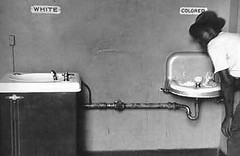
6734502747racial segregationthe separation of humans into ethnic or racial groups in daily life. Generally applies to activities such as eating in a restaurant, drinking from a water fountain, using a public toilet, attending school, going to the movies, riding on a bus, or in the rental or purchase of a home.6
6734502748trustA set of companies managed by a small group known as trustees, who can prevent companies in the trust from competing with each other.7
6734502749socialistone who believes in the ownership and control of the major means of production by the whole community rather than by individuals or corporations8
6734502750radicalone who believes in fundamental change in a political, economic, or social system9
6734502751anarchistone who believes that formal, coercive government is wrong in principle10
6734502752tenementa multi-dwelling building, often poor or overcrowded11
6734502753prohibitionforbidding by law the manufacture, sale, or consumption of liquor12
6734502754lobbyistsomeone who promotes an interest or cause before a political body, often for pay13
6734502755Plessy v. Ferguson (1896)Legalized racial segregation in publicly owned facilities on the basis of "separate but equal."14
6734502756Land Grantsland given by government to universities and railroad companies15
6734502757Dawes Actland given to individual Indians to discourage tribal mindset; encouraged Indians to farm for a living instead of communally owning land16
6734502758Open Rangethe idea that cattle can be grazed on large tracts of public and/or private property; invention of barbed wire ended this idea and drove many small cattle ranches out of business and off their small plots of land17
6734502759Vertical IntegrationStrategy to maximize profits by attempting to own every step of the manufacturing process (ex. Carnegie Steel)18
6734502760Horizontal IntegrationStrategy to maximize profits by attempting to purchase competing companies in the same industry; monopoly-building (ex. Rockefeller's Standard Oil)19
6734502761Knights of LaborAmerican labor organization in the 1880s led by Terence V. Powderly. Organized a wide range of workers, including skilled and unskilled, and had broad reform goals.20
6734502762Haymarket RiotLabor dispute in Chicago that ended with a bomb being thrown at police resulting in many deaths. Led to an unfavorable public opinion of organized labor.21
6734502763American Federation of LaborAn organization of various trade unions that fought for specific reforms (as opposed to broad changes supported by the Knights of Labor).22
6734502764Homestead and Pullman StrikesIndustrial lockouts and strikes that showed battle between corporations and labor unions. Ended with government intervention on the side of big business.23
6734502765Urbanizationmovement of people from rural communities and settlements to big cities24
6734502766"New Immigrants"immigrants from southern and eastern Europe such as Poland, Italy, etc. that arrived in the US in the latter half of the 19th century25
6734502767Chinese Exclusion ActFirst law limiting immigration based on race; effectively stopped immigration from China through the end of WWII.26
6734502768Political MachineUnofficial political organization that works to win elections in order to exercise power; sometimes referred to as a shadow government; rose to power in the late 1800s because of ill-equipped local governments that failed to meet the needs of growing urban populations27
6734502769Tammany HallPolitical machine of New York City that was well-known for its corruption; lead by William Boss Tweed28
6734502770Grange Movement and Farmers AllianceGrassroots movements that attempted to address the plight of farmers in the late 1800s; attempted to regulate railroads and enlarge opportunity for credit; evolved into Populist movement.29
6734502771William Jennings BryanDemocratic presidential hopeful that was a member of the Populist Party; free silver advocate; "Do not crucify mankind on a cross of gold".30
6734502772New SouthAfter the Civil War, southerners promoted a new vision for a self-sufficient southern economy built on modern capitalist values, industrial growth, and improved transportation. In reality, this growth was fairly slow.31
6734502773AmericanizationProcess of assimilating immigrants into American culture by teaching English, American history, and citizenship.32
6734502774middle classa social class made up of skilled workers, professionals, business people, and wealthy farmers33
6734502775Andrew CarnegieA Scottish-born American industrialist and philanthropist who founded the Carnegie Steel Company in 1892. By 1901, his company dominated the American steel industry.34
6734502776transcontinental railroadsa railroad that would cross the continent and connect the East to the West; opened new markets and helped spur the Industrial Revolution35
6734502777Social GospelLate 19th-century movement Protestant movement preaching that all true Christians should be concerned with the plight of immigrants and other poor residents of American cities and should financially support efforts to improve lives of these poor urban dwellers. Settlement houses were often financed by funds raised by ministers of this movement.36
6734502778Standard OilJohn D. Rockefeller's company that gained a monopoly over the world petroleum market with the practice of trusts and swift elimination of competition.37
6734502779Carnegie SteelA steel producing company created by Andrew Carnegie to manage business at his steel mills in the Pittsburgh, Pennsylvania area in the late 19th century. Significance: had a monopoly in the steel industry. vertical integrations.38
6734502780John D. RockefellerWealthy owner of Standard Oil Company. Considered to be a robber baron who used ruthless tactics to eliminate other businesses. Built trusts and used money to influence government.39
6734502781Industrial RevolutionPeriod characterized by the rapid social and economic changes in manufacturing and agriculture that occurred in England during the late 18th century and rapidly diffused to other parts of the developed world. In the US, this occurred during the period roughly 1825-1925.40

AMSCO AP US History Chapter 18 Flashcards

AMSCO United States History 2015 Edition, Chapter 18 The Growth of Cities and American Culture, 1865-1900

Terms : Hide Images
5754094308old immigrantsThrough the 1880s, they came to the United States from northern and western Europe. They were mostly Protestant and had a high-level of literacy.0
5754094309new immigrantsFrom the 1890s to 1914, they came to the United States from southern and eastern Europe. Mostly non-Protestant, poor and illiterate.1
5754094310Statue of LibertyBegan in the 1870's, by the French sculptor Frederic-Auguste Bartholdi. It opened in New York Harbor, in 1886.2
5754094311Chinese Exclusion Act of 1882It was the first bill regarding immigration. It placed a ban on all new immigrants from China.3
5754094312Immigration Act of 1882In 1882, this act placed restrictions on the immigration of undesirable persons, such as paupers, criminals, convicts, and mentally incompetent.4
5754094314American Protective AssociationA nativist society that was prejudiced against Roman Catholics.5
5754094315Ellis Island 1892An immigration center opened in 1892 in New York Harbor.6
5754094316melting pot vs. cultural diversityThe historian's term, melting pot, refers to immigrants leaving their old-world characteristics and adopting the United States characteristics. Other historians argue that first-generation immigrants maintained their cultural identity and only the second and third generations were assimilated in the U.S. society.7
5754094318streetcar citiesIn these cities, people lived in residences many miles from their jobs and commuted to work by horse-drawn streetcars.8
5754094319steel-framed buildingsSkyscrapers were made possible by this type of building. The first, was the Home Insurance Company Building in Chicago. It was made possible by a steel skeleton, Otis elevator, and central steam heating system.9
5754094320dumbbell tenementsA new form of housing that was developed in the early 1900's it was designed to have more apartments for more families and shared restrooms. These tenements were fire hazards and health hazards.10
5754094323political machines, bossPolitical parties in major cities came under the control of tightly organized groups of politicians, known as political machines. Each machine had its boss, the top politician who gave orders and doled out government jobs. 364)11
5754094324Tammany HallA political machine in New York City, which developed into a power center.12
5754094326City Beautiful movementIn the 1890s, this movement included plans to remake America's cities with tree-lined boulevards, public parks, and public cultural attractions.13
5754094327Henry GeorgeA San Francisco journalist who authored "Progress and Poverty" in 1879 that called to attention the failings of laissez-faire capitalism along with the wealth polarization caused by industrialization.14
5754094328Edward BellamyIn 1888, he wrote "Looking Backward", a popular book of social criticism that that envisioned a future that had eliminated poverty, greed, and crime.15
5754094329Jane AddamsIn 1889, she started Hull House in Chicago, which was a settlement house which provide help to immigrants.16
5754094330settlement housesThey provide social services to new immigrants.17
5754094331Social GospelIn the 1880s and 1890s this movement espoused social justice for the poor based on Christian principles.18
5754094334Dwight MoodyHe founded Moody Bible Institute, in 1889. It helped generations of urban evangelists to adapt traditional Christianity to city life.19
5754094335Salvation ArmyImported from England in 1879, this charity provided the basic necessities of life for the homeless and the poor while also preaching Christian Gospel.20
5754094337Susan B. Anthony, NAWSAIn 1890, one of the founders of the National American Womens Suffrage Association (NAWSA), which worked to secure voting rights for women.21
5754094338Francis Willard, WCTULeader of the Women's Christian Temperance Union (WCTU) which advocated total abstinence from alcohol.22
5754094339Anti-saloon LeagueIn 1893, this organization became a powerful political force and by 1916 had persuaded twenty one states to close down all saloons and bars.23
5754094340Carrie NationShe raided saloons and smashed barrels of beer with a hatchet.24
5754094341kindergartenIn the late 1800s, the practice of sending children to kindergarten became popular.25
5754094342public high schoolIn the late 1800s, there was growing support for tax-supported public high schools.26
5754094347Oliver Wendell HolmesHe taught that law should evolve with the times and not be bound by previous precedents or decisions.27
5754094348Clarence DarrowA famous lawyer, he argued that criminal behavior could be caused by an environment of poverty, neglect, and abuse.28
5754094349W.E.B. Du BoisA leading black intellectual, he advocated for equality for blacks, integrated schools, and equal access to higher education.29
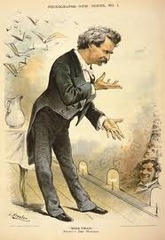
5754094351Mark TwainThe first great realist author, he is famous for his classic "The Adventures of Huckleberry Finn"30
5754094354Theodore DreiserThe author of "Sister Carrie". Notable for its naturalism and controversy, as it ran contrary to the moral undercurrents of 1900.31
5754094358James WhistlerAn American expat, he painted Arrangement in Grey and Black, popularly known as Whistler's Mother. It was a quintessential example of his study of color rather than subject.32
5754094360Ashcan SchoolAround 1900, they painted scenes of everyday life in poor urban neighborhoods.33
5754094361Armory ShowA New York painting exhibit in 1913 that featured abstract paintings.34
5754094365Louis SullivanHe rejected historical architecture and focused on tall, steel-framed office buildings. He focused on building a form that followed function. A member of the Chicago School.35
5754094367Frank Lloyd WrightThe most famous architect of the 20th century, he developed an organic style that made his buildings fit in with their natural surroundings36
5754094369Frederick Law OlmstedThe originator of landscape architecture, he designed Central Park and grounds of the U.S. Capitol.37
5754094374Scott JoplinA black composer notable for his contribution to ragtime. He sold over one million copies of his song "Maple Leaf Rag".38
5754094376Joseph PulitzerHe established the first newspaper to exceed over one million in circulation by filling it with sensational stories of crime and disaster.39
5754094377William Randolph HearstA newspaper publisher whose introduction of large headlines and sensational reporting changed American journalism.40
5754094381Buffalo Bill Wild West ShowWilliam F. Cody brought this show to urban populations.41

AP US History: Chapter 29 Flashcards

Terms : Hide Images
6206957709Woodrow WilsonThe Republic party was split betweeen Taft and Roosevelt so the Democrats had a chance of winning for the first time in 16 years. Woodrow Wilson was a once mild conservative who was now a militant progressive. He taught at princeton, was governer of new jersey and he attacked trusts and passed liberal means. Very strong minded and idealistic. When he thought he was right he would break before bending. He appointed some conservatives to the Federal Reserve and Treade commisions to satisy businesses. Most of his focus was on progressives however.0
6206957710New FreedomWilson's system. Supported NO trusts and supported small businesses, but he basically shunned social welfare programs. Included many progressive reforms. Specifically attacked the banks, trusts, and tarriffs1
6206957715New NationalismRoosevelts campaine which was inspired by Herbert Croly's book. Also campaigned for women's suffrage and a wide range of social wellfare programs, such as minimum wage laws and social insurance2
6206957716Herbert CrolyWrote The Promise of the American Life which said that the good strusts should be left alone and the bad trusts should be punished.3
6206957717Eugene V DebbsSocialist running against Taft, roosevelt, and Wilson. He racked up 900,000 votes.4
6206957719Triple Wall of PriveledgesBanks, trusts, and tariffs5
6206957720Underwood Tariff of 1913Wilson's way of attacking trusts. It largely reduced import fees and it also enacted graduated income tax under the newly passed 16th ammendment.6
6206957724Louis D Brandeiswrote the book Other People's Money and How the Bankers Use it. Further showed the problems of the American banking system. Wilson nominated him to the supreme court making him the first jew in that position.7
6206957725Federal Reserve ActThis was the reform of the existing banking system. It created the Federal Reserve Board8
6206957726The Federal Reserve Boardwatched over the the nationwide system of 12 regional banking districts each with its own central bank and had the power to issue paper money (Federal Reserve Notes)9
6206957727Federal Trade Comission ActCommissioned a president appointed position which investigated the activities of trusts and stopeed unfair trade practices and bribery.10
6206957728Clayton Anti- Trust ActLengthened the Sherman Anti Trust Act list of acts that were objectionable. Such as the fact that labor Unions were not indeed trusts. Legalized strikes and peaceful picketing by labor unions.11
6206957729Federal Farm Loan Actoffered credit for farmers at low rates of interest.12
6206957730Warehouse Actpermitted loans on the security of staple crops13
6206957731La Follette Seamen's Actrequired good treatemnt of America's sailors buit it sent merchant freight rates soaring as a result the cost to maintain a sailor's health14
6206957732Workingmen's Compensation Actgranted the assistance of civil service workers during times of instablility but Supreme Court invalidated it.15
6206957733Adamson Actestablished an eight hour workday with overitme pay.16
6206957736Jones Actgranted full terrirorial status to the Philipines and promised independence as soon as a stable government could be put in place.17
6206957737HaitiThe first time Wilson weakens his stance on his anti imperialistic beliefes. He sende marines to Haiti after the populace brutally tore apart their brutal president. He sent them there to protesct american intersts there. They remained there for the next 19 years making it a protectorate.18
6206957738Victariano Huertathe US had exploited Mexico for years. The MExicans were tired of it. They revolted and had this guy in charge. This lead to the massive immigration of rebels to southerm US. The rebels threatened american lived but Wilson refused to intervene to protect americna lives. He also refused to accept Heurta's regime because of the bloody way he came to power. He did let minitions flow to Huerta's rivals Pancho Villa and Carranza19
6206957739TampicoA small group of Americans were accidentally arrested. Wilson thretened to use force and ordered the navy to take over Vera Cruz both Huerta and Carranza were opposed to this. The ABC powers intervened and prevented them from going to war. Huerta los power but Carranza came to power and regretted the doings of wilsom.20
6206957740Pancho VillaHe was initially with carranza when Huerta was in rula and then once Carranza came to rule he became an enemy to Huerta as well. He killed 16 american engineers in Mexico and later killed 19 americans in new mexico.21
6206957741John J. PershingSent to take care of Pancho Villa. He penerated deep into MExico clashed with carranza and villa;s forces but didn't take up Villa.22
6206957742Archduke Franz Ferdinanadwas shot by a nationalistic serb. Austria made an ultmatum and demanded the serbs to agree. The serbs did not agree enough so Austria declared war with germany on it's side. Serb's had the Russians on their side. France joined russia as well. Germany declared war on russia and France and invaded Belgium pulling Britain into war.23
6206957744Central PowersGermany, Austria-Hungary, Turkey, and Bulgaria24
6206957748Submarine WarfareGermany was not going to sit back and watch the US and the Allies gand up against it. It declared it would be going using this around the British Isles. It told the US that it would try not to attack neutral ships but mistakes were bound to happen. Wilson warned that Germany would be put under strict accountability if anything did happen however.25
6206957749LusitansaA british passenger liner was sunk by german U-Boats. It took 1198 lives, 128 were american. .According to the Germans they had sent a note prior to this warning us that an American Ship may be torpedoed. Also the ship was found to contain ammunition. Wilson knew that bringing an ununited nation into war was a bad idea so he sent a series of stron notes to the German War lords.26
6206957750ArabicThen the Arabic was sunk kiling two americans. After that the Germans agreed to not sinked unarmed ships without warning. After it broke that pledge by sinking the Sussex the Germans said that they would would not sink passenger or merchant vessels without warning so long as the americans get the British to stop the bLockade. The US couldn's do that and was prone to be pulled into war.27
6206957751Charles Evans Hughesthe republicans chose this guy as the new president. He made defferent pledges and promises depending on where he was. He was nicknamed Evasive. Wilson won over him telling the US he would keep us out of war. Ironically he lead us into war and he knew war was inevetible during the election. Many people felt cheated. He barely beat hughes by like 30 electoral votes.28
6206957754Pro-Roosevelt Progressive convention- 2k delegates from 40 states, symbolized the rising *political status* of *women* and support for *social justice* - Felt "as strong as a bull moose"29
6206957755The _________ virtually guaranteed a Democrat victoryRoosevelt/Taft dispute30
6206957756New Nationalism vs New Freedom - similaritiesBoth favored a more *active government role* in economic and social *affairs*31
6206957757Roosevelt's New Nationalism vs Wilson's New Freedom - differences- TR believed in continued *consolidation* of *trusts* and *labor unions* paralleled by the *growth* of powerful *regulatory* agencies in Washington, *woman suffrage*, as well as social welfare* (minimum wage and socialistic social insurance) - Wilson favored *small enterprise*, entrepreneurship, and the free functioning of *unregulated* and *non-monopolized* markets. Shunned social-welfare proposals and pinned economic faith on *competition*. Fragmentation of the big industrial combines by vigorous enforcement of *antitrust* laws32
62069577581912 election - events, significance, etc.- Offered voters a choice of *policies* and *political/economic philosophies* — rare - Heat of the campaign cooled when TR was *shot* and suspended active campaigning for 2 weeks but went to his speech anyway - William Jennings Bryan sided with Wilson33
6206957759Progressive party's future- Elected *few candidates* to *state* and *local* offices - No *patronage* → less supporters - Helped spur the enactment of many of their pet reforms by the Wilsonian Democrats34
6206957760Result of the 1912 election- Wilson was a *minority president* - Republicans put into minority status in Congress for 6 years and out of the WH for 8 - Taft became chief justice of the SC in 192135
6206957761________ was the 2nd Democratic president since 1861 and the first man from a seceded southern state to reach the White House since Zachary TaylorWoodrow Wilson36
6206957762Characteristics of Woodrow Wilson- *Sympathized* with the Confederacy's attempts to gain independence - *Self-determination* (Jeffersonian democracy) - Sincerity and *moral* appeal - President should play a *dynamic role* — Congress could not function unless the president got out in front and provided *leadership* - Idealism - Stubborn (would break before he would bend, unlike TR)37
6206957765Banking and currency problems- Outgrown by the Republic's *economic expansion* - Financial structure under the Civil War National Banking Act revealed *defects* - Panic of 1907 - inelasticity of currency - Banking *reserves concentrated* in NY and other *big cities* — could not be mobilized in times of financial stress38
6206957767Arsene Pujo (Pujo Committee)House committee *traced* the *rich* and went into the *secrets* of American *banking* and *business*39
6206957778La Follette Seaman's Act(1915) Required decent *treatment* and a *living wage* on American *merchant ships*. *Crippled* America's merchant *marine* (freight rates spiraled upward with the crew's wages)40
62069577831916 election for Wilson- Needed to identify himself clearly as the *candidate* of *progressivism* - Appeased businesspeople by making *conservative* appointments to the FRB and the FTA, but most energy was devoted to cultivating progressive support41
62069577881914-1915 in Haiti - assassination of Haitian presidentIn 1915, *Wilson* then reluctantly *dispatched marines* to protect American lives and property (remained for 19 years, made a protectorate)42
6206957790Purchase of the Virgin Islands1917, US bought it from Denmark. Made the US a larger force in foreign involvement43
6206957791Revolution in Mexico- Revolted in 1913, *murdered* the popular president and *installed General Victoriano Huerta* (Indian) in his position - Resulted in *mass migration* to the US — often worked on highways and RRs or as fruit harvesters - Often separated into Spanish-speaking *enclaves* that made a unique borderland *culture*44
6206957792Foreign intervention in Mexico- *Americans wanted* intervention, but Wilson *refused* to practice *dollar diplomacy* - Wilson sent aggressive ambassador to Mexico (he refused to recognize Huerta as the govt leader) - Allowed *American arms* to flow to Huerta's principal rivals (Venustiano Carranza and Francisco Villa)45
6206957796Assassination of Archduke Franz Ferdinand of Austria1914 - *Serb patriot Gavrilio Princip* killed the heir to the throne of Austria-Hungary in Sarajevo while eating a *sandwich* (what a classy fellow) - *Vienna govt* backed by *Germany* -> Threat to Serbia46
6206957797European affairs after the assassination- *Serbia* (backed by *Russia*) refused to bow down - Russia and France advanced on Germany - Germany attacked France through Belgium (neutral) - GB now involved47
6206957799AlliesFrance, Britain, and Russia (later Japan and Italy)48
6206957800Wilson's proclamation of neutrality — effect on European powersBoth wanted American involvement, not neutrality - British: Close economic, cultural, and linguistic ties - Germans and Austro-Hungarians: Natural sympathies with transplanted countrymen (many immigrants)49
6206957801Anti-German sentiment- Kaiser Wilhelm II seemed to be the embodiment of arrogant autocracy (and the strike at *neutral Belgium*) - Tarnished the image of the Central Powers in American eyes when they went to *violence* in *American ports* and *factories* - 1915: German operative left *briefcase* on an NY elevated car, documents for *sabotage* discovered50
6206957802Most Americans wanted to ________ WWIstay out of51
6206957803Financial Crisis of 1914- American industry onto prosperity - Financed by American bankers (JP Morgan and Company) advanced to the *Allies* $2.3 billion during American *neutrality*52
6206957804Europe's reaction to American investment even during neutrality- *Great Powers* protested even though it didn't violate neutrality laws - *Germany couldn't trade* because the *British blocked* them in the North Sea - Britain forced trade between US and Germany away, now only Britain53
6206957805Announcement of the U-boat Campaign- Berlin announced a *submarine war area* around the British Isles - Wilson warned that it would be held to *"strict accountability"* for any attacks on American vessels or citizens54
6206957806U-boatsGerman *submarines* (Unterseeboot) proved *deadly* for *Allied ships* in the war zone. U-boat attacked played an important role in *drawing* the *US* into WWI55
6206957808Wilson's actions of the Lusitania- *Refused* to go into *war* with a *disunited country* (remembered the War of 1812) - Attempted to use *diplomatic notes* to punish the German warlords publically56
6206957812Republican platform*Condemned* Democratic *tariff*, assaults on the trusts, and Wilson's feebleness in dealing with MX and Germany57
6206957814"He Kept Us Out of War"Wilson's campaign slogan in 191658
6206957815Wilson owed his votes to:the Midwest and the West (progressive and anti-war policies)59
6207027429Venustiano Carranzaleader in Mexican Revolution60

AP US History Chapter 18 Flashcards

Terms : Hide Images
5715889055Fire-eatersrefers to a group of extremist pro-slavery politicians from the South who urged the separation of southern states into a new nation, which became known as the Confederate States of America.0
5715889056Democratic party in 1848- Polk pledged himself to one term - Democrat convention went to General Lewis Cass - Silent on slavery1
5715889057Lewis CassDemocrat candidate who believed slavery should be decided based on popular sovereignty2
5715889058Popular sovereigntyPeople in the territory should determine the status of slavery3
5715889059Aspects of popular sovereignty- Public liked it because it went along with democratic self-determination - Politicians liked it because it seemed to be a compromise - Advocates hoped to dissolve the issue - Could serve to spread slavery4
5715889060Whig party in 1848- Nominated General Zachary Taylor, not Clay because enemies and issues with him - Avoided troubling issues, focused on the good5
5715889061General Zachary TaylorCandidate for the Whigs, had slaves, didn't commit himself to the issue6
5715889062Free Soil Party- Formed because of the avoidance by both parties of slavery - Wanted no slavery in the new land to the west - Keep West an opportunity for whites only - Not against slavery in the South - Homesteads for settlers, internal improvements - Not radical, disunited other than opposing extension of slavery7
5715889063Types of people in the Free Soil Party- Industrialists against Polk's tariff - Democrats against Polk (all of TX but not OR) - Northerners against blacks and sharing land with them - Conscience Whigs - condemned slavery on moral grounds8
5715889064Why Free Soilers were against slavery- Would take jobs from whites, meaning they couldn't own land - Only traditional American commitment would allow mobility to flourish9
5715889065Issues with the election of 1848- Focused on personalities instead of slavery - Taylor won, free soilers diverted votes from Cass in NY10
5715889066Sutter's MillDiscovery of gold in California starting the gold rush11
5715889067California gold rush- Many were luckless, better off at home, ended up sick - People charged high rates for materials - 49ers kept chasing dream of gold - Australia 185112
5715889068Results of the gold rush- Attracted thousands of people to CA, overwhelming govt - Outburst of crime13
5715889069California on slaveryDrafted a constitution in 1849 that excluded slavery, applied to Congress → Alarmed Southerners wanting to block free soil14
5715889070Positives of the South in 1850- Had a southern president, Taylor - Majority in cabinet and the SC - Equality in Senate (thus far) - Cotton fields expanding and became more profitable15
5715889071Worries in the South (1850)- Initially, 15 free and 15 slaves, now with CA meant more free states - Texas had disputed area - Northern advocation for abolishment in DC - Underground Railroad16
5715889072Underground RailroadInformal chain of anti-slavery homes through which white and black abolitionists assisted slaves in escaping from slave states to the North or Canada17
5715889073Harriet TubmanMajor conductor in the Railroad, 19 ventures south, saved 300+ slaves including her parents18
5715889074Southern defense of slaverySaid it was a violation of their Constitutional rights19
5715889075Clay's speechProposed a series of compromises, North should yield by allowing feasible slave law, seconded by Stephen Douglas20
5715889076Calhoun's speech- Approved of Clay's purpose but not enough safeguards for the South. - Leave slavery alone, return runaway slaves, give South its rights, and political balance - Attempted to preserve union and stand on Constitution but undid it21
5715889077Seventh of March speechDaniel Webster - Urged all reasonable concessions to the South, including a new FSL - God "passed" the Wilmot Proviso - why debate over it? - Poor geography didn't allow for a plantation economy to exist (he was wrong on this) - Only compromise, concessions, and reasonableness would provide solutions22
5715889078Results of the Seventh of March speech- Helped turn the North to compromise - Strengthened Union sentiment - Pleasing for banking and commercial centers in the North because they would lose by secession - Made free soilers and abolitionists feel betrayed - he regarded slavery as evil but disunion as worse23
5715889079Young GuardPurging and purifying the Union rather than preserving it24
5715889080William H. Seward- Anti-slavery, against concessions for the South - Didn't realize compromise unified - Against slavery in the new territories because of a "higher law" than the Constitution25
5715889081Issue of Texas boundary- Taylor was thought to march to TX and hang them for threatening to invade New Mexico - Didn't - Civil War could have occurred earlier because the South would have defended them26
5715889082Millard FillmoreVP of Taylor; Taylor died, he became president and signed the Compromise of 185027
5715889083Compromise of 1850- California admitted as a free state - Mexican Cession land; Utah and New Mexico set up as territories and slavery determined by popular sovereignty - Ban slave trade in DC - New fugitive slave law for the South - Settled border dispute between NM and TX in NM favor28
5715889084Nashville Convention- Southern extremists met in Nashville in 1850 - In favor of slavery but condemned the concessions - Met again in November - Southern opinion was reluctantly for concessions in Congress at the time29
5715889085Acceptance of the concessions of the CompromiseStrengthened by relief and prosperity of the CA gold rush as well as Union-savers like Clay, Webster, and Douglas30
57158890862nd Era of Good FeelingsGeneral peace because of the Compromise but the Fugitive Slave Law made tension31
5715889087The _____ got the better concessionsNorth32
5715889088Fugitive Slave Law of 1850- Increase in sectional tension - Turned North into hunting ground for fugitive slaves - Northerners who assisted runaways could be arrested - Slaves could not testify in court, denied a jury trial33
5715889089Results of the Fugitive Slave Law- Caused moderates to join antislavery forces - Personal Liberty Laws - Vigilance Committees34
5715889090Personal Liberty LawsDid not allow use of local jails for housing fugitive slaves35
5715889091Vigilance CommitteesGoal to protect fugitive slaves from slave catchers36
5715889092Anthony Burns1853 slave who escaped from slavery37
5715889093Benefits the North had in the 1850s- North gaining population and wealth - Delay added to moral strength and gave time to accumulate materials - Moderates resisted secession at any cost - Fought for the Union38
5715889094Franklin Pierce- Candidate for the Democrats - Indecisive, proslavery - Revived Democrat commitment to expansion39
5715889095Whigs in the election of 1852Chose Winfield Scott, didn't boast about the Compromise of 1850 as much as the Democrats40
5715889096Whig party split- South - doubted Scott's loyalty to the Compromise and Slave Law - North - deplored platform but accepted Scott41
5715889097Election of 1852- Free soil party might have taken votes from the Whigs - Ended the whig disorganization and later death42
5715889098End of the WhigsDisorganization because of the FSL and other sectional issues. They contributed to upholding the Union and providing valuable statesmen43
5715889099The ________ and the ________ reinvigorated the spirit of Manifest DestinyMX War and CA gold rush44
5715889100Concerns about Central America- Aroused because of the gold rush - Atlantic-to-Pacific transportation route → whoever took control of it would hold maritime supremacy45
5715889101Mallarino-Bidlack Treaty- New Granada (Colombia) gave American right of transit across the isthmus - US would maintain perfect neutrality so free transit traffic wouldn't be interrupted46
5715889102Results of the Mallarino-Bidlack Treaty- Led to Panama Railway - Future for Panama Canal47
5715889103Clayton-Bulwer TreatyNeither US nor Britain would seek exclusive control of the isthmus waterway48
5715889104William WalkerAttempted to take control of Nicaragua to make it a slave state; failed because of an alliance of Central American countries (Mnemonic: William Walkeragua)49
5715889105Cuba- Owned by Spain, held large population and could restore political balance in Senate - Two attempts of Southerners to take Cuba but failed50
5715889106Black WarriorSteamship of the US, captured by Spain, could provoke war51
5715889107Ostend ManifestoThe proclamation that the US would pay $120 million for Cuba, and if Spain refused, the US would be justified in taking it if it threatened the US. Pierce dropped it. (Free-soilers?)52
5715889108Results of the Ostend ManifestoFree soilers condemned it, led to Civil War by South attempting to gain more slave states53
5715889109_______ and _______ made the US a Pacific powerOR and CA54
5715889110Opium War- War between Britain and China for traders' rights for opium - Britain got five treaty ports and Hong Kong55
5715889111Caleb CushingSent by John Tyler to get equal ports in China56
5715889112Treaty of Wanghia- First diplomatic agreement between the US and China - US became the "most favored nation" and "extraterritoriality" - Missionaries came to save the people57
5715889113ExtraterritorialityWould make Americans accused of crimes in China appear before a US court58
5715889114Result of the Treaty of WanghiaInspired mission to Japan59
5715889115Matthew C. Perry- Brought American technology to Japan, dispatched by Fillmore - Asked for free trade and friendly relations - Left and came back a year later60
5715889116Treaty of Kanagawa- Proper treatment of shipwrecked sailors - American coaling rights in Japan - Established diplomatic relations61
5715889117Meiji RestorationPeriod began by the Kanagawa Treaty of restoration in Japan62
5715889118Transportation issues in the Americas- Too long from the isthmus of Panama - Camels proposed, brought in, didn't work out - *South wanted a railroad to gain economic momentum*63
5715889119Gadsden Purchase- SW part of the US from MX for $10 million - Opposed by the North, passed Senate to eliminate window on the Sea of Cortez64
5715889120James GadsdenSent by Jefferson Davis to negotiate with Santa Anna for the territory (Anna lacked $$)65
5715889121Why do the Gadsden Purchase- Terrain was less mountainous - Didn't go through unorganized territory (NM had defense against Indians, but Nebraska didn't) - North argued that Nebraska should become organized66
5715889122Stephen DouglasCreator of the KS-NE Act, made as a response to the Gadsden Purchase (also invested in real estate and railway stocks and didn't want to lose money)67
5715889123Kansas-Nebraska Act- Territory of Nebraska would be split into Nebraska and Kansas - Slavery would be decided by popular sovereignty - Likely that Kansas would be slave and Nebraska free (KS[lave], N[fre]E) - Southerners supported it in hopes of gaining a slave state68
5715889124Issues with the Kansas-Nebraska Act- Free-soilers disliked it - Would have to repeal the MO Comp, which distinguished the two regions69
5715889125How Douglas provoked issues in the US- Repeal of the MO Comp made the North feel breached of faith - Predicted a conflict but underestimated the scale70
5715889126Results of the Kansas-Nebraska Act- Led to War virtually directly - Antislavery northerners upset → would make more difficult to compromise with the South → conflict - Made Fugitive Slave Law invalid71
5715889127Republican Party- Spontaneously occurred as protest against the Kansas-Nebraska Act - Included Whigs, Democrats, free soilers, Know-Nothings, and others against the KS-NE Act - Spread eastward quickly, became 2nd major political party - Not allowed South of the Mason-Dixon Line...72
5715889128Why did Southerners want a stronger fugitive slave law?The Underground Railroad assistance from northern abolitionists seem a moral judgment against slavery73

AP US History Chapter 14 Flashcards

Terms : Hide Images
5927969991Crittenden CompromiseA plan proposed by Senator John J. Crittenden for a constitutional amendment to protect slavery from federal interference in any state where it already existed and for the westward extension of the Missouri Compromise line to the California border.0
5927969992total warA form of warfare that mobilizes all of a societies resources-economic, political and cultural-in support of the military effort.1
5927969993Draft (conscription)The system for selecting individuals for compulsory military service, first implemented in the Civil War2
5927969994habeas corpusA legal writ forcing government authorities to justify their arrest and detention of an individual.3
5927969995King CottonThe Confederate belief during the Civil War that their cotton was so important to the British and French economies that those governments would recognize the South as an independent nation and supply it with loans and arms.4
5927969996greenbacksPaper money issued by the U. S. Treasury during Civil War to finance the war effort.5
5927969997"contrabands"Slaves who fled the plantations and sought protection behind Union lines during the Civil War.6
5927969998Radical RepublicansThe members of the Republican Party who were bitterly opposed to slavery and to southern slaveholders since the mid-1850s.7
5927969999Emancipation ProclamationIssued by President Lincoln, legally abolished slavery that remained outside of the union.8
5927970000scorched-earth campaignA campaign in the Shenandoah Valley of Virginia by Union general Philip H. Sheridan's troops. The troops destroyed grain, barns, and other useful resources to punish farmers who had aided Confederate raiders.9
5927970001"War" and "Peace" DemocratsMembers of the Democratic Party that split into two camps over war policy during the Civil War. War Democrats vowed to continue fighting until the rebellion ended, while Peace Democrats called for a constitutional convention to negotiate a peace settlement.10
5927970002"hard war"The philosophy and tactics used by General Sherman which treated civilians as combatants.11
5927970003March to the SeaMilitary campaign from September to December 1864 in which Union forces under General Sherman marched from Atlanta, Georgia to Savannah, Georgia. Carved a path of destruction.12
5927970004Abraham Lincoln16th president Lincoln led the United States through its Civil War—its bloodiest war and its greatest moral, constitutional and political crisis.[1][2] In doing so, he preserved the Union, abolished slavery, strengthened the federal government, and modernized the economy.13
5927970005Jefferson DavisPresident of the Confederacy during the Civil War14
5927970006Robert E. LeeHe was offered the command of the U.S. Army, but resigned to defend his home state of Virginia.15
5927970007General George McClellanUnion general who replaced McDowell after he lost at Bull Run. Overly cautious, had to retreat after losing 7 Days Battle and thrown out of command. Reinstated after John Pope lost the Second Battle of Bull Run, but removed after not pursuing Lee after winning at Antietam. Ran as Democratic candidate in 1864, but lost to Lincoln.16
5927970008Ulysses S. GrantUlysses S. Grant was the 18th President of the United States. As Commanding General, Grant worked closely with President Abraham Lincoln to lead the Union Army to victory over the Confederacy in the American Civil War.17
5927970009William T. Sherman-He commanded the Union army in Tennessee. In September of 1864 his troops captured Atlanta, Georgia. He then headed to take Savannah. This was his famous "march to the sea.". His troops burned barns and houses, and destroyed the countryside. His march showed a shift in the belief that only military targets should be destroyed. Civilian centers could also be targets.18
5927970010Albert G. BrownSenator from Mississippi who wanted Cuba and Mexican states for spreading slavery19
5927970011General Irvin McDowellUnion general at the Battle of Bull Run/Manassas20
5927970012General P. G. T. BeauregardConfederate general at the Battle of Bull Run/Manassas and Shiloh.21
5927970013General Thomas J. "Stonewall" JacksonConfederate General, Second Battle of Bull Run22
5927970014General Ambrose E. BurnsideUnion General who replaced McClellan, more aggressive, less competent.23
5927970015Joseph "Fighting Joe" HookerUnion General who replaced General Burnside when he resigned.24
5927970016David G. FarragutUnion naval officer25
5927970017Albert Sydney JohnsonConfederate General who died during the Battle of Shiloh.26
5927970018John B. HoodConfederate General who abandoned Atlanta27
5927970019Jefferson DavisHe served as President of the Confederate States during the Civil War. (p. 270)28
5927970020Alexander H. StephensHe served as vice president of the Confederate States of America during the Civil War. He acted in defense of states' rights, and even urged the secession of Georgia in response to the "despotic" actions of the Confederate government. (p. 270)29
5927970021greenbacksName given to paper money issued by the Union government during the Civil War. They bills were not redeemable for gold, which contributed to creeping inflation. (p. 280)30
5927970022Morrill Tariff ActIn 1861, this tariff act raised rates to increase revenue and protect American manufacturers. (p. 281)31
5927970023Morrill Land Grant ActIn 1862, this act encouraged states to use the sale of federal land grants to maintain agricultural and technical colleges. (p. 281)32
5927970024Pacific Railway ActIn 1862, this act authorized the building of a transcontinental railroad over a northern route in order to link the economies of California and the western territories to the eastern states. (p. 281)33
5927970025Homestead ActIn 1862, this act promoted settlement of the Great Plains by offering parcels of 160 acres of public land free to any person or family that farmed that land for at least five years. (p. 281)34
5927970026Fort SumterA federal fort in the harbor of Charleston, South Carolina. It was cut off from vital supplies because the South controlled the harbor. President Lincoln announced that he was sending provisions to the Union fort. On April 12, 1861, Carolina guns opened on the Union, and the Civil War began. (p. 269)35
5927970027Bull RunIn July 1861, 30,000 federal troops marched from Washington D.C. to attack Confederate forces near Bull Run Creek at Manassas Junction, Virginia. In the first major battle of the Civil War, Union forces seemed close to victory, but then Confederate reinforcements counterattacked and sent the inexperienced Union troops in retreat. (p. 271)36
5927970028Thomas (Stonewall) JacksonIn July 1861, at the First Battle of Bull Run, this Confederate general counterattacked the Union and sent their troops in a retreat back to Washington D.C. (p. 271)37
5927970029Winfield ScottHe was the Union General-in-Chief at the start of the Civil War. (p. 271)38
5927970030Anaconda PlanThe Union's Civil War plan, created by General Winfield Scott. It called for the U.S. Navy to blockade Southern ports cutting off essential supplies from reaching the Confederacy. (p. 271)39
5927970031George McClellanThe commander of the Union army in the East. After extensive training of his army, he invaded Virginia in March 1862. The Union army was stopped as a result of brilliant tactical moves by the Confederate army. After five months he was forced to retreat to the Potomac, and was replaced by General John Pope. (p. 271)40
5927970032Robert E. LeeConfederate general who defeated the Union at the Second Battle of Bull Run. At the Battle of Antietam (in Maryland) he was unable to break through the Union line and had to retreat back to Virginia. At Fredericksburg, Virginia his army suffered 5,000 casualties compared to 12,000 casualties for the Union army. His army was finally defeated and he surrendered to Union General Grant at Appomattox Court House on April 9, 1865. (p. 272 273, 277, 278)41
5927970033AntietamThis battle took place in September 1862, when Confederate General Robert E. Lee moved his troops into Union territory in Maryland. The Union army met them at Antietam Creek, in Sharpsburg, Maryland. It was the bloodiest single-day battle in American history, with more than 22,000 killed or wounded. Unable to break through the Union lines the Confederate army retreated to Virginia. The win was important because it stopped the Confederate invasion of the North and gave Lincoln the victory he was waiting for. He could now act against slavery. (p. 273)42
5927970034Monitor vs. MerrimacFirst engagement ever between two iron-clad naval vessels. On March 9, 1862, the two ships battled for five hours, ending in a draw. This marked a turning point in naval warfare, wooden ships would be replaced by ironclad ones. (p. 273)43
5927970035Ulysses S. GrantIn early 1862, this Union general led his troops from Illinois to capture Fort Henry and Fort Donelson on the Cumberland River (branch of the Mississippi). These victoires opened up the state of Mississippi to attack by the Union. A Confederate army surprised him at Shiloh, Tennessee, but the his army held its ground and finally forced the Confederates to retreat after 23,000 total casualties. In July 1863, he captured Vicksburg, Mississippi and the Union now controlled the Mississippi River. In early 1864 Lincoln made him commander of all the Union armies. As General Robert E. Lee tried to flee to mountains with army of less than 30,000 men he cut off his army and forced them to surrender at Appomattox Court House. (p. 273, 274, 277, 278)44
5927970036ShilohMajor battle in the American Civil War, fought in 1862, in southwestern Tennessee. Confederate forces led by Albert Johnston launched a surprise attack against the Union army led by General Ulysses S. Grant. The Union army held its ground and finally forced the Confederates to retreat after 23,000 casualties (dead and wounded) on both sides. (p. 274)45
5927970037David FarragutHe led the Union navy when they captured New Orleans, in April 1862. (p. 274)46
5927970038GettysburgOn July 1, 1863, General Robert E. Lee led a Confederate army into Pennsylvania. He surprised the Union troops, and started the most crucial and bloodiest battle of the war. There were 50,000 casualties, but the Confederate army eventually retreated to Virginia, never to regain the offensive. (p. 277)47
5927970039VicksburgIn May 1863, Union General Ulysses S. Grant began an artillery bombardment of this Mississippi city, which last for seven weeks. On July 4, 1863, the Confederates finally surrendered the city, along with 29,000 soldiers. The Union now controlled the full length of the Mississippi River. (p. 277)48
5927970040Sherman's MarchUnion General William Tecumseh Sherman led a force of 100,000 troops on a destructive march through Georgia. Destroying everything in their path, they captured Atlanta, Georgia in September 1864, then marched into Savannah by that December, then they captured and burned Columbia, South Carolina in February 1865. (p. 277)49
5927970041Appomattox Court HouseSite of the surrender of the Confederate army led by Robert E. Lee to Union commander Ulysses S. Grant, on April 9, 1865. (p. 278)50
5927970042habeas corpusThis is the term for the constitutional right to be informed of charges and to be given a fair trial. During the Civil War Abraham Lincoln suspended this right, and arrested an estimated 13,000 people on suspicion of aiding the Confederates. (p. 279)51
5927970043Emancipation ProclamationAfter the Battle of Antietam, on September 22, 1862, President Lincoln warned that enslaved people in all states still in rebellion on January 1, 1863 would be freed. He also urged the border states to draft plans for emancipation of slaves in their states. On January 1, 1863, Lincoln as promised issued this famous proclamation. This led to slaves joining the Union army and increased Union support from Europe. (p. 276)52
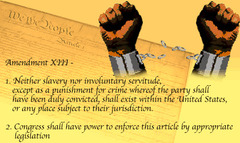
592797004413th AmendmentThis constitutional amendment, ratified in December 1865, forbade slavery and involuntary servitude in all states. (p. 276)53
5927970045Ex Parte MilliganIn 1866, the Supreme Court ruled that the government had acted improperly in Indiana where, certain civilians had been subject to a military trial during the war. The Court ruled that such trials could be used only when regular civilian courts were unavailable. (p. 279)54
5927970046draft riotsIn July 1863 riots against the draft erupted in New York City. Some 117 people were killed before federal troops and a temporary suspension of the draft restored order. (p. 280)55
5927970047CopperheadsNorthern Democrats who opposed the Civil War and wanted a negotiated peace. (p. 279)56
5927970048Trent AffairIn 1861, the Confederacy sent diplomats to Britain on a British steamer, to gain recognition for their government. A Union ship captured both men and took them as prisoners of war. The British threatened war if they were not released, and Lincoln gave into their demands. However, the diplomats were not able to get recognition for the Confederacy, from Britain or France. (p. 274)57
5927970049CSS AlabamaA Confederate war ship purchased from Britain. It captured more than 60 Union merchant ships before being sunk off the coast of France. (p. 274)58
5927970050John Wilkes BoothAn American stage actor who, as part of a conspiracy plot, assassinated President Abraham Lincoln at Ford's Theatre in Washington, D.C., on April 14, 1865. (p. 278)59
5927970051Massachusetts 54th RegimentAn all black regiment in the Civil War. (p. 276)60
5927970052border statesDuring the Civil War the term for the the states of Delaware, Maryland, Kentucky and Missouri. Keeping these states in the Union was a primary political and military goal of President Lincoln. They were slave states, but did not secede. (p. 269)61
5927970053Confederate States of AmericaIn February 1861, representatives of South Carolina, Georgia, Florida, Alabama, Mississippi, Louisiana, and Texas met in Montgomery, Alabama to form this new country. After the attack on Fort Sumter, the states of Virginia, North Carolina, Tennessee, Arkansas also seceded and joined the Confederacy. The Confederate capital was moved to Richmond, Virginia. The Confederate Constitution was modeled after the U.S. Constitution, except that it provided a single six-year term for the president and gave the president an item veto (power to veto part of a bill). (p. 269, 270)62
5927970054Jefferson DavisHe served as President of the Confederate States during the Civil War. (p. 270)63
5927970055Alexander H. StephensHe served as vice president of the Confederate States of America during the Civil War. He acted in defense of states' rights, and even urged the secession of Georgia in response to the "despotic" actions of the Confederate government. (p. 270)64
5927970056Second American RevolutionA term sometimes used for the Civil War. (p. 282)65
5927970057greenbacksName given to paper money issued by the Union government during the Civil War. They bills were not redeemable for gold, which contributed to creeping inflation. (p. 280)66
5927970058Morrill Tariff ActIn 1861, this tariff act raised rates to increase revenue and protect American manufacturers. (p. 281)67
5927970059Morrill Land Grant ActIn 1862, this act encouraged states to use the sale of federal land grants to maintain agricultural and technical colleges. (p. 281)68
5927970060Pacific Railway ActIn 1862, this act authorized the building of a transcontinental railroad over a northern route in order to link the economies of California and the western territories to the eastern states. (p. 281)69
5927970061Homestead ActIn 1862, this act promoted settlement of the Great Plains by offering parcels of 160 acres of public land free to any person or family that farmed that land for at least five years. (p. 281)70
5927970062Fort SumterA federal fort in the harbor of Charleston, South Carolina. It was cut off from vital supplies because the South controlled the harbor. President Lincoln announced that he was sending provisions to the Union fort. On April 12, 1861, Carolina guns opened on the Union, and the Civil War began. (p. 269)71
5927970063Bull RunIn July 1861, 30,000 federal troops marched from Washington D.C. to attack Confederate forces near Bull Run Creek at Manassas Junction, Virginia. In the first major battle of the Civil War, Union forces seemed close to victory, but then Confederate reinforcements counterattacked and sent the inexperienced Union troops in retreat. (p. 271)72
5927970064Thomas (Stonewall) JacksonIn July 1861, at the First Battle of Bull Run, this Confederate general counterattacked the Union and sent their troops in a retreat back to Washington D.C. (p. 271)73
5927970065Winfield ScottHe was the Union General-in-Chief at the start of the Civil War. (p. 271)74
5927970066Anaconda PlanThe Union's Civil War plan, created by General Winfield Scott. It called for the U.S. Navy to blockade Southern ports cutting off essential supplies from reaching the Confederacy. (p. 271)75
5927970067George McClellanThe commander of the Union army in the East. After extensive training of his army, he invaded Virginia in March 1862. The Union army was stopped as a result of brilliant tactical moves by the Confederate army. After five months he was forced to retreat to the Potomac, and was replaced by General John Pope. (p. 271)76
5927970068Robert E. LeeConfederate general who defeated the Union at the Second Battle of Bull Run. At the Battle of Antietam (in Maryland) he was unable to break through the Union line and had to retreat back to Virginia. At Fredericksburg, Virginia his army suffered 5,000 casualties compared to 12,000 casualties for the Union army. His army was finally defeated and he surrendered to Union General Grant at Appomattox Court House on April 9, 1865. (p. 272 273, 277, 278)77
5927970069AntietamThis battle took place in September 1862, when Confederate General Robert E. Lee moved his troops into Union territory in Maryland. The Union army met them at Antietam Creek, in Sharpsburg, Maryland. It was the bloodiest single-day battle in American history, with more than 22,000 killed or wounded. Unable to break through the Union lines the Confederate army retreated to Virginia. The win was important because it stopped the Confederate invasion of the North and gave Lincoln the victory he was waiting for. He could now act against slavery. (p. 273)78
5927970070FredericksburgOn December 13, 1862, General Ambrose Burnside launched a frontal attack on General Lee's strong position at this Virginia city. The Union army suffered 12,000 casualties (dead or wounded), while the Confederates only 5,000 casualties. (p. 273)79
5927970071Monitor vs. MerrimacFirst engagement ever between two iron-clad naval vessels. On March 9, 1862, the two ships battled for five hours, ending in a draw. This marked a turning point in naval warfare, wooden ships would be replaced by ironclad ones. (p. 273)80
5927970072Ulysses S. GrantIn early 1862, this Union general led his troops from Illinois to capture Fort Henry and Fort Donelson on the Cumberland River (branch of the Mississippi). These victoires opened up the state of Mississippi to attack by the Union. A Confederate army surprised him at Shiloh, Tennessee, but the his army held its ground and finally forced the Confederates to retreat after 23,000 total casualties. In July 1863, he captured Vicksburg, Mississippi and the Union now controlled the Mississippi River. In early 1864 Lincoln made him commander of all the Union armies. As General Robert E. Lee tried to flee to mountains with army of less than 30,000 men he cut off his army and forced them to surrender at Appomattox Court House. (p. 273, 274, 277, 278)81
5927970073ShilohMajor battle in the American Civil War, fought in 1862, in southwestern Tennessee. Confederate forces led by Albert Johnston launched a surprise attack against the Union army led by General Ulysses S. Grant. The Union army held its ground and finally forced the Confederates to retreat after 23,000 casualties (dead and wounded) on both sides. (p. 274)82
5927970074David FarragutHe led the Union navy when they captured New Orleans, in April 1862. (p. 274)83
5927970075GettysburgOn July 1, 1863, General Robert E. Lee led a Confederate army into Pennsylvania. He surprised the Union troops, and started the most crucial and bloodiest battle of the war. There were 50,000 casualties, but the Confederate army eventually retreated to Virginia, never to regain the offensive. (p. 277)84
5927970076VicksburgIn May 1863, Union General Ulysses S. Grant began an artillery bombardment of this Mississippi city, which last for seven weeks. On July 4, 1863, the Confederates finally surrendered the city, along with 29,000 soldiers. The Union now controlled the full length of the Mississippi River. (p. 277)85
5927970077Sherman's MarchUnion General William Tecumseh Sherman led a force of 100,000 troops on a destructive march through Georgia. Destroying everything in their path, they captured Atlanta, Georgia in September 1864, then marched into Savannah by that December, then they captured and burned Columbia, South Carolina in February 1865. (p. 277)86
5927970078Appomattox Court HouseSite of the surrender of the Confederate army led by Robert E. Lee to Union commander Ulysses S. Grant, on April 9, 1865. (p. 278)87
5927970079executive powerDuring the Civil War, President Abraham Lincoln acted in unprecedented ways, often without the approval of Congress. He called for 75,000 volunteers to stop the Confederacy, authorized spending for the war, and suspended habeas corpus. (p. 270)88
5927970080habeas corpusThis is the term for the constitutional right to be informed of charges and to be given a fair trial. During the Civil War Abraham Lincoln suspended this right, and arrested an estimated 13,000 people on suspicion of aiding the Confederates. (p. 279)89
5927970081insurrectionA term President Lincoln used, to describe the Confederacy actions at the start of the Civil War. (p. 269)90
5927970082Confiscation actsSeries of acts passed by the Union government, designed to liberate slaves in Confederate states. The second act in July 1862, freed slaves from anyone engaged in rebellion against the United States (Union). (p. 275)91
5927970083Emancipation ProclamationAfter the Battle of Antietam, on September 22, 1862, President Lincoln warned that enslaved people in all states still in rebellion on January 1, 1863 would be freed. He also urged the border states to draft plans for emancipation of slaves in their states. On January 1, 1863, Lincoln as promised issued this famous proclamation. This led to slaves joining the Union army and increased Union support from Europe. (p. 276)92
592797008413th AmendmentThis constitutional amendment, ratified in December 1865, forbade slavery and involuntary servitude in all states. (p. 276)93
5927970085Ex Parte MilliganIn 1866, the Supreme Court ruled that the government had acted improperly in Indiana where, certain civilians had been subject to a military trial during the war. The Court ruled that such trials could be used only when regular civilian courts were unavailable. (p. 279)94
5927970086draft riotsIn July 1863 riots against the draft erupted in New York City. Some 117 people were killed before federal troops and a temporary suspension of the draft restored order. (p. 280)95
5927970087CopperheadsNorthern Democrats who opposed the Civil War and wanted a negotiated peace. (p. 279)96
5927970088election of 1864In this presidential election, the Democrats nominated the popular General George McClellan. The Republicans renamed to the Unionist party, nominated President Abraham Lincoln. Abraham Lincoln won the election, however McClellan did win 45 percent of the popular vote. (p. 278)97
5927970089Trent AffairIn 1861, the Confederacy sent diplomats to Britain on a British steamer, to gain recognition for their government. A Union ship captured both men and took them as prisoners of war. The British threatened war if they were not released, and Lincoln gave into their demands. However, the diplomats were not able to get recognition for the Confederacy, from Britain or France. (p. 274)98
5927970090AlabamaA Confederate war ship purchased from Britain. It captured more than 60 Union merchant ships before being sunk off the coast of France. (p. 274)99
5927970091Laird ramsThese ships with iron rams could have been used against the Union's naval blockade. However, the Union persuaded the British government to cancel the sale of these ships to the Confederacy, rather than risk war with the Union. (p. 274)100
5927970092John Wilkes BoothAn American stage actor who, as part of a conspiracy plot, assassinated President Abraham Lincoln at Ford's Theatre in Washington, D.C., on April 14, 1865. (p. 278)101
5927970093segregated black troopsAlmost 200,000 African Americans joined the Union army during the Civil War. (p. 276)102
5927970094Massachusetts 54th RegimentAn all black regiment in the Civil War. (p. 276)103
5927970095women in the workplaceAs men went off to battle in the Civil War, women stepped into the labor vacuum, operated farms and took factory jobs customarily held by men. (p. 282)104
5927970096women in nursingDuring the Civil War women played a critical role as military nurses. (p. 282)105
5927970097war's long term effectsThe Civil War had long term effects on women. The field of nursing was now open to women for the first time. The enormous responsibilities undertaken by women gave impetus to the movement to obtain equal voting rights for women. (p. 282)106
59279700984 million freedmenWith the passage of the thirteenth amendment in 1865, 4 million African Americans were now free. (p. 282)107

AP US History Unit 1 Flashcards

Terms : Hide Images
5478976122Landbrige (Bering)route where humans from Asia and Europe came over to the Americas0
5478975686Amerigo Vespucciexplorer America named after1
5478977652Anasaziin Chaco Canyon, roads, irrigation system2
5478978710Adena and Hopewell(Ohio Valley): Large ceremonial grounds, trade network3
5479041822Iroquoisnew york4
5479042278PowhattanVirginina (Pocahontas)5
5478981146CortesAztecs6
5478981805PIzarroIncas7
5478982736Fr. Junipero Serraled Catholic Mission system of Spainsh8
5478984581Reasons for Spanish successful conquestThe Native people already were experiencing division and conflict. → Spanish able to use deliberate strategy to provoke anger from different groups and get them to fight each other. Also, Native have less experience in warfare than Europeans.9
5478980086CahokiaMississippi valley): Larger ceremonial mounds, trade network10
5478987993- Tupac Amaru(1572):last Inca king "Mother Earth, witness how my enemies shed my blood."11
5478986868Pope's rebellion1680 Pueblo People (New Mexico): INitally successful, Spanish we able to retake the area 12 years later12
5479039392Richard Hakluytwriter who promoted colonization in America13
5478989644Commercial Reasons for colonization:Investments: Joint stock companies, sold shares of stock to pay for the colonies and organize them as businesses. -Mercantilism: Seeking gold and resources from colonies and make own goods - Raw Materials: not available in England - New Markets to sell stuff - Land-ownership: people seeking better life14
5478968586Mercantilismeconomic theory, colonies exist for benefit of mother country, collect gold and silver, buy more goods that you sell15
5478968544Elizabeth IEnglish Queen during golden age. Reestablished Protestantism as the state religion of England and she led the defeat of the Spanish Armada.16
5478990420Religious Reasons:- Puritans: A group of protestants who felt the Anglican (Church of England) was too similar to Catholic Rhuch - Wanted to purify what they viewed as corrupt and excessive in the Church of England - Persecuted for their religious view in England, went to America to establish own societies - Did not like symbols17
5478990896Social/Political:- The enclosure movement: Land in England was converted from farming to pasture (to raise sheep). This led to many unemployed farm workers. Also, England was not at war so many unemployed upper class young men who would normally be in military o Financially beneficial for landowners to convert farm to pasture because uses less land and need lesser workers - Adventure: Thrill seekers, the unknown - People wanting more freedom from the English government/monarchy - English government wanted to weaken Spain by building presence in Americas18
5478991756John CabotCabot commissioned to find a Northern route to reach the Indies - Cabot claims land in New England, Nova Scotia and Newfoundland for the English19
5478968543Walter RaleighFounder of England's first American colony. (Roanoke, it failed)20
5479040698Samuel de ChamplainFather of "New France" founded in Quebec (1608) - fur trade, friendly rel' with Indians21
5478968545Treaty of Tordesillasa 1494 agreement between Portugal and Spain, declaring that newly discovered lands to the west of an imaginary line in the Atlantic Ocean would belong to Spain and newly discovered lands to the east of the line would belong to Portugal.22
5478968550JamestownFounded in 1607 by the Virginia Company of London. commercial interest. elected Captain John Smith as their leader.23
5478968549john smithHelped found and govern Jamestown. His leadership and strict discipline helped the Virginia colony get through the difficult first winter (Starvation) .24
5478968546Pocahontasa Powhatan woman (the daughter of Powhatan) who befriended the English at Jamestown. Marriage to John Rolfe = first interracial union in america= Peace settlement ending the Anglo-Powhatan War - served as diplomat and even traveled Europe25
5478968547John RolfeHe was one of the English settlers at Jamestown (and he married Pocahontas). He discovered how to successfully grow tobacco in Virginia and cure it for export, which made Virginia an economically successful colony.26
5478968551Thomas DaleMade governor of Jamestown after John Smith, stern, didn't believe in laziness, created daily schedule27
5478968552John CalvinINSTITUTES OF THE CHRISTIAN RELIGION: emphasized predestination and he rejected the medieval Church. he believed that the church and state should be united under the Calvinist faith28
5479008676Wiliam Bradfordfounder of Massachusetts and governor of Pilgrims29
5478968553John WinthropGovernor of Massachusetts Bay Colony, envisioned colony as a "city upon a hill" (covenant theology)30
5479009434Thomas HookerFounder of Connecticut31
5479011615Pequot WarWar between pequots and Connecticut32
5478968557Roger WilliamsHe founded Rhode Island for separation of Church and State. He believed that the Puritans were too powerful and was ordered to leave the Massachusetts Bay Colony for his religious beliefs.33
5478968555Anne HutchinsonA religious dissenter whose ideas provoked an intense religious and political crisis in the Massachusetts Bay Colony between 1636 and 1638. She challenged the principles of Massachusetts's religious and political system. Her ideas became known as the heresy of Antinomianism, a belief that Christians are not bound by moral law. She was latter expelled, with her family and followers, and went and settled at Rode Island, killed by indians34
5479011210Captain John Mason and Sir Ferdinando Gorgesfounder of New H35
5479003295George Calvert (Lord baltimore)founder of Maryland36
5479007094Peter MinuitSwedish founder of Delaware --> in English possession37
5479004429James Oglethorpefounder of Georgia38
5478968554Peter StuyvesantThe governor of the Dutch colony of New Amsterdam (netherland?), hated by the colonists. They surrendered the colony to the English on Sept. 8, 1664.39
5479006397George Carteretfounder of new Jersey, receive land from James, founder of New York40
5482486281Maryland Toleration Act of 1649Protect Christians (Catholics and Protestants)41
5479005323Wiliam PennPennsylvania, inherited Father's land and gained royal charter, Quaker42
5478968556King Phillips WarStarted over land ownership disagreements. The War Between the Puritans and the Pequot, Narragansett,Wampanog, and Nipmunk indians. armed indians in raiding NE towns, eng & allies won, survivors fled N, increase indian hate43
5478968570headright systemParcels of land consisting of about 50 acres which were given to colonists who brought indentured servants into America. They were used by the Virginia Company to attract more colonists.44
5478968558Dominion of New england1686-The British government combined the colonies of Massachusetts, Rhode Island, New Hampshire, and Connecticut into a single province headed by a royal governor (Andros) Charters and self rule were revoked, and the king enforced mercantile laws. The new setup also made for more efficient administration of English Navigation Laws, as well as a better defense system.45
5478968569half way covenantresponse to decline of puritanism. The puritan practice where by parents who had been baptized but had not yet experienced conversion could bring their children before the church and have them baptized.weakend distinction between "elect" and others- dramatizied the difficulty of maintainignreligious devotion46
5479045436DissentersBaptists, Methodists, Quakers, and Unitarians47
5478968559New England ConfederationNew England colonists (Massachusetts, Connecticut, New Haven, and Plymouth) formed this in 1643 as a defense against local Native American tribes and encroaching Dutch. The colonists formed the alliance without the English crown's authorization.48
5478968560PatroonshipsVast estates along the Hudson River established by the Dutch. They had difficulty attracting peasant labor, and most were not successful.49
5478968562JeremiadsPuritan preachers Taking their cue from the doom-saying Old Testament prophet Jeremiah, earnest preachers scolded parishioners for their waning piety.Scared people off, decline of puritanism50
5478968563Glorious Revolution 1688Bloodless overthrow of King James II. established William and Mary as the new leaders.51
5478968564Great Puritan MigrationMany Puritans migrated from England to North America during the 1620s to the 1640s due to belief that the Church of England was beyond reform. Eg 1630 group of puritans led by john winthrop found MA Bay Colony52
5478968566Bacon's RebellionIndentured servants in Virginia revolt against gov and landowners (origionally over lack of protection from indians on frontier). burn Jamestown. look to african slaves as less troublesome source of labor. against Berkley's autocratic rule o Continuous struggle between boundary of white and Native o Show how unwilling English settlers were to abide to earlier agreements with Natives o Show how unwilling Natives were to tolerate white intrusion o Reveal bitterness between Western and Eastern landowners o !!Potential for instability in land of free, landless men in colonies o !!!Although it was Bacon's rebellion, most of rebels were landless, former indentured servants eager for land. Movement was representing animosity of landless toward landowners o to avoid instability in lower class, import African slaves o further dehumanize African slaves so that there is difference between indentured and African slaves53
5478968572Triangular TradeIllegal trade created to generate money to buy english goods.The backbone of New England's economy during the colonial period. Ships from New England sailed first to Africa, exchanging New England rum for slaves. The slaves were shipped from Africa to the Caribbean (this was known as the Middle Passage, when many slaves died on the ships). In the Caribbean, the slaves were traded for sugar and molasses. Then the ships returned to New England, where the molasses were used to make rum.54
5478968567Middle passagethe middle portion of the triangular trade that brought African slaves to the Americas55
5479021589Marron coloniesfugitive slaves formed own colonies: - Florida: join Spanish militia, Seminole Natives - New Orleans - Great Dismal Swamp56
5479026015Stono Rebellion1739 - largest African slave revolt, over 250 revolts took place afterwards57
5478968568Salem witch trialsSeveral accusations of witchcraft led to sensational trials in Salem, Massachusetts at which Cotton Mather presided as the chief judge. 18 people were hanged as witches. Terrible mistake, shows social tensions, decline of puritanism.58
5478968573First Great Awakening1st grassroots american social movement.series of revivals making church more emotional. Old lights (against) new lights (for). results: democratic, new denominations (meth and bapt), more choice, colleges, old clergy looses prestige59
5478968574George WhitefieldMost influentian new light speaker during first great awakening60
5478968575Jonathon edwardsNew light preatcher who started the first Great awakening61
5479036910Old lights vs New lights- Division between "New Light" revivalists and "Old Light" traditionalists62
5479030831Enlightenment: Lock and HobbesThomas Hobbes: humans are inherently selfish and barbaric → need an absolute ruler who would stabilize the uncivilized society and impose order John Lock:humans are inherently logical and good → do not need an absolute ruler but should be granted freedom and natural rights + - Benjamin Franklin, Thomas Jefferson, Thomas Paine, James Madison made their own vital contributions to the Enlightenment tradition63
5479033955Bradstreetfirst prominent woman poet64
5478968578Phyllis Wheatley1st important African american writer. Abolitionists later point to her as proof that they are intellectually equal65
5478968565Treaty of Utrecht1713, ended Queen Ann's War, transferred large areas of French territory in North America to English including Nova Scotia and Newfoundland66
5478968577Paxton RevoltThey were a group of Scots-Irish men living in the Appalachian hills that wanted protection from Indian attacks. They made an armed march on Philadelphia in 1764. They protested the lenient way that the Quakers treated the Indians. Their ideas started the Regulator Movement in North Carolina.67

AP US History: Period 7 Flashcards

Terms : Hide Images
6368361427American Expeditionary ForceTroops sent to Europe under General John J. Pershing to help fight World War l.0
6368361429Atomic BombManhattan Project was the name given to this weapon's development.1
6368361430Axis PowersGermany, Italy, and Japan2
6368361431Harlem RenaissanceA rebirth of Black cultural expression3
6368361433League of NationsAn international organization established after World War I under the provisions of the Treaty of Versailles.4
6368361434New DealA group of government programs and policies established under President Franklin D. Roosevelt to help end the Great Depression.5
6368361435Pearl HarborA major United States naval base in Hawaii.6
6368361436Religious FundamentalismStrict adherence to some belief or ideology, especially in a religious context.7
6368361437Franklin D. RooseveltHe guided America through one of the greatest crisis in American history since the Civil War.8
6368361438Spanish-American WarA war between Spain and the United States that begun after the sinking of the Maine.9
6368361439Woodrow WilsonDuring World War l, he believed in neutrality and making the world "safe for democracy."10
6368361441Clayton Anti-Trust ActA law passed by Congress that attempted to prohibit monopolies from buying out the competition.11
6368361443Federal Deposit Insurance CorporationPreserved the public's confidence in the banking system by insuring deposits.12
6368361444Neutrality ActsLaws passed from 1935-1939 to limit U.S. involvement in any future wars.13
6368361447Social Security ActA law enacted by FDR to create a system to transfer payments in which younger, working people would help support retired people.14
6368361451CommunismAn economic and social system in which all property and resources are collectively owned.15
6368361453Booker T. WashingtonFounder of the Tuskegee Institute.16
6368361454Women's Christian Temperance UnionSought to abolish saloons and alcohol.17
6368361458First Red ScareFear of communism after communist took over Russia.18

AP US History Chapter 12 Flashcards

AMSCO United States History 2015 Edition, Chapter 12 Territorial and Economic Expansion, 1830-1860

Terms : Hide Images
5769730553manifest destinyThe belief that the United States had a divine mission to extend its power and civilization across the breadth of North America. (p. 230)0
5769730554industrial technologyAfter 1840, industrialization spread rapidly throughout most of the Northeast. New factories produced shoes, sewing machines, ready-to-wear clothing, firearms, precision tools, and iron products for railroads and other new products. (p. 238)1
5769730555Elias HoweThe U.S. inventor of the sewing machine, which moved much of clothing production from homes to factories. (p. 238)2
5769730556Samuel F. B. MorseIn 1844, he invented the electric telegraph which allowed communication over longer distances. (p. 238)3
5769730557railroadsIn the 1840s and the 1850s, this industry expanded very quickly and would become America's largest industry. It required immense amounts of capital and labor and gave rise to complex business organizations. Local and state governments gave the industry tax breaks and special loans to finance growth. (p. 238)4
5769730558Panic of 1857Financial crash which sharply lowered Midwest farmers prices and caused unemployment in the Northern cities. The South was not affected as much because cotton prices remained high. (p. 239)5
5769730559Great American DesertIn the 1850s and 1860s, the arid area between the Mississippi River and the Pacific Coast, was known by this name. (p. 236)6
5769730560mountain menThe first non-native people to open the Far West. These fur trappers and explorers included James Beckwourth, Jim Bridger, Kit Carson, and Jedediah Smith. (p. 237)7
5769730561Far WestIn the 1820s, the Rocky Mountains were known by this name. (p. 237)8
5769730562overland trailsThe wagon train trails that led from Missouri or Iowa to the west coast. They traveled only 15 miles per day and followed the river valleys through the Great Plains. Months later, the wagon trains would finally reach the foothills of the Rockies or face the hardships of the southwestern deserts. The final challenge was to reach the mountain passes before the first heavy snows. Disease was even a greater threat than Indian attack. (p. 237)9
5769730563mining frontierThe discovery of gold in California in 1848 caused the first flood of newcomers to the West. A series of gold strikes and silver strikes in what became the states of Colorado, Nevada, Idaho, Montana, Arizona, and South Dakota kept a steady flow of hopeful young prospectors pushing into the West. (p. 237)10
5769730564gold rushCalifornia's population soared from 14,000 in 1848 to 380,000 in 1860, primarily because of this event. (p. 237)11
5769730565silver rushThe discovery of silver in Colorado, Nevada, the Black Hills of the Dakotas, and other western territories, created a mining boom. (p 237)12
5769730566farming frontierIn the 1830s and 1840s pioneer families moved west to start homesteads and begin farming. Government programs allowed settlers to purchase inexpensive parcels of land. (p. 237)13
5769730567urban frontierWestern cities that arose as a result of railroads, mineral wealth, and farming. They included San Francisco, Denver, and Salt Lake City. (p. 238)14
5769730568federal land grantsIn 1850, the U.S. government gave 2.6 million acres of federal land to build the Illinois Central railroad from Lake Michigan to Gulf of Mexico. (p. 238)15
5769730569John TylerHe was elected Vice President, then he became the tenth president (1841-1845) when Benjamin Harrison died. He was responsible for the annexation of Mexico after receiving a mandate from Polk. He opposed many parts of the Whig program for economic recovery. (p. 231)16
5769730570Oregon territoryThis was a vast territory on the Pacific coast that stretched as far north as the Alaskan border. Originally the United States was interested in all the territory, but in 1846 Britain and the U.S. agreed to divide the territory at the 49th Parallel, today's border between Canada and the United States. (p. 232)17
5769730571Fifty-four Forty or FightThe slogan of James K. Polk's plan for the Oregon Territory. They wanted the border of the territory to be on 54' 40° latitude (near present-day Alaska) and were willing to fight Britain over it. Eventually, 49 degrees latitude was adopted as the northern border of the United States, and there was no violence. (p. 232)18
5769730572James K. PolkThe eleventh U.S. president from 1845 to 1849. He was a slave owning southerner dedicated to Democratic party. In 1844, he was a "dark horse" candidate for president, and a protege of Andrew Jackson. He favored American expansion, especially advocating the annexation of Texas, California, and Oregon. (p. 232)19
5769730573Wilmot ProvisoIn 1846, the first year of the Mexican War, this bill would forbid slavery in any of the new territories acquired from Mexico. the bill passed the House twice, but was defeated in the Senate. (p. 234)20
5769730574Franklin PierceIn 1852, he was elected the fourteenth president of the United States. (p. 236)21
5769730575Ostend ManifestoThe United States offered to purchase Cuba from Spain. When the plan leaked to the press in the United States, it provoked an angry reaction from antislavery members of Congress, forcing President Franklin Pierce to drop the plan. (p. 235)22
5769730576TexasIn 1823, Texas won its national independence from Spain. The annexation of this state was by a joint resolution of Congress, supported by President-elect James Polk. This annexation contributed to the Mexican War because the border with Mexico was in dispute. Land from the Republic of Texas later became parts of New Mexico, Colorado, Oklahoma, Kansas, and Wyoming. (p. 233)23
5769730577Stephen AustinIn the 1820s, his father had obtained and large land grant in Texas. He brought 300 families from Missouri to settle in Texas. (p. 231)24
5769730578Antonio Lopez de Santa AnnaIn 1834, he established himself as dictator of Mexico and attempted to enforce Mexico's laws in Texas. In March 1836 a group of American settlers revolted and declared Texas to be an independent republic. He then led an army which attacked the Alamo in San Antonio, killing all the American defenders. Shortly after that, Sam Houston led an army that captured him and he was forced to sign a treaty that recognized the independence of Texas. (p. 231)25
5769730579Sam HoustonIn March 1836, he led a group of American settlers that revolted against Mexico and declared Texas to be an independent republic. He led an army that captured Santa Anna and forced him to sign a treaty that recognized Texas as an independent republic. As the first president of the Republic of Texas, he applied to the U.S. government for Texas to be added as a new state. It was many years before the U.S. would act to add Texas as a state. (p. 231)26
5769730580AlamoThe mission and fort that was the site of a siege and battle during the Texas Revolution, which resulted in the massacre of all its defenders. The event helped galvanize the Texas rebels and led to their victory at the Battle of San Jacinto. Eventually Texas would join the United States. (p. 231)27
5769730581Aroostook WarIn the early 1840s, there was a dispute over the the British North America (Canada) and Maine border. Open fighting broke out between rival groups of lumbermen. The conflict was soon resolved by the Webster-Ashburton Treaty of 1842. (p. 231)28
5769730582Webster-Ashburton TreatyIn this 1842 treaty US Secretary of State Daniel Webster and British ambassador Lord Alexander Ashburton created a treaty splitting New Brunswick territory into Maine and British Canada. It also settled the boundary of the Minnesota territory. (p. 232)29
5769730583Rio Grande; Nueces RiverIn the 1840s the United States believed the southern Texas border was the Rio Grande River. Mexico believed the border was further north on the Nueces River. (p. 233)30
5769730584Mexican War (1846-1847)A war between the United States and Mexico from 1846 to 1848. President James Polk attempted to purchase California and the New Mexico territories and resolve the disputed Mexico-Texas border. Fighting broke out before the negotiations were complete and the war lasted about two years, ending when the United States troops invaded Mexico City. (p. 233-235)31
5769730585Zachary TaylorIn 1845, this U.S. general, moved his troops into disputed territory in Texas, between the Nueces and Rio Grande Rivers. Eleven of his soldiers were killed by Mexican troops and President James Polk used the incident to justify starting the Mexican War. He used of force of 6,000 to invade northern Mexico and won a major victory at Buena Vista. In 1848, he was elected president. (p. 233, 234)32
5769730586Winfield ScottThis U.S. general invaded central Mexico with an army of 14,000. They took the coastal city of Vera Cruz and then captured Mexico City in September 1847. (p. 234)33
5769730587Stephen KearneyThis U.S. general led a small army of less than 1,500 that succeeded in taking Santa Fe, the New Mexico territory, and southern California during the Mexican War. (p. 234)34
5769730588John C. FremontIn June 1846, he overthrew Mexican rule in northern California and proclaimed California to be an independent republic, the Bear Flag Republic. (p. 234)35
5769730589California; Bear Flag RepublicIn June 1846, John C. Fremont quickly overthrew Mexican rule in Northern California to create this independent republic. (p. 234)36
5769730590Treaty of Guadalupe HidalgoIn 1848, this treaty ended the Mexican War. Under its terms, Mexico recognized the Rio Grande as the border with Texas, Mexico ceded the California and New Mexico territories to the United States. The United States agreed to pay Mexico $15 million and assumed responsibility for any claims of American citizens against Mexico. (p. 234)37
5769730591Mexican CessionHistorical name for the former Mexican provinces of California and New Mexico that were ceded to the U.S. by Mexico in 1848 under the Treaty of Guadalupe Hidalgo. (p 234)38
5769730592Walker ExpeditionAn expedition by a Southern adventurer who unsuccessfully tried to take Baja California from Mexico in 1853. He took over Nicaragua in 1855 to develop a proslavery empire. His scheme collapsed when a coalition of Central American countries invaded and defeated him, and he was executed. (p. 236)39
5769730593Clayton-Bulwer TreatyAn 1850 treaty between the U.S. and Great Britain agreeing that neither country would attempt to take exclusive control of any future canal route in Central America. (p. 236)40
5769730594Gadsden PurchaseIn 1853, the U.S. acquired land (present day southern New Mexico and Arizona) from Mexico for $10 million. (p. 236)41
5769730595foreign commerceIn the mid-1800s, the growth in manufactured goods as well as in agriculture products (Western grains and Southern cotton) caused a significant growth of exports and imports. (p. 238, 239)42
5769730596exports and importsIn the mid-1800s, the U.S. was exporting primarily manufactured goods and agriculture products such as Western grains and Southern cotton. Imports also increased during this period. (p. 238, 239)43
5769730597Matthew C. Perry; JapanCommodore of the U.S. Navy who was sent to force Japan to open up its ports to trade with the U.S. (p. 239)44

AP US History Period 9 Flashcards

Terms : Hide Images
6704094985Moral MajorityPolitical action committee founded by evangelical Reverend Jerry Falwell in 1979 to promote traditional Christian values and oppose feminism, abortion, and gay rights. A major linchpin in the resurgent religious right of the 1980s.0
6704094986Supply-side economics (Reaganomics)Economic theory beneath Ronald Reagan's tax and spending cuts. Said that government policy should aim to increase the supply of goods and services, instead of demand for them. Held that lower taxes and decreased regulation would increase productivity and the tax base by providing more incentive to work.1
6704094987Strategic Defense Initiative (Star Wars)Reagan administration plan announced in 1983 to create a missile-defense system over American territory to block a nuclear attack. Derided as "Star Wars" by critics, the plan typified Reagan's commitment to vigorous defense spending even as he sought to limit the size of government in domestic matters.2
6704094988Iran - Contra AffairMajor political scandal of Reagan's 2nd term revealed in 1986. An illicit arrangement of selling "arms for hostages" with Iran and using money to support contras in Nicaragua, it deeply damaged Reagan's credibility.3
6704094990Mikhail GorbachevHead of the Soviet Union from 1985 to 1991. He tried to liberate USSR in order to improve relations with the West. Lost his power after his reforms resulted in Communist governments in eastern Europe collapsing.4
67040949911)glasnost and 2) perestroika1) Soviet policy of open discussion of political and social issues. The policy was instituted by Soviet leader Mikhail Gorbachev in the late 1980s and began the democratization of the Soviet Union. 2) the policy or practice of restructuring or reforming the economic and political system. First proposed by Leonid Brezhnev in 1979 and actively promoted by Mikhail Gorbachev, it was originally referred to increased automation and labor efficiency, but came to entail greater awareness of economic markets and the ending of central planning5
6704094992Berlin Wall falls (1989)represents an end of communism in eastern europe6
6704094993Panama Invasion (1989)Bush ordered this to remove the autocratic General Manuel Noriega; the alleged purpose of this was to stop Noriega from using his country as a drug pipeline to the US. Part of the war on drugs.7
6704094994Saddam HusseinPresident of Iraq from 1979 to 2003. Waged war on Iran in 1980-1988. In 1990 he ordered an invasion of Kuwait but was defeated by United States and its allies in the Gulf War (1991). Defeated by US led invasion in 2003.8
6704094995Persian Gulf War (1991)Conflict between Iraq and a coalition of countries led by the United States to remove Iraqi forces from Kuwait which they had invaded in hopes of controlling their oil supply. US emerged the winners, very patriotic time for Americans.9
6704094996Americans With Disabilities Act (1990)Landmark law signed by President George H.W. Bush that prohibited discrimination against people with physical/mental handicaps. It was a legislative triumph for champions of equal protections to all.10
6704094997"don't ask, don't tell" (1993-2010)Policy affecting homosexuals in the military. Emerged as a compromise between standing prohibition against homosexuals in armed forces and Clinton's push to allow all citizens to serve regardless of sexual orientation. Military authorities were forbidden to ask about a service member's orientation, and gay service personnel could be discharged if they publicly revealed their homosexuality. Repealed by Congress at urging of Obama in 2010, permitting gays to serve openly in uniform.11
6704094998Brady BillAct enacted in 1993 by President Clinton that mandated federal background checks on firearm purchasers in the United States, and imposed a five-day waiting period on purchases, until the NICS system was implemented in 1998.12
6704095000Newt Gringrich·Gingrich was the Republican speaker in the House. He pushed for more conservative legislation during Clinton's presidency.13
6704095001Contract with AmericaMultipoint program offered by Republican candidates/sitting politicians in 1994 midterm election. The platform proposed smaller government, congressional ethics reform, term limits, greater emphasis on personal responsibility, and general repudiation of Democratic Party. A significant blow to Clinton administration and led to Republican party's takeover of both houses of Congress for 1st time in half a century. Pushed Heavily by Gingrich.14
6704095003Religious FundamentalismA Religious movement where the followers are to return to the foundations of the faith and to influence state policy where every word of the bible is interpreted literally. Huge revival in the 1980s.15
6704095004Televangelistpreachers spread the gospel on TVs across America16
6704095005Roe v. WadeSupreme court case ruled in 1973 that recognized that the constitutional right to privacy extends to a woman's right to make her own personal medical decisions — including the decision to have an abortion without interference from politicians. However it was faced with backlash and limits during the conservative resurgence.17
6704095006Reverse DiscriminationConservative belief that whites can be discriminated based on their race. Gained popularity as more and more minorities gained rights or "privileges" such as affirmative action.18
6704095007Supply side economicsAlso called Reaganomics or Trickle Down economics. Belief that economy was stagnant because of too many regulations, Reagan proposed a phased 30% tax cut for the first three years of his Presidency. The bulk of the cut would be concentrated at the upper income levels. Idea was that Tax relief for the rich would enable them to spend and invest more. This new spending would stimulate the economy and create new jobs.19
6704095008No Child left Behind actHolds states, schools, and school districts more accountable for their standardized tests scores. The wanted outcome was better tests scores all around and overall a smarter and better population of young people that would positively contribute to a growing America. Enacted by George Bush, has some negative effect on students due to increased testing.20
6704095009Economy Recovery Tax Act (1981)Passed by Congress, it included a 25 percent decrease in personal income taxes over three years. Part of Reaganomics.21
6704095012Welfare ReformClinton takes a conservative stance on welfare. Cut funding on food stamps and shortened the period you could rely on them22
6704095013Clinton impeachmentclinton impeached on charges of perjury and obstruction of justice in 1998.23
6704095014Globalizationincreasing interactions between countries24

Pages

Subscribe to CourseNotes RSS

Need Help?

We hope your visit has been a productive one. If you're having any problems, or would like to give some feedback, we'd love to hear from you.

For general help, questions, and suggestions, try our dedicated support forums.

If you need to contact the Course-Notes.Org web experience team, please use our contact form.

Need Notes?

While we strive to provide the most comprehensive notes for as many high school textbooks as possible, there are certainly going to be some that we miss. Drop us a note and let us know which textbooks you need. Be sure to include which edition of the textbook you are using! If we see enough demand, we'll do whatever we can to get those notes up on the site for you!