AP Notes, Outlines, Study Guides, Vocabulary, Practice Exams and more!

AP US History Period 4 Flashcards

Terms : Hide Images
5405925969Federalistpolitical party created in the 1790s led by Alexander Hamilton, favored a stronger national government - Supported primarily by the bankers and moneyed interests0
5405925970Democratic-RepublicansPolitical party created in the 1790's - led by Thomas Jefferson - favored limited government and state rights - supported primarily by the "Common man"1
5405925971Election of 1800aka Revolution of 1800- election that led to a peaceful transfer of power from the Federalist party to the Democratic Republican Party2
5405925972Hartford Convention, 1814meeting of Federalists during the War of 1812 in which anti-war Federalist threatened to secede from the Union - generally viewed by some as treasonous and the Federalist Part began to die out3
5405925973Era of Good Feelingsthe decline of the Federalist Party and the end of the war of 1812 gave rise to a time of political cooperation - associated with the presidency of James Monroe4
5405925977Henry ClayLeader of the Whig Party who proposed an "American System" to make the United States economically self-sufficient - worked to keep the Union together through political compromise5
5405925980Midnight JudgesFederalist judges appointed by John Adams between the time he lost the election of 1800 and the time he left office in March 18016
5405925981John MarshallAppointed to the Supreme Court by John Adams in 1801- served as a chief justice until 1835 - legal decisions gave the Supreme Court more power, strengthened the federal government, and protecting private property7
5405925983Marbury v. Madison 1803Supreme Court that declared a section of Judiciary Act of 1789 unconstitutional and established the principle of judicial review8
5405925984Judicial ReviewThe power of the Supreme Court to review the constitutionality of laws passed by Congress9
5405925985McCulloch v. Maryland 1819Supreme Court decision that upheld the constitutionality of the BUS - Maryland did not have the right to tax the federal bank and John Marshall wrote, "The power to tax is the power to destroy."10
5405925986Gibbons v. Ogden 1824Supreme Court decision stating that the authority of Congress is absolute in matters of interstate commerce11
5405925988Embargo Act 1807in order to pressure Britain and France to aspect neutral trading rights, Jefferson issued a government-order ban on international trade - went into effect in 1808 and closed down virtually all U.S. trade with Foreign nations12
5405925989American System 1815Henry Clay's proposal to make the U.S. Economically self-sufficient - called for protective tariffs, internal improvements at federal expense, the creation of a second Bank of the United States13
5405925990Panic of 1819Financial panic that began when the Second Bank of the US tightened credit and recalled government loans after the price of cotton dropped amidst speculation as well14
5405925991Debates over the tariff and internal improvementsNortherners generally favored higher tariffs and internal improvements at federal expense while Southerners generally opposed higher tariffs and internal improvements at federal expense15
5405925992Second Bank of the United States 1816Privately owned bank that operated as both a commercial and fiscal agent for the US government - established in 1816 under a charter that was supposed to last 20 years16
5405925993Tariff of 1816first protective tariff in US history - designed primarily to help America's textile industry17
5405926030Louisiana Purchase 1803U.S. purchased the Louisiana Territory from France for $15 million, doubling the size of the U.S. and giving the U.S. full control of the Mississippi River18
5405926031Lewis and Clark expedition 1804-1806Expedition to explore the Louisiana Territory led by Meriwether Lewis and William Clark19
5405926032War HawksMembers of Congress from the West and South elected in 1810 who wanted war with Britain in the hopes of annexing new territory and ending British trade with the Indians of the Northwest20
5405926033War of 18121812-1815, War between the U.S. and Great Britain caused primarily by the British violation of American neutral rights on the high seas. - ended with an agreement of "status quo ante" (a return to how things were before the war)21
5405926034Adams-Onis Treaty, 1819Treaty between the U.S. and Spain that ceded Florida to the U.S22
5405926035Monroe Doctrine 1823President Monroe's unilateral declaration that the Americas would be closed to further European colonization stated the U.S. would not allow European interference in the affairs of the Western Hemisphere23
5405926047Missouri Compromise 1820Law proposed by Henry Clay admitting Missouri to the U.S. as a slave state and Maine as a free state24

AP US History, Chapter 32 Flashcards

Terms : Hide Images
8519236180Brain TrustSpecialists in law, economics, and welfare, many young university professors, who advised President Franklin D. Roosevelt and helped develop the policies of the New Deal.0
8519236181New DealThe economic and political policies of Franklin Roosevelt's administration in the 1930s, which aimed to solve the problems of the Great Depression by providing relief for the unemployed and launching efforts to stimulate economic recovery. The New Deal built on reforms of the progressive era to expand greatly an American-style welfare state.1
8519236182Hundred DaysThe first hundred days of Franklin D. Roosevelt's administration, stretching from March 9 to June 16, 1933, when an unprecedented number of reform bills were passed by a Democratic Congress to launch the New Deal.2
8519236183Glass-Steagall Banking Reform ActA law creating the Federal Deposit Insurance Corporation, which insured individual bank deposits and ended a century-long tradition of unstable banking that had reached a crisis in the Great Depression (1933).3
8519236184Civilian Conservation Corps (CCC)A government program created by Congress to hire young unemployed men to improve the rural, out-of-doors environment with such work as planting trees, fighting fires, draining swamps, and maintaining National Parks. It proved to be an important foundation for the post-World War II environmental movement (1933).4
8519236185National Recovery Administration (NRA)Known by its critics as the "National Run Around," the NRA was an early New Deal program designed to assist industry, labor, and the unemployed through centralized planning mechanisms that monitored workers' earnings and working hours to distribute work and established codes for "fair competition" to ensure that similar procedures were followed by all firms in any particular industrial sector (1933).5
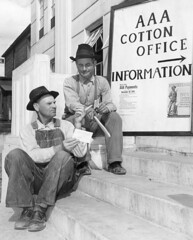
8519236186Agricultural Adjustment Administration (AAA)A New Deal program designed to raise agricultural prices by paying farmers not to farm. It was based on the assumption that higher prices would increase farmers' purchasing power and thereby help alleviate the Great Depression (1933).6
8519236187Dust BowlGrim nickname for the Great Plains region devastated by drought and dust storms during the 1930s. The disaster led to the migration into California of thousands of displaced "Okies" and "Arkies".7
8519236188Tennessee Valley Authority (TVA)One of the most revolutionary of the New Deal public works projects, the TVA brought cheap electric power, full employment, low-cost housing, and environmental improvements to Americans in the Tennessee Valley (1933).8
8519236189Social Security ActA flagship accomplishment of the New Deal, this law provided for unemployment and old-age insurance financed by a payroll tax on employers and employees. It has long remained a pillar of the "New Deal Order" (1935).9
8519236190Wagner ActAlso known as the National Labor Relations Act, this law protected the right of labor to organize in unions, bargain collectively with employers, and established the National Labor Relations Board to monitor unfair labor practices on the part of the employer. Its passage marked the culmination of decades of labor protest (1935).10
8519236191Fair Labor Standards ActImportant New Deal labor legislation that regulated minimum wages and maximum hours for workers involved in interstate commerce. The law also outlawed labor by children under sixteen. The exclusion of agricultural service and domestic workers meant that many blacks, Mexican Americans, and women who were concentrated in these sectors—did not benefit from the act's protection (1938).11
8519236192Congress of Industrial Organizations (CIO)A New Deal-era labor organization that broke away from the American Federation of Labor (AFL) in order to organize unskilled industrial workers regardless of their particular economic sector or craft. The CIO gave a great boost to labor organizing in the midst of the Great Depression and during World War II. In 1955, the CIO merged with the AFL.12
8519236193Court-packing PlanFranklin Roosevelt's politically motivated and ill-fated scheme to add a new justice to the Supreme Court for every member over seventy who would not retire. His objective was to overcome the Court's objections to New Deal reforms (1937).13
8519236194KeynesianismAn economic theory based on the thoughts of British economist John Maynard Keynes, holding that central banks should adjust interest rates and governments should use deficit spending and tax policies to increase purchasing power and hence prosperity.14
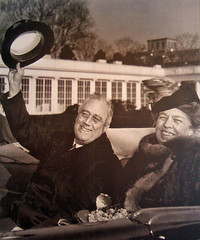
8519236195Franklin Delano RooseveltThe thirty-second president of the United States, he was the only American president to be elected to four terms of office. He first won the presidency against Republican incumbent Herbert Hoover in 1932 in the depths of the Great Depression and was credited with having developed a program, called the New Deal, that shepherded the nation out of crisis. When World War II broke out in Europe, he steered the United States into the war, which in the end proved more effective than the New Deal in helping the nation recover from difficult economic times. His gallant struggle against polio and his enormous talents as a politician helped made him a beloved leader for a dozen difficult years in the nation's history (1882-1945).15
8519236196Elanor RooseveltThe wife of Franklin Roosevelt, she was the most active First Lady the United States had ever seen and was known for her devotion to the impoverished and oppressed (1844-1962).16
8519236197Harry L. HopkinsA former New York social worker, he came to be one of the major architects of the New Deal, heading up the Federal Emergency Relief Administration and Works Progress Administration and serving as a personal confidant to President Roosevelt (1890-1946).17
8519236198Father Charles CoughlinA Catholic priest from Michigan who goaded 40 million radio listeners with his weekly anti-New Deal harangues. He was a well-known opponent of Franklin D. Roosevelt's New Deal policies (1891-1979).18
8519236199Francis E. TownsendA retired physician who had lost his savings in the Great Depression and promoted a plan, popular with senior citizens, to pay every person over sixty $200 a month, provided that the money was spent within the month. One estimate had the scheme costing one-half of the national income (1867-1960).19
8519236200Huey P. ("Kingfish") LongLouisiana governor, later senator, whose anti-New Deal "Share Our Wealth" program promised to make "Every Man a King"-that is, until he was gunned down in 1935 (1893-1935).20
8519236201Frances PerkinsThe first woman cabinet member and secretary of labor under Roosevelt, she helped draw labor into the New Deal coalition (1882-1965).21
8519236202Mary McLeod BethuneThe highest-ranking African- American in the Roosevelt administration, she headed up the Office of Minority Affairs and was a leader of the unofficial "Black Cabinet," which sought to apply New Deal benefits to blacks as well as white (1875-1955).22
8519236203Robert F. WagnerA Democratic senator from New York State from 1927-1949, he was responsible for the passage of some of the most important legislation enacted through the New Deal. The National Labor Relations Act of 1935 was popularly known as the Wagner Act in honor of the senator. He also played a major role in the National Industrial Recovery Act of 1933 and the Wagner-Steagall Housing Act of 1937 (1877-1953).23

AP US History Chapter 11 Flashcards

Terms : Hide Images
5415320073Napoleon BonaparteFrench emporer who waged a series of wars against his neighbors on the European continent from 1800 until his final defeat at Waterloo in 1815. In 1803, having failed to put down the Haitian rebellion, Napoleon relinquished France's remaining North American possessions by selling Louisiana territory to the US for 15 million.0
5415320074Aaron BurrRevolutionary War soldier and Vice president under Thomas Jefferson, Burr is perhaps most famous for fatally wounding Alexander Hamilton in a duel in 1804. In 1806, Burr led a failed plot to separate the trans-Mississippi west from the United States. Narrowly acquitted for treason, Burr fled to France where he tried to convince Napoleon to ally with Britian against the U.S.1
5415320075Samuel ChaseFederalist supreme court justice who drew the ire of the Jeffersonian Republics for his biting criticism of Republican policies. In 1804, the House of Representatives brought charges of impeachment against him but failed to make the case that his unrestrained partisanship qualified as "high crimes and misdemeanors". Acquitted by the Senate, he served on the court until his death,2
5415320076William ClarkJoined Meriwether Lewis in leading the expedition of Louisiana territory from1804-1806. After the Expedition, Clark played a key role in shaping America's Indian policy, seeking to strengthen American relations with the Indians through trade.3
5415320077Albert GallatinSecretary of the Treasury from 1801-1813 under Thomas Jefferson and James Madison, Gallatin sought to balance the federal budget and reduce the national debt.4
5415320078Sally HemingsOne of Jefferson's slaves on his plantations in Monticello. DNA testing confirms that Thomas Jefferson fathered Sally Heming's children.5
5415320079Thomas JeffersonAuthor of the Declaration of Independence, ambassador to France, and third president of the United States. As one of the leaders of the Democratic-Republican party, Jefferson advocated a limited role for the national government, particularly in the area of finance. As President, however, Jefferson oversaw significant expansion of the federal state through the purchase of Louisiana Territory and the enactment of the Embargo of 1807.6
5415320080Meriwether LewisAmerican soldier and explorer who led the famous expedition through Louisiana territory from 1804-1806. After briefly serving as governor of upper Louisiana territory, Lewis died in an apparent suicide in 1809.7
5415320081Robert R. LivingstonAmerican statesman who served as minister to France 1801-1804 and negotiated the purchase of the Louisiana territory in 1803.8
5415320082Toussaint L'ouvertureHaitian revolutionary who led successful slave uprising an helped establish an independent Haiti in 1797. In 1802, L'overture was captured by a French by a French force sent to reestablish control over the island. Shipped back to France and imprisoned for treason, he succumbed to pneumonia.9
5415320083James MadisonPrincipal author of the Consitituion, co-author of THE Federalist, and fourth president of the United States. A leading advocate of a strong national government in the 1780s, Madison later joined Thomas Jefferson and the Democratic-Republicans in advocating a more limited role for the federal state. As president, Madison inherited the conflict over trade with Britain and France, which eventually pushed him to declare war on Britain in 1812.10
5415320084John MarshallCheif Justice of the Supreme Court from 1801 until his death in 1835, Marshall strengthened the role of the courts by establishing the principle of "Judicial Review". During his tenure, the court also expanded the powers of the federal government through a series of decisions that established federal supremacy over the states.11
5415320085SacajaweaShoshone guide who led Meriwether Lewis and William Clark on their exploration of the American west.12
5415320086TecumsehAccomplished Shawnee warrir, Tecumseh sought to establish a confederacy of Indian tribes east of the Mississippi. He opposed individual tribes selling of land to the United States, arguing the land belonged to all the native people. After 1811, Tecumseh allied with the British frighting fiercely with his death until 1813.13
5415320087Tenskwatawa"The Prophet"; Shawnee religious leader, who led a spiritual revival emphasizing Indian unity and cultural renewal and urging Indians to limit contact with Americans. The prophet lost his following in 1811 after he and a small army of followers were defeated by William Henry Harrison at the Battle of Tippecanoe14
5415320088James WilkinsonMilitary governor of the Louisiana territory who conspired with Aaron Burr to separate from the United States and ally with Spanish controlled areas of the Americas.15

AP US History Chapter 33 Flashcards

Terms : Hide Images
6416687482London Economic ConferenceA meeting in the summer of 1933 where delegates hoped to organize a coordinated international attack on the global depression.0
6416687483Good Neighbor PolicyA policy focused on consultation and nonintervention that was put to the test when Mexico seized Yankee oil properties in 1938. Roosevelt successfully resisted the badgering and a settlement was threshed out in 1941.1
6416687484Reciprocal Trade Agreements ActDesigned to lift American export trade from the depression doldrums, aimed at both relief and recovery from the Depression.2
6416687485Rome-Berlin AxisAdolf Hitler and Benito Mussolini joined forces for WWII.3
6416687486Johnson Debt Default ActPrevented debt-dodging nations from borrowing further in the United States.4
6416687487Neutrality Acts of 1935, 1936, and 1937Acts that prevented the U.S. from entering any world conflicts. They said that when the president proclaimed the existence of a foreign war, certain restrictions would automatically go into effect. No American could legally sail on a belligerent ship, sell or transport munitions to a belligerent, or make loans to a belligerent.5
6416687488Abraham Lincoln BrigadeAround 3,000 men and women headed to Spain to fight as volunteers against Francisco Franco.6
6416687489Quarantine SpeechA speech given by FDR in Chicago in 1937 calling for "positive endeavors" to "quarantine" the aggressors by economic embargoes. Isolationists reacted with a cyclone of protest.7
6416687490AppeasementAn agreement between the western European democracies and Germany that gave the Sudetenland to the Nazis, in hopes that it would prevent Hitler from trying to invade other European nations.8
6416687491Hitler-Stalin pactGave Nazi Germany the "green light" to make war on Poland and the Western democracies without retaliation by the Soviet Union.9
6416687492Neutrality Act of 1939Allowed European nations to buy American war materials on a "cash-and-carry" basis. This meant that they would have to transport the munitions in their own ships after paying for them in cash.10
6416687493KristallnachtAlso known as, "the night of broken glass," an attack against the Jewish people of Germany on November 9, 1938. Mobs ransacked more than 7,000 Jewish shops and nearly all of the country's synagogues.11
6416687494War Refugee BoardSaved thousands of Hungarian Jews from deportation to the notorious death camp at Auschwitz. 150,000 Jews found refuge in the United States.12
6416687495Lend-Lease Bill"An Act Further to Promote the Defense of the United States." "Send guns, not sons." "Billions, not bodies." Sent money to countries fighting against Nazi Germany in order to keep the war on the east side of the Atlantic ocean.13
6416687496Atlantic CharterOutlines the aspirations of the democracies for a better world at war's end. They argued for the rights of individuals rather than nations, laying the groundwork for universal human rights. It opposed imperialistic annexations, no territorial changes contrary to the wishes of the inhabitants, the right for the people to choose their own form of government, and to regain the governments abolished by the dictators. Declared for disarmament and a peace of security, pending a "permanent system of general security."14
6416687497Pearl HarborJapanese bombers who came from distant aircraft carries bombed Pearl Harbor of Hawaii on "Black Sunday," December 7, 1941. Around 3,000 American casualties and the demolition of many U.S. aircrafts.15
6416687498Benito MussoliniItaly's facist dictator that formed an ally called the Rome-Berlin axis with Nazi Hitler.16
6416687499Adolf HitlerA fanatic with a toothbrush mustache. Also led Nazi Germany and was the conductor of the Holocaust. Leader of the Rome-Berlin Axis. Created some mediocre (at best) paintings. Could be classified as a big jerk. May have committed suicide before being captured.17
6416687500Francisco FrancoFascist leader of the Spanish rebels during the Spanish Civil War of 1936-1939. Roosevelt decided after the Abraham Lincoln Brigade that he would apply an arms embargo to both sides of the civil war, the Loyalists and the rebels.18
6416692400Cordell HullUnited States diplomat who did the groundwork for creating the United Nations; Congressman from Tennessee, he became the Secretary of State under FDR and served in that position longer than anyone in American history. He is often called the "Father of the United Nations." He won the Nobel Peace Prize in 1945.19
6416695735Wendell L. WilkieIn the 1940 election Republicans chose an anti-new deal internationalist who endorsed the draft and expressed sympathy for Britain20

AP US History: Gilded Age Flashcards

American Pageant Chapters 23-26

Terms : Hide Images
5850868402"waving the bloody shirt"using Civil War memories to gain support for presidents0
5850868403Tweed RingBoss Tweed, NY, stole about $200 million from the people, eventually found out and jailed until he died1
5850868404Credit Mobilier scandalThis scandal occurred in the 1870s when a railroad construction company's stockholders used funds that were supposed to be used to build the Union Pacific Railroad for railroad construction for their own personal use. To avoid being convicted, stockholders even used stock to bribe congressional members and the vice president.2
5850868405Panic of 1873Four year economic depression caused by overspeculation on railroads and western lands, and too-easy credit. It was worsened by Grant's poor fiscal response (refusing to coin gold and silver)3
5850868406Gilded AgeA name for the late 1800s, coined by Mark Twain (sarcastically because of the corruption) to describe the tremendous increase in wealth caused by the industrial age and the ostentatious lifestyles it allowed the very rich. The great industrial success of the U.S. and the fabulous lifestyles of the wealthy hid the many social problems of the time, including a high poverty rate, a high crime rate, and corruption in the government.4
5850868407patronage(politics) granting favors or giving contracts or making appointments to office in return for political support5
5850868409Civil Rights Act of 1875The Act guaranteed that everyone, regardless of race, color, or previous condition of servitude, was entitled to the same treatment in "public accommodations" (i.e. inns, public conveyances on land or water, theaters, and other places of public amusement). If found guilty, the lawbreaker could face a penalty anywhere from $500 to $1,000 and/or 30 days to 1 year in prison.6
5850868412Plessy v. FergusonSeperate but Equal. Supreme court ruled that segregation public places facilities were legal as long as the facilites were equal7
5850868413Chinese Exclusion ActPased in 1882; banned Chinese immigration in US for a total of 40 years because the United States thought of them as a threat. Caused chinese population in America to decrease.8
5850868414Pendleton ActThe Pendleton Act was an American act for the reformation of the American national civil service, introduced into the Senate by George Hunt Pendleton, of Ohio in 1880, but which did not become a law until January the 6th, 1883. It awarded jobs based on merit not on loyalty. It set up a Civil Service Commission which provided for open competitive examinations for admission to the public service.9
5850868415Homestead Strike1892 steelworker strike near Pittsburgh against the Carnegie Steel Company. Ten workers were killed in a riot when "scab" labor was brought in to force an end to the strike.10
5850868416grandfather clauseA clause in registration laws allowing people who do not meet registration requirements to vote if they or their ancestors had voted before 1867.11
5850868417Jay GouldUnited States financier who gained control of the Erie Canal and who caused a financial panic in 1869 when he attempted to corner the gold market (1836-1892)12
5850868420James A. Garfield20th president, Republican, Anti-Stalwart, Assassinated by Charles J. Guiteau after a few months in office due to lack of patronage. His running mate was Chester Aurthur. Gave most of his positions to Halfbreeds13
5850868421Chester ArthurAppointed customs collector for the port of New York - corrupt and implemented a heavy spoils system. He implemented the Pendleton Act which called for reform on civil service.14
5850868422Grover ClevelandFirst Democratic President since Buchanan. He was a supporter of lasseiz faire capitalism, fought corruption. He vetoed hundreds of bills for military pensions, achieved the Interstate Commerce Commission and civil service reform, violent suppression of strikes15
5850868425William Jennings BryanUnited States lawyer and politician who advocated free silver and prosecuted John Scopes (1925) for teaching evolution in a Tennessee high school (1860-1925)16
5850868426J. P. MorganBanker who buys out Carnegie Steel and renames it to U.S. Steel. Was a philanthropist in a way; he gave all the money needed for WWI and was payed back. Was one of the "Robber barons"17
5850868427Wabash, St. Louis & Pacific Railroad Company v. Illinois1886 - Stated that individual states could control trade in their states, but could not regulate railroads coming through them. Congress had exclusive jurisdiction over interstate commerce.18
5850868428Interstate Commercecommerce between two or more states which can be regulated by the federal government. The Interstate Commerce Act created a commission to oversee the conduct of the railroad industry; it made shipping rates reasonable and just19
5850868429vertical integrationabsorption into a single firm of several firms involved in all aspects of a product's manufacture from raw materials to distribution20
5850868430horizontal integrationabsorption into a single firm of several firms involved in the same level of production and sharing resources at that level21
5850868431trustterm generally used to describe any large scale business operation inspired by horizontal integration22
5850868432interlocking directoratesthe consolidation of rival enterprises, to ensure harmony officers of a banking syndicate were placed on boards of these rivals23
5850868433Standard Oil CompanyFounded by John D. Rockefeller. Largest unit in the American oil industry in 1881. Known as A.D. Trust, it was outlawed by the Supreme Court of Ohio in 1899. Replaced by the Standard Oil Company of New Jersey.24
5850868434Social DarwinistsTheorists who applied Darwin's theory of natural selection to human society, arguing that poorer and weaker segments of society desrved their fate; survival of the fittest25
5850868435Sherman Anti-Trust Actrequires the United States federal government to investigate and pursue trusts, companies, and organizations suspected of violating the Act. It was the first Federal statute to limit cartels and monopolies, and today still forms the basis for most antitrust litigation by the United States federal government. However, for the most part, politicians were unwilling to refer to the law until Theodore Roosevelt's presidency (1901-1909).26
5850868436National Labor Union1866 - established by William Sylvis - wanted 8hr work days, banking reform, and an end to conviction labor - attempt to unite all laborers27
5850868437Knights of Labor1st effort to create National union. Open to everyone but lawyers and bankers. Vague program, no clear goals, weak leadership and organization. Failed; demanded an end to child and convict labor, equal pay for women, a progressive income tax, and the cooperative employer-employee ownership of mines and factories28
5850868438Haymarket SquareLabor disorders had broken out and on May 4 1886, the Chicago police advanced on a protest; alleged brutalities by the authorities. Suddenly a dynamite bomb was thrown that killed or injured dozens, including police. It is still unknown today who set off the bomb, but following the hysteria, eight anarchists (possibly innocent) were rounded up. Because they preached "incendiary doctrines," they could be charged with conspiracy. Five were sentenced to death, one of which committed suicide; the other three were given stiff prison terms. Six years later, a newly elected Illinois governor recognized this gross injustice and pardoned the three survivors. Nevertheless, the Knights of Labor were toast: they became (incorrectly )associated with anarchy and all following strike efforts failed.29
5850868439American Federation of LaborFederation of craft labor unions lead by Samuel Gompers that arose out of dissatisfaction with the Knights of Labor30
5850868440closed shopa company that hires only union members31
5850868441Cornelius Venderbiltan American entrepreneur who built his wealth in shipping and railroads and was the patriarch of the Vanderbilt family.32
5850868442Alexander Graham BellUnited States inventor (born in Scotland) of the telephone (1847-1922); invented the telephone in 187633
5850868443Thomas Alva EdisonThis scientist received more than 1,300 patents for a range of items including the automatic telegraph machine, the phonograph, improvements to the light bulb, a modernized telephone and motion picture equipment.34
5850868444Andrew CarnegieCreates Carnegie Steel. Gets bought out by banker JP Morgan and renamed U.S. Steel. Andrew Carnegie used vertical integration by buying all the steps needed for production. Was a philanthropist. Was one of the "Robber barons"35
5850868445John D. RockefellerWas an American industrialist and philanthropist. Revolutionized the petroleum industry and defined the structure of modern philanthropy.36
5850868446Samuel GompersUnited States labor leader (born in England) who was president of the American Federation of Labor from 1886 to 1924 (1850-1924)37
5850868447New ImmigrantsRefers to the immigrants from southern and eastern Europe who came primarily during the age of Industrialization in the late 1800's and early 1900's.38
5850868448settlement housesa welfare agency for needy families, combated juvenile delinquency, and assisted recent immigrants in learning the English language and in becoming citizens. Jane Addams of the Hull House Settlement in Chicago39
5850868450Tuskegee InstituteBooker T. Washington built this school to educate black students on learning how to support themselves and prosper40
5850868451land-grant collegesAre institutions of higher education in the United States that have been designated by each state to receive the benefits of the Morrill Acts of 1862 and 189041
5850868456World's Columbian Exposition1893; World's Fair held in Chicago in 1893 to celebrate the 400th anniversary of Christopher Columbus's arrival in the New World42
5850868458Charles DarwinEnglish naturalist. He studied the plants and animals of South America and the Pacific islands, and in his book On the Origin of Species by Means of Natural Selection (1859) set forth his theory of evolution. (p. 715)43
5850868459Booker T. WashingtonAfrican American progressive who supported segregation and demanded that African American better themselves individually to achieve equality.44
5850868460W. E. B. Du Boisfought for African American rights. Helped to found Niagra Movement in 1905 to fight for and establish equal rights. This movement later led to the establishment of the NAACP45
5850868463John DeweyHe was a philosopher who believed in "learning by doing" which formed the foundation of progressive education. He believed that the teachers' goal should be "education for life and that the workbench is just as important as the blackboard."46
5850868464Horatio AlgerPopular novelist during the Industrial Revolution who wrote "rags to riches" books praising the values of hard work47
5850868465Mark Twain(born Samuel Clemens) wrote several books that caught the spirit of the Gilded Age. His works combined real depth with a comic genius that exposed the pretentiousness and meanness of human beings.48
5850868467reservation systemintroduced in 1870, forced nations to live on barren land, it confined people so they could not support themselves in their accustomed way. It has left to the institutional of this enforced segregation.49
5850868468Battle of the Little Bighorna battle in Montana near the Little Bighorn River between United States cavalry under Custer and several groups of Native Americans (1876); Custer was pursuing Sioux led by Sitting Bull; it was a disastrous defeat50
5850868469Battle of Wounded KneeThe Wounded Knee Massacre, also known as The Battle at Wounded Knee Creek, was the last major armed conflict between the Lakota Sioux and the United States, subsequently described as a "massacre" by General Nelson A. Miles in a letter to the Commissioner of Indian Affairs.51
5850868470Dawes Severalty ActBill that promised Indians tracts of land to farm in order to assimilate them into white culture. The bill was resisted, uneffective, and disastrous to Indian tribes52
5850868471mining industryduring the late 1800s, mining became a big industry needed to get raw materials53
5850868472Homestead ActLand given out by the government. Throughout the 19th century homesteads were sold for a cheap price, as well as given away by the homestead act of 1862. Many of these homesteads were also purchased by businesses and railroads using families to claim the land.54
5850868473mechanization of agricultureThe development of engine-driven machines, like the combine, which helped to dramatically increase the productivity of land in the 1870s and 1880s. This process contributed to the consolidation of agricultural business that drove many family farms out of existence55
5850868474The Populist PartyPopulist were followers of the political doctrine that supports the rights and powers of the common people in their struggle with the privileged elite. They called for free coinage of silver, graduated income tax, government regulation of railroads, direct election of senators, shorter work day, and immigrant restrictions56
5850868475Pullman strikein Chicago, Pullman cut wages but refused to lower rents in the "company town", Eugene Debs had American Railway Union refuse to use Pullman cars, Debs thrown in jail after being sued, strike achieved nothing57
5850868477Gold Standard Actthe monetary system that prevailed between about 1870 and 1914, in which countries tied their currencies to gold at a legally fixed price58
5850868478Frederick Jackson TurnerAmerican historian who said that humanity would continue to progress as long as there was new land to move into. The frontier provided a place for homeless and solved social problems.59
5850868479Jacob S. Coxeya wealthy Ohio quarry owner turn populist who led a protest group to Washington D.C. to demand that the federal government provide the unemployed with meaningful work (during the depression of 1893). The group was arrested and disbanded peacefully in D.C. movements like this struck fear into American's hearts60
5850868480William McKinley25th president responsible for Spanish-American War, Philippine-American War, and the Annexation of Hawaii, imperialism. Is assassinated by an anarchist61
5850868481Marcus Alonzo HannaUsed the money he made in the iron business to support William McKinley's presidential campaign. He became a personification of big business in politics.62
5850868482Samuel J. TildenLead the prosecution of "Boss" Tweed and later became a Democratic nominee off of this fame.63
5850868483Redemption Day(1879) A day where hoarders of green backers redeemed their green backs with gold. The green back's value increased64
5850868484Resumption ActPledged the government to further withdraw greenbacks and made all further redemption of paper money in gold at face value, starting in 187965
5850868485Bland Allison Actinstructed the Treasury to buy and coin $2 million and $4 million worth of silver bullion each month66
5850868486Munn vs. IllinoisWent against the Grange Laws of the farmers and favored the regulation of the railroads by the state67
5850868487Wabash, St. Louis and Pacific RR CoReversed the Munn vs. Illinois establishment and declared that only the federal government was allowed to regulate the railroads and interest commerce68
5850868488The Big FourLocated in California, the Big Four controlled the Central Pacific Railroad. Leland Standford, Collis Huntington, Charles Crocker, and Mark Hopkins69
5850868489George Westinghouseinvented air brakes for railroads, and the Transformer70

AP US History Period 1 Flashcards

Terms : Hide Images
5018757190maize cultivationThe growing of Indian corn, a staple of many Indians diets, leading many nomadic tribes to settle and develop great civilizations such as the Aztecs incas and Mayans.0
5018757191hunter-gatherer economyA nomadic way of life with no agriculture focused on following food sources including animals and wild plants1
5018757194plantation-based agricultureLarge scale agriculture worked by slaves (mostly sold tobacco and cotton, really boosted economy)2
5018757197great basinDesert area with no drainage to the ocean3
5018757198agricultural economyeconomy based on the production of crops4
5018757199spanish explorationColonization of the Americas by the conquistadors in search for gold, glory and god5
5018757200encomienda systemA government system where natives were given to colonists to work in return for converting them to Christianity.6
5018757203great plainsThe open plains of the Midwest where the natives adapted to roming the prairies on horseback7
5018757204permanent villagesThe settlements of Indians tribes based on the spread of agriculture8
5018757206slave laborForced labor of people considered property by the people in charge9
5018757207feudalism to capitalismA political, economic, and social system based on the relationship between lord and vassal in order to provide protection trade and industry controlled by private owners10
5018757209Colombian exchangethe exchange between the new world and the old world consisting of the old world bringing wheat, cows, horses, sheep, pigs, sugar, rice, coffee, smallpox, malaria and yellow fever. while the new world sent gold, silver, corn, potatoes, tobacco, and syphills11
5018782655Northwest/CA Nativesfish for food; forced into religion because of the missions system12
5018786068Maritime Technologyinventions that resulted in improvement in sailing capability, helping to facilitate trade (allowed Europeans to navigate easier)13
5018801700Spanish Explorationalong mexico region in the south and west coast (spread religion and ideas as well as disease that killed many natives)14
5018810918Deadly epidemicssmall pox (killed many natives because they weren't immune to disease)15
5018816137Northeast nativesexamples include the Cherokee farming was very important; Powhatan is considered the real king16
5018845397Spanish caste systemsystem based on race that was used for social control and also determined a person's role and importance in society. Spanish, Mestizo, Native (social prejudice and economic exploitation)17

Pages

Subscribe to CourseNotes RSS

Need Help?

We hope your visit has been a productive one. If you're having any problems, or would like to give some feedback, we'd love to hear from you.

For general help, questions, and suggestions, try our dedicated support forums.

If you need to contact the Course-Notes.Org web experience team, please use our contact form.

Need Notes?

While we strive to provide the most comprehensive notes for as many high school textbooks as possible, there are certainly going to be some that we miss. Drop us a note and let us know which textbooks you need. Be sure to include which edition of the textbook you are using! If we see enough demand, we'll do whatever we can to get those notes up on the site for you!