

AP US History Period 9 Flashcards
Terms : Hide Images
| 6391168540 | Proposition 13 | ·It was result of a tax cut revolt in 1979 which slashed the property taxes resulting in large reductions in government services ·This was closely aligned with the conservative politics ·Wrk exc tech ·California ·Conservative politics | 0 | |
| 6391168541 | Arthur Laffer | ·An economic philosophy that believes in the action of sharply cutting taxes which will then increase the incentive people have to work, save, and invest. · He then believed that greater investments will lead to more jobs, a more productive economy, and more tax revenues for the government. ·Peo ·Economics ·Tax Cuts | 1 | |
| 6391168542 | Religious Fundamentalism | · A Religious movement where the followers are to return to the foundations of the faith and to influence state policy where every word of the bible is interpreted literally. ·This was a new uprising in the way of worship and lead to new takings on religious aspects ·Ideas belifs and cul ·William J Bryan | 2 | |
| 6391168543 | Televangelists | ·Baptist Billy Graham, and Oral Roberts, and Roman Catholic Fulton J. Sheen took to the television airwaves to spread Christianity. ·Was a new surge in the popularity in choosing to spread the gospel through forms of media ·Ideas belfs cul ·Billy Graham Oral Roberts | 3 | |
| 6391168544 | Moral Majority | ·A religious en devour that moved to have a faith based political agenda in lobbying. ·Was comprised of mostly conservatives who believed in the idea of mortal law and wished to implement it into politics ·They went against the idea of abortion and the legalization of same sex marriage ·Pol Pow ·Conservative agenda | 4 | |
| 6391168545 | Roe v. Wade | ·A supreme court case in which it was to be the ruling on the legality of abortion ·The court case made try ed to overturn the ruling on the states banning the right to ban abortion ·This was a pro abortion court case ·Pol and Pow ·Abortions Conservatism | 5 | |
| 6391168546 | Reverse Discrimination | ·Reverse discrimination is the discrimination of whites due to their skin color also their social status ·this played a large role in the idea of affirmative action and the legality of it ·ideas belf cul ·Conservative beliefs ·Affirmative Action | 6 | |
| 6391168547 | Regents of the University of California v. Bakke | ·Was a supreme court case which covered the topic of affirmative action and the acceptance of people into colleges due to racial quotas. ·a 1978 Supreme Court ruling that narrowly upheld affirmative action, declaring that race may be one factor, but not the sole criterion in school admissions ·pol and pow ·Supreme court ruling ·Affirmative Action | 7 | |
| 6391168548 | Supply side economics | ·The idea that the American Economy was weak because of the too many rules and taxes on U.S Businesses. ·The solution would be to lower taxes and rules so that these businesses got more profitable and made more jobs. ·This was a way to fix the many problems of the economy of the united states ·wrk exc tech ·Lowering taxes | 8 | |
| 6391168549 | Economy Recovery Tax Act (1981) | ·Passed by Congress, it included a 25 percent decrease in personal income taxes over three years. There were also cuts in corporate income tax, capital gains tax, and gift and inheritance taxes ·Wrk exc Tech ·FDR First hundred days, Individual Retirement Accounts (IRAs) | 9 | |
| 6391168550 | Business Deregulation | ·Reagan's belief that the American government should allow businesses to operate in a free-market system, with minimal governmental oversight ·Was a philosophy that many politicians lived by ·Wrk Exc Tech ·Reaganomics | 10 | |
| 6391168551 | Sandra Day O'Connor | ·First woman supreme court justice appointed by Pres Ronald reagan ·Was an important step for equality between the sexes ·Peo ·Supreme Court | 11 | |
| 6391168552 | Expand Military | · A movement which sought to expand the power of the united states military to protect the nation. ·Pol Pow ·Sphere of influance | 12 | |
| 6391168553 | Star Wars | ·A program to protect the United States against attack by enemy missiles, proposed in 1983 by President Ronald Reagan, but never implemented- formally known as the Strategic Defense Initiative. ·Wrk Exc Tech ·Ronald Reagan | 13 | |
| 6391168554 | Nicaragua; Sandinistas | ·Members of a leftist coalition that overthrew the Nicaraguan dictatorship of Anastasia Somoza in 1979 and attempted to install a socialist economy ·The United States financed armed opposition by the Contras. They lost national elections in 1990 ·pol pow ·election 1990 | 14 | |
| 6391168555 | Iran- Contra | ·This involved high officials in the Reagan administration secretly selling arms to Iran (in return for the release of Western hostages in the Middle East) and illegally using the proceeds to finance the Contra rebels in Nicaragua. ·Pol Pow ·Boland Amendment | 15 | |
| 6391168556 | PLO | ·Palestinian Liberation Organization; formed in 1964 with the purpose of creating a homeland for Palestinians in Israel ·Wrk Exc Tech ·Reagen Revloution | 16 | |
| 6391168557 | "Evil Empire" | ·Ronald Reagan's description of Soviet Union because of his fierce anti-communist views and the USSR's history of violation of human rights and aggression. ·Ideas belifs and Culture ·Soviet Union | 17 | |
| 6391168558 | Mikhail Gorbachev | ·Head of the Soviet Union from 1985 to 1991. His liberalization effort improved relations with the West, but he lost power after his reforms led to the collapse of Communist governments in eastern Europe. ·Peo ·Soviet Union | 18 | |
| 6391168559 | "tear down this wall" | ·Ronald Reagan said this referring to the Berlin wall while his speech, wanting for Mikhail Gorbachev to hear it. ·Wanting the stop of communism ·Idea belif cult ·Berlin Wall | 19 | |
| 6391168560 | INF Agreement | ·Reagan and Gorbachev agreed to destroy all intermediate range missiles, eventually Soviets began to pull troops from Afghanistan ·Agreement that stopped all tensions ·Wrk Exc Tech ·Soviet Union united States | 20 | |
| 6391168561 | Soviet Satellites | ·Eastern European States (East Germany, Poland, Czechoslovakia, Hungary, Romania, and Bulgaria) · The effected countries around the soviet union ·Pol Pow ·Soviet union ·Communism | 21 | |
| 6391168562 | Fall of Berlin Wall | ·This event in 1989 marked the symbolic end of the Cold War and was the beginning of the collapse of communism in eastern Europe. ·Ideas belifs culture ·Fall of Communism | 22 | |
| 6391168563 | Soviet Union Breakup | ·Boris Yeltsin turns Russia into a Republic and the country is out of turmoil. Many republics declared independence; the Soviet government was clearly powerless to stop the fragmentation. ·The Communist Party and Soviet government became powerless and ceased to exist. ·Pol Pow ·Soviet Union ·Fall of Communistic | 23 | |
| 6391168564 | Boris Yeltsin | ·President of the Russian Republic in 1991. Helped end the USSR and force Gorbachev to resign. ·Pol Pow ·Russian Republic | 24 | |
| 6391168565 | START 1 and 2 | ·Strategic Arms Reduction Talks, 1993-94 between USA and Russia to reduce the active deployment of ICBMs ·Nuclear Warfare | 25 | |
| 6391168566 | Panama invasion | ·Bush ordered this to remove the autocratic General Manuel Noriega; the alleged purpose of this was to stop Noriega from using his country as a drug pipeline to the US ·War on Drugs | 26 | |
| 6391168567 | Saddam Hussein | ·President of Iraq from 1979 to 2003. Waged war on Iran in 1980-1988. In 1990 he ordered an invasion of Kuwait but was defeated by United States and its allies in the Gulf War (1991). Defeated by US led invasion in 2003. ·Peo ·Terrorism | 27 | |
| 6391168568 | Persian golf war | ·Conflict between Iraq and a coalition of countries led by the United States to remove Iraqi forces from Kuwait which they had invaded in hopes of controlling their oil supply. ·A very one sided war with the United States' coalition emerging victorious. ·Pol Pow ·Saddam Hussein | 28 | |
| 6391168569 | Operation Desert storm | ·Military operations that started on January 16, 1991, with a bombing campaign, followed by a ground invasion of February 23 and 24, 1991. The ground war lasted 100 hours and resulted in a spectacularly one-sided military victory for the Coalition. ·Pol Pow ·Persian golf war | 29 | |
| 6391168570 | Clarence Thomas | ·African American nominated by George H. W. Bush to be on the Supreme Court; against Affirmative Action; was accused of sexual harassment by Anita Hill; became the second African American to hold a seat in the Supreme Court | 30 | |
| 6391168571 | "No New Taxes" | ·Bush's 1988 campaign pledge that needed to be abandoned because of the sharp recession ·George H.W Bush | 31 | |
| 6391168572 | Americans with Disabilities Act | ·1990 A wide-ranging civil rights law that prohibits discrimination based on disability; covers employment, transportation, building accessibility, transportation, etc. ·Equality | 32 | |
| 6391168573 | " Dont ask Dont tell" | ·the policy in the US military for homosexuals who served. No one would ask your sexuality but if you were outwardly homosexual and engaging in homosexual activities you would be discharged ·Ideas belifs culture ·Homosexuality | 33 | |
| 6391168574 | NAFTA | ·A trade agreement between Canada, the United States and Mexico that encourages free trade between these North American countries. ·Wrk exc Tech ·Free trade | 34 | |
| 6391168575 | NRA | ·National Recovery Administration: established and administered a system of industrial codes to control production, prices, labor relations, and trade practices ·Economic activites | 35 | |
| 6391168576 | Newt Gingrich | ·Gingrich was the Republican speaker in the House. He pushed for more conservative legislation during Clinton's presidency. ·Conservative Agenda | 36 | |
| 6391168577 | Contract with America | -President can delete specific items passed by the Congress, proposed constitutional amendment to limit the term of office was ignore, imposed federal mandates on states without providing the money ·Newt Gingrich | 37 | |
| 6391168578 | Welfare Reform | ·Clinton takes a moderate approach. He wants to scale back on welfare by cutting funding for programs like food stamps and put limits on how long you can rely on it without getting a job. ·This fulfilled his campaign promise to "end welfare as we know it. | 38 | |
| 6391168579 | Balanced Budgets | ·state and local governments can not deficit spend unlike the federal government, they can only spend the money that they take in | 39 | |
| 6391168580 | Clinton impeachment | ·Impeached on two charges, one of perjury and one of obstruction of justice, on December 19, 1998. Two other impeachment articles, a second perjury charge and a charge of abuse of power, failed in the House. The charges arose from the Lewinsky scandal and the Paula Jones lawsuit. ·Bill Clinton ·Lewinsky Scandal | 40 | |
| 6391168581 | Northern Ireland accords | ·A peace agreement that was estiblished by the us between north and south ireland ·america in the world ·a world police man | 41 | |
| 6391168582 | Yugoslavia break up | ·Was a break up of the nation of Yugoslavia because they had different religions and cultures- ethnic tensions ·America in the world ·USSR | 42 | |
| 6391168583 | Balkan Wars | ·A series of wars fought between Austria Hungry and Russia over the Balkan territories during the decline of the Turkish empire, caused tension between the great Power of Europe ·America in the world | 43 | |
| 6391168584 | West Bank, Gaza Strip | ·The land of Jerusalem located the the middle east ·Jerusalem | 44 | |
| 6391168585 | Globalization | ·A set of processes that are increasing interactions, deepening relationships, and heightening interdependence without regard to country borders. | 45 | |
| 6391168586 | World Trade Organization | ·An international agency which encourages trade between member nations, administers global trade agreements and resolves disputes when they arise. ·America in the world ·European union | 46 | |
| 6391168587 | World Bank | ·A specialized agency of the United Nations that makes loans to countries for economic development, trade promotion, and debt consolidation. ·America in the world ·United nations | 47 | |
| 6391168588 | Immigration act of 1986 | ·Also known as the Johnson-Reed Act. Federal law limiting the number of immigrants that could be admitted from any country to 2% of the amount of people from that country who were already living in the U.S. as of the census of 1890. | 48 | |
| 6391168589 | Bush v. Gore | ·this case ruled in favor of Bush by saying that recounting the votes in certain counties of Florida was unconstitutional because of equal protection of the law; Gore's wish to make the process as simple and painless as possible backfired | 49 | |
| 6391168590 | No Child left Behind | ·Holds states, schools, and school districts more accountable for their standardized tests scores. The wanted outcome was better tests scores all around and overall a smarter and better population of young people that would positively contribute to a growing America. ·Geroge w. Bush | 50 | |
| 6391168591 | Housing Bubble | ·Unstable increase in housing prices, to the extent of which, a sudden drop or "bursting" of the bubble could result in a widespread loss of equity. | 51 | |
| 6391168592 | Al-Qaeda | ·A radical Sunni Muslim organization dedicated to the elimination of a Western presence in Arab countries and militantly opposed to Western foreign policy: founded by Osama bin Laden in 1988. ·America in the world ·Osama bin laden | 52 | |
| 6391168593 | Osama Bin Laden | ·Arab terrorist who established al-Qaeda (born in 1957). Planned attack of 9-11. ·peo ·Al-Qaeda | 53 | |
| 6391168594 | Bombing of U.S Embassies | ·The bombing of the us embassies is a series of terrorist attacks against the nation of the united states. | 54 | |
| 6391168595 | World Trade Center | ·Once an icon for the global economy in New York, became a target for terrorism in 1993 and 2001; al Queda was solely responsible for the 9-11 attacks ·america in the world ·9/11 | 55 | |
| 6391168596 | 9/11/2001 | ·The terrorist attack on the world trade center in NYC ·america in the world ·World Trade Center | 56 | |
| 6391168597 | Afghanistan, Taliban | ·War on Terror ·A terrorist group in Afghanistan who use terror as a tacit and wants complete control over the people ·America in the world ·War on Terror | 57 | |
| 6391168598 | Hamid Karzai | ·President of Afghanistan, helped overthrow Taliban, sought international aid for Afghanistan. ·America in the world ·Afghanistan | 58 | |
| 6391168599 | Homeland Security Department | ·newst executive department set up to combat issues of terrorism, border control, and intelligence: immigration services. FEMA, and the coast guard ·wrk exc tech ·FEMA | 59 | |
| 6391168600 | Kyota Accord | ·International treaty to limit the greenhouse gas emissions. 1997 to enact in 2005. Bush thought too costly. | 60 | |
| 6391168601 | Bush Doctrine | ·Foreign Policy based on the idea that the US should take preemptive action against threats to its national security ·wrk exc tech ·War on Terror | 61 | |
| 6391168602 | "Axis of Evil" | ·Iraq, Iran, and North Korea- named by President Bush in 2002 as significant threats to the security ·ideas belif cul ·Nations against the us | 62 | |
| 6391168603 | WMDs | ·Generally nuclear weapons with tremendous capability to destroy a population and the planet. WMD warfare refers to the application of force between countries using biological, chemical, and nuclear weapons. ·wrk exc Tech ·Nuclear Warfare | 63 | |
| 6391168604 | Operation Iraq Freedom | ·An Act to remove Saddam Hussein from power and to help the Iraq people build a stable and free government ·Wrk Exc Tech ·Iraq | 64 | |
| 6391168605 | Sunni v. Shiite | ·Sunni and Shia Islam are the two major denominations of Islam. With most Shias belonging to the Twelver tradition and the rest divided between several other groups. ·An ongoing division between the two ·ideas belifs cul · Islamic war | 65 | |
| 6391168606 | 2007 Troop Surge | ·In 2007 there was a surge in the amount of us troops being put into action overseas. ·This strengthened the Us military ·peo ·Iraq war | 66 | |
| 6391168607 | Liquidity crisis | ·A cash flow emergency situation where a business does not have enough cash to pay its current liabilities (short-term debts). ·wrk exc tech ·Business debt | 67 | |
| 6391168608 | Fannie May, Freddi Mac | ·reassured investors who were worried about homeowners defaulting on mortgages by selling bonds to investors and using the funds to purchase mortgages from banks. | 68 | |
| 6391168609 | TARP | ·controversial, purchased failing assets that included mortgages + mortgage-related securities from financial institutions. Conservatives called TARP socialism, and liberals called it a bailout of the people who had caused the problems in the first place | 69 | |
| 6391168610 | 2009 Stimulus | ·The American Recovery and Reinvestment Act of 2009 added significant funding for IDEA activities. A priority for these funds has been children ages three to five having early access to a free appropriate public education. ·pol pow ·Goverment help | 70 | |
| 6391168611 | Dodd-Frank | ·Law that calls for fundamental changes in executive compensation disclosure, compensation committee independence, shareholder voting rights, and clawback provisions in publicly traded companies. | 71 | |
| 6391168612 | Auto bailout | ·The bailout of the auto industry in Detroit Michigan putting the companies Chrysler and Gm back on their feet ·Barrack Obama | 72 | |
| 6391168613 | Affordable Care act | ·An expansion of medicaid, most of employers must provide health insurance, have insurance or face surtax, prevents rejection based on pre-existing condition. Also referred to as "Obamacare", signed into law in 2010. | 73 | |
| 6391168614 | Bowles- Simpson | ·would have eliminated the deficit by 2035 through $2 of spending cuts for every $1 increase in revenues, compromise widely praised but rejected by Democrats for its cuts to social services and by Republicans for its tax increases | 74 | |
| 6391168615 | Tea Party | ·A national social movement, primarily attracting fiscal and social conservatives, that seeks to limit government spending and cut taxes | 75 | |
| 6391168616 | 2013 Goverment Shutdown | ·In 2013, the government shutdown because legislation appropriating funds for fiscal year 2014 wasn't enacted in time. | 76 | |
| 6391168617 | Withdrawal from Iraq | ·After the assassination of Osama bin Laden there was a withdrawal of troops by Barack Obama | 77 | |
| 6391168618 | Death of Osama bin Laden | ·Former head of the Islamist militant group al-Qaeda, killed in his compound in Abbottabad, Pakistan on May 2, 2011 by US Navy Seals. Ordered by President Obama , | 78 | |
| 6391168619 | Arab Spring | ·A revolutionary wave of protests and demonstrations overtaking dictators in the Middle East (2011). ·America in the world ·Middle east | 79 | |
| 6391168620 | Repeal of "dont ask dont tell" | The repealment of the dont ask dont tell overturns the legality of homosexuals in the us military and their openness about their preference. ·pol pow ·Dont ask dont tell | 80 | |
| 6391168621 | Same-Sex marriage | ·controversial issue in contemporary Western culture focusing on whether homosexual couples should be legally allowed to marry ·pol pow ·Homosexuality | 81 | |
| 6391168622 | Citizens United | ·a landmark decision by the United States Supreme Court holding that the First Amendment prohibits government from censoring political broadcasts in candidate elections when those broadcasts are funded by corporations or unions | 82 |
AP US History: Gilded Age Flashcards
American Pageant Chapters 23-26
Terms : Hide Images
| 7866504901 | "waving the bloody shirt" | using Civil War memories to gain support for presidents | 0 | |
| 7866504902 | Tweed Ring | Boss Tweed, NY, stole about $200 million from the people, eventually found out and jailed until he died | 1 | |
| 7866504903 | Credit Mobilier scandal | This scandal occurred in the 1870s when a railroad construction company's stockholders used funds that were supposed to be used to build the Union Pacific Railroad for railroad construction for their own personal use. To avoid being convicted, stockholders even used stock to bribe congressional members and the vice president. | 2 | |
| 7866504904 | panic of 1873 | Four year economic depression caused by overspeculation on railroads and western lands, and worsened by Grant's poor fiscal response (refusing to coin silver) | 3 | |
| 7866504905 | Gilded Age | A name for the late 1800s, coined by Mark Twain (sarcastically because of the corruption) to describe the tremendous increase in wealth caused by the industrial age and the ostentatious lifestyles it allowed the very rich. The great industrial success of the U.S. and the fabulous lifestyles of the wealthy hid the many social problems of the time, including a high poverty rate, a high crime rate, and corruption in the government. | 4 | |
| 7866504906 | patronage | (politics) granting favors or giving contracts or making appointments to office in return for political support | 5 | |
| 7866504907 | Compromise of 1877 | The Compromise of 1877, also known as the Corrupt Bargain,[1] refers to a purported informal, unwritten deal that settled the disputed 1876 U.S. Presidential election and ended Congressional ("Radical") Reconstruction. Through it, Republican Rutherford B. Hayes was awarded the White House over Democrat Samuel J. Tilden on the understanding that Hayes would remove the federal troops that were propping up Republican state governments in South Carolina, Florida and Louisiana. | 6 | |
| 7866504908 | Civil Rights Act of 1875 | The Act guaranteed that everyone, regardless of race, color, or previous condition of servitude, was entitled to the same treatment in "public accommodations" (i.e. inns, public conveyances on land or water, theaters, and other places of public amusement). If found guilty, the lawbreaker could face a penalty anywhere from $500 to $1,000 and/or 30 days to 1 year in prison. | 7 | |
| 7866504909 | sharecropping | system in which landowners leased a few acres of land to farmworkers in return for a portion of their crops; usually virtually enslaved the workers because of debt | 8 | |
| 7866504910 | Jim Crow | barrier preventing blacks from participating in various activities with whites | 9 | |
| 7866504911 | Plessy v. Ferguson | sumpreme court ruled that segregation public places facilities were legal as long as the facilites were equal | 10 | |
| 7866504912 | Chinese Exclusion Act | Pased in 1882; banned Chinese immigration in US for a total of 40 years because the United States thought of them as a threat. Caused chinese population in America to decrease. | 11 | |
| 7866504913 | Pendleton Act | The Pendleton Act was an American act for the reformation of the American national civil service, introduced into the Senate by George Hunt Pendleton, of Ohio in 1880, but which did not become a law until January the 6th, 1883. It provided for open competitive examinations for admission to the public service. | 12 | |
| 7866504914 | Homestead Strike | 1892 steelworker strike near Pittsburgh against the Carnegie Steel Company. Ten workers were killed in a riot when "scab" labor was brought in to force an end to the strike. | 13 | |
| 7866504915 | grandfather clause | A clause in registration laws allowing people who do not meet registration requirements to vote if they or their ancestors had voted before 1867. | 14 | |
| 7866504916 | Jay Gould | United States financier who gained control of the Erie Canal and who caused a financial panic in 1869 when he attempted to corner the gold market (1836-1892) | 15 | |
| 7866504917 | Horace Greeley | An American newspaper editor and founder of the Republican party. His New York Tribune was America's most influential newspaper 1840-1870. Greeley used it to promote the Whig and Republican parties, as well as antislavery and a host of reforms. | 16 | |
| 7866504918 | Rutherford B. Hayes | 19th president of the united states, was famous for being part of the Hayes-Tilden election in which electoral votes were contested in 4 states, most corrupt election in US history | 17 | |
| 7866504919 | James A. Garfield | 20th president, Republican, assassinated by Charles Julius Guiteau after a few months in office due to lack of patronage | 18 | |
| 7866504920 | Chester Arthur | Appointed customs collector for the port of New York - corrupt and implemented a heavy spoils system. He was chosen as Garfield's running mate. Garfield won but was shot, so Arthur became the 21st president. | 19 | |
| 7866504921 | Grover Cleveland | 22nd and 24th president, Democrat, Honest and hardworking, fought corruption, vetoed hundreds of wasteful bills, achieved the Interstate Commerce Commission and civil service reform, violent suppression of strikes | 20 | |
| 7866504922 | Thomas B. Reed | Republican Speaker of the House in 1888, he gained a reputation for an iron grip over Congress and kept Democrats in line. | 21 | |
| 7866504923 | Tom Watson | elected to the U.S congress, became known as a champion of Georgia's farmers, and he sponsored and pushed through a law providing for RFD-rural free delivery | 22 | |
| 7866504924 | William Jennings Bryan | United States lawyer and politician who advocated free silver and prosecuted John Scopes (1925) for teaching evolution in a Tennessee high school (1860-1925) | 23 | |
| 7866504925 | J. P. Morgan | Banker who buys out Carnegie Steel and renames it to U.S. Steel. Was a philanthropist in a way; he gave all the money needed for WWI and was payed back. Was one of the "Robber barons" | 24 | |
| 7866504926 | Wabash, St. Louis & Pacific Railroad Company v. Illinois | 1886 - Stated that individual states could control trade in their states, but could not regulate railroads coming through them. Congress had exclusive jurisdiction over interstate commerce. | 25 | |
| 7866504927 | Interstate Commerce | commerce between two or more states which can be regulated by the federal government | 26 | |
| 7866504928 | vertical integration | absorption into a single firm of several firms involved in all aspects of a product's manufacture from raw materials to distribution | 27 | |
| 7866504929 | horizontal integration | absorption into a single firm of several firms involved in the same level of production and sharing resources at that level | 28 | |
| 7866504930 | trust | term generally used to describe any large scale business operation inspired by horizontal integration | 29 | |
| 7866504931 | interlocking directorates | the consolidation of rival enterprises, to ensure harmony officers of a banking syndicate were placed on boards of these rivals | 30 | |
| 7866504932 | Standard Oil Company | Founded by John D. Rockefeller. Largest unit in the American oil industry in 1881. Known as A.D. Trust, it was outlawed by the Supreme Court of Ohio in 1899. Replaced by the Standard Oil Company of New Jersey. | 31 | |
| 7866504933 | Social Darwinists | Theorists who applied Darwin's theory of natural selection to human society, arguing that poorer and weaker segments of society desrved their fate; survival of the fittest | 32 | |
| 7866504934 | Sherman Anti-Trust Act | requires the United States federal government to investigate and pursue trusts, companies, and organizations suspected of violating the Act. It was the first Federal statute to limit cartels and monopolies, and today still forms the basis for most antitrust litigation by the United States federal government. However, for the most part, politicians were unwilling to refer to the law until Theodore Roosevelt's presidency (1901-1909). | 33 | |
| 7866504935 | National Labor Union | 1866 - established by William Sylvis - wanted 8hr work days, banking reform, and an end to conviction labor - attempt to unite all laborers | 34 | |
| 7866504936 | Knights of Labor | 1st effort to create National union. Open to everyone but lawyers and bankers. Vague program, no clear goals, weak leadership and organization. Failed; demanded an end to child and convict labor, equal pay for women, a progressive income tax, and the cooperative employer-employee ownership of mines and factories | 35 | |
| 7866504937 | Haymarket Square | Labor disorders had broken out and on May 4 1886, the Chicago police advanced on a protest; alleged brutalities by the authorities. Suddenly a dynamite bomb was thrown that killed or injured dozens, including police. It is still unknown today who set off the bomb, but following the hysteria, eight anarchists (possibly innocent) were rounded up. Because they preached "incendiary doctrines," they could be charged with conspiracy. Five were sentenced to death, one of which committed suicide; the other three were given stiff prison terms. Six years later, a newly elected Illinois governor recognized this gross injustice and pardoned the three survivors. Nevertheless, the Knights of Labor were toast: they became (incorrectly )associated with anarchy and all following strike efforts failed. | 36 | |
| 7866504938 | American Federation of Labor | Federation of craft labor unions lead by Samuel Gompers that arose out of dissatisfaction with the Knights of Labor | 37 | |
| 7866504939 | closed shop | a company that hires only union members | 38 | |
| 7866504940 | Cornelius Venderbilt | an American entrepreneur who built his wealth in shipping and railroads and was the patriarch of the Vanderbilt family. | 39 | |
| 7866504941 | Alexander Graham Bell | United States inventor (born in Scotland) of the telephone (1847-1922); invented the telephone in 1876 | 40 | |
| 7866504942 | Thomas Alva Edison | This scientist received more than 1,300 patents for a range of items including the automatic telegraph machine, the phonograph, improvements to the light bulb, a modernized telephone and motion picture equipment. | 41 | |
| 7866504943 | Andrew Carnegie | Creates Carnegie Steel. Gets bought out by banker JP Morgan and renamed U.S. Steel. Andrew Carnegie used vertical integration by buying all the steps needed for production. Was a philanthropist. Was one of the "Robber barons" | 42 | |
| 7866504944 | John D. Rockefeller | Was an American industrialist and philanthropist. Revolutionized the petroleum industry and defined the structure of modern philanthropy. | 43 | |
| 7866504945 | Samuel Gompers | United States labor leader (born in England) who was president of the American Federation of Labor from 1886 to 1924 (1850-1924) | 44 | |
| 7866504946 | New Immigrants | Refers to the immigrants from southern and eastern Europe who came primarily during the age of Industrialization in the late 1800's and early 1900's. | 45 | |
| 7866504947 | settlement houses | a welfare agency for needy families, combated juvenile delinquency, and assisted recent immigrants in learning the English language and in becoming citizens. Jane Addams of the Hull House Settlement in Chicago | 46 | |
| 7866504948 | liberal Protestants | American Protestant Liberalism grows out of German scholarship of the late 1800s. German scholars came to deny Scripture's power and they undercut the church's effectiveness. Their thought permeates European culture much sooner than it does the American. Because of the Civil War many American scholars were unable to travel abroad for study. Liberal reflects attitudes in continuity with Enlightenment thought. It reflects an attempt to incorporate modern thinking and developments, especially in the sciences, into Christianity. Liberals tend to emphasize ethics over doctrine while stressing man's freedom--humanism. | 47 | |
| 7866504949 | Tuskegee Institute | Booker T. Washington built this school to educate black students on learning how to support themselves and prosper | 48 | |
| 7866504950 | land-grant colleges | Are institutions of higher education in the United States that have been designated by each state to receive the benefits of the Morrill Acts of 1862 and 1890 | 49 | |
| 7866504951 | pragmatism | (philosophy) the doctrine that practical consequences are the criteria of knowledge and meaning and value; a philosophy which focuses only on the outcomes and effects of processes and situations. | 50 | |
| 7866504952 | yellow journalism | Journalism that exploits, distorts, or exaggerates the news to create sensations and attract readers | 51 | |
| 7866504953 | National American Woman Suffrage Association (NAWSA) | militant suffragist organization founded by Elizabeth Cady Stanton and Susan B. Anthony | 52 | |
| 7866504954 | Woman's Christian Temperance Union (WCTU) | This organization, founded in 1874, worked alongside the Anti-Saloon League to push for prohibition. Notable activists included Susan B. Anthony and Frances Elizabeth Willard. | 53 | |
| 7866504955 | World's Columbian Exposition | 1893; World's Fair held in Chicago in 1893 to celebrate the 400th anniversary of Christopher Columbus's arrival in the New World | 54 | |
| 7866504956 | Jane Addams | the founder of Hull House, which provided English lessons for immigrants, daycares, and child care classes | 55 | |
| 7866504957 | Charles Darwin | English naturalist. He studied the plants and animals of South America and the Pacific islands, and in his book On the Origin of Species by Means of Natural Selection (1859) set forth his theory of evolution. (p. 715) | 56 | |
| 7866504958 | Booker T. Washington | African American progressive who supported segregation and demanded that African American better themselves individually to achieve equality. | 57 | |
| 7866504959 | W. E. B. Du Bois | fought for African American rights. Helped to found Niagra Movement in 1905 to fight for and establish equal rights. This movement later led to the establishment of the NAACP | 58 | |
| 7866504960 | Joseph Pulitzer | United States newspaper publisher, born in Hungary, who established the Pulitzer prizes (1847-1911) | 59 | |
| 7866504961 | William Randolph Hearst | A leading newspaperman of his times, he ran The New York Journal and helped create and propagate "yellow (sensationalist) journalism." | 60 | |
| 7866504962 | John Dewey | He was a philosopher who believed in "learning by doing" which formed the foundation of progressive education. He believed that the teachers' goal should be "education for life and that the workbench is just as important as the blackboard." | 61 | |
| 7866504963 | Horatio Alger | Popular novelist during the Industrial Revolution who wrote "rags to riches" books praising the values of hard work | 62 | |
| 7866504964 | Mark Twain | (born Samuel Clemens) wrote several books that caught the spirit of the Gilded Age. His works combined real depth with a comic genius that exposed the pretentiousness and meanness of human beings. | 63 | |
| 7866504965 | Carrie Chapman Catt | Spoke powerfully in favor of suffrage, worked as a school principal and a reporter ., became head of the National American Woman Suffrage, an inspiried speaker and abrilliant organizer. Devised a detailed battle plan for fighting the war of suffrage. | 64 | |
| 7866504966 | reservation system | introduced in 1870, forced nations to live on barren land, it confined people so they could not support themselves in their accustomed way. It has left to the institutional of this enforced segregation. | 65 | |
| 7866504967 | Battle of the Little Bighorn | a battle in Montana near the Little Bighorn River between United States cavalry under Custer and several groups of Native Americans (1876); Custer was pursuing Sioux led by Sitting Bull; it was a disastrous defeat | 66 | |
| 7866504968 | Battle of Wounded Knee | The Wounded Knee Massacre, also known as The Battle at Wounded Knee Creek, was the last major armed conflict between the Lakota Sioux and the United States, subsequently described as a "massacre" by General Nelson A. Miles in a letter to the Commissioner of Indian Affairs. | 67 | |
| 7866504969 | Dawes Severalty Act | Bill that promised Indians tracts of land to farm in order to assimilate them into white culture. The bill was resisted, uneffective, and disastrous to Indian tribes | 68 | |
| 7866504970 | mining industry | during the late 1800s, mining became a big industry needed to get raw materials | 69 | |
| 7866504971 | Homestead Act | Land given out by the government. Throughout the 19th century homesteads were sold for a cheap price, as well as given away by the homestead act of 1862. Many of these homesteads were also purchased by businesses and railroads using families to claim the land. | 70 | |
| 7866504972 | mechanization of agriculture | The development of engine-driven machines, like the combine, which helped to dramatically increase the productivity of land in the 1870s and 1880s. This process contributed to the consolidation of agricultural business that drove many family farms out of existence | 71 | |
| 7866504973 | Populists | followers of the political doctrine that supports the rights and powers of the common people in their struggle with the privileged elite | 72 | |
| 7866504974 | Pullman strike | in Chicago, Pullman cut wages but refused to lower rents in the "company town", Eugene Debs had American Railway Union refuse to use Pullman cars, Debs thrown in jail after being sued, strike achieved nothing | 73 | |
| 7866504975 | fourth party system | a system that required coalition building in the second round of the two-round, single0member district system. when there are four parties in politics at the time | 74 | |
| 7866504976 | Gold Standard Act | the monetary system that prevailed between about 1870 and 1914, in which countries tied their currencies to gold at a legally fixed price | 75 | |
| 7866504977 | Frederick Jackson Turner | American historian who said that humanity would continue to progress as long as there was new land to move into. The frontier provided a place for homeless and solved social problems. | 76 | |
| 7866504978 | Jacob S. Coxey | a wealthy Ohio quarry owner turn populist who led a protest group to Washington D.C. to demand that the federal government provide the unemployed with meaningful work (during the depression of 1893). The group was arrested and disbanded peacefully in D.C. movements like this struck fear into American's hearts | 77 | |
| 7866504979 | William McKinley | 25th president responsible for Spanish-American War, Philippine-American War, and the Annexation of Hawaii, imperialism. Is assassinated by an anarchist | 78 | |
| 7866504980 | Marcus Alonzo Hanna | Used the money he made in the iron business to support William McKinley's presidential campaign. He became a personification of big business in politics. | 79 |
AP US History - US Presidents Flashcards
Terms : Hide Images
| 7416266099 | George Washington | 1789-1797 Federalist Whiskey Rebellion; Judiciary Act; Farewell Address |  | 0 |
| 7416266100 | John Adams | 1797-1801 Federalist XYZ Affair; Alien and Sedition Acts |  | 1 |
| 7416266101 | Thomas Jefferson | 1801-1809 Democratic-Republican Marbury v. Madison; Louisiana Purchase; Embargo of 1807 |  | 2 |
| 7416266102 | James Madison | 1809-1817 Democratic-Republican War of 1812; First Protective Tariff |  | 3 |
| 7416266103 | James Monroe | 1817-1825 Democratic-Republican Missouri Compromise of 1820; Monroe Doctrine |  | 4 |
| 7416266104 | John Quincy Adams | 1825-1829 Democratic-Republican "Corrupt Bargain"; "Tariff of Abominations" |  | 5 |
| 7416266105 | Andrew Jackson | 1829-1837 Democrat Nullification Crisis; Bank War; Indian Removal Act |  | 6 |
| 7416266106 | Martin Van Buren | 1837-1841 Democrat Trail of Tears; Specie Circular; Panic of 1837 |  | 7 |
| 7416266107 | William Henry Harrison | 1841 Whig "Tippecanoe and Tyler too!"; First Whig President |  | 8 |
| 7416266108 | John Tyler | 1841-1845 Whig "His Accidency"; Webster-Ashburton Treaty |  | 9 |
| 7416266109 | James Polk | 1845-1849 Democrat Texas annexation; Mexican War |  | 10 |
| 7416266110 | Zachary Taylor | 1849-1850 Whig Mexican War hero and staunch Unionist |  | 11 |
| 7416266111 | Millard Fillmore | 1850-1853 Whig Compromise of 1850 |  | 12 |
| 7416266112 | Franklin Pierce | 1853-1857 Democrat Kansas-Nebraska Act; Gadsden Purchase |  | 13 |
| 7416266113 | James Buchanan | 1857-1861 Democrat Dred Scott decision; Harpers Ferry raid |  | 14 |
| 7416266114 | Abraham Lincoln | 1861-1865 Republican Secession and Civil War; Emancipation Proclamation |  | 15 |
| 7416266115 | Andrew Johnson | 1865-1869 Democrat 13th and 14th amendments; Radical Reconstruction; Impeachment |  | 16 |
| 7416266116 | Ulysses Grant | 1869-1877 Republican 15th amendment; Panic of 1873 |  | 17 |
| 7416266117 | Rutherford Hayes | 1877-1881 Republican Compromise of 1877; labor unions and strikes |  | 18 |
| 7416266118 | James Garfield | 1881, Republican Brief resurgence of presidential authority; Increase in American naval power; Purge corruption in the Post Office |  | 19 |
| 7416266119 | Chester Arthur | 1881-1885 Republican Standard Oil trust created Edison lights up New York City |  | 20 |
| 7416266120 | Grover Cleveland | 1885-1889 (1st term), 1893-1897 (2nd term) Democrat Interstate Commerce Act; Dawes Act; Panic of 1893; Pullman Strike |  | 21 |
| 7416266121 | Benjamin Harrison | 1889-1893 Republican Sherman Anti-Trust Act; Closure of the frontier |  | 22 |
| 7416266122 | William McKinley | 1897-1901 Republican Spanish-American War; Open Door policy |  | 23 |
| 7416266123 | Theodore Roosevelt | 1901-1909 Republican Progressivism; Square Deal; Big Stick Diplomacy |  | 24 |
| 7416266124 | William Howard Taft | 1909-1913 Republican Dollar diplomacy NAACP founded |  | 25 |
| 7416266125 | Woodrow Wilson | 1913-1921 Democrat WWI; League of Nations; 18th and 19th amendments; Segregation of federal offices; First Red Scare |  | 26 |
| 7416266126 | Warren Harding | 1921-1923 Republican "Return to normalcy", return to isolationism; Tea Pot Dome scandal; Prohibition |  | 27 |
| 7416266127 | Calvin Coolidge | 1923-1929 Republican Small-government (laissez-faire) conservative |  | 28 |
| 7416266128 | Herbert Hoover | 1929-1933 Republican "American individualism"; Stock Market Crash; Dust Bowl; Hawley-Smoot Tariff |  | 29 |
| 7416266129 | Franklin Delano Roosevelt | 1933-1945 Democrat New Deal; WWII; Japanese Internment; "Fireside Chats" |  | 30 |
| 7416266130 | Harry Truman | 1945-1953 Democrat A-bomb; Marshall Plan; Korean War; United Nations |  | 31 |
| 7416266131 | Dwight Eisenhower | 1953-1961 Republican Brown v. Board of Education; Second Red Scare; Highway Act and suburbanization ("white flight"); Farewell Address warning of the military industrial complex |  | 32 |
| 7416266132 | John Kennedy | 1961-1963 Democrat Camelot; Bay of Pigs; Cuban Missile Crisis; Space program; Peace Corps |  | 33 |
| 7416266133 | Lyndon Johnson | 1963-1969 Democrat Civil and Voting Rights acts; Gulf of Tonkin Resolution; Great Society |  | 34 |
| 7416266134 | Richard Nixon | 1969-1974 Republican Environmental Protection Act; China visit; Moon Landing; Watergate | 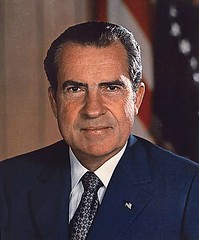 | 35 |
| 7416266135 | Gerald Ford | 1974-1977 Republican Pardoning of Nixon; OPEC crisis |  | 36 |
| 7416266136 | Jimmy Carter | 1977-1981 Democrat stagflation / energy crisis; Iran hostage crisis; Camp David Accords |  | 37 |
| 7416266137 | Ronald Reagan | 1981-1989 Republican Conservative revolution; Iran-Contra scandal |  | 38 |
| 7416266138 | George H. W. Bush | 1989-1993 Republican Persian Gulf War |  | 39 |
| 7416266139 | Bill Clinton | 1993-2001 Democrat NAFTA; Lewinsky scandal and impreachment |  | 40 |
| 7416266140 | George W. Bush | 2001-2008 Republican War on terrorism; Patriot Act; Tax cuts; "No Child Left Behind" |  | 41 |
| 7416266141 | Barack Obama | 2008-2017 Democrat Affordable Care Act | 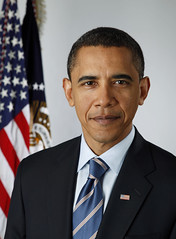 | 42 |
| 7416266142 | Donald Trump | 2017-? Republican "Make America Great Again" |  | 43 |
AP US History - US Presidents Flashcards
Terms : Hide Images
| 7098692969 | George Washington | 1789-1797 Federalist Whiskey Rebellion; Judiciary Act; Farewell Address | | 0 |
| 7098692970 | John Adams | 1797-1801 Federalist XYZ Affair; Alien and Sedition Acts | | 1 |
| 7098692971 | Thomas Jefferson | 1801-1809 Democratic-Republican Marbury v. Madison; Louisiana Purchase; Embargo of 1807 | | 2 |
| 7098692972 | James Madison | 1809-1817 Democratic-Republican War of 1812; First Protective Tariff | | 3 |
| 7098692973 | James Monroe | 1817-1825 Democratic-Republican Missouri Compromise of 1820; Monroe Doctrine | | 4 |
| 7098692974 | John Quincy Adams | 1825-1829 Democratic-Republican "Corrupt Bargain"; "Tariff of Abominations" | | 5 |
| 7098692975 | Andrew Jackson | 1829-1837 Democrat Nullification Crisis; Bank War; Indian Removal Act | | 6 |
| 7098692976 | Martin Van Buren | 1837-1841 Democrat Trail of Tears; Specie Circular; Panic of 1837 | | 7 |
| 7098692977 | William Henry Harrison | 1841 Whig "Tippecanoe and Tyler too!"; First Whig President | | 8 |
| 7098692978 | John Tyler | 1841-1845 Whig "His Accidency"; Webster-Ashburton Treaty | | 9 |
| 7098692979 | James Polk | 1845-1849 Democrat Texas annexation; Mexican War | | 10 |
| 7098692980 | Zachary Taylor | 1849-1850 Whig Mexican War hero and staunch Unionist | | 11 |
| 7098692981 | Millard Fillmore | 1850-1853 Whig Compromise of 1850 | | 12 |
| 7098692982 | Franklin Pierce | 1853-1857 Democrat Kansas-Nebraska Act; Gadsden Purchase | | 13 |
| 7098692983 | James Buchanan | 1857-1861 Democrat Dred Scott decision; Harpers Ferry raid | | 14 |
| 7098692984 | Abraham Lincoln | 1861-1865 Republican Secession and Civil War; Emancipation Proclamation | | 15 |
| 7098692985 | Andrew Johnson | 1865-1869 Democrat 13th and 14th amendments; Radical Reconstruction; Impeachment | | 16 |
| 7098692986 | Ulysses Grant | 1869-1877 Republican 15th amendment; Panic of 1873 | | 17 |
| 7098692987 | Rutherford Hayes | 1877-1881 Republican Compromise of 1877; labor unions and strikes | | 18 |
| 7098692988 | James Garfield | 1881, Republican Brief resurgence of presidential authority; Increase in American naval power; Purge corruption in the Post Office | | 19 |
| 7098692989 | Chester Arthur | 1881-1885 Republican Standard Oil trust created Edison lights up New York City | | 20 |
| 7098692990 | Grover Cleveland | 1885-1889 (1st term), 1893-1897 (2nd term) Democrat Interstate Commerce Act; Dawes Act; Panic of 1893; Pullman Strike | | 21 |
| 7098692991 | Benjamin Harrison | 1889-1893 Republican Sherman Anti-Trust Act; Closure of the frontier | | 22 |
| 7098692992 | William McKinley | 1897-1901 Republican Spanish-American War; Open Door policy | | 23 |
| 7098692993 | Theodore Roosevelt | 1901-1909 Republican Progressivism; Square Deal; Big Stick Diplomacy | | 24 |
| 7098692994 | William Howard Taft | 1909-1913 Republican Dollar diplomacy NAACP founded | | 25 |
| 7098692995 | Woodrow Wilson | 1913-1921 Democrat WWI; League of Nations; 18th and 19th amendments; Segregation of federal offices; First Red Scare | | 26 |
| 7098692996 | Warren Harding | 1921-1923 Republican "Return to normalcy", return to isolationism; Tea Pot Dome scandal; Prohibition | | 27 |
| 7098692997 | Calvin Coolidge | 1923-1929 Republican Small-government (laissez-faire) conservative | | 28 |
| 7098692998 | Herbert Hoover | 1929-1933 Republican "American individualism"; Stock Market Crash; Dust Bowl; Hawley-Smoot Tariff | | 29 |
| 7098692999 | Franklin Delano Roosevelt | 1933-1945 Democrat New Deal; WWII; Japanese Internment; "Fireside Chats" | | 30 |
| 7098693000 | Harry Truman | 1945-1953 Democrat A-bomb; Marshall Plan; Korean War; United Nations | | 31 |
| 7098693001 | Dwight Eisenhower | 1953-1961 Republican Brown v. Board of Education; Second Red Scare; Highway Act and suburbanization ("white flight"); Farewell Address warning of the military industrial complex | | 32 |
| 7098693002 | John Kennedy | 1961-1963 Democrat Camelot; Bay of Pigs; Cuban Missile Crisis; Space program; Peace Corps | | 33 |
| 7098693003 | Lyndon Johnson | 1963-1969 Democrat Civil and Voting Rights acts; Gulf of Tonkin Resolution; Great Society | | 34 |
| 7098693004 | Richard Nixon | 1969-1974 Republican Environmental Protection Act; China visit; Moon Landing; Watergate | | 35 |
| 7098693005 | Gerald Ford | 1974-1977 Republican Pardoning of Nixon; OPEC crisis | | 36 |
| 7098693006 | Jimmy Carter | 1977-1981 Democrat stagflation / energy crisis; Iran hostage crisis; Camp David Accords | | 37 |
| 7098693007 | Ronald Reagan | 1981-1989 Republican Conservative revolution; Iran-Contra scandal | | 38 |
| 7098693008 | George H. W. Bush | 1989-1993 Republican Persian Gulf War | | 39 |
| 7098693009 | Bill Clinton | 1993-2001 Democrat NAFTA; Lewinsky scandal and impreachment | | 40 |
| 7098693010 | George W. Bush | 2001-2008 Republican War on terrorism; Patriot Act; Tax cuts; "No Child Left Behind" | | 41 |
| 7098693011 | Barack Obama | 2008-2017 Democrat Affordable Care Act | | 42 |
| 7098693012 | Donald Trump | 2017-? Republican "Make America Great Again" | | 43 |
Flashcards
Flashcards
AP US History Period 2 (1607-1754) Flashcards
Important vocabulary of the colonization of North America in the 17th century.
Terms : Hide Images
| 5318522474 | Jamestown | 1st permanent English settlement in North America in 1607. |  | 0 |
| 5318522475 | John Smith | A captain famous for world travel. As a young man, he took control in Jamestown. He organized the colony and saved many people from death the next winter and coined the phrase "he who shall not work, shall not eat". He also initiated attacks on Natives. |  | 1 |
| 5318522476 | John Rolfe | He was one of the English settlers at Jamestown (and he married Pocahontas). He discovered how to successfully grow tobacco in Virginia and cure it for export, which made Virginia an economically successful colony. Eventually, he was killed in a Pequot attack. |  | 2 |
| 5318522477 | Pocohontas | An American Indian princess who saved the life of John Smith and helped form more peaceful relations with the Powhatan when she married John Rolfe but died of smallpox in England on a visit to Rolfe's family. Her remains are still there as the English government refuses to send her remains back to North America. |  | 3 |
| 5318522478 | Mayflower Compact | 1620 - The first agreement for self-government in America. It was signed by the 41 men on the Mayflower and set up a government for the Plymouth colony |  | 4 |
| 5318522479 | John Winthrop | As governor of Massachusetts Bay Colony, Winthrop (1588-1649) was instrumental in forming the colony's government and shaping its legislative policy. He envisioned the colony, centered in present-day Boston, as a "city upon a hill" from which Puritans would spread religious righteousness throughout the world. |  | 5 |
| 5318522480 | Puritans | A religious group who wanted to purify the Church of England. They came to America for religious freedom and settled Massachusetts Bay. |  | 6 |
| 5318522481 | Pilgrims | English Puritans who founded Plymouth colony in 1620 |  | 7 |
| 5318522482 | Massachusetts Charter | Allowed Puritans to take a charter with them and establish their own government in the New World. |  | 8 |
| 5318522483 | Loss of Massachusetts Charter | Revoking of Mass. Charter by King George II due to the colonists refusal to obey by the Navigation Acts leading to anti-British feeling in the New England region. | 9 | |
| 5318522484 | New Amsterdam | A settlement established by the Dutch near the mouth of Hudson River and the southern end of Manhattan Island as a trade port for the Dutch trade empire. |  | 10 |
| 5318522485 | Great Migration of Puritans | 1630s- 70,000 refugees left England for New World increasing population of New England. |  | 11 |
| 5318522486 | New York | It was founded by the Dutch for trade and furs and became an English Colony in 1664, when the English were determined to end Dutch trade dominance, and took over the colony by invading New Amsterdam without having to fire a shot. |  | 12 |
| 5318522487 | Peter Stuyvesant | The governor of the Dutch colony of New Amsterdam, hated by the colonists. They surrendered the colony to the English on Sept. 8, 1664. |  | 13 |
| 5318522488 | House of Burgesses | 1619 - The Virginia House of Burgesses formed, the first legislative body in colonial America. It was made up of two representatives from teach town voted on by men who owned property. Later other colonies would adopt the Houses of Burgesses concept creating self-governing bodies in the colonies. |  | 14 |
| 5318522489 | Headright system | Headrights were parcels of land consisting of about 50 acres which were given to colonists who brought indentured servants into America. They were used by the Virginia Company to attract more colonists. |  | 15 |
| 5318522490 | Indentured servants | Colonists who received free passage to North America in exchange for working without pay for a certain number of years |  | 16 |
| 5318522491 | Bacon's Rebellion | 1676 - Nathaniel Bacon and other western Virginia settlers were angry at Virginia Governor Berkley for trying to appease the Doeg Indians after the Doegs attacked the western settlements. The frontiersmen formed an army, with Bacon as its leader, which defeated the Indians and then marched on Jamestown and burned the city. The rebellion ended suddenly when Bacon died of an illness. |  | 17 |
| 5318522492 | King Phillip's War | Under the leadership of Metacom, or King Phillip, the Wampanoag destroyed colonial towns, the colonists destroyed native farms, leading to the most deadly of Indian Wars. The war was disastrous for the natives leading to few surviving the war, and those that did left New England. |  | 18 |
| 5318522493 | royal colony | A colony ruled by governors appointed by a king |  | 19 |
| 5318522494 | proprietary colony | English colony in which the king gave land to proprietors in exchange for a yearly payment |  | 20 |
| 5318522495 | town meetings | A purely democratic form of government common in the colonies, and the most prevalent form of local government in New England. In general, the town's voting population would meet once a year to elect officers, levy taxes, and pass laws. |  | 21 |
| 5318522496 | Salem Witch Trials | 1629 outbreak of witchcraft accusations in a Puritan village marked by an atmosphere of fear, hysteria, and unfounded accusations in courts with Puritan ministers who served as judges. 19 women were executed. |  | 22 |
| 5318522497 | Roger Williams | A dissenter who clashed with the Massachusetts Puritans over separation of church and state and was banished in 1636, after which he founded the colony of Rhode Island to the south. |  | 23 |
| 5318522498 | Intolerant | Not willing to accept ways of thinking different from one's own. The expansion of colonies in New England was a direct result of Puritan intolerance as dissenters were exiled and created new settlements. | 24 | |
| 5318522499 | Anne Hutcheson | One of the dissenters in Puritan Massachusetts held bible studies at her house and believed in a personal relationship with god. She moved to New Hampshire where she died along with her children from an Indian attack. |  | 25 |
| 5318522500 | Thomas Hooker | A Puritan minister who led about 100 settlers out of Massachusetts Bay to Connecticut because he believed that the governor and other officials had too much power. He wanted to set up a colony in Connecticut with strict limits on government. He wrote the first written constitution "The Fundamental Orders of Connecticut". This would become a cherished ideal of the colonial settlers that laws were written not arbitrary. |  | 26 |
| 5318522501 | Sir William Berkeley | The royal governor of Virginia. Adopted policies that favored large planters and neglected the needs of recent settlers in the "backcountry." One reason was that he had fur trade deals with the natives in the region. His shortcomings led to Bacon's Rebellion |  | 27 |
| 5318522502 | William Penn | Established the colony of Pennsylvania as a "holy experiment". Freemen had the right to vote, provided leadership for self- government based on personal virtues and Quaker religious beliefs. His colony was religiously tolerant leading to diversity in the region. |  | 28 |
| 5318522503 | James Oglethorpe | Founded colony of Georgia as a chance for poor immigrants who were in debt to have a second chance at a comfortable life |  | 29 |
| 5318522504 | Lord Baltimore | 1694- He was the founder of Maryland, a colony which offered religious freedom, and a refuge for the persecuted Roman Catholics. |  | 30 |
| 5318522505 | Fundamental Orders of Connecticut | It has the features of a written constitution, and is considered by some as the first written Constitution. The Fundamental Orders of Connecticut is a short document, but contains some principles that were later applied in creating the United States government. Government is based in the rights of an individual, and the orders spell out some of those rights, as well as how they are ensured by the government. It provides that all free men share in electing their magistrates, and uses secret, paper ballots. It states the powers of the government, and some limits within which that power is exercised. |  | 31 |
| 5318522506 | Halfway Covenant | A Puritan church document; In 1662, the Halfway Covenant allowed partial membership rights to persons not yet converted into the Puritan church; It lessened the difference between the "elect" members of the church from the regular members; Women soon made up a larger portion of Puritan congregations. |  | 32 |
| 5318522507 | Dominion of New England | 1686 - The British government combined the colonies of Massachusetts, Rhode Island, New Hampshire, and Connecticut into a single province headed by a royal governor (Edmund Andros). The Dominion ended in 1692, when the colonists revolted and drove out Governor Andros. |  | 33 |
| 5318522508 | Acts of Trade and Navigation | Three acts that regulated colonial trade: 1st act: closed the colonies to all trade except that from English ships, and required the colonists to export certain goods, such as tobacco, to only English territories, 2nd act: (1663) demanded that everything being shipped from Europe to the colonies had to pass through England so they could tax the goods. 3rd act: 1673, was a reaction to the general disregard of the first two laws; it forced duties on the coastal trade among the colonies and supplied customs officials to enforce the Navigation Acts. |  | 34 |
| 5318522509 | Mercantilism | An economic policy under which nations sought to increase their wealth and power by obtaining large amounts of gold and silver and by selling more goods than they bought. |  | 35 |
| 5318522510 | Triangular Slave Trade | A practice, primarily during the eighteenth century, in which European ships transported slaves from Africa to Caribbean islands, molasses from the Caribbean to Europe, and trade goods from Europe to Africa. |  | 36 |
| 5318522511 | Middle Passage | A voyage that brought enslaved Africans across the Atlantic Ocean to North America and the West Indies. The conditions on the ships from Africa to the west led to the loss of hundreds of thousands of lives. |  | 37 |
| 5318522512 | Social mobility | Movement of individuals or groups from one position in a society's stratification system to another | 38 | |
| 5318522513 | Ben Franklin | A colonial businessman and scientist who was an example of American social mobility and individualism. He was a delegate from Pennsylvania in colonial meetings, and proposed the "Albany Plan of the Union" as a way to strengthen the colonies in the French and Indian War. He was a leading figure in the movement toward revolution, and as a diplomat to France to get help during the American Revolution |  | 39 |
| 5318522514 | Great Awakening | (1730s and 1740s) Religious movement characterized by emotional preaching (Jonathan Edwards & George Whitefield). It established American religious precedents such as camp meetings, revivals, and a "born again" philosophy. The first cultural movement to unite the thirteen colonies. It was associated with the democratization of religion, and a challenge to existing authorities and was an influence leading to the American Revolution. |  | 40 |
| 5318522515 | Jonathan Edwards | A leading minister during the Great Awakening, he delivered the famous sermon "Sinners in the Hands of an Angry God" promising that evildoers would pay a price on judgement day. |  | 41 |
| 5318522516 | African American Culture | Slave communities were rich with music, dance, basket-weaving, and pottery-making. Enslaved Africans brought them the arts and crafts skills of their various tribes. |  | 42 |
| 5318522517 | George Whitfield | English preacher who led the Great Awakening by traveling through the colonies |  | 43 |
| 5318522518 | French & Indian War | 1754 - 1763; conflict between France and Great Britain over land in North America in the Ohio River Valley. |  | 44 |
| 5318522519 | Ohio River Valley | Controversial land that led to the French and Indian War; British win war and claim this land; region where British fur traders went; rich soil for farming. | 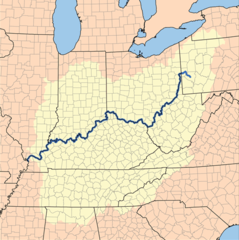 | 45 |
| 5318522520 | Battle of Quebec | (1759) British victory over French forces on the outskirts of Quebec. The surrender of Quebec marked the beginning of the end of French rule in North America. The battle was won when General James Wolfe scouts followed wash women up the cliffs on a secret passageway. |  | 46 |
| 5318522521 | General James Wolfe | Commander of a British fleet sailed to Quebec and defeated French Troops that were defending the city, British seized Quebec and took control of New France. He died in the battle and became a hero of English military. |  | 47 |
| 5318522522 | Join or Die | Famous cartoon drawn by Ben Franklin which encouraged the colonies to join in fighting the British during the French and Indian War | 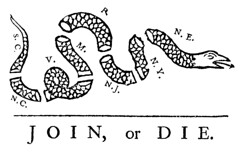 | 48 |
| 5318522523 | Albany Plan of Union, 1754 | Plan proposed by Benjamin Franklin that sought to unite the 13 colonies for trade, military, and other purposes; the plan was turned down by the colonies & the Crown. |  | 49 |
AP US History Period 4 Flashcards
Targeted must-know terms to master for Period 4 of APUSH.
Get more help and information at: https://apprend.io/apush/
Terms : Hide Images
| 8002361511 | Industrial Revolution begins | The transition from hand production to machine production in manufacturing. Beginning around 1760, Britain began to undergo a major economic transformation that then spread to the rest of Europe and North America. Inventors, engineers and scientists developed new ways to harness and improve the efficiency of water power, as well as harness steam as a new source of power. With improved power sources, people were then able to innovate in chemical manufacturing and to produce new machine tools to complete work. The Industrial Revolution impacted every aspect of life: income and population grew rapidly. Work, marriage and settlement patterns changed dramatically as people married later and began moving towards cities. The Industrial Revolution is also closely linked with the emergence of the modern capitalist economy. © Apprend, Inc | 0 | |
| 8002361512 | Article 1, Section 8, Clause 8 | Copyright clause of the Constitution. Together Charles Pinckney and James Madison proposed clauses to the Constitution that would protect the rights of artists, authors and artisans to the works they created. The purpose of these proposals, which became one of the enumerated powers granted to Congress, was to encourage the development of inventions and of the arts in the new nation. This supported the more urban, commercial interests which had pushed for a new governing document and laid the groundwork for the development of American manufacturing driven by the innovations of American inventors. © Apprend, Inc | 1 | |
| 8002361513 | Cotton Gin | A machine that separates the seeds of the cotton plant from the fiber. Before the invention of the cotton gin, laborers picked the tufts of cotton from the plant, and then had to separate the seeds from the fibers by hand. This was a very slow and consuming process. Whitney invented a machine that pulled the cotton through mesh, leaving the seeds, which were too big, behind. The cotton gin allowed for the cleaning of up to 55 pounds of cotton a day. This greatly increased cotton's profitability and revolutionized the South. As planters began to plant more cotton, the demand for slaves increased, as the cotton still had to be picked from the plant by hand. And, as cotton became the dominant crop of the South, slavery became a necessary and institutionalized system of labor. The increase in cotton production also led to an increase in the demand for new land, as cotton quickly exhausted the soil. © Apprend, Inc | 2 | |
| 8002361514 | Cumberland Road | The first nationally built road. In 1806, President Thomas Jefferson approved the construction of the "Cumberland Road" which would stretch from Fort Cumberland in Maryland to Wheeling, West Virginia. The paved road which connected the Potomac and the Ohio Rivers took seven years to build. Once it was complete, it became the primary route for accessing the now well-settled Old Northwest Territory, transporting settlers and manufactured goods west and crops and raw materials east. The building of the road illustrated a general political shift and an increase in federal power. Democratic-Republicans once would have argued that the Constitution did not explicitly give Congress the power to build roads. However, at this point, they also recognized the importance of trade to the nation and the important role of the federal government in creating infrastructure to support that trade. The road was expanded in 1820 to connect to St. Louis, Missouri. © Apprend, Inc | 3 | |
| 8002361515 | Steamboat/Robert Fulton/Clermont | Robert Fulton created the first commercial steamboat, named The North River Steamboat of Claremont. In both England and the United States, canals quickly became a primary mode of transporting goods. Water travel was more reliable than foot travel and technological innovations increased the ease of building canals to connect waterways. Fulton, an inventor, became very interested in canals and investigated how steam power could be used to propel ships. After several failed attempts, Fulton finally created a successful steam-powered ship. The North River Steamboat of Claremont, also called the Clermont, ferried both goods and passengers between Albany and New York City, completing the 300 mile journey in only 62 hours. With such dramatically faster speeds than road travel, the steamboat quickly became the preferred method of transporting goods. © Apprend, Inc | 4 | |
| 8002361516 | 5 | |||
| 8002361517 | Erie Canal | Canal built to connect a navigable waterway from the Great Lakes to the Atlantic Ocean. While goods were easily transported north-south using the country's rivers, the Appalachian Mountains created a significant barrier to east-west transport. The long, difficult journey from the grain fields of the states of the Old Northwest to the east coast was often too expensive to undertake. Several coastal states recognized the opportunity of developing a cheap east-west route which would allow them essentially a monopoly on the grain trade. Although there was much resistance to the expensive and risky canal, New York finally undertook the project. The 363-mile canal from Albany on the Hudson River to Buffalo on Lake Erie was considered an engineering masterpiece. It exceeded any canal previously built in the United States, and led to the development of engineering innovations which were implemented throughout the country. The canal also succeeded in connecting east to west, greatly increasing both the wealth and significance of the western part of the country. © Apprend, Inc | 6 | |
| 8002361518 | Railroads | Steam-powered locomotives accelerated the Industrial Revolution. Various simple railways powered by animals had been used in Britain since the 1500s. With the harnessing of steam power, engineers began to explore how to use that power to move locomotives pulling large loads. The first practical railway locomotive debuted in England in 1811, and it quickly took off for both cargo and passenger travel. In 1830, the first American locomotive, Tom Thumb, traveled 13 miles of the new track between Baltimore and the Ohio River in Virginia. However, it was not until the 1850s that railroads really became accessible and affordable in the United States. Once they did, they transformed the country. It allowed for the faster transport of goods, and made westward migration easier. Most tracks were built east to west, so it also tied the East and the West together while creating a greater divide between North and South as the North's economy was increasingly based on domestic trade and manufacturing, while the South's still relied on exports. © Apprend, Inc | 7 | |
| 8002361519 | Market Economy | An economic system that functions based on what is supplied by its producers and what is demanded by its consumers. The theory behind a market economy is that price of goods are determined both by the available supply and the consumer demand. While a version of a market economy existed before the Industrial Revolution, the Industrial Revolution—as well as the decline of absolute monarchies—shifted the control of production away from the government to individuals and businesses and the control of demand to consumers. The result was a capitalist system in which the means of production are privately owned. Capitalism led to dramatic economic growth, leading economists to argue for laissez-faire economics, the practice of removing all government intervention from the economy. Based on the belief that the market forces of supply and demand would correct any economic problems, in the 1800s laissez-faire economics resulted in the growth of large successful corporations, increased national wealth, and a growing divide between the rich and the poor. © Apprend, Inc | 8 | |
| 8002361520 | Boom & Bust Cycle | A repeated process of economic expansion and contraction. The market economy is driven by the continual balancing of supply and demand. As the market economy expanded in the 1800s, it became clear that it was not possible to always maintain an equilibrium between these two forces. Instead, a cycle developed in which the economy boomed: demand would rise and supply would increase to match it, until suppliers, looking to maximize profit would over-speculate, acquiring or creating too much supply, and demand and prices would drop leading to an economic bust. The first major economic bust, or panic, occurred in 1819 following the major economic expansion that followed the War of 1812. The expansion had been driven in large part by the settlement of the western lands. However, the settlers often purchased their land with loans from banks. The banks, eager to make a profit gave riskier and riskier loans to people who were less likely to pay the loan back. When, in 1819, the Bank of the United States called in its loans to the western banks, those banks tried to call their loans into settlers, who were unable to pay, causing an economic bust. © Apprend, Inc | 9 | |
| 8002361521 | Antebellum Period | The period between the War of 1812 and the Civil War. Although it ended essentially in a stalemate, the War of 1812, solidified the United States as a nation. The period directly after the war was a time of great nationalism and economic and territorial expansion. However, these changes also led to increasing divisions between North and South as the two developed radically different economies: manufacturing and industry in the North and plantations and cash crops driven by the cotton boom in the South. These diverging economies led to opposing social and political values and goals. The South became increasingly dependent on slavery, while the Northern economy benefitted from the influx of inexpensive labor provided by immigrants. The antebellum period is marked both by times of great national unity, as well as serious disagreements over the handling of new lands and the powers and role of the federal government. © Apprend, Inc | 10 | |
| 8002361522 | "Era of Good Feelings" | A time period of national purpose and unity after the War of 1812. Although the United States did not gain any new territory in the War of 1812, Britain's recognition of the country as an equal nation after the war was seen as a victory. The success became a unifier for all Americans across regions. The demise of the Federalist Party after the Hartford Convention, left the Democratic-Republican Party unopposed, diminishing the previous political hostilities. However, the war had also convinced most Democratic-Republicans of the value of a strong national government, and in the post-war era they took on many of the Federalist ideals and projects. As a result James Monroe's presidency, nicknamed the Era of Good Feelings, was marked by a significant expansion of the role of the federal government in spearheading internal improvements and growing the economy. © Apprend, Inc | 11 | |
| 8002361523 | The Second Great Awakening | Religious revival movement in the first half of the 1800s. The Second Great Awakening was the religious manifestation of the Romanticism movement. It emphasized emotion and enthusiasm and rejected the rationalism of the Enlightenment. Beginning in 1790s, preachers began holding revivals much like those of the First Great Awakening, open to all regardless of education or religious background. Responding to the fear spawned by the Industrial Revolution, many of these preachers appealed to the super-natural and emphasized the second coming of Jesus Christ. The Second Great Awakening focused on the importance of free will and one's actions on Earth. The movement was marked by a large number of religious conversions, but also the splintering of established denominations and the creation of new ones like the Methodists and the Baptists. It also led to the development of social reform movements like abolitionism, mental health reform and prison reform and a dramatic increase in colleges as each denomination established its own schools. © Apprend, Inc | 12 | |
| 8002361524 | Slave Codes | Laws restricting the movement and freedom of enslaved people. Beginning in the colonial period, as slave populations grew—and the threat of rebellion along with them—individual colonies passed laws to control their behavior. These laws ranged from colony to colony. However, all prohibited slaves from own property. They also had strict curfews for being off the plantation, prohibited assembly without a white person present, and greatly restricted slaves' rights in court. After Nat Turner's rebellion in Virginia in 1831, Southern states—many of whom who now had slave populations that greatly outnumbered their white populations—passed more restrictions, including prohibitions on owning or using a gun and preaching. Most states also made it illegal for any white person to teach a black person to read. While designed to protect Southern whites and the institution of slavery, these codes served as fuel to the growing abolitionist movement in the North. © Apprend, Inc | 13 | |
| 8002361525 | Free Blacks | African Americans lived outside of slavery in a state of semi-freedom throughout the antebellum period. While free blacks could be found in essentially every state, the majority of them, approximately 1.5 million, were concentrated in the South. While a few of these individuals were born free, more often they were freed slaves. Some were able to buy their freedom, but most were freed by their masters for being a favorite, being an illegitimate child of the master or simply for no longer being useful. While free blacks were not forced to labor, and often even owned their own property, they were also subject to many of the same restrictions of their rights as enslaved blacks. They were not allowed to vote or even testify in court. It was also illegal to teach them how to read and, when some began traveling out of state to seek an education, laws were passed banning them from returning. © Apprend, Inc | 14 | |
| 8002361526 | Alexis de Tocqueville | A political scientist and historian who traveled the United States in the early 1830s. Traveling to the United States for the purpose of studying prisons, Tocqueville spent nine months traveling around the country making observations and taking notes. In 1835, he published his thoughts in a book called Democracy in America. A strong supporter of liberty, Toqueville saw democracy as a balancing act between liberty and equality, the needs of the individual and the needs of the community. He observed the United States, then in the throes of Jacksonian Democracy, as a place where all vestiges of aristocracy seem to have been erased. Hard work and money-making were prized above all and commoners did not view themselves as less than the elites. He recognized that the lack of an established class order meant that the common man had more dignity, but that also the society was more individualistic. Toqueville believed that the lack of an aristocracy, the belief that any person could achieve any status, is what separated the United States from Europe. © Apprend, Inc | 15 | |
| 8002361527 | Frederick Douglass | African-American social reformer, abolitionist and writer. Douglass was born into slavery in Maryland. He taught himself to read and eventually escaped to New York City when he was 20 years old. There, Douglass quickly became involved in the abolitionist movement, joining the lecture circuit and writing several extremely popular autobiographies about his experience in slavery. Many abolitionists held Douglass up as proof the intellectual equality of blacks to whites. Some people even questioned if Douglass had ever truly been a slave. Douglas worked with William Lloyd Garrison on the Liberator, and eventually published his own abolitionist newspaper, The North Star, which supported equality for all, including slaves, free blacks, women, and immigrants. Douglass and Garrison eventually split because Douglass believed in the validity of the Constitution and was willing to engage in discourse with slaveholders. During the Civil War, Douglass was the first African-American invited to the White House. © Apprend, Inc | 16 | |
| 8002361528 | Seneca Falls Convention | The first women's rights convention. In 1848, Lucretia Mott, a famed Quaker, abolitionist and women's rights activist, planned a visit to Seneca Falls, New York. Elizabeth Cady Stanton, a supporter of women's right and an abolitionist, along with the area female Quakers, organized a convention to discuss the condition of women in the United States. The first of its kind, the convention received considerable public attention and spawned the development of conventions throughout the Northeast. At the convention, Stanton presented her Declaration of Sentiments, which echoed the language of the Declaration of Independence in its appeal for the equal treatment of women. The convention became a launching pad for the first American women's movement, and the Declaration its founding document. © Apprend, Inc | 17 | |
| 8002361529 | Cult of Domesticity | The belief that women should remain within the private sphere of the home and bear responsibility for the moral upkeep of the family. As the Industrial Revolution led to more and more men working away from the home, a distinct ideology of separate spheres emerged. Women were supposed to care for their husbands and children, manage the food and run the household while maintaining the four cardinal virtues of piety, purity, submission and domesticity. This kind of "true womanhood" was held in high esteem, and so this was seen by many as a positive social development as it gave women their own path separate from men, allowing them to achieve a kind of equality. However, the cult of domesticity really only applied to a narrow segment of middle and upper class white women, and ignored the reality of many poor women and women of color. Even many of the middle class white women it did apply to, like Elizabeth Cady Stanton and Lucretia Mott, found their roles limiting and inherently unequal. © Apprend, Inc | 18 | |
| 8002361530 | Southern Paternalism | The doctrine justifying slavery as a moral responsibility for less fortunate, inferior people. In the South, the Second Great inspired slave owners to argue for the morality of slavery. Slave owners felt they had a moral obligation to care for their slaves, who were less evolved people. Rather than emphasizing forced labor, paternalism argued that slave owners were providing a better life for their slaves than they could provide for themselves, serving as a model for their slaves, and guiding them much like a parent would a child. In most state legislatures, in fact, the term slavery was viewed as improper and was replaced with the phrase "our peculiar institution," meaning a system unique to the South. Rather than altering slave owners' violent treatment of their slaves, however, paternalism became a justification for much of the violence, as slave owners argued that the beatings and other forms of torture were the only way slaves were able to learn the important lessons they were teaching. © Apprend, Inc | 19 | |
| 8002361531 | Federalist Party | The first American political party. While the political divisions among the nation's leaders were apparent during and immediately after the ratification of the Constitution, the Federalists did not come together as an organized political party until the debate over Hamilton's economic plan. Begun by bankers and businessmen, the Federalist Party supported a strong national government focused on growing the nation's trade and industry. The Federalists supported a friendship with Great Britain, the new country's primary trading partner, and wanted to distance the country from revolutionary France. The Federalists, led by George Washington and John Adams, controlled the government until the Democratic-Republican victory of 1800. They still remained a strong political force for the first decade of the new century, until they threatened a New England secession in opposition to the War of 1812 at the Hartford Convention. The signing of the Treaty of Ghent immediately following the convention left the party in disarray, and it never recovered. © Apprend, Inc | 20 | |
| 8002361532 | Democrat-Republicans | Political party formed in opposition to the Federalist Party. As the debate heightened over Hamilton's financial plan, anti-administration members of the government began secretly meeting in Philadelphia led by Thomas Jefferson and James Madison. By 1791, they were a faction in Congress who self-identified as Republicans. The Democratic-Republicans opposed a strong national government, arguing that its powers were restricted to what was specifically listed in the Constitution. Generally, they supported a more agrarian vision for the nation and supported the rights of the states. The Democratic-Republicans won the presidency and control of Congress in the Election of 1800 and maintained control of the federal government until the party fractured in 1825. Over the course of that 25-year span, the fundamental political beliefs of the party shifted until the majority of Democratic-Republicans actually supported views more similar to that of the original Federalists. © Apprend, Inc | 21 | |
| 8002361533 | Thomas Jefferson | Third president of the United States. Although in his inaugural address, Jefferson said, "We are all Republicans, we are all Federalists", once in office he focused on dismantling the Federalist programs he had so vigorously opposed. His primary goal was to shrink the size and scope of the federal government while decreasing the national debt. However, he soon realized that many of the Federalist policies were necessary. Jefferson repealed Hamilton's taxes, but ultimately kept the national bank in place. He shrunk the size of the military, developing a fleet of inexpensive gunboats for defense purposes only. However, he also initiated the new country's first military conflict when he sent a fleet to confront Barbary pirates capturing American ships off the coast of Libya. He also made the single greatest land purchase in American history, the Louisiana Purchase, although it was not in his express power as president. When Jefferson left office, the debt was much smaller, but the U.S. also faced increasing tension with Great Britain and with Native Americans in the newly acquired territory. © Apprend, Inc | 22 | |
| 8002361534 | John Marshall | Fourth chief justice of the Supreme Court. Marshall, the leader of Virginia's Federalist Party and Secretary of State for a year under John Adams, was appointed by Adams as Chief Justice of the Supreme Court in 1801. While he was not the first Chief Justice, he was the longest serving and had the greatest impact on shaping the role of the court. Marshall's ruling of the court was guided by his Federalist principles: in several significant cases, Marshall guided the court in making decisions that asserted the supremacy of federal law over state law and allowed an expansion of the federal government's enumerated powers. He also, however, was a strong adherent of the rule of law. In his majority opinion in Marbury v. Madison (1803), he established the concept of judicial review, the federal courts responsibility to determine if laws are within the bounds of the Constitution. In doing so, he established the judicial branch as an independent and equal branch of the federal government. © Apprend, Inc | 23 | |
| 8002361535 | Marbury v. Madison | The Supreme Court case in which judicial review was established. On March 3, the day before the Jefferson's inauguration, President John Adams made 58 federal judicial appointments, which became known as the "midnight judges." When Jefferson took office he blocked delivery of the commissions, believing that made them invalid. One of the appointees, William Marbury, following the guidelines established in the Judiciary Act of 1789, filed a petition for the writ of mandamus, or a court order, in the Supreme Court to have his commission delivered. In the decision, the court ruled that the commission must be delivered. However, and more importantly, Marshall also ruled that the Supreme Court did not have the power to hear the case. He argued that the guidelines in the Judiciary Act of 1789 for writs of mandamus were in conflict with Article III of the Constitution and therefore were invalid. With this ruling he officially established the federal judiciary's power and responsibility to determine the constitutionality of laws, called judicial review. © Apprend, Inc | 24 | |
| 8002361536 | James Madison | Founding father and fourth president of the United States. A leading Democratic-Republican, Madison served as Jefferson's Secretary of State for the entirety of Jefferson's presidency. Madison oversaw the Louisiana Purchase and tried to maintain U.S. neutrality in the Napoleonic wars, including supporting the Embargo Act. Madison easily won the presidency in 1808. In spite of Madison's efforts at diplomacy, relations with Great Britain continued to deteriorate until war broke out in 1812. The war shifted Madison's political views dramatically, as he recognized the difficulties of fighting a war without a strong army or financial system. As a result, in 1816, Madison signed the bill re-chartering the Bank of the United States (which he had previously vetoed) and asked Congress to increase the size of the military. The U.S. success in the War of 1812, and Madison's role in it, increased American global standing. The end of his presidency was a period of unprecedented prosperity that began the Era of Good Feelings. © Apprend, Inc | 25 | |
| 8002361537 | Hartford Convention | Series of meetings of the Federalist Party to discuss their objections to the War of 1812. By 1812, the Federalist Party was essentially the party of New England. With New England crippled by the Embargo Act and the prime targets of a British blockade and coastal attacks, they strongly opposed the war with Britain. By 1814, the war was going badly for the United States, and New England, led by Federalists, called a convention at Hartford to discuss measures to limit the power of the federal government. The most radical called for secession or expulsion of the western states. More moderate heads prevailed, though, and the convention only called for several constitutional amendments intended to shame and embarrass the administration: limiting the power of the executive, reducing the influence of the South and preventing future extended trade embargoes. However, a few weeks later, the Treaty of Ghent was signed and news of Andrew Jackson's victory in New Orleans was spread wide. The Federalists were labeled as disloyal and never recovered. | 26 | |
| 8002361538 | The American System | A three-point plan to strengthen the economy of the United States. After the War of 1812, the difficulties of the war led to greater consensus among political leaders about the need for a strong national government and a strong financial system. In 1816, Henry Clay began advocating for a three point plan he called the American System which would create a strong American economy: 1) a high tariff that would protect the growth of American manufacturing; 2) a national bank and 3) federal funding for internal improvements like canals and roads. Although the first two parts were instituted almost immediately—the Tariff of 1816 and the rec-chartering of the Second Bank of the United States—opposition to them in the South and West led to increasing sectional tensions which also prevented the third from being fully funded. The plan drew heavily on the ideas of Alexander Hamilton, illustrating the significant change in the political philosophy of the Democratic-Republican Party. © Apprend, Inc | 27 | |
| 8002361539 | Henry Clay | One of the three senatorial giants of the antebellum period. Clay, from Kentucky, served in the federal government for 45 years as a congressman, senator, and Secretary of State. Although he lost all three bids for the presidency, Clay was one of the most influential politicians of the antebellum era. Clay first gained influence when he was elected to Speaker of the House as a strident war hawk, and helped lead the United States into war with Britain. After the war, he became an avid nationalist: putting the good of the country as a whole before the needs of any particular group. He introduced his American System as an economic plan in 1816 and remained a strong advocate for federal funding of internal improvements. As the divisions between North and South intensified, Clay held the Union together, earning the title "The Great Compromiser" for his work in brokering the Missouri Compromise, the Compromise Tariff of 1833 and the Compromise of 1850. © Apprend, Inc | 28 | |
| 8002361540 | Second Bank of the United States | The second national bank authorized by Congress. In 1811, the charter on the First Bank of the United States expired when the Senate failed to renew it. However, the government struggled with funding and unregulated currency during the War of 1812. Officials realized the need for a centralized financial institution. In 1816, Congress approved the creation of the Second Bank of the United States, and President Madison approved it over the objections of Old Republicans, or Quids. The ban was modeled after Hamilton's original bank: a private corporation with the federal government as its largest shareholder. Initially the bank's policies were very liberal, allowing an expansion of credit to fuel rising industry in the East and spreading farms in the West and South. However, the bank dramatically tightened its policies during the Panic of 1819, accelerating unemployment and falling property prices. This created a strong dislike for the bank in the South and West which played a large role in Jackson's election and presidency. © Apprend, Inc | 29 | |
| 8002361541 | Missouri Compromise | A compromise that attempted to maintain a balance between slave and free states. In 1819, Missouri applied for statehood as a slave state, triggering an intense debate in Congress. The House of Representatives, dominated by Northerners, refused to admit Missouri without restrictions on slavery, arguing the 3/5 rule gave disproportionate power to the South. In the Senate, which was evenly split between free and slave states, southern states opposed restrictions on slavery, arguing it would inevitably undercut their voice in the Senate. When Maine also applied for statehood the following year, Henry Clay brokered a compromise. Maine was admitted as a free state, and Missouri as a slave state, maintaining the balance in the Senate. Moving forward, any territory north of the 36 30' parallel would be closed to slavery. While it settled the debate for the moment, the compromise was not a permanent solution. The North's burgeoning population and industrial economy and the nation's continued need for more land continued to deepen the sectional divide. © Apprend, Inc | 30 | |
| 8002361542 | McCulloch v. Maryland | The Supreme Court decision that established the constitutionality of the Bank of the United States. In 1818, the Maryland state legislature placed a tax on all bank notes issued by banks not chartered in Maryland, targeting the Second Bank of the United States. The Maryland courts upheld the law, arguing the bank was unconstitutional because the Constitution was "silent on the subject of banks." When the case was appealed to the Supreme Court, however, they ruled the BUS to be constitutional. In his opinion, Marshall established two powerful precedents. First, Marshall confirmed the existence of implied powers, writing that the necessary and proper clause of the Constitution gave Congress the power to create a bank. Second, he established that states could not impede the exercise of constitutional power by the federal government. Maryland had argued that the state held ultimate authority over the federal government, because they had ratified the Constitution. Marshall refuted this, writing that the people had ratified the Constitution, so they held sovereignty. © Apprend, Inc | 31 | |
| 8002361543 | Panic of 1819 | The first major American financial crisis. During the Napoleonic Wars, Britain had increased its output dramatically and now found itself with a surplus of goods which they sent to the American market at low prices. Continental Europe found itself unable to produce sufficient food, increasing demand for American crops. The result of falling manufacturing prices and soaring agricultural prices led to a speculative land boom in the South and West, fueled by liberal bank lending. By 1817, though, European agricultural production rebounded dramatically, dropping prices and bursting the land bubble. The Bank of the United States tightened its policies and began calling in credit given to western banks, who in turn foreclosed on farmers and businesses. The majority of Americans, particularly in the agricultural South and West, became very critical of the American system and a national economic policy in general. People became increasingly involved in politics to protect their regional interests which laid the groundwork for Andrew Jackson's rise in the 1820s. © Apprend, Inc | 32 | |
| 8002361544 | Jacksonian Democracy | The movement for increased democracy for the common white man in American politics. The movement began in the 1820s as dissatisfaction with the nation's financial policy, land policy, and increasing tension over slavery led to increased political engagement by the average person. Because of the availability of land in the western states, most people were landowners, making property requirements for voting pointless. As a result, most of the western states established universal white male suffrage. Concerned about losing population to the west, the Eastern states followed suit so that by 1828 almost all white men in the country had the right to vote. 2.4 million people voted in 1840, while only 350,000 did in 1824. Jackson appealed to these new voters by campaigning on a promise to end the political dominance of eastern elites, capitalizing on the same anti-intellectual spirit that, in part, launched the Second Great Awakening. His party, the Democratic Party, prioritized loyalty over experience or policy, which also allowed for wider participation. © Apprend, Inc | 33 | |
| 8002361545 | Cherokee Nation v. Georgia | The Supreme Court case in which Native American tribes were defined as dependent nations to the United States. In the 1820s, people in the state of Georgia began agitating for the removal of the Cherokee nation to allow for increased Western settlement. When attempts to negotiate removal with the tribe failed, the state began stripping away Cherokee rights and exerting their control over the tribe to try to force them out, a move supported by newly elected president Andrew Jackson. Chief John Ross appealed to Congress who chose to support the president's position and passed the Indian Removal Act of 1830. Ross challenged the law in court. The Supreme Court refused to issue a ruling in the case, arguing that Native American tribes had no standing to sue as foreign nations. Instead, he characterized the tribes as wards of the federal government. This case not only opened the door for the forcible removal of the Cherokee, it also established a paternalistic approach to American tribal relations. © Apprend, Inc | 34 | |
| 8002361546 | Nullifcation Crisis/Nullification Theory | A federal and sectional crisis in which South Carolina refused to comply with the Tariff of 1832 and threatened secession. In response to the Tariff of 1828, radical state political leaders, supported by Jackson's Vice President and South Carolinian John Calhoun argued for state nullification of the law, citing Jefferson's compact theory outlined in the Kentucky and Virginia Resolutions (1798). Jefferson argued that the national government was a compact of the states, giving the states ultimate authority over the national government. When Jackson signed the Tariff of 1832, a state convention in South Carolina adopted the Ordinance of Nullification, declaring both tariffs unconstitutional and unenforceable in South Carolina. The state also began organizing a military defense in case of attempted federal enforcement of the law. © Apprend, Inc | 35 | |
| 8002361547 | Panic of 1837 | The second major financial crisis in the United States. In the 1830s, the US economy was booming. However, like in 1816, this economic expansion was built on credit and speculation. Due to the Indian Removal Act, the federal government's land sales increased dramatically. In 1832, Jackson defunded the National Bank, distributing its funds among "pet banks" in the West. This shifted money away from the manufacturing East and impeded the growth of industry. Meanwhile, these pet banks emboldened by the land boom, often called wildcat banks, gave loans and issued bank notes liberally, inflating the money supply and decreasing the value of the notes. In an attempt to correct the problem, Jackson enacted the Specie Circular of 1836 which required all federal land to be purchased with specie, or hard money. Since the paper bank notes could no longer purchase land, most people considered them worthless and their value plummeted. This rapid devaluing of people's notes resulted in economic depression because people no longer had as much buying power. Also, the Circular caused a crash in the land market, as few buyers had hard money. The crash led to the rescinding of loans and widespread bank failures. Unlike the Panic of 1816, recovery from the Panic of 1837 was slow, lasting until 1843. © Apprend, Inc | 36 | |
| 8002361548 | Know-Nothing Party | A nativist third party in the 1850s. The large influx of Irish and German immigrants in the 1840s led to a resurgence of nativism and anti-Catholicism. In 1843, a local political party dedicated to stopping immigration and limiting immigrant influence formed in New York called the American Republican Party which quickly spread to nearby states under the name the Native American Party. In the 1850s, several secret nativist organizations developed, eventually coalescing under the banner of the Order of the Star Spangled Banner. Members were instructed to say, "I know nothing," when asked about its proceedings. This semi-secret organization then transformed into the American Party, often called the Know-Nothing Party, a third party dedicated to purifying American politics of immigrant influence. The party was most influential between 1854 and 1856, but fell apart as disagreements over the slavery issue superseded concern about immigrants. While it had few prominent leaders, the Know-Nothing Party reflected the anxieties over changes to the American population. © Apprend, Inc | 37 | |
| 8002361549 | Sectionalism | The prioritizing of regional interests over national interests. The differing interests of the East, West and South led to increasing political tensions. The Industrial Revolution accelerated the divergence of the Northern and Southern economies. In the North, manufacturing, fueled by the new wave of immigration, became increasingly important to the economy, while new technology turned the West into the nation's breadbasket, and the South became more dependent on cotton as the booming textile industry increased demand. As infrastructure and trade tied the West and East together, the sectional divide became primarily a North/South one. These differences led to each region advocating conflicting economic and social policies, primarily involving the role of the national government and its relationship to the states. The sectional divide centered around two key issues—tariffs and slavery—which created a series of political crises culminating in the Civil War. © Apprend, Inc | 38 | |
| 8002361550 | State's Rights | In the South, states became increasingly concerned that the federal government was usurping the power of the states. From the founding of the nation, American political leaders grappled with the distribution of power between the states and the federal government. Protecting states' rights was a primary concern of the Anti-Federalists during the debate over ratification, and it was the basis of Jefferson's Kentucky and Virginia Resolutions in 1798, and the Federalists' Hartford Convention in 1814. By the 1820s, due to growing sectionalism, states' rights was a primary concern of the Southern states. In response to the Tariff of 1832, South Carolina argued the right of nullification, arguing that the states had the right to nullify laws detrimental to them. In the 1840s and 1850s, John C. Calhoun built a Senate career on his strong defense of states' rights, and states' rights became the central southern argument in the debate over slavery. © Apprend, Inc | 39 | |
| 8002361551 | Louisiana Purchase | The sale of the Louisiana Territory from France to the United States. The port of New Orleans became a crucial port in the new nation for the movement of agricultural goods from the areas west of the Appalachian Mountains down the Mississippi River and out to the areas to the east. While Pinckney's Treaty granted the United States the right of deposit, the right to store goods for export in the port, Spain was fickle with abiding by this agreement. Looking to gain full control of the port, American representatives offered to purchase New Orleans from Napoleon who had obtained the territory from Spain. Instead Napoleon, wanting to focus on a European empire, directed his foreign minister to offer them the entire territory, over 800,000 square miles, for only $11 million. The purchase was the largest land acquisition in history and created a constitutional controversy. Critics argued that Jefferson did not have the authority to purchase land, however, he argued the sale was covered by his power to make treaties. © Apprend, Inc | 40 | |
| 8002361552 | End of the War of 1812 | The end of the war legitimized the United States as a country and set the foundation for British-American relations going forward. Although the Treaty of Ghent was signed in December of 1814, the war continued until word of the treaty reached North America in January of 1815. Although on its face, the treaty had little to no impact. In reality, it was a tacit acknowledgement by the British government of the United States as an equal nation. Although the treaty did not address American maritime rights, they were never seriously violated again by Great Britain, or any other country until World War I. Also Britain no longer needed to arm and fund western Native American groups, as the United States closed the door on any ambitions for expansion into Canada. This was devastating for the tribes in the Old Northwest and Louisiana Territory. The war also led to the growth of American manufacturing -due to the lack of access to British goods—and bred a new generation of war heroes who would lead the country for the next generation. © Apprend, Inc | 41 | |
| 8002361553 | Adams-Onis Treaty/ Florida Purchase Treaty | A treaty between the United Staes and Spain ceding the Florida territory to the US and defining the border between the United States and New Spain. The United States had repeatedly tried to buy Florida from Spain with no success. However, by 1815 Spain was facing economic problems and increasing unrest in their American empire. Florida was more of a problem than an asset as the Seminole Indians, based out of Florida, continually crossed the border to harass and raid American villages and farms. Spain did not have the funds to either settle or properly police the territory, so Andrew Jackson, in pursuit of Native Americans and escaped slaves in the First Seminole, crossed into Florida, attacking and capturing forts. By 1818, the US effectively controlled all of East Florida. In 1819, Spain agreed to cede Florida to the US in exchange for acknowledgement of Spanish control of the territory west of Louisiana from Texas to California. However, the peace of this border was short-lived as Mexican independence and increasing American settlement in Texas led to new disputes. © Apprend, Inc | 42 | |
| 8002361554 | Monroe Doctrine | A US foreign policy of opposing European colonialism in the Western Hemisphere. In the first two decades of the 19th century, most of the Spanish and Portuguese colonies in North America gained their independence. The United States viewed these independence movements favorably as extending their influence. However, the resurgence of monarchy in Europe after the Congress of Vienna raised concerns of a new European imperialist push which could undermine those gains. Monroe and his Secretary of State John Quincy Adams crafted a statement on the US's stance on European intervention. The policy which became known as the Monroe Doctrine asserted the US would not interfere with any existing European colonies in the Americas, but that they would view any attempt to control an independent American state as an unfriendly act against the US. The United States did not have the power to enforce the policy at first, but by the end of the 19th century it had become the central tenet of American foreign policy. © Apprend, Inc | 43 | |
| 8002361555 | Indian Removal Act | An act passed by Congress authorizing the removal of Southern tribes to land west of the Mississippi River. Westward expansion in the South led to pressure on the US government to remove the tribes living in the western lands claimed by Georgia and Florida. Five tribes—the Choctaws, the Cherokee, the Chickasaw, the Creek and the Seminole—collectively known as the Five Civilized Tribes had opted for assimilation to European culture as a means to ensure their survival. They were considered autonomous nations in the territory, until Jackson, a strong supporter of state autonomy, argued the states had jurisdiction over the tribes within their boundaries. The Removal Act technically made removal voluntary, however the government exerted a great deal of pressure to force Native Americans to sign the questionably legal treaties. For the next seven years, members of the five tribes were forcibly marched on a path that became known as "The Trail of Tears" to territory west of the Mississippi, with thousands dying along the way. The Act also guaranteed the groups eternal rights to their new land, however this was quickly overturned by the American desire for the land and its resources. © Apprend, Inc | 44 |
AP US History Chapter 5 Flashcards
Terms : Hide Images
| 4901629789 | First Continental Congress (1774) | All of the colonies except Georgia sent representatives to determine how the colonies should react to the threat to their rights and liberties (caused by Intolerable Acts) | 0 | |
| 4901629790 | Radicals (American Revolution) | Colonists that supported the revolution and Independence from Britian | 1 | |
| 4901629791 | Patrick Henry | Radical from Virginia; delegate at Continental Congress. "Give me liberty or give me death!" | 2 | |
| 4901629792 | Samuel Adams | Radical from Massachusetts; delegate at Continental Congress; started Committees of Correspondence | 3 | |
| 4901629793 | John Adams | Radical from Massachusetts; delegate at Continental Congress; acted as lawyer for British soldiers involved in the Boston Massacre | 4 | |
| 4901629794 | George Washington | Moderate from Virginia; delegate at Continental Congress; position of respect in colonial army. He was tall | 5 | |
| 4901629795 | John Dickinson | Moderate from Pennsylvania; delegate at Continental Congress; writer of "Letters from a Farmer in Pennsylvania" | 6 | |
| 4901629796 | Suffolk Resolves | These rejected the Intolerable Acts and called for their repeal; they also urged the colonies to make military preparations and organize boycotts | 7 | |
| 4901629797 | Declaration fo Rights and Grievances | A petition to the king urging him to make right colonial grievances and restore colonial rights | 8 | |
| 4901629798 | Paul Revere | Warned militiamen that the British were coming along with William Dawes (Battle of Lexington and Concord) | 9 | |
| 4901629799 | Minutemen | Another word for the colonial militia | 10 | |
| 4901629800 | Lexington | British soldiers tried to seize colonial military supplies; 8 colonial minutemen were killed | 11 | |
| 4901629801 | Concord | British soldiers tried to destroy colonial military supplies; on the return to Boston, the British suffered 250 casualties when abushed by milita men | 12 | |
| 4901629802 | Battle of Bunker Hill (Breed's Hill) | Americans lost to British, but British suffered heavy casualties in this first true battle of the war (June 17, 1775) | 13 | |
| 4901629803 | Second Continental Congress (1775) | (May 1775) Representatives adopted the Declaration of the Causes and Necessities for Taking Up Arms and sent the Olive Branch Petition to the king | 14 | |
| 4901629804 | Declaration of the Causes and Necessities for Taking Up Arms | A letter to the world explaining why the colonies were rebelling and that it was necessary | 15 | |
| 4901629805 | Olive Branch Petition | (July 1775) Last ditch effort for peace; colonists pledged their loyalty and asked the king to go to Parliment and protect their colonial rights | 16 | |
| 4901629806 | Prohibitory Act (1775) | (1775) Declaration of the king in response to the Olive Brach Petition saying the colonies were in rebellion | 17 | |
| 4901629807 | Thomas Paine; Common Sense | (January 1776) Pamphlet that argued in clear, logical language that the colonies should break with Britain | 18 | |
| 4901629808 | Declaration of Independence | Written by Thomas Jefferson, ratified on July 4th 1776, declared colonial independence from Britian | 19 | |
| 4901629809 | Patriots | Most of this group came from New England or Virginia and wanted freedom for the colonies | 20 | |
| 4901629810 | Loyalists (Tories) | The majority of this group tended to be wealthy and conservative and many of the clergy and government officials were in this group; pro-British | 21 | |
| 4901629811 | Valley Forge | Washington's troops spent a harsh winter here after losing Philadelphia to the British (1777-1778) | 22 | |
| 4901629812 | Continentals | Paper money issued by Congress which was almost worthless due to inflation | 23 | |
| 4901629813 | Battle of Saratoga | (October 1777) Turning point of the war; American victory that led to the French joining the colonists in fighting the Revolution | 24 | |
| 4901629814 | King Louis | Decided to help the colonies succeed in their rebellion in order to weaken the British and hopefully regain territory lost during the French & Indian War | 25 | |
| 4901629815 | Battle of Yorktown | (1781) Last battle of the Revolutionary War; support from French helped a lot | 26 | |
| 4901629816 | Treaty of Paris (1783) | Treaty which stated that: 1. Britain would recognize the existence of the US 2. The Mississippi River would be the western border of the US 3. Americans would have fishing rights off the coast of Canada 4. Americans would pay debts owed to British merchants and honor Loyalist claims for property confiscated during the war | 27 |
Pages

Need Help?
We hope your visit has been a productive one. If you're having any problems, or would like to give some feedback, we'd love to hear from you.
For general help, questions, and suggestions, try our dedicated support forums.
If you need to contact the Course-Notes.Org web experience team, please use our contact form.
Need Notes?
While we strive to provide the most comprehensive notes for as many high school textbooks as possible, there are certainly going to be some that we miss. Drop us a note and let us know which textbooks you need. Be sure to include which edition of the textbook you are using! If we see enough demand, we'll do whatever we can to get those notes up on the site for you!
