

AP US History Chapter 14 Flashcards
Terms : Hide Images
| 7850478143 | Samuel Slater | He was a British mechanic that moved to America and in 1791 invented the first American machine for spinning cotton. He is known as "the Father of the Factory System" and he started the idea of child labor in America's factories. | 0 | |
| 7850478144 | Cyrus McCormick | United States inventor and manufacturer of a mechanical harvester (1809-1884) | 1 | |
| 7850478145 | Eli Whitney | United States inventor of the mechanical cotton gin (1765-1825) | 2 | |
| 7850478146 | Carl Shurz | german immigrant later became a general in Union Army, senator from Missouri, secretary in administration of Rutherford B Hayes | 3 | |
| 7850478147 | Robert Fulton | American inventor who designed the first commercially successful steamboat and the first steam warship (1765-1815) | 4 | |
| 7850478148 | Samuel F. B. Morse | inventor of the telegraph | 5 | |
| 7850478149 | DeWitt Clinton | United States politician who as governor of New York supported the project to build the Erie Canal (1769-1828) | 6 | |
| 7850478150 | Catharine Beecher | was a noted educator, renowned for her forthright opinions on women's education as well as her vehement support of the many benefits of the incorporation of a kindergarten into children's education. | 7 | |
| 7850478151 | George Catlin | a painter who was among the first to advocate the preservation of nature as a national policy | 8 | |
| 7850478152 | industrial revolution | the transformation from an agricultural to an industrial nation | 9 | |
| 7850478153 | limited liability | the liability of a firm's owners for no more than the capital they have invested in the firm | 10 | |
| 7850478154 | transportation revolution | rapid growth in the speed and convenience of transportation; in the United States this began in the early 1800s | 11 | |
| 7850478155 | nativism | the policy of perpetuating native cultures (in opposition to acculturation) | 12 | |
| 7850478156 | cult of domesticity | idealized view of women & home; women, self-less caregiver for children, refuge for husbands | 13 | |
| 7850478157 | ecological imperialism | an aggressive and often heedless explotiation of the west. settlers often killed species to the point of extinction, and they farmed the lands dry. it was a hard land to live on, and ecological imperialism was sometimes the only way to survive and make a profit. | 14 | |
| 7850478158 | factory system | a method of production that brought many workers and machines together into one building | 15 | |
| 7850478159 | rendezvous system | The basis for the American fur-trapping industry, many traders ventured to the Rocky Mountains each summer to trade with fur-trappers and Indians for pelts in exchange for manufactured goods. | 16 | |
| 7850478160 | homesteaders | a settler granted a homestead by the United States government | 17 | |
| 7850478161 | domestic feminism | A term used by American historians to describe how women's authority was, beginning the mid-19th century, situated within the "separate sphere" of the home. This emerging discourse allowed (primarily) northern, middle class, white women to connect new ideas about gender roles within the family to their growing participation in abolitionism. | 18 | |
| 7850478162 | scabs | Stirkebreakers hired by employers as replacement workers when unions went on strike | 19 | |
| 7850478163 | interchangeable parts | identical components that can be used in place of one another in manufactoring | 20 | |
| 7850478164 | rugged individualism | The belief that all individuals, or nearly all individuals, can succeed on their own and that government help for people should be minimal. Popularly said by Hertbert Hoover. | 21 | |
| 7850478165 | cotton gin | machine that produced a more efficient way to get the seeds out of cotton, and expanded southern development | 22 | |
| 7850478166 | Clermont | Fulton's steamboat in 1807 which powered on/by a newly designed engine. It took the Clermont 32 hours to go 150 miles from New York to Albany. | 23 | |
| 7850478167 | Boston Associates | 15 Boston families that dominated textile, railroad, insurance, and banking industries | 24 | |
| 7850478168 | clipper ships | Second quarter of 1800s. Long, narrow, wooden ships with tall masts and enormous sails. Unequalled in speed and were used for trade, especially for transporting perishable products from distant countries like China and between the eastern and western United States. | 25 | |
| 7850478169 | Ancient Order of Hibernians | Semisecret Irish organization that became a benevolent society aiding Irish immigrants in American. | 26 | |
| 7850478170 | Molly Maquires | secret Irish-American organization accused of crimes including kidnapping; used violence and terrorism to fight wrongs against Irish workers (bad conditions in mines, etc) | 27 | |
| 7850478171 | General Incorporation Law | allows corporations to be formed without a charter from the legislature. It also refers to a law enabling a certain type of corporation, such as a railroad, to exercise eminent domain and other special rights without a charter from the legislature. | 28 | |
| 7850478172 | Pony Express | express mail carried by relays of riders on horseback | 29 | |
| 7850478173 | Tammany Hall | a political organization within the Democratic Party in New York city (late 1800's and early 1900's) seeking political control by corruption and bossism | 30 | |
| 7850478174 | Order of the Star Spangled Banner | The noisier American "Nativists" rallied for political action. In 1849 they formed this, which soon developed into the formidable American, or "Know-Nothing," party—a name derived from its secretiveness. | 31 | |
| 7850478175 | Sewing machine | a textile machine used as a home appliance for sewing | 32 | |
| 7850478176 | Know nothing party | Group of prejudice people who formed a political party during the time when the KKK grew. Anti-Catholics and anti-foreign. They were also known as the American Party. | 33 | |
| 7850478177 | Kentucky bluegrass | valuable meadow and pasture grass in Europe and especially central United States having tall stalks and slender bright green leaves | 34 | |
| 7850478178 | twisting the lion's tail | the slang term for a politician in America in the mid-1800s making negative remarks about the British to his Irish audiences. | 35 |
AP US History Chapter 3 Flashcards
Terms : Hide Images
| 7402025131 | Proprietorship | A colony created through a grant of land from the English monarch to an individual or group, who then set up a form of government largely independent from royal control. Four example Lord Baltimore in Maryland | 0 | |
| 7402025132 | Quakers | Religious group that believed that God spoke directly to each individual through an "inner light". They were religiously tolerant and progressive. They don't think that there's a difference between a gentleman and a laborer. They condemned extravagance. Pennsylvania is the refuge, they are persecuted in England because they refused to serve the military or pay taxes.they said to restore Christianity in its early simple spirituality. But they reject the Puritans Calvinistic doctrines | 1 | |
| 7402025133 | Navigation Acts | English laws that required certain colonial goods be shipped with English ships, men, and merchants. | 2 | |
| 7402025134 | Dominion of New England | A royal province created by King James II that made most of the northeastern colonies into one large colony. Connecticut and Rhode Island merge with the Massachusetts Bay and Plymouth. The governor was sir Edmund Andros | 3 | |
| 7402025135 | Glorious Revolution | A bloodless coup in 1688 in which James II of England was overthrown by William of Orange. | 4 | |
| 7402025136 | constitutional monarchy | A monarchy limited in its rule by a constitution. Mary and Williams style of ruling | 5 | |
| 7402025137 | Second Hundred Years' War | An era of warfare from 1619 to 1815 in which England fought in seven major wars. It began with the war of league of Augsburg and lasted till the defeat of Napoleon in Waterloo in 1815 | 6 | |
| 7402025138 | tribalization | The adaptation of stateless peoples to the demands imposed on them by neighboring states. Tribes, to stay alive, were forced to take in more outside members | 7 | |
| 7402025139 | Covenant Chain | The alliance of the Iroquois, first with the colony of New York, then with the British Empire and its other colonies. | 8 | |
| 7402025140 | South Atlantic System | A new agricultural and commercial order that produced sugar, tobacco, rice, and other tropical products for an international market. Its plantation societies were ruled by Europeans and worked on by enslaved Africans. | 9 | |
| 7402025141 | Middle Passage | The brutal sea voyage from Africa to the Americas that took the lives of nearly two million enslaved Africans. | 10 | |
| 7402025142 | Stono Rebellion | The largest Slave uprising in 1739 along the Stono River in which a group of slaves armed themselves, plundered six plantations, and killed more than twenty colonists. This uprising was quickly suppressed. | 11 | |
| 7402025143 | gentility | A refined style of living and elaborate manners that came to be highly prized among well-to-do English families after 1600 and strongly influenced leading colonists after 1700. | 12 | |
| 7402025144 | salutary neglect | British colonial policy that declared it would relax their supervision of internal colonial affairs. This led to the rise of self-government in North America. | 13 | |
| 7402025145 | patronage | The power of elected officials to grant government jobs and favors to their supporters. | 14 | |
| 7402025146 | land banks | An institution that printed paper money and lent it to farmers, taking a lien on their land to ensure repayment. | 15 | |
| 7402025147 | William Penn | Founder of Pennsylvania who founded the colony as a safe haven for Quakers and worked alongside local Indians 1681 King Charles the second bestowed him Pennsylvania as payment for a large debt owed to his father Was imprisoned for two years in England for practicing his belief 1682 arrange a public treaty with the Delaware Indians to purchase the land that Philadelphia and the surrounding settlements well soon occupy | 16 | |
| 7402025148 | Edmund Andros | English colonial governor of the Dominion of New England for three years. James ordered him to abolish the existing legislative assemblies In Massachusetts he band town meetings | 17 | |
| 7402025149 | William of Orange | Dutch prince who was invited by English Protestants and Whigs to overthrow King James II in the Glorious Revolution. Married to Mary Stuart | 18 | |
| 7402025150 | John Locke | Political philosopher that argued for individuals to have access to "natural rights". Political philosopher who parliament relied on to justify their coop = glorious revolution | 19 | |
| 7402025151 | Jacob Leisler | Dutchman who led a rebellion against the Dominion of New England who was soon suppressed, hanged, and decapitated when Henry slaughter was put as governor in 1691 | 20 | |
| 7402025152 | William Byrd II | Son of a successful planter-merchant who was rejected in England for being too "colonial". | 21 | |
| 7402025153 | Robert Walpole | Whig leader who developed the policy of salutary neglect and used patronage to create a strong Court Party. | 22 |
AP US History Period 5 for Live Flashcards
From back of chapters 1-30 in Kaplan AP US History 2010
Terms : Hide Images
| 5757918144 | peculiar institution | ..., southern euphemism for slavery | 0 | |
| 5757918145 | John C. Calhoun | ..., South Carolina Senator - advocate for state's rights, limited government, and nullification | 1 | |
| 5757918146 | Harriet Tubman | ..., United States abolitionist born a slave on a plantation in Maryland and became a famous conductor on the Underground Railroad leading other slaves to freedom in the North (1820-1913) | 2 | |
| 5757918147 | Sojourner Truth | ..., United States abolitionist and feminist who was freed from slavery and became a leading advocate of the abolition of slavery and for the rights of women (1797-1883) | 3 | |
| 5757918148 | Fredrick Douglas | ..., former slave + abolitionist, stood up for his beliefs, fought for womens + blacks rights, runaway slave, newspaper-the north star | 4 | |
| 5757918150 | Nat Turner's Rebellion | ...,slaves in Virginia, unsuccessful attempt to overthrow and kill planter families | 5 | |
| 5757918151 | Declaration of Sentiments | ..., declared that all "people are created equal"; used the Declaration of Independence to argue for women's rights | 6 | |
| 5757918152 | Underground Railroad | ..., abolitionists secret aid to escaping slaves | 7 | |
| 5757918153 | James K. Polk | ..., president in March 1845. wanted to settle oregon boundary dispute with britain. wanted to aquire California. wanted to incorperate Texas into union. | 8 | |
| 5757918154 | Wilmot Proviso | ..., Bill that would ban slavery in the territories acquired after the War with Mexico | 9 | |
| 5757918155 | Treaty of Guadalupe Hidalgo | ..., Treaty that ended the Mexican War, granting the U.S. control of Texas, New Mexico, and California in exchange for $15 million | 10 | |
| 5757918156 | Oregon Trail | ..., pioneer trail that began in missouri and crossed the great plains into the oregon country | 11 | |
| 5757918157 | Harriet Beecher Stowe | ..., United States writer of a novel about slavery that advanced the abolitionists' cause (1811-1896) | 12 | |
| 5757918158 | John Brown | ..., abolitionist who was hanged after leading an unsuccessful raid at Harper's Ferry, Virginia (1800-1858) | 13 | |
| 5757918159 | apologists | ..., Christian thinkers who defended slavery and explained its "positive good" through Christian beliefs | 14 | |
| 5757918160 | Free-soil party | ..., Formed in 1847 - 1848, dedicated to opposing slavery in newly acquired territories such as Oregon and ceded Mexican territory. | 15 | |
| 5757918161 | 49ers | ..., People who rushed to california for gold. | 16 | |
| 5757918163 | Confederate States of America | ..., a republic formed in February of 1861 and composed of the eleven Southern states that seceded from the United States | 17 | |
| 5757918164 | Gadsden Purchase | ..., purchase of land from mexico in 1853 that established the present U.S.-mexico boundary | 18 | |
| 5757918165 | Fugitive Slave Law | ..., Enacted by Congress in 1793 and 1850, these laws provided for the return of escaped slaves to their owners. The North was lax about enforcing the 1793 law, with irritated the South no end. The 1850 law was tougher and was aimed at eliminating the underground railroad. | 19 | |
| 5757918166 | The Compromise of 1850 | ..., Slavery becomes outlawed in Washington D.C., California is admitted as a free state, and Utah and New Mexico will determine whether slavery is allowed through popular sovereignty. Also, the Fugitive Slave Law is passed. | 20 | |
| 5757918167 | The Kansas-Nebraska Act | ..., 1854; sponsored by Senator Stephen Douglas, this would rip open the slavery debate; repealed the Missouri Compromise of 1820, and allowed settlers in those territories to determine if they would allow slavery within their boundaries. | 21 | |
| 5757918168 | Dred Scott v. Sanford | ..., Supreme Court case that decided US Congress did not have the power to prohibit slavery in federal territories and slaves, as private property, could not be taken away without due process - basically slaves would remain slaves in non-slave states and slaves could not sue because they were not citizens | 22 | |
| 5757918169 | Bleeding Kansas | ..., A sequence of violent events involving abolitionists and pro-Slavery elements that took place in Kansas-Nebraska Territory. The dispute further strained the relations of the North and South, making civil war imminent. | 23 | |
| 5757918170 | Harper's Ferry | ..., John Brown's scheme to invade the South with armed slaves, backed by sponsoring, northern abolitionists; seized the federal arsenal; Brown and remnants were caught by Robert E. Lee and the US Marines; Brown was hanged | 24 | |
| 5757918171 | popular sovereignty | ..., The doctrine that stated that the people of a territory had the right to decide their own laws by voting. In the Kansas-Nebraska Act, this would decide whether a territory allowed slavery. | 25 | |
| 5757918172 | Robert E. Lee | ..., Confederate general who had opposed secession but did not believe the Union should be held together by force | 26 | |
| 5757918173 | Ulysses S. Grant | ..., an American general and the eighteenth President of the United States (1869-1877). He achieved international fame as the leading Union general in the American Civil War. | 27 | |
| 5757918174 | Abraham Lincoln | ..., 16th President of the United States saved the Union during the Civil War and emancipated the slaves; was assassinated by Booth (1809-1865) | 28 | |
| 5757918175 | John Wilkes Booth | ..., was an American stage actor who, as part of a conspiracy plot, assassinated Abraham Lincoln, the 16th President of the United States, at Ford's Theatre in Washington, D.C. on April 14, 1865. | 29 | |
| 5757918176 | Copperheads | ..., northern democrat who advocated making peace with the Confederacy during the Civil War | 30 | |
| 5757918177 | New York Draft Riots | ..., July 1863 just after the Battle at Gettysburg. Mobs of Irish working-class men and women roamed the streets for four days until federal troops suppressed them. They loathed the idea of being drafted to fight a war on behalf of slaves who, once freed, would compete with them for jobs. | 31 | |
| 5757918178 | Antietam | ..., the first major battle in the American Civil War to take place on Northern soil. It was the bloodiest single-day battle in American history, with almost 23,000 casualties. After this "win" for the North, Lincoln announced the Emancipation Proclamation | 32 | |
| 5757918179 | Gettysburg | ..., a small town in southern Pennsylvania, The most violent battle of the American Civil War and is frequently cited as the war's turning point, fought from July 1 - July 3, 1863. | 33 | |
| 5757918180 | Anaconda Plan | ..., Union war plan by Winfield Scott, called for blockade of southern coast, capture of Richmond, capture Mississippi R, and to take an army through heart of south | 34 | |
| 5757918181 | Emancipation Proclamation | ..., Issued by Abraham Lincoln on September 22, 1862 it declared that all slaves in the confederate states would be free | 35 | |
| 5757918182 | Thirteenth Amendment | ..., The constitutional amendment ratified after the Civil War that forbade slavery and involuntary servitude. | 36 | |
| 5757918183 | The Homestead Act of 1862 | ..., provided a settler with 160 acres of land if he promised to live and work for it at least five years, about 500,000 families took advantage of it | 37 | |
| 5757918184 | The Pacific Railway Act of 1862 | ..., This act apporved the building of a transcontinental railroad that would utterly transform the West by linking the Atlantic Ocean with the Pacific | 38 | |
| 5757918185 | writ of habeas corpus | ..., court order that the authorities show cause for why they are holding a prisoner in custody. Deters unlawful imprisonment | 39 | |
| 5757918186 | Freedmen's Bureau | ..., 1865 - Agency set up to aid former slaves in adjusting themselves to freedom. It furnished food and clothing to needy blacks and helped them get jobs | 40 | |
| 5757918187 | carpetbaggers | ..., northern whites who moved to the south and served as republican leaders during reconstruction | 41 | |
| 5757918188 | ku klux klan | ..., a secret society of white Southerners in the United States | 42 | |
| 5757918189 | redeemers | ..., Largely former slave owners who were the bitterest opponents of the Republican program in the South. Staged a major counterrevolution to "redeem" the south by taking back southern state governments. Their foundation rested on the idea of racism and white supremacy. | 43 | |
| 5757918190 | reconstruction | ..., the period after the Civil War in the United States when the southern states were reorganized and reintegrated into the Union | 44 | |
| 5757918191 | proclamation of amnesty and reconstruction | ..., (Dec. 1863) issued by Lincoln: offered full pardon to Southerners who would take oath of allegiance to the Union and acknowledge emancipation | 45 | |
| 5757918192 | wade-davis bill | opposed 10% plan and called for more than 50% | 46 | |
| 5757918193 | 10 percent plan | ..., It was a reconstruction plan that decreed that a state could be reintegrated into the union when 10 percent of voters in the presidential election of 1860 had taken an oath of allegiance to the United States and pledged to abide by emancipation. The next step would be erection of a state gov. and then purified regime. (Lincoln) | 47 | |
| 5757918194 | civil rights bill of 1866 | ..., first congressional attempt to guarantee black rights in the south, passed over johnson's veto | 48 | |
| 5757918195 | fourteenth amendment | ..., made "all persons born or naturalized in the United States" citizens of the country | 49 | |
| 5757918196 | military reconstruction act | ..., It divided the South into five military districts that were commanded by Union generals. It was passed in 1867. It ripped the power away from the president to be commander in chief and set up a system of Martial Law | 50 | |
| 5757918197 | tenure of office act | ..., 1866 - enacted by radical congress - forbade president from removing civil officers without senatorial consent - was to prevent Johnson from removing a radical republican from his cabinet | 51 | |
| 5757918198 | fifteenth amendment | ..., The right of citizens of the United States to vote shall not be denied or abridged by the United States or by any State on account of race, color, or previous condition of servitude. | 52 | |
| 5757918199 | force acts | ..., the government banned the use of terror, force or bribery to prevent someone from voting because of their race. Other laws banned the KKK entirely and brought forth military help to enforce these laws. | 53 | |
| 5757918200 | the compromise of 1877 | ..., It withdrew federal soldiers from their remaining position in the South, enacted federal legislation that would spur industrialization in the South, appointed Democrats to patronage positions in the south, and appointed a Democrat to the president's cabinet. | 54 | |
| 5757918201 | black codes | ..., Southern laws designed to restrict the rights of the newly freed black slaves | 55 | |
| 5757918202 | sharecroppers | ..., people who rent a plot of land from another person, and farm it in exchange for a share of the crop | 56 |
Flashcards
Flashcards
Flashcards
AP US History Period 4 (1800-1848) Flashcards
Key events and terms for mastery of the time period 1800-1848
Terms : Hide Images
| 8370370498 | Era of Good Feelings | A name for President Monroe's two terms, a period of strong nationalism, economic growth, and territorial expansion. Since the Federalist party dissolved after the War of 1812, there was only one political party and no partisan conflicts. |  | 0 |
| 8370370499 | Sectionalism | Different parts of the country developing unique and separate cultures (as the North, South and West). | 1 | |
| 8370370500 | Tariff of "Abominations" | designed to protect industry in the northern United States. |  | 2 |
| 8370370501 | American System | An economic regime pioneered by Henry Clay which created a high tariff to support internal improvements such as road-building. This approach was intended to allow the United States to grow and prosper by themselves This would eventually help America industrialize and become an economic power. | 3 | |
| 8370370502 | The Bank War | Andrew Jackson vetoed the recharter bill of the Second Bank of the United States on July 10, 1832, which was a blow against monopolies, "New England aristocrats", and foreign domination, but a victory for labor. Jackson created pet banks and destabilized the national currency. |  | 4 |
| 8370370503 | Panic of 1819 | 1st economic depression (under US Constitution); marked the end of economic expansion and featured deflation (value of US money going down), depression, bank failures, foreclosures on western farms, unemployment, a slump in agriculture and manufacturing, and overcrowded debtor's prisons. Caused by the National Bank's tightening of its credit lending policies, aimed at stopping risky lending practices and over speculation on lands in west, forcing state and local banks to foreclose mortgages on farms resulting in bankruptcies. |  | 5 |
| 8370370504 | Marbury v Madison | (1803) Marbury was a midnight appointee of the Adams administration and sued Madison for commission. Chief Justice Marshall said the law that gave the courts the power to rule over this issue was unconstitutional. established judicial review |  | 6 |
| 8370370505 | McCulloch v Maryland | Maryland was trying to tax the national bank and Supreme Court ruled that federal law was stronger than the state law |  | 7 |
| 8370370506 | Worcester v Georgia | A case in which the United States Supreme Court vacated the conviction of Samuel Worcester and held that the Georgia criminal statute that prohibited non-Indians from being present on Indian lands without a license from the state was unconstitutional; led to the removal of Cherokee from their native lands. |  | 8 |
| 8370370507 | Missouri Compromise of 1820 | Allowed Missouri to enter the union as a slave state, Maine to enter the union as a free state, prohibited slavery north of latitude 36˚ 30' within the Louisiana Territory | 9 | |
| 8370370508 | Rush-Bagot Treaty | between the U.S. and Great Britain (which controlled Canada) provided for the mutual disarmament of the Great Lakes. This was later expanded into an unarmed Canada/U.S. border. |  | 10 |
| 8370370509 | Adams Onis Treaty | U.S. gained Florida in exchange for $5 million and renounced any claims on Texas and settled boundary between two countries to the Pacific Ocean. |  | 11 |
| 8370370510 | Monroe Doctrine | Declared that Europe should not interfere in the affairs of the Western Hemisphere and that any attempt at interference by a European power would be seen as a threat to the U.S. |  | 12 |
| 8370370511 | National Road | First national road building project funded by Congress. It made travel and transportation of goods much easier because it was one continuous road that was in good condition. |  | 13 |
| 8370370512 | Erie Canal | A canal between the New York cities of Albany and Buffalo, completed in 1825. The canal, considered a marvel of the modern world at the time, allowed western farmers to ship surplus crops to sell in the North and allowed northern manufacturers to ship finished goods to sell in the West. Connected Great Lakes farms and western markets with New York City leading to its rise as a center of trade and commerce. | 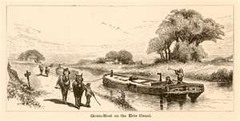 | 14 |
| 8370370513 | Eli Whitney | An American inventor who developed the cotton gin. Also contributed to the concept of interchangeable parts that were exactly alike and easily assembled or exchanged |  | 15 |
| 8370370514 | Lowell System | Developed in textile mills in Lowell, Massachusetts, during the 1820s, where few skilled workers were needed, labor was done mostly by single young farm women, who worked for a few years and then returned home to be housewives. |  | 16 |
| 8370370515 | Market Revolution | Dramatic increase between 1820 and 1850 in the exchange of goods and services in market transactions. Resulted from the increased output of farms and factories, the entrepreneurial activities of traders and merchants, and the development of a transportation network of roads, canals and railroads. |  | 17 |
| 8370370516 | Embargo Act of 1807 | Meant to force Britain and France to change their policies towards neutral vessels by depriving them of American trade; difficult to enforce because it was opposed by merchants and it hurt the national economy; replaced by the Non-Intercourse Act. |  | 18 |
| 8370370517 | War of 1812 | between the United States and England caused by impressment of American sailors, British aid to Indians in the west with firearms, War Hawks desire to invade Canada, and continued British interference with trade. |  | 19 |
| 8370370518 | Battle of New Orleans | A battle during the War of 1812 where the British army attempted to take New Orleans. Due to the foolish frontal attack, Jackson defeated them, which gave him an enormous popularity boost. |  | 20 |
| 8370370519 | Treaty of Ghent | December 24, 1814 - Ended the War of 1812 and restored the status quo. For the most part, territory captured in the war was returned to the original owner. It also set up a commission to determine the disputed Canada/U.S. border. The important result of the War of 1812 was that the US maintained its independence from Great Britain. |  | 21 |
| 8370370520 | Lewis and Clark | Sent on an expedition by Jefferson to gather information on the United States' new land and map a route to the Pacific. They kept very careful maps and records of this new land acquired from the Louisiana Purchase. |  | 22 |
| 8370370521 | Louisiana Purchase | Made by Jefferson, this doubled the size of the US. |  | 23 |
| 8370370522 | Revolution of 1800 | represented a return to what Jefferson considered the original spirit of the Revolution, restoring the republican experiment, checking the growth of government power, and halting the decay of virtue that had set in under Federalist rule. |  | 24 |
| 8370370523 | Barbary Pirate Wars | At issue was the demand of tribute from American merchant vessels in the Mediterranean Sea. American naval power attacked North African cities and extracted concessions of fair passage from their rulers. |  | 25 |
| 8370370524 | Tecumseh | A Shawnee chief who, along with his brother, Tenskwatawa (known as The Prophet) worked to unite the Northwestern Indian tribes, which was defeated by an American army led by William Henry Harrison at the Battle of Tippecanoe in 1811. |  | 26 |
| 8370370525 | Hartford Convention | a meeting of Federalists at Hartford, Connecticut, to protest the War of 1812; New England states threatened to leave the union if the war continued |  | 27 |
| 8370370526 | "Corrupt Bargain" | what Jackson and followers called the Clay/Adams deal that kept him from election in 1824. |  | 28 |
| 8370370527 | Jacksonian Democracy | an expansion of voting rights to ensure majority rule during 1820's/30s |  | 29 |
| 8370370528 | Nullification Crisis | Conflict that resulted when South Carolina voided federal tariffs and threatened to secede |  | 30 |
| 8370370529 | Trail of Tears | The removal of Cherokee Indians from Georgia to Indian Territory in 1838 and 1839 |  | 31 |
| 8370370530 | Whig party | Political party formed by Henry clay, Daniel Webster, and other Jackson opponents |  | 32 |
| 8370370531 | Webster-Hayne Debate | series of speeches in the Senate, during which South Carolina interpreted the Constitution as little more than a treaty between sovereign states, while Massachusetts expressed the concept of the United States as one nation. |  | 33 |
| 8370370532 | Samuel Slater | Father of the Factory system-memorized the ideas of Britain's factory system |  | 34 |
| 8370370533 | Steam Power | an efficient power source for machines in factories and trains |  | 35 |
| 8370370534 | Second Great Awakening | religious revival that swept the country and helped inspire reform movements, especially the abolitionist movement |  | 36 |
| 8370370535 | Cult of Domesticity | a belief that married women should restrict their activities to their home and family |  | 37 |
| 8370370536 | Hudson River School | American artistic movement that produced romantic renditions of local landscapes. |  | 38 |
| 8370370537 | Dorothea Dix | Reformer who was a pioneer in the movement for better treatment of prisoners and the mentally ill |  | 39 |
| 8370370538 | Seneca Falls Convention | the first organized public meeting about women's rights held in the United States |  | 40 |
| 8370370539 | Utopian Societies | Small societies dedicated to perfection in social and political conditions |  | 41 |
| 8370370540 | Transcendentalism | the belief that people could transcend, or rise above, material things in life. |  | 42 |
| 8370370541 | Nat Turner's Rebellion | the largest and deadliest slave uprising in U.S. history; resulted in new laws (South) prohibiting education of slaves and free black people, restricting rights of assembly and other civil rights for free black people, and requiring white ministers to be present at all worship services. | 43 | |
| 8370370542 | 54-40 or fight | Popular slogan that led Polk's to victory, reflecting popular sentiment towards expansion that included Texas, California, and the entire Oregon territory. |  | 44 |
| 8370370543 | Mexican-American War | Instigated by the US with the intent of gaining California, but led to the conquest of over 500,000 square miles of land in the Southwest |  | 45 |
| 8370370544 | Wilmot Proviso | 1846 proposal that outlawed slavery in any territory gained from the War with Mexico |  | 46 |
| 8370370545 | Treaty of Guadalupe Hidalgo | A treaty that ended the Mexican War and gave the U.S. much of Mexico's northern territory | 47 | |
| 8370370546 | Free Soil Party | Political party formed to oppose extending slavery in the territories | 48 | |
| 8370370547 | Know-Nothing Party | Political party of the 1850s that was anti-Catholic and anti-immigrant | 49 | |
| 8370370548 | Manifest Destiny | the belief by Americans that they were destined to spread out across the continent |  | 50 |
| 8370370549 | Mormons | members of the Church of Jesus Christ of Latter-Day Saints founded by Joseph Smith in 1830; Relocated to Utah to escape religious persecution, settling in Salt Lake City, Utah | 51 |
AP US History- Chapter 1 Flashcards
Terms : Hide Images
| 7217882075 | Disease | The most dramatic demographic effect of the Columbian exchange on the New World? | 0 | |
| 7217885145 | Pope's Rebellion (Pueblo Revolt) | The Spanish forcing religious practices on the Native Americans | 1 | |
| 7217890333 | Great Plains | Region that was home to bands of nomadic Native Americans who relied on their game for the vast majority of their needs | 2 | |
| 7217895353 | Iroquois | Tribe that was encountered by English settlers and best known for their highly evolved system of government? | 3 | |
| 7217899877 | Desire for more wealth | The initial motivation for Spanish exploration | 4 | |
| 7217901692 | Source of labor | How the Natives were viewed under the encomienda system | 5 | |
| 7217906441 | Bartolome de Las Casas | Protested treatment of Natives | 6 | |
| 7217909476 | Interdependent Global Economic System | Created with Columbus's discovery of the Americas | 7 | |
| 7217915039 | New World gain from the Columbian Exchange | Domesticated animals for food and beasts of burden | 8 | |
| 7217919506 | Old world gain from the Columbian Exchange | Growth of food supply | 9 | |
| 7217923138 | Mestizos | Created with the blending of Native and European Cultures | 10 | |
| 7217925088 | Conquistadors | Expanded Spain's colonial empire | 11 |
ap US history period 3 Flashcards
Terms : Hide Images
| 7811506499 | Washington's farewell address | Warns against sectionalism, political parties, and foreign affairs; wants everyone to stay strong as a nation. | 0 | |
| 7811506500 | Thomas Paine | American Revolutionary leader and pamphleteer (born in England) who supported the American colonist's fight for independence and supported the French Revolution (1737-1809); wrote "Common Sense." | 1 | |
| 7811506501 | Constitution | A document which spells out the principles by which a government runs and the fundamental laws that govern a society; adopted in 1787. | 2 | |
| 7811506502 | federalism | A system of government in which power is distributed among certain geographical territories and balanced between states and central governmnet. | 3 | |
| 7811506503 | French Revolution | The revolution that began in 1789, overthrew the absolute monarchy of the Bourbons and the system of aristocratic privileges, and ended with Napoleon's overthrow of the Directory and seizure of power in 1799. | 4 | |
| 7811506504 | republican government | System of government in which power is held by the voters and is exercised by elected representatives responsible for promoting the common welfare. | 5 | |
| 7811506505 | legislative branch | Branch of government that makes the laws | 6 | |
| 7811506506 | separation of powers | Constitutional division of powers among the legislative, executive, and judicial branches, with the legislative branch making law, the executive applying and enforcing the law, and the judiciary interpreting the law | 7 | |
| 7811506507 | ratification process | the ratification of the Constitution required only nine of the thirteen states (not unanimity, like the Articles of Confederation) | 8 | |
| 7811506508 | Seven Year' War | A war between New France and the British. The reason this war started was because New England wasn't allowed to cross the Allegheny mountains and this made them mad. Also there were small fights at the border but other than those two things there countries were supposed to be at peace. | 9 | |
| 7811506509 | loyalist | American colonists who remained loyal to Britain and opposed the war for independence. | 10 | |
| 7811506510 | George Washington | 1st President of the United States; commander-in-chief of the Continental Army during the American Revolution (1732-1799) | 11 | |
| 7811506511 | natural rights | the idea that all humans are born with rights, which include the right to life, liberty, and property | 12 | |
| 7811506512 | American Revolution | This political revolution began with the Declaration of Independence in 1776 where American colonists sought to balance the power between government and the people and protect the rights of citizens in a democracy. | 13 | |
| 7811506513 | Northwest Ordinance | Enacted in 1787, it is considered one of the most significant achievements of the Articles of Confederation. It established a system for setting up governments in the western territories so they could eventually join the Union on an equal footing with the original 13 states; even outlawed slavery above the Ohio River | 14 | |
| 7811506514 | Albany Congress | A conference in the United States Colonial history form June 19 through July 11, 1754. It advocated a union of the British colonies for their security and defense against French Held by the British Board of Trade to help cement the loyalty of the Iroquois League. After receiving presents, provisions and promises of Redress of grievances. 150 representatives if tribes withdrew without committing themselves to the British cause. | 15 | |
| 7811506515 | Paris Peace, 1763 | ended the French and Indian War/Seven Years' War between Great Britain and France, as well as their respective allies. In the terms, France gave up all its territories in mainland North America, effectively ending any foreign military threat to the British colonies there | 16 | |
| 7811506516 | Pontiac | 1763 - An Indian uprising after the French and Indian War, led by an Ottowa chief named Pontiac. They opposed British expansion into the western Ohio Valley and began destroying British forts in the area. The attacks ended when Pontiac was killed. | 17 | |
| 7811506517 | Proclamation of 1763 | A proclamation from the British government which forbade British colonists from settling west of the Appalachian Mountains, and which required any settlers already living west of the mountains to move back east. | 18 | |
| 7811506518 | mercantilism | Economic policy common to many absolute monarchies. Government control of foreign trade is of paramount importance for ensuring the military security of the country. In particular, it demands a positive balance of trade and desires new sources of gold and silver bullion, thus fueling more colonialism. | 19 | |
| 7811506519 | Quartering Act, 1765 | Was an act enforced by the British on their North American colonies. It required colonist to provide adequate housing and basic necessities like food and drink to British soldiers. | 20 | |
| 7811506520 | Stamp Act, 1765 | Direct tax imposed on the colonists by Parliament which increased the money colonists paid on printed goods. Purpose was to pay for British soldiers stationed in North America after the French and Indian War. Protests against this tax often turned violent, intimidating the tax collectors, so it was never efficiently collected. | 21 | |
| 7811506521 | Sons/Daughter of Liberty | A radical political organization for colonial independence which formed in 1765 after the passage of the Stamp Act. They incited riots and burned the customs houses where the stamped British paper was kept. After the repeal of the Stamp Act, many of the local chapters formed the Committees of Correspondence which continued to promote opposition to British policies towards the colonies. The Sons leaders included Samuel Adams and Paul Revere. | 22 | |
| 7811506522 | Declaratory Act | Act passed in 1766 after the repeal of the stamp act; stated that Parliament had authority over the colonies and the right to tax and pass legislation "in all cases whatsoever." | 23 | |
| 7811506523 | Boston Massacre | The first bloodshed of the American Revolution (1770), as British guards at the Boston Customs House opened fire on a crowd killing five Americans | 24 | |
| 7811506524 | Committee Correspondence | shadow governments organized by the Patriot leaders of the Thirteen Colonies on the eve of the American Revolution. | 25 | |
| 7811506525 | Intolerable Acts | in response to Boston Tea Party, 4 acts passed in 1774, Port of Boston closed, reduced power of assemblies in colonies, permitted royal officers to be tried elsewhere, provided for quartering of troop's in barns and empty houses | 26 | |
| 7811506526 | First Continental Congress | The First Continental Congress convened on September 5, 1774, to protest the Intolerable Acts. The congress endorsed the Suffolk Resolves, voted for a boycott of British imports, and sent a petition to King George III, conceding to Parliament the power of regulation of commerce but stringently objecting to its arbitrary taxation and unfair judicial system. | 27 | |
| 7811506527 | Second Continental Congress | Convened in May 1775, the Congress opposed the drastic move toward complete independence from Britain. In an effort to reach a reconciliation, the Congress offered peace under the conditions that there be a cease-fire in Boston, that the Coercive Acts be repealed, and that negotiations begin immediately. King George III rejected the petition. | 28 | |
| 7811506528 | Lexington and Concord | April 8, 1775: Gage leads 700 soldiers to confiscate colonial weapons and arrest Adam, and Hancock; April 19, 1775: 70 armed militia face British at Lexington (shot heard around the world); British retreat to Boston, suffer nearly 300 casualties along the way (concord) | 29 | |
| 7811506529 | Common Sense | 1776: a pamphlet written by Thomas Paine that claimed the colonies had a right to be an independent nation | 30 | |
| 7811506530 | Loyalist and patriots | loyalist: American colonists who remained loyal to Britain and opposed the war for independence. Patriots: American colonists who were determined to fight the British until American independence was won | 31 | |
| 7811506531 | Saratoga | A battle that took place in New York where the Continental Army defeated the British. It proved to be the turning point of the war. This battle ultimately had France to openly support the colonies with military forces in addition to the supplies and money already being sent. | 32 | |
| 7811506532 | Treaty of Paris, 1783 | agreement signed by British and American leaders that stated the United States of America was a free and independent country | 33 | |
| 7811506533 | state constitutions | Written by states to replace their colonial charters after they declared independence. Most called for bicameral legislature and a governor (usually one year term for elected officials). You had to own property or pay a certain amount of tax to vote. Individual liberties protected people (including freedom of religion), but did not separate church and state. | 34 | |
| 7811506534 | Articles of Confederation | 1st Constitution of the U.S. 1781-1788 (weaknesses-no executive, no judicial, no power to tax, no power to regulate trade) | 35 | |
| 7811506535 | Land Ordinance 1785 | A law that divided much of the United States into a system of townships to facilitate the sale of land to settlers. Significant part was that it set aside some land and/or sales to fund public education. | 36 | |
| 7811506537 | Shays' Rebellion | Rebellion led by Daniel Shays of farmers in western Massachusetts in 1786-1787, protesting mortgage foreclosures. It highlighted the need for a strong national government just as the call for the Constitutional Convention went out. | 37 | |
| 7811506538 | Virginia Plan | "Large state" proposal for the new constitution, calling for proportional representation in both houses of a bicameral Congress. The plan favored larger states and thus prompted smaller states to come back with their own plan for apportioning representation. | 38 | |
| 7811506539 | New Jersey Plan | delegate William Paterson's plan of government, in which states got an equal number of representatives in Congress | 39 | |
| 7811506540 | Great Compromise | 1787; This compromise was between the large and small states of the colonies. The Great Compromise resolved that there would be representation by population in the House of Representatives, and equal representation would exist in the Senate. Each state, regardless of size, would have 2 senators. All tax bills and revenues would originate in the House. This compromise combined the needs of both large and small states and formed a fair and sensible resolution to their problems. | 40 | |
| 7811506541 | Three-fifths Compromise | Agreement that each slave counted as three-fifths of a person in determining representation in the House for representation and taxation purposes (negated by the 13th amendment) | 41 | |
| 7811506542 | Electoral College | A certain number of electors from each state proportional to and seemingly representative of that state's population. each elector chooses a candidate believing they are representing their constituency's choice. The candidate who receives a higher proportion of electoral votes within a state receives all the electoral votes for that state. | 42 | |
| 7811506543 | Cabinet | Advisory council for the president consisting of the heads of the executive departments, the vice president, and a few other officials selected by the president. | 43 | |
| 7811506544 | Bill of Rights | Although the Anti-Federalists failed to block the ratification of the Constitution, they did ensure that the Bill of Rights would be created to protect individuals from government interference and possible tyranny. The Bill of Rights, drafted by a group led by James Madison, consisted of the first ten amendments to the Constitution, which guaranteed the civil rights of American citizens. | 44 | |
| 7811506545 | Bank of the United States | Proposed by Alexander Hamilton as the basis of his economic plan. He proposed a powerful private institution, in which the government was the major stockholder. This would be a way to collect and amass the various taxes collected. It would also provide a strong and stable national currency. Jefferson vehemently opposed the bank; he thought it was un-constitutional. nevertheless, it was created. This issue brought about the issue of implied powers. It also helped start political parties, this being one of the major issues of the day. | 45 | |
| 7811506546 | strict/loose interpretation | strict interpretation: whatever is not mentioned specifically in the Constitution cannot be done loose interpretation: A broad way of interpreting the Constitution that allows the Federal Government to take actions that the Constitution doesn't forbid it from taking. Favored by Alexander Hamilton as a way of creating the National Bank. | 46 | |
| 7811506547 | implied powers | Powers not specifically mentioned in the constitution | 47 | |
| 7811506548 | Whiskey Rebellion | In 1794, farmers in Pennsylvania rebelled against Hamilton's excise tax, and several federal officers were killed in the riots caused by their attempts to serve arrest warrants on the offenders. In October, 1794, the army, led by Washington himself, put down the rebellion. The incident showed that the new government under the Constitution could react swiftly and effectively to such a problem, in contrast to the inability of the government under the Articles of Confederation to deal with Shay's Rebellion. | 48 | |
| 7811506549 | Jay's Treaty, 1794 | Treaty signed in 1794 between the U.S. And Britain in which Britain sought to improve trade relations and agreed to withdraw from forts in the northwest territory | 49 | |
| 7811506550 | Pinckney's Treaty, 1795 | Gave Americans free navigation of the Mississippi and trade at New Orleans | 50 | |
| 7811506551 | Farewell Address, 1796 | 1796 speech by Washington urging US to maintain neutrality and avoid permanent alliances with European nations | 51 | |
| 7811506552 | XYZ Affair | 1798 - A commission had been sent to France in 1797 to discuss the disputes that had arisen out of the U.S.'s refusal to honor the Franco-American Treaty of 1778. President Adams had also criticized the French Revolution, so France began to break off relations with the U.S. Adams sent delegates to meet with French foreign minister Talleyrand in the hopes of working things out. Talleyrand's three agents told the American delegates that they could meet with Talleyrand only in exchange for a very large bribe. The Americans did not pay the bribe, and in 1798 Adams made the incident public. | 52 |
Pages

Need Help?
We hope your visit has been a productive one. If you're having any problems, or would like to give some feedback, we'd love to hear from you.
For general help, questions, and suggestions, try our dedicated support forums.
If you need to contact the Course-Notes.Org web experience team, please use our contact form.
Need Notes?
While we strive to provide the most comprehensive notes for as many high school textbooks as possible, there are certainly going to be some that we miss. Drop us a note and let us know which textbooks you need. Be sure to include which edition of the textbook you are using! If we see enough demand, we'll do whatever we can to get those notes up on the site for you!
