AP Notes, Outlines, Study Guides, Vocabulary, Practice Exams and more!

AP US History Chapter 1 Flashcards

AMSCO United States History 2015 Edition, Chapter 1 A New World of Many Cultures, 1491-1607

Terms : Hide Images
7423297220cornThe Mayas and the Incas cultivated corn as an important stable food supply. (p. 2)0
7423297221horsesIt was not until the 17th century that the American Indians acquired these animals from the Spanish. (p. 4)1
7423297222diseaseWhen Europeans came to America they brought smallpox and measles to which the natives had no resistance. Millions of American Indians died from these diseases. (p. 8)2
7423297223encomienda systemKing of Spain gave grants of land and natives (as slaves) to individual Spaniards. (p. 8)3
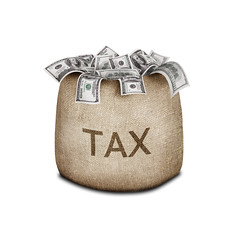
7423297224asiento systemThis system required that a tax be paid to the King of Spain, for slaves that were imported to the Americas. (p. 8)4
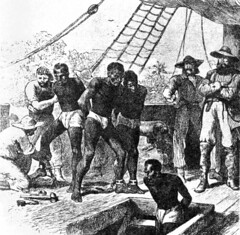
7423297225slaveryAs far back as the 1500s the Spanish brought captured Africans to America to provide free labor. (p. 11)5
7423297226land bridgeSome time between 10,000 and 40,000 years ago, people migrated from Asia to the Americas, across this area that connected Siberia and Alaska. (p. 2)6
7423297227Adena-HopewellThis American Indian culture centered in Ohio created large earthen mounds as tall as 300 feet. (p. 4)7
7423297228Hokokam, Anasazi, and PueblosThese American Indians were located in the New Mexico and Arizona region. They developed farming using irrigation systems. (p. 4)8
7423297229Woodland mound buildersAmerican Indian tribe east of the Mississippi that prospered because of a rich food supply. (p. 4)9
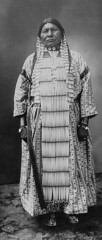
7423297230Lakota SiouxAmerican Indian tribe that started using horses in the 17th century. This allowed them to change from farming to nomadic buffalo hunting. (p. 4)10
7423297231MayasFrom A.D. 300 to 800, this highly developed civilization built large cities in what is today's southern Mexico and Guatemala. (p. 2)11
7423297232IncasThis highly developed civilization developed a vast South American empire based in Peru. (p. 2)12
7423297233AztecsStarting about 1300, this civilization flourished in central Mexico. (p. 2)13
7423297234conquistadoresThese Spanish explorers and conquerors of the Americas sent ships loaded with gold and silver back to Spain making it the richest and most powerful nation in Europe. (p. 8)14
7423297235Hernan CortesHe conquered the Aztecs in Mexico. (p. 8)15
7423297236Native AmericansThe first people to settle North America arrived as many as 40,000 years ago. They came from Asia and may have crossed by a land bridge connecting Siberia and Alaska. (p. 1)16
7423297237Francisco PizarroHe conquered the Incas in Peru. (p. 8)17
7423297238New Laws of 1542Bartolome de Las Casas convinced the King of Spain to institute these laws, which ended American Indian slavery, ended forced Indian labor, and began the process of ending the encomienda systems. (p. 11)18
7423297239Roanoke IslandIn 1587, Sir Walter Raleigh attempted to establish a settlement here, but it failed. (p. 9)19
7423297240compassOne aspect of the Renaissance was a gradual increase in scientific knowledge and technological change. Europeans made improvements in the inventions of others. this invention was used in sailing. (p. 5)20
7423297241printing pressThis invention in the 1450s spread knowledge across Europe. (p 5)21
7423297242Ferdinand and IsabellaThey united Spain, defeated and drove out the Moors. In 1492, they funded Christopher Columbus's voyage to America. (p. 5)22
7423297243Protestant ReformationIn the early 1500s, certain Christians in Germany, England, France, Holland, and other northern European countries revolted against the authority of the pope in Rome. (p. 6)23
7423297244Henry the NavigatorThe monarch of Portugal. (p. 7)24
7423297245Christopher ColumbusHe spent 8 years seeking financial support for his plan to sail west from Europe to the "Indies". In 1492, he sailed from the Canary Islands to an island in the Bahamas. His success in discovering lands on the other side of the ocean brought him a burst of glory in Spain. (p. 7)25
7423297246Treaty of Tordesillas (1494)In 1494, this treaty between Spain and Portugal, moved the line of demarcation that the pope had established a few degrees to the west. (p. 8)26
7423297247slave tradeSince ancient times people in Europe, Africa, and Asia had enslaved pepoe captured in wars. In the 15 century the Portuguese began trading for slaves from West Africa. They used slaves to work in sugar plantation off the coast of Africa. Using slaves was so profitable that when the Europeans settled in the Americas, they instituted the slave system there. (p, 6)27
7423297248nation-stateIn the 15th century, small kingdoms and multiethnic empires were being replaced by nation-states. Nation-states were countries in which the majority of people shared a common culture and common loyalty toward a central government. (p. 6)28
7423297249AlgonquianThe American Indians had 20 language families and 400 distinct languages. This tribe in the Northeast was one of the largest. (p. 4)29
7423297250SiouanThe American Indians had 20 language families and 400 distinct languages. This tribe from the Great Plains was one of the largest. (p. 4)30
7423297251Iroquois ConfederationA political union of five independent American Indian tribes in the Mohawk Valley of New York. (p. 5)31
7423297252longhousesAmerican Indians along the Pacific Coast lived in the these plank houses. (p. 4)32
7423297253John CabotAn Italian sea captain who sailed under contract to England's King Henry VII. He explored the coast of Newfoundland in 1497. (p. 9)33
7423297254Jacques CartierIn the period for 1534 to 1542, he explored the St. Lawrence River. (p. 10)34
7423297255Samuel de ChamplainHe established the first permanent French settlement at Quebec, a fortified village on the St. Lawrence River. (p., 10)35
7423297256Henry HudsonThis English sailer was hired by the Dutch government to seek a westward passage to Asia through North America. In 1609, while searching for the passage, he sailed up a broad river that would later be named the Hudson River. (p 10)36
7423297257Bartolome de Las CasaA Spanish priest who was an advocate for better treatment of Indians. (p. 11)37
7423297258Valladolid DebateIn 1550-1551, in Valladolid, Spain, a formal debate concerning the role of American Indians in the Spanish colonies. (p. 11)38
7423297259Juan Gines de SepulvedaIn the Valladolid Debate, this Spaniard argued that the American Indians were less than human. (p. 11)39

AP US History Key Terms Flashcards

Terms : Hide Images
6710902033Columbian ExchangeThe exchange of plants (crops), animals and diseases from Europe to the New world.0
6710902034MercantilismEconomic policy of Great Britain during the 17th and 18th centuries. Linked a counties power to their amount of bullion. Colonial acquisitions were beneficial to mercantile countries because they could sell goods to their colonies in return for gold and silver, as well as get raw materials from their colonies.1
6710902035Half Way CovenantAgreement allowing unconverted offspring of church members to baptize their children. Established by the puritans to ease requirements for church membership and retain control.2
6710902036EnlightenmentPhilosophy arguing that reason could improve the human condition and the influence of the natural world3
6710902037The first great awakeningReligious revivals that spread across the american colonies during the 1730s and 1740s. They emphasized direct and emotional spirituality.4
6710902038Constitutional conventionMeeting of delegates from many states in 1787 to address weaknesses in the Articles of Confederation. Created a strong central government that shared powers with the states.5
6710902039Separation of powersThe division of power between the legislative, judicial and executive branches.6
6710902040Checks and balancesThe system that allows each branch of government to contain the power of the other branches.7
6710902041Hamilton's financial planHamilton wanted to establish a sound financial system for the new country. His plan included assuming state debt, creating the national bank, and imposing tariffs to protect home industries.8
6710902042Judicial reviewThe supreme courts ability to remove an act of congress by declaring it unconstitutional. Was established in the case of Marbury vs. Madison (1803).9
6710902043American SystemProposed by Henry Clay, it was a plan designed to unify the nation and promote american industry by using protective tariffs, a national bank and federally funded internal improvements.10
6710902044Republican motherhoodIdea that women's roles were to be wives and mothers and it was their duty to raise children.11
6710902045TranscendentalismLiterary and intellectual movement that emphasized individualism and self-reliance. Ralph Waldo Emerson and Henry David Thoreau.12
6710902046The second great awakeningA Wave of religious activity between 1800 to 1830. Focused on issues of slavery, prison reform and anti-liquor laws. Women were a large part of this movement.13
6710902047Jacksonian DemocracyRefers to the political beliefs of President Andrew Jackson. It included greater emphasis on the common man, the spoils system and opposition to privilelged eastern elites.14
6710902048NullificationLegal theory that a state has the power to invalidate any federal law within their borders. First used by Thomas Jefferson and James Madison in the Virginia and Kentucky resolutions (1798). South Carolina also nullified the tariffs of both 1828 and 1832 led by John C. Calhoun.15
6710902049Manifest DestinyA belief held by a nineteenth-century Americans that the United States was destined to spread from the Atlantic the Pacific.16
6710902050Popular SovereigntyThe principle that settlers of a certain area have the sole right to decide if slavery will be allowed there. Led to many conflicts over slavery.17
6710902051ReconstructionPlan implemented by congress from 1865-1877 to reorganize the governments of southern states and reintegrate them in to the union.18
6710902052Social gospelReform movement based on the belief that Christians have a responsibility to to confront social problems such as poverty.19
6710902053Gospel of wealthArticle published by Andrew Carnegie expressing the belief that the wealthy should use their wealth to benefit society.20
6710902054Social DarwinismIdea that certain races or people gained wealth by survival of the fittest and the wealthy were the most fit to be rich.21
6710902055Frontier thesisFrederick Jackson Turner's theory that american democracy was shaped by frontier life and ideals.22
6710902056New ImmigrantsMassive wave of immigrants who came to America from 1880 - 1924 primarily from southern and eastern Europe.23
6710902057NativismGroup that favored native born citizens over immigrants. Formed the "Know- Nothing" political party in the 1840s.24
6710902058Vertical IntegrationPractice perfected by Andrew Carnegie of controlling every step of an industry in order to increase efficiency and limit competition.25
6710902059Horizontal IntegrationPractice perfected by John Rockefeller of dominating one phase of an industry in oder to monopolize a market.26
6710902060PopulismPolitical party of the 1890s formed by farmers and the working who believed that U. S economic policy unfairly favored eastern businesses.27
6710902061ProgressivismSought to use government to help create a more just society. Involved Presidents Roosevelt (teddy) and wilson who fought against impure foods, child labor, corruption and large trusts.28
6710902062MuckrakersYoung Reporters who exposed illegal business practices and corrupt political leaders. Their work helped spur the passage of reform legislature.29
6710902063Roaring TwentiesPeriod of social unrest and tension due to immigrations restrictions, the rise of fundamentalism (religious movement), and changing sexual values.30
6710902064ProhibitionFrom 1919 and 1933 when the production and consumption of alcohol was illegal. Led to a rise in organized crime and defiance of the law.31
6710902065IsolationismProminent American foreign policy that guided America to not become involved with entangling foreign alliances and wars.32
6710902066ContainmentU.S foreign policy during the Cold War that was designed to contain the speed of communism through military and political pressure. Proposed by American diplomat George Kennan.33
6710902067MccarthyismTerm that refers the public accusations of disloyalty without sufficient evidence by senator Joseph McCarthy that played on the fears of Americans by claiming that communists had infiltrated the U.S government34
6710902068Domino theoryTheory that refers to the belief that if one country falls to communism, its neighbors will be effected and also turn communist.35
6710902069Black powerGroup that promoted pride in African American heritage and a militant position in defense of their rights. Led by Malcolm X, Stokely Carmichael and Huey Newton36
6710913885watergateseries of political scandals that resulted in Richard Nixon being the only president to resign, he did so in 197437
6710915826detenterelaxation of tensions between US and Soviet union, examples include Strategic Arms Limitation Talks which expanded trade w soviet union38
6710920449reaganomicseconomic policies of president reagan, called supply-side economics, hoped to promote growth and investment by degrading business, reducing tax rates, and lowering federal tax rates for upper and middle income americans39
6710925763affirmative actionattempts to open access to education and employment for members of groups that experienced discrimination, these sometimes imposed quotas for college admin and hiring to address past injustices40
6771439241progressive erathe political orientation of those who favor progress toward better conditions in government and society41
6771439242french and indian warfought between England and France. The Treaty Of Paris ended the French and Indian War and gave control of all French land in North America to England.42
6771444800Mexican America WarWar with Mexico which began in 1846 when the U.S. annexed Texas and Mexico challenged the Border. Battles were fought in Texas, and Mexico was invaded from the Atlantic Ocean by General Winfield Scott. Scott attacked Mexico City and Chapultepec. The war ended with the treaty of Guadalupe Hidalgo in 1848.43
6771448382puritanism1. Unhappy with Reforms in English Church 2. Social Unrest and increased Religious participation a. change from agricultural to pastoral economy b.thousands displaced c. class conscience -could not question 3. opposed priesthood and monarchy-equality of believers44
6771452262Jacksonian Democratic Party 1830-40The idea of spreading political power to the people and ensuring majority rule as well as supporting the "common man"45
6771454468whig party 1830-40Political party formed to go against Andrew Jackson; they were against the executive branch having too much power; Martin Van Buren was elected as a Whig candidate in 183646
6771469729cold war foreign policiesHarry Truman- Dwight Eisenhower- Richard Nixon-47
6771521658Bacon RebellionNathanial Bacon grouped together and angry mob to burn Jamestown and Indian settlements as a protest for the reason that they didn't get any protection from the government.48
6771541710northwest ordinance of 1787excluded slavery north of Ohio river, first document containing prohibition of slavery49
6771555169Marshall CourtJohn Marshall, wanted strong central govt, decisions promoted business enterprise, opposed state rights50
6771561213Marbury v Madisonestablished judicial review, strengthened federal govt under Marshall51
6771572942Dartmouth College v Woodwardruling said that constitution protected contracts from state encroachments, safeguarded businesses from state govt interference52
6771586999Worcester v GeorgiaSC upheld rights of Cherokee tribes but Jackson refused to recognize the SC decision, followed by Cherokee removal in Georgia53
6771606542Dred Scott v SandfordAfricans were not citizens and could not petition SC, invalidated the Northwest Ordinance and 36 30 line54
67716179131873 Slaughterhouse Casesnarrowed the meaning of the 14th amendment, weaker the protection given to African Americans under 14th55
6771631562Plessy v Fergusonupheld segregation by approving separate but equal accommodations56
6771639773Scopes trialteacher indicted for teaching evolution, illustrated conflict between fundamentalism and modernism57
6771647881fundamentalism• A response to liberalism in late 19th and early 20th century o Passionately against modernist/liberal theology58
6771652240Brown v Board of Education of Topekareversed principle of separate but equal, declared racially segregated public schools as unequal, most important case following WWII59
6771660841Roe v WadeSC upheld abortion rights for women,60
6771665218Griswold v ConnecticutSC struck down state law prohibiting use of contraceptives, proclaimed a right to privacy, led to protection of abortion rights61
6771692180wagner act(National Labor Relations Act) ensured workers rights to organize and bargain collectively, led to increase in labor union membership62
6771701278Tart-Harley Actintended to curb the power of labor unions, believed unions were abusing their power and organized labor union workers opposed this act63
6771715105Industrial Workers of the Worldfounded by Eugene Debs, goal was to create one big union, embraces rhetoric of class conflict and endorses violent tactics64
6771727848American Federation of Laborled by Samuel Gompers, alliance of skilled workers, concentrated on higher wages, shorter hours, and better working conditions65

Rojas AMSCO AP US History Chapter 4 Flashcards

Terms : Hide Images
5107736962French and Indian WarWar fought in the colonies from 1754 to 1763 between the English and the French for possession of the Ohio River Valley area. The English won the war and the Peace of Paris was negotiated in 1763. (p. 70)0
5107736963George WashingtonLed a small militia from Virginia to stop work on French Fort Duquesne. Was forced to surrender on July 3rd, 1754. Later become 1st president under the New Constitution and remembered for warning the future U.S. in his Farewell Address1
5107736965Albany Plan of UnionBritish government attempt to unite colonies against French and Indians during French and Indian war. Meeting at Albany, NY in 1754 it was unsuccessful since colonies were too independent and had different degrees of issues with Natives and French but it did set a precedent for other revolutionary meetings.2
5107736966Peace of Paris (1763)Peace treaty signed to end the French and Indian War (The Seven Years' War) in 1763. Great Britain gained French Canada and Spanish Florida. France gave Spain its western territory. (p. 71)3
5107736967salutary neglectBritain had exercised little direct control over the colonies and did not enforce its navigation laws This changed after the French and Indian War.4
5107736968George III; crownKing of England during colonist move for independence5
5107736970ParlimentLegislative house of Great Britain6
5107736971Pontiac's RebellionIndian chief's major attack against the colonies in 1763. The British did not rely on colonial forces, but instead sent their army to deal with the rebellion. This Indian leader rebelled due to the westward expansion of colonist, this lead to the creation of the Proclamation of 1763. (p. 72)7
5107736972Proclamation Act of 1763Prohibited colonists from settling west of the Appalachian Mountains. British hoped it would prevent violence between Native Americans and colonists. The colonists were angry and disobeyed the law, moving to the west of the mountains in large numbers. (p. 72)8
5107736973Sugar Actlowered the tax created in 1733 (Molasses Act) to stop smuggling and help raise money for the English Crown and pay a debt (1764).9
5107736974Quartering ACTRequired the colonists to provide food and living quarters for British soldiers in order to defend against native attacks. (1765)10
5107736975Stamp ActRequired that revenue stamps be placed on almost all printed paper. First direct tax paid by the people. Boycotts were effective in repealing this Act (1765).11
5107736976Patrick HenryYoung Virginian lawyer who coined the phrase "No taxation without representation" in his speech to the House of Burgesses.12
5107736977Stamp Act CongressRepresentatives from nine colonies met in New York in 1765 and decided that only their own elected representatives had the power to approve taxes. (p. 73)13
5107736978Sons and Daughters of LibertySecret society who intimidated tax agents; tarred and feathered some tax collectors14
5107736979Declaratory ActIn 1766 Parliament declared that it had the right to tax and make laws for the colonies in all cases whatsoever even if they had repealed the Stamp Act. (p. 73)15
5107736980Townshend Acts (1767)In 1767 Parliament enacted new taxes to be collected on imports of tea, glass, and paper. Also created the writs of assistance which was a general license to search for smuggled goods anywhere.16
5107736981John Dickinson: Letters from a Farmer in PennsylvaniaWork of literature in which Dickinson argued that no taxation without representation was an important principle of English law. (p. 74)17
5107736982Samuel Adams and James OtisIn 1768, they wrote the Massachusetts Circular Letter which urged colonies to petition Parliament to repeal the Townshend Acts. (p. 74)18
5107736984Boston MassacreIn March 1777 on a snowy day in Boston British guards, harassed by colonists, fire into a crowd. Five people were killed.19
5107736985Committees of CorrespondenceInitiated by Samuel Adams in 1772, these letters spread news of suspicious or threatening acts by the British throughout the colonies. (p. 74)20
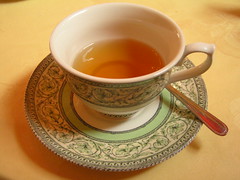
5107736987Tea ActParliament passed this act in 1773 which continued the tax on tea and lowered the price of British tea so it was even cheaper than smuggled Dutch tea. (p. 75)21
5107736988Boston Tea PartyIn December 1773, colonists dressed as Indians threw 342 chests of imported tea into the harbor.22
5107736989Intolerable ActsColonist name for the Coercive Acts of 1774, a series of acts made to punish the colonists for the Boston Tea Party.23
5107736990Port ActOne of the Coercive ACTS, which closed the port of Boston, prohibiting trade in and out ot the harbor until the destroyed tea was paid for.24
5107736991Massachusetts Government ActOne of the Coercive ACTS, which reduced the power of the Massachusetts (colonist's) legislature while increasing the power of the royal governor.25
5107736992Administration of Justice ActOne of the Coercive ACTS, which allowed royal officials accused of crimes to be tried in England instead of the colonies.26
5107736994Quebec ActIn 1774 this act established Roman Catholicism as the official religion of Quebec (the land won after the French and Indian War), set up a government for Quebec and set the border at the Ohio River.27
5107736998John LockeEnglish philosopher who said that all people have rights, simply because they are human and that people have a right and a responsibility to revolt against any government that failed to protect their rights. (unalienable rights) (p. 77)28
5107736999Jean-Jacques RousseauFrench philosopher who had a profound influence on educated Americans in the 1760s and 1770s. (p. 77) Led to the inclusion of one of the 7 principles in the Constituion ----POPULAR SOVEREIGNTY and social contract29

AP US History Period 4 (1800-1848) Flashcards

Terms : Hide Images
5467934831FederalistPolitical party created in the 1790s led by Alexander Hamilton; favored a stronger national government; supported primarily by the bankers and moneyed interests0
5467934832Democratic-RepublicansPolitical party created in the 1790's; led by Thomas Jefferson; favored limited government and state rights; supported primarily by the "common man"1
5467934833Election of 1800(AKA Revolution of 1800) election that led to a peaceful transfer of power from the Federalist party to the Democratic Republican Party2
5467934834Hartford Convention, 1814Meeting of Federalists during the War of 1812 discuss strategy to gain more power in government; viewed as unpatriotic by many; as a result, the Federalist Party was no longer a significant force in American politics3
5467934835Era of Good FeelingsTerm used to describe the time period after the 2nd Party System in the United States after the Federalist Party fell from the national stage, leaving only the Democratic Party; associated with the presidency of James Monroe4
5467934836DemocratsPolitical party that brought Andrew Jackson into office in 1829; part of the 2nd Party System of the United States; supported Jeffersonian ideas of limited government and individualism; drew its support from the "common Man"5
5467934837Whig PartyPolitical Party created in 1834 as a coalition of anti-Jackson political leaders and dedicated to internal improvements funded by the national government6
5467934838Andrew JacksonLeader of the Democrats who became the seventh president of the US (1829-1837); known for his opposition to the 2nd Bank of the US, the Indian Removal Act, and opposition to nullification7
5467934839Henry ClayLeader of the Whig Party who proposed an "American System" to make the United States economically self-sufficient, mostly through protective tariffs; worked to keep the Union together through political compromise8
5467934840Nullification Crisis (1832-1833)After South Carolina declared the federal tariff null and void, President Jackson obtained a Force Bill to use military actions against South Carolina; ended with a compromise to lower tariffs over an extended time; overall significance was the challenge of states to ignore federal law (later on with laws regarding slavery).9
5467934841John C. CalhounSouth Carolina political leader who defended slavery as a positive good and advocated the doctrine of nullification, a policy in which state could nullify federal law.10
5467934842John MarshallAppointed to the Supreme Court by John Adams in 1801; served as a chief justice until 1835; legal decisions gave the Supreme Court more power, strengthened the federal government, and supported protection of private property.11
5467934843Cotton BeltSouthern region in the US where most of the cotton is grown/deep; stretched from South Carolina to Georgia to the new states in the southwest frontier; had the highest concentration of slaves12
5467934844Judicial ReviewThe power of the Supreme Court to review the constitutionality of laws passed by Congress13
5467934845Market EconomyEconomic system based on the unregulated buying and selling of goods and services; prices are determined by the forces of supply and demand14
5467934846Embargo Act (1807)Passed by President Jefferson in order to pressure Britain and France to stop impressment and support the American rights to free trade with the other; a government-order ban on international trade; went into effect in 1808 and closed down virtually all U.S. trade with foreign nations; led to steep depression in the economy15
5467934847Panic of 1819Financial panic that began when the Second Bank of the US tightened credit and recalled government loans after the price of cotton dropped16
5467934848Second Bank of the United States (1816)Privately owned bank that operated as both a commercial and fiscal agent for the US government; established in 1816 under a charter that was supposed to last 20 years; Andrew Jackson was critical of the bank and its potential for corruption; ended when Jackson vetoed the extension of its charter and won reelection in the process17
5467934849Tariff of 1816First protective tariff in US history; designed primarily to help America's textile industry18
5467934850Tariff of Abominations 1828Tariff with such high rates that it set off tension between northerners and southerners over tariff issues (called the Nullification Crisis)19
5467934851Panic of 1837Economic collapse caused primarily by President Jackson's destruction of the Second Bank of the United States20
5467934852Slave CodesLaws that established the status of slaves denying them basic rights and classifying them as the property of slaveholders21
5467934853Second Great AwakeningAn upsurge in religious activity that began around 1800 and was characterized by emotional revival meetings; led to several reform movements (temperance, abolition) designed to perfect society with religious morals22
5467934854Charles FinneyPresbyterian minister who is credited and is known as the "Father of modern Revivalism"; advocated the abolition of slavery and equal education for women and African Americans23
5467934855Elizabeth Cady StantonAdvocate of women right's, including the right to vote; organized (with Lucretia Mott) the first women's rights convention at Seneca Falls, NY24
5467934856Dorothea DixPioneer in the moment for special treatment for the mentally ill25
5467934857Horace MannMassachusetts educator who called for publicly funded education for all children; called the "Father of Public Education in America"26
5467934858Utopian CommunitiesIdealistic reform movement based on the belief that a perfect society could be created on Earth; significant Utopian experiments were established at New Harmony, Indiana, Book Farm, Massachusetts and the Oneida Community in New York; usually such attempts were short-lived27
5467934859American Colonization Society (established 1817)Organization established to end slavery gradually by helping individual slave owners liberate their slaves and then transport the freed slaves to Africa (Liberia)28
5467934860William Lloyd GarrisonRadical abolitionist in Massachusetts who published the liberator, an antislavery newspaper29
5467934861Sojourner TruthFormer slave (freed in 1827) who became a leading abolitionist and feminist30
5467934862Hudson River School 1825-1875The first native school of painting in the US; painted primarily landscapes; themes included deep nationalism, grandeur of nature, and transcendentalism31
5467934863TranscendentalismPhilosophical and literary movement that believed God existed within human being and nature; believed intuition was the highest source of knowledge; advocated for introspection by surrounding oneself with nature32
5467934864Ralph Waldo EmersonPhilosopher, writer, and poet who became a central figure in the Transcendalist movement in American33
5467934865Henry David ThoreauWriter and naturalist; with Ralph Waldo Emerson, he was one of America's best known transcendentalists34
5467934866Richard AllenAfrican American minister who established the first independent African American denomination in the US, the African Methodist Episcopalian Church35
5467934867Samuel SlaterKnown as the "Father of the American Industrial Revolution"; brought British textile technology to the United States to create the first factory36
5467934868John DeereInvented the steel plow in 1837, which revolutionized farming; the steel plow broke up soil without the soil getting stuck to the plow37
5467934869Lowell SystemMethod of factory management that evolved in the textile mills of Lowell, MA38
5467934870Erie Canal (1817-1825)350 mile canal built by the state of NY that stretched from Buffalo to Albany; the canal revolutionized shipping in NY and opened up new markets (evidence of the Market Revolution)39
5467934871National Road (1811)AKA Cumberland Road; first significant road built in the US at the expense of the federal government; stretched from the Potomac River to the Ohio River40
5467934872Mason-Dixon LineBoundary between PA and MD that marked the division between free and slave states before the Civil War41
5467934873Cult of DomesticityThe belief that a woman's proper role in life was found in domestic pursuits (raising children, taking care of the house); strongly believed by many throughout the 19th century42
5467934874Louisiana Purchase (1803)U.S. purchased the Louisiana Territory from France for $15 million, doubling the size of the U.S. and giving the U.S. full control of the Mississippi River43
5467934875Lewis and Clark expedition (1804-1806)Expedition to explore the Louisiana Territory led by Meriwether Lewis and William Clark44
5467934876War HawksMembers of Congress from the West and South elected in 1810 who wanted war with Britain in the hopes of annexing new territory and ending British trade with the Indians of the Northwest45
5467934877War of 18121812-1815, War between the U.S. and Great Britain caused primarily by the perceived British violation of American neutral rights on the high seas (impressment); ended with an agreement of "status quo ante" (a return to how things were before the war)46
5467934878Adams-Onis Treaty (1819)Treaty between the U.S. and Spain that ceded Florida to the U.S47
5467934879Monroe Doctrine (1823)President Monroe's unilateral declaration that the Americas would be closed to further European colonization and that the U.S. would not allow European interference in the affairs of the Western Hemisphere; in return the U.S. pledged to stay out of European conflicts and affairs; significant foreign policy state that lasted through most of the 19th century48
5467934880Oregon Treaty of 1846After years of conflict over ownership of the Pacific Northwest, the U.S. and England established the boundary at 49° latitude, essentially splitting the Oregon Country down the middle49
5467934881Manifest DestinyPopular belief amongst early-19th century Americans that the U.S. was destined to expand across the North American continent, that this belief was obvious, and that God willed it to take place50
5467934882TecumsehShawnee leader who attempted to establish an Indian confederacy among tribes from around the continent that he hoped would be a barrier to white expansion; defeated at the Battle of Tippecanoe in 1811 by U.S. forces led by General William Henry Harrison, slowing the momentum of Pan-Indian unity51
5467934883Indian Removal Act (1830)Law that provided for the removal of all Indian tribes east of the Mississippi and the purchase of Indian lands for white resettlement52
5467934884Worcester v. Georgia (1832)A Supreme Court ruling that declared a state did not have the power to enforce laws on lands that were not under state jurisdiction; John Marshall wrote that the state of Georgia did not have the power to remove Indians; this ruling was largely ignored by President Andrew Jackson53
5467934885Trail of Tears (1838)Forced march of the Cherokee people from Georgia to Indian Territory in the winter; a large percentage of Cherokee died on the journey54
5467934886American Anti-Slavery SocietyAbolitionist society founded by William Lloyd Garrison - included Frederick Douglass as a significant leader of the society55
5467934887RomanticismAn artistic and intellectual movement characterized by its emphasis on emotion and individualism as well as glorification of all the past and nature, preferring the medieval rather than the classical56
5467934888The American SystemConsisted of three mutually reinforcing parts: (1) a tariff to protect and promote American industry; (2) a national bank to foster commerce; (3) federal subsidies for roads, canals, and other "internal improvements" to develop profitable markets for agriculture; supported heavily by Henry Clay57
5467934889Missouri Compromise (1820)Admitted Missouri as a slave state and Maine as a free state, maintaining the balance between slave and free states in representation in the federal government; established a geographic line that would determine whether new states (made from the western territories) would be added to the union as slave or free states58
5467934890Spoils SystemPublic offices given as a reward for political support. Most iconically used by Andrew Jackson after his first election, which then became a precedent for future federal leaders.59
5467934891Marbury v. Madison (1803, Marshall)The Court established its role as the arbiter of the constitutionality of federal laws, the principle is known as judicial review.60
5467934892McCulloch v. Maryland (1819, Marshall)The Court ruled that states cannot tax the federal government, i.e. the Bank of the United States; the phrase "the power to tax is the power to destroy"; confirmed the constitutionality of the Bank of the United States.61
5467934893Johnson v. McIntosh (1823, Marshall)Established that Indian tribes had rights to tribal lands that preceded all other American law; only the federal government could take land from the tribes.62
5467934894Cherokee Nation v. Georgia (1831, Marshall)"The conditions of the Indians in relation to the United States is perhaps unlike that of any two people in existence," Chief Justice John Marshall wrote, "their relation to the United States resembles that of a ward to his guardian. . .(they were a) domestic dependent nation." Established a "trust relationship" with the tribes directly under federal authority.63
5467934895interchangeable partsParts that were identical and which could be substituted for one another; developed by Eli Whitney for the manufacturing of muskets; became a hallmark of the American factory system64
5467934896turnpikeA road in which tolls were collected at gates set up along the road65
5467934897tariffA tax imposed on imported goods and services. Tariffs are used to restrict trade, as they increase the price of imported goods and services, making them more expensive to consumers.66
5467934898sectionalistPerson devoted to the cause of a particular section of the country (usually North or South), as opposed to the nation as a whole67
5467934899embargoA government order prohibiting commerce in or out of a port68
5467934900nationalismA strong devotion to the nation as the central political entity, often in a narrow or aggressive fashion; usually involves feelings of superiority over other nations or ideaologies69
5467934901internal improvementsThe basic public works, such as roads and canals, that create the structure for economic development.70
5467934902depressionIn economics, a severe and often prolonged period of declining economic activity, rising unemployment, and falling wages and prices.71
5467934903boomIn economics, a period of sudden, spectacular expansion of business activity or prices.72
5467934904constituentsThe body of voters or supporters in a district, regarded as a group.73
5467934905hard moneyGold and Silver coins, as distinguished from paper money.74
5467934906deferenceThe yielding of opinion to the judgment of someone else.75
5467934907subversiveTending to corrupt, overthrow, or destroy something established.76
5467934908puritanicalExtremely or excessively strict in matters of morals or religion.77
5467934909usurpationThe act of seizing, occupying, or enjoying the place, power, or functions of someone without right.78
5467934910mudslingingMalicious, unscrupulous attacks against an opponent.79
5467934911machineA political organization, often controlled through patronage or spoils.80
5467934912incumbentThe person currently holding an office.81
5467934913impostA tax, particularly a tariff or duty on imported goods.82
5467934914appeasementThe policy of giving in to demands of a hostile of dangerous power in hope of avoiding conflict.83
5467934915prejudiceUnreasonable suspicion, bias, or hatred directed at members of a group.84
5467934916ritualA set form or system of ceremonies, often but not necessarily religious.85
5467934917evangelicalConcerning religious belief, commonly Protestant, that emphasizes personal salvation, individual and voluntary religious commitment, and the authority of Scripture.86
5467934918platformA statement of the principles or positions of a political party.87
5467934919denominationsIn American religion, the major branches of Christianity, organized into separate national churches structures; e.g., Presbyterians, Baptists, Disciples of Christ.88
5467934920prolificProducing a large number of something.89
5467934921temperanceModeration, or sometimes total abstinence, as regards drinking alcohol.90
5467934922nativistOne who advocates favoring native-born citizens over aliens or immigrants.91
5467934923factoryAn establishment for the manufacturing of goods, including buildings and substantial machinery.92
5467934924liabilityLegal responsibility for loss or damage.93
5467934925incorporationThe formation of individuals into a legally organized group, usually a business.94
5467934926labor unionAn organization of workers—usually wage-earning workers—to promote the interests and welfare of its members, often by collective bargaining with employers.95
5467934927strikeAn organized work stoppage by employees in order to obtain better wages, working conditions, and so on.96
5467934928capitalistAn individual or group who uses private property to produce goods for profit in an open market.97
5467934929posterityLater descendants or subsequent generations.98
5467934930productivityIn economics, the relative capacity to produce goods and services, measured in terms of the number of workers and machines needed to create goods in a certain length of time.99
5467934931transientReferring to a person without a fixed or long-term home or job; a migrant.100
5467934932polygamyThe practice or condition of having two or more spouses at one time.101
5467934933theocracyLiterally, rule by God, the term is often applied to a state where religious leaders exercise direct or indirect political authority.102
5467934934zealotOne who is carried away by a cause to an extreme or excessive degree.103
5467934935communisticReferring to the theory or practice in which the means of production are owned by the community as a whole.104
5467934936nonconformistOne who refuses to follow established or conventional ideas or habits; often referred to as part of a "counter-culture".105
5467934937providence (providencial)Under the care and direction of God or other benevolent natural or supernatural forces.106

AP US History Period 9 Flashcards

Targeted must-know terms to master for Period 8 of APUSH.

Get more help and information at: https://apprend.io/apush/

Terms : Hide Images
8003433516Strategic Defense InitiativeA missile system proposed by President Ronald Reagan. As president, Ronald Reagan was highly critical of the standard Cold War defense model of mutually assured destruction which argued that by both countries having an arsenal of nuclear weapons, they would be deterred from actually engaging in war. Instead, Nixon advocated building a complex anti-ballistic missile system called the Strategic Defense Initiative (SDI). Nicknamed Star Wars for some of its far-fetched ideas, SDI theoretically would use both space and ground-based nuclear X-ray lasers, subatomic particle beams, and computer-guided projectiles to intercept intercontinental ballistic missiles while they were still high above the Earth. In spite of Reagan's ambitious plans, the project soon ran into problems of insufficient scientific advancement and the lack of a suitable energy source. It also faced both domestic and international scrutiny as critics argued it violated the arms limitations agreements made in the first SALT talks. They feared the Soviet Union would see the SDI as an aggressive move and retaliate, triggering a new arms race. The plan was soon abandoned, although it did initiate renewed research into lasers and supercomputing, increasing funding for universities and research centers.0
8003433517Iran-Contra AffairA political scandal in which senior officials in the Reagan administration facilitated the sale of arms to Iran and funded the Contras in Nicaragua. In the mid-1980s, American political leaders strongly disagreed over American action in Iran and Nicaragua. Some pushed for a repeal of the arms embargo against Iran, arguing it opened the door for Soviet influence in Iran. Others were strongly opposed based on Iran's support of terrorist organizations. Similarly, while President Ronald Reagan wanted to aid the Contras in overthrowing the Nicaraguan government, Congress—afraid of another Vietnam—passed the Boland Amendment, prohibiting the use of federal funds to support the Contras. In 1983, the National Security Agency devised a plan to circumvent both. Using Israel as an intermediary, the U.S. sold weapons to Iran and then channeled the money that was channeled to the Contras. A newspaper in Lebanon broke the story, creating both an international and domestic crisis. Congress launched an investigation into the apparent violation of the law. While the evidence showed that Reagan was clearly aware of the arms sale, his knowledge of the funding of the Contras remained unclear. Fourteen administrative officials were indicted in the scandal with 11 convicted. Reagan appeared on television; he took full responsibility for the misdeeds happening on his watch and apologized to the American people. The incident contributed to the erosion of American trust in government officials which began during the Vietnam War and undermined American credibility abroad. In spite of an initial drop in approval ratings, however, Reagan recovered from the scandal, leaving office in 1989 with the highest approval rating of any departing president up to that point.1
8003433518Mikhail GorbachevFinal leader of the Soviet Union. Gorbachev joined the Communist Party while at university and quickly became very active in the party. In 1970, he was appointed as a regional party secretary and as a first party secretary of the Soviet Union Communist Party four years later. In 1979, he became a member of the Politburo and was noted by Western observers as representing a younger—and potentially more open—generation. In 1985, the Politburo elected him as the general secretary. In office, Gorbachev pursued a policy of reconciliation with the West and a reorganization of the Soviet system. He actively sought relationships with western world leaders, including President Ronald Reagan, and initiated disarmament with the United States. Domestically, Gorbachev pursued the policy of glasnost, an openness and transparency in government. He encouraged citizens to openly discuss problems in the Soviet system and to seek solutions. He even encouraged scrutiny of public officials and decreased censorship of publications and broadcasts. In an attempt to make the socialist system work more efficiently, he also pursued a program of government restructuring, called perestroika, in which greater independence was given to ministries and some market-like reforms were introduced, including private ownership in some sectors. He revised the constitution to eliminate the Communist Party's mandated control of the government. While Gorbachev's intentions were to improve the Soviet system, they gave room to discontent and nationalist movements already brewing throughout the country, ultimately triggering the collapse of the Soviet Union.2
8003433519Tiananmen SquareA massive Chinese student protest that the Soviet Union violently crushed by the Chinese government. After Mao's death in 1976, the People's Republic of China underwent dramatic economic, political, and social changes. While the emerging market economy improved the standard of living of some, it alienated others. University students particularly were anxious and feeling they were suffering from inflation, unprepared for the new economy, and stifled in their participation in politics. They began to call for democracy, freedom of the press, freedom of speech, and greater government accountability. The movement grew rapidly, and on April 15, students congregated in Tiananmen Square. As many as one million protesters gathered in the square at the height of the movement. Chinese officials wavered between trying to appease and squelch the protesters, but as the protest spread to other cities, they increasingly viewed it as a political threat. They ordered troops and security policy to storm the square where tanks rolled over the protesters who stood in their way on the way to the square and fired indiscriminately once they were there. While some protesters attempted to fight back, most fled. Death estimates range from 300 into the thousands, with over 10,000 arrested. The world reacted with outrage. The actions of the government were condemned widely, including by Soviet leader Mikhail Gorbachev. Three weeks after the massacre, the United States imposed economic sanctions against the People's Republic of China, and the World Bank and other foreign governments suspended all loans to China. Within China, the protests led to a shakeup in the government, a strengthening of the role of the state, and a rollback of freedoms that had been granted during the 1980s.3
8003433520European UnionAn economic union of 28 European states. After World War II, many political leaders in Europe advocated integration of the European states in order to prevent the extreme nationalism that had led to both world wars. Between 1951-1958, six member states—Belgium, France, Italy, Luxembourg, the Netherlands, and West Germany—worked together to found three organizations focused on this effort: the European Coal and Steel Community, the European Economic Community designed to create a common market and customs union, and the European Atomic Energy Community dedicated to joint nuclear research. As each of these organizations was intentionally designed as a stepping stone towards full integration, in 1967, the three organizations were brought under a single set of governing institutions. Over the next twenty years, the European Communities (as they were called) expanded in membership to include six more countries. They also began to remove other transnational barriers like passport controls and created a European flag. With the fall of the Berlin Wall and then the Soviet Union two years later, leaders pushed for a more ambitious and encompassing European integration. In 1993, the Maastricht Treaty officially formed the European Union, which included all of the previous organizations and guaranteed four freedoms to its members: movement of goods, services, people, and money. In 1999, the Union launched a single currency, the euro, further binding the countries together. The EU represents the new focus on internationalism and globalization that emerged after World War II and that really flourished after the Cold War.4
8003433521Panama InvasionThe American invasion of Panama to overthrow its dictator Manuel Noriega. As part of its campaign to combat the spread of communism in Central America, the CIA recruited a top member of the Panamanian military named Manuel Noriega, in spite of his role in drug trafficking. Noriega became the military dictator of Panama in 1983 and—despite clear evidence of his continued involvement in the drug trade—he worked closely with the Reagan administration in its efforts to overthrow the Sandinistas in Nicaragua. In 1986, shortly before the Iran-Contra affair came to light, the U.S. government discovered that not only had Noriega been involved in drug trafficking and money laundering within the United States, he had also been acting as a double agent for the Cuban government and the Sandinistas. The U.S. severed ties with Noriega, leading to increasing tension between the Panamanian Defense Forces and the American civilians and troops stationed in the Panama Canal Zone. Then President George H. Bush ordered more troops in the zone to protect American interests. After Noriega's soldiers killed an American soldier, Bush ordered Operation Just Cause, an invasion of Panama to remove Noriega from power. Within only a few days, the 21,000 American troops held the country and two weeks later they arrested Noriega. He was convicted in an American court—the only foreign leader in history—and then was sent back to Panama to serve his jail sentence. The invasion was widely condemned internationally with both the Organization of American States and the European Parliament filing formal protests that argued the U.S. had flagrantly violated international law. Like the U.S. invasion of Grenada, the Panama invasion indicated a return to the turn of the century, Teddy Roosevelt-style approach to Latin America and complicated American relations both in Latin America and abroad.5
8003433522Operation Desert StormThe combat phase of the Gulf War. In 1990, relations between Kuwait and Iraq deteriorated over a dispute over an oil field and debts owed by Iraq to Kuwait from the Iraq-Iran War. When Kuwait refused to comply with Iraq's demands, President Hussein stunned the world by ordering an invasion of Kuwait. Iraq's military—fourth largest in the world at the time—quickly overran Kuwaiti forces and Iraq seized control of the country. Both the Arab League and the United Nations condemned the invasion, and the U.N. issued economic sanctions against Iraq. Fearful that Hussein would next attack Saudi Arabia—thereby controlling the majority of the world's oil—President George H. Bush ordered Operation Desert Storm, sending 500,000 troops on a mission to defend Saudi Arabia's borders. He then worked through the United Nations to obtain a Security Council resolution supporting military action and organized a coalition of 35 countries to support American efforts. On January 15, Operation Desert Storm was launched with hundreds of bombs dropped on key Iraqi targets. For six weeks the coalition forces launched thousands of air attacks on Iraq which were answered with missiles targeting American barracks in Saudi Arabia and Israel. On February 24 ground troops entered into Kuwait, declaring victory in just 100 hours. The troops moved into southern Iraq, but President Bush feared international condemnation and civil war in Iraq if he removed Hussein. Hussein agreed to a ceasefire and the conflict ended. Kuwait was severely damaged as a result of the Iraqi occupation, and Bush's decision to leave Hussein in power became one of the most controversial of the late 20th century.6
8003433523September 11, 2001A series of four coordinated attacks by al-Qaeda on the United States. On September 11, 2001, 19 terrorists hijacked four American planes on the east coast bound for California, crashing them into the World Trade Center, the Pentagon, and a field in Pennsylvania. The terrorists were associated with and funded by the terrorist group al-Qaeda led by Osama Bin Laden. Although he first denied it, Bin Laden later admitted to orchestrating the attacks on September 11 himself as a protest against American support of Israel, its role in the Gulf War, and its continued military presence in the Middle East. He intentionally targeted key American institutions and symbols. The first plane hit one of the towers of the World Trade Center; the second hit the second tower. Both towers later collapsed due to the heat produced by the burning fuel. About 3,000 people were killed in New York City as a result of the crashes with almost 10,000 others injured. The third plane hit the side of the Pentagon, destroying part of the building and killing 125 people. The fourth plane's target remains unknown because, upon learning via cell phone about New York and Washington D.C., some of the individuals on the fourth hijacked plane attacked the hijackers forcing it to crash land in a field, killing all 45 passengers onboard. The attacks led to a re-orientation of the American policy towards terrorism, ushered in new—and sometimes controversial--domestic legislation, triggered an extended American military commitment in Afghanistan, and defined the presidency of George H.W. Bush.7
8003433524Bush DoctrinePresident George H.W. Bush's foreign policy of unilaterally pursuing U.S. military and security interests. In 2001, after the September 11 attacks, the National Security Council wrote a document called the National Security Strategy of the United States which outlined four main foreign policy components of Bush's foreign policy strategy. The first was unilateralism. Bush pulled the United States out of global treaties, preferring to make decisions instead based solely on the needs of the United States. Second, after the attacks on September 11th, George Bush asserted the United States' right to secure itself against countries that aid or harbor terrorists and then invaded Afghanistan. Third, Bush advocated the use of pre-emptive strikes, taking military action to prevent potential threats rather than waiting for those threats to fully materialize. He applied this philosophy particularly to what he termed the "Axis of Evil": Iraq, Iran, and North Korea, the three most complex foreign challenges facing the United States. Finally, Bush supported democratic regime change, arguing that the United States had a responsibility to actively support democratic governments around the world, particularly in the Middle East. The Bush Doctrine signified a significant change in American foreign policy which had relied on alliances and coalition building since the end of World War II. Unlike his predecessors, George H.W. Bush never articulated his doctrine himself nor did he ever utilize the term "Bush Doctrine." Instead, the name was given to the dramatic foreign policy shift reflected in many of his actions.8
8003433525Department of Homeland SecurityA cabinet-level federal department created to streamline the communication of the various federal law enforcement and intelligence agencies. In 2001, after the September 11 attacks, the communication and sharing of information between various federal agencies came under close scrutiny. Evidence showed that multiple federal agencies had some information relevant to the attack ahead of time but were unable to anticipate the attack itself because the various pieces of information were not shared in a common space. President George H.W. Bush created the Department of Homeland Security. He announced its purpose as developing and implementing a national strategy to secure the United States from terrorist threats or attacks. The creation of the new department led to an extensive re-organization of the federal government, bringing 22 government agencies under the umbrella of the new department. Tom Ridge was nominated as the department's first secretary. The new department spearheaded most of the measures to protect American national security in the 21st century.9
8003433526Fall of Berlin WallThe dismantling of the wall separating East and West Berlin. In 1989, as part of its transition away from communism, Hungary dismantled the electrified fence along its border with Austria with Czechoslovakia soon following suit, opening the door for East Germans to escape to the West. These destabilizing events and the East German government's mild response to them emboldened protesters in East Germany itself. Mass demonstrations spread throughout the country as some demanded to get out and others asserted their right to stay while demanding change. By November, the demonstrations had swelled with half a million people gathering at Alexanderplatz, East Berlin's large public square. Faced with both internal pressure from the demonstrations and external pressure from the mass exodus of East Germans, the East German government relented and agreed to open up checkpoints between East and West Germany. Originally, they were only supposed to be opened for round-trip private travel, but a miscommunication in the announcement led to thousands gathering at the checkpoints. Unwilling to use deadly force to stop the crowds, the border patrol eventually relented and opened the gates. People began to chip away at the wall with whatever tools they had, continuing for weeks, and demolished large sections of the wall. The opening of the wall was symbolic of the fall of the Iron Curtain in Europe which had begun with the various democratic movements throughout the East.10
8003433527Fall of the Soviet UnionThe withdrawal of all Soviet republics from the Soviet Union. As part of Soviet leader Mikhail Gorbachev's extensive reforms, he reduced central control over the countries of Eastern Europe. This allowed the nascent democratic movements within the countries to grow rapidly, destabilizing communism in the region. In 1990, Gorbachev decided to allow multi-party elections for the first time which reduced the power of the Communist Party within the Soviet Union itself. In 1991, seeing the changes in the former Soviet satellites and the reunification of Germany, the Baltic states of Lithuania, Latvia, and Estonia demanded independence. The Soviet tanks were used to stop the uprisings. Gorbachev's power within the country diminished, and he resigned as head of the Communist Party, thereby separating the party from the presidency for the first time in the nation's history. Taking advantage of the internal instability, Ukraine and Belarus followed the Baltic States in declaring independence. During this period of instability, American President George H. Bush kept a careful distance. He communicated regularly with both Gorbachev and Yeltsin but refrained from interfering directly in the process. As the new republics emerged, the United States agreed to help them as long as they followed the basic principles of democracy and the protection of human rights and national sovereignty. Bush also met with Gorbachev and Yeltsin to help formulate an economic and political plan to allow for the least disruptive transition. In December of 1991, the leaders of the twelve Soviet republics met and agreed to disband the Soviet Union. The transition was remarkably peaceful and the U.S.' role allowed it to easily and quickly establish diplomatic relations with the new nations. It marked the end of the Cold War and left the United States as the sole superpower in the world.11
8003433528Arthur Laffer/ Laffer CurveAn economic theory that lower taxes boost economic growth. From 1932 until 1970, the federal income tax rate on the top earners increased from 25% to 70%. In the 1970s, as the economy slowed, Americans became increasingly unhappy with the tax rates which had been increasing over the previous decades in order to fund the New Deal, World War II, the progressive programs of the Great Society, and the war in Vietnam. Arthur Laffer, an economist at the University of Southern California Business School, was one of many economists who challenged the Keynesian economics that had guided American tax policy. In 1974, he introduced what became known as the "Laffer Curve" to top Republican officials. He advocated a decrease in tax rates across the board—at both the state and federal level—in order to boost economic growth. He agreed that a decrease in taxes in the short run meant a decrease in government revenue. However, he argued that tax cuts had the opposite effect over the long term. According to Laffer, lower tax rates kept money in the hands of consumers who then spent that money, fueling economic growth, which in turn grew the tax base and increased government revenue. His argument had a profound impact on Republican economic theory and was incorporated into the platform of the emerging New Right. In 1978, Laffer helped to write a landmark initiative in California amending the state's constitution limiting property taxes. The initiative, supported by then California governor Ronald Reagan, triggered a national revolt against taxes. When Reagan became president, Laffer's curve became the basis for his economic policy known as Reaganomics.12
800343352913
8003433530ReaganomicsPresident Ronald Reagan's economic policy. By 1980, the stagflation of the 1970s was receding, but Americans—especially middle class and wealthy Americans—still chafed under high tax rates. In his 1980 presidential campaign, Ronald Reagan tapped into this discontent, promising widespread tax cuts as president. He promised to break from the tradition of his predecessors who increased taxes in order to expand government revenue, allowing for more government spending. Instead, he argued for what became known as supply-side economics: policies that focused on keeping money in the market rather than in the government. His policies, nicknamed Reaganomics, were based on four tenets: slowing the growth of government spending, reducing federal taxes, reducing government regulation, and continuing to tighten the money supply to curb inflation. Drawing on the Laffer Curve, Reagan and his supporters argued for a return to the free market principles of the pre-Depression era. By cutting income taxes—particularly for the highest earners—as well as taxes on investments, Reagan argued that businesses and investors would invest that money in the economy, spurring economic growth. In 1981, with his support, Congress passed a law reducing income tax rates across the board, with the top tax rate falling to 50 percent. It was followed in 1986 by a second law substantially rewriting the American tax code. It greatly simplified the tax code, lowered the top tax rate to 38.5 percent, consolidated tax brackets, and modified policies to remove six million poor Americans from the tax rolls. Meanwhile, the Federal Reserve continued to increase interest rates in order to hold down inflation. The result of Reagan's policies was mixed. Inflation dropped dramatically during his time in office, and unemployment decreased overall. The gross domestic product, the measure of the country's economic output, grew steadily, and the percentage of American households in poverty declined. However, government spending also increased dramatically under Reagan—primarily due to defense spending—and the national debt mushroomed. Also, the gap between the rich and the poor widened significantly, with income growth slowing for the middle and lower class while more than doubling for the wealthy.14
8003433531North American Free Trade AgreementA treaty between the United States, Canada, and Mexico creating a trade bloc in North America. As early as 1979, American political leaders advocated a free trade agreement in North America allowing for goods to move more easily between countries. In 1989, the United States and Canada signed the Canada-U.S. Free Trade Agreement, phasing out many of the trade restrictions between the two countries over a period of ten years. Talks began immediately to expand the agreement to Mexico, making it the North American Free Trade Agreement. In all three countries, the proposed agreement was highly controversial. Supporters in the business community argued that it would open up new markets and allow for easier access to resources, driving down consumer prices. Workers and unions feared that it would impact wages and job opportunities, while others were concerned about the environmental impact as regulations differed greatly between the three countries. In 1994, President Bill Clinton signed the North American Free Trade Agreement, adding on two provisions to protect labor and the environment. These provisions calmed fears enough to allow for ratification of the agreement, although it did not fully silence opposition. As a result of the agreement, all three economies grew to varying degrees. Consumers in each country had ready access to goods previously harder to acquire, like fruits from Mexico and meat from the United States. A new industry of maquiladoras, factories that assembled imported components into finished goods that are then exported, grew in Mexico and became the primary sector of trade. These maquiladoras provided new opportunities for Mexican workers but renewed American concerns about job loss and decreased wages. There were also concerns about the impact on labor conditions in Mexico as well as environmental regulations. In spite of these concerns, however, NAFTA has been reconfirmed by every president and Congress since its inception.15
8003433532The EuroThe official currency of the member states of the European Union (EU). As part of the 1992 Maastricht Treaty that established the European Union, the member nations of the EU agreed to move towards a common currency to facilitate trade and movement between the countries. To ensure the stability of the new currency, the treaty set strict economic requirements for member nations including a small budget deficit, low inflation, and interest rates in line with the EU average. Both Denmark and the United Kingdom requested and were granted exemptions from participation in the currency as they were unwilling to tie their economies so fully to the others in Europe. The transition to the euro was a complicated and drawn-out process. First, a conversion rate had to be established for each member nation's currency and then a system for the new money's rollout and the removal of the national currencies from the economy. The euro was first introduced in 1999 for banking purposes only, and actual euro notes and coins were released in 2002. The euro further tied the countries of Europe together, binding them economically to each other. Therefore, even as countries flouted the debt requirements set for participation, they were allowed to continue to use the currency as extraction was too difficult. For most countries, the euro stabilized their economies as its value was based on the combined gross domestic product (GDP) of all member states. Also trade increased significantly between member states, boosting overall GDP.16
8003433533World Trade OrganizationAn intergovernmental organization tasked with regulating international trade. In 1948, as part of the movement towards greater global cooperation after World War II, over 30 countries signed the General Agreement on Tariffs and Trade, a legally binding document reducing trade barriers between countries and establishing a framework for regular trade negotiations and discussions. As the global economy became more complex and additional nations joined the talks, the negotiations became difficult and more complex. In 1986, the eighth round of negotiations called the Uruguay Round began. They lasted for the next twelve years, significantly expanding the scope of the trading system. During that round, participating countries agreed to create a new intergovernmental organization to regulate the process on a continuous basis. The resulting organization, the World Trade Organization (WTO), would be responsible for regulating trade between participating countries by supporting trade negotiations, resolving disputes, and enforcing compliance with existing agreements. The WTO was an important step in furthering and supporting globalization, reflected the new spirit of internationalism guiding American as well as other countries—and foreign and economic policy in the second half of the 20th century. With a focus on liberalizing trade, the WTO has since drawn criticism and even protest from opponents of free trade who fear the increasingly open borders harm workers and the environment.17
8003433534Dodd-Frank Wall Street Reform and Consumer Protection ActA law passed by Congress reforming financial regulation. The financial crisis of 2007 and 2008 led to strong American distrust of Wall Street and intense pressure for increased government oversight. One of President Barack Obama's first priorities after being elected was to address this concern. His administration drafted a series of bills which were sent to Congress to significantly alter financial regulation procedures. The final bill included the majority of Obama's recommendations: a consolidation of regulatory agencies, an increase in overall regulation of all sectors of the financial markets, a new consumer protection agency, uniform standards for financial products, new tools for handling financial crises, and efforts to improve international standards and cooperation. The law was the most significant re-write of financial regulations since the changes made after the Great Depression as a part of Franklin Roosevelt's New Deal. The impact of the regulations remains to be seen; some in the industry argue they did not go far enough, while others argue that they are not well-thought-out and will ultimately slow economic growth.18
8003433535Sandra Day O'ConnorThe first female justice on the Supreme Court. O'Connor attended law school at Stanford University at a time when few women practiced law. After graduating, she struggled to find employment as no firm wanted to hire a woman. She finally found a job as a county attorney after offering to work for no salary. She served as a lawyer for the army during World War II. After the war, she settled in Arizona and became involved in the local Republican Party, eventually being selected as Assistant Attorney General of Arizona in 1965 and then elected to the state Senate in 1970. By 1973, she was the first woman to act as a Majority Leader in any state. The following year, she left the Senate and was elected as a judge in Arizona where she served until Ronald Reagan selected her as a Supreme Court nominee in 1981. Her nomination faced some initial opposition as some of Reagan's supporters questioned her stance on abortion, but she was eventually confirmed by a unanimous vote. As a justice, Connor was a conservative member of the court in the early years, helping to move it away from the liberal approach of the Warren and—to a lesser extent—Burger courts. She had a very narrow interpretation of cases and resisted using individual cases to set wide-ranging precedents. In her later years, she became a swing vote. O'Connor paved the way for greater diversity on the court and in law in general.19
8003433537William RehnquistChief Justice of the Supreme Court from 1986 until 2005. William Rehnquist graduated from Stanford Law School—in the same class as Sandra Day O'Connor, and then moved to Washington D.C. to be a law clerk for Supreme Court Justice Robert Jackson. He then entered into private practice in Arizona before serving in the Nixon administration as Assistant Attorney General. In 1971, he was nominated and confirmed as a U.S. Supreme Court justice. A staunch conservative, Rehnquist divided Congress with 26 senators opposing his confirmation. On the court, he reaffirmed liberal fears by clearly establishing himself as the most conservative member of the court. He supported a federalist approach to constitutional interpretation, placing a great deal of emphasis on states' rights and the limits on the federal government. In 1986, when Warren Burger retired from the court, President Ronald Reagan nominated Rehnquist as Chief Justice. The decision was widely supported inside of the court; in spite of ideological differences, all of the justices respected and admired Rehnquist. His confirmation hearing and the following vote, however, was drawn out and contentious. He led the court for 19 years, making him one of the longest serving Supreme Court Chief Justices.20
8003433538George H.W. BushThe 41st president of the United States. When World War II broke out, George Bush postponed going to college in order to enlist in the army, becoming the youngest aviator in the U.S. Navy at the time. After the war, he graduated from Yale, moved to Texas, and entered into the oil business where he was very successful. He turned to politics in 1966, successfully winning election to the U.S. House of Representatives. A rising star in the Republican Party, Bush was appointed Ambassador to the United Nations in 1971, Chairman of the Republican National Committee in 1973, and Director of the CIA in 1976. In 1980, he ran against Ronald Reagan for the Republican presidential nomination. Although he lost, Reagan chose Bush as his vice president, and he served in that role for the next eight years. In 1988, he won the presidency decidedly, in part because of his strong association with the incredibly popular Reagan. Domestically, his primary focus was on the country's large deficit. He struggled with a Congress divided over cutting spending or raising taxes and was ultimately forced to raise taxes—in spite of his campaign promise to the contrary—in order to secure a compromise bill that included spending cuts. Angry at Bush for giving in to the Democrats, Republican congressmen sank the bill, and Bush—eager to take action--signed a Democratic bill including higher taxes and more spending. The decision cost him significant popularity and crippled the rest of his domestic agenda. In foreign policy, Bush faced a quickly changing world. The Berlin Wall fell in his first year in office with the dissolution of the Soviet Union following less than two years later. He worked well with Gorbachev, signing START I which had been nine years in the making. The defining foreign policy act of Bush's presidency, however, was the Gulf War. While eager to engage, Bush was careful to work through the United Nations and NATO and to build a solid coalition of international support before committing American troops. Bush was credited with the relatively rapid success of the war, although he was later criticized for not deposing Saddam Hussein. Facing dwindling popularity, Bush was defeated by Democrat Bill Clinton in 1992.21
8003433539Clarence ThomasAn Associate Justice on the Supreme Court. After graduating from Yale Law School, Clarence Thomas was appointed Assistant Attorney General in Missouri. He then practiced law privately for a few years before returning to government work in the Reagan administration, first as Assistant Secretary for Civil Rights at the Department of Education and then as Chairman of the Equal Employment Opportunity Commission. President George H.W. Bush appointed him to the Circuit Court of Appeals in Washington D.C. but then appointed him to the Supreme Court only sixteen months later when Thurgood Marshall retired. Thomas' confirmation hearings for the Supreme Court were the most embittered and public of any in history. Civil rights leaders and liberal activists opposed Thomas' nomination as he was a staunch conservative with a record opposing both affirmative action and abortion rights. Then, near the end of the hearings, an FBI interview with a former employee of the Department of Education, Anita Hill, was leaked. In it, she accused Thomas of persistent sexual harassment. Hill was called to testify before the committee, leading to a media firestorm. The televised hearings—which featured explicit details—were watched by millions of Americans. In the end, however, as Hill was the only person to testify to improper conduct, the committee determined there was not enough evidence to believe Hill's accusations. Thomas was confirmed by a 52-48 vote. As a justice, Thomas has maintained a strongly conservative position and is considered the most conservative member of the court. He believes the Constitution should be interpreted and applied based on its original meaning and opposes precedents based on expanded interpretations.22
8003433541U.S. Term Limits Inc. v. ThorntonA case in which the Supreme Court ruled that states cannot establish qualifications for members of Congress that are stricter than those listed in the Constitution. In 1992, Arkansas voters approved an amendment to their state constitution limiting members of Congress representing the state to three terms and senators to two. Shortly after its passage, a member of the League of Women Voters challenged the amendment in court, arguing it violated the Constitution. Supporters of the amendment argued that the 17th Amendment to the U.S. Constitution which gave the people of the state the power to select senators allowed for those people to set requirements for those representatives. Both the trial court and the Arkansas State Supreme Court declared the amendment unconstitutional and the case was appealed to the U.S. Supreme Court. The Supreme Court affirmed the lower court's ruling in a 5-4 split. The case reflected the divide in the court over how to interpret the Constitution based on the literal meaning of the words or their perceived intent. It also was another defeat for states' rights as the court ruled that the unified national character created by the common qualifications of federal representatives was more important than the states' rights in selecting those representatives.23
8003433543William Jefferson ClintonThe 42nd president of the United States. In 1978, at the age of 32, Bill Clinton was elected as the nation's youngest governor, serving the state of Arkansas. Although he lost the next election, he returned to the governorship in 1983, remaining in the office for the next ten years. As governor, Clinton emerged as a leader among the "New Democrats", a group who argued that the Democratic Party needed to take a more centrist position in light of Reagan's overwhelming victory in 1984. While Clinton espoused many traditional Democratic beliefs, he also advocated for smaller government and welfare reform. In 1986, he was elected as the chair of the National Governors Association which first brought him into the national spotlight. In 1992, Clinton entered the presidential race as a dark horse candidate. While he was known nationally, he was not expected to win the nomination. From the beginning, his campaign was also plagued with scandal and accusations—both of extramarital affairs and potential conflicts of interest with his wife's position at a powerful Arkansas law firm. In spite of this, he won the election handily, in large part because of President George Bush's falling approval ratings. As president, he continued to pursue the New Democrat agenda, overseeing a major overhaul of the welfare system and financial deregulation. He worked closely with his wife, Hillary Clinton, particularly on a national healthcare reform bill which ultimately failed. In office, accusations and scandal continued to plague the Clintons—first over potential corruption in real estate deals in Arkansas and then over an affair with a White House intern. The Republican-dominated Congress actively pursued an open investigation into Clinton. After lying under oath about the affair, the House of Representatives brought impeachment charges against Clinton in 1998, only the second time in American history. However, he was acquitted by the Senate. The impeachment had little impact on Clinton's popularity or his effectiveness as president. He served the rest of his term leaving with the highest end-of-office approval ratings of any post-World War II president.24
8003433544"Contract With America"A document released by the Republican Party during the 1994 congressional election. In the 1992 election, the Republican Party was dealt a heavy blow when it lost both the presidency and control of both houses of Congress. To motivate voters during the 1994 congressional elections, party leader Newt Gingrich organized a unified party platform that placed the Republicans in contrast to the dominant Democrats. This platform was released as the "Contract with America", a document signed by all Republican members of the House of Representatives and all of the Republican candidates in the election. Drawing on President Ronald Reagan's 1985 State of the Union Address, the contract outlined in detail the ten actions Republicans would take if given control of Congress. These focused on welfare reform, reform of civil law procedures and regulations, shrinking the size of government, lowering taxes, and promoting entrepreneurial activity. It was highly popular among voters for its specificity and detail and helped win Republicans 54 seats in the House of Representatives and 9 seats in the Senate. Republicans sought to fulfill the contract once in office, bringing to the floor all of the promised bills. Most elements of the contract did not pass Congress, while still others were vetoed by President Bill Clinton or significantly altered during negotiations with him. However, it did shift the control of the legislative agenda from the president to Congress and established a new unity within the Republican Party.25
8003433545Moral MajorityAn influential right-wing political organization. In 1976, prominent Baptist minister Jerry Falwell emerged as a prominent political leader. Rejecting the Baptist tradition of keeping religion and politics separate, Falwell believed that religious leaders had a responsibility to speak out on social issues of importance to their faith. He launched a series of rallies around the country, culminating in the formation of a new organization, the Moral Majority. The organization became the flagship of the New Christian Right and quickly grew in membership across the country (although predominantly in the South). With a large base, the Moral Majority used its influence to shape the political agenda. They advocated a complete prohibition on abortion, opposed the Equal Rights Amendment, and resisted efforts for recognition of gay rights. They also actively promoted a traditional vision of family life, targeting media organizations they felt produced content that countered that vision. The sheer power of the Moral Majority significantly shifted the Republican Party to the right socially and established the Christian Right as a major political force for the first time. By the end of the 1980s, Falwell resigned, and Christian Right organizations, in general, began to decline. The organization declared victory as their agenda was now a part of the mainstream political discourse and was dissolved in 1989.26
8003433546George W. BushThe 43rd president of the United States. As the son of former President George H.W. Bush, George Bush entered into politics at an early age, running unsuccessfully for the House of Representatives in 1978. He worked closely with his father throughout his presidency, running his father's re-election campaign in 1992. In 1994, he won election as the governor of Texas. A very popular governor, he served two terms before announcing his intention to run for president in 2000. In the election, Bush aligned himself with traditional Republican ideals but labeled himself a "compassionate conservative" to indicate he was more centrist than many other Republicans. Bush won the presidency in 2000 against Vice President Al Gore after a controversial and extremely close election. In his domestic agenda, Bush focused heavily on education reform, increasing funding for science organizations and launching the No Child Left Behind Act in 2002. He also signed legislation reforming Medicare and undertook a major initiative to reform Social Security that ultimately stalled. In spite of his domestic efforts, the September 11 attacks made foreign policy the centerpiece of Bush's presidency. He launched the War on Terror in response to the attacks and led the invasion of Afghanistan, followed by the invasion of Iraq. While these military operations led to the removal of both the Taliban and Saddam Hussein from power and the creation of new democratic governments, it also entangled the United States in a protracted and turbulent occupation in both countries. Americans divided over Bush's policies, with some objecting to his strong language and black and white depiction of world events. For example, in his 2002 State of the Union Address, he labeled Iraq, Iran, and North Korea the "axis of evil." Controversies surrounding surveillance and interrogation policies during his administration further sunk his popularity among the American people. He left office in 2008 with historically low approval ratings.27
8003433547Chief Justice John RobertsChief Justice of the Supreme Court. After graduating from Harvard Law School, John Roberts clerked for future Chief Justice William Rehnquist and then served in the Justice Department during both the administrations of both Ronald Reagan and George H.W. Bush. He then left government and entered into private practice in which he frequently argued cases before the Supreme Court. In 2003, President George W. Bush nominated Roberts to the Washington D.C. Circuit Court of Appeals, a stepping stone for several justices to the Supreme Court. When Sandra Day O'Connor announced her retirement, Bush nominated Roberts to replace her. However, Chief Justice William Rehnquist died unexpectedly before Roberts confirmation hearings, so Bush nominated him for the position of Chief Justice instead. He was approved primarily along party lines, with 22 of 44 Democrats voting against him. As Chief Justice, Roberts has demonstrated a conservative approach to his interpretation of the law, however, he is considered one of the more moderate conservatives on the court. Appointed at the age of 50, Roberts was the youngest member of the court and one of the youngest ever Supreme Court Chief Justices, behind only John Jay and John Marshall. He was the first Supreme Court nomination of the 21st century.28
8003433548Barack ObamaThe 44th president of the United States. Raised primarily in Hawaii, Barack Obama worked for five years as a community organizer in Chicago after graduating from Columbia University. He then earned a law degree from Harvard Law School, becoming a civil rights attorney and law professor working at the University of Chicago. He entered politics in 1997 as a state senator. After serving three terms, he was elected to the U.S. Senate and garnered national attention for his keynote address at the Democratic National Convention. In 2008, he ran for president, beating Hillary Clinton in a close primary and John McCain in the general election to become the first African American president. His campaign was the first campaign that fully integrated the Internet and social media tools, and he developed a large following of young voters disaffected with the policies of George Bush. In office, Obama pursued a moderate liberal agenda focused on helping the nation recover from the Recession of 2007 and 2008 and establishing measures to prevent future financial problems. He also made healthcare reform a central policy goal, ultimately winning passage of the Patient Protection and Affordable Care Act in 2010. In foreign policy, he inherited two major military engagements in Iraq and Afghanistan. While he fulfilled his promise to end American involvement in Iraq (although later he sent troops back in), he increased U.S. troop levels in Afghanistan. He also authorized the military operation that resulted in Osama Bin Laden's death and ordered military involvement in Libya. In 2009, just nine months after taking office, Obama was awarded the Nobel Peace Prize, a controversial decision as it was not based on a specific policy or achievement. In spite of strongly divided opinion over his leadership—both in Congress and among the public—Obama left office with 60% approval ratings, among the highest of modern presidents.29
8003433549Patient and Protection and Affordable Care Act of 2010A law enacted by Congress designed to increase access to healthcare. Attempts at creating a federal healthcare program date back to Franklin Roosevelt and the New Deal, however, any attempts met with strong resistance in Congress. The Democratic Party came close to passing a plan under President Bill Clinton, but once again it fell short. Upon coming into office, President Barack Obama made healthcare a top priority. After considerable negotiations and debate, Congress passed the Affordable Care Act (ACA), nicknamed "Obamacare", in 2010. The act established an individual mandate, requiring anyone without health insurance to pay a fine and created insurance exchanges through which individuals not covered by their employers could obtain insurance. It also contained other provisions expanding Medicaid, reducing the cost of drugs for Medicare recipients, preventing insurers from denying insurance to those with pre-existing conditions, requiring all employers of a certain size to offer basic insurance including pre-natal care and birth control for women, and extending the age at which young adults could stay on their parents' insurance. Other provisions focused on decreasing the cost of healthcare and eliminating seemingly unnecessary hospital admissions and other practices. The bill was hotly contested by Republicans and passed with essentially no Republican support; the Republican Party immediately began a campaign to overturn it, which they failed to do during Obama's presidency. The ACA decreased the number of uninsured in the country by half but received criticism for increasing premium rates and instability in the insurance exchanges. It continues to be a key debate between the parties.30
8003433550The Tea PartyA conservative movement within the Republican Party. After the inauguration of President Barack Obama, fifty conservative activists—led by a conservative political advocacy group called Americans for Prosperity—organized in opposition to Obama's political agenda. Drawing on the regional protests' movement and discontent within the Republican Party, they planned a sustained resistance movement centered on a series of protests. The first of these protests was the Taxpayer March on Washington on September 12, which drew between 75,000 and 300,000 people to Washington in opposition to big government and Obama's proposals on healthcare and taxation. Naming themselves the "Tea Party" in reference to the 1775 tax revolt in Boston Harbor, the group harnessed the power of the Internet and social media to quickly grow their base. In the 2010 congressional elections, Tea Party members focused on organizing voters for their chosen candidates, staging a kind of rebellion within the party. Republican leaders were astonished when several Tea Party candidates were elected across the country. This had a tremendous impact on the direction and focus of the Republican Party. While officially a caucus within the Republican Party, the Tea Party often acted like a third, further right party, challenging Republican standard bearers and policies and refusing to fall in line with the party platform or party votes. The emergence of the Tea Party reflected the growing partisanship in American politics and echoed the backlash against progressivism that had previously emerged in the 1920s and the 1960s.31
8003433551YuppiesA term for young professionals working in a city in the 1980s. The economic boom of the 1980s led to the emergence of a young urban social class with distinct characteristics. They—especially the men—mostly worked in tech, finance, and consulting industries and were considered middle class and upwardly mobile. The label spanned the tail end of the baby boomers, many of whom had been radicals and hippies in the 1960s but had transitioned to more traditional social roles—and the children of the early baby boomers. The yuppies were characterized as career and money-driven, with an emphasis on elite education, a particular preppy-type style of dress, and common recreational activities. Associated with an emphasis on capitalism, as the decade continued on, the term developed a negative connotation. Yuppies were often criticized for being out of touch with the rest of the country who was much less well off than them and became the image associated with the growing divide between wealthy and poor.32
8003433552Exxon Valdez oil spillThe spillage of almost 11 million gallons of oil into the Prince William Sound, Alaska. In March of 1989, the oil tanker Exxon Valdez was traveling from the oil field at Prudhoe Bay to Long Beach, California, when it ran into a reef, opening a hole in the ship. Over the next few days, 10.8 gallons of crude oil spilled from the ship into the ocean. Because of its remote location, response crews struggled to intervene and the resulting oil slick stretched over 11,000 square miles of ocean. The spill was one of the biggest man-made natural disasters and resulted in the death of hundreds of thousands of animals which lived in the area. The disaster was widely publicized leading to public condemnation both of the company and the government response. Pressured to completely clean up the spill, the government hired a private company to apply a chemical treatment to dissolve the oil, however, the chemical led to further health and environmental issues. In spite of extensive efforts, only 10 percent of the spill was cleaned up with the rest still contaminating the area, breaking down quite slowly. The spill led to new regulations for oil tankers and created a negative public opinion about the oil industry.33
8003433553World Wide WebAn information space in which documents and resources can be accessed via the Internet. In the 1970s and 1980s, computer scientists began developing ways to communicate between computers located far away from each other. Based on these advancements, computer scientist Tim Berners-Lee envisioned a global hyperlinked information system which utilized links embedded in the readable text to access documents, graphics, and multimedia. In 1990, he published his proposal for what he called a "WorldWideWeb," a network of hypertext documents which could be viewed through "browsers" that were programmed to be able to access the documents from where they were stored. Each item on the web was assigned a specific locator, an identifier that browsers could look up in order to retrieve the document. The first website was published at the end of that year. Berners-Lee, in organizing the project, developed several systems essential to the functioning of the Internet and the World Wide Web today. In 1993, a new web browser named Mosaic was introduced which revolutionized the Web by combining images and graphics. The browser increased the Web's popularity and led to the proliferation of new websites around the world. Although international standards and protocols were developed, the Web continued as a user-generated technology, democratizing access to information and connecting the world more closely together.34

AP US History Chapter 28 Flashcards

Terms : Hide Images
6483300293Statistics of Americans- 1/7 foreign-born in 1900 - 1900-1914 - 13 million immigrants0
6483300294Progressivescrusaders who waged war on *monopoly, corruption, inefficiency, and social justice*1
6483300295Cause/origin of new reformist waveGreenback Labor party and the Populists because *industrialists* made fewer and fewer have *power*2
6483300296Progressive theorists believedSociety could *no longer* afford the luxury of *laissez-faire* policy. The *people*, through government, must substitute mastery for drift3
6483300297Henry Demarest Lloyd(1894) "Wealth Against Commonwealth: - wrote against *Standard Oil Company*4
6483300298Thorstein Vablen- (1899) "The Theory of the Leisure Class" - *attack* on the *new rich*. Viewed the leisure class engaged in making money for *money's sake* instead of making goods to satisfy *real needs* - Argued that the *social leadership* should go *from* the *useless rich to* those who are *useful*5
6483300299Jacob A. Riis- (1890) "How the Other Half Lives" - spoke about the horrors of the *NY slums* - *Influenced* future NYC police commissioner, *TR*6
6483300300Theodore DreiserPounded promoters and profiteers in "The Financier" (1912) and "The Titan" (1914)7
6483300301Socialism in AmericaMany advocates for this were *European immigrants* inspired by the strong movement for socialism in Europe -> began to get more *strength at the ballot box*8
6483300302Types of reformersSocial gospel, university-based economists, feminists, muckrakers, temperance, labor rights, and many more9
6483300303Social gospelUsed *religious doctrine* to demand better housing and living conditions for the urban *poor*10
6483300304University-based economistsAdvocated for new reforms modeled on *European examples*11
6483300305Feminists (suffrage)*Jane Addams* in Chicago and *Lillian Wald* in NY - made women enter the *fight* to improve the lot of families *living* and *working* in the festering cities12
648330030610¢ and 15¢ magazinesMcClure's Cosmopolitan, Collier's, and Everybody's. Extensive research for finding things bad about business that the public loved13
6483300307MuckrakersBright young *reporters* at the turn of the 20th century, term coined by *TR*, but *boosted circulations* of their magazines by writing *exposés* of widespread *corruption* in American society (business manipulation of government, white slaves, child labor, and illegal deeds of trusts). Also helped spur passage of *reform legislation*14
6483300308Popular Muckrakers- *Lincoln Steffens*: The Shame of the Cities - *Ida M. Tarbell*: exposé of the Standard Oil Company - *Upton Sinclair*: The Jungle - *David G. Phillips*: The Treason of the Senate15
6483300309Social evils in the Progressive Era *and* books about them- "White slave" traffic for women, slums, and industrial accidents - Stannard Baker's "Following the Color Line" (1908) - 9 million blacks, 90% of the South, and 1/3 illiterate - John Spargo's "The Bitter Cry of the Children" (1906) - abuses of child labor16
6483300310Habit-forming drugsOften sold for money, induced with alcohol. In Collier's, they exposed the medicine and were reinforced by Dr. Harvey W. Wiley17
6483300311Significance of the muckrakers- Symbolized much of the *nature* of the *progressive* reform movements - Long on *lamentation* but stopped *short* of *revolutionary methods* - Counted on *publicity* and *aroused public conscience* (not drastic political change) to right social wrongs - Sought to not overthrow capitalism but to *cleanse* it (Puritans vs Pilgrims anyone??) - Believed more *democracy* was the answer to solve issues18
6483300312Most progressive reformers weremiddle-class men and women19
6483300313How progressives sought to modernize American institutions- Use the *state* to curb monopoly power - Limit socialist threat by improving the *common person's* conditions of life and labor20
6483300314Progressivism can be best described asa broadly dispersed *majority mood*, not a movement21
6483300315Objectives of Progressives- *Regain the power* that had slipped from the hands of the *people* into those of the *"interests"* - Getting rid of *graft* (bribery, corrupt practices, etc.) - *Direction election* of US *Senators* - often heeded to the voice of *business* instead of the *people* (even referred to as the "Millionaires' Club)22
6483300316How Progressives attempted to get power into the hands of the peopleDirect election of US senators, initiative, referendum, and recall23
6483300317InitiativeA Progressive reform measure allowing *voters* to *petition* to have a law placed on the *general ballot*24
6483300318ReferendumProgressive reform procedure allowing *voters* to place a *bill* on the ballot for *final approval* even after being passed by the *legislature*25
6483300319RecallEnabled the voters to *remove* corrupted elected *officials*26
6483300320Significance of initiative, referendum, and recallBrought *democracy* to the people and helped foster a *shift* towards *interest-group* politics and away from old political machines27
6483300321How Progressives aimed to get rid of graft- *Limited the amount of money* a candidate could spend on their election *campaign* - Australian ballot28
6483300322Australian ballotA system developed in Australia in 1850 that allows voters *privacy* in marking their *ballot choices*. Counteracted boss rule (can't bribe if they don't know who they're voting for)29
648330032317th Amendment*Direct election of senators*. Many Senators liked existing methods, and *local legislatures* found it wise to give the vote to the *people*30
6483300324Women suffrage support- *Political reformers* believed the women's vote would elevate the *political tone* - *Anti-Saloons* felt they could rely on support of enfranchised females31
6483300325Women's suffrage gradually began especially in:Western states32
6483300326Urban Progressive reforms- Frustrated by *inefficiency* and *corruption* of city government — looked to *Galveston, TX* as an example (expert-staffed commissions to manage urban affairs) - Often favored *efficiency* over *democracy* - City-manager systems33
6483300327City-manager systemstake politics out of municipal administration34
6483300328Urban reformers- Attacked slumlords, juvenile delinquency, and wide-open prostitution in red-light districts - Looked to English and German cities35
6483300329Robert M. La FolletteMost militant of progressive *Republican* leaders. Became the governor of WI in 1901. - Tackled *RR* and *lumber* "interests" - *Regulated* public utilities and *inspired* other states to *follow* - Gave the power from the *business -> people*36
6483300330Hiram W. Johnson*Republican* governor in 1910, broke the dominant grip of the *Southern Pacific Railroad* on California politics and set up a *political machine* of his own37
6483300331Charles Evans Hughes*Republican* governor of NY; *investigator* of malpractices by gas and insurance companies and the coal trust38
6483300332Settlement houses — significanceOffered *door* to public life - showed *issues* of America's cities and gave women *skills/confidence* to attack them39
6483300333Literary clubsEducated women met to improve literary knowledge -> went to *social issues* instead of literature40
6483300334"Separate spheres"- *Women*'s place was in the *home*, *Republican Motherhood* - Women viewed being involved in *issues* was an *extension of their motherly role* (protecting children from labor issues, health problems, etc.)41
6483300335The most successful reform of the Progressive Era waschild labor reform42
6483300336Florence KelleyIllinois' first chief *factory inspector*, one of the nation's leading advocates for *improved factory conditions*. Also took control of the *National Consumers League*43
6483300337National Consumers LeagueMobilized female consumers to pressure for laws safeguarding women and children in the workplace44
6483300338Muller v. Oregon(1908) *Louis D. Brandeis* persuaded the SC to accept the constitutionality of the laws *protecting women workers* by presenting evidence of the *harmful effects* of factory labor on women's *weaker bodies*; restricted women to 10-hour work day45
6483300339At the time, protecting ___________ rather than __________ was more common and similar to __________women and children —— granting benefits to everyone —— Western Europe46
6483300340Lochner v. New York(1905) Semi-setback for reformers, the SC *invalidated* a NY law *establishing a 10-hour work day* for bakers47
6483300341Triangle Shirtwaist Factory Fire (1911)Locked doors and *fire code violations* made the factory a death trap. 146 workers, mostly *young immigrant women*, incinerated or leapt to their death from 8 or 9 stories48
6483300342Results of the Triangle Shirtwaist Company fire- NY had much *stronger laws* regulating hours and conditions - 30 other states by 1917 put workers' compensation in the books (*insurance*) - Progressively changed from dog-eat-dog world to *employer's responsibility*49
6483300343Woman's Christian Temperance Union (WCTU)Founded by *Frances E. Willard*, largest organization of women in the world50
6483300344"Dry" lawsControlled, restricted, or abolished alcohol51
6483300345Major centers for alcohol products and why*Big cities*. Large *immigrant* vote; Old World had free-flowing alcohol52
6483300346The temperance movements resulted in tensions between:Nativists and immigrants53
6483300347"Square Deal" and TR's three C's- *Control* of corporations - *Consumer* protection - *Conservation* of natural resources54
6483300348Anthracite Coal Mines in PA- 140k workers demanded 20% increase in pay and 9-hour workday - *Unsympathetic mine owners*, George F. Baer also unsympathetic - Coal *supplies dwindled* -> factories, schools, and hospitals had to shut down because of the lack of heat -- - *TR* brandished the Big Stick -> threatened to *seize the mines* and use *federal troops* - Owners *arbitrated* -> 10% pay boost and working day of 9 hours55
6483300349Department of Commerce and LaborSettle disputes between owners and workers56
6483300350Bureau of CorporationsProbe business engaged in *interstate commerce*; useful in *breaking* stranglehold of *monopoly* and allowing *"trust-busting"*57
6483300351Elkins Act(1903) Law passed by Congress to *impose penalties* on *RRs* that offered *rebates* and customers who *accepted them*. Strengthened the ICA of 188758
6483300352Hepburn Act(1906) *Restricted free passes* and also strengthened the ICC (now included express, sleeping-car, and pipeline companies)59
6483300353TR's actions against trusts- Believed there were *good* and *bad* trusts - *Didn't* want to completely *destroy* all big business60
6483300354Northern Securities Company- *Railroad* holding by JP Morgan and James Hill, wanted a *monopoly* of *NW RRs* - 1904 - Company appealed to *SC*, ordered it to be dissolved -> *Upset* Wall street and *big business* but gave TR reputation as a *trust-smasher*61
6483300355Beef Trust CasesSC declared beef trust *illegal*, monopolists controlling sugar, fertilizer, harvesters, and other key products *suffered*62
6483300356Roosevelt's real purpose of in getting rid of big businessTo prove conclusively that the *government*, not private business, *ruled the country.* Believed in *regulating*, not fragmenting, the big business63
6483300357Big business at the end of TR's reign"healthier" but more "tame" — even gave JP Morgan blessing with US Steel to absorb TN Coal and Iron Company64
6483300358Meat companies in Europeshut out because of unsanitary meat sold65
6483300359Upton Sinclair and The Jungle (1906)Described the *grotesqueness* of Chicago's *slaughterhouses*. Moved readers and even *TR* to appoint an investigating commission66
6483300360Meat Inspection Act(1906) The *preparation* of meat shipped over *state lines* would be subject to federal inspection, regardless of packaging. *Larger companies* saw it as a way to put *smaller competitors out of business*67
6483300361Pure Food and Drug Act(1906) Designed to *prevent* the *mislabeling* of food and pharmaceuticals68
6483300362Desert Land Act(1877) Fed govt *sold arid land cheaply* on the condition that the purchaser *irrigate* the thirsty soil within *three years*69
6483300363Forest Reserve Act(1891) *Authorized* the president to set aside public forests as national parks and other reserves70
6483300364Carey Act(1894) *Distributed* federal land to the states on the condition that it be *irrigated* and *settled*71
6483300365Newlands Act(1902) Fed govt was *authorized* to *collect money* from the *sale of public lands* in the western states and then use the funds for the *development* of *irrigation* projects72
6483300366Roosevelt DamArizona Salt River, dedicated to TR in 1911. Resulted in *more dams* in all major western rivers in *upcoming decades*73
6483300367TR's nature conservationSet aside 125 million acres for *federal reserves*. Designated millions of acres of coal deposits and water resources for irrigation and power74
6483300368Cause of TR's conservation- His outdoorsman persona - Upwelling *national mood* of concern about the disappearance of the *frontier* - Jack London's Call of the Wild (1903) and other books of nature made the Boy Scouts of America the country's largest youth organization75
6483300369Roosevelt's most enduring achievement was:*preserving* or *conserving* land (IMPORTANT!!)76
6483300370Ways people conserved nature- Middle-class club-women raised money for *nature preserves* and organized the *Massachusetts Audubon Society* (save birds by banning the use of plumes to hats) - Sierra Club - preserve wilderness of western landscape77
6483300371Hetch Hetchy ValleyGovernment *allowed* San Fran to *build a dam* here in 1913. *Blow to the preservationists*, who wished to project the Yosemite National Park, location of the dam78
6483300372Opponents and proponents of the Hetch Hetchy Valley DamOpponents: "temple" of nature that should be preserved. Proponents: Should use nature's resources wisely (TR and Gifford Pinchot)79
6483300373"Multiple-use resource management"*Combined* recreation, sustained-yield logging, watershed protection, and summer stock grazing on the *same expanse* of federal *land*80
6483300374Business influence/characteristics in the West- *Large companies* found ways to work with the federal conservation programs - *Individuals and single-person* enterprises had minimal influence and were set aside in favor of efficiency81
6483300375Roosevelt in the 1904 election- Easily elected president in 1904, yet *Republican bosses* found him unpredictable - Blunder: announced he would *never run* a *third term* - Platform was stronger *regulation* of *corporations*, *taxing incomes, and protecting workers*82
6483300376"Roosevelt Panic" of 1907 / Panic of 1907- Financial world *blamed TR* for causing it, TR lashed back - Paved way for fiscal reforms - Aldrich-Vreeland Act83
6483300377Fiscal reforms in the panic of 1907- Banks unable to increase volume of money in circulation - Those with ample reserves reluctant to lend to their competitors84
6483300378Aldrich-Vreeland Act*Authorized national banks* to issue *emergency currency* backed by various kinds of collateral. Paved way for the Federal Reserve Act of 1913. In theory, more people could have $, spend it, and help out the economy85
6483300379Election of 1908- Boring. - Roosevelt hand-picks for Taft - 421k votes for Eugene V. Debs (Socialism)86
6483300380TR's presidency charas- Political lightning rod to *protect capitalists* against popular resentment and socialism - *Middle road* between unbridled individualism and paternalistic collectivism87
6483300381Lasting achievements of TR's presidency- Most lasting achievement: *Conservation crusade* (conservationists of wilderness and resource predators) - *Enlarged power* and prestige of presidential office - Helped shape the *progressive movement* and reform campaigns later in the century - Square Deal - grandfather of the New Deal - Opened the eyes of Americans to the fact that they *shared the world* with other nations88
6483300382T/F: Roosevelt busted more trusts than TaftFalse, Taft busted almost two times as many trusts89
6483300383William Howard Taft, the other bull-necked president- Reputation as lawyer and judge, regarded as hostile to labor unions, trusted administrator under TR - Suffered from *political handicaps*: didn't have the charisma of TR, *passive* towards Congress, and *poor judge* of public *opinion* - Cabinet didn't contain any of the insurgent wing on fire for current issues (tariff)90
6483300384Dollar diplomacyName applied by Taft's critics to the *policy* of *supporting US investments* and *political interests* abroad. First applied to the financing of the railways in China after 1909, the policy then spread to Haiti, Honduras, and Nicaragua -- In other words: Wall Street bankers encouraged to invest in areas of strategic concern to the US. Helped other countries while made $$ for the US91
6483300385The government often encouraged bankers to:invest their money in foreign places -> strengthened American defenses and foreign policies92
6483300386Manchuria- *Object* of Taft's effort to inject the dollar into the *Far East* - *Japan* and *Russia* controlled the *RRs* here - Saw *Chinese economic interests* and a slamming of the *Open Door* in the faces of US merchants93
6483300387Philander C. Knox- Proposed that a group of American and foreign bankers buy the *Manchurian RRs* and turn them over to *China* under a self-liquidating arrangement - *Japan and Russia rejected* -> Taft ridiculed94
6483300388Caribbean involvementWashington encouraged Wall Street bankers to *pump money* into Honduras and Haiti to *keep out foreign funds*. Couldn't allow other countries to *invade* under the Monroe Doctrine95
6483300389American forces in the CaribbeanDisorders in Cuba, Honduras, and the Dominican Republic made *marines* be *deployed* there96
6483300390Taft the Trustbuster- *Brought more suits against trusts than TR did* - 1911 - SC demanded the dissolution of the Standard Oil Company (violated Sherman Antitrust Act of 1890) -> rule of reason - Taft decided to press an antitrust suit against US Steel Corporation -> upset Roosevelt97
6483300391"Rule of reason"Only those combinations that "unreasonably" restrained trade were illegal98
6483300392Bureau of MinesControlled the mineral resources, attempt at conservation by Taft99
6483300393Secretary of the Interior Richard Ballinger- *Opened public lands* in WY, MT, and AK to *corporate development* - Criticized by Gifford Pinchot100
6483300394New NationalismSpeech by Roosevelt in NY, urged the *national government* to increase its power to remedy *economic* and *social* abuses101
6483300395Election of 1912Republicans lost the election because of *internal divisions*, and Victor L. Berger elected (socialist)102
6483300396National Progressive Republican LeagueSenator La Follette as the candidate — separate branch of the Republican party103
6483300397Taft's actions that upset Roosevelt- Taft went after "good trusts" and fired Pinchot (TR's Chief of Agriculture Department)104
6483300398Taft-Roosevelt explosionRoosevelt said he'd run now and is willing to accept Republican nomination -- - Republican convention — Rooseveltites about 100 short of winning the nomination, most contests settled in favor of Taft - Roosevelt adherents refused to vote, Taft triumphed105
6483300399Result of the 1912 election for RooseveltRoosevelt refused to quit. Now on fire to lead a third party...106
6483300400Taft's dollar diplomacy ultimately failed to change American foreign policy becausedisorder and revolt led to US military intervention in Latin America despite massive financial aid107

AP US History General Terms Flashcards

Terms : Hide Images
4747750474Demographicsthe statistical data of a population, especially those showing average age, income, education, etc.0
4747753815Culturethe beliefs, customs, arts, etc., of a particular society1
4747767133Politicsactivities that relate to influencing the actions and policies of a government2
4747769158Socialrelationships between people3
4747771738Geographicphysical features of the earth and its atmosphere, and of human activity relating to it4
4747775435Economicpertaining to the production, distribution, and use of income, wealth, and good produced5
4747777939analyzetell how or why6
4747778320evaluateplace a value on it; Example: "It was a primary influence on the music of the decade." If you are asked to evaluate, you are writing a persuasive essay.7
4747790815compareWrite both how they compare (are similar) and how they contrast (are different)8
4747791368contextWhat else is going on at the time the statement/event exists?9
4747791369synthesisHow does the topic connect to other periods or other topics? They say history repeats itself; is there another point in history that compares?10
4747796899thesisThe main argument or point the author is trying to prove11
4747797518causationWrite a cause and effect essay. What caused something to happen? What effect did it have on people/places?12
4747798023periodizationWhy was this date/year chosen to represent the beginning or end of a period? What made this event a "turning point?" You may be asked to identify what period an event fits into13
4747798511continuity and changeHow has this group's status changed over time? What has remained the same?14
4747801889support, refute, modifySupport = offer evidence to prove the statement Refute = offer evidence to disprove the statement Modify = Change the statement then offer evidence to support the part changed as well as the unchanged part15
4747806386primary sources(also called original source or evidence) is an artifact, a document, diary, manuscript, autobiography, a recording, or other source of information that was created at the time under study.16
4747808033secondary sourcesinformation that was created later by someone who did not experience first-hand or participate in the events or conditions being presented.17
4747859213explaintell how or why18
4747869366describetell all about it; as if the person reading/hearing the description has not seen/heard it before and depends on your description to visualize it19
4747877095identifydrop names of people, places, events, dates, etc.20
4747889304historiographythe writing of history; especially based on critical examination of sources, the selection of particulars from the authentic materials, and the synthesis of particulars into a narrative that will stand the test of critical methods. This term is often used to study the way an event is presented in historical writings over time.21

AP US History Semester 1 REVIEW- People Flashcards

Terms : Hide Images
8359244638John SmithHelped found and govern Jamestown. His leadership and strict discipline helped the Virginia colony get through the difficult first winter.0
8359244639John WinthropAs governor of Massachusetts Bay Colony, he (1588-1649) was instrumental in forming the colony's government and shaping its legislative policy. He envisioned the colony, centered in present-day Boston, as a "city upon a hill" from which Puritans would spread religious righteousness throughout the world.1
8359244640William PennAn English Quaker, founded Pennsylvania in 1682, after receiving a charter from King Charles II the year before. He launched the colony as a "holy experiment" based on religious tolerance.2
8359244641Anne HutchinsonPuritan dissenter banished from the Massachusetts Bay Colony who fled to Rhode Island in 1638; Antinomianism3
8359244642Jonathan EdwardsAmerican theologian whose sermons and writings stimulated a period of renewed interest in religion in America- First Great Awakening (1703-1758)4
8359244643Benjamin FranklinPrinter, author, inventor, diplomat, statesman, and Founding Father. One of the few Americans who was highly respected in Europe, primarily due to his discoveries in the field of electricity.5
8359244644Daniel Shaysthis man, along with a band of Massachusetts farmers, rose up during the summer of 1786 and demanded restitution and tax relief. His rebellion escalated in January 1787 when the mob undertook a seizure of the state arsenal.6
8359244645Thomas PainePatriot and writer whose pamphlet Common Sense, published in 1776, convinced many Americans that it was time to declare independence from Britain.7
8359244646George WashingtonVirginian, patriot, general, and president. Lived at Mount Vernon. Led the Revolutionary Army in the fight for independence. First President of the United States.8
8359244647Samuel AdamsFounder of the Sons of Liberty and one of the most vocal patriots for independence; signed the Declaration of Independence9
8359244648John AdamsAmerica's first Vice-President and second President. Sponsor of the American Revolution in Massachusetts, and wrote the Massachusetts guarantee that freedom of press "ought not to be restrained."10
8359244649Alexander Hamilton1789-1795; First Secretary of the Treasury. He advocated creation of a national bank, assumption of state debts by the federal government, and a tariff system to pay off the national debt.11
8359244650John CalhounSouth Carolina Senator - advocate for state's rights, limited government, and nullification12
8359244651Tecumseha famous chief of the Shawnee who tried to unite Indian tribes against the increasing white settlement13
8359244653Lewis, Clark & Sacagawea3 leaders of famous expedition to the Pacific Coast after the Louisiana Purchase gave the US more western territory14
8359244654Thomas JeffersonHe was a delegate from Virginia at the Second Continental Congress and wrote the Declaration of Independence. He later served as the third President of the United States.15
8359244655Eli Whitneyan American inventor who developed the cotton gin. Also contributed to the concept of interchangeable parts that were exactly alike and easily assembled or exchanged16
8359244657James Monroe5th President of the U.S. 1817-1825 acquired Florida from Spain; declared Monroe Doctrine to keep foreign powers out.17
8359244658John Quincy AdamsSecretary of State, He served as sixth president under Monroe. In 1819, he drew up the Adams-Onis Treaty in which Spain gave the United States Florida in exchange for the United States dropping its claims to Texas. The Monroe Doctrine was mostly Adams' work.18
8359244659Andrew JacksonThe seventh President of the United States (1829-1837), who as a general in the War of 1812 defeated the British at New Orleans (1815). As president he opposed the Bank of America, objected to the right of individual states to nullify disagreeable federal laws, and increased the presidential powers.19
8359244660Nat TurnerSlave from VA that led group of slaves to kill their slaves holders and families. He was caught and executed on Nov.11, 1831. Slave states responded with stricter control on slave population.20
8359244661Fredrick DouglassBorn into slavery. He escaped from slavery and eventually became renowned for eloquent lectures and writings for the causes of abolition and liberty.21
8359244662William Lloyd GarrisonProminent American abolitionist, journalist and social reformer. Editor of radical abolitionist newspaper "The Liberator", and one of the founders of the American Anti-Slavery Society.22
8359244663Susan B. Anthonysocial reformer who campaigned for womens rights, temperance, and the abolition of slavery. She helped form the National Woman Suffrage Assosiation23
8359244664Elizabeth Cady StantonA prominent advocate of women's rights, Stanton organized the 1848 Seneca Falls Convention with Lucretia Mott24
8359244665Henry David ThoreauAmerican transcendentalist who was against a government that supported slavery. He wrote down his beliefs in Walden. He started the movement of civil-disobedience when he refused to pay the toll-tax to support him Mexican War.25
8359244666James Polk11th President of the United States from Tennessee; committed to westward expansion; led the country during the Mexican War; U.S. annexed Texas and took over Oregon during his administration26
8359244667Dred ScottAmerican slave who sued for his freedom for keeping him enslaved in a territory where slavery was banned under the Missouri Compromise. Court decision led to declaration of Missouri Compromise as unconstitutional27
8359244668John Brownabolitionist who was hanged after leading an unsuccessful raid at Harper's Ferry, Virginia (1800-1858)28
8359244669Harriet Beecher StoweAuthor of Uncle Tom's Cabin29
8359244670Harriet TubmanUnited States abolitionist born a slave on a plantation in Maryland and became a famous conductor on the Underground Railroad leading other slaves to freedom in the North30
8359244671Abraham Lincoln16th President of the United States saved the Union during the Civil War and emancipated the slaves; was assassinated by Booth (1809-1865)31
8359244672Ulysses Grantan American general and the eighteenth President of the United States (1869-1877). He achieved international fame as the leading Union general in the American Civil War.32
8359244673Jefferson DavisPresident of the Confederate States of America33
8359244674Rutherford Hayes19th President, his election resulted in the Compromise of 1877, ended reconstruction by removing federal troops,34
8359244676Andrew Johnson17th president of the United States, came to office after Lincoln's assassination and opposed Radical Republicans; he was impeached35
8359244677Chief JoesphChief of the Nez Perce Indians; 1871- unsuccessful rebellion to Canada against whites;36
8359244678George CusterDiscovered gold in Black Hills of South Dakota, his seventh cavalry division was decimated by the Sioux at the battle of Little Big Horn37
8359244679Sitting BullAmerican Indian medicine man, chief, and political leader of his tribe at the time of the Custer massacre during the Sioux War38
8359244680Fredrick Jackson TurnerAmerican historian in the early 20th century. He is best known for The Significance of the Frontier in American History.39
8359244682Nathaniel Bacon1676. Led Rebellion of angry former indentured servants, mostly from West VA resented East planters. They were very poor, had little land, and were squatting in the west of the colony. They were angered by the lack of protection from Indian attacks.40
8359244684John MarshallChief Justice of Supreme Court from 1800 - 1835. Created Judicial Review. Generally ruled in favor of federal power & against state power. Had a loose interpretation of the Constitution.41
8359244685Thomas Jefferson..., Virginian, architect, author, governor, and president. Lived at Monticello. Wrote the Declaration of Independence. Second governor of Virgina. Third president of the United States. Designed the buildings of the University of Virginia.42
8359244686John AdamsAmerica's first Vice-President and second President. Sponsor of the American Revolution in Massachusetts, and wrote the Massachusetts guarantee that freedom of press "ought not to be restrained."43
8359244687Thomas PaineAmerican Revolutionary leader and author of Common Sense (born in England) who supported the American colonist's fight for independence and supported the French Revolution (1737-1809)44
8359244690Henry ClayAmerican lawyer, politician, and skilled orator who represented Kentucky. He is important because he was the founder and leader of the Whig Party and a leading advocate of programs for modernizing the economy, like tariffs to eliminate international competition, a national bank, and internal improvements to promote canals, ports, and railroads.45
8359244691John Quincy Adams6th president. In 1819, he drew up the Adams-Onis Treaty in which Spain gave the United States Florida in exchange for the United States dropping its claims to Texas. The Monroe Doctrine was mostly Adams' work, when he was Secretary of State under President Monroe.46
8416586227Hernan CortesA conquistador who conquered the Aztec empire in 1521.47
8416597628Sir Walter RaleighLouder od Roanoke Colony, an unsuccessful English attempt at colonization in the 1580s.48
8416615453John RolfeA leader at Jamestown who is believed to have brought the first tobacco seeds to Virginia. He married Pocahontas.49
8416625277Chief PowhatanChief of the Powhatan Confederacy, the native civilization in Virginia at the time of Jamestown's settlement and father of Pocahontas.50
8416646637George Calvert, Lord BaltimoreThe founder of Maryland, he wanted the state to be a refuge of Catholics.51
8416656924King Phillip (Metacom)A Wampanoag Indian who led a war against American colonists in the 1670s.52
8416669481John LockeEnglish Enlightenment philosopher who said all men have the rights to life, liberty, and property.53
8416689225George WhitefieldBritish minister whose tour of the American colonies in 1739-1740 helped spark the first Great Awakening.54
8416710203PontiacA Ottawa Chief who led a rebellion against the British in the Ohio Valley after the French and Indian War.55
8416723370John JayDiplomat and statesman who helped negotiate the Peace of Paris, co-wrote the Federalist papers, and served as the Chief Justice of the Supreme Court.56
8416743202Citizen GenetFrench Diplomat who tried to rally Americans to help the cause of the French Revolution, drawing Washington's disapproval.57
8416758414Aaron BurrJefferson's vice president who killed Alexander Hamilton in a duel in 1804.58
8416773004Gabriel ProsserSlave who led a rebellion in Richmond in 1800.59
8416779544Denmark VeseyFree black men who led a slave revolt in Charleston in 1822.60
8416788868Sojourner TruthEscaped slave, abolitionist, and feminist who gave the "Aint I A Women" speech at the Seneca Falls Convention.61
8416809766Angelina GrimkeSouthern-born abolitionist who defied social norms by speaking against slavery in public.62
8416824651Sam HoustonMilitary leader of Texas in their War for Independence from Mexico, he later became the first president of the Republic of Texas.63
8416848081Stephen DouglasNorthern Democrat famous for his debated against Lincoln, he was also the main proponent o the idea of popular sovereignty and the author of Kansas-Nebraska Act64
8416872386Willian T. ShermanUnion General whose March to the Sea terrified the Southern population at the end of the Civil War65
8416885427Robert E. LeeConfederate General who led the South in a string of victories in Virginia at the start of Civil War; he eventually surrendered to Grant at Appomattox Court House66
8416907627Thaddeus StevensPennsylvania representative who was the leader of the Radical Republicans in the House of Representatives during the Reconstruction.67

Pages

Subscribe to CourseNotes RSS

Need Help?

We hope your visit has been a productive one. If you're having any problems, or would like to give some feedback, we'd love to hear from you.

For general help, questions, and suggestions, try our dedicated support forums.

If you need to contact the Course-Notes.Org web experience team, please use our contact form.

Need Notes?

While we strive to provide the most comprehensive notes for as many high school textbooks as possible, there are certainly going to be some that we miss. Drop us a note and let us know which textbooks you need. Be sure to include which edition of the textbook you are using! If we see enough demand, we'll do whatever we can to get those notes up on the site for you!