AP Notes, Outlines, Study Guides, Vocabulary, Practice Exams and more!

Ap US History period 3 Flashcards

Terms : Hide Images
5217027732The French and Indian War1754-1763 War between French and British in American colonies part of 7 years0
5217027733The Proclamation of 1763Line drawn by British Parliament, colonists not allowed to settle past Appalachian mountains1
5217027734Stamp Act1765 taxes on a stamp that must be put on paper, office documents, etc.2
5217027735The Coercive Acts1774 intolerable acts3
5217027736Common Sense1776 pamphlet written by Thomas Paine to get people to want independence4
5217027737The Declaration Of Independence1776 document written by colonist elites to British King and Parliament stating independence and what all was wrong with British rule and the King5
5217027738Battle of SaratogaHead to head battle between the British and Americans in country side, Americans win by a lot and show they have a chance6
5217027739French American AllianceFormed after battle of Saratoga when Americans proved to French they can win and French are allies because they want to damage an age old enemy7
5217027740Treaty of Paris1783 ended the American Revolutionary War Granted the land British gave Indians as American land now American colonies recognized as their own independent country8
5217027741Articles of confederationFirst form of government A lot of weaknesses No strong central government Strong state governments Causes economical problems and failure9
5217027742The Northwest Ordinance of 1787Land in Northwest is divided into 5 states (Michigan, Illinois, Ohio, Wisconsin, Indiana) they are all seen as equal to the 13 original states Reach a certain pop you can apply for statehood and be part of congress and slavery was outlawed10
5217027743Shay's Rebellion1786 farmers debt rebellion agriculture depression, economical failure and 2 out of 3 were being sued11
5217027744The ConstitutionNew format of government focuses more on a central national power and less on states 3 branch government that limit each other12
5217027745FederalismOne central power over all13
5217027746The Great CompromiseNew Jersey and Virginia plans together and create the senate and House of Representatives senate equal vote house of rep by population14
5217027747The Tree-Fifths compromiseSlaves count as population for vote in congress 3 slaves for every 5 white were counted15
5217027748The Federalists papersEssays written by Federalists to get people to ratify the constitution plubis16
5217027749FederalistsSupported the ratification of the constitution one central strong government17
5217027750Anti federalistsAgainst ratification of the constitution18
5217027751The Bill of rightsFirst ten amendments of the constitution19
5217027752George Washington's presidency1st president formed the cabinets 2nd term strictly followed constitution left office to tell everyone they needed to be unified established framework of Supreme Court and how they will be decided judiciary20
5217027753HamiltonTackle debt- grant money back to people, national bank create national government, manufacturing establish tax revenue21
5217027754JeffersonWanted state governments against Hamilton 3rd president vice under John Adams voting process not fix yet and he got 2nd place22
5217027755Hamilton's economic proposals...23
5217027756Washington's farewell addressUnity and against foreign policies24
5217027757XYZ Affair3 agents from France try to bribe Americans who came as ambassadors to see the rulers of France common in Europe but Americans took offense and John Adams published what happened for all Americans to see decreasing support of republicans because they are Franco files25
5217027758Alien and Sedition ActsSedition- speaking false against congress or president Alien- allow president to prison or deport suspicious foreign during war Cut of increase of republicans26
5217027759Kentucky and Virginia ResolutionsIdea of nullification Legislatures that constitution was written by sovereign states so they could revoke the unconstitutional laws27

AP US History Period 4 Flashcards

Terms : Hide Images
5457703634Federalistpolitical party created in the 1790s led by Alexander Hamilton, favored a stronger national government - Supported primarily by the bankers and moneyed interests0
5457703635Democratic-RepublicansPolitical party created in the 1790's - led by Thomas Jefferson - favored limited government and state rights - supported primarily by the "Common man"1
5457703636Election of 1800aka Revolution of 1800- election that led to a peaceful transfer of power from the Federalist party to the Democratic Republican Party2
5457703637Hartford Convention, 1814meeting of Federalists during the War of 1812 in which anti-war Federalist threatened to secede from the Union - generally viewed by some as treasonous and the Federalist Part began to die out3
5457703638Era of Good Feelingsthe decline of the Federalist Party and the end of the war of 1812 gave rise to a time of political cooperation - associated with the presidency of James Monroe4
5457703639Democratspolitical party that brought Andrew Jackson into office in 1829 - supported Jeffersonian ideas of limited government, drawing its support from the "common Man"5
5457703640Whig PartyPolitical Party created in 1834 as a coalition of anti-Jackson political leaders and dedicated to internal improvements funded by the national government6
5457703641Andrew JacksonLeader of the Democrats who became the seventh president of the US (1829-1837), known for his opposition to the 2nd Bank of the US, the Indian Removal Act, and opposition to nullification7
5457703642Henry ClayLeader of the Whig Party who proposed an "American System" to make the United States economically self-sufficient - worked to keep the Union together through political compromise8
5457703643South Carolina Nullification Crisis, 1832-1833After South Carolina declared the federal tariff null and void, President Jackson obtained a Force Bill to use military actions against South Carolina - ended with a compromise to lower tariffs over an extended time9
5457703644John C. CalhounSouth Carolina political leader who defended slavery as a positive good and advocated the doctrine of nullification, a policy in which state could nullify federal law10
5457703645Midnight JudgesFederalist judges appointed by John Adams between the time he lost the election of 1800 and the time he left office in March 180111
5457703646John MarshallAppointed to the Supreme Court by John Adams in 1801- served as a chief justice until 1835 - legal decisions gave the Supreme Court more power, strengthened the federal government, and protecting private property12
5457703647Cotton Beltsouthern region in US where most of the cotton is grown/deep - south area that stretched from South Carolina to Georgia to the new states in the southwest frontier - had the highest concentration of slaves13
5457703648Marbury v. Madison 1803Supreme Court that declared a section of Judiciary Act of 1789 unconstitutional and established the principle of judicial review14
5457703649Judicial ReviewThe power of the Supreme Court to review the constitutionality of laws passed by Congress15
5457703650McCulloch v. Maryland 1819Supreme Court decision that upheld the constitutionality of the BUS - Maryland did not have the right to tax the federal bank and John Marshall wrote, "The power to tax is the power to destroy."16
5457703651Gibbons v. Ogden 1824Supreme Court decision stating that the authority of Congress is absolute in matters of interstate commerce17
5457703652Market EconomyEconomic system based on the unregulated buying and selling of goods and services - Prices are determined by the forces of supply and demand18
5457703653Embargo Act 1807in order to pressure Britain and France to aspect neutral trading rights, Jefferson issued a government-order ban on international trade - went into effect in 1808 and closed down virtually all U.S. trade with Foreign nations19
5457703654American System 1815Henry Clay's proposal to make the U.S. Economically self-sufficient - called for protective tariffs, internal improvements at federal expense, the creation of a second Bank of the United States20
5457703655Panic of 1819Financial panic that began when the Second Bank of the US tightened credit and recalled government loans after the price of cotton dropped21
5457703656Debates over the tariff and internal improvementsNortherners generally favored higher tariffs and internal improvements at federal expense while Southerners generally opposed higher tariffs and internal improvements at federal expense22
5457703657Second Bank of the United States 1816Privately owned bank that operated as both a commercial and fiscal agent for the US government - established in 1816 under a charter that was supposed to last 20 years23
5457703658Tariff of 1816first protective tariff in US history - designed primarily to help America's textile industry24
5457703659Tariff of Abominations 1828tariff with such high rates that it set off tension between northerners and southerners over tariff issues25
5457703660Panic of 1837Economic collapse caused primarily by President Jackson's destruction of the Second Bank of the United States26
5457703661Southern Defense of Slaverysoutherners held a widespread belief that blacks were inferior to whites and that the slavery was good for black - also understood that the southern cotton economy was dependent on slave labor27
5457703662Slave CodesLaws that established the status of slaves denying them basic rights and classifying them as the property of slaveholders28
5457703663Second Great Awakeningan upsurge in religious activity that began around 1800 and was characterized by emotional revival meetings - led to several reform movements designed to make a life better in this world29
5457703664Charles FinneyPresbyterian minister who is credited and is known as the "Father of modern Revivalism" - advocated the abolition of slavery and equal education for women and African Americans30
5457703665Seneca Falls Convention 1848the first convention in America for women right's held in NY31
5457703666Elizabeth Cady StantonAdvocate of women right's, including the right to vote -organized (with Lucretia Mott) the first women's rights convention at Seneca Falls, NY32
5457703667Dorothea DixPioneer in the moment for special treatment for the mentally ill33
5457703668Horace MannMassachusetts educator who called for publicly funded education for all children34
5457703669Utopian CommunitiesIdealistic reform movement based on the belief that a perfect society could be created on Earth - Significant Utopian experiments were established at New Harmony, Indiana, Book Farm, Massachusetts and Oneida Community in New York35
5457703670American Colonization Society 1817Organization established to end slavery gradually by helping individual slave owners liberate their slaves and then transport the freed slaves to Africa36
5457703671William Lloyd GarrisonRadical abolitionist in Massachusetts who published the liberator, an antislavery newspaper37
5457703672Sojourner TruthFormer Slave (freed in 1827) who became a leading abolitionist and feminist38
5457703673NeoclassicismRevival in architecture and art in the late 1700s and early 1800s that was inspired by Greek and Roman Models39
5457703674Hudson River School 1825-1875The first native school of painting in the US - Attracting artists who were rebelling against neoclassicism - painted primarily landscapes40
5457703675TranscendentalismPhilosophical and literary movement that believed God existed within human being and nature - believed intuition was the highest source of knowledge41
5457703676Ralph Waldo EmersonPhilosopher, writer, and poet who became a central figure in American Transcendentalist42
5457703677Henry David ThoreauWriter and naturalist - With Ralph Waldo Emerson, he became America's best known transcendentalist43
5457703678John James AudubonNaturalist and painter who became well-known for his attempt to document all types of American birds44
5457703679Richard AllenAfrican American minister who established the first independent African American denomination in the US, the African Methodist Episcopalian Church45
5457703680Samuel Slaterknown as the "Father of the American Industrial Revolution," - brought British textile technology to the United States46
5457703681John DeereInvented the steel plow in 1837, which revolutionized farming - the steel plow broke up soil without the soil getting stuck to the plow47
5457703682Lowell systemmethod of factory management that evolved in the textile mills of Lowell, MA, - owned by the Boston Manufacturing Company and named in honor of the company's founder, Francis Lowell - first example of a planned automated factory48
5457703683Interchangeable partsParts that were identical and which could be substituted for one another - developed by Eli Whitney for the manufacturing of muskets49
5457703684Erie Canal 1817-1825350 mile canal built by the state of NY that stretched from Buffalo to Albany, the canal revolutionized shipping in NY50
5457703685TurnpikesA road in which tolls were collected at gates set up along the road51
5457703686National Road 1811aka Cumberland Road- First significant road built in the US at the expense of the federal government - stretched from the Potomac River to the Ohio River52
5457703687Mason-Dixon Lineboundary between PA and MD that marked the division between free and slave states before the Civil War53
5457703688Cult of Domesticitythe belief that a woman's proper role in life was found in Domestic pursuits (raising children, taking care of the house)54
5457703689Destruction of the Second Bank of the United States 1833President Jackson, who thought the Bank of the U.S. represented special interests at the expense of the common man, ordered federal deposits placed in state banks ("pet" banks) to deplete the funds of the national bank55
5457703690Louisiana Purchase 1803U.S. purchased the Louisiana Territory from France for $15 million, doubling the size of the U.S. and giving the U.S. full control of the Mississippi River56
5457703691Lewis and Clark expedition 1804-1806Expedition to explore the Louisiana Territory led by Meriwether Lewis and William Clark57
5457703692War HawksMembers of Congress from the West and South elected in 1810 who wanted war with Britain in the hopes of annexing new territory and ending British trade with the Indians of the Northwest58
5457703693War of 18121812-1815, War between the U.S. and Great Britain caused primarily by the British violation of American neutral rights on the high seas. - ended with an agreement of "status quo ante" (a return to how things were before the war)59
5457703694Adams-Onis Treaty, 1819Treaty between the U.S. and Spain that ceded Florida to the U.S60
5457703695Monroe Doctrine 1823President Monroe's unilateral declaration that the Americas would be closed to further European colonization stated the U.S. would not allow European interference in the affairs of the Western Hemisphere61
5457703696Oregon Treaty 1846after years of conflict over ownership of the Pacific Northwest, the U.S. and England established the boundary at 49° latitude62
5457703697Manifest DestinyBelief that the U.S. was destined to expand across the North American continent63
5457703698TecumsehShawnee leader who established an Indian confederacy that he hoped would be a barrier to white expansion - Defeated at the Battle of Tippecanoe in 1811 by U.S. forces led by General William Henry Harrison64
5457703699Indian Removal Act, 1830Law that provided for the removal of all Indian tribes east of the Mississippi and the purchase of Indian lands for resettlement65
5457703700Worcester v. Georgia 1832A Supreme Court ruling that declared a state did not have the power to enforce laws on lands that were not under state jurisdiction - John Marshall wrote that the state of Georgia did not have the power to remove Indians66
5457703701Trail of Tears 1838Forced march of the Cherokee people from Georgia to Indian Territory in the winter67
5457703702Seminole Wars 1814-1819, 1835-1842The Seminole of Florida opposed removal and resisted US troops68
5457703703Missouri Compromise 1820Law proposed by Henry Clay admitting Missouri to the U.S. as a slave state and Maine as a free state69
5457703704American Anti-Slavery SocietyAbolitionist society founded by William Lloyd Garrison - included Frederick Douglass as a significant leader of the society70

AP US History Period 4 (1800-1848) Flashcards

Terms : Hide Images
6453642135FederalistPolitical party created in the 1790s led by Alexander Hamilton; favored a stronger national government; supported primarily by the bankers and moneyed interests0
6453642136Democratic-RepublicansPolitical party created in the 1790's; led by Thomas Jefferson; favored limited government and state rights; supported primarily by the "common man"1
6453642137Election of 1800(AKA Revolution of 1800) election that led to a peaceful transfer of power from the Federalist party to the Democratic Republican Party2
6453642138Hartford Convention, 1814Meeting of Federalists during the War of 1812 discuss strategy to gain more power in government; viewed as unpatriotic by many; as a result, the Federalist Party was no longer a significant force in American politics3
6453642139Era of Good FeelingsTerm used to describe the time period after the 2nd Party System in the United States after the Federalist Party fell from the national stage, leaving only the Democratic Party; associated with the presidency of James Monroe4
6453642140DemocratsPolitical party that brought Andrew Jackson into office in 1829; part of the 2nd Party System of the United States; supported Jeffersonian ideas of limited government and individualism; drew its support from the "common Man"5
6453642141Whig PartyPolitical Party created in 1834 as a coalition of anti-Jackson political leaders and dedicated to internal improvements funded by the national government6
6453642142Andrew JacksonLeader of the Democrats who became the seventh president of the US (1829-1837); known for his opposition to the 2nd Bank of the US, the Indian Removal Act, and opposition to nullification7
6453642143Henry ClayLeader of the Whig Party who proposed an "American System" to make the United States economically self-sufficient, mostly through protective tariffs; worked to keep the Union together through political compromise8
6453642144Nullification Crisis (1832-1833)After South Carolina declared the federal tariff null and void, President Jackson obtained a Force Bill to use military actions against South Carolina; ended with a compromise to lower tariffs over an extended time; overall significance was the challenge of states to ignore federal law (later on with laws regarding slavery).9
6453642145John C. CalhounSouth Carolina political leader who defended slavery as a positive good and advocated the doctrine of nullification, a policy in which state could nullify federal law.10
6453642146John MarshallAppointed to the Supreme Court by John Adams in 1801; served as a chief justice until 1835; legal decisions gave the Supreme Court more power, strengthened the federal government, and supported protection of private property.11
6453642147Cotton BeltSouthern region in the US where most of the cotton is grown/deep; stretched from South Carolina to Georgia to the new states in the southwest frontier; had the highest concentration of slaves12
6453642148Judicial ReviewThe power of the Supreme Court to review the constitutionality of laws passed by Congress13
6453642149Market EconomyEconomic system based on the unregulated buying and selling of goods and services; prices are determined by the forces of supply and demand14
6453642150Embargo Act (1807)Passed by President Jefferson in order to pressure Britain and France to stop impressment and support the American rights to free trade with the other; a government-order ban on international trade; went into effect in 1808 and closed down virtually all U.S. trade with foreign nations; led to steep depression in the economy15
6453642151Panic of 1819Financial panic that began when the Second Bank of the US tightened credit and recalled government loans after the price of cotton dropped16
6453642152Second Bank of the United States (1816)Privately owned bank that operated as both a commercial and fiscal agent for the US government; established in 1816 under a charter that was supposed to last 20 years; Andrew Jackson was critical of the bank and its potential for corruption; ended when Jackson vetoed the extension of its charter and won reelection in the process17
6453642153Tariff of 1816First protective tariff in US history; designed primarily to help America's textile industry18
6453642154Tariff of Abominations 1828Tariff with such high rates that it set off tension between northerners and southerners over tariff issues (called the Nullification Crisis)19
6453642155Panic of 1837Economic collapse caused primarily by President Jackson's destruction of the Second Bank of the United States20
6453642156Slave CodesLaws that established the status of slaves denying them basic rights and classifying them as the property of slaveholders21
6453642157Second Great AwakeningAn upsurge in religious activity that began around 1800 and was characterized by emotional revival meetings; led to several reform movements (temperance, abolition) designed to perfect society with religious morals22
6453642158Charles FinneyPresbyterian minister who is credited and is known as the "Father of modern Revivalism"; advocated the abolition of slavery and equal education for women and African Americans23
6453642159Elizabeth Cady StantonAdvocate of women right's, including the right to vote; organized (with Lucretia Mott) the first women's rights convention at Seneca Falls, NY24
6453642160Dorothea DixPioneer in the moment for special treatment for the mentally ill25
6453642161Horace MannMassachusetts educator who called for publicly funded education for all children; called the "Father of Public Education in America"26
6453642162Utopian CommunitiesIdealistic reform movement based on the belief that a perfect society could be created on Earth; significant Utopian experiments were established at New Harmony, Indiana, Book Farm, Massachusetts and the Oneida Community in New York; usually such attempts were short-lived27
6453642163American Colonization Society (established 1817)Organization established to end slavery gradually by helping individual slave owners liberate their slaves and then transport the freed slaves to Africa (Liberia)28
6453642164William Lloyd GarrisonRadical abolitionist in Massachusetts who published the liberator, an antislavery newspaper29
6453642165Sojourner TruthFormer slave (freed in 1827) who became a leading abolitionist and feminist30
6453642166Hudson River School 1825-1875The first native school of painting in the US; painted primarily landscapes; themes included deep nationalism, grandeur of nature, and transcendentalism31
6453642167TranscendentalismPhilosophical and literary movement that believed God existed within human being and nature; believed intuition was the highest source of knowledge; advocated for introspection by surrounding oneself with nature32
6453642168Ralph Waldo EmersonPhilosopher, writer, and poet who became a central figure in the Transcendalist movement in American33
6453642169Henry David ThoreauWriter and naturalist; with Ralph Waldo Emerson, he was one of America's best known transcendentalists34
6453642170Richard AllenAfrican American minister who established the first independent African American denomination in the US, the African Methodist Episcopalian Church35
6453642171Samuel SlaterKnown as the "Father of the American Industrial Revolution"; brought British textile technology to the United States to create the first factory36
6453642172John DeereInvented the steel plow in 1837, which revolutionized farming; the steel plow broke up soil without the soil getting stuck to the plow37
6453642173Lowell SystemMethod of factory management that evolved in the textile mills of Lowell, MA38
6453642174Erie Canal (1817-1825)350 mile canal built by the state of NY that stretched from Buffalo to Albany; the canal revolutionized shipping in NY and opened up new markets (evidence of the Market Revolution)39
6453642175National Road (1811)AKA Cumberland Road; first significant road built in the US at the expense of the federal government; stretched from the Potomac River to the Ohio River40
6453642176Mason-Dixon LineBoundary between PA and MD that marked the division between free and slave states before the Civil War41
6453642177Cult of DomesticityThe belief that a woman's proper role in life was found in domestic pursuits (raising children, taking care of the house); strongly believed by many throughout the 19th century42
6453642178Louisiana Purchase (1803)U.S. purchased the Louisiana Territory from France for $15 million, doubling the size of the U.S. and giving the U.S. full control of the Mississippi River43
6453642179Lewis and Clark expedition (1804-1806)Expedition to explore the Louisiana Territory led by Meriwether Lewis and William Clark44
6453642180War HawksMembers of Congress from the West and South elected in 1810 who wanted war with Britain in the hopes of annexing new territory and ending British trade with the Indians of the Northwest45
6453642181War of 18121812-1815, War between the U.S. and Great Britain caused primarily by the perceived British violation of American neutral rights on the high seas (impressment); ended with an agreement of "status quo ante" (a return to how things were before the war)46
6453642182Adams-Onis Treaty (1819)Treaty between the U.S. and Spain that ceded Florida to the U.S47
6453642183Monroe Doctrine (1823)President Monroe's unilateral declaration that the Americas would be closed to further European colonization and that the U.S. would not allow European interference in the affairs of the Western Hemisphere; in return the U.S. pledged to stay out of European conflicts and affairs; significant foreign policy state that lasted through most of the 19th century48
6453642184Oregon Treaty of 1846After years of conflict over ownership of the Pacific Northwest, the U.S. and England established the boundary at 49° latitude, essentially splitting the Oregon Country down the middle49
6453642185Manifest DestinyPopular belief amongst early-19th century Americans that the U.S. was destined to expand across the North American continent, that this belief was obvious, and that God willed it to take place50
6453642186TecumsehShawnee leader who attempted to establish an Indian confederacy among tribes from around the continent that he hoped would be a barrier to white expansion; defeated at the Battle of Tippecanoe in 1811 by U.S. forces led by General William Henry Harrison, slowing the momentum of Pan-Indian unity51
6453642187Indian Removal Act (1830)Law that provided for the removal of all Indian tribes east of the Mississippi and the purchase of Indian lands for white resettlement52
6453642188Worcester v. Georgia (1832)A Supreme Court ruling that declared a state did not have the power to enforce laws on lands that were not under state jurisdiction; John Marshall wrote that the state of Georgia did not have the power to remove Indians; this ruling was largely ignored by President Andrew Jackson53
6453642189Trail of Tears (1838)Forced march of the Cherokee people from Georgia to Indian Territory in the winter; a large percentage of Cherokee died on the journey54
6453642190American Anti-Slavery SocietyAbolitionist society founded by William Lloyd Garrison - included Frederick Douglass as a significant leader of the society55
6453642191RomanticismAn artistic and intellectual movement characterized by its emphasis on emotion and individualism as well as glorification of all the past and nature, preferring the medieval rather than the classical56
6453642192The American SystemConsisted of three mutually reinforcing parts: (1) a tariff to protect and promote American industry; (2) a national bank to foster commerce; (3) federal subsidies for roads, canals, and other "internal improvements" to develop profitable markets for agriculture; supported heavily by Henry Clay57
6453642193Missouri Compromise (1820)Admitted Missouri as a slave state and Maine as a free state, maintaining the balance between slave and free states in representation in the federal government; established a geographic line that would determine whether new states (made from the western territories) would be added to the union as slave or free states58
6453642194Spoils SystemPublic offices given as a reward for political support. Most iconically used by Andrew Jackson after his first election, which then became a precedent for future federal leaders.59
6453642195Marbury v. Madison (1803, Marshall)The Court established its role as the arbiter of the constitutionality of federal laws, the principle is known as judicial review.60
6453642196McCulloch v. Maryland (1819, Marshall)The Court ruled that states cannot tax the federal government, i.e. the Bank of the United States; the phrase "the power to tax is the power to destroy"; confirmed the constitutionality of the Bank of the United States.61
6453642197Johnson v. McIntosh (1823, Marshall)Established that Indian tribes had rights to tribal lands that preceded all other American law; only the federal government could take land from the tribes.62
6453642198Cherokee Nation v. Georgia (1831, Marshall)"The conditions of the Indians in relation to the United States is perhaps unlike that of any two people in existence," Chief Justice John Marshall wrote, "their relation to the United States resembles that of a ward to his guardian. . .(they were a) domestic dependent nation." Established a "trust relationship" with the tribes directly under federal authority.63
6453642199interchangeable partsParts that were identical and which could be substituted for one another; developed by Eli Whitney for the manufacturing of muskets; became a hallmark of the American factory system64
6453642200turnpikeA road in which tolls were collected at gates set up along the road65
6453642201tariffA tax imposed on imported goods and services. Tariffs are used to restrict trade, as they increase the price of imported goods and services, making them more expensive to consumers.66
6453642202sectionalistPerson devoted to the cause of a particular section of the country (usually North or South), as opposed to the nation as a whole67
6453642203embargoA government order prohibiting commerce in or out of a port68
6453642204nationalismA strong devotion to the nation as the central political entity, often in a narrow or aggressive fashion; usually involves feelings of superiority over other nations or ideaologies69
6453642205internal improvementsThe basic public works, such as roads and canals, that create the structure for economic development.70
6453642206depressionIn economics, a severe and often prolonged period of declining economic activity, rising unemployment, and falling wages and prices.71
6453642207boomIn economics, a period of sudden, spectacular expansion of business activity or prices.72
6453642208constituentsThe body of voters or supporters in a district, regarded as a group.73
6453642209hard moneyGold and Silver coins, as distinguished from paper money.74
6453642210deferenceThe yielding of opinion to the judgment of someone else.75
6453642211subversiveTending to corrupt, overthrow, or destroy something established.76
6453642212puritanicalExtremely or excessively strict in matters of morals or religion.77
6453642213usurpationThe act of seizing, occupying, or enjoying the place, power, or functions of someone without right.78
6453642214mudslingingMalicious, unscrupulous attacks against an opponent.79
6453642215machineA political organization, often controlled through patronage or spoils.80
6453642216incumbentThe person currently holding an office.81
6453642217impostA tax, particularly a tariff or duty on imported goods.82
6453642218appeasementThe policy of giving in to demands of a hostile of dangerous power in hope of avoiding conflict.83
6453642219prejudiceUnreasonable suspicion, bias, or hatred directed at members of a group.84
6453642220ritualA set form or system of ceremonies, often but not necessarily religious.85
6453642221evangelicalConcerning religious belief, commonly Protestant, that emphasizes personal salvation, individual and voluntary religious commitment, and the authority of Scripture.86
6453642222platformA statement of the principles or positions of a political party.87
6453642223denominationsIn American religion, the major branches of Christianity, organized into separate national churches structures; e.g., Presbyterians, Baptists, Disciples of Christ.88
6453642224prolificProducing a large number of something.89
6453642225temperanceModeration, or sometimes total abstinence, as regards drinking alcohol.90
6453642226nativistOne who advocates favoring native-born citizens over aliens or immigrants.91
6453642227factoryAn establishment for the manufacturing of goods, including buildings and substantial machinery.92
6453642228liabilityLegal responsibility for loss or damage.93
6453642229incorporationThe formation of individuals into a legally organized group, usually a business.94
6453642230labor unionAn organization of workers—usually wage-earning workers—to promote the interests and welfare of its members, often by collective bargaining with employers.95
6453642231strikeAn organized work stoppage by employees in order to obtain better wages, working conditions, and so on.96
6453642232capitalistAn individual or group who uses private property to produce goods for profit in an open market.97
6453642233posterityLater descendants or subsequent generations.98
6453642234productivityIn economics, the relative capacity to produce goods and services, measured in terms of the number of workers and machines needed to create goods in a certain length of time.99
6453642235transientReferring to a person without a fixed or long-term home or job; a migrant.100
6453642236polygamyThe practice or condition of having two or more spouses at one time.101
6453642237theocracyLiterally, rule by God, the term is often applied to a state where religious leaders exercise direct or indirect political authority.102
6453642238zealotOne who is carried away by a cause to an extreme or excessive degree.103
6453642239communisticReferring to the theory or practice in which the means of production are owned by the community as a whole.104
6453642240nonconformistOne who refuses to follow established or conventional ideas or habits; often referred to as part of a "counter-culture".105
6453642241providence (providencial)Under the care and direction of God or other benevolent natural or supernatural forces.106

AP US History Chapter 21 Flashcards

AMSCO United States History 2015 Edition, Chapter 21 The Progressive Era, 1901-1917

Terms : Hide Images
5769764210urban middle classMost Progressives were urban middle-class men and women. They included: doctors, lawyers, ministers, storekeepers, office workers, and middle managers. (p. 432)0
5769764211male and femaleThe Progressive were composed of both men and women. (p. 432)1
5769764212white, old stock ProtestantsNative-born, their churches preached against vice and taught social responsibility. (p. 432)2
5769764213professional associationsGroups of individuals who share a common profession and are often organized for common political purposes related to that profession. (p. 432)3
5769764214PragmatismIn the early 20th century this philosophy focused on using a practical approach to morals, ideals, and knowledge. They encouraged experimentation to find solutions that would produce a well-functioning democratic society. (p. 433)4
5769764215William JamesIn the early 20th century, he was an advocate of the new philosophy of pragmatism. He argued that people should take a practical approach to morals, ideals, and knowledge. (p. 433)5
5769764216John DeweyHe was a philosopher who believed in "learning by doing" which formed the foundation of progressive education. (p. 433)6
5769764217Frederick W. TaylorAn engineer who sought to eliminate wasted motion. Famous for scientific-management, especially time-management studies. (p. 433)7
5769764218scientific managementA management theory using efficiency experts to examine each work operation, then find ways to minimize the time needed to complete the work. (p. 433)8
5769764219Henry Demarest LloydIn 1894, he wrote the book "Wealth Against Commonwealth". He attacked the practices of Standard Oil and the railroads. (p. 434)9
5769764220Standard Oil CompanyAn oil trust with control of many oil refinery companies, which created a monopoly in the oil industry. (p. 434)10
5769764221Lincoln SteffansHe wrote "The Shame of the Cities" (1904) which described in detail the corruption that characterized big-city politics. (p. 434)11
5769764222Ida TarbellA leading muckraker and magazine editor, she exposed the corruption of the oil industry with her 1902 series "The History of the Standard Oil Company". (p. 434)12
5769764223Jacob RiisIn 1890, he wrote "How The Other Half Lives", which showed the terrible conditions of the tenement houses of the big cities where immigrants lived during the late 1800s. (p. 434)13
5769764224Theodore DreiserAn American author who wrote "The Financier" and "The Titan", novels which portrayed the avarice and ruthlessness of an industrialist. (p. 434)14
5769764225Australian ballotA government printed ballot of uniform size and shape to be cast in secret that was adopted by many states around 1890. (p. 435)15
5769764226direct primaryA nominating process where voters directly select the candidates who will run for office. (p. 435)16
5769764227Robert La FollettIn 1903, this Progressive Wisconsin Governor introduced a new system which allowed the voters to directly choose party candidates (direct primary), rather than being selected by party bosses. (p. 435)17
5769764228Seventeenth AmendmentIn 1913, this constitutional amendment was passed. It required that all U.S. senators be elected by a popular vote. (p. 435)18
5769764229direct election of senatorsIn 1899, Nevada became the first state to elect U.S. senators directly. Previously state legislatures had chosen them. (p. 435)19
5769764230initiative, referendum, and recallAmendments to state constitutions made changes to politics. An initiative allowed reformers to circumvent state legislatures by submitting new legislature to the voters in a general direct election. A referendum is the method by which actions of the legislature could be returned to the electorate for approval. A recall allowed voters to remove a politician from office before their term was completed. (p. 435)20
5769764231municipal reformCity bosses and their corrupt alliance with local businesses such as trolley lines and utility companies were targeted for reform by Progressives. (p. 436)21
5769764232Samuel M. JonesThis Toledo mayor used "Golden Rule" as his middle name. He instituted free kindergartens, night schools, and public playgrounds. (p. 436)22
5769764233Tom L. JohnsonThis Cleveland mayor devoted himself to the cause of tax reform and three-cent trolley fares. He fought for public controlled city utilities and services, but failed. (p. 436)23
5769764234commission planA city's government would be divided into several departments, which would each be placed under the control of an expert commissioner. (p. 436)24
5769764235city manager planLegislation designed to break up political machines and replace traditional political management of cities with trained professional urban planners and managers. (p. 436)25
5769764236Charles Evans HughesIn New York, he battled fraudulent insurance companies. (p. 436)26
5769764237Hiram JohnsonIn California, he fought against the economic and political power of the Southern Pacific Railroad. (p. 436)27
5769764238Wisconsin IdeaA series of Progressive measures that included a direct primary law, tax reform, and state regulatory commissions. (p. 436)28
5769764239regulatory commissionsProgressives created state regulatory commissions to monitor railroads, utilities, and business such as insurance. (p. 436)29
5769764240state Prohibition lawsBy 1915, two-thirds of the states had passed these laws which prohibited the sale of alcohol. (p 437)30
5769764241National Child Labor CommitteeThey proposed child labor laws which were adopted by many of the states. (p. 437)31
5769764242compulsory school attendanceMany states passed laws, which made it mandatory for children to go to public schools. (p. 437)32
5769764243Florence KelleyShe was a reformer who promoted state laws which protected women from long working hours. (p. 437)33
5769764244National Consumers' LeagueThis organization was formed in the 1890's, under the leadership of Florence Kelly. They attempted to mobilize the power of women as consumers to force retailers and manufacturing to improve wages and working conditions. (p. 437)34
5769764245Lochner v. New YorkA 1905, this Supreme Court case ruled against a state law that limited workers to a ten-hour workday. (p 437)35
5769764246Muller v. OregonA 1908 Supreme Court case, it ruled that women needed special protection against working long hours. (p. 437)36
5769764247Triangle Shirtwaist fireIn 1911, a high-rise garment factory burned, killing 146 people, mostly women. (p. 437)37
5769764248Square DealEconomic policy by President Theodore Roosevelt that favored fair relationships between companies and workers. (p. 438)38
5769764249anthracite coal miners' strike 1902Pennsylvania coal miners went on strike for an increase in pay and a shorter working day. When the mine owners refused to negotiate, President Theodore Roosevelt threatened to seize control of the mines. A compromise was finally agreed upon. (p. 438)39
5769764250trust-bustingPresident Theodore Roosevelt broke up the railroads and Standard Oil by using the Sherman Antitrust Act. (p. 438)40
5769764251bad vs. good trustsPresident Theodore Roosevelt did make a distinction between breaking up "bad trusts", which harmed the public and stifled competition, and regulating "good trusts" which through efficiency and low prices dominated a market. (p. 438)41
5769764252Elkins ActThis 1903 act allowed the Interstate Commerce Commission (ICC) to stop railroads from granting rebates to favored customers. (p. 438)42
5769764253Hepburn ActThis 1906 act tightened existing railroad regulation. It empowered the Interstate Commerce Commission to set maximum railroad rates and to examine railroad's financial records. (p. 438)43
5769764254Uptown Sinclair; "The Jungle"He wrote "The Jungle" which described the Chicago stockyards and meatpacking industry. (p. 438)44
5769764255Pure Food and Drug ActThis 1906 act forbade the manufacture or sale of mislabeled or adulterated food or drugs, it gave the government broad powers to ensure the safety and efficacy of drugs in order to abolish the "patent" drug trade. (p. 438)45
5769764256Meat Inspection ActThis 1906 act provided federal inspectors to visit meatpacking plants to insure that they met sanitation standards. (p. 439)46
5769764257conservation of public landsPresident Theodore Roosevelt's most original and lasting contribution in domestic policy may have been his efforts to protect the nation's natural resources. (p. 439)47
5769764258Newlands Reclamation ActA 1902 act that provide public land for irrigation projects in western states. (p. 439)48
5769764259White House Conference of GovernorsA conference at the White House which publicized the need for conservation. (p. 439)49
5769764260Gifford PinchotFirst head of the U.S. Forest Service under President Theodore Roosevelt (p. 439)50
5769764261Socialist Party of AmericanThis third party was dedicated to the welfare of the working class. Their platform called for radical reforms such as public ownership of the railroads, utilities, and even some major industries such as oil and steel. (p. 440)51
5769764262Eugene V. DebsOne of the founders of the Socialist party and the party's presidential candidate from 1900 to 1920. (p. 440)52
5769764263Bull Moose PartyNickname for the new Progressive Party, which was formed to nominate Theodore Roosevelt in the 1912 presidential election. (p. 441)53
5769764264New Nationalism; New FreedomIn the election of 1912, the Theodore Roosevelt and Woodrow Wilson were the main competitors. Roosevelt called for a "New Nationalism", with more government regulation of business and unions, women's suffrage (voting rights), and more social welfare programs. Wilson supported a "New Freedom", which would limit both big business and big government, bring about reform by ending corruption, and revive competition by supporting small business. (p. 441)54
5769764265Mann-Elkins ActThis 1910 act gave the Interstate Commerce Commission the power to suspend new railroad rates and oversee telephone, telegraph, and cable companies. (p. 432)55
5769764266Sixteenth Amendment, federal income taxRatified in 1913, this constitutional amendment, explicitly permitted Congress to levy a federal income tax. (p. 439)56
5769764267Payne-Aldrich Tariff 1909In 1909, President William Howard Taft signed this bill which raised the tariffs on most imports. (p. 440)57
5769764268firing of PinchotIn 1910, he was head of the Forest Service, but was fired by President Taft. (p. 440)58
5769764269Underwood TariffIn 1913, this tariff substantially lowered tariffs for the first time in over 50 years. To compensate for the reduced tariff revenues, the bill included a graduated income tax with rates from 1 to 6 percent. (p. 442)59
5769764270Federal Reserve ActIn 1914, this act created a central banking system, consisting of twelve regional banks governed by the Federal Reserve Board. It was an attempt to provide the United States with a sound yet flexible currency. It still plays a major role in the American economy today. (p. 442)60
5769764271Federal Reserve BoardThis board was organized to supervise twelve district banks in the Federal Reserve Bank system. (p. 442)61
5769764272Clayton Antitrust ActIn 1914, this antitrust legislation strengthened the provisions in the Sherman Antitrust Act for breaking up monopolies. It exempted unions from being prosecuted as trusts. (p. 442)62
5769764273Federal Trade CommisionA federal regulatory agency, established in 1914 to prevent unfair business practices and help maintain a competitive economy. (p. 442)63
5769764274Federal Farm Loan ActA 1916, 12 regional federal farm loan banks were established to provide farm loans at low interest rates. (p. 443)64
5769764275racial segregation lawsIn the Progressive era (1901 - 1917), racial segregation was the rule in the South and the unofficial policy in the North. (p. 443)65
5769764276increased lynchingIn the Progressive era, thousands of blacks were lynched (hung) by racist mobs. (p. 443)66
5769764277Booker T. WashingtonThis African American progressive argued that African Americans should concentrate on learning industrial skills in order to get better wages. (p. 443)67
5769764278W. E. B. Du BoisThis African American was a northerner with a college education. He argued that African American should demand equal political and social rights, which he believed were a prerequisite for economic independence. (p. 444)68
5769764279National Association for the Advancement of Colored PeopleThis organization's mission was to abolish all forms of segregation and to increase educational opportunities for African Americans. (p. 444)69
5769764280National Urban LeagueFormed in 1911, this organization helped African Americans migrating from the south to northern cities. (p. 444)70
5769764281Carrie Chapman CattA suffragette, she worked to obtain the right for women to vote. She was president of the National Women's Suffrage Association, and founder of the International Woman Suffrage Alliance. Instrumental in obtaining passage of the 19th Amendment in 1920. (p. 445)71
5769764282National American Woman Suffrage AssociationA group formed in the late 1800s to organize the women's suffrage movement. (p. 445)72
5769764283Alice PaulA suffragette who focused on obtaining an amendment to the Constitution for women's suffrage (voting rights). (p. 445)73
5769764284National Woman's partyIn 1916, Alice Paul formed this organization to focus on winning the support of Congress and the president for a Constitutional amendment for women's suffrage. (p. 445)74
5769764285Nineteenth AmendmentIn 1920, this amendment passed which gave women the right to vote. (p. 445)75
5769764286League of Woman VotersOrganized by Carrie Chapman Catt. A civic organization dedicated to keeping voters informed about candidates and issues. (p. 445)76
5769764287Margaret SangerShe founded an organization the became Panned Parenthood. They advocated for birth-control education. (p. 445)77

AP US History Period 2 (1607-1754) Flashcards

Important vocabulary of the colonization of North America in the 17th century.

Terms : Hide Images
7013146598Jamestown1st permanent English settlement in North America in 1607.0
7013146599John SmithA captain famous for world travel. As a young man, he took control in Jamestown. He organized the colony and saved many people from death the next winter and coined the phrase "he who shall not work, shall not eat". He also initiated attacks on Natives.1
7013146600John RolfeHe was one of the English settlers at Jamestown (and he married Pocahontas). He discovered how to successfully grow tobacco in Virginia and cure it for export, which made Virginia an economically successful colony. Eventually, he was killed in a Pequot attack.2
7013146601PocohontasAn American Indian princess who saved the life of John Smith and helped form more peaceful relations with the Powhatan when she married John Rolfe but died of smallpox in England on a visit to Rolfe's family. Her remains are still there as the English government refuses to send her remains back to North America.3
7013146602Mayflower Compact1620 - The first agreement for self-government in America. It was signed by the 41 men on the Mayflower and set up a government for the Plymouth colony4
7013146603John WinthropAs governor of Massachusetts Bay Colony, Winthrop (1588-1649) was instrumental in forming the colony's government and shaping its legislative policy. He envisioned the colony, centered in present-day Boston, as a "city upon a hill" from which Puritans would spread religious righteousness throughout the world.5
7013146604PuritansA religious group who wanted to purify the Church of England. They came to America for religious freedom and settled Massachusetts Bay.6
7013146605PilgrimsEnglish Puritans who founded Plymouth colony in 16207
7013146606Massachusetts CharterAllowed Puritans to take a charter with them and establish their own government in the New World.8
7013146607Loss of Massachusetts CharterRevoking of Mass. Charter by King George II due to the colonists refusal to obey by the Navigation Acts leading to anti-British feeling in the New England region.9
7013146608New AmsterdamA settlement established by the Dutch near the mouth of Hudson River and the southern end of Manhattan Island as a trade port for the Dutch trade empire.10
7013146609New YorkIt was founded by the Dutch for trade and furs and became an English Colony in 1664, when the English were determined to end Dutch trade dominance, and took over the colony by invading New Amsterdam without having to fire a shot.11
7013146610Peter StuyvesantThe governor of the Dutch colony of New Amsterdam, hated by the colonists. They surrendered the colony to the English on Sept. 8, 1664.12
7013146611House of Burgesses1619 - The Virginia House of Burgesses formed, the first legislative body in colonial America. It was made up of two representatives from teach town voted on by men who owned property. Later other colonies would adopt the Houses of Burgesses concept creating self-governing bodies in the colonies.13
7013146612Headright systemHeadrights were parcels of land consisting of about 50 acres which were given to colonists who brought indentured servants into America. They were used by the Virginia Company to attract more colonists.14
7013146613Indentured servantsColonists who received free passage to North America in exchange for working without pay for a certain number of years15
7013146614Bacon's Rebellion1676 - Nathaniel Bacon and other western Virginia settlers were angry at Virginia Governor Berkley for trying to appease the Doeg Indians after the Doegs attacked the western settlements. The frontiersmen formed an army, with Bacon as its leader, which defeated the Indians and then marched on Jamestown and burned the city. The rebellion ended suddenly when Bacon died of an illness.16
7013146615King Phillip's WarUnder the leadership of Metacom, or King Phillip, the Wampanoag destroyed colonial towns, the colonists destroyed native farms, leading to the most deadly of Indian Wars. The war was disastrous for the natives leading to few surviving the war, and those that did left New England.17
7013146616royal colonyA colony ruled by governors appointed by a king18
7013146617proprietary colonyEnglish colony in which the king gave land to proprietors in exchange for a yearly payment19
7013146618town meetingsA purely democratic form of government common in the colonies, and the most prevalent form of local government in New England. In general, the town's voting population would meet once a year to elect officers, levy taxes, and pass laws.20
7013146619Salem Witch Trials1629 outbreak of witchcraft accusations in a Puritan village marked by an atmosphere of fear, hysteria, and unfounded accusations in courts with Puritan ministers who served as judges. 19 women were executed.21
7013146620Roger WilliamsA dissenter who clashed with the Massachusetts Puritans over separation of church and state and was banished in 1636, after which he founded the colony of Rhode Island to the south.22
7013146621IntolerantNot willing to accept ways of thinking different from one's own. The expansion of colonies in New England was a direct result of Puritan intolerance as dissenters were exiled and created new settlements.23
7013146622Anne HutchesonOne of the dissenters in Puritan Massachusetts held bible studies at her house and believed in a personal relationship with god. She moved to New Hampshire where she died along with her children from an Indian attack.24
7013146623Sir William BerkeleyThe royal governor of Virginia. Adopted policies that favored large planters and neglected the needs of recent settlers in the "backcountry." One reason was that he had fur trade deals with the natives in the region. His shortcomings led to Bacon's Rebellion25
7013146624William PennEstablished the colony of Pennsylvania as a "holy experiment". Freemen had the right to vote, provided leadership for self- government based on personal virtues and Quaker religious beliefs. His colony was religiously tolerant leading to diversity in the region.26
7013146625James OglethorpeFounded colony of Georgia as a chance for poor immigrants who were in debt to have a second chance at a comfortable life27
7013146626Lord Baltimore1694- He was the founder of Maryland, a colony which offered religious freedom, and a refuge for the persecuted Roman Catholics.28
7013146627Halfway CovenantA Puritan church document; In 1662, the Halfway Covenant allowed partial membership rights to persons not yet converted into the Puritan church; It lessened the difference between the "elect" members of the church from the regular members; Women soon made up a larger portion of Puritan congregations.29
7013146628Dominion of New England1686 - The British government combined the colonies of Massachusetts, Rhode Island, New Hampshire, and Connecticut into a single province headed by a royal governor (Edmund Andros). The Dominion ended in 1692, when the colonists revolted and drove out Governor Andros.30
7013146629Acts of Trade and NavigationThree acts that regulated colonial trade: 1st act: closed the colonies to all trade except that from English ships, and required the colonists to export certain goods, such as tobacco, to only English territories, 2nd act: (1663) demanded that everything being shipped from Europe to the colonies had to pass through England so they could tax the goods. 3rd act: 1673, was a reaction to the general disregard of the first two laws; it forced duties on the coastal trade among the colonies and supplied customs officials to enforce the Navigation Acts.31
7013146630MercantilismAn economic policy under which nations sought to increase their wealth and power by obtaining large amounts of gold and silver and by selling more goods than they bought.32
7013146631Triangular Slave TradeA practice, primarily during the eighteenth century, in which European ships transported slaves from Africa to Caribbean islands, molasses from the Caribbean to Europe, and trade goods from Europe to Africa.33
7013146632Middle PassageA voyage that brought enslaved Africans across the Atlantic Ocean to North America and the West Indies. The conditions on the ships from Africa to the west led to the loss of hundreds of thousands of lives.34
7013146633Social mobilityMovement of individuals or groups from one position in a society's stratification system to another35
7013146634Ben FranklinA colonial businessman and scientist who was an example of American social mobility and individualism. He was a delegate from Pennsylvania in colonial meetings, and proposed the "Albany Plan of the Union" as a way to strengthen the colonies in the French and Indian War. He was a leading figure in the movement toward revolution, and as a diplomat to France to get help during the American Revolution36
7013146635Great Awakening(1730s and 1740s) Religious movement characterized by emotional preaching (Jonathan Edwards & George Whitefield). It established American religious precedents such as camp meetings, revivals, and a "born again" philosophy. The first cultural movement to unite the thirteen colonies. It was associated with the democratization of religion, and a challenge to existing authorities and was an influence leading to the American Revolution.37
7013146636Jonathan EdwardsA leading minister during the Great Awakening, he delivered the famous sermon "Sinners in the Hands of an Angry God" promising that evildoers would pay a price on judgement day.38
7013146637African American CultureSlave communities were rich with music, dance, basket-weaving, and pottery-making. Enslaved Africans brought them the arts and crafts skills of their various tribes.39
7013146638George WhitfieldEnglish preacher who led the Great Awakening by traveling through the colonies40

AP US History, Chapter 35 Flashcards

Terms : Hide Images
9617001430Yalta ConferenceMeeting of Franklin Roosevelt, Winston Churchill, and Joseph Stalin in February 1945 at an old tsarist resort on the Black Sea, where the Big Three leasers laid the foundations for the postwar division of power in Europe, including a divided Germany and territorial concessions to the Soviet Union.0
9617001431Cold WarThe forty-five year long diplomatic tension between the United States and the Soviet Union that divided much of the world in polarized camps, capitalist against communist. Most of the international conflicts during that particular period, particularly in the developing world, can be traced to the competition between the United States and the Soviet Union.1
9617001432Bretton Woods ConferenceMeeting of western allies to establish a post war international economic order to avoid crises like the one that spawned WWII. Led to the creation of the International Monetary Fund (IMF) and the World Bank, designed to regulate currency levels and provide aid to underdeveloped countries.2
9617001433United NationsInternational body formed in 1945 to bring nations into dialogue in hoped of preventing further world wars. Much like the former League of Nations, the U.N. was more realistic in recognizing the authority of the Big Five powers in keeping peace in the world. Thus, it guaranteed veto power to all permanent members of its security council - Britain, China, France, the Soviet Union, and the United States.3
9617001434Nuremberg War Crimes TrialHighly publicized proceedings against former Nazi leaders for war crimes and crimes against humanity in post war Germany. The trials led to several executions and long prison sentences.4
9617001435Berlin AirliftYear long mission of flying food and supplied to blockaded western Berliners, whom the Soviet Union cut off from access to the west in the first major crisis of the Cold War.5
9617001436Containment DoctrineAmerica's strategy against the Soviet Union based on the ideas of George Kennan. The doctrine declared that the Soviet Union and communism were inherently expansionist and had to be stopped from spreading through both military and political pressure. Containment guided American foreign policy throughout most of the Cold War.6
9617001437Truman DoctrinePresident Truman's universal pledge of support for any people fighting an communist or communist-inspired threat. Truman presented the doctrine to congress in 1947 in support of his request for $400 million to defend Greece and Turkey against Soviet-backed insurgencies.7
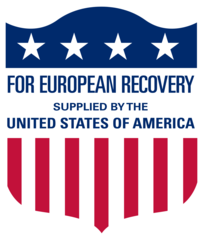
9617001438Marshall PlanMassive transfer of aid money to help rebuild postwar Western Europe, intended to bolster capitalist and democratic governments and prevent domestic communist groups from riding poverty and misery to power. The plan was first announced by secretary of state John Marshall at Harvard's commencement in June 1947.8
9617001439North Atlantic Treaty OrganizationMilitary alliance of Western European powers and the United States and Canada established in 1949 to defend against the common threat of the Soviet Union, marking a giant stride forward for European unity and American internationalism.9
9617001440National Security Council Memorandum Number 68National security council recommendation to quadruple defense spending and rapidly expand peacetime armed forces to address Cold War tension. It reflected a new militarization of American foreign policy, but the huge costs of rearmament were not expected to interfere with what seemed like the limitless possibilities of postwar prosperity.10
9617001441Korean WarFist "hot war" of the "Cold War." It began when the Soviet-backed North Koreans invaded South Koreans and UN forces, dominated by the United States, launched and counteroffensive. The war ended in a stalemate in 1953.11
9617001442House Un-American Activities CommitteeInvestigative body established in 1938 to root out "subversion." Sough to expose communist influence in American government and society, in particular through the trial of Alger Hiss.12
9617001443McCarthyismA brand of vitriolic, fear-mongering anti-communism associated with the career of Senator Joseph McCarthy. In the early 1950s, Senator McCarthy used his position in Congress to baselessly accuse high-ranking government officials and other Americans of conspiracy with communism. The term named after him refers to the dangerous forces of unfairness and fear wrought by anticommunist propaganda.13
9617001444Army-McCarthy hearingCongressional hearing called by Senator Joseph McCarthy to accuse members of the army of communist ties. In this widely televised spectacle, McCarthy finally went too far for public approval. The hearings exposed the Senator's extremism and led to his eventual disgrace.14
9617001445Executive Order 9981Order issued by President Truman to desegregate the armed forces. The president's action resulted from a combination of pressure from civil rights advocates, election-year political calculations, and the new geopolitical context of the Cold War.15
9617001446Taft-Hartley ActRepublican promoted antiunion legislation passed over President Truman's vigorous veto that weakened many of labor's New Deal gains by banning the closed shop and other strategies that helped unions organize. It also required union leaders to take a noncommunist oath, which purged the union movement of many of its most committed and active organizers.16
9617001447Operation DixieFailed effort by the CIO after WWII to unionize southern workers, especially in the textile factory.17
9617001448Employment Act of 1946Legislation declaring that the government's economic policy should aim to promote maximum employment, production, and purchasing power, as well as to keep inflation low. This general commitment was much shorter on specific targets and rules that it's liberal creators had wished. The act created the Council of Economic Advisers to provide the president with data and recommendations to make economic policy.18
9617001449GI BillKnown officially as the Servicemen's Readjustment Act and more informally known as the GI Bill of Rights, this law helped returning WWII soldiers reintegrate into civilian life by securing loans to buy homes and farms and set up small businesses. It also made tuition and stipends available for them to attend college as well as job training programs. The act was intended to cushion the blow of 15 million returning servicemen to the employment market and to nurture the postwar economy.19
9617001450Fair DealPresident Truman's extensive social program introduced in his 1949 message to Congress. Republican and Southern Democrats kept much of his vision from being enacted, except for raising the minimum wage, providing more public housing, and extending the old-age insurance to many more beneficiaries under the Social Security Act.20
9617001451SunbeltThe fifteen state crescent through the American South and Southwest that experienced terrific population and productivity expansion during WWII and particularly the decades after the war, eclipsing the old industrial Northeast ( the "Frostbelt").21
9617001452LevittownSuburban communities with mass produced tract houses built in the New York and Philadelphia metropolitan areas in the 1950s by William Levitt and Sons. Typically inhabited by white middle-class people who fled the cities in search of homes for their growing families.22
9617001453baby boomDemographic explosion from births to returning soldiers and others who had put off starting families during the war. This large generation of new Americans forced the expansion of many generations of many institutions such as schools and universities.23
9617001454Joseph StalinBolshevik revolutionary, head of the Soviet Communists after 1924, and dictator of the Soviet Union from 1928 to 1953. He led the Soviet Union with an iron fist, using Five-Year Plans to increase industrial production and terror to crush opposition.24
9617001455Jiang JieshiLeader of Chinese Nationalists, also known as Chang kai-shek. He was defeated by Mao Zedong's communist revolutionaries in 1949 and was forced to flee to the isalnd of Tawiwan, where, with the support of the United States, he became president of the Republic of China25
9617001456George F. KennanAmerican diplomat who wrote the "containment doctrine" in 1947, arguing that the Soviet Union was inherently expansionist and had to be stopped, via political and military force, from spreading throughout the world.26
9617001457George C. MarshallFormer WW2 general who became Sec. of State under Truman. He was the originator of the concept of the plan that would provoke aid to reconstruct Western Europe.27
9617001458Joseph McCarthyWisconsin Republican Senator who used his position in Congress to baselessly accuse high-ranking government officials and other Americans of conspiracy with communism. He claimed to have list of communists in American gov't, but had no credible evidence. He took advantage of fears of communism post WWII to become incredibly influential. Eventually discredited by Congress.28
9617001459Reinhold NiebuhrA liberal Protestant theologian whose teachings and writings aimed to relate Christian faith to the realities of modern politics. A socialist and pacifist as a young man, he came out of WW2 committed to the doctrine of the "just war" and the necessity of resisting dark forces of evil like Hitler and Stalin, while remaining outspoken in defense of progressive social causes.29
9617001460Benjamin SpockPediatrician and author of The Common Sense Book of Baby and Child Care, which instructed parents on modern child-rearing, replacing traditional means of passing along such knowledge. He is often said to have been the bible of the baby boomer generation.30

AP US History Period 4 Flashcards

Terms : Hide Images
5409082643Federalistpolitical party created in the 1790s led by Alexander Hamilton, favored a stronger national government - Supported primarily by the bankers and moneyed interests0
5409082644Democratic-RepublicansPolitical party created in the 1790's - led by Thomas Jefferson - favored limited government and state rights - supported primarily by the "Common man"1
5409082645Election of 1800aka Revolution of 1800- election that led to a peaceful transfer of power from the Federalist party to the Democratic Republican Party2
5409082646Hartford Convention, 1814meeting of Federalists during the War of 1812 in which anti-war Federalist threatened to secede from the Union - generally viewed by some as treasonous and the Federalist Part began to die out3
5409082647Era of Good Feelingsthe decline of the Federalist Party and the end of the war of 1812 gave rise to a time of political cooperation - associated with the presidency of James Monroe4
5409082648Democratspolitical party that brought Andrew Jackson into office in 1829 - supported Jeffersonian ideas of limited government, drawing its support from the "common Man"5
5409082649Whig PartyPolitical Party created in 1834 as a coalition of anti-Jackson political leaders and dedicated to internal improvements funded by the national government6
5409082650Andrew JacksonLeader of the Democrats who became the seventh president of the US (1829-1837), known for his opposition to the 2nd Bank of the US, the Indian Removal Act, and opposition to nullification7
5409082651Henry ClayLeader of the Whig Party who proposed an "American System" to make the United States economically self-sufficient - worked to keep the Union together through political compromise8
5409082652South Carolina Nullification Crisis, 1832-1833After South Carolina declared the federal tariff null and void, President Jackson obtained a Force Bill to use military actions against South Carolina - ended with a compromise to lower tariffs over an extended time9
5409082653John C. CalhounSouth Carolina political leader who defended slavery as a positive good and advocated the doctrine of nullification, a policy in which state could nullify federal law10
5409082654Midnight JudgesFederalist judges appointed by John Adams between the time he lost the election of 1800 and the time he left office in March 180111
5409082655John MarshallAppointed to the Supreme Court by John Adams in 1801- served as a chief justice until 1835 - legal decisions gave the Supreme Court more power, strengthened the federal government, and protecting private property12
5409082656Cotton Beltsouthern region in US where most of the cotton is grown/deep - south area that stretched from South Carolina to Georgia to the new states in the southwest frontier - had the highest concentration of slaves13
5409082657Marbury v. Madison 1803Supreme Court that declared a section of Judiciary Act of 1789 unconstitutional and established the principle of judicial review14
5409082658Judicial ReviewThe power of the Supreme Court to review the constitutionality of laws passed by Congress15
5409082659McCulloch v. Maryland 1819Supreme Court decision that upheld the constitutionality of the BUS - Maryland did not have the right to tax the federal bank and John Marshall wrote, "The power to tax is the power to destroy."16
5409082660Gibbons v. Ogden 1824Supreme Court decision stating that the authority of Congress is absolute in matters of interstate commerce17
5409082661Market EconomyEconomic system based on the unregulated buying and selling of goods and services - Prices are determined by the forces of supply and demand18
5409082662Embargo Act 1807in order to pressure Britain and France to aspect neutral trading rights, Jefferson issued a government-order ban on international trade - went into effect in 1808 and closed down virtually all U.S. trade with Foreign nations19
5409082663American System 1815Henry Clay's proposal to make the U.S. Economically self-sufficient - called for protective tariffs, internal improvements at federal expense, the creation of a second Bank of the United States20
5409082664Panic of 1819Financial panic that began when the Second Bank of the US tightened credit and recalled government loans after the price of cotton dropped21
5409082665Debates over the tariff and internal improvementsNortherners generally favored higher tariffs and internal improvements at federal expense while Southerners generally opposed higher tariffs and internal improvements at federal expense22
5409082666Second Bank of the United States 1816Privately owned bank that operated as both a commercial and fiscal agent for the US government - established in 1816 under a charter that was supposed to last 20 years23
5409082667Tariff of 1816first protective tariff in US history - designed primarily to help America's textile industry24
5409082668Tariff of Abominations 1828tariff with such high rates that it set off tension between northerners and southerners over tariff issues25
5409082669Panic of 1837Economic collapse caused primarily by President Jackson's destruction of the Second Bank of the United States26
5409082670Southern Defense of Slaverysoutherners held a widespread belief that blacks were inferior to whites and that the slavery was good for black - also understood that the southern cotton economy was dependent on slave labor27
5409082671Slave CodesLaws that established the status of slaves denying them basic rights and classifying them as the property of slaveholders28
5409082672Second Great Awakeningan upsurge in religious activity that began around 1800 and was characterized by emotional revival meetings - led to several reform movements designed to make a life better in this world29
5409082673Charles FinneyPresbyterian minister who is credited and is known as the "Father of modern Revivalism" - advocated the abolition of slavery and equal education for women and African Americans30
5409082674Seneca Falls Convention 1848the first convention in America for women right's held in NY31
5409082675Elizabeth Cady StantonAdvocate of women right's, including the right to vote -organized (with Lucretia Mott) the first women's rights convention at Seneca Falls, NY32
5409082676Dorothea DixPioneer in the moment for special treatment for the mentally ill33
5409082677Horace MannMassachusetts educator who called for publicly funded education for all children34
5409082678Utopian CommunitiesIdealistic reform movement based on the belief that a perfect society could be created on Earth - Significant Utopian experiments were established at New Harmony, Indiana, Book Farm, Massachusetts and Oneida Community in New York35
5409082680American Colonization Society 1817Organization established to end slavery gradually by helping individual slave owners liberate their slaves and then transport the freed slaves to Africa36
5409082681William Lloyd GarrisonRadical abolitionist in Massachusetts who published the liberator, an antislavery newspaper37
5409082682Sojourner TruthFormer Slave (freed in 1827) who became a leading abolitionist and feminist38
5409082684NeoclassicismRevival in architecture and art in the late 1700s and early 1800s that was inspired by Greek and Roman Models39
5409082685Hudson River School 1825-1875The first native school of painting in the US - Attracting artists who were rebelling against neoclassicism - painted primarily landscapes40
5409082686TranscendentalismPhilosophical and literary movement that believed God existed within human being and nature - believed intuition was the highest source of knowledge41
5409082687Ralph Waldo EmersonPhilosopher, writer, and poet who became a central figure in American Transcendentalist42
5409082688Henry David ThoreauWriter and naturalist - With Ralph Waldo Emerson, he became America's best known transcendentalist43
5409082689John James AudubonNaturalist and painter who became well-known for his attempt to document all types of American birds44
5409082690Richard AllenAfrican American minister who established the first independent African American denomination in the US, the African Methodist Episcopalian Church45
5409082692Samuel Slaterknown as the "Father of the American Industrial Revolution," - brought British textile technology to the United States46
5409082693John DeereInvented the steel plow in 1837, which revolutionized farming - the steel plow broke up soil without the soil getting stuck to the plow47
5409082694Lowell systemmethod of factory management that evolved in the textile mills of Lowell, MA, - owned by the Boston Manufacturing Company and named in honor of the company's founder, Francis Lowell - first example of a planned automated factory48
5409082696Interchangeable partsParts that were identical and which could be substituted for one another - developed by Eli Whitney for the manufacturing of muskets49
5409082697Erie Canal 1817-1825350 mile canal built by the state of NY that stretched from Buffalo to Albany, the canal revolutionized shipping in NY50
5409082698TurnpikesA road in which tolls were collected at gates set up along the road51
5409082699National Road 1811aka Cumberland Road- First significant road built in the US at the expense of the federal government - stretched from the Potomac River to the Ohio River52
5409082701Mason-Dixon Lineboundary between PA and MD that marked the division between free and slave states before the Civil War53
5409082702Cult of Domesticitythe belief that a woman's proper role in life was found in Domestic pursuits (raising children, taking care of the house)54
5409082703Destruction of the Second Bank of the United States 1833President Jackson, who thought the Bank of the U.S. represented special interests at the expense of the common man, ordered federal deposits placed in state banks ("pet" banks) to deplete the funds of the national bank55
5409082704Louisiana Purchase 1803U.S. purchased the Louisiana Territory from France for $15 million, doubling the size of the U.S. and giving the U.S. full control of the Mississippi River56
5409082705Lewis and Clark expedition 1804-1806Expedition to explore the Louisiana Territory led by Meriwether Lewis and William Clark57
5409082706War HawksMembers of Congress from the West and South elected in 1810 who wanted war with Britain in the hopes of annexing new territory and ending British trade with the Indians of the Northwest58
5409082707War of 18121812-1815, War between the U.S. and Great Britain caused primarily by the British violation of American neutral rights on the high seas. - ended with an agreement of "status quo ante" (a return to how things were before the war)59
5409082708Adams-Onis Treaty, 1819Treaty between the U.S. and Spain that ceded Florida to the U.S60
5409082709Monroe Doctrine 1823President Monroe's unilateral declaration that the Americas would be closed to further European colonization stated the U.S. would not allow European interference in the affairs of the Western Hemisphere61
5409082711Oregon Treaty 1846after years of conflict over ownership of the Pacific Northwest, the U.S. and England established the boundary at 49° latitude62
5409082712Manifest DestinyBelief that the U.S. was destined to expand across the North American continent63
5409082716TecumsehShawnee leader who established an Indian confederacy that he hoped would be a barrier to white expansion - Defeated at the Battle of Tippecanoe in 1811 by U.S. forces led by General William Henry Harrison64
5409082717Indian Removal Act, 1830Law that provided for the removal of all Indian tribes east of the Mississippi and the purchase of Indian lands for resettlement65
5409082718Worcester v. Georgia 1832A Supreme Court ruling that declared a state did not have the power to enforce laws on lands that were not under state jurisdiction - John Marshall wrote that the state of Georgia did not have the power to remove Indians66
5409082719Trail of Tears 1838Forced march of the Cherokee people from Georgia to Indian Territory in the winter67
5409082720Seminole Wars 1814-1819, 1835-1842The Seminole of Florida opposed removal and resisted US troops68
5409082721Missouri Compromise 1820Law proposed by Henry Clay admitting Missouri to the U.S. as a slave state and Maine as a free state69
5409082722American Anti-Slavery SocietyAbolitionist society founded by William Lloyd Garrison - included Frederick Douglass as a significant leader of the society70

AP US History Period 7 (1890-1945) Flashcards

Terms : Hide Images
6391156162The Great DepressionThe deepest and longest-lasting economic downturn in the history of the Western industrialized world. In the United States, the Great Depression began soon after the stock market crash of October 1929, which sent Wall Street into a panic and wiped out millions of investors.0
6391156163Progressive EraA period of widespread social activism and political reform across the United States, from the 1890s to 1920s.1
6391156164ProhibitionA nationwide constitutional ban on the production, importation, transportation and sale of alcoholic beverages that remained in place from 1920 to 1933.2
6391156165Women's suffrageThe women's right to vote, granted by the 19th amendment to the U.S. Constitution (1920).3
6391156166preservationistsThose who attempt to maintain in their present condition areas of the Earth that are so far untouched by humans.4
6391156167conservationistsThose who advocate for the sustainable use and management of natural resources including wildlife, water, air, and earth deposits, both -- renewable and non-renewable.5
6391156168Welfare StateA system whereby the government undertakes to protect the health and well-being of its citizens, especially those in financial or social need, by means of grants, pensions, and other benefits. The foundations for the modern welfare state in the US were laid by the New Deal programs of President Franklin D. Roosevelt.6
6391156169LiberalismA viewpoint or ideology associated with free political institutions and religious toleration, as well as support for a strong role of government in regulating capitalism and constructing the welfare state.7
6391156170mass mediaDiversified mediatechnologies that are intended to reach a large audience by mass communication.8
6391156171The Great MigrationThe movement of 6 million African-Americans out of the rural Southern United States to the urban Northeast, Midwest, and West that occurred between 1910 and 1970.9
6391156172imperialistA policy of extending a country's power and influence through diplomacy or military force.10
6391156173isolationismA category of foreign policies institutionalized by leaders who asserted that their nations' best interests were best served by keeping the affairs of other countries at a distance.11
6391156174Spanish-American WarA conflict fought between Spain and the United States in 1898. Hostilities began in the aftermath of sinking of the USS Maine in Havana harbor leading to American intervention in the Cuban War of Independence.12
6391156175Treaty of VersaillesOne of the peace treaties at the end of World War I. It ended the state of war between Germany and the Allied Powers. Signed on 28 June 1919, exactly five years after the assassination of Archduke Franz Ferdinand.13
6391156176League of NationsAn intergovernmental organization founded on 10 January 1920 as a result of the Paris Peace Conference that ended the First World War. It lacked an armed force to enforce policy and was not joined by the United States.14
6391156177fascismAn authoritarian and nationalistic right-wing system of government and social organization.15
6391156178totalitarianismA political system where the state recognizes no limits to its authority and strives to regulate every aspect of public and private life wherever feasible.16
6391156179Axis PowersGermany, Italy, and Japan, which were allied before and during World War II.17
6391156180Allied PowersU.S., Britain, France, which were allied before and during World War II.18
6391156181Nazi Concentration CampA guarded compound for the detention or imprisonment of aliens, members of ethnic minorities, political opponents. Primarily Jewish Europeans during WWII.19
6391156182HolocaustA genocide in which Adolf Hitler's Nazi Germany and its collaborators killed about six million Jews and members from other fringe social groups during World War II.20
6391156183Internment of Japanese AmericansForced relocation and incarceration in camps in the interior of the U.S. of between 110,000 and 120,000 people of Japanese ancestry who had lived on the Pacific coast.21
6391156184Pacific "Island Hopping"A military strategy employed by the Allies in the Pacific War against Japan and the Axis powers during World War II. The idea was to bypass heavily fortified Japanese positions and instead concentrate the limited Allied resources on strategically important islands that were not well defended but capable of supporting the drive to the main islands of Japan.22
6391156185D-DayThe landing operations on Tuesday, 6 June 1944 of the Allied invasion of Normandy in Operation Overlord during World War II.23
6391156186atomic bombA "fission" bomb dropped on Nagasaki and Hiroshima at the end of World War II.24
6391156187americanizationThe process of assimilating American character, manner, ideals, culture, and so on.25
6391156188sphere of influenceThe territory of weaker states where a powerful state exercises the dominant control.26
6391156189partitionIn politics, the act of dividing a weaker territory or government among several more powerful states.27
6391156190bellicoseDisposed to fight or go to war.28
6391156191banana republicA disparaging term for the small nations of Central America, with particular reference to their political instability and poor, single-crop economies.29
6391156192progressiveIn politics, one who believes in continuing progress, improvement, or reform.30
6391156193exposéA disclosure or revelation considered embarrassing to those involved.31
6391156194direct primaryIn politics, the nomination of a party's candidates for office through a special election of that party's voters.32
6391156195initiativeIn politics, the procedure whereby voters can, through petition, present proposed legislation directly to the electorate.33
6391156196referendumThe submission of a law, proposed or already in effect, to a direct vote of the electorate.34
6391156197recallIn politics, a procedure for removing an official from office through popular election or other means.35
6391156198insubordinationDeliberate disobedience to proper authority.36
6391156199entrepreneurshipThe process whereby an individual initiates a business at some risk in order to expand it and thereby earn a profit.37
6391156200self-determinationIn politics, the right of a people (usually based on ethnicity) to shape its own national identity and form a government, without outside coercion of influence.38
6391156201graduated income taxA tax on income in which the taxation rates are progressively higher for those whit higher income.39
6391156202levyA forcible tax or other imposition.40
6391156203enclaveA small territory surrounded by foreign or hostile territory. Enclaves were common among newly-arrived immigrant groups (e.g. "Chinatown" in San Francisco).41
6391156204censorAn official who examines publications, mail, literature, and so forth in order to remove or prohibit the distribution of material deemed dangerous or offensive.42
6391156205Northern Securities Co. v. U. S. (1904)Re-established the authority of the federal government to fight monopolies under the Sherman Anti-Trust Act.43
6391156206Muller v. Oregon (1908)First case to use the "Brandeis brief"; recognized a 10-hour work day for women laundry workers on the grounds of health and community concerns.44
6391156207Schenck v. U. S. (1919)Unanimously upheld the Espionage Act of 1917 which declared that people who interfered with the war effort were subject to imprisonment; declared that the 1st Amendment right to freedom of speech was not absolute; free speech could be limited if its exercise presented a "clear and present danger."45
6391156208Korematsu v. U. S. (1941)The court upheld the constitutionality of detention camps for Japanese-Americans during World War 2.46
6391156209belligerent(adj.) given to fighting, warlike; combative, aggressive; (n.) one at war, one engaged in war47
6391156210Open Door PolicyThe policy that China should be open to trade with all of the major powers, and that all, including the United States, should have equal right to trade there. This was the official American position toward China as announced by Secretary of State John Hay in 1899.48
6391156211socialismAn economic and governmental system based on public ownership of the means of production and exchange.49
6391156212Eugene DebsProminent socialist leader (and five time presidential candidate) who founded the American Railroad Union and led the 1894 Pullman Strike50
6391156213Roosevelt CorollaryRoosevelt's 1904 extension of the Monroe Doctrine, stating that the United States has the right to protect its economic interests in South And Central America by using military force.51
6391156214Industrial Workers of the World (IWW)Founded in 1905, this radical union, also known as the Wobblies aimed to unite the American working class into one union to promote labor's interests. It worked to organize unskilled and foreign-born laborers, advocated social revolution, and led several major strikes. Stressed solidarity.52
6391156215Pure Food and Drug ActForbade the manufacture or sale of mislabeled or adulterated food or drugs, it gave the government broad powers to ensure the safety and efficacy of drugs in order to abolish the "patent" drug trade. Still in existence as the FDA.53
6391156216Teddy RooseveltTwenty-sixth president of the United States; he focused his efforts on trust busting, environment conservation, and strong foreign policy.54
6391156217William Taft27th president of the U.S.; he angered progressives by moving cautiously toward reforms and by supporting the Payne-Aldrich Tariff; he lost Roosevelt's support and was defeated for a second term.55
6391156218Triangle Shirtwaist FireMarch 1911 fire in New York factory that trapped young women workers inside locked exit doors; nearly 50 ended up jumping to their death; while 100 died inside the factory; led to the establishment of many factory reforms, including increasing safety precautions for workers56
6391156219segregationSeparation of people based on racial, ethnic, or other differences. Common in the South after the Civil War through the 1960s.57
6391156220Harlem RenaissanceBlack literary and artistic movement centered in Harlem that lasted from the 1920s into the early 1930s that both celebrated and lamented black life in America; Langston Hughes and Zora Neale Hurston were two famous writers of this movement.58
6391156221Fourteen PointsThe war aims outlined by President Wilson in 1918, which he believed would promote lasting peace; called for self-determination, freedom of the seas, free trade, end to secret agreements, reduction of arms and a league of nations.59
6391156222Red ScareA social/political movement designed to prevent a socialist/communist/radical movement in this country by finding "radicals," incarcerating them, deporting them, and subverting their activities. Periods of Red Scare occurred after both World Wars in the United States.60
6391156223Sedition ActA law passed by Congress in 1918 (during World War I) to make it illegal to say anything disloyal, profane, or abusive about the government or the war effort in WWI. Seen as a military necessity by some for effectively fighting in WWI.61
6391156224Emergency Quota ActA government legislation that limited the number of immigrants from Europe which was set at 3% of the nationality currently in the U.S. It greatly limited the number of immigrants who could move to the U.S. And it reflected the isolationist and anti-foreign feeling in America as well as the departure from traditional American ideals.62
6391156225Scopes TrialAlso known as the Scopes Monkey Trial; 1925 court case argued by Clarence Darrow and William Jennings Bryan in which the issue of teaching evolution in public schools was debated. Highlighted the growing divide between rural (more conservative) and urban (more liberal) interests in the United States.63
6391156226Sacco and Vanzetti TrialNicola Sacco and Bartolomeo Vanzetti were Italian immigrants charged with murdering a guard and robbing a shoe factory in Braintree, Massachusetts. The trial lasted from 1920-1927. Convicted on circumstantial evidence; many believed they had been framed for the crime because of their anarchist and pro-union activities.64
6391156227Kellog-Briand PactIdealistic agreement signed in 1928 in which nations agreed not to pose the threat of war against one another.65
6391156228Herbert HooverRepublican president at the outset of the Great Depression. As a Republican, he believed that the federal government should not interfere in economic problems; the severity of the Great Depression forced his hand to provide some federal assistance to those in need, but he mostly left these efforts to the states.66
6391156229Smoot-Hawley TariffOne of Herbert Hoover's earliest efforts to protect the nation's farmers following the onset of the Great Depression. Tariff raised rates to an all-time high.67
6391156230Platt AmendmentThis amendment to the new Cuban constitution authorized U.S. intervention in Cuba to protect its interests. Cuba pledged not to make treates with other countries that might compromise its independence, and it granted naval bases to the United States, most notable being Guantanamo Bay.68
6391156231Indian Reorganization ActGovernment legislation that allowed the Indians a form of self-government and thus willingly shrank the authority of the U.S. government. It provided the Indians direct ownership of their land, credit, a constitution, and a charter in which Indians could manage their own affairs.69
6391156232Zoot Suit RiotsA series of riots in 1944 during World War II that broke out in Los Angeles, California, between Anglo American sailors and Marines stationed in the city, and Latino youths, who were recognizable by the zoot suits they favored.70
6391156233Yalta ConferenceFDR, Churchill and Stalin met at Yalta. Russia agreed to declare war on Japan after the surrender of Germany and in return FDR and Churchill promised the USSR concession in Manchuria and the territories that it had lost in the Russo-Japanese War.71
6391156234William Jennings BryanUnited States lawyer and politician who advocated free silver and prosecuted John Scopes (1925) for teaching evolution in a Tennessee high school (1860-1925).72
6391156235Woodrow Wilson(1856-1924) President of the United States (1913-1921) and the leading figure at the Paris Peace Conference of 1919. He was unable to persuade the U.S. Congress to ratify the Treaty of Versailles or join the League of Nations.73
6391156236United NationsAn international organization formed after WWII to promote international peace, security, and cooperation.74
6391156237communismA political theory derived from Karl Marx, advocating class war and leading to a society in which all property is publicly owned and each person works and is paid according to their abilities and needs.75
6391156238Bolshevik RevolutionThe overthrow of Russia's Provisional Government in the fall of 1917 by Lenin and his Bolshevik forces, made possible by the government's continuing defeat in the war, its failure to bring political reform, and a further decline in the conditions of everyday life.76

Pages

Subscribe to CourseNotes RSS

Need Help?

We hope your visit has been a productive one. If you're having any problems, or would like to give some feedback, we'd love to hear from you.

For general help, questions, and suggestions, try our dedicated support forums.

If you need to contact the Course-Notes.Org web experience team, please use our contact form.

Need Notes?

While we strive to provide the most comprehensive notes for as many high school textbooks as possible, there are certainly going to be some that we miss. Drop us a note and let us know which textbooks you need. Be sure to include which edition of the textbook you are using! If we see enough demand, we'll do whatever we can to get those notes up on the site for you!