

Period 4 (1800-1848) AP US History Flashcards
Terms : Hide Images
| 5789776889 | Federalists | Political party that formed in the 1790s led by Alexander Hamilton; Favored a stronger federal government and Hamilton's financial plan. | 0 | |
| 5789776890 | Democratic-Republicans | Political party formed in the 1790's; Led by Thomas Jefferson; Favored limited government and states rights. | 1 | |
| 5789776891 | Election of 1800 | A.K.A. "Revolution of 1800"; Election that led to a peaceful transfer of power from the Federalist party to the Democratic-Republican Party. | 2 | |
| 5789776892 | Hartford Convention of 1814 | Meeting of Federalists during the War of 1812 in which anti-war Federalist threatened to secede from the Union; After Jackson's victory at New Orleans, Federalists were seen as treasonous. | 3 | |
| 5789776893 | Era of Good Feelings | The decline of the Federalist Party and the end of the war of 1812 gave rise to a time of relative political unity. | 4 | |
| 5789776894 | Democrats | Political party that succeeded the Jeffersonian Democrat-Republicans; Brought Andrew Jackson into office in 1829; Supported Jeffersonian ideas of limited government, drawing its support from the "common man" | 5 | |
| 5789776895 | Whigs | Political party created in 1834 as a coalition of anti-Jackson political leaders and dedicated to internal improvements funded by the national government. | 6 | |
| 5789776896 | Andrew Jackson | Leader of the Democrats who became the seventh president of the US (1829-1837), known for his opposition to the 2nd Bank of the US, the Indian Removal Act, and opposition to nullification. |  | 7 |
| 5789776897 | Henry Clay | Leader of the Whig Party who proposed an "American System" to make the United States economically self-sufficient; Worked to keep the Union together through political compromise. |  | 8 |
| 5789776898 | Nullification Crisis (1832-1833) | After South Carolina declared the federal tariff null and void, President Jackson obtained a Force Bill to use military actions against South Carolina - ended with a compromise to lower tariffs over an extended time | 9 | |
| 5789776899 | John C. Calhoun | South Carolina political leader who defended slavery as a positive good and advocated the doctrine of nullification, a policy in which state could nullify federal law. |  | 10 |
| 5789776900 | Midnight Judges | Federalist judges appointed by John Adams between the time he lost the election of 1800 and the time he left office in March 1801; Significantly included John Marshall | 11 | |
| 5789776901 | John Marshall | Appointed to the Supreme Court by John Adams in 1801; Served as a chief justice until 1835; Legal decisions gave the Supreme Court more power, strengthened the federal government, and protected private property. | 12 | |
| 5789776902 | Cotton Belt | southern region in US where most of the cotton is grown; deep south area that stretched from South Carolina to Georgia to the new states in the southwest frontier; had the highest concentration of slaves |  | 13 |
| 5789776903 | Marbury v. Madison (1803) | Supreme Court decision that declared a section of Judiciary Act of 1789 unconstitutional and established the principle of judicial review | 14 | |
| 5789776904 | judicial review | The power of the Supreme Court to review the constitutionality of laws passed by Congress and actions taken by the executive. | 15 | |
| 5789776905 | McCulloch v. Maryland (1819) | Supreme Court decision that upheld the constitutionality of the BUS; Maryland did not have the right to tax the federal bank and John Marshall wrote, "The power to tax is the power to destroy." | 16 | |
| 5789776906 | Gibbons v. Ogden (1824) | Supreme Court decision stating that the authority of Congress is absolute in matters of interstate commerce | 17 | |
| 5789776907 | market economy | Economic system based on the unregulated buying and selling of goods and services; Prices are determined by the forces of supply and demand | 18 | |
| 5789776908 | Embargo Act (1807) | Jefferson issued a government-order ban on international trade in order to pressure Britain and France to respect neutral trading rights; went into effect in 1808 and closed down virtually all U.S. trade with Foreign nations | 19 | |
| 5789776909 | "American System" | Henry Clay's proposal to make the U.S. economically self-sufficient; Called for protective tariffs, internal improvements at federal expense, the creation of a second Bank of the United States | 20 | |
| 5789776910 | Panic of 1819 | Financial panic that began when the Second Bank of the US tightened credit and recalled government loans after the price of cotton dropped | 21 | |
| 5789776911 | Debates over the tariff and internal improvements | Northerners generally favored higher tariffs and internal improvements at federal expense while Southerners generally opposed higher tariffs and internal improvements at federal expense | 22 | |
| 5789776912 | Second Bank of the United States | Privately owned bank that operated as both a commercial and fiscal agent for the US government; established in 1816 under a charter that was supposed to last 20 years | 23 | |
| 5789776913 | Tariff of 1816 | first protective tariff in US history designed primarily to help America's textile industry | 24 | |
| 5789776914 | "Tariff of Abominations" | 1828 tariff with such high rates that it set off tension between northerners and southerners over tariff issues | 25 | |
| 5789776915 | Panic of 1837 | Economic collapse caused primarily by President Jackson's destruction of the Second Bank of the United States | 26 | |
| 5789776917 | Slave Codes | Laws that established the status of slaves denying them basic rights and classifying them as the property of slaveholders | 27 | |
| 5789776918 | Second Great Awakening | an upsurge in religious activity that began around 1800 and was characterized by emotional revival meetings; led to several reform movements (abolitionism, temperance, women's rights) designed to implement the idea of human perfectibility and equality. |  | 28 |
| 5789776919 | Charles Grandison Finney | Revivalist minister who is known as the "Father of modern Revivalism"; advocated for temperance, the abolition of slavery, and equal education for women and African Americans. |  | 29 |
| 5789776920 | Seneca Falls Convention (1848) | The first convention in America for women right's held in NY; Issued "Declaration of Sentiments and Resolutions" | 30 | |
| 5789776921 | Elizabeth Cady Stanton | Advocate of women right's, including the right to vote; organized (with Lucretia Mott) the first women's rights convention at Seneca Falls, NY in 1848. |  | 31 |
| 5789776922 | Dorothea Dix | Pioneer in the reform movement for special treatment of mentally ill patients. |  | 32 |
| 5789776924 | Utopian communities | Idealistic reform movement based on the belief that a perfect society could be created on Earth; Significant Utopian experiments were established at New Harmony, Indiana, Book Farm, Massachusetts and Oneida Community in New York | 33 | |
| 5789776926 | American Colonization Society | Organization established in 1817 to end slavery gradually by helping individual slave owners liberate their slaves and then transport the freed slaves to "colonies" abroad. | 34 | |
| 5789776927 | William Lloyd Garrison | Radical abolitionist in Massachusetts who published the liberator, an antislavery newspaper |  | 35 |
| 5789776928 | Sojourner Truth | Former Slave (freed in 1827) who became a leading abolitionist and feminist |  | 36 |
| 5789776929 | Frederick Douglass | Former slave who became a significant leader in the abolitionist movement; Published "The Liberator", an abolitionist newspaper; Author of famous autobiography that convinced countless northerners of the evils of slavery and the ability of blacks to be educated, free citizens. |  | 37 |
| 5789776932 | Transcendentalism | Philosophical and literary movement in the East that believed God existed within human being and nature; Romantic movement that believed human emotion, nature, and the self-reliant individual, all of which can be corrupted by society and its institutions, including spirituality (rejection of the rationalism of the enlightenment). | 38 | |
| 5789776933 | Ralph Waldo Emerson | Philosopher, writer, and poet who became a central figure in American Transcendentalist movement. |  | 39 |
| 5789776934 | Henry David Thoreau | Writer and naturalist; With Ralph Waldo Emerson, he became America's best known transcendentalist; Author of "Civil Disobedience". |  | 40 |
| 5789776935 | John James Audubon | Naturalist and painter who became well-known for his attempt to document all types of American birds | 41 | |
| 5789776937 | Slave music | Music created by slaves for the purpose of religion, work and recreation; became the foundation for later styles of music known as gospel, jazz, and blues | 42 | |
| 5789776938 | Samuel Slater | Known as the "Father of the American Industrial Revolution"; brought British textile technology to the United States | 43 | |
| 5789776939 | John Deere | Invented the steel plow in 1837, which revolutionized farming; The steel plow broke up soil without the soil getting stuck to the plow | 44 | |
| 5789776940 | Lowell system | Method of factory management that evolved in the textile mills of Massachusetts; Owned by the Boston Manufacturing Company and named in honor of the company's founder, Francis Lowell; First example of a planned automated factory |  | 45 |
| 5789776942 | Interchangeable parts | Parts that were identical and which could be substituted for one another; developed by Eli Whitney for the manufacturing of muskets | 46 | |
| 5789776943 | Erie Canal | 350 mile canal built by the state of New York (without Federal assistance) that stretched from Buffalo to Albany. |  | 47 |
| 8251296726 | Transportation Revolution | 1790s-1850s; Roads (turnpikes), steamships, canals, and railroads; Facilitated Western settlement and the market revolution. | 48 | |
| 5789776944 | turnpikes | Toll roads that first began to be constructed in the 1790s; The first infrastructure of the Transportation Revolution; E.g. Lancaster Turnpike, Cumberland Road (National Road). | 49 | |
| 5789776945 | National Road (1811) | A.K.A. Cumberland Road; First significant road built in the US at the expense of the federal government; stretched from the Potomac River to the Ohio River. |  | 50 |
| 5789776946 | Baltimore and Ohio Railroad | First steam railroad commissioned in the US | 51 | |
| 5789776947 | Mason-Dixon Line | boundary between PA and MD that marked the division between free and slave states before the Civil War |  | 52 |
| 5789776948 | "cult of domesticity" | Women's role in domestic pursuits (raising children, taking care of the house); The centrality and increasing importance of women in decisions made at home. | 53 | |
| 5789776950 | Louisiana Purchase (1803) | U.S. purchased the Louisiana Territory from France for $15 million, doubling the size of the U.S. and giving the U.S. full control of the Mississippi River |  | 54 |
| 5789776951 | Corps of Discovery | (1804-1806) Expedition to explore the Louisiana Territory and far West; led by Meriwether Lewis and William Clark. |  | 55 |
| 5789776952 | War Hawks | Members of Congress from the West and South elected in 1810 who wanted war with Britain in the hopes of annexing new territory and ending British trade with the Indians of the Northwest | 56 | |
| 5789776953 | War of 1812 | (1812-1815) Between the U.S. and Great Britain caused primarily by the British violation of American neutral rights on the high seas; Ended with an agreement of "status quo ante"; Facilitated American Nationalism; Sometimes called "Second American Revolution" |  | 57 |
| 5789776954 | Adams-Onis Treaty (1819) | Treaty between the U.S. and Spain that ceded Florida to the U.S | 58 | |
| 5789776955 | Monroe Doctrine | Unilateral declaration that the Americas would be closed to further European colonization stated the U.S. would not allow European interference in the affairs of the Western Hemisphere | 59 | |
| 5789776956 | Annexation of Texas (1845) | Independence from Mexico and annexation to the U.S. |  | 60 |
| 5789776957 | Oregon Treaty (1846) | after years of conflict over ownership of the Pacific Northwest, the U.S. and England established the boundary at 49° latitude |  | 61 |
| 5789776958 | "Manifest Destiny" | Belief that the U.S. was destined to expand across the North American continent; Phrase coined by John O'Sullivan. |  | 62 |
| 8251485836 | Mexican-American War | (1846-1848) American expansion leads to dispute over California and Texas | 63 | |
| 5789776960 | Mexican Cession (1848) | The region of the present-day southwestern United States that Mexico ceded to the U.S. in the Treaty of Guadalupe Hidalgo |  | 64 |
| 5789776962 | Tecumseh | Shawnee leader who established an Indian confederacy that he hoped would be a barrier to white expansion - Defeated at the Battle of Tippecanoe in 1811 by U.S. forces led by General William Henry Harrison |  | 65 |
| 5789776963 | Indian Removal Act (1830) | Law that provided for the removal of all Indian tribes east of the Mississippi and the purchase of Indian lands for resettlement | 66 | |
| 5789776964 | Worcester v. Georgia (1832) | A Supreme Court ruling that declared a state did not have the power to enforce laws on lands that were not under state jurisdiction - John Marshall wrote that the state of Georgia did not have the power to remove Indians | 67 | |
| 5789776965 | "Trail of Tears" | Forced migration of Native American nations from the Southeastern United States to Indian Reservations west of the Mississippi River; Following the passage of the Indian Removal Act of 1830 |  | 68 |
| 5789776966 | Seminole Wars | 1814-1819, 1835-1842 The Seminole of Florida opposed removal and resisted US troops | 69 | |
| 5789776967 | Missouri Compromise (1820) | Law proposed by Henry Clay admitting Missouri to the U.S. as a slave state and Maine as a free state | 70 | |
| 5789776968 | American Anti-Slavery Society | Abolitionist society founded by William Lloyd Garrison; included Frederick Douglass as a significant leader of the society | 71 | |
| 5789779251 | Liberia | Colony in West Africa meant to be a home for freed slaves. |  | 72 |
| 8256931214 | The Star-Spangled Banner | National anthem of the US; Written during the War of 1812. |  | 73 |
| 8373123599 | Deism | Liberal, rational religious philosophy of Washington, Jefferson, Franklin, and other founders. | 74 | |
| 8373157991 | Unitarianism | Liberal Christian denomination that rejects the divinity of Jesus and stresses the goodness of human nature and the existence of free will. | 75 | |
| 8373195826 | Evangelical Christianity | An especially influential trans-denominational Christian movement that emphasizes the authority of the Bible, salvation through belief in Christ, and conversion ("born again" experience); Came to prominence after the First and Second Great Awakenings and continued to be influential in social and political affairs into the 20th century. | 76 | |
| 8373340440 | Mormons | church founded by Joseph Smith in 1830 (Second Great Awakening) with headquarters in Salt Lake City, Utah; Western pioneers. | 77 | |
| 8373359999 | Horace Mann | Early public education and education reform advocate | 78 | |
| 8373373912 | Noah Webster | Author of a dictionary that standardized American English, as well as early American school textbooks that aided in education reform. | 79 | |
| 8373401618 | temperance | restraint or moderation, especially in regards to alcohol or food | 80 | |
| 8373408171 | American Temperance Society | Founded 1826 Boston; An early reform group that aimed to convince people to voluntary give up alcohol. | 81 | |
| 8373461338 | Maine Law of 1851 | First state law to ban the manufacture and sale of alcoholic beverages | 82 | |
| 8373479497 | Brook Farm | Est. 1831 in Massachusetts; A transcendentalist Utopian community. | 83 | |
| 8373497168 | Oneida Community | Est. 1848 New York; Utopian community that practiced "free love" and eventually found great success in manufactures (especially silverware). | 84 | |
| 8373526271 | Hudson River School | American artistic movement that depicted discovery, exploration, and settlement of romantic local landscapes, reflecting growing nationalism of the early 1800s. |  | 85 |
| 8373558076 | Washington Irving | One of the first American writers to gain international fame; "Legend of Sleepy Hollow"; "Rip Van Winkle" | 86 |
AP US History Period 3 (1754-1800) Flashcards
Terms : Hide Images
| 6442559146 | Seven Years' (French and Indian) War | fought between the colonies of British America and New France, with both sides supported by military units from their parent countries of Great Britain and France, as well as Native American allies |  | 0 |
| 6442559147 | "No Taxation Without Representation." | a phrase, generally attributed to James Otis about 1761, that reflected the resentment of American colonists at being taxed by a British Parliament to which they elected no representatives and became an anti-British slogan before the American Revolution; in full, "Taxation without representation is tyranny.". |  | 1 |
| 6442559148 | Enlightenment | a philosophical movement which dominated the world of ideas in Europe in the 18th century. The Enlightenment included a range of ideas centered on reason as the primary source of authority andlegitimacy, and came to advance ideals such as liberty, progress, tolerance, fraternity, constitutional governmentand ending the perceived abuses of the church and state |  | 2 |
| 6442559149 | Benjamin Franklin | One of the founding fathers, famous for presence in the American Enlightenment. earned the title of "The First American" for his early and indefatigable campaigning for colonial unity, initially as an author and spokesman in London for several colonies. |  | 3 |
| 6442559150 | The Patriot Movement | Movement or push toward independence in the colonies. Those that supported colonial independence were referred to as "Patriots" while those that were loyal to the British crown were called "Loyalists." |  | 4 |
| 6442559151 | Colonial Militias | Groups of able-bodied colonialist men without proper military training that banded together to revolt against British tyrannny. |  | 5 |
| 6442559152 | The Continental Army | formed by the Second Continental Congress after the outbreak of the American Revolutionary War by the colonies, created to coordinate the military efforts of the Thirteen Colonies in their revolt against the rule of Great Britain. Commanded by General George Washington (Commander-in-Chief) |  | 6 |
| 6442559153 | George Washington | General, Commander-in-Chief of the Continental Army during the American Revolution. Later named the first President of the United States. |  | 7 |
| 6442559154 | Thomas Paine's Common Sense | Published in 1776. Pamphlet that challenged the authority of the British government and the royal monarchy. Used "Common Sense" and plain language to appeal to the average colonist. First work to ask for independence outright. |  | 8 |
| 6442559155 | The Declaration of Independence | the statement adopted by the Second Continental Congress meeting atPhiladelphia, Pennsylvania on July 4, 1776, which announced that the thirteen American colonies,[2] then at war with the Kingdom of Great Britain, regarded themselves as thirteen newly independent sovereign states, and no longer under British rule. |  | 9 |
| 6442559156 | Republican Motherhood | Predominant conception of women's roles before, during and after the American Revolution: the "Republican Mother" was considered a custodian of civic virtue responsible for upholding the morality of her husband and children. Though this idea emphasized the separation of women's and men's roles, it did weight heavily the influence of the mother on the family and advocated for this influence to be taken seriously. |  | 10 |
| 6442559157 | Legislative Branch | The branch of government tasked with writing laws. |  | 11 |
| 6442559158 | Judicial Branch | The branch of government tasked with interpreting laws. | | 12 |
| 6442559159 | Executive Branch | The branch of government tasked with enforcing laws. | | 13 |
| 6442559160 | The Articles of Confederation | An agreement among all thirteen original states in the United States of America that served as its first constitution. Drafted by a committee appointed by the Second Continental Congress, ratified in late 1777. Later replaced by the Constitution of the United States of America. |  | 14 |
| 6442559161 | Constitutional Convention | Took place from May 25 to September 17, 1787, in Philadelphia, Pennsylvania. Although the Convention was intended to revise the Articles of Confederation, the intention from the outset of many of its proponents, chief among them James Madison and Alexander Hamilton, was to create a new government rather than fix the existing one. The delegates elected George Washington to preside over the Convention. The result of the Convention was the creation of the United States Constitution, placing the Convention among the most significant events in the history of the United States. |  | 15 |
| 6442559162 | Federalism | a system of government in which entities such as states or provinces share power with a national government. |  | 16 |
| 6442559163 | Separation of Powers | Inspired by Montesquieu in The Spirit of the Laws, the idea of a constitutional government with three separate branches of government. Each of the three branches would have defined abilities to check the powers of the other branches. |  | 17 |
| 6442559164 | The Federalist Papers | a collection of 85 articles and essays written by Alexander Hamilton, James Madison, and John Jay promoting the ratification of the United States Constitution. |  | 18 |
| 6442559165 | Alexander Hamilton | Founder of the Federalist Party, Co-author of The Federalist Papers, First Secretary of the Treasury |  | 19 |
| 6442559166 | James Madison | Co-Author of the Federalist Papers, hailed as "the Father of the Constitution," Fourth President of the United States |  | 20 |
| 6442559167 | Bill of Rights | the collective name for the first ten amendments to the United States Constitution. These amendments add to the Constitution specific guarantees of personal freedoms and rights, clear limitations on the government's power in judicial and other proceedings, and explicit declarations that all powers not specifically delegated to Congress by the Constitution are reserved for the states or the people. |  | 21 |
| 6442559168 | Democratic-Republican Party | formed by Thomas Jefferson and others who believed in an agrarian-based, decentralized,democratic government. The party was established to oppose the Federalists who had supported and pushed through the ratification of the US Constitution. |  | 22 |
| 6442559170 | The Northwest Ordinance | created the Northwest Territory, the first organized territory of the United States, from lands beyond the Appalachian Mountains, between British North America and the Great Lakes to the north and the Ohio River to the south.established the precedent by which the Federal government would be sovereign and expand westward with the admission of new states, rather than with the expansion of existing states and their established sovereignty under the Articles of Confederation. |  | 23 |
| 6442559171 | French Revolution | a period of far-reaching social and political upheaval in France that lasted from 1789 until 1799, and was partially carried forward by Napoleon during the later expansion of the French Empire. The Revolution overthrew the monarchy, established a republic, experienced violent periods of political turmoil, and finally culminated in a dictatorship under Napoleon that rapidly brought many of its principles to Western Europe and beyond. |  | 24 |
| 6442559172 | Popular Sovereignty | the principle that the authority of a state and its government is created and sustained by the consent of its people, through their elected representatives (Rule by the People), who are the source of all political power. |  | 25 |
| 6442559175 | mercantilism | The economic theory that all parts of an economy should be coordinated for the good of the whole state; hence, that colonial economics should be subordinated for the benefit of an empire. |  | 26 |
| 6442559177 | protective tariffs | Taxes places on imported goods, often to raise prices and thus protect domestic producers. |  | 27 |
| 6442559180 | nonimportation agreement | A pledge to boycott, or decline to purchase, certain goods from abroad. |  | 28 |
| 6442559183 | boycott | An organized refusal to deal with some person, organization, or product. |  | 29 |
| 6442559185 | mercenary | A professional soldier who serves in a foreign army for pay. |  | 30 |
| 6442559200 | ratification | The confirmation or validation of an act (such as the constitution) by authoritative approval. |  | 31 |
| 6442559201 | aliens | Foreigners; also, persons resident in but not citizens of a country. |  | 32 |
| 6442559203 | territory | In America, government an organized political entity not yet enjoying full equal terms of a state. | | 33 |
| 6442559207 | bicameral | Referring to a legislative body with two houses |  | 34 |
| 6442559210 | cabinet | The body of official advisers to the head of a government; in the United States, it consists of the heads of the major executive departments. |  | 35 |
| 6442610686 | Virginia Plan | was a proposal by Virginia delegates for a bicameral (meaning the split of legistlative branch into two distinguishable houses or chambers; ie: the HOE and Senate) legislative branch.[1] The plan was drafted by James Madison while he waited for a quorum to assemble at the Constitutional Convention of 1787 | 36 | |
| 6442615054 | New Jersey Plan | was a proposal for the structure of the United States Government presented by William Paterson at the Constitutional Convention on June 15, 1787.[1] The plan was created in response to the Virginia Plan, which called for two houses of Congress, both elected with apportionment according to population. Opposed by James Madison | 37 | |
| 6442618091 | Great Compromise | was an agreement that large and small states reached during the Constitutional Convention of 1787 that in part defined the legislative structure and representation that each state would have under the United States Constitution. It retained the bicameral legislature as proposed by Roger Sherman, along with proportional representation in the lower house, but required the upper house to be weighted equally between the states. Each state would have two representatives in the upper house. | 38 | |
| 6442622421 | Three-Fifths Compromise | compromise proposed at the Constitutional Convention; debate was over whether, and if so, how, slaves would be counted when determining a state's total population for legislative representation and taxing purposes. The issue was important, as this population number would then be used to determine the number of seats that the state would have in the United States House of Representatives for the next ten years. The effect was to give the southern states a third more seats in Congress and a third more electoral votes than if slaves had been ignored | 39 | |
| 6442636377 | Whiskey Rebellion | a tax protest on this beverage from the newly formed federalist government under Washingtons presidency, taxes used to help pay off war debt | 40 | |
| 6442641735 | XYZ Affair | a political and diplomatic episode in 1797 and 1798, early in the administration of John Adams, involving a confrontation between the United States and Republican France | 41 |
Period 4 AP US History Flashcards
Terms : Hide Images
| 8373988087 | Federalist | political party created in the 1790s led by Alexander Hamilton, favored a stronger national government - Supported primarily by the bankers and moneyed interests | 0 | |
| 8373988088 | Democratic-Republicans | Political party created in the 1790's - led by Thomas Jefferson - favored limited government and state rights - supported primarily by the "Common man" | 1 | |
| 8373988089 | Election of 1800 | aka Revolution of 1800- election that led to a peaceful transfer of power from the Federalist party to the Democratic Republican Party | 2 | |
| 8373988090 | Hartford Convention, 1814 | meeting of Federalists during the War of 1812 in which anti-war Federalist threatened to secede from the Union - generally viewed by some as treasonous and the Federalist Part began to die out | 3 | |
| 8373988091 | Era of Good Feelings | the decline of the Federalist Party and the end of the war of 1812 gave rise to a time of political cooperation - associated with the presidency of James Monroe | 4 | |
| 8373988092 | Democrats | political party that brought Andrew Jackson into office in 1829 - supported Jeffersonian ideas of limited government, drawing its support from the "common Man" | 5 | |
| 8373988093 | Whig Party | Political Party created in 1834 as a coalition of anti-Jackson political leaders and dedicated to internal improvements funded by the national government | 6 | |
| 8373988094 | Andrew Jackson | Leader of the Democrats who became the seventh president of the US (1829-1837), known for his opposition to the 2nd Bank of the US, the Indian Removal Act, and opposition to nullification | 7 | |
| 8373988095 | Henry Clay | Leader of the Whig Party who proposed an "American System" to make the United States economically self-sufficient - worked to keep the Union together through political compromise | 8 | |
| 8373988096 | South Carolina Nullification Crisis, 1832-1833 | After South Carolina declared the federal tariff null and void, President Jackson obtained a Force Bill to use military actions against South Carolina - ended with a compromise to lower tariffs over an extended time | 9 | |
| 8373988097 | John C. Calhoun | South Carolina political leader who defended slavery as a positive good and advocated the doctrine of nullification, a policy in which state could nullify federal law | 10 | |
| 8373988098 | Midnight Judges | Federalist judges appointed by John Adams between the time he lost the election of 1800 and the time he left office in March 1801 | 11 | |
| 8373988099 | John Marshall | Appointed to the Supreme Court by John Adams in 1801- served as a chief justice until 1835 - legal decisions gave the Supreme Court more power, strengthened the federal government, and protecting private property | 12 | |
| 8373988100 | Cotton Belt | southern region in US where most of the cotton is grown/deep - south area that stretched from South Carolina to Georgia to the new states in the southwest frontier - had the highest concentration of slaves | 13 | |
| 8373988101 | Marbury v. Madison 1803 | Supreme Court that declared a section of Judiciary Act of 1789 unconstitutional and established the principle of judicial review | 14 | |
| 8373988102 | Judicial Review | The power of the Supreme Court to review the constitutionality of laws passed by Congress | 15 | |
| 8373988103 | McCulloch v. Maryland 1819 | Supreme Court decision that upheld the constitutionality of the BUS - Maryland did not have the right to tax the federal bank and John Marshall wrote, "The power to tax is the power to destroy." | 16 | |
| 8373988104 | Gibbons v. Ogden 1824 | Supreme Court decision stating that the authority of Congress is absolute in matters of interstate commerce | 17 | |
| 8373988105 | Market Economy | Economic system based on the unregulated buying and selling of goods and services - Prices are determined by the forces of supply and demand | 18 | |
| 8373988106 | Embargo Act 1807 | in order to pressure Britain and France to aspect neutral trading rights, Jefferson issued a government-order ban on international trade - went into effect in 1808 and closed down virtually all U.S. trade with Foreign nations | 19 | |
| 8373988107 | American System 1815 | Henry Clay's proposal to make the U.S. Economically self-sufficient - called for protective tariffs, internal improvements at federal expense, the creation of a second Bank of the United States | 20 | |
| 8373988108 | Panic of 1819 | Financial panic that began when the Second Bank of the US tightened credit and recalled government loans after the price of cotton dropped | 21 | |
| 8373988109 | Debates over the tariff and internal improvements | Northerners generally favored higher tariffs and internal improvements at federal expense while Southerners generally opposed higher tariffs and internal improvements at federal expense | 22 | |
| 8373988110 | Second Bank of the United States 1816 | Privately owned bank that operated as both a commercial and fiscal agent for the US government - established in 1816 under a charter that was supposed to last 20 years | 23 | |
| 8373988111 | Tariff of 1816 | first protective tariff in US history - designed primarily to help America's textile industry | 24 | |
| 8373988112 | Tariff of Abominations 1828 | tariff with such high rates that it set off tension between northerners and southerners over tariff issues | 25 | |
| 8373988113 | Panic of 1837 | Economic collapse caused primarily by President Jackson's destruction of the Second Bank of the United States | 26 | |
| 8373988114 | Southern Defense of Slavery | southerners held a widespread belief that blacks were inferior to whites and that the slavery was good for black - also understood that the southern cotton economy was dependent on slave labor | 27 | |
| 8373988115 | Slave Codes | Laws that established the status of slaves denying them basic rights and classifying them as the property of slaveholders | 28 | |
| 8373988116 | Second Great Awakening | an upsurge in religious activity that began around 1800 and was characterized by emotional revival meetings - led to several reform movements designed to make a life better in this world | 29 | |
| 8373988117 | Charles Finney | Presbyterian minister who is credited and is known as the "Father of modern Revivalism" - advocated the abolition of slavery and equal education for women and African Americans | 30 | |
| 8373988118 | Seneca Falls Convention 1848 | the first convention in America for women right's held in NY | 31 | |
| 8373988119 | Elizabeth Cady Stanton | Advocate of women right's, including the right to vote -organized (with Lucretia Mott) the first women's rights convention at Seneca Falls, NY | 32 | |
| 8373988120 | Dorothea Dix | Pioneer in the moment for special treatment for the mentally ill | 33 | |
| 8373988121 | Horace Mann | Massachusetts educator who called for publicly funded education for all children | 34 | |
| 8373988122 | Utopian Communities | Idealistic reform movement based on the belief that a perfect society could be created on Earth - Significant Utopian experiments were established at New Harmony, Indiana, Book Farm, Massachusetts and Oneida Community in New York | 35 | |
| 8373988123 | James Forten | African American businessman from Philadelphia who advocated racial integration and equal rights during the Jeffersonian era | 36 | |
| 8373988124 | American Colonization Society 1817 | Organization established to end slavery gradually by helping individual slave owners liberate their slaves and then transport the freed slaves to Africa | 37 | |
| 8373988125 | William Lloyd Garrison | Radical abolitionist in Massachusetts who published the liberator, an antislavery newspaper | 38 | |
| 8373988126 | Sojourner Truth | Former Slave (freed in 1827) who became a leading abolitionist and feminist | 39 | |
| 8373988127 | Frederick Douglass | Former slave who became a significant leader in the abolitionist movement - Known for his great oratorical skills | 40 | |
| 8373988128 | Neoclassicism | Revival in architecture and art in the late 1700s and early 1800s that was inspired by Greek and Roman Models | 41 | |
| 8373988129 | Hudson River School 1825-1875 | The first native school of painting in the US - Attracting artists who were rebelling against neoclassicism - painted primarily landscapes | 42 | |
| 8373988130 | Transcendentalism | Philosophical and literary movement that believed God existed within human being and nature - believed intuition was the highest source of knowledge | 43 | |
| 8373988131 | Ralph Waldo Emerson | Philosopher, writer, and poet who became a central figure in American Transcendentalist | 44 | |
| 8373988132 | Henry David Thoreau | Writer and naturalist - With Ralph Waldo Emerson, he became America's best known transcendentalist | 45 | |
| 8373988133 | John James Audubon | Naturalist and painter who became well-known for his attempt to document all types of American birds | 46 | |
| 8373988134 | Richard Allen | African American minister who established the first independent African American denomination in the US, the African Methodist Episcopalian Church | 47 | |
| 8373988135 | Slave music | Music created by slaves for the purpose of religion, work and recreation - became the foundation for later styles of music known as gospel, jazz, and blues | 48 | |
| 8373988136 | Samuel Slater | known as the "Father of the American Industrial Revolution," - brought British textile technology to the United States | 49 | |
| 8373988137 | John Deere | Invented the steel plow in 1837, which revolutionized farming - the steel plow broke up soil without the soil getting stuck to the plow | 50 | |
| 8373988138 | Lowell system | method of factory management that evolved in the textile mills of Lowell, MA, - owned by the Boston Manufacturing Company and named in honor of the company's founder, Francis Lowell - first example of a planned automated factory | 51 | |
| 8373988139 | Anthracite coal mining | Coal mines in PA produced anthracite, which became the most popular fuel for heating homes in the northern United States until the 1950s when it was replaced by oil and gas burning heating systems | 52 | |
| 8373988140 | Interchangeable parts | Parts that were identical and which could be substituted for one another - developed by Eli Whitney for the manufacturing of muskets | 53 | |
| 8373988141 | Erie Canal 1817-1825 | 350 mile canal built by the state of NY that stretched from Buffalo to Albany, the canal revolutionized shipping in NY | 54 | |
| 8373988142 | Turnpikes | A road in which tolls were collected at gates set up along the road | 55 | |
| 8373988143 | National Road 1811 | aka Cumberland Road- First significant road built in the US at the expense of the federal government - stretched from the Potomac River to the Ohio River | 56 | |
| 8373988144 | Baltimore and Ohio Railroad | First steam railroad commissioned in the US | 57 | |
| 8373988145 | Mason-Dixon Line | boundary between PA and MD that marked the division between free and slave states before the Civil War | 58 | |
| 8373988146 | Cult of Domesticity | the belief that a woman's proper role in life was found in Domestic pursuits (raising children, taking care of the house) | 59 | |
| 8373988147 | Destruction of the Second Bank of the United States 1833 | President Jackson, who thought the Bank of the U.S. represented special interests at the expense of the common man, ordered federal deposits placed in state banks ("pet" banks) to deplete the funds of the national bank | 60 | |
| 8373988148 | Louisiana Purchase 1803 | U.S. purchased the Louisiana Territory from France for $15 million, doubling the size of the U.S. and giving the U.S. full control of the Mississippi River | 61 | |
| 8373988149 | Lewis and Clark expedition 1804-1806 | Expedition to explore the Louisiana Territory led by Meriwether Lewis and William Clark | 62 | |
| 8373988150 | War Hawks | Members of Congress from the West and South elected in 1810 who wanted war with Britain in the hopes of annexing new territory and ending British trade with the Indians of the Northwest | 63 | |
| 8373988151 | War of 1812 | 1812-1815, War between the U.S. and Great Britain caused primarily by the British violation of American neutral rights on the high seas. - ended with an agreement of "status quo ante" (a return to how things were before the war) | 64 | |
| 8373988152 | Adams-Onis Treaty, 1819 | Treaty between the U.S. and Spain that ceded Florida to the U.S | 65 | |
| 8373988153 | Monroe Doctrine 1823 | President Monroe's unilateral declaration that the Americas would be closed to further European colonization stated the U.S. would not allow European interference in the affairs of the Western Hemisphere | 66 | |
| 8373988154 | Annexation of Texas 1845 | Through a joint resolution of Congress, the U.S. annexed and granted statehood to the Republic of Texas, an independent nation that had won its independence from Mexico in 1836 | 67 | |
| 8373988155 | Oregon Treaty 1846 | after years of conflict over ownership of the Pacific Northwest, the U.S. and England established the boundary at 49° latitude | 68 | |
| 8373988156 | Manifest Destiny | Belief that the U.S. was destined to expand across the North American continent | 69 | |
| 8373988157 | Mexican- American War 1846-48 | War caused by a territorial dispute between the U.S. and Mexico that led to Mexico ceding land to the U.S. | 70 | |
| 8373988158 | Mexican Cession, 1848 | The region of the present-day southwestern United States that Mexico ceded to the U.S. in the Treaty of Guadalupe Hidalgo | 71 | |
| 8373988159 | Chinese trade | In 1844 the US secured a treaty with China that gave the US trading privileges already enjoyed by many other foreign powers | 72 | |
| 8373988160 | Tecumseh | Shawnee leader who established an Indian confederacy that he hoped would be a barrier to white expansion - Defeated at the Battle of Tippecanoe in 1811 by U.S. forces led by General William Henry Harrison | 73 | |
| 8373988161 | Indian Removal Act, 1830 | Law that provided for the removal of all Indian tribes east of the Mississippi and the purchase of Indian lands for resettlement | 74 | |
| 8373988162 | Worcester v. Georgia 1832 | A Supreme Court ruling that declared a state did not have the power to enforce laws on lands that were not under state jurisdiction - John Marshall wrote that the state of Georgia did not have the power to remove Indians | 75 | |
| 8373988163 | Trail of Tears 1838 | Forced march of the Cherokee people from Georgia to Indian Territory in the winter | 76 | |
| 8373988164 | Seminole Wars 1814-1819, 1835-1842 | The Seminole of Florida opposed removal and resisted US troops | 77 | |
| 8373988165 | Missouri Compromise 1820 | Law proposed by Henry Clay admitting Missouri to the U.S. as a slave state and Maine as a free state | 78 | |
| 8373988166 | American Anti-Slavery Society | Abolitionist society founded by William Lloyd Garrison - included Frederick Douglass as a significant leader of the society | 79 |
AP US History Period 1 Flashcards
Terms : Hide Images
| 7005595726 | maize cultivation | The growing of Indian corn, a staple of many Indians diets, leading many nomadic tribes to settle and develop great civilizations such as the Aztecs incas and Mayans. | 0 | |
| 7005595727 | hunter-gatherer economy | A nomadic way of life with no agriculture focused on following food sources including animals and wild plants | 1 | |
| 7005595728 | western hemisphere | The Americas |  | 2 |
| 7005595729 | west africa | A area of Africa that was previously unreachable until the invention of the caravel by the Portuguese, leading to exploitation of the region for its gold and slaves |  | 3 |
| 7005595730 | plantation-based agriculture | Large scale agriculture worked by slaves | 4 | |
| 7005595731 | capitalism | Economic system based on private investment and possessions | 5 | |
| 7005595732 | Cultural autonomy | Freedom of a group to express ones own culture without outside control i.g. The Christianization of the natives took away there Cultural autonomy | 6 | |
| 7005595733 | agricultural economy | economy based on the production of crops | 7 | |
| 7005595734 | spanish exploration | Colonization of the Americas by the conquistadors in search for gold, glory and god | 8 | |
| 7005595735 | encomienda system | A government system where natives were given to colonists to work in return for converting them to Christianity. | 9 | |
| 7005595736 | empire building | The Spanish increasing their empire through grafting their culture onto the natives and taking over the land | 10 | |
| 7005595737 | white superiority | The European idea they were superior to other cultures/ races and needed to enforce European culture/religion on them | 11 | |
| 7005595738 | great plains | The open plains of the Midwest where the natives adapted to roming the prairies on horseback | 12 | |
| 7005595739 | permanent villages | The settlements of Indians tribes based on the spread of agriculture | 13 | |
| 7005595740 | Portuguese exploration | Due to advancements in sailing technology the Portuguese were able to sail down the coast of Africa and open trade of gold and slaves, settle and make plantations and eventually find the way around Africa to the indies | 14 | |
| 7005595741 | slave labor | Forced labor of people considered property by the people in charge | 15 | |
| 7005595742 | feudalism | A political, economic, and social system based on the relationship between lord and vassal in order to provide protection | 16 | |
| 7005595743 | political autonomy | the ability of a state to govern themselves without outside control | 17 | |
| 7005595744 | Colombian exchange | the exchange between the new world and the old world consisting of the old world bringing wheat, cows, horses, sheep, pigs, sugar, rice, coffee, smallpox, malaria and yellow fever. while the new world sent gold, silver, corn, potatoes, tobacco, and syphills |  | 18 |
AMSCO AP US History Chapter 23 Flashcards
AMSCO United States History 2015 Edition, Chapter 23 The Modern Era of the 1920s
Terms : Hide Images
| 6716935829 | Warren Harding | In November 1920, he was elected the 29th president of the United States. He was a Republican whose slogan was: "Return to Normalcy". His term was marked by scandals and corruption, although he was never implicated in any of the scandals. In August 1923, he died while traveling in the West. (p. 475-476) |  | 0 |
| 6716935830 | Charles Evans Hughes | A former presidential candidate and Supreme Court justice who was appointed secretary of state by President Warren G. Harding. (p. 476) |  | 1 |
| 6716935831 | Andrew Mellon | A Pittsburgh industrialist and millionaire who was appointed secretary of the treasury by President Harding in 1921 and served under Coolidge and Hoover. (p. 476) |  | 2 |
| 6716935832 | Harry Daugherty | Attorney General under President Harding who accepted bribes for agreeing not to prosecute certain criminal suspects. (p. 476) |  | 3 |
| 6716935833 | Albert Fall | Secretary of the Interior during Harding's administration. He was convicted of accepting bribes for granting oil leases near Teapot Dome, Wyoming. (p. 476) |  | 4 |
| 6716935834 | Teapot Dome | A government scandal involving a former United States Navy oil reserve in Wyoming that was secretly leased to a private oil company in 1921. (p. 476) |  | 5 |
| 6716935835 | Fordney-McCumber Tariff Act | This tariff passed in 1922, raised tariffs on foreign manufactured goods by 25 percent. It helped domestic manufacturers, but limited foreign trade, and was one cause of the Great Depression of 1929. (p. 476, 488) |  | 6 |
| 6716935836 | Bureau of the Budget | Formed in 1921, this bureau created procedures for all government expenditures to be placed in a single budget for Congress to annually review and vote on. (p. 476) |  | 7 |
| 6716935837 | Calvin Coolidge | As vice president, he became president when Warren Harding died in August 1923. He won the presidential election of 1924, but declined to run in 1928. He was a Republican who believed in limited government. He summarized his presidency and his era with the phrase: "The business of America is business". (p. 477) |  | 8 |
| 6716935838 | Herbert Hoover | When Calvin Coolidge decide not to run for president in 1928, he was the Republican presidential nominee. He promised to extend "Coolidge Prosperity", and won the election. (p. 477) |  | 9 |
| 6716935839 | Alfred E. Smith | He was the Democratic presidential candidate in the 1928 presidential election. He was the former governor of New York and his opponent in the presidential race was Republican Herbert Hoover. As a Roman Catholic and opponent of Prohibition, he appealed to immigrant urban voters. (p. 477) |  | 10 |
| 6716935840 | business prosperity | From 1919 to 1929, manufacturing output rose a spectacular 64 percent due to increased productivity, energy technologies, and governmental policy which favored the growth of big business. (p. 478) | 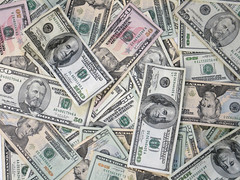 | 11 |
| 6716935841 | standard of living | During the 1920s, the standard of living (physical things that make life more enjoyable) improved significantly for most Americans. Indoor plumbing and central heating became commonplace. By 1930, two-thirds of all homes had electricity. (p. 477) |  | 12 |
| 6716935842 | scientific management | A system of industrial management created and promoted in the early twentieth century by Frederick W. Taylor. It emphasized time-and-motion studies to improve factory performance. (p. 478) |  | 13 |
| 6716935843 | Henry Ford | By 1914, he had perfected a system for manufacturing automobiles using an assembly line. (p. 478) |  | 14 |
| 6716935844 | assembly line | In a factory, an arrangement where a product is moved from worker to worker, with each person performing a single task in the making of the product. (p. 478) |  | 15 |
| 6716935845 | open shop | A company with a labor agreement under which union membership cannot be required as a condition of employment. (p. 479) |  | 16 |
| 6716935846 | welfare capitalism | An approach to labor relations in which companies voluntarily offer their employees improved benefits and higher wages in order to reduce their interest in joining unions. (p. 479) |  | 17 |
| 6716935847 | consumerism | In the 1920s, consumerism was fueled by: homes with electricity, electrical appliances, affordable automobiles, increased advertising, and purchasing on credit. (p. 478) |  | 18 |
| 6716935848 | electric appliances | In the 1920s, refrigerators, stoves, vacuum cleaners, and washing machines became very popular as prices dropped due to reduced production costs and as electrical power to run them became more available. (p. 478) |  | 19 |
| 6716935849 | impact of the automobile | In the 1920s, this product had the largest impact on society. It caused a growth of cities and suburbs, and workers no longer needed to live near their factories. It provided job opportunities and was a much more efficient way of transportation. (p. 479) |  | 20 |
| 6716935850 | jazz age | Name for the 1920s, because of the popularity of jazz, a new type of American music that combined African rhythms, blues, and ragtime. (p. 480) |  | 21 |
| 6716935851 | radio, phonographs | Allowed mostly young people to listen to recorded music. The first radio station went on the air in 1920. Previously, newspapers had been the only form of mass communications. (p. 480) |  | 22 |
| 6716935852 | national networks | Nationwide radio networks enabled people all over the country to listen to the same news, sports, soap operas, quiz shows and comedies. (p. 480) |  | 23 |
| 6716935853 | Hollywood | The movie industry was centered here. The industry grew rapidly in the 1920s. Sound was introduced to movies in 1927. By 1929 over 80 million movie tickets were sold each week. (p. 480) |  | 24 |
| 6716935854 | movie stars | In the 1920s, sexy and glamorous movie stars such as Greta Garbo and Rudolf Valentino we idolized by millions. (p. 480) |  | 25 |
| 6716935855 | popular heroes | Americans shifted role models from politicians to sports heroes and movie stars. Sports heros included Jack Dempsey, Jim Thorpe, Babe Ruth, and Bobby Jones. However, the most celebrated was Charles Lindbergh who flew from Long Island to Paris in 1927. (p. 480) |  | 26 |
| 6716935856 | movie palaces | Ornate, lavish single-screen movie theaters that emerged in the 1910s in the United States. (p. 480) |  | 27 |
| 6716935857 | role of women | In the 1920s, the traditional separation of labor between men and women continued. Most middle-class women expected to spend their lives as homemakers and mothers. (p. 480) |  | 28 |
| 6716935858 | Sigmund Freud | Austrian psychiatrist who originated psychoanalysis. (p. 481) | 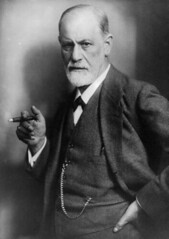 | 29 |
| 6716935859 | morals and fashions | In the 1920s, movies, novels, automobiles, and new dances encouraged greater promiscuity. Young women shocked their elders by wearing dresses hemmed at the knee (flapper look), cutting their hair short, smoking cigarettes, and driving cars. (p. 481) |  | 30 |
| 6716935860 | Margaret Sanger | She founded American Birth Control League; which became Planned Parenthood in the 1940s. She advocated birth control awareness. (p. 481) |  | 31 |
| 6716935861 | high school education | In the 1920s, universal high school education became a new American goal. By 1930, the number of high school graduates had doubled to over 25 percent of school-age adults. (p. 481) |  | 32 |
| 6716935862 | consumer culture | In the 1920s, many writers were disillusioned with the materialism of the business oriented culture. (p. 481) |  | 33 |
| 6716935863 | Frederick Lewis Allen | In 1931, he wrote "Only Yesterday", a popular history book that portrayed the 1920s as a period of narrow-minded materialism. (p. 489) |  | 34 |
| 6716935864 | Only Yesterday | A 1931 history book that portrayed the 1920s as a period of narrow-minded materialism in which the middle class abandoned Progressive reforms, embraced conservative Republican policies, and either supported or condoned nativism, racism, and fundamentalism. (p. 489) |  | 35 |
| 6716935865 | Gertrude Stein | American writer of experimental novels, poetry, essays, operas, and plays. She called the disillusioned writers of the 1920s, a "lost generation". (p. 481) |  | 36 |
| 6716935866 | Lost Generation | Group of writers in 1920s, who shared the belief that they were lost in a greedy and materialistic world that lacked moral values. Many of them moved to Europe. (p. 481) | 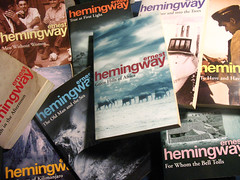 | 37 |
| 6716935867 | F. Scott Fitzgerald | A novelist and chronicler of the jazz age. His wife, Zelda and he were the "couple" of the decade. His novel, "The Great Gatsby" is considered a masterpiece about a gangster's pursuit of an unattainable rich girl. (p. 481) |  | 38 |
| 6716935868 | Ernest Hemingway | One of the most popular writers of the 1920s, he wrote "A Farewell to Arms". (p. 481) |  | 39 |
| 6716935869 | Sinclair Lewis | American writer of the 1920s. He became the first American to receive a Nobel Prize in Literature. (p. 481) |  | 40 |
| 6716935870 | Ezra Pound | Expatriate American poet and critic of the 1920s. (p. 481) |  | 41 |
| 6716935871 | T. S. Eliot | Thomas Stearns Eliot was an essayist, publisher, playwright, literary and social critic, and one of the twentieth century's major poets. (p. 481) |  | 42 |
| 6716935872 | Eugene O'Neill | An American playwright of the 1920s. (p. 481) |  | 43 |
| 6716935873 | industrial design | The fusion of art and technology during the 1920s and 1930s created the new profession of industrial design. (p. 482) |  | 44 |
| 6716935874 | Art Deco | The 1920's modernistic art style that captured modernistic simplification of forms, while using machine age materials. (p. 482) |  | 45 |
| 6716935875 | Edward Hopper | A twentieth-century American painter, whose stark realistic paintings often convey a mood of solitude and isolation in common urban settings. (p. 482) |  | 46 |
| 6716935876 | regional artists | Thomas Benton and Grant Wood celebrated the rural people and scenes of the American heartland. (p. 482) |  | 47 |
| 6716935877 | Grant Wood | An American Regional artist who focused on rural scenes in Iowa. He is best known for his painting "American Gothic". (p. 482) |  | 48 |
| 6716935878 | George Gershwin | He was the son of Russian-Jewish immigrants. He blended jazz and classical music to produce "Rhapsody in Blue" and folk opera "Porgy and Bess". (p. 482) |  | 49 |
| 6716935879 | northern migration | By 1930, almost 20 percent of African Americans out of the Southern United States to the North. (p. 482) |  | 50 |
| 6716935880 | Harlem Renaissance | The largest African American community of almost 200,000 developed in the Harlem section of New York City. It became famous in the 1920s for its talented actors, artists, musicians, and writers. This term describes this period. (p. 483) |  | 51 |
| 6716935881 | Countee Cullen | A leading 1920s African American poet from Harlem. (p. 483) |  | 52 |
| 6716935882 | Langston Hughes | A leading 1920s African American poet from Harlem. (p. 483) |  | 53 |
| 6716935883 | James Weldon Johnson | A leading 1920s African American author from Harlem. (p. 483) |  | 54 |
| 6716935884 | Claude McKay | A leading 1920s African American poet from Harlem. (p. 483) |  | 55 |
| 6716935885 | Duke Ellington | A leading 1920s African American jazz great from Harlem. (p. 483) |  | 56 |
| 6716935886 | Louis Armstrong | A leading 1920s African American jazz trumpeter from Harlem. (p. 483) |  | 57 |
| 6716935887 | Bessie Smith | A leading 1920s African American blues singer from Harlem. (p. 483) |  | 58 |
| 6716935888 | Paul Robeson | A leading 1920s African American singer from Harlem. (p. 483) |  | 59 |
| 6716935889 | Back to Africa movement | Encouraged those of African descent to return to Africa. (p. 483) |  | 60 |
| 6716935890 | Marcus Garvey | African American leader during the 1920s who founded the Universal Negro Improvement Association and advocated mass migration of African Americans back to Africa. He was deported to Jamaica and his movement collapsed. (p. 483) | 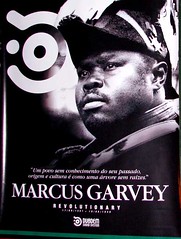 | 61 |
| 6716935891 | black pride | Many African American leaders agreed with Marcus Garvey's ideas on racial pride and self-respect. This influenced another generation in the 1960s. (p. 483) |  | 62 |
| 6716935892 | modernism | They took a historical and critical view of certain Bible passages and believed that they could accept Darwin's theory of evolution without abandoning their religion. (p. 483) |  | 63 |
| 6716935893 | fundamentalism | A Protestant Christian movement emphasizing the literal truth of the Bible and opposing religious modernism (p. 483) |  | 64 |
| 6716935894 | revivalists: Billy Sunday, Aimee Semple McPherson | Leading radio evangelists such as Billy Sunday and Aimee Semple McPherson preached a fundamentalist message. (p 484) |  | 65 |
| 6716935895 | Scopes trial | A 1925 Tennessee court case in which Clarence Darrow and William Jennings Bryan argued the issue of teaching evolution in public schools. (p. 484) |  | 66 |
| 6716935896 | Clarence Darrow | A famed criminal defense lawyer, he defended John Scopes, a teacher who taught evolution in his Tennessee classroom. (p. 484) |  | 67 |
| 6716935897 | Volstead Act | The federal law of 1919 that established criminal penalties for manufacturing, transporting, or possessing alcohol. (p. 484) |  | 68 |
| 6716935898 | rural vs. urban | In the 1920s, in the urban areas it was common to ignore the law and drink liquor in clubs or bars known as speakeasies. (p 484) |  | 69 |
| 6716935899 | organized crime | In the 1920s, organized crime became big business, as bootleggers transported and sold liquor to many customers. (p. 484) |  | 70 |
| 6716935900 | Al Capone | A famous Chicago gangster who fought for control of the lucrative bootlegging (liquor) trade. (p. 484) |  | 71 |
| 6716935901 | 21st Amendment | The amendment which ended the prohibition of alcohol in the United States, it repealed the 18th amendment. (p. 485) |  | 72 |
| 6716935902 | quota laws of 1921 and 1924 | Laws passed to limit immigration. (p. 485) |  | 73 |
| 6716935903 | Sacco and Vanzetti Case | A criminal case of two Italian men who were convicted of murder in 1921. They were prosecuted because they were Italians, atheists, and anarchists. After 6 years of appeals they were executed in 1927. (p. 485) |  | 74 |
| 6716935904 | Ku Klux Klan | A secret society created by white southerners in 1866. They used terror and violence to keep African Americans from exercising their civil rights. (p. 486) |  | 75 |
| 6716935905 | Birth of a Nation | A popular silent film, which portrayed the KKK during Reconstruction as heros. (p. 486) |  | 76 |
| 6716935906 | blacks, Catholics and Jews | The KKK directed hostility toward these groups in the North. (p. 486) |  | 77 |
| 6716935907 | foreigners and Communists | During the 1920s, widespread disillusionment with World War I, communism in the Soviet Union, and Europe's post war problems made Americans fearful of being pulled into another foreign war. (p. 486) |  | 78 |
| 6716935908 | disarmament | Republican presidents of the 1920s tried to promote peace and also to scale back defense expenditures by arranging disarmament treaties (reduction in military equipment). (p. 486) |  | 79 |
| 6716935909 | Washington Conference | A 1921 conference that placed limits on naval powers, respect of territory in the Pacific, and continued the Open Door policy in China. (p. 487) |  | 80 |
| 6716935910 | Five-Power Naval Treaty | A 1922 treaty resulting from the Washington Armaments Conference that limited to a specific ratio the carrier and battleship tonnage of each nation. The five countries involved were: United States, Great Britain, Japan, France, and Italy. (p. 487) |  | 81 |
| 6716935911 | Nine-Power China Treaty | A 1922 treaty affirming the sovereignty and territorial integrity of China as previously stated in the Open Door Policy. (p. 487) |  | 82 |
| 6716935912 | Kellogg-Briand Treaty | This treaty of 1928 renounced the use of force to achieve national ends. It was signed by Frank Kellogg of the United States and Aristide Briand of France, and most other nations. The international agreement proved ineffective. (p. 487) |  | 83 |
| 6716935913 | Latin America policy | In 1927, the United States signed an agreement with Mexico protecting U.S. interests in Mexico. (p. 487) |  | 84 |
| 6716935914 | war debts | During World War I the United States had loaned more than $10 billion to the Allies. After the war, the United States insisted that they pay back all the debt. Great Britain and France objected because they suffered much greater losses during the war than the United States. (p. 488) |  | 85 |
| 6716935915 | reparations | As part of the Treaty of Versailles, Germany was ordered to pay $30 billion in reparations to the Allies. (p. 488) |  | 86 |
| 6716935916 | Dawes Plan | A 1924 plan, created by Charles Dawes in which the United States banks would lend large sums to Germany. Germany would use the money to rebuild its economy and pay reparations to Great Britain and France. Then Great Britain and France would pay their war debts to the United States. After the 1929 stock market crash, the loans to Germany stopped. (p. 488) |  | 87 |
Period 1/2/3 - AP US History Flashcards
Terms : Hide Images
| 5108243060 | Columbian Exchange | exchanges of plants, animals, diseases, and technology transformed European and Native American ways of life |  | 0 |
| 5108243061 | John Smith | English explorer, soldier and writer; best known for his role in establishing the first permanent English colony in the New World (Jamestown) |  | 1 |
| 5108243062 | Jamestown | first permanent English settlement in North America |  | 2 |
| 5108243063 | Joint-Stock companies | business entity where different stocks can be bought and owned by shareholders | 3 | |
| 5108243064 | Conquistador | leader in the Spanish conquests of America, Mexico, and Peru in the 16th century |  | 4 |
| 5108243065 | Encomienda | dependency relation system that started in Spain during the Roman Empire; the stronger people protected the weakest in exchange for a service |  | 5 |
| 5108243066 | Great Awakening | series of religious revivals in the North American British colonies during the 17th and 18th centuries | | 6 |
| 5108243067 | Jonathan Edwards | revivalist preacher, philosopher, and Congregationalist Protestant theologian |  | 7 |
| 5108243068 | French and Indian War | War between colonists of Britian and colonists of France & Native Americans during 1754 to 1760. The purpose was to get North American lands for farming crops and securing a place to live well. |  | 8 |
| 5108243069 | Proclamation of 1793 | statement that declared the war had ended following the British victory over France in the French and Indian War | 9 | |
| 5108243070 | King George III | England's longest ruling monarch before Queen Victoria |  | 10 |
| 5108243071 | Sugar Act | British law enacted in 1764 that put a tax on sugar and molasses imported into the colonies; this law effected the manufacture of rum in New England |  | 11 |
| 5108243072 | Samuel Adams | an American statesman and founding father of the United States who opposed British taxation and helped organize the Boston Tea Party |  | 12 |
| 5108243073 | Boston Massacre | In 1770, some colonists threw snowballs at a group of British soldiers and the soldiers fired their guns, killing 5 colonists. |  | 13 |
| 5108243074 | Boston Tea Party | In 1773, a group of colonists protested the tea tax by dressing up as Native American and climbing on British ships in the Boston Harbor. They threw all the tea into the water to show they wouldn't buy tea from England. |  | 14 |
| 5108243075 | Declaration of Independence | Thomas Jefferson wrote a document stating that the 13 colonies wanted to be independent. On July 4, 1776, the Second Continental Congress accepted it. |  | 15 |
| 5108243076 | Saratoga | It was the turning point of the war for independence. After this battle, the American colonists were in an advantageous place. There were heavy British casualties. |  | 16 |
| 5108243077 | Marquis de Lafayette | a French aristocrat and military officer who fought for the United States in the American Revolutionary War |  | 17 |
| 5108243078 | Charles Cornwallis | a British Army officer and colonial administrator (1753-1762) |  | 18 |
| 5108243079 | Yorktown | 1781 battle which led to a decisive victory by a combined force of American Continental Army troops; General George Washington led this defeat against Cornwallis' troops |  | 19 |
| 5108243080 | Treaty of Paris | document that ended the Revolutionary War between Great Britain and the colonies |  | 20 |
| 5108243081 | Articles of Confederation | agreement among the thirteen colonies that served as its first constitution |  | 21 |
| 5108243082 | Bill of Rights | The first 10 amendments to the Constitution that make up the Bill of Rights | | 22 |
Flashcards
Flashcards
Flashcards
Pages

Need Help?
We hope your visit has been a productive one. If you're having any problems, or would like to give some feedback, we'd love to hear from you.
For general help, questions, and suggestions, try our dedicated support forums.
If you need to contact the Course-Notes.Org web experience team, please use our contact form.
Need Notes?
While we strive to provide the most comprehensive notes for as many high school textbooks as possible, there are certainly going to be some that we miss. Drop us a note and let us know which textbooks you need. Be sure to include which edition of the textbook you are using! If we see enough demand, we'll do whatever we can to get those notes up on the site for you!
