

AP US History Period 4 (1800-1848) Flashcards
Terms : Hide Images
| 6633614119 | Hartford Convention, 1814 | Meeting of Federalists during the War of 1812 discuss strategy to gain more power in government; viewed as unpatriotic by many; as a result, the Federalist Party was no longer a significant force in American politics |  | 0 |
| 6633614120 | Era of Good Feelings | Term used to describe the time period after the 2nd Party System in the United States after the Federalist Party fell from the national stage, leaving only the Democratic Party; associated with the presidency of James Monroe |  | 1 |
| 6633614122 | Whig Party | Political Party created in 1834 as a coalition of anti-Jackson political leaders and dedicated to internal improvements funded by the national government |  | 2 |
| 6633614125 | Nullification Crisis (1832-1833) | After SC declared the federal tariff null and void, President Jackson obtained a Force Bill to use military actions against SC; ended with a compromise to lower tariffs over an extended time; overall significance was the challenge of states to ignore federal law (later on with laws regarding slavery). |  | 3 |
| 6633614126 | John C. Calhoun | South Carolina political leader who defended slavery as a positive good and advocated the doctrine of nullification, a policy in which state could nullify federal law. |  | 4 |
| 6633614129 | Judicial Review | The power of the Supreme Court to review the constitutionality of laws passed by Congress |  | 5 |
| 6633614132 | Panic of 1819 | Financial panic that began when the Second Bank of the US tightened credit and recalled government loans after the price of cotton dropped |  | 6 |
| 6633614134 | Tariff of 1816 | First protective tariff in US history; designed primarily to help America's textile industry |  | 7 |
| 6633614135 | Tariff of Abominations 1828 | Tariff with such high rates that it set off tension between northerners and southerners over tariff issues (called the Nullification Crisis) |  | 8 |
| 6633614136 | Panic of 1837 | Economic collapse caused primarily by President Jackson's destruction of the Second Bank of the United States |  | 9 |
| 6633614143 | Utopian Communities | Idealistic reform movement based on the belief that a perfect society could be created on Earth; significant Utopian experiments were established at New Harmony, Indiana, Brook Farm, Massachusetts and the Oneida Community in New York |  | 10 |
| 6633614144 | American Colonization Society (established 1817) | Organization established to end slavery gradually by helping individual slave owners liberate their slaves and then transport the freed slaves to Africa (Liberia) |  | 11 |
| 6633614145 | William Lloyd Garrison | Radical abolitionist in Massachusetts who published the liberator, an antislavery newspaper |  | 12 |
| 6633614147 | Hudson River School 1825-1875 | The first native school of painting in the US; painted primarily landscapes; themes included deep nationalism, grandeur of nature, and transcendentalism |  | 13 |
| 6633614148 | Transcendentalism | Philosophical and literary movement that believed God existed within human being and nature; believed intuition was the highest source of knowledge; advocated for introspection by surrounding oneself with nature |  | 14 |
| 6633614149 | Ralph Waldo Emerson | Philosopher, writer, and poet who became a central figure in the Transcendalist movement in American |  | 15 |
| 6633614150 | Henry David Thoreau | Writer and naturalist; with Ralph Waldo Emerson, he was one of America's best known transcendentalists |  | 16 |
| 6633614153 | John Deere | Invented the steel plow in 1837, which revolutionized farming; the steel plow broke up soil without the soil getting stuck to the plow |  | 17 |
| 6633614155 | Erie Canal (1817-1825) | 350 mile canal built by the state of NY that stretched from Buffalo to Albany; the canal revolutionized shipping in NY and opened up new markets (evidence of the Market Revolution) |  | 18 |
| 6633614156 | National Road (1811) | AKA Cumberland Road; first significant road built in the US at the expense of the federal government; stretched from the Potomac River to the Ohio River |  | 19 |
| 6633614157 | Mason-Dixon Line | Boundary between PA and MD that marked the division between free and slave states before the Civil War |  | 20 |
| 6633614158 | Cult of Domesticity | The belief that a woman's proper role in life was found in domestic pursuits (raising children, taking care of the house); strongly believed by many throughout the 19th century |  | 21 |
| 6633614161 | War Hawks | Members of Congress from the West and South elected in 1810 who wanted war with Britain in the hopes of annexing new territory and ending British trade with the Indians of the Northwest |  | 22 |
| 6633614163 | Adams-Onis Treaty (1819) | Treaty between the U.S. and Spain that ceded Florida to the U.S |  | 23 |
| 6633614164 | Monroe Doctrine (1823) | President Monroe's unilateral declaration that the Americas would be closed to further European colonization and that the U.S. would not allow European interference in the affairs of the Western Hemisphere; in return the U.S. pledged to stay out of European conflicts and affairs; |  | 24 |
| 6633614165 | Oregon Treaty of 1846 | After years of conflict over ownership of the Pacific Northwest, the U.S. and England established the boundary at 49° latitude, essentially splitting the Oregon Country down the middle |  | 25 |
| 6633614168 | Indian Removal Act (1830) | Law that provided for the removal of all Indian tribes east of the Mississippi and the purchase of Indian lands for white resettlement |  | 26 |
| 6633614169 | Worcester v. Georgia (1832) | A Supreme Court ruling that declared a state did not have the power to enforce laws on lands that were not under state jurisdiction; John Marshall wrote that the state of Georgia did not have the power to remove Indians; this ruling was largely ignored by President Andrew Jackson |  | 27 |
| 6633614170 | Trail of Tears (1838) | Forced march of the Cherokee people from Georgia to Indian Territory in the winter; a large percentage of Cherokee died on the journey |  | 28 |
| 6633614172 | Romanticism | An artistic and intellectual movement characterized by its emphasis on emotion and individualism as well as glorification of all the past and nature, preferring the medieval rather than the classical |  | 29 |
| 6633614173 | The American System | Consisted of three mutually reinforcing parts: (1) a tariff to protect and promote American industry; (2) a national bank to foster commerce; (3) federal subsidies for roads, canals, and other "internal improvements" to develop profitable markets for agriculture; supported heavily by Henry Clay |  | 30 |
| 6633614174 | Missouri Compromise (1820) | Admitted Missouri as a slave state and Maine as a free state, maintaining the balance between slave and free states in representation in the federal government; established a geographic line that would determine whether new states (made from the western territories) would be added to the union as slave or free states |  | 31 |
| 6633614179 | Cherokee Nation v. Georgia (1831, Marshall) | "The conditions of the Indians in relation to the United States is perhaps unlike that of any two people in existence," Chief Justice John Marshall wrote, "their relation to the United States resembles that of a ward to his guardian. . .(they were a) domestic dependent nation." Established a "trust relationship" with the tribes directly under federal authority. |  | 32 |
| 6633614181 | turnpike | A road in which tolls were collected at gates set up along the road |  | 33 |
| 6633614183 | sectionalist | Person devoted to the cause of a particular section of the country (usually North or South), as opposed to the nation as a whole |  | 34 |
| 6633614186 | internal improvements | The basic public works, such as roads and canals, that create the structure for economic development. |  | 35 |
| 6633614187 | depression | In economics, a severe and often prolonged period of declining economic activity, rising unemployment, and falling wages and prices. |  | 36 |
| 6633614189 | constituents | The body of voters or supporters in a district, regarded as a group. |  | 37 |
| 6633614194 | usurpation | The act of seizing, occupying, or enjoying the place, power, or functions of someone without right. |  | 38 |
| 6633614195 | mudslinging | Malicious, unscrupulous attacks against an opponent. |  | 39 |
| 6633614197 | incumbent | The person currently holding an office. |  | 40 |
| 6633614199 | appeasement | The policy of giving in to demands of a hostile of dangerous power in hope of avoiding conflict. |  | 41 |
| 6633614202 | evangelical | Concerning religious belief, commonly Protestant, that emphasizes personal salvation, individual and voluntary religious commitment, and the authority of Scripture. |  | 42 |
| 6633614205 | prolific | Producing a large number of something. |  | 43 |
| 6633614206 | temperance | Moderation, or sometimes total abstinence, as regards drinking alcohol. |  | 44 |
| 6633614207 | nativist | One who advocates favoring native-born citizens over aliens or immigrants. |  | 45 |
| 6633614217 | polygamy | The practice or condition of having two or more spouses at one time. |  | 46 |
AP US History Dates Test Flashcards
Terms : Hide Images
| 6736245656 | 1492 | Columbus sails ocean blue. | 0 | |
| 6736245657 | 1607 | Jamestown established. | 1 | |
| 6736245658 | 1619 | First African slaves brought to North America. | 2 | |
| 6736245659 | 1754 | French and Indian War Begins | 3 | |
| 6736245660 | 1763 | French and Indian War Ends; Proclamation of 1763; End of Salutary Neglect. | 4 | |
| 6736245661 | 1776 | Declaration of Independence | 5 | |
| 6736245662 | 1781 | Battle of Yorktown; End of Revolutionary War Fighting (war not officially ended until Treaty of Paris #2 in 1783) | 6 | |
| 6736245663 | 1789 | Ratification of the Constitution | 7 | |
| 6736245664 | 1800 | Revolution of 1800; peaceful transition of power from John Adams to Thomas Jefferson | 8 | |
| 6736245665 | 1803 | Louisiana Purchase |  | 9 |
| 6736245666 | 1815 | Battle of New Orleans; Andrew Jackson. | 10 | |
| 6736245667 | 1820 | Missouri Compromise | | 11 |
| 6736245668 | 1823 | Monroe Doctrine | 12 | |
| 6736245669 | 1829 | Andrew Jackson elected - Age of the common man |  | 13 |
| 6736245670 | 1846 | Beginning of the Mexican-American War | 14 | |
| 6736245671 | 1850 | Compromise of 1850; New, more harsh fugitive slave law. | 15 | |
| 6736245672 | 1854 | Kansas-Nebraska Act; Birth of the Republican Party | 16 | |
| 6736245673 | 1860 | Election of 1860; Abraham Lincoln Elected; South Carolina Secedes | 17 | |
| 6736245674 | 1865 | Civil War Ends; Reconstruction Begins | 18 | |
| 6736245675 | 1869 | Transcontinental Railroad completed |  | 19 |
| 6736245676 | 1877 | Reconstruction Ends; Rutherford B. Hayes Elected in Compromise of 1877 | 20 | |
| 6736245677 | 1896 | Plessy v. Ferguson | 21 | |
| 6736245678 | 1898 | Spanish-American War; Beginning of American imperialism | 22 | |
| 6736245679 | 1906 | Upton Sinclair writes The Jungle | 23 | |
| 6736245680 | 1911 | Triangle Shirtwaist Factory Fire | 24 | |
| 6736245681 | 1919 | Treaty of Versailles; Race Riot in Chicago; First Red Scare | 25 | |
| 6736245682 | 1929 | Stock Market Crash; Onset of Great Depression | 26 | |
| 6736245683 | 1933 | FDR Inaugurated; Beginning of New Deal | 27 | |
| 6736245684 | 1941 | Pearl Harbor; America Enters World War II | 28 | |
| 6736245685 | 1945 | End of World War II; Dropping of Atomic Bombs | 29 | |
| 6736245686 | 1949 | Soviets get Atomic Bomb; Communist Revolution in China; NATO formed | 30 | |
| 6736245687 | 1954 | Brown v. Board of Education decided - Segregation illegal. | 31 | |
| 6736245688 | 1964 | Civil Rights Act of 1964; Gulf of Tonkin Resolution | 32 | |
| 6736245689 | 1968 | MLK Assassinated; Chicago Democratic Convention; Tet Offensive; Richard Nixon Elected ushering in a period of conservativism. | 33 | |
| 6736245690 | 1974 | Watergate Scandal | 34 | |
| 6736245691 | 1980 | Ronald Reagan Elected | 35 | |
| 6736245692 | 1991 | Operation Desert Storm; End of the Cold War | 36 | |
| 6736245693 | 2001 | 9/11 | 37 | |
| 6736245694 | 1890 | Massacre of wounded knee; Sherman Anti-Trust Act; frontier closes | 38 |
Flashcards
AP US History Period 5 (1844-1877) Flashcards
Terms : Hide Images
| 5705695927 | Popular Sovereignty | Notion that the sovereign people of a given territory should decide whether to allow slavery. Seemingly a compromise, it was largely opposed by Northern abolitionists who feared it would promote the spread of slavery to the territories. |  | 0 |
| 5705695928 | Fugitive Slave Law | Passed as part of the Compromise of 1850, it set high penalties for anyone who aided escaped slaves and compelled all law enforcement officers to participate in retrieving runaways. Strengthened the antislavery cause in the North. |  | 1 |
| 5705695929 | Uncle Tom's Cabin | Harriet Beecher Stowe's widely read novel that dramatized the horrors of slavery. It heightened Northern support for abolitions and escalated the sectional conflict. |  | 2 |
| 5705695930 | New York Draft Riots | Uprisings during the Civil War (1863), mostly of working-class Irish-Americans, in protest of the draft. Rioters were particularly incensed by the ability of the rich to hire substitutes or purchase exemptions. |  | 3 |
| 5705695932 | Emancipation Proclamation | 1863. Declared all slaves in rebelling states to be free but did not affect slavery in non-rebelling Border States. The Proclamation closed the door on possible compromise with the South and encouraged thousands of Southern slaves to flee to Union lines. |  | 4 |
| 5705695933 | Sherman's March to the Sea | 1864-1865. Union General William Tecumseh Sherman's destructive march through Georgia. An early instance of "total war", purposely targeting infrastructure and civilian property to diminish morale and undercut the Confederate War effort. |  | 5 |
| 5705695934 | Freedmans' Bureau | 1865-1872. Created to aid newly emancipated slaves by providing food, clothing, medical care, education, and legal support. Its achievements were never and depended largely on the quality of local administrators. |  | 6 |
| 5705695935 | Black Codes | 1865-1866. Laws passed throughout the South to restrict the rights of emancipated blacks, particularly with respect to negotiating labor contracts. Increased Norhterners' criticisms of President Andrew Johnson's lenient Reconstruction policies. |  | 7 |
| 5705695936 | KKK (Ku Klux Klan) | An extremist, paramilitary, right-wing secret society founded in the mid-nineteenth century and revived during the 1920s. It was anti-foreign, anti-black, anti-Jewish, anti-pacifist, anti-Communist, anti-internationalist, anti-evolutionist, and anti-bootlegger, but pro-Anglo-Saxon and pro-Protestant. Its members, cloaked in sheets to conceal their identities, terrorized freedmen and sympathetic whites throughout the South after the Civil War. By the 1890s, Klan-style violence and Democratic legislation succeeded in virtually disenfranchising all Southern blacks. |  | 8 |
| 5705695937 | Sharecropping | An agricultural system that emerged after the Civil War in which black and white farmers rented land and residences from a plantation owner in exchange for giving him a certain "share" of each year's crop. Sharecropping was the dominant form of southern agriculture after the Civil War, and landowners manipulated this system to keep tenants in perpetual debt and unable to leave their plantation. |  | 9 |
| 5705695938 | Hayes-Tilden Election | The South conceded to let Hayes win the presidency because he agreed to pull out the troops. |  | 10 |
| 5705695939 | Compromise of 1850 | Admitted California as a free state, opened New Mexico and Utah to popular sovereignty, ended the slave trade (but not slavery itself) in Washington D.C., and introduced a more stringent fugitive slave law. Widely opposed in both the North and South, it did little to settle the escalating dispute over slavery. |  | 11 |
| 5705695940 | Kansas-Nebraska Act | 1854. Proposed that the issue of slavery be decided by popular sovereignty in the Kansas and Nebraska territories, thus revoking the 1820 Missouri Compromise. Introduced by Stephen Douglass in an effort to bring Nebraska into the Union and pave the way for a northern transcontinental railroad. |  | 12 |
| 5705695942 | Homestead Act | 1862. A federal law that gave settlers 160 acres of land for about $30 if they lived on it for five years and improved it by, for instance, building a house on it. The act helped make land accessible to hundreds of thousands of westward-moving settlers, but many people also found disappointment when their land was infertile or they saw speculators grabbing up the best land. |  | 13 |
| 5705695944 | Gettysburg Address | 1863. Abraham Lincoln's oft-quoted speech, delivered at the dedication of the cemetery at Gettysburg battlefield. In the address, Lincoln framed the war as a means to uphold the values of liberty. |  | 14 |
| 5705695945 | Appomattox Court House | Site (city) where Robert E. Lee surrendered to Ulysses S. Grant in April 1865 after almost a year of brutal fighting throughout Virginia in the "Wilderness Campaign". |  | 15 |
| 5705695946 | 10% Reconstruction Plan | 1863. Introduced by President Lincoln, it proposed that a state be readmitted to the Union once 10 percent of its voters had pledged loyalty to the United States and promised to honor emancipation of slaves. |  | 16 |
| 5705695947 | 13th, 14th, 15th Amendments (Reconstruction Amendments) | 13th: Abolished slavery except for criminal punishment. 14th: Gave equal rights and government protection to all men. 15th: Secured suffrage for men. |  | 17 |
| 5705695948 | Radical Republicans | Most liberal part of the Republican Party. Desired political, economic, and social equality for African Americans. Wanted harsh punishment for the South after the Civil War. Became much more powerful after Andrew Johnson's impeachment. |  | 18 |
| 5705695950 | Election of Lincoln | Angered many people in the south who owned slaves because he wanted to end slavery. Won the election of 1860 but did not win the popular vote. South Carolina was happy at the outcome of the election because now it had a reason to secede.11 states in the south seceded and made themselves the Confederacy after the election. |  | 19 |
| 5705695951 | Abolitionist Movement | The movement to end the practice of slavery within the entirety of the United States. |  | 20 |
| 5705695952 | Anaconda Plan | Union war plan by Winfield Scott, called for blockade of southern coast, capture of Richmond, capture of the Mississippi River, and to take an army through heart of south. |  | 21 |
| 5705695953 | The American Party (The Know-Nothing Party) | (1840s-1850s) This political party carried anti-immigrant sentiments against the Catholic and the Irish and saw some electoral success. |  | 22 |
| 5705695954 | Wilmot Proviso | (1846) Proposal to prohibit slavery in any land acquired in the Mexican War. Never passed by both houses of Congress but helped fan the flame of sectional tension. |  | 23 |
| 5705695955 | Free-Soil Party | (1848) Political party dedicated to stopping the expansion of slavery into new territories. |  | 24 |
| 5705695956 | Treaty of Guadalupe Hidalgo | (1848) The Mexican government gave up the area of Texas and offered to sell the provinces of California and New Mexico as a result of its defeat in the Mexican-American War. |  | 25 |
| 5705695959 | Treaty of Fort Laramie | (1851) The US government and the Plains Indians came to an agreement stating that the Indians would become confined to the Black Hills reservation in exchange for no more land being taken. In the future, this treaty was violated once gold was discovered in the Black Hills. |  | 26 |
| 5705695960 | Gadsden Purchase | (1853) Agreement w/ Mexico that gave the US parts of present-day New Mexico & Arizona in exchange for $10 million; all but completed the continental expansion envisioned by those who believed in Manifest Destiny. |  | 27 |
| 5705695961 | Ostend Manifesto | (1854) A declaration issued from Ostend, Belgium, by the U.S. ministers to England, France, and Spain, stating that the U.S. would be justified in seizing Cuba if Spain did not sell it to the U.S. |  | 28 |
| 5705695963 | Bleeding Kansas | (1856-1861) A sequence of violent events involving abolitionists and pro-Slavery elements that took place in Kansas-Nebraska Territory. The dispute further strained the relations of the North and South, making civil war imminent. |  | 29 |
| 5705695964 | Dred Scott v. Sanford | (1857) Supreme Court case that decided US Congress did not have the power to prohibit slavery in federal territories and slaves, as private property, could not be taken away without due process. Invalidated the Missouri Compromise. |  | 30 |
| 5705695965 | John Brown's Raid on Harper's Ferry | (1859) John Brown led a raid on Harper's Ferry. He hoped to start a rebellion against slaveholders by arming enslaved African Americans. Brown was quickly defeated by citizens and federal troops. Brown became a villain to southerners who now thought northerners would use violence to end slavery as well as a martyr to some northerners who saw Brown as someone who sacrificed himself for the ideal of freedom for all. |  | 31 |
| 5705695966 | Election of 1860 | (1860) The United States presidential election of 1860 set the stage for the American Civil War. Hardly more than a month following Lincoln's victory came declarations of secession by South Carolina and other states, which were rejected as illegal by outgoing President James Buchanan and President-elect Lincoln. |  | 32 |
| 5705695969 | The Sand Creek Massacre | (1864) US officials force the Cheyenne warriors to give up claims that had been promised to them. In retaliation, Chief Black Kettle led Cheyenne warriors in several raids on mining camps and local settlements. US forces responded by surprising 500 Cheyenne at Sand Creek -massacre left 270 Natives, mostly women and children, dead. |  | 33 |
| 5705695971 | Civil Rights Act of 1867 | (1867) Banned discrimination in public accommodations, prohibited discrimination in any federally assisted program, outlawed discrimination in most employment; enlarged federal powers to protect voting rights and to speed school desegregation. |  | 34 |
| 5705696103 | Thirteenth Amendment | (1865) The constitutional amendment ratified after the Civil War that forbade slavery and involuntary servitude. | 35 | |
| 5705695972 | Fourteenth Amendment | (1868) Provided equal protection of the law to freed slaves. Representation for any state that withheld voting from African Americans would be reduced. |  | 36 |
| 5705695973 | Fifteenth Amendment | (1870) Prohibited any state from denying citizens the right to vote on the grounds of race, color, or previous condition of servitude. |  | 37 |
| 5705695974 | Compromise of 1877 | (1877) It withdrew federal soldiers from their remaining position in the South, enacted federal legislation that would spur industrialization in the South, appointed Democrats to patronage positions in the south, appointed a Democrat to the president's cabinet, and allowed Rutherford B. Hayes to win the election. Marked the end of reconstruction. |  | 38 |
| 5705695975 | Manifest Destiny | A notion held by a nineteenth-century Americans that the United States was destined to rule the continent, from the Atlantic the Pacific. | 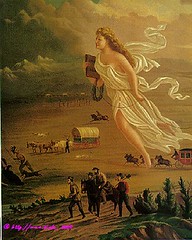 | 39 |
| 5705695976 | Louis O'Sullivan | Coined the term Manifest Destiny in a newspaper article. | | 40 |
| 5705695977 | Texas Annexation | 1845. Originally refused in 1837, as the U.S. Government believed that the annexation would lead to war with Mexico. Texas remained a sovereign nation. Annexed via a joint resolution through Congress, supported by President-elect Polk, and approved in 1845. Land from the Republic of Texas later became parts of NM, CO, OK, KS, and WY. |  | 41 |
| 5705695978 | "Fifty-Four Forty or Fight" | The phrase used in James K Polk's 1844 presidential election dealing with the Oregon Territory. Polk's campaign used the phrase as a rallying cry for the United States to obtain all of Oregon Territory, including land claimed by the English, up through Northern Canada. |  | 42 |
| 5705695979 | Oregon Trail | 2000 mile long path along which thousands of Americans journeyed to the Willamette Valley in the 1840's. | 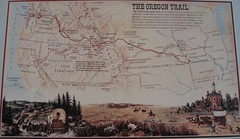 | 43 |
| 5705695980 | Mountain Men | Fur trappers of the northwest who paved the way for continuous settlement of the great west |  | 44 |
| 5705695981 | California Gold Rush | 1849. Gold discovered in California attracted a rush of people all over the country and world to San Francisco; arrival of the Chinese; increased pressure on federal government to establish a stable government |  | 45 |
| 5705695982 | Mexican American War | 1846 - 1848. President Polk declared war on Mexico over the dispute of land in Texas. At the end, American ended up with 55% of Mexico's land, called the Mexican Cession. |  | 46 |
| 5705695988 | Republican Party | 1854. Established by anti-slavery Whigs and Democrats, "free-soilers" and reformers from the Northwest met and formed party in order to keep slavery out of the territories. |  | 47 |
| 5705695989 | Stephen A. Douglas | Senator from Illinois who ran for president against Abraham Lincoln and was a leading voice in the debates over slavery and its expansion before the Civil War. Wrote the Kansas-Nebraska Act and the Freeport Doctrine. |  | 48 |
| 5705695990 | Freeport Doctrine | Stated that exclusion of slavery in a territory (where it was legal) could be accomplished by the refusal of the voters to enact any laws that would protect slave property. Stated by Stephen Douglass during the Lincoln-Douglass debates, eventually contributed to his loss in the 1860 presidential election as Democrats believed he had walked back the gains made with the Dred Scott v. Sanford decision. |  | 49 |
| 5705695991 | Abraham Lincoln | 16th President of the United States saved the Union during the Civil War and emancipated the slaves; was assassinated by Booth (1809-1865) | | 50 |
| 5705695992 | secession | Formal withdrawal of states or regions from a nation |  | 51 |
| 5705695931 | habeas corpus | Petition requiring law enforcement officers to present detained individuals before the court to examine the legality of the arrest. Protects individuals from arbitrary state action. Suspended by Lincoln during the Civil War. |  | 52 |
| 5705695995 | sectionalism | Term used to describe the growing differences between the regions of the United States, especially the North and South, leading up to the Civil War. | | 53 |
| 5705695997 | Robert E. Lee | Confederate general who had opposed secession but did not believe the Union should be held together by force. Military genius whose aggressiveness made him a fearsome opponent throughout the Civil War. |  | 54 |
| 5705695998 | Fort Sumter | Federal fort in the harbor of Charleston, South Carolina; the confederate attack on the fort marked the start of the Civil War. |  | 55 |
| 5705695999 | Battle of Antietam | A battle near a sluggish little creek, it proved to be the bloodiest single day battle in American History with over 26,000 lives lost in that single day. Prevented an Confederate invasion of Maryland. |  | 56 |
| 5705696000 | Battle of Vicksburg | Grant besieged the city from May 18 to July 4, 1863, until it surrendered, yielding command of the Mississippi River to the Union effectively splitting the South in two. |  | 57 |
| 5705696001 | Battle of Gettysburg | A large battle in the American Civil War, took place in southern Pennsylvania from July 1 to July 3, 1863. Union General George G. Meade led an army of about 90,000 men to victory against General Robert E. Lee's Confederate army of about 75,000. Proved to be a significant turning point in the war because of the loss of about 1/3 of Lee's army. |  | 58 |
| 5705696003 | Ulysses S. Grant | An American general and the eighteenth President of the United States (1869-1877). He achieved international fame as the leading Union general in the American Civil War. |  | 59 |
| 5705696004 | William Tecumseh Sherman | Union General who destroyed South during "march to the sea" from Atlanta to Savannah; example of total war and "scorched-earth" military tactics. |  | 60 |
| 5705696005 | Thomas "Stonewall" Jackson | He was a confederate general who was known for his fearlessness in leading rapid marches, bold flanking movements, and furious assaults. He earned his nickname at the battle of first bull run for standing courageously against union fire. During the battle of Chancellorsville his own men accidently mortally wounded him. |  | 61 |
| 5705696007 | martial law | Rule by the army instead of the elected government (such as in the South as a result of the Military Reconstruction Act) |  | 62 |
| 5705696008 | emergency powers | Wide-ranging powers a president may exercise during times of crisis or those powers permitted the president by Congress for a limited time. |  | 63 |
| 5705696013 | Radical Reconstruction | Name given to the period when Congress, which was controlled by Republicans, took over Reconstruction efforts. When southerners balked at some of the more moderate reforms proposed, more radical republicans started to gain more power and pass more legislation. |  | 64 |
| 5705696015 | Military Reconstruction Act | 1867. Divided the South into five districts and placed them under military rule; required Southern States to ratify the 14th amendment; guaranteed freedmen the right to vote in convention to write new state constitutions | | 65 |
| 5705696017 | Freedmen's Bureau | 1865. Organization (turned government agency) run by the army to care for and protect southern Blacks after the Civil War, sometimes including settling them on confiscated confederate lands. |  | 66 |
| 5705696019 | Election of 1876 | Ended reconstruction because neither candidate had an electoral majority. The Democrat Sam Tilden loses the election to Rutherford B Hayes, Republican, was elected, and then ended reconstruction as he secretly promised. | | 67 |
| 5705696021 | carpetbagger | A northerner who went to the South immediately after the Civil War; especially one who tried to gain political advantage or other advantages from the disorganized situation in southern states (as viewed from the southern perspective). |  | 68 |
| 5705696022 | scalawag | A derogatory term for southerners who were working with the North to buy up land from desperate southerners; sometimes used in a general way by southerners criticizing other southerners who had northern sympathies. |  | 69 |
| 5705696028 | Nat Turner | A black preacher who in 1831 led a slave revolt Virginia that killed 60 whites. 100+ blacks were executed as a result. The rebellion was significant as it worried southern whites that larger slave rebellions were possible and therefore stricter rules were needed. |  | 70 |
| 5705696029 | Sojourner Truth | A freed black woman who became a leader in the fight for black emancipation and women's rights. |  | 71 |
| 5705696030 | Frederick Douglass | An escaped slave who spoke publicly for the abolitionist cause. He wrote his autobiography, depicting the harsh realities of Southern slavery. He also looked to politics to help abolish slavery. |  | 72 |
| 5705696032 | Cotton Kingdom | Areas in the south where cotton farming developed because of the high demand for cotton and soon dominated the economy. |  | 73 |
| 5705696033 | Gag Resolution | Strict rule passed by pro-southern Congressmen in 1836 to prohibit all discussion of slavery in the House of Representatives |  | 74 |
| 5705696034 | American Colonization Society | Created in 1817 and supported by some blacks and whites, its purpose was to transport African Americans back to Africa once they had been freed from slavery. Idea was based on the idea that whites and blacks could not live as equals in America, even if slavery were abolished. |  | 75 |
| 5705696038 | James K. Polk | Democratic president after John Tyler who was best known for policies that promoted Manifest Destiny and expansionism. | | 76 |
| 5705696041 | John C. Fremont | An American military officer, explorer, the first candidate of the Republican Party for the office of President of the United States (1856), and the first presidential candidate of a major party to run on a platform in opposition to slavery. |  | 77 |
| 5705696045 | Bear Flag Revolt | (1846) a revolt that took place during the Mexican-American War when 500 Americans (Anglos) in Mexican California took the city of Sonoma, CA in the spirit of Manifest Destiny and declared California to be an independent nation. |  | 78 |
| 5705696048 | Liberty Party | A former political party in the United States; formed in 1839 to oppose the practice of slavery; merged with the Free Soil Party in 1848. |  | 79 |
| 5705696052 | John C. Calhoun | Senator who argued for states' rights for the South. He asked for slavery to be left alone, slaves to be returned to the South, and state balance to be kept intact. |  | 80 |
| 5705696056 | William H. Seward | Congressman of the "Young Guard" who fiercely opposed slavery and argued that Americans should follow a "higher law" (God's law) over the Constitution when it came to the issue of slavery. |  | 81 |
| 5705696057 | Henry Clay | Known as the "Great Compromiser"; senator who pushed for compromise between the North and South and worked with Stephen Douglas; major figure in the passing of both the Missouri Compromise (1820) and Compromise of 1850. | | 82 |
| 5705696061 | Underground Railroad | Secret system of safe houses along a route that led many slaves to freedom in the North and eventually Canada. |  | 83 |
| 5705696063 | "Fire Eaters" | Refers to a group of extremist pro-slavery politicians from the South who urged the cessation of southern states. | | 84 |
| 5705696067 | Charles Sumner | Senator who spoke out for black freedom and racial equality post-Civil War. Publicly beaten by Preston Brooks for speaking out against the violence in Kansas, an event that marked increasing tensions between the North and South prior to the Civil War. |  | 85 |
| 5705696069 | Roger Taney | Chief Justice of the Supreme Court who wrote an opinion in the 1857 Dred Scott case that declared the Missouri compromise unconstitutional, thereby legally preventing Congress from prohibiting slavery in new territories (and made Popular Sovereignty illegal). |  | 86 |
| 5705696073 | Jefferson Davis | President of the Confederate States of America prior to and during the Civil War. |  | 87 |
| 5705696074 | self-determination | The ability of a people/government to determine their own course or future using their own free will. |  | 88 |
| 5705696075 | Pottawatomie Creek Massacre | In reaction to the sacking of Lawrence (Kansas) by pro-slavery forces, John Brown and a band of abolitionist settlers killed five pro-slavery settlers north of Pottawatomie Creek in Franklin County, Kansas. |  | 89 |
| 5705696076 | Lecompton Constitution | Supported the existence of slavery in the proposed state and protected rights of slaveholders. It was rejected by Kansas, making Kansas an eventual free state (and was a factor in spurring violence there). |  | 90 |
| 5705696080 | Lincoln-Douglas Debates | Lincoln challenged Stephen Douglas to debates during the senatorial race of 1858 which became a public referendum on the issue of slavery. |  | 91 |
| 5705696086 | Clara Barton | Launched the American Red Cross in 1881. An "angel" in the Civil War, she was a hospital nurse that treated the wounded in the field. |  | 92 |
| 5705696090 | Border States | Southern states that never chose secession and joined the Confederacy during the Civil War (Missouri, Kentucky, Maryland, and Deleware). |  | 93 |
| 5705696094 | Andrew Johnson | 17th President of the United States, A Southerner form Tennessee, as V.P. when Lincoln was killed, he became president. He opposed radical Republicans who passed Reconstruction Acts over his veto. The first U.S. president to be impeached, he survived the Senate removal by only one vote. |  | 94 |
| 5705696095 | John Wilkes Booth | Southerner who assasinated Abraham Lincoln on April 14, 1865 |  | 95 |
| 5705696098 | George B. McClellan | First commander of the Army of the Potomac; well-known for being a master at training an army; was replaced several times by President Lincoln during the Civil War because of his timidness and sometimes outright refusal to send his army into battle. |  | 96 |
| 5705696100 | Merrimack (the Virginia) v. Monitor | A battle between for first "ironclad" naval vessels, marking a new age in naval warfare. |  | 97 |
| 5705696104 | Copperheads | Nickname for Northerners who were pro-Confederacy. |  | 98 |
| 5705696105 | First Battle of Bull Run (Battle of Manassas) | (July 1861) first major conflict of the Civil War. Southern victory led to overconfidence. |  | 99 |
| 5705696111 | Thaddeus Stevens | Radical Republican congressman from Pennsylvania who defended runaway slaves in court for free and insisted on being buried in a black cemetery; hated white Southerners. Leading figure on the Joint Committee on Reconstruction and for the social equality of African Americans. | | 100 |
| 5705696114 | Wade-Davis Bill | Bill pushed by Congress in 1864 that required 50 percent of a state's voters take the oath of allegiance and demanded stronger safe-guards for emancipation than proposed in Lincoln's 10 percent plan. Pocket-vetoed by Lincoln. |  | 101 |
| 5705696115 | 10 Percent Plan | Lincoln's plan for re-admitting the Southern states into the Union: a state could be reintegrated into the Union when 10 percent of its voters in the presidential election of 1860 had taken an oath of allegiance to the United States and pledged to abide by emancipation. |  | 102 |
| 5705696119 | Civil Rights Act (1866) | A Reconstruction bill which gave which granted citizenship to African Americans and weakened the poliferation of Black Codes in the South. |  | 103 |
| 5705696123 | Redeemers | Largely former slave owners who were the bitterest opponents of the Republican program in the South. Staged a major counterrevolution to "redeem" the south by taking back southern state governments. Their foundation rested on the idea of racism and white supremacy. |  | 104 |
| 5705696126 | Ku Klux Klan | The "Invisible Empire of the South", founded in Tennessee in 1866, made up of embittered white Southerners who resented the success and ability of Black legislators. They would terrorize, mutilate, and even murder "upstart" blacks or their supporters to "keep them in their place". |  | 105 |
| 5705696129 | "Seward's Folly" | Refers to the United States' Secretary of State William Seward's decision to purchase the Alaskan territory from Russia in 1867. At the time, Seward's decision to buy the land was regarded as a terrible one by many critics in the United States. |  | 106 |
AP US History Period 6 (1865-1898) Flashcards
Terms : Hide Images
| 6212778745 | People's (Populist) Party | An agrarian-populist political party in the United States For a few years, 1892-96, it played a major role as a left-wing force in American politic Drew support from angry farmers in the West and South and operated on the left-wing of American politic Highly critical of capitalism, especially banks and railroads Allied itself with the labor movement. | 0 | |
| 6212778746 | assimilation | the process by which a person or a group's language and/or culture come to resemble those of another group | 1 | |
| 6212778748 | The Gilded Age | Means something is gold covered The late 19th century, from the 1870s to about 1900. Term derived from writer Mark Twain's 1873 The Gilded Age: A Tale of Today, which satirized an era of serious social problems masked by a thin gold gilding of economic progress. | 2 | |
| 6212778749 | Social Darwinism | Term coined in the late 19th century to describe the idea that humans, like animals and plants, compete in a struggle for existence in which natural selection results in "survival of the fittest." Provided a justification for the enormous wealth and power wielded by industrialists in the latter half of the 19th century. |  | 3 |
| 6212778750 | Gospel of Wealth | An essay written by Andrew Carnegie in June of 1889 that describes the responsibility of philanthropy by the new upper class of self-made rich. Promoted the idea of philanthropy |  | 4 |
| 6212778751 | Jane Addams | A pioneer American settlement activist/reformer, social worker, public philosopher, sociologist, author, and leader in women's suffrage and world peace. She created the first Hull House. Co-winner of 1931 Nobel Peace Prize. |  | 5 |
| 6212778752 | Plessy v. Ferguson | 1896 - Legalized segregation in publicly owned facilities on the basis of "separate but equal." |  | 6 |
| 6212778754 | free enterprise | an economic system that permits unrestricted entrepreneurial business activity associated with laissez-faire capitalism | 7 | |
| 6212778755 | trust | A set of companies managed by a small group known as trustees, who can prevent companies in the trust from competing with each other. |  | 8 |
| 6212778756 | socialist | one who believes in the ownership and control of the major means of production by the whole community rather than by individuals or corporations |  | 9 |
| 6212778757 | radical | one who believes in fundamental change in a political, economic, or social system | 10 | |
| 6212778758 | lockout | the refusal by an employer to allow employees to work unless they agree to his or her terms | 11 | |
| 6212778759 | cooperative | an organization for producing, marketing, or consuming goods in which the members share the benefits | 12 | |
| 6212778760 | anarchist | one who believes that formal, coercive government is wrong in principle | 13 | |
| 6212778761 | tenement | a multi-dwelling building, often poor or overcrowded |  | 14 |
| 6212778762 | sweatshop | a factory where employees are forced to work long hours under difficult conditions for meager wages |  | 15 |
| 6212778767 | reserve | in finance, the portion of money held back from circulation by a bank or treasury, which provides backing for its notes or loans | 16 | |
| 6212778768 | bimetallism | the legalized concurrent use of two precious metals as currency at a fixed ratio of value in US History associated with the Free Silver movement | 17 | |
| 6212778769 | Wabash v. Illinois (1886) | Declared state-passed Granger laws that regulated interstate commerce unconstitutional. | 18 | |
| 6212778770 | U. S. v. E. C. Knight Co. (1895) | Due to a narrow interpretation of the Sherman Anti-Trust Act, the Court undermined the authority of the federal government to act against monopolies. | 19 | |
| 6212778771 | Frontier Thesis | stereotypical thesis that west represented individualism, democracy, economic freedom, and starting over Turner's idea | 20 | |
| 6212778772 | Land Grants | land given by government to universities and railroad companies | 21 | |
| 6212778773 | Dawes Act | 1887 land given to individual Indians to discourage tribal mindset encouraged Indians to farm for a living instead of communally owning land | 22 | |
| 6212778774 | Bureau of Indian Affairs | designed to assimilate Native Americans (children particularly) into American culture | 23 | |
| 6212778775 | Open Range | the idea that cattle can be grazed on large tracts of public and/or private property invention of barbed wire ended this idea and drove many small cattle ranches out of business and off their small plots of land | 24 | |
| 6212778776 | Vertical Integration | Strategy to maximize profits by attempting to own every step of the manufacturing process (ex. Carnegie Steel) |  | 25 |
| 6212778777 | Horizontal Integration | Strategy to maximize profits by attempting to purchase competing companies in the same industry; monopoly-building (ex. Rockefeller's Standard Oil) | | 26 |
| 6212778778 | Knights of Labor | American labor organization in the 1880s led by Terence V. Powderly. Organized a wide range of workers, including skilled and unskilled, and had broad reform goals. | 27 | |
| 6212778779 | Haymarket Riot | 1886 Labor dispute in Chicago that ended with a bomb being thrown at police resulting in many deaths. Led to an unfavorable public opinion of organized labor especially the Knights of Labor | 28 | |
| 6212778780 | American Federation of Labor (AFL) | An organization of various trade unions that fought for specific reforms Wanted better wages, fewer hours, better working conditions Founded by Samuel Gompers | 29 | |
| 6212778781 | Homestead Steel Strikes | Violent labor conflict in Carnegie's mills Henry Frick (manager) announced pay cut Strike had to be put down by state militia | 30 | |
| 6212778782 | Urbanization | movement of people from rural communities and settlements to big cities |  | 31 |
| 6212778783 | "New Immigrants" | immigrants from southern and eastern Europe such as Poland, Italy, etc. that arrived in the US during & after the 1880s | 32 | |
| 6212778784 | Chinese Exclusion Act | First law limiting immigration based on race; effectively stopped immigration from China through the end of WWII. |  | 33 |
| 6212778785 | Political Machine | Unofficial political organization that works to win elections in order to exercise power Sometimes referred to as a shadow government Rose to power in the late 1800s because of ill-equipped local governments that failed to meet the needs of growing urban populations |  | 34 |
| 6212778786 | Tammany Hall | Political machine of New York City that was well-known for its corruption Lead by William Boss Tweed |  | 35 |
| 6212778787 | Pendelton Civil Service Act, 1883 | Standardized an exam for federal employees so that people were awarded jobs on merit rather than political affiliations Made it illegal to remove federal employees without just cause. | 36 | |
| 6212778788 | Sherman Antitrust Act | Outlawed monopolistic business practices not effective initially without a strong progressive federal government that would enforce it. | 37 | |
| 6212778789 | Grange Movement and Farmers Alliance | Grassroots movements that attempted to address the plight of farmers in the late 1800s; attempted to regulate railroads and enlarge opportunity for credit evolved into Populist movement. | 38 | |
| 6212778790 | William Jennings Bryan | Democratic presidential hopeful that was a member of the Populist Party free silver advocate "Do not crucify mankind on a cross of gold". |  | 39 |
| 6212778791 | Seward's Folly or Seward's Ice Box | Secretary of State William Seward's negotiation of the purchase of Alaska from Russia in 1867. At the time everyone thought this was a mistake to buy Alaska the "ice box" but it turned out to be the biggest bargain since the Louisiana purchase. |  | 40 |
| 6212778792 | Susan B. Anthony | Social reformer who campaigned for women's rights, the temperance, and was an abolitionist, helped form the National Woman Suffrage Association. |  | 41 |
| 6212778793 | Laissez-Faire Economics | This was an economic philosophy begun by Adam Smith in his book, Wealth of Nations, that stated that business and the economy would run best with no interference from the government. This economic thought dominated most of the time period of the Industrial Revolution. |  | 42 |
| 6212778794 | New South | After the Civil War, southerners promoted a new vision for a self-sufficient southern economy built on modern capitalist values, industrial growth, and improved transportation. In reality, this growth was fairly slow. |  | 43 |
| 6212778795 | Americanization | Process of assimilating immigrants into American culture by teaching English, American history, and citizenship. | 44 | |
| 6212778797 | Interstate Commerce Act | 1887 Created the Interstate Commerce Commission (ICC) to regulate railroads to be fairer to farmers First legislation to regulate corporations Ineffective because government failed to enforce it. | 45 | |
| 6212778798 | Andrew Carnegie | A Scottish-born American industrialist and philanthropist who founded the Carnegie Steel Company in 1892. By 1901, his company dominated the American steel industry. Great philanthropist |  | 46 |
| 6212778799 | Transcontinental Railroad | Railroad that would cross the continent and connect the East to the West Opened new markets and helped spur the Industrial Revolution Completed in 1869 at Promontory, UT |  | 47 |
| 6212778800 | Social Gospel | Late 19th-century movement Protestant movement preaching that all true Christians should be concerned with the plight of immigrants and other poor residents of American cities and should financially support efforts to improve lives of these poor urban dwellers. Settlement houses were often financed by funds raised by ministers of this movement. |  | 48 |
| 6212778801 | Standard Oil | John D. Rockefeller's company that gained a monopoly over the world petroleum market with the practice of trusts and swift elimination of competition. By 1890, owned 90% of the US oil market |  | 49 |
| 6212778802 | Carnegie Steel | A steel producing company created by Andrew Carnegie to manage business at his steel mills in the Pittsburgh, Pennsylvania area in the late 19th century Significance: had a monopoly in the steel industry. vertical integrations. |  | 50 |
| 6212778803 | John D. Rockefeller | Wealthy owner of Standard Oil Company. Considered to be a robber baron who used ruthless tactics to eliminate other businesses. Built trusts and used money to influence government. | 51 | |
| 6212778806 | Central Pacific Railroad | Started in CA & pushed eastward Eventually connected with the Union Pacific RR in Promontory Point, UT Hired Chinese laborers to complete the work | 52 | |
| 6212778807 | Union Pacific Railroad | RR that started in Omaha, NE Connected with Central Pacific RR in Promontory Point, UT Hired inexpensive Irish laborers | 53 | |
| 6212778808 | Wyoming & women's suffrage | WY was the 1st state to provide women the right to vote in 1870 Sometimes referred to as the "Land of Freedom" | 54 | |
| 6212778809 | "old immigrants" | Immigrants who had come to the US before the 1880s Mainly from England and Northern Europe | 55 | |
| 6212778810 | Yellowstone National Park | Established in 1872 by US Congress 1st national park | 56 | |
| 6212778811 | Panic of 1873 | Financial panic in which banks closed and the stock market crashed | 57 | |
| 6212778812 | US Steel | Largest steel company of the US Created by JP Morgan by merging with Carnegie Steel Largest corporation in existence at the time | 58 | |
| 6212778813 | Bessemer Process | Way to manufacture steel quickly & cheaply | 59 | |
| 6212778814 | Battle of Little Bighorn | 1876- Indian leaders Sitting Bull & Crazy Horse defeated Gen. Custer & his troops | 60 | |
| 6212778815 | Nez Perce War | Conflict between the Nez Perce & the US gov't Chief Joseph finally agrees to surrender & relocate to reservation | 61 | |
| 6212778816 | Great Railway Strike of 1877 | RR workers initiated a strike in 1877 when they were told there would be a pay cut | 62 | |
| 6212778817 | A Century of Dishonor | Written by Helen Hunt Jackson Exposed mistreatment of Native Americans by US gov't & settlers | 63 | |
| 6212778819 | JP Morgan | Banker that controlled 2/3 of RRs and eventually merged with Carnegie's steel company Formed US Steel Considered a robber baron | 64 | |
| 6212778820 | Captains of Industry | Owners & mangers of large industrial enterprises who wielded great political & economic power More positive term in contrast to "robber barons" | 65 | |
| 6212778821 | Robber Barons | Refers to industrialists or big business owners who gained huge profits by paying employees low wages Drove competition out of business by selling goods much cheaper | 66 | |
| 6212778822 | Hull House | Settlement home designed as a welfare agency for needy family Provided social & education opportunities for working class Worked to improve conditions caused by poverty Est. by Jane Addams in Chicago | 67 | |
| 6212778823 | Jacob Riis | Danish immigrant Report who pointed out terrible conditions of tenement houses Author of How the Other Half Lives (1890) | 68 | |
| 6212778824 | Wounded Knee | 1890 Last Native American battle 300 Native killed by US military | 69 | |
| 6212778825 | Ellis Island | Immigration processing center in NY Harbor | 70 | |
| 6212778826 | Pullman Strike | Pullman RR car announced pay cut American Railway Union boycotts the use of the Pullman cars US mail failed to be delivered US gov't sent injunction to end boycott SCOTUS ruled injunction was constitutional | 71 | |
| 6212778827 | Homestead Act | Gave settlers 160 acres of land if they lived on the land for 6 months and cultivated crops | 72 |
AP US History Period 6 (1865-1914) Flashcards
Terms : Hide Images
| 6130126415 | People's (Populist) Party | An agrarian-populist political party in the United States. For a few years, 1892-96, it played a major role as a left-wing force in American politics. Drew support from angry farmers in the West and South and operated on the left-wing of American politics. Highly critical of capitalism, especially banks and railroads. Allied itself with the labor movement. |  | 0 |
| 6130126416 | assimilation | the process by which a person or a group's language and/or culture come to resemble those of another group |  | 1 |
| 6130126417 | The Gilded Age | The late 19th century, from the 1870s to about 1900. Term derived from writer Mark Twain's 1873 The Gilded Age: A Tale of Today, which satirized an era of serious social problems masked by a thin gold gilding of economic progress. | 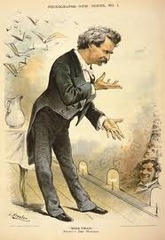 | 2 |
| 6130126418 | Social Darwinism | Term coined in the late 19th century to describe the idea that humans, like animals and plants, compete in a struggle for existence in which natural selection results in "survival of the fittest." Provided a justification for the enormous wealth and power wielded by industrialists in the latter half of the 19th century. | | 3 |
| 6130126419 | Gospel of Wealth | An essay written by Andrew Carnegie in June of 1889 that describes the responsibility of philanthropy by the new upper class of self-made rich. | | 4 |
| 6130126420 | Jane Addams | A pioneer American settlement activist/reformer, social worker, public philosopher, sociologist, author, and leader in women's suffrage and world peace. She created the first Hull House. Co-winner of 1931 Nobel Peace Prize. | | 5 |
| 6130126421 | Plessy v. Ferguson | 1896 - Legalized segregation in publicly owned facilities on the basis of "separate but equal." | | 6 |
| 6130126422 | racial segregation | the separation of humans into ethnic or racial groups in daily life. Generally applies to activities such as eating in a restaurant, drinking from a water fountain, using a public toilet, attending school, going to the movies, riding on a bus, or in the rental or purchase of a home. | 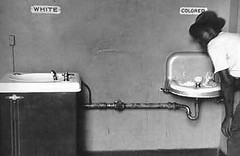 | 7 |
| 6130126424 | trust | A set of companies managed by a small group known as trustees, who can prevent companies in the trust from competing with each other. | | 8 |
| 6130126425 | socialist | one who believes in the ownership and control of the major means of production by the whole community rather than by individuals or corporations | | 9 |
| 6130126426 | radical | one who believes in fundamental change in a political, economic, or social system |  | 10 |
| 6130126427 | anarchist | one who believes that formal, coercive government is wrong in principle |  | 11 |
| 6130126428 | tenement | a multi-dwelling building, often poor or overcrowded | | 12 |
| 6130126429 | prohibition | forbidding by law the manufacture, sale, or consumption of liquor |  | 13 |
| 6130126432 | lobbyist | someone who promotes an interest or cause before a political body, often for pay |  | 14 |
| 6130126435 | Plessy v. Ferguson (1896) | Legalized racial segregation in publicly owned facilities on the basis of "separate but equal." |  | 15 |
| 6130126436 | Land Grants | land given by government to universities and railroad companies |  | 16 |
| 6130126437 | Dawes Act | land given to individual Indians to discourage tribal mindset; encouraged Indians to farm for a living instead of communally owning land |  | 17 |
| 6130126439 | Open Range | the idea that cattle can be grazed on large tracts of public and/or private property; invention of barbed wire ended this idea and drove many small cattle ranches out of business and off their small plots of land |  | 18 |
| 6130126440 | Vertical Integration | Strategy to maximize profits by attempting to own every step of the manufacturing process (ex. Carnegie Steel) | | 19 |
| 6130126441 | Horizontal Integration | Strategy to maximize profits by attempting to purchase competing companies in the same industry; monopoly-building (ex. Rockefeller's Standard Oil) | | 20 |
| 6130126442 | Knights of Labor | American labor organization in the 1880s led by Terence V. Powderly. Organized a wide range of workers, including skilled and unskilled, and had broad reform goals. |  | 21 |
| 6130126443 | Haymarket Riot | Labor dispute in Chicago that ended with a bomb being thrown at police resulting in many deaths. Led to an unfavorable public opinion of organized labor. |  | 22 |
| 6130126444 | American Federation of Labor | An organization of various trade unions that fought for specific reforms (as opposed to broad changes supported by the Knights of Labor). |  | 23 |
| 6130126445 | Homestead and Pullman Strikes | Industrial lockouts and strikes that showed battle between corporations and labor unions. Ended with government intervention on the side of big business. |  | 24 |
| 6130126446 | Urbanization | movement of people from rural communities and settlements to big cities | | 25 |
| 6130126447 | "New Immigrants" | immigrants from southern and eastern Europe such as Poland, Italy, etc. that arrived in the US in the latter half of the 19th century |  | 26 |
| 6130126448 | Chinese Exclusion Act | First law limiting immigration based on race; effectively stopped immigration from China through the end of WWII. | | 27 |
| 6130126449 | Political Machine | Unofficial political organization that works to win elections in order to exercise power; sometimes referred to as a shadow government; rose to power in the late 1800s because of ill-equipped local governments that failed to meet the needs of growing urban populations | | 28 |
| 6130126450 | Tammany Hall | Political machine of New York City that was well-known for its corruption; lead by William Boss Tweed | | 29 |
| 6130126453 | Grange Movement and Farmers Alliance | Grassroots movements that attempted to address the plight of farmers in the late 1800s; attempted to regulate railroads and enlarge opportunity for credit; evolved into Populist movement. |  | 30 |
| 6130126454 | William Jennings Bryan | Democratic presidential hopeful that was a member of the Populist Party; free silver advocate; "Do not crucify mankind on a cross of gold". | | 31 |
| 6130126457 | New South | After the Civil War, southerners promoted a new vision for a self-sufficient southern economy built on modern capitalist values, industrial growth, and improved transportation. In reality, this growth was fairly slow. | | 32 |
| 6130126458 | Americanization | Process of assimilating immigrants into American culture by teaching English, American history, and citizenship. |  | 33 |
| 6130126459 | middle class | a social class made up of skilled workers, professionals, business people, and wealthy farmers |  | 34 |
| 6130126461 | Andrew Carnegie | A Scottish-born American industrialist and philanthropist who founded the Carnegie Steel Company in 1892. By 1901, his company dominated the American steel industry. | | 35 |
| 6130126462 | transcontinental railroads | a railroad that would cross the continent and connect the East to the West; opened new markets and helped spur the Industrial Revolution | | 36 |
| 6130126463 | Social Gospel | Late 19th-century movement Protestant movement preaching that all true Christians should be concerned with the plight of immigrants and other poor residents of American cities and should financially support efforts to improve lives of these poor urban dwellers. Settlement houses were often financed by funds raised by ministers of this movement. | | 37 |
| 6130126464 | Standard Oil | John D. Rockefeller's company that gained a monopoly over the world petroleum market with the practice of trusts and swift elimination of competition. | | 38 |
| 6130126465 | Carnegie Steel | A steel producing company created by Andrew Carnegie to manage business at his steel mills in the Pittsburgh, Pennsylvania area in the late 19th century. Significance: had a monopoly in the steel industry. vertical integrations. | | 39 |
| 6130126466 | John D. Rockefeller | Wealthy owner of Standard Oil Company. Considered to be a robber baron who used ruthless tactics to eliminate other businesses. Built trusts and used money to influence government. | | 40 |
| 6130126467 | Industrial Revolution | Period characterized by the rapid social and economic changes in manufacturing and agriculture that occurred in England during the late 18th century and rapidly diffused to other parts of the developed world. In the US, this occurred during the period roughly 1825-1925. |  | 41 |
AP US History Period 5 Flashcards
From back of chapters 1-30 in Kaplan AP US History 2010
Terms : Hide Images
| 6097741923 | peculiar institution | ..., southern euphemism for slavery | 0 | |
| 6097741924 | John C. Calhoun | ..., South Carolina Senator - advocate for state's rights, limited government, and nullification | 1 | |
| 6097741925 | Harriet Tubman | ..., United States abolitionist born a slave on a plantation in Maryland and became a famous conductor on the Underground Railroad leading other slaves to freedom in the North (1820-1913) | 2 | |
| 6097741926 | Sojourner Truth | ..., United States abolitionist and feminist who was freed from slavery and became a leading advocate of the abolition of slavery and for the rights of women (1797-1883) | 3 | |
| 6097741927 | Fredrick Douglas | ..., former slave + abolitionist, stood up for his beliefs, fought for womens + blacks rights, runaway slave, newspaper-the north star | 4 | |
| 6097741928 | Sarah and Angelina Grimke | ..., Quaker sisters from South Carolina who came north and became active in the abolitionist movement; Angelina married Theodore Weld, a leading abolitionist and Sarah wrote and lectured on a variety of reforms including women's rights and abolition. | 5 | |
| 6097741929 | Nat Turner's Rebellion | ..., Rebellion in which Nat Turner led a group of slaves through Virginia in an unsuccessful attempt to overthrow and kill planter families | 6 | |
| 6097741930 | Declaration of Sentiments | ..., declared that all "people are created equal"; used the Declaration of Independence to argue for women's rights | 7 | |
| 6097741931 | Underground Railroad | ..., abolitionists secret aid to escaping slaves | 8 | |
| 6097741932 | James K. Polk | ..., president in March 1845. wanted to settle oregon boundary dispute with britain. wanted to aquire California. wanted to incorperate Texas into union. | 9 | |
| 6097741933 | Wilmot Proviso | ..., Bill that would ban slavery in the territories acquired after the War with Mexico | 10 | |
| 6097741934 | Treaty of Guadalupe Hidalgo | ..., Treaty that ended the Mexican War, granting the U.S. control of Texas, New Mexico, and California in exchange for $15 million | 11 | |
| 6097741935 | Oregon Trail | ..., pioneer trail that began in missouri and crossed the great plains into the oregon country | 12 | |
| 6097741936 | Harriet Beecher Stowe | ..., United States writer of a novel about slavery that advanced the abolitionists' cause (1811-1896) | 13 | |
| 6097741937 | John Brown | ..., abolitionist who was hanged after leading an unsuccessful raid at Harper's Ferry, Virginia (1800-1858) | 14 | |
| 6097741938 | apologists | ..., Christian thinkers who defended slavery and explained its "positive good" through Christian beliefs | 15 | |
| 6097741939 | Free-soil party | ..., Formed in 1847 - 1848, dedicated to opposing slavery in newly acquired territories such as Oregon and ceded Mexican territory. | 16 | |
| 6097741940 | 49ers | ..., People who rushed to california in 1849 for gold. | 17 | |
| 6097741941 | Republican Party | ..., the younger of two major political parties in the United States | 18 | |
| 6097741942 | Confederate States of America | ..., a republic formed in February of 1861 and composed of the eleven Southern states that seceded from the United States | 19 | |
| 6097741943 | Gadsden Purchase | ..., purchase of land from mexico in 1853 that established the present U.S.-mexico boundary | 20 | |
| 6097741944 | Fugitive Slave Law | ..., Enacted by Congress in 1793 and 1850, these laws provided for the return of escaped slaves to their owners. The North was lax about enforcing the 1793 law, with irritated the South no end. The 1850 law was tougher and was aimed at eliminating the underground railroad. | 21 | |
| 6097741945 | The Compromise of 1850 | ..., Slavery becomes outlawed in Washington D.C., California is admitted as a free state, and Utah and New Mexico will determine whether slavery is allowed through popular sovereignty. Also, the Fugitive Slave Law is passed. | 22 | |
| 6097741946 | The Kansas-Nebraska Act | ..., 1854; sponsored by Senator Stephen Douglas, this would rip open the slavery debate; and create the territories of Kansas and Nebraska, opened new lands, repealed the Missouri Compromise of 1820, and allowed settlers in those territories to determine if they would allow slavery within their boundaries. | 23 | |
| 6097741947 | Dred Scott v. Sanford | ..., Supreme Court case that decided US Congress did not have the power to prohibit slavery in federal territories and slaves, as private property, could not be taken away without due process - basically slaves would remain slaves in non-slave states and slaves could not sue because they were not citizens | 24 | |
| 6097741948 | Bleeding Kansas | ..., A sequence of violent events involving abolitionists and pro-Slavery elements that took place in Kansas-Nebraska Territory. The dispute further strained the relations of the North and South, making civil war imminent. | 25 | |
| 6097741949 | Harper's Ferry | ..., John Brown's scheme to invade the South with armed slaves, backed by sponsoring, northern abolitionists; seized the federal arsenal; Brown and remnants were caught by Robert E. Lee and the US Marines; Brown was hanged | 26 | |
| 6097741950 | popular sovereignty | ..., The doctrine that stated that the people of a territory had the right to decide their own laws by voting. In the Kansas-Nebraska Act, popular sovereignty would decide whether a territory allowed slavery. | 27 | |
| 6097741951 | Robert E. Lee | ..., Confederate general who had opposed secession but did not believe the Union should be held together by force | 28 | |
| 6097741952 | Ulysses S. Grant | ..., an American general and the eighteenth President of the United States (1869-1877). He achieved international fame as the leading Union general in the American Civil War. | 29 | |
| 6097741953 | Abraham Lincoln | ..., 16th President of the United States saved the Union during the Civil War and emancipated the slaves; was assassinated by Booth (1809-1865) | 30 | |
| 6097741954 | John Wilkes Booth | ..., was an American stage actor who, as part of a conspiracy plot, assassinated Abraham Lincoln, the 16th President of the United States, at Ford's Theatre in Washington, D.C. on April 14, 1865. | 31 | |
| 6097741955 | Copperheads | ..., northern democrat who advocated making peace with the Confederacy during the Civil War | 32 | |
| 6097741956 | New York Draft Riots | ..., July 1863 just after the Battle at Gettysburg. Mobs of Irish working-class men and women roamed the streets for four days until federal troops suppressed them. They loathed the idea of being drafted to fight a war on behalf of slaves who, once freed, would compete with them for jobs. | 33 | |
| 6097741957 | Antietam | ..., the first major battle in the American Civil War to take place on Northern soil. It was the bloodiest single-day battle in American history, with almost 23,000 casualties. After this "win" for the North, Lincoln announced the Emancipation Proclamation | 34 | |
| 6097741958 | Gettysburg | ..., a small town in southern Pennsylvania, The most violent battle of the American Civil War and is frequently cited as the war's turning point, fought from July 1 - July 3, 1863. | 35 | |
| 6097741959 | Anaconda Plan | ..., Union war plan by Winfield Scott, called for blockade of southern coast, capture of Richmond, capture Mississippi R, and to take an army through heart of south | 36 | |
| 6097741960 | Emancipation Proclamation | ..., Issued by Abraham Lincoln on September 22, 1862 it declared that all slaves in the confederate states would be free | 37 | |
| 6097741961 | Thirteenth Amendment | ..., The constitutional amendment ratified after the Civil War that forbade slavery and involuntary servitude. | 38 | |
| 6097741962 | The Homestead Act of 1862 | ..., provided a settler with 160 acres of land if he promised to live and work for it at least five years, about 500,000 families took advantage of it | 39 | |
| 6097741963 | The Pacific Railway Act of 1862 | ..., This act apporved the building of a transcontinental railroad that would utterly transform the West by linking the Atlantic Ocean with the Pacific | 40 | |
| 6097741964 | writ of habeas corpus | ..., court order that the authorities show cause for why they are holding a prisoner in custody. Deters unlawful imprisonment | 41 | |
| 6097741965 | Freedmen's Bureau | ..., 1865 - Agency set up to aid former slaves in adjusting themselves to freedom. It furnished food and clothing to needy blacks and helped them get jobs | 42 | |
| 6097741966 | carpetbaggers | ..., northern whites who moved to the south and served as republican leaders during reconstruction | 43 | |
| 6097741967 | ku klux klan | ..., a secret society of white Southerners in the United States | 44 | |
| 6097741968 | redeemers | ..., Largely former slave owners who were the bitterest opponents of the Republican program in the South. Staged a major counterrevolution to "redeem" the south by taking back southern state governments. Their foundation rested on the idea of racism and white supremacy. Redeemer governments waged and agressive assault on African Americans. | 45 | |
| 6097741969 | reconstruction | ..., the period after the Civil War in the United States when the southern states were reorganized and reintegrated into the Union | 46 | |
| 6097741970 | proclamation of amnesty and reconstruction | ..., (Dec. 1863) issued by Lincoln: offered full pardon to Southerners who would take oath of allegiance to the Union and acknowledge emancipation | 47 | |
| 6097741971 | wade-davis bill | opposed 10% plan and called for more that 50% | 48 | |
| 6097741972 | 10 percent plan | ..., It was a reconstruction plan that decreed that a state could be reintegrated into the union when 10 percent of voters in the presidential election of 1860 had taken an oath of allegiance to the United States and pledged to abide by emancipation. The next step would be erection of a state gov. and then purified regime. (Lincoln) | 49 | |
| 6097741973 | civil rights bill of 1866 | ..., first congressional attempt to guarantee black rights in the south, passed over johnson's veto | 50 | |
| 6097741974 | fourteenth amendment | ..., made "all persons born or naturalized in the United States" citizens of the country | 51 | |
| 6097741975 | military reconstruction act | ..., It divided the South into five military districts that were commanded by Union generals. It was passed in 1867. It ripped the power away from the president to be commander in chief and set up a system of Martial Law | 52 | |
| 6097741976 | tenure of office act | ..., 1866 - enacted by radical congress - forbade president from removing civil officers without senatorial consent - was to prevent Johnson from removing a radical republican from his cabinet | 53 | |
| 6097741977 | fifteenth amendment | ..., The right of citizens of the United States to vote shall not be denied or abridged by the United States or by any State on account of race, color, or previous condition of servitude. | 54 | |
| 6097741978 | force acts | ..., the government banned the use of terror, force or bribery to prevent someone from voting because of their race. Other laws banned the KKK entirely and brought forth military help to enforce these laws. | 55 | |
| 6097741979 | the compromise of 1877 | ..., It withdrew federal soldiers from their remaining position in the South, enacted federal legislation that would spur industrialization in the South, appointed Democrats to patronage positions in the south, and appointed a Democrat to the president's cabinet. | 56 | |
| 6097741980 | black codes | ..., Southern laws designed to restrict the rights of the newly freed black slaves | 57 | |
| 6097741981 | sharecroppers | ..., people who rent a plot of land from another person, and farm it in exchange for a share of the crop | 58 |
AP US History Period 6 (1865-1914) Flashcards
Terms : Hide Images
| 6669107360 | People's (Populist) Party | An agrarian-populist political party in the United States. For a few years, 1892-96, it played a major role as a left-wing force in American politics. Drew support from angry farmers in the West and South and operated on the left-wing of American politics. Highly critical of capitalism, especially banks and railroads. Allied itself with the labor movement. | | 0 |
| 6669107361 | assimilation | the process by which a person or a group's language and/or culture come to resemble those of another group | | 1 |
| 6669107362 | The Gilded Age | The late 19th century, from the 1870s to about 1900. Term derived from writer Mark Twain's 1873 The Gilded Age: A Tale of Today, which satirized an era of serious social problems masked by a thin gold gilding of economic progress. | | 2 |
| 6669107363 | Social Darwinism | Term coined in the late 19th century to describe the idea that humans, like animals and plants, compete in a struggle for existence in which natural selection results in "survival of the fittest." Provided a justification for the enormous wealth and power wielded by industrialists in the latter half of the 19th century. | | 3 |
| 6669107364 | Gospel of Wealth | An essay written by Andrew Carnegie in June of 1889 that describes the responsibility of philanthropy by the new upper class of self-made rich. | | 4 |
| 6669107365 | Jane Addams | A pioneer American settlement activist/reformer, social worker, public philosopher, sociologist, author, and leader in women's suffrage and world peace. She created the first Hull House. Co-winner of 1931 Nobel Peace Prize. | | 5 |
| 6669107366 | Plessy v. Ferguson | 1896 - Legalized segregation in publicly owned facilities on the basis of "separate but equal." | | 6 |
| 6669107367 | racial segregation | the separation of humans into ethnic or racial groups in daily life. Generally applies to activities such as eating in a restaurant, drinking from a water fountain, using a public toilet, attending school, going to the movies, riding on a bus, or in the rental or purchase of a home. | | 7 |
| 6669107368 | trust | A set of companies managed by a small group known as trustees, who can prevent companies in the trust from competing with each other. | | 8 |
| 6669107372 | tenement | a multi-dwelling building, often poor or overcrowded | | 9 |
| 6669107373 | prohibition | forbidding by law the manufacture, sale, or consumption of liquor | | 10 |
| 6669107375 | Plessy v. Ferguson (1896) | Legalized racial segregation in publicly owned facilities on the basis of "separate but equal." | | 11 |
| 6669107377 | Dawes Act | land given to individual Indians to discourage tribal mindset; encouraged Indians to farm for a living instead of communally owning land | | 12 |
| 6669107379 | Vertical Integration | Strategy to maximize profits by attempting to own every step of the manufacturing process (ex. Carnegie Steel) | | 13 |
| 6669107380 | Horizontal Integration | Strategy to maximize profits by attempting to purchase competing companies in the same industry; monopoly-building (ex. Rockefeller's Standard Oil) | | 14 |
| 6669107381 | Knights of Labor | American labor organization in the 1880s led by Terence V. Powderly. Organized a wide range of workers, including skilled and unskilled, and had broad reform goals. | | 15 |
| 6669107382 | Haymarket Riot | Labor dispute in Chicago that ended with a bomb being thrown at police resulting in many deaths. Led to an unfavorable public opinion of organized labor. | | 16 |
| 6669107383 | American Federation of Labor | An organization of various trade unions that fought for specific reforms (as opposed to broad changes supported by the Knights of Labor). | | 17 |
| 6669107384 | Homestead and Pullman Strikes | Industrial lockouts and strikes that showed battle between corporations and labor unions. Ended with government intervention on the side of big business. | | 18 |
| 6669107387 | Chinese Exclusion Act | First law limiting immigration based on race; effectively stopped immigration from China through the end of WWII. | | 19 |
| 6669107388 | Political Machine | Unofficial political organization that works to win elections in order to exercise power; sometimes referred to as a shadow government; rose to power in the late 1800s because of ill-equipped local governments that failed to meet the needs of growing urban populations | | 20 |
| 6669107389 | Tammany Hall | Political machine of New York City that was well-known for its corruption; lead by William Boss Tweed | | 21 |
| 6669107390 | Grange Movement and Farmers Alliance | Grassroots movements that attempted to address the plight of farmers in the late 1800s; attempted to regulate railroads and enlarge opportunity for credit; evolved into Populist movement. | | 22 |
| 6669107391 | William Jennings Bryan | Democratic presidential hopeful that was a member of the Populist Party; free silver advocate; "Do not crucify mankind on a cross of gold". | | 23 |
| 6669107392 | New South | After the Civil War, southerners promoted a new vision for a self-sufficient southern economy built on modern capitalist values, industrial growth, and improved transportation. In reality, this growth was fairly slow. | | 24 |
| 6669107395 | Andrew Carnegie | A Scottish-born American industrialist and philanthropist who founded the Carnegie Steel Company in 1892. By 1901, his company dominated the American steel industry. | | 25 |
| 6669107396 | transcontinental railroads | a railroad that would cross the continent and connect the East to the West; opened new markets and helped spur the Industrial Revolution | | 26 |
| 6669107397 | Social Gospel | Late 19th-century movement Protestant movement preaching that all true Christians should be concerned with the plight of immigrants and other poor residents of American cities and should financially support efforts to improve lives of these poor urban dwellers. Settlement houses were often financed by funds raised by ministers of this movement. | | 27 |
| 6669107398 | Standard Oil | John D. Rockefeller's company that gained a monopoly over the world petroleum market with the practice of trusts and swift elimination of competition. | | 28 |
| 6669107399 | Carnegie Steel | A steel producing company created by Andrew Carnegie to manage business at his steel mills in the Pittsburgh, Pennsylvania area in the late 19th century. Significance: had a monopoly in the steel industry. vertical integrations. | | 29 |
| 6669107400 | John D. Rockefeller | Wealthy owner of Standard Oil Company. Considered to be a robber baron who used ruthless tactics to eliminate other businesses. Built trusts and used money to influence government. | | 30 |
| 6669107401 | Industrial Revolution | Period characterized by the rapid social and economic changes in manufacturing and agriculture that occurred in England during the late 18th century and rapidly diffused to other parts of the developed world. In the US, this occurred during the period roughly 1825-1925. | | 31 |
Flashcards
Pages

Need Help?
We hope your visit has been a productive one. If you're having any problems, or would like to give some feedback, we'd love to hear from you.
For general help, questions, and suggestions, try our dedicated support forums.
If you need to contact the Course-Notes.Org web experience team, please use our contact form.
Need Notes?
While we strive to provide the most comprehensive notes for as many high school textbooks as possible, there are certainly going to be some that we miss. Drop us a note and let us know which textbooks you need. Be sure to include which edition of the textbook you are using! If we see enough demand, we'll do whatever we can to get those notes up on the site for you!
