AP Notes, Outlines, Study Guides, Vocabulary, Practice Exams and more!

AP US History Period 2 (1607-1754) Flashcards

Important vocabulary of the colonization of North America in the 17th century.

Terms : Hide Images
7531069329Jamestown1st permanent English settlement in North America in 1607.0
7531069330John SmithA captain famous for world travel. As a young man, he took control in Jamestown. He organized the colony and saved many people from death the next winter and coined the phrase "he who shall not work, shall not eat". He also initiated attacks on Natives.1
7531069331John RolfeHe was one of the English settlers at Jamestown (and he married Pocahontas). He discovered how to successfully grow tobacco in Virginia and cure it for export, which made Virginia an economically successful colony. Eventually, he was killed in a Pequot attack.2
7531069332PocohontasAn American Indian princess who saved the life of John Smith and helped form more peaceful relations with the Powhatan when she married John Rolfe but died of smallpox in England on a visit to Rolfe's family. Her remains are still there as the English government refuses to send her remains back to North America.3
7531069333Mayflower Compact1620 - The first agreement for self-government in America. It was signed by the 41 men to set up a government for the Plymouth colony4
7531069334John WinthropAs governor of Massachusetts Bay Colony, he (1588-1649) was instrumental in forming the colony's government and shaping its legislative policy. He envisioned the colony, centered in present-day Boston, as a "city upon a hill" from which Puritans would spread religious righteousness throughout the world.5
7531069335PuritansA religious group who wanted to purify the Church of England. They came to America for religious freedom and settled Massachusetts Bay.6
7531069336PilgrimsEnglish Puritans who founded Plymouth colony in 16207
7531069337Massachusetts CharterAllowed Puritans to take a charter with them and establish their own government in the New World.8
7531069338Loss of Massachusetts CharterRevoking of Mass. Charter by King George II due to the colonists refusal to obey by the Navigation Acts leading to anti-British feeling in the New England region.9
7531069339New AmsterdamA settlement established by the Dutch near the mouth of Hudson River and the southern end of Manhattan Island as a trade port for the Dutch trade empire.10
7531069340Great Migration of Puritans1630s- 70,000 refugees left England for New World increasing population of New England.11
7531069341New YorkIt was founded by the Dutch for trade and furs and became an English Colony in 1664, when the English were determined to end Dutch trade dominance, and took over the colony by invading New Amsterdam without having to fire a shot.12
7531069342Peter StuyvesantThe governor of the Dutch colony of New Amsterdam, hated by the colonists. They surrendered the colony to the English on Sept. 8, 1664.13
7531069343House of Burgesses1619 - formed the first legislative body in colonial America. It was made up of two representatives from each town voted on by men who owned property. Later other colonies would adopt the concept creating self-governing bodies in the colonies.14
7531069344Headright systemParcels of land consisting of about 50 acres which were given to colonists who brought indentured servants into America. They were used by the Virginia Company to attract more colonists.15
7531069345Indentured servantsColonists who received free passage to North America in exchange for working without pay for a certain number of years16
7531069346Bacon's Rebellion1676 - He and other western Virginia settlers were angry at Virginia Governor Berkley for trying to appease the Doeg Indians after the Doegs attacked the western settlements. The frontiersmen formed an army, which defeated the Indians and then marched on Jamestown and burned the city. The rebellion ended suddenly when the leader died of an illness.17
7531069347King Phillip's WarUnder the leadership of Metacom, the Wampanoag destroyed colonial towns, the colonists destroyed native farms, leading to the most deadly of Indian Wars. The war was disastrous for the natives leading to few surviving the war, and those that did left New England.18
7531069348royal colonyA colony ruled by governors appointed by a king19
7531069349proprietary colonyEnglish colony in which the king gave land to proprietors in exchange for a yearly payment20
7531069350town meetingsA purely democratic form of government common in the colonies, and the most prevalent form of local government in New England. In general, the town's voting population would meet once a year to elect officers, levy taxes, and pass laws.21
7531069351Salem Witch Trials1629 outbreak of witchcraft accusations in a Puritan village marked by an atmosphere of fear, hysteria, and unfounded accusations in courts with Puritan ministers who served as judges. 19 women were executed.22
7531069352Roger WilliamsA dissenter who clashed with the Massachusetts Puritans over separation of church and state and was banished in 1636, after which he founded the colony of Rhode Island to the south.23
7531069353IntolerantNot willing to accept ways of thinking different from one's own. The expansion of colonies in New England was a direct result of Puritan intolerance as dissenters were exiled and created new settlements.24
7531069354Anne HutchinsonOne of the dissenters in Puritan Massachusetts held bible studies at her house and believed in a personal relationship with god. She moved to New Hampshire where she died along with her children from an Indian attack.25
7531069355Thomas HookerA Puritan minister who led about 100 settlers out of Massachusetts Bay to Connecticut because he believed that the governor and other officials had too much power. He wanted to set up a colony in Connecticut with strict limits on government. He wrote the first written constitution "The Fundamental Orders of Connecticut". This would become a cherished ideal of the colonial settlers that laws were written not arbitrary.26
7531069356Sir William BerkeleyThe royal governor of Virginia. Adopted policies that favored large planters and neglected the needs of recent settlers in the "backcountry." One reason was that he had fur trade deals with the natives in the region. His shortcomings led to Bacon's Rebellion27
7531069357William PennEstablished the colony of Pennsylvania as a "holy experiment". Freemen had the right to vote, provided leadership for self- government based on personal virtues and Quaker religious beliefs. His colony was religiously tolerant leading to diversity in the region.28
7531069358James OglethorpeFounded colony of Georgia as a chance for poor immigrants who were in debt to have a second chance at a comfortable life29
7531069359Lord Baltimore1694- He was the founder of Maryland, a colony which offered religious freedom, and a refuge for the persecuted Roman Catholics.30
7531069360Fundamental Orders of ConnecticutIt has the features of a written constitution, and is considered by some as the first written Constitution. A short document, but contains some principles that were later applied in creating the United States government. Government is based in the rights of an individual, and the orders spell out some of those rights, as well as how they are ensured by the government. It provides that all free men share in electing their magistrates, and uses secret, paper ballots. It states the powers of the government, and some limits within which that power is exercised.31
7531069361Halfway CovenantA Puritan church document; allowed partial membership rights to persons not yet converted into the Puritan church; It lessened the difference between the "elect" members of the church from the regular members; Women soon made up a larger portion of Puritan congregations.32
7531069362Dominion of New England1686 - The British government combined the colonies of Massachusetts, Rhode Island, New Hampshire, and Connecticut into a single province headed by a royal governor (Edmund Andros). The Dominion ended in 1692, when the colonists revolted and drove out Governor Andros.33
7531069363Acts of Trade and NavigationThree acts that regulated colonial trade: 1st act: closed the colonies to all trade except that from English ships, and required the colonists to export certain goods, such as tobacco, to only English territories, 2nd act: (1663) demanded that everything being shipped from Europe to the colonies had to pass through England so they could tax the goods. 3rd act: 1673, was a reaction to the general disregard of the first two laws; it forced duties on the coastal trade among the colonies and supplied customs officials to enforce.34
7531069364MercantilismAn economic policy under which nations sought to increase their wealth and power by obtaining large amounts of gold and silver and by selling more goods than they bought.35
7531069365Triangular Slave TradeA practice, primarily during the eighteenth century, in which European ships transported slaves from Africa to Caribbean islands, molasses from the Caribbean to Europe, and trade goods from Europe to Africa.36
7531069366Middle PassageA voyage that brought enslaved Africans across the Atlantic Ocean to North America and the West Indies. The conditions on the ships from Africa to the west led to the loss of hundreds of thousands of lives.37
7531069367Social mobilityMovement of individuals or groups from one position in a society's stratification system to another38
7531069368Ben FranklinA colonial businessman and scientist who was an example of American social mobility and individualism. He was a delegate from Pennsylvania in colonial meetings, and proposed the "Albany Plan of the Union" as a way to strengthen the colonies in the French and Indian War. He was a leading figure in the movement toward revolution, and as a diplomat to France to get help during the American Revolution39
7531069369Great Awakening(1730s and 1740s) Religious movement characterized by emotional preaching (Jonathan Edwards & George Whitefield). It established American religious precedents such as camp meetings, revivals, and a "born again" philosophy. The first cultural movement to unite the thirteen colonies. It was associated with the democratization of religion, and a challenge to existing authorities and was an influence leading to the American Revolution.40
7531069370Jonathan EdwardsA leading minister during the Great Awakening, he delivered the famous sermon "Sinners in the Hands of an Angry God" promising that evildoers would pay a price on judgement day.41
7531069371African American CultureSlave communities were rich with music, dance, basket-weaving, and pottery-making. Enslaved Africans brought them the arts and crafts skills of their various tribes.42
7531069372George WhitfieldEnglish preacher who led the Great Awakening by traveling through the colonies43
7531069378Albany Plan of Union, 1754Plan proposed by Benjamin Franklin that sought to unite the 13 colonies for trade, military, and other purposes; the plan was turned down by the colonies & the Crown.44

AP US History: American Pageant Chapter 9 Flashcards

Terms : Hide Images
7466966822AntifederalistsOpponents of the 1787 Constitution, they cast the document as antidemocratic, objected to the subordination of the states to the central government, and feared encroachment on individuals' liberties in the absence of a bill of rights.0
7466966823Articles of ConfederationFirst American constitution that established the United States as a loose confederation of states under a weak national Congress, which was not granted the power to regulate commerce or collect taxes. It was replaced by a more efficient Constitution in 1789.1
7466966824Civic VirtueWillingness on the part of citizens to sacrifice personal self-interest for the public good. Deemed a necessary component of a successful republic.2
7466966825Civil LawBody of written law enacted through legislative statutes or constitutional provisions. In countries where it prevails, judges must apply the statutes precisely as written.3
7466966826Common LawLaws that originate from court rulings and customs, as opposed to legislative statutes. The United States Constitution grew out of the Anglo-American tradition and thus provided only a general organizational framework for the new federal government.4
7466966827DisestablishedTo separate an official state church from its connection with the government. Following the Revolution, all states used this with the Anglican Church, though some New England states maintained established Congregational Churches well into the nineteenth century.5
7466966828FederalistsProponents of the 1787 Constitution, they favored a strong national government, arguing that the checks and balances in the new Constitution would safeguard the people's liberties.6
7466966829Great CompromisePopular term for the measure which reconciled the New Jersey and Virginia plans at the constitutional convention, giving states proportional representation in the House and equal representation in the Senate. This broke the stalemate at the convention and paved the way for subsequent compromises over slavery and the Electoral College.7
7466966830Land Ordinance of 1785Provided for the sale of land in the Old Northwest and earmarked the proceeds toward repaying the national debt.8
7466966831New Jersey Plan"Small-state plan" put forth at the Philadelphia convention, proposing equal representation by state, regardless of population, in a unicameral legislature. Small states feared that the more populous states would dominate the agenda under a proportional system.9
7466966832Northwest Ordinance of 1787Created a policy for administering the newly acquired land. It included a path to statehood and forbade the expansion of slavery into the territories.10
7466966833Old NorthwestTerritories acquired by the federal government from the states, encompassing land northwest of the Ohio River, east of the Mississippi River and south of the Great Lakes. The well-organized management and sale of the land in the territories under the land ordinances of 1785 and 1787 established a precedent for handling future land acquisitions.11
7466966834Shays's RebellionArmed uprising of western Massachusetts debtors seeking lower taxes and an end to property foreclosures. Though quickly put down, the insurrection inspired fears of "mob rule" among leading Revolutionaries.12
7466966835Society of the CincinnatiExclusive, hereditary organization of former officers in the Continental Army. Many resented the pretentiousness of the order, viewing it as a vestige of pre-Revolutionary traditions.13
7466966836The Federalist PapersCollection of essays written by John Jay, James Madison and Alexander Hamilton and published during the ratification debate in New York to lay out the arguments in favor of the new Constitution. Since their publication, these influential essays have served as an important source for constitutional interpretation.14
7466966837Three-Fifths CompromiseDetermined that each slave would be counted as a portion of a person for the purpose of apportioning taxes and representation. The compromise granted disproportionate political power to Southern slave states.15
7466966838Virginia Plan"Large state" proposal for the new constitution, calling for proportional representation in both houses of a bicameral Congress. The plan favored larger states and thus prompted smaller states to come back with their own plan for apportioning representation.16
7466966839Virginia Statute for Religious FreedomMeasure enacted by the Virginia legislature prohibiting state support for religious institutions and recognizing freedom of worship. Served as a model for the religion clause of the first amendment to the Constitution.17
7466966840Lord SheffieldWrote a popular pamphlet in England that said Britain would win back America's trade and that commerce would naturally follow old channels.18
7466966841Daniel ShaysHead of Rebellion; he and several other angry farmers violently protested against debtor's jail; eventually crushed; aided in the creation of constitution because land owners now wanted to preserve what was theirs from "mobocracy."19
7466966842Patrick HenryA leader of the American Revolution and a famous orator who spoke out against British rule of the American colonies.20
7466966843Roger ShermanAuthor of the Great Compromise (Connecticut Compromise)21

AP US History Period 3, 1754-1800, AP US History Period 1 Flashcards

Terms : Hide Images
5802305231Enlightenmenta philosophical movement which dominated the world of ideas in Europe in the 18th century. The Enlightenment included a range of ideas centered on reason as the primary source of authority andlegitimacy, and came to advance ideals such as liberty, progress, tolerance, fraternity, constitutional governmentand ending the perceived abuses of the church and state0
5802305232Benjamin FranklinOne of the founding fathers, famous for presence in the American Enlightenment. earned the title of "The First American" for his early and indefatigable campaigning for colonial unity, initially as an author and spokesman in London for several colonies.1
5802305233The Patriot MovementMovement or push toward independence in the colonies. Those that supported colonial independence were referred to as "Patriots" while those that were loyal to the British crown were called "Loyalists."2
5802305234The Declaration of Independencethe statement adopted by the Second Continental Congress meeting atPhiladelphia, Pennsylvania on July 4, 1776, which announced that the thirteen American colonies,[2] then at war with the Kingdom of Great Britain, regarded themselves as thirteen newly independent sovereign states, and no longer under British rule.3
5802305235Republican MotherhoodPredominant conception of women's roles before, during and after the American Revolution: the "Republican Mother" was considered a custodian of civic virtue responsible for upholding the morality of her husband and children. Though this idea emphasized the separation of women's and men's roles, it did weight heavily the influence of the mother on the family and advocated for this influence to be taken seriously.4
5802305236Legislative BranchThe branch of government tasked with writing laws.5
5802305237Judicial BranchThe branch of government tasked with interpreting laws.6
5802305238Executive BranchThe branch of government tasked with enforcing laws.7
5802305239The Articles of ConfederationAn agreement among all thirteen original states in the United States of America that served as its first constitution. Drafted by a committee appointed by the Second Continental Congress, ratified in late 1777. Later replaced by the Constitution of the United States of America.8
5802305240Constitutional Conventiontook place from May 25 to September 17, 1787, in Philadelphia, Pennsylvania. Although this was intended to revise the Articles of Confederation, the intention from the outset of many of its proponents, chief among them James Madison and Alexander Hamilton, was to create a new government rather than fix the existing one. The delegates elected George Washington to preside over the Convention. The result of the Convention was the creation of the United States Constitution, placing the Convention among the most significant events in the history of the United States.9
5802305241Federalisma system of government in which entities such as states or provinces share power with a national government.10
5802305242Separation of PowersInspired by Montesquieu in The Spirit of the Laws, the idea of a constitutional government with three separate branches of government. Each of the three branches would have defined abilities to check the powers of the other branches.11
5802305243The Federalist Papersa collection of 85 articles and essays written by Alexander Hamilton, James Madison, and John Jay promoting the ratification of the United States Constitution.12
5802305244Alexander HamiltonFounder of the Federalist Party, Co-author of The Federalist Papers, First Secretary of the Treasury13
5802305245James MadisonCo-Author of the Federalist Papers, hailed as "the Father of the Constitution," Fourth President of the United States14
5802305246Bill of Rightsthe collective name for the first ten amendments to the United States Constitution. These amendments add to the Constitution specific guarantees of personal freedoms and rights, clear limitations on the government's power in judicial and other proceedings, and explicit declarations that all powers not specifically delegated to Congress by the Constitution are reserved for the states or the people.15
5802305247Democratic-Republican Partyformed by Thomas Jefferson and others who believed in an agrarian-based, decentralized,democratic government. The party was established to oppose the Federalists who had supported and pushed through the ratification of the US Constitution.16
5802305248The Northwest Ordinancecreated the Northwest Territory, the first organized territory of the United States, from lands beyond the Appalachian Mountains, between British North America and the Great Lakes to the north and the Ohio River to the south.established the precedent by which the Federal government would be sovereign and expand westward with the admission of new states, rather than with the expansion of existing states and their established sovereignty under the Articles of Confederation.17
5802305249French Revolutiona period of far-reaching social and political upheaval in France that lasted from 1789 until 1799, and was partially carried forward by Napoleon during the later expansion of the French Empire. The Revolution overthrew the monarchy, established a republic, experienced violent periods of political turmoil, and finally culminated in a dictatorship under Napoleon that rapidly brought many of its principles to Western Europe and beyond.18
5802305250Popular Sovereigntythe principle that the authority of a state and its government is created and sustained by the consent of its people, through their elected representatives (Rule by the People), who are the source of all political power.19
5802305251protective tariffsTaxes places on imported goods, often to raise prices and thus protect domestic producers.20
5802305252virtual representationThe political theory that a class of persons is represented in a lawmaking body without direct vote.21
5802305256aliensForeigners; also, persons resident in but not citizens of a country.22
5802305257territoryIn America, government an organized political entity not yet enjoying full equal terms of a state.23
5802305258bicameralReferring to a legislative body with two houses24
5802305259cabinetThe body of official advisers to the head of a government; in the United States, it consists of the heads of the major executive departments.25
5802305261exciseA tax on the manufacture, sale, or consumption of certain products.26
5802305262impressmentTo force people or property into public service without choice.27
5802305263nullificationIn American politics, the assertion that a state may legally invalidate a federal act deemed inconsistent with its rights or sovereignty.28
5802305264Alien Sedition Actsdeport foreigners deemed dangerous and arrest anyone speaking against government29
5802305266Whiskey RebellionDisplayed power of new constitution with putting down disorder.30
5802305267XYZ AffairFrance hold meetings hostage for tribute, angers Adams31
5802305268John Jay TreatyBritain said they'd leave interior but didnt promise impressment would stop or that theyd stop trading with Native Americans.32
5802305269Hamilton Debt PlanGov Assumes all state debt and taxes all imports and states to pay it off. Debt shared by all to get America on sound financial footing33
5802305270National Bank of USHamilton aimed to create a standard reliable predictable currency and fix problem of inflation34
5802305271maize cultivationThe growing of Indian corn, a staple of many Indians diets, leading many nomadic tribes to settle and develop great civilizations such as the Aztecs incas and Mayans.35
5802305272hunter-gatherer economyA nomadic way of life with no agriculture focused on following food sources including animals and wild plants36
5802305273western hemisphereThe Americas37
5802305274west africaA area of Africa that was previously unreachable until the invention of the caravel by the Portuguese, leading to exploitation of the region for its gold and slaves38
5802305275plantation-based agricultureLarge scale agriculture worked by slaves39
5802305276capitalismEconomic system based on private investment and possessions40
5802305277great basinDesert area with no drainage to the ocean41
5802305278agricultural economyeconomy based on the production of crops42
5802305279spanish explorationColonization of the Americas by the conquistadors in search for gold, glory and god43
5802305280encomienda systemA government system where natives were given to colonists to work in return for converting them to Christianity.44
5802305281great plainsThe open plains of the Midwest where the natives adapted to roming the prairies on horseback45
5802305282permanent villagesThe settlements of Indians tribes based on the spread of agriculture46
5802305283Portuguese explorationDue to advancements in sailing technology the Portuguese were able to sail down the coast of Africa and open trade of gold and slaves, settle and make plantations and eventually find the way around Africa to the indies47
5802305284slave laborForced labor of people considered property by the people in charge48
5802305285feudalismA political, economic, and social system based on the relationship between lord and vassal in order to provide protection49
5802305286political autonomythe ability of a state to govern themselves without outside control50
5802305287Colombian exchangethe exchange between the new world and the old world consisting of the old world bringing wheat, cows, horses, sheep, pigs, sugar, rice, coffee, smallpox, malaria and yellow fever. while the new world sent gold, silver, corn, potatoes, tobacco, and syphills51

AP US History Period 6 (1865-1898) Flashcards

Terms : Hide Images
6419975577People's (Populist) PartyAn agrarian-populist political party in the United States. For a few years, 1892-96, it played a major role as a left-wing force in American politics. Drew support from angry farmers in the West and South and operated on the left-wing of American politics. Highly critical of capitalism, especially banks and railroads. Allied itself with the labor movement.0
6419975578assimilationthe process by which a person or a group's language and/or culture come to resemble those of another group1
6419975579social servicesa range of public services provided by governmental or private organizations. Aimed at creating effective organizations, building stronger communities, and promoting equality and opportunity. Include benefits of education, health care, job training and subsidized housing2
6419975580consumer cultureconsumption choices and behaviors made from a social and cultural point of view, as opposed to an economic or psychological one3
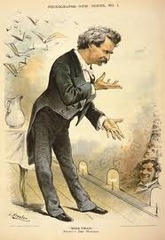
6419975581The Gilded AgeThe late 19th century, from the 1870s to about 1900. Term derived from writer Mark Twain's 1873 The Gilded Age: A Tale of Today, which satirized an era of serious social problems masked by a thin gold gilding of economic progress.4
6419975582Social DarwinismTerm coined in the late 19th century to describe the idea that humans, like animals and plants, compete in a struggle for existence in which natural selection results in "survival of the fittest." Provided a justification for the enormous wealth and power wielded by industrialists in the latter half of the 19th century.5
6419975583Gospel of WealthAn essay written by Andrew Carnegie in June of 1889 that describes the responsibility of philanthropy by the new upper class of self-made rich.6
6419975584Jane AddamsA pioneer American settlement activist/reformer, social worker, public philosopher, sociologist, author, and leader in women's suffrage and world peace. She created the first Hull House. Co-winner of 1931 Nobel Peace Prize.7
6419975585Plessy v. Ferguson1896 - Legalized segregation in publicly owned facilities on the basis of "separate but equal."8
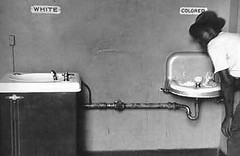
6419975586racial segregationthe separation of humans into ethnic or racial groups in daily life. Generally applies to activities such as eating in a restaurant, drinking from a water fountain, using a public toilet, attending school, going to the movies, riding on a bus, or in the rental or purchase of a home.9
6419975587rebatea return of a portion of the amount paid for goods or services10
6419975588free enterprisean economic system that permits unrestricted entrepreneurial business activity; associated with laissez-faire capitalism11
6419975589trustA set of companies managed by a small group known as trustees, who can prevent companies in the trust from competing with each other.12
6419975590plutocracygovernment by the wealthy13
6419975591socialistone who believes in the ownership and control of the major means of production by the whole community rather than by individuals or corporations14
6419975592radicalone who believes in fundamental change in a political, economic, or social system15
6419975593lockoutthe refusal by an employer to allow employees to work unless they agree to his or her terms16
6419975594cooperativean organization for producing, marketing, or consuming goods in which the members share the benefits17
6419975595anarchistone who believes that formal, coercive government is wrong in principle18
6419975596tenementa multi-dwelling building, often poor or overcrowded19
6419975597affluencean abundance of wealth20
6419975598despotismgovernment by an absolute or tyrannical ruler21
6419975599sweatshopa factory where employees are forced to work long hours under difficult conditions for meager wages22
6419975600paupera poor person, often one who lives on tax-supported charity23
6419975601tycoona wealthy businessperson, especially one who openly displays power and position24
6419975602prohibitionforbidding by law the manufacture, sale, or consumption of liquor25
6419975603filibusterto utilize the technique of obstructing legislation by tactics such as making long speeches and introducing irrelevant amendments26
6419975604landslidean overwhelming majority of votes for one side in an election27
6419975605reservein finance, the portion of money held back from circulation by a bank or treasury, which provides backing for its notes or loans28
6419975606bimetallismthe legalized concurrent use of two precious metals as currency at a fixed ratio of value; in US History associated with the Free Silver movement29
6419975607lobbyistsomeone who promotes an interest or cause before a political body, often for pay30
6419975608concessiona privilege granted by a government to another government, private company, or individual31
6419975609nation-statethe modern form of political organization in which the government coincides exactly with a single national territory and population having a distinctive culture, language, history, and so on32
6419975610jingoistaggressively patriotic and warlike33
6419975611atrocitya specific act of extreme cruelty34
6419975612Civil Rights Cases of 1883 (a single decision on a group of cases with similar legal problems)Legalized segregation with regard to private property.35
6419975613Wabash v. Illinois (1886)Declared state-passed Granger laws that regulated interstate commerce unconstitutional.36
6419975614U. S. v. E. C. Knight Co. (1895)Due to a narrow interpretation of the Sherman Anti-Trust Act, the Court undermined the authority of the federal government to act against monopolies.37
6419975615Plessy v. Ferguson (1896)Legalized racial segregation in publicly owned facilities on the basis of "separate but equal."38
6419975616Frontier Thesisstereotypical thesis that west represented individualism, democracy, economic freedom, and starting over https://o.quizlet.com/vQsdYvvy28WLQUKZ-8RtzA_m.jpg39
6419975617Land Grantsland given by government to universities and railroad companies40
6419975618Dawes Actland given to individual Indians to discourage tribal mindset; encouraged Indians to farm for a living instead of communally owning land41
6419975619Bureau of Indian Affairsdesigned to assimilate Native Americans (children particularly) into American culture42
6419975620Open Rangethe idea that cattle can be grazed on large tracts of public and/or private property; invention of barbed wire ended this idea and drove many small cattle ranches out of business and off their small plots of land43
6419975621Vertical IntegrationStrategy to maximize profits by attempting to own every step of the manufacturing process (ex. Carnegie Steel)44
6419975622Horizontal IntegrationStrategy to maximize profits by attempting to purchase competing companies in the same industry; monopoly-building (ex. Rockefeller's Standard Oil)45
6419975623Knights of LaborAmerican labor organization in the 1880s led by Terence V. Powderly. Organized a wide range of workers, including skilled and unskilled, and had broad reform goals.46
6419975624Haymarket RiotLabor dispute in Chicago that ended with a bomb being thrown at police resulting in many deaths. Led to an unfavorable public opinion of organized labor.47
6419975625American Federation of LaborAn organization of various trade unions that fought for specific reforms (as opposed to broad changes supported by the Knights of Labor).48
6419975626Homestead and Pullman StrikesIndustrial lockouts and strikes that showed battle between corporations and labor unions. Ended with government intervention on the side of big business.49
6419975627Urbanizationmovement of people from rural communities and settlements to big cities50
6419975628"New Immigrants"immigrants from southern and eastern Europe such as Poland, Italy, etc. that arrived in the US in the latter half of the 19th century51
6419975629Chinese Exclusion ActFirst law limiting immigration based on race; effectively stopped immigration from China through the end of WWII.52
6419975630Political MachineUnofficial political organization that works to win elections in order to exercise power; sometimes referred to as a shadow government; rose to power in the late 1800s because of ill-equipped local governments that failed to meet the needs of growing urban populations53
6419975631Tammany HallPolitical machine of New York City that was well-known for its corruption; lead by William Boss Tweed54
6419975632Pendelton Civil Service ActStandardized an exam for federal employees so that people were awarded jobs on merit rather than political affiliations; also made it illegal to remove federal employees without just cause.55
6419975633Sherman Antitrust ActOutlawed monopolistic business practices; not effective initially without a strong progressive federal government that would enforce it.56
6419975634Grange Movement and Farmers AllianceGrassroots movements that attempted to address the plight of farmers in the late 1800s; attempted to regulate railroads and enlarge opportunity for credit; evolved into Populist movement.57
6419975635William Jennings BryanDemocratic presidential hopeful that was a member of the Populist Party; free silver advocate; "Do not crucify mankind on a cross of gold".58
6419975636Seward's FollySecretary of State William Seward's negotiation of the purchase of Alaska from Russia in 1867. At the time everyone thought this was a mistake to buy Alaska the "ice box" but it turned out to be the biggest bargain since the Louisiana purchase.59
6419975637Susan B. AnthonySocial reformer who campaigned for women's rights, the temperance, and was an abolitionist, helped form the National Woman Suffrage Association.60
6419975638Laissez-Faire EconomicsThis was an economic philosophy begun by Adam Smith in his book, Wealth of Nations, that stated that business and the economy would run best with no interference from the government. This economic thought dominated most of the time period of the Industrial Revolution.61
6419975639New SouthAfter the Civil War, southerners promoted a new vision for a self-sufficient southern economy built on modern capitalist values, industrial growth, and improved transportation. In reality, this growth was fairly slow.62
6419975640AmericanizationProcess of assimilating immigrants into American culture by teaching English, American history, and citizenship.63
6419975641middle classa social class made up of skilled workers, professionals, business people, and wealthy farmers64
6419975642Interstate Commerce ActCreated the Interstate Commerce Commission (ICC) to regulate railroads to be fairer to farmers; first legislation to regulate corporations; ineffective because government failed to enforce it.65
6419975643Andrew CarnegieA Scottish-born American industrialist and philanthropist who founded the Carnegie Steel Company in 1892. By 1901, his company dominated the American steel industry.66
6419975644transcontinental railroadsa railroad that would cross the continent and connect the East to the West; opened new markets and helped spur the Industrial Revolution67
6419975645Social GospelLate 19th-century movement Protestant movement preaching that all true Christians should be concerned with the plight of immigrants and other poor residents of American cities and should financially support efforts to improve lives of these poor urban dwellers. Settlement houses were often financed by funds raised by ministers of this movement.68
6419975646Standard OilJohn D. Rockefeller's company that gained a monopoly over the world petroleum market with the practice of trusts and swift elimination of competition.69
6419975647Carnegie SteelA steel producing company created by Andrew Carnegie to manage business at his steel mills in the Pittsburgh, Pennsylvania area in the late 19th century. Significance: had a monopoly in the steel industry. vertical integrations.70
6419975648John D. RockefellerWealthy owner of Standard Oil Company. Considered to be a robber baron who used ruthless tactics to eliminate other businesses. Built trusts and used money to influence government.71
6419975649Industrial RevolutionPeriod characterized by the rapid social and economic changes in manufacturing and agriculture that occurred in England during the late 18th century and rapidly diffused to other parts of the developed world. In the US, this occurred during the period roughly 1825-1925.72

Period 1/2/3 - AP US History Flashcards

Terms : Hide Images
4927631009Columbian Exchangeexchanges of plants, animals, diseases, and technology transformed European and Native American ways of life0
4927631010John SmithEnglish explorer, soldier and writer; best known for his role in establishing the first permanent English colony in the New World (Jamestown)1
4927631011Jamestownfirst permanent English settlement in North America2
4927631012Joint-Stock companiesbusiness entity where different stocks can be bought and owned by shareholders3
4927631013Conquistadorleader in the Spanish conquests of America, Mexico, and Peru in the 16th century4
4927631014Encomiendadependency relation system that started in Spain during the Roman Empire; the stronger people protected the weakest in exchange for a service5
4927631015Great Awakeningseries of religious revivals in the North American British colonies during the 17th and 18th centuries6
4927631016Jonathan Edwardsrevivalist preacher, philosopher, and Congregationalist Protestant theologian7
4927631017French and Indian WarWar between colonists of Britian and colonists of France & Native Americans during 1754 to 1760. The purpose was to get North American lands for farming crops and securing a place to live well.8
4927631018Proclamation of 1793statement that declared the war had ended following the British victory over France in the French and Indian War9
4927631019King George IIIEngland's longest ruling monarch before Queen Victoria10
4927631020Sugar ActBritish law enacted in 1764 that put a tax on sugar and molasses imported into the colonies; this law effected the manufacture of rum in New England11
4927631021Samuel Adamsan American statesman and founding father of the United States who opposed British taxation and helped organize the Boston Tea Party12
4927631022Boston MassacreIn 1770, some colonists threw snowballs at a group of British soldiers and the soldiers fired their guns, killing 5 colonists.13
4927631023Boston Tea PartyIn 1773, a group of colonists protested the tea tax by dressing up as Native American and climbing on British ships in the Boston Harbor. They threw all the tea into the water to show they wouldn't buy tea from England.14
4927631024Declaration of IndependenceThomas Jefferson wrote a document stating that the 13 colonies wanted to be independent. On July 4, 1776, the Second Continental Congress accepted it.15
4927631025SaratogaIt was the turning point of the war for independence. After this battle, the American colonists were in an advantageous place. There were heavy British casualties.16
4927631026Marquis de Lafayettea French aristocrat and military officer who fought for the United States in the American Revolutionary War17
4927631027Charles Cornwallisa British Army officer and colonial administrator (1753-1762)18
4927631028Yorktown1781 battle which led to a decisive victory by a combined force of American Continental Army troops; General George Washington led this defeat against Cornwallis' troops19
4927631029Treaty of Parisdocument that ended the Revolutionary War between Great Britain and the colonies20
4927631030Articles of Confederationagreement among the thirteen colonies that served as its first constitution21
4927631031Bill of RightsThe first 10 amendments to the Constitution that make up the Bill of Rights22

AMSCO AP US History Chapter 27 Flashcards

AMSCO United States History 2015 Edition, Chapter 27 The Eisenhower Years, 1952-1960

Terms : Hide Images
5300444838elections of 1952, 1956In these two presidential elections Dwight Eisenhower and Richard Nixon defeated Adlai Stevenson quite easily. (p. 580-581)0
5065264584Dwight EisenhowerThe United States general who supervised the invasion of Normandy and the defeat of Nazi Germany. In the election of 1952 he became the the 34th President of the United States. (p. 579)1
5300445663Adlai StevensonAn Illinois governor and the Democratic presidential nominee in 1952 and 1956. He lost both elections to Dwight Eisenhower and Richard Nixon. (p. 580)2
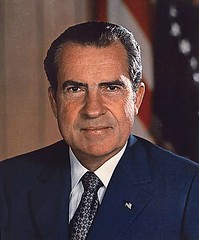
5065264585Richard NixonHe was vice president under Dwight Eisenhower. In 19868, he would become the 37th President of the United States, but in 1974 he resigned in disgrace after the Watergate scandal. (p. 580)3
5065264586modern RepublicanismPresident Eisenhower's term for his balanced and moderate approach to governing. Claiming he was liberal toward people but conservative about spending money. He helped balance the federal budget and lowered taxes without destroying existing social programs. (p. 580)4
5300446556Dept. of Health, Education and Welfare (HEW)In 1953, President Eisenhower consolidated welfare programs under this new department, run by Oveta Culp Hobby, the first woman in a Republican cabinet. (p. 580)5
5065264588soil-bank programPresident Eisenhower created this program as a way to reduce farm production, thereby increasing farm income. (p. 580)6
5065264589Highway Act; interstate highway systemThe most permanent legacy of the Eisenhower administration was this act passed in 1956. It created 42,000 miles of highway linking every major city in the nation. (p. 580)7
5065264591John Foster DullesIn the Eisenhower administration, he was the Secretary of State that pursued a policy of pushing the USSR and China to the brink of war. However, Eisenhower prevented him from carrying his ideas the extreme. (p. 581)8
5065264592brinksmanshipThe principle of pushing Communist nations to the brink of war, thinking they would back down because of American nuclear superiority. (p. 581)9
5065264593massive retaliationThis was Eisenhower's policy, it advocated the full use of American nuclear weapons to counteract even a Soviet ground attack in Europe. (p. 582)10
5300451703decolonizationAfter World War II, dozens of European colonies in Asia and Africa became independent countries. (p. 582)11
5300452948India, Pakistan, IndonesiaFrom 1947 to 1949, these three countries gained their independence. (p. 582)12
5065264594Third WorldTerm applied to a group of developing countries that often lacked stable political and economic institutions. Their need for foreign aid often made them pawns of the United States and the Soviet Union during the Cold War. (p. 582)13
5065264596CIA, covert actionUndercover intervention in foreign government by the CIA during Eisenhower's presidency. (p. 582)14
5065264595Iranian overthrowIn 1953, the CIA helped overthrow this government and established a monarch ruler with close ties to the U.S. He provided favorable oil prices and purchased American military arms. (p. 582)15
5300454371Korean armisticeIn July 1953, China and North Korea agreed to an armistice that would divide Korea into North Korea and South Korea near the 38th parallel. (p. 583)16
5065264597IndochinaIn the early 1950s, France was fighting to retake control of their colony in southeastern Asia. The French were defeated in 1954 and they agreed to give up Indochina, which was divided into the nations of Cambodia, Laos, and Vietnam. (p. 583)17
5065264599Ho Chi MinhThe North Vietnam Communist dictator who fought the French until 1954, and South Vietnam until 1975. (p. 583)18
5065264598Geneva ConferenceA 1954 conference between many countries that agreed to end hostilities and restore peace in French Indochina and Vietnam. (p. 583)19
5065264600division of VietnamBy the terms of the Geneva Convention, Vietnam would be temporarily divided at the 17 parallel until a general election could be held. A prolonged war (1954-1975) occurred between the Communist armies of North Vietnam who were supported by the Chinese and the non-communist armies of South Vietnam who were supported by the United States. (p. 583)20
5065264601domino theoryThe political theory that if one nation comes under Communist control then neighboring nations will also fall to Communist control. (p. 583)21
5065264602Southeast Asia Treaty OrganizationIn 1954, an international organization for collective defend and block further Communist gains is Southeast Asia. (p. 583)22
5300457211State of IsraelIn 1948, after a civil war in the British mandate territory of Palestine left the land divided between the Israelis and the Palestinians, this nation was founded. The United Nations oversaw the process and many neighboring countries fought against the creating of this Jewish state. (p. 584)23
5300458231Arab nationalismArab nationalist General Gamal Nasser of Egypt, asked the United States for funds to build the Aswan Dam on the Nile River. (p. 584)24
5065264603Suez Canal CrisisIn July 1956, Egypt sized the British and French owned Suez Canal. Britain and France carried out a surprise attack and retook the canal. The United States sponsored a U.N. resolution condemning the invasion of Egypt. Eventually Britain and France withdrew their troops. (p. 584)25
5065264604Eisenhower DoctrineThis 1957 doctrine, pledged United States economic and military aid to any Middle Eastern country threatened by Communism. (p. 584)26
5065264605Organization of Petroleum Exporting Countries (OPEC)In 1960, Saudi Arabia, Kuwait, Iraq, Iran, and Venezuela formed this organization of oil-producing nations. (p. 584)27
5300459567atoms for peaceIn 1953, President Eisenhower's proposal to the U.N. to slow down the arms race. (p. 585)28
5065264606spirit of GenevaThe 1955 meeting in Geneva, which produced the first thaw in the Cold War. (p. 585)29
5065264607open-skiesThe Soviets rejected this proposal for open aerial photography of eachothers territory in order to eliminate surprise nuclear attacks. (p. 585)30
5065264608Nikita KhrushchevThe ruler of the USSR from 1958-1964. He reduced government control of Soviet citizens and sought peaceful coexistence with the West. (p. 585)31
5065264609peaceful coexistenceIn early 1956, Soviet leader Nikita Khrushchev, gave a speech in which he denounced the crimes of Joseph Stalin and supported "peaceful coexistence" with the West. (p. 585)32
5065264610Hungarian revoltIn October 1956, Hungary actually succeeded in overthrowing a government backed by Moscow. The Soviets sent in tanks to crush the freedom fighters and restore control over Hungary. The United States took no action in the crisis and gave de facto recognition of the Soviet sphere of influence in Eastern Europe. (p. 586)33
5065264611Warsaw PactThis 1945 agreement formed formed an alliance of the Eastern European countries including the USSR, Albania, Bulgaria, Czechoslovakia, East Germany, Hungary, Poland, and Romania. (p. 586)34
5065264612SputnikIn 1957, the Soviet Union shocked the United States by launching the first space satellites into orbit around the earth. Fears of nuclear war were intensified since the missiles that launched the satellites could also deliver nuclear warheads anywhere in the world within minutes. (p. 586)35
5065264613NDEA, NASAIn 1958, Congress created the National Defense and Education Act (NDEA) and the National Aeronautics and Space Administration (NASA). (p. 586)36
5065264614U-2 incidentIn 1960, the Soviet military used a guided missile to shoot down an American U-2 spy plane over Soviet territory, revealing a formerly secret American tactic of the Cold War. (p. 586)37
5065264616Cuba, Fidel CastroA bearded socialist leader who overthrew a dictator in 1959 and established a Marxist socialist state in Cuba, only 90 miles from the United States. He nationalized American-owned businesses and the U.S. cut off trade with the country. (p. 587)38
5065264617military-industrial complexIn his farewell address, President Eisenhower warned the nation to "guard against the acquisition of unwarranted influence... by the military-industrial complex". (p. 587)39
5065264619Jackie RobinsonThe first African American player in major league baseball. His actions helped to bring about other opportunities for African Americans. (p. 588)40
5300466821causes of movementThe origins of the 1950s civil rights movement was the migration of African Americans to the North where they gained more political power. As the United States battled the Soviets for the hearts and minds of people around the world, it was clear that racial discrimination in the U.S. was a wrong that needed to be corrected. (p. 588)41
5065264620NAACPThe National Association for the Advancement of Colored People tried to protect the constitutional right of African Americans. (p. 588)42
5065264621desegregationThe action of incorporating a racial or religious group into a community. (p. 588)43
5065264622Brown v. Board of Education of TopekaIn May 1954, the Supreme Court agreed with Thurgood Marshal and ruled that "separate facilities are inherently unequal" and unconstitutional, and that school segregation should end immediately. (p. 588)44
5065264623Earl WarrenChief Justice of the Supreme Court, who presided over the Brown v. Board of Education of Topeka case, which overturned Plessy v. Ferguson. (p. 588)45
5300467432Southern ManifestoAfter the Brown v. Board of Education of Topeka Supreme Court decision, 101 members of Congress signed this manifesto condemning the Supreme Court for a "clear abuse of judicial power". (p. 588)46
5065264624Little Rock CrisisIn 1957, Governor Faubus used the Arkansas National Guard to prevent nine black students from entering Little Rock Central High School. President Eisenhower sent federal troops to ensure the black students could attend class. (p. 589)47
5300467433Rosa ParksIn 1955, in Montgomery, Alabama, a middle aged black woman refused to give up her seat on a bus, which led to her arrest for violating segregation laws. This triggered an African American protest of boycotting the city buses. (p. 589)48
5300468239Montgomery bus boycottRosa Park sparked a massive Afican American protest of the Montgomery, Alabama buses. (p. 589)49
5300468775Martin Luther King Jr.The minister of a Baptist church in Montgomery, Alabama, and a civil rights leader. (p. 589)50
5300470714Civil Rights acts of 1957, 1960The first civil rights laws since Reconstruction, they formed the Civil Rights Commission and provided some protection for the voting rights of blacks. (p. 590)51
5300471346Civil Rights CommissionCreated by civil rights laws of 1957 and 1960. (p. 590)52
5300472090Southern Christian Leadership ConferenceIn 1957, Martin Luther King Jr. organized ministers and churches to create this civil rights organization. (p. 590)53
5300473948nonviolent protestTo call attention to the injustice of segregated facilities students would deliberately invite arrest by sitting in restricted areas. (p. 590)54
5300473949sit-in movementIn February 1960, African American college students in Greensboro, North Carolina created this protest after they were refused service at a segregated Woolworth's lunch counter. (p. 590)55
5300475043Student Nonviolent Coordinating CommitteeIn 1960, an organization that called attention to the sit-in movement. (p. 590)56
5300475531immigration issuesIn the 1950s, Congress dropped the bans on Chinese and other Asian immigrants and eliminated race as barrier to naturalization. (p. 590)57
5300475935Operation WetbackIn the early 1950s, this program forced an estimated 3.8 million people to return to Mexico. (p. 590)58
5300475936homogeneityA description of American 1950s culture. (p. 590)59
5300476463popular cultureIn the 1950s, white suburbanites conformed to societal norms. (p. 590)60
5300476981paperbacksThis innovation in books, started in the 1950s, and led to the sales of a million copies per day by 1960. (p. 591)61
5300476982televisionA curiosity in the late 1940s, by 1961 there were 55 million of these devices in America. (p. 591)62
5300477701rock and rollTeenagers loved this popular music which was available as inexpensive records during the 1950s. (p. 591)63
5300477702consumer cultureIn the 1950s, consensus and conformity were hallmarks of the American culture. Television, advertising, and the middle-class move to the suburbs, contributed to this culture. (p. 590)64
5300478360fast foodThere was a proliferation of these restaurants in the 1950s. (p. 591)65
5300478361credit cardsA new method of payment in the 1950s. (p. 591)66
5300478900conglomeratesIn the 1950s, large businesses with diversified holdings began to dominate industries such as food processing, hotels, transportation, insurance, and banking. (p. 591)67
5300479642social criticsIn the 1950s, conformity was valued. William Whyte documented the loss of individuality in his book, "The Organization Man" (p. 591)68
5300479643The Lonely CrowdIn 1958, this book by Harvard sociologist David Riesman criticised the replacement of inner direct individuals with other directed conformists. (p. 592)69
5300480658The Affluent SocietyIn 1958, economist by John Kenneth Galbraith wrote this book about the failure of wealthy American to address the need for increased social spending for the common good. (p. 592)70
5300481325The Catcher in the RyeA 1950s book by J. D. Salinger, it provided a classic commentary on phoniness as viewed by a troubled teenager. (p. 592)71
5300482041Catch-22A 1950s book by Joseph Heller that satirized the stupidity of the military and war. (p. 592)72
5300483440beatniksA group of rebellious writer and intellectuals led by Jack Kerouac and Allen Ginsberg. They advocated spontaneity, use of drugs, and rebellion against societal standards. (p. 592)73

AP US History Period 6 (1865-1898) Flashcards

Terms : Hide Images
6089852285People's (Populist) PartyAn agrarian-populist political party in the United States For a few years, 1892-96, it played a major role as a left-wing force in American politic Drew support from angry farmers in the West and South and operated on the left-wing of American politic Highly critical of capitalism, especially banks and railroads Allied itself with the labor movement.0
6089852286assimilationthe process by which a person or a group's language and/or culture come to resemble those of another group1
6089852287social servicesa range of public services provided by governmental or private organizations. Aimed at creating effective organizations, building stronger communities, and promoting equality and opportunity. Include benefits of education, health care, job training and subsidized housing2
6089852288The Gilded AgeMeans something is gold covered The late 19th century, from the 1870s to about 1900. Term derived from writer Mark Twain's 1873 The Gilded Age: A Tale of Today, which satirized an era of serious social problems masked by a thin gold gilding of economic progress.3
6089852289Social DarwinismTerm coined in the late 19th century to describe the idea that humans, like animals and plants, compete in a struggle for existence in which natural selection results in "survival of the fittest." Provided a justification for the enormous wealth and power wielded by industrialists in the latter half of the 19th century.4
6089852290Gospel of WealthAn essay written by Andrew Carnegie in June of 1889 that describes the responsibility of philanthropy by the new upper class of self-made rich. Promoted the idea of philanthropy5
6089852291Jane AddamsA pioneer American settlement activist/reformer, social worker, public philosopher, sociologist, author, and leader in women's suffrage and world peace. She created the first Hull House. Co-winner of 1931 Nobel Peace Prize.6
6089852292Plessy v. Ferguson1896 - Legalized segregation in publicly owned facilities on the basis of "separate but equal."7
6089852293racial segregationthe separation of humans into ethnic or racial groups in daily life. Generally applies to activities such as eating in a restaurant, drinking from a water fountain, using a public toilet, attending school, going to the movies, riding on a bus, or in the rental or purchase of a home.8
6089852294free enterprisean economic system that permits unrestricted entrepreneurial business activity associated with laissez-faire capitalism9
6089852295trustA set of companies managed by a small group known as trustees, who can prevent companies in the trust from competing with each other.10
6089852296socialistone who believes in the ownership and control of the major means of production by the whole community rather than by individuals or corporations11
6089852297radicalone who believes in fundamental change in a political, economic, or social system12
6089852298lockoutthe refusal by an employer to allow employees to work unless they agree to his or her terms13
6089852299cooperativean organization for producing, marketing, or consuming goods in which the members share the benefits14
6089852300anarchistone who believes that formal, coercive government is wrong in principle15
6089852301tenementa multi-dwelling building, often poor or overcrowded16
6089852302sweatshopa factory where employees are forced to work long hours under difficult conditions for meager wages17
6089852303paupera poor person, often one who lives on tax-supported charity18
6089852304tycoona wealthy businessperson, especially one who openly displays power and position19
6089852305filibusterto utilize the technique of obstructing legislation by tactics such as making long speeches and introducing irrelevant amendments20
6089852306landslidean overwhelming majority of votes for one side in an election21
6089852307reservein finance, the portion of money held back from circulation by a bank or treasury, which provides backing for its notes or loans22
6089852308bimetallismthe legalized concurrent use of two precious metals as currency at a fixed ratio of value in US History associated with the Free Silver movement23
6089852309Wabash v. Illinois (1886)Declared state-passed Granger laws that regulated interstate commerce unconstitutional.24
6089852310U. S. v. E. C. Knight Co. (1895)Due to a narrow interpretation of the Sherman Anti-Trust Act, the Court undermined the authority of the federal government to act against monopolies.25
6089852311Frontier Thesisstereotypical thesis that west represented individualism, democracy, economic freedom, and starting over Turner's idea26
6089852312Land Grantsland given by government to universities and railroad companies27
6089852313Dawes Act1887 land given to individual Indians to discourage tribal mindset encouraged Indians to farm for a living instead of communally owning land28
6089852314Bureau of Indian Affairsdesigned to assimilate Native Americans (children particularly) into American culture29
6089852315Open Rangethe idea that cattle can be grazed on large tracts of public and/or private property invention of barbed wire ended this idea and drove many small cattle ranches out of business and off their small plots of land30
6089852316Vertical IntegrationStrategy to maximize profits by attempting to own every step of the manufacturing process (ex. Carnegie Steel)31
6089852317Horizontal IntegrationStrategy to maximize profits by attempting to purchase competing companies in the same industry; monopoly-building (ex. Rockefeller's Standard Oil)32
6089852318Knights of LaborAmerican labor organization in the 1880s led by Terence V. Powderly. Organized a wide range of workers, including skilled and unskilled, and had broad reform goals.33
6089852319Haymarket Riot1886 Labor dispute in Chicago that ended with a bomb being thrown at police resulting in many deaths. Led to an unfavorable public opinion of organized labor especially the Knights of Labor34
6089852320American Federation of Labor (AFL)An organization of various trade unions that fought for specific reforms Wanted better wages, fewer hours, better working conditions Founded by Samuel Gompers35
6089852321Homestead Steel StrikesViolent labor conflict in Carnegie's mills Henry Frick (manager) announced pay cut Strike had to be put down by state militia36
6089852322Urbanizationmovement of people from rural communities and settlements to big cities37
6089852323"New Immigrants"immigrants from southern and eastern Europe such as Poland, Italy, etc. that arrived in the US during & after the 1880s38
6089852324Chinese Exclusion ActFirst law limiting immigration based on race; effectively stopped immigration from China through the end of WWII.39
6089852325Political MachineUnofficial political organization that works to win elections in order to exercise power Sometimes referred to as a shadow government Rose to power in the late 1800s because of ill-equipped local governments that failed to meet the needs of growing urban populations40
6089852326Tammany HallPolitical machine of New York City that was well-known for its corruption Lead by William Boss Tweed41
6089852327Pendelton Civil Service Act, 1883Standardized an exam for federal employees so that people were awarded jobs on merit rather than political affiliations Made it illegal to remove federal employees without just cause.42
6089852328Sherman Antitrust ActOutlawed monopolistic business practices not effective initially without a strong progressive federal government that would enforce it.43
6089852329Grange Movement and Farmers AllianceGrassroots movements that attempted to address the plight of farmers in the late 1800s; attempted to regulate railroads and enlarge opportunity for credit evolved into Populist movement.44
6089852330William Jennings BryanDemocratic presidential hopeful that was a member of the Populist Party free silver advocate "Do not crucify mankind on a cross of gold".45
6089852331Seward's Folly or Seward's Ice BoxSecretary of State William Seward's negotiation of the purchase of Alaska from Russia in 1867. At the time everyone thought this was a mistake to buy Alaska the "ice box" but it turned out to be the biggest bargain since the Louisiana purchase.46
6089852332Susan B. AnthonySocial reformer who campaigned for women's rights, the temperance, and was an abolitionist, helped form the National Woman Suffrage Association.47
6089852333Laissez-Faire EconomicsThis was an economic philosophy begun by Adam Smith in his book, Wealth of Nations, that stated that business and the economy would run best with no interference from the government. This economic thought dominated most of the time period of the Industrial Revolution.48
6089852334New SouthAfter the Civil War, southerners promoted a new vision for a self-sufficient southern economy built on modern capitalist values, industrial growth, and improved transportation. In reality, this growth was fairly slow.49
6089852335AmericanizationProcess of assimilating immigrants into American culture by teaching English, American history, and citizenship.50
6089852336middle classa social class made up of skilled workers, professionals, business people, and wealthy farmers51
6089852337Interstate Commerce Act1887 Created the Interstate Commerce Commission (ICC) to regulate railroads to be fairer to farmers First legislation to regulate corporations Ineffective because government failed to enforce it.52
6089852338Andrew CarnegieA Scottish-born American industrialist and philanthropist who founded the Carnegie Steel Company in 1892. By 1901, his company dominated the American steel industry. Great philanthropist53
6089852339Transcontinental RailroadRailroad that would cross the continent and connect the East to the West Opened new markets and helped spur the Industrial Revolution Completed in 1869 at Promontory, UT54
6089852340Social GospelLate 19th-century movement Protestant movement preaching that all true Christians should be concerned with the plight of immigrants and other poor residents of American cities and should financially support efforts to improve lives of these poor urban dwellers. Settlement houses were often financed by funds raised by ministers of this movement.55
6089852341Standard OilJohn D. Rockefeller's company that gained a monopoly over the world petroleum market with the practice of trusts and swift elimination of competition. By 1890, owned 90% of the US oil market56
6089852342Carnegie SteelA steel producing company created by Andrew Carnegie to manage business at his steel mills in the Pittsburgh, Pennsylvania area in the late 19th century Significance: had a monopoly in the steel industry. vertical integrations.57
6089852343John D. RockefellerWealthy owner of Standard Oil Company. Considered to be a robber baron who used ruthless tactics to eliminate other businesses. Built trusts and used money to influence government.58
6089852344Industrial RevolutionPeriod characterized by the rapid social and economic changes in manufacturing and agriculture that occurred in England during the late 18th century and rapidly diffused to other parts of the developed world. In the US, this occurred during the period roughly 1825-1925.59
6089852345AlaskaThe last frontier of the North American continent. It was purchased from Russia in 1867 and was considered to be worthless land; however, in time, this was proven false60
6089852346Central Pacific RailroadStarted in CA & pushed eastward Eventually connected with the Union Pacific RR in Promontory Point, UT Hired Chinese laborers to complete the work61
6089852347Union Pacific RailroadRR that started in Omaha, NE Connected with Central Pacific RR in Promontory Point, UT Hired inexpensive Irish laborers62
6089852348Wyoming & women's suffrageWY was the 1st state to provide women the right to vote in 1870 Sometimes referred to as the "Land of Freedom"63
6089852349"old immigrants"Immigrants who had come to the US before the 1880s Mainly from England and Northern Europe64
6089852350Yellowstone National ParkEstablished in 1872 by US Congress 1st national park65
6089852351Panic of 1873Financial panic in which banks closed and the stock market crashed66
6089852352US SteelLargest steel company of the US Created by JP Morgan by merging with Carnegie Steel Largest corporation in existence at the time67
6089852353Bessemer ProcessWay to manufacture steel quickly & cheaply68
6089852354Battle of Little Bighorn1876- Indian leaders Sitting Bull & Crazy Horse defeated Gen. Custer & his troops69
6089852355Nez Perce WarConflict between the Nez Perce & the US gov't Chief Joseph finally agrees to surrender & relocate to reservation70
6089852356Great Railway Strike of 1877RR workers initiated a strike in 1877 when they were told there would be a pay cut71
6089852357A Century of DishonorWritten by Helen Hunt Jackson Exposed mistreatment of Native Americans by US gov't & settlers72
6089852358James GarfieldBecame president in 1880 Republican Assassinated after only 4 months Promoted civil service reform, but died before it could be enacted73
6089852359JP MorganBanker that controlled 2/3 of RRs and eventually merged with Carnegie's steel company Formed US Steel Considered a robber baron74
6089852360Captains of IndustryOwners & mangers of large industrial enterprises who wielded great political & economic power More positive term in contrast to "robber barons"75
6089852361Robber BaronsRefers to industrialists or big business owners who gained huge profits by paying employees low wages Drove competition out of business by selling goods much cheaper76
6089852362Hull HouseSettlement home designed as a welfare agency for needy family Provided social & education opportunities for working class Worked to improve conditions caused by poverty Est. by Jane Addams in Chicago77
6089852363Jacob RiisDanish immigrant Report who pointed out terrible conditions of tenement houses Author of How the Other Half Lives (1890)78
6089852364Wounded Knee1890 Last Native American battle 300 Native killed by US military79
6089852365Ellis IslandImmigration processing center in NY Harbor80
6089852366Pullman StrikePullman RR car announced pay cut American Railway Union boycotts the use of the Pullman cars US mail failed to be delivered US gov't sent injunction to end boycott SCOTUS ruled injunction was constitutional81
6089852367Homestead ActGave settlers 160 acres of land if they lived on the land for 6 months and cultivated crops82

Pages

Subscribe to CourseNotes RSS

Need Help?

We hope your visit has been a productive one. If you're having any problems, or would like to give some feedback, we'd love to hear from you.

For general help, questions, and suggestions, try our dedicated support forums.

If you need to contact the Course-Notes.Org web experience team, please use our contact form.

Need Notes?

While we strive to provide the most comprehensive notes for as many high school textbooks as possible, there are certainly going to be some that we miss. Drop us a note and let us know which textbooks you need. Be sure to include which edition of the textbook you are using! If we see enough demand, we'll do whatever we can to get those notes up on the site for you!