AP Notes, Outlines, Study Guides, Vocabulary, Practice Exams and more!

AP US History Period 4 (1800-1848) Flashcards

Key events and terms for mastery of the time period 1800-1848

Terms : Hide Images
8196665783Era of Good FeelingsA name for President Monroe's two terms, a period of strong nationalism, economic growth, and territorial expansion. Since the Federalist party dissolved after the War of 1812, there was only one political party and no partisan conflicts.0
8196665784SectionalismDifferent parts of the country developing unique and separate cultures (as the North, South and West).1
8196665785Tariff of "Abominations"designed to protect industry in the northern United States.2
8196665786American SystemAn economic regime pioneered by Henry Clay which created a high tariff to support internal improvements such as road-building. This approach was intended to allow the United States to grow and prosper by themselves This would eventually help America industrialize and become an economic power.3
8196665787The Bank WarAndrew Jackson vetoed the recharter bill of the Second Bank of the United States on July 10, 1832, which was a blow against monopolies, "New England aristocrats", and foreign domination, but a victory for labor. Jackson created pet banks and destabilized the national currency.4
8196665789Marbury v Madison(1803) Marbury was a midnight appointee of the Adams administration and sued Madison for commission. Chief Justice Marshall said the law that gave the courts the power to rule over this issue was unconstitutional. established judicial review5
8196665790McCulloch v MarylandMaryland was trying to tax the national bank and Supreme Court ruled that federal law was stronger than the state law6
8196665791Worcester v GeorgiaA case in which the United States Supreme Court ruled in favor of Cherokee sovereignty.7
8196665792Missouri Compromise of 1820Allowed Missouri to enter the union as a slave state, Maine to enter the union as a free state, prohibited slavery north of latitude 36˚ 30' within the Louisiana Territory8
8196665795Monroe DoctrineDeclared that Europe should not interfere in the affairs of the Western Hemisphere and that any attempt at interference by a European power would be seen as a threat to the U.S.9
8196665796National RoadFirst building project funded by Congress. It made travel and transportation of goods much easier because it was one continuous road that was in good condition.10
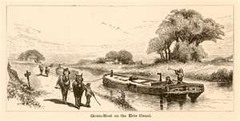
8196665797Erie CanalA canal between the New York cities of Albany and Buffalo, completed in 1825. The canal, considered a marvel of the modern world at the time, allowed western farmers to ship surplus crops to sell in the North and allowed northern manufacturers to ship finished goods to sell in the West. Connected Great Lakes farms and western markets with New York City leading to its rise as a center of trade and commerce.11
8196665798Eli WhitneyAn American inventor who developed the cotton gin. Also contributed to the concept of interchangeable parts that were exactly alike and easily assembled or exchanged12
8196665799Lowell SystemDeveloped in textile mills in Massachusetts, during the 1820s, where few skilled workers were needed, labor was done mostly by single young farm women, who worked for a few years and then returned home to be housewives.13
8196665800Market RevolutionDramatic increase between 1820 and 1850 in the exchange of goods and services in market transactions. Resulted from the increased output of farms and factories, the entrepreneurial activities of traders and merchants, and the development of a transportation network of roads, canals and railroads.14
8196665801Embargo Act of 1807Meant to force Britain and France to change their policies towards neutral vessels by depriving them of American trade; difficult to enforce because it was opposed by merchants and it hurt the national economy; replaced by the Non-Intercourse Act.15
8196665802War of 1812between the United States and England caused by impressment of American sailors, British aid to Indians in the west with firearms, War Hawks desire to invade Canada, and continued British interference with trade.16
8196665803Battle of New OrleansA battle during the War of 1812 where the British army attempted to take New Orleans. Due to the foolish frontal attack, Jackson defeated them, which gave him an enormous popularity boost.17
8196665804Treaty of GhentDecember 24, 1814 - Ended the War of 1812 and restored the status quo. For the most part, territory captured in the war was returned to the original owner. It also set up a commission to determine the disputed Canada/U.S. border. The important result of the War of 1812 was that the US maintained its independence from Great Britain.18
8196665805Lewis and ClarkSent on an expedition by Jefferson to gather information on the United States' new land and map a route to the Pacific. They kept very careful maps and records of this new land acquired from the Louisiana Purchase.19
8196665806Louisiana PurchaseMade by Jefferson, this doubled the size of the US.20
8196665807Revolution of 1800represented a return to what Jefferson considered the original spirit of the Revolution, restoring the republican experiment, checking the growth of government power, and halting the decay of virtue that had set in under Federalist rule.21
8196665808Barbary Pirate WarsAt issue was the demand of tribute from American merchant vessels in the Mediterranean Sea. American naval power attacked North African cities and extracted concessions of fair passage from their rulers.22
8196665810Hartford Conventiona meeting of Federalists at Hartford, Connecticut, to protest the War of 1812; New England states threatened to leave the union if the war continued23
8196665811"Corrupt Bargain"what Jackson and followers called the Clay/Adams deal that kept him from election in 1824.24
8196665812Jacksonian Democracyan expansion of voting rights to ensure majority rule during 1820's/30s25
8196665813Nullification CrisisConflict that resulted when South Carolina voided federal tariffs and threatened to secede26
8196665814Trail of TearsThe removal of Cherokee Indians from Georgia to Indian Territory in 1838 and 183927
8196665815Whig partyPolitical party formed by Henry clay, Daniel Webster, and other Jackson opponents28
8196665817Samuel SlaterFather of the Factory system-memorized the ideas of Britain's factory system29
8196665818Steam Poweran efficient power source for machines in factories and trains30
8196665819Second Great Awakeningreligious revival that swept the country and helped inspire reform movements, especially the abolitionist movement31
8196665820Cult of Domesticitya belief that married women should restrict their activities to their home and family32
8196665822Dorothea DixReformer who was a pioneer in the movement for better treatment of prisoners and the mentally ill33
8196665823Seneca Falls Conventionthe first organized public meeting about women's rights held in the United States34
8196665826Nat Turner's Rebellionthe largest and deadliest slave uprising in U.S. history; resulted in new laws (South) prohibiting education of slaves and free black people, restricting rights of assembly and other civil rights for free black people, and requiring white ministers to be present at all worship services.35
8196665834Mormonsmembers of the Church of Jesus Christ of Latter-Day Saints founded by Joseph Smith in 1830; Relocated to Utah to escape religious persecution, settling in Salt Lake City, Utah36
8200755177The Liberatorabolitionist newspaper run by William Lloyd Garrison37
8200767005Old HickoryAndrew Jackson's nickname; symbolizes toughness and strength38
8200822815Patriarchal systemsocial system where males, especially fathers, rule39
8200897409Panic of 1837result of inflation, falling crop prices, and a drain of coin to Britain set off a financial crisis in the United States.40

AP US History Period 2 (1607-1754) Flashcards

Important vocabulary of the colonization of North America in the 17th century.

Terms : Hide Images
7441373544Jamestown1st permanent English settlement in North America in 1607.0
7441373545John SmithA captain famous for world travel. As a young man, he took control in Jamestown. He organized the colony and saved many people from death the next winter and coined the phrase "he who shall not work, shall not eat". He also initiated attacks on Natives.1
7441373546John RolfeHe was one of the English settlers at Jamestown (and he married Pocahontas). He discovered how to successfully grow tobacco in Virginia and cure it for export, which made Virginia an economically successful colony. Eventually, he was killed in a Pequot attack.2
7441373548Mayflower Compact1620 - The first agreement for self-government in America. It was signed by the 41 men on the Mayflower and set up a government for the Plymouth colony3
7441373549John WinthropAs governor of Massachusetts Bay Colony, Winthrop (1588-1649) was instrumental in forming the colony's government and shaping its legislative policy. He envisioned the colony, centered in present-day Boston, as a "city upon a hill" from which Puritans would spread religious righteousness throughout the world.4
7441373550PuritansA religious group who wanted to purify the Church of England. They came to America for religious freedom and settled Massachusetts Bay.5
7441373551PilgrimsEnglish Puritans who founded Plymouth colony in 16206
7441373552Massachusetts CharterAllowed Puritans to take a charter with them and establish their own government in the New World.7
7441373553Loss of Massachusetts CharterRevoking of Mass. Charter by King George II due to the colonists refusal to obey by the Navigation Acts leading to anti-British feeling in the New England region.8
7441373554New AmsterdamA settlement established by the Dutch near the mouth of Hudson River and the southern end of Manhattan Island as a trade port for the Dutch trade empire.9
7441373555New YorkIt was founded by the Dutch for trade and furs and became an English Colony in 1664, when the English were determined to end Dutch trade dominance, and took over the colony by invading New Amsterdam without having to fire a shot.10
7441373557House of Burgesses1619 - The Virginia House of Burgesses formed, the first legislative body in colonial America. It was made up of two representatives from teach town voted on by men who owned property. Later other colonies would adopt the Houses of Burgesses concept creating self-governing bodies in the colonies.11
7441373558Headright systemHeadrights were parcels of land consisting of about 50 acres which were given to colonists who brought indentured servants into America. They were used by the Virginia Company to attract more colonists.12
7441373559Indentured servantsColonists who received free passage to North America in exchange for working without pay for a certain number of years13
7441373560Bacon's Rebellion1676 - Nathaniel Bacon and other western Virginia settlers were angry at Virginia Governor Berkley for trying to appease the Doeg Indians after the Doegs attacked the western settlements. The frontiersmen formed an army, with Bacon as its leader, which defeated the Indians and then marched on Jamestown and burned the city. The rebellion ended suddenly when Bacon died of an illness.14
7441373561King Phillip's WarUnder the leadership of Metacom, or King Phillip, the Wampanoag destroyed colonial towns, the colonists destroyed native farms, leading to the most deadly of Indian Wars. The war was disastrous for the natives leading to few surviving the war, and those that did left New England.15
7441373562royal colonyA colony ruled by governors appointed by a king16
7441373563proprietary colonyEnglish colony in which the king gave land to proprietors in exchange for a yearly payment17
7441373564town meetingsA purely democratic form of government common in the colonies, and the most prevalent form of local government in New England. In general, the town's voting population would meet once a year to elect officers, levy taxes, and pass laws.18
7441373565Salem Witch Trials1629 outbreak of witchcraft accusations in a Puritan village marked by an atmosphere of fear, hysteria, and unfounded accusations in courts with Puritan ministers who served as judges. 19 women were executed.19
7441373566Roger WilliamsA dissenter who clashed with the Massachusetts Puritans over separation of church and state and was banished in 1636, after which he founded the colony of Rhode Island to the south.20
7441373567IntolerantNot willing to accept ways of thinking different from one's own. The expansion of colonies in New England was a direct result of Puritan intolerance as dissenters were exiled and created new settlements.21
7441373568Anne HutchesonOne of the dissenters in Puritan Massachusetts held bible studies at her house and believed in a personal relationship with god. She moved to New Hampshire where she died along with her children from an Indian attack.22
7441373569Sir William BerkeleyThe royal governor of Virginia. Adopted policies that favored large planters and neglected the needs of recent settlers in the "backcountry." One reason was that he had fur trade deals with the natives in the region. His shortcomings led to Bacon's Rebellion23
7441373570William PennEstablished the colony of Pennsylvania as a "holy experiment". Freemen had the right to vote, provided leadership for self- government based on personal virtues and Quaker religious beliefs. His colony was religiously tolerant leading to diversity in the region.24
7441373571James OglethorpeFounded colony of Georgia as a chance for poor immigrants who were in debt to have a second chance at a comfortable life25
7441373572Lord Baltimore1694- He was the founder of Maryland, a colony which offered religious freedom, and a refuge for the persecuted Roman Catholics.26
7441373573Halfway CovenantA Puritan church document; In 1662, the Halfway Covenant allowed partial membership rights to persons not yet converted into the Puritan church; It lessened the difference between the "elect" members of the church from the regular members; Women soon made up a larger portion of Puritan congregations.27
7441373574Dominion of New England1686 - The British government combined the colonies of Massachusetts, Rhode Island, New Hampshire, and Connecticut into a single province headed by a royal governor (Edmund Andros). The Dominion ended in 1692, when the colonists revolted and drove out Governor Andros.28
7441373575Acts of Trade and NavigationThree acts that regulated colonial trade: 1st act: closed the colonies to all trade except that from English ships, and required the colonists to export certain goods, such as tobacco, to only English territories, 2nd act: (1663) demanded that everything being shipped from Europe to the colonies had to pass through England so they could tax the goods. 3rd act: 1673, was a reaction to the general disregard of the first two laws; it forced duties on the coastal trade among the colonies and supplied customs officials to enforce the Navigation Acts.29
7441373576MercantilismAn economic policy under which nations sought to increase their wealth and power by obtaining large amounts of gold and silver and by selling more goods than they bought.30
7441373577Triangular Slave TradeA practice, primarily during the eighteenth century, in which European ships transported slaves from Africa to Caribbean islands, molasses from the Caribbean to Europe, and trade goods from Europe to Africa.31
7441373578Middle PassageA voyage that brought enslaved Africans across the Atlantic Ocean to North America and the West Indies. The conditions on the ships from Africa to the west led to the loss of hundreds of thousands of lives.32
7441373579Social mobilityMovement of individuals or groups from one position in a society's stratification system to another33
7441373580Ben FranklinA colonial businessman and scientist who was an example of American social mobility and individualism. He was a delegate from Pennsylvania in colonial meetings, and proposed the "Albany Plan of the Union" as a way to strengthen the colonies in the French and Indian War. He was a leading figure in the movement toward revolution, and as a diplomat to France to get help during the American Revolution34
7441373581Great Awakening(1730s and 1740s) Religious movement characterized by emotional preaching (Jonathan Edwards & George Whitefield). It established American religious precedents such as camp meetings, revivals, and a "born again" philosophy. The first cultural movement to unite the thirteen colonies. It was associated with the democratization of religion, and a challenge to existing authorities and was an influence leading to the American Revolution.35
7441373582Jonathan EdwardsA leading minister during the Great Awakening, he delivered the famous sermon "Sinners in the Hands of an Angry God" promising that evildoers would pay a price on judgement day.36
7441373583African American CultureSlave communities were rich with music, dance, basket-weaving, and pottery-making. Enslaved Africans brought them the arts and crafts skills of their various tribes.37
7441373586George WhitfieldEnglish preacher who led the Great Awakening by traveling through the colonies38

AP US History Chapter 23 Flashcards

AMSCO United States History 2015 Edition, Chapter 23 The Modern Era of the 1920s

Terms : Hide Images
7545058525Warren HardingIn November 1920, he was elected the 29th president of the United States. He was a Republican whose slogan was: "Return to Normalcy". His term was marked by scandals and corruption, although he was never implicated in any of the scandals. In August 1923, he died while traveling in the West. (p. 475-476)0
7545058526Harry DaughertyAttorney General under President Harding who accepted bribes for agreeing not to prosecute certain criminal suspects. (p. 476)1
7545058527Albert FallSecretary of the Interior during Harding's administration. He was convicted of accepting bribes for granting oil leases near Teapot Dome, Wyoming. (p. 476)2
7545058528Teapot DomeA government scandal involving a former United States Navy oil reserve in Wyoming that was secretly leased to a private oil company in 1921. (p. 476)3
7545058529Fordney-McCumber Tariff ActThis tariff passed in 1922, raised tariffs on foreign manufactured goods by 25 percent. It helped domestic manufacturers, but limited foreign trade, and was one cause of the Great Depression of 1929. (p. 476, 488)4
7545058530Bureau of the BudgetFormed in 1921, this bureau created procedures for all government expenditures to be placed in a single budget for Congress to annually review and vote on. (p. 476)5
7545058531Calvin CoolidgeAs vice president, he became president when Warren Harding died in August 1923. He won the presidential election of 1924, but declined to run in 1928. He was a Republican who believed in limited government. He summarized his presidency and his era with the phrase: "The business of America is business". (p. 477)6
7545058532Herbert HooverWhen Calvin Coolidge decide not to run for president in 1928, he was the Republican presidential nominee. He promised to extend "Coolidge Prosperity", and won the election. (p. 477)7
7545058533standard of livingDuring the 1920s, the standard of living (physical things that make life more enjoyable) improved significantly for most Americans. Indoor plumbing and central heating became commonplace. By 1930, two-thirds of all homes had electricity. (p. 477)8
7545058534scientific managementA system of industrial management created and promoted in the early twentieth century by Frederick W. Taylor. It emphasized time-and-motion studies to improve factory performance. (p. 478)9
7545058535Henry FordBy 1914, he had perfected a system for manufacturing automobiles using an assembly line. (p. 478)10
7545058536open shopA company with a labor agreement under which union membership cannot be required as a condition of employment. (p. 479)11
7545058537welfare capitalismAn approach to labor relations in which companies voluntarily offer their employees improved benefits and higher wages in order to reduce their interest in joining unions. (p. 479)12
7545058538consumerismIn the 1920s, consumerism was fueled by: homes with electricity, electrical appliances, affordable automobiles, increased advertising, and purchasing on credit. (p. 478)13
7545058539jazz ageName for the 1920s, because of the popularity of jazz, a new type of American music that combined African rhythms, blues, and ragtime. (p. 480)14
7545058540national networksNationwide radio networks enabled people all over the country to listen to the same news, sports, soap operas, quiz shows and comedies. (p. 480)15
7545058541HollywoodThe movie industry was centered here. The industry grew rapidly in the 1920s. Sound was introduced to movies in 1927. By 1929 over 80 million movie tickets were sold each week. (p. 480)16
7545058542popular heroesAmericans shifted role models from politicians to sports heroes and movie stars. Sports heros included Jack Dempsey, Jim Thorpe, Babe Ruth, and Bobby Jones. However, the most celebrated was Charles Lindbergh who flew from Long Island to Paris in 1927. (p. 480)17
7545058543role of womenIn the 1920s, the traditional separation of labor between men and women continued. Most middle-class women expected to spend their lives as homemakers and mothers. (p. 480)18
7545058544morals and fashionsIn the 1920s, movies, novels, automobiles, and new dances encouraged greater promiscuity. Young women shocked their elders by wearing dresses hemmed at the knee (flapper look), cutting their hair short, smoking cigarettes, and driving cars. (p. 481)19
7545058545Margaret SangerShe founded American Birth Control League; which became Planned Parenthood in the 1940s. She advocated birth control awareness. (p. 481)20
7545058546consumer cultureIn the 1920s, many writers were disillusioned with the materialism of the business oriented culture. (p. 481)21
7545058547Only YesterdayA 1931 history book that portrayed the 1920s as a period of narrow-minded materialism in which the middle class abandoned Progressive reforms, embraced conservative Republican policies, and either supported or condoned nativism, racism, and fundamentalism. (p. 489)22
7545058548Lost GenerationGroup of writers in 1920s, who shared the belief that they were lost in a greedy and materialistic world that lacked moral values. Many of them moved to Europe. (p. 481)23
7545058549Art DecoThe 1920's modernistic art style that captured modernistic simplification of forms, while using machine age materials. (p. 482)24
7545058550Harlem RenaissanceThe largest African American community of almost 200,000 developed in the Harlem section of New York City. It became famous in the 1920s for its talented actors, artists, musicians, and writers. This term describes this period. (p. 483)25
7545058551Langston HughesA leading 1920s African American poet from Harlem. (p. 483)26
7545058552Claude McKayA leading 1920s African American poet from Harlem. (p. 483)27
7545058553Back to Africa movementEncouraged those of African descent to return to Africa. (p. 483)28
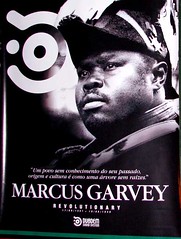
7545058554Marcus GarveyAfrican American leader during the 1920s who founded the Universal Negro Improvement Association and advocated mass migration of African Americans back to Africa. He was deported to Jamaica and his movement collapsed. (p. 483)29
7545058555black prideMany African American leaders agreed with Marcus Garvey's ideas on racial pride and self-respect. This influenced another generation in the 1960s. (p. 483)30
7545058556Scopes trialA 1925 Tennessee court case in which Clarence Darrow and William Jennings Bryan argued the issue of teaching evolution in public schools. (p. 484)31
7545058557Volstead ActThe federal law of 1919 that established criminal penalties for manufacturing, transporting, or possessing alcohol. (p. 484)32
7545058558Al CaponeA famous Chicago gangster who fought for control of the lucrative bootlegging (liquor) trade. (p. 484)33
754505855921st AmendmentThe amendment which ended the prohibition of alcohol in the United States, it repealed the 18th amendment. (p. 485)34
7545058560quota laws of 1921 and 1924Laws passed to limit immigration. (p. 485)35
7545058561Sacco and Vanzetti CaseA criminal case of two Italian men who were convicted of murder in 1921. They were prosecuted because they were Italians, atheists, and anarchists. After 6 years of appeals they were executed in 1927. (p. 485)36
7545058562Ku Klux KlanA secret society created by white southerners in 1866. They used terror and violence to keep African Americans from exercising their civil rights. (p. 486)37
7545058563Birth of a NationA popular silent film, which portrayed the KKK during Reconstruction as heros. (p. 486)38
7545058564foreigners and CommunistsDuring the 1920s, widespread disillusionment with World War I, communism in the Soviet Union, and Europe's post war problems made Americans fearful of being pulled into another foreign war. (p. 486)39
7545058565disarmamentRepublican presidents of the 1920s tried to promote peace and also to scale back defense expenditures by arranging disarmament treaties (reduction in military equipment). (p. 486)40
7545058566Washington ConferenceA 1921 conference that placed limits on naval powers, respect of territory in the Pacific, and continued the Open Door policy in China. (p. 487)41
7545058567Five-Power Naval TreatyA 1922 treaty resulting from the Washington Armaments Conference that limited to a specific ratio the carrier and battleship tonnage of each nation. The five countries involved were: United States, Great Britain, Japan, France, and Italy. (p. 487)42
7545058568Kellogg-Briand TreatyThis treaty of 1928 renounced the use of force to achieve national ends. It was signed by Frank Kellogg of the United States and Aristide Briand of France, and most other nations. The international agreement proved ineffective. (p. 487)43
7545058569Dawes PlanA 1924 plan, created by Charles Dawes in which the United States banks would lend large sums to Germany. Germany would use the money to rebuild its economy and pay reparations to Great Britain and France. Then Great Britain and France would pay their war debts to the United States. After the 1929 stock market crash, the loans to Germany stopped. (p. 488)44

Period 3: 1754-1800 AP US History Flashcards

Terms : Hide Images
7372568433Seven Years' (French and Indian) Warfought between the colonies of British America and New France, with both sides supported by military units from their parent countries of Great Britain and France, as well as Native American allies0
7372568434"No Taxation Without Representation."a phrase, generally attributed to James Otis about 1761, that reflected the resentment of American colonists at being taxed by a British Parliament to which they elected no representatives and became an anti-British slogan before the American Revolution; in full, "Taxation without representation is tyranny.".1
7372568435Enlightenmenta philosophical movement which dominated the world of ideas in Europe in the 18th century. The Enlightenment included a range of ideas centered on reason as the primary source of authority andlegitimacy, and came to advance ideals such as liberty, progress, tolerance, fraternity, constitutional governmentand ending the perceived abuses of the church and state2
7372568436Benjamin FranklinOne of the founding fathers, famous for presence in the American Enlightenment. earned the title of "The First American" for his early and indefatigable campaigning for colonial unity, initially as an author and spokesman in London for several colonies.3
7372568437The Patriot MovementMovement or push toward independence in the colonies. Those that supported colonial independence were referred to as "Patriots" while those that were loyal to the British crown were called "Loyalists."4
7372568438Colonial MilitiasGroups of able-bodied colonialist men without proper military training that banded together to revolt against British tyrannny.5
7372568439The Continental Armyformed by the Second Continental Congress after the outbreak of the American Revolutionary War by the colonies, created to coordinate the military efforts of the Thirteen Colonies in their revolt against the rule of Great Britain. Commanded by General George Washington (Commander-in-Chief)6
7372568440George WashingtonGeneral, Commander-in-Chief of the Continental Army during the American Revolution. Later named the first President of the United States.7
7372568441Thomas Paine's Common SensePublished in 1776. Pamphlet that challenged the authority of the British government and the royal monarchy. Used "Common Sense" and plain language to appeal to the average colonist. First work to ask for independence outright.8
7372568442The Declaration of Independencethe statement adopted by the Second Continental Congress meeting atPhiladelphia, Pennsylvania on July 4, 1776, which announced that the thirteen American colonies,[2] then at war with the Kingdom of Great Britain, regarded themselves as thirteen newly independent sovereign states, and no longer under British rule.9
7372568443Republican MotherhoodPredominant conception of women's roles before, during and after the American Revolution: the "Republican Mother" was considered a custodian of civic virtue responsible for upholding the morality of her husband and children. Though this idea emphasized the separation of women's and men's roles, it did weight heavily the influence of the mother on the family and advocated for this influence to be taken seriously.10
7372568444Legislative BranchThe branch of government tasked with writing laws.11
7372568445Judicial BranchThe branch of government tasked with interpreting laws.12
7372568446Executive BranchThe branch of government tasked with enforcing laws.13
7372568447The Articles of ConfederationAn agreement among all thirteen original states in the United States of America that served as its first constitution. Drafted by a committee appointed by the Second Continental Congress, ratified in late 1777. Later replaced by the Constitution of the United States of America.14
7372568448Constitutional ConventionTook place from May 25 to September 17, 1787, in Philadelphia, Pennsylvania. Although the Convention was intended to revise the Articles of Confederation, the intention from the outset of many of its proponents, chief among them James Madison and Alexander Hamilton, was to create a new government rather than fix the existing one. The delegates elected George Washington to preside over the Convention. The result of the Convention was the creation of the United States Constitution, placing the Convention among the most significant events in the history of the United States.15
7372568449Federalisma system of government in which entities such as states or provinces share power with a national government.16
7372568450Separation of PowersInspired by Montesquieu in The Spirit of the Laws, the idea of a constitutional government with three separate branches of government. Each of the three branches would have defined abilities to check the powers of the other branches.17
7372568451The Federalist Papersa collection of 85 articles and essays written by Alexander Hamilton, James Madison, and John Jay promoting the ratification of the United States Constitution.18
7372568452Alexander HamiltonFounder of the Federalist Party, Co-author of The Federalist Papers, First Secretary of the Treasury19
7372568453James MadisonCo-Author of the Federalist Papers, hailed as "the Father of the Constitution," Fourth President of the United States20
7372568454Bill of Rightsthe collective name for the first ten amendments to the United States Constitution. These amendments add to the Constitution specific guarantees of personal freedoms and rights, clear limitations on the government's power in judicial and other proceedings, and explicit declarations that all powers not specifically delegated to Congress by the Constitution are reserved for the states or the people.21
7372568455Democratic-Republican Partyformed by Thomas Jefferson and others who believed in an agrarian-based, decentralized,democratic government. The party was established to oppose the Federalists who had supported and pushed through the ratification of the US Constitution.22
7372568456National Identityone's identity or sense of belonging to one state or to one nation. It is the sense of a nation as a cohesive whole, as represented by distinctive traditions, culture, language and politics.23
7372568457The Northwest Ordinancecreated the Northwest Territory, the first organized territory of the United States, from lands beyond the Appalachian Mountains, between British North America and the Great Lakes to the north and the Ohio River to the south.established the precedent by which the Federal government would be sovereign and expand westward with the admission of new states, rather than with the expansion of existing states and their established sovereignty under the Articles of Confederation.24
7372568458French Revolutiona period of far-reaching social and political upheaval in France that lasted from 1789 until 1799, and was partially carried forward by Napoleon during the later expansion of the French Empire. The Revolution overthrew the monarchy, established a republic, experienced violent periods of political turmoil, and finally culminated in a dictatorship under Napoleon that rapidly brought many of its principles to Western Europe and beyond.25
7372568459Popular Sovereigntythe principle that the authority of a state and its government is created and sustained by the consent of its people, through their elected representatives (Rule by the People), who are the source of all political power.26
7372568460Public VirtueSacrificing one's self-interest for the public good.27
7372568461insurrectionRebellion against political authority.28
7372568462mercantilismThe economic theory that all parts of an economy should be coordinated for the good of the whole state; hence, that colonial economics should be subordinated for the benefit of an empire.29
7372568463depreciateTo decrease in value, as in the decline of the purchasing power of money.30
7372568464protective tariffsTaxes places on imported goods, often to raise prices and thus protect domestic producers.31
7372568465admiralty courtsIn British law, special administrative courts designed to handle maritime cases without a jury.32
7372568466virtual representationThe political theory that a class of persons is represented in a lawmaking body without direct vote.33
7372568467nonimportation agreementA pledge to boycott, or decline to purchase, certain goods from abroad.34
7372568468dutyA customs tax on the export or import of goods.35
7372568469propagandaA systematic program or particular materials designed to spread certain ideas; sometimes but not always the term implies the use of manipulative or deceptive means.36
7372568470boycottAn organized refusal to deal with some person, organization, or product.37
7372568471inflationAn increase in the supply of currency relative to the goods available, leading to a decline in the purchasing power of money.38
7372568472mercenaryA professional soldier who serves in a foreign army for pay.39
7372568473indictmentA formal written accusation charging someone with a crime.40
7372568474dictatorshipA form of government characterized by absolute state power and the unlimited authority of the ruler.41
7372568475neutralA nation or person not taking sides in a war.42
7372568476civilianA citizen not in military service.43
7372568477confiscateTo seize private property for public use, often as a penalty.44
7372568478envoyA messenger or agent sent by a government on official business.45
7372568479rabbleA mass of disorderly and crude common people.46
7372568480isolationistConcerning the belief that a country should take little or no part in foreign affairs, especially through alliances or wars.47
7372568481hereditaryPassed down from generation to generation.48
7372568482blockadeThe isolation of a place by hostile ships or troops.49
7372568483privateerA private vessel temporarily authorized to capture or plunder enemy ships in wartime.50
7372568484disestablishTo separate an official state church from its connection with the government.51
7372568485emancipationSetting free from servitude or slavery52
7372568486abolitionistfavoring the end of slavery53
7372568487ratificationThe confirmation or validation of an act (such as the constitution) by authoritative approval.54
7372568488aliensForeigners; also, persons resident in but not citizens of a country.55
7372568489townshipin America, a surveyed territory six miles square; the term also refers to a unit of social government, smaller than a country that is often based on these survey units.56
7372568490territoryIn America, government an organized political entity not yet enjoying full equal terms of a state.57
7372568491annexTo make a smaller territory or political unit part of a larger one.58
7372568492quorumThe minimum number of persons who must be present in a group before it can conduct valid business.59
7372568493anarchyThe theory that formal government is unnecessary and wrong in principle; the term is also used generally for lawlessness or anti-governmental disorder.60
7372568494bicameralReferring to a legislative body with two houses61
7372568495censusAn official count of population; in the United States, the federal census occurs every ten years.62
7372568496public debtThe debt of a government or nation to individual creditors, also called the national debt.63
7372568497cabinetThe body of official advisers to the head of a government; in the United States, it consists of the heads of the major executive departments.64
7372568498fiscalConcerning public finances-expenditures and revenues.65
7372568499exciseA tax on the manufacture, sale, or consumption of certain products.66
7372568500stockThe shares of capital ownership gained from investing in a corporate enterprise; the term also refers to the certificates representing such shares.67
7372568501despotismArbitrary or tyrannical rule.68
7372568502impressmentTo force people or property into public service without choice.69
7372568503assimilationThe merging of diverse cultures or peoples into one.70
7372568504witch-huntAn investigation carried on with much publicity, supposedly to uncover dangerous activity but actually intended to weaken the political opposition.71
7372568505compactAn agreement or covenant between states to perform some legal act.72
7372568506nullificationIn American politics, the assertion that a state may legally invalidate a federal act deemed inconsistent with its rights or sovereignty.73

AP US History Period 8 (1945-1980) Flashcards

Terms : Hide Images
6420015227Lend LeaseLegislation proposed by FDR and adopted by congress, stating that the U.S could either sell or lease arms and other equipment to any country whose security was vital to America's interest -> military equipment to help Britain war effort was shipped from U.S0
6420015228Cash and Carry Policy1939. Law passed by Congress which allowed a nation at war to purchase goods and arms in US as long as they paid cash and carried merchandise on their own ships. This benefited the Allies, because Britain was dominant naval power.1
6420015229Neutrality Act4 laws passed in the late 1930s that were designed to keep the US out of international incidents. Originally designed to avoid American involvement in World War II by preventing loans to those countries taking part in the conflict; they were later modified in 1939 to allow aid to Great Britain and other Allied nations.2
6420015230Pearl Harbor7:50-10:00 AM, December 7, 1941 - Surprise attack by the Japanese on the main U.S. Pacific Fleet harbored in Pearl Harbor, Hawaii destroyed 18 U.S. ships and 200 aircraft. American losses were 3000, Japanese losses less than 100. In response, the U.S. declared war on Japan and Germany, entering World War II.3
6420015231Midway1942, An important battle in the Asian part of the war, the Americans sank 4 Japanese aircraft carriers4
6420015232MobilizationAct of assembling and putting into readiness for war or other emergency: "mobilization of the troops"5
6420015233Victory GardensBackyard gardens; Americans were encouraged to grow their own vegetables to support the war effort6
6420015234RationingA system of allocating scarce goods and services using criteria other than price7
6420015235D-Day(FDR) , June 6, 1944, 160,000 Allied troops landed along a 50-mile stretch of heavily-fortified French coastline to fight Nazi Germany on the beaches of Normandy, France. General Dwight D. Eisenhower called the operation a crusade in which "we will accept nothing less than full victory." More than 5,000 Ships and 13,000 aircraft supported the D-Day invasion, and by day's end on June 6, the Allies gained a foot- hold in Normandy.8
6420015236Battle of the BulgeDecember, 1944-January, 1945 - After recapturing France, the Allied advance became stalled along the German border. In the winter of 1944, Germany staged a massive counterattack in Belgium and Luxembourg which pushed a 30 mile "bulge" into the Allied lines. The Allies stopped the German advance and threw them back across the Rhine with heavy losses.9
6420015237Manhattan ProjectCode name for the U.S. effort during World War II to produce the atomic bomb. Much of the early research was done in New York City by refugee physicists in the United States.10
6420015238HiroshimaCity in Japan, the first to be destroyed by an atomic bomb, on August 6, 1945. The bombing hastened the end of World War II.11
6420015239Island HoppingA military strategy used during World War II that involved selectively attacking specific enemy-held islands and bypassing others12
6420015240Iwo Jimaa bloody and prolonged operation on the island of Iwo Jima in which American marines landed and defeated Japanese defenders (February and March 1945)13
6420015241United NationsAn international organization whose stated aims are to facilitate co-operation in international law, international security, economic development, social progress and human rights issues. It was founded in 1945 at the signing of the United Nations Charter by 50 countries, replacing the League of Nations, founded in 1919.14
6420015242Yalta ConferenceFDR, Churchill and Stalin met at Yalta. Russia agreed to declare war on Japan after the surrender of Germany and in return FDR and Churchill promised the USSR concession in Manchuria and the territories that it had lost in the Russo-Japanese War15
6420015243Potsdam ConferenceJuly 26, 1945 - Allied leaders Truman, Stalin and Churchill met in Germany to set up zones of control and to inform the Japanese that if they refused to surrender at once, they would face total destruction.16
6420015244Rosie the RiveterA propaganda character designed to increase production of female workers in the factories. It became a rallying symbol for women to do their part.17
6420015245LevittownIn 1947, William Levitt used mass production techniques to build inexpensive homes in surburban New York to help relieve the postwar housing shortage. Levittown became a symbol of the movement to the suburbs in the years after WWII.18
6420015246Iron CurtainA political barrier that isolated the peoples of Eastern Europe after WWII, restricting their ability to travel outside the region19
6420015247Truman Doctrine1947, President Truman's policy of providing economic and military aid to any country threatened by communism or totalitarian ideology, mainly helped Greece and Turkey20
6420015248Marshall PlanA United States program of economic aid for the reconstruction of Europe (1948-1952)21
6420015249Berlin BlockadeThe blockade was a Soviet attempt to starve out the allies in Berlin in order to gain supremacy. The blockade was a high point in the Cold War, and it led to the Berlin Airlift.22
6420015250Korean WarThe conflict between Communist North Korea and Non-Communist South Korea. The United Nations (led by the United States) helped South Korea.23
6420015251McCarthyismThe term associated with Senator Joseph McCarthy who led the search for communists in America during the early 1950s through his leadership in the House Un-American Activities Committee.24
6420015252Brown v Board of Education, 19541954 - The Supreme Court overruled Plessy v. Ferguson, declared that racially segregated facilities are inherently unequal and ordered all public schools desegregated.25
6420015253Montgomery Bus BoycottIn 1955, after Rosa Parks was arrested for refusing to give up her seat on a city bus, Dr. Martin L. King led a boycott of city busses. After 11 months the Supreme Court ruled that segregation of public transportation was illegal.26
6420015254Interstate Highway Act1956 law that authorized the spending of $32 billion to build 41,000 miles of highway27
6420015255Little Rock ArkansasIncident where President Eisenhower sent federal troops to allow black students into the high school.28
6420015256SputnikFirst artificial Earth satellite, it was launched by Moscow in 1957 and sparked U.S. fears of Soviet dominance in technology and outer space. It led to the creation of NASA and the space race. Led the US to focus on Math & Science in American schools.29
6420015257Sit insProtests by black college students, 1960-1961, who took seats at "whites only" lunch counters and refused to leave until served; in 1960 over 50,000 participated in sit-ins across the South. Their success prompted the formation of the Student Non-Violent Coordinating Committee.30
6420015258NASAThe National Aeronautics and Space Administration (NASA) is the United States government agency responsible for the civilian space program as well as aeronautics and aerospace research.31
6420015259Berlin WallA fortified wall surrounding West Berlin, Germany, built in 1961 to prevent East German citizens from traveling to the West. Its demolition in 1989 symbolized the end of the Cold War. This wall was both a deterrent to individuals trying to escape and a symbol of repression to the free world.32
6420015260Bay of PigsIn April 1961, a group of Cuban exiles organized and supported by the U.S. Central Intelligence Agency landed on the southern coast of Cuba in an effort to overthrow Fidel Castro. When the invasion ended in disaster, President Kennedy took full responsibility for the failure.33
6420015261Freedom Rides1961 event organized by CORE and SNCC in which an interracial group of civil rights activists tested southern states' compliance to the Supreme Court ban of segregation on interstate buses34
6420015262Cuban Missile CrisisAn international crisis in October 1962, the closest approach to nuclear war at any time between the U.S. and the USSR. When the U.S. discovered Soviet nuclear missiles on Cuba, President John F. Kennedy demanded their removal and announced a naval blockade of the island; the Soviet leader Khrushchev acceded to the U.S. demands a week later, on condition that US doesn't invade Cuba35
6420015263Rachel CarsonUnited States biologist remembered for her opposition to the use of pesticides that were hazardous to wildlife (1907-1964) in her book Silent Spring. Considered the birth of environmentalism36
6420015264March on WashingtonHeld in 1963 to show support for the Civil Rights Bill in Congress. Martin Luther King gave his famous "I have a dream..." speech. 250,000 people attended the rally37
6420015265JFK AssassinatedNovember 1963, President John F Kennedy was assassinated in Dallas, Texas.38
6420015266Civil Rights Act of 19641964; banned discrimination in public acomodations, prohibited discrimination in any federally assisted program, outlawed discrimination in most employment; enlarged federal powers to protect voting rights and to speed school desegregation; this and the voting rights act helped to give African-Americans equality on paper, and more federally-protected power so that social equality was a more realistic goal39
6420015267Voting Rights Act of 19651965; invalidated the use of any test or device to deny the vote and authorized federal examiners to register voters in states that had disenfranchised blacks; as more blacks became politically active and elected black representatives, it rboguth jobs, contracts, and facilities and services for the black community, encouraging greater social equality and decreasing the wealth and education gap40
6420015268Gulf of Tonkin Resolution1964 Congressional resolution that authorized President Johnson to commit US troops to south vietnam and fight a war against north Vietnam41
6420015269Cesar Chavez1927-1993. Farm worker, labor leader, and civil-rights activist who helped form the National Farm Workers Association, later the United Farm Workers.42
6420015270Malcolm X1952; renamed himself X to signify the loss of his African heritage; converted to Nation of Islam in jail in the 50s, became Black Muslims' most dynamic street orator and recruiter; his beliefs were the basis of a lot of the Black Power movement built on seperationist and nationalist impulses to achieve true independence and equality. Assassinated in 1965 by the Nation of Islam.43
6420015271Stonewall RiotIn New York City, 1969 - Triggered activist protests among gays and lesbians - police raided gay bar - people fought back - became symbol of oppression of gays, began the gay pride movement44
6420015272WoodstockA free music festival that attracted more than 400,000 young people to a farm in upstate New York in August 196945
6420015273Earth DayA holiday conceived of by environmental activist and Senator Gaylord Nelson to encourage support for and increase awareness of environmental concerns; first celebrated on March 22, 197046
6420015274Kent State MassacreProtests to the war that lead to National Guard being called in and shot students because they burned the ROTC building. Three students were killed, 1970.47
6420015275Nixon in ChinaFebruary 21, 1972 - Nixon visited for a week to meet with Chairman Mao Tse-Tung for improved relations with China, Called "ping-pong diplomacy" because Nixon played ping pong with Mao during his visit. Nixon agreed to support China's admission to the United Nations.48
6420015276SALT I TreatyA five-year agreement between the U.S. and the Soviet Union, sighned in 1972, that limited the nations' numbers of intercontinental ballistic missiles and submarine-launched missiles.49
6420015277Roe v WadeEstablished national abortion guidelines; trimester guidelines; no state The 1973 Supreme Court decision holding that a state ban on all abortions was unconstitutional. The decision forbade state control over abortions during the first trimester of pregnancy, permitted states to limit abortions to protect the mother's health in the second trimester, and permitted states to protect the fetus during the third trimester.50
6420015278Watergate1972; Nixon feared loss so he approved the Commission to Re-Elect the President to spy on and espionage the Democrats. A security gaurd foiled an attempt to bug the Democratic National Committe Headquarters, exposing the scandal. Seemingly contained, after the election Nixon was impeached and stepped down51
6420015279Jimmy Carter(1977-1981), Created the Department of Energy and the Depatment of Education. He was criticized for his return of the Panama Canal Zone, and because of the Soviet war in Afghanistan, he enacted an embargo on grain shipments to USSR and boycotted the 1980 Olympics in Moscow and his last year in office was marked by the takeover of the American embassy in Iran, fuel shortages, and the Soviet Invasion of Afghanistan, which caused him to lose to Ronald Regan in the next election.52
6420015280Camp David Accords(1978) were negotiated at the presidential retreat of Camp David by Egypt's Anwar Sadat and Israel Menachem Begin; they were brokered by U.S. President Jimmy Carter. They led to a peace treaty the next year that returned the Sinai Peninsula to Egypt, guaranteed Israeli access to the Red Sea and Suez Canal, and more-or-less normalized diplomatic and economic relations between the two countries. This isolated Egypt from the other Arab countries and led to Sadat's assassination in 1981.53
6420015281Iran Hostage CrisisIn November 1979, revolutionaries stormed the American embassy in Tehran and held 52 Americans hostage. The Carter administration tried unsuccessfully to negotiate for the hostages release. On January 20, 1981, the day Carter left office, Iran released the Americans, ending their 444 days in captivity.54
6420015282Salt II TreatyThis treaty was a controversial experiment of negotiations between Jimmy Carter and Leonid Brezhnev from 1977 to 1979 between the U.S. and the Soviet Union, which sought to curtail the manufacture of strategic nuclear weapons.55

AP US History Period 5 (1844-1877) Flashcards

Terms : Hide Images
6633619911Popular SovereigntyNotion that the sovereign people of a given territory should decide whether to allow slavery. Seemingly a compromise, it was largely opposed by Northern abolitionists who feared it would promote the spread of slavery to the territories.0
6633619913Uncle Tom's CabinHarriet Beecher Stowe's widely read novel that dramatized the horrors of slavery. It heightened Northern support for abolitions and escalated the sectional conflict.1
6633619915Emancipation Proclamation1863. Declared all slaves in rebelling states to be free but did not affect slavery in non-rebelling Border States. The Proclamation closed the door on possible compromise with the South and encouraged thousands of Southern slaves to flee to Union lines.2
6633619917Freedmans' Bureau1865-1872. Created to aid newly emancipated slaves by providing food, clothing, medical care, education, and legal support. Its achievements were never and depended largely on the quality of local administrators.3
6633619918Black Codes1865-1866. Laws passed throughout the South to restrict the rights of emancipated blacks, particularly with respect to negotiating labor contracts. Increased Norhterners' criticisms of President Andrew Johnson's lenient Reconstruction policies.4
6633619920SharecroppingAn agricultural system that emerged after the Civil War in which black and white farmers rented land and residences from a plantation owner in exchange for giving him a certain "share" of each year's crop. Sharecropping was the dominant form of southern agriculture after the Civil War, and landowners manipulated this system to keep tenants in perpetual debt and unable to leave their plantation.5
6633619922Compromise of 1850Admitted California as a free state, opened New Mexico and Utah to popular sovereignty, ended the slave trade (but not slavery itself) in Washington D.C., and introduced a more stringent fugitive slave law. Widely opposed in both the North and South, it did little to settle the escalating dispute over slavery.6
6633619923Kansas-Nebraska Act1854. Proposed that the issue of slavery be decided by popular sovereignty in the Kansas and Nebraska territories, thus revoking the 1820 Missouri Compromise. Introduced by Stephen Douglass in an effort to bring Nebraska into the Union and pave the way for a northern transcontinental railroad.7
6633619924Homestead Act1862. A federal law that gave settlers 160 acres of land for about $30 if they lived on it for five years and improved it by, for instance, building a house on it. The act helped make land accessible to hundreds of thousands of westward-moving settlers, but many people also found disappointment when their land was infertile or they saw speculators grabbing up the best land.8
6633619925Gettysburg Address1863. Abraham Lincoln's oft-quoted speech, delivered at the dedication of the cemetery at Gettysburg battlefield. In the address, Lincoln framed the war as a means to uphold the values of liberty.9
663361992710% Reconstruction Plan1863. Introduced by President Lincoln, it proposed that a state be readmitted to the Union once 10 percent of its voters had pledged loyalty to the United States and promised to honor emancipation of slaves.10
6633619929Radical RepublicansMost liberal part of the Republican Party. Desired political, economic, and social equality for African Americans. Wanted harsh punishment for the South after the Civil War. Became much more powerful after Andrew Johnson's impeachment.11
6633619930Election of LincolnAngered many people in the south who owned slaves because he wanted to end slavery. Won the election of 1860 but did not win the popular vote. South Carolina was happy at the outcome of the election because now it had a reason to secede.11 states in the south seceded and made themselves the Confederacy after the election.12
6633619932Anaconda PlanUnion war plan by Winfield Scott, called for blockade of southern coast, capture of Richmond, capture of the Mississippi River, and to take an army through heart of south.13
6633619933The American Party (The Know-Nothing Party)(1840s-1850s) This political party carried anti-immigrant sentiments against the Catholic and the Irish and saw some electoral success.14
6633619934Wilmot Proviso(1846) Proposal to prohibit slavery in any land acquired in the Mexican War. Never passed by both houses of Congress but helped fan the flame of sectional tension.15
6633619935Free-Soil Party(1848) Political party dedicated to stopping the expansion of slavery into new territories.16
6633619936Treaty of Guadalupe Hidalgo(1848) The Mexican government gave up the area of Texas and offered to sell the provinces of California and New Mexico as a result of its defeat in the Mexican-American War.17
6633619938Gadsden Purchase(1853) Agreement w/ Mexico that gave the US parts of present-day New Mexico & Arizona in exchange for $10 million; all but completed the continental expansion envisioned by those who believed in Manifest Destiny.18
6633619939Ostend Manifesto(1854) A declaration issued from Ostend, Belgium, by the U.S. ministers to England, France, and Spain, stating that the U.S. would be justified in seizing Cuba if Spain did not sell it to the U.S.19
6633619940Bleeding Kansas(1856-1861) A sequence of violent events involving abolitionists and pro-Slavery elements that took place in Kansas-Nebraska Territory. The dispute further strained the relations of the North and South, making civil war imminent.20
6633619941Dred Scott v. Sanford(1857) Supreme Court case that decided US Congress did not have the power to prohibit slavery in federal territories and slaves, as private property, could not be taken away without due process. Invalidated the Missouri Compromise.21
6633619942John Brown's Raid on Harper's Ferry(1859) John Brown led a raid on Harper's Ferry. He hoped to start a rebellion against slaveholders by arming enslaved African Americans. Brown was quickly defeated by citizens and federal troops. Brown became a villain to southerners who now thought northerners would use violence to end slavery as well as a martyr to some northerners who saw Brown as someone who sacrificed himself for the ideal of freedom for all.22
6633619944The Sand Creek Massacre(1864) US officials force the Cheyenne warriors to give up claims that had been promised to them. In retaliation, Chief Black Kettle led Cheyenne warriors in several raids on mining camps and local settlements. US forces responded by surprising 500 Cheyenne at Sand Creek -massacre left 270 Natives, mostly women and children, dead.23
6633619945Civil Rights Act of 1867(1867) Banned discrimination in public accommodations, prohibited discrimination in any federally assisted program, outlawed discrimination in most employment; enlarged federal powers to protect voting rights and to speed school desegregation.24
6633619946Thirteenth Amendment(1865) The constitutional amendment ratified after the Civil War that forbade slavery and involuntary servitude.25
6633619947Fourteenth Amendment(1868) Provided equal protection of the law to freed slaves. Representation for any state that withheld voting from African Americans would be reduced.26
6633619948Fifteenth Amendment(1870) Prohibited any state from denying citizens the right to vote on the grounds of race, color, or previous condition of servitude.27
6633619949Compromise of 1877(1877) It withdrew federal soldiers from their remaining position in the South, enacted federal legislation that would spur industrialization in the South, appointed Democrats to patronage positions in the south, appointed a Democrat to the president's cabinet, and allowed Rutherford B. Hayes to win the election. Marked the end of reconstruction.28
6633619953"Fifty-Four Forty or Fight"The phrase used in James K Polk's 1844 presidential election dealing with the Oregon Territory. Polk's campaign used the phrase as a rallying cry for the United States to obtain all of Oregon Territory, including land claimed by the English, up through Northern Canada.29
6633619957Mexican American War1846 - 1848. President Polk declared war on Mexico over the dispute of land in Texas. At the end, American ended up with 55% of Mexico's land, called the Mexican Cession.30
6633619958Republican Party1854. Established by anti-slavery Whigs and Democrats, "free-soilers" and reformers from the Northwest met and formed party in order to keep slavery out of the territories.31
6633619959Stephen A. DouglasSenator from Illinois who ran for president against Abraham Lincoln and was a leading voice in the debates over slavery and its expansion before the Civil War. Wrote the Kansas-Nebraska Act and the Freeport Doctrine.32
6633619962secessionFormal withdrawal of states or regions from a nation33
6633619963habeas corpusPetition requiring law enforcement officers to present detained individuals before the court to examine the legality of the arrest. Protects individuals from arbitrary state action. Suspended by Lincoln during the Civil War.34
6633619964sectionalismTerm used to describe the growing differences between the regions of the United States, especially the North and South, leading up to the Civil War.35
6633619965Robert E. LeeConfederate general who had opposed secession but did not believe the Union should be held together by force. Military genius whose aggressiveness made him a fearsome opponent throughout the Civil War.36
6633619966Fort SumterFederal fort in the harbor of Charleston, South Carolina; the confederate attack on the fort marked the start of the Civil War.37
6633619969Battle of GettysburgA large battle in the American Civil War, took place in southern Pennsylvania from July 1 to July 3, 1863. Union General George G. Meade led an army of about 90,000 men to victory against General Robert E. Lee's Confederate army of about 75,000. Proved to be a significant turning point in the war because of the loss of about 1/3 of Lee's army.38
6633619970Ulysses S. GrantAn American general and the eighteenth President of the United States (1869-1877). He achieved international fame as the leading Union general in the American Civil War.39
6633619971William Tecumseh ShermanUnion General who destroyed South during "march to the sea" from Atlanta to Savannah; example of total war and "scorched-earth" military tactics.40
6633619972Thomas "Stonewall" JacksonHe was a confederate general who was known for his fearlessness in leading rapid marches, bold flanking movements, and furious assaults. He earned his nickname at the battle of first bull run for standing courageously against union fire. During the battle of Chancellorsville his own men accidently mortally wounded him.41
6633619973martial lawRule by the army instead of the elected government (such as in the South as a result of the Military Reconstruction Act)42
6633619974emergency powersWide-ranging powers a president may exercise during times of crisis or those powers permitted the president by Congress for a limited time.43
6633619975Radical ReconstructionName given to the period when Congress, which was controlled by Republicans, took over Reconstruction efforts. When southerners balked at some of the more moderate reforms proposed, more radical republicans started to gain more power and pass more legislation.44
6633619976Military Reconstruction Act1867. Divided the South into five districts and placed them under military rule; required Southern States to ratify the 14th amendment; guaranteed freedmen the right to vote in convention to write new state constitutions45
6633619978Election of 1876Ended reconstruction because neither candidate had an electoral majority. The Democrat Sam Tilden loses the election to Rutherford B Hayes, Republican, was elected, and then ended reconstruction as he secretly promised.46
6633619979carpetbaggerA northerner who went to the South immediately after the Civil War; especially one who tried to gain political advantage or other advantages from the disorganized situation in southern states (as viewed from the southern perspective).47
6633619980scalawagA derogatory term for southerners who were working with the North to buy up land from desperate southerners; sometimes used in a general way by southerners criticizing other southerners who had northern sympathies.48
6633619985Gag ResolutionStrict rule passed by pro-southern Congressmen in 1836 to prohibit all discussion of slavery in the House of Representatives49
6633619990Liberty PartyA former political party in the United States; formed in 1839 to oppose the practice of slavery; merged with the Free Soil Party in 1848.50
6633619991John C. CalhounSenator who argued for states' rights for the South. He asked for slavery to be left alone, slaves to be returned to the South, and state balance to be kept intact.51
6633619993Henry ClayKnown as the "Great Compromiser"; senator who pushed for compromise between the North and South and worked with Stephen Douglas; major figure in the passing of both the Missouri Compromise (1820) and Compromise of 1850.52
6633619995"Fire Eaters"Refers to a group of extremist pro-slavery politicians from the South who urged the cessation of southern states.53
6633619996Charles SumnerSenator who spoke out for black freedom and racial equality post-Civil War. Publicly beaten by Preston Brooks for speaking out against the violence in Kansas, an event that marked increasing tensions between the North and South prior to the Civil War.54
6633620001Lecompton ConstitutionSupported the existence of slavery in the proposed state and protected rights of slaveholders. It was rejected by Kansas, making Kansas an eventual free state (and was a factor in spurring violence there).55
6633620002Lincoln-Douglas DebatesLincoln challenged Stephen Douglas to debates during the senatorial race of 1858 which became a public referendum on the issue of slavery.56
6633620005Andrew Johnson17th President of the United States, A Southerner form Tennessee, as V.P. when Lincoln was killed, he became president. He opposed radical Republicans who passed Reconstruction Acts over his veto. The first U.S. president to be impeached, he survived the Senate removal by only one vote.57
6633620006John Wilkes BoothSoutherner who assasinated Abraham Lincoln on April 14, 186558
6633620009CopperheadsNickname for Northerners who were pro-Confederacy.59
6633620012Wade-Davis BillBill pushed by Congress in 1864 that required 50 percent of a state's voters take the oath of allegiance and demanded stronger safe-guards for emancipation than proposed in Lincoln's 10 percent plan. Pocket-vetoed by Lincoln.60
6633620014Civil Rights Act (1866)A Reconstruction bill which gave which granted citizenship to African Americans and weakened the poliferation of Black Codes in the South.61
6633620015RedeemersLargely former slave owners who were the bitterest opponents of the Republican program in the South. Staged a major counterrevolution to "redeem" the south by taking back southern state governments. Their foundation rested on the idea of racism and white supremacy.62
6633620017"Seward's Folly"Refers to the United States' Secretary of State William Seward's decision to purchase the Alaskan territory from Russia in 1867. At the time, Seward's decision to buy the land was regarded as a terrible one by many critics in the United States.63

AP US History Period 4 (1800-1848) Flashcards

Terms : Hide Images
6419951056FederalistPolitical party created in the 1790s led by Alexander Hamilton; favored a stronger national government; supported primarily by the bankers and moneyed interests0
6419951057Democratic-RepublicansPolitical party created in the 1790's; led by Thomas Jefferson; favored limited government and state rights; supported primarily by the "common man"1
6419951058Election of 1800(AKA Revolution of 1800) election that led to a peaceful transfer of power from the Federalist party to the Democratic Republican Party2
6419951059Hartford Convention, 1814Meeting of Federalists during the War of 1812 discuss strategy to gain more power in government; viewed as unpatriotic by many; as a result, the Federalist Party was no longer a significant force in American politics3
6419951060Era of Good FeelingsTerm used to describe the time period after the 2nd Party System in the United States after the Federalist Party fell from the national stage, leaving only the Democratic Party; associated with the presidency of James Monroe4
6419951061DemocratsPolitical party that brought Andrew Jackson into office in 1829; part of the 2nd Party System of the United States; supported Jeffersonian ideas of limited government and individualism; drew its support from the "common Man"5
6419951062Whig PartyPolitical Party created in 1834 as a coalition of anti-Jackson political leaders and dedicated to internal improvements funded by the national government6
6419951063Andrew JacksonLeader of the Democrats who became the seventh president of the US (1829-1837); known for his opposition to the 2nd Bank of the US, the Indian Removal Act, and opposition to nullification7
6419951064Henry ClayLeader of the Whig Party who proposed an "American System" to make the United States economically self-sufficient, mostly through protective tariffs; worked to keep the Union together through political compromise8
6419951065Nullification Crisis (1832-1833)After South Carolina declared the federal tariff null and void, President Jackson obtained a Force Bill to use military actions against South Carolina; ended with a compromise to lower tariffs over an extended time; overall significance was the challenge of states to ignore federal law (later on with laws regarding slavery).9
6419951066John C. CalhounSouth Carolina political leader who defended slavery as a positive good and advocated the doctrine of nullification, a policy in which state could nullify federal law.10
6419951067John MarshallAppointed to the Supreme Court by John Adams in 1801; served as a chief justice until 1835; legal decisions gave the Supreme Court more power, strengthened the federal government, and supported protection of private property.11
6419951068Cotton BeltSouthern region in the US where most of the cotton is grown/deep; stretched from South Carolina to Georgia to the new states in the southwest frontier; had the highest concentration of slaves12
6419951069Judicial ReviewThe power of the Supreme Court to review the constitutionality of laws passed by Congress13
6419951070Market EconomyEconomic system based on the unregulated buying and selling of goods and services; prices are determined by the forces of supply and demand14
6419951071Embargo Act (1807)Passed by President Jefferson in order to pressure Britain and France to stop impressment and support the American rights to free trade with the other; a government-order ban on international trade; went into effect in 1808 and closed down virtually all U.S. trade with foreign nations; led to steep depression in the economy15
6419951072Panic of 1819Financial panic that began when the Second Bank of the US tightened credit and recalled government loans after the price of cotton dropped16
6419951073Second Bank of the United States (1816)Privately owned bank that operated as both a commercial and fiscal agent for the US government; established in 1816 under a charter that was supposed to last 20 years; Andrew Jackson was critical of the bank and its potential for corruption; ended when Jackson vetoed the extension of its charter and won reelection in the process17
6419951074Tariff of 1816First protective tariff in US history; designed primarily to help America's textile industry18
6419951075Tariff of Abominations 1828Tariff with such high rates that it set off tension between northerners and southerners over tariff issues (called the Nullification Crisis)19
6419951076Panic of 1837Economic collapse caused primarily by President Jackson's destruction of the Second Bank of the United States20
6419951077Slave CodesLaws that established the status of slaves denying them basic rights and classifying them as the property of slaveholders21
6419951078Second Great AwakeningAn upsurge in religious activity that began around 1800 and was characterized by emotional revival meetings; led to several reform movements (temperance, abolition) designed to perfect society with religious morals22
6419951079Charles FinneyPresbyterian minister who is credited and is known as the "Father of modern Revivalism"; advocated the abolition of slavery and equal education for women and African Americans23
6419951080Elizabeth Cady StantonAdvocate of women right's, including the right to vote; organized (with Lucretia Mott) the first women's rights convention at Seneca Falls, NY24
6419951081Dorothea DixPioneer in the moment for special treatment for the mentally ill25
6419951082Horace MannMassachusetts educator who called for publicly funded education for all children; called the "Father of Public Education in America"26
6419951083Utopian CommunitiesIdealistic reform movement based on the belief that a perfect society could be created on Earth; significant Utopian experiments were established at New Harmony, Indiana, Book Farm, Massachusetts and the Oneida Community in New York; usually such attempts were short-lived27
6419951084American Colonization Society (established 1817)Organization established to end slavery gradually by helping individual slave owners liberate their slaves and then transport the freed slaves to Africa (Liberia)28
6419951085William Lloyd GarrisonRadical abolitionist in Massachusetts who published the liberator, an antislavery newspaper29
6419951086Sojourner TruthFormer slave (freed in 1827) who became a leading abolitionist and feminist30
6419951087Hudson River School 1825-1875The first native school of painting in the US; painted primarily landscapes; themes included deep nationalism, grandeur of nature, and transcendentalism31
6419951088TranscendentalismPhilosophical and literary movement that believed God existed within human being and nature; believed intuition was the highest source of knowledge; advocated for introspection by surrounding oneself with nature32
6419951089Ralph Waldo EmersonPhilosopher, writer, and poet who became a central figure in the Transcendalist movement in American33
6419951090Henry David ThoreauWriter and naturalist; with Ralph Waldo Emerson, he was one of America's best known transcendentalists34
6419951091Richard AllenAfrican American minister who established the first independent African American denomination in the US, the African Methodist Episcopalian Church35
6419951092Samuel SlaterKnown as the "Father of the American Industrial Revolution"; brought British textile technology to the United States to create the first factory36
6419951093John DeereInvented the steel plow in 1837, which revolutionized farming; the steel plow broke up soil without the soil getting stuck to the plow37
6419951094Lowell SystemMethod of factory management that evolved in the textile mills of Lowell, MA38
6419951095Erie Canal (1817-1825)350 mile canal built by the state of NY that stretched from Buffalo to Albany; the canal revolutionized shipping in NY and opened up new markets (evidence of the Market Revolution)39
6419951096National Road (1811)AKA Cumberland Road; first significant road built in the US at the expense of the federal government; stretched from the Potomac River to the Ohio River40
6419951097Mason-Dixon LineBoundary between PA and MD that marked the division between free and slave states before the Civil War41
6419951098Cult of DomesticityThe belief that a woman's proper role in life was found in domestic pursuits (raising children, taking care of the house); strongly believed by many throughout the 19th century42
6419951099Louisiana Purchase (1803)U.S. purchased the Louisiana Territory from France for $15 million, doubling the size of the U.S. and giving the U.S. full control of the Mississippi River43
6419951100Lewis and Clark expedition (1804-1806)Expedition to explore the Louisiana Territory led by Meriwether Lewis and William Clark44
6419951101War HawksMembers of Congress from the West and South elected in 1810 who wanted war with Britain in the hopes of annexing new territory and ending British trade with the Indians of the Northwest45
6419951102War of 18121812-1815, War between the U.S. and Great Britain caused primarily by the perceived British violation of American neutral rights on the high seas (impressment); ended with an agreement of "status quo ante" (a return to how things were before the war)46
6419951103Adams-Onis Treaty (1819)Treaty between the U.S. and Spain that ceded Florida to the U.S47
6419951104Monroe Doctrine (1823)President Monroe's unilateral declaration that the Americas would be closed to further European colonization and that the U.S. would not allow European interference in the affairs of the Western Hemisphere; in return the U.S. pledged to stay out of European conflicts and affairs; significant foreign policy state that lasted through most of the 19th century48
6419951105Oregon Treaty of 1846After years of conflict over ownership of the Pacific Northwest, the U.S. and England established the boundary at 49° latitude, essentially splitting the Oregon Country down the middle49
6419951106Manifest DestinyPopular belief amongst early-19th century Americans that the U.S. was destined to expand across the North American continent, that this belief was obvious, and that God willed it to take place50
6419951107TecumsehShawnee leader who attempted to establish an Indian confederacy among tribes from around the continent that he hoped would be a barrier to white expansion; defeated at the Battle of Tippecanoe in 1811 by U.S. forces led by General William Henry Harrison, slowing the momentum of Pan-Indian unity51
6419951108Indian Removal Act (1830)Law that provided for the removal of all Indian tribes east of the Mississippi and the purchase of Indian lands for white resettlement52
6419951109Worcester v. Georgia (1832)A Supreme Court ruling that declared a state did not have the power to enforce laws on lands that were not under state jurisdiction; John Marshall wrote that the state of Georgia did not have the power to remove Indians; this ruling was largely ignored by President Andrew Jackson53
6419951110Trail of Tears (1838)Forced march of the Cherokee people from Georgia to Indian Territory in the winter; a large percentage of Cherokee died on the journey54
6419951111American Anti-Slavery SocietyAbolitionist society founded by William Lloyd Garrison - included Frederick Douglass as a significant leader of the society55
6419951112RomanticismAn artistic and intellectual movement characterized by its emphasis on emotion and individualism as well as glorification of all the past and nature, preferring the medieval rather than the classical56
6419951113The American SystemConsisted of three mutually reinforcing parts: (1) a tariff to protect and promote American industry; (2) a national bank to foster commerce; (3) federal subsidies for roads, canals, and other "internal improvements" to develop profitable markets for agriculture; supported heavily by Henry Clay57
6419951114Missouri Compromise (1820)Admitted Missouri as a slave state and Maine as a free state, maintaining the balance between slave and free states in representation in the federal government; established a geographic line that would determine whether new states (made from the western territories) would be added to the union as slave or free states58
6419951115Spoils SystemPublic offices given as a reward for political support. Most iconically used by Andrew Jackson after his first election, which then became a precedent for future federal leaders.59
6419951116Marbury v. Madison (1803, Marshall)The Court established its role as the arbiter of the constitutionality of federal laws, the principle is known as judicial review.60
6419951117McCulloch v. Maryland (1819, Marshall)The Court ruled that states cannot tax the federal government, i.e. the Bank of the United States; the phrase "the power to tax is the power to destroy"; confirmed the constitutionality of the Bank of the United States.61
6419951118Johnson v. McIntosh (1823, Marshall)Established that Indian tribes had rights to tribal lands that preceded all other American law; only the federal government could take land from the tribes.62
6419951119Cherokee Nation v. Georgia (1831, Marshall)"The conditions of the Indians in relation to the United States is perhaps unlike that of any two people in existence," Chief Justice John Marshall wrote, "their relation to the United States resembles that of a ward to his guardian. . .(they were a) domestic dependent nation." Established a "trust relationship" with the tribes directly under federal authority.63
6419951120interchangeable partsParts that were identical and which could be substituted for one another; developed by Eli Whitney for the manufacturing of muskets; became a hallmark of the American factory system64
6419951121turnpikeA road in which tolls were collected at gates set up along the road65
6419951122tariffA tax imposed on imported goods and services. Tariffs are used to restrict trade, as they increase the price of imported goods and services, making them more expensive to consumers.66
6419951123sectionalistPerson devoted to the cause of a particular section of the country (usually North or South), as opposed to the nation as a whole67
6419951124embargoA government order prohibiting commerce in or out of a port68
6419951125nationalismA strong devotion to the nation as the central political entity, often in a narrow or aggressive fashion; usually involves feelings of superiority over other nations or ideaologies69
6419951126internal improvementsThe basic public works, such as roads and canals, that create the structure for economic development.70
6419951127depressionIn economics, a severe and often prolonged period of declining economic activity, rising unemployment, and falling wages and prices.71
6419951128boomIn economics, a period of sudden, spectacular expansion of business activity or prices.72
6419951129constituentsThe body of voters or supporters in a district, regarded as a group.73
6419951130hard moneyGold and Silver coins, as distinguished from paper money.74
6419951131deferenceThe yielding of opinion to the judgment of someone else.75
6419951132subversiveTending to corrupt, overthrow, or destroy something established.76
6419951133puritanicalExtremely or excessively strict in matters of morals or religion.77
6419951134usurpationThe act of seizing, occupying, or enjoying the place, power, or functions of someone without right.78
6419951135mudslingingMalicious, unscrupulous attacks against an opponent.79
6419951136machineA political organization, often controlled through patronage or spoils.80
6419951137incumbentThe person currently holding an office.81
6419951138impostA tax, particularly a tariff or duty on imported goods.82
6419951139appeasementThe policy of giving in to demands of a hostile of dangerous power in hope of avoiding conflict.83
6419951140prejudiceUnreasonable suspicion, bias, or hatred directed at members of a group.84
6419951141ritualA set form or system of ceremonies, often but not necessarily religious.85
6419951142evangelicalConcerning religious belief, commonly Protestant, that emphasizes personal salvation, individual and voluntary religious commitment, and the authority of Scripture.86
6419951143platformA statement of the principles or positions of a political party.87
6419951144denominationsIn American religion, the major branches of Christianity, organized into separate national churches structures; e.g., Presbyterians, Baptists, Disciples of Christ.88
6419951145prolificProducing a large number of something.89
6419951146temperanceModeration, or sometimes total abstinence, as regards drinking alcohol.90
6419951147nativistOne who advocates favoring native-born citizens over aliens or immigrants.91
6419951148factoryAn establishment for the manufacturing of goods, including buildings and substantial machinery.92
6419951149liabilityLegal responsibility for loss or damage.93
6419951150incorporationThe formation of individuals into a legally organized group, usually a business.94
6419951151labor unionAn organization of workers—usually wage-earning workers—to promote the interests and welfare of its members, often by collective bargaining with employers.95
6419951152strikeAn organized work stoppage by employees in order to obtain better wages, working conditions, and so on.96
6419951153capitalistAn individual or group who uses private property to produce goods for profit in an open market.97
6419951154posterityLater descendants or subsequent generations.98
6419951155productivityIn economics, the relative capacity to produce goods and services, measured in terms of the number of workers and machines needed to create goods in a certain length of time.99
6419951156transientReferring to a person without a fixed or long-term home or job; a migrant.100
6419951157polygamyThe practice or condition of having two or more spouses at one time.101
6419951158theocracyLiterally, rule by God, the term is often applied to a state where religious leaders exercise direct or indirect political authority.102
6419951159zealotOne who is carried away by a cause to an extreme or excessive degree.103
6419951160communisticReferring to the theory or practice in which the means of production are owned by the community as a whole.104
6419951161nonconformistOne who refuses to follow established or conventional ideas or habits; often referred to as part of a "counter-culture".105
6419951162providence (providencial)Under the care and direction of God or other benevolent natural or supernatural forces.106

AP US History Period 8 (1945-1980) Flashcards

Terms : Hide Images
6556026925LevittownIn 1947, a builder used mass production techniques to build inexpensive homes in surburban New York to help relieve the postwar housing shortage. It became a symbol of the movement to the suburbs in the years after WWII.0
6556026926Iron CurtainA political barrier that isolated the peoples of Eastern Europe after WWII, restricting their ability to travel outside the region1
6556026927Truman Doctrine1947, President's policy of providing economic and military aid to any country threatened by communism or totalitarian ideology, mainly helped Greece and Turkey2
6556026928Marshall PlanA United States program of economic aid for the reconstruction of Europe (1948-1952)3
6556026929Berlin BlockadeThe blockade was a Soviet attempt to starve out the allies in Berlin in order to gain supremacy. The blockade was a high point in the Cold War, and it led to the Berlin Airlift.4
6556026930Korean WarThe conflict between Communist North Korea and Non-Communist South Korea. The United Nations (led by the United States) helped South Korea.5
6556026931McCarthyismThe term associated with the Senator who led the search for communists in America during the early 1950s through his leadership in the House Un-American Activities Committee.6
6556026934Interstate Highway Act1956 law that authorized the spending of $32 billion to build 41,000 miles of highway7
6556026936SputnikFirst artificial Earth satellite, it was launched by Moscow in 1957 and sparked U.S. fears of Soviet dominance in technology and outer space. It led to the creation of NASA and the space race. Led the US to focus on Math & Science in American schools.8
6556026938NASAThe United States government agency responsible for the civilian space program as well as aeronautics and aerospace research.9
6556026939Berlin WallA fortified area surrounding West Berlin, Germany, built in 1961 to prevent East German citizens from traveling to the West. Its demolition in 1989 symbolized the end of the Cold War. This wall was both a deterrent to individuals trying to escape and a symbol of repression to the free world.10
6556026940Bay of PigsIn April 1961, a group of Cuban exiles organized and supported by the U.S. Central Intelligence Agency landed on the southern coast of Cuba in an effort to overthrow Fidel Castro. When the invasion ended in disaster, President Kennedy took full responsibility for the failure.11
6556026941Freedom Rides1961 event organized by CORE and SNCC in which an interracial group of civil rights activists tested southern states' compliance to the Supreme Court ban of segregation on interstate buses12
6556026942Cuban Missile CrisisAn international crisis in October 1962, the closest approach to nuclear war at any time between the U.S. and the USSR. When the U.S. discovered Soviet nuclear missiles on Cuba, President John F. Kennedy demanded their removal and announced a naval blockade of the island; the Soviet leader Khrushchev acceded to the U.S. demands a week later, on condition that US doesn't invade Cuba13
6556026943Rachel CarsonUnited States biologist remembered for her opposition to the use of pesticides that were hazardous to wildlife (1907-1964) in her book Silent Spring. Considered the birth of environmentalism14
6556026946Civil Rights Act of 1964Banned discrimination in public acomodations, prohibited discrimination in any federally assisted program, outlawed discrimination in most employment; enlarged federal powers to protect voting rights and to speed school desegregation; this and the voting rights act helped to give African-Americans equality on paper, and more federally-protected power so that social equality was a more realistic goal15
6556026947Voting Rights Act of 1965Invalidated the use of any test or device to deny the vote and authorized federal examiners to register voters in states that had disenfranchised blacks; as more blacks became politically active and elected black representatives, it rboguth jobs, contracts, and facilities and services for the black community, encouraging greater social equality and decreasing the wealth and education gap16
6556026948Gulf of Tonkin Resolution1964 Congressional resolution that authorized President Johnson to commit US troops to south vietnam and fight a war against north Vietnam17
6556026949Cesar Chavez1927-1993. Farm worker, labor leader, and civil-rights activist who helped form the National Farm Workers Association, later the United Farm Workers.18
6556026950Malcolm X1952; renamed himself X to signify the loss of his African heritage; converted to Nation of Islam in jail in the 50s, became Black Muslims' most dynamic street orator and recruiter; his beliefs were the basis of a lot of the Black Power movement built on seperationist and nationalist impulses to achieve true independence and equality. Assassinated in 1965 by the Nation of Islam.19
6556026951Stonewall RiotIn New York City, 1969 - Triggered activist protests among gays and lesbians - police raided gay bar - people fought back - became symbol of oppression of gays, began the gay pride movement20
6556026952WoodstockA free music festival that attracted more than 400,000 young people to a farm in upstate New York in August 196921
6556026953Earth DayA holiday conceived of by environmental activist and Senator Gaylord Nelson to encourage support for and increase awareness of environmental concerns; first celebrated on March 22, 197022
6556026954Kent State MassacreProtests to the war that lead to National Guard being called in and shot students because they burned the ROTC building. Three students were killed, 1970.23
6556026955Nixon in ChinaFebruary 21, 1972 - Nixon visited for a week to meet with Chairman Mao Tse-Tung for improved relations with China, Called "ping-pong diplomacy" because Nixon played ping pong with Mao during his visit. Nixon agreed to support China's admission to the United Nations.24
6556026956SALT I TreatyA five-year agreement between the U.S. and the Soviet Union, sighned in 1972, that limited the nations' numbers of intercontinental ballistic missiles and submarine-launched missiles.25
6556026957Roe v WadeEstablished national abortion guidelines; trimester guidelines; no state The 1973 Supreme Court decision holding that a state ban on all abortions was unconstitutional. The decision forbade state control over abortions during the first trimester of pregnancy, permitted states to limit abortions to protect the mother's health in the second trimester, and permitted states to protect the fetus during the third trimester.26
6556026958Watergate1972; Nixon feared loss so he approved the Commission to Re-Elect the President to spy on and espionage the Democrats. A security gaurd foiled an attempt to bug the Democratic National Committe Headquarters, exposing the scandal. Seemingly contained, after the election Nixon was impeached and stepped down27

AP US History Period 4 (1800-1848) Flashcards

Terms : Hide Images
7985466838FederalistPolitical party created in the 1790s led by Alexander Hamilton; favored a stronger national government; supported primarily by the bankers and moneyed interests0
7985466839Democratic-RepublicansPolitical party created in the 1790's; led by Thomas Jefferson; favored limited government and state rights; supported primarily by the "common man"1
7985466840Election of 1800(AKA Revolution of 1800) election that led to a peaceful transfer of power from the Federalist party to the Democratic Republican Party2
7985466841Hartford Convention, 1814Meeting of Federalists during the War of 1812 discuss strategy to gain more power in government; viewed as unpatriotic by many; as a result, the Federalist Party was no longer a significant force in American politics3
7985466842Era of Good FeelingsTerm used to describe the time period after the 2nd Party System in the United States after the Federalist Party fell from the national stage, leaving only the Democratic Party; associated with the presidency of James Monroe4
7985466843DemocratsPolitical party that brought Andrew Jackson into office in 1829; part of the 2nd Party System of the United States; supported Jeffersonian ideas of limited government and individualism; drew its support from the "common Man"5
7985466844Whig PartyPolitical Party created in 1834 as a coalition of anti-Jackson political leaders and dedicated to internal improvements funded by the national government6
7985466845Andrew JacksonLeader of the Democrats who became the seventh president of the US (1829-1837); known for his opposition to the 2nd Bank of the US, the Indian Removal Act, and opposition to nullification7
7985466846Henry ClayLeader of the Whig Party who proposed an "American System" to make the United States economically self-sufficient, mostly through protective tariffs; worked to keep the Union together through political compromise8
7985466847Nullification Crisis (1832-1833)After South Carolina declared the federal tariff null and void, President Jackson obtained a Force Bill to use military actions against South Carolina; ended with a compromise to lower tariffs over an extended time; overall significance was the challenge of states to ignore federal law (later on with laws regarding slavery).9
7985466848John C. CalhounSouth Carolina political leader who defended slavery as a positive good and advocated the doctrine of nullification, a policy in which state could nullify federal law.10
7985466849John MarshallAppointed to the Supreme Court by John Adams in 1801; served as a chief justice until 1835; legal decisions gave the Supreme Court more power, strengthened the federal government, and supported protection of private property.11
7985466850Cotton BeltSouthern region in the US where most of the cotton is grown/deep; stretched from South Carolina to Georgia to the new states in the southwest frontier; had the highest concentration of slaves12
7985466851Judicial ReviewThe power of the Supreme Court to review the constitutionality of laws passed by Congress13
7985466852Market EconomyEconomic system based on the unregulated buying and selling of goods and services; prices are determined by the forces of supply and demand14
7985466853Embargo Act (1807)Passed by President Jefferson in order to pressure Britain and France to stop impressment and support the American rights to free trade with the other; a government-order ban on international trade; went into effect in 1808 and closed down virtually all U.S. trade with foreign nations; led to steep depression in the economy15
7985466854Panic of 1819Financial panic that began when the Second Bank of the US tightened credit and recalled government loans after the price of cotton dropped16
7985466855Second Bank of the United States (1816)Privately owned bank that operated as both a commercial and fiscal agent for the US government; established in 1816 under a charter that was supposed to last 20 years; Andrew Jackson was critical of the bank and its potential for corruption; ended when Jackson vetoed the extension of its charter and won reelection in the process17
7985466856Tariff of 1816First protective tariff in US history; designed primarily to help America's textile industry18
7985466857Tariff of Abominations 1828Tariff with such high rates that it set off tension between northerners and southerners over tariff issues (called the Nullification Crisis)19
7985466858Panic of 1837Economic collapse caused primarily by President Jackson's destruction of the Second Bank of the United States20
7985466860Second Great AwakeningAn upsurge in religious activity that began around 1800 and was characterized by emotional revival meetings; led to several reform movements (temperance, abolition) designed to perfect society with religious morals21
7985466861Charles FinneyPresbyterian minister who is credited and is known as the "Father of modern Revivalism"; advocated the abolition of slavery and equal education for women and African Americans22
7985466862Elizabeth Cady StantonAdvocate of women right's, including the right to vote; organized (with Lucretia Mott) the first women's rights convention at Seneca Falls, NY23
7985466863Dorothea DixPioneer in the moment for special treatment for the mentally ill24
7985466864Horace MannMassachusetts educator who called for publicly funded education for all children; called the "Father of Public Education in America"25
7985466866American Colonization Society (established 1817)Organization established to end slavery gradually by helping individual slave owners liberate their slaves and then transport the freed slaves to Africa (Liberia)26
7985466867William Lloyd GarrisonRadical abolitionist in Massachusetts who published the liberator, an antislavery newspaper27
7985466868Sojourner TruthFormer slave (freed in 1827) who became a leading abolitionist and feminist28
7985466869Hudson River School 1825-1875The first native school of painting in the US; painted primarily landscapes; themes included deep nationalism, grandeur of nature, and transcendentalism29
7985466870TranscendentalismPhilosophical and literary movement that believed God existed within human being and nature; believed intuition was the highest source of knowledge; advocated for introspection by surrounding oneself with nature30
7985466871Ralph Waldo EmersonPhilosopher, writer, and poet who became a central figure in the Transcendalist movement in American31
7985466872Henry David ThoreauWriter and naturalist; with Ralph Waldo Emerson, he was one of America's best known transcendentalists32
7985466873Richard AllenAfrican American minister who established the first independent African American denomination in the US, the African Methodist Episcopalian Church33
7985466874Samuel SlaterKnown as the "Father of the American Industrial Revolution"; brought British textile technology to the United States to create the first factory34
7985466875John DeereInvented the steel plow in 1837, which revolutionized farming; the steel plow broke up soil without the soil getting stuck to the plow35
7985466876Lowell SystemMethod of factory management that evolved in the textile mills of Lowell, MA36
7985466877Erie Canal (1817-1825)350 mile canal built by the state of NY that stretched from Buffalo to Albany; the canal revolutionized shipping in NY and opened up new markets (evidence of the Market Revolution)37
7985466878National Road (1811)AKA Cumberland Road; first significant road built in the US at the expense of the federal government; stretched from the Potomac River to the Ohio River38
7985466880Cult of DomesticityThe belief that a woman's proper role in life was found in domestic pursuits (raising children, taking care of the house); strongly believed by many throughout the 19th century39
7985466881Louisiana Purchase (1803)U.S. purchased the Louisiana Territory from France for $15 million, doubling the size of the U.S. and giving the U.S. full control of the Mississippi River40
7985466882Lewis and Clark expedition (1804-1806)Expedition to explore the Louisiana Territory led by Meriwether Lewis and William Clark41
7985466883War HawksMembers of Congress from the West and South elected in 1810 who wanted war with Britain in the hopes of annexing new territory and ending British trade with the Indians of the Northwest42
7985466884War of 18121812-1815, War between the U.S. and Great Britain caused primarily by the perceived British violation of American neutral rights on the high seas (impressment); ended with an agreement of "status quo ante" (a return to how things were before the war)43
7985466885Adams-Onis Treaty (1819)Treaty between the U.S. and Spain that ceded Florida to the U.S44
7985466886Monroe Doctrine (1823)President Monroe's unilateral declaration that the Americas would be closed to further European colonization and that the U.S. would not allow European interference in the affairs of the Western Hemisphere; in return the U.S. pledged to stay out of European conflicts and affairs; significant foreign policy state that lasted through most of the 19th century45
7985466888Manifest DestinyPopular belief amongst early-19th century Americans that the U.S. was destined to expand across the North American continent, that this belief was obvious, and that God willed it to take place46
7985466889TecumsehShawnee leader who attempted to establish an Indian confederacy among tribes from around the continent that he hoped would be a barrier to white expansion; defeated at the Battle of Tippecanoe in 1811 by U.S. forces led by General William Henry Harrison, slowing the momentum of Pan-Indian unity47
7985466890Indian Removal Act (1830)Law that provided for the removal of all Indian tribes east of the Mississippi and the purchase of Indian lands for white resettlement48
7985466891Worcester v. Georgia (1832)A Supreme Court ruling that declared a state did not have the power to enforce laws on lands that were not under state jurisdiction; John Marshall wrote that the state of Georgia did not have the power to remove Indians; this ruling was largely ignored by President Andrew Jackson49
7985466892Trail of Tears (1838)Forced march of the Cherokee people from Georgia to Indian Territory in the winter; a large percentage of Cherokee died on the journey50
7985466893American Anti-Slavery SocietyAbolitionist society founded by William Lloyd Garrison - included Frederick Douglass as a significant leader of the society51
7985466894RomanticismAn artistic and intellectual movement characterized by its emphasis on emotion and individualism as well as glorification of all the past and nature, preferring the medieval rather than the classical52
7985466895The American SystemConsisted of three mutually reinforcing parts: (1) a tariff to protect and promote American industry; (2) a national bank to foster commerce; (3) federal subsidies for roads, canals, and other "internal improvements" to develop profitable markets for agriculture; supported heavily by Henry Clay53
7985466896Missouri Compromise (1820)Admitted Missouri as a slave state and Maine as a free state, maintaining the balance between slave and free states in representation in the federal government; established a geographic line that would determine whether new states (made from the western territories) would be added to the union as slave or free states54
7985466897Spoils SystemPublic offices given as a reward for political support. Most iconically used by Andrew Jackson after his first election, which then became a precedent for future federal leaders.55
7985466898Marbury v. Madison (1803, Marshall)The Court established its role as the arbiter of the constitutionality of federal laws, the principle is known as judicial review.56
7985466899McCulloch v. Maryland (1819, Marshall)The Court ruled that states cannot tax the federal government, i.e. the Bank of the United States; the phrase "the power to tax is the power to destroy"; confirmed the constitutionality of the Bank of the United States.57
7985466900Johnson v. McIntosh (1823, Marshall)Established that Indian tribes had rights to tribal lands that preceded all other American law; only the federal government could take land from the tribes.58
7985466901Cherokee Nation v. Georgia (1831, Marshall)"The conditions of the Indians in relation to the United States is perhaps unlike that of any two people in existence," Chief Justice John Marshall wrote, "their relation to the United States resembles that of a ward to his guardian. . .(they were a) domestic dependent nation." Established a "trust relationship" with the tribes directly under federal authority.59
7985466902interchangeable partsParts that were identical and which could be substituted for one another; developed by Eli Whitney for the manufacturing of muskets; became a hallmark of the American factory system60
7985466903turnpikeA road in which tolls were collected at gates set up along the road61
7985466904tariffA tax imposed on imported goods and services. Tariffs are used to restrict trade, as they increase the price of imported goods and services, making them more expensive to consumers.62
7985466905sectionalistPerson devoted to the cause of a particular section of the country (usually North or South), as opposed to the nation as a whole63
7985466907nationalismA strong devotion to the nation as the central political entity, often in a narrow or aggressive fashion; usually involves feelings of superiority over other nations or ideaologies64
7985466909depressionIn economics, a severe and often prolonged period of declining economic activity, rising unemployment, and falling wages and prices.65
7985466910boomIn economics, a period of sudden, spectacular expansion of business activity or prices.66
7985466918machineA political organization, often controlled through patronage or spoils.67
7985466924evangelicalConcerning religious belief, commonly Protestant, that emphasizes personal salvation, individual and voluntary religious commitment, and the authority of Scripture.68
7985466928temperanceModeration, or sometimes total abstinence, as regards drinking alcohol.69
7985466929nativistOne who advocates favoring native-born citizens over aliens or immigrants.70
8064314311Oldest living member of the original signers of the Constitution71

AP US History Chapter 34 Flashcards

Terms : Hide Images
6449212997London Economic ConferenceA meeting in the summer of 1933 where delegates hoped to organize a coordinated international attack on the global depression.0
6449212998Good Neighbor PolicyA policy focused on consultation and nonintervention that was put to the test when Mexico seized Yankee oil properties in 1938. Roosevelt successfully resisted the badgering and a settlement was threshed out in 1941.1
6449212999Reciprocal Trade Agreements ActDesigned to lift American export trade from the depression doldrums, aimed at both relief and recovery from the Depression.2
6449213000Rome-Berlin AxisAdolf Hitler and Benito Mussolini joined forces for WWII.3
6449213001Johnson Debt Default ActPrevented debt-dodging nations from borrowing further in the United States.4
6449213002Neutrality Acts of 1935, 1936, and 1937Acts that prevented the U.S. from entering any world conflicts. They said that when the president proclaimed the existence of a foreign war, certain restrictions would automatically go into effect. No American could legally sail on a belligerent ship, sell or transport munitions to a belligerent, or make loans to a belligerent.5
6449213003Abraham Lincoln BrigadeAround 3,000 men and women headed to Spain to fight as volunteers against Francisco Franco.6
6449213004Quarantine SpeechA speech given by FDR in Chicago in 1937 calling for "positive endeavors" to "quarantine" the aggressors by economic embargoes. Isolationists reacted with a cyclone of protest.7
6449213005AppeasementAn agreement between the western European democracies and Germany that gave the Sudetenland to the Nazis, in hopes that it would prevent Hitler from trying to invade other European nations.8
6449213006Hitler-Stalin pactGave Nazi Germany the "green light" to make war on Poland and the Western democracies without retaliation by the Soviet Union.9
6449213007Neutrality Act of 1939Allowed European nations to buy American war materials on a "cash-and-carry" basis. This meant that they would have to transport the munitions in their own ships after paying for them in cash.10
6449213008KristallnachtAlso known as, "the night of broken glass," an attack against the Jewish people of Germany on November 9, 1938. Mobs ransacked more than 7,000 Jewish shops and nearly all of the country's synagogues.11
6449213009War Refugee BoardSaved thousands of Hungarian Jews from deportation to the notorious death camp at Auschwitz. 150,000 Jews found refuge in the United States.12
6449213010Lend-Lease Bill"An Act Further to Promote the Defense of the United States." "Send guns, not sons." "Billions, not bodies." Sent money to countries fighting against Nazi Germany in order to keep the war on the east side of the Atlantic ocean.13
6449213011Atlantic CharterOutlines the aspirations of the democracies for a better world at war's end. They argued for the rights of individuals rather than nations, laying the groundwork for universal human rights. It opposed imperialistic annexations, no territorial changes contrary to the wishes of the inhabitants, the right for the people to choose their own form of government, and to regain the governments abolished by the dictators. Declared for disarmament and a peace of security, pending a "permanent system of general security."14
6449213012Pearl HarborJapanese bombers who came from distant aircraft carries bombed Pearl Harbor of Hawaii on "Black Sunday," December 7, 1941. Around 3,000 American casualties and the demolition of many U.S. aircrafts.15
6449213013Benito MussoliniItaly's facist dictator that formed an ally called the Rome-Berlin axis with Nazi Hitler.16
6449213014Adolf HitlerA fanatic with a toothbrush mustache. Also led Nazi Germany and was the conductor of the Holocaust. Leader of the Rome-Berlin Axis. Created some mediocre (at best) paintings. Could be classified as a big jerk. May have committed suicide before being captured.17
6449213015Francisco FrancoFascist leader of the Spanish rebels during the Spanish Civil War of 1936-1939. Roosevelt decided after the Abraham Lincoln Brigade that he would apply an arms embargo to both sides of the civil war, the Loyalists and the rebels.18
6449213016Cordell HullSecretary of State under FDR. Convinced the president to turn away the Jewish refugees on the St. Louis.19
6449213017Wendell L. WillkieA lawyer present at the Philadelphia Convention that ran against Roosevelt as a republican, although previously being democratic. He was an outspoken liberal and criticized the New Deal's inefficiencies. Branded "the rich man's Roosevelt" by Democrats who opposed him.20

Pages

Subscribe to CourseNotes RSS

Need Help?

We hope your visit has been a productive one. If you're having any problems, or would like to give some feedback, we'd love to hear from you.

For general help, questions, and suggestions, try our dedicated support forums.

If you need to contact the Course-Notes.Org web experience team, please use our contact form.

Need Notes?

While we strive to provide the most comprehensive notes for as many high school textbooks as possible, there are certainly going to be some that we miss. Drop us a note and let us know which textbooks you need. Be sure to include which edition of the textbook you are using! If we see enough demand, we'll do whatever we can to get those notes up on the site for you!