

AP US History Period 1 (1491-1607) Flashcards
Terms : Hide Images
| 4859415944 | Columbian Exchange | An exchange of goods, ideas and skills from the Old World (Europe, Asia and Africa) to the New World (North and South America) and vice versa. |  | 0 |
| 4859415945 | Encomienda | A grant of land made by Spain to a settler in the Americas, including the right to use Native Americans as laborers on it |  | 1 |
| 4859415946 | Atlantic slave trade | Lasted from 16th century until the 19th century. Trade of African peoples from Western Africa to the Americas. 98% of Africans were sent to the Caribbean, South and Central America. | 2 | |
| 4859415947 | Bartolome de las Casas | First bishop of Chiapas, in southern Mexico. He devoted most of his life to protecting Amerindian peoples from exploitation. His major achievement was the New Laws of 1542, which limited the ability of Spanish settlers to compel Amerindians to labor; however his suggestion to replace Natives with Africans was won he would regret. |  | 3 |
| 4859415948 | Maize | An early form of corn grown by Native Americans | 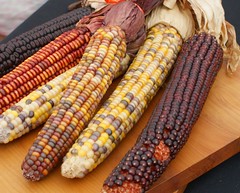 | 4 |
| 4859415949 | Hopewell | A mound builder society that was centered in the Ohio River Valley from about 200 B.C to AD 400 |  | 5 |
| 4859415950 | Anasazi | A Native American who lived in what is now southern Colorado and Utah and northern Arizona and New Mexico and who built cliff dwellings |  | 6 |
| 4859415951 | Iroquois | A later native group to the eastern woodlands. They blended agriculture and hunting living in common villages constructed from the trees and bark of the forests |  | 7 |
| 4859415952 | Cherokee | Are a Native American people historically settled in the Southeastern United States (principally Georgia, the Carolinas and Eastern Tennessee). Linguistically, they are part of the Iroquoian-language family. In the 19th century, historians and ethnographers recorded their oral tradition that told of the tribe having migrated south in ancient times from the Great Lakes region, where other Iroquoian-speaking peoples were located. |  | 8 |
| 4859415953 | Inuit | A member of a people inhabiting the Arctic (northern Canada or Greenland or Alaska or eastern Siberia) |  | 9 |
| 4859415954 | Olmec | The first Mesoamerican civilization. Between ca. 1200 and 400 B.C.E., these people of central Mexico created a vibrant civilization that included intensive agriculture, wide-ranging trade, ceremonial centers, and monumental construction. |  | 10 |
| 4859415955 | Maya | Mesoamerican civilization concentrated in Mexico's Yucatan Peninsula and in Guatemala and Honduras but never unified into a single empire. Major contributions were in mathematics, astronomy, and development of the calendar. |  | 11 |
| 4859415956 | Aztec | (1200-1521) 1300, they settled in the valley of Mexico. Grew corn. Engaged in frequent warfare to conquer others of the region. Worshipped many gods (polytheistic). Believed the sun god needed human blood to continue his journeys across the sky. Practiced human sacrifices and those sacrificed were captured warriors from other tribes and those who volunteered for the honor. |  | 12 |
| 4859415957 | Inca | Their empire stretched from what is today Ecuador to central Chili in the Andes Mountain region of South America. Called the Children of the Sun. |  | 13 |
| 4859415958 | Montezuma II | The last Aztec emperor. Here he is on vacation at the beach, just days before being captured and killed by Cortés in 1520. |  | 14 |
| 4859415959 | Atahualpa | Atahualpa, the last Sapa Inca of the Inca Empire before the Spanish conquest. Atahualpa became emperor when he defeated and executed his older half-brother Huáscar in a civil war sparked by the death of their father, Inca Huayna Capac, from an infectious disease. He was held captive and executed by Pizarro. |  | 15 |
| 4859415960 | Tenochtitlan | Capital of the Aztec Empire, located on an island in Lake Texcoco. Its population was about 150,000 on the eve of Spanish conquest. Mexico City was constructed on its ruins. | | 16 |
| 4859415961 | Machu Picchu | 8,000 ft above sea level between mountain peaks has a sun temple, public buildings, and a central places, possible religious center or an estate of wealthy nobility. | 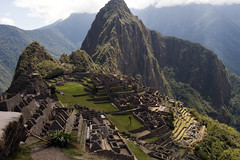 | 17 |
| 4859415962 | Aztec calendar | 365 days, divided into 18 months each with 20 days. |  | 18 |
| 4859415963 | Terrace farming | The cutting out of flat areas (terraces) into near vertical slopes to allow farming. Terrace farms appears as steps cut into a mountainside. This adaptation allowed both the early Chinese, and the Inca of Mesoamerica to grow enough food for their large populations. |  | 19 |
Flashcards
Period 1 AP US History Flashcards
Terms : Hide Images
| 7252258162 | American Indians | A group of both gendered people who are the descendants of migrants who traveled from Asia to North America. Smaller tribes, such as the Iroquois and Algonquian, were mistakenly named "Indians" because Columbus thought he reached the East Indies. That is how the name stuck for centuries. | 0 | |
| 7252258163 | Maize | Is also identified as corn. Main crop in the time period | 1 | |
| 7252258164 | Colombian Exchange | A period of cultural and biological exchanges between the New and Old world. Christopher Columbus set this into motion. It was the exchanges of plants, animals, technology, and diseases. | 2 | |
| 7252258165 | Spanish Caste system | A hierarchical system of race classification created by Spanish elites in Hispanic America during the 18th century. The system could contain in excess of thirty categories. | 3 | |
| 7252258166 | Encomienda system | The crown granted colonists authority over a specified number of natives; the colonists had to protect the natives and convert them to Catholicism. In exchange, the colonist was entitles to those natives labor. | 4 | |
| 7252258167 | Portuguese and Spanish Explorers | A racial caste system, Europeans at the top of the hierarchy, followed by Mestizos, Zambos, and pure blooded Africans at the bottom. | 5 | |
| 7252258168 | Triangular Trade | A multilateral system of trading in which a country pays for its imports from one counting by its exports to another. AN example: shipping goods from Britain to West Africa to be exchanged for slaves, they will be sent to the West Indies for sugar, rum, etc, which will be shipped back to Britain. | 6 | |
| 7252258169 | Mestizos | Those of mixed European's | 7 | |
| 7252258170 | Mayas | A member of an American Indian people of Yucatán and adjacent areas. The mayas are known for their agriculture, and city planning, their math and calendar and their hieroglyphic writing system | 8 | |
| 7252258171 | Aztecs | A member of the American Indian people dominant in Mexico before the Spanish conquest of the 16th century | 9 | |
| 7252258172 | Incas | Members of a south American Indian people living in the central , Andes before the Spanish conquest | 10 | |
| 7252258173 | "Three sister farming" | The three main Agriculture crops of various Native American groups in North America. The crops are winter squash, maze, and climbing beans | 11 | |
| 7252258174 | The renaissance | A cultural rebirth that occurred in Europe from roughly the 14th to 17th century it is based on the rediscovery of the literature of Greece and Rome | 12 | |
| 7252258175 | Treaty of Tordesillas | An agreement between Spain and Portugal and it said and conflicts overland explored by Christopher Columbus or other voyagers | 13 | |
| 7252258176 | Protestant reformation | 16th century religious political intellectual and cultural confusion that hurt catholic Europe. It was set in place the structures and believes that would defined the continent in the modern era | 14 | |
| 7252258177 | Asiento system | Hey system which required to pay a tax on each slave imported. It allowed the Spanish to import cheap labor after the demise of the natives | 15 | |
| 7252258178 | Roanoke Island | The first English settlement in the New World. The settlement failed | 16 | |
| 7252258179 | Cahokia | Location more Mississippian culture thrived before European explorers landed in the Americas. It was one of the greatest cities in the world | 17 | |
| 7252258180 | Metis | A person of mixed American Indian and European American ancestry | 18 | |
| 7252258181 | Zambo | A person of mixed African and Native American heritage | 19 | |
| 7252258182 | Maroon societies | Communities of escaped slaves in the Caribbean Latin America in the United States | 20 | |
| 7252258183 | Middle passage | The sea journey undertaken by slave ships from west Africa to the west Indies | 21 | |
| 7252258184 | Bering Strait | Place were North America and Asia almost touched. Passage was above water allowing agent peoples to walk across to North America | 22 | |
| 7252258185 | Spanish Armada | A Spanish naval invasion for set against England. Was defeated by the English fleet | 23 | |
| 7252258186 | Joint stock companies | Companies made up of group investors who brought the right to establish plantations from the king | 24 | |
| 7252258187 | Calvinists | Major branch of Protestantism that follows the theological tradition and forms of Christian practice of John Calvin and others | 25 | |
| 7252258188 | Proprietary colonies | Grants of land in the form of charter or a license to rule for individuals or groups. They were used to settle areas quickly with British subjects at the proprietors expense during the settlement years | 26 |
Flashcards
Flashcards
Flashcards
AP US History Period 4 Flashcards
Terms : Hide Images
| 6268963028 | Federalist | political party created in the 1790s led by Alexander Hamilton, favored a stronger national government - Supported primarily by the bankers and moneyed interests | 0 | |
| 6268963029 | Democratic-Republicans | Political party created in the 1790's - led by Thomas Jefferson - favored limited government and state rights - supported primarily by the "Common man" | 1 | |
| 6268963031 | Hartford Convention, 1814 | meeting of Federalists during the War of 1812 in which anti-war Federalist threatened to secede from the Union - generally viewed by some as treasonous and the Federalist Part began to die out | 2 | |
| 6268963032 | Era of Good Feelings | the decline of the Federalist Party and the end of the war of 1812 gave rise to a time of political cooperation - associated with the presidency of James Monroe | 3 | |
| 6268963033 | Democrats | political party that brought Andrew Jackson into office in 1829 - supported Jeffersonian ideas of limited government, drawing its support from the "common Man" | 4 | |
| 6268963034 | Whig Party | Political Party created in 1834 as a coalition of anti-Jackson political leaders and dedicated to internal improvements funded by the national government | 5 | |
| 6268963035 | Andrew Jackson | Leader of the Democrats who became the seventh president of the US (1829-1837), known for his opposition to the 2nd Bank of the US, the Indian Removal Act, and opposition to nullification | 6 | |
| 6268963036 | Henry Clay | Leader of the Whig Party who proposed an "American System" to make the United States economically self-sufficient - worked to keep the Union together through political compromise | 7 | |
| 6268963037 | South Carolina Nullification Crisis, 1832-1833 | After SC declared the federal tariff null and void, POTUS Jackson obtained a Force Bill to use military actions against SC - ended with a compromise to lower tariffs over an extended time | 8 | |
| 6268963038 | John C. Calhoun | South Carolina political leader who defended slavery as a positive good and advocated the doctrine of nullification, a policy in which state could nullify federal law | 9 | |
| 6268963039 | Midnight Judges | Federalist judges appointed by John Adams between the time he lost the election of 1800 and the time he left office in March 1801 | 10 | |
| 6268963040 | John Marshall | Appointed to the Supreme Court by John Adams in 1801- served as a chief justice until 1835 - legal decisions gave the Supreme Court more power, strengthened the federal government, and protecting private property | 11 | |
| 6268963041 | Cotton Belt | southern region in US where most of the cotton is grown/deep - south area that stretched from South Carolina to Georgia to the new states in the southwest frontier - had the highest concentration of slaves | 12 | |
| 6268963042 | Marbury v. Madison 1803 | Supreme Court that declared a section of Judiciary Act of 1789 unconstitutional and established the principle of judicial review | 13 | |
| 6268963043 | Judicial Review | The power of the Supreme Court to review the constitutionality of laws passed by Congress | 14 | |
| 6268963044 | McCulloch v. Maryland 1819 | Supreme Court decision that upheld the constitutionality of the BUS - Maryland did not have the right to tax the federal bank and John Marshall wrote, "The power to tax is the power to destroy." | 15 | |
| 6268963045 | Gibbons v. Ogden 1824 | Supreme Court decision stating that the authority of Congress is absolute in matters of interstate commerce | 16 | |
| 6268963047 | Embargo Act 1807 | in order to pressure Britain and France to aspect neutral trading rights, Jefferson issued a government-order ban on international trade - went into effect in 1808 and closed down virtually all U.S. trade with Foreign nations | 17 | |
| 6268963048 | American System 1815 | Henry Clay's proposal to make the U.S. Economically self-sufficient - called for protective tariffs, internal improvements at federal expense, the creation of a second Bank of the United States | 18 | |
| 6268963049 | Panic of 1819 | Financial panic that began when the Second Bank of the US tightened credit and recalled government loans after the price of cotton dropped | 19 | |
| 6268963051 | Second Bank of the United States 1816 | Privately owned bank that operated as both a commercial and fiscal agent for the US government - established in 1816 under a charter that was supposed to last 20 years | 20 | |
| 6268963052 | Tariff of 1816 | first protective tariff in US history - designed primarily to help America's textile industry | 21 | |
| 6268963053 | Tariff of Abominations 1828 | tariff with such high rates that it set off tension between northerners and southerners over tariff issues | 22 | |
| 6268963054 | Panic of 1837 | Economic collapse caused primarily by President Jackson's destruction of the Second Bank of the United States | 23 | |
| 6268963055 | Southern Defense of Slavery | southerners held a widespread belief that blacks were inferior to whites and that the slavery was good for black - also understood that the southern cotton economy was dependent on slave labor | 24 | |
| 6268963056 | Slave Codes | Laws that established the status of slaves denying them basic rights and classifying them as the property of slaveholders | 25 | |
| 6268963057 | Second Great Awakening | an upsurge in religious activity that began around 1800 and was characterized by emotional revival meetings - led to several reform movements designed to make a life better in this world | 26 | |
| 6268963058 | Charles Finney | Presbyterian minister who is credited and is known as the "Father of modern Revivalism" - advocated the abolition of slavery and equal education for women and African Americans | 27 | |
| 6268963059 | Seneca Falls Convention 1848 | the first convention in America for women right's held in NY | 28 | |
| 6268963060 | Elizabeth Cady Stanton | Advocate of women right's, including the right to vote -organized (with Lucretia Mott) the first women's rights convention at Seneca Falls, NY | 29 | |
| 6268963061 | Dorothea Dix | Pioneer in the moment for special treatment for the mentally ill | 30 | |
| 6268963062 | Horace Mann | Massachusetts educator who called for publicly funded education for all children | 31 | |
| 6268963063 | Utopian Communities | Idealistic reform movement based on the belief that a perfect society could be created on Earth - Significant Utopian experiments were established at New Harmony, Indiana, Book Farm, Massachusetts and Oneida Community in New York | 32 | |
| 6268963065 | William Lloyd Garrison | Radical abolitionist in Massachusetts who published the liberator, an antislavery newspaper | 33 | |
| 6268963066 | Sojourner Truth | Former Slave (freed in 1827) who became a leading abolitionist and feminist | 34 | |
| 6268963067 | Neoclassicism | Revival in architecture and art in the late 1700s and early 1800s that was inspired by Greek and Roman Models | 35 | |
| 6268963068 | Hudson River School 1825-1875 | The first native school of painting in the US - Attracting artists who were rebelling against neoclassicism - painted primarily landscapes | 36 | |
| 6268963069 | Transcendentalism | Philosophical and literary movement that believed God existed within human being and nature - believed intuition was the highest source of knowledge | 37 | |
| 6268963070 | Ralph Waldo Emerson | Philosopher, writer, and poet who became a central figure in American Transcendentalist | 38 | |
| 6268963071 | Henry David Thoreau | Writer and naturalist - With Ralph Waldo Emerson, he became America's best known transcendentalist | 39 | |
| 6268963072 | John James Audubon | Naturalist and painter who became well-known for his attempt to document all types of American birds | 40 | |
| 6268963074 | Samuel Slater | known as the "Father of the American Industrial Revolution," - brought British textile technology to the United States | 41 | |
| 6268963075 | John Deere | Invented the steel plow in 1837, which revolutionized farming - the steel plow broke up soil without the soil getting stuck to the plow | 42 | |
| 6268963077 | Interchangeable parts | Parts that were identical and which could be substituted for one another - developed by Eli Whitney for the manufacturing of muskets | 43 | |
| 6268963078 | Erie Canal 1817-1825 | 350 mile canal built by the state of NY that stretched from Buffalo to Albany, the canal revolutionized shipping in NY | 44 | |
| 6268963081 | Mason-Dixon Line | boundary between PA and MD that marked the division between free and slave states before the Civil War | 45 | |
| 6268963082 | Cult of Domesticity | the belief that a woman's proper role in life was found in Domestic pursuits (raising children, taking care of the house) | 46 | |
| 6268963084 | Louisiana Purchase 1803 | U.S. purchased the LA Territory from France for $15 million, doubling the size of the U.S. and giving the U.S. full control of the Mississippi River | 47 | |
| 6268963085 | Lewis and Clark expedition 1804-1806 | Expedition to explore the Louisiana Territory | 48 | |
| 6268963086 | War Hawks | Members of Congress from the West and South elected in 1810 who wanted war with Britain in the hopes of annexing new territory and ending British trade with the Indians of the Northwest | 49 | |
| 6268963087 | War of 1812 | 1812-1815, War between the U.S. and Great Britain caused primarily by the British violation of American neutral rights on the high seas. - ended with an agreement of "status quo ante" (a return to how things were before the war) | 50 | |
| 6268963088 | Adams-Onis Treaty, 1819 | Treaty between the U.S. and Spain that ceded Florida to the U.S | 51 | |
| 6268963089 | Monroe Doctrine 1823 | POTUS' unilateral declaration that the Americas would be closed to further European colonization stated the U.S. would not allow European interference in the affairs of the Western Hemisphere | 52 | |
| 6268963091 | Manifest Destiny | Belief that the U.S. was destined to expand across the North American continent | 53 | |
| 6268963092 | Tecumseh | Shawnee leader who established an Indian confederacy that he hoped would be a barrier to white expansion - Defeated at the Battle of Tippecanoe in 1811 by U.S. forces led by General William Henry Harrison | 54 | |
| 6268963093 | Indian Removal Act, 1830 | Law that provided for the removal of all Indian tribes east of the Mississippi and the purchase of Indian lands for resettlement | 55 | |
| 6268963094 | Worcester v. Georgia 1832 | A Supreme Court ruling that declared a state did not have the power to enforce laws on lands that were not under state jurisdiction - John Marshall wrote that the state of Georgia did not have the power to remove Indians | 56 | |
| 6268963095 | Trail of Tears 1838 | Forced march of the Cherokee people from Georgia to Indian Territory in the winter | 57 | |
| 6268963097 | Missouri Compromise 1820 | Law proposed by Henry Clay admitting Missouri to the U.S. as a slave state and Maine as a free state | 58 | |
| 6268963098 | American Anti-Slavery Society | Abolitionist society founded by William Lloyd Garrison - included Frederick Douglass as a significant leader of the society | 59 |
Flashcards
AP US History Period 6 (1865-1898) Flashcards
Terms : Hide Images
| 6003421025 | People's (Populist) Party | An agrarian-populist political party in the United States. For a few years, 1892-96, it played a major role as a left-wing force in American politics. Drew support from angry farmers in the West and South and operated on the left-wing of American politics. Highly critical of capitalism, especially banks and railroads. Allied itself with the labor movement. |  | 0 |
| 6003421026 | assimilation | the process by which a person or a group's language and/or culture come to resemble those of another group |  | 1 |
| 6003421029 | The Gilded Age | The late 19th century, from the 1870s to about 1900. Term derived from writer Mark Twain's 1873 The Gilded Age: A Tale of Today, which satirized an era of serious social problems masked by a thin gold gilding of economic progress. | 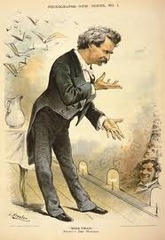 | 2 |
| 6003421030 | Social Darwinism | Term coined in the late 19th century to describe the idea that humans, like animals and plants, compete in a struggle for existence in which natural selection results in "survival of the fittest." Provided a justification for the enormous wealth and power wielded by industrialists in the latter half of the 19th century. |  | 3 |
| 6003421031 | Gospel of Wealth | An essay written by Andrew Carnegie in June of 1889 that describes the responsibility of philanthropy by the new upper class of self-made rich. |  | 4 |
| 6003421032 | Jane Addams | A pioneer American settlement activist/reformer, social worker, public philosopher, sociologist, author, and leader in women's suffrage and world peace. She created the first Hull House. Co-winner of 1931 Nobel Peace Prize. |  | 5 |
| 6003421033 | Plessy v. Ferguson | 1896 - Legalized segregation in publicly owned facilities on the basis of "separate but equal." |  | 6 |
| 6003421034 | racial segregation | the separation of humans into ethnic or racial groups in daily life. Generally applies to activities such as eating in a restaurant, drinking from a water fountain, using a public toilet, attending school, going to the movies, riding on a bus, or in the rental or purchase of a home. | 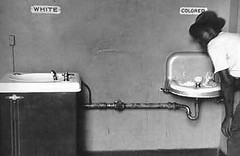 | 7 |
| 6003421036 | free enterprise | an economic system that permits unrestricted entrepreneurial business activity; associated with laissez-faire capitalism |  | 8 |
| 6003421037 | trust | A set of companies managed by a small group known as trustees, who can prevent companies in the trust from competing with each other. |  | 9 |
| 6003421039 | socialist | one who believes in the ownership and control of the major means of production by the whole community rather than by individuals or corporations |  | 10 |
| 6003421040 | radical | one who believes in fundamental change in a political, economic, or social system |  | 11 |
| 6003421043 | anarchist | one who believes that formal, coercive government is wrong in principle |  | 12 |
| 6003421044 | tenement | a multi-dwelling building, often poor or overcrowded |  | 13 |
| 6003421050 | prohibition | forbidding by law the manufacture, sale, or consumption of liquor |  | 14 |
| 6003421052 | landslide | an overwhelming majority of votes for one side in an election |  | 15 |
| 6003421054 | bimetallism | the legalized concurrent use of two precious metals as currency at a fixed ratio of value; in US History associated with the Free Silver movement |  | 16 |
| 6003421055 | lobbyist | someone who promotes an interest or cause before a political body, often for pay |  | 17 |
| 6003421060 | Civil Rights Cases of 1883 (a single decision on a group of cases with similar legal problems) | Legalized segregation with regard to private property. |  | 18 |
| 6003421061 | Wabash v. Illinois (1886) | Declared state-passed Granger laws that regulated interstate commerce unconstitutional. |  | 19 |
| 6003421063 | Plessy v. Ferguson (1896) | Legalized racial segregation in publicly owned facilities on the basis of "separate but equal." |  | 20 |
| 6003421065 | Land Grants | land given by government to universities and railroad companies |  | 21 |
| 6003421066 | Dawes Act | land given to individual Indians to discourage tribal mindset; encouraged Indians to farm for a living instead of communally owning land |  | 22 |
| 6003421067 | Bureau of Indian Affairs | designed to assimilate Native Americans (children particularly) into American culture |  | 23 |
| 6003421068 | Open Range | the idea that cattle can be grazed on large tracts of public and/or private property; invention of barbed wire ended this idea and drove many small cattle ranches out of business and off their small plots of land |  | 24 |
| 6003421069 | Vertical Integration | Strategy to maximize profits by attempting to own every step of the manufacturing process (ex. Carnegie Steel) |  | 25 |
| 6003421070 | Horizontal Integration | Strategy to maximize profits by attempting to purchase competing companies in the same industry; monopoly-building (ex. Rockefeller's Standard Oil) | | 26 |
| 6003421071 | Knights of Labor | American labor organization in the 1880s led by Terence V. Powderly. Organized a wide range of workers, including skilled and unskilled, and had broad reform goals. |  | 27 |
| 6003421072 | Haymarket Riot | Labor dispute in Chicago that ended with a bomb being thrown at police resulting in many deaths. Led to an unfavorable public opinion of organized labor. |  | 28 |
| 6003421073 | American Federation of Labor | An organization of various trade unions that fought for specific reforms (as opposed to broad changes supported by the Knights of Labor). |  | 29 |
| 6003421074 | Homestead and Pullman Strikes | Industrial lockouts and strikes that showed battle between corporations and labor unions. Ended with government intervention on the side of big business. |  | 30 |
| 6003421075 | Urbanization | movement of people from rural communities and settlements to big cities |  | 31 |
| 6003421076 | "New Immigrants" | immigrants from southern and eastern Europe such as Poland, Italy, etc. that arrived in the US in the latter half of the 19th century |  | 32 |
| 6003421077 | Chinese Exclusion Act | First law limiting immigration based on race; effectively stopped immigration from China through the end of WWII. |  | 33 |
| 6003421078 | Political Machine | Unofficial political organization that works to win elections in order to exercise power; sometimes referred to as a shadow government; rose to power in the late 1800s because of ill-equipped local governments that failed to meet the needs of growing urban populations |  | 34 |
| 6003421079 | Tammany Hall | Political machine of New York City that was well-known for its corruption; lead by William Boss Tweed |  | 35 |
| 6003421080 | Pendelton Civil Service Act | Standardized an exam for federal employees so that people were awarded jobs on merit rather than political affiliations; also made it illegal to remove federal employees without just cause. |  | 36 |
| 6003421081 | Sherman Antitrust Act | Outlawed monopolistic business practices; not effective initially without a strong progressive federal government that would enforce it. |  | 37 |
| 6003421082 | Grange Movement and Farmers Alliance | Grassroots movements that attempted to address the plight of farmers in the late 1800s; attempted to regulate railroads and enlarge opportunity for credit; evolved into Populist movement. |  | 38 |
| 6003421083 | William Jennings Bryan | Democratic presidential hopeful that was a member of the Populist Party; free silver advocate; "Do not crucify mankind on a cross of gold". |  | 39 |
| 6003421085 | Susan B. Anthony | Social reformer who campaigned for women's rights, the temperance, and was an abolitionist, helped form the National Woman Suffrage Association. |  | 40 |
| 6003421086 | Laissez-Faire Economics | This was an economic philosophy begun by Adam Smith in his book, Wealth of Nations, that stated that business and the economy would run best with no interference from the government. This economic thought dominated most of the time period of the Industrial Revolution. |  | 41 |
| 6003421087 | New South | After the Civil War, southerners promoted a new vision for a self-sufficient southern economy built on modern capitalist values, industrial growth, and improved transportation. In reality, this growth was fairly slow. |  | 42 |
| 6003421088 | Americanization | Process of assimilating immigrants into American culture by teaching English, American history, and citizenship. |  | 43 |
| 6003421089 | middle class | a social class made up of skilled workers, professionals, business people, and wealthy farmers |  | 44 |
| 6003421090 | Interstate Commerce Act | Created the Interstate Commerce Commission (ICC) to regulate railroads to be fairer to farmers; first legislation to regulate corporations; ineffective because government failed to enforce it. |  | 45 |
| 6003421091 | Andrew Carnegie | A Scottish-born American industrialist and philanthropist who founded the Carnegie Steel Company in 1892. By 1901, his company dominated the American steel industry. |  | 46 |
| 6003421092 | transcontinental railroads | a railroad that would cross the continent and connect the East to the West; opened new markets and helped spur the Industrial Revolution |  | 47 |
| 6003421093 | Social Gospel | Late 19th-century movement Protestant movement preaching that all true Christians should be concerned with the plight of immigrants and other poor residents of American cities and should financially support efforts to improve lives of these poor urban dwellers. Settlement houses were often financed by funds raised by ministers of this movement. |  | 48 |
| 6003421094 | Standard Oil | John D. Rockefeller's company that gained a monopoly over the world petroleum market with the practice of trusts and swift elimination of competition. |  | 49 |
| 6003421095 | Carnegie Steel | A steel producing company created by Andrew Carnegie to manage business at his steel mills in the Pittsburgh, Pennsylvania area in the late 19th century. Significance: had a monopoly in the steel industry. vertical integrations. |  | 50 |
| 6003421096 | John D. Rockefeller | Wealthy owner of Standard Oil Company. Considered to be a robber baron who used ruthless tactics to eliminate other businesses. Built trusts and used money to influence government. | | 51 |
| 6003421097 | Industrial Revolution | Period characterized by the rapid social and economic changes in manufacturing and agriculture that occurred in England during the late 18th century and rapidly diffused to other parts of the developed world. In the US, this occurred during the period roughly 1825-1925. |  | 52 |
Pages

Need Help?
We hope your visit has been a productive one. If you're having any problems, or would like to give some feedback, we'd love to hear from you.
For general help, questions, and suggestions, try our dedicated support forums.
If you need to contact the Course-Notes.Org web experience team, please use our contact form.
Need Notes?
While we strive to provide the most comprehensive notes for as many high school textbooks as possible, there are certainly going to be some that we miss. Drop us a note and let us know which textbooks you need. Be sure to include which edition of the textbook you are using! If we see enough demand, we'll do whatever we can to get those notes up on the site for you!
