AP Notes, Outlines, Study Guides, Vocabulary, Practice Exams and more!

Religions Quiz- AP World Flashcards

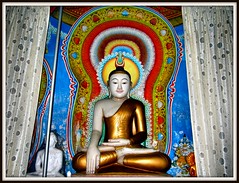
Buddhism
Hinduism
Judaism
Chinese Philosophies

Terms : Hide Images
4401099699Siddharta GauthamaWho is the founder of Buddhism?0
4401099700He was a ruler; KshatriyasWhat was Siddharta Gautama's caste?1
4401099701an old man, a very sick man, a corpse, and a monkWhat four people change Siddharta Gauthama's perspectie on life when he leaves the palace for the first time?2
4401099702He left in 534 BCE, around age 29In what year, and around what age did Siddharta Gauthama leave the palace in a search to find the end to no more suffering?3
4401099703a Bodh Gaya treeWhat type of tree did Siddharta Gauthama meditate under?4
4401099704Enlightened OneWhat does "Buddha" directly translate to?5
4401099705Life is full of suffering, suffering is caused by desires, if we end desires we end suffering, and if you want to end desires, you follow the Eightfold PathWhat are the Four Noble Truths?6
4401099706A moral code of how to reach Enlightenment (nirvana) in BuddhismWhat is the Eightfold Path?7
44010997076.1%What percentage of the world's population is Buddhist?8
4401099708Kong FuzeWho founded Confucianism?9
4401099709Master Philospher KongWhat does "Kong Fuze" translate to?10
4401099710being a political advisorWhat career was Kong Fuze originally interested in?11
4401099711The AnalectsWhat is the book of Confucianism?12
4401099712Ren, Li, XiaoWhat are the values of Confucianism?13
4401099713if you want to be a leader (ruler), you must be kind, caring, and compassionateWhat does the character "Ren" stand for in Confucianism?14
4401099714knowing how to behave; etiquetteWhat does the "Li" character stand for in Confucianism?15
4401099715filial piety (respect your elders)What does the character "Xiao" stand for in Confucianism?16
4401099716people who follow the values of ConfucianismWhat is a junzi?17
4401099717father and son, husband and wife, older brother and younger brother, and friend and friendWhat are the 5 relationships of Confucianism?18
4401099718a leader of china who really tried to implement Confucianism, but ultimately failedWho was Mencius?19
4401099719Laozi in the 6th century bceWho founded Daoism and when?20
4401099720the DaodejingWhat is the book of Daoism?21
4401099721natural way (always exists, nothingness is everything)What does "Dao" mean?22
4401099722the doaistic belief of how society should be run and how government should workWhat is the Doctrine of wuwei?23
4401099723they are uselessWhat do Daoists ultimately believe about education and government?24
4401099724Han FeiziWho founded Legalism?25
4401099725Be a farmer, or be in the militarywhat were the two (occupational) focuses of legalism?26
4401099726the QinWho unified China using legalism?27
4401099727big punishments for small crimesWhat is a summary of the belief of legalism?28
4401099728the Vedas and Upanishads?What two texts is Hinduism a blend of?29
4401099729the DravidiansWho had the Upanishads originally?30
4401099730how you're supposed to actWhat is a "dharma"31
4401099731the all powerful force in Hinduism that exists in everything in the worldWhat is the brahman?32
4401099732to lead a good life to that you can be one with the brahmanWhat is the ultimate goal of Hinduism?33
4401099733point of judgement in reincarnationWhat does "Samsara" mean?34
4401099734KarmaWhat determines your next life in the cycle of reincarnation?35
4401099735In hinduism, while you're alive, you come to the realization that you are not an individual, you are a piece of the brahmanWhat is "moksha?"36
4401099736elephant Hindu god who removes all hardships and barriersWho is Ganesh?37
4401099737the Hindu god who created everythingWho is Brahma?38
4401099738the Hindu god of reconstruction, watches over everyone on earthWho is Vishnu?39
4401099739The most powerful Hindu god, third eye could either destroy everything or all bad thingsWho is Shiva?40
4401099740the Hindu goddess of powerWho is Shakti?41
4401099741the Hindu Goddess of wealthWho is Lakshmi?42
4401099742Hindu goddess of knowledgeWho is Saraswathi?43
4401099743the Hindu text that depicts the epic tale of RamaWhat is the Ramayan?44
4401099744The Hindu text about two cousins who go to war over a kingdomWhat is the Mahabhrata?45

Unit 4 Ap World Flashcards

Terms : Hide Images
5893096123The Monsoon SystemDuring the summer the winds blow regularly from the southwest, whereas in the winter they come from the northeast. Knowledge of these winds enabled mariners to sail safely and reliably to all parts of the Indian Ocean basin.0
5893096124Trade in the Hellenistic WorldSpices, pepper, cosmetics, gems, and pearls from India traveled by caravan and ship to Hellenistic cities and ports. Grain from Persia and Egypt fed urban populations in distant lands. Throughout the region from India to the Mediterranean, merchants conducted a brisk trade in slaves recruited largely from the ranks of kidnapping victims or prisoners of war.1
5893096125Sea lanes and Maritime TradeThe silk roads included a network of sea lanes that sustained maritime commerce throughout much of the eastern hemisphere. A wide variety of manufactured products and agricultural commodities traveled over the silk roads.2
5893096126Trade goodsMediterranean merchants and manufactures often imported raw materials such as uncut gemstones, which they exported as finished products in the form of expensive jewelry and decorative items.3
5893096127Buddhism in Central AsiaBuddhism first established a presence in the oasis towns along the silk roads. The oases depended heavily on trade for their prosperity and they allowed merchants to build monasteries and invite monks and scribes into their communities.4
5893096128Buddhism in ChinaThe earliest Buddhists in China were foreign merchants who observed their faith in the enclaves that Han Dynasty officials allowed them to inhabit in Chang'an and other major cities. In about the 5th century C.E., Chinese began to respond enthusiastically to Buddhism.5
5893096129Buddhism and Hinduism in Southeast AsiaAs Buddhism spread north from India into central Asia and China, also both Buddhism and Hinduism also began to attract a following in southeast Asia. Many rulers converted to Buddhism, while others promoted the Hindu cults of Shiva or Vishnu.6
5893096130Christianity in Southwest AsiaAs Christianity became a prominent source of religious inspiration within the Roman Empire, the young faith also traveled the trades routes and found followers beyond the Mediterranean basin. They attracted large number of converts in southwest Asia. Christians in southwest Asia often followed the strict ascetic regimes.7
5893096131Mani and ManichaeismManichaeism was the faith derived from the prophet Mani, a devout Zoroastrian form Babylon in Mesopotamia. Mani drew deep influence from Christianity and Buddhism. Mani saw a need for a prophet for all humanity and he promoted a syncretic blend for Zoroastrian, Christian, and Buddhist elements as a religious faith that would serve the needs of a cosmopolitan world.8
5893096132Manichaean EthicsMani promoted an ascetic lifestyle and insisted that disciples observe high ethical standards. Devout Manichaeans, known as "the elect," abstained from marriage, sexual, relations, fine clothing, meat, rich foods, and other personal comforts, dedicating themselves instead to prayer, fasting, and ritual observances. Less zealous are "hearers," led more conventional lives, but followed a strict moral code and provided food and gifts for the elects.9
5893096133Decline of ManichaeismZoroastrian leaders urged the Sasanid rulers to suppress Mani's movement as a threat of public order. Mani himself died in chains as a prisoner of the Sasanid emperor, who sought to use Zoroastrianism as a cultural foundation for the unification of his realm.10
5893096134Epidemic diseasesThe most destructive epidemic diseases are smallpox and measles, and epidemics of bubonic plague ma also have erupted. All three diseases are devastating when they break out in populations without resistance, immunities, or medicines to combat them.This caused the population to decline.11
5893096135The Barracks EmperorsMost of them were generals who seized power, held it briefly, and then suddenly lost it when they were displaced by rivals or their mutinous troops.Most died violently, only one is know for sure to have succumbed to natural causes.12
5893096136ConstanineHe and his successors faced the same sort of administrative difficulties that Diocletian had attempted to solve by dividing the empire. As population declined and the economy contracted, emperors found it increasingly difficult to marshall the resources needed to govern and protect the vast Roman empire.13
5893096137The HunsThe Huns began an aggressive westward migration from their homeland in Central Asia. They spoke a Turkish language, and probably were cousins of nomadic Xiongnu who inhabited the Central Asian steppe lands west of China. The Huns invaded man frontiers in the Balkan region, menaced Gail and northern Italy, and attacked Germanic peoples.14
5893096138St. AugustineBishop of North African city of Hippo(modern day Annaba in Algeria). Augustine had a fine education, and he was conversant with the leading intellectual currents of the day. He became disillusioned with both Hellenistic philosophical school and Manichaeism and converted to Christianity. For the remainder of his life, he worked to reconcile Christianity with Greek and Roman philosophical traditions.15
5893096139The Early Byzantine StateThe Byzantine emperors built a distinctive tradition of statecraft. The most important feature of the state was a tightly centralized rule that concentrated power in the hands of a highly exalted emperor. Constantine built his new capital to lavish standards, all in an effort to create a new Rome fit for the ruler of a mighty empire.16
5893096140CaesaropapismConstantine set a precedent by hedging his rule with an aura of divinity. He could not claim the divine status that some of his imperial predecessors had sought to appropriate. As the first Christian emperor, however, Constantine claimed divine favor and sanction for his rule. The policy called "caesaropapism" whereby the emperor not only rule as secular lord but also played an active and prominent role in ecclesiastical affairs.17
5893096141The Byzantine CourtEven dress and court etiquette drew attention to the lofty status of Byzantine rulers. The emperors wore heavily bejeweled crowns and dressed in magnificent silk robes dyed a dark rich purple. High officials presented themselves to the emperor as slaves, not subjects.18
5893096142Justinian and TheodoraJustinian is an energetic and tireless worker known to his subjects as " the sleepless emperor," who influenced the development of the Byzantine empire with the aid of his wife Theodora. The couple were intelligent, strong willed, and disciplined. Justinian found a position in the imperial bureaucracy, and soon mastered the intricacies of Byzantine finance. Theodora proved to be a sagacious advisor.19
5893096143Justinian's CodeHis most significant political contribution was his codification of Roman law. He ordered a systematic review of Roman law that was more thorough than any that had taken place before. He issued the Body of Civil Law, which won recognition as the defensive codification of Roman law. It continued to serve as a source of legal inspiration.20
5893096144Imperial OrganizationThe Byzantine empire was more compact and manageable after the eighth century than was the far flung realm of Justinian. Rulers responded to the challenge of Islam with political and social adjustments that strengthened the empire that remained in their hands. The theme system placed an imperial province under the jurisdiction of a general who assumed responsibility for both its military defense and its civil administration.21
5893096145Liudprand of CremonaHe described the Byzantine emperor as "a monstrosity of a man, a dwarf, fat headed and with tiny mole's eyes; disfigured by a short, broad, thick beard half going gray; disgraced by a neck scarcely an inch long; piglike by reason of the big close bristles on his head." He described Constantinople itself as a formerly prosperous and illustrious city that had become shabby, sleazy, and pretentious.22
5893096146The PeasantryByzantine economy and society were strongest when the empire supported a large class of free peasants who owned small plots of land.Free peasants cultivated their land intensively in hopes of improving their families' fortunes. Peasants did not become slaves, but neither did they remain entirely free.23
5893096147Decline of the Free PeasantryLarge estates did not contribute to imperial tax coffers a the rate of small peasants' holdings, since wealthy landowners had the influence to obtain concessions and exemptions. It diminished the pool of recruits available for service in military forces organized under the theme system.24
5893096148TradeConstantinople served as the main area for trade in the western part of Eurasia. The merchants maintained trade routes with Asia, Russia, northern Europe, and lands of the Black Sea. The Byzantine Empire dominated trade, people all over recognized the gold coin used in the empire.25
5893096149Housing in ConstantinopleAristocrats had large palaces, courtyards, reception halls, libraries, and chapels. There were also places for slaves and extended family members to stay. The women lived in separate apartments, and they did not receive male visitors outside the family.26
5893096150Attractions in ConstantinopleThere were many attractions in Constantinople. There were many baths, which were used for relaxation, hygiene, and exercise. There were also taverns and restaurants. These places were used as social gatherings for the people of the city. There were stadiums, where people watched clowns, jugglers, acrobats, and dwarfs.27
5893096151Greens and BluesChariot races were extremely popular in the Byzantine Empire. The Greens and Blues were a rivalry that preformed in the Hippodrome. Sometimes the Greens and Blues fought in the streets and they both tried to get imperial officials to favor their group. By the late 17th century, the rivalry had faded.28
5893096152Byzantine EducationEducation was important in the Byzantine Empire, because of such a large bureaucracy. The aristocrats often hired tutors to teach their children. Girls and boys both had an opportunity to get an education. There were also state organized schools, which taught reading, writing, science, and more.29
5893096153Byzantine ScholarshipThe Byzantine scholarship represented the cultural legacy of Greece. The scholars focused on literature, history, and philosophy, rather than science and medicine. The scholars tried extremely hard to preserve the classical Greece culture.30
5893096154Organization of TradeBanks and business partners played a major role in the success of Byzantine trade. The banks gave loans to people wanting to start businesses. Merchants often made partnerships.Banking and partnerships was not a new thing, but the Byzantines made it much more successful.31
5893096155IconoclasmIconoclasm means the breaking of icons. Emperor Leo the 3rd, started destroying religious images and taking them out of churches. The Byzantine empire had many paintings of Jesus, Saints, and other Holy figures. Leo wanted to stop the worshiping of religious images, and he wanted people to start worshiping physical idols.32
5893096156AsceticismMany people wanted to live a holy life style. Some people left society, and went to deserts. Others decided to practice celibacy, fasting, and prayer. During the 5th century, men and women demonstrated their commitment by perching on top of tall pillars.33
5893096157Mt. AthosMt. Athos was the main place where Byzantine monasteries went. Mt. Athos prohibited women, human and animals, because they wanted the monks to stay pure. Monks and nuns did a lot of community service. They also organized medical attention, to places that experienced disasters.34
5893096158Constantinople and RomeTensions between Constantinople and Rome were centered around political strains. The Christian communities divided into 2 communities. Religious and theological differences separated the two. Later on, there were many differences that arose, some ritual and doctrinal differences caused an even larger separation.35
5893096159SchismThe Byzantine patriarchs and Roman popes disputed their rights and power. The patriarchs the autonomy of all Christian rules. The popes had the main authority over Christendom. The division became so great, that the eastern and western churches went their own ways.36
5893096160Social ProblemsGenerals and their offspring started intermarrying, which created an elite class with an amazing military, political, social, and economic power. Rebels never defeated imperial forces, but their revolts hurt the empire.37
5893096161Challenges from the EastAs the Europeans expanded into the Byzantine empire, nomadic Turkish people invaded from the east. There was also Muslim invaders. The Byzantine empire weakened, as a result of the conquering of Anatolia, the main source of their grain, wealth, and military.38
5893096162Muhammad's Early LifeHe was to a family of merchants. As he reached 40 Muhammad under went a spiritual experience. His experiences left him with convictions of the world. He also found that Allah was the one true deity.39
5893096163The QuranThe Quran is the holy book for the Islamic religion. The Quran contains Muhammad's understandings of Allah. The Quran also contains many of Muhammad's sayings. There are also social and legal customs and biographies of Muhammad.40
5893096164Conflict at MeccaMuhammad's growing popularity led him to face conflict with elites at Mecca. The conflict was centered around religious disagreements. Muhammad insisted that Allah was the most divine power. Arabs believed in deities and spirits. The tensions were also personal disputes.41
5893096165The HijraHijra means migration. Muhammad's move to Medina serves as the starting point of the Islamic calendar.42
5893096166The UmmaUmma means community of the faithful. Muhammad organized his followers into Umma, and it had its own legal and social code. He led the community with daily prayers and in battles. He looked after the economic welfare of the Umma.43
5893096167Muhammad's Return to MeccaMuhammad and his followers planned to return to Mecca. In 630, they attacked and conquered the city. They forced the elites to adopt Muhammad's faith, and to base the government off of Allah. They made many changes in the city. By Muhammad's death, they had conquered most of Arabia.44
5893096168The Five Pillars of IslamThe Five Pillars of Islam are the foundation of the Islamic religion. The FIve Pillars include, acknowledge Allah as the one and only god, praying to Mecca, fast during Ramadan, contribute to weak and poor, and visit Mecca, if you are able to.45
5893096169JihadJihad means the struggle. Many Muslims have taken this term into many different meanings. In one meaning, jihad imposes spiritual obligations, causing them to do evil and harm. In another way, jihad has called Muslims to go against ignorance and unbelief, by spreading the word of Islam.46
5893096170Islamic Law: The ShariaThe Sharia came many centuries after Muhammad. They offered guidance on proper behavior in almost every aspect of life. It had inspiration from the Quran and Muhammad's early life and teachings. It talked about family life, slavery, business, and much more.47
5893096171The CaliphA caliph is a deputy. They chose the caliph by choosing a genial man, who was one of the prophet's closest friends48
5893096172Expansion of IslamAfter Muhammad's death, Islamic armies arose and went well beyond Arabia, and they took their religion with them. They attacked many empires when they were exhausted from other conflicts. This helped the army become powerful. They took over most of Mesopotamia, Byzantine Syria, and Palestine. The continued to expand.49

Campbell Biology: Ninth Edition - Chapter 6: A Tour of the Cell Flashcards

Vocabulary: cell, light microscope, electron microscope, magnification, resolution, organelles, plasma membrane, cytosol (cytoplasm), nucleoid, endomembrane system, endoplasmic reticulum (rough and smooth), Golgi apparatus, lysosome, ribosome, mitochondria, cytoskeleton, nucleus, nucleolus, chromosome, chromatin, phagocytosis, vacuoles (food vacuole, contractile vacuole, central vacuole), chloroplast, peroxisome, plastid, thylakoid, granum, stroma, photosynthesis, glyoxysomes, centrioles, pseudopodia, cytoplasmic streaming, extracellular matrix (ECM), collagen, plasmodesmata, tight junctions, desmosomes, gap junctions
Objectives: After attending lectures and studying the chapter, the student should be able to:
1. State the cell theory.
2. State the types of light microscopes and electron microscopes used in the study of cells, and discuss the general advantages and disadvantages of each.
3. Relate cell size to surface-to-volume ratio and to cellular metabolic activity.
4. Describe the major differences between prokaryotic and eukaryotic cells.
5. Give examples of prokaryotic organisms (prokaryotes) and eukaryotic organisms (eukaryotes).
6. Recognize, label, and describe the structure and function of each of the following components of prokaryotic cells: cell wal nucleoid region, plasma membrane, flagellum (flagella)
cytoplasm pilus (pili)
ribosomes capsule
chromosome
7. Distinguish between the 2 components of the cytoplasm: cytosol and organelles.
8. Distinguish between the 2 conditions of the genetic material: chromatin and chromosome.
9. Describe the structural differences between prokaryotic and eukaryotic cells.
10. Give examples of and describe the major differences between animal and plant cells.

Terms : Hide Images
9253709302light microscope (LM)an optical instrument with lenses that refract (bend) visible light to magnify images of specimens0
9253709303organelleany of several membrane-enclosed structures with specialized functions, suspended in the cytosol of eukaryotic cells1
9253709304electron microscope (EM)a microscope that uses magnets to focus an electron beam on or through a spectrum, resulting in a practical resolution of a hundredfold greater than that of a light microscope using standard techniques. A transmission electron microscope (TEM) is used to study the internal structure of thin sections of cells. A scanning electron microscope (SEM) is used to study the fine details of the cell surface.2
9253709305scanning electron microscope (SEM)a microscope that uses an electron beam to scan the surface of the sample, coated with metal atoms, to study details of its topography.3
9253709306transmission electron microscope (TEM)a microscope that passes electron beam through very thin sections stained with metal atoms and is primarily used to study the internal ultrastructure of cells4
9253709307cell fractionationthe disruption of a cell and separation of its parts by centrifugation at successively higher speeds5
9253709308cytosolthe contents of the cell bounded by the plasma membrane; in eukaryotes, the portion exclusive of the nucleus6
9253709309eukaryotic cella type of cell with membrane-enclosed nucleus and membrane-enclosed organelles. Organisms with eukaryotic cells (protists, fungi, and animals) are called eukaryotes7
9253709310prokaryotic cellNo nucleus DNA is in an unbound region called the nucleoid No membrane-bound organelles Cytoplasm bound by the plasma membrane Pr8
9253709311nucleoida non-membrane-bounded region in a prokaryotic cell where the DNA is concentrated9
9253709312cytoplasmthe contents of the cell bounded by the plasma membrane; in eukaryotes, the portion exclusive of the nucleus10
9253709313plasma membranethe membrane at the boundary of every cell that acts as a selective barrier, regulating the cell's chemical composition11
9253709314nucleusan atom's central core, containing protons and neutrons; the organelle of a eukaryotic cell that contains the genetic material in the form of chromosomes, made up of chromatin; a cluster of neutrons12
9253709315nuclear envelopein a eukaryotic cell, the double membrane that surrounds the nucleus, perforated with pores that regulate traffic with the cytoplasm. The outer membrane is continuous with the endoplasmic reticulum13
9253709316nuclear laminaa netlike array of protein filaments that lines the inner surface of the nuclear envelope and helps maintain the shape of the nucleus14
9253709317chromosomea cellular structure carrying genetic material, found in the nucleus of eukaryotic cells. Each chromosome consists of one very long DNA molecule and associated proteins (a bacterial chromosome usually consists of a single circular DNA molecule and associated proteins. It is found in the nucleoid region, which is not membrane bounded.15
9253709318chromatinthe complex of DNA and proteins that makes up eukaryotic chromosomes. When the cell is not dividing, chromatin exists in its dispersed form, as a mass of very long, thin fibers that are not visible with a light microscope16
9253709319nucleolusa specialized structure in the nucleus, consisting of chromosomal regions containing ribosomal RNA (rRNA) genes along with ribosomal proteins imported from the cytoplasm; site of rRNA synthesis and ribosomal subunit assembly17
9253709320ribosomea complex of rRNA and protein molecules that function as a site of protein synthesis in the cytoplasm; consists of a large and small subunit. In eukaryotic cells, each subunit is assembled in the nucleolus18
9253709321endomembrane systemthe collection of membranes inside and surrounding a eukaryotic cell, related either through direct physical contact or by the transfer of membranous vesicles; includes the plasma membrane, the nuclear envelope, the smooth and rough endoplasmic reticulum, the Golgi apparatus, lysosomes, vesicles, and vacuoles19
9253709322vesiclea membranous sac in the cytoplasm of a eukaryotic cell20
9253709323endoplasmic reticulum (ER)an extensive membranous network in eukaryotic cells, continuous with the outer nuclear membrane and composed of ribosome-studded (rough) and ribosome-free (smooth) regions21
9253709324smooth ERthe portion of the ER that is free of ribosomes22
9253709325rough ERthe portion of the ER with ribosomes attached23
9253709326glycoproteina protein with one or more covalently attached carbohydrates24
9253709327transport vesiclea small membranous sac in a eukaryotic cell's cytoplasm carrying molecules produced by the cell25
9253709328Golgi apparatusan organelle in eukaryotic cells consisting of stacks of flat membranous sacs that modify, store, and route products of the ER and synthesize some products, notably noncellular carbohydrates26
9253709329lysosomea membrane-enclosed sac of hydrolytic enzymes found in the cytoplasm of animal cells and some protists. Contains a stockpile of digestive enzymes, important in breaking down nutrients, destroying bacteria, recycling, and development27
9253709330phagocytosisa type of endocytosis in which large particulate substances or small organisms are taken up by a cell. It's carried out by some protists and by certain immune cells of animals (in mammals, mainly macrophages, neutrophilis, and dendritic cells).28
9253709331vacuolea membrane-bounded vesicle whose specialized function varies in different kinds of cells29
9253709332food vacuolea membranous sac fromed by phagocytosis of microorganisms or particles to be used as food by the cell30
9253709333contractile vacuolea membranous sac formed that helps moves excess water out of certain freshwater protists31
9253709334central vacuolein a mature plant cell, a large membranous sac with diverse roles in growth, storage, and sequestration of toxic substances32
9253709335mitochondriaan organelle in eukaryotic cells that serves as the site of cellular respiration; uses oxygen to break down organic molecules and synthesize ATP33
9253709336chloroplastan organelle found in plants and photosynthetic protists that absorbs sunlight and uses it to drive the synthesis of organic compounds from carbon dioxide34
9253709337endosymbiont theorythe theory that mitochondria and plastids, including chloroplasts, originated as prokaryotic cells engulfed by an ancestral eukaryotic cell. The engulfed cell and its host cell then evolved into a single organism35
9253709338cristaean infolding of the inner membrane of a mitochondrion. The inner membrane houses electron transport chains and molecules of the enzyme catalyzing the synthesis of ATP (ATP synthase)36
9253709339mitochondrial matrixthe compartment of the mitochondrion enclosed by the inner membrane and containing enzymes and substrates for the citric acid cycle, as well as ribosomes and DNA37
9253709340thylakoida flattened, membranous sac inside a chloroplast. Often exist in stacks called grana that are interconnected; their membranes contain molecular "machinery" used to convert light energy to chemical energy38
9253709341granuma stack of membrane-bounded thylakoids in the chloroplast. Grana function in the light reactions of photosynthesis39
9253709342stromathe dense fluid within the chloroplast surrounding the thylakoid membrane and containing ribosomes and DNA; involved in the synthesis of organic molecules from carbon dioxide and water40
9253709343plastidone of a family of closely related organelles that includes chloroplasts, chromoplasts, and amlyoplasts. Found in cells of photosynthetic eukaryotes41
9253709344peroxisomean organelle containing enzymes that transfer hydrogen atoms from various substrates to oxygen (O2), producing and then degrading hydrogen peroxide (H2O2)42
9253709345cytoskeletona network of microtubules, microfilaments, and intermediate filaments that extend throughout the cytoplasm and serve a variety of mechanical, transport, and signaling function.43
9253709346motor proteina protein that interacts with cytoskeletal elements and other cell components, producing movement of the whole cell or parts of the cell44
9253709347microtubulesa hollow rod composed of tubulin proteins that makes up part of the cytoskeleton in all eukaryotic cells and is found in cilia and flagella45
9253709348centrosomea structure present in the cytoplasm of animal cells that functions as a microtubule-organizing center and is important during cell division; has 2 centrioles46
9253709349centriolea structure in the centrosome of an animal cell composed of a cylinder of microtubule triplets arranged in a 9+0 pattern47
9253709350flagellaa long cellular appendage apecialized for locomotion. Like motile cilia, eukaryotic flagella have a core with 9 outer doublet microtubules and 2 inner single mictrotubules (the "9+2" arrangement) ensheathed in an extension of the plasma membrane.48
9253709351ciliaa short appendage containing microtubules in eukaryotic cells. A motile cillium is specialized for locomotion or moving fluid past the cell; formed from a core of 9 outer doublet microtubules and 2 inner single microtubules (the "9+2" arrangement) ensheathed in an ectension of the plasma membrane. Primary cillium usually nonmotile and plays sensory and signaling role; lack 2 inner microtubules (the "9+0" structure)49
9253709352basal bodya eukaryotic cell structure consisting of a "9+0" arrangement of microtubule triplets. The basal body may organize the microtubule assembly of a cilium or flagellum and is structurally very similar to a centriole50
9253709353dyneinin cilia and flagella, a large motor protein extending from 1 microtubule doublet to the adjacent doublet. ATP hydrolysis drives changes in its shape that lead to bending of cilia and flagella51
9253709354microfilamenta cable composed of actin proteins in the cytoplasm of almost every eukaryotic cell, making up part of the cytoskelton and acting alone or with myosin to cause cell contraction; aka actin filament52
9253709355actina globular protein that links into chains, 2 of which twist helically about each other, forming microfilaments (actin filaments) in muscle and other kinds of cells53
9253709356cortexouter region of cytoplasm in a eukaryotic cell, lying just under the plasma membrane, that has a more gel-like consistency that the inner regions due to the presence of multiple microfilaments; in plants, ground tissue that is between the vascular tissue and the dermal tissue in a root or eudicot stem54
9253709357myosina type of motor protein that associates into filaments that interact with actin filaments to cause cell contraction55
9253709358pseudopodiaa cellular extension of amoeboid cells used in moving and feeding56
9253709359cytoplasmic streaminga circular flow of cytoplasm, involving interactions of myosin and actin filaments, that speeds the distribution of materials within cells57
9253709360intermediate filamenta component of the cytoskeleton that includes filaments intermediate in size between microtubules and microfilaments58
9253709361cell walla protective layer external to the plasma membrane in the cells of plants, prokaryotes, fungi and some protists. Polysaccharides such as cellulose (in plants and some protists), chitin (in fungi), and peptidoglycan (in bacteria) are important structural components of them59
9253709362primary cell wallthe level of protein structure referring to the specific linear sequence of amino acids60
9253709363middle lamellain plants, a thin layer of adhesive extracellular material, primarily pectins, found between the primary walls of adjacent young cells61
9253709364secondary cell wallregions of repetitive coiling of folding of the polypeptide backbone of a protein due to hydrogen bonding between constituents of the backbone (not the side chains)62
9253709365extracellular matrix (ECM)the meshwork surrounding animal cells, consisting of glycoproteins, polysaccharides and proteoglycans synthesized and secreted by the cells63
9253709366collagena glycoprotein in the extracellular matrix of animal cells that forms strong fibers, found extensively in connective tissue and bone; the most abundant protein in the animal kingdom64
9253709367proteoglycana large molecule consisting of a small core protein with many carbohydrate chains attached, found in the extracellular matrix of animal cells' may consist of up to 95% carbohydrate65
9253709368fibronectinin an angiosperm, the stalk portion of the stamen, the pollen-producing reproductive organ of a flower66
9253709369integrinin animal cells, a transmembrane receptor protein with 2 subunits that interconnects the extracellular matrix and the cytoskelteton67
9253709370plasmodesmataan open channel through the cell wall that connects the cytoplasm of adjacent plant cells, allowing water, small solutes, and some larger molecules to pass between the cells68
9253709371tight junctiona type of intercellular junction between animal cells that prevents the leakage of material through the space between cells69
9253709372desmosomesa type of intercellular junction in animal cells that functions as a rivet, fastening cells together70
9253709373gap junctiona type of intercellular connection in animal cells, consisting of proteins surrounding a pore that allows the passage of materials between cells71
9253709374cell...72
9253709375light microscope...73
9253709376Electron microscope...74
9253709377magnification...75
9253709378resolution...76
9253709379organelles...77
9253709380plasma membrane...78
9253709381cytosal (cytoplasm)...79
9253709382nucleoid...80
9253709383endomembrane system...81
9253709384endoplasmic reticulum rough...82
9253709385Golgi apparatus...83
9253709386Photosynthesis...84
9253709387glyoxysomes...85
9253709388As it pertains to Prokaryotic Cells, which structures, are surface appendages that allow a bacterium to stick to a surface?Fimbriae86
9253709389Concept 6.1: Biologists use microscopes and the tools of biochemistry to study cells...87
9253709390Concept 6.2: Eukaryotic cells have internal membranes that compartmentalize their functions...88
9253709391Concept 6.3: The eukaryotic cell's genetic instructions are housed in the nucleus and carried out by the ribosomes...89
9253709392Concept 6.4: The endomembrane system regulates protein traffic and performs metabolic functions in the cell.Cell membranes are in constant motion. Some of this motion is lateral diffusion, as membrane lipids and proteins move sideways in the bilayer. But certain regions also move by budding out from their surrounding membrane and pinching off into vesicles. These vesicles can move to other regions of the cell, find suitable receptors, and fuse with a different patch of membrane. The illustration shows different types of membranes and compartments indicated by labels. Although each type of structure has different properties and functions, they are interconnected by membrane traffic into an endomembrane system. One of the most common patterns of membrane traffic is the movement of newly synthesized proteins from rough ER to various destinations, for the following purposes: - secretion outside the cell - creating lysosomes - replacing proteins in the plasma membrane. ..90
9253709393Concept 6.5: Mitochondria and chloroplasts change energy from one form to another...91
9253709394Concept 6.6: The cytoskeleton is a network of fibers that organizes structures and activities in the cell...92
9253709395Concept 6.7: Extracellular components and connections between cells help coordinate cellular activities...93
9253709396nucleic acidA polymer (polynucleotide) consisting of many nucleotide monomers; serves as a blueprint for proteins and, through the actions of proteins, for all cellular activities. The two types are DNA and RNA.94
9253709397deoxyribonucleic acid (DNA)A double-stranded, helical nucleic acid molecule capable of replicating and determining the inherited structure of a cell�s proteins.95
9253709398Mitochondrionthe organelle that carries out cellular respiration, the process of converting the chemical energy of sugars and other molecules to chemical energy in the form of ATP.96
9253709399Smooth Endoplasmic Reticulumthe portion of the endomembrane system important in lipid synthesis, detoxification, and calcium storage97

unit 6 cell division Flashcards

Terms : Hide Images
9226771053chromosomes & chromatinboth DNA both in the nucleus0
9226778487most animals and plants chromosomes occur in _______pairs1
9226781194homologous chromosomespaired chromosomes2
9226785483humans 46 chromosomes or...22 pairs= autosomes and 1 pair= sex chromosomes3
9226795329chromosomes are in pairs becauseone copy from mom and one from dad4
9226798401sex chromosomes23rd pair of chromosomes, determines whether you are male/female5
9226805333female produce eggs withX6
9226807673males produce sperm withX or Y7
9226809140XX=female8
9226810920XY=male9
9226815465who determines sex of childmale because female can only give the X chromosome10
9226816966body cells(somatic cells) made through mitosis11
9226819964diploidcells in which the chromosomes occur in pairs (2n) "double" ex) skin, liver,heart cells12
9226828639sex cells are calledgametes (egg and sperm) made through meiosis13
9226833797haploidcells that contain only 1 chromosome from each pair (n)14
9227327693zygoteformed when egg and sperm unite15
9227341617meiosis reduces whatgenetic content16
9227348899meiosis is the division of sex cells with 4 haploid/gametes becauseit has 2 divisions called meiosis 1 and meiosis 217
9227357246meiosis 1 interphaseDNA replicates18
9227363296meiosis 1 prophasehomologous chromosomes join to form tetrads19
9227375192crossing over (meiosis) DNA is swapped between chromosomes ins a ____ this is important because....pair, important because it provides genetic variation20
9227416881meiosis 2-occurs just like the stages of meiosis but no DNA replication21
9227430294anaphase 1homologous chromosomes separate22
9227433070anaphase 2sister chromatids separate23
9227444404mitosis v meiosis (mitosis info)occurs in most body (somatic) cells (asexual reproduction), 1 division, forms 2 daughter cells (haploid), identical to parent24
9227455330meiosis v mitosis (meiosis info)occurs only in sex cells (sexual reproduction), 2 divisions, forms 4 daughter cells (haploid) and is different from parent25
9227465524spermatogenesis4 sperm cells26
9227468889oogenesisyields 1 egg cell, 2-3 polar bodies ( condensed area of nuclear material), conserves cytoplasm for egg27
9227491075stage of mitosis that DNA replicatesinterphase (S)28
9227495558chromosomes appear as a jumbled mess like spaghettiinterphase29
9227497629cytokinesissplitting of cytoplasm30
9227500459cytokinesis occurs at the end of this phasetelophase31
9227503110cell grows and carries out normal cell activitiesinterphase (G1)32
9227506234chromosomes line up in the middle of the cellmetaphase33
92275108812 distinct daughter cells are formedtelophase34
9227517273sister chromatids move apart towards opposite ends of the cellanaphase35
9227519112nuclear membrane breaks downprophase36
9229660958Chromosomes become visibleProphase37
9229660959Spindle fibers disappear and nucleus reappearsTelophase38
9229660960shortest phase of mitosisanaphase39
9229660961Longest phase of mitosisProphase40
9229660962Longest phase of cell divisionInterphase41
9229660963Interphase image42
9241752210prophase image43
9241755090metaphase image44
9241758176draw anaphase45
9241759752telophase image46
9241763902cell cyclesequence of growth and division of a cell47
9241770312to make an exact copy of DNAreplicate48
9241773251chromosomes are found herenucleus49
9241777665cell divisions resulting in 2 cells identical to the parent cellmitosis50
9241782736how DNA is packaged inside a cell (2 ways)chromosomes (chromatin)51
92417922064 reasons cells don't grow to be very large1) the DNA needs to meet the cells needs 2)repair and replacement if cell and cep growth 3)SA and V ratio needs to be even 4)diffusion needs to meet the cells needs52
9241808837as a cell grows its ____ increases faster than its ______surface area, volume53
9241817001if the sides of a cell doubles its SA increases ______ times and its volume increases ________ times4, 854
9241848384cell cycle is controlled byproteins and enzymes55
9241853734uncontrolled cell division is caused by (3 reasons)1) failure to produce enzymes 2)overproduction of enzymes 3) production of enzymes at the wrong time56
9241873317normal cells v cancer cellsnormal cells exhibit "contacts inhibition" and stop dividing when they touch each other, cancer cells pile up on top of each other57
9241883911tumormasses of tissues caused by cancer, they deprive normal cells of nutrients58
9241891563metastasiscancer cells enter the blood stream and spread through out the body to other organs59
9241904351the 2 types of causes of cancerenvironmental factors and genetic factors60
9241908987environmental causes of cancer (4 causes)cigarette smoke, air and water pollution, UV radiation, viral infections61
9241917021cancer can be prevented witha healthy diet with high in fiber and low in fat with vitamins and minerals, exercise, avoiding bad decisions such as tobacco62
9241977139UV radiationthe radiation photons harm the DNA molecules of living organisms. commonly, adjacent bases bond with each other instead of across the "ladder" which makes a budge and the distorted DNA molecule does not function properly63

Cell Division Study Guide Flashcards

Terms : Hide Images
9243388641MitosisCell division used for growth, maintenance, repair, and asexual reproduction0
9243388642MeiosisCell division that produces gametes (sex cells)1
9243388643chromosomesthick dense bodies of DNA found in the nucleus during cell division2
9243388644DNALarge organic molecule known as the blue print of heredity3
9243388645centromereafter replication chromosomes appear double stranded held together by this4
9243388646diffusion and osmosisHow cells get water and nutrients5
9243388647low surface area to volume ratioA trigger for cell division6
9243388648protein synthesis and DNA replicationEvents that occurs during interphase7
9243388649prophasePhase of mitosis that the nucleus and nucleolus disintegrate8
9243388650somaticnormal body cells that play no role in sexual reproduction9
9243388651germcells that produce gametes10
9243388652replicatewhat the DNA must do before a cell can divide so each new daughter cell has the exact DNA11
9243388653sister chromatidswhat #15 is referring to12
9243388654centromereWhat #16 is referring to13
9243388655meiosistype of cell division that results in 4 different daughter cells14
9243388656centriolesduring prophase, fibers extend from this and connect to the centromere15
9243388657cytokinesisactual physical spitting of a cell into new daughter cells16
9243388658Prophasewhich phase of cell division17
9243388659Anaphasewhich phase of cell division18
9243388660cytokinesiswhich phase of cell division19
9243388661Metaphasewhich phase of cell division20
9243388662Telophasewhich phase of cell division21
9243422888Chromatinthe material of which the chromosomes of organisms other than bacteria (i.e., eukaryotes) are composed. It consists of protein, RNA, and DNA.22
9243427266Gametesa mature haploid male or female germ cell that is able to unite with another of the opposite sex in sexual reproduction to form a zygote.23
9243432278Spindle Fibersforms a protein structure that divides the genetic material in a cell24
9243438407Somatic Cellsany cell of a living organism other than the reproductive cells.25
9243443051Sexual Reproductionthe production of new living organisms by combining genetic information from two individuals of different types (sexes). In most higher organisms, one sex (male) produces a small motile gamete that travels to fuse with a larger stationary gamete produced by the other (female).26
9243450281Asexual Reproductionis a type of reproduction by which offspring arise from a single organism, and inherit the genes of that parent only; it does not involve the fusion of gametes, and almost never changes the number of chromosomes.27
9243452535Zygotea diploid cell resulting from the fusion of two haploid gametes; a fertilized ovum.28
9243456208Diploidcontaining two complete sets of chromosomes, one from each parent29
9243464830Haploidhaving a single set of unpaired chromosomes.30
9243469156Diffusionmovement of nutrients/waste31
9243474470OsmosisMovement of water32
9243479090Surface Area to Volume RatioGood size: large surface area to volume ratio (no need to divide yet) Bas size: small surface area to volume ratio (Too big = need to divide)33
9243493667Protein Synthesisis process by which the genetic code puts together proteins in the cell.34
9243505935DNA replicationis the process by which a double-stranded DNA molecule is copied to produce two identical DNA molecules.35
9243515314Karyotypethe number and visual appearance of the chromosomes in the cell nuclei of an organism or species.36
9243525623Interphasethe resting phase between successive mitotic divisions of a cell, or between the first and second divisions of meiosis.37
9243533614Metaphasethe second stage of cell division, between prophase and anaphase, during which the chromosomes become attached to the spindle fibers.38
9243541102Anaphasethe stage of meiotic or mitotic cell division in which the chromosomes move away from one another to opposite poles of the spindle.39
9243543197Telophasethe final phase of cell division, between anaphase and interphase, in which the chromatids or chromosomes move to opposite ends of the cell and two nuclei are formed.40
9243551292Cytokinesisthe cytoplasmic division of a cell at the end of mitosis or meiosis, bringing about the separation into two daughter cells.41
9243556428All cells come frompreexisting cells42
9243560875Cells divide for these reasonsGrowth, maintenance, repair, and reproduction43
9243563277One parentAsexual reproduction44
9243567466DNA is stored in theNucleus45
9243567467Chromatinthreadlike DNA46
9243569527ChromosomesThick/condensed DNA47
9243578366Before cell division, the DNA mustreplicate48
9243584111Replicated chromosomes consist of two identical halves called ____ joined by a central region called theSister Chromatids, Centromere49
92435896542 types of cell divisionMitosis and Meiosis50
9243596864Occurs in somatic cellsMitosis51
9243597985Steps of MitosisProphase, Metaphase, Anaphase, Telophase, Cytokinesis52
92436217382 sets of DNAsomatic cells53
92436252341 set of DNASex cells54
9243626842produces diploid cellsMitosis55
9243628732produces haploid cellsmeiosis56
9243653188sperm and eggs, one cells results in 4 daughter cellsmeiosis57
9243659412Steps of MeiosisMeiosis 1: Prophase 1, metaphase 1, anaphase 1, telophase 1 (two daughter cells) Meiosis 2: Prophase 2, metaphase 2, anaphase 2, telophase 2. (4 daughter cells)58
92436752661/2 the normal number of chromosomes, forms a zygotehuman sperm and egg59
9243686475production of gametesgametogenesis60

Cliffs AP Biology Chapter 5: Cell Division Flashcards

Terms : Hide Images
9244924774centromereArea where the chromatids of a chromosome are attached0
9244924775how many dna molecules per chromosome?two DNA molecules per chromosome1
9244924776homologous chromosomeChromosome pairs of the same length, centromere position, and staining pattern that possess genes for the same characters at corresponding loci. One homologous chromosome is inherited from the organism's father, the other from the mother.2
9244924777Humans have: _____ chromosomes _____ homologous pairs _____ chromatids46 23 923
9244924778interphase: what important thing is going on? is cell dividing?Cell grows but ISNT DIVIDING, performs its normal functions, and prepares for division; consists of G1, S, and G2 phases4
9244924779Centrosomes(MTOC):What are they and are they found in plants? they contain a pair of _______ in animal cells.An organelle near the nucleus of a cell that contains a pair of centrioles (in animal cells) and form the spindle fibers which develop in cell division. not in plants.5
92449247804 phases of mitosisprophase, metaphase, anaphase, and telophase (PMAT)6
9244924781Prophase 3 activitiesNucleoli dissapear and chromatin condenses nuclear envelope breaks down miotic spindle assembled. (from centrosomes "MTOC")7
9244924782Where do the microtubules connect to chromosome?special part of centromere called the kinetocore (protein complex)8
9244924783metaphaseChromosomes align themselves along the center of the cells.9
9244924784anaphase3rd phase; the chromatids of each chromosome separate at the centromere and move in opposite directions.10
9244924785how many chromosomes are left after anaphase?The number doubles(but same @ each pole and consequently @ each daughter cell) because the chromatids are actually considered chromosomes when they are pulled apart. Easiest was to determine number of chromosomes is the count the number of centromeres.11
9244924786how do animals go through cytokinesis?Microfilaments form a ring between two forming nuclei. Microfilaments shorten and pull the plasma membrane into the center - dividing the cell. Called a cleavage furrow.12
9244924787cytokenesisDivides cytoplasm to form 2 daughter cells. differs in plants and animals In an animal cell the cleavage furrow appears from the pinching off of cell membrane13
9244924788How to plants go through cytokinesis?Vesicles from Golgi bodies fuse to form a cell plate - plasma membranes for two daughter ells. Cell walls develop14
9244924789Interphase is divided into 3 stages what are they? what happens at each?G1, S, G2. G1- growth, S - duplication of DNA(synthesis) - G2 -growth15
9244924790meiosis(genetics) cell division that produces reproductive cells in sexually reproducing organisms16
9244924791Prophase I: name of homologous chromosome pair?chromosomes are condensed, the homologous chromosomes pair and make tetrads or bivalents17
9244924792syapsis: what are chismata?the process where homologous chromosomes pair in prophase I nonsister chromatids form chiasmata - crossovers.18
9244924793chiasmataPoints where chromatids cross-over. (where crossing over occurs).19
9244924794synaptonemal complexStructure consisting of the homologues paired closely along a lattice of proteins between them20
9244924795Metaphase Ihomologous pairs spread on metaphase plate21
9244924796Anaphase Ihomologues uncouple.22
9244924797telophase 1: how many chromosomes at each pole same number or half as many?chromosomes reach poles - nuclear membrane develops around them. Each pole has half the number of chromosomes. Each chromosomes has two chromatids.23
9244924798Prophase 2: Does crossing over occur here?nuclear envelope disappears. NO CROSSING OVER24
9244924799metaphase 2: # of chromosomes compared to mitosis?chromosomes align on metaphase plate NOT TETRADS. Exactly like mitosis but only half the number of chromosomes25
9244924800anaphase 2chromosome pulled apart into two chromatids26
9244924801telophase 2: how many haploid cells result?nuclear envelope reappears. Four haploid cells - result.27
9244924802Mitosis ends with:what kind(haploid or diploid) and how many daughter cells?two diploid daughter cells28
9244924803somatic cellsnon sex cells, where mitosis occurs29
9244924804what does meiosis produce in plants?spores30
9244924805gametophyteIn organisms (plants and some algae) that have alternation of generations, the multicellular haploid form that PRODUCES HAPLOID GAMETES BY MITOSIS. The haploid gametes unite and develop into sporophytes.31
9244924806SporophyteIn organisms (plants and some algae) that have alternation of generations, the multicellular diploid form that results from the union of gametes. The sporophyte produces haploid spores by meiosis that develop into gametophytes.32
9244924807alternation of generationsthe alternation between the haploid gametophyte and the diploid sporophyte in a plant's life cycle33
9244924808# events that lead to genetic variation1. Crossing over 2. Independent assortment 3. Random joining of games34
9244924809independent assortmentDifferent ways the chromosomes could line up in meiosis- depending on which side they line up on, they will be pulled in a different direction35
9244924810Two type of regulations of the cell cycle: what ratios are important?1. surface-to-volume ratio 2. genome to volume ratio36
9244924811surface-to-volume ratioVolume increases greater than surface area when cell grows (4/3πr³ vs. 4πr²). Large S/V better for exchange. Cell growth stops when surface is small compared to volume37
9244924812Genome-to-volume ratioGenome size remains constant no matter the size of the cell. If G/V gets bigger, it exceed genome ability to produce sufficient amount of material to regulate activities. Note: why large cells such as human skeletal muscle are multinucleated.38
9244924813G1 checkpointthe cell does no go through cell cycle if the conditions are not perfect. -> never goes to S or G2 phase. stays in a so called G0 phase.39
9244924814G2 checkpointevaluates accuracy of DNA replication. Checks for mitosis promoting factor (MPF) levels to proceed)40
9244924815M checkpointhappens during metaphase - makes sure microtubules are attached to kinetochores. Triggers state of G141
9244924816CDK's what activates it?cyclin-dependent kinases. Activate proteins that regulate cell cycle through phosphorylation. CDK's are activated by the protein cyclin. Cyclin presences differs between phases.42
9244924817Growth factorsstimulates a cell to divide by attaching onto receptors on cell membrane43
9244924818density dependent inhibitioncells stop diving when surrounding cell density reaches a maximum44
9244924819anchorage dependancemost cells must attach to external surface before dividing.45
9244924820canceruncontrolled cell growth or division, proliferate(grow) with no regard to checkpoints. it's a disease of the cell cycle.46
9244924821MTOCs migrate to opposite poles inprophase47
9244924822when does cytokenesis begin?it actually begins at the end of anaphase.48
9244924823Chromatinuncondensed DNA49
9244924824Chromosome= two chromatin = two DNA condensed DNA50
9244924825MTOC stands formicrotubule organizing centers51
9244924826When does cytokinesis occur?Telephase52
9244924827Karyokensisthe dividing of DNA into daughter cell nuclei; another name for nuclear division53
9244924828When does chromosomes reach maximum condensation?Metaphase54
9244924829When does condensation begin?Prophase55
9244924830What is the longest phase of a cell cycle?S phase56
9244924831What is the shortest phase?G257
9244924832What occurs during G1?Cell produce proteins needed for normal cell function.58
9244924833What occurs in G2?Preparation of cells for division59
9244924834True or false: more time is spent in interphase than mitosis.True60
9244924835What occurs during S phase?Second molecule of DNA replicated from first to provide sister chromatids.61
9244924836When does karyotyping usually occur?During metaphase62
9244924837Meiosis is a type of ______ division.Reduction63
9244924838Name the 5 steps inprophase 1.1. leptotene: chromosomes start to condense 2. Zygotene: synapsis begin; synaptonemal complex start to form. 3. Pachytene: synpasis complete, crossing over 4. diplotene: synaptonemal complex dissolves, chiasma still present 5, diakinesis: (nuclear envelope fragments, chromosome complete condensing, tetrads ready for metaphase)64
9244924839Fusion of two haploid gamete = ________ = __________Fertilization; diploid zygote65
9244924840Explain meosis and mitosis in plants.1. In plants, meiosis in sporangia produces spores (haploid). 2. Spore undergo mitosis to become multicelluar gametophyte (haploid) 3. Fuse and produce diploid cell which by mitosis become sporophyte. 4. Cells in soprophyte, sporangia, undergoes meiosis and produced spores (haploid). 5. Repeat66
9244924841At anaphase of mitosis, there should be a total of ___ chromosomes (___ chromatids) if a cell has 46 chromosomes at the beginning.92, 9267
9244924842At anaphase 1, there should be a total of ___ chromosomes (___ chromatids) if a cell has 23 chromosomes at the beginning.46, 4668
9244924843True or false: plants do not have centriolesTrue69
9244924844True or false: mitosis leads to genetic variationsFalse70
9244924846All of the following statements are true EXCEPT: A. Spindle fibers are composed largely of microtubules. B. Centrioles consist of nine triplets of microtubules arranged in a circle. C. All eukaryotic cells have centrioles. D. All eukaryotic cells have a spindle apparatus. E. Many of the microtubules in a spindle apparatus attach to kinetochores of chromosomes.C. Most plant's do not have centrioles71
9244924847At what stage does MTOCs migrate to opposite poles?Prophase72

Chapter 8 Test - Cell Division, notes Flashcards

Terms : Hide Images
9234185854cell divisionprocess by which a cell divides into two new daughter cells0
9234185855asexual reproductionprocess of reproduction involving a single parent that results in offspring that are genetically identical to the parent1
9234185856sexual reproductiontype of reproduction in which cells from two parents unite to form the first cell of a new organism2
9234185857chromosomesthreadlike structure of DNA and protein that contains genetic information in eukaryotes chromosomes are found in the nucleus in prokaryotes they are found in the cytoplasm3
9234185858chromatinsubstance found in eukaryotic chromosomes that consist of DNA tightly coiled around histones4
9234185859interphaseperiod of the cell cycle between cell divisions5
9234185860cytokinesisdivision of cytoplasm to form two separate daughter cells6
9234185861prophasefirst and longest phase of mitosis in which the genetic material inside the nucleus condenses and the chromosomes become visible7
9234185862centromereregion of a chromosome where the two sister chromatids attach8
9234185863chromatidone of two identical "sister" copies of a duplicated chromosome9
9234185864centriolesstructure in an animal cell that helps to organize cell division10
9234185865metaphasephase of mitosis in which the chromosomes line up across the center of the cell11
9234185866anaphasephase of mitosis in which the chromosomes separate and move to opposite ends of the cell12
9234185867telophasephase of mitosis in which the cell is almost finished dividing, chromosomes begin to spread out into a tangle of chromatin13
9234185868growth factorsproteins that simulate the growth and division of cells14
9234185869cyclinproteins that regulates the cell cycle in eukaryotic cells15
9234185870apoptosisprocess of programmed cell death16
9234185871cancercells lose the ability to control growth17
9234185872tumormass of rapidly dividing cells that can damage surrounding tissue18
9234185873embryodeveloping stage of a multicellular organism19
9234185874differentiationprocess in which cells become specialized in structure and function20
9234185875totipotentcells that are able to develop into any type of cell found in the body21
9234185876pluripotentcells that are capable of developing into most, but not all, of the body's cell types22
9234185877stem cellsunspecialized cell that can give rise to one or more types of specialized cells23
9234185878multipotentcell with limited potential to develop into many types of differentiated cells24
9234185879The larger a cell becomes, the more _________ the cell places on its DNA.demand25
9234185880A large cell is _______ efficient in moving nutrients and waste materials across the cell membraneless26
9234185881As the cell increases in size, does the DNA?nope27
9234185882Cell division solves what problem?information overload and the increasing size.28
9234185883Cell division results in an increase in the ratio of _______________ to _______________.surface area ... volume29
9234185884Can asexual reproduction occur in multicellular organisms?yes ex: small bud growing off hydra, strawberry plant sends out a runner30
9234185885Where does the offspring of sexual reproduction get its genetic information?half from each parent31
9234185886What is a disadvantage with asexual reproduction?no genetic diversity32
9234185887What is an advantage of sexual reproduction?genetic diversity33
9234185888Do eukaryotes have more or less DNA than prokaryotes?more34
9234185889During the cell cycle, a cell _______, prepares for _________ __________ , and ___________________________________.grows cell division divides to form two daughter cells35
9234185890What is binary fission?cell division in prokaryotes, asexual reproduction36
9234185891Explain the process of cellular division in prokaryotes.1) chromosome is replicated 2) two DNA molecules attach to different regions of the cell membrane 3) a network of fibers forms between them, stretching from one side of the cell to the other. 4) the fibers constrict and the cell is pinched inward, dividing the cytoplasm and chromosomes between two newly formed cells37
9234185892What is the result of binary fission?two genetically identical cells38
9234185893What are the phases of the cell cycle?1) G1 phase: Cell Growth 2) S Phase: DNA replication 3) G2 Phase: Preparing for cell division39
9234185894What happens in G1 Phase?-cells do most of their growing -cells increase in size and synthesize new proteins and organelles.40
9234185895What happens in S Phase? What does the "S" stand for? What is the result of the S Phase?"S": synthesis -new DNA is synthesized when the chromosomes are replicated. -result: the cell contains twice as much DNA as it did at the beginning41
9234185896What happens in G2 Phase?this is the shortest phase of all three during this phase many organelles and molecules required for cell division are produced. the cell is now ready to enter the M phase and begin cell division42
9234185897What happens in M Phase?M: Cell Division this produces two daughter cells The M phase takes its name from the process Mitosis43
9234185898Cell Division occurs in two main stages, what are they?Mitosis and cytokinesis44
9234185899Name all of the stages of Mitosis1) prophase 2) metaphase 3) anaphase 4) telophase45
9234185900What happens in prophase?-This is the longest stage. -The chromosomes turn into more of a condensed from and become visible -Now the nuclear membrane has started to vanish -The centrioles are moving to opposite sides of the cells46
9234185901What happens in metaphase?-The sister chromatids arrive a the center -Centrioles at opposite parts of the cell -Spindle fibers form and attach to the chromatids47
9234185902What happens in anaphase?-The cell membrane starts to pinch inwards -The spindle fibers pull the chromatids toward opposite sides of the cell -Each spindle pulling one half of the sister chromatid48
9234185903What happens in telophase?-The two separated chromatids on each side begin to unwind. -The nuclear membranes start to form around the DNA -The cell is now completely split through a process called cytokinesis.49
9234185904What is the result of Mitosis??Two nuclei each with a duplicate set of chromosomes.50
9234185905What occurs after telophase?Cytokinesis51
9234185906What is cytokinesis?it splits one cell into two.52
9234185907Explain cytokinesis in animal cells?the cell membrane is drawn inwards until the cytoplasm is pinched into two nearly equal parts. Each part contains its own nucleus and cytoplasmic organelles53
9234185908Explain cytokinesis in plant cells?the cell membrane is NOT flexible enough to draw inward because of the cell wall. instead, a structure known as the cell plate gradually develops into cell membranes that separate into cell membranes that separate the two daughter cells.54
9234185909Mitosis picture55
9234185910In the early 1980s, biologists discovered a protein in cells that were in mitosis. What was this protein?cyclin56
9234185911The cell cycle is controlled by ______________ _____________ both inside and outside the cell.regulatory proteins57
9234185912What are internal regulators?they respond to event occurring inside a cell. they allow the cell cycle to proceed only when certain events have occurred in the cell itself58
9234185913What are external regulators? Give example of onethey respond to events outside the cell. they direct cells to speed up or slow down the cell cycle (think of that police officer by the school directing traffic) one example is a growth factor.59
9234185914Apoptosis can play a key role in development by shaping the structure of _________ and _________ in plants and animals.tissues and organs60
9234185915Cancer cells do not respond to the signals that _______________________________________________________________________/ what is this result?regulate the growth of most cells the cells divide uncontrollably as a result61
9234185916what is a benign tumor?doesn't spread to surrounding tissue (non-cancerous)62
9234185917What is a malignant tumor?cancerous tumor that spreads and absorb nutrients the body needs and block nerve connections and prevent organs from functioning63
9234185918what causes cancer?When cells divide uncontrolably and eventually form a tumor64
9234185919Adult stem cells are groups of cells that differentiate to _________ and _______ cells in the body.replace and renew65
9234185920What are some potential benefits to stem cell research?stem cells offer the potential benefit of using undifferentiated cells to repair or replace badly damaged cells and tissues66
9234185921What are some ethical issues with stem cell research?Human embryonic stem cell research is controversial because the arguments for it and against it both involve ethical issues of life and death67

11-B Vocabulary List 12 Flashcards

Terms : Hide Images
4175201132Slovenlyadj. Messy and Dirty (especially of a person or their appearance)0
4175207492Gaucheadj. Lacking ease or grace; unsophisticated and socially awkward1
4175848810LimpidFree of anything that darkens; completely clear2
4175861654IntrospectVerb to look into3
4175850526ConsternationNoun. Panic4
4175852723HubrisExcessive pride5
4175868670CadaverA corpse6
4175883434Impinge (verb)Have an effect or impact, especially a negative one.7
4175904497Surfeit (noun)Excessive amount of something.8
4175890358Emprunterto borrow9
4175897675Prefatoryintroductory10
4175857111AppeaseTo bring to a state of peace, quiet, ease, calm, or contentment11
4175956521rapaciousaggressively greedy12
4175959164miasmahighly unpleasant or unhealthy smell13
4200644029characternoun- the mental and moral qualities distinctive to an individual.14
4200651163overwhelmingadjective- Very great in amount.15

Week 2, AP Literature Vocabulary Flashcards

Terms : Hide Images
5253266508BathosThe use of insincere or overdone sentimentality.0
5253271436CatharsisA cleansing of the spirit brought about by the pity and terror or a dramatic tragedy.1
5253280619DionysianAs distinguished from Apollonian, the word refers to sensual, pleasure-seeking impulses.2
5253285851ExplicationThe interpretation or analysis of a text.3
5253289060FrameA structure that provides premise or setting for a narrative; A story within a story (How I Met Your Mother)4
5253293808HarangueA forceful sermon, lecture, or tirade.5
5253295919Hegemonya dominant cultural trend6
5253300928HumanismA belief that emphasizes faith and optimism in human potential and creativity.7
5253302893in medias resA narrative that starts not at the beginning of events but at some other critical point.8
5253305529LampoonA mocking, satirical assault on a person or situation.9
5253309346non sequiturA statement or idea that fails to follow logically from the one before.10
5253313515PastoralA work of literature dealing with rural life11
5253321761RealismThe depiction of people, things, and events as they really are without idealization or exaggeration for effect.12
5253659762DénouementThe resolution that occurs at the end of a play or work of fiction.13
5253665523ExegesisA detailed analysis or interpretation of a work of literature.14

Pages

Subscribe to CourseNotes RSS

Need Help?

We hope your visit has been a productive one. If you're having any problems, or would like to give some feedback, we'd love to hear from you.

For general help, questions, and suggestions, try our dedicated support forums.

If you need to contact the Course-Notes.Org web experience team, please use our contact form.

Need Notes?

While we strive to provide the most comprehensive notes for as many high school textbooks as possible, there are certainly going to be some that we miss. Drop us a note and let us know which textbooks you need. Be sure to include which edition of the textbook you are using! If we see enough demand, we'll do whatever we can to get those notes up on the site for you!