| 6763333164 | Expletive | noun, a profane or obscene expression usually of surprise or anger | 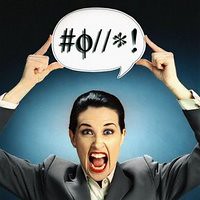 | 0 |
| 6763333165 | Asyndeton | noun, the omission of conjunctions like "and" or "but" where they would normally be used to make a speech more dramatic and effective by speeding up its rhythm and pace. This is a rhetorical device. |  | 1 |
| 6763333166 | Polysyndeton | noun, using several conjunctions in close succession, especially where some might be omitted (as in `he ran and jumped and laughed for joy'), a rhetorical device opposite to asyndeton. |  | 2 |
| 6763333167 | Understatement | noun, a statement that is restrained in ironic contrast to what might have been said. You make an understatement when you say a lot less than you could. If you say "We didn't do our best" when your team loses 56 to 0, that's quite an understatement. |  | 3 |
| 6763333168 | Litotes | noun, understatement for rhetorical effect (especially when expressing an affirmative by negating its contrary). "He's not the brightest bulb in the lamp," meaning "He's dumb" Or "She's no beauty queen" meaning "She's ugly" |  | 4 |
| 6763333169 | Parallelism | noun, similarity by virtue of corresponding. Parallelism is used in sentence construction to give matching structure. In the sentence, "I like to read, dancing, and fighting off Zombie attacks," the parts of the list are not parallel. You can revise the sentence for parallelism: "I like to read, to dance, and to fight off Zombie attacks." |  | 5 |
| 6763333170 | Chiasmus | noun, inversion in the second of two parallel phrases, a rhetorical technique that involves a reversal of terms, such as "It's good to be lucky, but it's lucky to be good." |  | 6 |
| 6763333171 | Zeugma | noun, rhetorical use of a word to govern two or more words though only one of the two thoughts should make literal or grammatical sense. For example, you could use the zeugma, "I lost my keys and my temper." In Greek, zeugma means "a yoking," as in yoking one word to two ideas. |  | 7 |
| 6763333172 | Antithesis | noun, exact opposite, An antithesis wouldn't exist without a thesis because it works as a comparison. Though the counterculture was strong in America in 1968, voters elected Richard Nixon, the antithesis of a hippie. |  | 8 |
| 6763333173 | Anaphora | noun, repetition of a word or phrase at the beginning of successive clauses. Used to show emphasis in speech or writing, anaphora is a popular tool for politicians, religious leaders, lyricists, and poets.In Martin Luther King Jr's most famous speech, he said "I have a dream" eight different times. |  | 9 |
| 6763333174 | Epistrophe | noun, repetition of the ends of two or more successive sentences, verses, etc. Similar to Anaphora but at the end of sentences, you can use epistrophe as a rhetorical device when you give a speech, to emphasize your ideas. One example is President Barack Obama's repetition, at the end of sentence after sentence, of the phrase "Yes, we can." |  | 10 |
| 6763333175 | Anadiplosis | noun, repetition of the final words of a sentence or line at the beginning of the next. Part of another figure of speech Chiasmus, every anadiplosis does not necessarily reverse its structure like it is done in chiasmus. "Forget what you want to remember, and remember what you want to forget," is an example of chiasmus (as it involves a reversal of structure in the second clause) and anadiplosis as word "remember" marks the end of one clause and the start of the subsequent clause. "The land of my fathers and my fathers can have it." is an example of anadiplosis involving a typical repetition of the word "my father" but, unlike chiasmus, the structure of the final clause is not reversed. |  | 11 |
| 6763333176 | Conduplicatio | noun, Figure of repetition in which the key word or words in one phrase, clause, or sentence is/are repeated at or very near the beginning of successive sentences, clauses, or phrases; repetition of a key word over successive phrases or clauses. ex. "I answered their questions truthfully, including questions about my private life -- questions no American citizen would ever want to answer." | | 12 |
| 6763333177 | Epanalepsis | noun, rhetoric, a repetition of a word or a phrase with intervening words setting off the repetition, sometimes occurring with a phrase used both at the beginning and end of a sentence, as in Only the poor really know what it is to suffer; only the poor. |  | 13 |
| 6763333178 | Hypophora | Hypophora is a figure of speech in which a writer raises a question and then immediately provides an answer to that question. Commonly, a question is asked in the first paragraph and then the paragraph is used to answer the question. In hypophora, the writer first poses a question and then answers that question immediately such as in this example, "What should young people do with their lives today? Many things, obviously. But the most daring thing is to create stable communities in which the terrible disease of loneliness can be cured." while in Rhetorical question, the answer is not provided by the writer since it does not require an answer. Such as, ".....For if we lose the ability to perceive our faults, what is the good of living on?" |  | 14 |
| 6763333179 | Rhetorical Question | A rhetorical question is asked just for effect or to lay emphasis on some point discussed when no real answer is expected. A rhetorical question may have an obvious answer but the questioner asks rhetorical questions to lay emphasis to the point. In literature, a rhetorical question is self-evident and used for style as an impressive persuasive device. "O Wind, If Winter comes, can Spring be far behind?", "It's too hot today. Isn't it?", "The actors played the roles well. Didn't they?" |  | 15 |
| 6763333180 | Procatalepsis | Procatalepsis is a figure of speech which is also known as prebuttal or prolepsis in which the speaker or writer gives response to the objection of an opponent in his speech by repeating his objection. It could also be that he responds to his own objection in order to strengthen his argument by using counterarguments. Once the speakers bring attention to a possible rebuttal, they immediately refute or discredit it, for the fear that people may get confused. "I know what you're going to say...'That if they look at it properly they'll see that it wasn't our fault. But will they look at it properly? Of course they won't. You know what cats they are...", "I can think of no one objection that will possibly be raised against this proposal, unless it should be urged that the number of people will be thereby much lessened in the kingdom. This I freely own, and it was indeed the principal design in offering it to the world." | | 16 |
| 6763333181 | Metabasis | A transition or change from one subject to another. Consists of a brief statement of what has been said and what will follow. It might be called a linking, running, or transitional summary, whose function is to keep the discussion ordered and clear in its progress: ex. Now that I have made this catalogue of swindles and perversions, let me give another example of the kind of writing that they lead to. --George Orwell | | 17 |
| 6763333182 | Distinctio | Figure of explication in which an introductory reference to a word's meaning is made (e.g., "by x I mean", "which is to say that", "that is") followed by a further elaboration of that word's meaning; explicit definition of or elaboration upon the meaning or meanings of a particular word or set of words. "A team of Minot airmen was dispatched to the base Weapons Storage Area to pick up and transport two pylons to a Barksdale B-52 aircraft. For those of you unfamiliar with the term "pylon," for our purposes today, a pylon is a self-contained package of six cruise missiles that can be quickly mounted to the wing of a B-52." | | 18 |
| 6763333183 | Amplification | A rhetorical device used to embellish a sentence or statement by adding further information. Increase readability and worth of the statement or sentence. It is usually used when a simple sentence is abrupt and cannot convey the desired implications. Writers then use amplification to make structural additions and give further meanings by describing and repeating a certain statement or idea. "Mr. and Mrs. Veneering were bran-new people in a bran-new house in a bran-new quarter of London. Everything about the Veneerings was spick and span new. All their furniture was new, all their friends were new, all their servants were new, their place was new, . . . their harness was new, their horses were new, their pictures were new, they themselves were new, they were as newly-married as was lawfully compatible with their having a bran-new baby..." | | 19 |
| 6763333184 | Scesis Onomaton | Figure of repetition in which a set of two or more different words having the same (or very nearly the same) meaning occurs within the same sentence; a successive series of words or phrases whose meanings are generally equivalent. "America is all about opportunity. That's why my parents came to America more than 40 years ago. And that's why most of your parents came here generations ago in search of an opportunity, a chance, a fair shake." |  | 20 |
| 6763333185 | Apophasis | Rhetoric. denial of one's intention to speak of a subject that is at the same time named or insinuated, as "I shall not mention Caesar's avarice, nor his cunning, nor his morality.", mentioning something by saying it will not be mentioned (as in "we won't discuss his past crimes") | | 21 |
| 6763333186 | Metanoia (correctio) | A self-correction. It's when a writer or speaker deliberately goes back and modifies a statement that they just made, usually either to strengthen it or soften it in some way. Metanoia involves correcting a statement just made - when an author corrects a much earlier statement, it isn't metanoia. "To help or, at least, to do no harm.", "I have my shortcomings, through my own fault and through my failure to observe the admonitions of the gods - and I may almost say, their direct instructions." | | 22 |
| 6763333187 | Aporia | An expression of insincere doubt. When the writer or speaker pretends, briefly, not to know a key piece of information or not to understand a key connection. After raising this doubt, the author will either respond to the doubt, or leave it open in a suggestive or "hinting" manner.
When an aporia is phrased in the form of a question, it's called a rhetorical question. "You see, we believe that 'We're all in this together' is a far better philosophy than 'You're on your own.' So who's right?" We all know that he believes the Democratic philosophy is better, and he goes on to make his argument for that position. The aporia is a way of setting up the argument. | | 23 |
| 6763333188 | Simile | noun, a figure of speech that expresses a resemblance between things of different kinds (usually formed with `like' or `as'). Use a simile when describing a comparison between two fundamentally different things, such as: "His voice was smooth, like butter in a warm pan." |  | 24 |
| 6763333189 | Analogy | noun, drawing a comparison in order to show a similarity in some respect. When you draw an analogy between two things, you compare them for the purpose of explanation. The movie character Forest Gump made a silly analogy famous: "Life is like a box of chocolates." If a scientist explains that the earth's forests function as its lungs, we understand the analogy to mean that both trees and lungs take in important elements from the air. | | 25 |
| 6763333190 | Metaphor | A figure of speech in which a word or phrase is applied to an object or action to which it is not literally applicable, used to refer to something that it does not literally denote in order to suggest a similarity. You make an analogy between two things to show how one resembles the other in some way. When a character from Shakespeare calls the world his oyster, that's his boastful way of saying that all the riches of the world are his for the taking, like plucking a pearl from an oyster shell. |  | 26 |
| 6763333191 | Catachresis | Catachresis is a figure of speech in which writers use mixed metaphors in an inappropriate way to create rhetorical effect. Often, it is used intentionally to create a unique expression. Catachresis is also known as an exaggerated comparison between two ideas or objects. "Tis deepest winter in Lord Timon's purse; that is, one may reach deep enough, and find little", "A man that studies revenge keeps his own wounds green...." | | 27 |
| 6763333192 | Synecdoche | Synecdoche is a figure of speech in which you use a part of something to stand for the whole thing (or vice versa). If your parents buy you a car and you say that you just got a new set of wheels, you're using synecdoche — you're using the wheels, which are part of a car, to refer to the whole car. The word "bread" refers to food or money as in "Writing is my bread and butter" or "sole breadwinner". The phrase "gray beard" refers to an old man, The word "sails" refers to a whole ship, The word "suits" refers to businessmen, The word "boots" usually refers to soldiers. | | 28 |
| 6763333193 | Metonymy | It is a figure of speech that replaces the name of a thing with the name of something else with which it is closely associated. Synecdoche refers to a thing by the name of one of its parts. In a metonymy, on the other hand, the word we use to describe another thing is closely linked to that particular thing, but is not a part of it. For example, "Crown" which means power or authority is a metonymy. "Friends, Romans, countrymen, lend me your ears." | | 29 |
| 6763333194 | Personification | Personification is a figure of speech in which a thing, an idea or an animal is given human attributes. The non-human objects are portrayed in such a way that we feel they have the ability to act like human beings. Look at my car. She is a beauty, isn't it so?, The wind whispered through dry grass, The flowers danced in the gentle breeze, Time and tide waits for none. |  | 30 |
| 6763333195 | Hyperbole | Hyperbole is a figure of speech, which involves an exaggeration of ideas for the sake of emphasis. Praising your favorite sports team is one thing, but if you call the team the most incredible group of humans ever to walk the earth, then you're going overboard and indulging in hyperbole. |  | 31 |
| 6763333196 | Allusion | Allusion is a brief and indirect reference to a person, place, thing or idea of historical, cultural, literary or political significance. It does not describe in detail the person or thing to which it refers. It is just a passing comment and the writer expects the reader to possess enough knowledge to spot the allusion and grasp its importance in a text. The main thing to remember is that an allusion is a brief hint or a quick mention. It's meant to bring to mind a particular subject, but it always avoids getting into it in great depth. | | 32 |
| 6763333197 | Eponym | Eponym is a name of a legend or real person that writers associate with some other person, object, institution or thing. Simply, we can define it as a famous person whose name is given to someone else, such as Homer has derived the name of ancient epic "The Odyssey" from a major character, Odysseus. Saxophone was given the name of Sax, a surname of family from Belgium, which was skilled at making musical instruments. |  | 33 |
| 6763333198 | Oxymoron | Oxymoron is a figure of speech in which two opposite ideas are joined to create an effect. The common oxymoron phrase is a combination of an adjective proceeded by a noun with contrasting meanings, e.g. "cruel kindness" or "living death". However, the contrasting words/phrases are not always glued together. The contrasting ideas may be spaced out in a sentence, e.g. "In order to lead, you must walk behind." "the shackles of love straiten'd him His honour rooted in dishonored stood And faith unfaithful kept him falsely true" |  | 34 |
| 6763333199 | Epithet | Epithet is a descriptive literary device that describes a place, a thing or a person in such a way that it helps in making the characteristics of a person, thing or place more prominent than they actually are. Also, it is known as a by-name or descriptive title. The noun epithet is a descriptive nickname, such as "Richard the Lionhearted," or "Tommy the Terrible." |  | 35 |
| 6763333200 | Hyperbaton | Hyperbaton has been derived from a Greek word that means inversion in the arrangement of common words. It can be defined as a rhetorical device in which the writers play with the normal position of words, phrases and clauses in order to create differently arranged sentences, but which still suggest a similar meaning. "Some rise by sin, and some by virtue fall..." |  | 36 |
| 6763333201 | Parenthesis | Parenthesis is a qualifying or explanatory sentence, clause or word that writers insert into a paragraph or passage. However, if they leave it out, even then grammatically the it does not affect the text that is correct without it. Writers mark them off by round and square brackets or by commas, dashes, little lines and brackets. As far as its purpose is concerned, this verbal unit provides extra information, interrupts syntactic flow of words, and allows the readers to pay attention on explanation. you must sympathize with the reader's plight (most readers are in trouble about half the time) but never seek to know the reader's wants. "you must sympathize with the reader's plight (most readers are in trouble about half the time) but never seek to know the reader's wants." |  | 37 |
| 6763333202 | Alliteration | A stylistic device in which a number of words, having the same first consonant sound, occur close together in a series. An important point to remember here is that alliteration does not depend on letters but on sounds. So the phrase not knotty is alliterative, but cigarette chase is not. But a better butter makes a batter better, A big bully beats a baby boy, Dunkin' Donuts, Best Buy, "The fair breeze blew, the white foam flew, The furrow followed free; We were the first that ever burst Into that silent sea." |  | 38 |
| 6763333203 | Onomatopoeia | A word, which imitates the natural sounds of a thing. It creates a sound effect that mimics the thing described, making the description more expressive and interesting. In addition to the sound they represent, many onomatopoeic words have developed meanings of their own. For example, "whisper" not only represents the sound of people talking quietly, but also describes the action of people talking quietly. "Hark, hark! Bow-wow. The watch-dogs bark!
Bow-wow. Hark, hark! I hear The strain of strutting chanticleer Cry, 'cock-a-diddle-dow!'" |  | 39 |
| 6763333204 | Apostrophe | In literature, apostrophe is a figure of speech sometimes represented by exclamation "O". A writer or a speaker, using an apostrophe, detaches himself from the reality and addresses an imaginary character in his speech. Apostrophe used in literature is an arrangement of words addressing a non-existent person or an abstract idea in such a way as if it were present and capable of understanding feelings. "Is this a dagger which I see before me, The handle toward my hand? Come, let me clutch thee! I have thee not, and yet I see thee still." Macbeth has a strange vision of a dagger and talks to it as if it were another person. | | 40 |
| 6763333205 | Enthymeme | An argumentative statement in which the writer or the speaker omits one of the major or minor premises, does not clearly pronounce it, or keeps this premise implied. The omitted premise in enthymeme remains understandable even if is not clearly expressed. For instance, "Where there is smoke, there is fire." (The hidden premise: The smoke causes fire.) This is known as truncated or rhetoric syllogism. Its purpose is to influence the audience and allow them to make inferences. They can be easily recognized, as these statements comes after "because." "[M]y parents decide to buy my brothers guns. These are not 'real' guns. They shoot 'BBs,' copper pellets my brothers say will kill birds. Because I am a girl, I do not get a gun." | | 41 |
| 6763333206 | Climax | As a stylistic device, the term climax refers to a literary device in which words, phrases and clauses are arranged in an order to increase their importance within the sentence. "This note was a promise that all men, yes, black men as well as white men, would be guaranteed the unalienable Rights of Life, Liberty and the pursuit of Happiness."
OR
Climax is that particular point in a narrative at which the conflict or tension hits the highest point. Climax is a structural part of a plot and is at times referred to as a crisis. It is a decisive moment or a turning point in a storyline at which the rising action turns around into a falling action. Thus, a climax is the point at which a conflict or crisis reaches its peak that calls for a resolution or conclusion. |  | 42 |
| 6763333207 | Diacope | This literary device is a repetition of a phrase or word broken up by other intervening words. For instance, a very popular example of diacope is in William Shakespeare' Hamlet, "to be, or not to be!" In this line, you can notice that the speaker has repeated a phrase "to be" which is separated by another phrase "or not." "You held me down, but I got up,You hear my voice, you hear that sound... You held me down, but I got up Get ready 'cause I've had enough I see it all, I see it now." | | 43 |
| 6763333208 | Antimetabole | Antimetabole is a literary term or device that involves repeating a phrase in reverse order. You like it; it likes you" and "Fair is foul and foul is fair." When a sentence is repeated after reversing it so as to convey an idea or stress on a point, it is called chiasmus. In an antimetabole the words and grammatical structure is also reversed because just reversing the meaning is not enough. All the antimetaboles are chiasmus, but not all instances of chiasmus are antimetaboles. "You stood up for America, now America must stand up for you." | | 44 |
| 6763333209 | Antiphrasis | Antiphrasis is a figurative speech in which a phrase or word is employed in a way that is opposite to its literal meaning in order to create an ironic or comic effect. It is the use of phrases or words in their opposite sense than the real meaning. "Yes, I killed him. I killed him for money-and a woman-and I didn't get the money and I didn't get the woman. Pretty, isn't it....." (Double Indemnity by Billy Wilder and Raymond). Here, the speaker is making ironic statement by using opposite sense of the word pretty. He has committed murder, yet he describes his act "pretty". | | 45 |
| 6763333210 | Epizeuxis | It is defined as a rhetorical device in which the words or phrases are repeated in a quick succession after each other for emphasis. It is also called diacope. Epistrophe is the repetition of the words at the end of successive sentences such as "Where now? Who now? When now...,". Whereas, anaphora is the reverse of epistrophe; it is a repetition of the words and phrases at the beginning of successive sentences. Epizeuxis, is less refined but, it makes a very strong impact. Epizeuxis is the repetition of words in succession within a same sentence such as "The horror, the horror." "And my poor fool is hanged! No, no, no life! Why should a dog, a horse, a rat have life,
And thou no breath at all? Thou'lt come no more,
Never, never, never, never!" | | 46 |
| 6763333211 | Aposiopesis | A rhetorical device that can be defined as a figure of speech in which the speaker or writer breaks off abruptly and leaves the statement incomplete, as if the speaker is not willing to state what is present in his mind due to being overcome by passion, excitement or fear. In a piece of literature, it means to leave a sentence unfinished so that the reader could determine his own meanings. "Well, I lay if I get hold of you I'll - She did not finish, for by this time she was bending down and punching under the bed with the broom, and so she needed breath to punctuate the punches with. She resurrected nothing but the cat...." |  | 47 |
| 6763333212 | Anacoluthon | A stylistic device defined as a syntactic deviation and interruption within a sentence from one structure to another. In this interruption, the expected sequence of grammar is absent. The grammatical flow of sentences is interrupted in order to begin more sentences. "I will have such revenges on you both, That all the world shall-I will do such things, What they are, yet I know not....." This excerpt can be considered as one of the good anacoluthon examples as there is interruption from one sentence to another and such interruption is done to attract the readers' attention. | | 48 |
| 6763333213 | Enumeratio | Enumeration is a rhetorical device used for listing the details or a process of mentioning words or phrases step by step. In fact, it is a type of amplification or division in which a subject is further distributed into components or parts. The writers use enumeration to elucidate a topic to make it understandable for the readers. It also clarifies the ambiguity that may be created in the minds of the readers. "W]hen we allow freedom to ring, when we let it ring from every village and every hamlet, from every state and every city, we will be able to speed up that day when all of God's children, black men and white men, Jews and Gentiles, Protestants and Catholics, will be able to join hands and sing in the words of the old Negro spiritual, 'Free at last! Free at last! Thank God Almighty, we are free at last!" | | 49 |
| 6763333214 | Antanagoge | (Rhet.) A figure which consists in answering the charge of an adversary, by a counter charge. Not being able to answer the accusation of an adversary, a person instead makes a counter allegation or counteracting an opponent's proposal with an opposing proposition in one's own speech or writing. | | 50 |
| 6763333215 | Parataxis | A rhetorical term in which phrases and clauses are placed one after another independently, without coordinating or subordinating them through the use of conjunctions. It is also called additive style. Parataxis is sometimes used as asyndeton in which the phrases and clauses are coordinated without conjunctions. "Veni, vidi, vici" or, "I came, I saw, I conquered." There are no conjunctions or joining words used. The phrases are used equally. That means phrases are placed with equal status. Opposite of Hypotaxis | | 51 |
| 6763333216 | Hypotaxis | Hypotaxis is subordination of one clause to another, or when the clauses are coordinated or subordinated to one another within sentences. Hypotaxis is defined as a grammatical arrangement of constructs that work in the same way, but they play unequal role in a sentence. It helps in defining the exact meaning of a clause. "One December morning near the end of the year when snow was falling moist and heavy for miles all around, so that the earth and the sky were indivisible, Mrs. Bridge emerged from her home and spread her umbrella." The remaining clauses explain the first/main clause. These subordinated clauses help in recounting the individual thought expressed in the beginning. | | 52 |
| 6763333217 | Sententia | Figure of argument in which a wise, witty, or pithy maxim or aphorism is used to sum up the preceding material. "I think that if women aspired higher, took on the problems involved, that they might find surprising support from men. 'Time marches on.'" | | 53 |
| 6763333218 | Exemplum | Exemplum is a rhetorical device that is defined as a short tale, narrative, or anecdote used in literary pieces and speeches to explain a doctrine or emphasize a moral point. They are generally in the forms of legends, folktales and fables. An exemplum clarifies and proves a point. "In Flaundres whylom was a company, Of yonge folk, that haunteden foley, As ryot, hasard, stewes, and tavernes,
Wher-as, with harpes, lutes, and giternes,...." Talks about how greed can destroy everything and how it is the cause of all evil. In this story, nobody got to claim the most coveted treasure since the characters involved ended up killing each other. Can be real or fictional. |  | 54 |
| 6763333219 | Pleonasm | It is a rhetorical device which can be defined as the use of a second or more words (phrase) to express an idea. These words are redundant such as in the following examples of pleonasm, "burning fire" and "black darkness." Sometimes, pleonasm is also called tautology, which is the repetition of words. "Let me tell you this, when social workers offer you, free, gratis and for nothing..." |  | 55 |
| 6763333220 | Assonance | Takes place when two or more words close to one another repeat the same vowel sound but start with different consonant sounds. "Men sell the wedding bells." The same vowel sound of the short vowel "-e-" repeats itself in almost all the words excluding the definite article. The words do share the same vowel sounds but start with different consonant sounds unlike alliteration that involves repetition of the same consonant sounds. |  | 56 |
| 6763333221 | Dirimens Copulatio | A rhetorical term for a figure by which one balances one statement with a contrary, qualifying statement (sometimes conveyed by "not only ... but also" clauses). "But wait, there's more!" | | 57 |
| 6763333222 | Symploce | Figure of repetition that combines Anaphora and Epistrophe in which the first and last word or words in one phrase, clause, or sentence are repeated in one or more successive phrases, clauses, or sentences; repetition of the first and last words in a clause over successive clauses. "Let us let our own children know that we will stand against the forces of fear. When there is talk of hatred, let us stand up and talk against it. When there is talk of violence, let us stand up and talk against it." | | 58 |
| 6763333223 | Appositive | When a noun or word is followed by another noun or phrase that renames or identifies it. This is a literary device that appears before or after a noun or noun phrase. It is always used with commas. We can define it as a noun phrase or a noun that defines or explains another noun, which it follows. Writers place elements like noun phrases side by side where one element serves to define the other, and one is in apposition to the other. "We were waiting outside the condemned cells, a row of sheds fronted with double bars, like small animal cages." In this line, "the condemned cells" is a noun phrase, while "a row of sheds" is an appositive that explains this noun phrase. Restrictive Appositive- Gives essential information to identify the phrase or noun in apposition and clarifies the meaning of a phrase but if the appositive is removed, the meaning of the entire sentence changes. Commas are not necessarily used.
Non-Restrictive Appositive- Gives non-essential or extra information, which is not important to identify the phrase or noun in apposition and is often used with commas. "Christmas Eve afternoon we scrape together a nickel and go to the butcher's to buy Queenie's traditional gift, a good gnawable beef bone." A restrictive appositive is clarifying and describing a noun "traditional gift of Queenie." Here this literary device has appeared after noun. | | 59 |



