AP Notes, Outlines, Study Guides, Vocabulary, Practice Exams and more!

AP 8 Flashcards

Terms : Hide Images
13677796233Causes of World War IMilitarism, Alliances, Imperialism, Nationalism0
13677796234Gavrilo Principmember of the black hand; shot Austrian Archduke Ferdinand and wife June 28, 1914- set off WWI1
13677796235Black HandSerbian nationalist/terrorist group responsible for the assassination of Austrian Archduke Franz Ferdinand which resulted in the start of World War I.2
13677796236Franz FerdinandArchduke of Austria-Hungary assassinated by a Serbian nationalist. A major catalyst for WWI.3
13677796237Allied Powers (WWI)Britain, France, Russia, (later) Italy and the United States4
13677796238Central PowersIn World War I the alliance of Germany and Austria-Hungary and other nations allied with them in opposing the Allies. (Originally Italy, but they left)5
13677796239Blank checkGermany swears to support Austria-Hungary in any actions it takes against Serbia6
13677796240Submarine WarfareUsed during World War I mainly between German U-Boats and Atlantic supply convoys for Great Britain7
13677796241LusitaniaA British passenger ship that was sunk by a German U-Boat on May 7, 1915. 128 Americans died. The sinking greatly turned American opinion against the Germans, helping the move towards entering the war.8
13677796242Total WarA war that involves the complete mobilization of resources and people, affecting the lives of all citizens in the warring countries, even those remote from the battlefields.9
13677796243General Paul von HindenburgA German General during the First World War, he was a seasoned veteran and was sent to the Eastern Front, where he won several victories over the Russians. He was seen as the Savior of East Prussia, and became the Chief of Staff of the Army in 1916, and with military support he and Ludendorff formed the Third Supreme Command, a military-industrial dictatorship, which held power until September 1918.10
13677796245Georges Clemenceau"tiger of France", the French prime minister who wanted to ensure that Germany would never again threaten France; at the Paris Peace Conference. He played a key role in negotiating the Treaty of Versailles. French were still bitter at the Germans over the Franco-Prussian War and so they took back the treaties of Alsace and Lorraine (1841-1929)11
13677796246Zimmerman Note1917 - Germany sent this to Mexico instructing an ambassador to convince Mexico to go to war with the U.S. It was intercepted and caused the U.S. to mobilized against Germany, which had proven it was hostile12
13677796247WWI impact on womenallowed women to prove their support for their country advances in women's rights, took men's jobs while they were gone13
13677796248WWI impact on labor14
13677796249WWI impact on social classesCreates a stronger middle class as well as a significant distance between the rich and poor (rich get super rich).15
13677796251AlexandraLast Tsarist of Russia, had a son who was a hemophiliac, and was put under the influence of Rasputin, where he exploited her. Ended up causing the collapse of the Tsars16
13677796252Grigori RasputinA Russian peasant and self-proclaimed mystic who gained significant influence over Tsar Nicholas II's wife, Alexandra, prior to the revolutions of 1917. Rasputin's behavior caused scandals, and the Russian people began to believe that the tsar himself was under Rasputin's influence. Supporters of the tsar had Rasputin killed in late 191617
13677796253March RevolutionAs a result of this revolution the Romanov dynasty was removed from power after 300 years of autocratic rule and replaced with the provisional government led by Alexander Kerenski18
13677796254April ThesesLenin's promise to the Russian people and challenge to the Provisional Government to provide peace, land, and bread19
13677796255Petrograd SovietThe St. Petersburg, or Petrograd, council of workers, soldiers, and intellectuals who shared power with the provisional government.20
13677796256MensheviksThe party which opposed to the Bolsheviks. Started in 1903 by Martov, after dispute with Lenin. The Mensheviks wanted a democratic party with mass membership.21
13677796257BolsheviksA party of revolutionary Marxists, led by Vladimir Lenin, who seized power in Russia in 1917.22
13677796258V. I. Leninled the communist revolution, was the leader of the Bolsheviks, ruled Russia23
13677796259Leon TrotskyRussian revolutionary intellectual and close adviser to Lenin. A leader of the Bolshevik Revolution (1917), he was later expelled from the Communist Party (1927) and banished (1929) for his opposition to the authoritarianism of Stalin24
13677796260Russian Civil War(1918-1920) when "white" anticommunists fought the "red" communists to decide how Russia would be governed25
13677796261Treaty of Versaillesthe treaty imposed on Germany by the Allied powers in 1920 after the end of World War I which demanded exorbitant reparations from the Germans26
13677796262League of NationsA world organization established in 1920 to promote international cooperation and peace. It was first proposed in 1918 by President Woodrow Wilson, although the United States never joined the League. Essentially powerless, it was officially dissolved in 1946.27
13677796263War Guilt ClauseA provision in the Treaty of Versailles by which Germany acknowledged that it alone was responsible for WWI28
13677796264New technology of WWIrapid fire machine gun, long range artillery gun, poison gas, tanks, airplanes, submarines, zeppelins, u-boats, convoys ***All resulted in increases casualties29
13677796265Fourteen PointsA series of proposals in which U.S. president Woodrow Wilson outlined a plan for achieving a lasting peace after World War I. The most important of these was self-determination.30
13677796266John Maynard KeynesEnglish economist who advocated the use of government monetary and fiscal policy to maintain full employment without inflation (1883-1946)31
13677796267Ruhr Valley Crisis (1923)The Occupation of the Ruhr was a period of military occupation of the German Ruhr valley by France and Belgium between 1923 and 1925 in response to the Weimar Republic's failure to continue its reparation payments in the aftermath of World War I.32
13677796268The Great Depressionstarting with collapse of the US stock market in 1929, period of worldwide economic stagnation and depression. Heavy borrowing by European nations from USA during WW1 contributed to instability in European economies. Sharp declines in income and production as buying and selling slowed down. Widespread unemployment, countries raised tariffs to protect their industries. America stopped investing in Europe. Lead to loss of confidence that economies were self adjusting.33
13677796269Popular FrontAn alliance between the Communists, the Socialists, and the Radicals formed for the May 1936 French elections. It was largely successful, increasing the Communists in parliament from 10 to 72, and the Socials up to 146, making them the largest party in France. They tried to fight the depression by helping workers, but it didn't really fix much34
13677796270Impact of radio and automobileRadio increased the spread of information quickly and also used for propaganda. Automobiles allowed people and military, to travel longer distances faster on roads.35
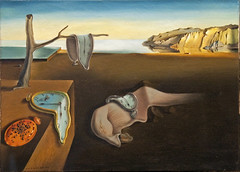
13677796273SurrealismAn artistic movement that displayed vivid dream worlds and fantastic unreal images36
13677796274Salvador DaliSpanish surrealist painter37
13677796275Von Schlieffen PlanGerman chief-of-staff 1891-1905. Military plan based off the assumption of two-front war with France and Russia. Minimal troop deployment against Russia to rapidly clear France before Russia could become effective and British could come to help. Advance through Belgium.38
13677796276French Warfaresoldiers fought each other from trenches39
13677796277Lawrence of ArabiaBritish officer who urged Arab princes to revolt against their Ottoman overlords40
13677796278British BlockadeThe British blockaded the German coast to prevent weapons and other military supplies from getting through the seas. American ships carrying goods for Germany refused to challenge the blockade. As a result, Germany had a famine and soldiers were starving to death41
13677796279Walter RathenauJewish industrialist that sets up Germany's War Raw Materials Board, rations and distributes raw materials, produced substitutes essential to blockaded German war machine42
13677796280Erich LudendorffA German general who assisted Paul von Hindenburg in achieving victories at the Battle of Tannenberg and the Battle of the Masurian Lakes. Throughout the rest of the war, Ludendorff continued to serve Hindenburg, first as chief of staff and later as quartermaster general. He, along with his partner Hindenburg, essentially ran Germany during the end of the war43
13677796281Alexander KerenskyHeaded the Provisional Government in 1917. Refused to redistribute confiscated landholdings to the peasants. Thought fighting WWI was a national duty. He was quickly pushed out of power.44
13677796282Rosa Luxembourgleader of the German Marxist revolutionary group the Spartacists with Karl Liebknecht, violently put to death by the authorities after the uprising45
13677796283Easter Rebellion(1916) in the midst of WWI while British were distracted, a small group of Irish nationalists rebelled in Dublin over the delay in home-rule during Easter week; aroused nationalist Irish support46
13677796284Little EntenteThe French alliance between the smaller countries of Poland, Hungary, and Czechoslovakia.47
13677796285Gustav StresemannAssumed leadership of Germany in August 1923. He called off passive resistance in the Ruhr and in October agreed in principle to pay preparations but ask for a re-examination of Germany's ability to pay.48
13677796286Dawes and Young Plan1924 and 1929 respectively. Both reduced reparations payments. Dawes-Americans loaned money to Germany to pay back the Allies, who then used it to pay back America (circle). Young-set repayment at 58 years (rather than the previous 49).49
13677796287Treaty of LocarnoFrance and Germany agreed not to make war and to respect borders of France and Belgium; Germany admitted to League of Nations50
13677796288Kellogg-Briand PactAgreement signed in 1928 in which nations agreed not to pose the threat of war against one another51
13677796289National GovernmentBritish response to Depression; multiparty coalition passed tariffs, increased taxes, and regulated currency52
13677796290Nazi Propagandaposters, movies, books meant to perpetuate the idea of an Aryan nation and that Jews were to blame53
13677796291DadaismAn artistic movement of the 1920s and 1930s that attacked all accepted standards of art and behavior and delighted in outrageous conduct.54
13677796292James JoyceAn Irish novelist who wrote Ulysses, a stream of consciousness book that mirrored Homer's book55
13677796293Virginia WoolfEnglish author whose work used such techniques as stream of consciousness and the interior monologue56
13677796294Carl Jung1875-1961; Field: neo-Freudian, analytic psychology; Contributions: people had conscious and unconscious awareness; archetypes; collective unconscious; libido is all types of energy, not just sexual; Studies: dream studies/interpretation57
13677796295Ernest Rutherford1909-solar system model of the atom, gold foil experiment- fired negative ions at thin sheet of gold foil, discovered the atomic nucleus and proposed a nuclear model of the atom .58
13677796296Irish Free Statecreated by the British parliament in January 1922. Made Ireland a dominion within the British Commonwealth but many Irish republicans still wanted severance of all formal ties to Britain and creation of a republic.59
13677796297Western FrontA line of trenches and fortifications in World War I that stretched without a break from Switzerland to the North Sea. Scene of most of the fighting between Germany, on the one hand, and France and Britain, on the other.60
13677796298Eastern FrontIn WWI, the region along the German-Russian Border where Russians and Serbs battled Germans, Austrians, and Turks.61
13677796299Treaty of Brest-LitovskTreaty in which Russia lost substantial territory to the Germans. This ended Russian participation in the war (1918).62
13677796300US Entry in WWIsinking Lusitania, Zimmerman note and submarine warfare63
13677796301Peace of Paristhe meeting of Allied Victors, following the end of WWI to set the peace terms for defeated Central Powers following the armistices of 1918. It took place in Paris during 1919 and involved diplomats from more than 32 countries and nationalities.64
13677796302ChekaSecret police set up by Lenin-arrested "enemies of the revolution".65
13677796303Collective UnconsciousJung's theory that we all share an inherited memory that contains our culture's most basic elements66
13677796304Coalition Governmentsgovernments where smaller parties combine with larger parties to control half of the seats in the legislature.67
13677796305French Plan XVIIwritten by Ferdinand Foch and taken up by Joseph Joffre in 1913, this plan detailed the recapture of Alsace and Lorraine; these two coal-manufacturing regions had been defeated and absorbed into Germany; it played off of élan vital, the idea that every Frenchman has a fighting spirit that can turn back the enemy; it called for the advance of French troops in Alsace and Lorraine in two wings: the South wing would take back the territories, and the north wing, depending on German movement, would advance into Germany; however, this plan did not take into consideration the possibility of Germany attacking France through Belgium and they left Paris unprotected.68
13677796306Young TurksA coalition starting in the late 1870s of various groups favoring modernist liberal reform of the Ottoman Empire. It was against monarchy of Ottoman Sultan and instead favored a constitution. In 1908 they succeed in establishing a new constitutional era.69
13677796307First Battle of the Marne20 miles outside Paris the French halted the German advance and the beginning of the Western Front and trench warfare (1914)70
13677796308Battle of VerdunBattle fought between French and German armies from February to December 1916; more than 700,000 people died - one of the most costly battles of the WWI.71
13677796309Battle of the SommeA 1916 WWI (1914-1918) battle between German and British forces. Ending in a stalemate, the bitter three-month conflict is notable for the high number of casualties- 1.25 million men killed or wounded - and the first use of tanks in warfare.72
13677796310TannenbergGermans attacked Russian forces at end of August 1914. during 4 day battle, Germans drove Russia into full retreat. Germany regained East Prussia and got many weapons & horses73
13677796311GallipoliA poorly planned and badly executed Allied campaign to capture the Turkish peninsula of Gallipoli during 1915 in World War I. Intended to open up a sea lane to the Russians through the Black Sea, the attempt failed with more than 50 percent casualties on both sides. The failed attempt results in Churchill being fired as a battle strategist.74
13677796312Battle of JutlandOnly real naval battle of the WWI. May 1916. German Baltic fleet met Brits of coast of Denmark. Germans inflicted heavy British losses but failed to break British blockade. German fleet retreated to Baltic and stayed there. British naval supremacy confirmed but British were unable to defeat German fleet completely in order to service Russia through the Baltic.75
13677796313General JoffreFrench hero who stopped the German advance on Paris at the First Battle of the Marne (Sept 6-10, 1914). The General developed Plan XVII. Plan XVII was the military strategy that the French would employ if war against Germany broke out. The plan was to attack Lorraine and Alsace and then head to Berlin.76
13677796314John "Blackjack" Pershingled United States army in World War One77
13677796315Ferdinand FochFrench supreme commander of the allied forces that joined forces with the American expeditionary forces to fight as one78
136777963162nd Battle of the Marnewith the American's help, the allies were able to push back the Germans in the 2nd Battle of the Marne. Germans plan was to attack Paris again. They were within 50 miles of Paris when they were stopped at the Marne by French, Moroccan, and American troops. Supported by 100's of tanks they threw the Germans back over the Marne. It was a turning point in the war and now the Germans go on the defensive.79
13677796317German RevolutionThe German Revolution of November 1918 resembled the Russian Revolution of March 1917; however the moderate socialists and their liberal allies won in the German Revolution, and the Lenin-like radical revolutionaries in the councils lost.80
13677796318Ramsey MacDonaldFirst Labour Party prime minister of Great Britain. His version of socialism was not like Marx's. Wanted social reform instead of nationalization or seizure of industry.81
13677796319Stanley BaldwinStanley Baldwin (1867-1947) was the leader of the Conservatives in Britain during the 20's. He had an uncompromising spirit on social issues, and his international and domestic programs can be summed up by the last line of a speech he said in March 1925: "Give us peace in our time, O Lord."82

AP Language (Positive Tone Words) Flashcards

Terms : Hide Images
11203703624benevolentkindly or charitable0
11203708607compassionateaware of the suffering of others1
11203713426determinedshowing a decision, purpose2
11203717112ecstaticintensely joyful or delighted3
11203724769effusiveoutpouring of feeling4
11203733165enthusiasticinterested or excited5
11203737425hopefuldesire accompanied by confident expectation6
11203747783laudatoryexpressing or conferring praise7
11203752444learnedshowing knowledge8
11203761324sympatheticshowing mutual understanding, affection, or pity9
11203765431playfulfull of fun; frolicsome10
11203772190humorousthe quality that makes something laughable or amusing11
11203786154wittycleverly humorous12
11203792836scholarlyin a learned fashion13
11203802883nostalgica bittersweet longing from the past14
11203813344confidenttrust or faith in a person or thing15
11203818305optimistictendency to expect the best possible outcome, hopeful16
11203827563reverentshowing deep respect for someone or something17

AP Language Literary Terms Flashcards

Terms : Hide Images
14688569249AllegoryThe device of using character and/or story elements symbolically to represent an abstraction in addition to the literal meaning. In some allegories, for example, an author may intend the characters to personify an abstraction lie hope or freedom. The allegorical meaning usually deals with moral truth or a generalization about human existence. A story, poem, or picture that can be interpreted to reveal a hidden meaning, typically a moral or political one.0
14688569250AlliterationThe repetition of sounds, especially initial consonants in tow or more neighboring words (as in "she sells sea shells). Although the term is not used frequently in the multiple-choice section, you can look for alliteration in any essay passage. The repetition can reinforce meaning, unify ideas, supply a musical sound, and/or echo the sense of the passage.1
14688569251AllusionA direct or indirect reference to something which is presumably commonly known, such as an event, book, myth, place, or work of art. Allusions can be historical, literary, religious, topical, or mythical. There are many more possibilities, and a work may simultaneously use multiple layers of allusion.2
14688569252Ambiguity (am-bi-gyoo-i-tee)The multiple meanings, either intentional or unintentional, of a word, phrase, sentence, or passage.3
14688569253AnalogyA similarity or comparison between two different things or the relationship between them. An analogy can explain something unfamiliar by associating it with or pointing out its similarity to something more familiar. Analogies can also make writing more vivid, imaginative, or intellectually engaging. Ex. He that voluntarily continues ignorance is guilty of all the crimes which ignorance produces, as to him4
14688569254Anaphora (uh-naf-er-uh)One of the devices of repetition, in which the same expression (word or words) is repeated at the beginning of two or more lines, clauses, or sentences.5
14688569255AnecdoteA short narrative detailing particulars of an interesting episode or event. The term most frequently refers to an incident in the life of a person6
14688569256Antecedent (an-tuh-seed-nt)The word, phrase, or clause referred to by a pronoun. The AP Language exam occasionally asks for the antecedent of a given pronoun in a long, complex sentence or in a group of sentences.7
14688569257Antithesis (an-tih-theh-sis)Figure of balance in which two contrasting ideas are intentionally juxtaposed, usually through parallel structure; a contrasting of opposing ideas in adjacent phrases, clauses, or sentences. Antithesis creates a definite and systematic relationship between ideas.8
14688569258AphorismA terse statement of know authorship which expresses a general truth or a moral principle. (If the authorship is unknown, the statement is generally considered to be a folk proverb.) An aphorism can be a memorable summation of the author's point.9
14688569259ApostropheA figure of speech that directly addresses an absent or imaginary person or a personified abstraction, such as liberty or love. It is an address to someone or something that cannot answer. The effect is to give vent to or display intense emotion, which can no longer be held back:10
14688569260Asyndeton (uh-sin-di-tuhn)consists of omitting conjunctions between words, phrases, or clauses. This can give the effect of unpremeditated multiplicity, of an extemporaneous rather than a labored account. Asyndetic lists can be more emphatic than if a final conjunction were used.11
14688569261AtmosphereThe emotional mood created by the entirety of a literary work, established partly by the setting and partly by the author's choice of objects that are described. Even such elements as description of the weather can contribute to the atmosphere. Frequently atmosphere forshadows events. Perhaps it can create a mood.12
14688569262Chiasmus (kahy-az-muhs)(From the Greek word for "criss-cross," a designation baed on the Greek letter "chi," written X). Chiasmus is a figure of speech in which two successive phrases or clauses are parallel in syntax, but reverse the order of the analogous words.13
14688569263Clausea grammatical unit that contains both a subject and a verb. An independent, or main, clause expresses a complete thought and can sand alone as a sentence. A dependent, or subordinate clause cannot stand alone as a sentence and must be accompanied by an independent clause. The point that you want to consider is the question of what or why the author subordinates one element to the other. You should also become aware of making effective use of subordination in your own writing.14
14688569264Colloquial/colloquialism (kuj-loh-kwee-uhl)The use of slang or informalities in speech or writing. Not generally acceptable for formal writing, colloquialisms give a work a conversational, familiar tone. Colloquial expressions in writing include local or regional dialects.15
14688569265CoherenceA principle demanding that the parts of any composition be arranged so that the meaning of the whole may be immediately clear and intelligible. Words, phrases, clauses within the sentence; and sentences, paragraphs, and chpters in larger pieces of writing are the unit that by their progressive and logical arrangement, make for coherence.16
14688569266ConceitA fanciful expression, usually in the form of an extended metaphor or surprising analogy between seemingly dissimilar objects. A conceit displays intellectual cleverness as a result of the unusual comparison being made.17
14688569267Connotation- The nonliteral, associative meaning of a word; the implied, suggested meaning. Connotations may involve ideas, emotions, or attitudes.18
14688569268DenotationThe strict, literal, dictionary definition of a word, devoid of any emotion attitude, or color.19
14688569269Diacoperepetition of a word or phrase after an intervening word or phrase: word/phrase X, . . ., word/phrase X.20
14688569270DictionRelated to style, diction refers to the writer's word choices, especially with regard to their correctness, clearness, or effectiveness. For the AP exam, you should be able to describe an author's diction (for example, formal or informal, ornate or plain) and understand the ways in which diction can complement the author's purpose. Diction, combined with syntax, figurative language, literary devices, etc., creates an author's style.21
14688569271Didactic (dahy-dak-tik)From the Greek, didactic literally means "teaching." Didactic works have the primary aim of teaching or instructing, especially the teaching of moral or ethical principles.22
14688569272EnumeratioFigure of amplification in which a subject is divided into constituent parts or details, and may include a listing of causes, effects, problems, solutions, conditions, and consequences; the listing or detailing of the parts of something.23
14688569273Expletive (ek-spli-tiv)Figure of emphasis in which a single word or short phrase, usually interrupting normal speech, is used to lend emphasis to the words on either side of the expletive.24
14688569274Euphemism (yoo-fuh-miz-uhm)From the Greek for "good speech," euphemisms are a more agreeable or less offensive substitute for a generally unpleasant word or concept. The euphemism may be sued to adhere to standards of social or political correctness or to add humor or ironic understatement.25
14688569275ExpositionIn essays, one of the four chief types of composition, the others being argumentation, description, and narration. The purpose of exposition is to explain something. In drama, the exposition is the introductory material, which creates the tone, gives the setting, and introduces the characters and conflict.26
14688569276Extended metaphorA metaphor developed at great length, occurring frequently in or throughout the work.27
14688569277Figurative language- Writing or speech that is not intended to carry literal meaning and is usually meant to be imaginative and vivid.28
14688569278Figure of speechA device used to produce figurate language. Many compare dissimilar things. Figures of speech include apostrophe, hyperbole, irony, metaphor, metonymy, oxymoron, paradox, personification, simile, synecdoche, and understatement.29
14688569279Generic conventionsThis term describes traditions for each genre. These conventions help to define each genre; for example, they differentiate an essay and journalistic writing or an autobiography and political writing. On the AP language exam, try to distinguish the unique features of a writer's work from those dictated by convention.30
14688569280GenreThe major category into which a literary work fits. The basic divisions of literature are prose, poetry, and drama. However, genre is a flexible term; within these broad boundaries exist many subdivisions that are often called genres themselves. For example, prose can be divided into fiction (novels and short stories) or nonfiction (essays, biographies, autobiographies, etc). Poetry can be divided into lyric, dramatic, narrative, epic, etc. Drama can be divided into tragedy, comedy, melodrama, farce, etc. ON the AP language exam, expect the majority of the passages to be from the following genres: autobiography, biography, diaries, criticism, essays, and journalistic, political, scientific, and nature writing.31
14688569281Homily (hom-uh-lee)This term literally means "sermon," but more informally, it can include any serious talk, speech, or lecture involving moral or spiritual advice.32
14688569282Hyperbole (hahy-pur-buh-lee)A figure of speech using deliberate exaggeration or overstatement. Hyperboles often have a comic effect; however, a serious effect is also possible. Often, hyperbole produces irony.33
14688569283HypophoraFigure of reasoning in which one or more questions is/are asked and then answered, often at length, by one and the same speaker; raising and responding to one's own question(s). A common usage is to ask the question at the beginning of a paragraph and then use the paragraph to answer it. You can use hypophora to raise questions which you think the reader obviously has on his/her mind and would like to see formulated and answered.34
14688569284ImageryThe sensory details or figurative language used to describe, arouse emotion, or represent abstractions. On a physical level, imager y uses terms related to the five senses; we refer to visual, auditory, tactile, gustatory, or olfactory imagery. On a broader and deeper level, however, one image can represent more than one thing. For example, a rose may present visual imagery while also representing the color in a woman's cheeks and/or symbolizing some degree of perfection (It is the highest flower on the Great Chain of Being). An author may use complex imagery while simultaneously employing other figure s of speech, especially metaphor and simile. In addition, this term can apply to the total of all the images in a work. ON the AP exam, pay attention to how an author creates imagery and to the effect of this imagery.35
14688569285Inference/inferTo draw a reasonable conclusion from the information presented. When a multiple-choice question asks for an inference to be drawn from a passage, the most direct, most reasonable inference is the safest answer choice. If an inference is implausible, it's unlikely to be the correct answer. Note that if the answer choice is directly stated, it is not inferred and is wrong. You must be careful to note the connotation - negative or positive - of the choices.36
14688569286Invectivean emotionally violent, verbal denunciation or attach using strong, abusive language.37
14688569287Irony/ironicThe contrast between what is stated explicitly and what is really meant. The difference between what appears to be and what actually is true. In general, there are three major types of irony used in language; (1) In a verbal irony, the words literally state the opposite of the writer's (or speaker's) true meaning. (2) In situational irony, events turn out the opposite of what was expected. What the characters and the readers think ought to happen. (3) In dramatic irony, facts or events are unknown to a character in a play or piece of fiction, but know to the reader, audience, or other characters in the work. Irony is used for many reasons, but frequently, it's used to create poignancy or humor.38
14688569288Juxtaposition (juhk-stuh-puh-zish-uhn)When two words, phrases, images, ideas are placed close together or side by side for comparison or contrast.39
14688569289Litotes (lahy-toh-teez)From the Greek word "simple" or "plain." Litotes is a figure of thought in which a point is affirmed by negating its opposite. It is a special form of understatement, where the surface denial serves, through ironic contrast, to reinforce the underlying assertion.40
14688569290Loose sentencea type of sentence in which the main idea (independent clause) comes first, followed by wdependent grammatical units such as phrases and clauses. If a period were placed at the end of the independent clause, the clause would be a complete sentence. A work containing many loose sentences often seems informal, relaxed, and conversational. Generally loose sentences create loose style.41
14688569291MetaphorA figure of speech using implied comparison of seemingly unlike things or the substitution of one for the other, suggesting some similarity. Metaphorical language makes writing more vivid, imaginative, thought provoking, and meaningful.42
14688569292Metonymy (mi-ton-uh-mee)A term from the Greek meaning "changed label" or "substitute name." Metonymy is a figure of speech in which the name of one object is substituted for that of another closely associated with it. A news release that claims "the White House declared" rather that "the President declared" is using metonymy. The substituted term generally carries a more potent emotional response.43
14688569293MoodThis term has two distinct technical meanings in English writing. The first meaning is grammatical and eals with verbal units and a speaker's attitude. The indicative mood is used only for factual sentences. For example, "Joe eats too quickly." The subjective mod is used to express conditions contrary to fact. For example, "If I were you, I'd get another job." The imperative mood is used for commands. For example, "Shut the door!" The second meaning of mood is literary, meaning the prevailing atmosphere or emotional aura of a work. Setting, tone, and events can affect the mood. In this usage, mood is similar to tone and atmosphere.44
14688569294NarrativeThe telling of a story or an account of an event or series of events.45
14688569295Onomatopoeia (on-uh-mat-uh-pee-uh)A figure of speech in which natural sounds are imitated in the sounds of words. Simple examples include such words as buzz, hiss, hum, crack, whinny, and murmur. If you not eexamples of onomatopoeia in an essay passage, note the effect.46
14688569296OxymoronFrom the Greek for "pointedly foolish," an oxymoron is a figure of speech wherein the author groups apparently contradictory terms to suggest a paradox. Simple examples include "jumbo shrimp" and "cruel kindness." This term does not usually appear in the multiple-choice questions, but there is a chance that you might find it in an essay. Take note of the effect which the author achieves with this term.47
14688569297ParadoxA statement that appears to be self-contradictory or opposed to common sense but upon closer inspection contains some degree of truth or validity.48
14688569298ParallelismAlso referred to as parallel construction or parallel structure, this term comes from Greek roots meaning "beside one another." It refers to the grammatical or rhetorical framing of words, phrases, sentences, or paragraphs to give structural similarity. This can involve, but is not limited to repetition of a grammatical element such as a preposition or verbal phrase. A famous example of parallelism begins Charles Dickens's novel A Tale of Two Cities: "It was the best of times, it was the worst of times, it was the age of wisdom, it was the age of foolishness, it was the epoch of belief, it was the epoch of incredulity . . ." The effects of parallelism are numerous, but frequently they act as an organizing force to attract the reader's attention, add emphasis and organization, or simply provide a musical rhythm.49
14688569299ParodyA work that closely imitates the style or content of another with the specific aim of comic effect and/or ridicule. As comedy, parody distorts or exaggerated distinctive features of the original. As ridicule, it mimics the work by repeating and borrowing words, phrases, or characteristics in order to illuminate weaknesses in the original. Well-written parody offers enlightenment about the original, but poorly written parody offers only ineffectual imitation. Usually an audience must grasp literary allusion and understand the work being parodied in order to fully appreciate the nuances of the newer work. Occasionally, however, parodies take on a life of their own and don't require knowledge of the original50
14688569300Pedantic (puh-dan-tik)An adjective that describes words, phrases, or general tone that is overly scholarly, academic, or bookish.51
14688569301Periodic sentenceA sentence that presents its central meaning in a main clause at the end. This independent clause is preceded by a phrase or clause that cannot stand alone. For example: "Ecstatic with my AP score, I let out a loud, joyful shout!" The effect of a periodic sentence is to add emphasis and structural variety. It is also a much stronger sentence than the loose sentence.52
14688569302PersonificationA figure of speech in which the author presents or describes concepts, animals, or inanimate objects by endowing them with human attributes or emotions. Personification is used to make these abstractions, animal, or objects appear more vivid to the reader.53
14688569303Polysyndeton (paulee-sin-dih-tawn)Figure of addition and emphasis which intentionally employs a series of conjunctions (FANBOYS: for, and, nor, but, or, yet, so) not normally found in successive words, phrases or clauses; the deliberate and excessive use of conjunctions in successive words or clauses. The effect is a feeling of multiplicity, energetic enumeration, and building up - a persistence or intensity.54
14688569304Predicate adjectiveOne type of subject complement is an adjective, group of adjectives, or adjective clause that follows a linking verb. It is an the predicate of the sentence, and modifies, or describes, the subject.55
14688569305Predicate nominativeA second type of subject complement - a noun, group of nouns, or noun clause that names the subject. It, like the predicate adjective, follows a linking verb and is located in the predicate of the sentence.56
14688569306ProseOne of the major divisions of genre, prose refers to fiction and non-fiction, including all its forms. In prose the printer determines the length of the line; in poetry, the poet determines the length of the line57
14688569307RepetitionThe duplication, either exact or approximate, of any element of language, such as a sound, word, phrase, clause, sentence, or grammatical pattern.58
14688569308RhetoricFrom the Greek for "orator," this term describes the principles governing the art of writing effectively, eloquently, and persuasively.59
14688569309Rhetorical modesThis flexible term describes the variety, the conventions, and purposes of the major kinds of writing. The four most common rhetorical modes and their purposes are as follows: (1) The purpose of exposition (or expository writing) is to explain and analyze information by presenting an idea, relevant evidence, and appropriate discussion. The AP language exam essay questions are frequently expository topics. (2) The purpose of argumentation is to prove the validity of an idea, or point of view, by presenting sound reasoning, discussion, and argument that thoroughly convince the reader. Persuasive writing is a type of argumentation having an additional aim of urging some form of action. (3) The purpose of description is to re-create, invent, or visually present a person, place, event or action so that the reader can picture that being described. Sometimes an author engages all five senses in description; good descriptive writing can be sensuous and picturesque. Descriptive writing may be straightforward and objective or highly emotional and subjective. (4) The purpose of narration is to tell a story or narrate an event or series of events. This writing mode frequently uses the tools of descriptive writing. These four modes are sometimes referred to as mode of discourse.60
14688569310Rhetorical Question [erotesis]- differs from hypophora in that it is not answered by the writer because its answer is obvious or obviously desired, and usually just a yes or no answer would suffice. It is used for effect, emphasis, or provocation, or for drawing a conclusionary statement from the fact at hand.61
14688569311SarcasmFrom the Greek meaning "to tear flesh," sarcasm involves bitter, caustic language that is meant to hurt or ridicule someone or something. It may use irony is a device, but not all ironic statements are sarcastic, that is, intended to ridicule. When well done, sarcasm can be witty and insightful; when done poorly, it's simply cruel62
14688569312SatireA work that targets human vices and follies or social institutions and conventions for reform or ridicule. Regardless of whether or not the work aims to reform human behavior, satire is best seen as a style of writing rather than a purpose for writing. It can be recognized by the many devices used effectively the satirist: irony, wit, parody, caricature, hyperbole, understatement, and sarcasm. The effects of satire are varied, depending on the writer's goal, but good satire, often humorous, is thought provoking and insightful about the human condition.63
14688569313SemanticsThe branch of linguistics that studies the meaning of words, their historical and psychological development, their connotations, and their relation to one another64
14688569314StyleThe consideration of style has two purposes: (1) An evaluation of the sum of the choices an author makes in blending diction, syntax, figurative language, and other literary devices. Some authors' styles are so idiosyncratic that we can quickly recognize works by the same author (or a writer emulating that author's style)/ Compare, for example, Jonathan's Swift to George Orwell or William Faulkner to Ernest Hemingway. We can analyze and describe an author's personal style and make judgments on how appropriate it is to the author's purpose. Styles can be called flowery, explicit, succinct, rambling, bombastic, commonplace, incisive, or laconic, to name only a few examples. (2) Classification of authors to a group and comparison of an author to similar authors. By means of such classification and comparison, we can see how an author's style reflects and helps to define a historical period, such as the Renaissance of the Victorian period, or a literary movement, such as the romantic, transcendental or realist movement.65
14688569315Subject complementThe word (with any accompanying phrases) or clauses that follows a linking verb and complements, or completes, the subject of the sentence by either (1) renaming it or (2) describing it. The former is the technically a predicate nominative, the latter a predicate adjective. Multiple-choice questions.66
14688569316Subordinate clauseLike all clauses, this word group contains both a subject and a verb (plus any accompanying phrases or modifiers), but unlike the independent clause, the subordinate clause cannot stand alone; it does not express a complete thought. Also called a dependent clause, the subordinate clause depends on a main clause, sometimes called an independent clause, to complete its meaning. Easily recognized key words and phrases usually begin these clauses 0 for example: although, because, unless, if even though, since, as soon as, while who, when , where, how and that.67
14688569317Syllogism (sil- uh-jiz-uhm)From the Greek for "reckoning together, " a syllogism (or syllogistic-reasoning or syllogistic logic is a deductive system of formal logic that presents two premises (the firs one called "major" and the second, "minor") that inevitably lead to a sound conclusion. A frequently cited example proceeds as follows;68
14688569318Symbol/symbolismGenerally, anything that represents itself and stands for something else. Usually a symbol is something concrete - such as object, action, character, or scene - that represents something more abstract. However, symbols, and symbolism can be much more complex. One system classifies symbols in three categories: (1) Natural symbols are objects and occurrences from nature to represent ideas commonly associated with them (dawn symbolizing hope or a new beginning, a rose symbolizing love, a tree symbolizing knowledge). (2) Conventional symbols are those that have been invested with meaning by a group (religious symbols such as a cross or Star of David; national symbols, such as a flag or an eagle; or group symbols, such as a skull an crossbones for pirates or the scales of justice for lawyers). (3) Literary symbols are sometimes also conventional in the sense that they are found in a variety of works and are generally recognized. However, a work's symbols may be more complicated as is the whale in Moby Dick and the jungle in Heart of Darkness. On the AP exam, try to determine what abstraction an object is a symbol for and to what extent it is successful in representing that abstraction.69
14688569319Synecdoche (si-nek-duh-kee)is a type of metaphor in which the part stands for the whole, the whole for a part, the genus for the species, the species for the genus, the material for the thing made, or in short, any portion , section, or main quality for the whole or the thing itself (or vice versa).70
14688569320SyntaxThe way an author chooses to join words into phrases, clauses, and sentences. Syntax is similar to diction, but you can differentiate them by thinking of syntax as the groups of words, while diction refers to the individual words. In the multiple-choice section, expect to be asked some questions about how an author manipulates syntax. In the essay section, you will need to analyze how syntax produces effects.71
14688569321ThemeThe central idea or message of a work, the insight it offers into life. Usually theme is unstated in fictional works, but in nonfiction, the theme may be directly stated, especially in exposityr or argumentative writing.72
14688569322ThesisIn expository writing, the thesis statement is the sentence or a group of sentences that directly expresses the author's opinion, purpose, meaning, or position. Expository writing is usually judged by analyzing how accurately, effectively, and thoroughly a writer has proved the thesis.73
14688569323ToneSimilar to mood, tone describes the author's attitude toward his material, the audience, or both. Tone is easier to determine in spoken language than in written language. Considering how a work would sound if ti were read aloud can help in identifying an author's tone. Some words describing tone are playful, serious, businesslike, sarcastic, humorous, formal, ornate, sardonic, and somber74
14688569324TransitionA word or phrase that links different ideas. Used especially, although not exclusively, in expository and argumentative writing, transitions effectively signal a shift from one idea to another. A few commonly used transitional words or phrases are furthermore, consequently, nevertheless, for example, in addition, likewise, similarly and on the contrary. More sophisticated writers use more subtle means of transition. We will discuss these methods later.75
14688569325UnderstatementThe ironic minimizing of fact, understatement presents something as less significant than it is. The effect can frequently be humorous and emphatic. Understatement is the opposite of hyperbole.76
14688569326UndertoneAn attitude that may lie under the ostensible tone of the piece. Under a cheery surface, for example, a work may have threatening undertones. William Blake's "The Chimney Sweeper" from the Songs of Innocence has a grim undertone.77
14688569327WitIn modern usage, intellectually amazing language that surprises and delights. A witty statement is humorous, while suggesting the speaker's verbal power in creating ingenious and perceptive remarks. Wit usually uses terse language that makes a pointed statement. Historically, wit originally meant basic understanding. Its meaning evolved to include speed of understanding, and finally (in the early seventeenth century), it grew to mean quick perception including creative fancy and a quick tongue to articulate an answer that demanded the same quick perception.78

ap language vocab Flashcards

Terms : Hide Images
14920385678analogya comparison between two things, typically for the purpose of explanation or clarification.0
14920422578argument vs argumentation"Argument" is mainly a fight, a quarrel, which happens due to "X" reason. Whereas, "argumentation" refers mainly to a discussion of different proposals, as a debate.1
14920432304active voiceThe active voice describes a sentence where the subject performs the action stated by the verb. It follows a clear subject + verb + object construct that's easy to read. In fact, sentences constructed in the active voice add impact to your writing.2
14920440918Alliterationthe occurrence of the same letter or sound at the beginning of adjacent or closely connected words.3
14920454100allusionan expression designed to call something to mind without mentioning it explicitly; an indirect or passing reference.4
14920454101Allegorya story, poem, or picture that can be interpreted to reveal a hidden meaning, typically a moral or political one.5
15038427201AmbiguityThe multiple meanings, either intentional or unintentional, of a word, phrase, sentence, or passage.6
15038431200Anaphorathe repetition of a word or phrase at the beginning of successive clauses7
15038437862anecdotea short and amusing or interesting story about a real incident or person8
15038441557Antithesisthe direct opposite, a sharp contrast9
15038446189antecedentThe word, phrase, or clause referred to by a pronoun.10
15038450556assumptionA belief or statement taken for granted without proof.11
15083222293ApostropheA figure of speech that directly addresses an absent or imaginary person or a personified abstraction, such as liberty or love.12
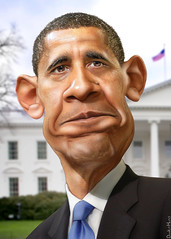
15083241473caricaturean exaggerated portrayal of one's features13
15083248303Defend, challenge, or qualifysupport, attack, or determine conditions14
15083254299EuphemismAn indirect, less offensive way of saying something that is considered unpleasant15
15083258831epigrama witty saying expressing a single thought or observation16
15221950634AppositiveA word or phrase that renames a nearby noun or pronoun.17
15221957152AphorismA brief, cleverly worded statement that makes a wise observation about life.18
15221965068BandwagonA fallacy which assumes that because something is popular, it is therefore good, correct, or desirable.19
15221981082concrete vs abstract dictionAbstract diction or abstract imagery is the language (words and phrases) we use to describe qualities that cannot be perceived with our five senses (sight, touch, smell, taste and hearing). For example, calling something pleasant or pleasing is abstract, while calling something yellow or sour is concrete.20
15221996115conundruma difficult problem21

AP Language Vocabulary Lesson 5 Flashcards

Terms : Hide Images
14382439556acrimoniousstinging, bitter in temper or tone0
14382439557ameliorateto improve, make better, to correct a flaw1
14382439558amenableopen or willing to follow advice or suggestion, tractable, malleable2
14382439559amorphousshapeless, without definite form, of no particular type or character, without organization or unity3
14382439560buoyantcapable of floating, cheerful4
14382439561cajoleto coax, persuade through flattery or artifice5
14382439562calamityan event causing great and often sudden damage or distress, a disaster6
14382439563debaseto reduce in dignity or quality7
14382439564effaceto erase, to wipe out8
14382439565elucidateto clarify, explain9
14382439566ephemerallasting a very short time10
14382439567ferocitysavagery, fierceness11
14382439568flourishto thrive, to grow well12
14382439569haughtyarrogant, condescending13
14382439570imperviousincapable of being affected14
14382439571inanesilly, empty of meaning or value15
14382439572indolenceinclination to laziness16
14382439573infalliblefree from error, absolutely dependable17
14382439574inscrutableincapable of being understood; impossible to see through physically18
14382439575languiddrooping, without energy, sluggish19
14382439576malicethe intention or desire to do evil, ill will20
14382439577obliqueslanting or sloping, not straightforward or direct21
14382439578opulencewealth, affluence, abundance22
14382439579penitentexpressing remorse for one's misdeeds23
14382439580perfunctoryacting routinely with little interest or care24

AP Language Literary Devices Flashcards

Terms : Hide Images
14332632277AmbiguityThe multiple meanings, either intentional or unintentional, of a word, phrase, sentence, or passage.0
14332632278Understatementthe presentation of something as being smaller, worse, or less important than it actually is.1
14332632279antecedentThe word, phrase, or clause referred to by a pronoun.2
14332632280Which is the antecedent in this sentence ? "John gave his money to Paulina"John3
14332632281Antithesisthe direct opposite, a sharp contrast in parallel structure4
14332632282JuxtapositionPlacement of two things closely together to emphasize comparisons or contrasts5
14332632283What is the difference between antithesis and juxtaposition?Antithesis must have parallel structure6
14332632284ParadoxA statement or proposition that seems self-contradictory or absurd but in reality expresses a possible truth.7
14332632285Aphorisma concise statement of a truth or principle8
14332632286ApostropheA figure of speech that directly addresses an absent or imaginary person or a personified value9
14332632287AsyndetonA device in which elements are presented in succession without conjunctions10
14332632288PolysyndetonDeliberate use of many conjunctions11
14332632289SyntaxSentence structure12
14332632290ChiasmusA statement consisting of two parallel parts in which the second part is structurally reversed13
14332632291Example of Chiasmus"Never let a Fool Kiss You or a Kiss Fool You."14
14332632292Example of ParadoxYour enemy's friend is your enemy.15
14332632293example of aphorismThe simplest questions are the hardest to answer16
14332632294example of antithesisSpeech is silver, but silence is gold.17
14332632295example of juxtapositionHeavy feather, Dark light18
14332632296Conceitan extended comparison or analogy between seemingly dissimilar objects19
14332632297example of conceitLove is like an oil change20
14332632298Litotesby making an affirmative point by denying its opposite21
14332632299Example of LitotesIt isn't very serious. I have this tiny little tumor on the brain.22
14332632300loose sentenceA complex sentence in which the main clause comes first and the subordinate clause follows23
14332632301example of a loose sentenceI went to the movies yesterday, bought candy, and shopped at the mall.24
14332632302periodic sentenceA sentence that presents its central meaning in a main clause at the end.25
14332632303example of periodic sentenceAfter he hurt all of those people, I don't think I could ever really trust him again.26
14332632304MetonymyA figure of speech in which something is referred to by using the name of something that is associated with it27
14332632305example of metonymyThe pen is mightier than the sword28
14332632306Synecdochea figure of speech in which a part is made to represent the whole or vice versa29
14332632307example of synecdoche"Bread" stands for food; "hands" stand for helpers30
14332632308Parallelismsimilarity of structure in a pair of series of related words, phrases, or clauses31
14332632309invectiveabusive language32
14332632310how is invective used ?to reduce someone's legitimacy or credibility33

ap LANGUAGE list FOUR Flashcards

Terms : Hide Images
14954809231epigonenoun, a less distinguished follower or imitator of someone, especially an artist or philosopher. I would be an _________, not an artist, if I only used the experiences of others without developing them any further. Greek epigonoi 'those born afterward' (based on gignesthai 'be born').0
14954829807fata morgananoun, a mirage, the war sometimes seemed unreal, more ___________ than memory. Italian, literally 'fairy Morgan'; originally referring to a mirage seen in the Strait of Messina between Italy and Sicily and attributed to Morgan le Fay, whose legend and reputation were carried to Sicily by Norman settlers.1
14954845440martinetnoun, a strict disciplinarian, especially in the armed forces. the woman in charge was a ___________ who treated all those beneath her like children. named after Jean Martinet, 17th-century French drill master.2
14954863090corrigendumnoun, an error in a printed work discovered after printing and shown with its correction on a separate sheet. A technical ____________, correcting some errors in the original standard, is being prepared at the time being. Latin, neuter gerundive of corrigere 'bring into order3
14955016235quintessentialadj, representing the most perfect or typical example of a quality or class. he was the ____________ tough guy—strong, silent, and self-contained. "purest, most refined," from quintessence (Medieval Latin quint essentia) + -al4
14955073188magniloquentadj, using high-flown or bombastic language. He spoke in a ___________ manner, drawing attention to himself. Latin magniloquus (from magnus 'great' + -loquus '-speaking') + -ent.5
14955108348aide-memoirenoun, an aid to the memory, especially a book or document. here is an ___________ of this season for you and for younger generations. French aide-mémoire, from aider 'to help' and mémoire 'memory'.6
14955138819panjandrumnoun, a person who has or claims to have a great deal of authority or influence. the greatest scientific __________of the 19th century. from Grand Panjandrum, an invented phrase in a nonsense verse (1755) by S. Foote.7
14955150088gallimaufrynoun, a confused jumble or medley of things. a glorious ____________ of childhood perceptions. from archaic French galimafrée 'unappetizing dish', perhaps from Old French galer 'have fun' + Picard mafrer 'eat copious quantities'.8
14955167472sycophantnoun, a person who acts obsequiously toward someone important in order to gain advantage. A person who flatters; a yes-man. The ____________ paid his manager compliment after compliment, hoping to gain access to an elite social society inner circle. from French sycophante, or via Latin from Greek sukophantēs 'informer', from sukon 'fig' + phainein 'to show', perhaps with reference to making the insulting gesture of the 'fig' (sticking the thumb between two fingers) to informers9

Pages

Subscribe to CourseNotes RSS

Need Help?

We hope your visit has been a productive one. If you're having any problems, or would like to give some feedback, we'd love to hear from you.

For general help, questions, and suggestions, try our dedicated support forums.

If you need to contact the Course-Notes.Org web experience team, please use our contact form.

Need Notes?

While we strive to provide the most comprehensive notes for as many high school textbooks as possible, there are certainly going to be some that we miss. Drop us a note and let us know which textbooks you need. Be sure to include which edition of the textbook you are using! If we see enough demand, we'll do whatever we can to get those notes up on the site for you!