

Flashcards
AP World History Flashcards
From Hunting and Gathering to Civilizations, 2.5 million-1000 B.C.E.: Origins
Original from MrsBHatchTEACHER
Terms : Hide Images
| 12203846200 | hunting and gathering | Means of obtaining subsistence by humans before the mastery of sedentary agriculture; normally typical of tribal social organization |  | 0 |
| 12203846201 | civilization | Societies with reliance on sedentary agriculture, ability to produce food surpluses, and existence of nonfarming elites, along with merchant and manufacturing groups | 1 | |
| 12203846202 | neolithic | The New Stone Age between 8000 and 5000 B.C.E.; period in which adaptation of sedentary agriculture occurred; domestication of plants and animals accomplished |  | 2 |
| 12203846203 | nomadic societies | livestock hearding societies that do not have a permanent settlement. normally found on the fringes of civilized (urban) societies; commonly referred to as "barbarian" by civilized societies |  | 3 |
| 12203846204 | culture | Combination of ideas, objects, and patterns of behavior that result from human social interaction |  | 4 |
| 12203846205 | agrarian revolution | Occurred between 8000 and 5000 B.C.E.; transition from hunting and gathering to sedentary agriculture |  | 5 |
| 12203846206 | pastoralism | A nomadic agricultural lifestyle based on herding domesticated animals; tended to produce independent people capable of challenging sedentary agricultural societies |  | 6 |
| 12203846207 | Mesopotamia | Literally "between the rivers"; the civilization that arose in the alluvial plain of the Tigris-Euphrates river valleys |  | 7 |
| 12203846208 | potter's wheel | A technological advance in pottery making; invented circa 6000 B.C.E.; encouraged faster and higher-quality ceramic pottery products |  | 8 |
| 12203846209 | Sumerians | People who migrated into Mesopotamia circa 4000 B.C.E.; created the first civilization within the region; organized area into city-states |  | 9 |
| 12203846210 | cuneiform | A form of writing developed by the Sumerians using a wedge-shaped stylus and clay tablets | 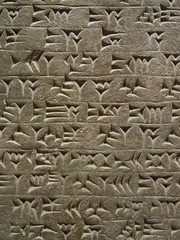 | 10 |
| 12203846211 | city-state | A form of political organization typical of Mesopotamian civilization; consisted of agricultural hinterlands ruled by an urban-based king |  | 11 |
| 12203846212 | Babylonian Empire | Unified all of Mesopotamia circa 1800 B.C.E.; collapsed due to foreign invasion circa 1600 B.C.E. |  | 12 |
| 12203846213 | Hammurabi | The most important Babylonian ruler; responsible for codification of the law |  | 13 |
| 12203846214 | Pharaoh | The term used to denote the kings of ancient Egypt; the term, "great house" refers to the palace of the pharaohs |  | 14 |
| 12203846215 | pyramids | Monumental architecture typical of Old Kingdom Egypt; used as burial sites for pharaohs |  | 15 |
| 12203846216 | hieroglyphs | Form of writing developed in ancient Egypt; more pictorial than Mesopotamian cuneiform |  | 16 |
| 12203846217 | monotheism | The exclusive worship of one god; introduced by Jews into Middle Eastern civilization |  | 17 |
| 12203846218 | Aryans | Indo-European nomadic, warlike, pastorialists who replaced Harappan civilization |  | 18 |
| 12203846219 | Huanghe (Yellow) River Basin | Site of the development of sedentary agriculture in China |  | 19 |
| 12203846220 | Shang | 1st Chinese dynasty (after the legendary Xia) |  | 20 |
| 12203846221 | Oracles | Shamans or priests in Chinese society who foretold the future through interpreting animal bones cracked by heat; inscriptions on bones led to Chinese writing |  | 21 |
| 12203846222 | Big Geography | A term that draws attention to the global nature of world history. |  | 22 |
| 12203846223 | Paleolithic | The period that ended about 3,000 years after the end of the last Ice Age, it lasted until about 10,000 years ago. (Old Stone Age) The period of the Stone Age associated with the evolution of humans. It predates the Neolithic period. |  | 23 |
| 12203846224 | Human migration during Paleolithic era | movement of humans from Africa to Eurasia, Australia, and the Americas | 24 | |
| 12203846225 | eglitarian | equality among people (no social levels) | 25 | |
| 12203846226 | tools | Humans developed a wider range of ____ specially adapted to different environments from tropics to tundra | 26 | |
| 12203846227 | Neolithic Revolution | period of change from hunter-gatherer lifesyle to agricultural lifestyles associated with domestication, farming, and settlement |  | 27 |
| 12203846228 | patriarchy | father based/male dominated society |  | 28 |
| 12203846229 | climatic change | Permanent agricultural villages emerged first in the lands of the eastern Mediterranean, possibly as a response to what? | 29 | |
| 12203846230 | weapons | Pastoralists were often the developers and disseminators of of ____ and forms of transportation that transformed warfare in agrarian civilizations | 30 | |
| 12203846231 | horses | name one mode of new transportation by the pastoralists | 31 | |
| 12203846232 | art | Elites, both political and religious, promoted ____. | 32 | |
| 12203846233 | record-keeping systems | ___ arose independently in all early civilization sand subsequently were diffused | 33 | |
| 12203846234 | Nile River | This river flooded regularly. |  | 34 |
| 12203846235 | Tigris River | This river's floods were unpredictable. | 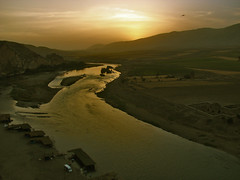 | 35 |
| 12203846236 | Mesopotamian | Unpredictable weather patterns affected the development of the _____ civilization. | 36 | |
| 12203846237 | Egyptian | _______art demonstrated little change for nearly 1000 years. | 37 | |
| 12203846238 | Euro diseases | Smallpox, measles, diphtheria, influenza, malaria, yellow fever and typhoid nearly wiped put entire indian villages | 38 | |
| 12203846239 | Spanish Silver | commercial and new global economic | 39 | |
| 12203846240 | cod hot spot | northern european in america | 40 | |
| 12203846241 | Confucianism | The system of ethics, education, and statesmanship taught by Confucius and his disciples, stressing love for humanity, ancestor worship, reverence for parents, and harmony in thought and conduct. | 41 | |
| 12203846242 | Doaism | Religion that teaches people to give up earthly desires in favor of nature | 42 | |
| 12203846243 | Legalism | A Chinese philosophy that was devoted to strengthen and expand the state through increased agricultural work and military service. | 43 |
Flashcards
AP BIO: Ecology Review Flashcards
Terms : Hide Images
| 7593485047 | Population | a group of organisms of the same species populating a given area | 0 | |
| 7593485048 | Community | a group of interdependent organisms inhabiting the same region and interacting with each other | 1 | |
| 7593485049 | ecosystem | a system formed by the interaction of a community of organisms with their physical environment | 2 | |
| 7593485050 | biosphere | the regions of the surface and atmosphere of the Earth (or other planet) where living organisms exist | 3 | |
| 7593485051 | habitat | the type of environment in which an organism or group normally lives or occurs | 4 | |
| 7593485052 | niche | the status or role of an organism within its environment and community (affecting its survival as a species) | 5 | |
| 7593485053 | exponential growth | =(r max)N | 6 | |
| 7593485054 | population density | number of individuals per unit area | 7 | |
| 7593485055 | dispersion | The pattern of distribution of organisms in a population | 8 | |
| 7593485056 | age structure | proportion of people in different age groups in a population | 9 | |
| 7593485057 | survivorship curves | They show the likelihood of survival at different ages throughout the lifetime of the organism. | 10 | |
| 7593485058 | type I | Survivorship curve in which the likelihood of dying is small until late in life, when mortality increases rapidly (such as Humans or elephants). | 11 | |
| 7593485059 | type II | Survivorship curve in which there is an equal likelihood of dying throughout life (such as birds or small mammals). | 12 | |
| 7593485060 | type III | Survivorship curve in which organisms are most likely to die when young; the few survivors tend to live until old age (such as oysters, salmon, or insects). | 13 | |
| 7593485061 | logistic growth | =rmax x N(K-N/K) | 14 | |
| 7593485062 | carrying capacity | largest number of individuals of a population that a environment can support | 15 | |
| 7593485063 | limiting factors | Conditions in the environment that put limits on where an organism can live | 16 | |
| 7593485064 | density-dependent factors | limiting factors (such as competition, predation, parasitism, and disease) that are affected by the number of individuals in a given area | 17 | |
| 7593485065 | density-independent factors | limiting factor that affects all populations in similar ways, regardless of population size | 18 | |
| 7593485066 | Gross Productivity | Total amount of organic compounds made by primary producers | 19 | |
| 7593485067 | Net Productivity | the amount of organic compounds available to an ecosystem after the primary producers use what they need to survive | 20 | |
| 7593485068 | intrinsic growth rate | the mean rate of growth of a population calculated by birth minus death rates when the population is free of competition with other species and from other factors that affect growth. | 21 | |
| 7593485069 | exponential growth | growth pattern in which the individuals in a population reproduce at a constant rate | 22 | |
| 7593485070 | logistic growth | growth pattern in which a population's growth rate slows or stops following a period of exponential growth | 23 | |
| 7593485071 | logistic growth curve | a period of exponential growth; population approaches its environmental limits, growth slows and finally stabilizes, fluctuating around the carrying capacity of the environment | 24 | |
| 7593485072 | population cycles | some populations have boom and bust cycles. Large growth, and then a lot of death, and then growth. | 25 | |
| 7593485073 | r-selected species | Species that reproduce early in their life span and produce large numbers of usually small and short-lived offspring in a short period. | 26 | |
| 7593485074 | invasive species | Any nonnative species that significantly modifies or disrupts the ecosystems it colonizes | 27 | |
| 7593485075 | k-selected species | Species that produce a few, often fairly large offspring but invest a great deal of time and energy to ensure that most of those offspring reach reproductive age. | 28 | |
| 7593485076 | competitive exclusion principle | ecological rule that states that no two species can occupy the same exact niche in the same habitat at the same time | 29 | |
| 7593485077 | resource partitioning | in a biological community various populations sharing environmental resources through specialization thereby reducing direct competition | 30 | |
| 7593485079 | realized niche | the range of resources and conditions a species actually uses or can tolerate at optimal efficiency; smaller than fundamental niche | 31 | |
| 7593485081 | predation | the act of preying by a predator who kills and eats the prey | 32 | |
| 7593485083 | parasite | an animal or plant that lives in or on a host (another animal or plant) | 33 | |
| 7593485085 | herbivore | any animal that feeds chiefly on grass and other plants | 34 | |
| 7593485089 | symbiosis | the relation between two different species of organisms that are interdependent | 35 | |
| 7593485090 | mutualism | the relation between two different species of organisms that are interdependent | 36 | |
| 7593485091 | commensalism | the relation between two different kinds of organisms when one receives benefits from the other without damaging it | 37 | |
| 7593485092 | parasitism | the relation between two different kinds of organisms in which one receives benefits from the other by causing damage to it (usually not fatal damage) | 38 | |
| 7593485094 | cryptic coloration | the act of concealing the identity of something by modifying its appearance | 39 | |
| 7593485095 | aposematic coloration | The bright coloration of animals with effective physical or chemical defenses that acts as a warning to predators | 40 | |
| 7593485096 | mimicry | the resemblance of an animal species to another species or to natural objects | 41 | |
| 7593485097 | mullerian mimicry | evolution of two species, both of which are unpalatable and, have poisonous stingers or some other defense mechanism, to resemble each other | 42 | |
| 7593485098 | batesian mimicry | A type of mimicry in which a harmless species looks like a species that is poisonous or otherwise harmful to predators. | 43 | |
| 7593485099 | ecological succession | the gradual and orderly process of change in an ecosystem brought about by the progressive replacement of one community by another until a stable climax is established | 44 | |
| 7593485100 | climax community | a relatively stable long-lasting community reached in a successional series; usually determined by climax and soil type | 45 | |
| 7593485101 | pioneer species | in primary succession on a terrestrial site, the plants, lichens, and microbes that first colonize the site | 46 | |
| 7593485102 | primary succession | an ecological succession that begins in a an area where no biotic community previously existed | 47 | |
| 7593485103 | secondary succession | succession on a site where an existing community has been disrupted | 48 | |
| 7593485104 | trophic levels | The hierarchical levels of the food chain through which energy flows from primary producers to primary consumers, secondary consumers and so on. | 49 | |
| 7593485105 | primary producers | An autotroph, usually a photosynthetic organism. Collectively, autotrophs make up the trophic level of an ecosystem that ultimately supports all other levels. | 50 | |
| 7593485106 | primary consumers | animals that feed on producers; ex. herbivores | 51 | |
| 7593485107 | secondary consumers | carnivores that eat herbivores | 52 | |
| 7593485109 | detritivores | organisms that feed on the detritus and decomposing organic material of living organisms | 53 | |
| 7593485110 | decomposers | organisms that break down wastes and dead organisms and return raw materials to the environment | 54 | |
| 7593485111 | ecological pyramids | show the relative amount of energy or matter contained within each trophic level in a given food chain or food web | 55 | |
| 7593485112 | ecological efficiency | Percentage of energy transferred from one trophic level to another in a food chain or web (10%) | 56 | |
| 7593485113 | food chain | a diagram of a community of organisms where each member is eaten in turn by another member | 57 | |
| 7593485114 | food web | a diagram that shows the feeding relationships between organisms in an ecosystem | 58 | |
| 7593485141 | algal blooms | a vast increase in the concentration of algae and other photosynthetic protists due to increased nutrients in the water. | 59 | |
| 7593485142 | eutrophication | process by which a body of water becomes too rich in dissolved nutrients, leading to plant growth that depletes oxygen | 60 |
Flashcards
AP Psychology AP Review Flashcards
Terms : Hide Images
| 12164281957 | psychology | the study of behavior and mental processes | 0 | |
| 12164281958 | psychology's biggest question | Which is more important in determining behavior, nature or nurture? | 1 | |
| 12164281959 | psychology's three levels of analysis | biopsychosocial approach (looks at the biological, psychological, and social-cultural approaches together) | 2 | |
| 12164281960 | biological approach | genetics, close-relatives, body functions | 3 | |
| 12164281961 | evolutionary approach | species - helped with survival (ancestors) | 4 | |
| 12164281962 | psychodynamic approach | (Freud) subconscious, repressed feelings, unfulfilled wishes | 5 | |
| 12164281963 | behavioral approach | learning (classical and operant) observed | 6 | |
| 12164281964 | cognitive approach | thinking affects behavior | 7 | |
| 12164281965 | humanistic approach | becoming a better human (behavior, acceptance) | 8 | |
| 12164281966 | social-cultural approach | cultural, family, environment | 9 | |
| 12164281967 | two reasons of why experiments are important | hindsight bias + overconfidence | 10 | |
| 12164281968 | types of research methods | descriptive, correlational, and experimental | 11 | |
| 12164281969 | descriptive methods | case study survey naturalistic observation (DON'T SHOW CAUSE/EFFECT) | 12 | |
| 12164281970 | case study | studies one person in depth may not be typical of population | 13 | |
| 12164281971 | survey | studies lots of people not in depth | 14 | |
| 12164281972 | naturalistic observation | observe + write facts without interference | 15 | |
| 12164281973 | correlational method | shows relation, but not cause/effect scatterplots show research | 16 | |
| 12164281974 | correlation coefficient | + 1.0 (both increase) 0 (no correlation - 1.0 (one increases, other decreases) | 17 | |
| 12164281975 | experimental method | does show cause and effect | 18 | |
| 12164281976 | population | type of people who are going to be used in experiment | 19 | |
| 12164281977 | sample | actual people who will be used (randomness reduces bias) | 20 | |
| 12164281978 | random assignment | chance selection between experimental and control groups | 21 | |
| 12164281979 | control group | not receiving experimental treatment receives placebo | 22 | |
| 12164281980 | experimental group | receiving treatment/drug | 23 | |
| 12164281981 | independent variable | drug/procedure/treatment | 24 | |
| 12164281982 | dependent variable | outcome of using the drug/treatment | 25 | |
| 12164281983 | confounding variable | can affect dependent variable beyond experiment's control | 26 | |
| 12164281984 | scientific method | theory hypothesis operational definition revision | 27 | |
| 12164281985 | theory | general idea being tested | 28 | |
| 12164281986 | hypothesis | measurable/specific | 29 | |
| 12164281987 | operational definition | procedures that explain components | 30 | |
| 12164281988 | mode | appears the most | 31 | |
| 12164281989 | mean | average | 32 | |
| 12164281990 | median | middle | 33 | |
| 12164281991 | range | highest - lowest | 34 | |
| 12164281992 | standard deviation | how scores vary around the mean | 35 | |
| 12164281993 | central tendency | single score that represents the whole | 36 | |
| 12164281994 | bell curve | (natural curve) |  | 37 |
| 12164281995 | ethics of testing on animals | need to be treated humanly basically similar to humans | 38 | |
| 12164281996 | ethics of testing on humans | consent debriefing no unnecessary discomfort/pain confidentiality | 39 | |
| 12164281997 | sensory neurons | travel from sensory receptors to brain | 40 | |
| 12164281998 | motor neurons | travel from brain to "motor" workings | 41 | |
| 12164281999 | interneurons | (in brain and spinal cord) connecting motor and sensory neurons | 42 | |
| 12164282192 | neuron |  | 43 | |
| 12164282000 | dendrites | receive messages from other neurons | 44 | |
| 12164282001 | myelin sheath | protects the axon | 45 | |
| 12164282002 | axon | where charges travel from cell body to axon terminal | 46 | |
| 12164282003 | neurotransmitters | chemical messengers | 47 | |
| 12164282004 | reuptake | extra neurotransmitters are taken back | 48 | |
| 12164282005 | excitatory charge | "Let's do it!" | 49 | |
| 12164282006 | inhibitory charge | "Let's not do it!" | 50 | |
| 12164282007 | central nervous system | brain and spinal cord | 51 | |
| 12164282008 | peripheral nervous system | somatic nervous system autonomic nervous system | 52 | |
| 12164282009 | somatic nervous system | voluntary movements | 53 | |
| 12164282010 | autonomic nervous system | involuntary movements (sympathetic and parasympathetic nervous systems) | 54 | |
| 12164282011 | sympathetic nervous system | arousing | 55 | |
| 12164282012 | parasympathetic nervous system | calming | 56 | |
| 12164282013 | neural networks | more connections form with greater use others fall away if not used | 57 | |
| 12164282014 | spinal cord | expressway of information bypasses brain when reflexes involved | 58 | |
| 12164282015 | endocrine system | slow uses hormones in the blood system | 59 | |
| 12164282016 | master gland | pituitary gland | 60 | |
| 12164282017 | brainstem | extension of the spinal cord responsible for automatic survival | 61 | |
| 12164282018 | reticular formation (if stimulated) | sleeping subject wakes up | 62 | |
| 12164282019 | reticular formation (if damaged) | coma | 63 | |
| 12164282020 | brainstem (if severed) | still move (without purpose) | 64 | |
| 12164282021 | thalamus | sensory switchboard (does not process smell) | 65 | |
| 12164282022 | hypothalamus | basic behaviors (hunger, thirst, sex, blood chemistry) | 66 | |
| 12164282023 | cerebellum | nonverbal memory, judge time, balance emotions, coordinate movements | 67 | |
| 12164282024 | cerebellum (if damaged) | difficulty walking and coordinating | 68 | |
| 12164282025 | amygdala | aggression, fear, and memory associated with these emotions | 69 | |
| 12164282026 | amygdala (if lesioned) | subject is mellow | 70 | |
| 12164282027 | amygdala (if stimulated) | aggressive | 71 | |
| 12164282028 | hippocampus | process new memory | 72 | |
| 12164282029 | cerebrum | two large hemispheres perceiving, thinking, and processing | 73 | |
| 12164282030 | cerebral cortex | only in higher life forms | 74 | |
| 12164282031 | association areas | integrate and interpret information | 75 | |
| 12164282032 | glial cells | provide nutrients to myelin sheath marks intelligence higher proportion of glial cells to neurons | 76 | |
| 12164282033 | frontal lobe | judgement, personality, processing (Phineas Gage accident) | 77 | |
| 12164282034 | parietal lobe | math and spatial reasoning | 78 | |
| 12164282035 | temporal lobe | audition and recognizing faces | 79 | |
| 12164282036 | occipital lobe | vision | 80 | |
| 12164282037 | corpus callosum | split in the brain to stop hyper-communication (eliminate epileptic seizures) | 81 | |
| 12164282038 | Wernicke's area | interprets auditory and hearing | 82 | |
| 12164282039 | Broca's area | speaking words | 83 | |
| 12164282040 | plasticity | ability to adapt if damaged | 84 | |
| 12164282041 | sensation | what our senses tell us | 85 | |
| 12164282042 | bottom-up processing | senses to brain | 86 | |
| 12164282043 | perception | what our brain tells us to do with that information | 87 | |
| 12164282044 | top-down processing | brain to senses | 88 | |
| 12164282045 | inattentional blindness | fail to "gorilla" because attention is elsewhere | 89 | |
| 12164282046 | cocktail party effect | even with tons of stimuli, we are able to pick out our name, etc. | 90 | |
| 12164282047 | change blindness | giving directions and person is changed and we don't notice | 91 | |
| 12164282048 | choice blindness | when defending the choice we make, we fail to notice choice was changed | 92 | |
| 12164282049 | absolute threshold | minimum stimulation needed in order to notice 50% of the time | 93 | |
| 12164282050 | signal detection theory | we notice what is more important to us (rather hear a baby crying) | 94 | |
| 12164282051 | JND (just noticeable difference) | (Weber's law) difference between different stimuli noticed in proportion | 95 | |
| 12164282052 | sensory adaptation | tired of noticing (Brain says, "Been there, done that. Next?" | 96 | |
| 12164282053 | rods | night time | 97 | |
| 12164282054 | cones | color | 98 | |
| 12164282055 | parallel processing | notice color, form, depth, movement, etc. | 99 | |
| 12164282056 | Young-Helmholtz trichromatic theory | 3 corresponding color receptors (RGB) | 100 | |
| 12164282057 | Hering's opponent-process theory | after image in opposite colors (RG, YB, WB) | 101 | |
| 12164282058 | trichromatic + opponent-process | Young-Helmholtz -> color stimuli Hering -> en route to cortex | 102 | |
| 12164282059 | frequency we hear most | human voice | 103 | |
| 12164282060 | Helmoltz (hearing) | we hear different pitches in different places in basilar membrane (high pitches) | 104 | |
| 12164282061 | frequency theory | impulse frequency (low pitches) | 105 | |
| 12164282062 | Helmholtz + frequency theory | middle pitches | 106 | |
| 12164282063 | Skin feels what? | warmth, cold, pressure, pain | 107 | |
| 12164282064 | gate-control theory | small fibers - pain large fibers - other senses | 108 | |
| 12164282065 | memory of pain | peaks and ends | 109 | |
| 12164282066 | smell | close to memory section (not in thalamus) | 110 | |
| 12164282067 | grouping | Gestalt make sense of pieces create a whole | 111 | |
| 12164282068 | grouping groups | proximity similarity continuity connectedness closure | 112 | |
| 12164282069 | make assumptions of placement | higher - farther smaller - farther blocking - closer, in front | 113 | |
| 12164282070 | perception = | mood + motivation | 114 | |
| 12164282071 | consciousness | awareness of ourselves and the environment | 115 | |
| 12164282072 | circadian rhythm | daily biological clock and regular cycle (sleep and awake) | 116 | |
| 12164282073 | circadian rhythm pattern | - activated by light - light sensitive retinal proteins signal brains SCN (suprachiasmatic nucleus) - pineal gland decreases melatonin | 117 | |
| 12164282074 | What messes with circadian rhythm? | artificial light | 118 | |
| 12164282075 | The whole sleep cycle lasts how long? | 90 minutes | 119 | |
| 12164282076 | sleep stages | relaxed stage (alpha waves) stage 1 (early sleep) (hallucinations) stage 2 (sleep spindles - bursts of activity) (sleep talk) stage 3 (transition phase) (delta waves) stage 4 (delta waves) (sleepwalk/talk + wet the bed) stage 5 (REM) (sensory-rich dreams) (paradoxical sleep) | 120 | |
| 12164282077 | purpose of sleep | 1. recuperation - repair neurons and allow unused neural connections to wither 2. making memories 3. body growth (children sleep more) | 121 | |
| 12164282078 | insomnia | can't sleep | 122 | |
| 12164282079 | narcolepsy | fall asleep anywhere at anytime | 123 | |
| 12164282080 | sleep apnea | stop breathing in sleep | 124 | |
| 12164282081 | night terrors | prevalent in children | 125 | |
| 12164282082 | sleepwalking/sleeptalking | hereditary - prevalent in children | 126 | |
| 12164282083 | dreaming (3) | 1. vivid bizarre intense sensory experiences 2. carry fear/survival issues - vestiges of ancestors' survival ideas 2. replay previous day's experiences/worries | 127 | |
| 12164282084 | purpose of dreaming (5 THEORIES) | 1. physiological function - develop/preserve neural pathways 2. Freud's wish-fulfillment (manifest/latent content) 3. activation synthesis - make sense of stimulation originating in brain 4. information processing 5. cognitive development - reflective of intelligence | 128 | |
| 12164282085 | 1. Can hypnosis bring you back in time? 2. Can hypnosis make you do things you wouldn't normally do? 3. Can it alleviate pain? 4. What state are you in during hypnosis? 5. Who is more susceptible? | 1. cannot take you back in time 2. cannot make you do things you won't do 3. can alleviate pain 4. fully conscious ((IMAGINATIVE PEOPLE MORE SUSCEPTIBLE)) | 129 | |
| 12164282086 | depressants | slows neural pathways | 130 | |
| 12164282087 | alcohol | ((depressant)) disrupts memory formation (REM) lowers inhibition expectancy effect | 131 | |
| 12164282088 | barbituates (tranquilizers) | ((depressant)) reduce anxiety | 132 | |
| 12164282089 | opiates | ((depressant)) pleasure reduce anxiety/pain | 133 | |
| 12164282090 | stimulants | hypes neural processing | 134 | |
| 12164282091 | methamphetamine | ((stimulant)) heightens energy euphoria affects dopamine | 135 | |
| 12164282092 | caffeine | ((stimulant)) | 136 | |
| 12164282093 | nicotine | ((stimulant)) CNS releases neurotransmitters calm anxiety reduce pain affects (nor)epinephrine and dopamine | 137 | |
| 12164282094 | cocaine | ((stimulant)) euphoria affects dopamine, serotonin, and norepinephrine | 138 | |
| 12164282095 | hallucinogen | excites neural activity | 139 | |
| 12164282096 | ecstasy | ((hallucinogen)) reuptake is blocked affects dopamine and serotonin | 140 | |
| 12164282097 | LSD | ((hallucinogen)) affects sensory/emotional "trip" (+/-) affects serotonin | 141 | |
| 12164282098 | marijuana | ((hallucinogen)) amplify sensory experience disrupts memory formation | 142 | |
| 12164282099 | learning | organism changing behavior due to experience (association of events) | 143 | |
| 12164282100 | types of learning | classical operant observational | 144 | |
| 12164282101 | famous classical psychologists | Pavlov and Watson | 145 | |
| 12164282102 | famous operant psychologist | Skinner | 146 | |
| 12164282103 | famous observational psychologists | Bandura | 147 | |
| 12164282104 | classical conditioning | outside stimulus | 148 | |
| 12164282105 | Pavlov's experiment | Step 1: US (food) -> UR (salivation) Step 2: NS (bell) -> US (food) -> UR (salivation) Later... CS (bell) -> CR (salivation) | 149 | |
| 12164282106 | Watson's experiment | white rat was given to Little Albert Step 1: US (noise) -> UR (cry) Step 2: NS (rat) -> US (noise) -> UR (cry) Later... CS (rat) -> CR (cry) | 150 | |
| 12164282107 | generalization | any small, white fluffy creature will make Albert cry now | 151 | |
| 12164282108 | discriminate | any large, white fluffy creature won't make Albert cry | 152 | |
| 12164282109 | extinction | stop "treating" with conditioned response | 153 | |
| 12164282110 | spontaneous recovery | bring stimulus back after a while | 154 | |
| 12164282111 | operant conditioning | control by organism | 155 | |
| 12164282112 | Skinner's experiment | operant chamber / Skinner box (lead to shaping) | 156 | |
| 12164282113 | shaping | get animal closer to doing what you want them to do | 157 | |
| 12164282114 | reinforcers | want to continue behavior (positive reinforcement: give money to do laundry) (negative reinforcement: do to avoid nagging) | 158 | |
| 12164282115 | punishments | want to stop behavior (positive reinforcement: smack) (negative reinforcement: take away phone) | 159 | |
| 12164282116 | fixed ratio | happens a certain number of times (Starbucks punch card) | 160 | |
| 12164282117 | variable ratio | happens an unpredictable number of times (winning the lottery) | 161 | |
| 12164282118 | organism must do these (2 times) | fixed ratio and variable ratio | 162 | |
| 12164282119 | fixed interval | happens at a certain time (mailman comes to the house at 10:00 AM) | 163 | |
| 12164282120 | variable interval | happens at any time (receive texts from friends) | 164 | |
| 12164282121 | these things happen regardless (2 times) | fixed interval and variable interval | 165 | |
| 12164282122 | Which (fixed/variable) conditions better? | variable | 166 | |
| 12164282123 | criticisms of Skinner | doesn't take into account intrinsic motivation | 167 | |
| 12164282124 | intrinsic motivation | doing something for yourself, not the reward | 168 | |
| 12164282125 | extrinsic motivation | doing something for reward | 169 | |
| 12164282126 | Skinner's legacy | use it personally, at school, and at work | 170 | |
| 12164282127 | famous observational experiment | Bandura's Bobo doll | 171 | |
| 12164282128 | famous observational psychologist | Bandura | 172 | |
| 12164282129 | mirror neurons | "feel" what is observed happens in higher order animals | 173 | |
| 12164282130 | Bobo doll experiment legacy | violent video games/movies desensitize us see good: do good see evil: do evil | 174 | |
| 12164282131 | observational learning | biological behaviors work best | 175 | |
| 12164282132 | habituation | get used to it -> stop reacting | 176 | |
| 12164282133 | examples for observational learning | lectures and reading | 177 | |
| 12164282134 | serotonin involved with memory | speeds the connection between neurons | 178 | |
| 12164282135 | LTP | ((long-term potentiation)) strengthens potential neural forming (associated with speed) | 179 | |
| 12164282136 | CREB | protein that can switch genes on/off with memory and connection of memories | 180 | |
| 12164282137 | glutamate involved with memory | neurotransmitter that enhances LTP | 181 | |
| 12164282138 | glucose involved with memory | released during strong emotions ((signaling important event to be remembered)) | 182 | |
| 12164282139 | flashbulb memory | type of memory remembered because it was an important/quick moment | 183 | |
| 12164282140 | amygdala (memory) | boosts activity of proteins in memory-forming areas to fight/flight | 184 | |
| 12164282141 | cerebellum (memory) | forms and stores implicit memories ((classical conditioning)) | 185 | |
| 12164282142 | hippocampus (memory) | active during sleep (forming memories) ((information "moves" after 48 hours)) | 186 | |
| 12164282143 | memory | learning over time contains information that can be retrieved | 187 | |
| 12164282144 | processing stages | encoding -> storage -> retrieval | 188 | |
| 12164282145 | encoding | information going in | 189 | |
| 12164282146 | storage | keeping information in | 190 | |
| 12164282147 | retrieval | taking information out | 191 | |
| 12164282148 | How long is sensory memory stored? | seconds | 192 | |
| 12164282149 | How long is short-term memory stored? | less than a minute | 193 | |
| 12164282150 | How many bits of information is stored in short-term memory? | 7 | 194 | |
| 12164282151 | How many chunks of information is stored in short-term memory? | 4 | 195 | |
| 12164282152 | How many seconds of words is stored in short-term memory? | 2 | 196 | |
| 12164282153 | short term memory goes to ______________ | working memory | 197 | |
| 12164282154 | working memory | make a connection and process information to mean something | 198 | |
| 12164282155 | working memory goes to _________________ | long-term memory | 199 | |
| 12164282156 | How much is stored in long-term memory? | LIMITLESS | 200 | |
| 12164282157 | implicit memory | naturally do | 201 | |
| 12164282158 | explicit memory | need to explain | 202 | |
| 12164282159 | automatic processing | space, time, frequency, well-learned information | 203 | |
| 12164282160 | effortful processing | processing that requires effort | 204 | |
| 12164282161 | spacing effect | spread out learning over time | 205 | |
| 12164282162 | serial position effect | primary/recency effect | 206 | |
| 12164282163 | primary effect | remember the first things in a list | 207 | |
| 12164282164 | recency effect | remember the last things in a list | 208 | |
| 12164282165 | effortful processing (4 things) | 1. recency effect 2. spacing effect 3. testing effect 4. serial position effect | 209 | |
| 12164282166 | semantic encoding (1) meaning (2) how to | make meaning out of something --- chunk, hierarchy, or connect to you | 210 | |
| 12164282167 | if we can't remember a memory... | 1. change memory to suit us 2. fill in the blanks with logical story | 211 | |
| 12164282168 | misinformation effect | not correct information | 212 | |
| 12164282169 | imagination inflation | imagine or visualize something that isn't real | 213 | |
| 12164282170 | source amnesia | what is the truth? (is it a dream, story, memory, etc.?) | 214 | |
| 12164282171 | priming | association (setting you up) | 215 | |
| 12164282172 | context | environment helps with memory | 216 | |
| 12164282173 | state-dependency | you may remember something if you go back to the state you were in (go back to high) | 217 | |
| 12164282174 | mood-congruency | emotion will bring back similar emotional memories | 218 | |
| 12164282175 | forgetting curve | forget after 5 days forget after 5 years | 219 | |
| 12164282176 | the forgetting curve was created by | Ebbinghaus | 220 | |
| 12164282177 | proactive interference | old information interferes with the new | 221 | |
| 12164282178 | retroactive interference | new information interferes with the old | 222 | |
| 12164282179 | children can't remember before age __ | 3 | 223 | |
| 12164282180 | Loftus | connected to abuse cases/childhood | 224 | |
| 12164282181 | prototypes | generalize | 225 | |
| 12164282182 | problem-solving (4) | trial + error algorithms heuristic (representative + availability) insight - "AHA!" | 226 | |
| 12164282183 | against problem-solving | fixation | 227 | |
| 12164282184 | mental set | what has worked in the past | 228 | |
| 12164282185 | functional fixedness | only way to do this is with this | 229 | |
| 12164282186 | Chomsky (nature or nurture?) | "born with language" (nature) | 230 | |
| 12164282187 | Skinner (nature or nurture?) | language is learned (nurture) | 231 | |
| 12164282188 | grammar is _________ | universal | 232 | |
| 12164282189 | phonemes | smallest sound unit | 233 | |
| 12164282190 | morphemes | smallest meaning unit | 234 |
Flashcards
Flashcards
AP: Flashcards
Terms : Hide Images
| 12340955680 | National Territory | Article 1 (PH Consti) | 0 | |
| 12340972818 | Declaration of Principles and State Policies | Article 2 (PH Consti) | 1 | |
| 12340976778 | Bill of Rights | Article 3 (PH Consti) | 2 | |
| 12340978325 | Citizenship | Article 4 (PH Consti) | 3 | |
| 12340980087 | Suffrage | Article 5 (PH Consti) | 4 | |
| 12340983086 | Legislative Department | Article 6 (PH Consti) | 5 | |
| 12340991238 | Executive Department | Article 7 (PH Consti) | 6 | |
| 12340992540 | Judicial Department | Article 8 (PH Consti) | 7 | |
| 12340995676 | Constitutional Commisions | Article 9 (PH Consti) | 8 | |
| 12340997472 | Local Government | Article 10 (PH Consti) | 9 | |
| 12341000365 | Accountability of Public Officers | Article 11 (PH Consti) | 10 | |
| 12341002283 | National Economy and Patrimony | Article 12 (PH Consti) | 11 | |
| 12341007395 | Social Justice and Human Rights | Article 13 (PH Consti) | 12 | |
| 12341011738 | Education, S&T, Arts, Culture, and Sports | Article 14 (PH Consti) | 13 | |
| 12341013649 | The Family | Article 15 (PH Consti) | 14 | |
| 12341015352 | General Provisions | Article 16 (PH Consti) | 15 | |
| 12341018215 | Amendments or Revisions | Article 17 (PH Consti) | 16 | |
| 12341034971 | Transitory Provisions | Article 18 (PH Consti) | 17 | |
| 12341172255 | code | collection of acts already passed into law | 18 | |
| 12341178372 | plebiscite | A direct vote in which a country's people have the opportunity to approve or reject a proposal | 19 | |
| 12341188290 | New Civil Code | this code contains acts about: - persons and family relations - property, ownership, and its modifications - modes of acquiring ownership - obligations and contracts | 20 | |
| 12341202682 | Revised Penal Code | this code contains the general penal laws of the ph | 21 | |
| 12341206040 | Family code | this code contains acts about people and family relations | 22 | |
| 12341227391 | Presidential Decree | an innovation made by Marcos w/ the proclamation of Martial Law | 23 | |
| 12341230006 | Executive Order | regulation issued by the president or other executive having the force of law | 24 | |
| 12341249953 | dura lex, sed lex | "it is harsh, but it is the law" in latin | 25 | |
| 12341261095 | > Supreme Court > Court of Appeals | Review Courts (2) | 26 | |
| 12341275532 | > Regional Trial Court > Metropolitan Trial Court > Municipal Trial Court > Municipal Circuit Trial Court | Trial Courts (4) | 27 | |
| 12341281384 | > Court of Tax Appeals > Sandiganbayan | Special Courts (2) | 28 | |
| 12341314399 | > 1987 Constitution > 1986 Freedom Constitution > 1973 Constitution > 1943 Constitution > 1935 Constitution > Jones Law of 1916 > Philippine Organic Act of 1902 > 1899 Malolos Constitution | PH Constitutions | 29 | |
| 12341320237 | Article 45 of the Family Code | it states the 6 grounds by w/c the court can annul the marriage | 30 | |
| 12341327810 | > absence of parental consent > mental illness > fraud > the consent of either party was obtained by force, intimidation, or under influence > one or the other party was physically incapable of consummating the marriage > either party was at the time of marriage afflicted w/ an STD found to be serious and seems to be incurable | Grounds by w/c the court can annul the marriage (6) | 31 | |
| 12341395377 | Executive Branch | Includes the President and the Vice President | 32 | |
| 12341396743 | Legislative Branch | - The Law making body of the Government - Includes the senate and the house of the representatives | 33 | |
| 12341398262 | Judicial Branch | - One that promotes justice - Includes the supreme court and the lower courts | 34 | |
| 12341412970 | - natural born Filipino - registered voter - able to read and write - 40 years of age at the day of the election - must have resided in the Philippines ten years before the election is held | an individual may become President provided he meets the following criteria: | 35 | |
| 12341425781 | > Elderly > Minor > Differently abled > Farmers > Fisher Folks | Vulnerable People in the Society (5) | 36 | |
| 12341430750 | Human Trafficking | action/practice of illegally transporting people from one country or area to another, typically for the purposes of forced labor or sexual exploitation | 37 | |
| 12341433702 | > Commission on Audit > Commission on Election > Civil Service Commission | Three commissions in the Philippine Institution | 38 | |
| 12341449654 | life, liberty, property, due process | Bill of Rights Section 1: No person shall be deprived of _____, _____, or _____ without __________ of law, nor shall any person be denied the equal protection of the laws. | 39 | |
| 12341463064 | Pederasty | sexual relation/activity involving a man and a boy | 40 | |
| 12341503360 | Human Rights Watch | Organization that monitors other countries human rights policies | 41 | |
| 12341509939 | Migrant Workers act | An act to institute the policies of overseas employment and establish a higher standard of protection and promotion of the welfare of migrant workers, their families and overseas Filipinos in distress, and for other purposes | 42 | |
| 12341519433 | Juvenile Justice Act | this act shall cover the different stages involving children at risk and children in conflict with the law from prevention to rehabilitation and reintegration. | 43 | |
| 12341540274 | Self-incrimination | giving testimony that can be used against oneself | 44 | |
| 12341542812 | Suffrage | the right to vote in political elections | 45 | |
| 12341543910 | Hot Pursuit | pursuit by a law enforcement officer (with or without a warrant) for the purpose of preventing the escape or effecting the arrest of any person who is suspected of committing, or having committed, a misdemeanor or felony | 46 | |
| 12341565709 | Exclusive Economic Zone | an area of coastal water and seabed within a certain distance of a country's coastline, to which the country claims exclusive rights for fishing, drilling, and other economic activities. | 47 | |
| 12341567116 | Geneva Convention | international agreement governing the humane treatment of wounded soldiers and prisoners of war | 48 | |
| 12341580759 | Vienna Convention | international convention that sets standards for people who have been arrested outside their own country | 49 | |
| 12341616814 | Nullum crimen sine lege, nulla poena sine lege | No crime without law, no punishment without law | 50 | |
| 12341661849 | Universal Declaration of Human Rights | document issued by the UN to promote basic human rights and freedoms | 51 | |
| 12341661696 | Right to Equality | Art. 1 (UDHR) | 52 | |
| 12341669418 | Freedom from Discrimination | Article 2 (UDHR) | 53 | |
| 12341672150 | Right to Life, Liberty, Personal Security | Article 3 (UDHR) | 54 | |
| 12341673992 | Freedom from Slavery | Article 4 (UDHR) | 55 | |
| 12341675810 | Freedom from Torture and Degrading Treatment | Article 5 (UDHR) | 56 | |
| 12341678641 | Right to Recognition as a Person before the Law | Article 6 (UDHR) | 57 | |
| 12341680029 | Right to Equality before the Law | Article 7 (UDHR) | 58 | |
| 12341681785 | Right to Remedy by Competent Tribunal | Article 8 (UDHR) | 59 | |
| 12341684530 | Freedom from Arbitrary Arrest and Exile | Article 9 (UDHR) | 60 | |
| 12341686338 | Right to Fair Public Hearing | Article 10 (UDHR) | 61 | |
| 12341687556 | Right to be Considered Innocent until Proven Guilty | Article 11 (UDHR) | 62 | |
| 12341688707 | Freedom from Interference with Privacy, Family, Home and Correspondence | Article 12 (UDHR) | 63 | |
| 12341692184 | Right to Free Movement in and out of the Country | Article 13 (UDHR) | 64 | |
| 12341695979 | Right to Asylum in other Countries from Persecution | Article 14 (UDHR) | 65 | |
| 12341697105 | Right to a Nationality and the Freedom to Change It | Article 15 (UDHR) | 66 | |
| 12341700183 | Right to Marriage and Family | Article 16 (UDHR) | 67 | |
| 12341701674 | Right to Own Property | Article 17 (UDHR) | 68 | |
| 12341702878 | Freedom of Belief and Religion | Article 18 (UDHR) | 69 | |
| 12341708313 | Freedom of Opinion and Information | Article 19 (UDHR) | 70 | |
| 12341710695 | Right of Peaceful Assembly and Association | Article 20 (UDHR) | 71 | |
| 12341714419 | Right to Participate in Government and in Free Elections | Article 21 (UDHR) | 72 | |
| 12341718392 | Right to Social Security | Article 22 (UDHR) | 73 | |
| 12341720919 | Right to Desirable Work and to Join Trade Unions | Article 23 (UDHR) | 74 | |
| 12341722600 | Right to Rest and Leisure | Article 24 (UDHR) | 75 | |
| 12341725002 | Right to Adequate Living Standard | Article 25 (UDHR) | 76 | |
| 12341726913 | Right to Education | Article 26 (UDHR) | 77 | |
| 12341729270 | Right to Participate in the Cultural Life of Community | Article 27 (UDHR) | 78 | |
| 12341732990 | Right to a Social Order that Articulates this Document | Article 28 (UDHR) | 79 | |
| 12341735915 | Community Duties Essential to Free and Full Development | Article 29 (UDHR) | 80 | |
| 12341738206 | Freedom from State or Personal Interference in the above Rights | Article 30 (UDHR) | 81 | |
| 12341752027 | Rome Statute | the treaty that established the International Criminal Court | 82 | |
| 12341774620 | 83 |
Pages

Need Help?
We hope your visit has been a productive one. If you're having any problems, or would like to give some feedback, we'd love to hear from you.
For general help, questions, and suggestions, try our dedicated support forums.
If you need to contact the Course-Notes.Org web experience team, please use our contact form.
Need Notes?
While we strive to provide the most comprehensive notes for as many high school textbooks as possible, there are certainly going to be some that we miss. Drop us a note and let us know which textbooks you need. Be sure to include which edition of the textbook you are using! If we see enough demand, we'll do whatever we can to get those notes up on the site for you!
