

Flashcards
Flashcards
Flashcards
AP LANG Flashcards
Terms : Hide Images
| 14713441067 | ad hominem fallacy | when speakers attack the person making the argument and not the argument itself |  | 0 |
| 14713441068 | ad populum fallacy | when we attempt to persuade people by arguing our position is reasonable because so many other people are doing it or agree with it |  | 1 |
| 14713441069 | Alliteration | Repetition of initial consonant sounds |  | 2 |
| 14713441070 | Allusion | A reference to another work of literature, person, or event |  | 3 |
| 14713441071 | Analogy | A comparison of two different things that are similar in some way |  | 4 |
| 14713441072 | Anaphora | the repetition of a word or phrase at the beginning of successive clauses |  | 5 |
| 14713441073 | Antimetabole | Repetition of words in reverse order |  | 6 |
| 14713441074 | Antithesis | the direct opposite, a sharp contrast |  | 7 |
| 14713441075 | appeal to false authority fallacy | This fallacy occurs when someone who has no expertise to speak on an issue is cited as an authority. |  | 8 |
| 14713441076 | archaic diction | old-fashioned or outdated choice of words |  | 9 |
| 14713441077 | Asyndeton | omission of conjunctions between coordinate phrases, clauses, or words |  | 10 |
| 14713441078 | audience | One's listener or readership; those to whom a speech or piece of writing is addressed. |  | 11 |
| 14713441079 | circular reasoning fallacy | error of basing a claim on the same claim reworded in slightly different terms |  | 12 |
| 14713441080 | claim | An assertion, usually supported by evidence |  | 13 |
| 14713441081 | claim of fact | asserts that something is true or not true |  | 14 |
| 14713441082 | claim of policy | proposes a change |  | 15 |
| 14713441083 | claim of value | argues that something is good or bad, right or wrong |  | 16 |
| 14713441084 | classical oration | five-part argument structure used by classical rhetoricians |  | 17 |
| 14713441085 | Classification | The process of grouping things based on their similarities |  | 18 |
| 14713441086 | concession | Something given up or yielded |  | 19 |
| 14713441087 | Connotation | an idea or feeling that a word invokes in addition to its literal or primary meaning. |  | 20 |
| 14713441088 | counterargument thesis statement | a summary of the counterargument, usually qualified by although or but, precedes the writer's opinion |  | 21 |
| 14713441089 | Counterargument | an opposing argument to the one a writer is putting forward |  | 22 |
| 14713441090 | cumulative sentence | sentence that completes the main idea at the beginning of the sentence and then builds and adds on |  | 23 |
| 14713441091 | deductive reasoning | general to specific |  | 24 |
| 14713441092 | Denotation | The dictionary definition of a word |  | 25 |
| 14713441093 | diction | word choice |  | 26 |
| 14713441094 | either/or fallacy | oversimplifying an issue as offering only two choices | 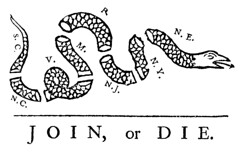 | 27 |
| 14713441095 | Enumeration | listing items in order |  | 28 |
| 14713441096 | Ethos | credibility |  | 29 |
| 14713441097 | evidence | the available body of facts or information indicating whether a claim is true or valid. | 30 | |
| 14713441098 | polemical | causing debate or argument |  | 31 |
| 14713441099 | Personification | A figure of speech in which an object or animal is given human feelings, thoughts, or attitudes |  | 32 |
| 14713441100 | Exigence | an issue, problem, or situation that causes or prompts someone to write or speak |  | 33 |
| 14713441101 | Pathos | Appeal to emotion |  | 34 |
| 14713441102 | faulty analogy fallacy | a comparison drawn between things that are dissimilar in some important way |  | 35 |
| 14713441103 | periodic sentence | sentence whose main clause is withheld until the end |  | 36 |
| 14713441104 | first-hand evidence | Evidence based on something the writer knows, whether it's from personal experience, observations, or general knowledge of events. |  | 37 |
| 14713441105 | formal diction | language that is lofty, dignified, and impersonal |  | 38 |
| 14713441106 | Parallelism | similarity of structure in a pair or series of related words, phrases, or clauses |  | 39 |
| 14713441107 | Oxymoron | A figure of speech that combines opposite or contradictory terms in a brief phrase. |  | 40 |
| 14713441108 | Hasty Generalization | A fallacy in which a faulty conclusion is reached because of inadequate evidence. |  | 41 |
| 14713441109 | hortative sentence | sentence that exhorts, urges, entreats, implores, or calls to action |  | 42 |
| 14713441110 | Open Thesis Statement | One that does not list all the points that the writer intends to cover an essay |  | 43 |
| 14713441111 | Neutral Diction | Uses standard language and vocabulary without elaborate words and may include contractions |  | 44 |
| 14713441112 | Hyperbole | exaggeration |  | 45 |
| 14713441113 | Hypophora | raising a question then proceeding to answer it |  | 46 |
| 14713441114 | occasion | the time and place a speech is given or a piece is written |  | 47 |
| 14713441115 | metaphor | A comparison without using like or as |  | 48 |
| 14713441116 | imperative sentence | sentence used to command or enjoin |  | 49 |
| 14713441117 | Logos | Appeal to logic |  | 50 |
| 14713441118 | inductive reasoning | A type of logic in which generalizations are based on a large number of specific observations. |  | 51 |
| 14713441119 | informal diction | language that is not as lofty or impersonal as formal diction; similar to everyday speech |  | 52 |
| 14713441120 | Litotes | A form of understatement that involves making an affirmative point by denying its opposite |  | 53 |
| 14713441121 | logical fallacy | a mistake in reasoning |  | 54 |
| 14713441122 | Inversion | turning inward |  | 55 |
| 14713441123 | Irony | A contrast between expectation and reality |  | 56 |
| 14713441124 | Juxtaposition | Placement of two things closely together to emphasize comparisons or contrasts |  | 57 |
| 14713441125 | post hoc ergo propter hoc | after this, therefore because of this |  | 58 |
| 14713441126 | Propaganda | Ideas spread to influence public opinion for or against a cause. |  | 59 |
| 14713441127 | Zeguma | use of two different words in a grammatically similar way that produces different, often incongruous, meanings |  | 60 |
| 14713441128 | purpose | the goal the speaker wants to achieve |  | 61 |
| 14713441129 | verbal irony | A figure of speech in which what is said is the opposite of what is meant |  | 62 |
| 14713441130 | Understatement | the presentation of something as being smaller, worse, or less important than it actually is. | 63 | |
| 14713441131 | red herring fallacy | when a speaker introduces an irrelevant issue or piece of evidence to divert attention from the subject of the speech |  | 64 |
| 14713441132 | Toulmin Model | an approach to analyzing and constructing arguments |  | 65 |
| 14713441133 | Refutation | a denial of the validity of an opposing argument | 66 | |
| 14713441134 | tone | Attitude a writer takes toward the audience, a subject, or a character |  | 67 |
| 14713441135 | rhetorical appeals | ethos, pathos, logos |  | 68 |
| 14713441136 | Rhetoric | the art of using language effectively and persuasively |  | 69 |
| 14713441137 | thesis statement | a statement or sentence that states the purpose of a paper or essay |  | 70 |
| 14713441138 | Synedoche | figure of speech that uses a part to represent the whole |  | 71 |
| 14713441139 | Situational Irony | An outcome that turns out to be very different from what was expected |  | 72 |
| 14713441140 | rhetorical question | A question asked merely for rhetorical effect and not requiring an answer |  | 73 |
| 14713441141 | rhetorical situation | a situation in which people's understanding can be changed through messages |  | 74 |
| 14713441142 | subject | the topic of a text and what it is about |  | 75 |
| 14713441143 | text | written words |  | 76 |
| 14713441144 | rhetorical triangle | A diagram that illustrates the interrelationship among the speaker, audience, and subject in determining a text. |  | 77 |
| 14713441145 | Syllogism | A form of deductive reasoning consisting of a major premise, a minor premise, and a conclusion. |  | 78 |
| 14713441146 | Rogerian Argument | acknowledges the validity of the opposition's positions rather than attacking them |  | 79 |
| 14713441147 | Satire | A literary work that criticizes human misconduct and ridicules vices, stupidities, and follies. |  | 80 |
| 14713441148 | straw man fallacy | a statement that refutes a claim that was never made |  | 81 |
| 14713441149 | Speaker | creates and delivers a written or spoken text | 82 | |
| 14713441150 | second-hand evidence | evidence accessed through research, reading, and investigation |  | 83 |
| 14713441151 | Simile | A comparison using "like" or "as" |  | 84 |
| 14713503135 | context | the circumstances, atmosphere, attitudes, and (historical or current) events surrounding a text |  | 85 |
| 14723822178 | persona | greek for "mask". The face or character that a speaker shows to his or her audience |  | 86 |
| 16683962485 | reasoning | the process of drawing a conclusion on the basis of evidence | 87 | |
| 16684003800 | coherence | quality of a piece of writing in which all the parts contribute to the development of the central idea, theme, or organizing principle | 88 | |
| 16684018667 | Repetition (Rhetorical device) | Repeating words, phrases, images, or ideas to add emphasis | 89 | |
| 16684032441 | synonym | A word that means the same as another word | 90 | |
| 16684043661 | pronoun reference | the connection between a pronoun and its antecedent (noun that the pronoun replaces). reference should be clear and unambiguous: The lawyer picked up his hat and left. | 91 | |
| 16684066316 | transitions | words or phrases used to connect ideas together | 92 | |
| 16684077653 | adjective | A word that describes a noun | 93 | |
| 16684088489 | adverb | A word that modifies a verb, an adjective, or another adverb | 94 | |
| 16684104806 | qualifier | a word or phrase that clarifies, modifies, or limits the meaning of another word or phrase | 95 | |
| 16684114090 | modifier | a word or group of words that provides description for another word | 96 |
AP Language and Composition Review Flashcards
Terms : Hide Images
| 13973912597 | rhetorical appeals | Rhetorical techniques used to persuade an audience by emphasizing what they find most important or compelling. The three major appeals are the ethos (character), logos (reason), and pathos (emotion). | 0 | |
| 13973912598 | ethos | Greek for "character." Speakers appeal to ethos to demonstrate that they are credible and trustworthy to speak on a given topic. Ethos is established by both who you are and what you say. | 1 | |
| 13973912599 | counterargument | An opposing argument to the one a writer is putting forward. Rather than ignoring a counterargument, a strong writer will usually address it through the process of concession and refutation. | 2 | |
| 13973912600 | concession (concede) | An acknowledgement that an opposing argument may be true or reasonable. In a strong argument, a concession is usually accompanied by a refutation challenging the validity of the opposing argument. | 3 | |
| 13973912601 | refutation (refute) | A denial of the validity of an opposing argument. In order to sound reasonable, refutations often follow a concession that acknowledges that an opposing argument may be true or reasonable. | 4 | |
| 13973912602 | logos | Greek for "embodied thought." Speakers appeal to logos or reason, by offering clear, rational ideas and using specific details, examples, facts, statistics, or expert testimony to back them up. | 5 | |
| 13973912603 | connotation | Meanings or associations that readers have with a word beyond its dictionary definition, or denotation. Words carry cultural and emotional associations or meanings in addition to their literal meanings or denotations. Connotations are usually positive or negative, and they can greatly affect the author's tone. | 6 | |
| 13973912604 | pathos | Greek for "suffering" or "experience." Speakers appeal to pathos to emotionally motivate their audience. More specific appeals to pathos might play on the audience's values, desires, and hopes, on the one hand, or fears and prejudices, on the other. | 7 | |
| 13973912605 | Rhetorical Triangle | A diagram that illustrates the interrelationship among the speaker, audience, and the subject in determining a text. |  | 8 |
| 13973912606 | audience | The listener, viewer, or reader of a text. Most texts are likely to have multiple audiences | 9 | |
| 13973912607 | context | The circumstances, atmosphere, attitudes, and events surrounding a text. | 10 | |
| 13973912608 | occasion | The time and place a speech is given or a piece is written. | 11 | |
| 13973912611 | propaganda | The spread of ideas and information to further a cause. In its negative sense, propaganda is the use of rumors, lies, disinformation, and scare tactics in order to damage or promote a cause. | 12 | |
| 13973912612 | purpose | The goal the speaker wants to achieve. | 13 | |
| 13973912613 | rhetoric | As Aristotle defined the term, "The faculty of observing in any given case the available means of persuasion." In other words, it is the art of finding ways to persuade an audience. | 14 | |
| 13973912614 | SOAPSTone | A mnemonic device that stands for Subject, Occasion, Audience, Purpose, Speaker, and Tone. It is a handy way to remember the various elements that make up the rhetorical situation. | 15 | |
| 13973912615 | speaker | The person or group who creates a text. This might be a politician who delivers a speech, a commentator who writes an article, an artist who draws a political cartoon, or even a company that commissions an advertisement. | 16 | |
| 13973912616 | subject | The topic of a text; what the text is about. | 17 | |
| 13973912618 | diction | The speaker's choice of words. Writers choose words to create and convey a typical mood, tone and atmosphere to their readers. Diction or choice of words separates good writing from bad writing. It depends on a number of factors. Firstly, the word has to be right and accurate. Secondly, words should be appropriate to the context in which they are used. Lastly, the choice of words should be such that the listener or readers understand easily. Besides, proper diction or proper choice of words is important to get the message across. On the contrary, the wrong choice of words can easily divert listeners or readers which results in misinterpretation of the message intended to be conveyed. | 18 | |
| 13973912619 | syntax | How the words are arranged | 19 | |
| 13973912620 | tone | The speaker's attitude toward's the subject as revealed by his or her choice of language | 20 | |
| 13973912621 | mood | How the work makes the reader feel. | 21 | |
| 13973912622 | metaphor | Figure of speech that compares two things without using like or as; says one thing IS another. | 22 | |
| 13973912623 | similes | Figure of speech that compares two things using like or as. | 23 | |
| 13973912624 | personification | Attribution of a human quality to an inanimate object or idea. | 24 | |
| 13973912625 | hyperbole | Exaggerated statements or claims not meant to be taken seriously | 25 | |
| 13973912626 | parallelism | Similarity of structure in a pair or series of related words, phrases, or clauses. | 26 | |
| 13973912627 | juxtaposition | Two or more ideas, places, characters, and their actions are placed side by side in a narrative or a poem, for the purpose of developing comparisons and contrasts. ie: Paradise lost | 27 | |
| 13973912628 | antithesis | Opposition, or contrast, of ideas or words in a parallel construction. | 28 | |
| 13973912629 | compound sentence | A sentence with more than one subject or predicate | 29 | |
| 13973912630 | complex sentence | A sentence containing a subordinate clause or clauses | 30 | |
| 13973912631 | periodic sentence | Sentence whose main clause is withheld until the end. | 31 | |
| 13973912632 | cumulative sentence | Sentence that completes the main idea at the beginning of the sentence and then builds and adds on. | 32 | |
| 13973912633 | imperative sentence | Sentence used to command or enjoin. | 33 | |
| 13973912634 | pacing | How fast a story unfolds. Does the author reveal details quickly or slowly? How does he or she build suspense? | 34 | |
| 13973912635 | figures of speech | A word or phrase used in a nonliteral sense to add rhetorical force to a spoken or written passage | 35 | |
| 13973912637 | satire | The use of irony or sarcasm to criticize | 36 | |
| 13973912639 | allusion | Brief reference to a person, event, or place (real or fictitious) or to a work of art. | 37 | |
| 13973912641 | asyndeton | Omission of conjunctions between coordinate phrases, clauses, or words. | 38 | |
| 13973912644 | rhetorical question | Figure of speech in form of a question posed for the rhetorical effect rather than for the purpose of getting an answer. | 39 | |
| 13973912645 | synecdoche | Figure of speech that uses a part to represent a whole. May also use larger groups to refer to smaller groups, or vice versa. It may also call a thing by the name of the material it is made of, or it may refer to a thing in a container or packaging by the name of that container or packing. Example: The word "bread" refers to food or money, as in "Writing is my bread and butter," or "He is the sole breadwinner." The phrase "gray beard" refers to an old man. The word "sails" refers to a whole ship. The word "suit" refers to a businessman. The word "boots" usually refers to soldiers. The term "coke" is a common synecdoche for all carbonated drinks. "wheels" and "ride" are synecdoches for car The word "glasses" refers to spectacles. | 40 | |
| 13973912646 | imagery | When a writer describes something using language that appeals to our five senses (sight, smell, taste, touch, hearing) | 41 | |
| 13973912647 | argument | A process of reasoned inquiry; a persuasive discourse resulting in a coherent and considered movement from claim to conclusion. | 42 | |
| 13973912649 | claim | Also called an assertion or a proposition, a claim states the argument's main idea or position. A claim differs from a topic or subject in that a claim has to be arguable. | 43 | |
| 13973912656 | logical fallacy (fallacy) | Logical fallacies are potential vulnerabilities or weaknesses in an argument. They often arise from a failure to make a logical connection between the claim and the evidence used to support it. | 44 | |
| 13973912658 | ad hominem | Latin for "to the man," this fallacy refers to the specific diversionary tactic of switching the argument from the issue at hand to the character of the other speaker. If you argue that a park in your community should not be renovated because the person supporting it was arrested during a domestic dispute, then you are guilty of ad hominem. | 45 | |
| 13973912659 | faulty analogy | A fallacy that occurs when an analogy compares two things that are not comparable. For instance, to argue that because we put animals who are in irreversible pain out of their misery, we should do the same for people, asks the reader to ignore significant and profound differences between animals and people. | 46 | |
| 13973912660 | straw man | A fallacy that occurs when a speaker chooses a deliberately poor or oversimplified example in order to ridicule and refute an idea. | 47 | |
| 13973912661 | either/or (false dilemma) | A fallacy in which the speaker presents two extreme options as the only possible choices. | 48 | |
| 13973912662 | hasty generalization | A fallacy in which conclusion is reached because of inadequate evidence. | 49 | |
| 13973912663 | circular reasoning | A fallacy in which the writer repeats the claim as a way to provide evidence. | 50 | |
| 13973912664 | first-hand evidence | Evidence based on something that the writer knows, whether it's from personal experience, observations, or general knowledge of events. | 51 | |
| 13973912665 | second-hand evidence | Evidence that is accessed through research, reading, and investigation. It includes factual and historical information, expert opinion, and quantitative data. | 52 | |
| 13973912666 | post hoc ergo propter hoc | This fallacy is Latin for "after which therefore because of which," meaning that it is incorrect to always claim that something is a clause just because it happened earlier. One may loosely summarize this fallacy by saying that correlation does not simply imply causation. | 53 | |
| 13973912667 | appeal to false authority | This fallacy occurs when someone who has no expertise to speak on a issue is cited as an authority. A TV star, for instance, is not a medical expert, even though pharmaceutical advertisements often use celebrity endorsements. | 54 | |
| 13973912669 | bandwagon appeal | This fallacy occurs when evidence boils down to "everybody's doing it, so it must be a good thing to do." | 55 | |
| 13973912685 | begging the question | A fallacy in which a claim is based on evidence or support that is in doubt. It "begs" a question whether the support itself is sound. | 56 | |
| 13973912687 | syndeton | a sentence style in which words, phrases, or clauses are joined by conjunctions (usually and). | 57 | |
| 13973912688 | qualitative evidence | Descriptive information, which often comes from interviews, focus groups or artistic depictions such as photographs. | 58 | |
| 13973912689 | bias | 1. a prejudiced view (either for or against); a preference. 2. a partiality that prevents objective consideration of an issue or situation | 59 | |
| 13973912691 | scare tactics | using fear to sway people by exaggerating possible dangers well beyond their statistical likelihood | 60 | |
| 13973912692 | slippery slope | Suggest dire consequences from relatively minor causes | 61 | |
| 13973912695 | non sequitur | a statement that does not follow logically from evidence | 62 | |
| 13973912698 | chiasmus | a rhetorical device in which two or more clauses are balanced against each other by the reversal of their structures in order to produce an artistic effect. | 63 | |
| 13973912700 | anaphora | Repetition of a word or phrase at the beginning of successive phrases, clauses, or lines. This device produces a strong emotional effect, especially in speech. It also establishes a marked change in rhythm. a. "We shall not flag or fail. We shall go on to the end. We shall fight in France, we shall fight on the seas and oceans, we shall fight with growing confidence and growing strength in the air, we shall defend our island . . . we shall never surrender." (Winston Churchill, 1940) b. "Why should white people be running all the stores in our community? Why should white people be running the banks of our community? Why should the economy of our community be in the hands of the white man? Why?" (Malcolm X) c. "Yesterday, the Japanese government also launched an attack against Malaya. Last night, Japanese forces attacked Hong Kong. Last night, Japanese forces attacked Guam. Last night, Japanese forces attacked the Philippine Islands. Last night, the Japanese attacked Wake Island. And this morning, the Japanese attacked Midway Island." (Franklin Roosevelt, Pearl Harbor Address) | 64 | |
| 13973912701 | epistrophe | repetition of the same word or group of words at the ends of successive phrases. Like anaphora, epistrophe produces a strong rhythm and emphasis. a. "But to all of those who would be tempted by weakness, let us leave no doubt that we will be as strong as we need to be for as long as we need to be." (Richard Nixon, First Inaugural Address) b. "...and that government of the people, by the people, for the people shall not perish from the earth." (Abraham Lincoln, Gettysburg Address) c. "As long as the white man sent you to Korea, you bled. He sent you to Germany, you bled. He sent you to the South Pacific to fight the Japanese, you bled." (Speech by Malcolm X) d. "In a cake, nothing tastes like real butter, nothing moistens like real butter, nothing enriches like real butter, nothing satisfies like real butter." (Caption from a Pillsbury ad) | 65 | |
| 13973912702 | epanalepsis | (eh-puh-nuh-LEAP-siss) — repetition of the same word or words at both beginning and ending of a phrase, clause, or sentence. Like other schemes of repetition, epanalepsis often produces or expresses strong emotion. a. Blood hath bought blood, and blows have answer'd blows:/ Strength match'd with strength, and power confronted power. (William Shakespeare, King John) b. "Nothing is worse than doing nothing." c. "A minimum wage that is not a livable wage can never be a minimum wage." (Ralph Nader) | 66 | |
| 13973912703 | anadiplosis | (an-uh-dih-PLO-sis) — repetition of the last word of one clause at the beginning of the following clause. a. "The crime was common, common be the pain". (Alexander Pope, "Eloise to Abelard" b. "Aboard my ship, excellent performance is standard. Standard performance is sub-standard. Sub-standard performance is not permitted to exist." (Captain Queeg, Herman Wouk's The Caine Mutiny) c. "Somehow, with the benefit of little formal education, my grandparents recognized the inexorable downward spiral of conduct outside the guardrails: If you lie, you will cheat; if you cheat, you will steal; if you steal, you will kill." (Justice Clarence Thomas, 1993 Mercer Law School Address) d. "They call for you: The general who became a slave; the slave who became a gladiator; the gladiator who defied an Emperor. Striking story." (line delivered by Joaquin Phoenix, from the movie Gladiator) | 67 | |
| 13973912705 | alliteration | repetition in which a number of words, having the same first consonant sound, occur close together in a series. Alliteration does not depend on letters but on sounds. So the phrase not knotty is alliterative, but cigarette chase is not. a. "The fair breeze blew, the white foam flew, The furrow followed free" Samuel Taylor Coolridge b. "It was the meanest moment of eternity". (Zora Neale Hurston, Their Eyes Were Watching God) c. "His soul swooned slowly as he heard the snow falling faintly through the universe and faintly falling, like the descent of their last end, upon all the living and the dead." (James Joyce,The Dead) d. Names, logos, and ads are often alliterative because it helps you remember: Dunkin' Donuts PayPal; Best Buy;Coca-Cola; Lois Lane; Sammy Sosa; Ronald Reagan; Porky Pig; etc. | 68 | |
| 13973912706 | assonance | the repetition of similar vowel sounds, preceded and followed by different consonants, in the stressed syllables of adjacent words. a. "Whales in the wake like capes and Alps/ Quaked the sick sea and snouted deep." (Dylan Thomas, "Ballad of the Long Legged Bait") b. "Refresh your zest for living." (advertisement for French Line Ships) c. "Strips of tinfoil winking like people." (Sylvia Plath) d. "The gloves didn't fit. If it doesn't fit, you must acquit." (Johnny Cochran, O.J.Simpson trial) | 69 | |
| 13973912707 | consonance | The use of a series of consonants in quick succession - used more in poetry than in prose. a. "The pitter patter of perpetual precipitation put me in a petulant mood". While there is alliteration in this sentence with the letter p being repeated in the beginning of words, the repeated p and t are consonant. b. "Rap rejects my tape deck, ejects projectile Whether Jew or gentile, I rank top percentile Many styles, more powerful than gamma rays My grammar pays, like Carlos Santana plays." | 70 | |
| 13973912709 | ellipsis | Ellipsis is the omission of a word or series of words. There are two slightly different definitions of ellipsis which are pertinent to literature. The first definition of ellipsis is the commonly used series of three dots, which can be place at the beginning, in the middle, or at the end of a sentence or clause. But more importantly, for AP purposes, the second is: a linguistically appropriate omission of words that are mutually understood and thus unnecessary. This type of ellipsis is usually used where the words omitted would be redundant. example: Gapping: I ordered the linguine, and he [ordered] the lobster. Stripping: I ordered the linguine, [I did] not [order] lobster. Verb phrase ellipsis: I'll order the linguine and you can [order the linguine], too. Answer ellipsis: Who ordered the linguine? I did [order the linguine]. Sluicing: I'll get something to drink, but I'm not sure what [I'll get to drink]. Nominal ellipsis: I ordered two drinks, and Bill [ordered] one. | 71 | |
| 13973912710 | metonymy | a type of metaphor where the substitution of the name of an attribute for that of the thing meant. Examples: The pen is mightier than the sword. -Edward Bulwer-Lytton This land belongs to the crown. Flight simulators are valuable because you can die in software and still be around to fly another day. You cannot fight city hall. The orders came directly from the White House. After four years of reading and writing, I got my bachelor's degree and left college. After four years of filling in the bubbles on machine-scored answer sheets, I got my bachelor's degree and left college. | 72 | |
| 13973912712 | paradox | an apparently contradictory statement that actually contains some truth. examples: Less is more You can save money by spending it. I know one thing; that I know nothing. This is the beginning of the end. Deep down, you're really shallow. I'm a compulsive liar. "Men work together whether they work together or apart." - Robert Frost "What a pity that youth must be wasted on the young." - George Bernard Shaw "I can resist anything but temptation." - Oscar Wilde Here are the rules: Ignore all rules. The second sentence is false. The first sentence is true. | 73 | |
| 13974004539 | Tone | Attitude a writer takes toward the audience, a subject, or a character | 74 |
Flashcards
Flashcards
Flashcards
Flashcards
Pages

Need Help?
We hope your visit has been a productive one. If you're having any problems, or would like to give some feedback, we'd love to hear from you.
For general help, questions, and suggestions, try our dedicated support forums.
If you need to contact the Course-Notes.Org web experience team, please use our contact form.
Need Notes?
While we strive to provide the most comprehensive notes for as many high school textbooks as possible, there are certainly going to be some that we miss. Drop us a note and let us know which textbooks you need. Be sure to include which edition of the textbook you are using! If we see enough demand, we'll do whatever we can to get those notes up on the site for you!
