

AP US History Period 7 Flashcards
Terms : Hide Images
| 13887118882 | imperialist | A policy of extending a country's power and influence through diplomacy or military force. |  | 0 |
| 13887118883 | isolationism | A category of foreign policies institutionalized by leaders who asserted that their nations' best interests were best served by keeping the affairs of other countries at a distance. |  | 1 |
| 13887118884 | Open Door Policy | The policy that China should be open to trade with all of the major powers, and that all, including the United States, should have equal right to trade there. This was the official American position toward China as announced by Secretary of State John Hay in 1899. |  | 2 |
| 13887118885 | Spanish-American War | A conflict fought between Spain and the United States in 1898. Hostilities began in the aftermath of sinking of the USS Maine in Havana harbor leading to American intervention in the Cuban War of Independence. |  | 3 |
| 13887118886 | Progressive Era | A period of widespread social activism and political reform across the United States, from the 1890s to 1920s. |  | 4 |
| 13887118887 | progressive | In politics, one who believes in continuing progress, improvement, or reform. |  | 5 |
| 13887118888 | initiative | In politics, the procedure whereby voters can, through petition, present proposed legislation directly to the electorate. |  | 6 |
| 13887118889 | referendum | The submission of a law, proposed or already in effect, to a direct vote of the electorate. |  | 7 |
| 13887118890 | recall | In politics, a procedure for removing an official from office through popular election or other means. |  | 8 |
| 13887118891 | Prohibition | A nationwide constitutional ban on the production, importation, transportation and sale of alcoholic beverages that remained in place from 1920 to 1933. |  | 9 |
| 13887118892 | Women's suffrage | The women's right to vote, granted by the 19th amendment to the U.S. Constitution (1920). |  | 10 |
| 13887118893 | The Great Depression | The deepest and longest-lasting economic downturn in the history of the Western industrialized world. In the United States, the Great Depression began soon after the stock market crash of October 1929, which sent Wall Street into a panic and wiped out millions of investors. | 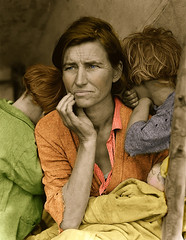 | 11 |
| 13887118894 | conservationists | Those who advocate for the sustainable use and management of natural resources including wildlife, water, air, and earth deposits, both -- renewable and non-renewable. |  | 12 |
| 13887118895 | Welfare State | A system whereby the government undertakes to protect the health and well-being of its citizens, especially those in financial or social need, by means of grants, pensions, and other benefits. The foundations for the modern welfare state in the US were laid by the New Deal programs of President Franklin D. Roosevelt. |  | 13 |
| 13887118896 | Liberalism | A viewpoint or ideology associated with free political institutions and religious toleration, as well as support for a strong role of government in regulating capitalism and constructing the welfare state. |  | 14 |
| 13887118897 | mass media | Diversified mediatechnologies that are intended to reach a large audience by mass communication. |  | 15 |
| 13887118898 | The Great Migration | The movement of 6 million African-Americans out of the rural Southern United States to the urban Northeast, Midwest, and West that occurred between 1910 and 1970. |  | 16 |
| 13887118899 | Treaty of Versailles | One of the peace treaties at the end of World War I. It ended the state of war between Germany and the Allied Powers. Signed on 28 June 1919, exactly five years after the assassination of Archduke Franz Ferdinand. |  | 17 |
| 13887118900 | League of Nations | An intergovernmental organization founded on 10 January 1920 as a result of the Paris Peace Conference that ended the First World War. It lacked an armed force to enforce policy and was not joined by the United States. |  | 18 |
| 13887118901 | fascism | An authoritarian and nationalistic right-wing system of government and social organization. |  | 19 |
| 13887118902 | Axis Powers | Germany, Italy, and Japan, which were allied before and during World War II. |  | 20 |
| 13887118903 | Allied Powers | U.S., Britain, France, which were allied before and during World War II. |  | 21 |
| 13887118904 | Nazi Concentration Camp | A guarded compound for the detention or imprisonment of aliens, members of ethnic minorities, political opponents. Primarily Jewish Europeans during WWII. |  | 22 |
| 13887118905 | Holocaust | A genocide in which Adolf Hitler's Nazi Germany and its collaborators killed about six million Jews and members from other fringe social groups during World War II. |  | 23 |
| 13887118906 | Internment of Japanese Americans | Forced relocation and incarceration in camps in the interior of the U.S. of between 110,000 and 120,000 people of Japanese ancestry who had lived on the Pacific coast. |  | 24 |
| 13887118907 | Pacific "Island Hopping" | A military strategy employed by the Allies in the Pacific War against Japan and the Axis powers during World War II. The idea was to bypass heavily fortified Japanese positions and instead concentrate the limited Allied resources on strategically important islands that were not well defended but capable of supporting the drive to the main islands of Japan. |  | 25 |
| 13887118908 | D-Day | The landing operations on Tuesday, 6 June 1944 of the Allied invasion of Normandy in Operation Overlord during World War II. |  | 26 |
| 13887118909 | atomic bomb | A "fission" bomb dropped on Nagasaki and Hiroshima at the end of World War II. |  | 27 |
| 13887118910 | americanization | The process of assimilating American character, manner, ideals, culture, and so on. |  | 28 |
| 13887118911 | self-determination | In politics, the right of a people (usually based on ethnicity) to shape its own national identity and form a government, without outside coercion of influence. |  | 29 |
| 13887118912 | graduated income tax | A tax on income in which the taxation rates are progressively higher for those whit higher income. |  | 30 |
| 13887118913 | Muller v. Oregon (1908) | First case to use the "Brandeis brief"; recognized a 10-hour work day for women laundry workers on the grounds of health and community concerns. |  | 31 |
| 13887118914 | Schenck v. U. S. (1919) | Unanimously upheld the Espionage Act of 1917 which declared that people who interfered with the war effort were subject to imprisonment; declared that the 1st Amendment right to freedom of speech was not absolute; free speech could be limited if its exercise presented a "clear and present danger." |  | 32 |
| 13887118915 | Korematsu v. U. S. (1941) | The court upheld the constitutionality of detention camps for Japanese-Americans during World War 2. |  | 33 |
| 13887118916 | socialism | An economic and governmental system based on public ownership of the means of production and exchange. |  | 34 |
| 13887118917 | Eugene Debs | Prominent socialist leader (and five time presidential candidate) who founded the American Railroad Union and led the 1894 Pullman Strike |  | 35 |
| 13887118918 | Roosevelt Corollary | Roosevelt's 1904 extension of the Monroe Doctrine, stating that the United States has the right to protect its economic interests in South And Central America by using military force. |  | 36 |
| 13887118919 | Industrial Workers of the World (IWW) | Founded in 1905, this radical union, also known as the Wobblies aimed to unite the American working class into one union to promote labor's interests. It worked to organize unskilled and foreign-born laborers, advocated social revolution, and led several major strikes. Stressed solidarity. |  | 37 |
| 13887118920 | Pure Food and Drug Act | Forbade the manufacture or sale of mislabeled or adulterated food or drugs, it gave the government broad powers to ensure the safety and efficacy of drugs in order to abolish the "patent" drug trade. Still in existence as the FDA. |  | 38 |
| 13887118921 | Teddy Roosevelt | Twenty-sixth president of the United States; he focused his efforts on trust busting, environment conservation, and strong foreign policy. |  | 39 |
| 13887118922 | William Taft | 27th president of the U.S.; he angered progressives by moving cautiously toward reforms and by supporting the Payne-Aldrich Tariff; he lost Roosevelt's support and was defeated for a second term. |  | 40 |
| 13887118923 | Triangle Shirtwaist Fire | March 1911 fire in New York factory that trapped young women workers inside locked exit doors; nearly 50 ended up jumping to their death; while 100 died inside the factory; led to the establishment of many factory reforms, including increasing safety precautions for workers |  | 41 |
| 13887118924 | segregation | Separation of people based on racial, ethnic, or other differences. Common in the South after the Civil War through the 1960s. | 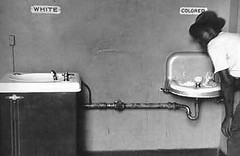 | 42 |
| 13887118925 | Harlem Renaissance | Black literary and artistic movement centered in Harlem that lasted from the 1920s into the early 1930s that both celebrated and lamented black life in America; Langston Hughes and Zora Neale Hurston were two famous writers of this movement. |  | 43 |
| 13887118926 | Fourteen Points | The war aims outlined by President Wilson in 1918, which he believed would promote lasting peace; called for self-determination, freedom of the seas, free trade, end to secret agreements, reduction of arms and a league of nations. |  | 44 |
| 13887118927 | Red Scare | A social/political movement designed to prevent a socialist/communist/radical movement in this country by finding "radicals," incarcerating them, deporting them, and subverting their activities. Periods of Red Scare occurred after both World Wars in the United States. |  | 45 |
| 13887118928 | Sedition Act | A law passed by Congress in 1918 (during World War I) to make it illegal to say anything disloyal, profane, or abusive about the government or the war effort in WWI. Seen as a military necessity by some for effectively fighting in WWI. |  | 46 |
| 13887118929 | Scopes Trial | Also known as the Scopes Monkey Trial; 1925 court case argued by Clarence Darrow and William Jennings Bryan in which the issue of teaching evolution in public schools was debated. Highlighted the growing divide between rural (more conservative) and urban (more liberal) interests in the United States. |  | 47 |
| 13887118930 | Sacco and Vanzetti Trial | Nicola Sacco and Bartolomeo Vanzetti were Italian immigrants charged with murdering a guard and robbing a shoe factory in Braintree, Massachusetts. The trial lasted from 1920-1927. Convicted on circumstantial evidence; many believed they had been framed for the crime because of their anarchist and pro-union activities. |  | 48 |
| 13887118931 | Kellog-Briand Pact | Idealistic agreement signed in 1928 in which nations agreed not to pose the threat of war against one another. |  | 49 |
| 13887118932 | Herbert Hoover | Republican president at the outset of the Great Depression. As a Republican, he believed that the federal government should not interfere in economic problems; the severity of the Great Depression forced his hand to provide some federal assistance to those in need, but he mostly left these efforts to the states. |  | 50 |
| 13887118933 | Smoot-Hawley Tariff | One of Herbert Hoover's earliest efforts to protect the nation's farmers following the onset of the Great Depression. Tariff raised rates to an all-time high. | 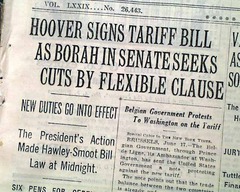 | 51 |
| 13887118934 | Platt Amendment | This amendment to the new Cuban constitution authorized U.S. intervention in Cuba to protect its interests. Cuba pledged not to make treates with other countries that might compromise its independence, and it granted naval bases to the United States, most notable being Guantanamo Bay. |  | 52 |
| 13887118935 | Zoot Suit Riots | A series of riots in 1944 during World War II that broke out in Los Angeles, California, between Anglo American sailors and Marines stationed in the city, and Latino youths, who were recognizable by the zoot suits they favored. |  | 53 |
| 13887118936 | Yalta Conference | FDR, Churchill and Stalin met at Yalta. Russia agreed to declare war on Japan after the surrender of Germany and in return FDR and Churchill promised the USSR concession in Manchuria and the territories that it had lost in the Russo-Japanese War. |  | 54 |
| 13887118937 | William Jennings Bryan | United States lawyer and politician who advocated free silver and prosecuted John Scopes (1925) for teaching evolution in a Tennessee high school (1860-1925). |  | 55 |
| 13887118938 | Woodrow Wilson | (1856-1924) President of the United States (1913-1921) and the leading figure at the Paris Peace Conference of 1919. He was unable to persuade the U.S. Congress to ratify the Treaty of Versailles or join the League of Nations. |  | 56 |
| 13887118939 | United Nations | An international organization formed after WWII to promote international peace, security, and cooperation. |  | 57 |
| 13887118940 | communism | A political theory derived from Karl Marx, advocating class war and leading to a society in which all property is publicly owned and each person works and is paid according to their abilities and needs. |  | 58 |
| 13887118941 | Bolshevik Revolution | The overthrow of Russia's Provisional Government in the fall of 1917 by Lenin and his Bolshevik forces, made possible by the government's continuing defeat in the war, its failure to bring political reform, and a further decline in the conditions of everyday life. |  | 59 |
| 13887118942 | Wagner Act | Established the National Labor Relations Board; allowed employees to collectively bargain | 60 |
Flashcards
Flashcards
Flashcards
Flashcards
AP Language Flashcards
Terms : Hide Images
| 13971273258 | Allegory | The device of using character and/or story elements symbolically to represent an abstraction in addition to the literal meaning. In some allegories, for example, an author may intend the characters to personify an abstraction lie hope or freedom. The allegorical meaning usually deals with moral truth or a generalization about human existence. A story, poem, or picture that can be interpreted to reveal a hidden meaning, typically a moral or political one. |  | 0 |
| 13971273259 | Alliteration | The repetition of sounds, especially initial consonants in tow or more neighboring words (as in "she sells sea shells). Although the term is not used frequently in the multiple-choice section, you can look for alliteration in any essay passage. The repetition can reinforce meaning, unify ideas, supply a musical sound, and/or echo the sense of the passage. |  | 1 |
| 13971273260 | Allusion | A direct or indirect reference to something which is presumably commonly known, such as an event, book, myth, place, or work of art. Allusions can be historical, literary, religious, topical, or mythical. There are many more possibilities, and a work may simultaneously use multiple layers of allusion. |  | 2 |
| 13971273261 | Ambiguity (am-bi-gyoo-i-tee) | The multiple meanings, either intentional or unintentional, of a word, phrase, sentence, or passage. |  | 3 |
| 13971273262 | Analogy | A similarity or comparison between two different things or the relationship between them. An analogy can explain something unfamiliar by associating it with or pointing out its similarity to something more familiar. Analogies can also make writing more vivid, imaginative, or intellectually engaging. Ex. He that voluntarily continues ignorance is guilty of all the crimes which ignorance produces, as to him |  | 4 |
| 13971273263 | Anaphora (uh-naf-er-uh) | One of the devices of repetition, in which the same expression (word or words) is repeated at the beginning of two or more lines, clauses, or sentences. |  | 5 |
| 13971273264 | Anecdote | A short narrative detailing particulars of an interesting episode or event. The term most frequently refers to an incident in the life of a person |  | 6 |
| 13971273265 | Antecedent (an-tuh-seed-nt) | The word, phrase, or clause referred to by a pronoun. The AP Language exam occasionally asks for the antecedent of a given pronoun in a long, complex sentence or in a group of sentences. |  | 7 |
| 13971273266 | Antithesis (an-tih-theh-sis) | Figure of balance in which two contrasting ideas are intentionally juxtaposed, usually through parallel structure; a contrasting of opposing ideas in adjacent phrases, clauses, or sentences. Antithesis creates a definite and systematic relationship between ideas. |  | 8 |
| 13971273267 | Aphorism | A terse statement of know authorship which expresses a general truth or a moral principle. (If the authorship is unknown, the statement is generally considered to be a folk proverb.) An aphorism can be a memorable summation of the author's point. |  | 9 |
| 13971273268 | Apostrophe | A figure of speech that directly addresses an absent or imaginary person or a personified abstraction, such as liberty or love. It is an address to someone or something that cannot answer. The effect is to give vent to or display intense emotion, which can no longer be held back: |  | 10 |
| 13971273269 | Asyndeton (uh-sin-di-tuhn) | consists of omitting conjunctions between words, phrases, or clauses. This can give the effect of unpremeditated multiplicity, of an extemporaneous rather than a labored account. Asyndetic lists can be more emphatic than if a final conjunction were used. |  | 11 |
| 13971273270 | Chiasmus (kahy-az-muhs) | (From the Greek word for "criss-cross," a designation baed on the Greek letter "chi," written X). Chiasmus is a figure of speech in which two successive phrases or clauses are parallel in syntax, but reverse the order of the analogous words. |  | 12 |
| 13971273271 | Clause | a grammatical unit that contains both a subject and a verb. An independent, or main, clause expresses a complete thought and can sand alone as a sentence. A dependent, or subordinate clause cannot stand alone as a sentence and must be accompanied by an independent clause. The point that you want to consider is the question of what or why the author subordinates one element to the other. You should also become aware of making effective use of subordination in your own writing. |  | 13 |
| 13971273272 | Colloquial/colloquialism (kuj-loh-kwee-uhl) | The use of slang or informalities in speech or writing. Not generally acceptable for formal writing, colloquialisms give a work a conversational, familiar tone. Colloquial expressions in writing include local or regional dialects. |  | 14 |
| 13971273273 | Coherence | A principle demanding that the parts of any composition be arranged so that the meaning of the whole may be immediately clear and intelligible. Words, phrases, clauses within the sentence; and sentences, paragraphs, and chpters in larger pieces of writing are the unit that by their progressive and logical arrangement, make for coherence. |  | 15 |
| 13971273274 | Conceit | A fanciful expression, usually in the form of an extended metaphor or surprising analogy between seemingly dissimilar objects. A conceit displays intellectual cleverness as a result of the unusual comparison being made. |  | 16 |
| 13971273275 | Diacope | repetition of a word or phrase after an intervening word or phrase: word/phrase X, . . ., word/phrase X. |  | 17 |
| 13971273276 | Didactic (dahy-dak-tik) | From the Greek, didactic literally means "teaching." Didactic works have the primary aim of teaching or instructing, especially the teaching of moral or ethical principles. |  | 18 |
| 13971273277 | Enumeratio | Figure of amplification in which a subject is divided into constituent parts or details, and may include a listing of causes, effects, problems, solutions, conditions, and consequences; the listing or detailing of the parts of something. |  | 19 |
| 13971273278 | Expletive (ek-spli-tiv) | Figure of emphasis in which a single word or short phrase, usually interrupting normal speech, is used to lend emphasis to the words on either side of the expletive. |  | 20 |
| 13971273279 | Euphemism (yoo-fuh-miz-uhm) | From the Greek for "good speech," euphemisms are a more agreeable or less offensive substitute for a generally unpleasant word or concept. The euphemism may be sued to adhere to standards of social or political correctness or to add humor or ironic understatement. |  | 21 |
| 13971273280 | Extended metaphor | A metaphor developed at great length, occurring frequently in or throughout the work. |  | 22 |
| 13971273281 | Homily (hom-uh-lee) | This term literally means "sermon," but more informally, it can include any serious talk, speech, or lecture involving moral or spiritual advice. |  | 23 |
| 13971273282 | Hyperbole (hahy-pur-buh-lee) | A figure of speech using deliberate exaggeration or overstatement. Hyperboles often have a comic effect; however, a serious effect is also possible. Often, hyperbole produces irony. |  | 24 |
| 13971273283 | Hypophora | Figure of reasoning in which one or more questions is/are asked and then answered, often at length, by one and the same speaker; raising and responding to one's own question(s). A common usage is to ask the question at the beginning of a paragraph and then use the paragraph to answer it. You can use hypophora to raise questions which you think the reader obviously has on his/her mind and would like to see formulated and answered. |  | 25 |
| 13971273284 | Inference/infer | To draw a reasonable conclusion from the information presented. When a multiple-choice question asks for an inference to be drawn from a passage, the most direct, most reasonable inference is the safest answer choice. If an inference is implausible, it's unlikely to be the correct answer. Note that if the answer choice is directly stated, it is not inferred and is wrong. You must be careful to note the connotation - negative or positive - of the choices. |  | 26 |
| 13971273285 | Invective | an emotionally violent, verbal denunciation or attach using strong, abusive language. | 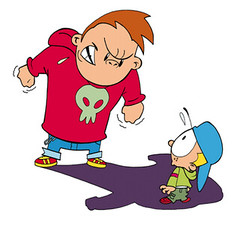 | 27 |
| 13971273286 | Irony/ironic | The contrast between what is stated explicitly and what is really meant. The difference between what appears to be and what actually is true. In general, there are three major types of irony used in language; (1) In a verbal irony, the words literally state the opposite of the writer's (or speaker's) true meaning. (2) In situational irony, events turn out the opposite of what was expected. What the characters and the readers think ought to happen. (3) In dramatic irony, facts or events are unknown to a character in a play or piece of fiction, but know to the reader, audience, or other characters in the work. Irony is used for many reasons, but frequently, it's used to create poignancy or humor. |  | 28 |
| 13971273287 | Juxtaposition (juhk-stuh-puh-zish-uhn) | When two words, phrases, images, ideas are placed close together or side by side for comparison or contrast. |  | 29 |
| 13971273288 | Litotes (lahy-toh-teez) | From the Greek word "simple" or "plain." Litotes is a figure of thought in which a point is affirmed by negating its opposite. It is a special form of understatement, where the surface denial serves, through ironic contrast, to reinforce the underlying assertion. |  | 30 |
| 13971273289 | Metaphor | A figure of speech using implied comparison of seemingly unlike things or the substitution of one for the other, suggesting some similarity. Metaphorical language makes writing more vivid, imaginative, thought provoking, and meaningful. |  | 31 |
| 13971273290 | Metonymy (mi-ton-uh-mee) | A term from the Greek meaning "changed label" or "substitute name." Metonymy is a figure of speech in which the name of one object is substituted for that of another closely associated with it. A news release that claims "the White House declared" rather that "the President declared" is using metonymy. The substituted term generally carries a more potent emotional response. |  | 32 |
| 13971273291 | Onomatopoeia (on-uh-mat-uh-pee-uh) | A figure of speech in which natural sounds are imitated in the sounds of words. Simple examples include such words as buzz, hiss, hum, crack, whinny, and murmur. If you not eexamples of onomatopoeia in an essay passage, note the effect. |  | 33 |
| 13971273292 | Oxymoron | From the Greek for "pointedly foolish," an oxymoron is a figure of speech wherein the author groups apparently contradictory terms to suggest a paradox. Simple examples include "jumbo shrimp" and "cruel kindness." This term does not usually appear in the multiple-choice questions, but there is a chance that you might find it in an essay. Take note of the effect which the author achieves with this term. |  | 34 |
| 13971273293 | Paradox | A statement that appears to be self-contradictory or opposed to common sense but upon closer inspection contains some degree of truth or validity. |  | 35 |
| 13971273294 | Parallelism | Also referred to as parallel construction or parallel structure, this term comes from Greek roots meaning "beside one another." It refers to the grammatical or rhetorical framing of words, phrases, sentences, or paragraphs to give structural similarity. This can involve, but is not limited to repetition of a grammatical element such as a preposition or verbal phrase. A famous example of parallelism begins Charles Dickens's novel A Tale of Two Cities: "It was the best of times, it was the worst of times, it was the age of wisdom, it was the age of foolishness, it was the epoch of belief, it was the epoch of incredulity . . ." The effects of parallelism are numerous, but frequently they act as an organizing force to attract the reader's attention, add emphasis and organization, or simply provide a musical rhythm. |  | 36 |
| 13971273295 | Parody | A work that closely imitates the style or content of another with the specific aim of comic effect and/or ridicule. As comedy, parody distorts or exaggerated distinctive features of the original. As ridicule, it mimics the work by repeating and borrowing words, phrases, or characteristics in order to illuminate weaknesses in the original. Well-written parody offers enlightenment about the original, but poorly written parody offers only ineffectual imitation. Usually an audience must grasp literary allusion and understand the work being parodied in order to fully appreciate the nuances of the newer work. Occasionally, however, parodies take on a life of their own and don't require knowledge of the original |  | 37 |
| 13971273296 | Pedantic (puh-dan-tik) | An adjective that describes words, phrases, or general tone that is overly scholarly, academic, or bookish. |  | 38 |
| 13971273297 | Personification | A figure of speech in which the author presents or describes concepts, animals, or inanimate objects by endowing them with human attributes or emotions. Personification is used to make these abstractions, animal, or objects appear more vivid to the reader. |  | 39 |
| 13971273298 | Polysyndeton (paulee-sin-dih-tawn) | Figure of addition and emphasis which intentionally employs a series of conjunctions (FANBOYS: for, and, nor, but, or, yet, so) not normally found in successive words, phrases or clauses; the deliberate and excessive use of conjunctions in successive words or clauses. The effect is a feeling of multiplicity, energetic enumeration, and building up - a persistence or intensity. |  | 40 |
| 13971273299 | Predicate adjective | One type of subject complement is an adjective, group of adjectives, or adjective clause that follows a linking verb. It is an the predicate of the sentence, and modifies, or describes, the subject. "Expensive" in the sentence "Those shoes look expensive." |  | 41 |
| 13971273300 | Predicate nominative | A second type of subject complement - a noun, group of nouns, or noun clause that names the subject. It, like the predicate adjective, follows a linking verb and is located in the predicate of the sentence. "My son" in the sentence "Charlie is my son." |  | 42 |
| 13971273301 | Prose | One of the major divisions of genre, prose refers to fiction and non-fiction, including all its forms. In prose the printer determines the length of the line; in poetry, the poet determines the length of the line |  | 43 |
| 13971273302 | Repetition | The duplication, either exact or approximate, of any element of language, such as a sound, word, phrase, clause, sentence, or grammatical pattern. |  | 44 |
| 13971273303 | Rhetoric | From the Greek for "orator," this term describes the principles governing the art of writing effectively, eloquently, and persuasively. | 45 | |
| 13971273304 | Rhetorical modes | This flexible term describes the variety, the conventions, and purposes of the major kinds of writing. The four most common rhetorical modes and their purposes are as follows: (1) The purpose of exposition (or expository writing) is to explain and analyze information by presenting an idea, relevant evidence, and appropriate discussion. The AP language exam essay questions are frequently expository topics. (2) The purpose of argumentation is to prove the validity of an idea, or point of view, by presenting sound reasoning, discussion, and argument that thoroughly convince the reader. Persuasive writing is a type of argumentation having an additional aim of urging some form of action. (3) The purpose of description is to re-create, invent, or visually present a person, place, event or action so that the reader can picture that being described. Sometimes an author engages all five senses in description; good descriptive writing can be sensuous and picturesque. Descriptive writing may be straightforward and objective or highly emotional and subjective. (4) The purpose of narration is to tell a story or narrate an event or series of events. This writing mode frequently uses the tools of descriptive writing. These four modes are sometimes referred to as mode of discourse. |  | 46 |
| 13971273305 | Rhetorical Question [erotesis] | - differs from hypophora in that it is not answered by the writer because its answer is obvious or obviously desired, and usually just a yes or no answer would suffice. It is used for effect, emphasis, or provocation, or for drawing a conclusionary statement from the fact at hand. |  | 47 |
| 13971273306 | Sarcasm | From the Greek meaning "to tear flesh," sarcasm involves bitter, caustic language that is meant to hurt or ridicule someone or something. It may use irony is a device, but not all ironic statements are sarcastic, that is, intended to ridicule. When well done, sarcasm can be witty and insightful; when done poorly, it's simply cruel |  | 48 |
| 13971273307 | Satire | A work that targets human vices and follies or social institutions and conventions for reform or ridicule. Regardless of whether or not the work aims to reform human behavior, satire is best seen as a style of writing rather than a purpose for writing. It can be recognized by the many devices used effectively the satirist: irony, wit, parody, caricature, hyperbole, understatement, and sarcasm. The effects of satire are varied, depending on the writer's goal, but good satire, often humorous, is thought provoking and insightful about the human condition. |  | 49 |
| 13971273308 | Semantics | The branch of linguistics that studies the meaning of words, their historical and psychological development, their connotations, and their relation to one another |  | 50 |
| 13971273309 | Subject complement | The word (with any accompanying phrases) or clauses that follows a linking verb and complements, or completes, the subject of the sentence by either (1) renaming it or (2) describing it. The former is the technically a predicate nominative, the latter a predicate adjective. Multiple-choice questions. |  | 51 |
| 13971273310 | Subordinate clause | Like all clauses, this word group contains both a subject and a verb (plus any accompanying phrases or modifiers), but unlike the independent clause, the subordinate clause cannot stand alone; it does not express a complete thought. Also called a dependent clause, the subordinate clause depends on a main clause, sometimes called an independent clause, to complete its meaning. Easily recognized key words and phrases usually begin these clauses 0 for example: although, because, unless, if even though, since, as soon as, while who, when , where, how and that. |  | 52 |
| 13971273311 | Syllogism (sil- uh-jiz-uhm) | From the Greek for "reckoning together, " a syllogism (or syllogistic-reasoning or syllogistic logic is a deductive system of formal logic that presents two premises (the firs one called "major" and the second, "minor") that inevitably lead to a sound conclusion. A frequently cited example proceeds as follows; |  | 53 |
| 13971273312 | Synecdoche (si-nek-duh-kee) | is a type of metaphor in which the part stands for the whole, the whole for a part, the genus for the species, the species for the genus, the material for the thing made, or in short, any portion , section, or main quality for the whole or the thing itself (or vice versa). |  | 54 |
| 13971273313 | Syntax | The way an author chooses to join words into phrases, clauses, and sentences. Syntax is similar to diction, but you can differentiate them by thinking of syntax as the groups of words, while diction refers to the individual words. In the multiple-choice section, expect to be asked some questions about how an author manipulates syntax. In the essay section, you will need to analyze how syntax produces effects. |  | 55 |
| 13971273314 | Understatement | The ironic minimizing of fact, understatement presents something as less significant than it is. The effect can frequently be humorous and emphatic. Understatement is the opposite of hyperbole. | 56 | |
| 13971273315 | Undertone | An attitude that may lie under the ostensible tone of the piece. Under a cheery surface, for example, a work may have threatening undertones. William Blake's "The Chimney Sweeper" from the Songs of Innocence has a grim undertone. |  | 57 |
| 13971273316 | Wit | In modern usage, intellectually amazing language that surprises and delights. A witty statement is humorous, while suggesting the speaker's verbal power in creating ingenious and perceptive remarks. Wit usually uses terse language that makes a pointed statement. Historically, wit originally meant basic understanding. Its meaning evolved to include speed of understanding, and finally (in the early seventeenth century), it grew to mean quick perception including creative fancy and a quick tongue to articulate an answer that demanded the same quick perception. |  | 58 |
| 13971273317 | Zeugma | a figure of speech in which a word applies to two others in different senses. "She looked at the object with suspicion and a magnifying glass." | 59 |
Flashcards
AP US History Court Cases Flashcards
Terms : Hide Images
| 9855357608 | Marbury v. Madison 1803 | Established precedent of federal courts using judicial review | 0 | |
| 9855357609 | Dartmouth College v. Woodward 1819 | Made the contract clause of the Constitution over the power of the states | 1 | |
| 9855357610 | McCulloh v. Maryland 1819 | Established national supremacy of the Constitution over the power of the states. | 2 | |
| 9855357611 | Dred Scot v. Sanford 1858 | Overturned Missouri Compromise, slavery can exist anywhere, slaves are not human, deserve no protections in rights. | 3 | |
| 9855357612 | Plessy v. Ferguson 1896 | Allowed separate but equal facilities based on race. | 4 | |
| 9855357613 | Schenck v. U.S 1919 | Clear and present danger test of 1st amendment free speech. | 5 | |
| 9855357614 | Gitlow v. New York 1925 | Established precedent federalizing the Bill of Rights to overturn state laws. | 6 | |
| 9855357615 | Smith v. Allwright 1944 | The denying of African Americans the right to vote in a primary election was found to be a violation of the 15th Amendment. | 7 | |
| 9855357616 | Dennis v. U.S. 1951 | Found Smith Act unconstitutional, can advocate the overthrow of the government as long as not actively seeking a way to do so. | 8 | |
| 9855357617 | Brown v. Board 1954 | Declared school segregation unconstitutional. | 9 | |
| 9855357618 | Mapp v. Ohio 1961 | Established the exclusionary rule for police searches under the 4th Amendment. | 10 | |
| 9855357619 | Engel v. Vitale 1962 | Prohibited state sponsored recitation of prayer in public school. | 11 | |
| 9855357620 | Baker v. Carr 1962 | Ordered state representative districts to be near as equal as possible. "One man one vote." | 12 | |
| 9855357621 | Gideon v. Wainright 1963 | Ordered states to provide legal defense for those who can't afford one. | 13 | |
| 9855357622 | New York Times v. Sullivan 1964 | The court held that the First Amendment protects the publication of all statements, even false ones that are considered libel or slander, about the conduct of public officials except when statements are made with actual malice. | 14 | |
| 9855357623 | Griswald v. Connecticut 1965 | Established the implied right of privacy in birth control case through the 4th and 9th Amendments | 15 | |
| 9855357624 | Miranda v. Arizona 1966 | Established the verbal Miranda warnings which must be given to a suspect during arrest and detention. | 16 | |
| 9855357625 | Epperson v. Arkansas 1968 | Prohibited states from banning the teaching of evolution in public schools. | 17 | |
| 9855357626 | Brandenburg v. Ohio 1969 | Brandenburg, a leader in the Ku Klux Clan, made a speech at a Klan rally and was later convicted under an Ohio criminal syndicalism law. The law was found unconstitutional under the 1st and 14th Amendments. | 18 | |
| 9855357627 | New York Times v. U.S. 1971 | The Pentagon Papers case ruled the Nixon Administration's efforts to prevent the publication, prior restraint, of what it termed "classified information" violated the First Amendment. | 19 | |
| 9855357628 | Roe v. Wade 1973 | Established national abortion guidelines by extending the inferred right of privacy from Griswold. | 20 | |
| 9855357629 | U.S. v. Nixon 1974 | Allowed for executive privilege except in criminal cases. | 21 |
Flashcards
Pages

Need Help?
We hope your visit has been a productive one. If you're having any problems, or would like to give some feedback, we'd love to hear from you.
For general help, questions, and suggestions, try our dedicated support forums.
If you need to contact the Course-Notes.Org web experience team, please use our contact form.
Need Notes?
While we strive to provide the most comprehensive notes for as many high school textbooks as possible, there are certainly going to be some that we miss. Drop us a note and let us know which textbooks you need. Be sure to include which edition of the textbook you are using! If we see enough demand, we'll do whatever we can to get those notes up on the site for you!
