

AP Language Flashcards
Terms : Hide Images
| 14009592623 | Allegory | The device of using character and/or story elements symbolically to represent an abstraction in addition to the literal meaning. In some allegories, for example, an author may intend the characters to personify an abstraction lie hope or freedom. The allegorical meaning usually deals with moral truth or a generalization about human existence. A story, poem, or picture that can be interpreted to reveal a hidden meaning, typically a moral or political one. |  | 0 |
| 14009592624 | Alliteration | The repetition of sounds, especially initial consonants in tow or more neighboring words (as in "she sells sea shells). Although the term is not used frequently in the multiple-choice section, you can look for alliteration in any essay passage. The repetition can reinforce meaning, unify ideas, supply a musical sound, and/or echo the sense of the passage. |  | 1 |
| 14009592625 | Allusion | A direct or indirect reference to something which is presumably commonly known, such as an event, book, myth, place, or work of art. Allusions can be historical, literary, religious, topical, or mythical. There are many more possibilities, and a work may simultaneously use multiple layers of allusion. |  | 2 |
| 14009592626 | Ambiguity (am-bi-gyoo-i-tee) | The multiple meanings, either intentional or unintentional, of a word, phrase, sentence, or passage. |  | 3 |
| 14009592627 | Analogy | A similarity or comparison between two different things or the relationship between them. An analogy can explain something unfamiliar by associating it with or pointing out its similarity to something more familiar. Analogies can also make writing more vivid, imaginative, or intellectually engaging. Ex. He that voluntarily continues ignorance is guilty of all the crimes which ignorance produces, as to him |  | 4 |
| 14009592628 | Anaphora (uh-naf-er-uh) | One of the devices of repetition, in which the same expression (word or words) is repeated at the beginning of two or more lines, clauses, or sentences. |  | 5 |
| 14009592629 | Anecdote | A short narrative detailing particulars of an interesting episode or event. The term most frequently refers to an incident in the life of a person |  | 6 |
| 14009592630 | Antecedent (an-tuh-seed-nt) | The word, phrase, or clause referred to by a pronoun. The AP Language exam occasionally asks for the antecedent of a given pronoun in a long, complex sentence or in a group of sentences. |  | 7 |
| 14009592631 | Antithesis (an-tih-theh-sis) | Figure of balance in which two contrasting ideas are intentionally juxtaposed, usually through parallel structure; a contrasting of opposing ideas in adjacent phrases, clauses, or sentences. Antithesis creates a definite and systematic relationship between ideas. |  | 8 |
| 14009592632 | Aphorism | A terse statement of know authorship which expresses a general truth or a moral principle. (If the authorship is unknown, the statement is generally considered to be a folk proverb.) An aphorism can be a memorable summation of the author's point. |  | 9 |
| 14009592633 | Apostrophe | A figure of speech that directly addresses an absent or imaginary person or a personified abstraction, such as liberty or love. It is an address to someone or something that cannot answer. The effect is to give vent to or display intense emotion, which can no longer be held back: |  | 10 |
| 14009592634 | Asyndeton (uh-sin-di-tuhn) | consists of omitting conjunctions between words, phrases, or clauses. This can give the effect of unpremeditated multiplicity, of an extemporaneous rather than a labored account. Asyndetic lists can be more emphatic than if a final conjunction were used. |  | 11 |
| 14009592635 | Chiasmus (kahy-az-muhs) | (From the Greek word for "criss-cross," a designation baed on the Greek letter "chi," written X). Chiasmus is a figure of speech in which two successive phrases or clauses are parallel in syntax, but reverse the order of the analogous words. |  | 12 |
| 14009592636 | Clause | a grammatical unit that contains both a subject and a verb. An independent, or main, clause expresses a complete thought and can sand alone as a sentence. A dependent, or subordinate clause cannot stand alone as a sentence and must be accompanied by an independent clause. The point that you want to consider is the question of what or why the author subordinates one element to the other. You should also become aware of making effective use of subordination in your own writing. |  | 13 |
| 14009592637 | Colloquial/colloquialism (kuj-loh-kwee-uhl) | The use of slang or informalities in speech or writing. Not generally acceptable for formal writing, colloquialisms give a work a conversational, familiar tone. Colloquial expressions in writing include local or regional dialects. |  | 14 |
| 14009592638 | Coherence | A principle demanding that the parts of any composition be arranged so that the meaning of the whole may be immediately clear and intelligible. Words, phrases, clauses within the sentence; and sentences, paragraphs, and chpters in larger pieces of writing are the unit that by their progressive and logical arrangement, make for coherence. |  | 15 |
| 14009592639 | Conceit | A fanciful expression, usually in the form of an extended metaphor or surprising analogy between seemingly dissimilar objects. A conceit displays intellectual cleverness as a result of the unusual comparison being made. |  | 16 |
| 14009592640 | Diacope | repetition of a word or phrase after an intervening word or phrase: word/phrase X, . . ., word/phrase X. |  | 17 |
| 14009592641 | Didactic (dahy-dak-tik) | From the Greek, didactic literally means "teaching." Didactic works have the primary aim of teaching or instructing, especially the teaching of moral or ethical principles. |  | 18 |
| 14009592642 | Enumeratio | Figure of amplification in which a subject is divided into constituent parts or details, and may include a listing of causes, effects, problems, solutions, conditions, and consequences; the listing or detailing of the parts of something. |  | 19 |
| 14009592643 | Expletive (ek-spli-tiv) | Figure of emphasis in which a single word or short phrase, usually interrupting normal speech, is used to lend emphasis to the words on either side of the expletive. |  | 20 |
| 14009592644 | Euphemism (yoo-fuh-miz-uhm) | From the Greek for "good speech," euphemisms are a more agreeable or less offensive substitute for a generally unpleasant word or concept. The euphemism may be sued to adhere to standards of social or political correctness or to add humor or ironic understatement. |  | 21 |
| 14009592645 | Extended metaphor | A metaphor developed at great length, occurring frequently in or throughout the work. |  | 22 |
| 14009592646 | Homily (hom-uh-lee) | This term literally means "sermon," but more informally, it can include any serious talk, speech, or lecture involving moral or spiritual advice. |  | 23 |
| 14009592647 | Hyperbole (hahy-pur-buh-lee) | A figure of speech using deliberate exaggeration or overstatement. Hyperboles often have a comic effect; however, a serious effect is also possible. Often, hyperbole produces irony. |  | 24 |
| 14009592648 | Hypophora | Figure of reasoning in which one or more questions is/are asked and then answered, often at length, by one and the same speaker; raising and responding to one's own question(s). A common usage is to ask the question at the beginning of a paragraph and then use the paragraph to answer it. You can use hypophora to raise questions which you think the reader obviously has on his/her mind and would like to see formulated and answered. |  | 25 |
| 14009592649 | Inference/infer | To draw a reasonable conclusion from the information presented. When a multiple-choice question asks for an inference to be drawn from a passage, the most direct, most reasonable inference is the safest answer choice. If an inference is implausible, it's unlikely to be the correct answer. Note that if the answer choice is directly stated, it is not inferred and is wrong. You must be careful to note the connotation - negative or positive - of the choices. |  | 26 |
| 14009592650 | Invective | an emotionally violent, verbal denunciation or attach using strong, abusive language. | 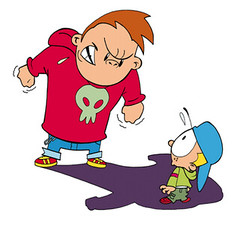 | 27 |
| 14009592651 | Irony/ironic | The contrast between what is stated explicitly and what is really meant. The difference between what appears to be and what actually is true. In general, there are three major types of irony used in language; (1) In a verbal irony, the words literally state the opposite of the writer's (or speaker's) true meaning. (2) In situational irony, events turn out the opposite of what was expected. What the characters and the readers think ought to happen. (3) In dramatic irony, facts or events are unknown to a character in a play or piece of fiction, but know to the reader, audience, or other characters in the work. Irony is used for many reasons, but frequently, it's used to create poignancy or humor. |  | 28 |
| 14009592652 | Juxtaposition (juhk-stuh-puh-zish-uhn) | When two words, phrases, images, ideas are placed close together or side by side for comparison or contrast. |  | 29 |
| 14009592653 | Litotes (lahy-toh-teez) | From the Greek word "simple" or "plain." Litotes is a figure of thought in which a point is affirmed by negating its opposite. It is a special form of understatement, where the surface denial serves, through ironic contrast, to reinforce the underlying assertion. |  | 30 |
| 14009592654 | Metaphor | A figure of speech using implied comparison of seemingly unlike things or the substitution of one for the other, suggesting some similarity. Metaphorical language makes writing more vivid, imaginative, thought provoking, and meaningful. |  | 31 |
| 14009592655 | Metonymy (mi-ton-uh-mee) | Metonymy is a figure of speech in which the name of one object is substituted for that of another closely associated with it. A news release that claims "the White House declared" rather that "the President declared" is using metonymy. The substituted term generally carries a more potent emotional response. |  | 32 |
| 14009592656 | Onomatopoeia (on-uh-mat-uh-pee-uh) | A figure of speech in which natural sounds are imitated in the sounds of words. Simple examples include such words as buzz, hiss, hum, crack, whinny, and murmur. If you not eexamples of onomatopoeia in an essay passage, note the effect. |  | 33 |
| 14009592657 | Oxymoron | From the Greek for "pointedly foolish," an oxymoron is a figure of speech wherein the author groups apparently contradictory terms to suggest a paradox. Simple examples include "jumbo shrimp" and "cruel kindness." This term does not usually appear in the multiple-choice questions, but there is a chance that you might find it in an essay. Take note of the effect which the author achieves with this term. |  | 34 |
| 14009592658 | Paradox | A statement that appears to be self-contradictory or opposed to common sense but upon closer inspection contains some degree of truth or validity. |  | 35 |
| 14009592659 | Parallelism | Also referred to as parallel construction or parallel structure, this term comes from Greek roots meaning "beside one another." It refers to the grammatical or rhetorical framing of words, phrases, sentences, or paragraphs to give structural similarity. This can involve, but is not limited to repetition of a grammatical element such as a preposition or verbal phrase. A famous example of parallelism begins Charles Dickens's novel A Tale of Two Cities: "It was the best of times, it was the worst of times, it was the age of wisdom, it was the age of foolishness, it was the epoch of belief, it was the epoch of incredulity . . ." The effects of parallelism are numerous, but frequently they act as an organizing force to attract the reader's attention, add emphasis and organization, or simply provide a musical rhythm. |  | 36 |
| 14009592660 | Parody | A work that closely imitates the style or content of another with the specific aim of comic effect and/or ridicule. As comedy, parody distorts or exaggerated distinctive features of the original. As ridicule, it mimics the work by repeating and borrowing words, phrases, or characteristics in order to illuminate weaknesses in the original. Well-written parody offers enlightenment about the original, but poorly written parody offers only ineffectual imitation. Usually an audience must grasp literary allusion and understand the work being parodied in order to fully appreciate the nuances of the newer work. Occasionally, however, parodies take on a life of their own and don't require knowledge of the original |  | 37 |
| 14009592661 | Pedantic (puh-dan-tik) | An adjective that describes words, phrases, or general tone that is overly scholarly, academic, or bookish. |  | 38 |
| 14009592662 | Personification | A figure of speech in which the author presents or describes concepts, animals, or inanimate objects by endowing them with human attributes or emotions. Personification is used to make these abstractions, animal, or objects appear more vivid to the reader. |  | 39 |
| 14009592663 | Polysyndeton (paulee-sin-dih-tawn) | Figure of addition and emphasis which intentionally employs a series of conjunctions (FANBOYS: for, and, nor, but, or, yet, so) not normally found in successive words, phrases or clauses; the deliberate and excessive use of conjunctions in successive words or clauses. The effect is a feeling of multiplicity, energetic enumeration, and building up - a persistence or intensity. |  | 40 |
| 14009592664 | Predicate adjective | One type of subject complement is an adjective, group of adjectives, or adjective clause that follows a linking verb. It is an the predicate of the sentence, and modifies, or describes, the subject. "Expensive" in the sentence "Those shoes look expensive." |  | 41 |
| 14009592665 | Predicate nominative | A second type of subject complement - a noun, group of nouns, or noun clause that names the subject. It, like the predicate adjective, follows a linking verb and is located in the predicate of the sentence. "My son" in the sentence "Charlie is my son." |  | 42 |
| 14009592666 | Prose | One of the major divisions of genre, prose refers to fiction and non-fiction, including all its forms. In prose the printer determines the length of the line; in poetry, the poet determines the length of the line |  | 43 |
| 14009592667 | Repetition | The duplication, either exact or approximate, of any element of language, such as a sound, word, phrase, clause, sentence, or grammatical pattern. |  | 44 |
| 14009592668 | Rhetoric | From the Greek for "orator," this term describes the principles governing the art of writing effectively, eloquently, and persuasively. | 45 | |
| 14009592669 | Rhetorical modes | This flexible term describes the variety, the conventions, and purposes of the major kinds of writing. The four most common rhetorical modes and their purposes are as follows: (1) The purpose of exposition (or expository writing) is to explain and analyze information by presenting an idea, relevant evidence, and appropriate discussion. The AP language exam essay questions are frequently expository topics. (2) The purpose of argumentation is to prove the validity of an idea, or point of view, by presenting sound reasoning, discussion, and argument that thoroughly convince the reader. Persuasive writing is a type of argumentation having an additional aim of urging some form of action. (3) The purpose of description is to re-create, invent, or visually present a person, place, event or action so that the reader can picture that being described. Sometimes an author engages all five senses in description; good descriptive writing can be sensuous and picturesque. Descriptive writing may be straightforward and objective or highly emotional and subjective. (4) The purpose of narration is to tell a story or narrate an event or series of events. This writing mode frequently uses the tools of descriptive writing. These four modes are sometimes referred to as mode of discourse. |  | 46 |
| 14009592670 | Rhetorical Question [erotesis] | - differs from hypophora in that it is not answered by the writer because its answer is obvious or obviously desired, and usually just a yes or no answer would suffice. It is used for effect, emphasis, or provocation, or for drawing a conclusionary statement from the fact at hand. |  | 47 |
| 14009592671 | Sarcasm | From the Greek meaning "to tear flesh," sarcasm involves bitter, caustic language that is meant to hurt or ridicule someone or something. It may use irony is a device, but not all ironic statements are sarcastic, that is, intended to ridicule. When well done, sarcasm can be witty and insightful; when done poorly, it's simply cruel |  | 48 |
| 14009592672 | Satire | A work that targets human vices and follies or social institutions and conventions for reform or ridicule. Regardless of whether or not the work aims to reform human behavior, satire is best seen as a style of writing rather than a purpose for writing. It can be recognized by the many devices used effectively the satirist: irony, wit, parody, caricature, hyperbole, understatement, and sarcasm. The effects of satire are varied, depending on the writer's goal, but good satire, often humorous, is thought provoking and insightful about the human condition. |  | 49 |
| 14009592673 | Semantics | The branch of linguistics that studies the meaning of words, their historical and psychological development, their connotations, and their relation to one another |  | 50 |
| 14009592674 | Subject complement | The word (with any accompanying phrases) or clauses that follows a linking verb and complements, or completes, the subject of the sentence by either (1) renaming it or (2) describing it. The former is the technically a predicate nominative, the latter a predicate adjective. Multiple-choice questions. |  | 51 |
| 14009592675 | Subordinate clause | Like all clauses, this word group contains both a subject and a verb (plus any accompanying phrases or modifiers), but unlike the independent clause, the subordinate clause cannot stand alone; it does not express a complete thought. Also called a dependent clause, the subordinate clause depends on a main clause, sometimes called an independent clause, to complete its meaning. Easily recognized key words and phrases usually begin these clauses 0 for example: although, because, unless, if even though, since, as soon as, while who, when , where, how and that. |  | 52 |
| 14009592676 | Syllogism (sil- uh-jiz-uhm) | From the Greek for "reckoning together, " a syllogism (or syllogistic-reasoning or syllogistic logic is a deductive system of formal logic that presents two premises (the firs one called "major" and the second, "minor") that inevitably lead to a sound conclusion. A frequently cited example proceeds as follows; |  | 53 |
| 14009592677 | Synecdoche (si-nek-duh-kee) | is a type of metaphor in which the part stands for the whole, the whole for a part, the genus for the species, the species for the genus, the material for the thing made, or in short, any portion , section, or main quality for the whole or the thing itself (or vice versa). |  | 54 |
| 14009592678 | Syntax | The way an author chooses to join words into phrases, clauses, and sentences. Syntax is similar to diction, but you can differentiate them by thinking of syntax as the groups of words, while diction refers to the individual words. In the multiple-choice section, expect to be asked some questions about how an author manipulates syntax. In the essay section, you will need to analyze how syntax produces effects. |  | 55 |
| 14009592679 | Understatement | The ironic minimizing of fact, understatement presents something as less significant than it is. The effect can frequently be humorous and emphatic. Understatement is the opposite of hyperbole. | 56 | |
| 14009592680 | Undertone | An attitude that may lie under the ostensible tone of the piece. Under a cheery surface, for example, a work may have threatening undertones. William Blake's "The Chimney Sweeper" from the Songs of Innocence has a grim undertone. |  | 57 |
| 14009592681 | Wit | In modern usage, intellectually amazing language that surprises and delights. A witty statement is humorous, while suggesting the speaker's verbal power in creating ingenious and perceptive remarks. Wit usually uses terse language that makes a pointed statement. Historically, wit originally meant basic understanding. Its meaning evolved to include speed of understanding, and finally (in the early seventeenth century), it grew to mean quick perception including creative fancy and a quick tongue to articulate an answer that demanded the same quick perception. |  | 58 |
| 14009592682 | Zeugma | a figure of speech in which a word applies to two others in different senses. "She looked at the object with suspicion and a magnifying glass." | 59 |
AP US History Chapter 36 Flashcards
Ms. Hayes's History Class- Hellooo! Here's the plan. I am going to do my best to publish the rest of the quizlets so you guys can study for the exam. Unfortunately, I will be struggling with the English paper. On the other hand, doing these could give me something productive to do while procrastinating on the English essay. I think I'll do that. - Quote of the week: "My fellow Americans, ask not what your country can do for you, ask what you can do for your country." -John F. Kennedy - DFTBA!
Terms : Hide Images
| 13723595098 | The Feminine Mystique | Best-selling book by feminist thinker Betty Friedan that was published in 1963. This work challenged women to move beyond the drudgery of suburban housewifery and helped launch what would become second-wave feminism |  | 0 |
| 13723595099 | rock 'n' roll | "Crossover" musical style that rose to dominance in the 1950s, merging black rhythm and blues with white bluegrass and country. Featuring a heavy beat and driving rhythm, rock 'n' roll music became a defining feature of the 1950s youth culture |  | 1 |
| 13723595100 | Checkers Speech | Nationally televised address by vice-presidential candidate Richard Nixon during which he defended himself against allegations of corruption. Using the new mass medium of television shortly before the 1952 election, the vice-presidential candidate saved his place on the ticket by saying the only campaign gift he had received was a cocker spaniel named Checkers |  | 2 |
| 13723595101 | Montgomery bus boycott | Protest by black Alabamians against segregated seating on city buses, sparked by Rosa Park's defiant refusal to move to the back of the bus. This lasted from December 1, 1955, until December 26, 1956, and became one of the foundational moments of the civil rights movement. It led to the rise of Martin Luther King Jr., and ultimately to a Supreme Court decision opposing segregated busing |  | 3 |
| 13723595102 | Brown v. Board of Education of Topeka, Kansas | Landmark Supreme Court decision in 1954 that overturned Plessy v. Ferguson (1896) and abolished racial segregation in public schools. The Court reasoned that "separate" was inherently "unequal," rejecting the foundation of the Jim Crow system of racial segregation in the South. This decision was the first major step toward the legal end of racial discrimination and a major accomplishment for the civil rights movement |  | 4 |
| 13723595103 | Student Nonviolent Coordinating Committee (SNCC) | Youth organization founded by southern black students in 1960 to promote civil rights. Drawing on its members' youthful energies, this in its early years coordinated demonstrations, sit-ins, and voter registration drives | 5 | |
| 13723595104 | Operation Wetback | A government program in 1954 to round up and deport as many as 1 million illegal Mexican migrant workers in the United States. The program was promoted in part by the Mexican government and reflected burgeoning concerns about non-European immigration to America |  | 6 |
| 13723595105 | Federal Highway Act of 1956 | Federal legislation signed by Dwight D. Eisenhower to construct thousands of miles of modern highways in the name of national defense. Officially called the National Interstate and Defense Highways Act, this bill dramatically increased the move to the suburbs, as white middle-class people could more easily commute to urban jobs |  | 7 |
| 13723595106 | Hungarian uprising | Series of demonstrations in Hungary in 1956 against the Soviet Union. Soviet Premier Nikita Khrushchev violently suppressed this pro-Western uprising, highlighting the limitations of America's power in Eastern Europe |  | 8 |
| 13723595107 | Suez crisis | International crisis launched in 1956 when Egyptian president Gamal Abdel Nasser nationalized the Suez canal, which had been owned mostly by French and British stockholders. This led to a British and French attack on Egypt, which failed without aid from the United States. This marked an important turning point in the post-colonial Middle East and highlighted the rising of oil in world affairs |  | 9 |
| 13723595108 | Organization of Petroleum Exporting Countries (OPEC) | Cartel comprising Middle Eastern states and Venezuela first organized in 1960. This aimed to control access to and prices of oil, wresting power from Western oil companies and investors. In the process, it gradually strengthened the hand of non-Western powers on the world stage |  | 10 |
| 13723595109 | Sputnik | Soviet satellite first launched into earth orbit on October 4, 1957. This scientific achievement marked the first time human beings had put a man-made object into orbit and pushed the USSR noticeably ahead of the United States in the space race. A month later, the Soviet Union sent a larger satellite, Sputnik II, into space, prompting the United States to redouble its space exploration efforts and raising American fears of Soviet superiority |  | 11 |
| 13723595110 | kitchen debate | Televised exchange in 1959 between Soviet premier Nikita Khrushchev and American vice president Richard Nixon. Meeting at the American National Exhibition in Moscow, the two leaders sparred over the relative merits of capitalist consumer culture versus Soviet state planning. Nixon won applause for his staunch defense of American capitalism, helping lead him to the Republican nomination for president in 1960 |  | 12 |
| 13723595111 | military-industrial complex | Term popularized by President Dwight Eisenhower in his 1961 Farewell Address, referring to the political and economic ties between arms manufacturers, elected officials, and the U.S. armed forces that created self-sustaining pressure for high military spending during the Cold War. Eisenhower also warned that this powerful combination left unchecked could "endanger our liberties or democratic process," favoring defense concerns over more peaceful goals that balanced security and liberty |  | 13 |
| 13723595112 | International Style | Archetypal, post-World War II modernist architectural style, best known for its "curtain-wall" designs of steel-and-glass corporate high-rises |  | 14 |
| 13723595113 | Beat Generation | A small coterie of mid-twentieth-century bohemian writers and personalities, including Jack Kerouac, Allen Ginsberg, and William S. Burroughs, who bemoaned bourgeois conformity and advocated free-form experimentation in life and literature |  | 15 |
| 13723595114 | Southern Renaissance | A literary outpouring among mid-twentieth-century southern writers, begun by William Faulkner and marked by a new critical appreciation of the region's burdens of history, racism, and conservatism |  | 16 |
| 13723595115 | New Frontier | President Kennedy's nickname for his domestic policy agenda. Buoyed by youthful optimism, the program included proposals for the Peace Corps and efforts to improve education and health care. It ran from 1961 to 1963 |  | 17 |
| 13723595116 | Peace Corps | A federal agency created by President Kennedy in 1961 to promote voluntary service by Americans in foreign countries. This provides labor power to help developing countries improve their infrastructure, health care, educational systems, and other aspects of their societies. Part of Kennedy's New Frontier vision, the organization represented an effort by postwar liberals to promote American values and influence through productive exchanges across the world |  | 18 |
| 13723595117 | Apollo | Program of manned space flights run by America's National Aeronautics and Space Administration (NASA) from 1961 to 1975. The project's highest achievement was the landing of Apollo 11 on the moon on July 20, 1969 |  | 19 |
| 13723595118 | Berlin Wall | Fortified and guarded barrier between East and West Berlin erected on orders from Soviet premier Nikita Khrushchev in 1961 to stop the flow of people to the West. Until its destruction in 1989, the wall was a vivid symbol of the divide between the communist and capitalist worlds |  | 20 |
| 13723595119 | European Economic Community (EEC) | Free-trade zone in Western Europe created by Treaty of Rome in 1957. Often referred to as the "Common Market," this collection of countries originally included France, West Germany, Italy, Belgium, the Netherlands, and Luxembourg. The body eventually expanded to become the European Union, which by 2005 included twenty-seven member states |  | 21 |
| 13723595120 | Bay of Pigs invasion | CIA plot in 1961 to overthrow Fidel Castro by training Cuban exiles to invade and supporting them with American airpower. The mission failed and became a public relations disaster early in John F. Kennedy's presidency |  | 22 |
| 13723595121 | Cuban missile crisis | Standoff between John F. Kennedy and Soviet premier Nikita Khrushchev in October 1962 over Soviet plans to install nuclear weapons in Cuba. Although the crisis was ultimately settled in America's favor and represented a foreign-policy triumph for Kennedy, it brought the world's superpowers perilously close to the brink of nuclear confrontation |  | 23 |
| 13723595122 | Freedom Riders | Organized mixed-race groups who rode interstate buses deep into the South to draw attention to and protest racial segregation, beginning in 1961. This effort to challenge racism, which involved the participation of many northern young people as well as southern activists, proved a political and public relations success for the civil rights movement |  | 24 |
| 13723595123 | Voter Education Project | Effort by SNCC and other civil rights groups to register the South's historically disenfranchised black population. The project, which lasted from 1962 to 1968, typified a common strategy of the civil rights movement, which sought to counter racial discrimination by empowering people at grassroots levels to exercise their civic rights through voting |  | 25 |
| 13723595124 | March on Washington | Massive civil rights demonstration in August 1963 in support for Kennedy-backed legislation to secure legal protections for American blacks. One of the most visually impressive manifestations of the civil rights movement, this was the occasion of Martin Luther King's famous "I Have a Dream" speech |  | 26 |
| 13723595125 | Richard Nixon | When he was elected there was high inflation and economic recession from high spending in the war. His greatest success was easing cold war tensions and with foreign countries. He was impeached because of the Watergate Scandal but resigned before he was removed from office. | 27 | |
| 13723595126 | Betty Friedan | Feminist author of "The Feminine Mystique" in 1960. Her book sparked a new consciousness among suburban women and helped launch the second-wave feminist movement | 28 | |
| 13723595127 | Elvis Presley | White singer born in 1935 in Tupelo, Mississippi; chief revolutionary of popular music in the 1950s, fused black rhythm and blues with white bluegrass and country styles; created a new musical idiom known forever after as rock and roll. Was "The King". | 29 | |
| 13723595128 | Rosa Parks | United States civil rights leader who refused to give up her seat on a bus to a white man in Montgomery (Alabama) and so triggered the national civil rights movement (born in 1913) | 30 | |
| 13723595129 | Martin Luther King, Jr. | U.S. Baptist minister and civil rights leader. A noted orator, he opposed discrimination against blacks by organizing nonviolent resistance and peaceful mass demonstrations. He was assassinated in Memphis, Tennessee. Nobel Peace Prize (1964) | 31 | |
| 13723595130 | Earl Warren | Liberal Californian politician appointed Chief Justice the Supreme Court by Eisenhower in 1953, he was principally known for moving the Court to the left in defense of civil and individual rights in such cases as Brown v. Board of Education (1954), Griswold v. Connecticut (1965), and Miranda v. Arizona (1966). | 32 | |
| 13723595131 | John Foster Dulles | As Secretary of State. he viewed the struggle against Communism as a classic conflict between good and evil. Believed in containment and the Eisenhower doctrine. | 33 | |
| 13723595132 | Nikita Khrushchev | Premier of the Soviet Union from 1958-1964, he was a communist party official who emerge from the power struggle after Stalin's death in 1953 to lead the USSR. He crushed a pro-Western uprising of Hungary in 1956, and, in 1958, issued an ultimatum for Western evacuation of Berlin. Defended Soviet-style economic planning in the Kitchen Debate with Richard Nixon in 1959 and attempted to send missiles to Cuba in 1962 but backed down when confronted by JFK. | 34 | |
| 13723595133 | Ho Chi Minh | Vietnamese revolutionary nationalist leader, he organized Vietnamese opposition to foreign occupation, first against the Japanese and then the French; became leader of North Vietnam. He led the war to unify the country in the face of increased military opposition from the United States | 35 | |
| 13723595134 | Fidel Castro | Cuban revolutionary who overthrew Batista dictatorship in 1958 and assumed control of the island country. His connections with the Soviet Union led to a cessation of diplomatic relations with the United States in such internationl affairs as the Bay of Pigs invasion and the Cuban Missile Crisis. Oversaw his country through the end of the Cold War and through nearly a half-century of trade embargo with the US | 36 | |
| 13723595135 | John F. Kennedy | President of the United States who narrowly defeated the incumbent vice-president Nixon in 1960 to become the youngest person ever elected president. Launched New Frontier programs and urged legislation to improve civil rights; assumed the blame for the Bay of Pigs ivasion and was credited as well for the superb handling of the Cuban Missile Crisis. He was assasinated in Dallas, Texas, on November 22, 1963, by Lee Harvey Oswald | 37 | |
| 13723595136 | Lyndon Baines Johnson | President of the United States who rose to tremendous power in the Senate during the New Deal. Tapped to be JFK's running mate in 1960 and was chosen largely to help solidfy support for the Democratic ticket in the anti-Catholic south, he assumed the presidency after Kennedy's assination in 1963. Was responsible for liberal programs such as the Great Society, War on Poverty, and civil rights legislation, as well as the escalation of the Vietnam war | 38 | |
| 13723595137 | Andy Warhol | An American commercial illustrator and artist famous for his Campbell's soup painting. He was the founder of the pop-art movement, which like all other art movements in history reflected something back on the present society. | 39 | |
| 13723595138 | Jack Kerouac | United States writer who was a leading figure of the beat generation (1922-1969) | 40 | |
| 13723595139 | Allen Ginsberg | "Howl"; viewed as spokesman of the Beat Generation, book seized by American government for obscenity charges; about America's false hopes and broken promises | 41 | |
| 13723595140 | "The Long Telegram" | The 'Long Telegram' was sent by George Kennan from the United States Embassy in Moscow to Washington, where it was received on February 22nd 1946. The telegram was prompted by US enquiries about Soviet behaviour, especially with regards to their refusal to join the newly created World Bank and International Monetary Fund. In his text, Kennan outlined Soviet belief and practice and proposed the policy of 'containment', making the Telegram a key document in the history of the Cold War. The name 'long' derives from the telegram's 8000 word length. Ex: Containment was first outlined in George Kennan's 'Long Telegram' sent from his position in the US Embassy in Moscow to the United States. *February 1946 *George F Kennan- Leading expert on Russian history and affairs. Lived in Soviet union. Stated that Soviets cannot be reasoned with. * Motivated containment policy. | 42 | |
| 13723595141 | Robert F. Kennedy | Younger brother of JFK who entered public life as U.S. Attorney General during the Kennedy Administration. Later elected senator from New York, he became an anti-war, pro-civil rights presidential candidate in 1968, launching a popular challenge to incumbent President Johnson. Amid that campaign, he was assassinated in California on June 6, 1968. | 43 | |
| 13723595142 | Robert S. McNamara | Cabinet officer who promoted "flexible response" but came to doubt the wisdom of the Vietnam War he had presided over. | 44 | |
| 13723595143 | Ngo Dinh Diem | American ally in South Vietnam from 1954 to 1963; his repressive regime caused the Communist Viet Cong to thrive in the South and required increasing American military aid to stop a Communist takeover. Killed in a coup in 1963. | 45 | |
| 13723595144 | James Meredith | First black student admitted to the University of Mississippi, shot during a civil rights march in 1966. | 46 |
Flashcards
Flashcards
Flashcards
ap Flashcards
Terms : Hide Images
| 14994944756 | Bhakti Movement | Indian movement that attempted to transcend the differences between Hinduism and Islam | 0 | |
| 14994944757 | Sind | region that remained under the jurisdiction of the caliphs until the collapse of Abbasid Dynasty in 1258 | 1 | |
| 14994944758 | Shiva | Hindu god associated with both fertility and destruction | 2 | |
| 14994944759 | Sufis | Islamic mystics who placed more emphasis on emotion and devotion than on strict adherence to rules. | 3 | |
| 14994944760 | Junks | Chinese ships equipped with watertight bulkheads, stern-post rudders, compasses, and bamboo fenders; dominant force in Asian seas east of the Malayan peninsula | 4 | |
| 14994944761 | Axum | African kingdom centered in Ethiopia that became an early and lasting center of Coptic Christianity | 5 | |
| 14994944762 | Shankara | a southern Indian devotee of Shiva who was active during the early ninth century, took it upon himself to digest all sacred consistent system of thought. Closely resembles Plato. | 6 | |
| 14994944763 | Chola Kingdom | Kingdom situated in the deep south. At its high point, Chola forces conquered Ceylon and parts of southeast Asia, funded by the profits of trade, dominated the sea, did not build a tightly centralized state. | 7 | |
| 14994944764 | Vijayanagar Kingdom | Southern Indian kingdom (1336-1565) that later fell to the Mughals. | 8 | |
| 14994944765 | Mahmud of Ghazni | - Leader of the Turks in Afghanistan turned attention to rich lands in south -Between 1001-1027, he mounted several raids into India -Had less interest in conquering and ruling India than plundering wealth stored in many temples -Campaigns hastened decline of Buddhism -They also established mosques of Islamic shrines on the sites they destroyed | 9 | |
| 14994944766 | Sultanate of Delhi | Islamic state in nothern India established by Mahmud's successors in 1206 c.e that began to establish presence of the Islam on Indian subcontient | 10 | |
| 14994944767 | Dhows | Indian, Persian, and Arab ships, one hundred to four hundred tons, that sailed and traded throughout the Indian Ocean basin. | 11 |
Flashcards
Flashcards
Flashcards
Pages

Need Help?
We hope your visit has been a productive one. If you're having any problems, or would like to give some feedback, we'd love to hear from you.
For general help, questions, and suggestions, try our dedicated support forums.
If you need to contact the Course-Notes.Org web experience team, please use our contact form.
Need Notes?
While we strive to provide the most comprehensive notes for as many high school textbooks as possible, there are certainly going to be some that we miss. Drop us a note and let us know which textbooks you need. Be sure to include which edition of the textbook you are using! If we see enough demand, we'll do whatever we can to get those notes up on the site for you!
