

German AP Wortschatz Flashcards
Terms : Hide Images
| 13718902399 | überfliegen (den Text/die Fragen überfliegen) | skim |  | 0 |
| 13718902401 | laut Quelle 1 (lt. Quelle 1) | according to source 1 | 1 | |
| 13718902402 | die Beobachtung | observation |  | 2 |
| 13718902403 | die Erfahrung | experience |  | 3 |
| 13718902405 | der Unterschied | difference |  | 4 |
| 13718902406 | gemeinsam | in common | 5 | |
| 13718902407 | vergleichen | to compare, to contrast |  | 6 |
| 13718902409 | die Stärke | strength |  | 7 |
| 13718902410 | die Schwäche | weakness |  | 8 |
| 13718902413 | ursprünglich | originally | 9 | |
| 13718902414 | der ursprüngliche Artikel | the original article | 10 | |
| 13718902415 | veröffentlichen | to publish |  | 11 |
| 13718902416 | wurde veröffentlicht | was published |  | 12 |
| 13718902417 | die Anzeige | ad |  | 13 |
| 13718902418 | die Werbung | advertisement |  | 14 |
| 13718902419 | die Statistik | statistic |  | 15 |
| 13718902420 | die Auswahl | selection | 16 | |
| 13718902422 | das Unternehmen, die Firma, der Betrieb | company |  | 17 |
| 13718902430 | der Vortrag | presentation |  | 18 |
| 13718902431 | vortragen, präsentieren | to present | 19 | |
| 13718902433 | ein Gespräch führen | to lead a conversation | 20 | |
| 13718902434 | übereinstimmen | to have same opinion, to agree |  | 21 |
| 13718902435 | zitieren | to quote |  | 22 |
| 13718902438 | zu einem Ergebnis kommen | to come to a finding | 23 | |
| 13718902444 | aus meiner Sicht/Perspektive | from my point of view | 24 | |
| 13718902445 | der Hintergrund | background |  | 25 |
| 13718902446 | die Einleitung | introduction | 26 | |
| 13718902447 | der Inhalt | content | 27 | |
| 13718902448 | die Textanalyse | text analysis | 28 | |
| 13718902449 | begreifen | to comprehend |  | 29 |
| 13718902452 | Eindruck | impression | 30 | |
| 13718902453 | usw. (und so weiter) | etc. | 31 | |
| 13718902454 | umfangreich | extensive | 32 | |
| 13718902456 | Stellung nehmen | to take a position, to give one's opinion/view, to comment on something | 33 | |
| 13718902457 | eine Rolle spielen | to play a role | 34 | |
| 13718902463 | der Absatz | paragraph |  | 35 |
| 13718902464 | die Anfrage | formal request | 36 | |
| 13718902465 | die Angabe | data, information | 37 | |
| 13718902467 | die Auffassung | view, opinion |  | 38 |
| 13718902469 | die Aussicht |  | 39 | |
| 13718902470 | auswählen | to select | 40 | |
| 13718902471 | auszeichnen | to characterize, to award |  | 41 |
| 13718902472 | der Auszug | the excerpt |  | 42 |
| 13718902475 | beeinflussen | to influence | 43 | |
| 13718902476 | befragen | to question |  | 44 |
| 13718902478 | besprechen | to talk about |  | 45 |
| 13718902479 | bevorzugen | to prefer |  | 46 |
| 13718902481 | ca.(circa) | approximately | 47 | |
| 13718902482 | die Empfehlung | recomendation | 48 | |
| 13718902483 | entscheiden | to decide, determine |  | 49 |
| 13718902485 | das Gebiet | area | 50 | |
| 13718902486 | der Gebrauch | the custom |  | 51 |
| 13718902487 | etwas gemeinsam haben | to have something in common | 52 | |
| 13718902488 | das Gerät | the device |  | 53 |
| 13718902491 | hauptsächlich | mainly | 54 | |
| 13718902492 | herausfinden | to find out | 55 | |
| 13718902493 | der Hörtext | listening text | 56 | |
| 13718902499 | das Quellenmaterial | resource |  | 57 |
| 13718902506 | das Thema | theme, topic | 58 | |
| 13718902507 | die Übersicht | overview | 59 | |
| 13718902508 | die Umfrage | survey |  | 60 |
| 13718902509 | die Umgebung | area, surroundings | 61 | |
| 13718902512 | wahrscheinlich | probably | 62 | |
| 13718902516 | der Zweck | purpose | 63 | |
| 13718902517 | soziales Umfeld | social environment | 64 | |
| 13718902522 | die Aussage | statement | 65 | |
| 13718902525 | aufnehmen | to record | 66 | |
| 13718902529 | am ehesten | most likely | 67 | |
| 13718902530 | am angemessensten | most appropriate(ly) | 68 | |
| 13718902531 | berühmt | famous | 69 | |
| 13718902534 | erhalten | to receive | 70 | |
| 13718902535 | euphorisch | euphoric, upbeat | 71 | |
| 13718902537 | falls | in case, if | 72 | |
| 13718902540 | die Nachricht | news, message | 73 | |
| 13718902541 | passen | to fit, match | 74 | |
| 13718902547 | schriftlich | in writing, written form | 75 | |
| 13718902549 | der Textausschnitt | text excerpt | 76 | |
| 13718902553 | vorteilhaft | advantageous | 77 | |
| 13718902554 | der Versand | shipping | 78 | |
| 13718902560 | die Zeile | line | 79 |
Flashcards
Flashcards
Flashcards
Flashcards
Flashcards
Flashcards
AP US History: Period 2 Flashcards
AMSCO United States History 2015 Edition, Chapter 2 The Thirteen Colonies and the British Empire, 1607-1754
Terms : Hide Images
| 10473786795 | Cecil Calvert, Second Lord Baltimore | In 1634, Cecil Calvert (Second Lord Baltimore) was the son of George Calvert (First Lord Baltimore). Cecil Calvert set about making his father's dream of a Maryland colony that would be a haven for Catholics in America. (p. 27) |  | 0 |
| 10473786796 | Act of Toleration | The first colonial statue granting religious freedom to all Christians, but it called for death of all non-Christians. It was created to provide a safe haven for Catholics. (p.27) | 1 | |
| 10473786797 | Roger Williams | A respected Puritan minister who believed that the individual's conscience was beyond the control of any civil or church authority. He was banished from the Bay colony for his beliefs. In 1636, he founded the settlement of Providence. (p. 29) |  | 2 |
| 10473786839 | Providence | This settlement has founded in 1636 by Roger Williams. (p. 29) | | 3 |
| 10473786798 | Anne Hutchinson | This Puritan believed in antinomianism and was banished from the Bay colony because of her beliefs. In 1638, she founded the colony of Portsmouth. (p. 29) |  | 4 |
| 10473786799 | antinomianism | The idea that faith alone, not deeds, is necessary for salvation. (p. 29) |  | 5 |
| 10473786800 | Rhode Island | In 1644, Parliament granted Roger Williams a charter, joining Providence and Portsmouth into a single colony, Rhode Island. (p. 30) |  | 6 |
| 10473786801 | Halfway covenant | In the 1660s, people could now take part in church services and activities without making a formal commitment to Christ. It was created because the next generation of colonists were less committed to religious faith, but churches still needed members. (p. 31) |  | 7 |
| 10473786802 | Quakers | Members of the Religious Society of Friends who believed in the equality of men and women, nonviolence, and resistance to military service. (p. 34) |  | 8 |
| 10473786803 | William Penn | In 1861, the royal family paid a large debt by granting his family a large parcel of American land. This Quaker, formed a colony that he named Pennsylvania. (p. 34) |  | 9 |
| 10473786804 | Holy Experiment | William Penn put his Quaker beliefs to the test in his colony, Pennsylvania. He wanted the colony to provide a religious refuge for Quakers and other persecuted people, enact liberal ideas in government, and generate income and profits for himself. (p. 34) |  | 10 |
| 10473786805 | Charter of Liberties | In 1701, the Pennsylvania colony created this written constitution which guaranteed freedom of worship for all and unrestricted immigration. (p. 34) |  | 11 |
| 10473786806 | rice plantations | These plantations required a loarge land area and many slaves. (p. 37) |  | 12 |
| 10473786807 | tobacco farms | As Tobacco prices fell, rice and indigo became the most profitable crops. (p. 37) |  | 13 |
| 10473786840 | John Cabot | First Englishman to explore lands in North America which England would later settle in the early 1600's. (p. 25) |  | 14 |
| 10473786841 | Jamestown | In 1607, the first permanent English colony in America was founded at this location. The Virginia Company, was a a joint-stock company chartered by England's King James I. (p. 25) |  | 15 |
| 10473786842 | Captain John Smith | Because of his forceful leadership, Jamestown barely survived its first five years. (p. 25) |  | 16 |
| 10473786843 | John Rolfe | He helped Jamestown develop a new variety of tobacco which became popular in Europe and became a profitable crop. (p. 25) |  | 17 |
| 10473786844 | Pocahontas | She was the American Indian wife of John Rolfe in early settlement days in Jamestown. (p. 25) |  | 18 |
| 10473786845 | Puritans | Group of dissenters that wanted to purify the Church of England. In 1630 they founded the Massachusetts Bay Colony at Boston. (p. 26) |  | 19 |
| 10473786846 | Separatists | Radical dissenters to the Church of England, they were known by this name because they wanted to organized a completely separate church that was independent of royal control. They became known as Pilgrims, because of the travels. (p. 26) |  | 20 |
| 10473786847 | Pilgrims | They were radical dissenters to the Church of England. They moved to Holland, then in 1620, they sailed to America on the Mayflower in search of religious freedom. They established a new colony at Plymouth on the Massachusetts coast. (p. 26) |  | 21 |
| 10473786848 | Mayflower | In 1620, the boat that the Pilgrims sailed to Plymouth. (p. 26) |  | 22 |
| 10473786849 | Plymouth Colony | This colony was started by the Pilgrims at Plymouth (Massechusetts). In the first winter nearly half of them perished. They were helped by friendly American Indians and celebrated the first Thanksgiving in 1621. (p. 26) |  | 23 |
| 10473786850 | John Winthrop | In 1630, he led about a thousand Puritans to America and and founded Boston and several other towns. (p. 26) |  | 24 |
| 10473786851 | Great Migration | This movement started because of a civil war in England. Nearly 15,000 settlers came to the Massachusetts Bay Colony. (p. 26) |  | 25 |
| 10473786852 | Virginia | Sir William Berkeley, the royal governor of Virginia use dictatorial powers to govern on behalf of the large planters. (p. 29) |  | 26 |
| 10473786808 | Thomas Hooker | In 1636, he led a large group of Boston Puritans dissatisfied with the Massachusetts Bay colony to found Hartford, which is now Connecticut. In 1639 they drew up the first written constitution in American history. (p. 30) |  | 27 |
| 10473786809 | John Davenport | In 1637, he founded a settlement south of Hartford, by the name of New Haven. (p. 30) |  | 28 |
| 10473786810 | Connecticut | In 1665, New Haven and Hartford joined to form the colony of Connecticut under a royal charter. (p. 30) |  | 29 |
| 10473786811 | New Hampshire | Hoping to increase royal control in the colonies, King Charles II separated New Hampshire from Massachusetts in 1679 and made it a royal colony. (p. 31) |  | 30 |
| 10473786812 | The Carolinas | In 1663, King Charles II granted eight nobles the Carolinas. In 1729, the Carolinas were split into two royal colonies. In South Carolina, the economy was based on the fur trade and growing food for the West Indies, which led to many plantations. In North Carolina, there were many small tobacco farms and fewer plantations. (p. 32) |  | 31 |
| 10473786813 | New York | In 1664, King Charles II granted his brother, the Duke of York (future King James II) the land now known as New York. James took control of the Dutch colony that was located there, but the Dutch were treated fairly. James was unpopular because of his taxes and refusal to institute a representative government. Finally in 1683, he agreed to grant broad civil and political rights to the colony. (p. 33) |  | 32 |
| 10473786814 | New Jersey | The territory of New York was split. In 1674, land was granted to Lord John Berkeley and Sir George Carteret. Eventually they sold to the Quakers. In 1702, the two Jerseys were combined into a single royal colony, New Jersey. (p. 33) |  | 33 |
| 10473786853 | Pennsylvania | In 1861, the royal family paid a large debt by granting William Penn's father a large parcel of American land. He then formed a colony from the land. (p. 34) |  | 34 |
| 10473786815 | Delaware | In 1702, William Penn granted the lower three colonies of Pennsylvania their own assembly. In effect, Delaware became a separate colony, even though its governor was the same as Pennsylvaniaá until the American revolution. (p. 34) |  | 35 |
| 10473786816 | Georgia | In 1732, Georgia was formed to provide a buffer between wealthy Georgia and Spanish controlled Florida, and to provide a place for the many debtors of England to begin again. (p. 34) |  | 36 |
| 10473786817 | James Oglethorpe | Founder of Georgia's first settlement, Savannah, in 1733. He acted as governor of Georgia and had strict laws which included a ban on rum and slavery. (p. 35) |  | 37 |
| 10473786818 | Wampanoags | An American Indian tribe led by Metacom. (p. 31) |  | 38 |
| 10473786819 | Metacom | This American Indian chief was known to the colonists as King Philip. He joined together the Native American tribes to fight the colonists in King Philip's War, a war that lasted from 1675 to 1676. (p. 31) |  | 39 |
| 10473786854 | King Philip's War | From 1675 to 1676, the American Indian chief Metacom (King Philip), waged a vicious war against the English settlers in southern New England. (p. 31) |  | 40 |
| 10473786855 | Mayflower Compact | In 1620, while they were sailing to America on the Mayflower, the Pilgrims created this document that pledged them to make decisions by the will of the majority. It was a rudimentary written constitution. (p. 27) |  | 41 |
| 10473786856 | Virginia House of Burgesses | In 1619, just 12 years after the founding of Jamestown, Virginia's colonists organized the first representative assembly in America, the Virginia House of Burgesses. (p. 27) |  | 42 |
| 10473786820 | Sir William Berkeley | Royal Governor of Virginia who favored large plantation owners and did not support or protect smaller farms from Indian raids. He put down Bacon's rebellion in 1676. (p. 29) |  | 43 |
| 10473786821 | Bacon's Rebellion | In 1676, Nathaniel Bacon led a group of army volunteers that raided Native American villages, fought the governor's forces, and set fire to Jamestown. The rebellion lost momentum when Bacon died of dysentery. The rebellion was caused by the Governor's unfair favoritism of large plantation owners and refusal to protect small farms from Native American raids. (p. 29) |  | 44 |
| 10473786822 | Fundamental Orders of Connecticut | In 1639, the Hartford settlers drew up the first written constitution in America. It established a representative government made up of a legislature elected by the people and a governor chosen by the legislature. (p. 30) |  | 45 |
| 10473786823 | New England Confederation | In 1643, Plymouth, Massachusetts Bay, Connecticut, and New Haven colonies formed a military alliance to deal with the threat from the Native Americans. It lasted until 1684. (p. 31) |  | 46 |
| 10473786824 | Frame of Government (1682) | In 1682-1683, William Penn provided the Pennsylvania colony with a Frame of Government which guaranteed a representative assembly elected by landowners and a written constitution. (p. 34) |  | 47 |
| 10473786825 | corporate colonies | Colonies operated by joint-stock companies during the early years of the colonies, such as Jamestown. (p. 24) |  | 48 |
| 10473786826 | royal colonies | Colonies under the direct authority and rule of the king's government, such as Virginia after 1624. (p. 24) |  | 49 |
| 10473786827 | proprietary colonies | Colonies under the authority of individuals granted charters of ownership by the king, such as Maryland and Massachusetts. (p. 24) |  | 50 |
| 10473786828 | Chesapeake Colonies | In 1632, the area once known as the Virginia colony, has divided into the Virginia and Maryland colony. Maryland became the first proprietary colony. (p. 27) |  | 51 |
| 10473786857 | joint-stock company | Corporate colonies, such as Jamestown, were operated by joint-stock companies, at least during the colony's early years. (p. 24) |  | 52 |
| 10473786858 | Virginia Company | England's King James I chartered the Virginia Company, a joint-stock company that founded the first permanent English colony in America at Jamestown in 1607. (p. 25) |  | 53 |
| 10473786829 | mercantilism | An economic policy in which the colonies were to provide raw materials to the parent country of growth and profit of the parent country. (p. 35) |  | 54 |
| 10473786830 | Navigation Acts | Between 1650 and 1673 England passed a series of acts which establish rules for colonial trade. * Trade to and from the colonies could be carried only by English or colonial-built ships, which could be operated only by English or colonial crews. * All goods imported in the colonies, except some perishables, had to pass through the ports in England. * Specified goods from the colonies could be exported only to England. (p. 35) |  | 55 |
| 10473786831 | Dominion of New England | James II wanted to increase royal control in the colonies, so he combined them into larger units and abolished their representative assemblies. The Dominion of New England was combined New York, New Jersey, and the other New England colonies into a single unit. (p. 36) |  | 56 |
| 10473786832 | Sir Edmund Andros | In 1686, King James II combined New York, New Jersey, and additional New England colonies into a single unit called the Dominion of New England. He was sent England to govern the dominion. he was very unpopular by levying new taxes, limiting town meetings, and revoking land titles. (p. 36) |  | 57 |
| 10473786833 | Glorious Revolution | In 1688, King James II was deposed and replaced with William and Mary. This brought the end to the Dominion of New England, and the colonies operated under their previous structure. (p. 37) |  | 58 |
| 10473786834 | indentured servants | Young people from England under contract with a master who paid for their passage. Worked for a specified period for room and board, then they were free. (p. 28) |  | 59 |
| 10473786835 | headright system | A method for attracting immigrants, Virginia offered 50 acres of land to each immigrant who paid for passage to America and to any plantation owner who paid for an immigrants passage. (p. 28) |  | 60 |
| 10473786836 | slavery | The first slaves arrived in the colonies in 1619, they were not slaves for life, but worked for a period of time, like an indentured servant. Then discriminatory laws were passed, slaves and their offspring were kept in permanent bondage. (p. 28) | 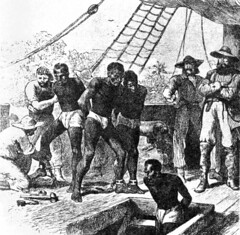 | 61 |
| 10473786837 | triangular trade | Merchants traded colonist rum for African slaves, African slaves for West Indies sugar cane, and sugar cane was brought back to the colonies to make rum. (p. 37) |  | 62 |
| 10473786838 | Middle Passage | Voyage from West Africa to the West Indies. It was miserable for the slaves transported and many died. (p. 38) |  | 63 |
THE BIBLE AP Lit Flashcards
Terms : Hide Images
| 14377678280 | Abraham, Sarah, and Isaac | Abraham is the first patriarch of Judaism, with whom God established his covenant (that Abraham would be the father of many nations who would live in the Promised Land). Sarah is his wife. Despite God's promise that Abraham would be the father of many nations, they were married for a long time and had no children. Sarah insisted that Abraham mate with her maid-servant, Hagar, so that he would have an heir, but after a child (Ishmael) was born, Sarah became pregnant and forced Abraham to throw out the maid (Hagar) and her son (Ishmael), because she was jealous. Their son is Isaac. Abraham is a model of faithfulness to God, particularly illustrated by the incident in which God tested Abraham's faith by ordering him to sacrifice Isaac on a mountain. They went up to the mountain, with Isaac just a bit suspicious that there was no animal to sacrifice (Abraham said that God would provide). Just as Abraham was about to slit Isaac's throat, an angel stayed his hand and he then saw a ram caught in nearby bushes, which he sacrificed instead. Isaac married Rebekah and fathered two children—Jacob and Esau. | 0 | |
| 14377682506 | Adam and Eve | the first man and woman; she's created from a rib taken from him. They live in bliss (and without sin) in the Garden of Eden until Eve is persuaded by a serpent (Satan) into eating the fruit of the Tree of Knowledge (the one tree in the garden which God instructed them not to eat from), which she then offers to Adam. After they eat, they realize they're naked and become ashamed. God (with some help from the Archangel Gabriel and his flaming sword) expels them from Eden as punishment; this incident is often referred to as the "fall from grace," or "loss of innocence." | 1 | |
| 14377683320 | Antichrist/Armageddon | the Antichrist is the antagonist of Christ who will appear before the Second Coming, claiming to be Christ, and make serious trouble until Christ actually appears and defeats him, probably at the battle of Armageddon, a great battle between the forces of good and evil that is to occur at the end of the world. | 2 | |
| 14377683850 | Babylon | an ancient city of Mesopotamia known for its wealth, luxury, and vice. | 3 | |
| 14377683851 | Cain and Abel | the two sons of Adam and Eve. Cain was older and a farmer; Abel was a shepherd. They made offerings to God, who liked Abel's lamb better than Cain's wheat (because Abel gave the first and best of his flock, while Cain did not). Cain was jealous and slew Abel, for which he was forced to roam as an outcast, with a horrible mark on his forehead that showed that he killed his brother. When questioned by God about Abel's whereabouts, Cain said, "Am I my brother's keeper?" | 4 | |
| 14377686149 | Daniel | a young Hebrew prophet who prayed even when the king had ordered that no one pray. For this, he was thrown into a lion's den, where he should have been killed. Instead, God saved him and he came out of the lion's den unhurt, making him a symbol of God's protection and the rewards of faith. | 5 | |
| 14377686150 | The Divine Comedy | written by Dante Alighieri between 1308 and his death in 1321, it is widely considered the central epic poem of Italian literature, and one of the greatest of world literature. Its influence is so great that it affects the Christian view of the afterlife to this day. The Divine Comedy is composed of three canticas: Inferno (Hell), Purgatorio (Purgatory), and Paradiso (Paradise). In the Inferno, Dante is led by the poet Virgil into the underworld, where he experiences and describes each of the nine circles of hell. The sign at the entrance to Hell reads: "Abandon all hope, ye who enter here." | 6 | |
| 14377688185 | David | a young boy who had the courage to fight the huge enemy, Goliath, whom he killed with a slingshot. He became king and was quite good, except for lusting after a married woman (Bathsheba), whose husband he then sent to the front lines to get conveniently killed so David could marry her. They became the parents of Absalom and Solomon. David was a musician who wrote most of the Psalms; Jesus is a descendant of David's line and, while far from perfect, David is seen as a forerunner of Jesus (in terms of being a great king). | 7 | |
| 14377688627 | Eden | earthly paradise for Adam and Eve | 8 | |
| 14377691507 | Gideon | an Israelite judge who, when massively outnumbered in a major battle, fooled the opposition by blasting trumpets to make the enemy believe the Hebrew forces were much larger than they really were. | 9 | |
| 14377692821 | Goliath | a huge warrior of the Philistines who was killed by a boy (David) with a slingshot; a symbol of a great power or obstacle that can be overcome. | 10 | |
| 14377694681 | Good Samaritan | a famous New Testament parable, that appears only in the Gospel of Luke (10:25-37). The parable is told by Jesus to show that the commandment to "love your neighbor as yourself" requires compassion for all people (not just one's "own" people or literal neighbors) and that fulfilling the spirit of the Law is more important than fulfilling the letter of the Law. Jesus tells a parable about a traveler who was attacked, robbed, stripped, and left for dead by the side of a road. Later, a priest saw the stricken figure and avoided him, presumably in order to maintain ritual purity. Similarly, a Levite saw the man and ignored him as well. Then a Samaritan passed by, and, despite the mutual antipathy between his and the Jewish populations, immediately rendered assistance by giving him first aid and taking him to an inn to recover while promising to cover the expenses. By extension, a Good Samaritan is a generous person who is ready to provide aid to people in distress without hesitation. | 11 | |
| 14377700511 | Gospels | first four books of the New Testament (Matthew, Mark, Luke, and John), also known as the "Good News," which tell the life of Jesus, but from four different perspectives. | 12 | |
| 14377700512 | Herod | the king of the Hebrews who ordered John the Baptist beheaded and who ordered all Jewish males under age two killed to prevent the "King of the Jews" (Jesus) from overthrowing him. | 13 | |
| 14377701213 | Holy Grail | the dish, plate, cup or vessel used by Jesus at the Last Supper (the meal he shared with his disciples the night before he was arrested - leading to his crucifixion and resurrection), said by some to possess miraculous powers. It has long been the object of fruitless quests (primarily in medieval literature). By extension, the "Holy Grail" has become the term for the object of an extended or difficult quest. | 14 | |
| 14377701214 | Jacob | son of Isaac and brother of Esau, whose birthright and blessing he stole when Isaac was on his deathbed (Jacob was the younger brother, so Esau should have inherited the blessing). Later, he dreamed of a ladder that served as a pathway between earth and heaven (symbolizing the ability of man to have a relationship with God through Jesus' life on earth and death on the cross). Jacob decided to apologize to Esau and then went on to have twelve sons, who became the twelve tribes of Israel. | 15 | |
| 14377701826 | Jesus Christ | Jesus Christ is a figure of martyrdom, sacrifice, and loving forgiveness. He is often symbolized as either a carpenter (which he had actually been, along with Joseph) or a lamb (a common sacrificial animal, particularly because it is associated with purity). Jesus is the Son of God, and was born in a manger in Bethlehem to a virgin (Mary). During his time on earth, he performed a number of miracles (raising people from the dead, turning water into wine, feeding the multitudes with only a few fish and loaves of bread), gave sermons (including his famous parables), and gathered disciples, despite being constantly challenged by lawyers and religious leaders. He was crucified (died on a cross) by the Romans, despite the fact that there was no legal reason for them to do so (Pontius Pilate was the governor who allowed the crucifixion to take place), but rose from the dead on the third day (his undeserved death paid the price for the sins of those who believe in him, so that they might enjoy eternity in heaven with God). Shortly after, he ascended to heaven where he sits alongside God, awaiting the Second Coming. | 16 | |
| 14377703581 | Jezebel | the wife of Ahab (a king of Israel), notorious for her evil and vicious actions that lead the Israelites into sin and subjected them to tyranny; she caused the death of many Jewish prophets; she is eventually thrown out the window and eaten by dogs. Her name is often associated with sexual immorality and prostitution, not because she was an actual prostitute, but because she led many men into sexual immorality and because she put on makeup before she was thrown to the dogs. | 17 | |
| 14377704169 | Job | a symbol of loyalty and faith in God. Satan suggested that Job, "a blameless and upright man, who fears God and turns away from evil," would curse God if his blessing were taken away and bad things occurred. God gave Satan free rein to test Job; everything bad happened that could possibly happen and still Job didn't curse God. Eventually, God proved that Job was a faithful servant and that Satan was wrong, and God gave back all the things Job had lost. | 18 | |
| 14377704697 | John the Baptist | born before Jesus and announced his coming; baptized Jesus and was one of his followers. After Jesus' death, he was captured by Herod for preaching Jesus' word. Salome danced for Herod, who offered her any gift in payment for her wonderful dancing. She requested the head of John the Baptist, which was delivered to her on a silver platter. | 19 | |
| 14377705493 | Jonah | a Hebrew whom God commanded to go to Nineveh to tell the people there to stop sinning. Jonah didn't want to and tried to escape by boat, but God made a great storm. When the others on board realized that Jonah was the person God was mad at, they threw him overboard. He was then swallowed by a "great fish" (whale). He lived inside it for several days, repented, and was regurgitated on the beach. He then went quickly to Nineveh and followed God's orders; he now serves as a symbol of learning the hard way. | 20 | |
| 14377705496 | Joseph | firstborn son of Rachel and Jacob, who loved him more than all his other sons because he loved the mother (Rachel) more than the mother of his other children (Leah). The other eleven brothers (all twelve of them made up the twelve tribes of Israel) were very jealous (especially when Joseph received a fancy, many-colored coat) and planned to murder him; instead, they sold him into slavery and he was taken to Egypt, where his ability to interpret dreams led him to become the pharaoh's right-hand man. (Note: This is NOT the same Joseph who was married to Mary, Jesus' mother - this Joseph lived many hundreds of years before Jesus was born.) | 21 | |
| 14377705984 | Judas Iscariot | one of the twelve original disciples of Jesus; he sold Jesus out to the Romans who wanted to crucify him for thirty pieces of silver, agreeing to kiss Jesus (on the cheek, as a sign of friendship) in public so the Romans would know which man was Jesus and could arrest him. The "kiss of Judas" is an act of betrayal, especially one that looks like a loving action. | 22 | |
| 14377707238 | Lazarus | a man whom Jesus raised from the dead, even though he'd been buried for three days. | 23 | |
| 14377707239 | Lucifer/Satan/Beelzebub | Lucifer was originally the top angel and sat at God's right hands until he got jealous and attempted a coup, which failed. He was sent to Hell, where he is more commonly called the Devil or Satan. He is jealous of God's love for humans and does everything possible to keep man from believing in and following God. Beelzebub was originally a Philistine deity worshiped as the Lord of the Flies; that name (and image) was transferred to Christianity; in Paradise Lost, Beelzebub ranks next to Satan. | 24 | |
| 14377708170 | The Magi | the Wise Men who followed the star to Bethlehem to see baby Jesus the night he was born and brought him gifts to honor his birth. | 25 | |
| 14377708812 | Mary and Joseph | Mary is the virgin mother of Jesus and Joseph is her husband, who served as Jesus' adoptive, earthly father. Mary was told by the angel Gabriel that she would bear the son of God; Joseph was a carpenter (again, not the same Joseph who was sold into slavery by his brothers in the Old Testament) | 26 | |
| 14377710132 | Mary Magdalene | a prostitute who came to hear Jesus preach and was accepted by him; she became a devout follower and was rewarded for her faithfulness (she was the first person to discover Jesus' empty tomb). Initially, his other followers were shocked, but he said, "Let he among you who is without sin cast the first stone," so they shut up. She is a symbol of the absolute possibility of repentance and acceptance by God. | 27 | |
| 14377710133 | Moses and Aaron | brothers who led the Israelites (Jews) out of slavery in Egypt (they were still there from Joseph's time). Moses was the leader and God spoke to him (Moses probably had the closest direct relationship with God of anyone in the Bible), but he stuttered, so Aaron actually spoke to the people and told them what God told Moses. Moses led them across the Red Sea, which parted, and into the desert, where they roamed for many years. He went up to Mount Sinai, where God gave him the Ten Commandments. He was gone a long time and the people started to get nervous, so they built an idol to worship: a golden calf. When Moses came and found them worshiping an idol, he was so upset that he broke the tablets the commandments were on. After they destroyed the calf, he went back and got another copy of the commandments. Aaron became the first High Priest when the temple was built. | 28 | |
| 14377710670 | Noah | at God's request, Noah built an ark, on which all the animals on the earth went, two by two, to escape drowning in the great flood, which lasted 40 days and 40 nights and was sent by God to destroy a world that had become completely corrupted by sin. After the flood, God sent a rainbow as a symbol of his covenant with Noah that He would never destroy the earth with a flood again. | 29 | |
| 14377711920 | Paradise Lost (1167) | an epic poem by the 17th century English poet John Milton. The poem tells the story of Satan's fall from heaven and subsequent temptation of Adam and Eve, as well as the creation of the world (including Adam and Eve), and Adam and Eve's fall and expulsion from the Garden of Eden. | 30 | |
| 14377711921 | Paul | largely the developer of Christianity as an organized system of beliefs; he took his information on the road and went preaching in towns all over the Greek and Roman empires, just ahead of Romans out to kill him for being a rabble-rouser. After he left a town where he had preached, he often wrote numerous letters to his followers there, to keep them with the faith. The most famous are the Epistles (letters) to the Corinthians. | 31 | |
| 14377712874 | Peter | the first "pope" of the Christian church. His name means "rock" in Latin and he provided the foundation for building the church itself, figuratively. He was also one of Jesus' closest disciples, although he denied Jesus three times on the night that He was crucified (as Jesus had predicted he would). | 32 | |
| 14377712875 | Prodigal Son | a wastrel who returns home and is welcomed with open arms. His brother, who had remained home to serve their father, is angry and jealous of the wastrel's warm reception. The parable of the Prodigal Son (told by Jesus) symbolizes the benevolence and generosity of God's (or anyone's) forgiveness and unconditional love. | 33 | |
| 14377713737 | Rachel and Leah | wives of Jacob; sisters of one another. Jacob fell in love with Rachel, the younger. Her father (Laban) said Jacob could marry her if he worked for him for seven years. Jacob did so. After the wedding, when he lifted the veil, he found that he'd married Leah, who had to marry first since she was older. Jacob still wanted Rachel, so Laban said Jacob could have her after another seven years of labor, which he did. Meanwhile, he and Leah turned out kids like crazy; however, the sons he finally has with Rachel (particularly Joseph) are his favorites. | 34 | |
| 14377714569 | Samson and Delilah | Samson had great strength because he had never cut his hair (he was a Nazarite, his life consecrated to the Lord). Delilah was from the enemy tribe (the Philistines), became his mistress, and then betrayed him by cutting his hair while he slept. The Philistines captured and blinded him, but Samson eventually found enough strength to destroy his enemies by pulling down the pillars of the temple they were all in, even though doing so meant that he would die too. | 35 | |
| 14377714570 | Sinai | the desert where the Jews roamed for many years, before getting to the Promised Land. | 36 | |
| 14377715287 | Sodom and Gomorrah | According to the Bible, the cities of Sodom and Gomorrah were destroyed by God for being incredibly full of sin and corruption (particularly sexual immorality). Before it was destroyed, a virtuous couple, Lot and his wife, were advised by God to leave the city immediately and not look back. Lot's wife submitted to temptation and, as she looked back on the city, she was turned into a pillar of salt. | 37 | |
| 14377715288 | Solomon | king of the Hebrews known for his wisdom. When two women appeared before him, both claiming that the same baby belonged to both of them, he ordered the baby cut in half (part for each woman). Solomon gave the baby to the woman who screamed not to cut it, since he determined that she must really love it if she didn't want it to die. | 38 | |
| 14377715953 | Thomas | disciple who was not present when Jesus first appeared to the disciples after his resurrection; refused to believe that Jesus had risen from the dead until he had physically seen and touched Jesus' wounds; Jesus appears to Thomas and accepts his worship, while commending those who believe without seeing (where the term "Doubting Thomas" comes from). | 39 |
Pages

Need Help?
We hope your visit has been a productive one. If you're having any problems, or would like to give some feedback, we'd love to hear from you.
For general help, questions, and suggestions, try our dedicated support forums.
If you need to contact the Course-Notes.Org web experience team, please use our contact form.
Need Notes?
While we strive to provide the most comprehensive notes for as many high school textbooks as possible, there are certainly going to be some that we miss. Drop us a note and let us know which textbooks you need. Be sure to include which edition of the textbook you are using! If we see enough demand, we'll do whatever we can to get those notes up on the site for you!
