

chapter 6-apes Flashcards
Terms : Hide Images
| 12177744494 | age structure | distribution of males and females among age groups in a population |  | 0 |
| 12177744495 | birth rate, or crude birth rate | number of live births per 1,000 people in a population in a given year |  | 1 |
| 12177744496 | cultural carrying capacity | optimum level that would allow most people to live in reasonable comfort and freedom without impairing the ability of the planet to sustain future generations. | 2 | |
| 12177744497 | death rate, or crude death rate | the number of deaths per 1,000 people in a population in a given year | 3 | |
| 12177744498 | demographic transition | as countries become industrialized, first their death rates and then their birth rates decline |  | 4 |
| 12177790228 | demographic transition phase 1 | slow population growth -high birth rates -high death rates | 5 | |
| 12177797237 | demographic transition phase 2 | rapid population growth -birth rates remain high -death rates decline | 6 | |
| 12177805495 | demographic transition phase 3 | stable population growth -as economy/education grows and people have fewer kids | 7 | |
| 12177815601 | demographic transition phase 4 | declining population growth (Still growing just not as much) -relatively high level of affluence and economic development encourage women to delay having kids | 8 | |
| 12177744499 | family planning | provides educational and clinical services that help couples choose how many children to have and when to have them. | 9 | |
| 12177744500 | fertility rate | the number of children born to a woman during her lifetime. | 10 | |
| 12177744501 | infant mortality rate | the number of children per 1,000 live births who die before one year of age. |  | 11 |
| 12177744502 | life expectancy | the average number of years a newborn infant can expect to live |  | 12 |
| 12177744503 | replacement-level fertility rate | average number of children that couples in a population must bear to replace themselves. | 13 | |
| 12178051196 | total fertility rate | average number of children born to women in a population during their reporductive years. | 14 | |
| 12177744504 | developed country replacement fertility rate | 2.1 | 15 | |
| 12177744505 | developing country replacement fertility rate | 2.5 | 16 | |
| 12177744506 | environmental refugees | people who migrate due to shortages of food and water | 17 | |
| 12177858652 | Thomas Malthus | 1798 said human population can outgrow food supply; result will be war, famine, disease. |  | 18 |
| 12177890356 | how did chinese growth rate decline? | gov issued population control program : -educational outreach to marry later and have fewer kids. -increase in availability of contraception, sterilization, nad abortion. 1975-pop growth rate dropped from 2.8% to 1.8%. | 19 | |
| 12177912313 | 1979 one-child policy in china | if followed this policy the family had better access to schools, medical care, housing, governmental jobs, and given longer maternity leave. | 20 | |
| 12177944431 | reasons for pop growth | -mainly because of decrease in death rate. -increased food + more efficient distribution. -improvements in medical/publix health tech. -improvements in sanitation/personal hygiene. -safter water supply. | 21 | |
| 12177967758 | factors affecting birth rate/fertility rates | -cost of raising and educating. -urbanization. -education/employment opportunities. -marriage age. -infant mortality rate. -access to family planning. | 22 | |
| 12177988703 | impacts of human pop growth | -denser population (war, conflict, refugees). -more agricultural production (habitat alteration, loss of biodiversity/ecosystem services). -more resource extraction, manufacturing, and consumption (habitat alteration, more fossil fuel use, global climate change, more waste/pollution). | 23 | |
| 12178021121 | AIDS | -transmitted: sexual contact, sharing needles, syringes. -no cure. -only 5% know they have it. *AIDS kills primarily young adults and leaves many children orphaned; loss of young-adult workers results in not enough workers to support the young and the elderly. | 24 | |
| 12178092203 | pros and cons of economic growth | pros: -higher standard of living -more workers to help elderly and young cons: -increase disease -puts a strain on resources, so prices go up | 25 |
AP World History Strayer Chapter 6 Vocabulary Flashcards
Terms : Hide Images
| 10731866604 | Meroe | *Definition:* City in southern Nubia that was the center of Nubian civilization. *Significance:* Governed by a female monarch. Gained its wealth through long-distance trade. Declined after Islam invaded. |  | 0 |
| 10731866605 | Axum | *Definition:* Northern Ethiopian city that relied on highly productive agriculture with plow-based farming. *Significance:* A part at Adulis and used taxes to gain revenue from other empires. They didn't rely on hoe and digging stick. |  | 1 |
| 10731866606 | Piye | *Definition:* 8th century BCE, Africa. Paid respect to gods for great victory. *Significance:* Reunified Egypt and conquered ruler and began to govern/lead war. |  | 2 |
| 10731866608 | Maya Civilization | *Definition:* Mesoamerican civilization known for the only fully developed written language of the Pre-columbian Americas. *Significance:* Resembled the competing city-states of Mesopotamia and written language. |  | 3 |
| 10731866609 | Teotihuacan | *Definition:* Largest city of Pre-Columbian America that governed and/or influenced much of the surrounding region ("City of the gods"). *Significance:* Had long-distance trade which enabled them to live a more luxurious life. | 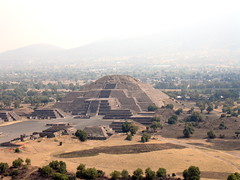 | 4 |
| 10731866610 | Chavin | *Definition:* Andean town that was the center of a large Peruvian religious movement. *Significance:* Religious movement within class system of elites. Decline due to famine and drought. |  | 5 |
| 10731866611 | Moche | *Definition:* Important regional civilization of Peru, governed by warrior-priests. *Significance:* Elites lived luxuriously, prisoners and poor were sacrificed in rituals. | 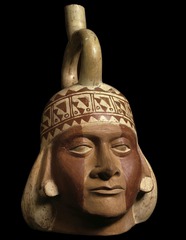 | 6 |
| 10731866613 | Bantu Expansion | *Definition:* Gradual migration of Bantu peoples from their homeland. *Significance:* Their ironworking and agricultural techniques gave them an advantage over gathering and hunting peoples. |  | 7 |
| 10731866614 | Chaco Phenomenon | *Definition:* Name given to a major process settlement and social organization among the peoples of Chaco Canyon. *Significance:* Drought caused people to start depending on agriculture which made a large population develop. |  | 8 |
| 10731866615 | Mound Builders/Cahokia | *Definition:* Members of a number of cultures that developed along the Mississippi that built large mounds that they buried people with their stuff under. *Significance:* Buried people with all their things in hopes to make it to the afterlife (only for wealthy people). |  | 9 |
Flashcards
Flashcards
Flashcards
Flashcards
Flashcards
AP US History, Chapter 39 Flashcards
Terms : Hide Images
| 8572430956 | Proposition 13 (1978) | A successful California state ballot initiative that capped the state's real estate tax at 1 percent of assessed value. | 0 | |
| 8572430957 | boll weevils | Term for conservative southern Democrats who voted increasingly for Republican issues during the Carter and Reagan administrations. | 1 | |
| 8572430958 | supply-side economics | Economic theory that underlay Ronald Reagan's tax and spending cuts. Contrary to Keynesianism, supply-side theory declared that government policy should aim to increase the supply of goods and services, rather than the demand for them. It held that lower taxes and decreased regulation would increase productivity by providing increased incentives to work, thus increasing productivity and the tax base. | 2 | |
| 8572430959 | Strategic Defense Initiative (SDI) | Reagan administration plan announced in 1983 to create a missile-defense system over American territory to block a nuclear attack. Derided as "Star Wars" by critics, the plan typified Reagan's commitment to vigorous defense spending even as he sought to limit the size of government in domestic matters. | 3 | |
| 8572430960 | Sandinistas | Leftwing anti-American revolutionaries in Nicaragua who launched a civil war in 1979. | 4 | |
| 8572430961 | Contras | Anti-Sandinista fighters in the Nicaraguan civil war. The contras were secretly supplied with American military aid, paid for with money the United Sates clandestinely made selling arms to Iran. | 5 | |
| 8572430962 | Glasnost | Meaning "openness," a cornerstone along with perestroika of Soviet president Mikhail Gorbachev's reform movement in the USSR in the 1980s. These policies resulted in greater market liberalization, access to the West, and ultimately the end of communist rule. | 6 | |
| 8572430963 | Perestroika | Meaning "restructuring," a cornerstone along with glasnost of Soviet president Mikhail Gorbachev's reform movement in the USSR in the 1980s | 7 | |
| 8572430964 | Intermediate-Range Nuclear Forces (NIF) Treaty (1987) | Arms limitation agreement settled by Reagan and Gorbachev after several attempts. It banned all of these types of missiles from Europe and marked a significant thaw in the Cold War. | 8 | |
| 8572430965 | Iran-Contra affair | Political action committee founded by evangelical Reverend Jerry Falwell in 1979 to promote traditional Christian values and oppose feminism, abortion, and gay rights. The group was a major linchpin in the resurgent religious right of the 1980s | 9 | |
| 8572430966 | Moral Majority | Political action committee founded by evangelical Reverend Jerry Falwell in 1979 to promote traditional Christian values and oppose feminism, abortion, and gay rights. The group was a major linchpin in the resurgent religious right of the 1980s. | 10 | |
| 8572430967 | Black Monday | October 19, 1987. Date of the largest single-day decline in the Dow Jones Industrial Average until September 2001. The downturn indicated instability in the booming business culture of the 1980s but did not lead to a serious economic recession. | 11 | |
| 8572430968 | Operation Desert Storm (1991) | U.S. led multicounty military engagement in January and February of 1991 that drove Saddam Hussein's Iraqi army out of neighboring Kuwait. | 12 | |
| 8572430969 | Americans with Disabilities Act (ADA) (1990) | Landmark law signed by President George H.W. Bush that prohibited discrimination against people with physical or mental handicaps. I represented a legislative triumph for champions of equal protections to all. | 13 | |
| 8572430970 | Ronald Reagan (1991-2004) | Fortieth president of the United States, 1981-1989. A former actor and California governor, he was elected in 1980 with a pronounced conservative mandate to fix the American economy by scaling back taxes and the role of government in business. | 14 | |
| 8572430971 | Margaret Thatcher (1925-2013) | Conservative prime minister of the United Kingdom from 1979 to 1990. As an ideological partner to President Ronald Reagan, Thatcher enacted economic liberalization reforms and attempted to check the powers of labor unions in Britain. | 15 | |
| 8572430972 | Mikhail Gorbachev (1931-) | Last leader of the Soviet Union. Gorbachev assumed control in 1985 and ushered in a period of reforms known as glasnost and perestroika. | 16 | |
| 8572430973 | Saddam Hussein (1937-2006) | Iraq dictator who led the Ba'ath party in a coup in 1968and ruled in a coup in 1968 and ruled Iraq until the U.S. invasion. | 17 | |
| 8572430974 | Jerry Falwell (1933-2007) | Christian evangelical reverend and radical right-wing traditionalist. In 1979, Falwell founded the Moral Majority, a political action committee dedicated to moral values and in opposition to feminism and gay rights. | 18 | |
| 8572430975 | Sandra Day O' Connor (1930-) | The first female justice on the Supreme Court. A graduate of Stanford Law School,, she served as an attorney, jurist, and politician in Arizona before being appointed to the Supreme Court by President Ronald Reagan in 1981. | 19 | |
| 8572430976 | George H. W. Bush (1924-) | Forty-first president of the United States, 1989-1993. A former congressman diplomat, businessman, Republican party chairman, and director the CIA, Bush served for eight years as Reagan's vice president before being elected president in 1988. | 20 | |
| 8572430977 | Boris Yeltsin (1931-2007) | First president of Russia, who took over as the former Soviet republic became independent in 1991. | 21 | |
| 8572430978 | Nelson Mandela (1918-2013) | Anti-apartheid activist and leader of the African National Congress. After spending twenty-seven years in prison in South Africa, Mandela became the first black president of South Africa in 1994, dramatically signaling the end of racial apartheid in the country. | 22 | |
| 8572430979 | Manuel Noriega (1935-) | Panamanian general and dictator from 1983 to 1989. Noriega was ousted from power after the U.S. invasion in late 1989, convicted in the United States of drug trafficking, and imprisoned in Miami, Florida. | 23 | |
| 8572430980 | Clarence Thomas (1948-) | The second black American to serve on the Supreme Court, Thomas is a conservative justice who adheres to constitutional interpretation based on the doctrine of originalism. | 24 |
Flashcards
Pages

Need Help?
We hope your visit has been a productive one. If you're having any problems, or would like to give some feedback, we'd love to hear from you.
For general help, questions, and suggestions, try our dedicated support forums.
If you need to contact the Course-Notes.Org web experience team, please use our contact form.
Need Notes?
While we strive to provide the most comprehensive notes for as many high school textbooks as possible, there are certainly going to be some that we miss. Drop us a note and let us know which textbooks you need. Be sure to include which edition of the textbook you are using! If we see enough demand, we'll do whatever we can to get those notes up on the site for you!
